Tariff and Non Tariff Barriers Overview Trade Barriers Used to encourage and protect existing domestic industry Trade barriers are Tariffs that Increase Trade Weaken Trade Restrict Trade Quotas Boycotts and Embargoes Impact of Tariff
Related Topics
Share
Embed code
Download this presentation From Below
"Tariff and Non – Tariff Barriers Overview Trade" is the property of its rightful owner. Permission is granted to
download and print the materials on this website for personal, non-commercial use only, and to display it
on your personal computer provided you do not modify the materials and that you retain all copyright
notices contained in the materials. By downloading content from our website, you accept the terms of this
agreement.
Presentation Transcript
01
Tariff and Non – Tariff Barriers Overview<br>
02
Trade Barriers Used to encourage and protect existing domestic industry
Trade barriers are Tariffs that
Increase Trade
Weaken Trade
Restrict Trade
Quotas
Boycotts and Embargoes<br>
03
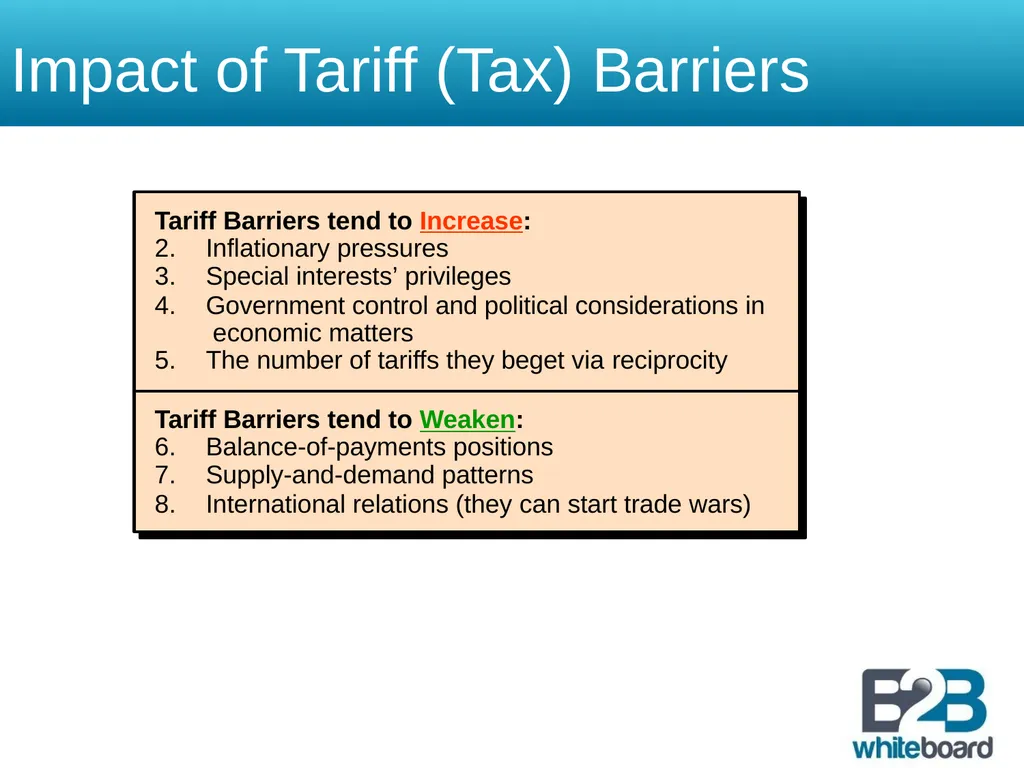
Impact of Tariff (Tax) Barriers Tariff Barriers tend to Increase:
Inflationary pressures
Special interests’ privileges
Government control and political considerations in economic matters
The number of tariffs they beget via reciprocity
Tariff Barriers tend to Weaken:
Balance-of-payments positions
Supply-and-demand patterns
International relations (they can start trade wars)<br>
04
Non Tariff - Trade Barriers Non Tariff barriers - are another way for an country to control the amount of trade that it conducts with another country, either for selfish or altruistic purposes. Any barrier to trade creates an economic loss, which means it does not allow the markets to function properly.<br>
05
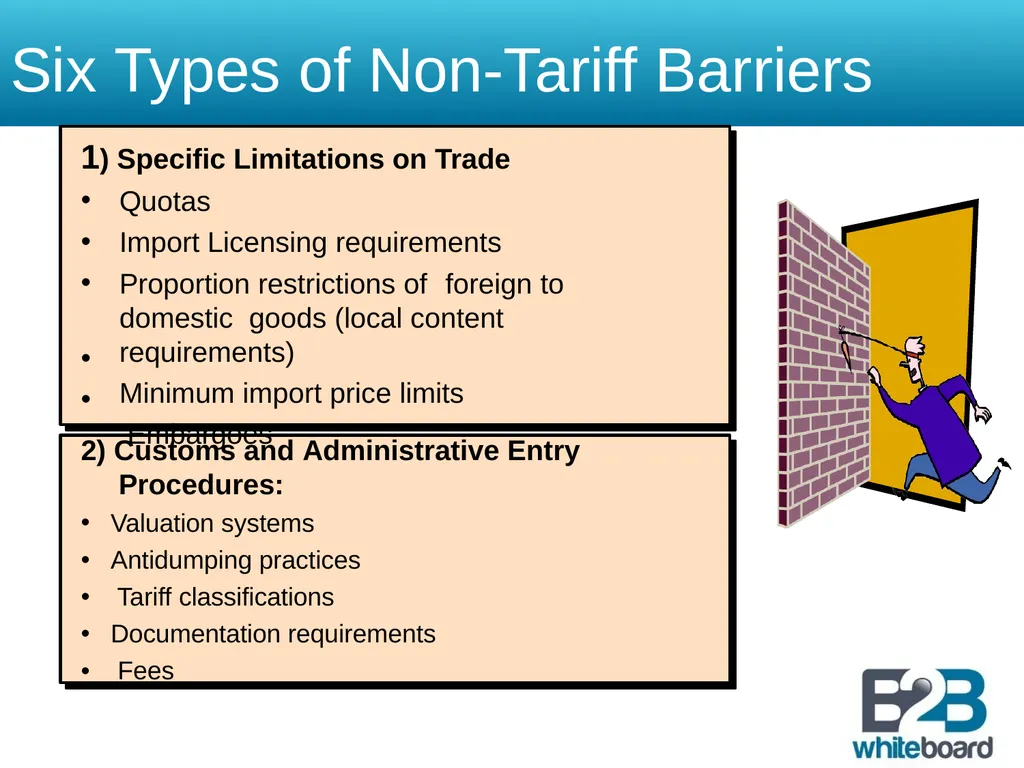
2) Customs and Administrative Entry Procedures: •
•
•
•
• Valuation systems Antidumping practices Tariff classifications
Documentation requirements Fees 1) Specific Limitations on Trade •
•
• •
• Quotas
Import Licensing requirements
Proportion restrictions of foreign to domestic goods (local content requirements)
Minimum import price limits Embargoes Six Types of Non-Tariff Barriers<br>
06
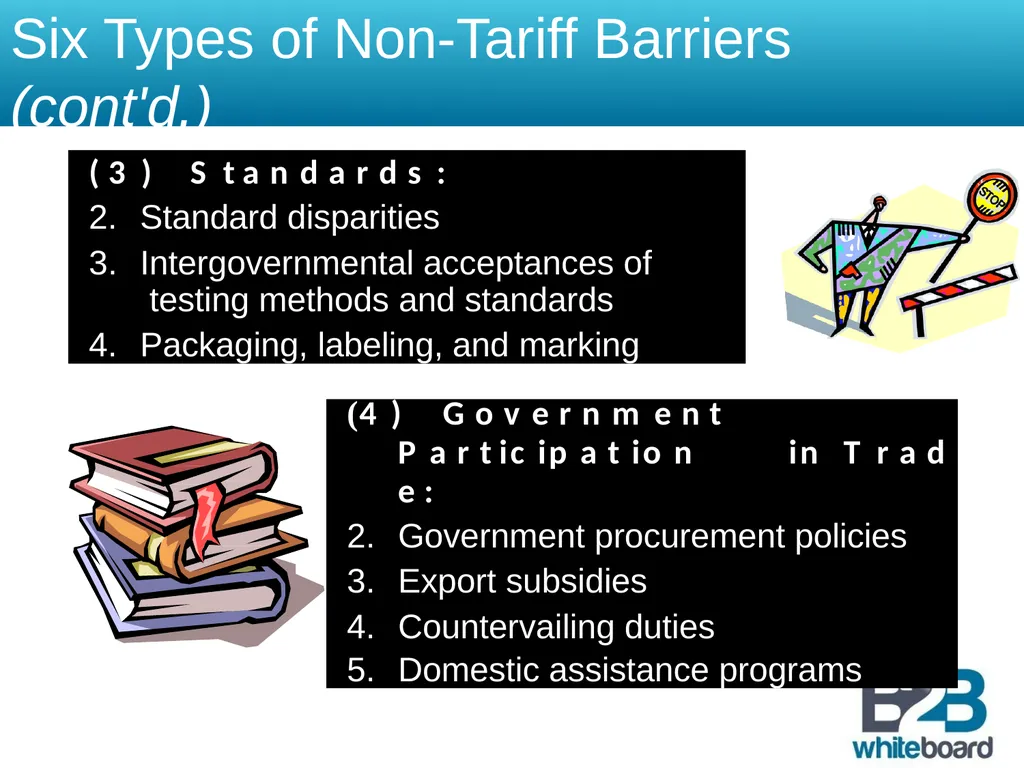
( 3 ) S t a n d a r d s :
Standard disparities
Intergovernmental acceptances of testing methods and standards
Packaging, labeling, and marking (4 ) G o v e r n m e n t
P a r t ic ip a t io n in T r a d e :
Government procurement policies
Export subsidies
Countervailing duties
Domestic assistance programs Six Types of Non-Tariff Barriers
(cont'd.)<br>
07
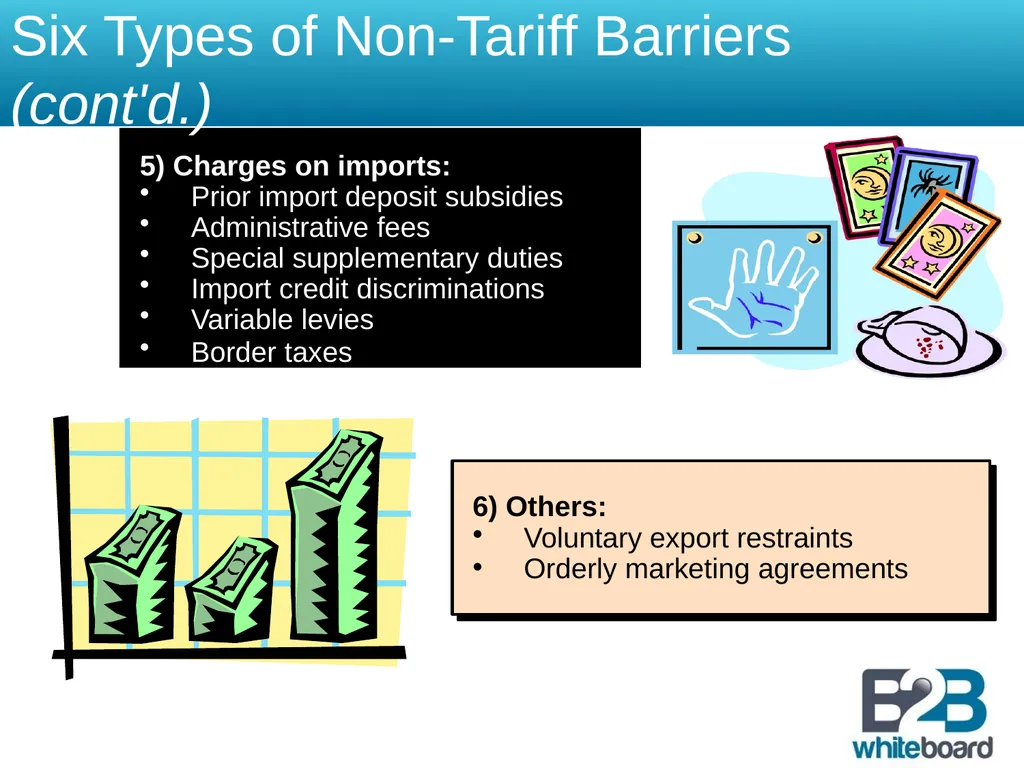
5) Charges on imports:
Prior import deposit subsidies
Administrative fees
Special supplementary duties
Import credit discriminations
Variable levies
Border taxes 6) Others: •
• Voluntary export restraints Orderly marketing agreements Six Types of Non-Tariff Barriers (cont'd.)<br>
08
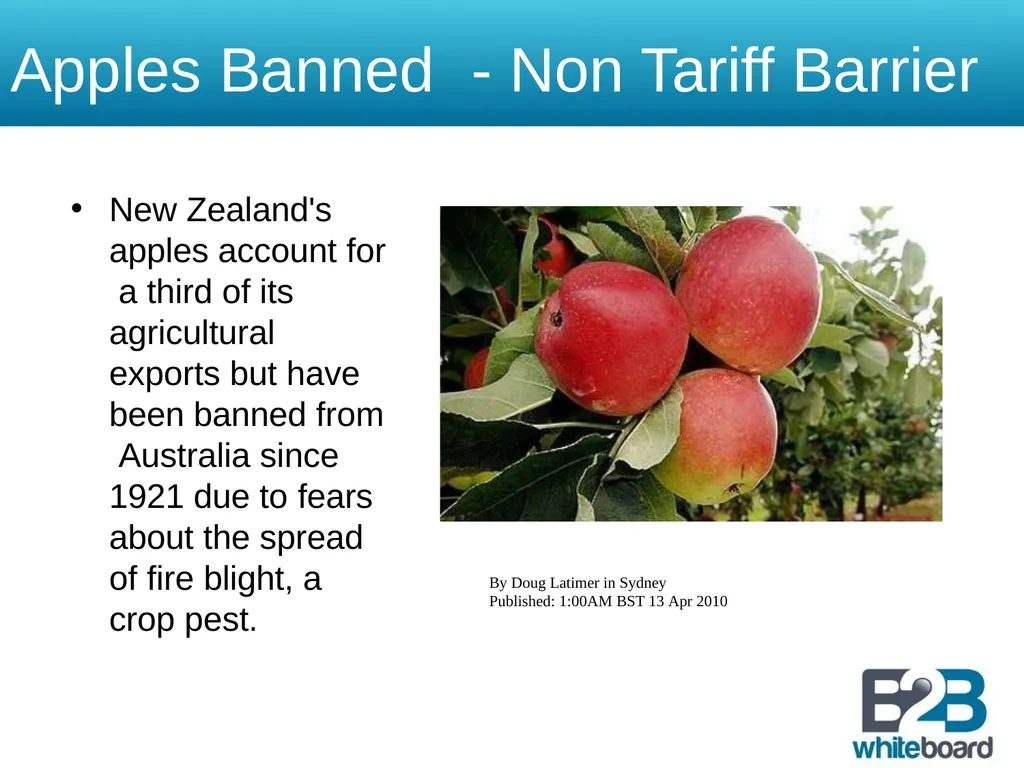
• New Zealand's apples account for a third of its agricultural exports but have been banned from Australia since 1921 due to fears about the spread of fire blight, a crop pest. By Doug Latimer in Sydney Published: 1:00AM BST 13 Apr 2010 Apples Banned - Non Tariff Barrier<br>
09
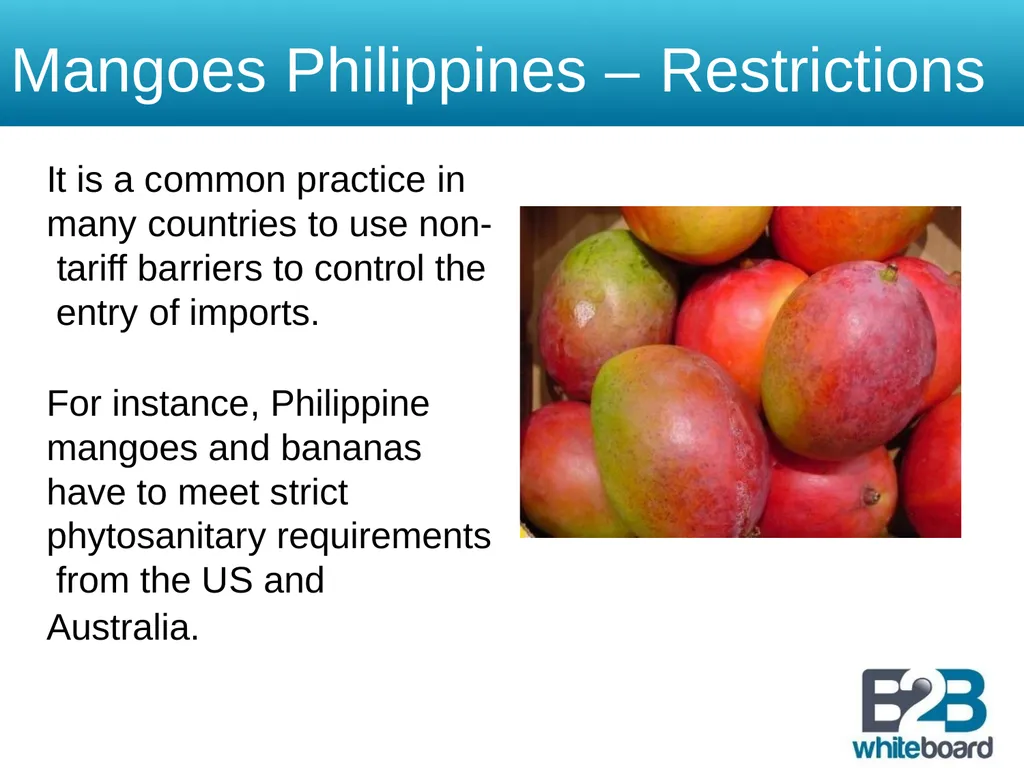
Mangoes Philippines – Restrictions It is a common practice in many countries to use non- tariff barriers to control the entry of imports.
For instance, Philippine mangoes and bananas have to meet strict phytosanitary requirements from the US and
Australia.<br>
10
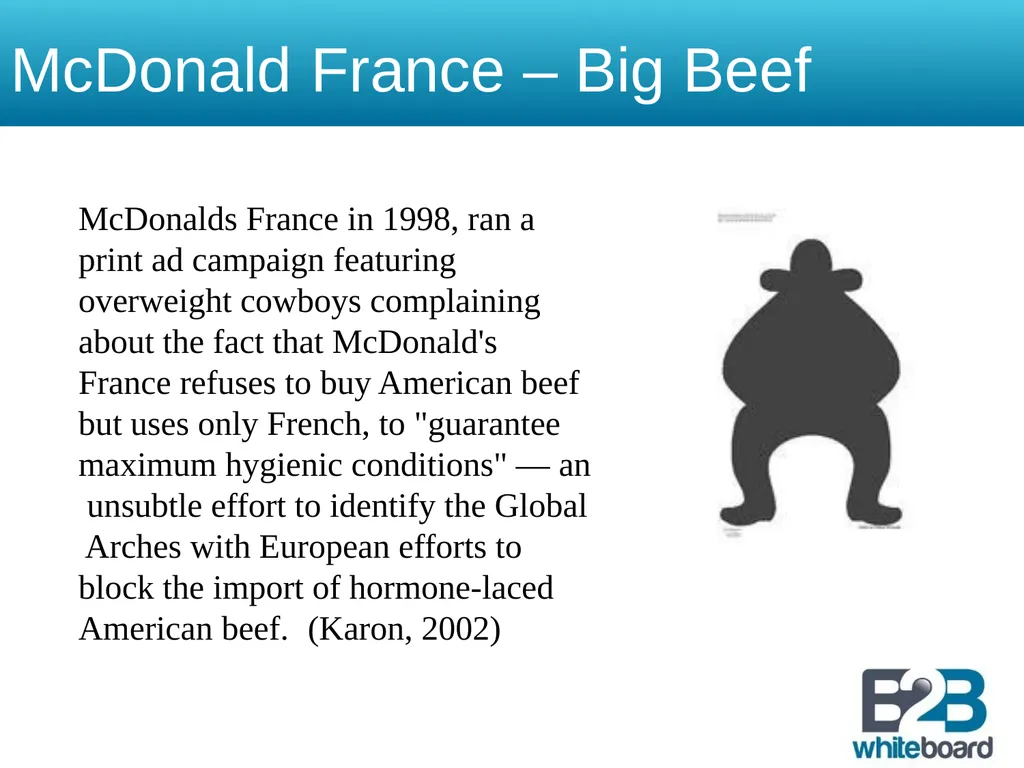
McDonald France – Big Beef McDonalds France in 1998, ran a print ad campaign featuring overweight cowboys complaining about the fact that McDonald's France refuses to buy American beef but uses only French, to "guarantee maximum hygienic conditions" — an unsubtle effort to identify the Global Arches with European efforts to block the import of hormone-laced American beef. (Karon, 2002)<br>
11
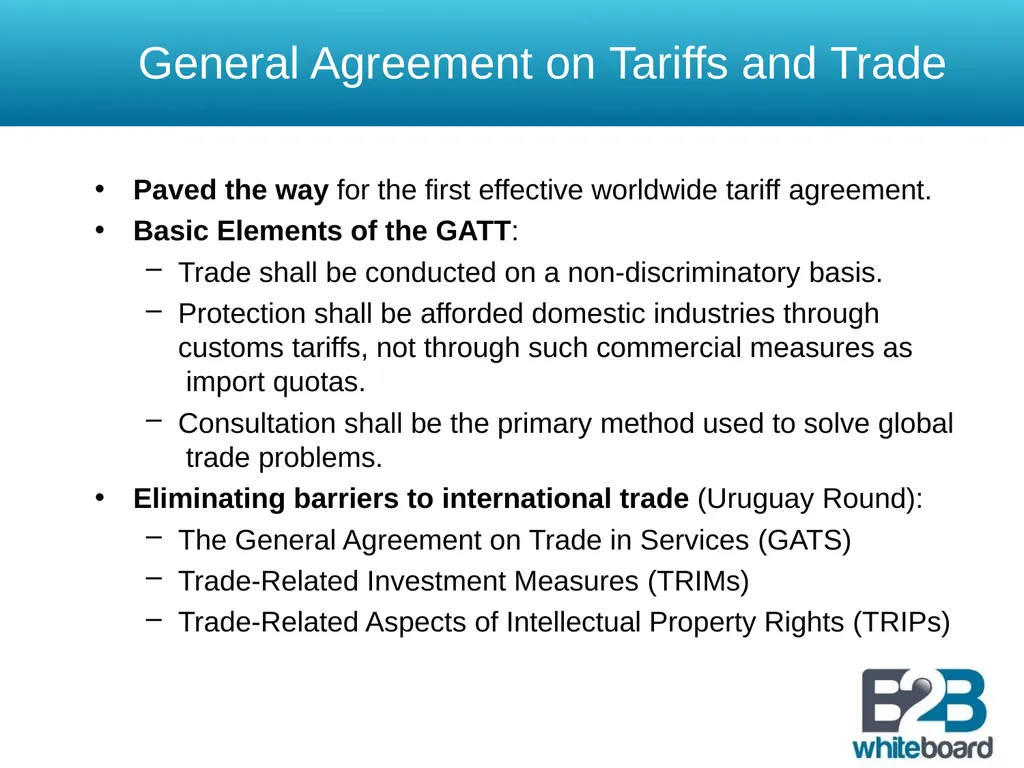
General Agreement on Tariffs and Trade •
• Paved the way for the first effective worldwide tariff agreement.
Basic Elements of the GATT:
Trade shall be conducted on a non-discriminatory basis.
Protection shall be afforded domestic industries through customs tariffs, not through such commercial measures as import quotas.
Consultation shall be the primary method used to solve global trade problems.
Eliminating barriers to international trade (Uruguay Round):
The General Agreement on Trade in Services (GATS)
Trade-Related Investment Measures (TRIMs)
Trade-Related Aspects of Intellectual Property Rights (TRIPs) •<br>
12
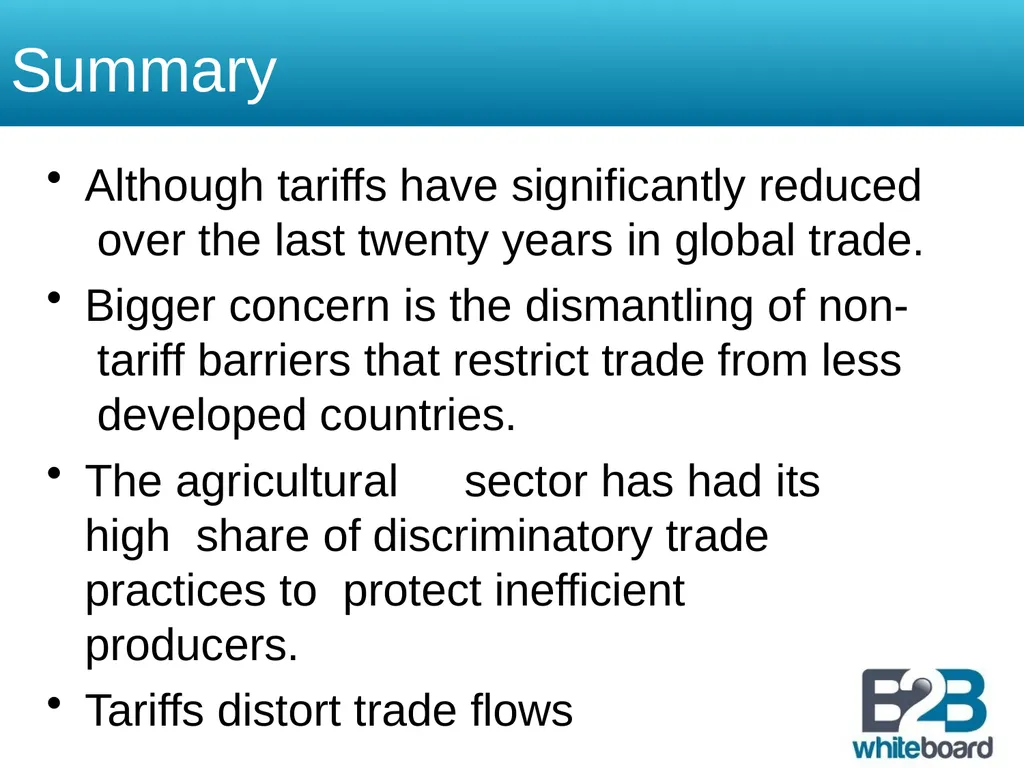
Summary Although tariffs have significantly reduced over the last twenty years in global trade.
Bigger concern is the dismantling of non- tariff barriers that restrict trade from less developed countries.
The agricultural sector has had its high share of discriminatory trade practices to protect inefficient producers.
Tariffs distort trade flows<br>
13
You are welcome to contact Nigel Bairstow at B2B Whiteboard your source of B2B Asia / Pacific marketing advice
http://www.linkedin.com/pub/nigel-bairstow/6/41b/726 http://twitter.com/#!/b2bwhiteboard<br>