TAUP Conference Sendai Sep 11 2007 Cosmic rays emitted by PBHs in a 5D RS braneworld Yuuiti Sendouda (Yukawa Inst., Kyoto) with S. Nagataki (YITP), K. Kohri (Lancaster), K. Sato (Tokyo, RESCEU) Overview Strategy Cosmic-ray observations
"TAUP Conference @ Sendai Sep 11 2007 Cosmic rays" is the property of its rightful owner. Permission is granted to
download and print the materials on this website for personal, non-commercial use only, and to display it
on your personal computer provided you do not modify the materials and that you retain all copyright
notices contained in the materials. By downloading content from our website, you accept the terms of this
agreement.
Presentation Transcript
01
TAUP Conference @ Sendai Sep 11 2007 Cosmic rays emitted by PBHs in a 5D RS braneworld Yuuiti Sendouda
(Yukawa Inst., Kyoto)
with
S. Nagataki (YITP), K. Kohri (Lancaster),
K. Sato (Tokyo, RESCEU)<br>
02
Overview<br>
03
Strategy Cosmic-ray observations Exotic models for Universe Modified theories of
formation and evaporation
of PBHs Now, Braneworld<br>
04
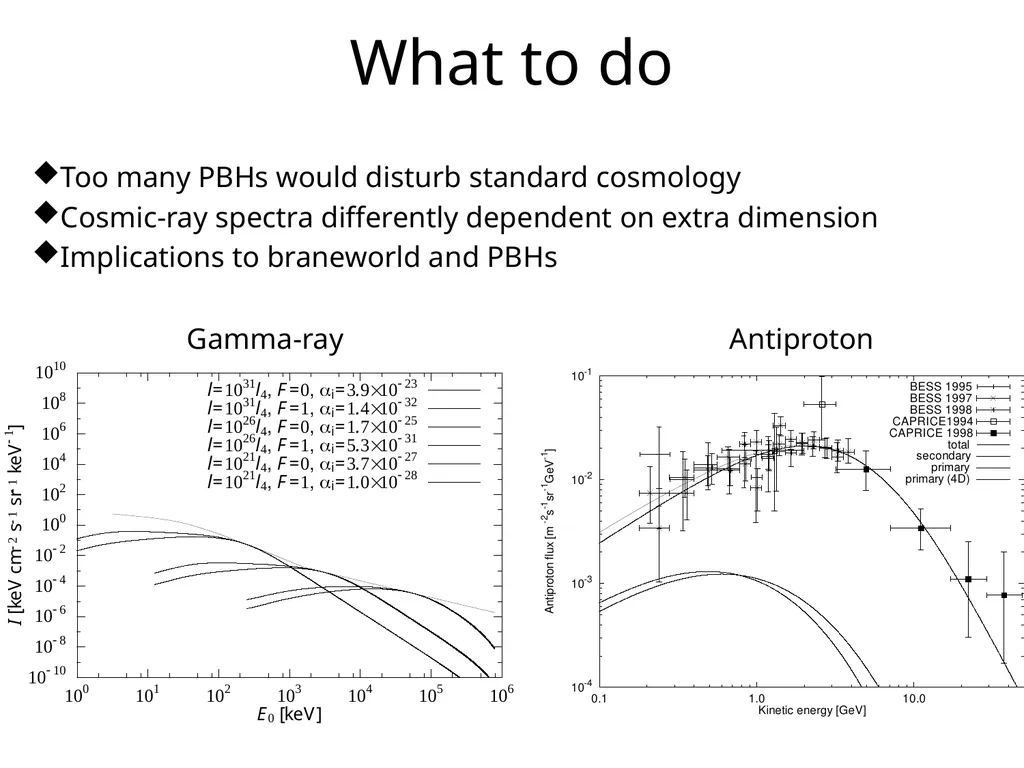
What to do Gamma-ray Too many PBHs would disturb standard cosmology
Cosmic-ray spectra differently dependent on extra dimension
Implications to braneworld and PBHs Antiproton<br>
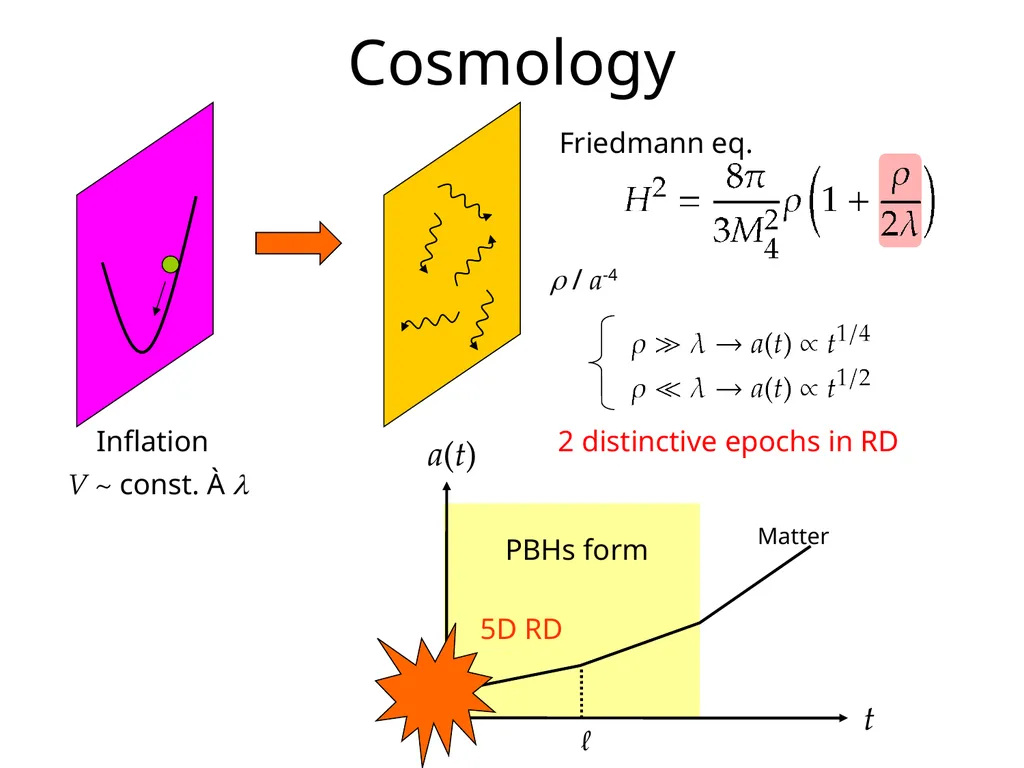
Cosmology Inflation t a(t) ℓ 5D RD Matter 2 distinctive epochs in RD / a-4 V ~ const. À PBHs form Friedmann eq.<br>
08
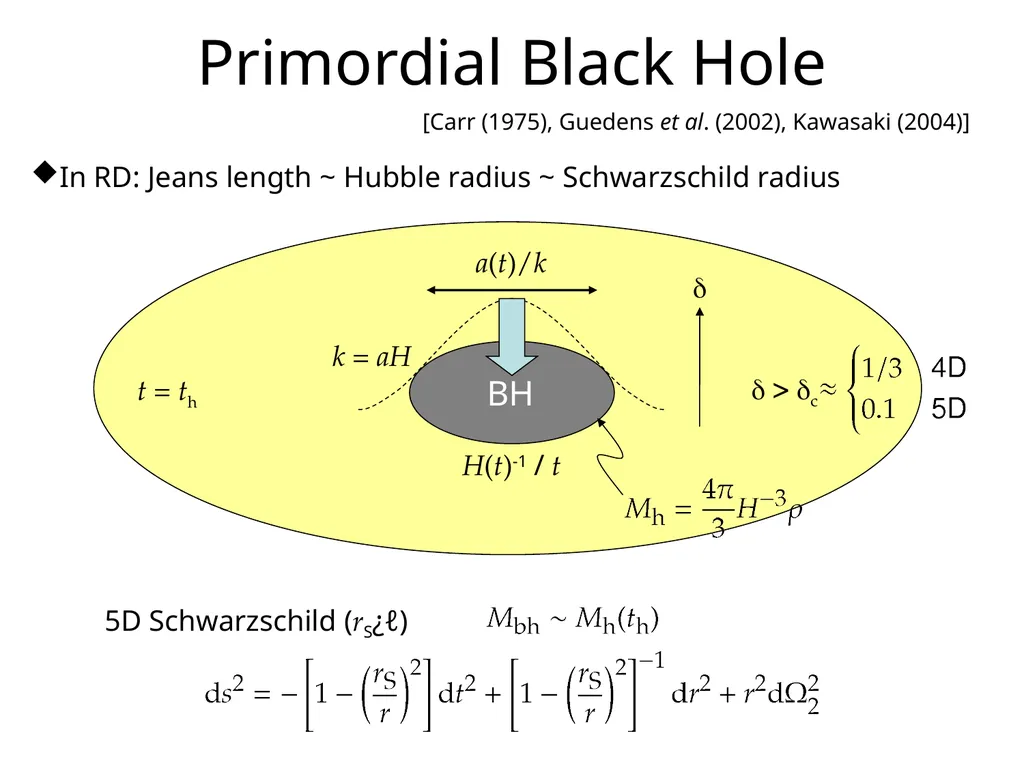
Primordial Black Hole Carr (1975) t = th [Carr (1975), Guedens et al. (2002), Kawasaki (2004)] > c a(t)/k H(t)-1 / t k = aH In RD: Jeans length ~ Hubble radius ~ Schwarzschild radius BH 5D Schwarzschild (rS¿ℓ)<br>
09
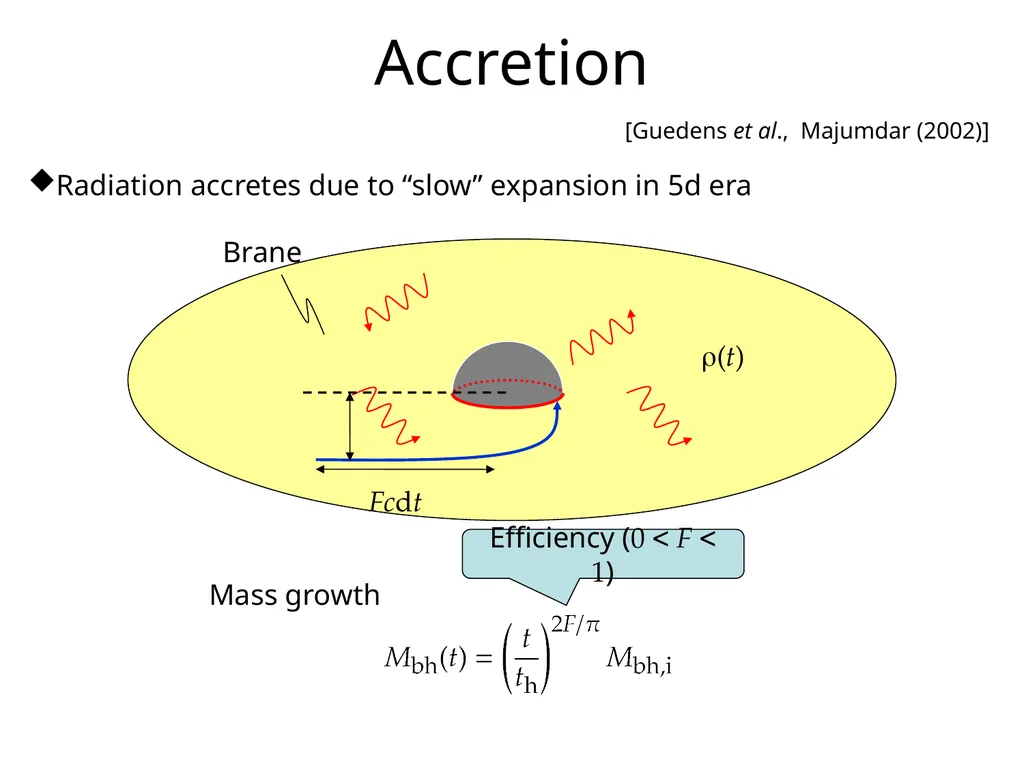
Accretion (t) Fcdt Radiation accretes due to “slow” expansion in 5d era [Guedens et al., Majumdar (2002)] Efficiency (0 < F < 1) Brane Mass growth<br>
10
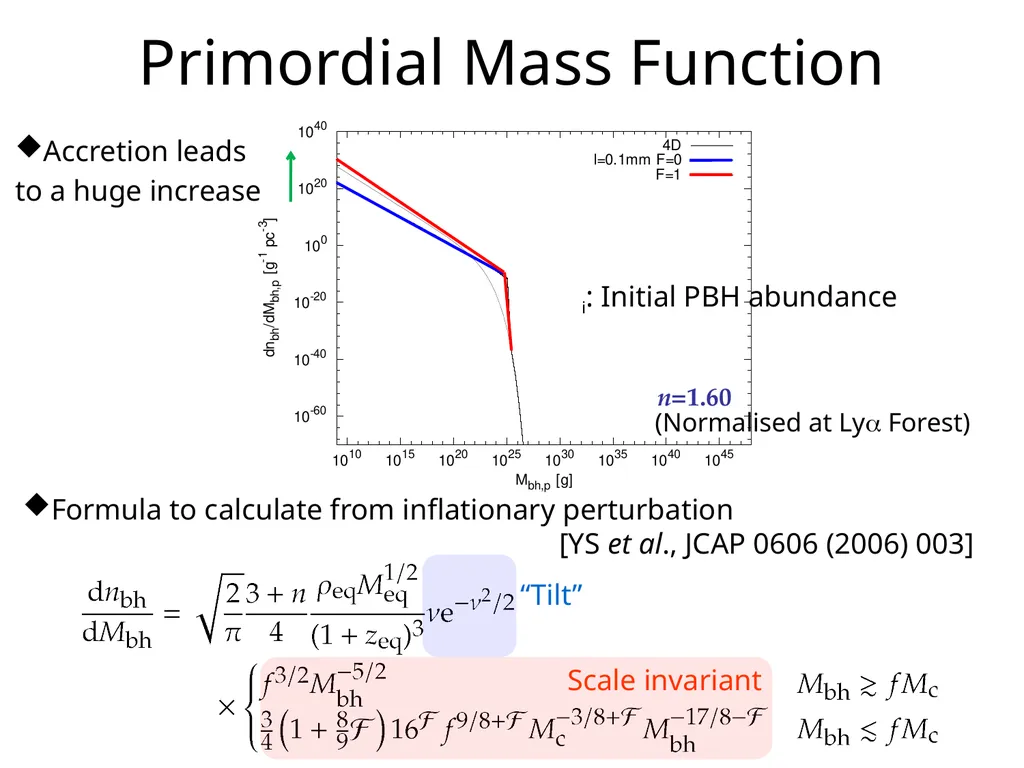
n=1.60 Primordial Mass Function Scale invariant “Tilt” (Normalised at Ly Forest) Accretion leads
to a huge increase i: Initial PBH abundance [YS et al., JCAP 0606 (2006) 003] Formula to calculate from inflationary perturbation<br>
11
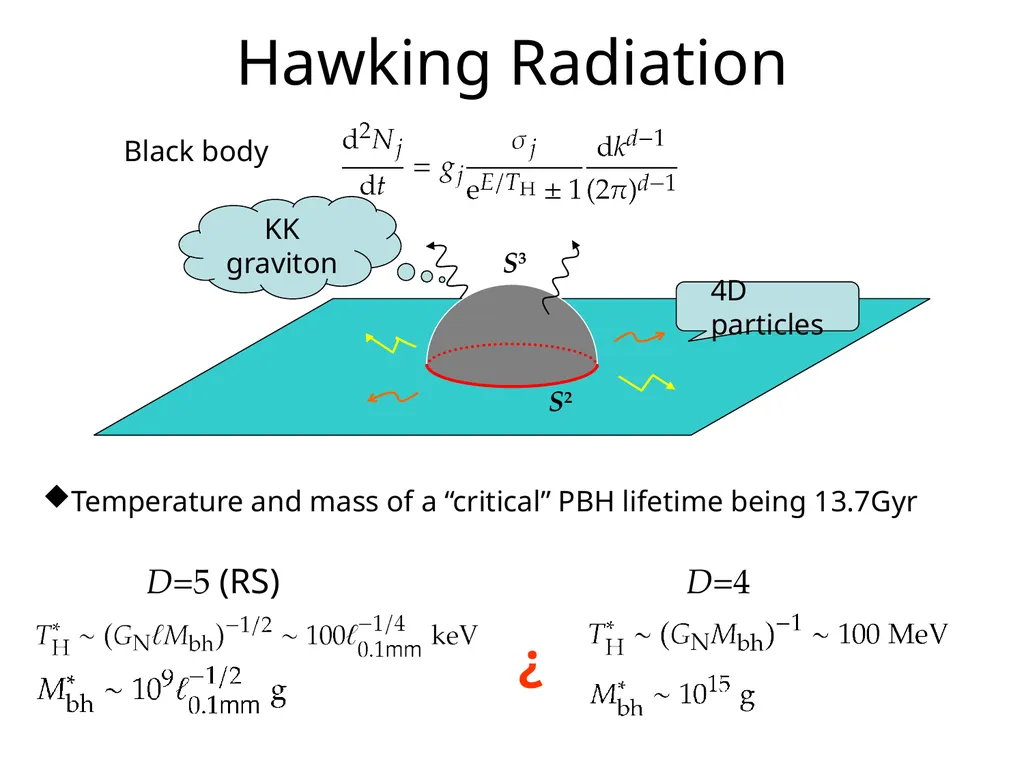
Hawking Radiation S2 S3 D=5 (RS) D=4 ¿ 4D particles KK graviton Black body Temperature and mass of a “critical” PBH lifetime being 13.7Gyr<br>
12
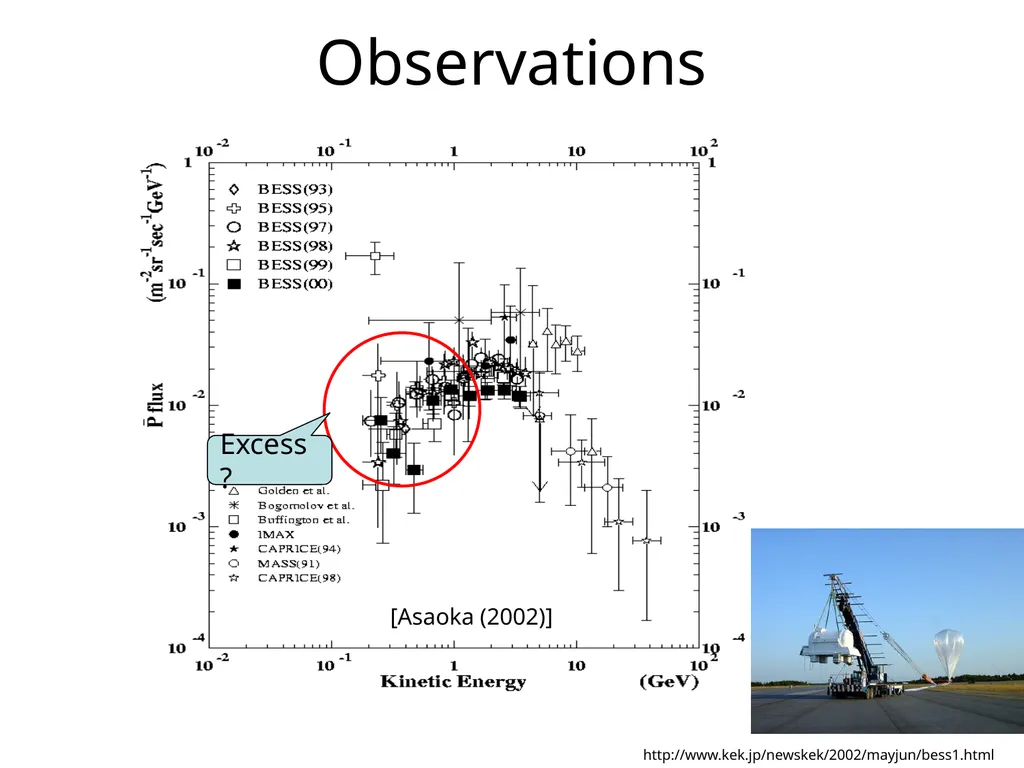
Galactic Antiprotons [YS et al., PRD 71 (2005) 063512]<br>
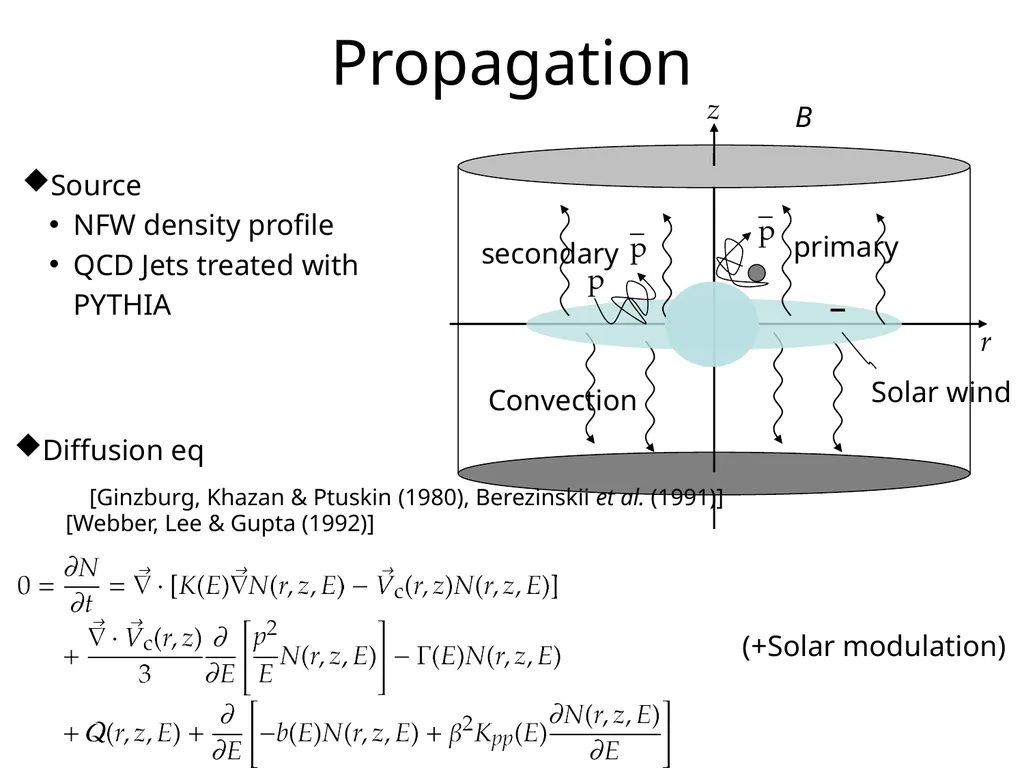
Propagation p r z Solar wind Convection B ¯ primary secondary Source
NFW density profile
QCD Jets treated with
PYTHIA [Ginzburg, Khazan & Ptuskin (1980), Berezinskii et al. (1991)] Diffusion eq [Webber, Lee & Gupta (1992)] (+Solar modulation)<br>
15
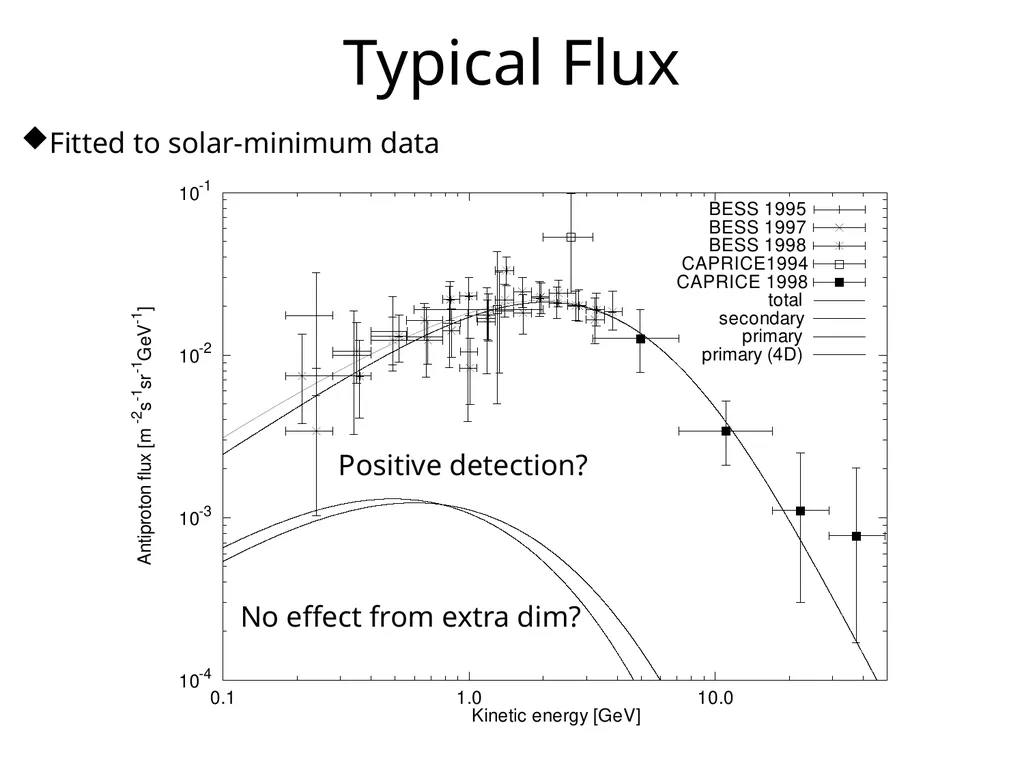
Typical Flux No effect from extra dim? Positive detection? Fitted to solar-minimum data<br>
16
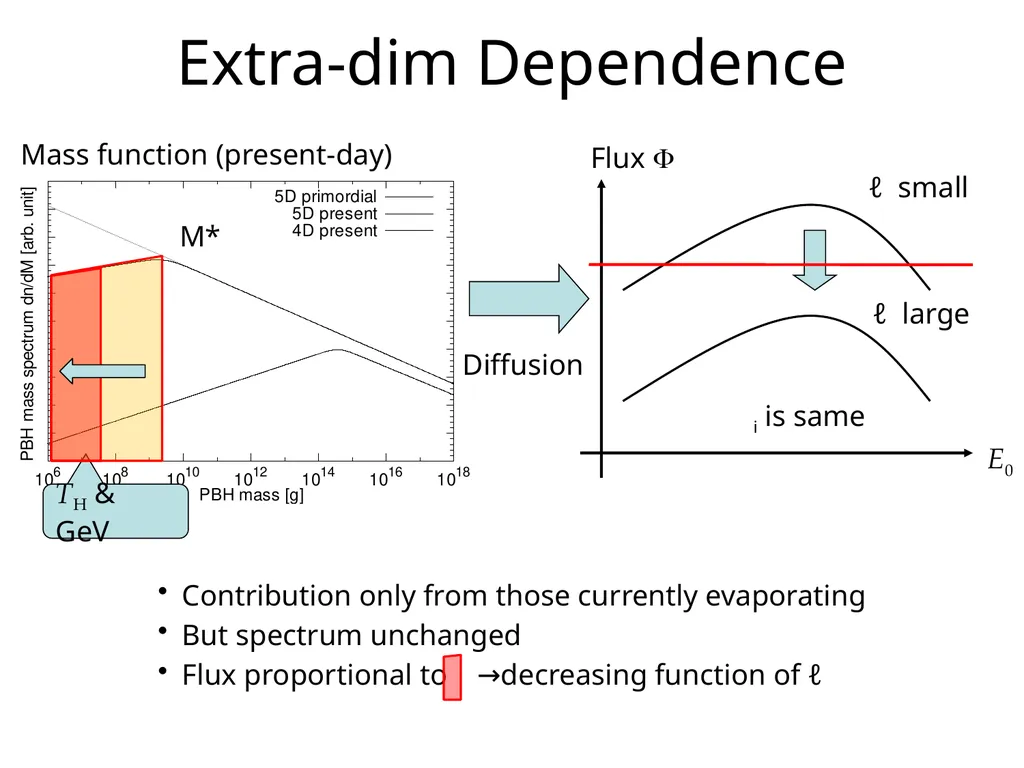
Extra-dim Dependence E0 Flux Contribution only from those currently evaporating
But spectrum unchanged
Flux proportional to →decreasing function of ℓ ℓ small ℓ large TH & GeV Diffusion Mass function (present-day) M* i is same<br>
17
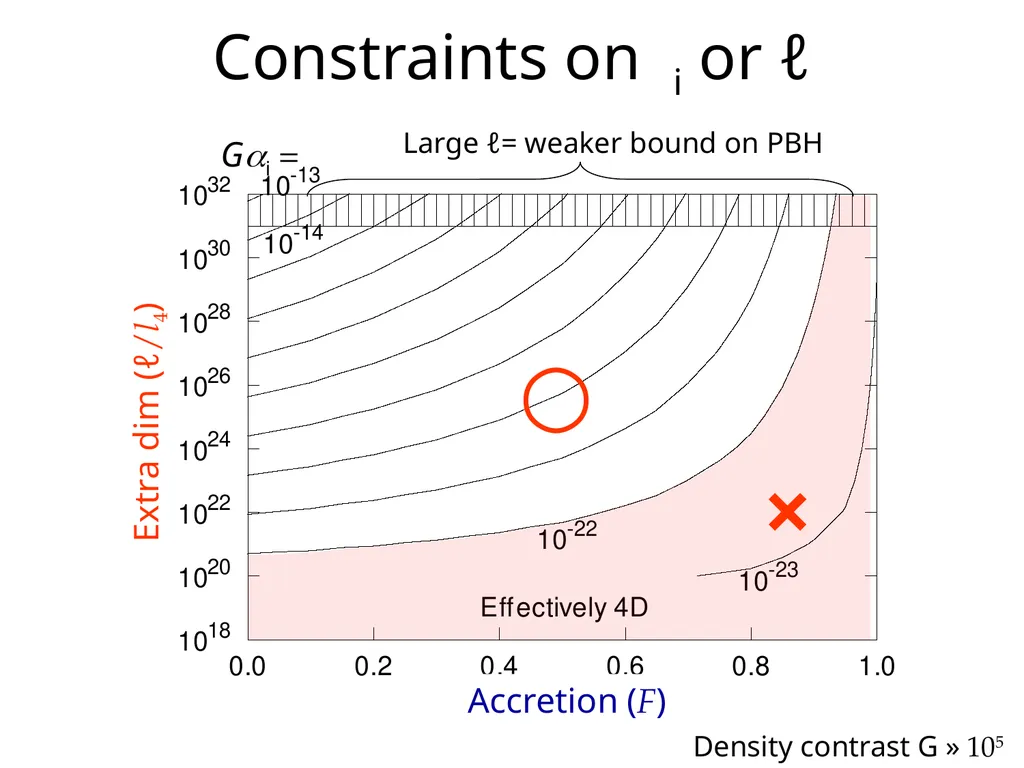
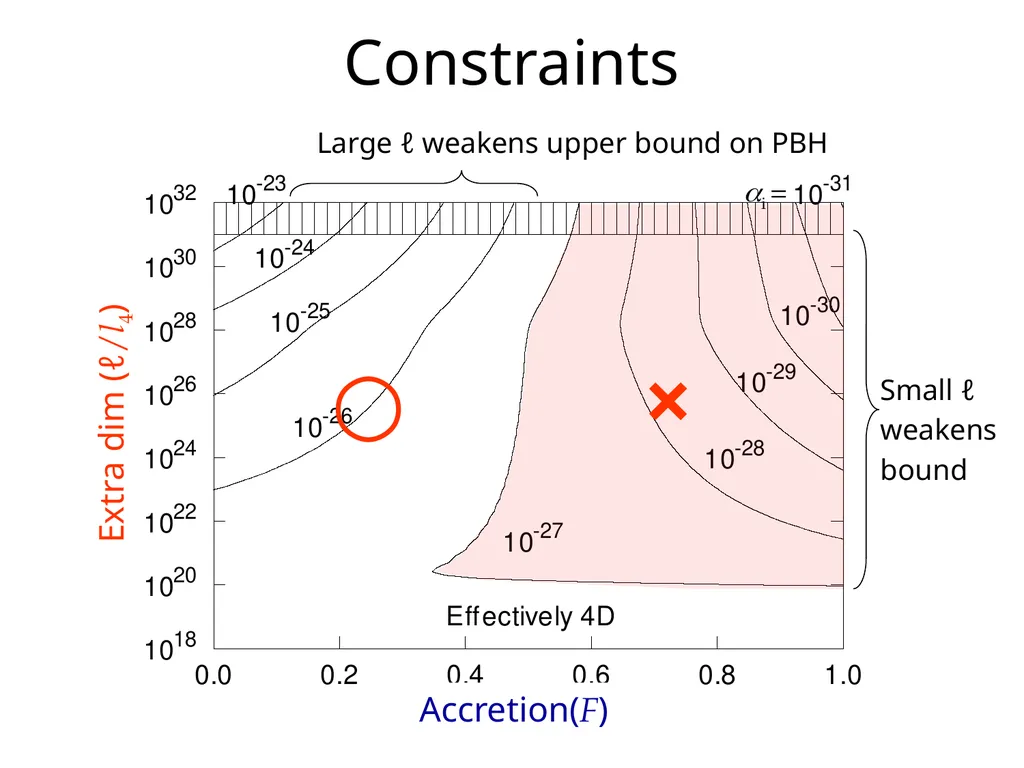
Constraints on i or ℓ Gi = Extra dim (ℓ/l4) Accretion (F) Large ℓ= weaker bound on PBH × ○ Density contrast G » 105<br>
18
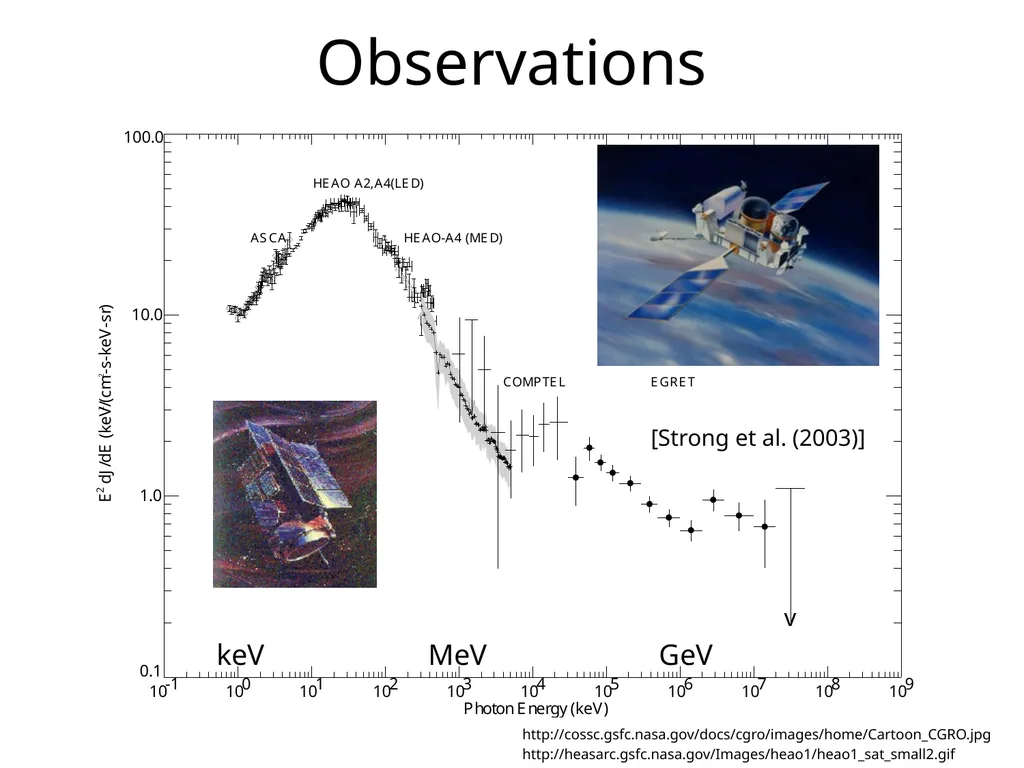
Extragalactic X/-ray Background [YS et al., PRD 68 (2003) 103510]<br>
19
http://cossc.gsfc.nasa.gov/docs/cgro/images/home/Cartoon_CGRO.jpg
http://heasarc.gsfc.nasa.gov/Images/heao1/heao1_sat_small2.gif [Strong et al. (2003)] keV GeV MeV Observations<br>
20
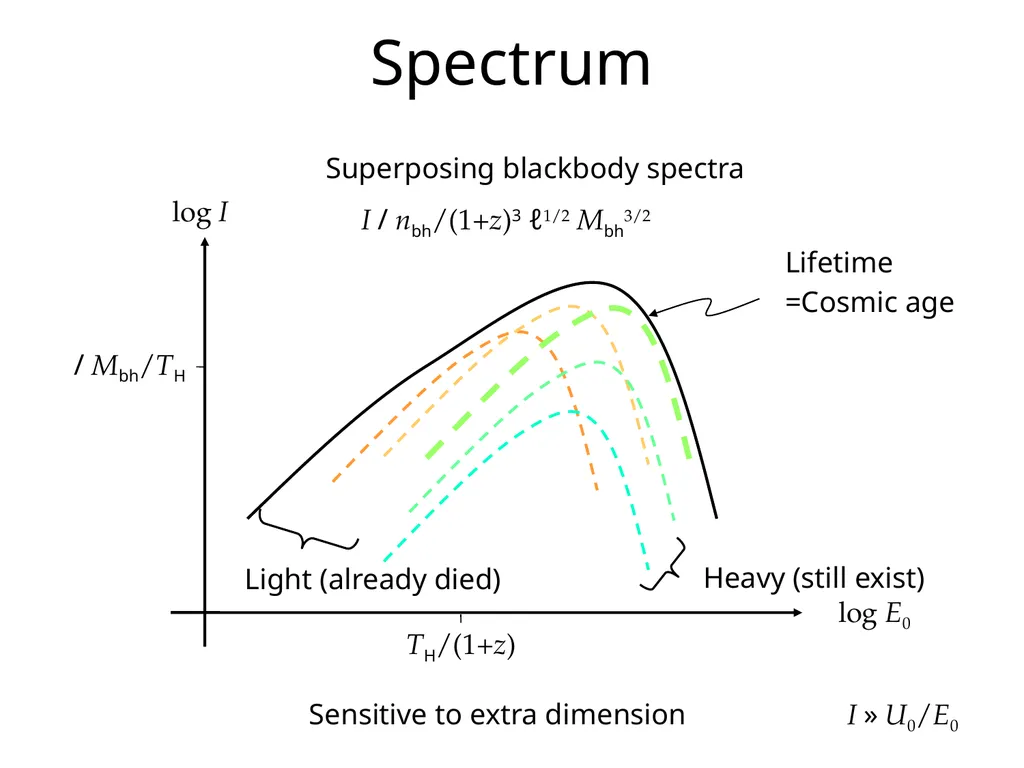
Spectrum Superposing blackbody spectra log E0 log I TH/(1+z) / Mbh/TH I / nbh/(1+z)3 ℓ1/2 Mbh3/2 Lifetime
=Cosmic age Heavy (still exist) Light (already died) Sensitive to extra dimension I » U0/E0<br>
21
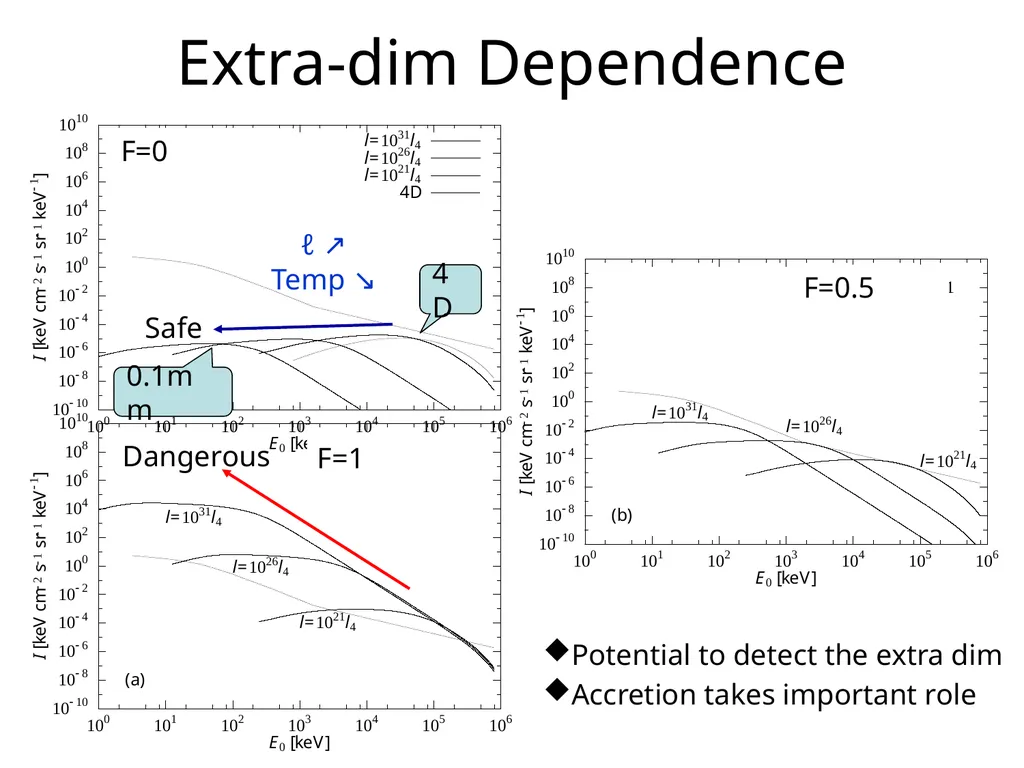
ℓ ↗
Temp ↘ 4D Extra-dim Dependence F=1 F=0 F=0.5 Potential to detect the extra dim
Accretion takes important role 0.1mm Safe Dangerous<br>
22
Constraints Extra dim (ℓ/l4) Accretion(F) Small ℓ
weakens
bound Large ℓ weakens upper bound on PBH × ○ i =<br>
23
Conclusions<br>
24
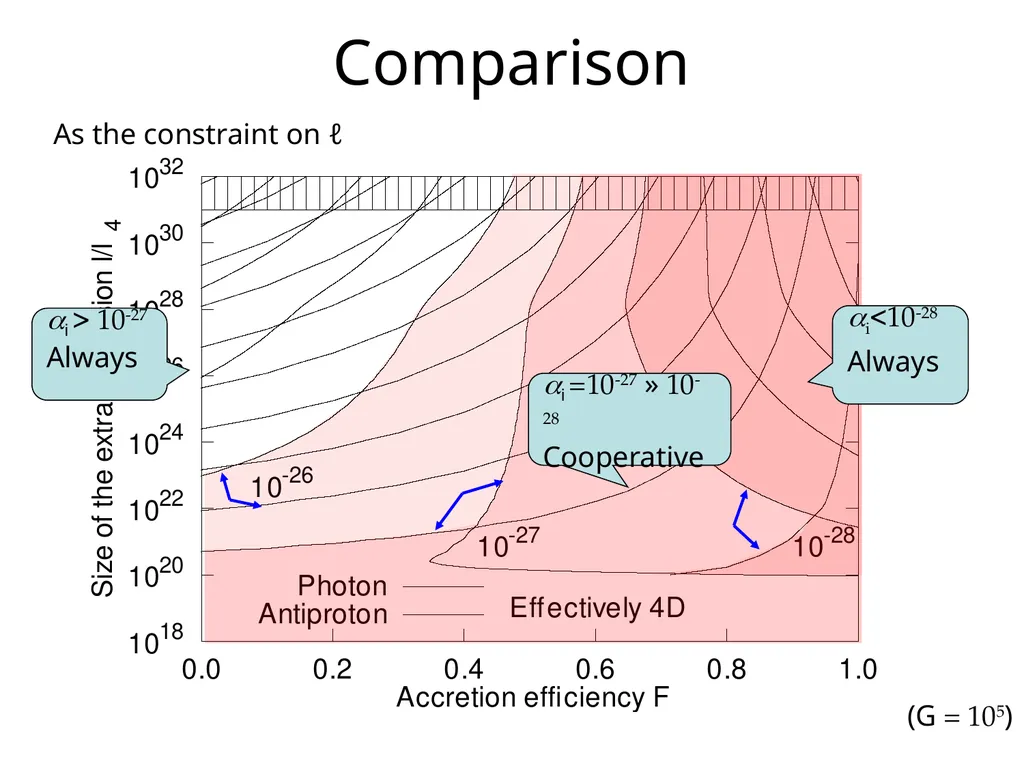
(G = 105) i > 10-27
Always i<10-28
Always i =10-27 » 10-28
Cooperative As the constraint on ℓ Comparison<br>
25
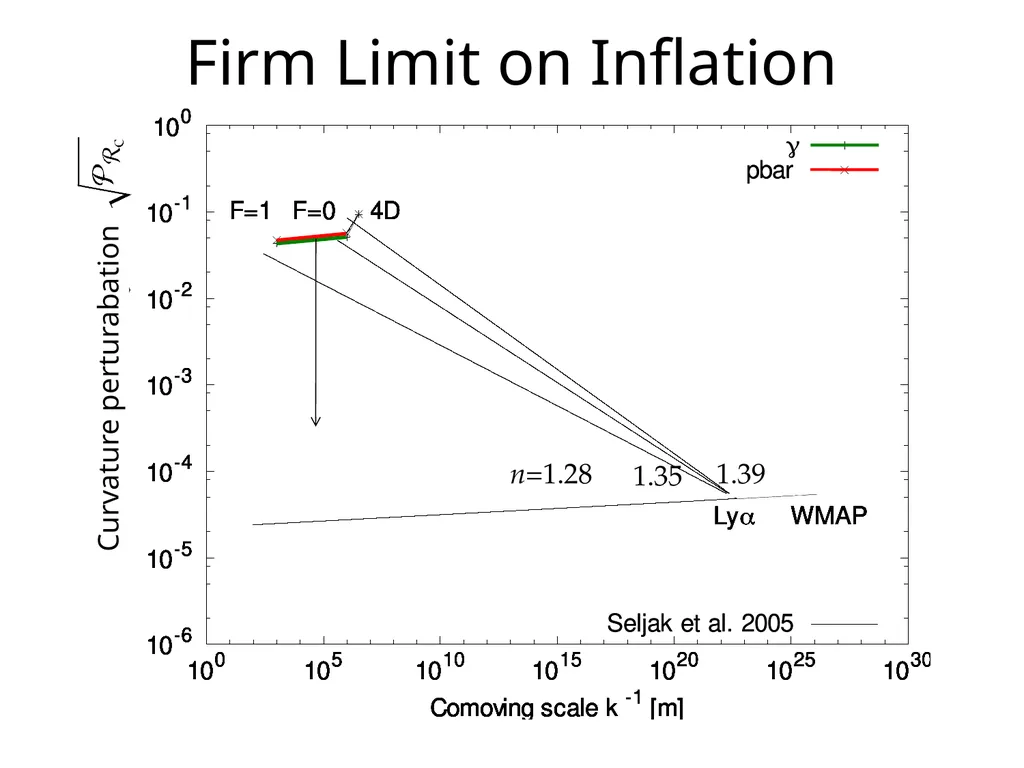
Firm Limit on Inflation Curvature perturabation n=1.28 1.35 1.39<br>
26
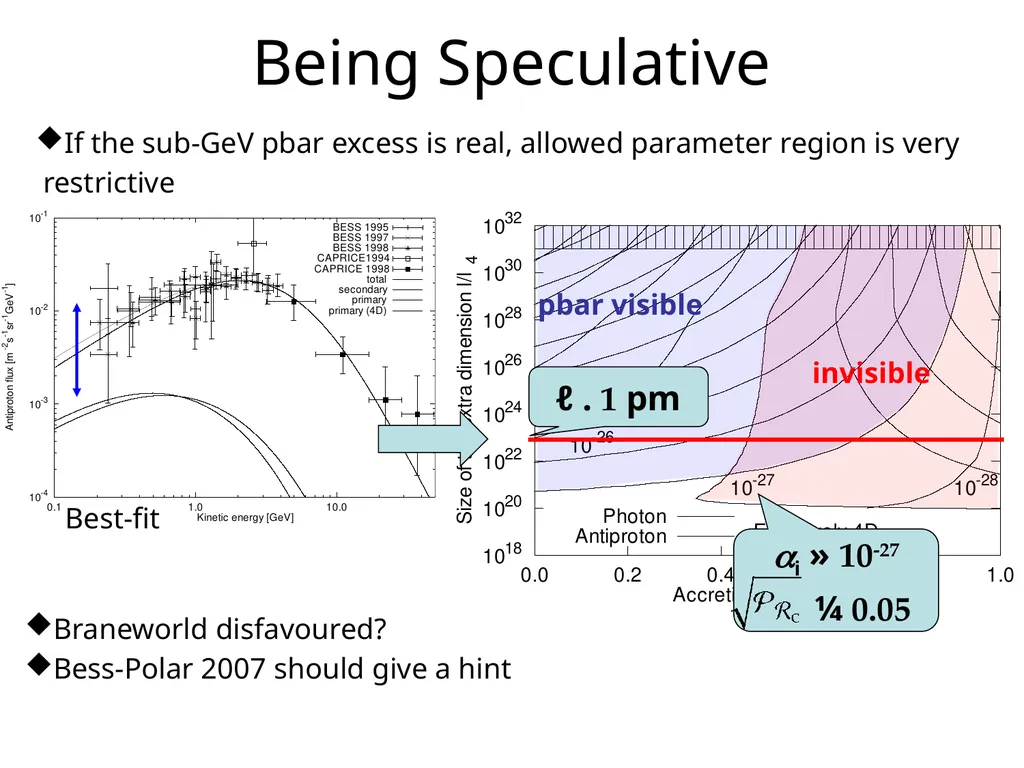
Best-fit If the sub-GeV pbar excess is real, allowed parameter region is very
restrictive i » 10-27
¼ 0.05 pbar visible invisible ℓ . 1 pm Braneworld disfavoured?
Bess-Polar 2007 should give a hint Being Speculative<br>