Tax Foundation University Session 1: The Individual Tax Code Areas of Focus The Basics of Individual Income Taxes Family and Worker Tax Credits The Basics of Passthrough Businesses TCJA Individual Expirations and Options for Reform
"Tax Foundation University Session 1: The" is the property of its rightful owner. Permission is granted to
download and print the materials on this website for personal, non-commercial use only, and to display it
on your personal computer provided you do not modify the materials and that you retain all copyright
notices contained in the materials. By downloading content from our website, you accept the terms of this
agreement.
Presentation Transcript
01
Tax Foundation University Session 1: The Individual Tax Code<br>
02
Areas of Focus The Basics of Individual Income Taxes
Family and Worker Tax Credits
The Basics of Passthrough Businesses
TCJA Individual Expirations and Options for Reform<br>
03
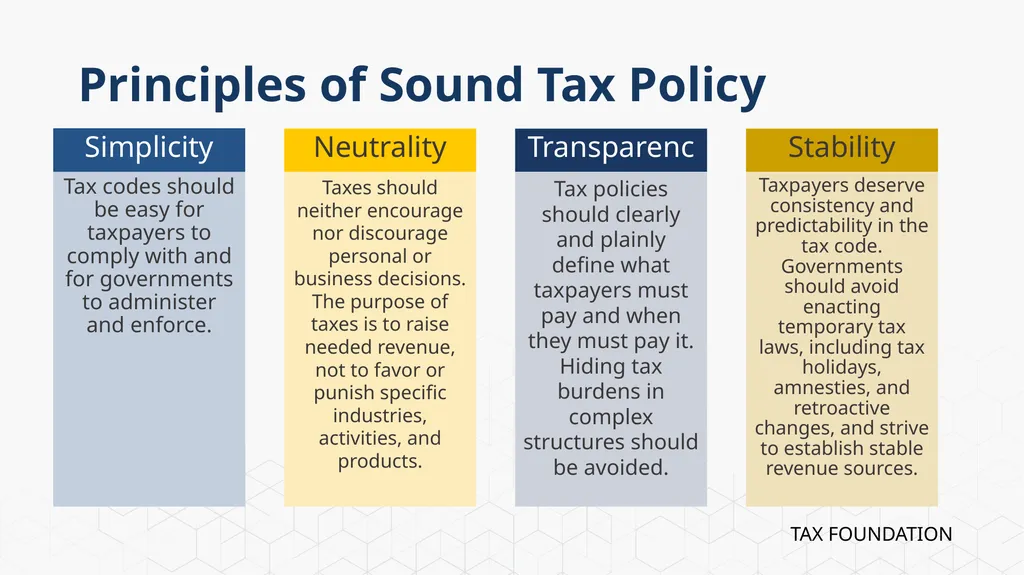
Principles of Sound Tax Policy Simplicity Tax codes should be easy for taxpayers to comply with and for governments to administer and enforce. Neutrality Taxes should neither encourage nor discourage personal or business decisions. The purpose of taxes is to raise needed revenue, not to favor or punish specific industries, activities, and products. Transparency Tax policies should clearly and plainly define what taxpayers must pay and when they must pay it. Hiding tax burdens in complex structures should be avoided. Stability Taxpayers deserve consistency and predictability in the tax code. Governments should avoid enacting temporary tax laws, including tax holidays, amnesties, and retroactive changes, and strive to establish stable revenue sources.<br>
04
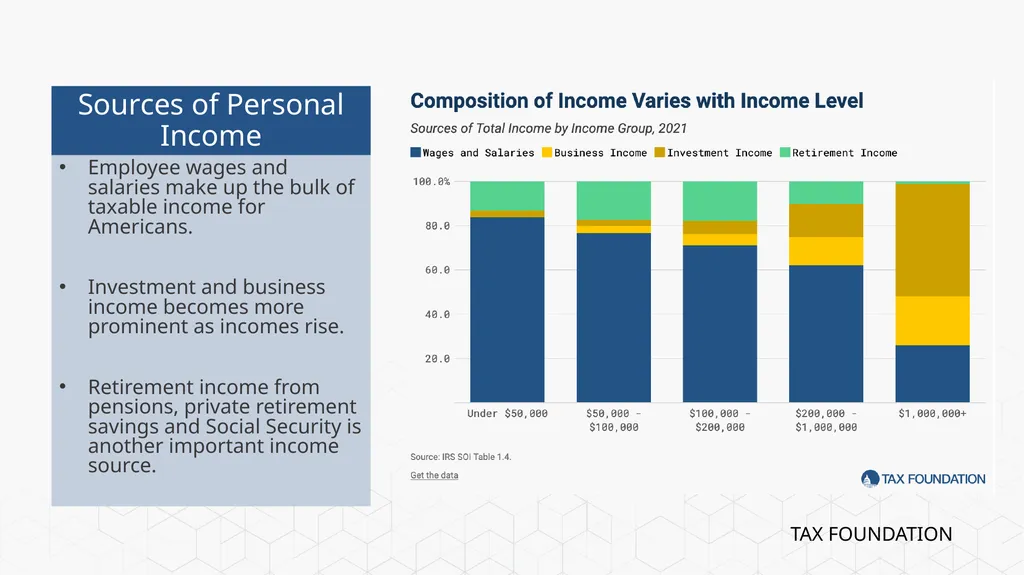
Sources of Personal Income Employee wages and salaries make up the bulk of taxable income for Americans.
Investment and business income becomes more prominent as incomes rise.
Retirement income from pensions, private retirement savings and Social Security is another important income source.<br>
05
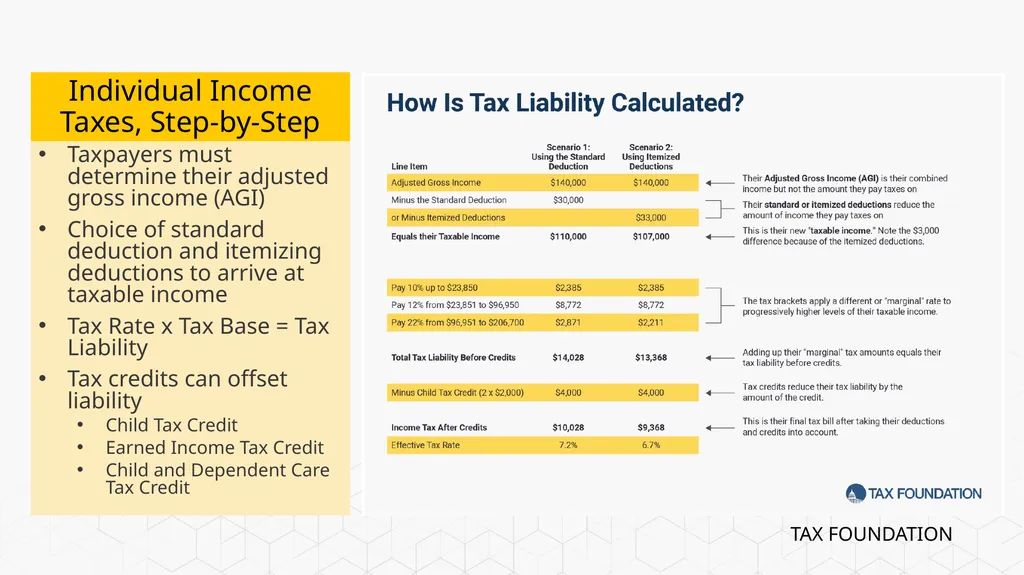
Individual Income Taxes, Step-by-Step Taxpayers must determine their adjusted gross income (AGI)
Choice of standard deduction and itemizing deductions to arrive at taxable income
Tax Rate x Tax Base = Tax Liability
Tax credits can offset liability
Child Tax Credit
Earned Income Tax Credit
Child and Dependent Care Tax Credit<br>
06
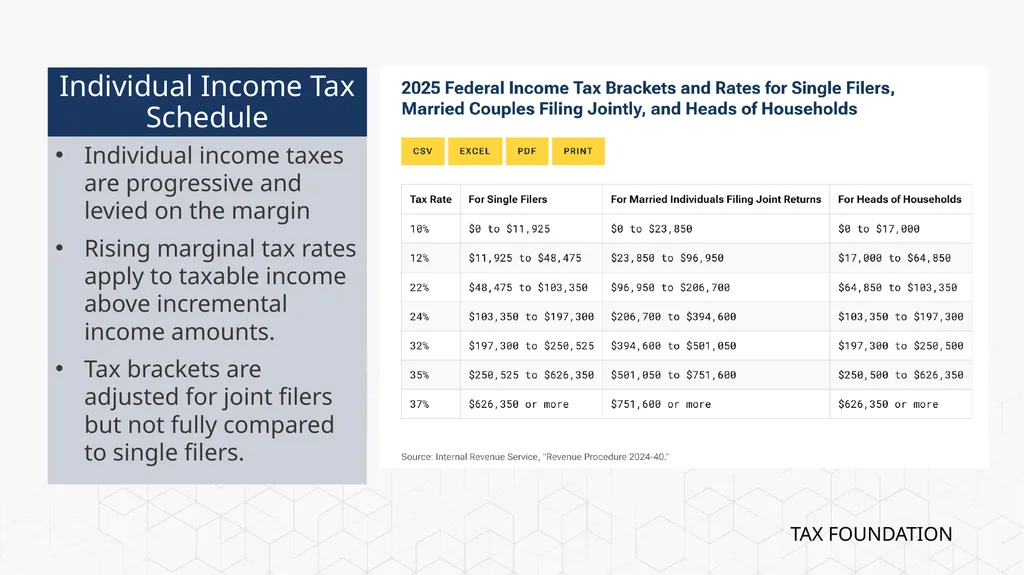
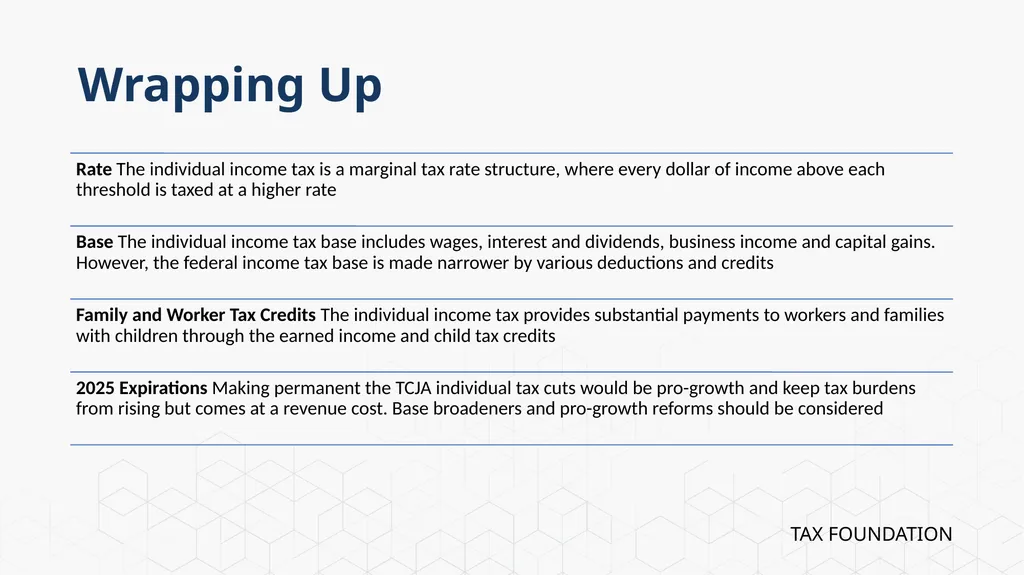
Individual Income Tax Schedule Individual income taxes are progressive and levied on the margin
Rising marginal tax rates apply to taxable income above incremental income amounts.
Tax brackets are adjusted for joint filers but not fully compared to single filers.<br>
07
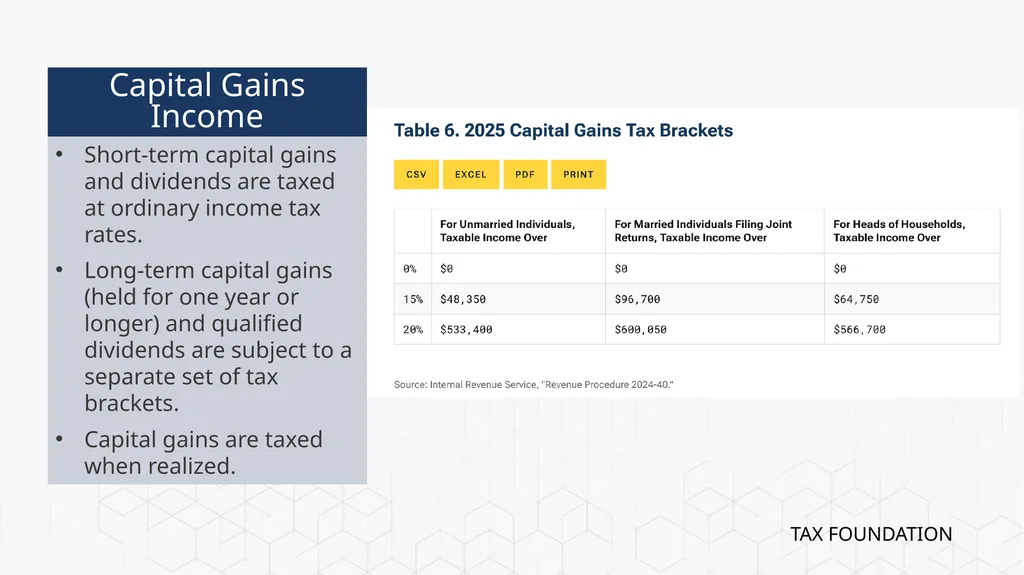
Capital Gains Income Short-term capital gains and dividends are taxed at ordinary income tax rates.
Long-term capital gains (held for one year or longer) and qualified dividends are subject to a separate set of tax brackets.
Capital gains are taxed when realized.<br>
08
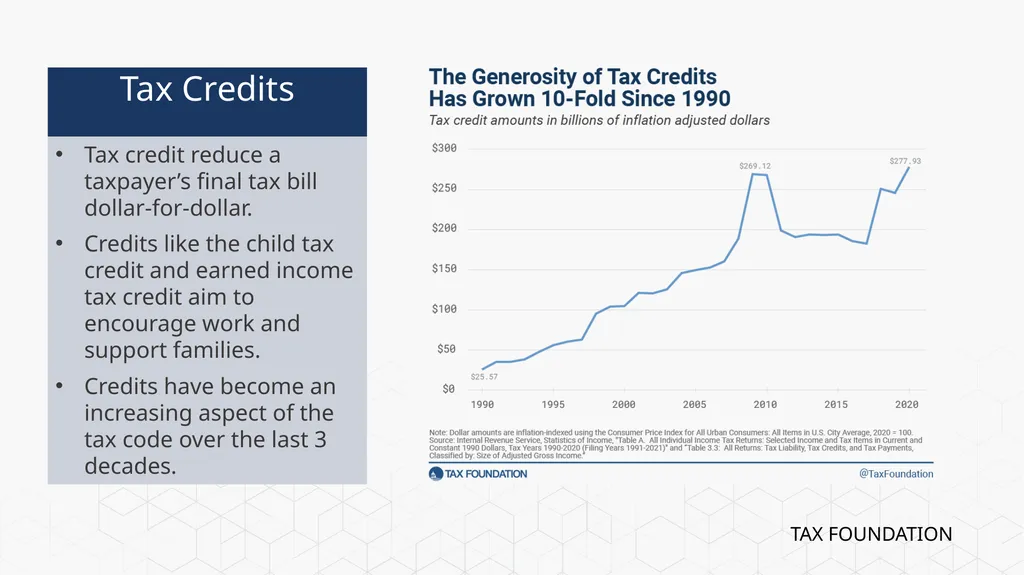
Tax Credits Tax credit reduce a taxpayer’s final tax bill dollar-for-dollar.
Credits like the child tax credit and earned income tax credit aim to encourage work and support families.
Credits have become an increasing aspect of the tax code over the last 3 decades.<br>
09
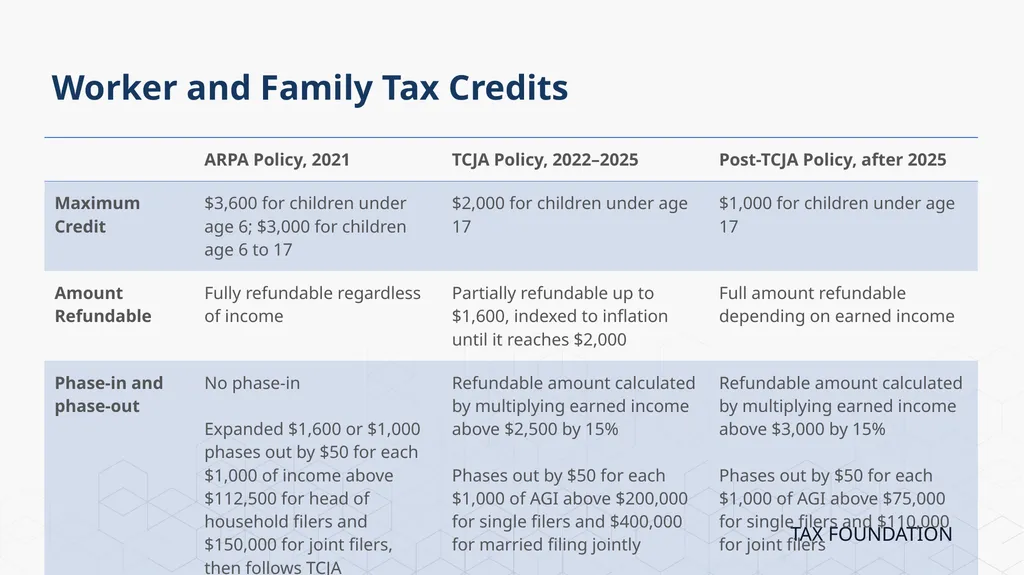
Worker and Family Tax Credits<br>
10
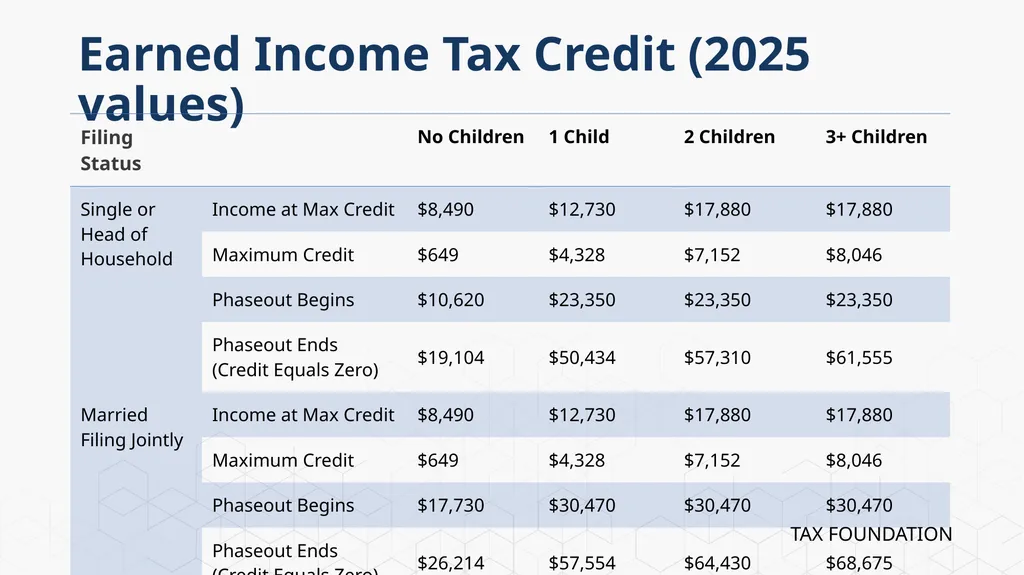
Earned Income Tax Credit (2025 values)<br>
11
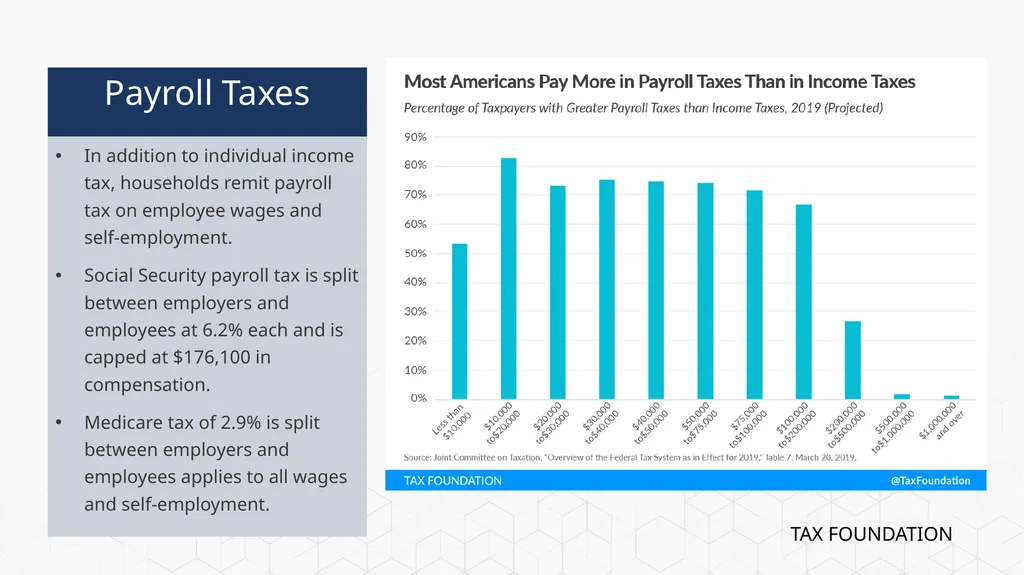
Payroll Taxes In addition to individual income tax, households remit payroll tax on employee wages and self-employment.
Social Security payroll tax is split between employers and employees at 6.2% each and is capped at $176,100 in compensation.
Medicare tax of 2.9% is split between employers and employees applies to all wages and self-employment.<br>
12
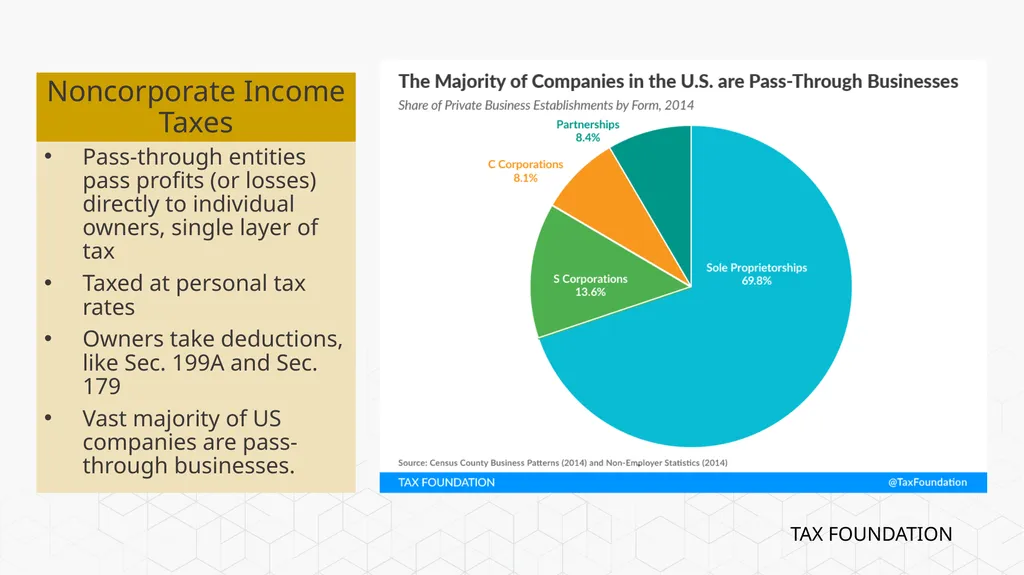
Noncorporate Income Taxes Pass-through entities pass profits (or losses) directly to individual owners, single layer of tax
Taxed at personal tax rates
Owners take deductions, like Sec. 199A and Sec. 179
Vast majority of US companies are pass-through businesses.<br>
13
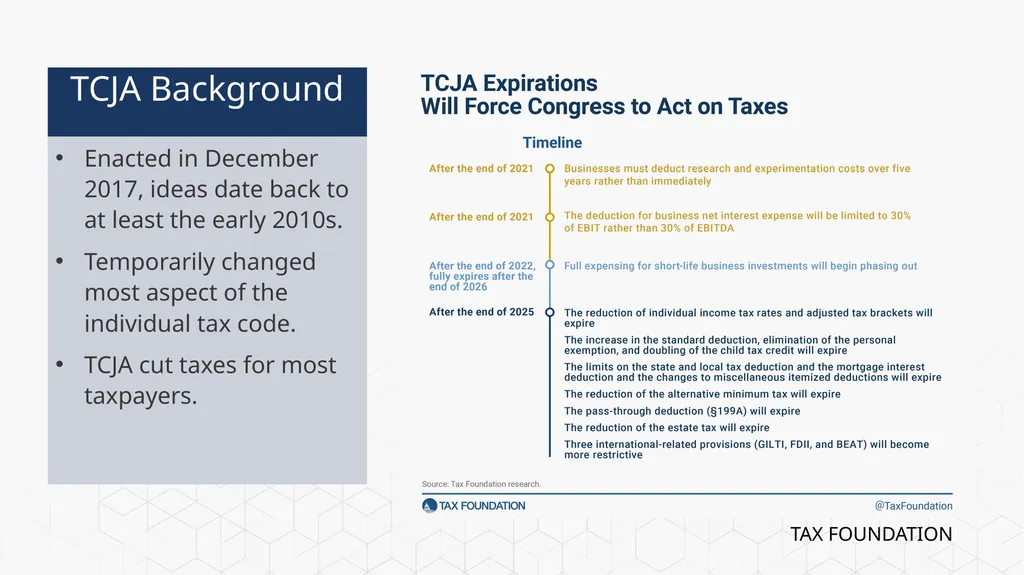
TCJA Background Enacted in December 2017, ideas date back to at least the early 2010s.
Temporarily changed most aspect of the individual tax code.
TCJA cut taxes for most taxpayers.<br>
14
Tax Cuts and Jobs Act Individual Expirations Individual tax provisions from the 2017 tax law expire at the end of 2025.
The average tax increase costs each taxpayers about $2,955 compared to current policy.
62 percent of taxpayers would see a tax increase if the provisions expire.<br>
15
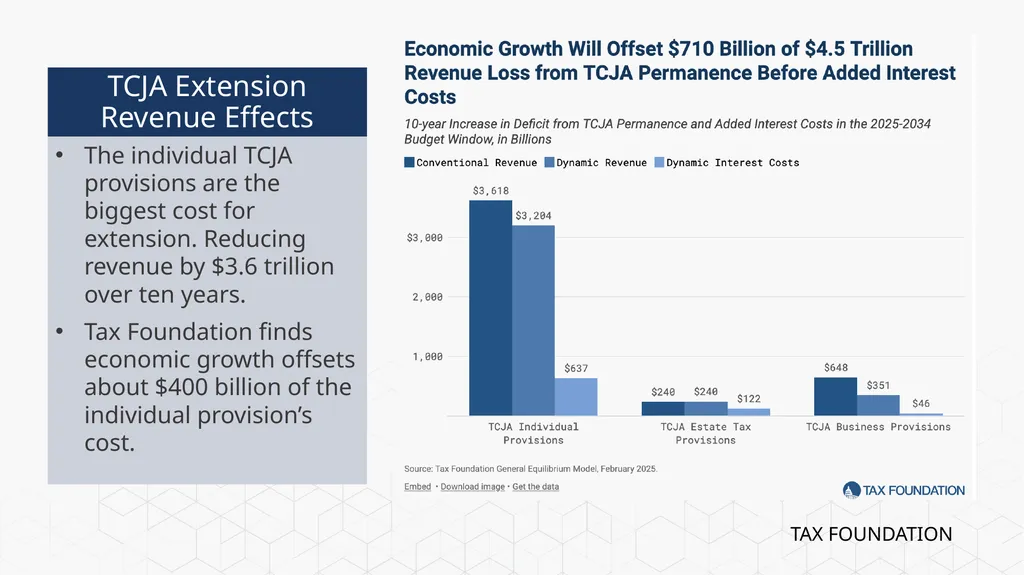
TCJA Extension Revenue Effects The individual TCJA provisions are the biggest cost for extension. Reducing revenue by $3.6 trillion over ten years.
Tax Foundation finds economic growth offsets about $400 billion of the individual provision’s cost.<br>
16
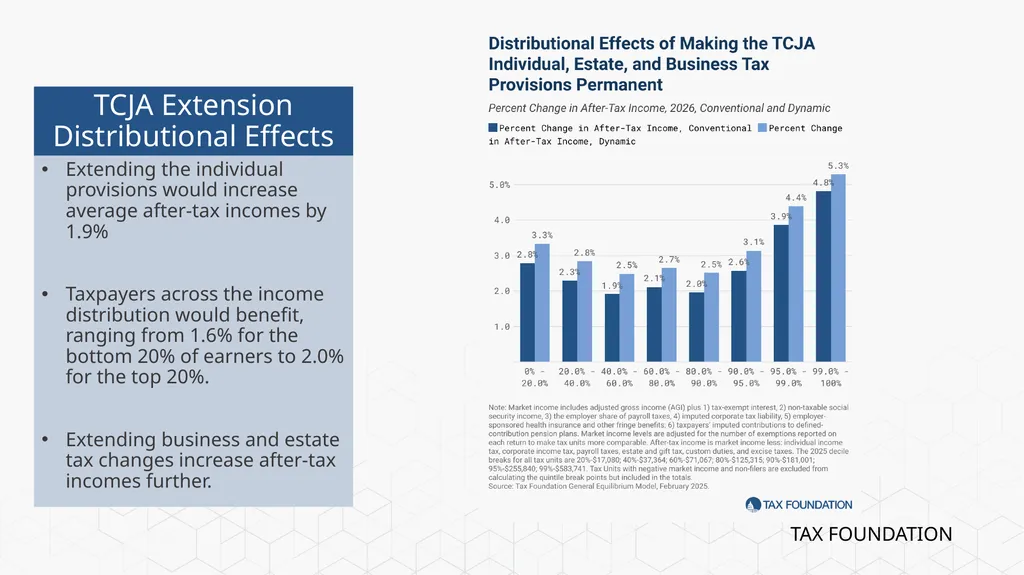
TCJA Extension Distributional Effects Extending the individual provisions would increase average after-tax incomes by 1.9%
Taxpayers across the income distribution would benefit, ranging from 1.6% for the bottom 20% of earners to 2.0% for the top 20%.
Extending business and estate tax changes increase after-tax incomes further.<br>
17
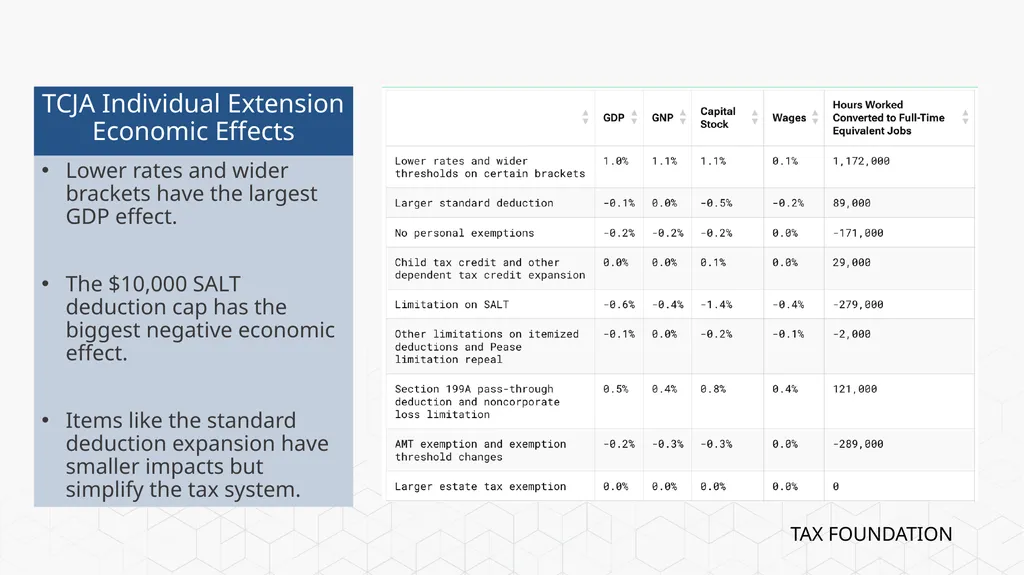
TCJA Individual Extension Economic Effects Lower rates and wider brackets have the largest GDP effect.
The $10,000 SALT deduction cap has the biggest negative economic effect.
Items like the standard deduction expansion have smaller impacts but simplify the tax system.<br>
18
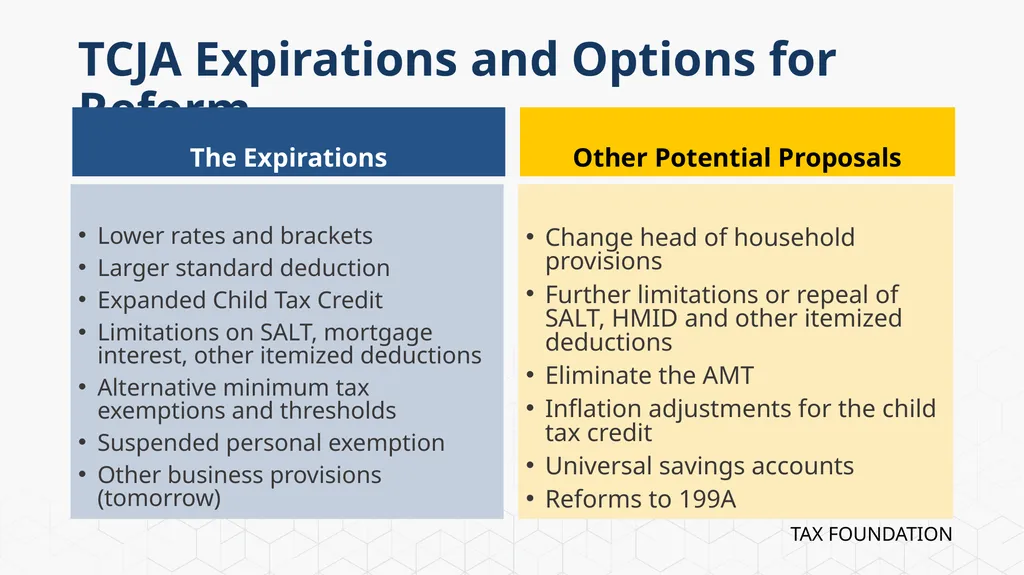
TCJA Expirations and Options for Reform The Expirations Lower rates and brackets
Larger standard deduction
Expanded Child Tax Credit
Limitations on SALT, mortgage interest, other itemized deductions
Alternative minimum tax exemptions and thresholds
Suspended personal exemption
Other business provisions (tomorrow) Other Potential Proposals Change head of household provisions
Further limitations or repeal of SALT, HMID and other itemized deductions
Eliminate the AMT
Inflation adjustments for the child tax credit
Universal savings accounts
Reforms to 199A<br>