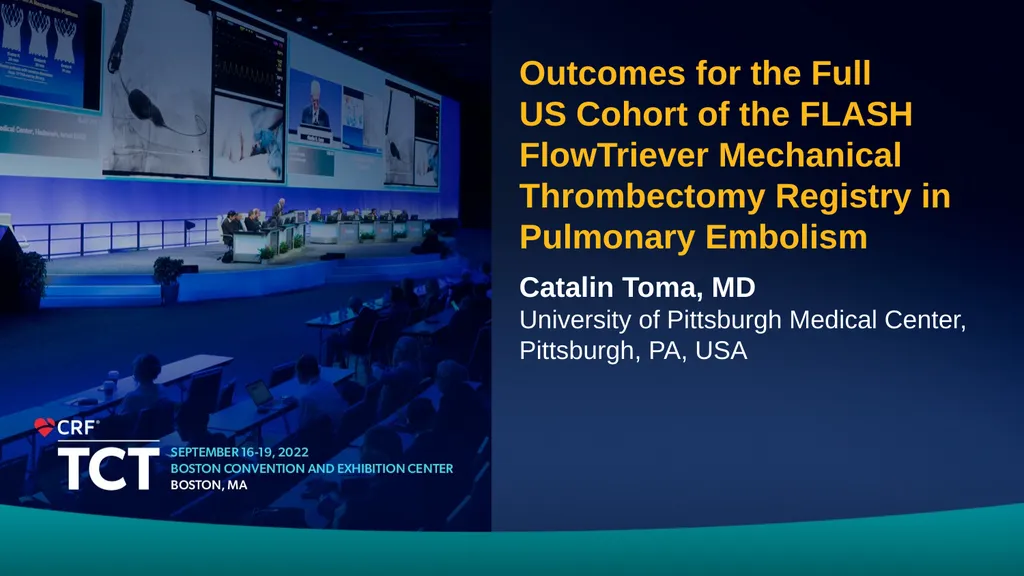
TCT Template Title 30 pt Bold Arial John Doe, MD Subtitle 25 pt Arial Bold Italics Outcomes for the Full US Cohort of the FLASH FlowTriever Mechanical Thrombectomy Registry in Pulmonary Embolism Catalin Toma, MD University of Pittsburgh
"TCT Template Title 30 pt Bold Arial John Doe, MD" is the property of its rightful owner. Permission is granted to
download and print the materials on this website for personal, non-commercial use only, and to display it
on your personal computer provided you do not modify the materials and that you retain all copyright
notices contained in the materials. By downloading content from our website, you accept the terms of this
agreement.
Presentation Transcript
01
TCT Template Title 30 pt Bold Arial John Doe, MD
Subtitle 25 pt Arial Bold Italics Outcomes for the Full US Cohort of the FLASH FlowTriever Mechanical Thrombectomy Registry in Pulmonary Embolism Catalin Toma, MD University of Pittsburgh Medical Center, Pittsburgh, PA, USA<br>
02
Within the past 12 months, I or my spouse/partner have had a financial interest/arrangement or affiliation with the organization(s) listed below. Disclosure Statement of Financial Interest Faculty disclosure information can be found on the app<br>
03
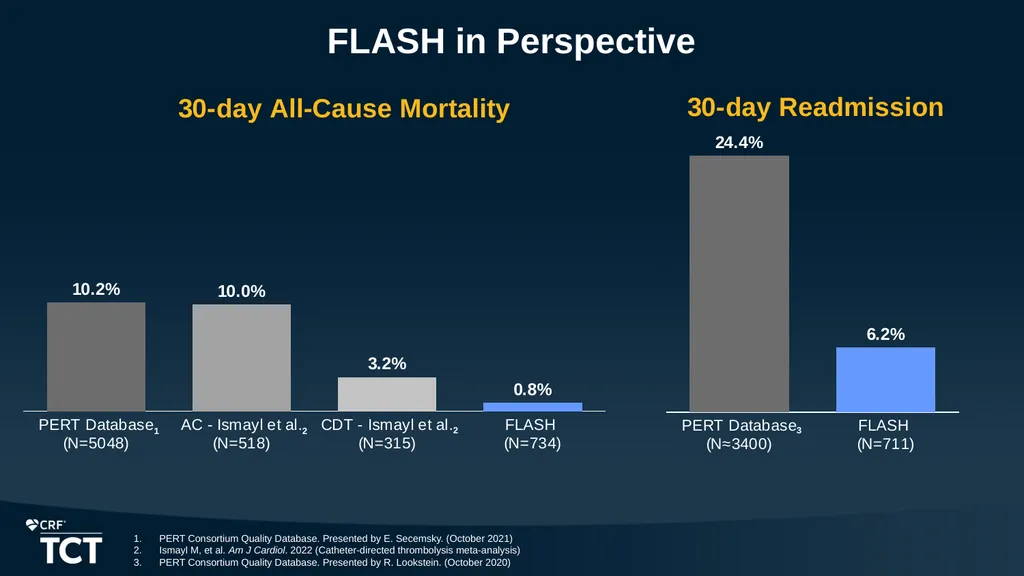
Intervention for Pulmonary Embolism Acute all-cause mortality following PE has remained high (>10%) over 2 decades1,2
Following PE, the 30-day readmission rate is nearly 25%,3 and up to half of patients report persistent dyspnea, exercise intolerance, and/or functional limitations at 3–6 months4
Guidelines suggest considering advanced therapies, including mechanical thrombectomy, when thrombolytics fail or are contraindicated, or hemodynamic deterioration occurs5
Major bleeding risks with thrombolytic-based treatment strategies remain a concern, and their use is limited by corresponding contraindications and consequent ICU monitoring
Mechanical thrombectomy can rapidly extract thrombus and relieve RV strain without thrombolytics; additional data on the risk-to-benefit ratio could shift the standard of care Kucher N, et al. Circulation. 2006 (ICOPER)
PERT Consortium Quality Database. Presented by E. Secemsky (October 2021)
PERT Consortium Quality Database. Presented by R. Lookstein (October 2020) Luijten D, et al. Semin Thromb Hemost. 2022
Konstantinides SV, et al. Eur Heart J. 2020 (ESC Guidelines)<br>
04
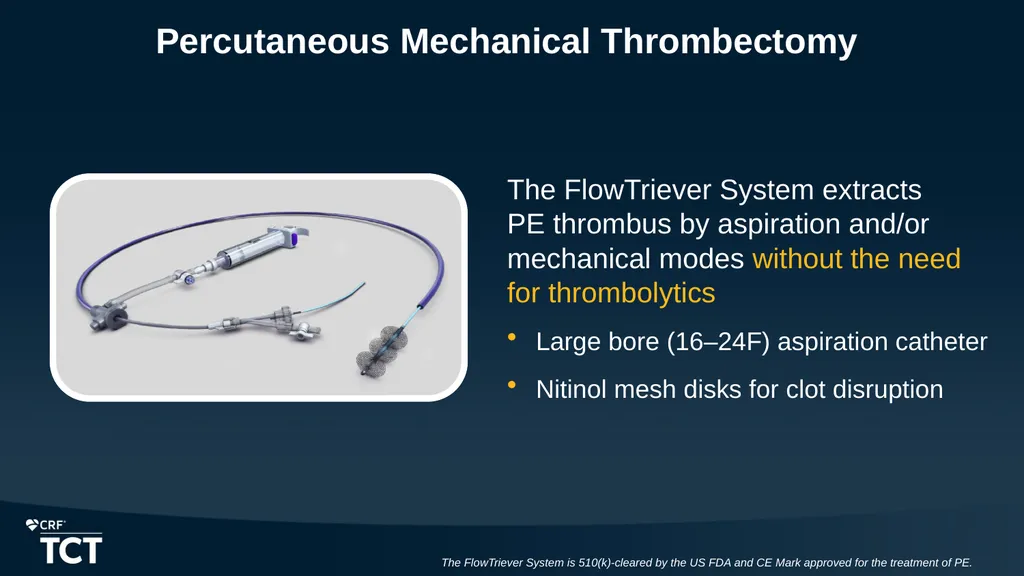
Percutaneous Mechanical Thrombectomy The FlowTriever System extracts PE thrombus by aspiration and/or mechanical modes without the need for thrombolytics
Large bore (16–24F) aspiration catheter
Nitinol mesh disks for clot disruption The FlowTriever System is 510(k)-cleared by the US FDA and CE Mark approved for the treatment of PE.<br>
05
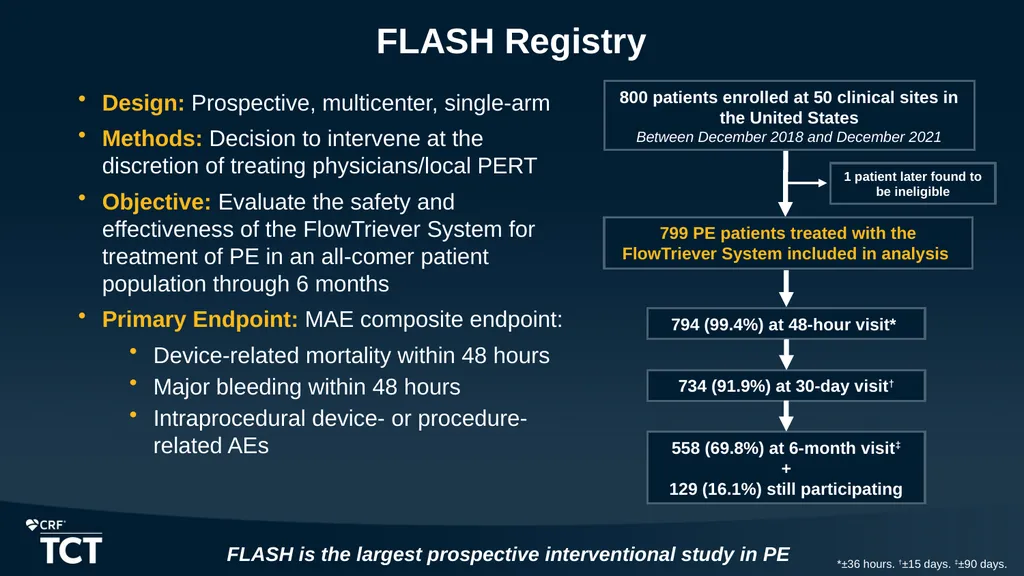
Design: Prospective, multicenter, single-arm
Methods: Decision to intervene at the discretion of treating physicians/local PERT
Objective: Evaluate the safety and effectiveness of the FlowTriever System for treatment of PE in an all-comer patient population through 6 months
Primary Endpoint: MAE composite endpoint:
Device-related mortality within 48 hours
Major bleeding within 48 hours
Intraprocedural device- or procedure-related AEs 1 patient later found to be ineligible 799 PE patients treated with the FlowTriever System included in analysis 800 patients enrolled at 50 clinical sites in the United States
Between December 2018 and December 2021 794 (99.4%) at 48-hour visit* 734 (91.9%) at 30-day visit† 558 (69.8%) at 6-month visit‡
+
129 (16.1%) still participating FLASH Registry *±36 hours. †±15 days. ‡±90 days. FLASH is the largest prospective interventional study in PE<br>
06
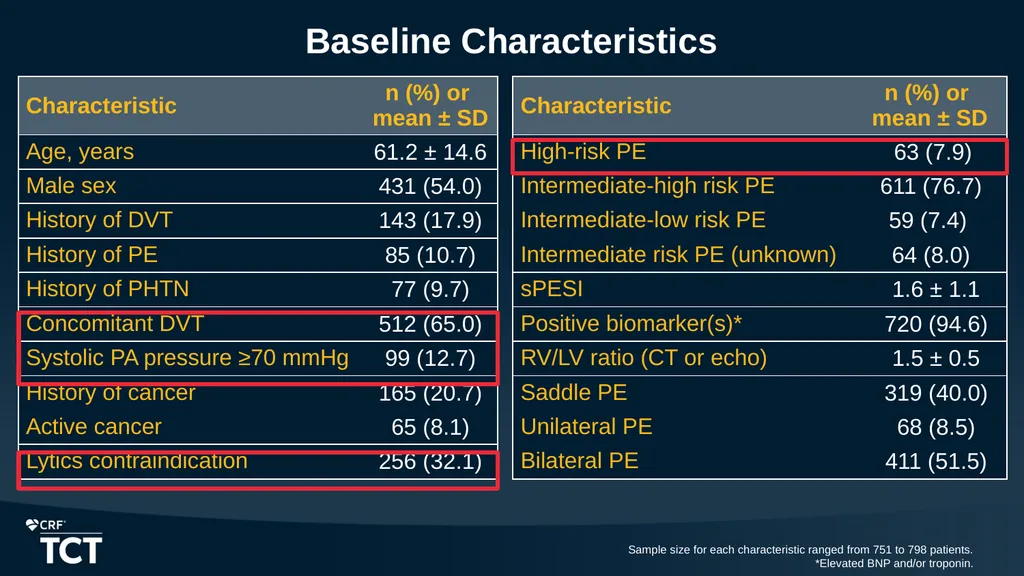
Baseline Characteristics Sample size for each characteristic ranged from 751 to 798 patients.
*Elevated BNP and/or troponin.<br>
07
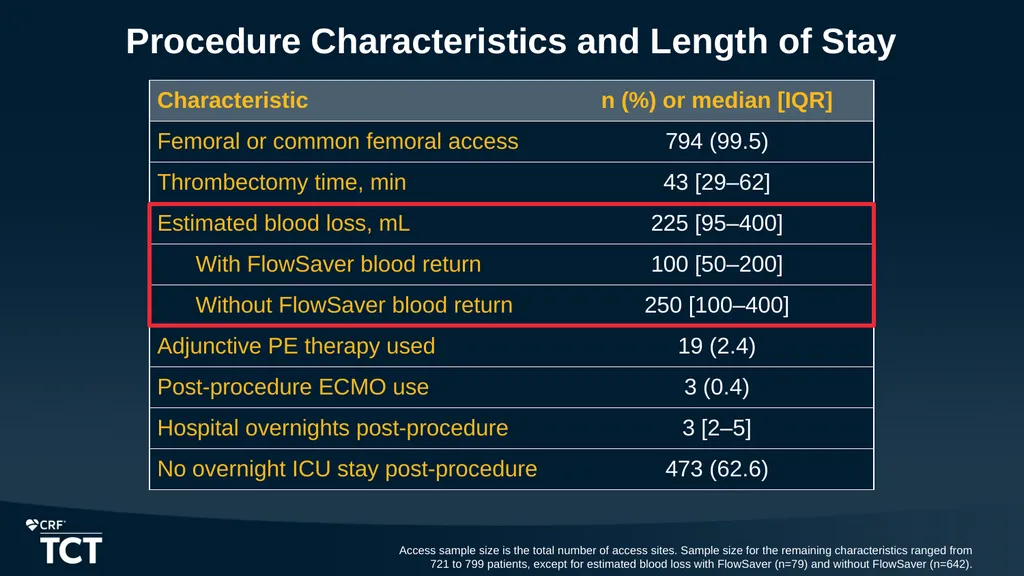
Procedure Characteristics and Length of Stay Access sample size is the total number of access sites. Sample size for the remaining characteristics ranged from 721 to 799 patients, except for estimated blood loss with FlowSaver (n=79) and without FlowSaver (n=642).<br>
08
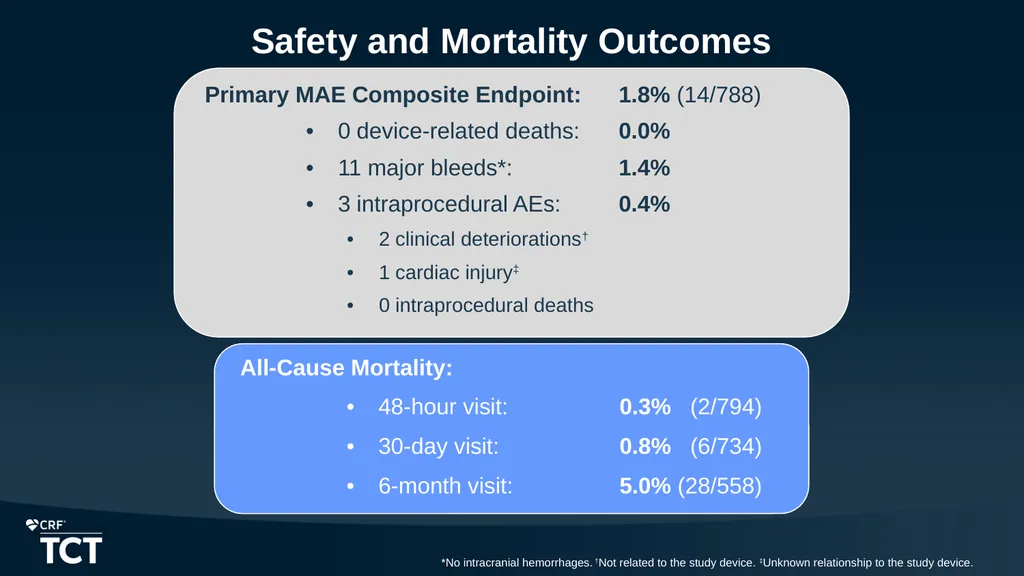
Safety and Mortality Outcomes *No intracranial hemorrhages. †Not related to the study device. ‡Unknown relationship to the study device.<br>
09
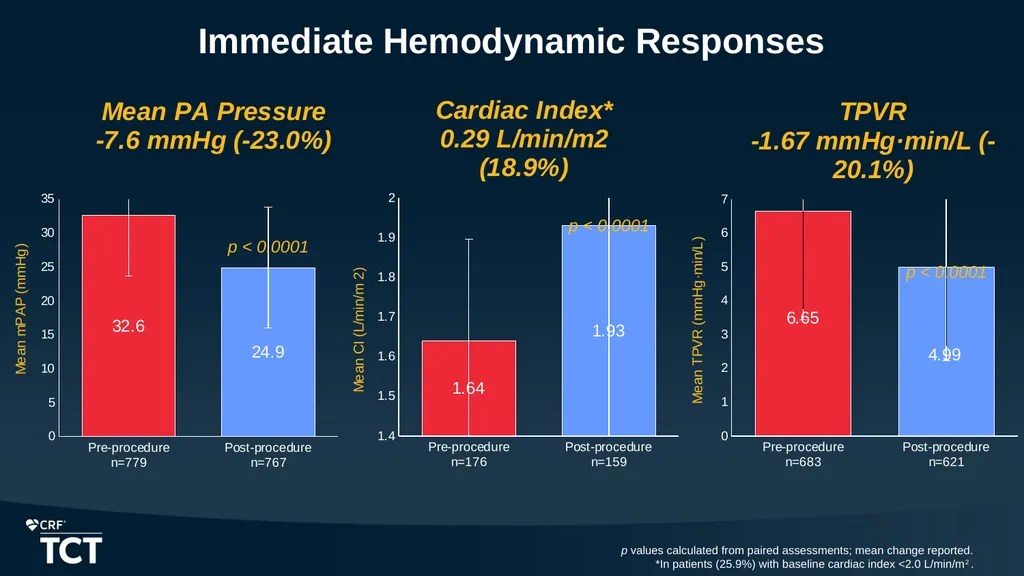
Immediate Hemodynamic Responses p < 0.0001 p < 0.0001 p < 0.0001 p values calculated from paired assessments; mean change reported.
*In patients (25.9%) with baseline cardiac index <2.0 L/min/m2 .<br>
10
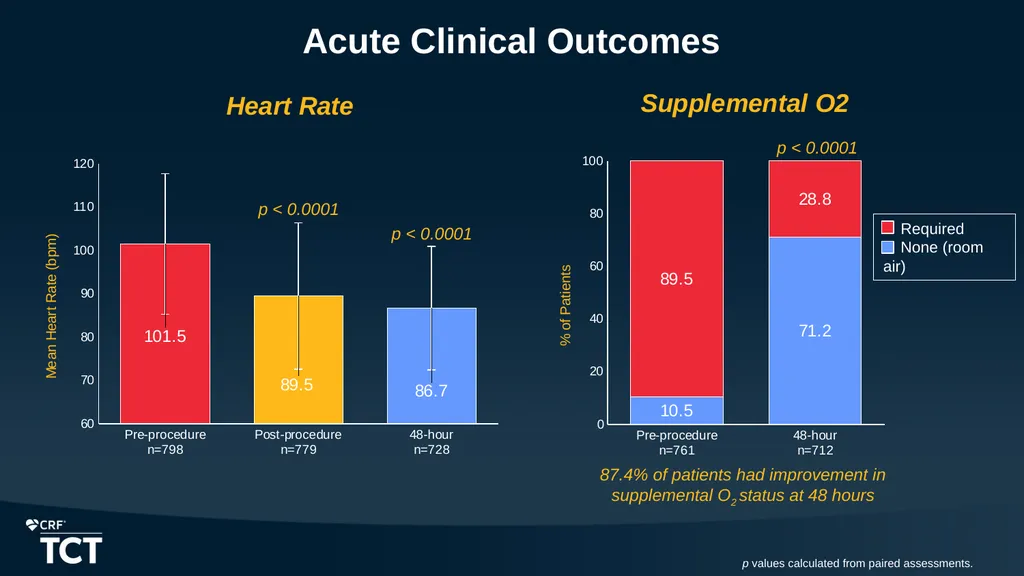
Acute Clinical Outcomes 87.4% of patients had improvement in supplemental O2 status at 48 hours p < 0.0001 p < 0.0001 p < 0.0001 p values calculated from paired assessments.<br>
11
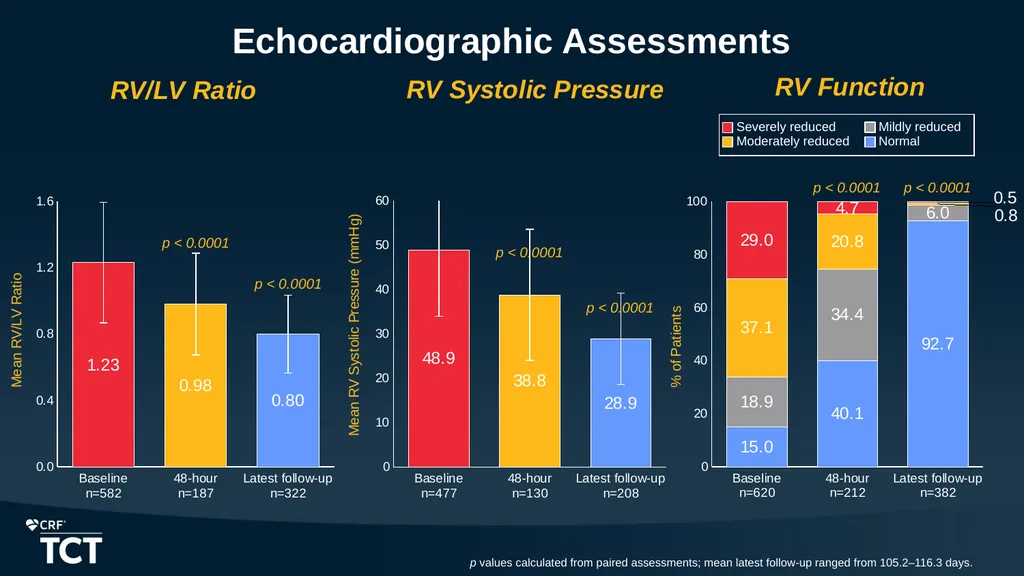
Echocardiographic Assessments p < 0.0001 p < 0.0001 p < 0.0001 p < 0.0001 p < 0.0001 p < 0.0001 p values calculated from paired assessments; mean latest follow-up ranged from 105.2–116.3 days.<br>
12
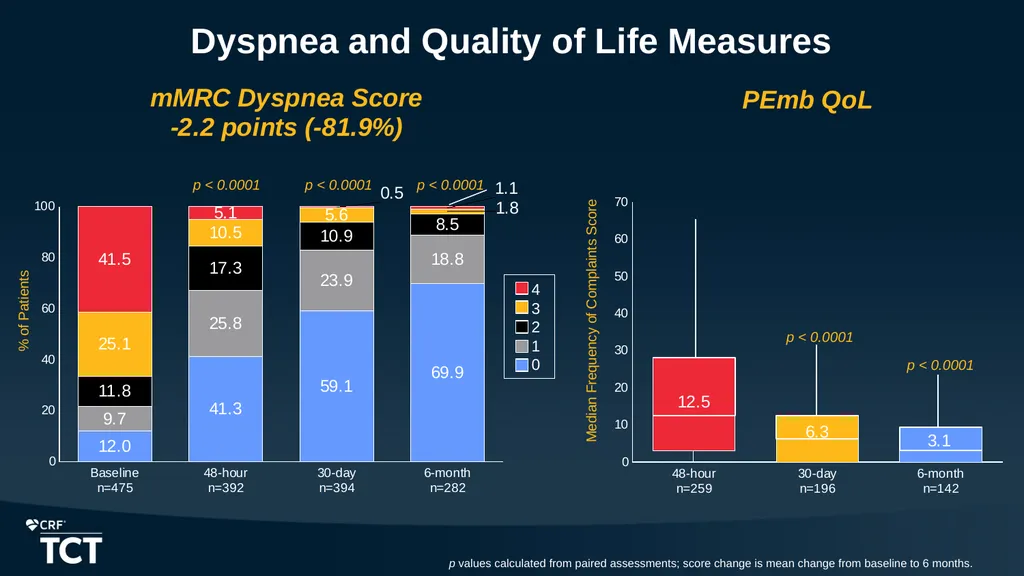
Dyspnea and Quality of Life Measures p < 0.0001 p < 0.0001 p < 0.0001 p < 0.0001 p < 0.0001 p values calculated from paired assessments; score change is mean change from baseline to 6 months.<br>
13
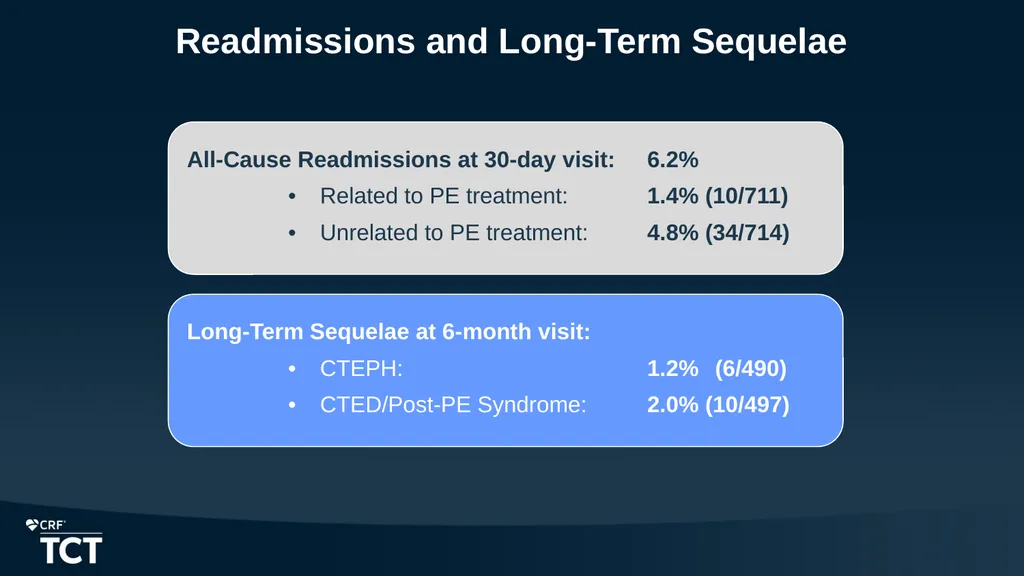
Readmissions and Long-Term Sequelae<br>
14
FLASH in Perspective PERT Consortium Quality Database. Presented by E. Secemsky. (October 2021)
Ismayl M, et al. Am J Cardiol. 2022 (Catheter-directed thrombolysis meta-analysis)
PERT Consortium Quality Database. Presented by R. Lookstein. (October 2020) 1 2 2 3<br>
15
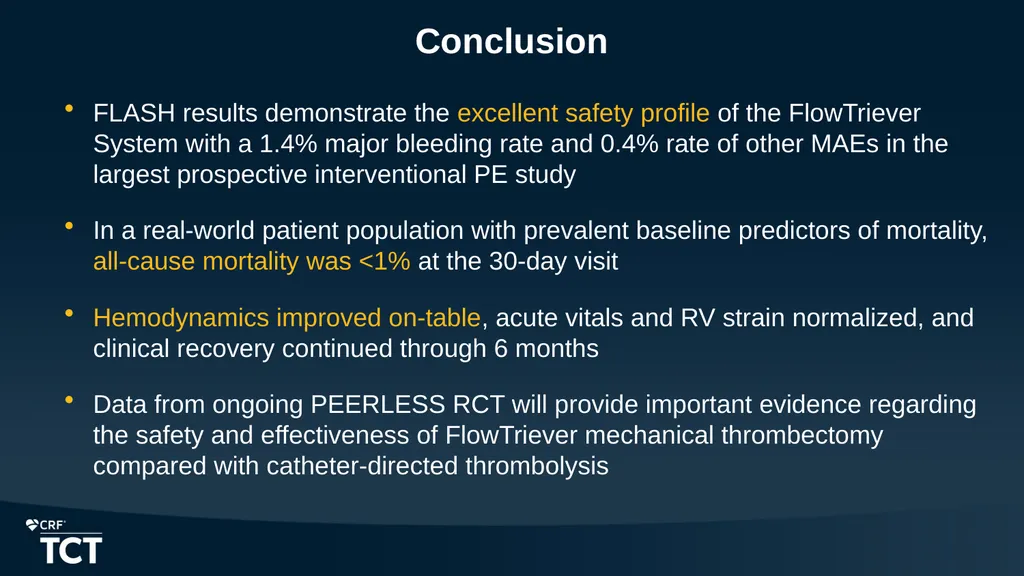
FLASH results demonstrate the excellent safety profile of the FlowTriever System with a 1.4% major bleeding rate and 0.4% rate of other MAEs in the largest prospective interventional PE study
In a real-world patient population with prevalent baseline predictors of mortality, all-cause mortality was <1% at the 30-day visit
Hemodynamics improved on-table, acute vitals and RV strain normalized, and clinical recovery continued through 6 months
Data from ongoing PEERLESS RCT will provide important evidence regarding the safety and effectiveness of FlowTriever mechanical thrombectomy compared with catheter-directed thrombolysis Conclusion<br>
16
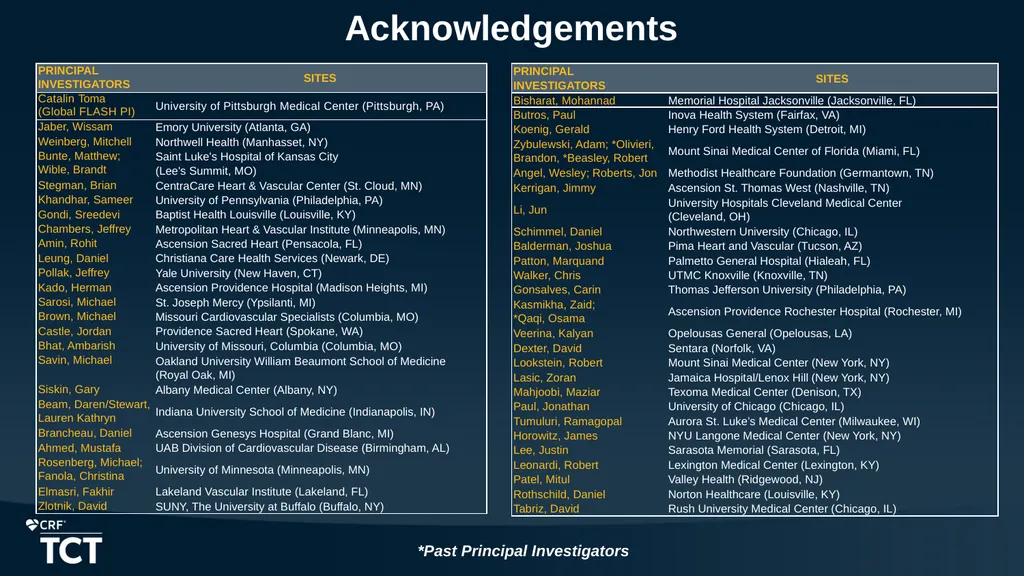
Acknowledgements *Past Principal Investigators<br>
17
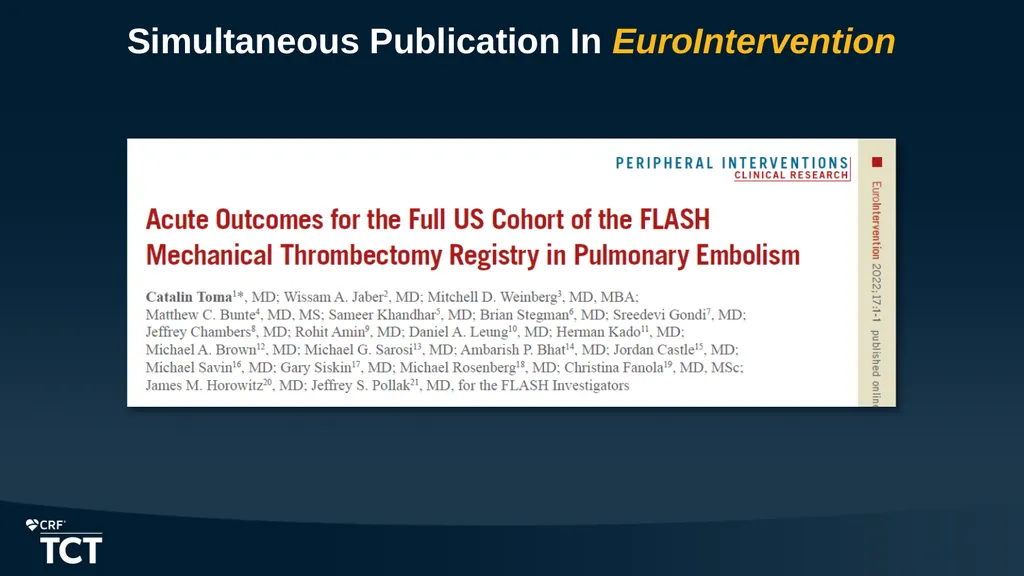
Simultaneous Publication In EuroIntervention<br>
18
Multiple Linear Regression Models Absolute Reduction in mPAP<br>
19
Multiple Linear Regression Models Absolute Reduction in mMRC Dyspnea Score<br>