
Teaching RE and World Views What are your world
LO
Published · 46 slides · 0 views

1 / 1







Description
Teaching RE and World Views What are your world views? Agenda Why? What? How? It provokes challenging questions about the meaning and purpose of life, beliefs, the self, issues of right and wrong, and what it means to be human. It develops
Related Topics
Share
Embed code
Download this presentation From Below
"Teaching RE and World Views What are your world" is the property of its rightful owner. Permission is granted to download and print the materials on this website for personal, non-commercial use only, and to display it on your personal computer provided you do not modify the materials and that you retain all copyright notices contained in the materials. By downloading content from our website, you accept the terms of this agreement.
Presentation Transcript
01
Teaching RE and World Views<br>
02
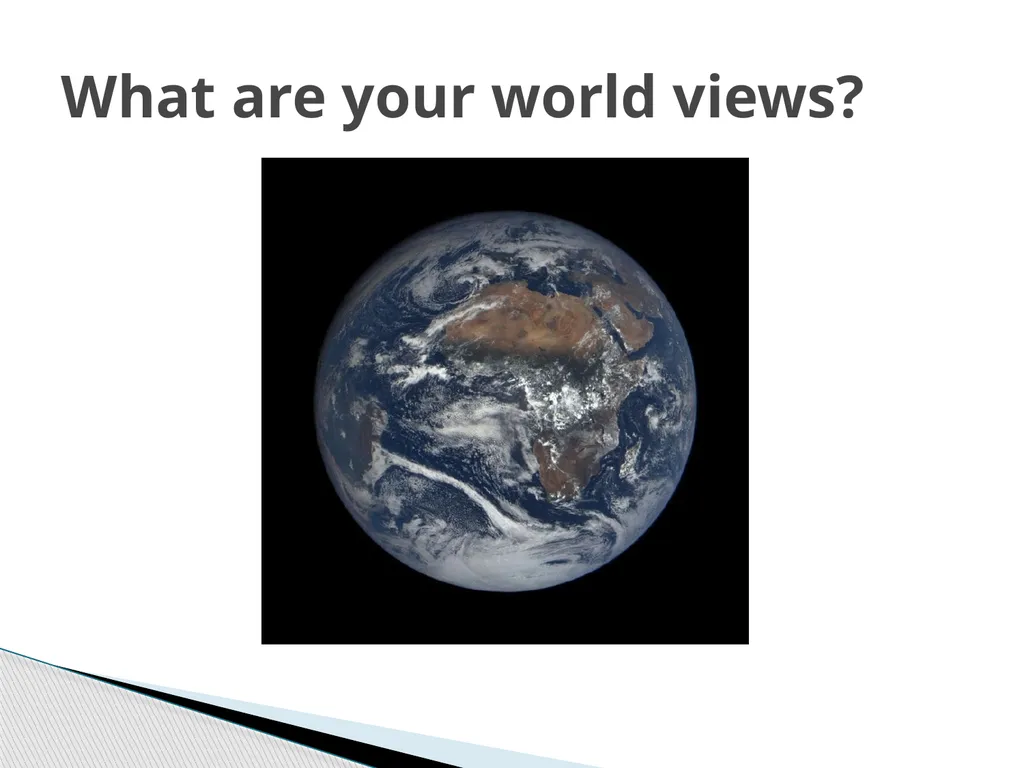
What are your world views?<br>
03
Agenda Why? What? How?<br>
04
It provokes challenging questions about the meaning and purpose of life, beliefs, the self, issues of right and wrong, and what it means to be human.
It develops pupils’ knowledge and understanding of Christianity, other principal religions, and religious traditions that examine these questions, fostering personal reflection and spiritual development
It encourages pupils to explore their own beliefs (whether they are religious or nonreligious), in the light of what they learn
It enables pupils to build their sense of identity and belonging, which helps them flourish within their communities and as citizens in a diverse society
It teaches pupils to develop respect for others, including people with different faiths and beliefs, and helps to challenge prejudice
It prompts pupils to consider their responsibilities to themselves and to others, and to explore how they might contribute to their communities and to wider society. It encourages empathy, generosity and compassion. Why teach RE?<br>
It develops pupils’ knowledge and understanding of Christianity, other principal religions, and religious traditions that examine these questions, fostering personal reflection and spiritual development
It encourages pupils to explore their own beliefs (whether they are religious or nonreligious), in the light of what they learn
It enables pupils to build their sense of identity and belonging, which helps them flourish within their communities and as citizens in a diverse society
It teaches pupils to develop respect for others, including people with different faiths and beliefs, and helps to challenge prejudice
It prompts pupils to consider their responsibilities to themselves and to others, and to explore how they might contribute to their communities and to wider society. It encourages empathy, generosity and compassion. Why teach RE?<br>
05
Make learning about religions accessible and meaningful by linking it with children’s own experience
Enable children to become aware that people in this country and across the world adhere to many different religions, each with their own beliefs, practices, special stories, places of worship, holy men and women, and festivals What do I need to do?<br>
Enable children to become aware that people in this country and across the world adhere to many different religions, each with their own beliefs, practices, special stories, places of worship, holy men and women, and festivals What do I need to do?<br>
06
Enable children to learn about different beliefs about God and the world around them
Help children to respond to the big questions about life
Enable children to understand the impact of religion on individuals and society locally, nationally and globally
Enable children to make connections between religions<br>
Help children to respond to the big questions about life
Enable children to understand the impact of religion on individuals and society locally, nationally and globally
Enable children to make connections between religions<br>
07
Aid them in developing empathy for different believers
Help them to recognise the challenges involved in distinguishing between ideas of right and wrong, and valuing what is good and true<br>
Help them to recognise the challenges involved in distinguishing between ideas of right and wrong, and valuing what is good and true<br>
08
Dos and don’ts<br>
09
Local syllabuses must not be designed to urge religious belief on pupils
It is important not to present religious beliefs as statements of fact.
For example, rather than saying, “God made the world”, we need to say “Christians (or Jews or Muslims or …) believe that God made the world”. Beliefs and fact<br>
It is important not to present religious beliefs as statements of fact.
For example, rather than saying, “God made the world”, we need to say “Christians (or Jews or Muslims or …) believe that God made the world”. Beliefs and fact<br>
10
Check pronunciation
Stay aware of your own feelings and beliefs. Remember you are a role model.
Learn from the children and parents and your local community
Watch out for misconceptions
Don’t role-play worship or use actual sacred texts in role-play
Don’t represent the Jewish concept of God, Allah, Muhammad or a Sikh guru in any human form<br>
Stay aware of your own feelings and beliefs. Remember you are a role model.
Learn from the children and parents and your local community
Watch out for misconceptions
Don’t role-play worship or use actual sacred texts in role-play
Don’t represent the Jewish concept of God, Allah, Muhammad or a Sikh guru in any human form<br>
11
The Essex Syllabus https://schools.essex.gov.uk/other/Essex_SACRE<br>
12
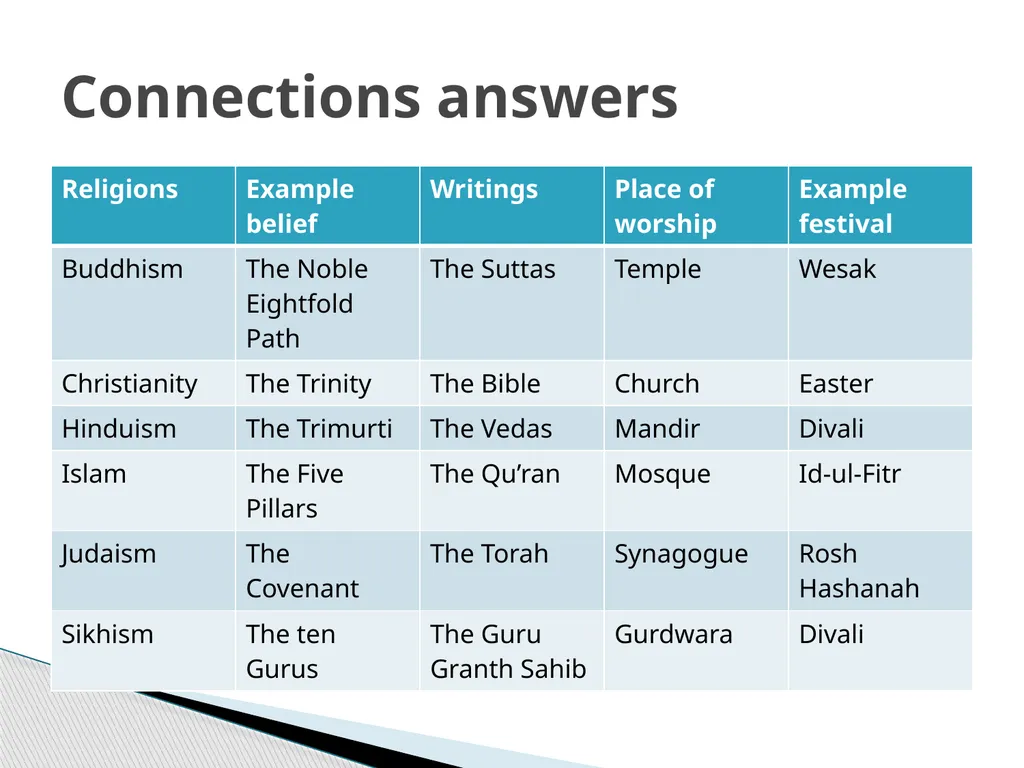
Find the six religions of the Essex syllabus. Draw a rectangle round them
Find six places of worship. Highlight them in the same colour and connect them to each religion.
Find six writings. Highlight them in the same colour and connect them to each religion.
Find some festivals. Highlight them in the same colour and connect them to each religion.
You should have six key beliefs left. Connect them to each religion Connections<br>
Find six places of worship. Highlight them in the same colour and connect them to each religion.
Find six writings. Highlight them in the same colour and connect them to each religion.
Find some festivals. Highlight them in the same colour and connect them to each religion.
You should have six key beliefs left. Connect them to each religion Connections<br>
13
Connections answers<br>
14
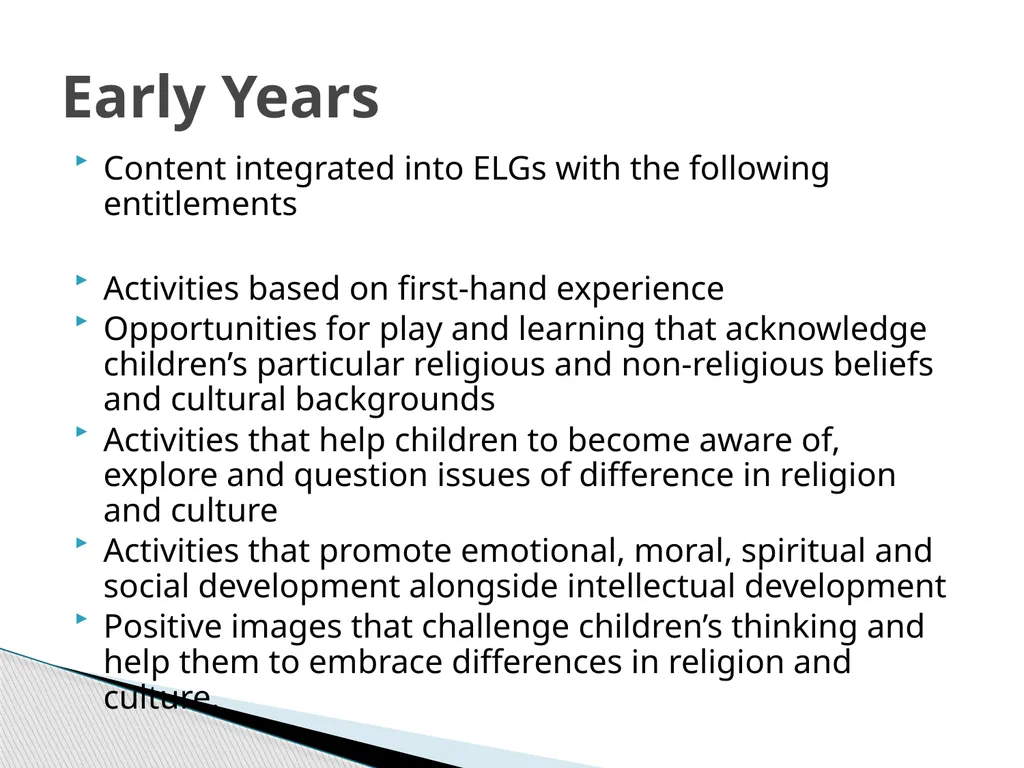
Content integrated into ELGs with the following entitlements
Activities based on first-hand experience
Opportunities for play and learning that acknowledge children’s particular religious and non-religious beliefs and cultural backgrounds
Activities that help children to become aware of, explore and question issues of difference in religion and culture
Activities that promote emotional, moral, spiritual and social development alongside intellectual development
Positive images that challenge children’s thinking and help them to embrace differences in religion and culture. Early Years<br>
Activities based on first-hand experience
Opportunities for play and learning that acknowledge children’s particular religious and non-religious beliefs and cultural backgrounds
Activities that help children to become aware of, explore and question issues of difference in religion and culture
Activities that promote emotional, moral, spiritual and social development alongside intellectual development
Positive images that challenge children’s thinking and help them to embrace differences in religion and culture. Early Years<br>
15
Special people
Special places
Special words and stories
Special things in nature
Special symbols and objects
Special ways of living KS1<br>
Special places
Special words and stories
Special things in nature
Special symbols and objects
Special ways of living KS1<br>
16
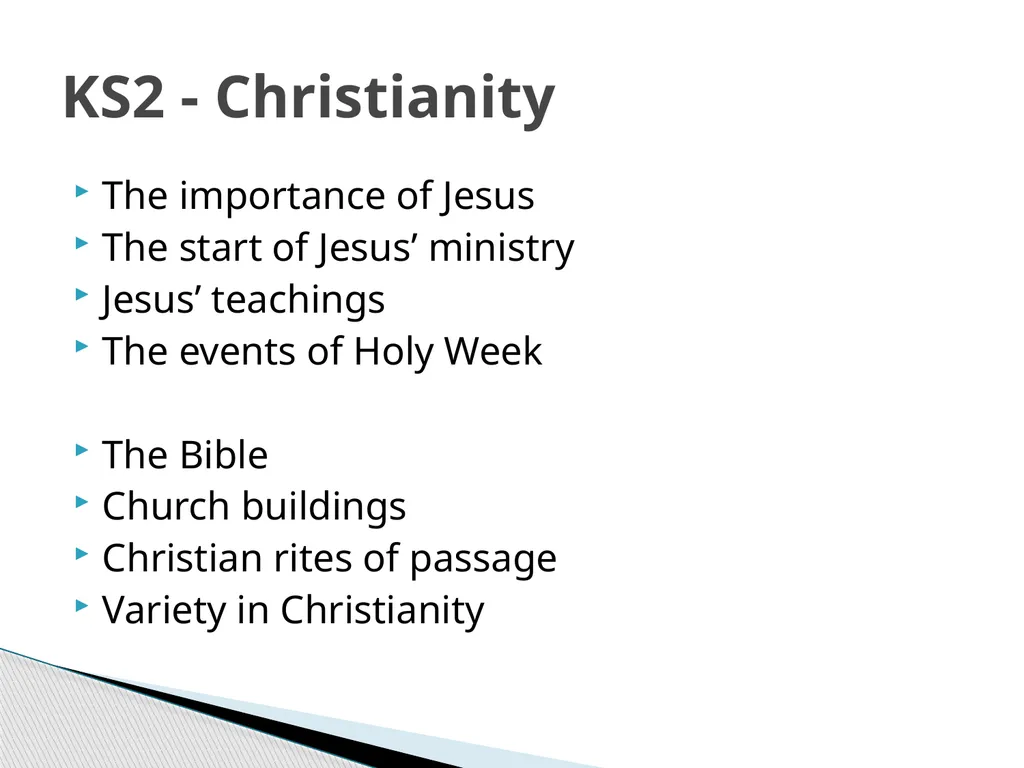
The importance of Jesus
The start of Jesus’ ministry
Jesus’ teachings
The events of Holy Week
The Bible
Church buildings
Christian rites of passage
Variety in Christianity KS2 - Christianity<br>
The start of Jesus’ ministry
Jesus’ teachings
The events of Holy Week
The Bible
Church buildings
Christian rites of passage
Variety in Christianity KS2 - Christianity<br>
17
The Buddha’s life story: his quest to find an answer to the problem of suffering
The Middle Way
The Noble Eightfold Path
Enlightenment and Nirvana/Nibbana
The Buddha image
Buddhist shrines
Buddhist devotional practices, including meditation KS2 - Buddhism<br>
The Middle Way
The Noble Eightfold Path
Enlightenment and Nirvana/Nibbana
The Buddha image
Buddhist shrines
Buddhist devotional practices, including meditation KS2 - Buddhism<br>
18
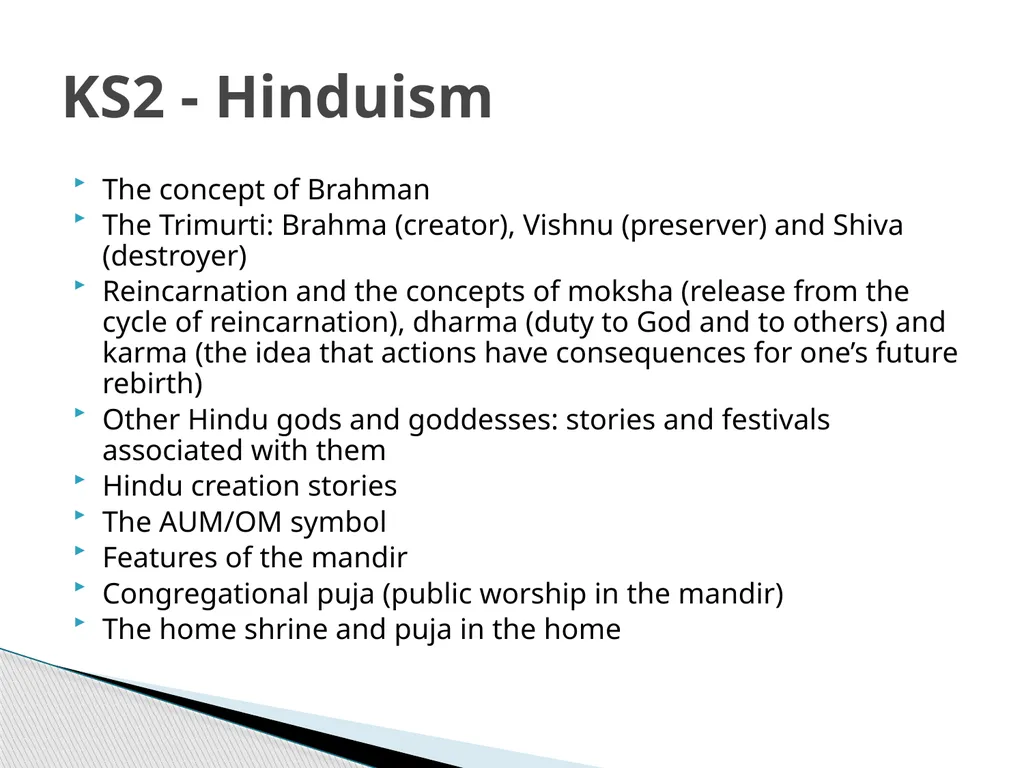
The concept of Brahman
The Trimurti: Brahma (creator), Vishnu (preserver) and Shiva (destroyer)
Reincarnation and the concepts of moksha (release from the cycle of reincarnation), dharma (duty to God and to others) and karma (the idea that actions have consequences for one’s future rebirth)
Other Hindu gods and goddesses: stories and festivals associated with them
Hindu creation stories
The AUM/OM symbol
Features of the mandir
Congregational puja (public worship in the mandir)
The home shrine and puja in the home KS2 - Hinduism<br>
The Trimurti: Brahma (creator), Vishnu (preserver) and Shiva (destroyer)
Reincarnation and the concepts of moksha (release from the cycle of reincarnation), dharma (duty to God and to others) and karma (the idea that actions have consequences for one’s future rebirth)
Other Hindu gods and goddesses: stories and festivals associated with them
Hindu creation stories
The AUM/OM symbol
Features of the mandir
Congregational puja (public worship in the mandir)
The home shrine and puja in the home KS2 - Hinduism<br>
19
The meaning of humanism
Key humanist beliefs and ideas
People are what matter in life
The Golden Rule: treat others as you would like them to treat you
You can live life without religion
Science provides the most reliable source of knowledge about the world
Humanist ceremonies marking key milestones in life
The British Humanist Association and the Happy Human symbol KS2 - Humanism<br>
Key humanist beliefs and ideas
People are what matter in life
The Golden Rule: treat others as you would like them to treat you
You can live life without religion
Science provides the most reliable source of knowledge about the world
Humanist ceremonies marking key milestones in life
The British Humanist Association and the Happy Human symbol KS2 - Humanism<br>
20
The part played by the city of Makkah and the Ka’aba in the life of the Prophet Muhammad
The revelation of the Qur’an to the Prophet Muhammad
The content of the Qur’an: it contains many people and stories found in the Bible
The fact that Jesus (Isa) is a revered prophet in Islam
The Five Pillars of Islam
Features of the mosque
What happens inside the mosque, including prayer KS2 - Islam<br>
The revelation of the Qur’an to the Prophet Muhammad
The content of the Qur’an: it contains many people and stories found in the Bible
The fact that Jesus (Isa) is a revered prophet in Islam
The Five Pillars of Islam
Features of the mosque
What happens inside the mosque, including prayer KS2 - Islam<br>
21
The story of Moses and the exodus from Egypt
The festival of Pesach and the Seder meal
The story of how Moses received the Ten Commandments and the importance of these for Jews
The importance of the home in Jewish life: keeping a Kosher home and observing dietary laws
The Shema and the Mezuzah
Observing shabbat in the home and the synagogue
Features of the synagogue
The Sefer Torah
What happens inside the synagogue KS2 - Judaism<br>
The festival of Pesach and the Seder meal
The story of how Moses received the Ten Commandments and the importance of these for Jews
The importance of the home in Jewish life: keeping a Kosher home and observing dietary laws
The Shema and the Mezuzah
Observing shabbat in the home and the synagogue
Features of the synagogue
The Sefer Torah
What happens inside the synagogue KS2 - Judaism<br>
22
Guru Nanak, the founder of Sikhism
Guru Gobind Singh and the formation of the Khalsa
The Five Ks and the turban
The Mool Mantra
The importance of equality in Sikhism
Features of the gurdwara (temple)
The Guru Granth Sahib (holy book)
What happens inside the gurdwara KS2 - Sikhism<br>
Guru Gobind Singh and the formation of the Khalsa
The Five Ks and the turban
The Mool Mantra
The importance of equality in Sikhism
Features of the gurdwara (temple)
The Guru Granth Sahib (holy book)
What happens inside the gurdwara KS2 - Sikhism<br>
23
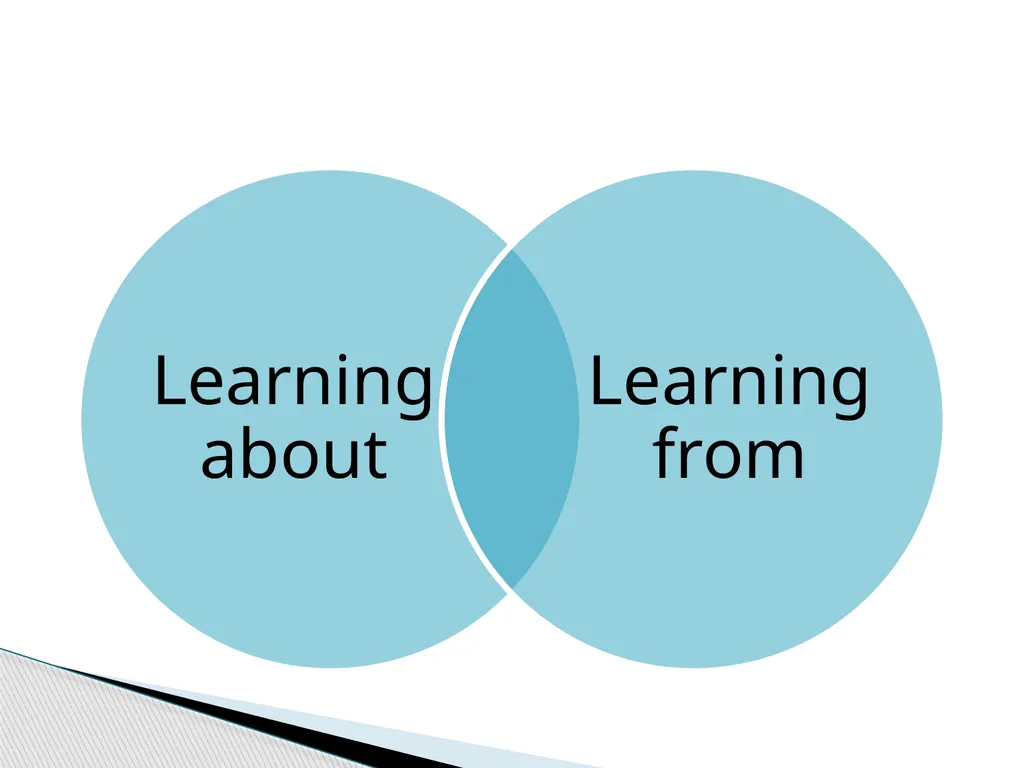
The self and being human
Relationships and the community
The natural world
Right and wrong
Big questions Learning from religion<br>
Relationships and the community
The natural world
Right and wrong
Big questions Learning from religion<br>
24
The Buddha
Living as a Buddhist
Introducing Jesus
The teaching of Jesus
The last week of Jesus’ life
The Bible
Churches and what happens inside them Suggested units in KS2<br>
Living as a Buddhist
Introducing Jesus
The teaching of Jesus
The last week of Jesus’ life
The Bible
Churches and what happens inside them Suggested units in KS2<br>
25
Brahman, the Trimurti and creation stories
Hindu gods and goddesses
Living as a Hindu
Humanism
Holy places in Islam
The Qur’an
The five pillars of faith<br>
Hindu gods and goddesses
Living as a Hindu
Humanism
Holy places in Islam
The Qur’an
The five pillars of faith<br>
26
Moses
The Jewish home
The Synagogue
The first and last human gurus, the Khalsa and the 5 Ks
The Guru Granth Sahib and the Gurdwara<br>
The Jewish home
The Synagogue
The first and last human gurus, the Khalsa and the 5 Ks
The Guru Granth Sahib and the Gurdwara<br>
27
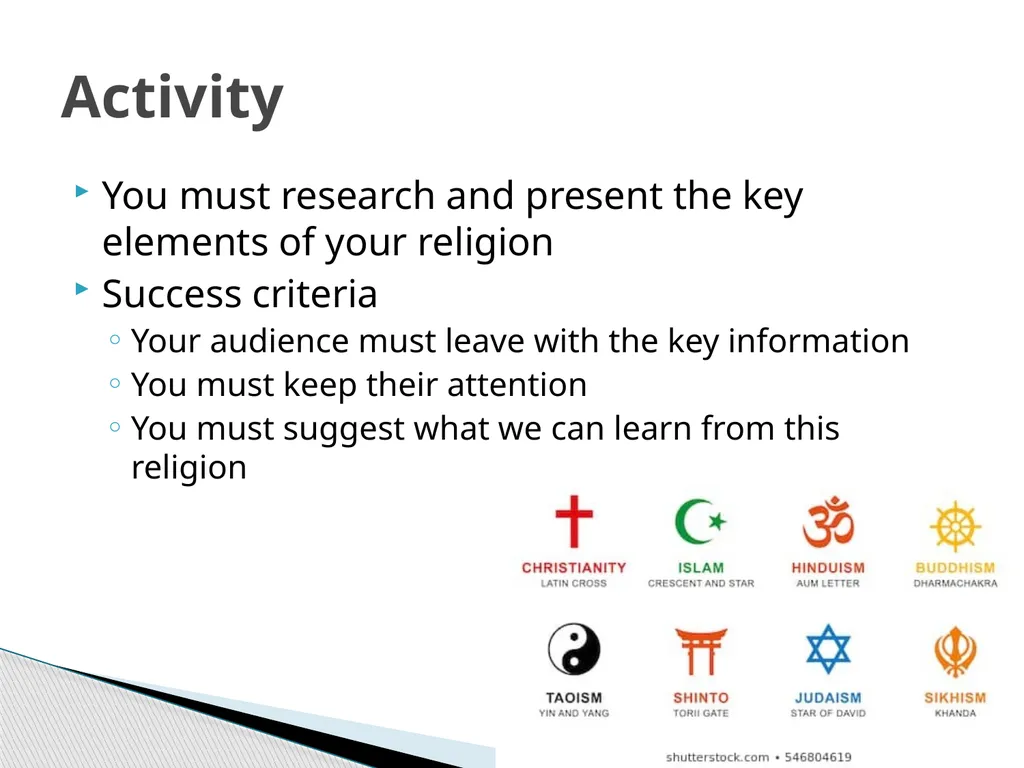
You must research and present the key elements of your religion
Success criteria
Your audience must leave with the key information
You must keep their attention
You must suggest what we can learn from this religion Activity<br>
Success criteria
Your audience must leave with the key information
You must keep their attention
You must suggest what we can learn from this religion Activity<br>
28
Teaching RE<br>
29
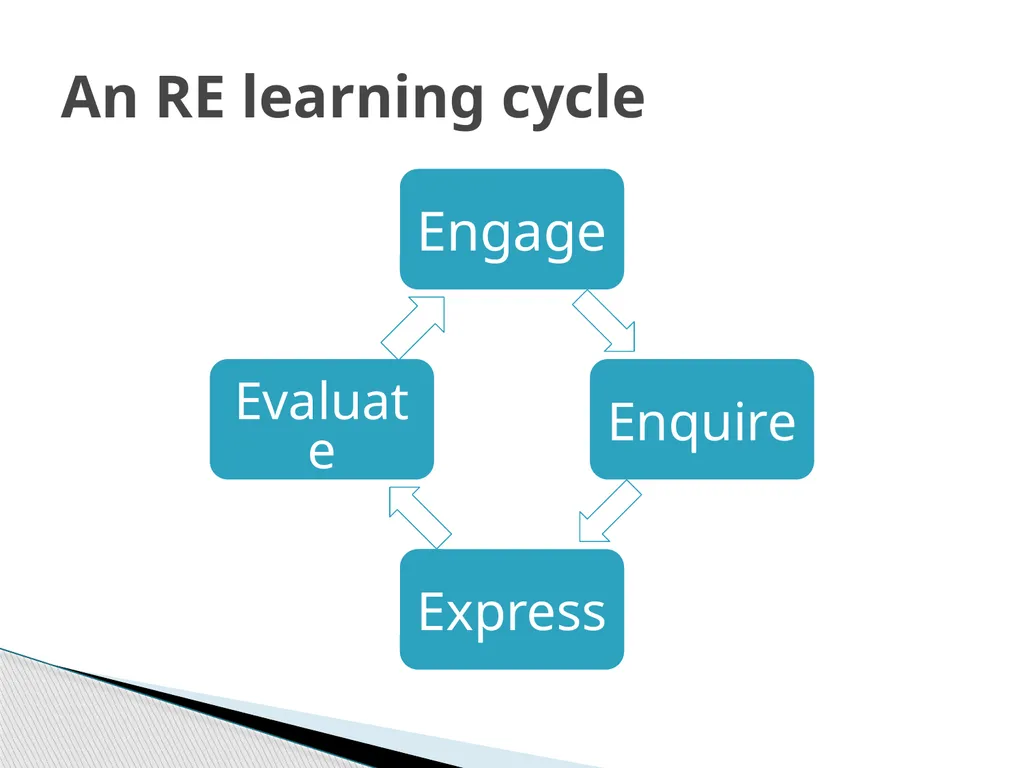
An RE learning cycle<br>
30
Engage – Connecting the LO with the child’s experience or a ‘hook’.
Enquire – The lesson content and helping the children to engage more deeply through the asking and answering of questions
Express – Children make their own response to the content
Evaluate – The children evaluate what they have learnt and raise further questions<br>
Enquire – The lesson content and helping the children to engage more deeply through the asking and answering of questions
Express – Children make their own response to the content
Evaluate – The children evaluate what they have learnt and raise further questions<br>
31
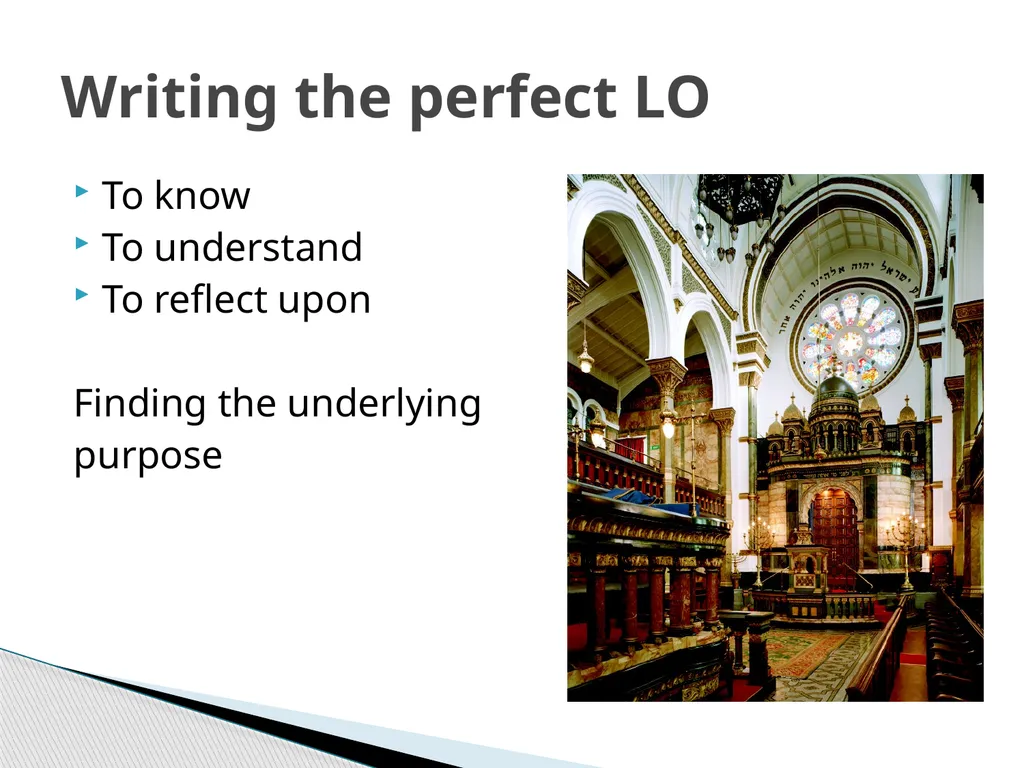
To know
To understand
To reflect upon
Finding the underlying
purpose Writing the perfect LO<br>
To understand
To reflect upon
Finding the underlying
purpose Writing the perfect LO<br>
32
To understand the importance to Christians of being thankful
What does thankful mean?
How important is it to say thank you?
Are there times when it is better not to say thank you?
How much do you care whether someone says thank you to you or not? Engage<br>
What does thankful mean?
How important is it to say thank you?
Are there times when it is better not to say thank you?
How much do you care whether someone says thank you to you or not? Engage<br>
33
Luke 17:11-19
Jesus Heals Ten Men With Leprosy
11 Now on his way to Jerusalem, Jesus travelled along the border between Samaria and Galilee. 12 As he was going into a village, ten men who had leprosy[a] met him. They stood at a distance 13 and called out in a loud voice, “Jesus, Master, have pity on us!”
14 When he saw them, he said, “Go, show yourselves to the priests.” And as they went, they were cleansed.
15 One of them, when he saw he was healed, came back, praising God in a loud voice. 16 He threw himself at Jesus’ feet and thanked him—and he was a Samaritan.
17 Jesus asked, “Were not all ten cleansed? Where are the other nine? 18 Has no one returned to give praise to God except this foreigner?” 19 Then he said to him, “Rise and go; your faith has made you well.” Enquire<br>
Jesus Heals Ten Men With Leprosy
11 Now on his way to Jerusalem, Jesus travelled along the border between Samaria and Galilee. 12 As he was going into a village, ten men who had leprosy[a] met him. They stood at a distance 13 and called out in a loud voice, “Jesus, Master, have pity on us!”
14 When he saw them, he said, “Go, show yourselves to the priests.” And as they went, they were cleansed.
15 One of them, when he saw he was healed, came back, praising God in a loud voice. 16 He threw himself at Jesus’ feet and thanked him—and he was a Samaritan.
17 Jesus asked, “Were not all ten cleansed? Where are the other nine? 18 Has no one returned to give praise to God except this foreigner?” 19 Then he said to him, “Rise and go; your faith has made you well.” Enquire<br>
34
Express In a small group
Make yourself a thought bubble
Act a short play with the thought bubble where someone is thankful
Act the play again when the same person is not thankful<br>
Make yourself a thought bubble
Act a short play with the thought bubble where someone is thankful
Act the play again when the same person is not thankful<br>
35
Why did the man say thank you?
Why did the others not?
What would you have done?
Why do you think Jesus said ‘Your faith has made you well’?
What difference does it make to Christians to say ‘thank you’
Do other people of other religions/ world views say ‘thank-you’?
What other ways can you show that you are thankful?
What effect does being thankful have on you and others? Evaluate<br>
Why did the others not?
What would you have done?
Why do you think Jesus said ‘Your faith has made you well’?
What difference does it make to Christians to say ‘thank you’
Do other people of other religions/ world views say ‘thank-you’?
What other ways can you show that you are thankful?
What effect does being thankful have on you and others? Evaluate<br>
36
Unpack the beliefs
Which central meaning of the story do you want to explore?
How can you present it and relate it to children’s experience?
How can you ensure the child understands and remembers? Teaching a religious story<br>
Which central meaning of the story do you want to explore?
How can you present it and relate it to children’s experience?
How can you ensure the child understands and remembers? Teaching a religious story<br>
37
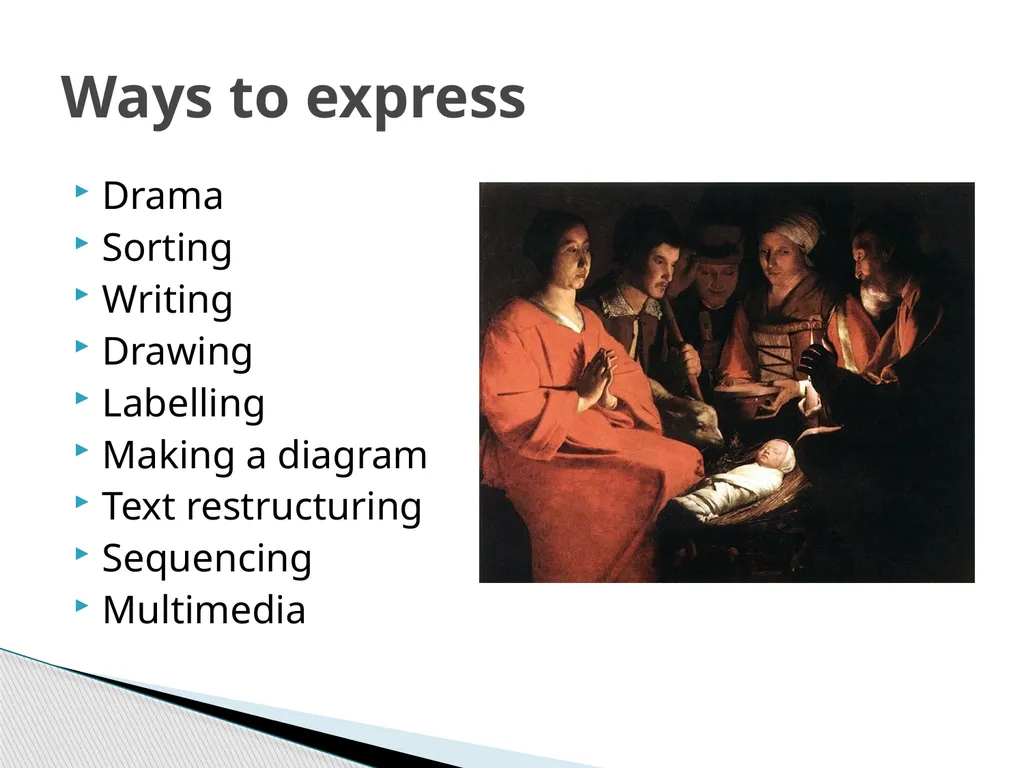
Drama
Sorting
Writing
Drawing
Labelling
Making a diagram
Text restructuring
Sequencing
Multimedia Ways to express<br>
Sorting
Writing
Drawing
Labelling
Making a diagram
Text restructuring
Sequencing
Multimedia Ways to express<br>
38
Handle them reverently
Link them to visits, visitors, videos and photographs to bring them to life
Link them to children’s own experiences and what they know already
Question the object
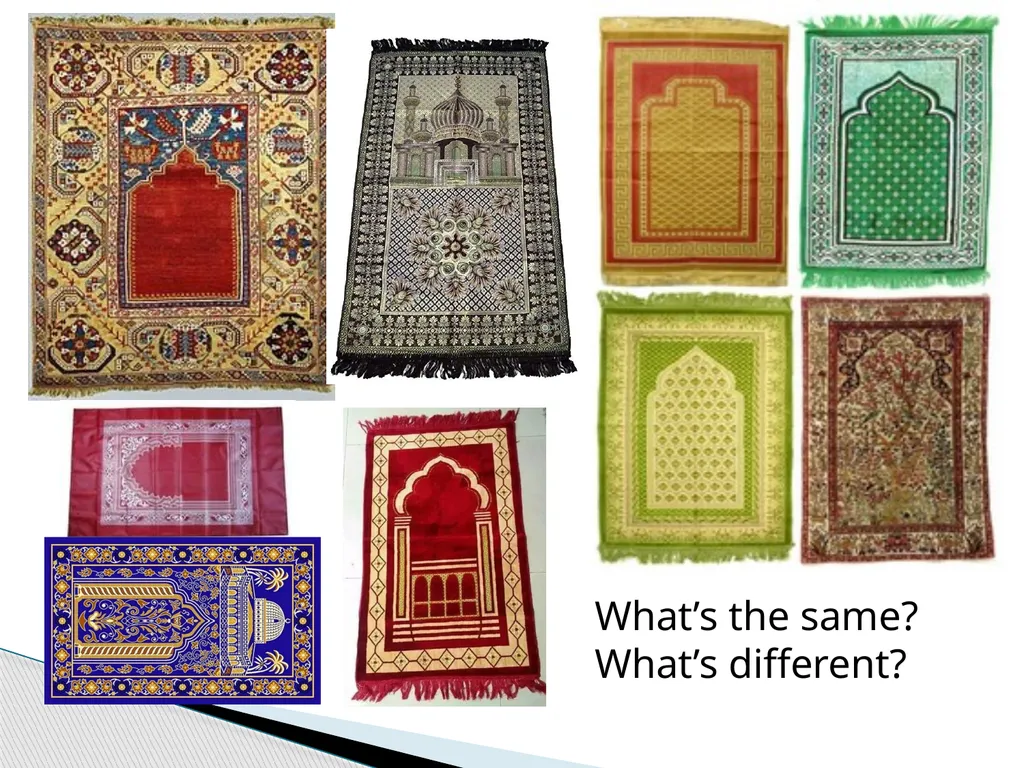
Compare different versions of the same object Objects<br>
Link them to visits, visitors, videos and photographs to bring them to life
Link them to children’s own experiences and what they know already
Question the object
Compare different versions of the same object Objects<br>
39
What’s the same?
What’s different?<br>
What’s different?<br>
40
You need to link the physical, aesthetic and human characteristics with the spiritual and emotional
Visit when you can or use virtual visits
Focus on each element and consider
Why is it there?
Why is it like that?
How is it used?
Help them understand that places of worship for one religion can look very different from each other Places<br>
Visit when you can or use virtual visits
Focus on each element and consider
Why is it there?
Why is it like that?
How is it used?
Help them understand that places of worship for one religion can look very different from each other Places<br>
41
Design places of worship
Jigsaw
Create a virtual tour
Make a glossary
Label a diagram
Make a ‘Dorling Kindersley’ page
Create a webpage
Create an audioguide
Use odd-one-out Ways to express<br>
Jigsaw
Create a virtual tour
Make a glossary
Label a diagram
Make a ‘Dorling Kindersley’ page
Create a webpage
Create an audioguide
Use odd-one-out Ways to express<br>
42
Beware of giving the impression that religions are just one festival after another
Teach deeply to ensure links are made to beliefs and teachings
Help them to understand what it is like to be part of a faith community
And why we celebrate and hold ceremonies
Link to sacred objects
Study the stories behind the festivals first Festivals<br>
Teach deeply to ensure links are made to beliefs and teachings
Help them to understand what it is like to be part of a faith community
And why we celebrate and hold ceremonies
Link to sacred objects
Study the stories behind the festivals first Festivals<br>
43
Write a letter or blog
Use video to share what a festival looks like
Write a list poem
Create a festival box
Create a radio documentary Ways to express<br>
Use video to share what a festival looks like
Write a list poem
Create a festival box
Create a radio documentary Ways to express<br>
44
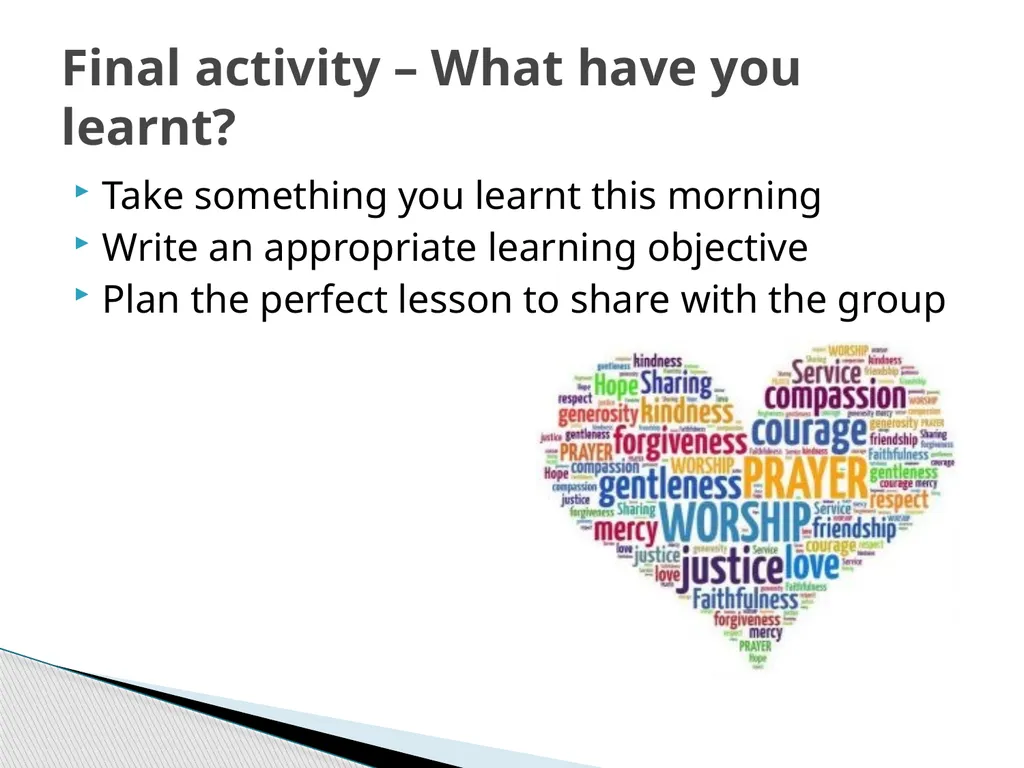
Take something you learnt this morning
Write an appropriate learning objective
Plan the perfect lesson to share with the group Final activity – What have you learnt?<br>
Write an appropriate learning objective
Plan the perfect lesson to share with the group Final activity – What have you learnt?<br>
45
Thoughts, questions and next steps<br>