04
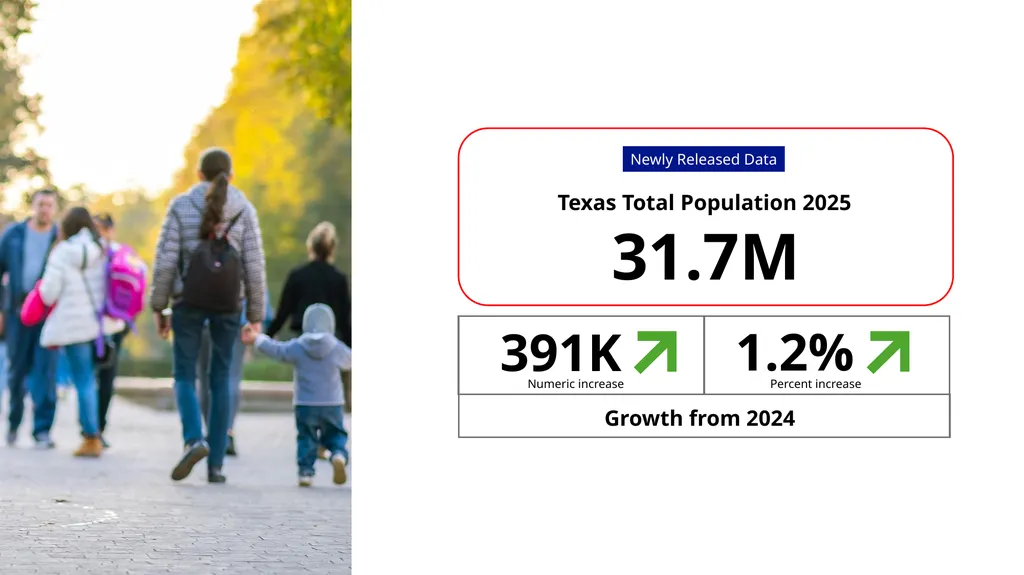
New 2025 Estimates Show Texas Growth but at Slower Rate Newly Released Data Texas Total Population 2025 31.7M 391K Numeric increase 1.2% Percent increase Growth from 2024<br>
05
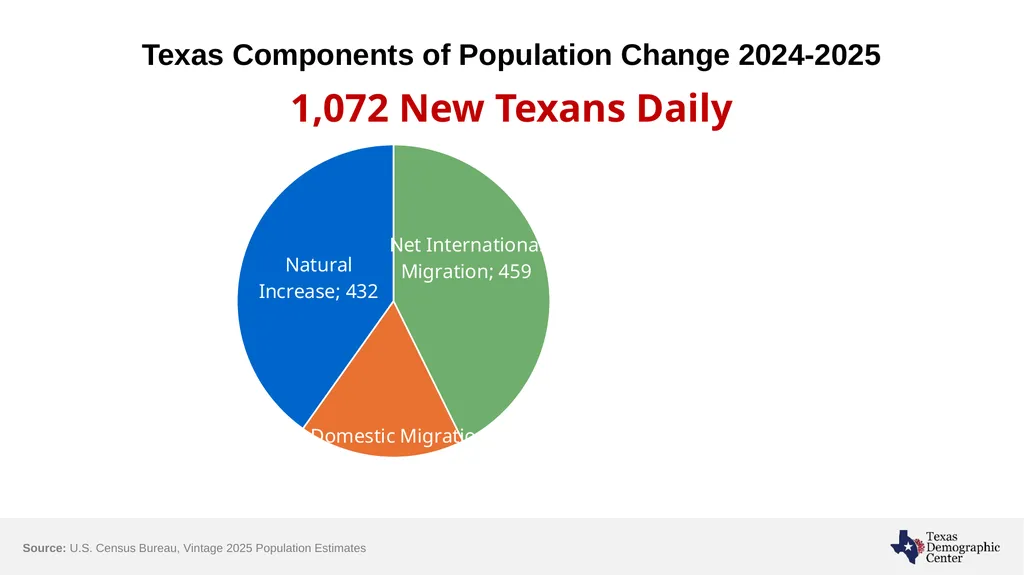
Population increased by 1,072 new Texans daily between 2024 and 2025. Source: U.S. Census Bureau, Population Estimates, 2022 and 2023<br>
06
Texas Components of Population Change 2024-2025 1,072 New Texans Daily Source: U.S. Census Bureau, Vintage 2025 Population Estimates<br>
07
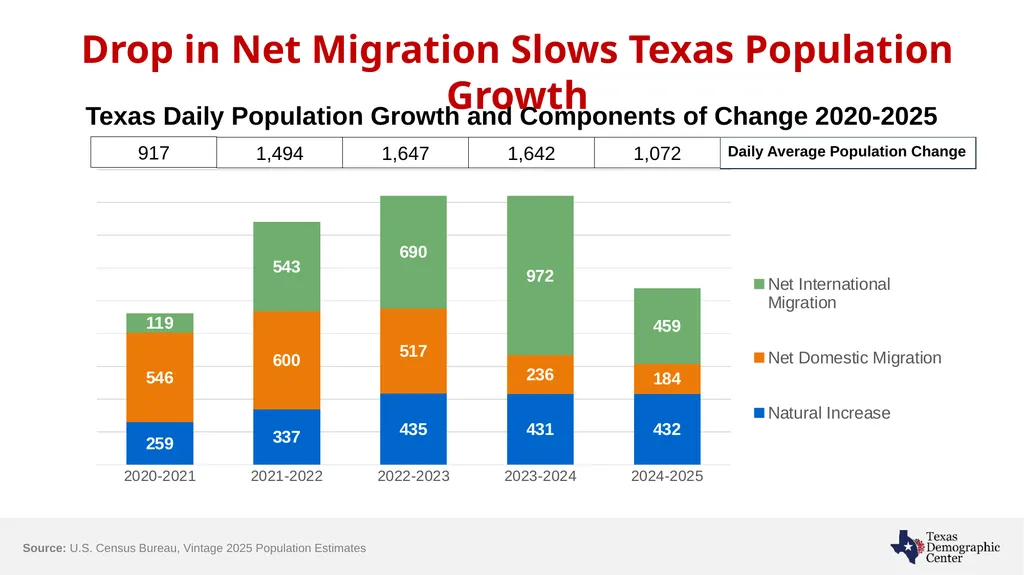
Texas Daily Population Growth and Components of Change 2020-2025 Drop in Net Migration Slows Texas Population Growth 917 1,494 1,647 1,642 1,072 Daily Average Population Change Source: U.S. Census Bureau, Vintage 2025 Population Estimates<br>
08
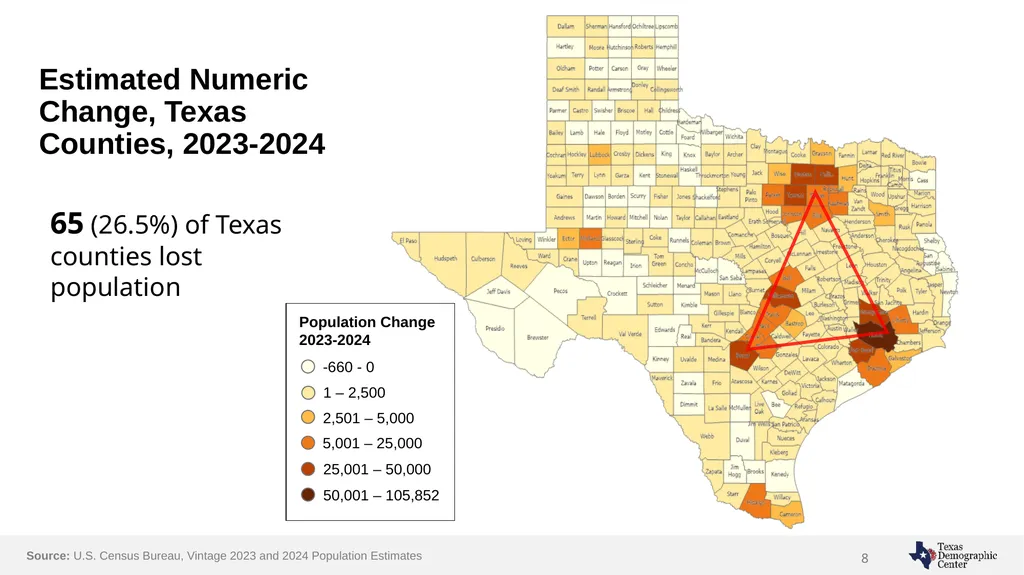
Estimated Numeric Change, Texas Counties, 2023-2024 65 (26.5%) of Texas counties lost population Source: U.S. Census Bureau, Vintage 2023 and 2024 Population Estimates 8<br>
09
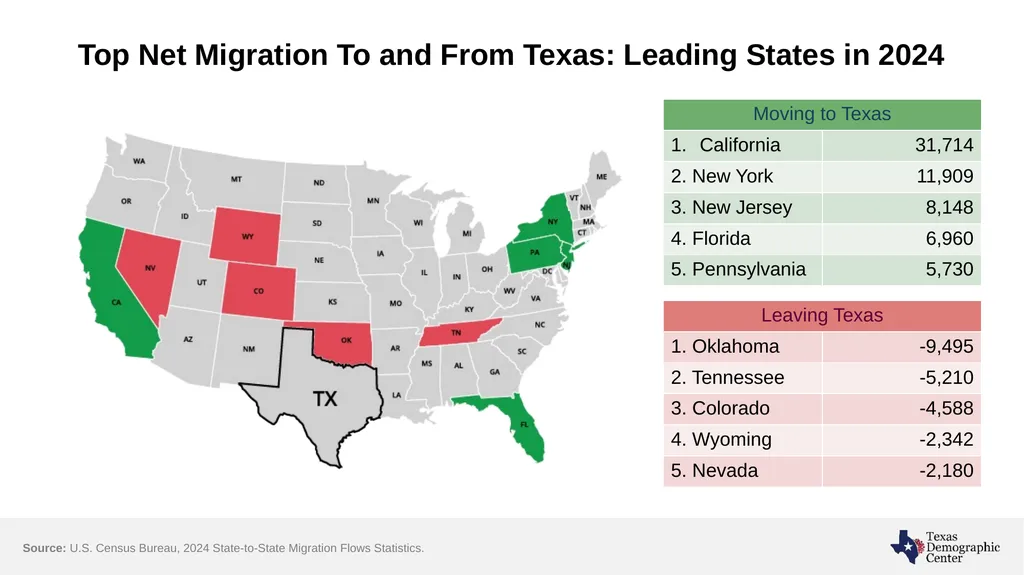
Top Net Migration To and From Texas: Leading States in 2024 Source: U.S. Census Bureau, 2024 State-to-State Migration Flows Statistics.<br>
10
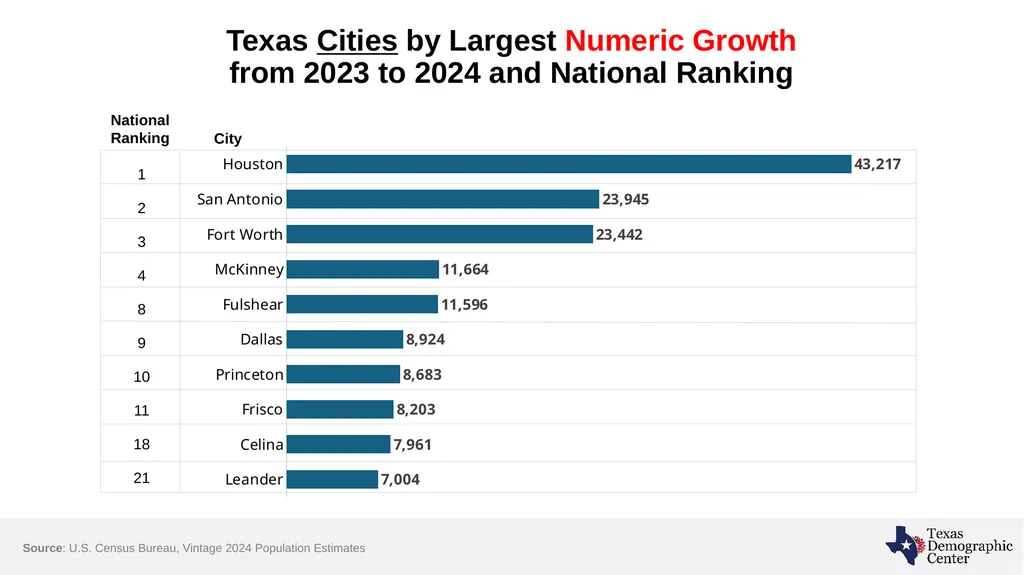
Texas Cities by Largest Numeric Growth�from 2023 to 2024 and National Ranking National
Ranking City 1
2
3
4
8
9
10
11
18
21 Source: U.S. Census Bureau, Vintage 2024 Population Estimates<br>
11
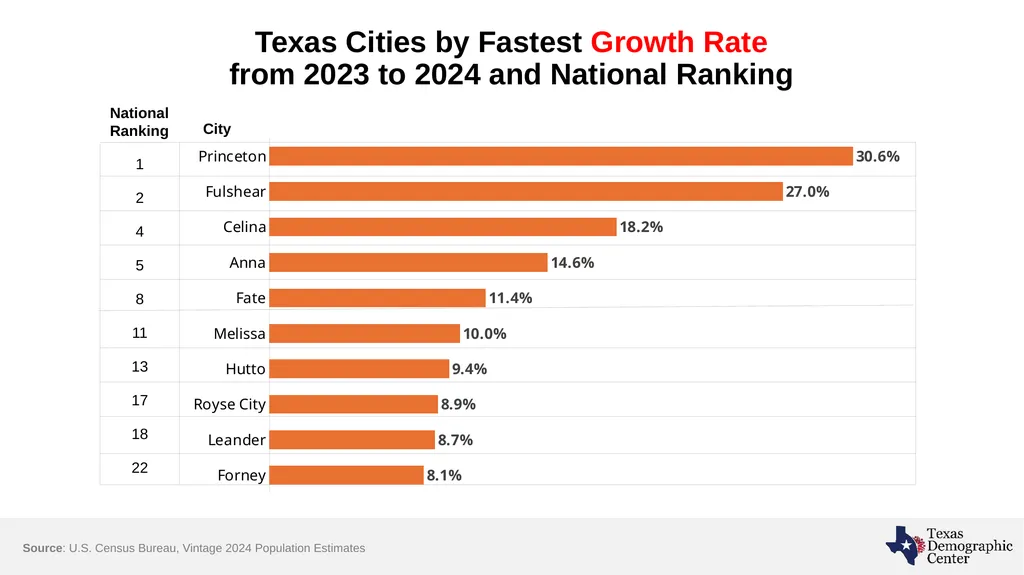
Texas Cities by Fastest Growth Rate�from 2023 to 2024 and National Ranking National
Ranking City 1
2
4
5
8
11
13
17
18
22 Source: U.S. Census Bureau, Vintage 2024 Population Estimates<br>
12
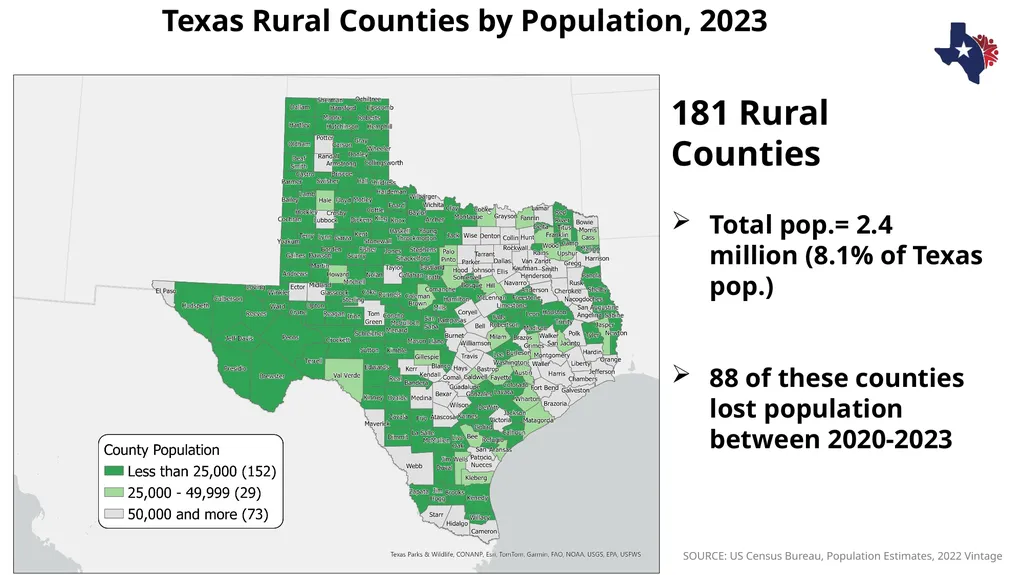
Texas Rural Counties by Population, 2023 181 Rural Counties
Total pop.= 2.4 million (8.1% of Texas pop.)
88 of these counties lost population between 2020-2023 SOURCE: US Census Bureau, Population Estimates, 2022 Vintage<br>
13
Median Household Income and Home Value�Gap Widens in Texas, 2013-2023 Source: U.S. Census Bureau, American Community Survey, 1-Year, 2013, 2018, and 2023.
Note: 2023 Inflation-Adjusted Dollars. Median
Home
Value Median
Household
Income<br>
14
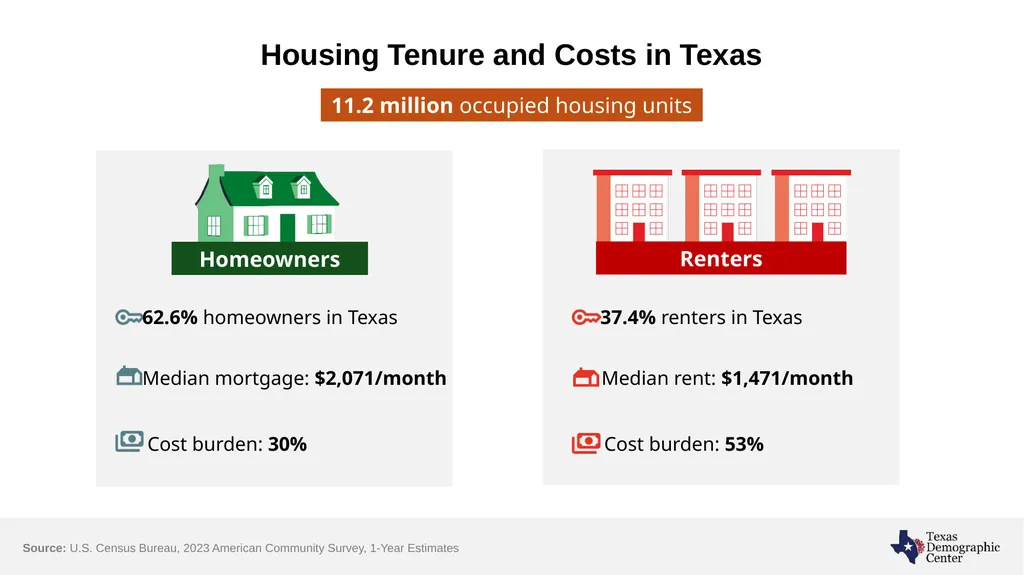
Housing Tenure and Costs in Texas 11.2 million occupied housing units Homeowners 62.6% homeowners in Texas Median mortgage: $2,071/month Cost burden: 30% Renters 37.4% renters in Texas Median rent: $1,471/month Cost burden: 53% Source: U.S. Census Bureau, 2023 American Community Survey, 1-Year Estimates<br>
15
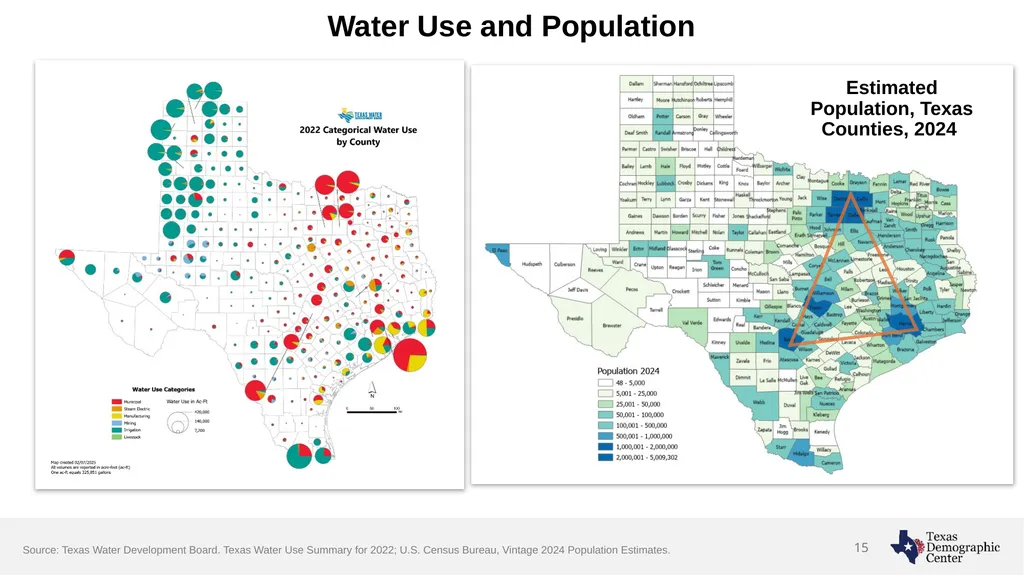
Water Use and Population Estimated Population, Texas Counties, 2024 Source: Texas Water Development Board. Texas Water Use Summary for 2022; U.S. Census Bureau, Vintage 2024 Population Estimates. 15<br>
16
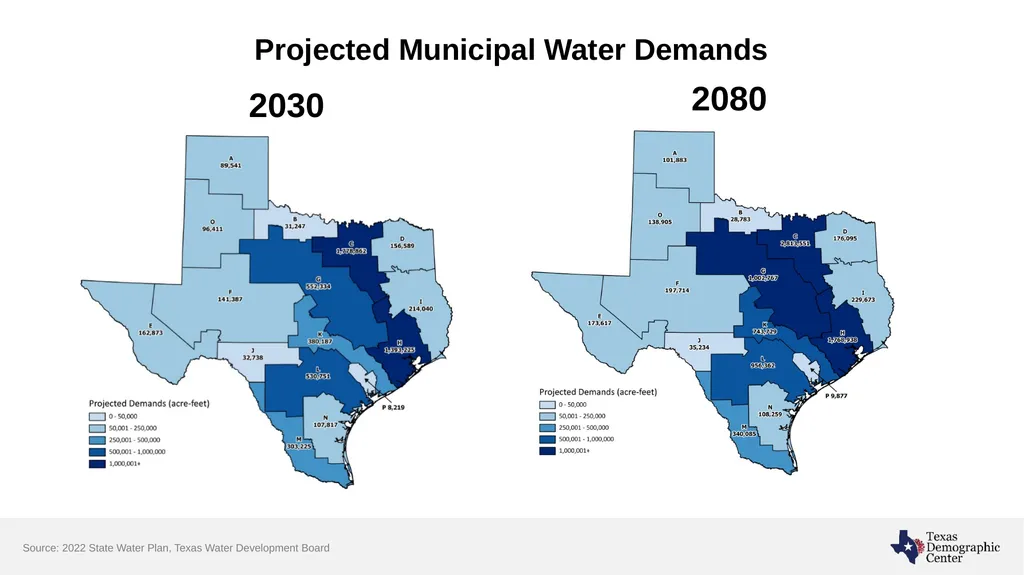
Projected Municipal Water Demands 2030 2080 Source: 2022 State Water Plan, Texas Water Development Board<br>
17
A Look into the Future<br>
18
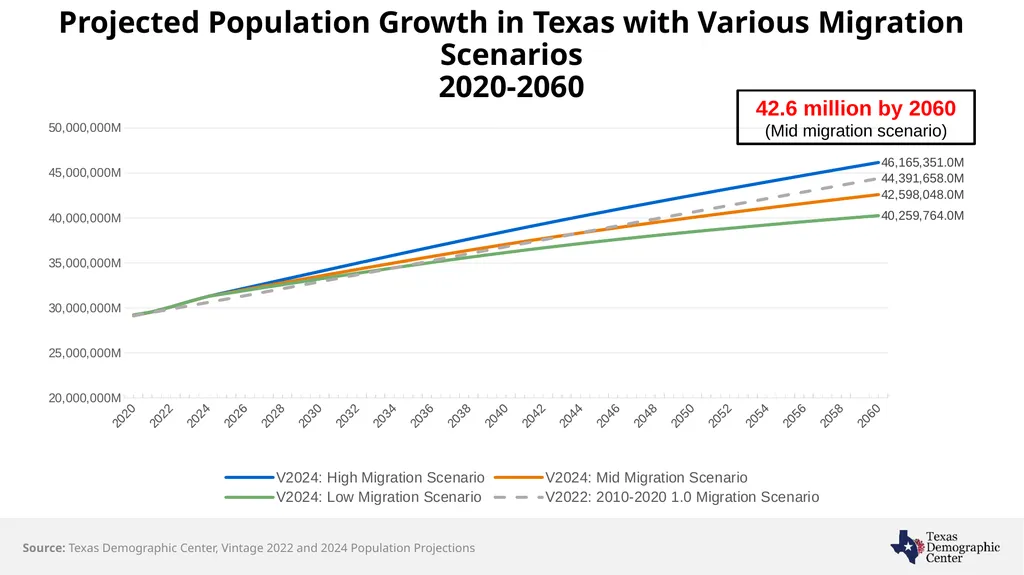
Projected Population Growth in Texas with Various Migration Scenarios�2020-2060 Source: Texas Demographic Center, Vintage 2022 and 2024 Population Projections 42.6 million by 2060
(Mid migration scenario)<br>
19
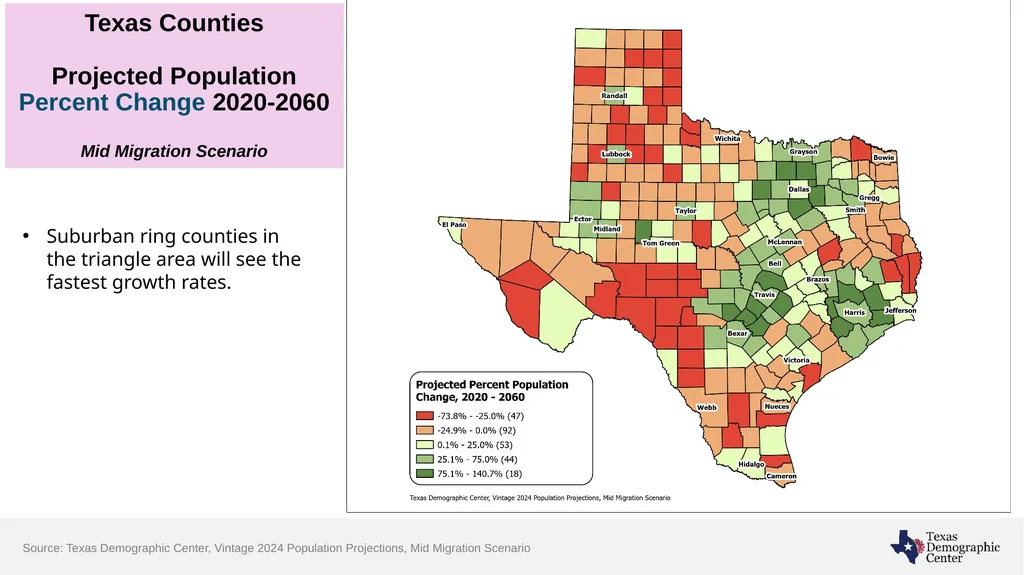
Texas Counties��Projected Population Percent Change 2020-2060��Mid Migration Scenario Suburban ring counties in the triangle area will see the fastest growth rates. Source: Texas Demographic Center, Vintage 2024 Population Projections, Mid Migration Scenario<br>
20
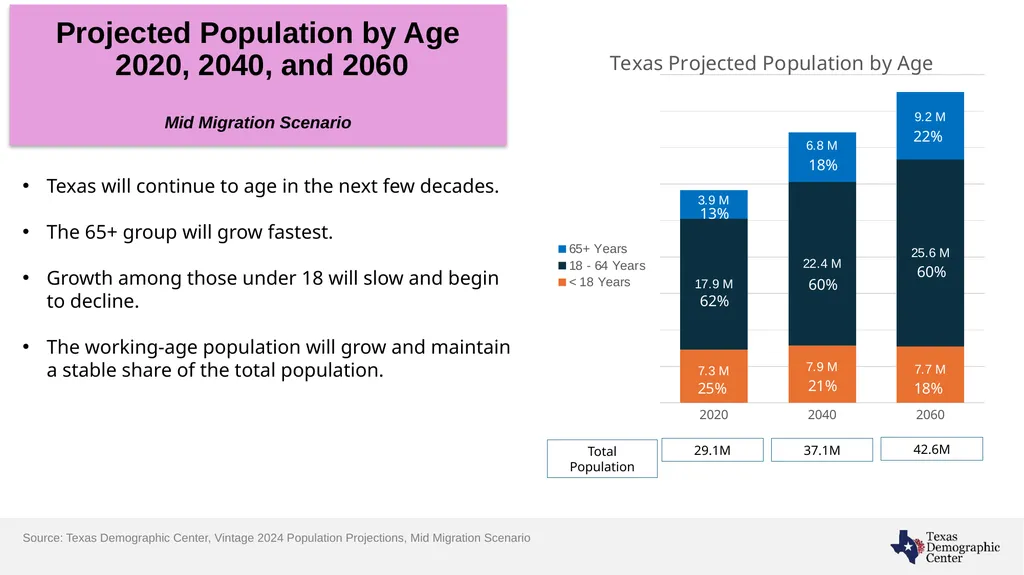
Projected Population by Age� 2020, 2040, and 2060��Mid Migration Scenario Texas will continue to age in the next few decades.
The 65+ group will grow fastest.
Growth among those under 18 will slow and begin to decline.
The working-age population will grow and maintain a stable share of the total population. 13% 62% 18% 60% 22% 60% Total Population 29.1M 37.1M 42.6M Source: Texas Demographic Center, Vintage 2024 Population Projections, Mid Migration Scenario<br>
21
Preparing for the 2030 Census<br>
22
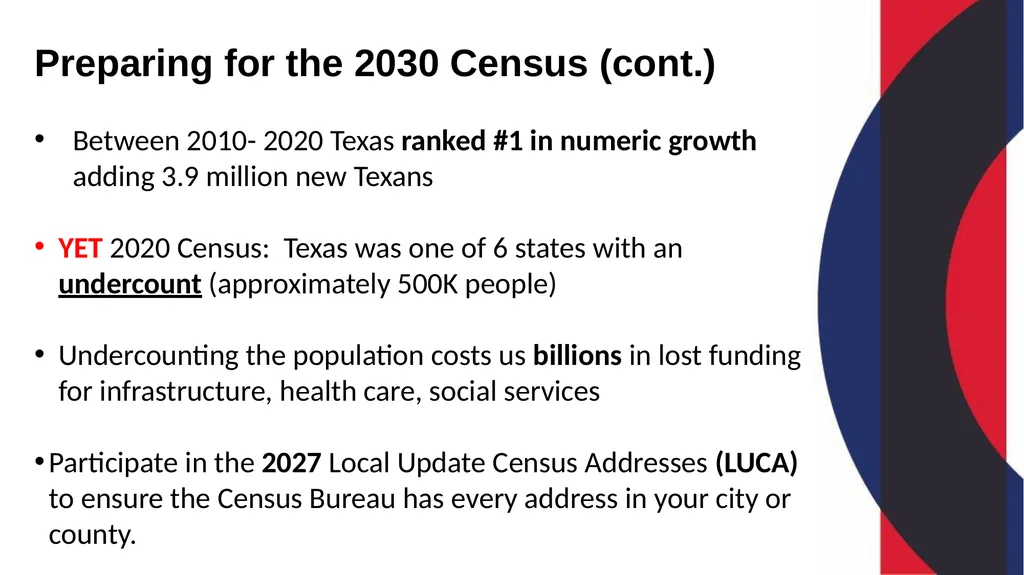
Preparing for the 2030 Census (cont.) Between 2010- 2020 Texas ranked #1 in numeric growth adding 3.9 million new Texans
YET 2020 Census: Texas was one of 6 states with an undercount (approximately 500K people)
Undercounting the population costs us billions in lost funding for infrastructure, health care, social services
Participate in the 2027 Local Update Census Addresses (LUCA) to ensure the Census Bureau has every address in your city or county.<br>
23
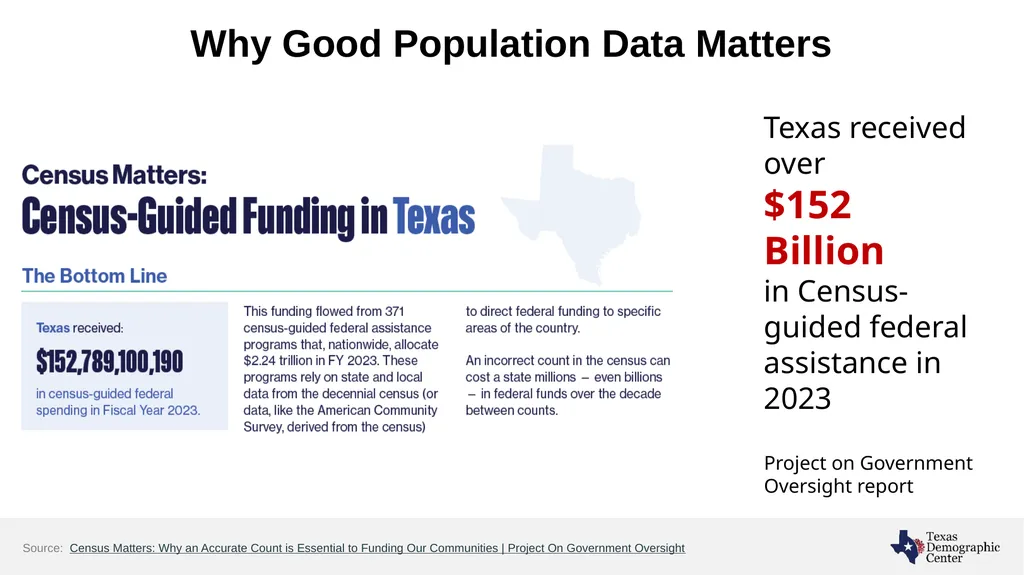
Why Good Population Data Matters Source: Census Matters: Why an Accurate Count is Essential to Funding Our Communities | Project On Government Oversight Texas received over
$152 Billion
in Census-guided federal assistance in 2023
Project on Government Oversight report<br>
24
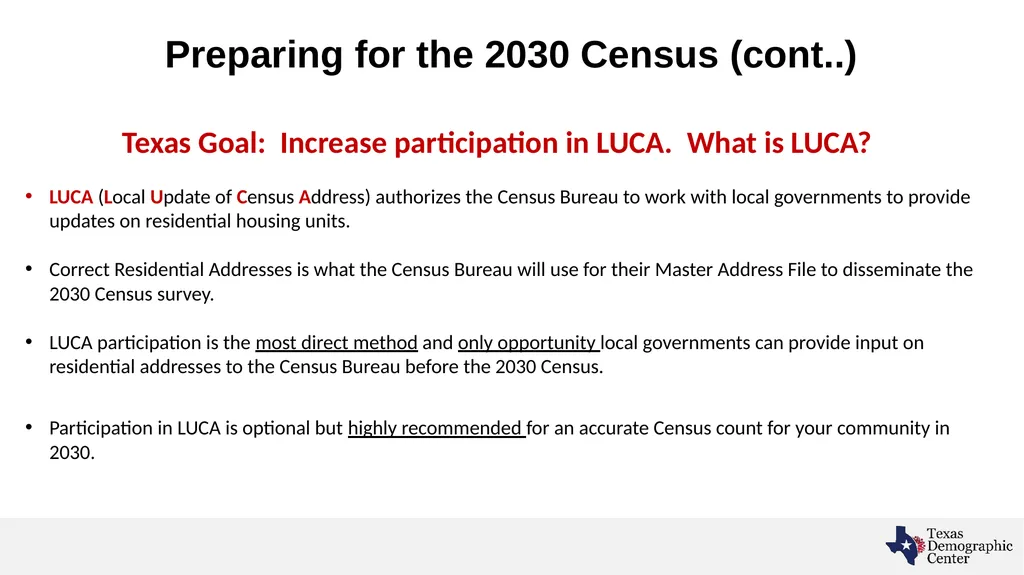
Preparing for the 2030 Census (cont..) Texas Goal: Increase participation in LUCA. What is LUCA?
LUCA (Local Update of Census Address) authorizes the Census Bureau to work with local governments to provide updates on residential housing units.
Correct Residential Addresses is what the Census Bureau will use for their Master Address File to disseminate the 2030 Census survey.
LUCA participation is the most direct method and only opportunity local governments can provide input on residential addresses to the Census Bureau before the 2030 Census.
Participation in LUCA is optional but highly recommended for an accurate Census count for your community in 2030.<br>
25
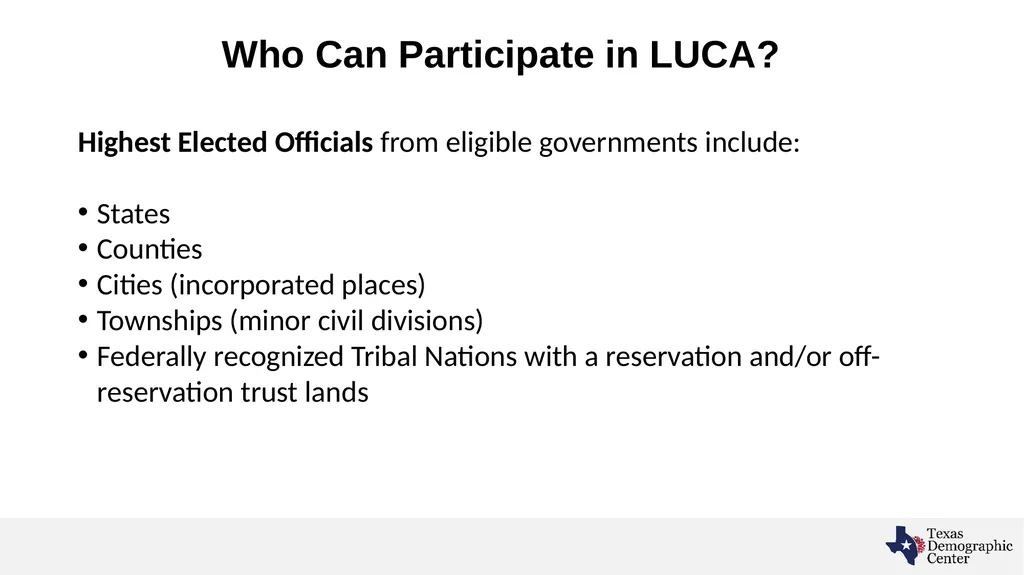
Who Can Participate in LUCA? Highest Elected Officials from eligible governments include:
States
Counties
Cities (incorporated places)
Townships (minor civil divisions)
Federally recognized Tribal Nations with a reservation and/or off-reservation trust lands<br>
26
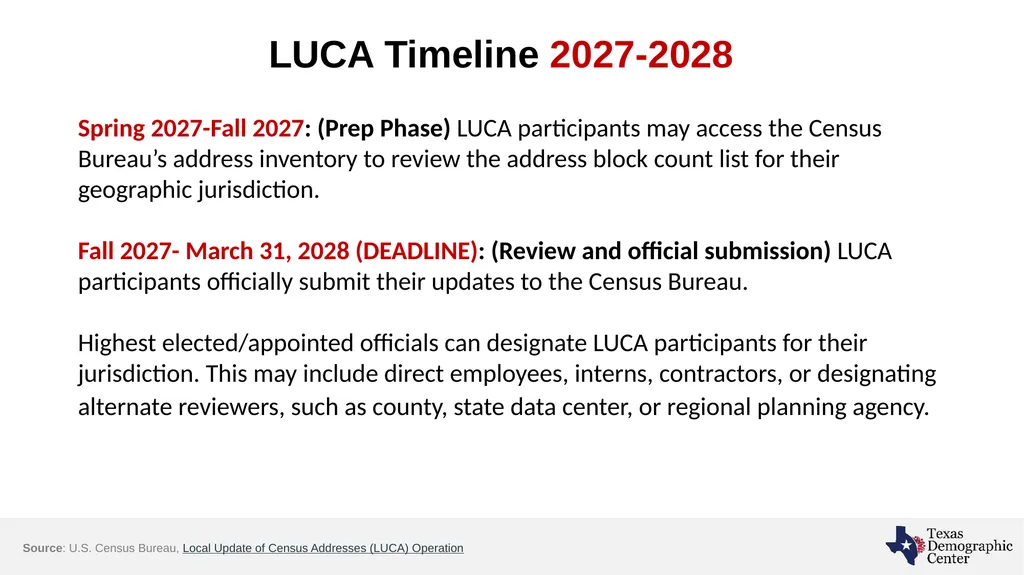
LUCA Timeline 2027-2028 Source: U.S. Census Bureau, Local Update of Census Addresses (LUCA) Operation Spring 2027-Fall 2027: (Prep Phase) LUCA participants may access the Census Bureau’s address inventory to review the address block count list for their geographic jurisdiction.
Fall 2027- March 31, 2028 (DEADLINE): (Review and official submission) LUCA participants officially submit their updates to the Census Bureau.
Highest elected/appointed officials can designate LUCA participants for their jurisdiction. This may include direct employees, interns, contractors, or designating alternate reviewers, such as county, state data center, or regional planning agency.<br>
27
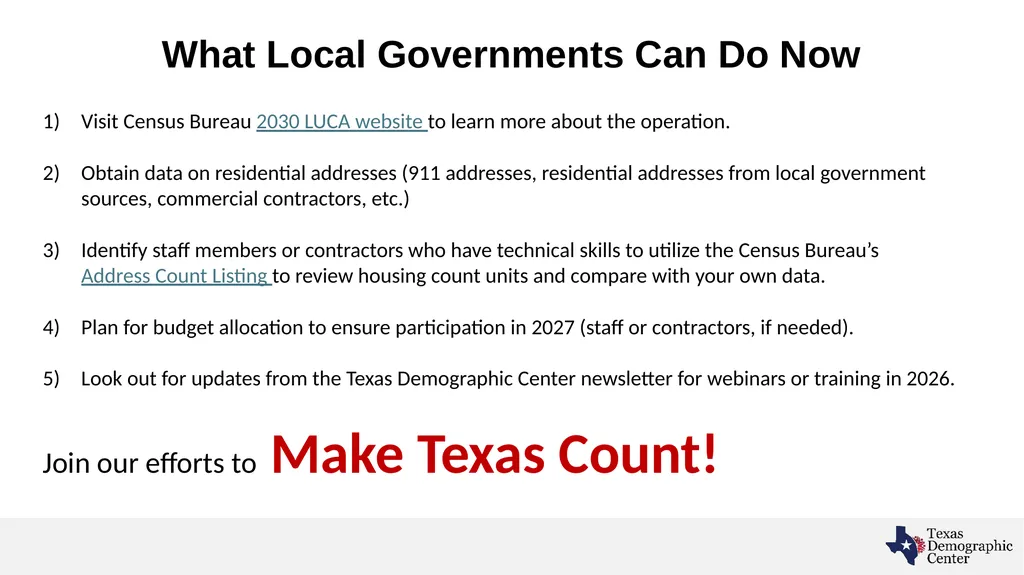
What Local Governments Can Do Now Visit Census Bureau 2030 LUCA website to learn more about the operation.
Obtain data on residential addresses (911 addresses, residential addresses from local government sources, commercial contractors, etc.)
Identify staff members or contractors who have technical skills to utilize the Census Bureau’s Address Count Listing to review housing count units and compare with your own data.
Plan for budget allocation to ensure participation in 2027 (staff or contractors, if needed).
Look out for updates from the Texas Demographic Center newsletter for webinars or training in 2026.
Join our efforts to Make Texas Count!<br>
28
Visit our website Sign up for our newsletter Follow us on social media<br>
29
Texas Demographic Center 2026<br>
30
Monica Cruz, Ph.D. (210) 458-6543 tdc@utsa.edu demographics.texas.gov/<br>