Tharaka-Nithi County, Kenya June 2018 Featured Grantee Womens Global Education Project HEADLINE GOES HERE Text goes here Text goes here Text goes here Text goes here Introducing Womens Global Education Project Womens Global Education
"Tharaka-Nithi County, Kenya June 2018 Featured" is the property of its rightful owner. Permission is granted to
download and print the materials on this website for personal, non-commercial use only, and to display it
on your personal computer provided you do not modify the materials and that you retain all copyright
notices contained in the materials. By downloading content from our website, you accept the terms of this
agreement.
Presentation Transcript
01
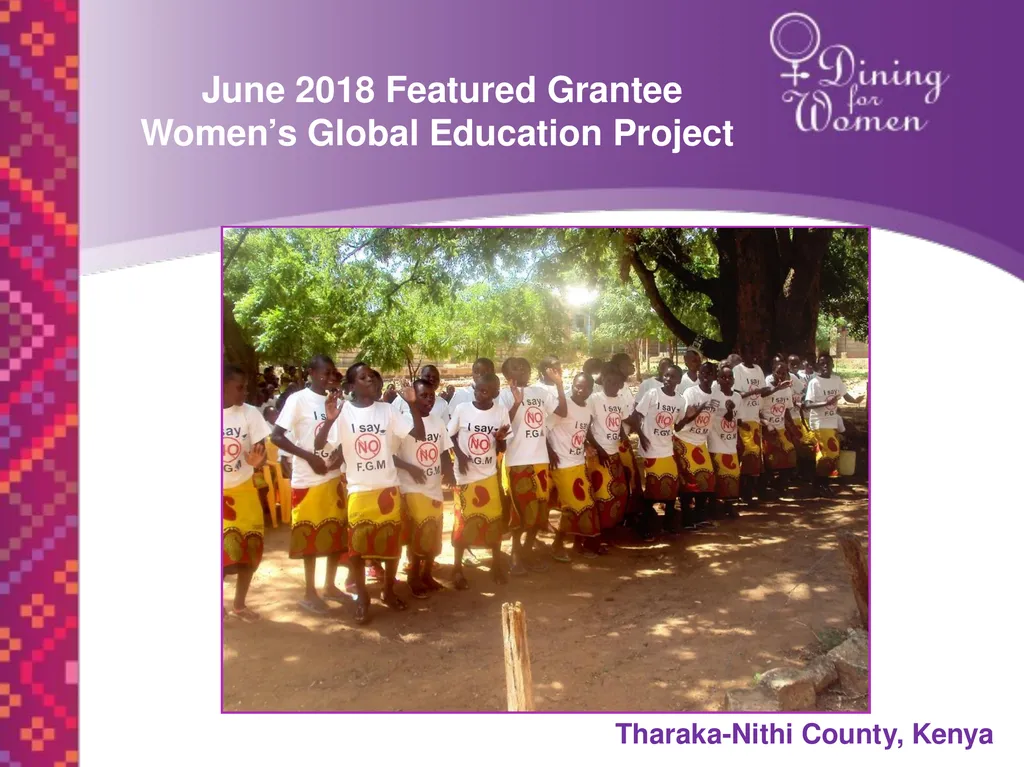
Tharaka-Nithi County, Kenya June 2018 Featured Grantee
Women’s Global Education Project<br>
02
HEADLINE GOES HERE Text goes here
Text goes here
Text goes here
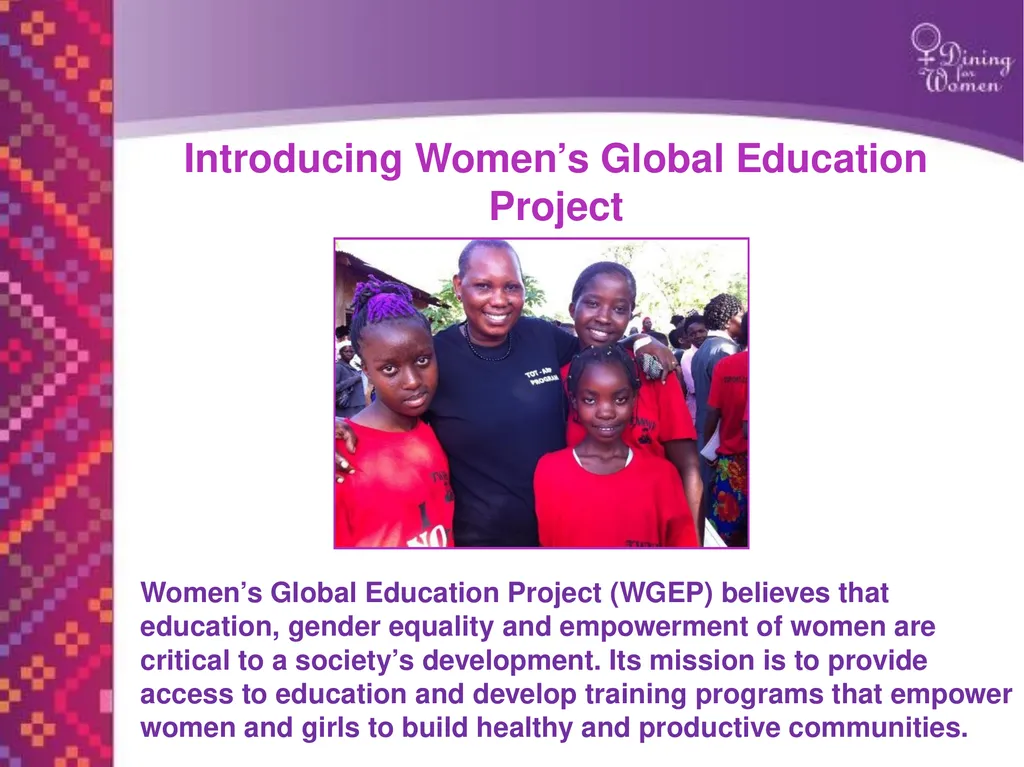
Text goes here Introducing Women’s Global Education Project Women’s Global Education Project (WGEP) believes that education, gender equality and empowerment of women are critical to a society’s development. Its mission is to provide access to education and develop training programs that empower women and girls to build healthy and productive communities.<br>
03
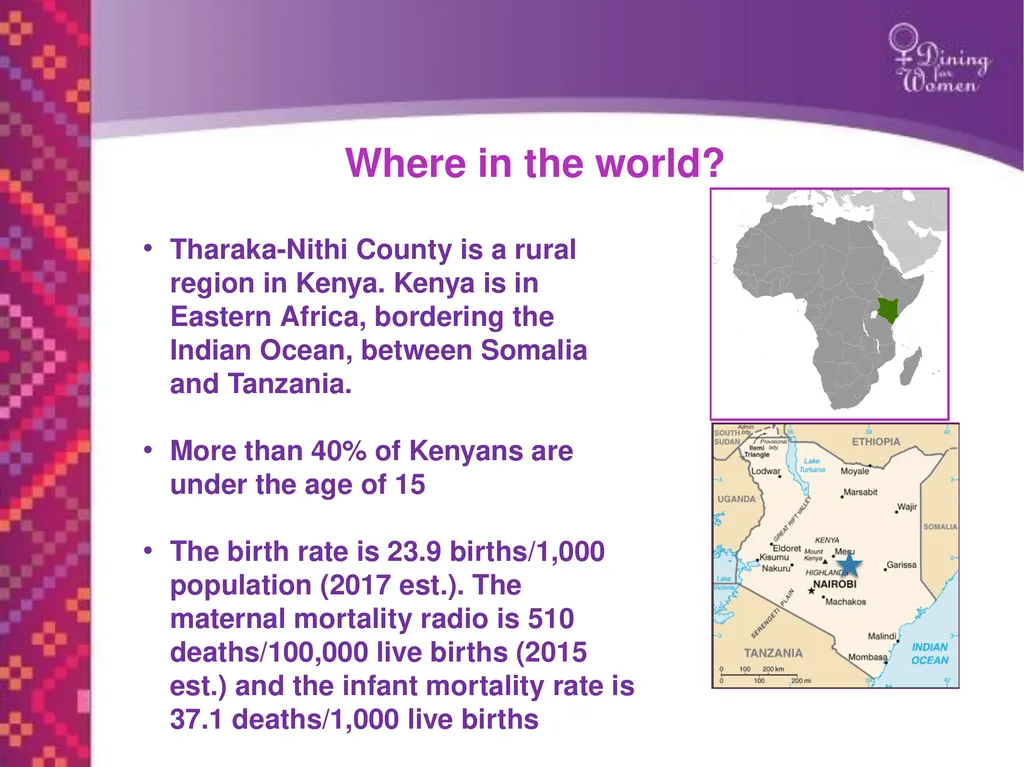
Where in the world? Tharaka-Nithi County is a rural region in Kenya. Kenya is in Eastern Africa, bordering the Indian Ocean, between Somalia and Tanzania.
More than 40% of Kenyans are under the age of 15
The birth rate is 23.9 births/1,000 population (2017 est.). The maternal mortality radio is 510 deaths/100,000 live births (2015 est.) and the infant mortality rate is 37.1 deaths/1,000 live births<br>
04
HEADLINE GOES HERE Text goes here
Text goes here
Text goes here
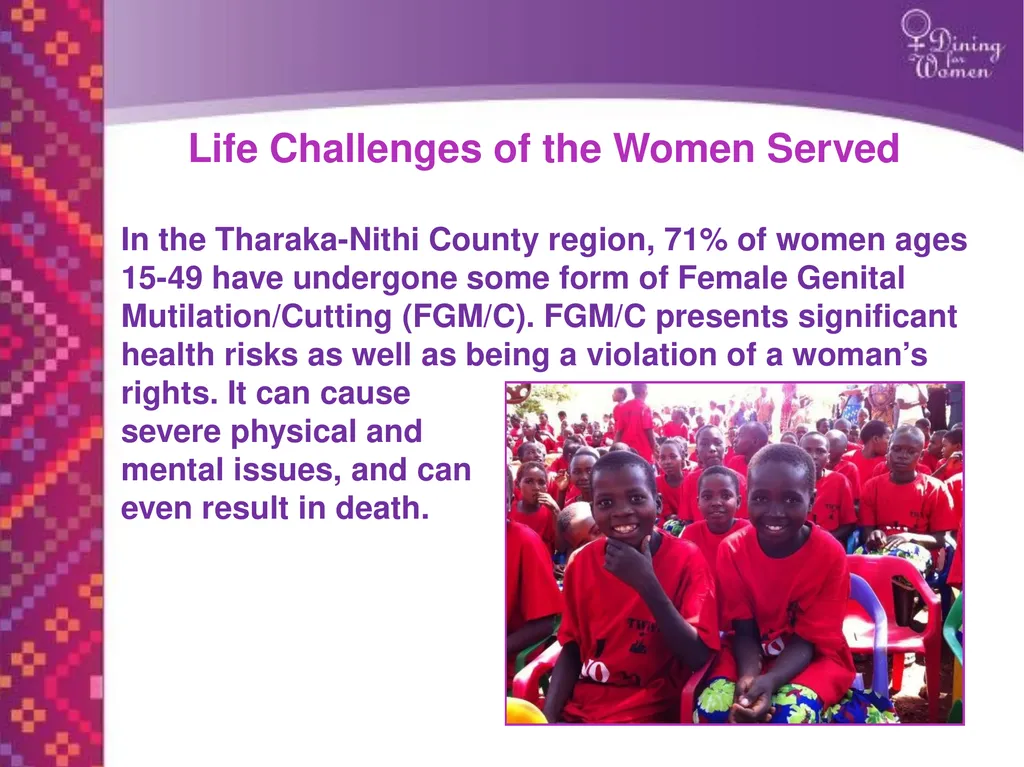
Text goes here Life Challenges of the Women Served In the Tharaka-Nithi County region, 71% of women ages 15-49 have undergone some form of Female Genital Mutilation/Cutting (FGM/C). FGM/C presents significant health risks as well as being a violation of a woman’s
rights. It can cause
severe physical and
mental issues, and can
even result in death.<br>
05
Life Challenges of the Women Served FGM/C puts girls at higher risk for early marriage and early pregnancy.
90% of girls subjected to FGM/C in Kenya come from rural areas such as Tharaka.
Girls who undergo genital cutting are more likely to drop out of school since both girls and their communities consider that the ritual renders them ready for marriage, typically between the ages of 9-12.<br>
06
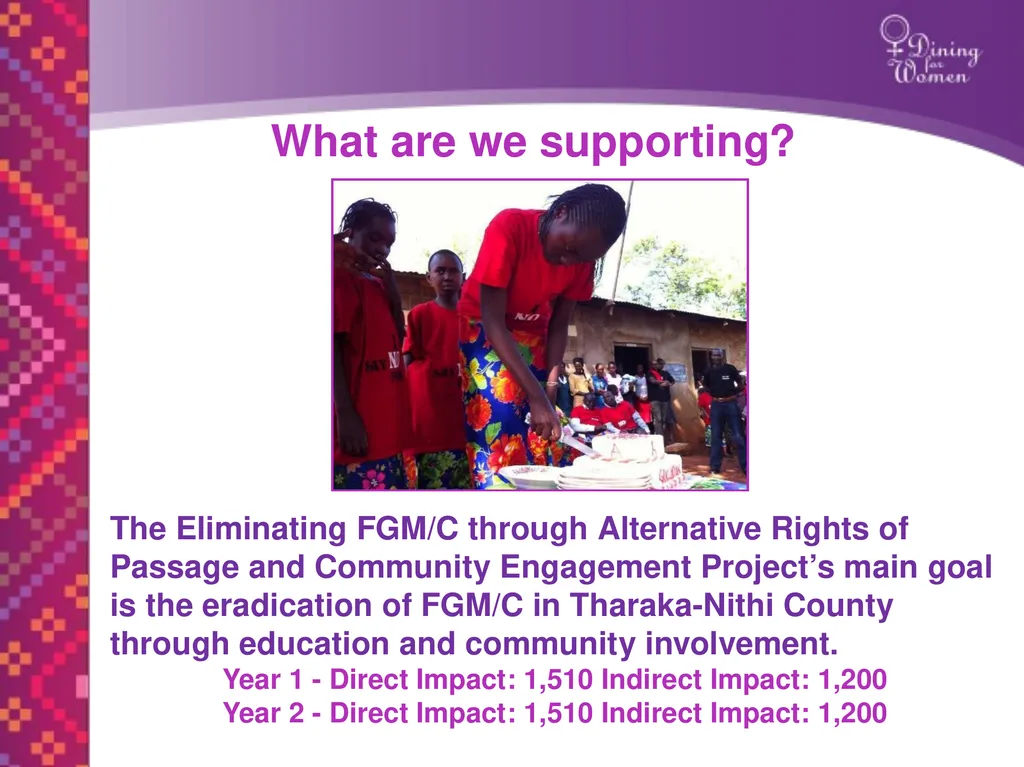
What are we supporting? The Eliminating FGM/C through Alternative Rights of Passage and Community Engagement Project’s main goal is the eradication of FGM/C in Tharaka-Nithi County through education and community involvement.
Year 1 - Direct Impact: 1,510 Indirect Impact: 1,200
Year 2 - Direct Impact: 1,510 Indirect Impact: 1,200<br>
07
HEADLINE GOES HERE Text goes here
Text goes here
Text goes here
Text goes here Budget
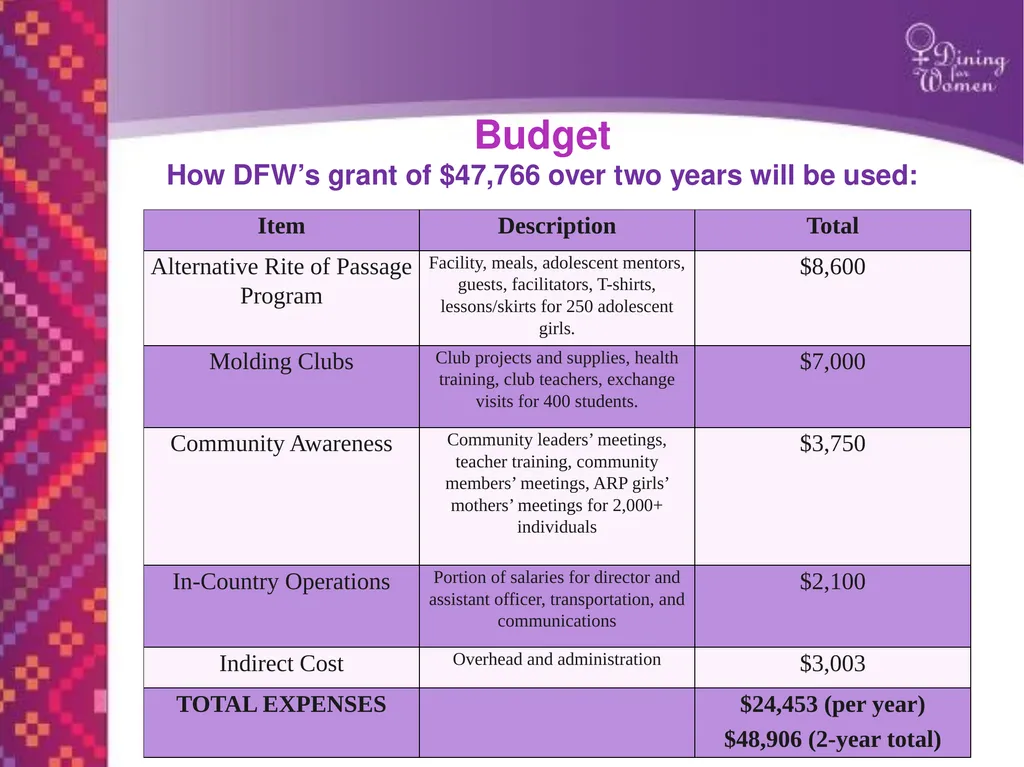
How DFW’s grant of $47,766 over two years will be used:<br>
08
HEADLINE GOES HERE Text goes here
Text goes here
Text goes here
Text goes here About the
Featured Grantee
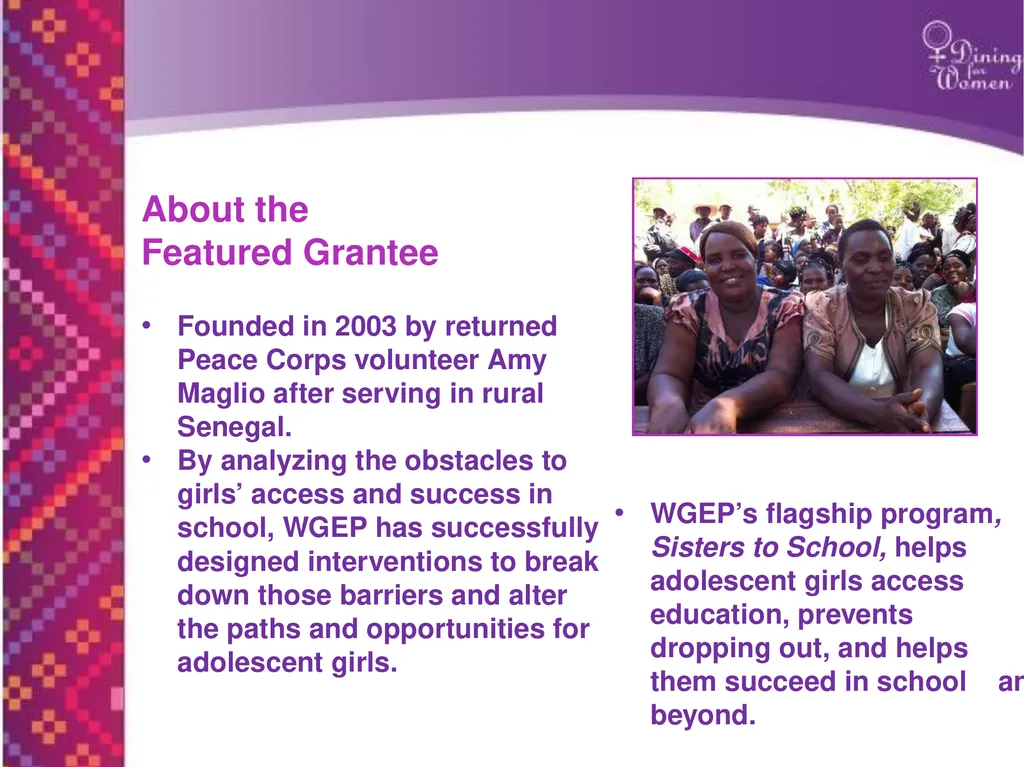
Founded in 2003 by returned Peace Corps volunteer Amy Maglio after serving in rural Senegal.
By analyzing the obstacles to girls’ access and success in school, WGEP has successfully designed interventions to break down those barriers and alter the paths and opportunities for adolescent girls. WGEP’s flagship program, Sisters to School, helps adolescent girls access education, prevents dropping out, and helps them succeed in school and beyond.<br>
09
HEADLINE GOES HERE Text goes here
Text goes here
Text goes here
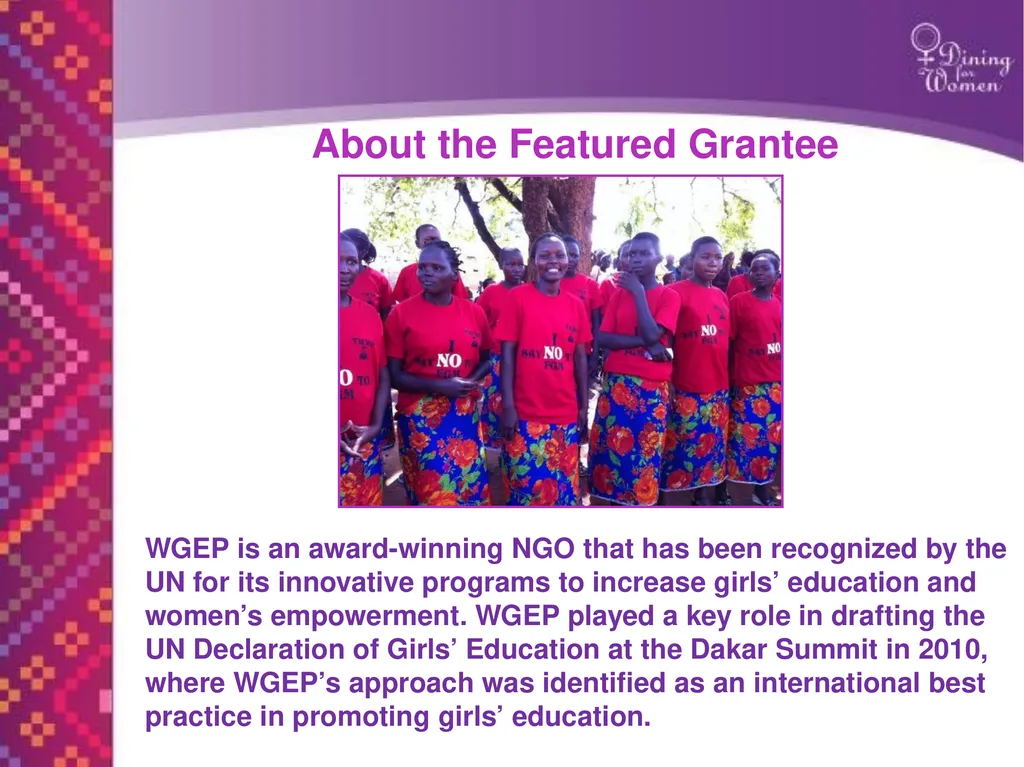
Text goes here About the Featured Grantee WGEP is an award-winning NGO that has been recognized by the UN for its innovative programs to increase girls’ education and women’s empowerment. WGEP played a key role in drafting the UN Declaration of Girls’ Education at the Dakar Summit in 2010, where WGEP’s approach was identified as an international best practice in promoting girls’ education.<br>
10
HEADLINE GOES HERE Text goes here
Text goes here
Text goes here
Text goes here Share Your Thoughts How do you think an ARP can help eradicate FGM/C?
How can community engagement affect the success of this goal?
How do you think this program promotes self-sufficiency for women and girls?<br>