
The Axial Current and Its Divergence Ignacio


Description: The Axial Current and Its Divergence Ignacio Castelli 1 Outline Introduction Perturbative calculations in (massive quarks) QCD: PDF Local current GPDs Summary In collaboration with: Adam Freese, Cédric Lorcé, Andreas Metz, Barbara Pasquini
Related Topics
Download Presentation
"The Axial Current and Its Divergence Ignacio" is the property of its rightful owner. Permission is granted to download and print the materials on this website for personal, non-commercial use only, and to display it on your personal computer provided you do not modify the materials and that you retain all copyright notices contained in the materials. By downloading content from our website, you accept the terms of this agreement.
Presentation Transcript
slide1. The Axial Current and Its Divergence Ignacio Castelli 1<br>
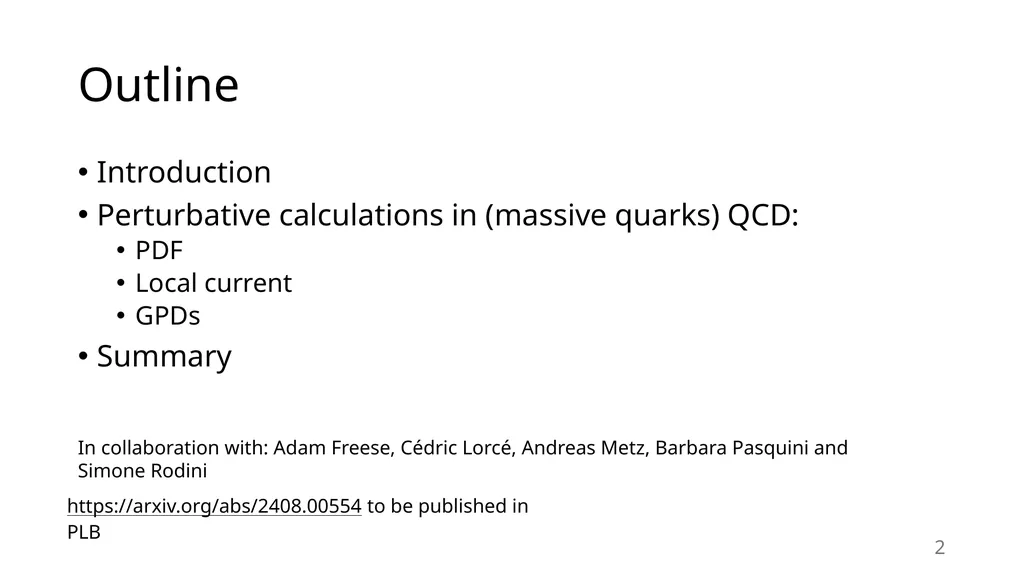
slide2. Outline Introduction
Perturbative calculations in (massive quarks) QCD:
PDF
Local current
GPDs
Summary In collaboration with: Adam Freese, Cédric Lorcé, Andreas Metz, Barbara Pasquini and Simone Rodini https://arxiv.org/abs/2408.00554 to be published in PLB 2<br>
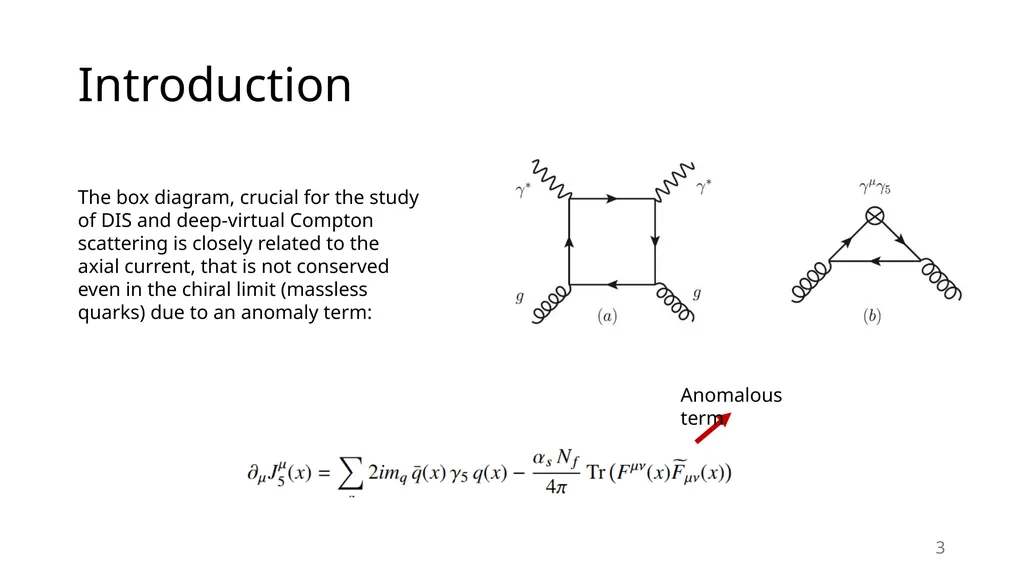
slide3. Introduction The box diagram, crucial for the study of DIS and deep-virtual Compton scattering is closely related to the axial current, that is not conserved even in the chiral limit (massless quarks) due to an anomaly term: 3 Anomalous term<br>
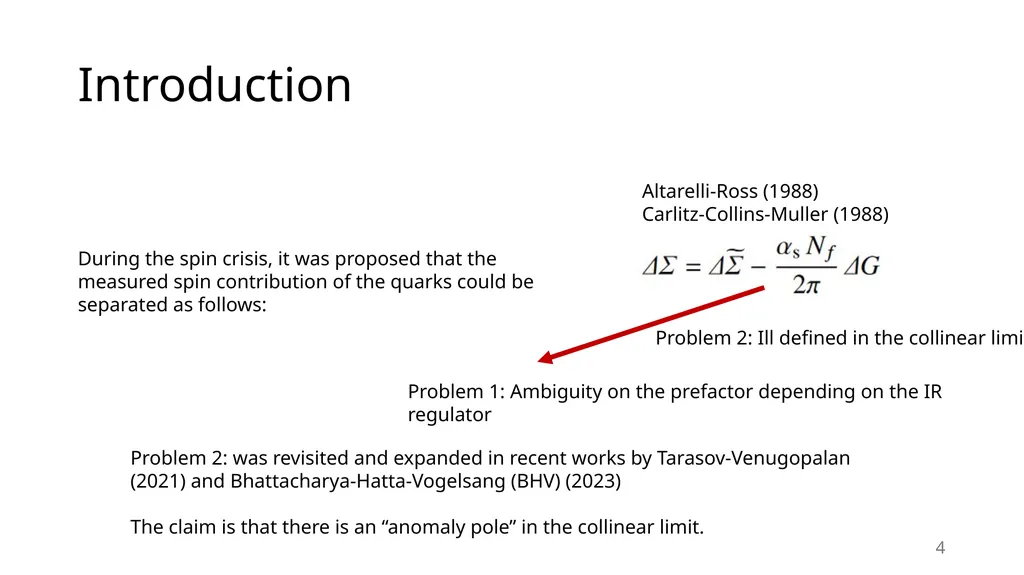
slide4. Introduction 4 During the spin crisis, it was proposed that the measured spin contribution of the quarks could be separated as follows: Problem 2: Ill defined in the collinear limit? Problem 1: Ambiguity on the prefactor depending on the IR regulator Altarelli-Ross (1988)
Carlitz-Collins-Muller (1988) Problem 2: was revisited and expanded in recent works by Tarasov-Venugopalan (2021) and Bhattacharya-Hatta-Vogelsang (BHV) (2023)
The claim is that there is an “anomaly pole” in the collinear limit.<br>
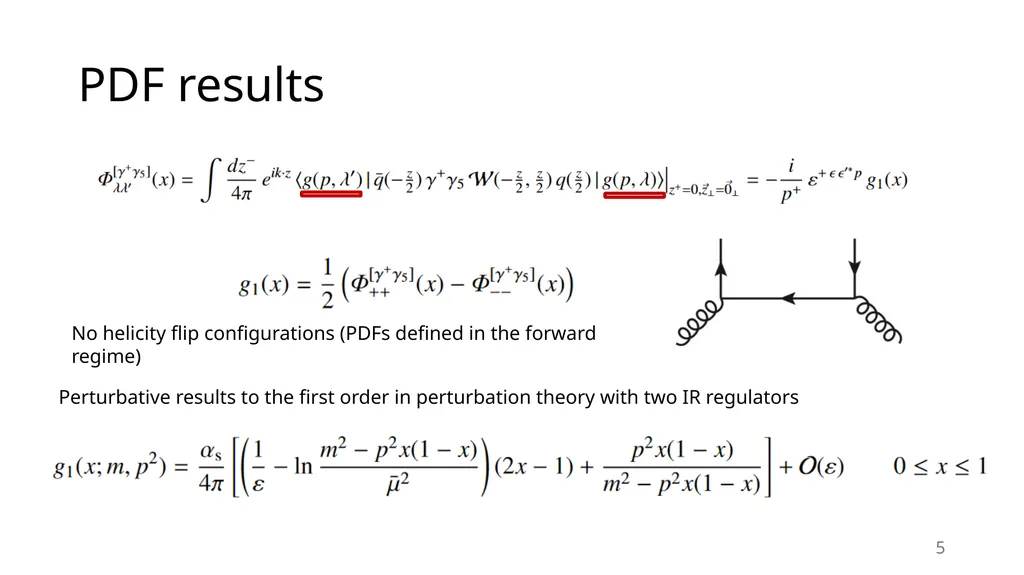
slide5. PDF results No helicity flip configurations (PDFs defined in the forward regime) Perturbative results to the first order in perturbation theory with two IR regulators 5<br>
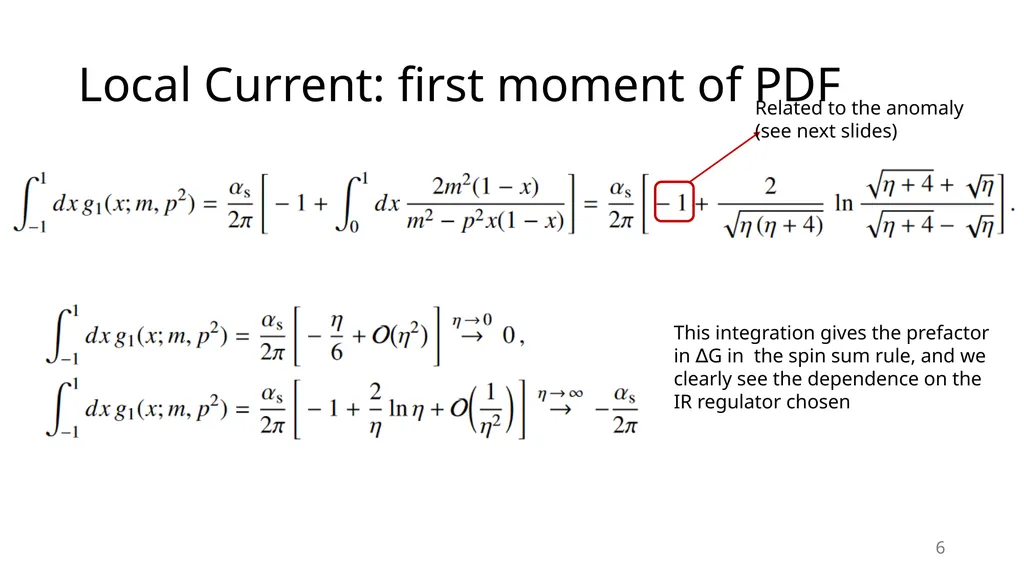
slide6. Local Current: first moment of PDF This integration gives the prefactor in ∆G in the spin sum rule, and we clearly see the dependence on the IR regulator chosen Related to the anomaly
(see next slides) 6<br>
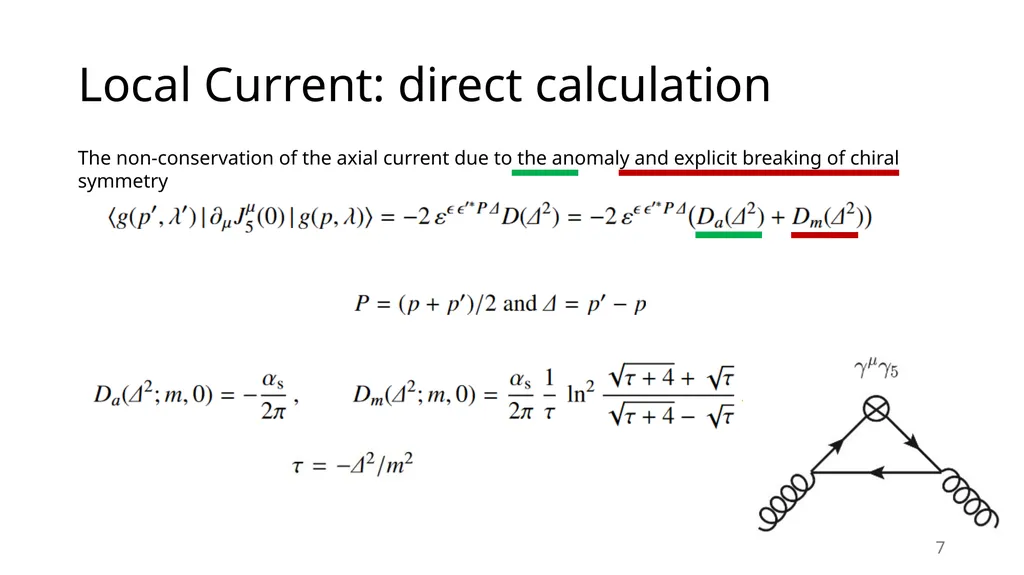
slide7. Local Current: direct calculation The non-conservation of the axial current due to the anomaly and explicit breaking of chiral symmetry 7<br>
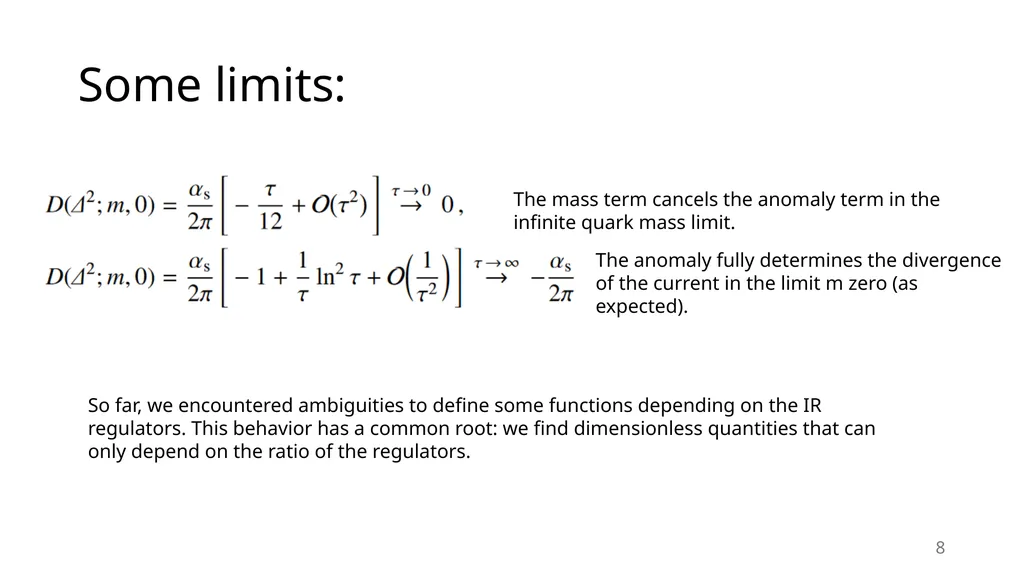
slide8. Some limits: The mass term cancels the anomaly term in the infinite quark mass limit. The anomaly fully determines the divergence of the current in the limit m zero (as expected). So far, we encountered ambiguities to define some functions depending on the IR regulators. This behavior has a common root: we find dimensionless quantities that can only depend on the ratio of the regulators. 8<br>
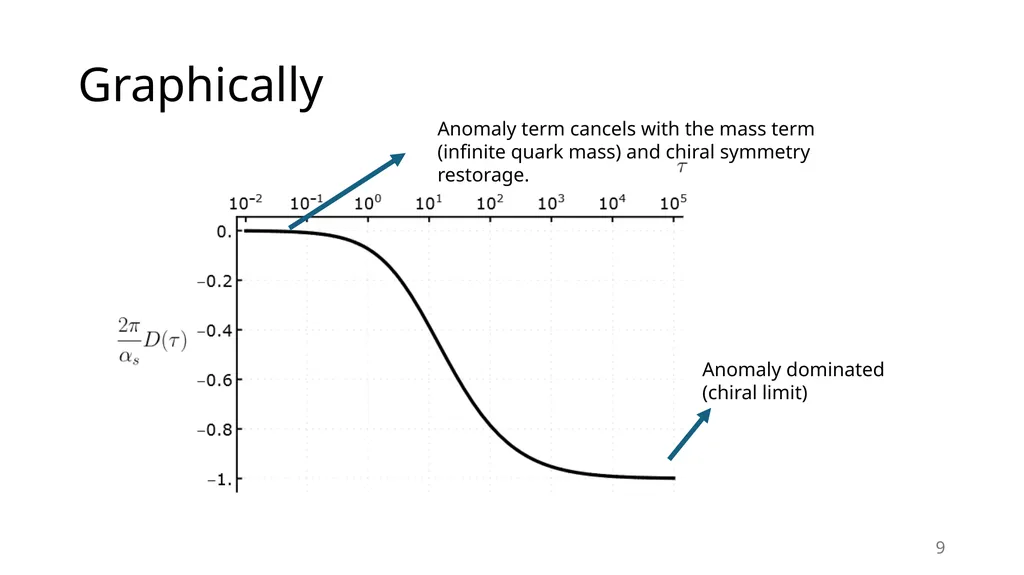
slide9. Graphically Anomaly term cancels with the mass term (infinite quark mass) and chiral symmetry restorage. Anomaly dominated (chiral limit) 9<br>
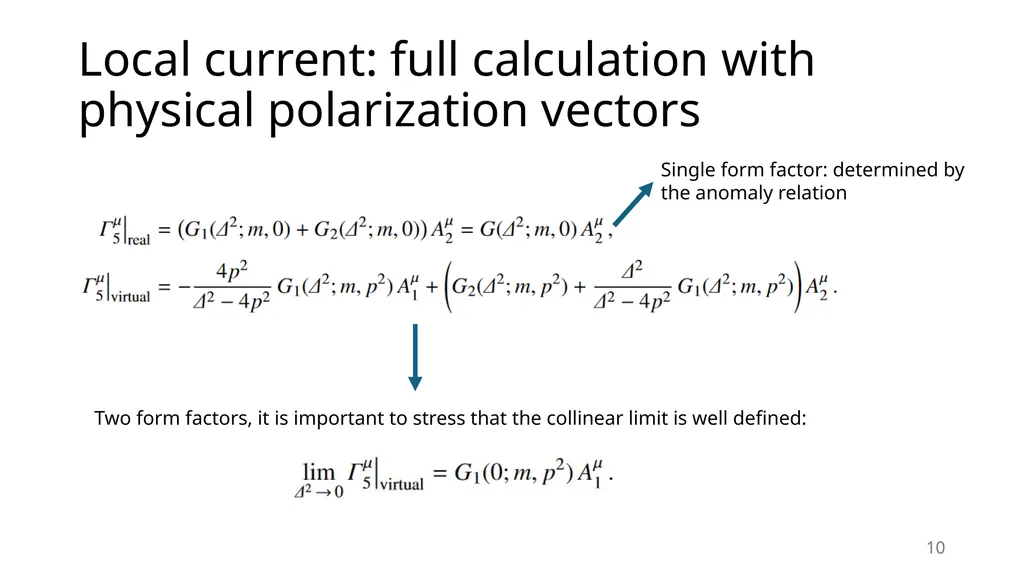
slide10. Local current: full calculation with physical polarization vectors Single form factor: determined by the anomaly relation Two form factors, it is important to stress that the collinear limit is well defined: 10<br>
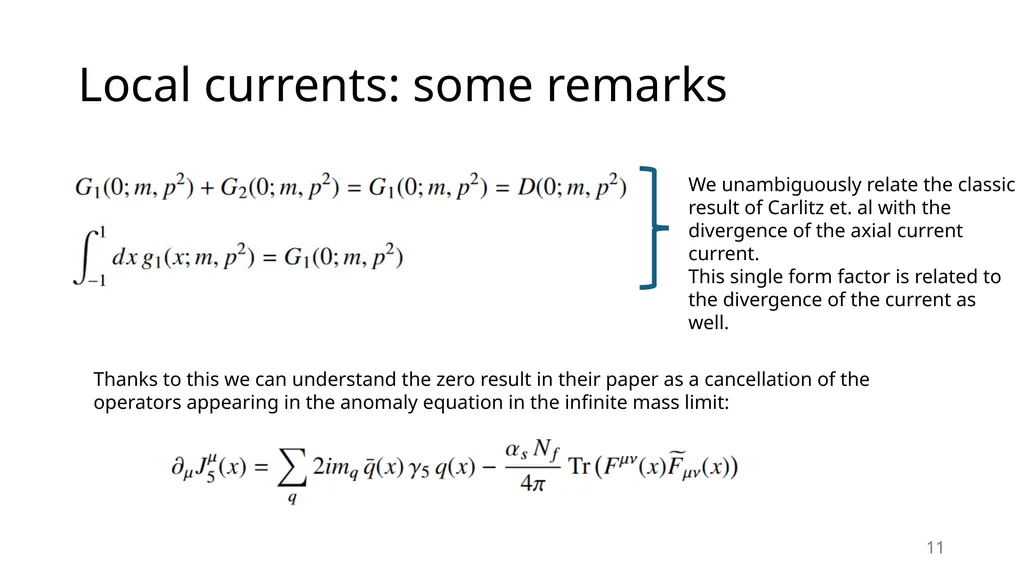
slide11. Local currents: some remarks We unambiguously relate the classic result of Carlitz et. al with the divergence of the axial current current.
This single form factor is related to the divergence of the current as well. Thanks to this we can understand the zero result in their paper as a cancellation of the operators appearing in the anomaly equation in the infinite mass limit: 11<br>
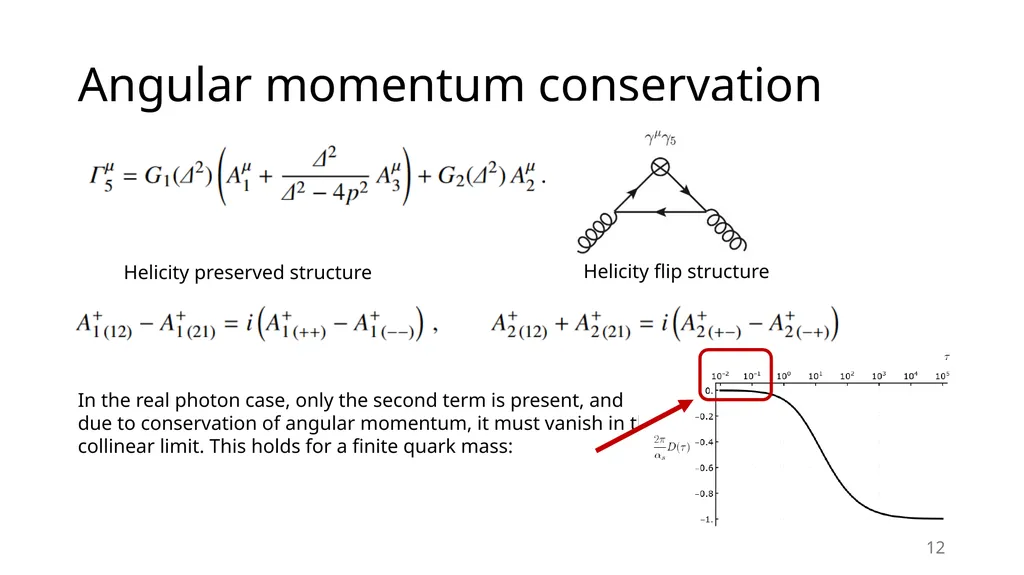
slide12. Angular momentum conservation Helicity preserved structure Helicity flip structure In the real photon case, only the second term is present, and due to conservation of angular momentum, it must vanish in the collinear limit. This holds for a finite quark mass: 12<br>
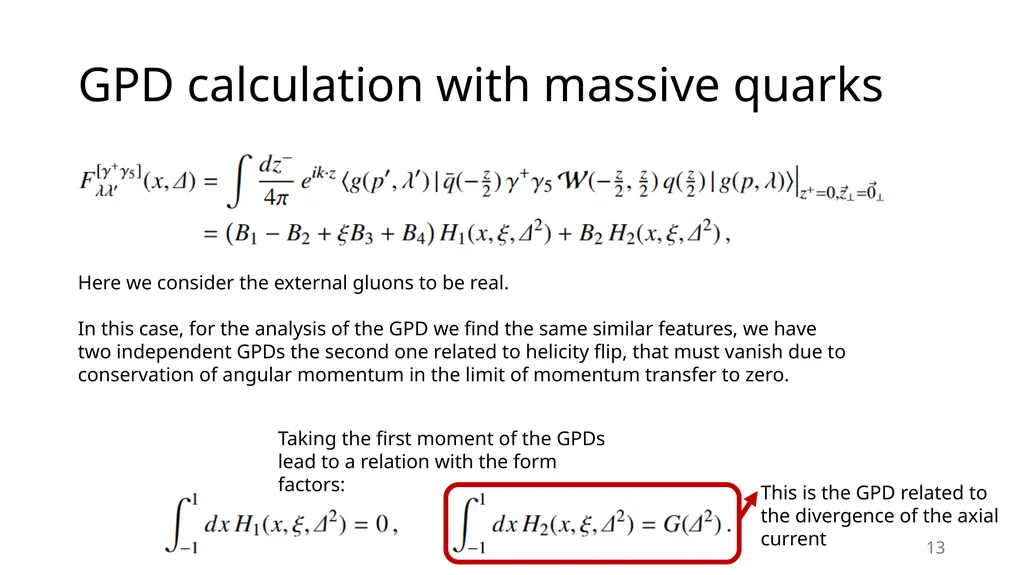
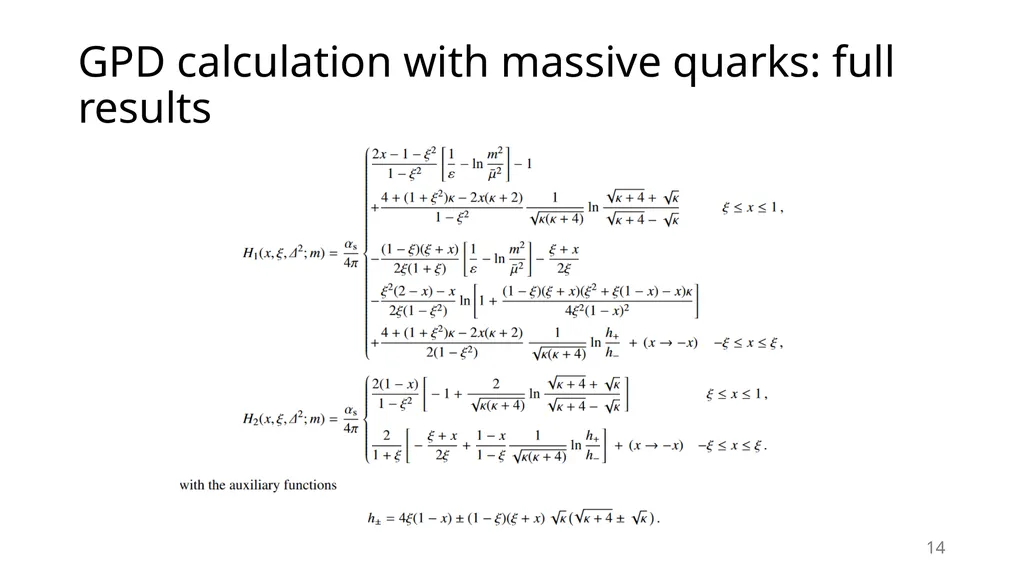
slide13. GPD calculation with massive quarks Here we consider the external gluons to be real.
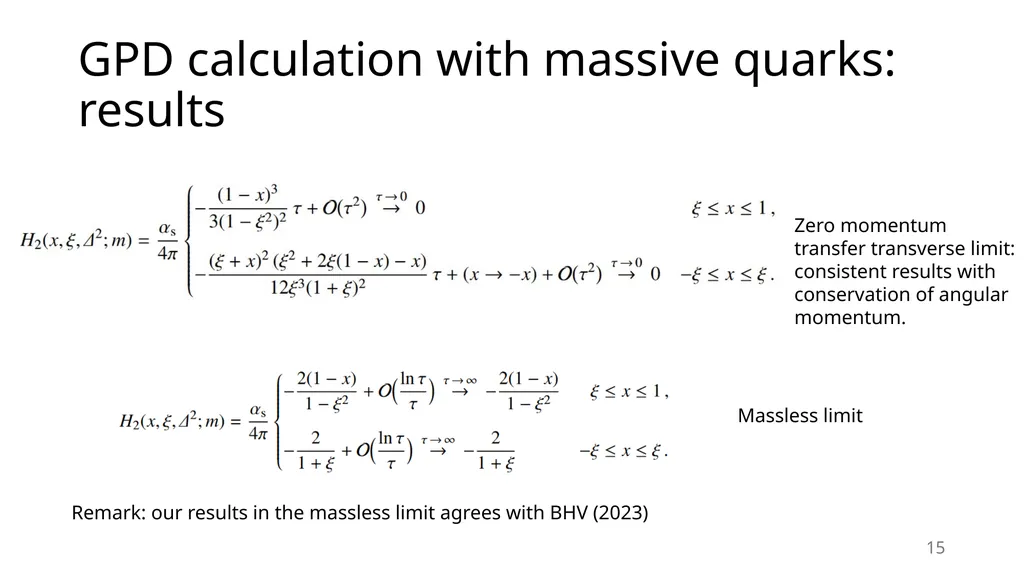
In this case, for the analysis of the GPD we find the same similar features, we have two independent GPDs the second one related to helicity flip, that must vanish due to conservation of angular momentum in the limit of momentum transfer to zero. 13 Taking the first moment of the GPDs lead to a relation with the form factors: This is the GPD related to the divergence of the axial current<br>
slide14. GPD calculation with massive quarks: full results 14<br>
slide15. GPD calculation with massive quarks: results Zero momentum transfer transverse limit: consistent results with conservation of angular momentum. Massless limit 15 Remark: our results in the massless limit agrees with BHV (2023)<br>
slide16. Conclusions We state that the cancellation of the anomaly term with the mass term in the anomaly relation plays a crucial role for the conservation of angular momentum in all our calculations.
We don’t find an ambiguity when taking the collinear limit more than the ambiguity related to having a function depending on a ratio of two mass scales (for instance: slide 9). No “anomaly pole” when considering physical polarizations.
There is a clear connection of the divergence of the axial current and the pdf even in the collinear limit (slide 11). 16<br>
slide2. Outline Introduction
Perturbative calculations in (massive quarks) QCD:
Local current
GPDs
Summary In collaboration with: Adam Freese, Cédric Lorcé, Andreas Metz, Barbara Pasquini and Simone Rodini https://arxiv.org/abs/2408.00554 to be published in PLB 2<br>
slide3. Introduction The box diagram, crucial for the study of DIS and deep-virtual Compton scattering is closely related to the axial current, that is not conserved even in the chiral limit (massless quarks) due to an anomaly term: 3 Anomalous term<br>
slide4. Introduction 4 During the spin crisis, it was proposed that the measured spin contribution of the quarks could be separated as follows: Problem 2: Ill defined in the collinear limit? Problem 1: Ambiguity on the prefactor depending on the IR regulator Altarelli-Ross (1988)
Carlitz-Collins-Muller (1988) Problem 2: was revisited and expanded in recent works by Tarasov-Venugopalan (2021) and Bhattacharya-Hatta-Vogelsang (BHV) (2023)
The claim is that there is an “anomaly pole” in the collinear limit.<br>
slide5. PDF results No helicity flip configurations (PDFs defined in the forward regime) Perturbative results to the first order in perturbation theory with two IR regulators 5<br>
slide6. Local Current: first moment of PDF This integration gives the prefactor in ∆G in the spin sum rule, and we clearly see the dependence on the IR regulator chosen Related to the anomaly
(see next slides) 6<br>
slide7. Local Current: direct calculation The non-conservation of the axial current due to the anomaly and explicit breaking of chiral symmetry 7<br>
slide8. Some limits: The mass term cancels the anomaly term in the infinite quark mass limit. The anomaly fully determines the divergence of the current in the limit m zero (as expected). So far, we encountered ambiguities to define some functions depending on the IR regulators. This behavior has a common root: we find dimensionless quantities that can only depend on the ratio of the regulators. 8<br>
slide9. Graphically Anomaly term cancels with the mass term (infinite quark mass) and chiral symmetry restorage. Anomaly dominated (chiral limit) 9<br>
slide10. Local current: full calculation with physical polarization vectors Single form factor: determined by the anomaly relation Two form factors, it is important to stress that the collinear limit is well defined: 10<br>
slide11. Local currents: some remarks We unambiguously relate the classic result of Carlitz et. al with the divergence of the axial current current.
This single form factor is related to the divergence of the current as well. Thanks to this we can understand the zero result in their paper as a cancellation of the operators appearing in the anomaly equation in the infinite mass limit: 11<br>
slide12. Angular momentum conservation Helicity preserved structure Helicity flip structure In the real photon case, only the second term is present, and due to conservation of angular momentum, it must vanish in the collinear limit. This holds for a finite quark mass: 12<br>
slide13. GPD calculation with massive quarks Here we consider the external gluons to be real.
In this case, for the analysis of the GPD we find the same similar features, we have two independent GPDs the second one related to helicity flip, that must vanish due to conservation of angular momentum in the limit of momentum transfer to zero. 13 Taking the first moment of the GPDs lead to a relation with the form factors: This is the GPD related to the divergence of the axial current<br>
slide14. GPD calculation with massive quarks: full results 14<br>
slide15. GPD calculation with massive quarks: results Zero momentum transfer transverse limit: consistent results with conservation of angular momentum. Massless limit 15 Remark: our results in the massless limit agrees with BHV (2023)<br>
slide16. Conclusions We state that the cancellation of the anomaly term with the mass term in the anomaly relation plays a crucial role for the conservation of angular momentum in all our calculations.
We don’t find an ambiguity when taking the collinear limit more than the ambiguity related to having a function depending on a ratio of two mass scales (for instance: slide 9). No “anomaly pole” when considering physical polarizations.
There is a clear connection of the divergence of the axial current and the pdf even in the collinear limit (slide 11). 16<br>