The Demographic Dividend Perception and Outcome Monitoring Index for Nigeria: Methods and Results Olanrewaju Olaniyan, Akanni Lawanson, Noah Olasehinde, Olabanji Awodumi, Oyeteju Odufuwa, Temitope Faronbi, and Andat Dasogot Presented on 15
Related Topics
Share
Embed code
Download this presentation From Below
"The Demographic Dividend Perception and Outcome" is the property of its rightful owner. Permission is granted to
download and print the materials on this website for personal, non-commercial use only, and to display it
on your personal computer provided you do not modify the materials and that you retain all copyright
notices contained in the materials. By downloading content from our website, you accept the terms of this
agreement.
Presentation Transcript
01
The Demographic Dividend Perception and Outcome Monitoring Index for Nigeria: Methods and Results Olanrewaju Olaniyan, Akanni Lawanson, Noah Olasehinde, Olabanji Awodumi, Oyeteju Odufuwa, Temitope Faronbi, and Andat Dasogot Presented on 15 February 2023 during the 14th Global Meeting of the NTA Network @ University of Paris, Dauphine with the theme: “Building Sustainable Generational Economies”<br>
02
Outline of Presentation Introduction
Why the DDMI for Nigeria?
Components of the Demographic Dividend Monitoring Index
Methodology of the Demographic Dividend
Results
Conclusion 2<br>
03
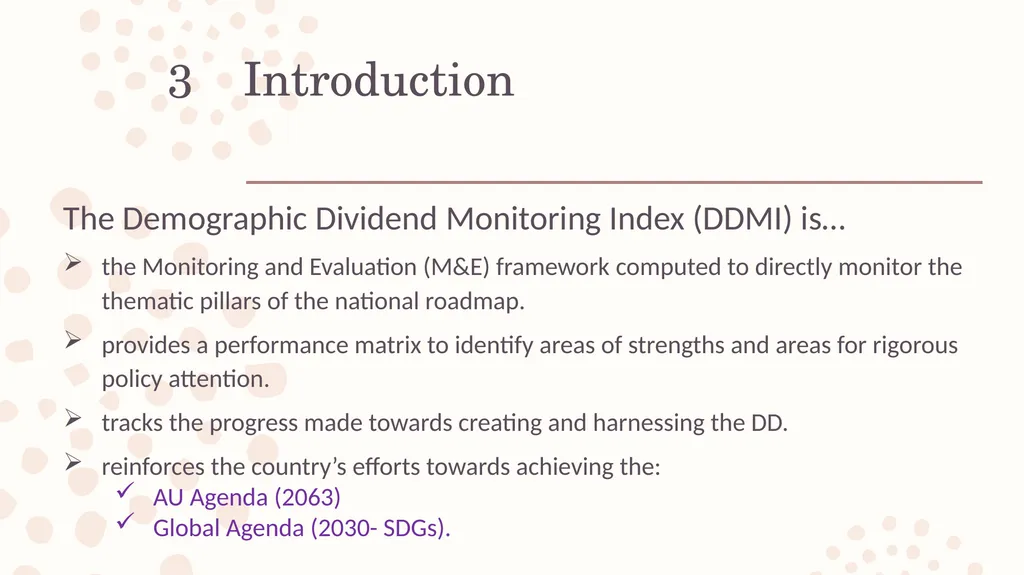
Introduction The Demographic Dividend Monitoring Index (DDMI) is…
the Monitoring and Evaluation (M&E) framework computed to directly monitor the thematic pillars of the national roadmap.
provides a performance matrix to identify areas of strengths and areas for rigorous policy attention.
tracks the progress made towards creating and harnessing the DD.
reinforces the country’s efforts towards achieving the:
AU Agenda (2063)
Global Agenda (2030- SDGs). 3<br>
04
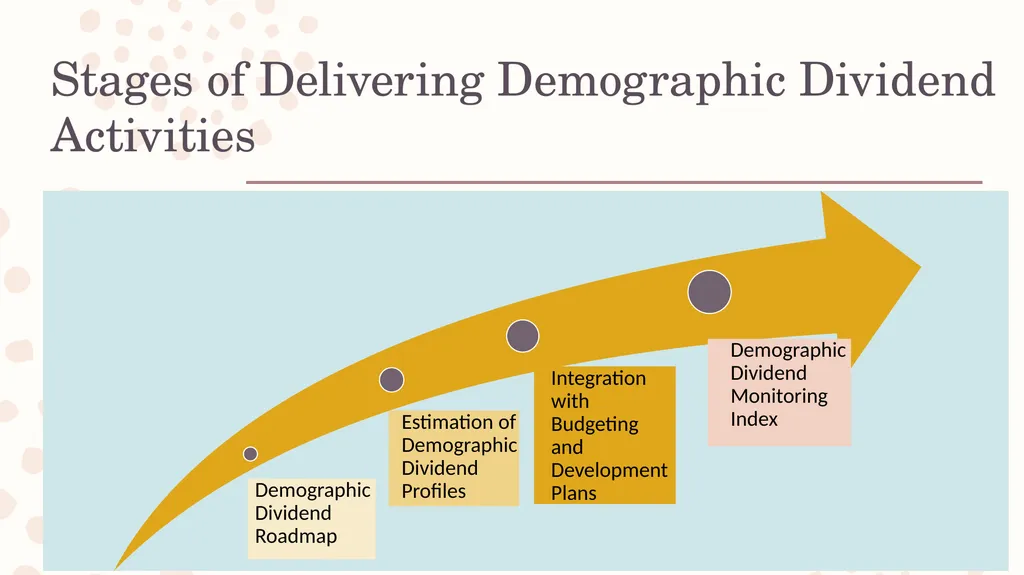
Stages of Delivering Demographic Dividend Activities<br>
05
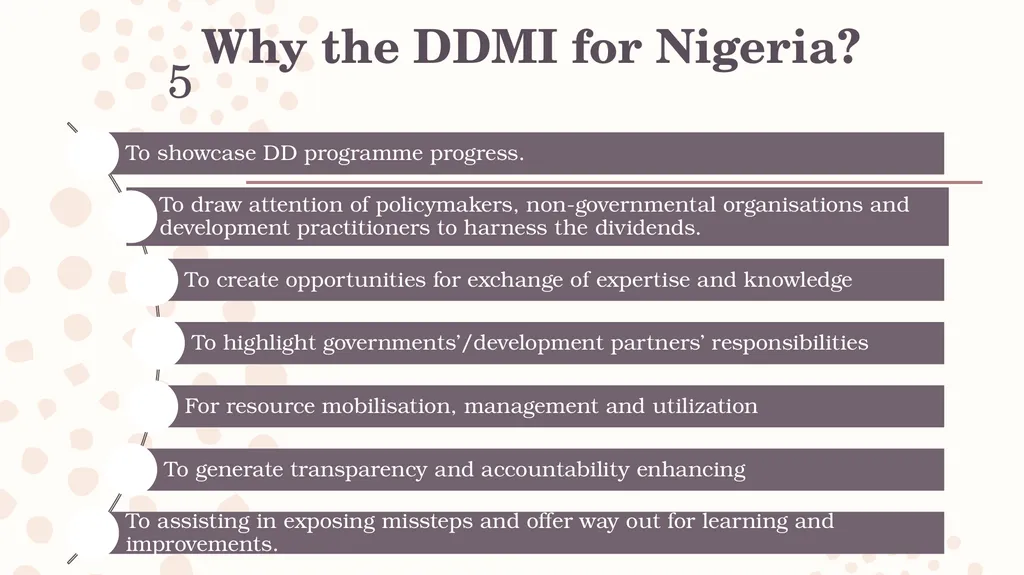
Why the DDMI for Nigeria? 5<br>
06
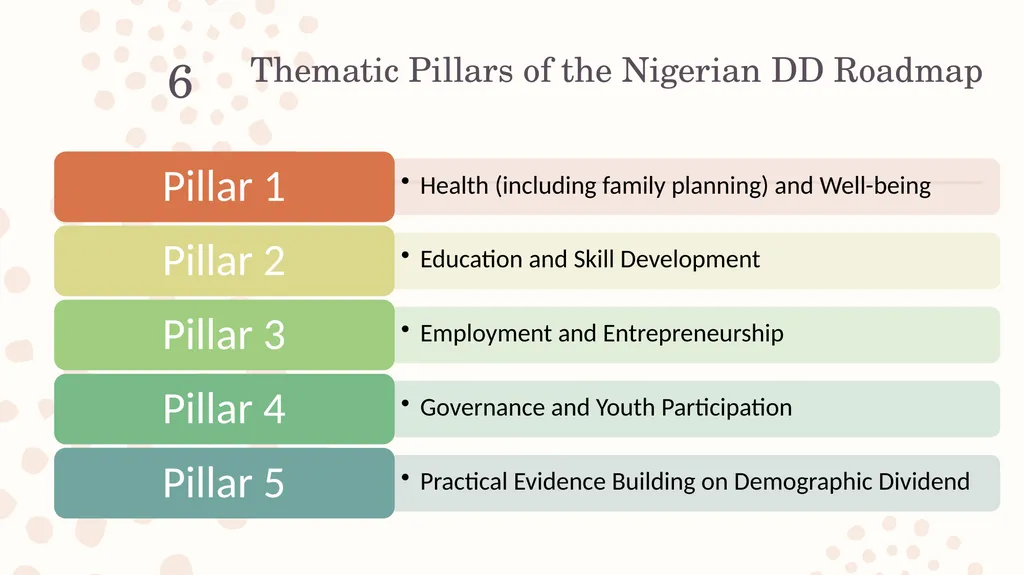
Thematic Pillars of the Nigerian DD Roadmap 6<br>
07
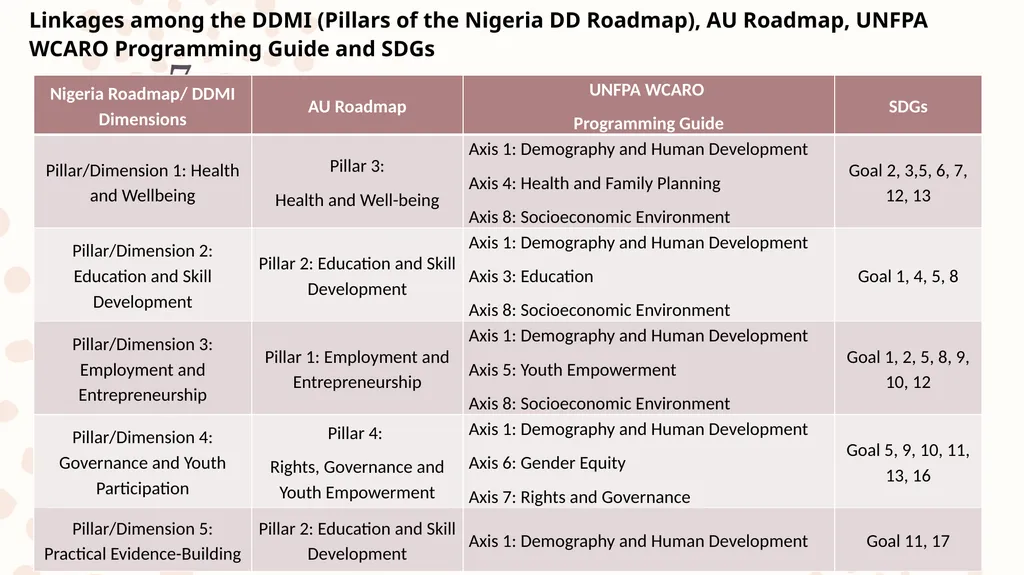
Linkages among the DDMI (Pillars of the Nigeria DD Roadmap), AU Roadmap, UNFPA WCARO Programming Guide and SDGs 7<br>
08
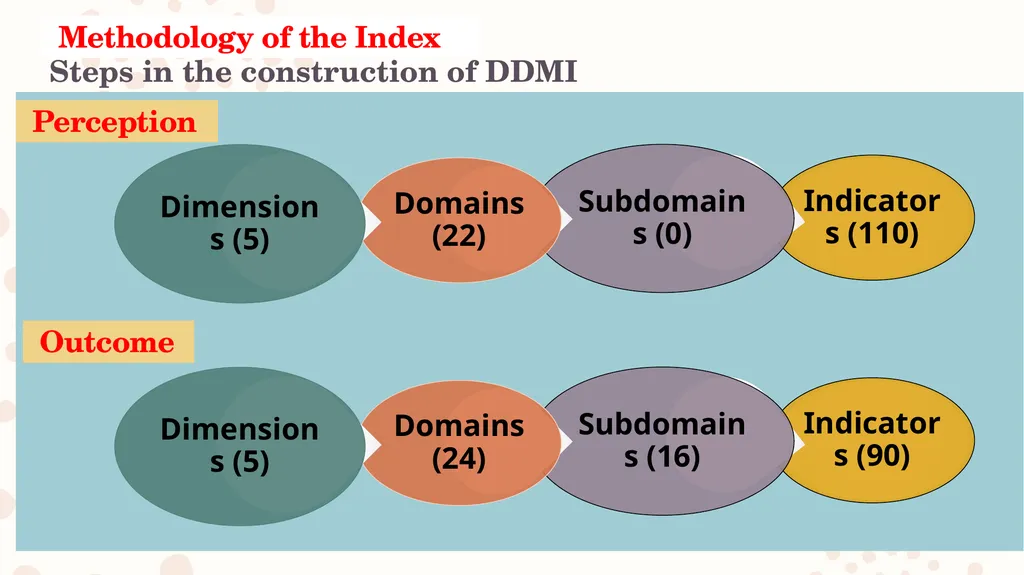
Steps in the construction of DDMI Methodology of the Index Perception Outcome<br>
09
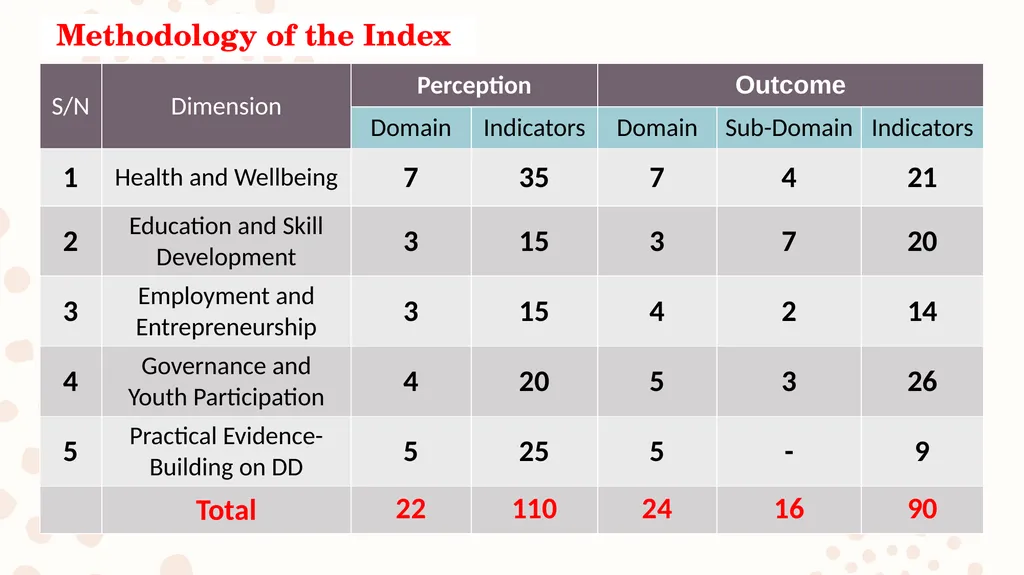
Methodology of the Index<br>
10
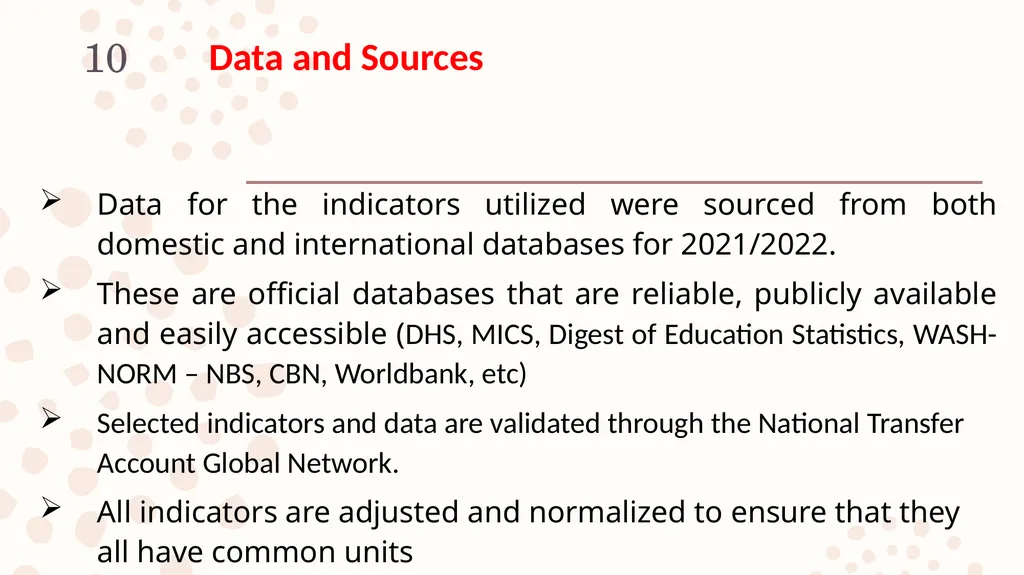
Data for the indicators utilized were sourced from both domestic and international databases for 2021/2022.
These are official databases that are reliable, publicly available and easily accessible (DHS, MICS, Digest of Education Statistics, WASH-NORM – NBS, CBN, Worldbank, etc)
Selected indicators and data are validated through the National Transfer Account Global Network.
All indicators are adjusted and normalized to ensure that they all have common units 10 Data and Sources<br>
11
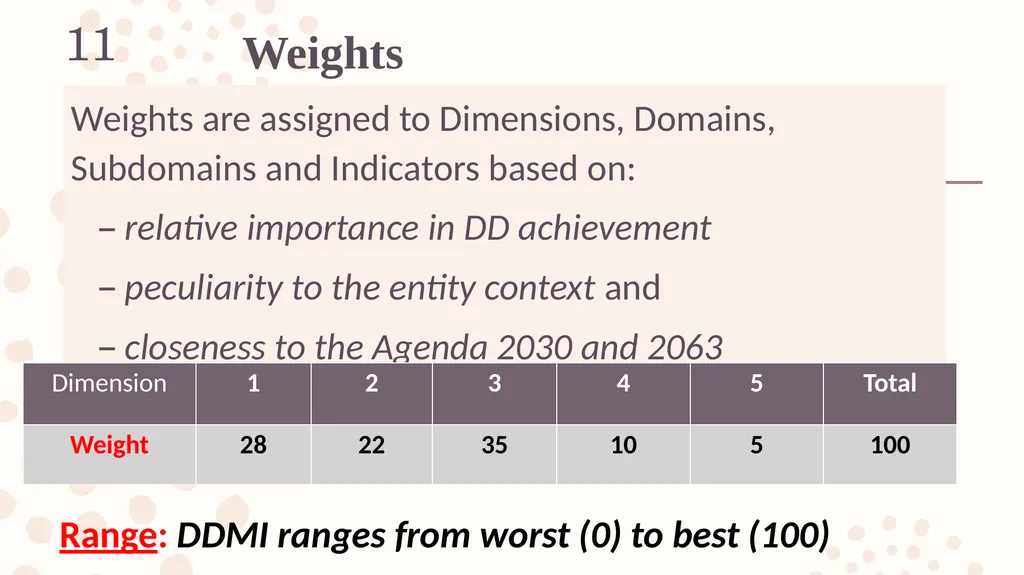
Weights Weights are assigned to Dimensions, Domains, Subdomains and Indicators based on:
relative importance in DD achievement
peculiarity to the entity context and
closeness to the Agenda 2030 and 2063 11 Range: DDMI ranges from worst (0) to best (100)<br>
12
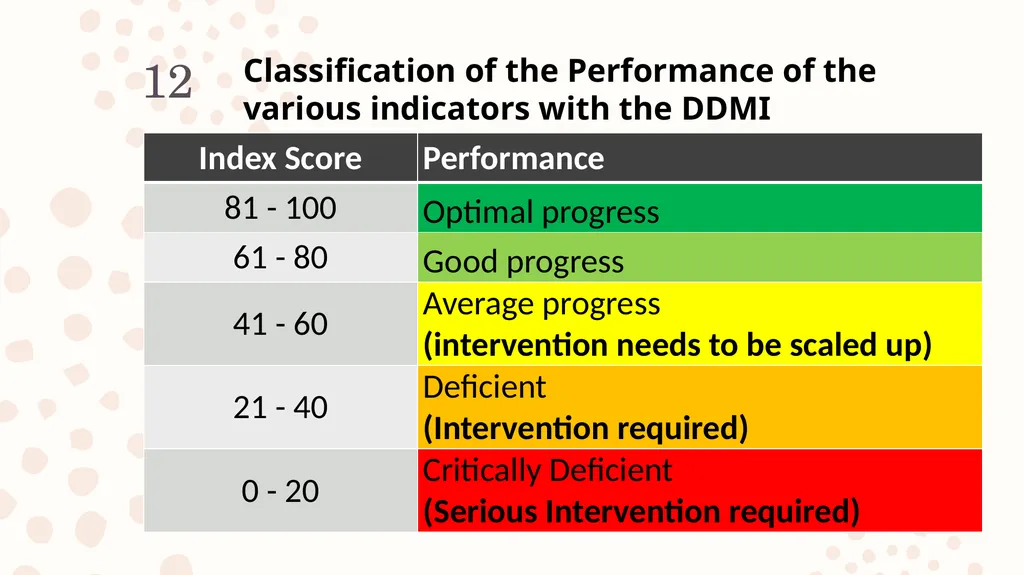
Classification of the Performance of the various indicators with the DDMI 12<br>
13
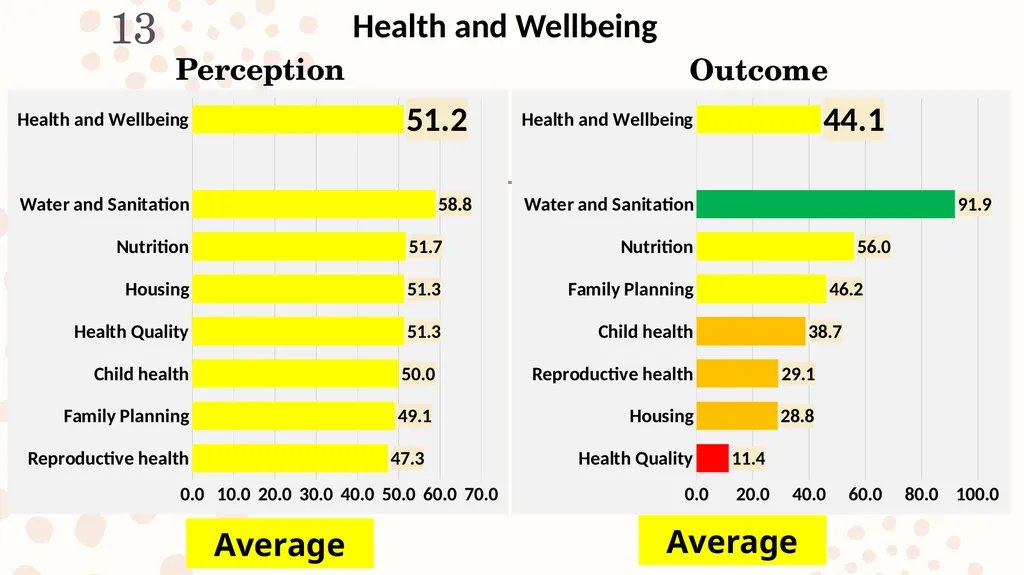
13 Health and Wellbeing Average Perception Outcome Average<br>
14
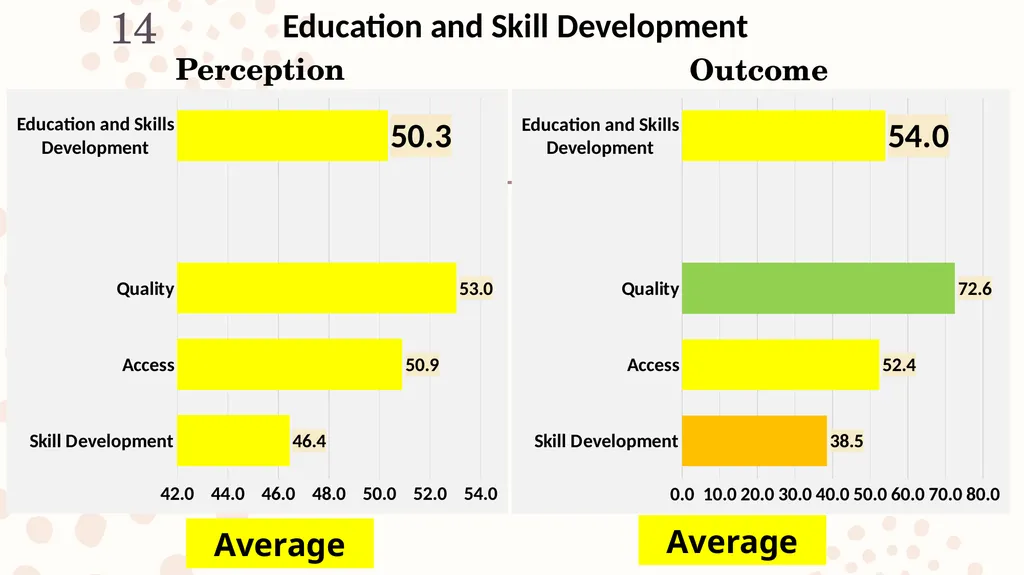
14 Education and Skill Development Average Perception Outcome Average<br>
15
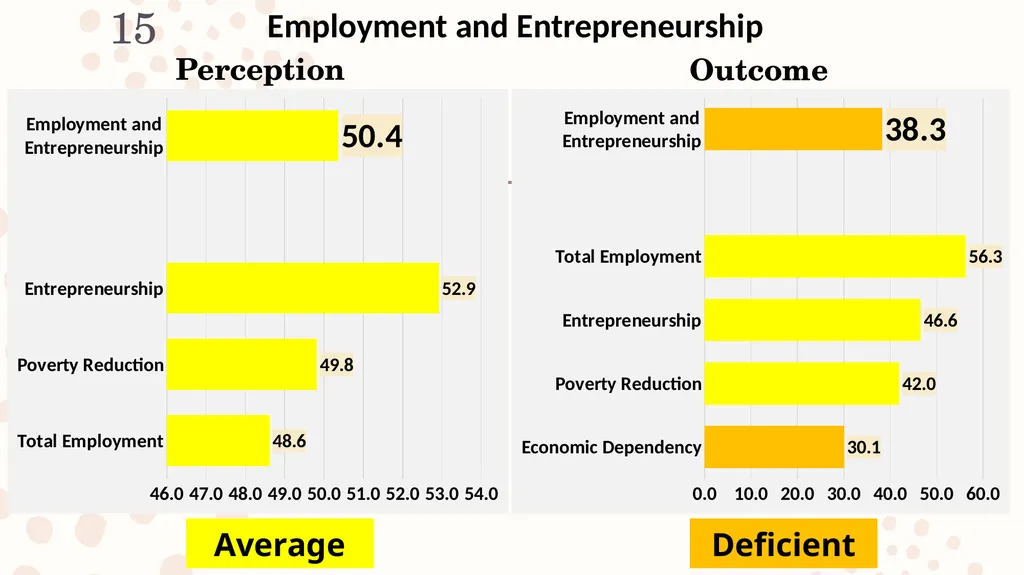
15 Employment and Entrepreneurship Perception Outcome Average Deficient<br>
16
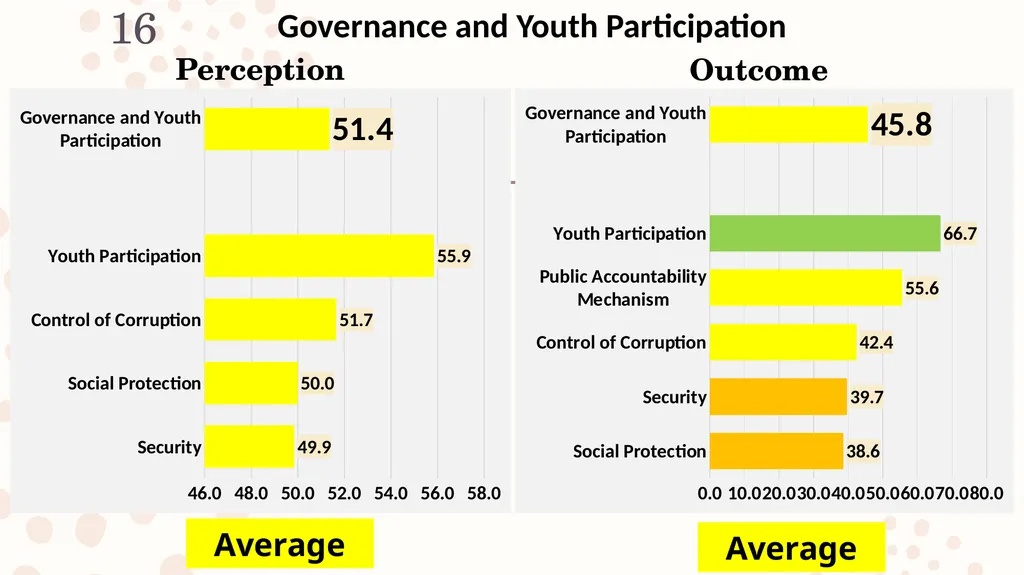
16 Governance and Youth Participation Perception Outcome Average Average<br>
17
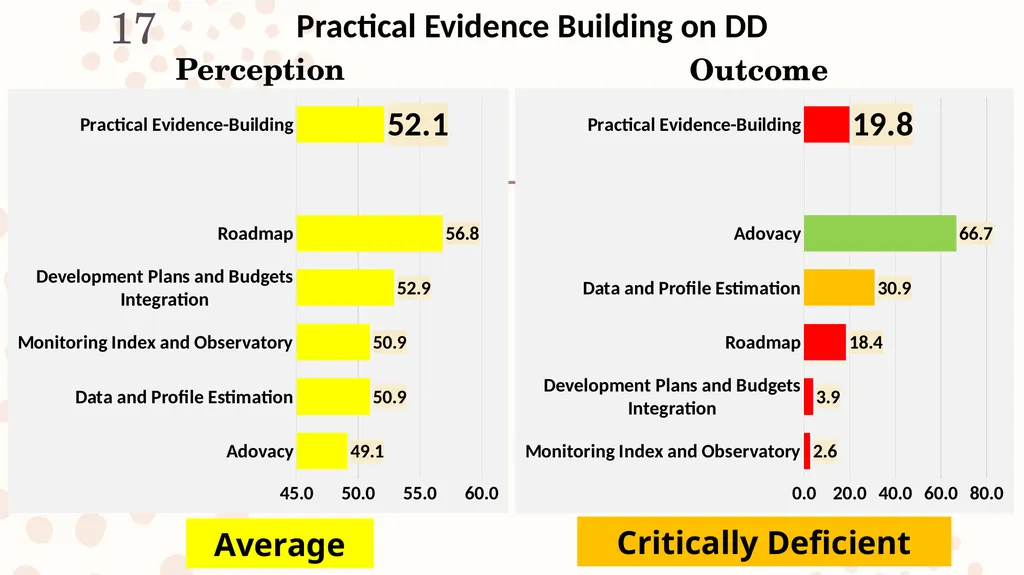
17 Practical Evidence Building on DD Perception Outcome Average Critically Deficient<br>
18
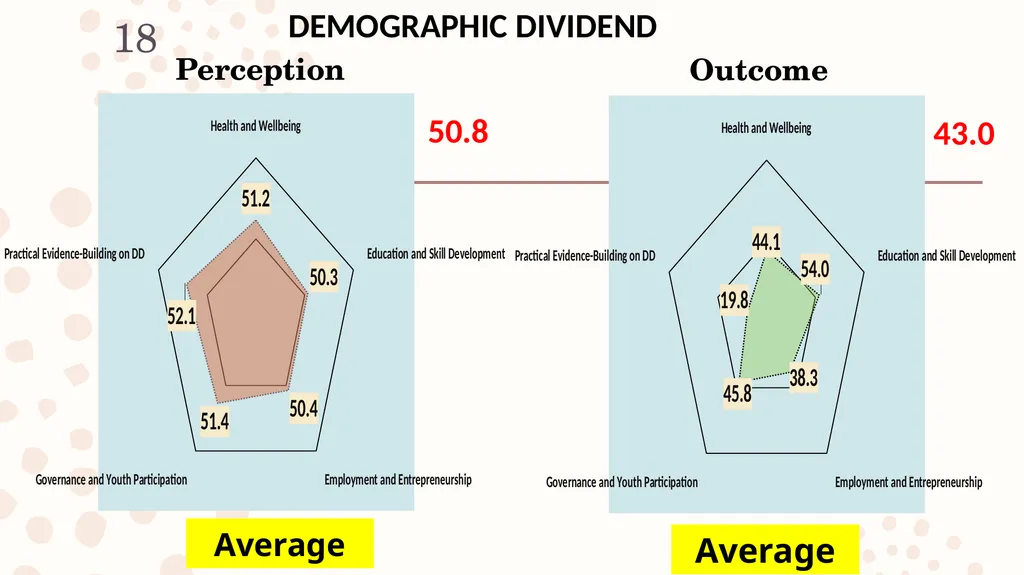
18 DEMOGRAPHIC DIVIDEND Perception Outcome Average 43.0 Average 50.8<br>
19
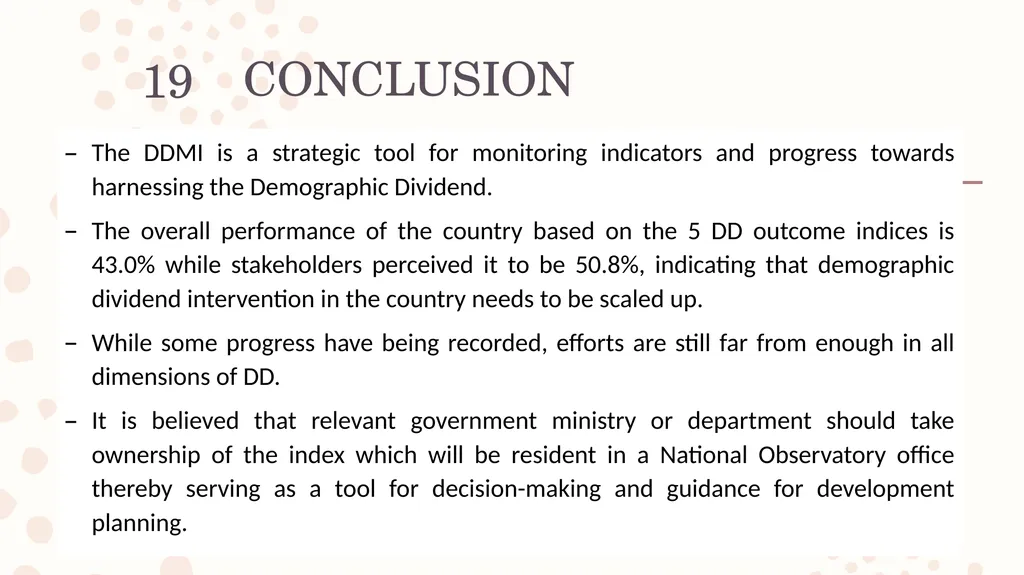
CONCLUSION The DDMI is a strategic tool for monitoring indicators and progress towards harnessing the Demographic Dividend.
The overall performance of the country based on the 5 DD outcome indices is 43.0% while stakeholders perceived it to be 50.8%, indicating that demographic dividend intervention in the country needs to be scaled up.
While some progress have being recorded, efforts are still far from enough in all dimensions of DD.
It is believed that relevant government ministry or department should take ownership of the index which will be resident in a National Observatory office thereby serving as a tool for decision-making and guidance for development planning. 19<br>
20
20 Thank you for your attention Health Policy Training And Research Programme (HPTRP)
University of Ibadan, Nigeria<br>