
The Development of Testing Materials on Level 1

Description: The Development of Testing Materials on Level 1 iaw STANAG 6001: A New Approach for the Digital Age BILC Professional Development Seminar 2022 BYU, Provo, Utah, USA ORRin Anika Dähn, English Teacher, Test Developer, Coordinator for English
Related Topics
Download Presentation
"The Development of Testing Materials on Level 1" is the property of its rightful owner. Permission is granted to download and print the materials on this website for personal, non-commercial use only, and to display it on your personal computer provided you do not modify the materials and that you retain all copyright notices contained in the materials. By downloading content from our website, you accept the terms of this agreement.
Presentation Transcript
slide1. The Development of Testing Materials on Level 1 iaw STANAG 6001:
A New Approach for the Digital Age BILC Professional Development Seminar 2022
BYU, Provo, Utah, USA
ORR‘in Anika Dähn, English Teacher, Test Developer, Coordinator for English Testing Materials<br>
slide2. Content Reasons for Reassessment of Level 1 Testing Materials
Challenges
Level 1 Descriptors
Development of New Level 1 Writing Tasks
Conclusion and Perspective 2<br>
slide3. Reasons for the re-assessment of our materials:
Communication has changed, esp. reading habits, communication in writing
Speed, inclusion of images, length of texts
Main source for texts used in teaching and testing: Internet
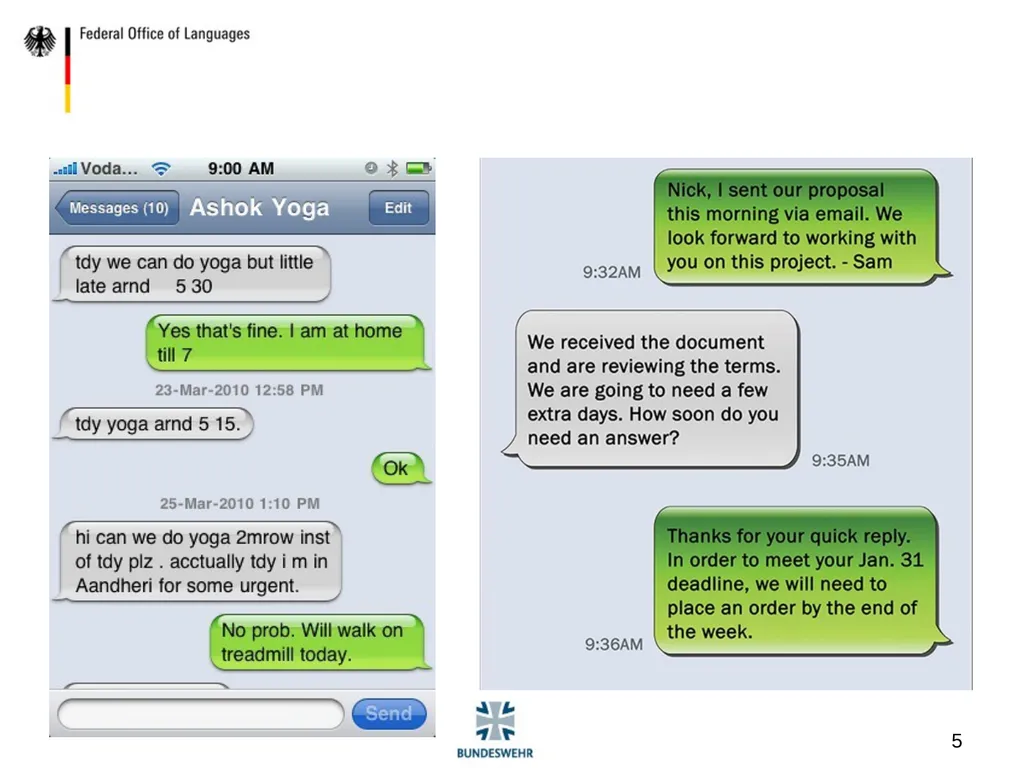
New(er) text types such as text messages (reading/writing), posts, (e.g. instagram reading/writing), TikTok videos (listening), tweets (reading/writing), blogs (reading/writing), podcasts (listening)
But: Have changes in the way in which we interact with texts when reading, writing and/or listening as a result of technology changed the way you test skills at level 1?
(Questionnaire BILC Testing Workshop Bonn, 2022)
3 x Yes (mostly e-mail instead of letter)
8 x No 3<br>
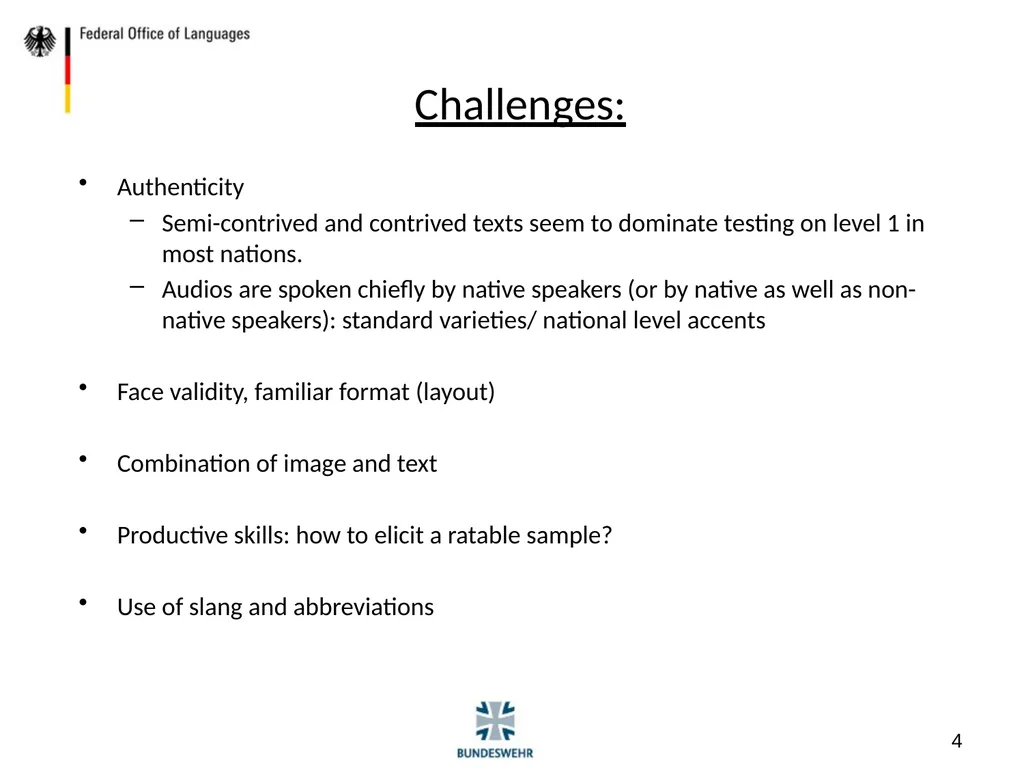
slide4. Challenges:
Authenticity
Semi-contrived and contrived texts seem to dominate testing on level 1 in most nations.
Audios are spoken chiefly by native speakers (or by native as well as non-native speakers): standard varieties/ national level accents
Face validity, familiar format (layout)
Combination of image and text
Productive skills: how to elicit a ratable sample?
Use of slang and abbreviations 4<br>
slide5. 5<br>
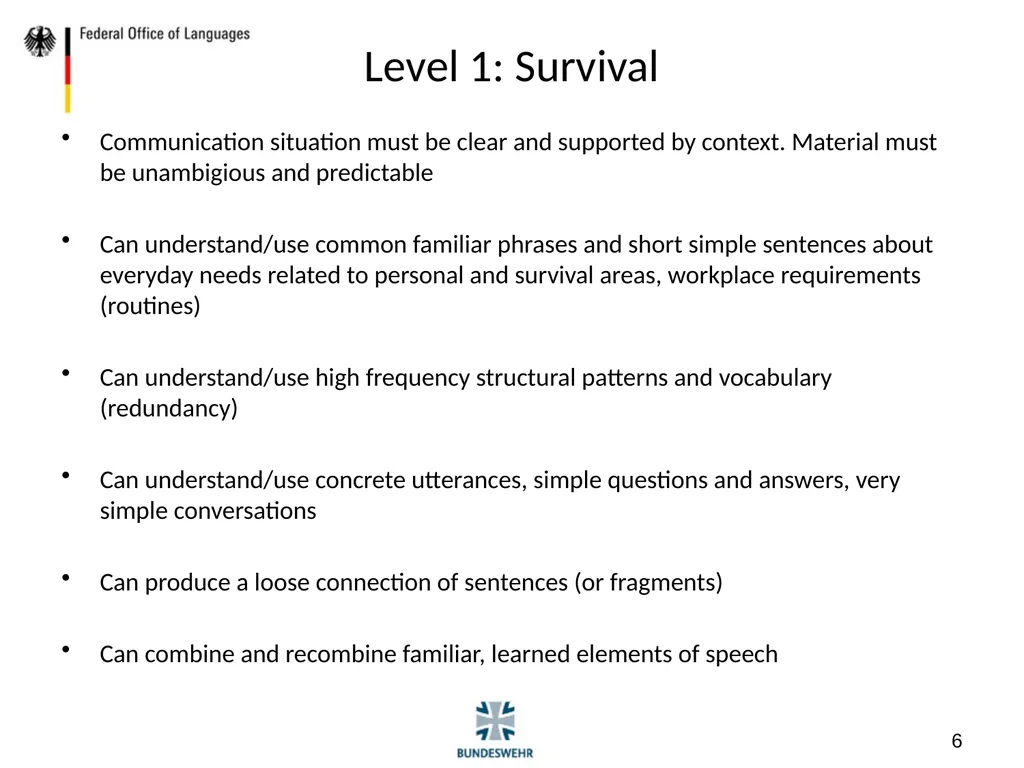
slide6. Level 1: Survival Communication situation must be clear and supported by context. Material must be unambigious and predictable
Can understand/use common familiar phrases and short simple sentences about everyday needs related to personal and survival areas, workplace requirements (routines)
Can understand/use high frequency structural patterns and vocabulary (redundancy)
Can understand/use concrete utterances, simple questions and answers, very simple conversations
Can produce a loose connection of sentences (or fragments)
Can combine and recombine familiar, learned elements of speech 6<br>
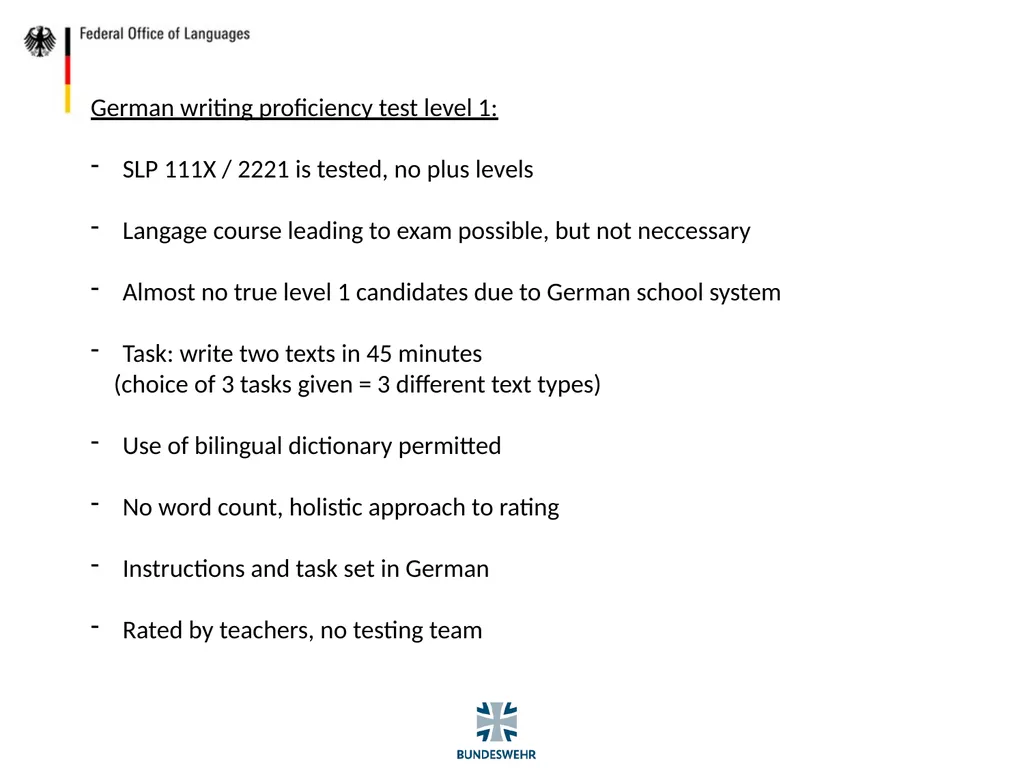
slide7. German writing proficiency test level 1:
SLP 111X / 2221 is tested, no plus levels
Langage course leading to exam possible, but not neccessary
Almost no true level 1 candidates due to German school system
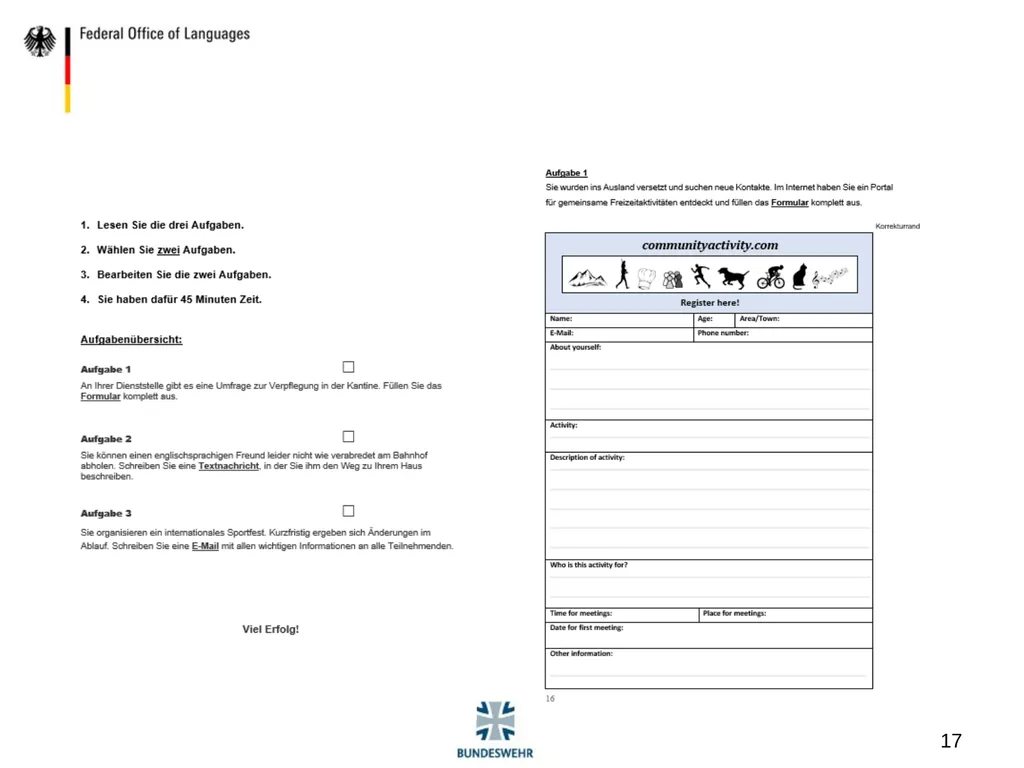
Task: write two texts in 45 minutes
(choice of 3 tasks given = 3 different text types)
Use of bilingual dictionary permitted
No word count, holistic approach to rating
Instructions and task set in German
Rated by teachers, no testing team<br>
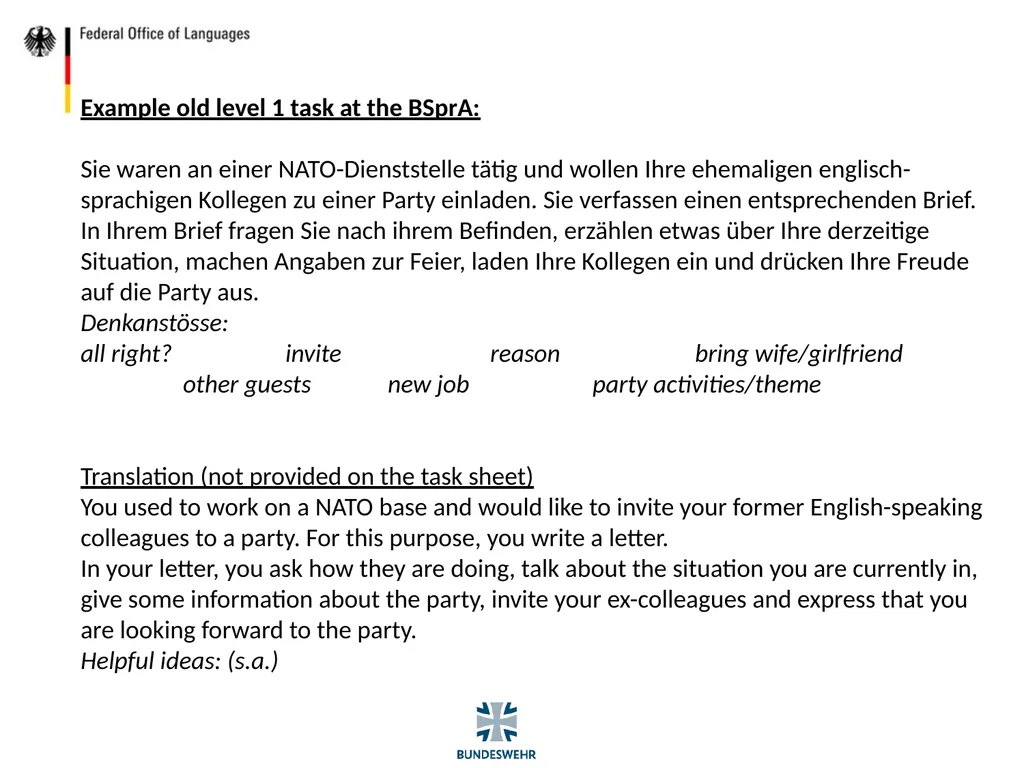
slide8. Example old level 1 task at the BSprA:
Sie waren an einer NATO-Dienststelle tätig und wollen Ihre ehemaligen englisch-sprachigen Kollegen zu einer Party einladen. Sie verfassen einen entsprechenden Brief.
In Ihrem Brief fragen Sie nach ihrem Befinden, erzählen etwas über Ihre derzeitige Situation, machen Angaben zur Feier, laden Ihre Kollegen ein und drücken Ihre Freude auf die Party aus.
Denkanstösse:
all right? invite reason bring wife/girlfriend
other guests new job party activities/theme
Translation (not provided on the task sheet)
You used to work on a NATO base and would like to invite your former English-speaking colleagues to a party. For this purpose, you write a letter.
In your letter, you ask how they are doing, talk about the situation you are currently in, give some information about the party, invite your ex-colleagues and express that you are looking forward to the party.
Helpful ideas: (s.a.)<br>
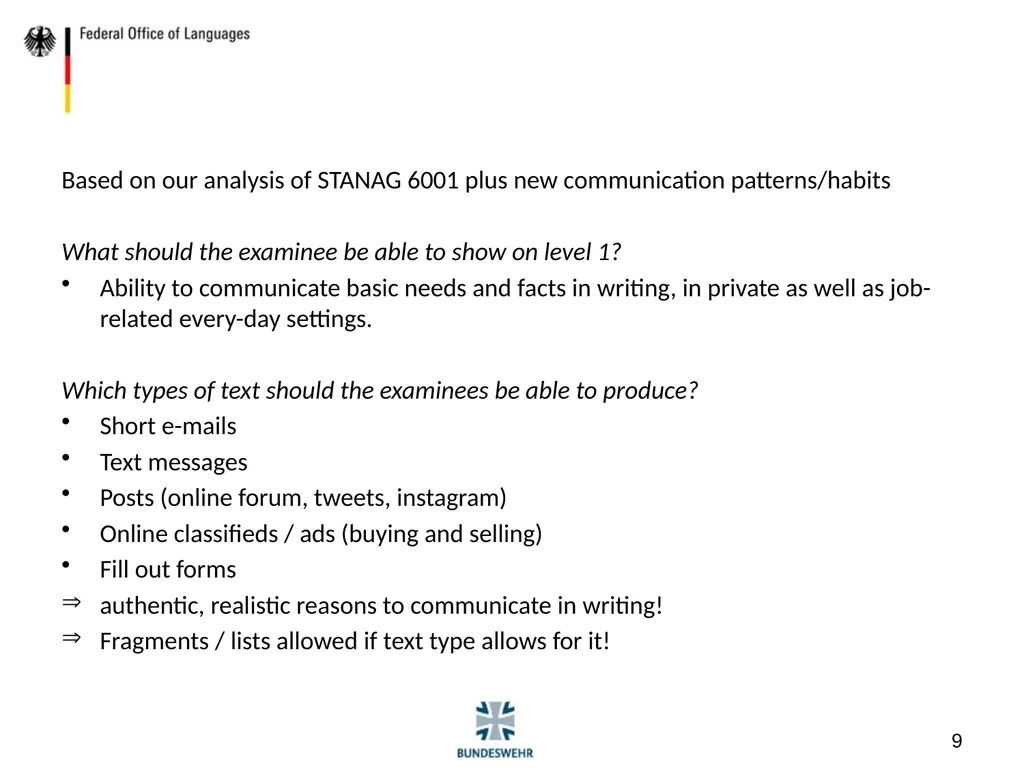
slide9. Based on our analysis of STANAG 6001 plus new communication patterns/habits
What should the examinee be able to show on level 1?
Ability to communicate basic needs and facts in writing, in private as well as job-related every-day settings.
Which types of text should the examinees be able to produce?
Short e-mails
Text messages
Posts (online forum, tweets, instagram)
Online classifieds / ads (buying and selling)
Fill out forms
authentic, realistic reasons to communicate in writing!
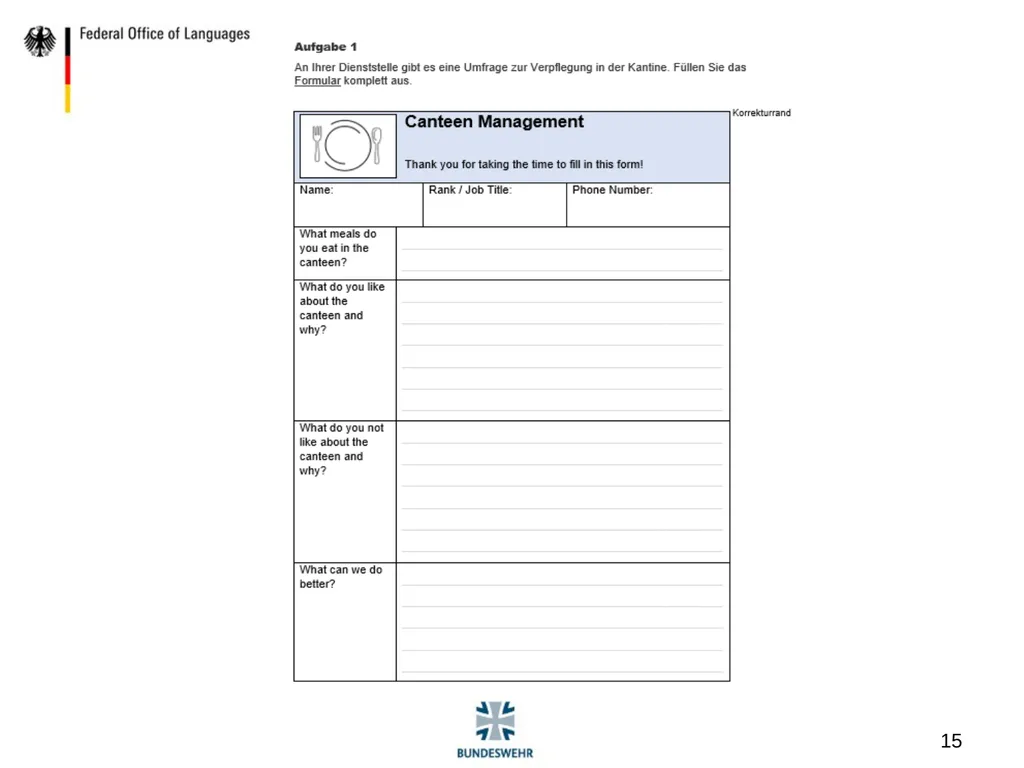
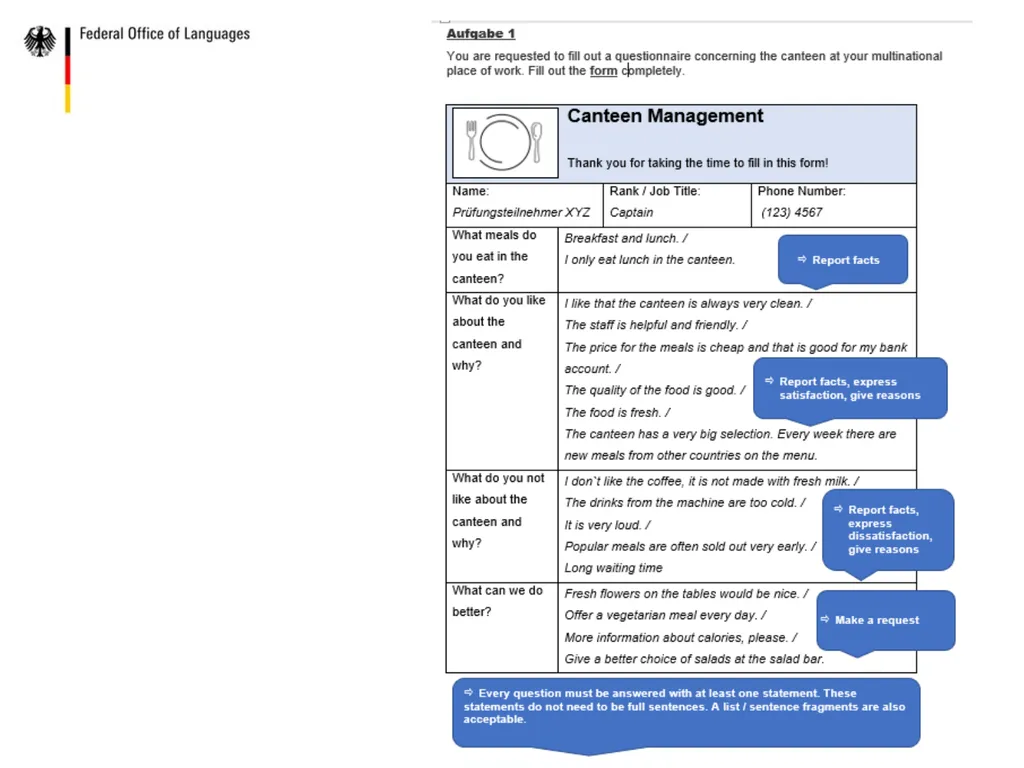
Fragments / lists allowed if text type allows for it! 9<br>
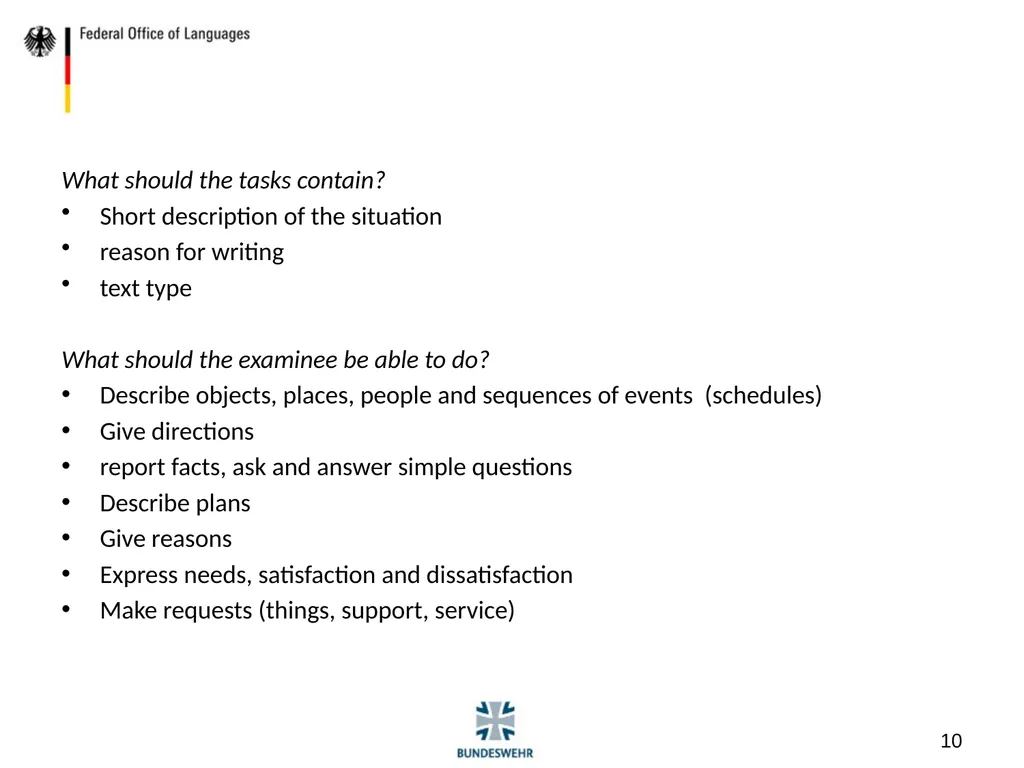
slide10. What should the tasks contain?
Short description of the situation
reason for writing
text type
What should the examinee be able to do?
Describe objects, places, people and sequences of events (schedules)
Give directions
report facts, ask and answer simple questions
Describe plans
Give reasons
Express needs, satisfaction and dissatisfaction
Make requests (things, support, service) 10<br>
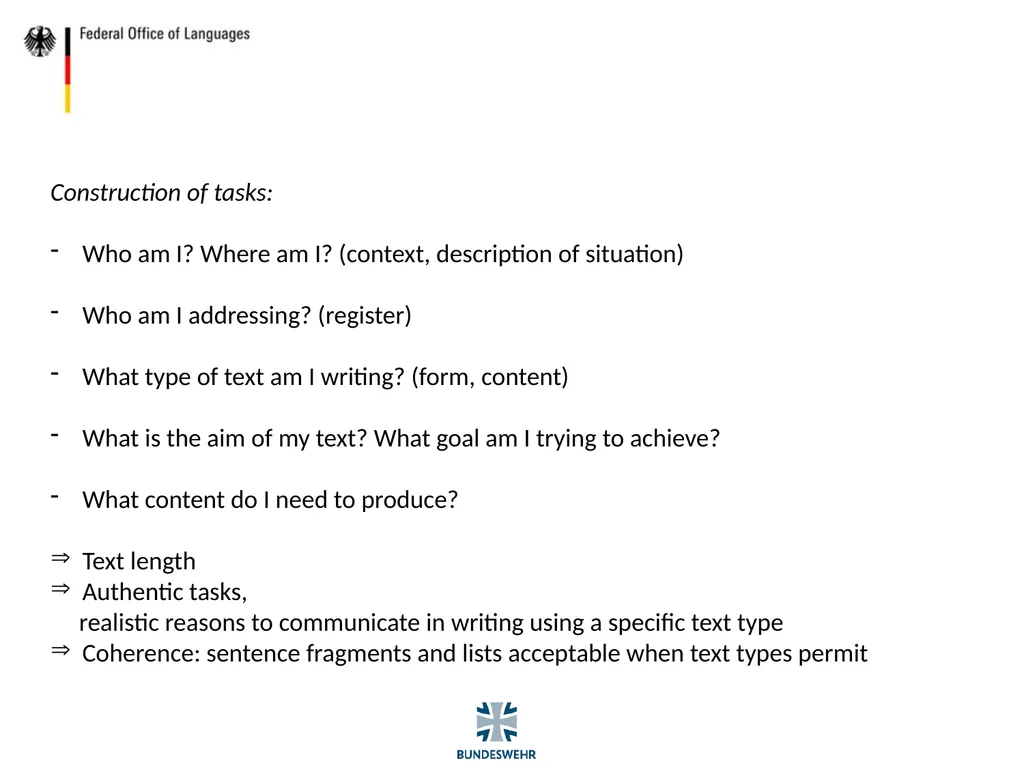
slide11. Construction of tasks:
Who am I? Where am I? (context, description of situation)
Who am I addressing? (register)
What type of text am I writing? (form, content)
What is the aim of my text? What goal am I trying to achieve?
What content do I need to produce?
Text length
Authentic tasks,
realistic reasons to communicate in writing using a specific text type
Coherence: sentence fragments and lists acceptable when text types permit<br>
slide12. Standardized format for all languages taught and tested regularly
Pre-testing and Piloting results:
Positive feedback from teachers as well as students
All participants produce ratable samples
Fewer passages (e.g. “I would like to introduce myself“) learned by heart
“Helpful ideas“ were not missed
New format: teacher and rater training available, but not mandatory
New practice and self study materials containing
Detailed information on what is expected in level 1 writing tests
3 Mock tests
One model example of a test as it should be taken (2 model answers)
Commented model answers for all three tasks of the test example 12<br>
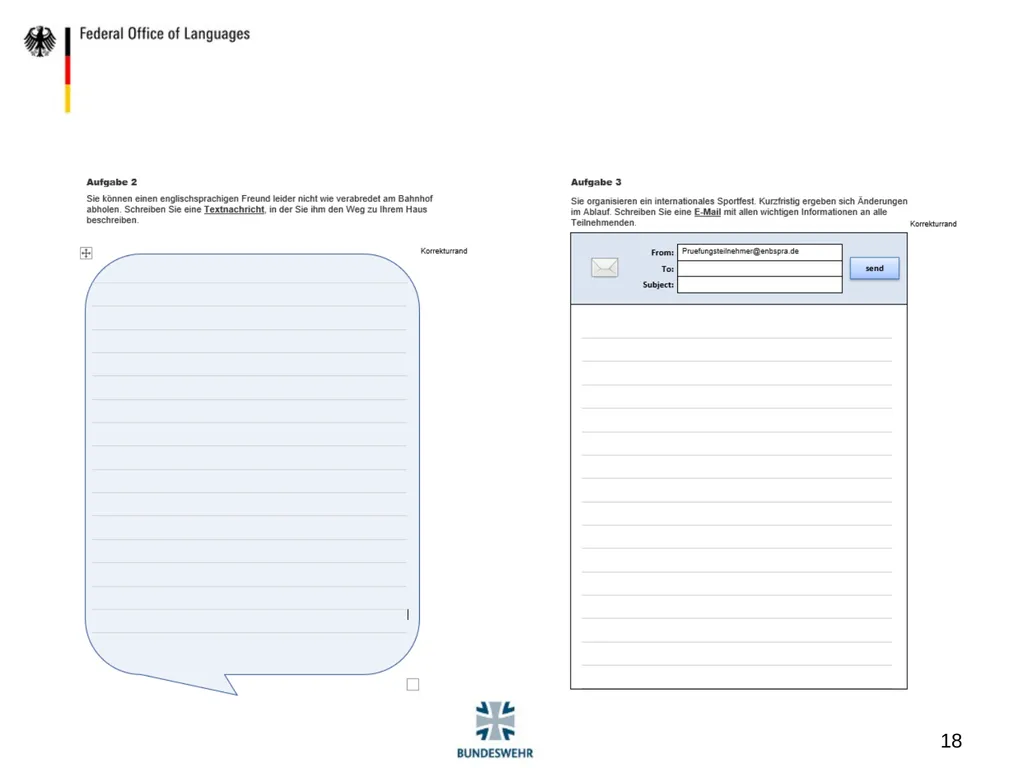
slide13. Aufgabe:
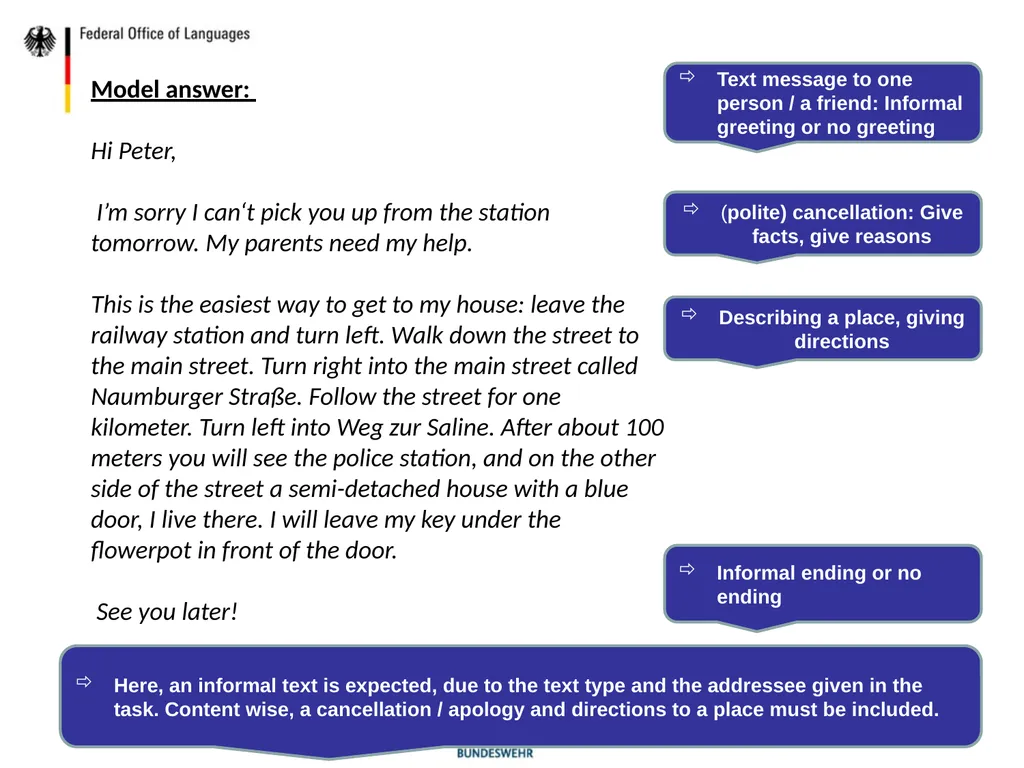
Sie können einen englischsprachigen Freund leider nicht wie verabredet am Bahnhof abholen. Schreiben Sie eine Textnachricht, in der Sie ihm den Weg zu Ihrem Haus beschreiben.
Task: (Translation and expectations not provided on the task sheet)
Unfortunately, you can not pick up your English-speaking friend from the train station, as you had promised to do. Write him a text message describing the way from the train station to your house.
=> Expectations: Explain facts, describe a place, give directions, decribe your own plans, give reasons 13<br>
slide14. 14 Model answer:
Hi Peter,
I’m sorry I can‘t pick you up from the station tomorrow. My parents need my help.
This is the easiest way to get to my house: leave the railway station and turn left. Walk down the street to the main street. Turn right into the main street called Naumburger Straße. Follow the street for one kilometer. Turn left into Weg zur Saline. After about 100 meters you will see the police station, and on the other side of the street a semi-detached house with a blue door, I live there. I will leave my key under the flowerpot in front of the door.
See you later! (polite) cancellation: Give facts, give reasons Describing a place, giving directions Informal ending or no ending Here, an informal text is expected, due to the text type and the addressee given in the task. Content wise, a cancellation / apology and directions to a place must be included. Text message to one person / a friend: Informal greeting or no greeting<br>
slide15. 15<br>
slide16. 16<br>
slide17. 17<br>
slide18. 18<br>
slide19. Conclusion:
Authentic materials and realistic tasks motivate the test takers more than material that is felt to be unauthentic / constructed (relevance)
It is possible and desirable to use new text types in teaching and testing (balanced mixture of text types)
Face validity is important
Writing: Students welcome the possibility to be more creative
Perspectives:
Receptive skills: more tasks that involve reading/listening for the gist vs reading listening for detail?
Listening: include more authentic texts spoken by non-native speakers? 19<br>
BYU, Provo, Utah, USA
ORR‘in Anika Dähn, English Teacher, Test Developer, Coordinator for English Testing Materials<br>
slide2. Content Reasons for Reassessment of Level 1 Testing Materials
Challenges
Level 1 Descriptors
Development of New Level 1 Writing Tasks
Conclusion and Perspective 2<br>
slide3. Reasons for the re-assessment of our materials:
Communication has changed, esp. reading habits, communication in writing
Speed, inclusion of images, length of texts
Main source for texts used in teaching and testing: Internet
New(er) text types such as text messages (reading/writing), posts, (e.g. instagram reading/writing), TikTok videos (listening), tweets (reading/writing), blogs (reading/writing), podcasts (listening)
But: Have changes in the way in which we interact with texts when reading, writing and/or listening as a result of technology changed the way you test skills at level 1?
(Questionnaire BILC Testing Workshop Bonn, 2022)
3 x Yes (mostly e-mail instead of letter)
8 x No 3<br>
slide4. Challenges:
Authenticity
Semi-contrived and contrived texts seem to dominate testing on level 1 in most nations.
Audios are spoken chiefly by native speakers (or by native as well as non-native speakers): standard varieties/ national level accents
Face validity, familiar format (layout)
Combination of image and text
Productive skills: how to elicit a ratable sample?
Use of slang and abbreviations 4<br>
slide5. 5<br>
slide6. Level 1: Survival Communication situation must be clear and supported by context. Material must be unambigious and predictable
Can understand/use common familiar phrases and short simple sentences about everyday needs related to personal and survival areas, workplace requirements (routines)
Can understand/use high frequency structural patterns and vocabulary (redundancy)
Can understand/use concrete utterances, simple questions and answers, very simple conversations
Can produce a loose connection of sentences (or fragments)
Can combine and recombine familiar, learned elements of speech 6<br>
slide7. German writing proficiency test level 1:
SLP 111X / 2221 is tested, no plus levels
Langage course leading to exam possible, but not neccessary
Almost no true level 1 candidates due to German school system
Task: write two texts in 45 minutes
(choice of 3 tasks given = 3 different text types)
Use of bilingual dictionary permitted
No word count, holistic approach to rating
Instructions and task set in German
Rated by teachers, no testing team<br>
slide8. Example old level 1 task at the BSprA:
Sie waren an einer NATO-Dienststelle tätig und wollen Ihre ehemaligen englisch-sprachigen Kollegen zu einer Party einladen. Sie verfassen einen entsprechenden Brief.
In Ihrem Brief fragen Sie nach ihrem Befinden, erzählen etwas über Ihre derzeitige Situation, machen Angaben zur Feier, laden Ihre Kollegen ein und drücken Ihre Freude auf die Party aus.
Denkanstösse:
all right? invite reason bring wife/girlfriend
other guests new job party activities/theme
Translation (not provided on the task sheet)
You used to work on a NATO base and would like to invite your former English-speaking colleagues to a party. For this purpose, you write a letter.
In your letter, you ask how they are doing, talk about the situation you are currently in, give some information about the party, invite your ex-colleagues and express that you are looking forward to the party.
Helpful ideas: (s.a.)<br>
slide9. Based on our analysis of STANAG 6001 plus new communication patterns/habits
What should the examinee be able to show on level 1?
Ability to communicate basic needs and facts in writing, in private as well as job-related every-day settings.
Which types of text should the examinees be able to produce?
Short e-mails
Text messages
Posts (online forum, tweets, instagram)
Online classifieds / ads (buying and selling)
Fill out forms
authentic, realistic reasons to communicate in writing!
Fragments / lists allowed if text type allows for it! 9<br>
slide10. What should the tasks contain?
Short description of the situation
reason for writing
text type
What should the examinee be able to do?
Describe objects, places, people and sequences of events (schedules)
Give directions
report facts, ask and answer simple questions
Describe plans
Give reasons
Express needs, satisfaction and dissatisfaction
Make requests (things, support, service) 10<br>
slide11. Construction of tasks:
Who am I? Where am I? (context, description of situation)
Who am I addressing? (register)
What type of text am I writing? (form, content)
What is the aim of my text? What goal am I trying to achieve?
What content do I need to produce?
Text length
Authentic tasks,
realistic reasons to communicate in writing using a specific text type
Coherence: sentence fragments and lists acceptable when text types permit<br>
slide12. Standardized format for all languages taught and tested regularly
Pre-testing and Piloting results:
Positive feedback from teachers as well as students
All participants produce ratable samples
Fewer passages (e.g. “I would like to introduce myself“) learned by heart
“Helpful ideas“ were not missed
New format: teacher and rater training available, but not mandatory
New practice and self study materials containing
Detailed information on what is expected in level 1 writing tests
3 Mock tests
One model example of a test as it should be taken (2 model answers)
Commented model answers for all three tasks of the test example 12<br>
slide13. Aufgabe:
Sie können einen englischsprachigen Freund leider nicht wie verabredet am Bahnhof abholen. Schreiben Sie eine Textnachricht, in der Sie ihm den Weg zu Ihrem Haus beschreiben.
Task: (Translation and expectations not provided on the task sheet)
Unfortunately, you can not pick up your English-speaking friend from the train station, as you had promised to do. Write him a text message describing the way from the train station to your house.
=> Expectations: Explain facts, describe a place, give directions, decribe your own plans, give reasons 13<br>
slide14. 14 Model answer:
Hi Peter,
I’m sorry I can‘t pick you up from the station tomorrow. My parents need my help.
This is the easiest way to get to my house: leave the railway station and turn left. Walk down the street to the main street. Turn right into the main street called Naumburger Straße. Follow the street for one kilometer. Turn left into Weg zur Saline. After about 100 meters you will see the police station, and on the other side of the street a semi-detached house with a blue door, I live there. I will leave my key under the flowerpot in front of the door.
See you later! (polite) cancellation: Give facts, give reasons Describing a place, giving directions Informal ending or no ending Here, an informal text is expected, due to the text type and the addressee given in the task. Content wise, a cancellation / apology and directions to a place must be included. Text message to one person / a friend: Informal greeting or no greeting<br>
slide15. 15<br>
slide16. 16<br>
slide17. 17<br>
slide18. 18<br>
slide19. Conclusion:
Authentic materials and realistic tasks motivate the test takers more than material that is felt to be unauthentic / constructed (relevance)
It is possible and desirable to use new text types in teaching and testing (balanced mixture of text types)
Face validity is important
Writing: Students welcome the possibility to be more creative
Perspectives:
Receptive skills: more tasks that involve reading/listening for the gist vs reading listening for detail?
Listening: include more authentic texts spoken by non-native speakers? 19<br>