04
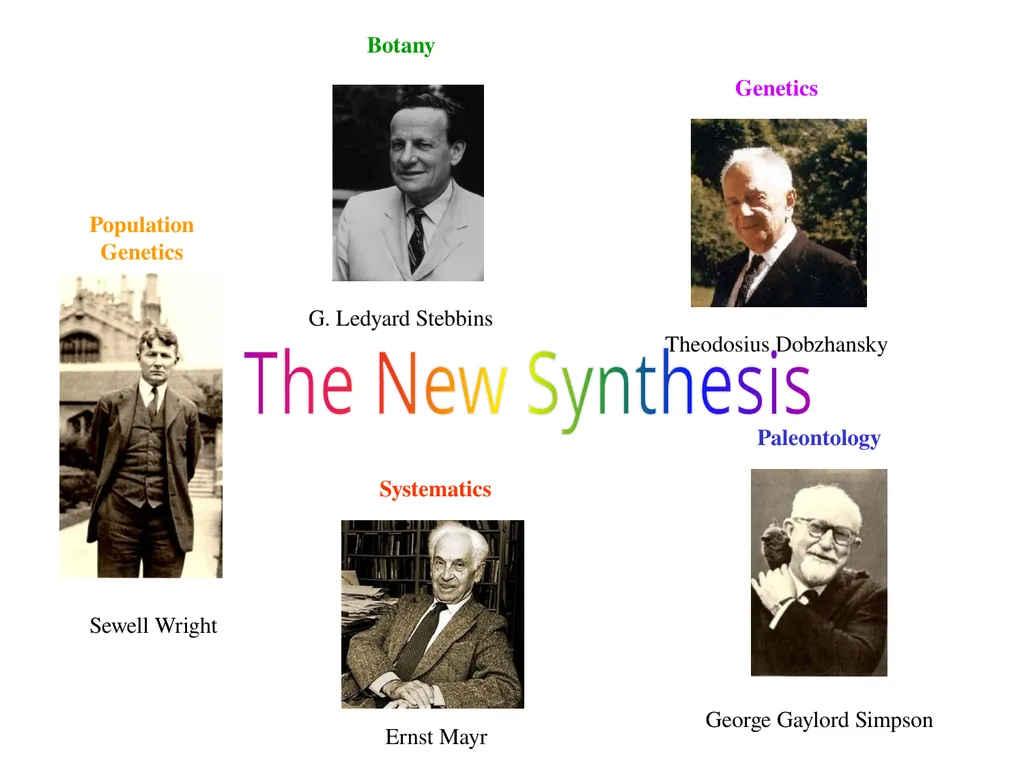
Theodosius Dobzhansky Ernst Mayr G. Ledyard Stebbins Sewell Wright George Gaylord Simpson Botany Genetics Paleontology Systematics Population
Genetics The New Synthesis<br>
05
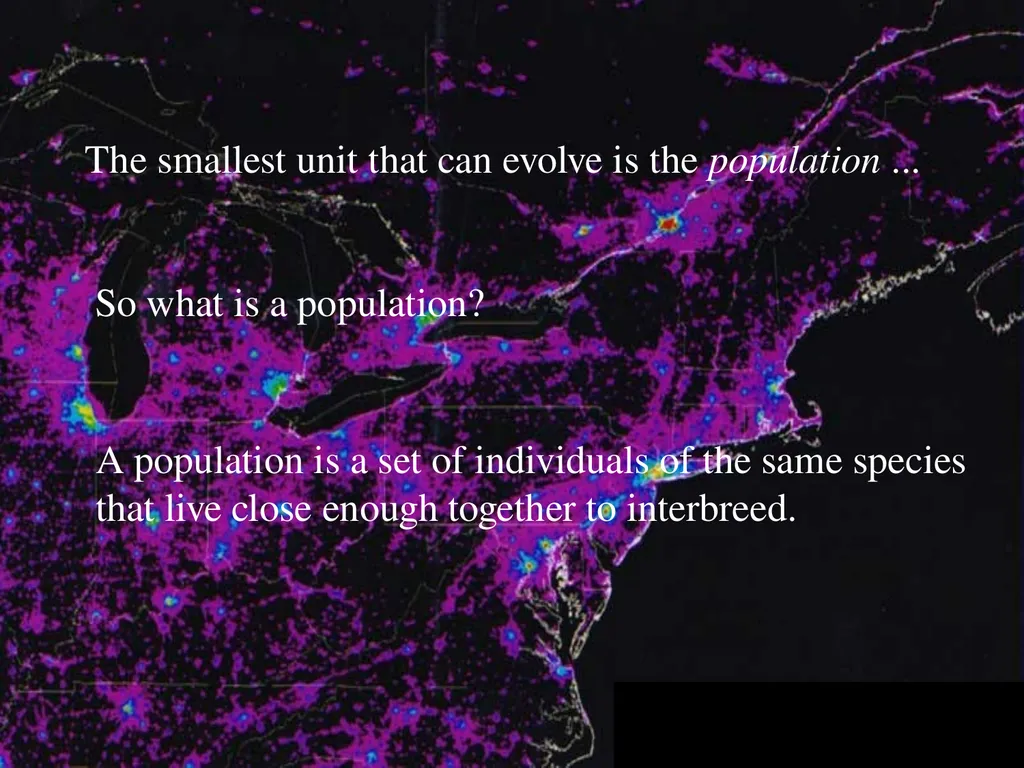
The smallest unit that can evolve is the population ... So what is a population? A population is a set of individuals of the same species
that live close enough together to interbreed.<br>
06
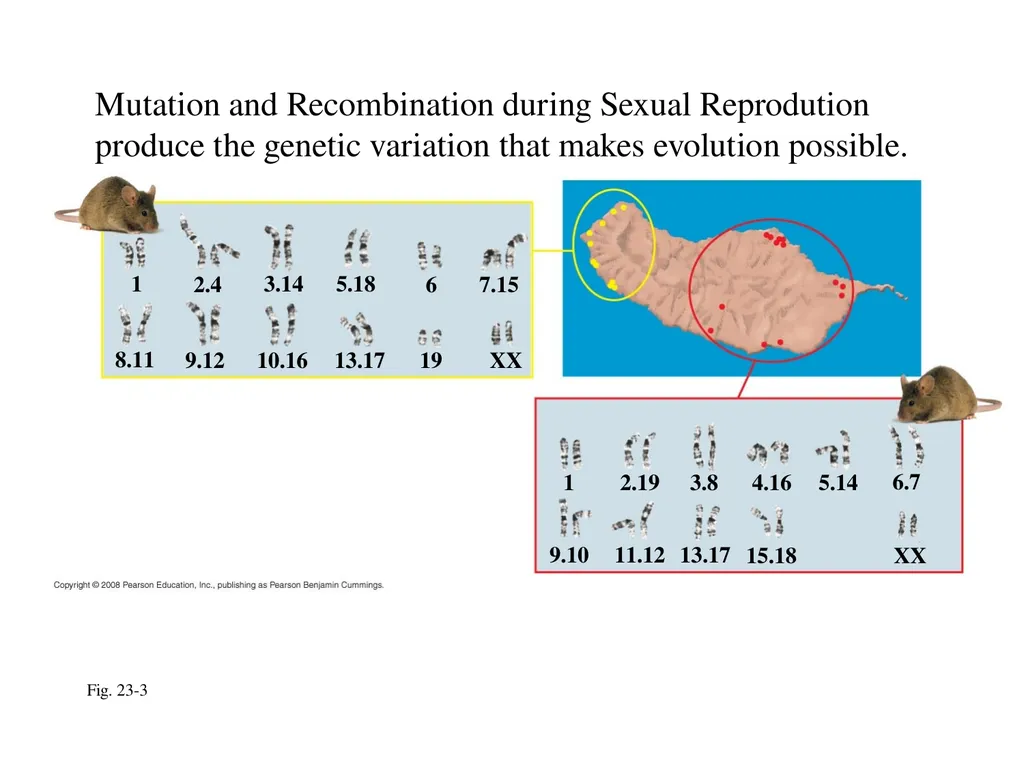
Mutation and Recombination during Sexual Reprodution produce the genetic variation that makes evolution possible. Fig. 23-3 13.17 19 XX 10.16 9.12 8.11 1 2.4 3.14 5.18 6 7.15 9.10 1 2.19 11.12 13.17 15.18 3.8 4.16 5.14 6.7 XX<br>
07
Population Genetics<br>
08
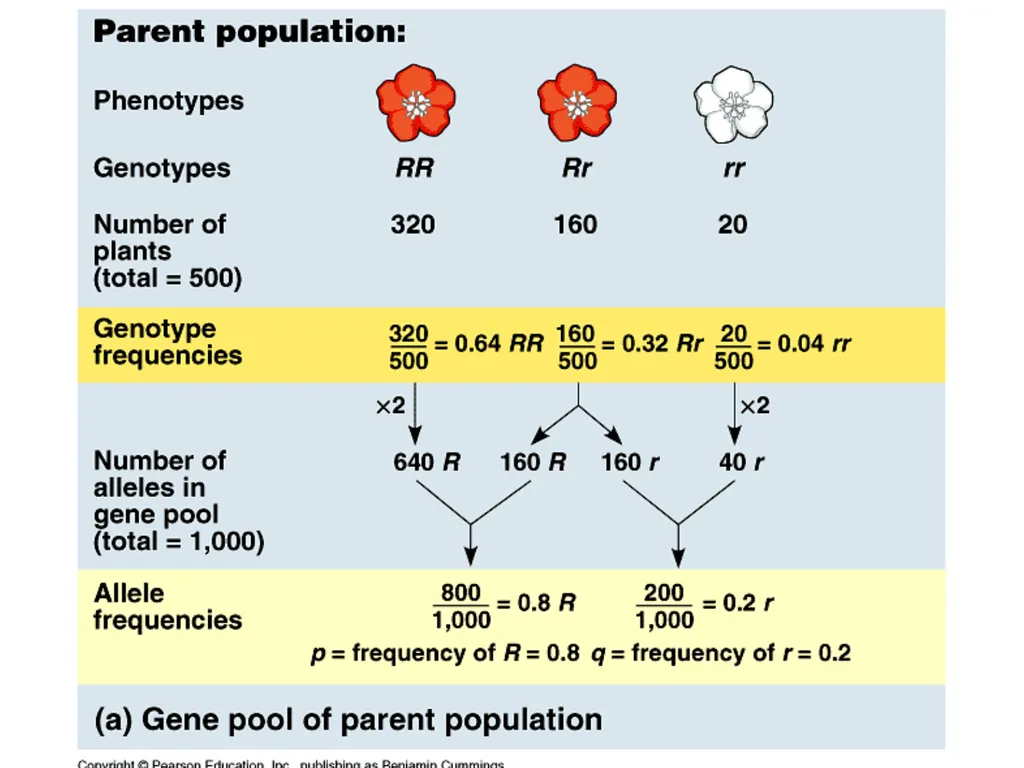
Gene pool: the total collection of alleles present in a popu-lation is that population’s gene pool. A population’s gene pool is defined by its allele frequencies.<br>
09
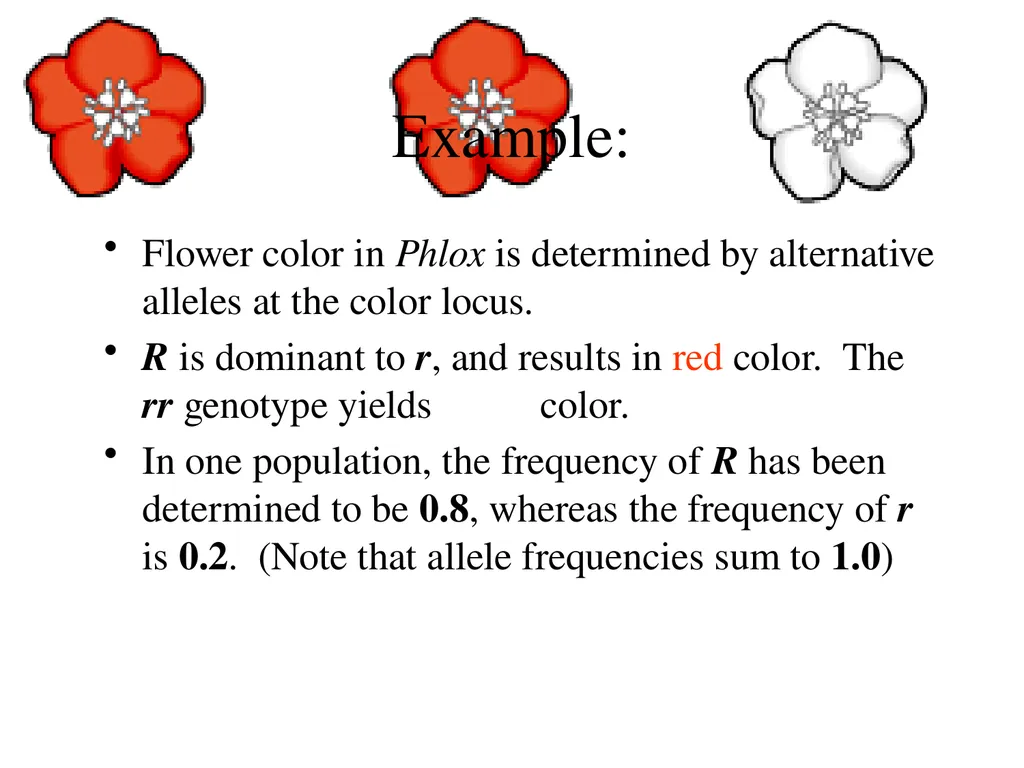
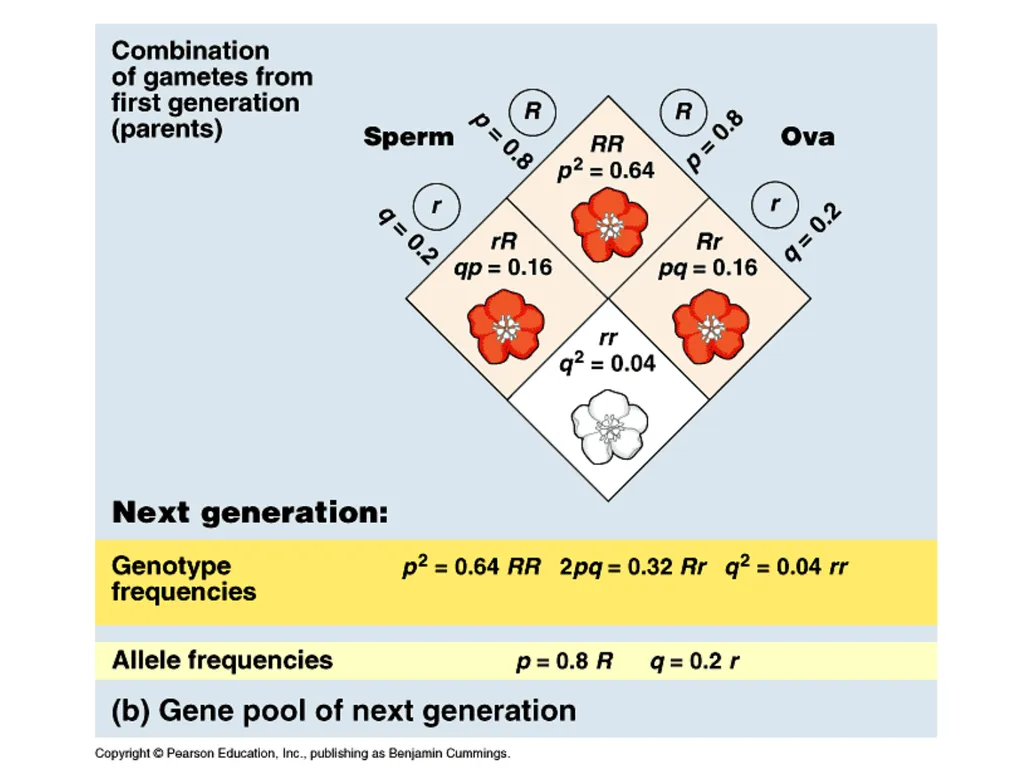
Example: Flower color in Phlox is determined by alternative alleles at the color locus.
R is dominant to r, and results in red color. The rr genotype yields white color.
In one population, the frequency of R has been determined to be 0.8, whereas the frequency of r is 0.2. (Note that allele frequencies sum to 1.0)<br>
10
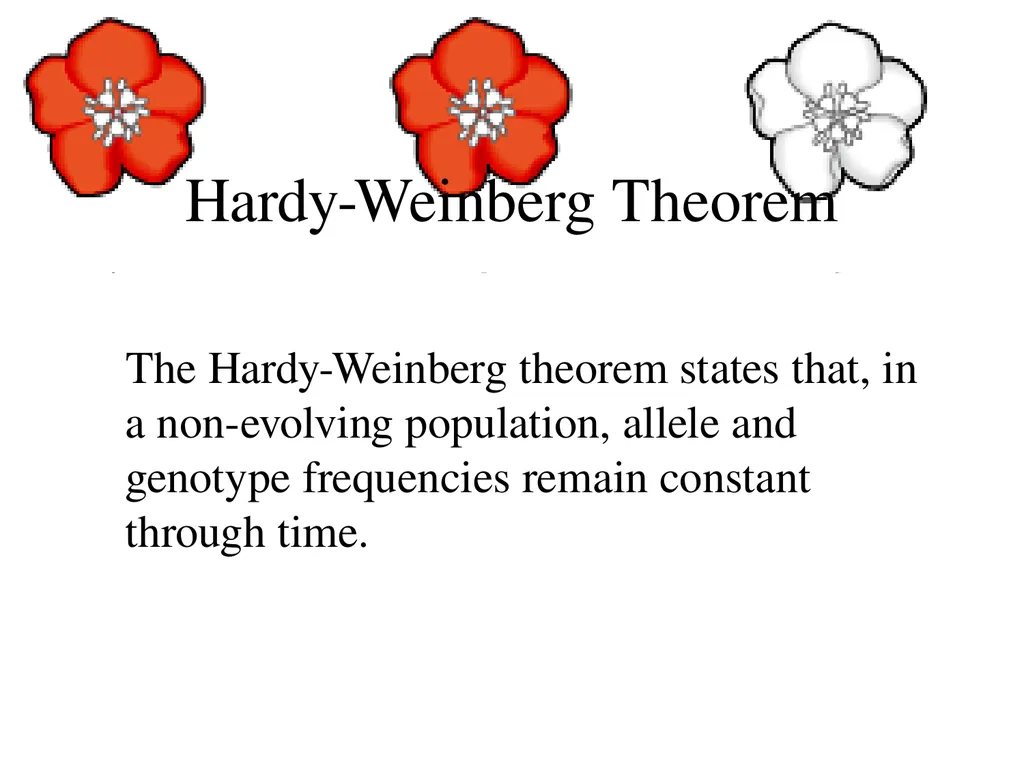
Hardy-Weinberg Theorem The Hardy-Weinberg theorem states that, in a non-evolving population, allele and genotype frequencies remain constant through time.<br>
11
If a population is in Hardy-Weinberg equilibrium, genotype
frequencies are given by: p2 + 2pq + q2 where p is the frequency of one allele and q is the frequency of the other.<br>
12
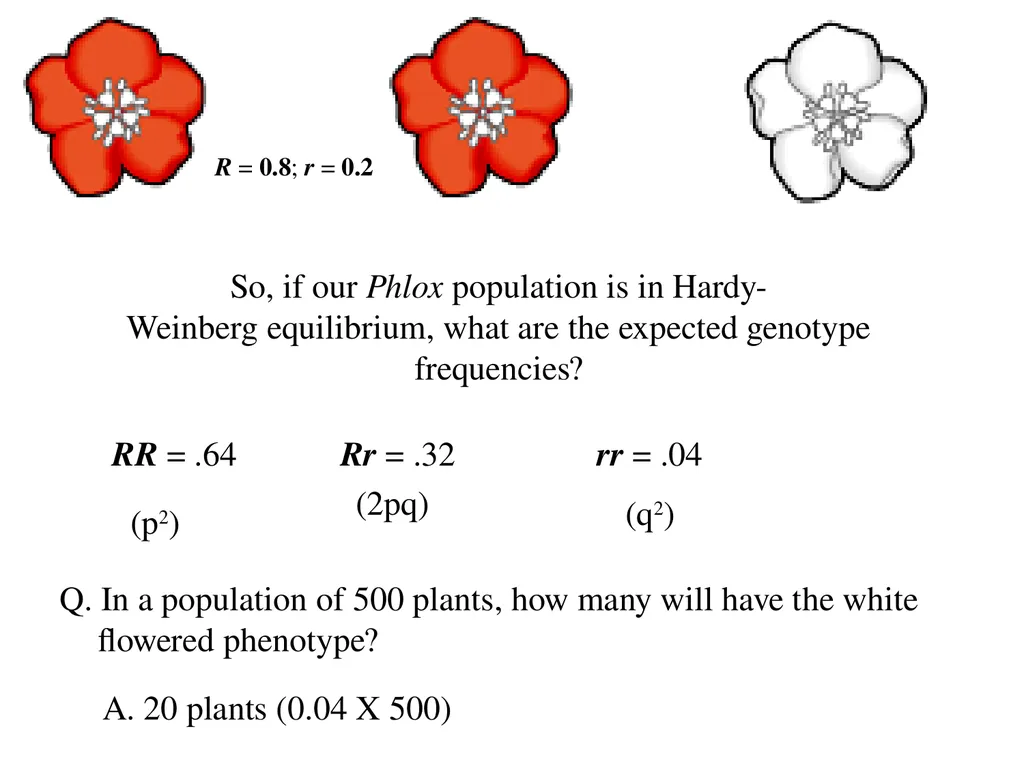
RR = .64 Rr = .32 rr = .04 So, if our Phlox population is in Hardy-
Weinberg equilibrium, what are the expected genotype
frequencies? Q. In a population of 500 plants, how many will have the white
flowered phenotype? A. 20 plants (0.04 X 500) R = 0.8; r = 0.2 (p2) (q2) (2pq)<br>
13
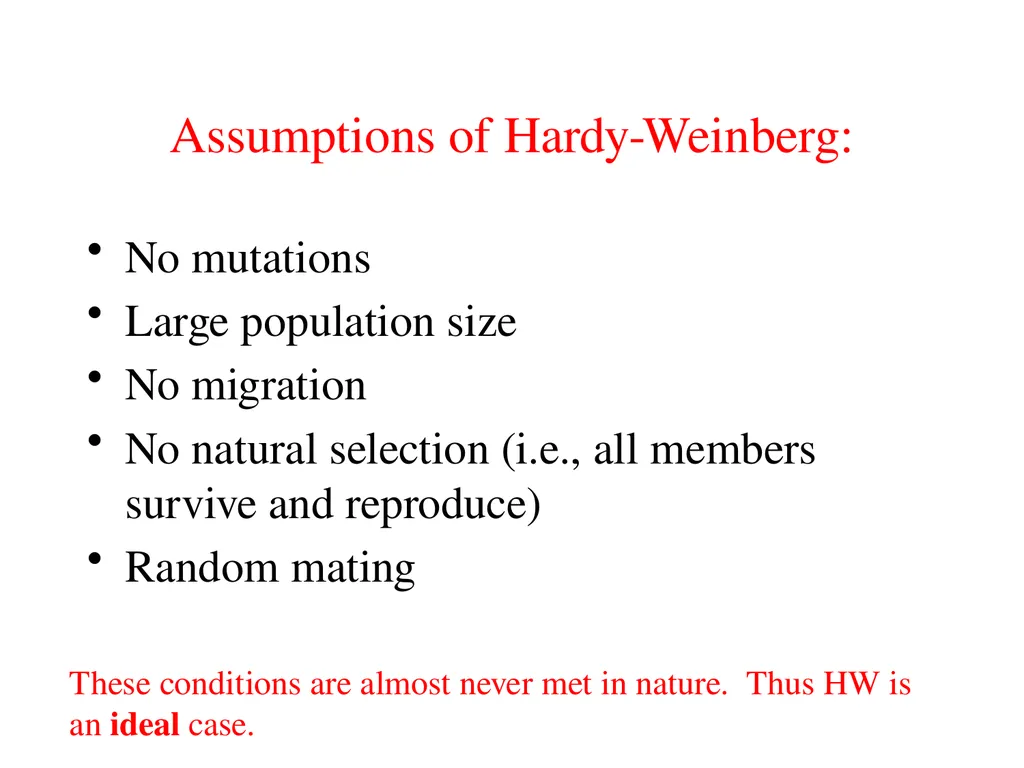
Assumptions of Hardy-Weinberg: No mutations
Large population size
No migration
No natural selection (i.e., all members survive and reproduce)
Random mating These conditions are almost never met in nature. Thus HW is
an ideal case.<br>
14
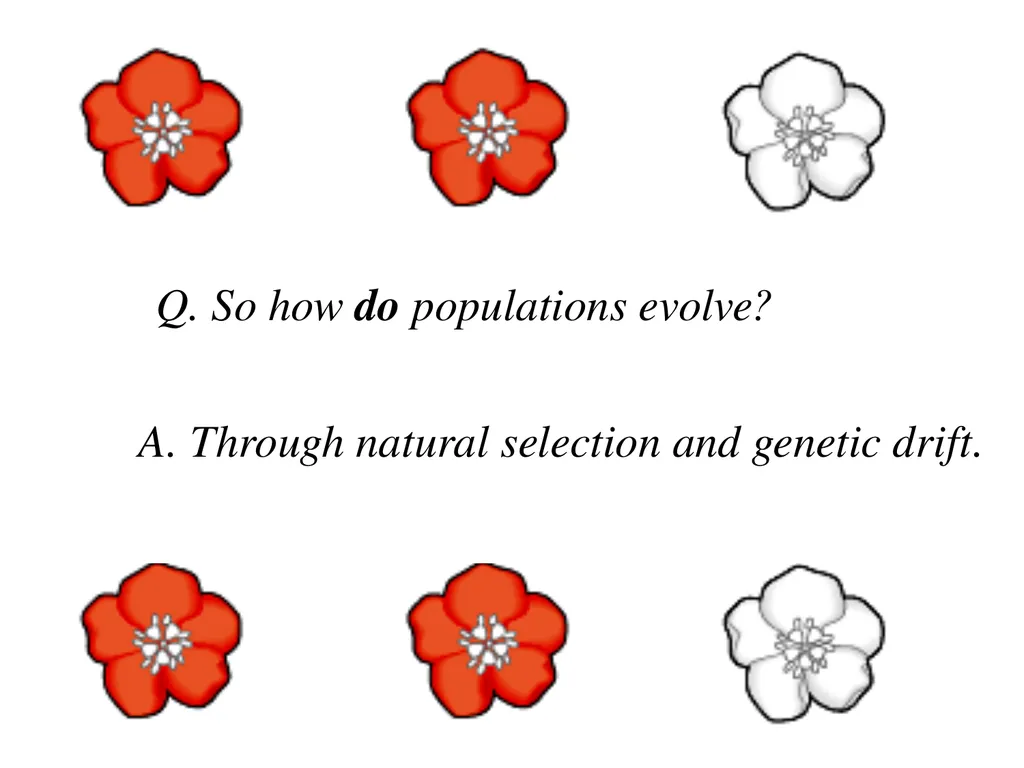
Q. So how do populations evolve? A. Through natural selection and genetic drift.<br>
15
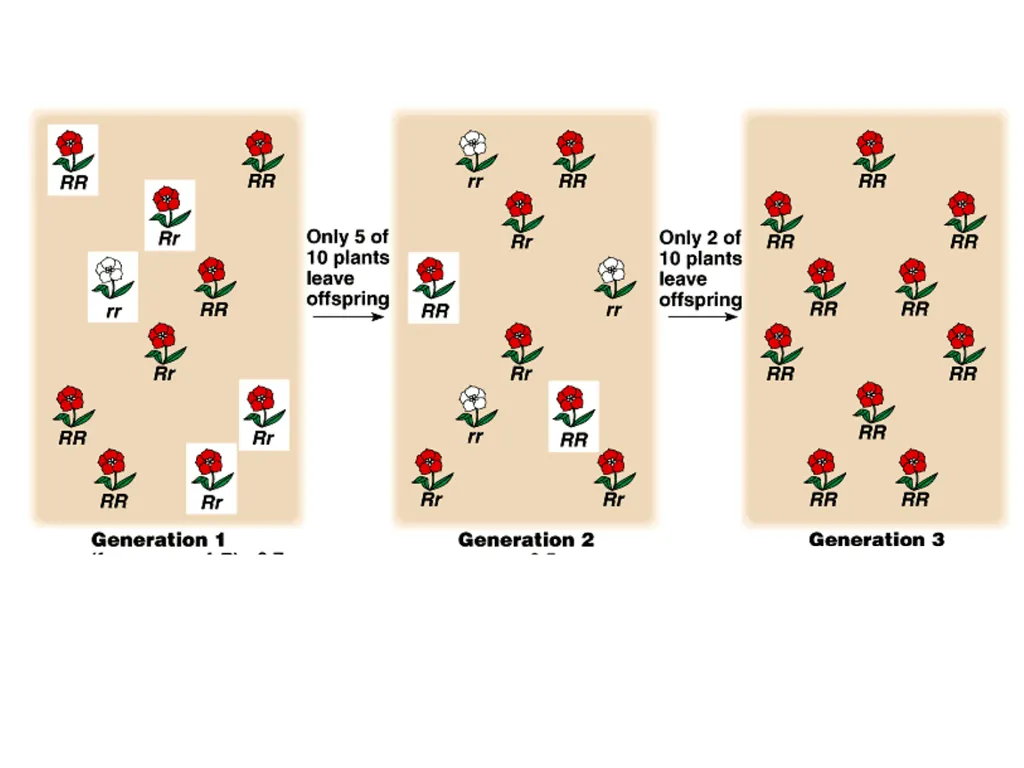
Genetic drift can alter population allele frequencies.<br>
16
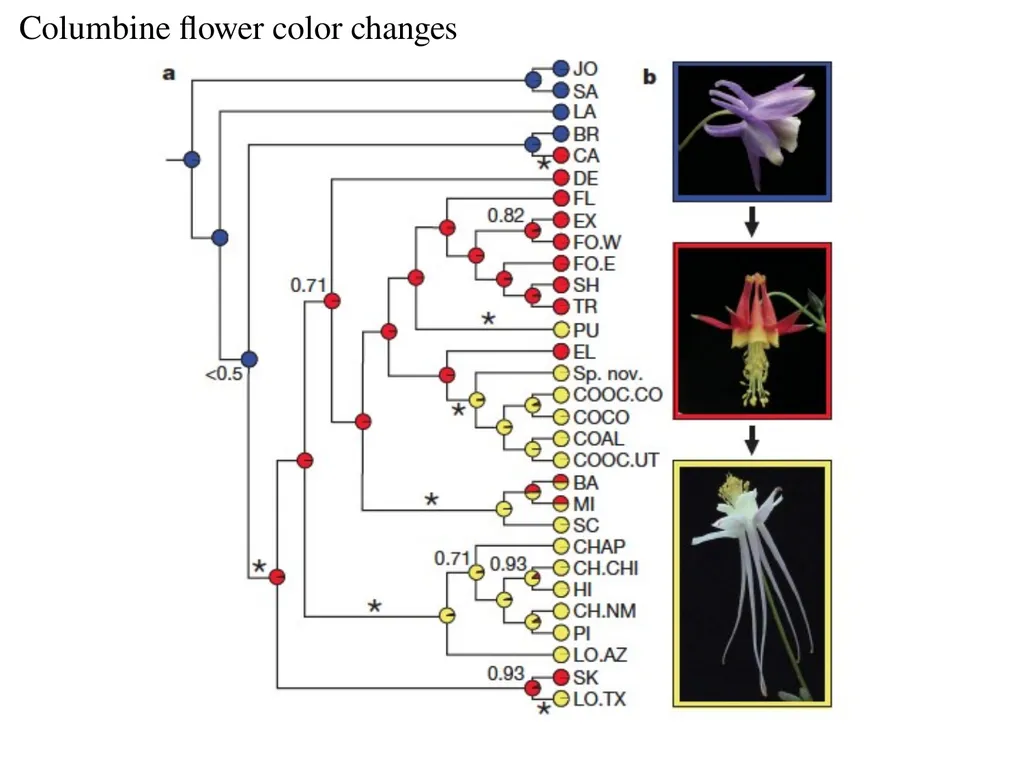
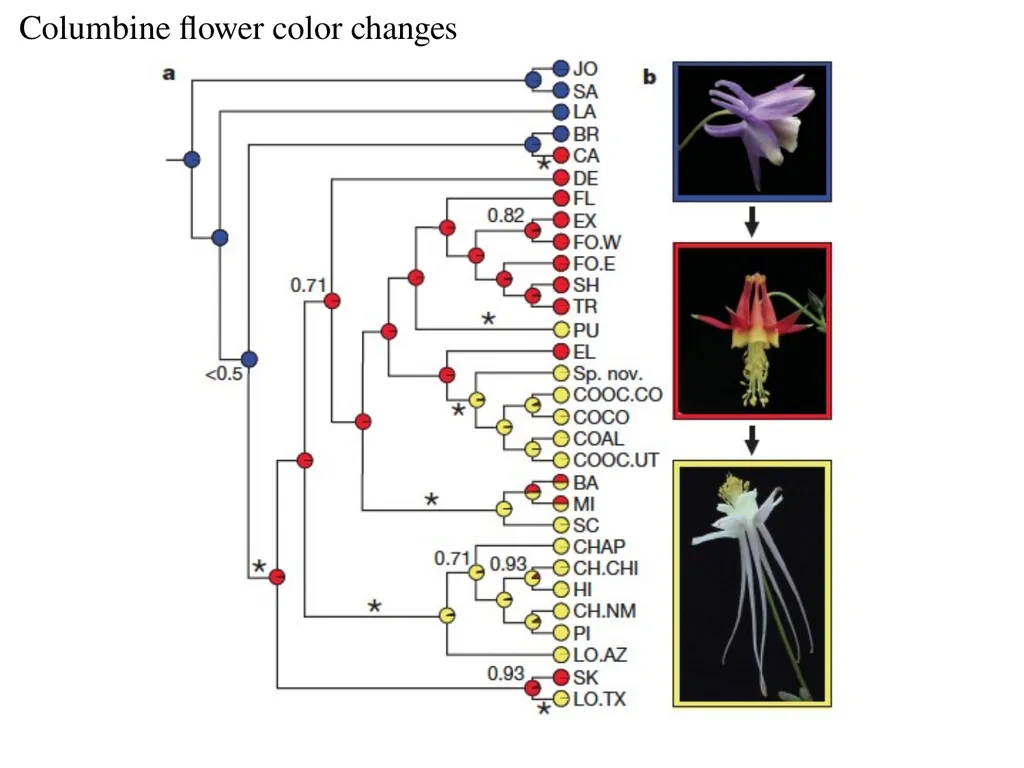
Columbine flower color changes<br>
17
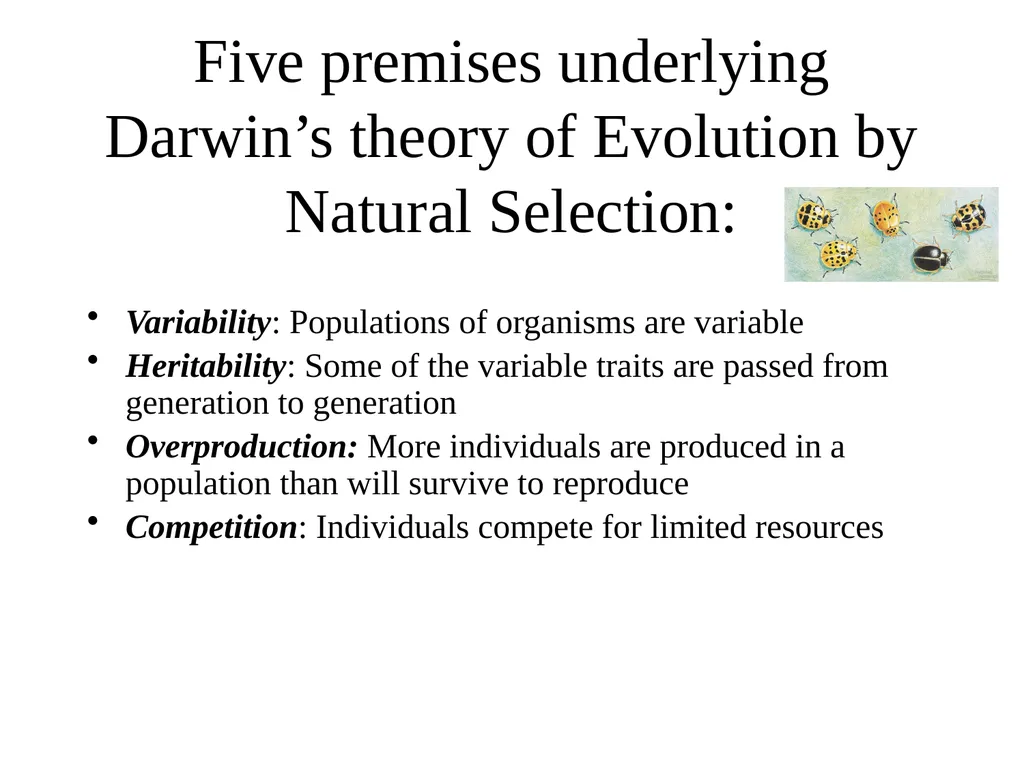
Five premises underlying Darwin’s theory of Evolution by Natural Selection: Variability: Populations of organisms are variable
Heritability: Some of the variable traits are passed from generation to generation
Overproduction: More individuals are produced in a population than will survive to reproduce
Competition: Individuals compete for limited resources<br>
18
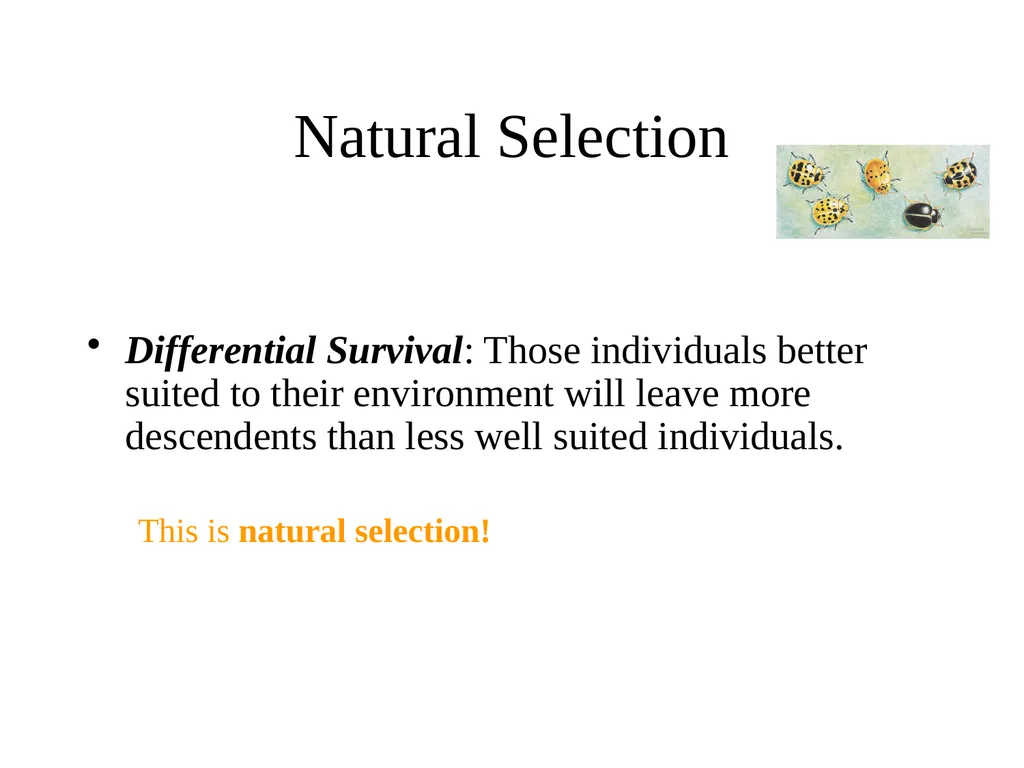
Natural Selection Differential Survival: Those individuals better suited to their environment will leave more descendents than less well suited individuals. This is natural selection!<br>
19
Species
A species is a set of populations that are reproductively isolated from other such population sets.
Populations
A population is a set of conspecific individuals living close enough together to interbreed. The population is the smallest unit of evolution
Individuals
Selection acts upon the individual Individuals, Populations, and Species are
Hierarchically Related<br>
20
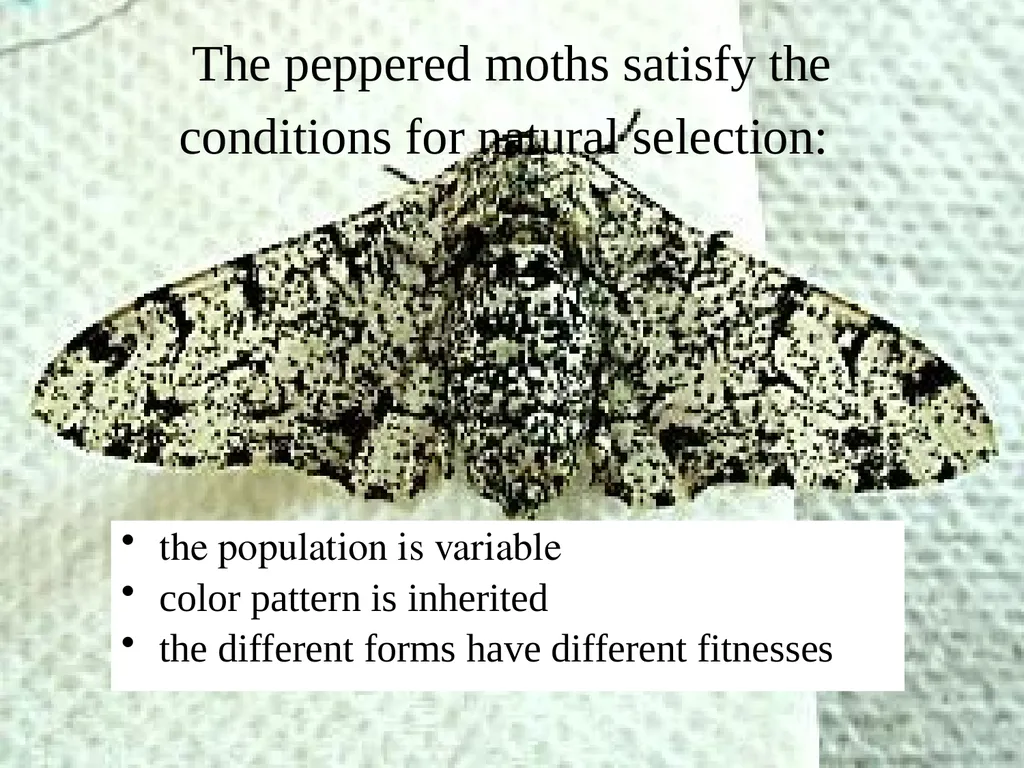
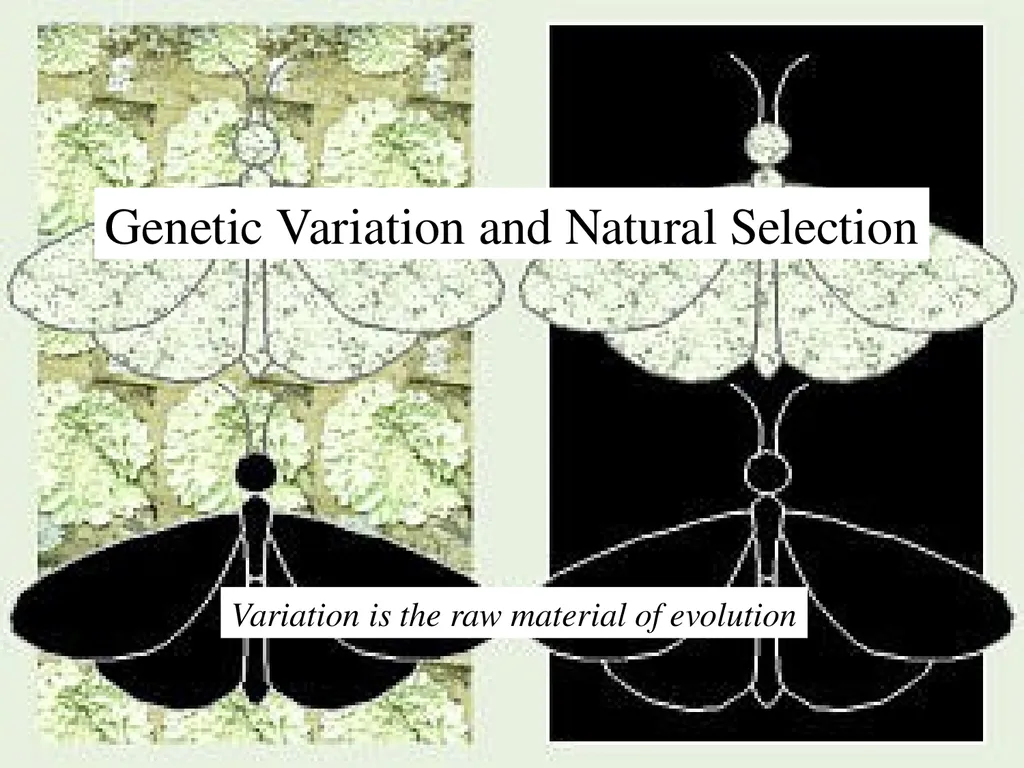
Biston betularia,
the peppered moth melanistic and normal forms Allele frequencies change in response to natural selection Reference: Kettlewell, H. B. D. 1961. The phenomenon of industrial melanism
in Lepidoptera. Ann. Rev. of Entomol. 6: 245 - 262.<br>
21
The peppered moths satisfy the conditions for natural selection: the population is variable
color pattern is inherited
the different forms have different fitnesses<br>
22
Genetic Variation and Natural Selection Variation is the raw material of evolution<br>
23
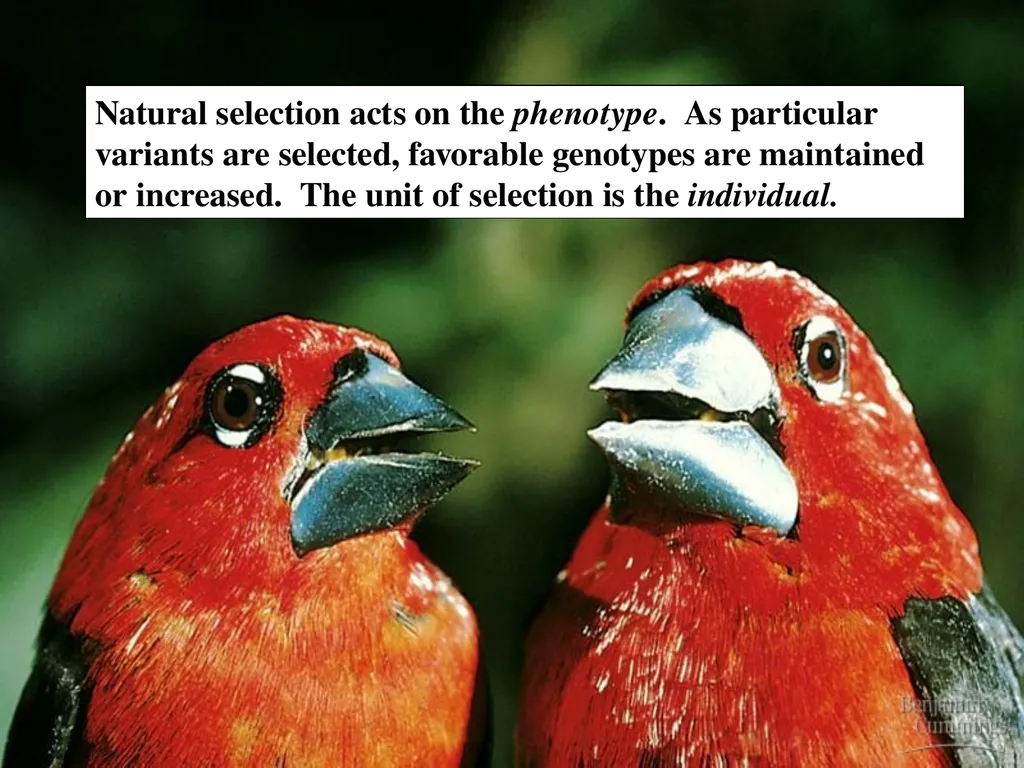
Natural selection acts on the phenotype. As particular variants are selected, favorable genotypes are maintained or increased. The unit of selection is the individual.<br>
24
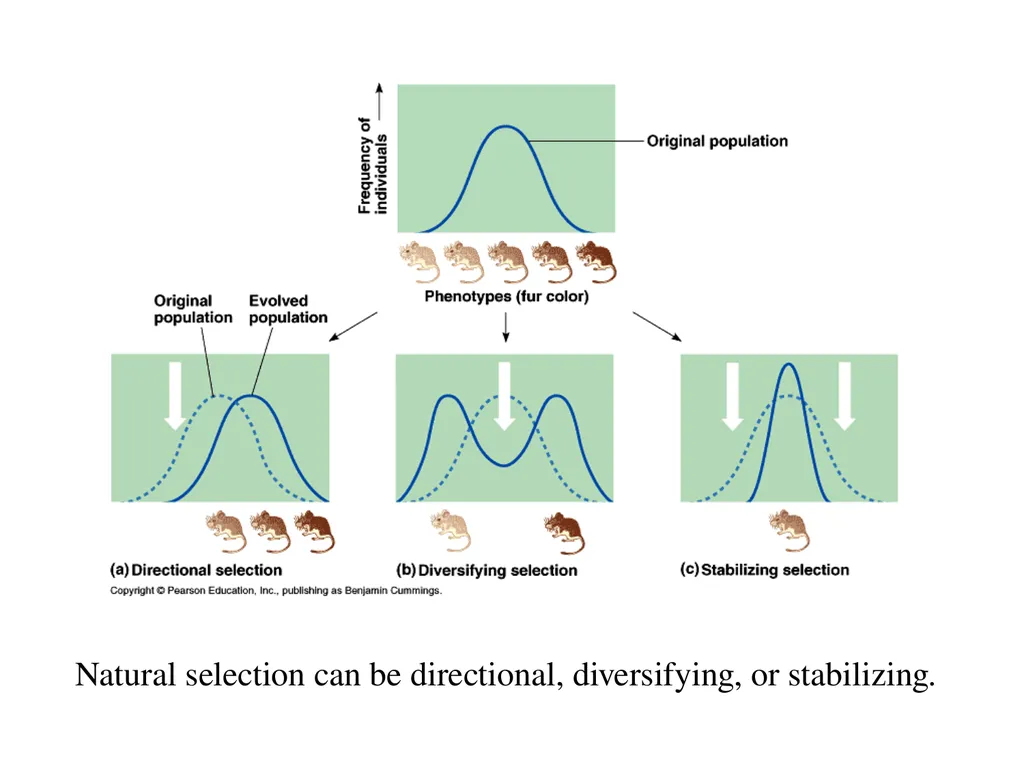
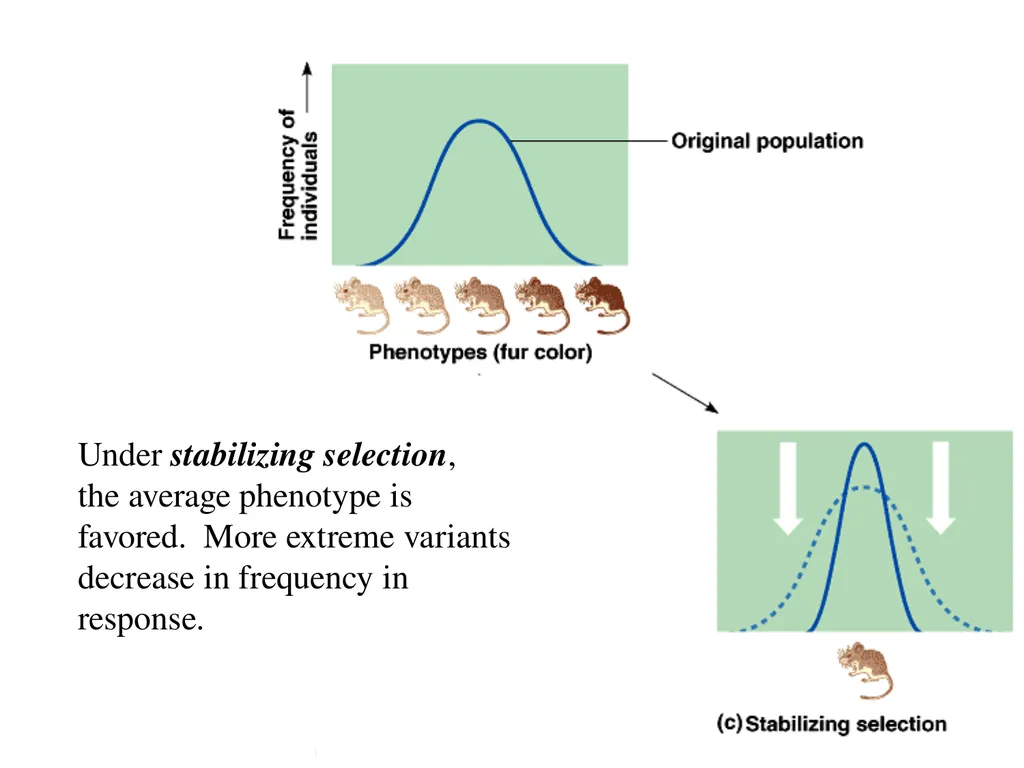
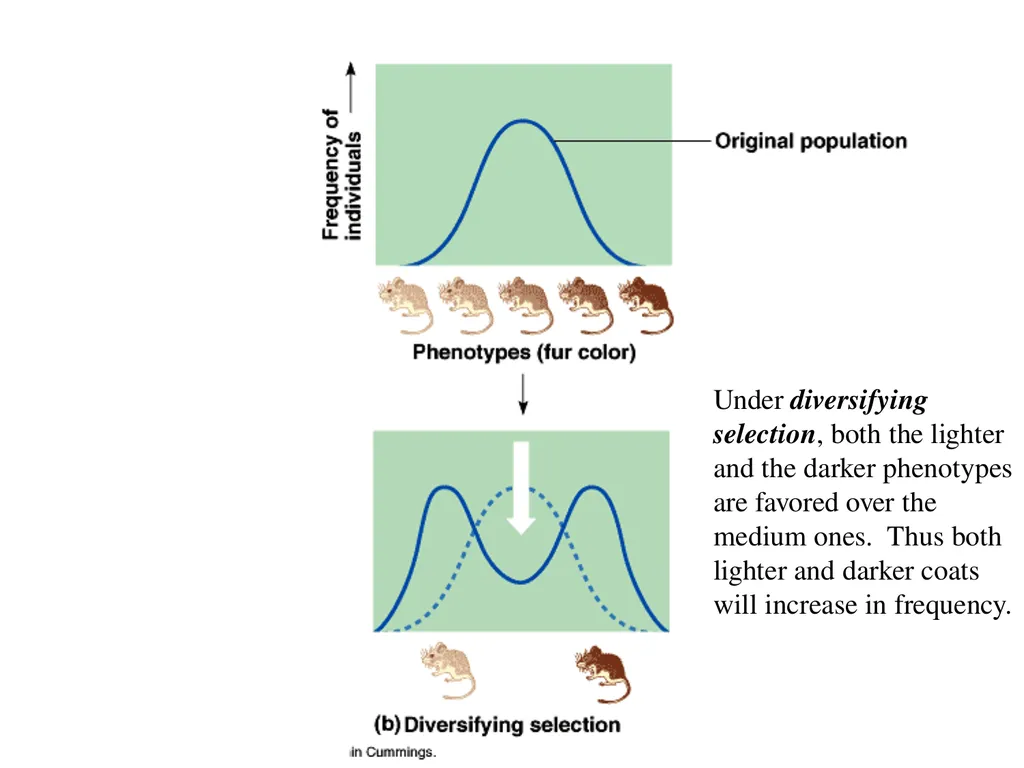
Natural selection can be directional, diversifying, or stabilizing.<br>
25
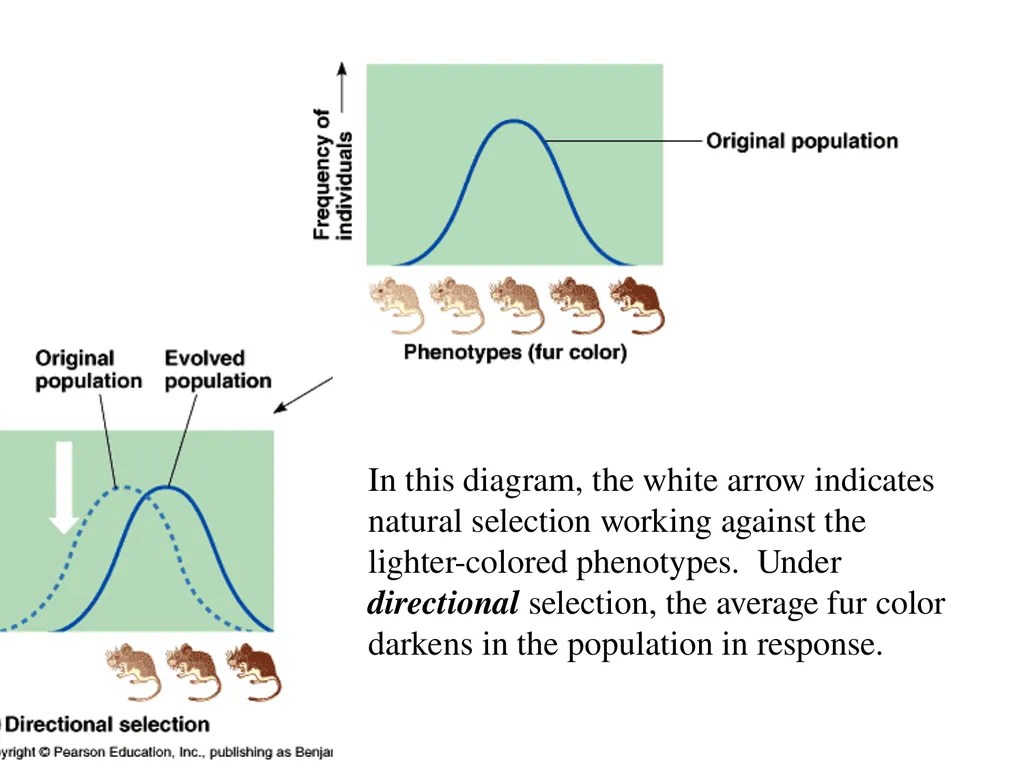
In this diagram, the white arrow indicates
natural selection working against the lighter-colored phenotypes. Under directional selection, the average fur color
darkens in the population in response.<br>
26
Under stabilizing selection,
the average phenotype is favored. More extreme variants decrease in frequency in response.<br>
27
Under diversifying
selection, both the lighter
and the darker phenotypes
are favored over the
medium ones. Thus both
lighter and darker coats
will increase in frequency.<br>
28
Columbine flower color changes<br>
29
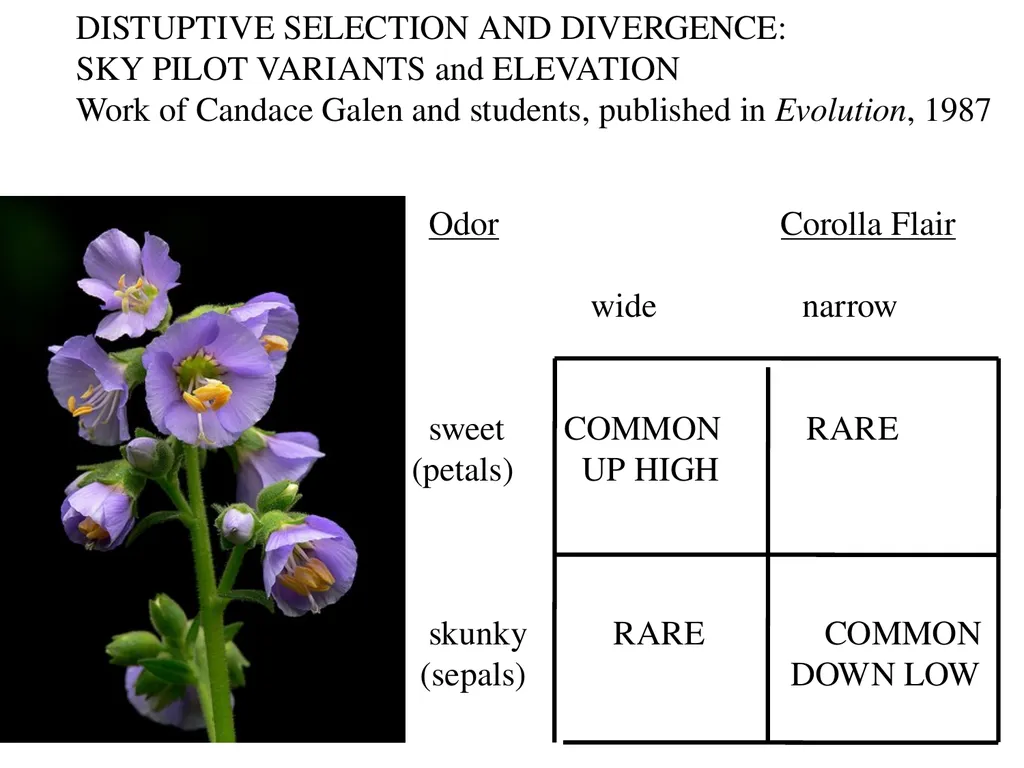
Odor Corolla Flair
wide narrow
sweet COMMON RARE
(petals) UP HIGH
Odor
skunky RARE COMMON
(sepals) DOWN LOW DISTUPTIVE SELECTION AND DIVERGENCE:
SKY PILOT VARIANTS and ELEVATION
Work of Candace Galen and students, published in Evolution, 1987<br>
30
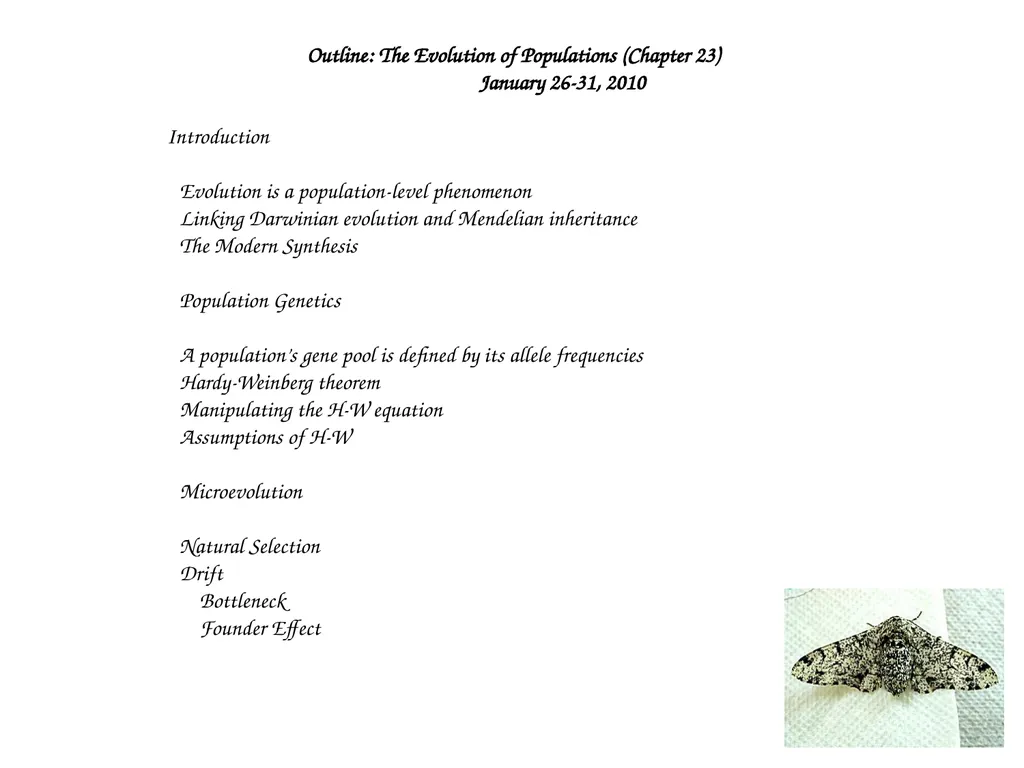
Outline: The Evolution of Populations (Chapter 23)
January 26-31, 2010
Introduction
Evolution is a population-level phenomenon
Linking Darwinian evolution and Mendelian inheritance
The Modern Synthesis
Population Genetics
A population’s gene pool is defined by its allele frequencies
Hardy-Weinberg theorem
Manipulating the H-W equation
Assumptions of H-W
Microevolution
Natural Selection
Drift
Bottleneck
Founder Effect<br>
31
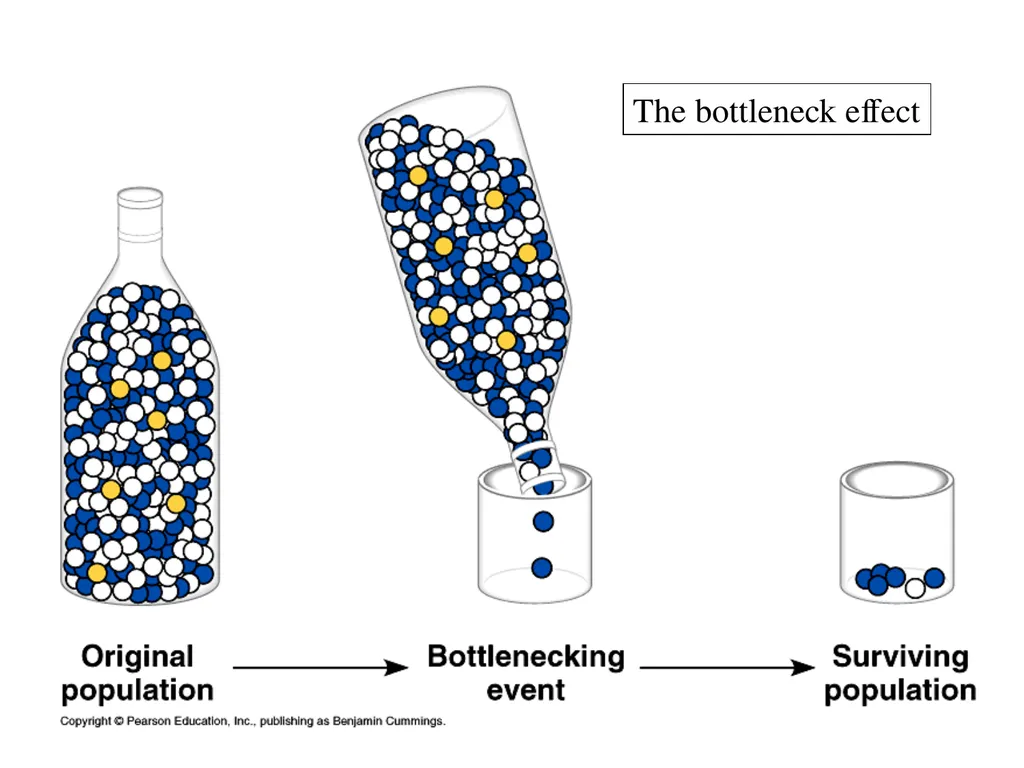
Two situations can shrink a population to a size small enough for genetic drift to operate: The bottleneck effect
The founder effect<br>
32
The bottleneck effect<br>
33
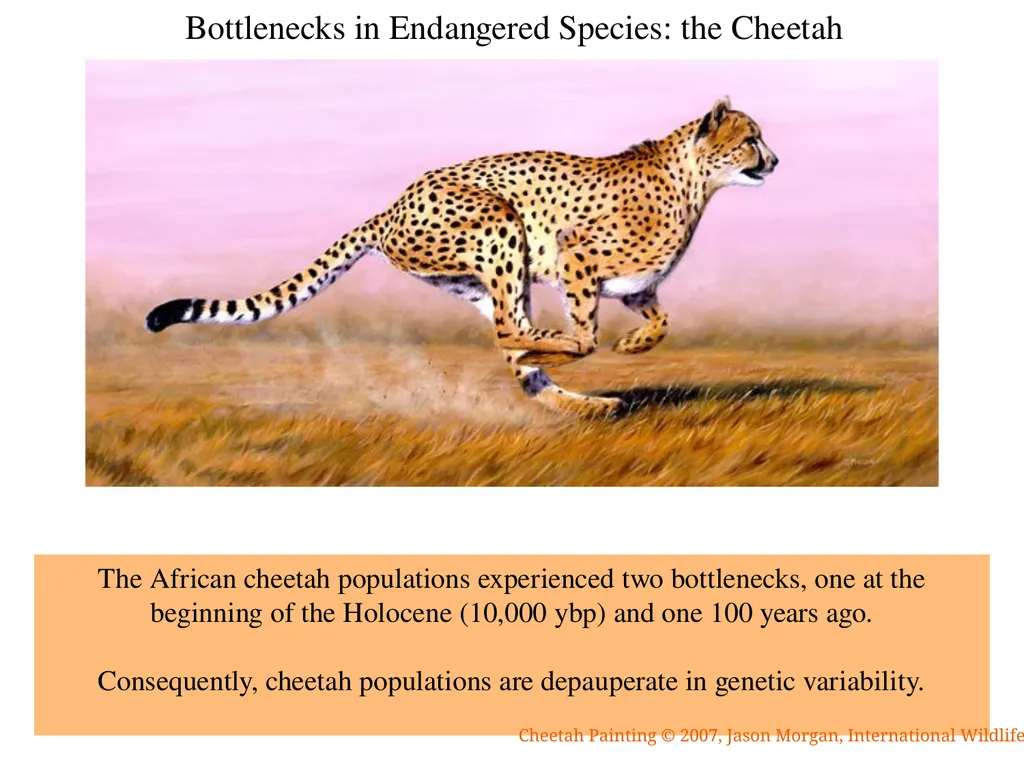
The African cheetah populations experienced two bottlenecks, one at the beginning of the Holocene (10,000 ybp) and one 100 years ago.�
Consequently, cheetah populations are depauperate in genetic variability. Cheetah Painting © 2007, Jason Morgan, International Wildlife Bottlenecks in Endangered Species: the Cheetah<br>
34
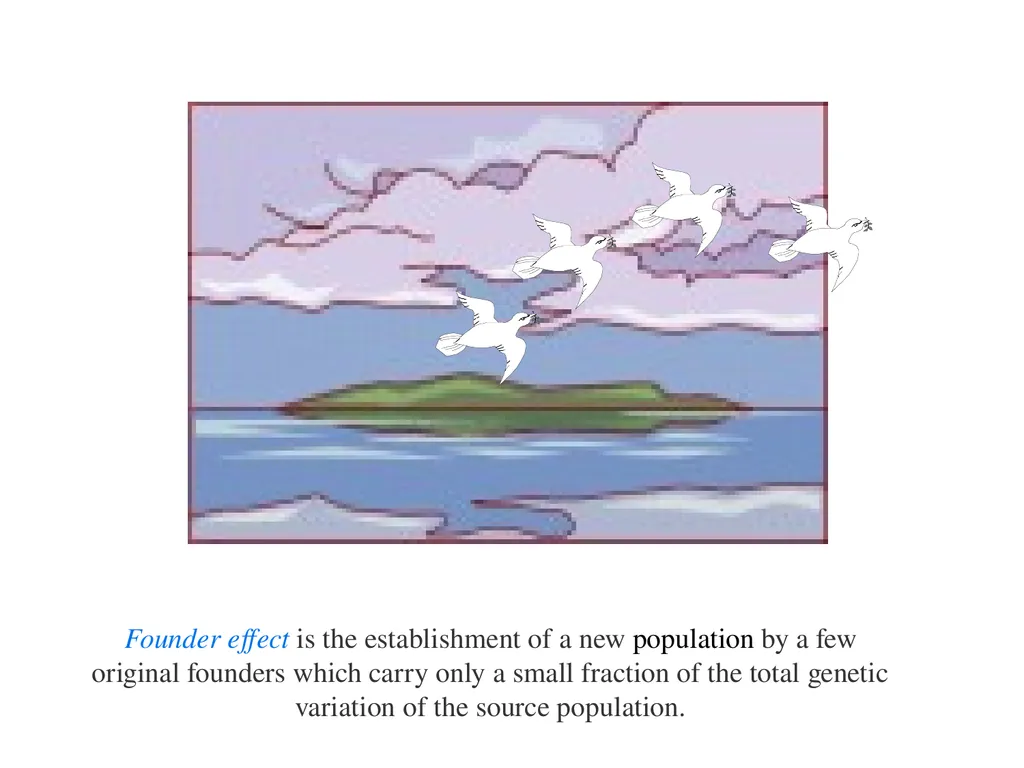
Founder effect is the establishment of a new population by a few original founders which carry only a small fraction of the total genetic variation of the source population.<br>
35
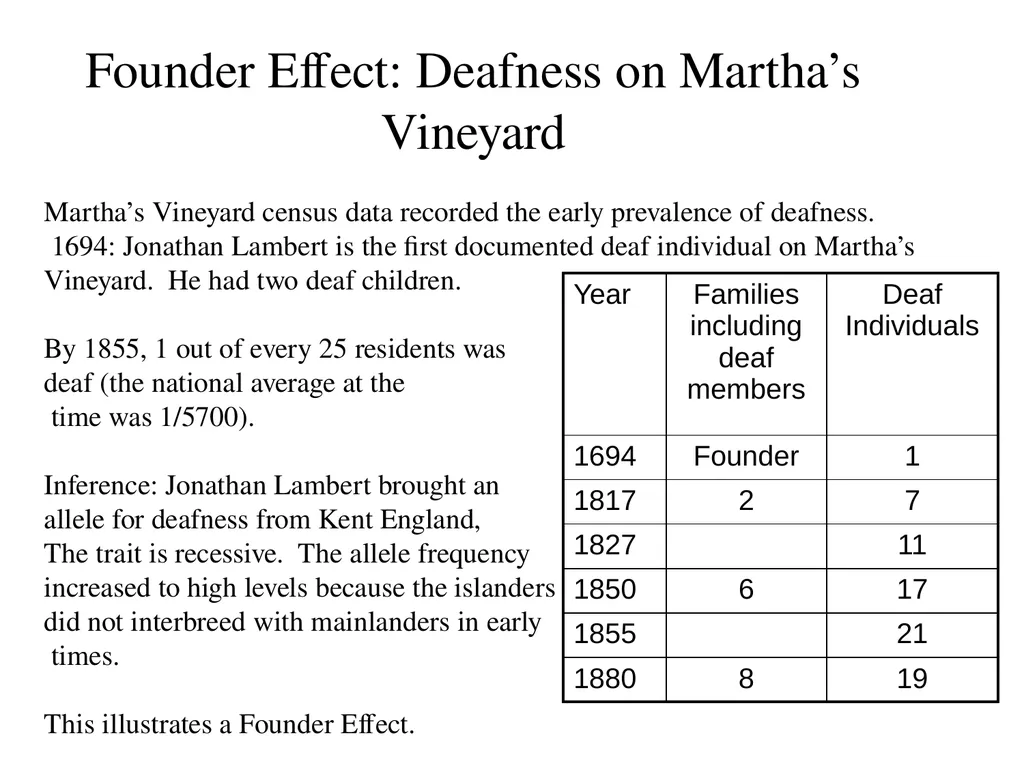
Founder Effect: Deafness on Martha’s Vineyard Martha’s Vineyard census data recorded the early prevalence of deafness.
1694: Jonathan Lambert is the first documented deaf individual on Martha’s Vineyard. He had two deaf children.
By 1855, 1 out of every 25 residents was
deaf (the national average at the
time was 1/5700).
Inference: Jonathan Lambert brought an�allele for deafness from Kent England, �The trait is recessive. The allele frequency
increased to high levels because the islanders
did not interbreed with mainlanders in early
times.
This illustrates a Founder Effect.<br>
36
Outline: The Evolution of Populations (Chapter 23)
January 26-31, 2010
Introduction
Evolution is a population-level phenomenon
Linking Darwinian evolution and Mendelian inheritance
The Modern Synthesis
Population Genetics
A population’s gene pool is defined by its allele frequencies
Hardy-Weinberg theorem
Manipulating the H-W equation
Assumptions of H-W
Microevolution
Natural Selection
Drift
Bottleneck
Founder Effect<br>