The InterTASC Information Specialists Sub-Group (ISSG) Search Filter Resource Julie Glanville Carol Lefebvre Paul Manson Sophie Robinson Naomi Shaw Introduction Search filters are sets of search terms designed to find studies of a specific
"The InterTASC Information Specialists' Sub-Group" is the property of its rightful owner. Permission is granted to
download and print the materials on this website for personal, non-commercial use only, and to display it
on your personal computer provided you do not modify the materials and that you retain all copyright
notices contained in the materials. By downloading content from our website, you accept the terms of this
agreement.
Presentation Transcript
01
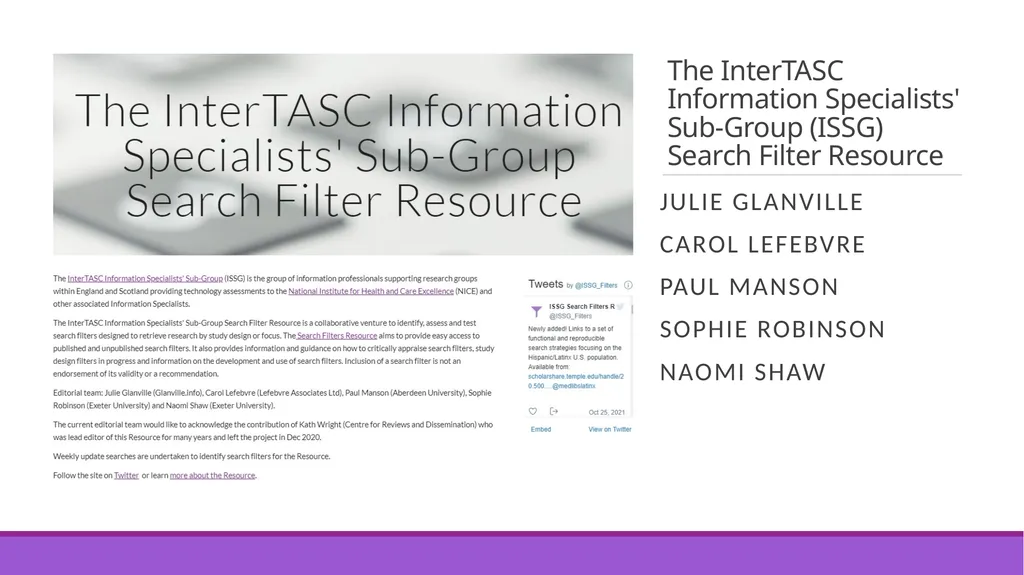
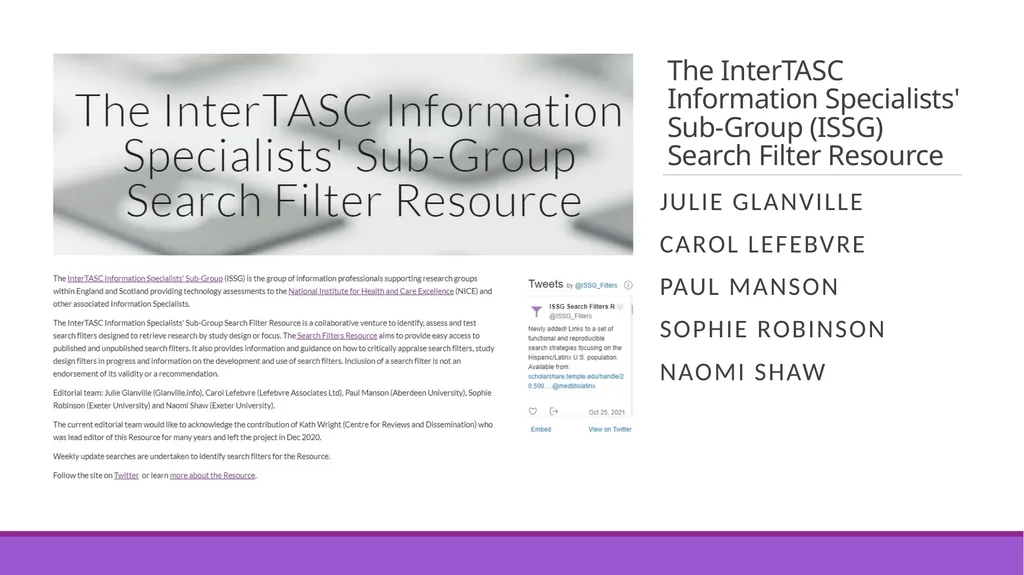
The InterTASC Information Specialists' Sub-Group (ISSG) Search Filter Resource Julie Glanville
Carol Lefebvre
Paul Manson
Sophie Robinson
Naomi Shaw<br>
02
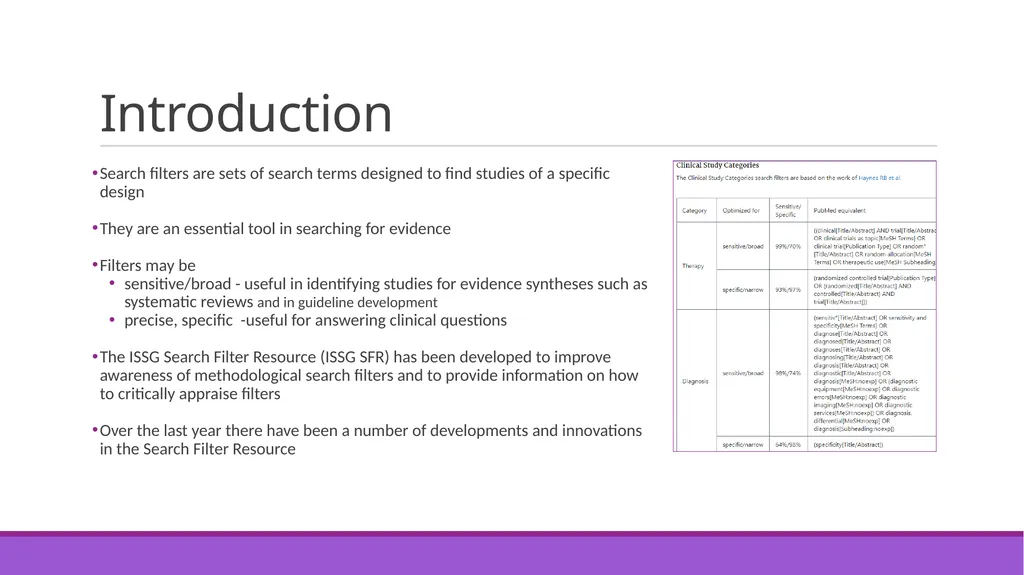
Introduction Search filters are sets of search terms designed to find studies of a specific design
They are an essential tool in searching for evidence
Filters may be
sensitive/broad - useful in identifying studies for evidence syntheses such as systematic reviews and in guideline development
precise, specific -useful for answering clinical questions
The ISSG Search Filter Resource (ISSG SFR) has been developed to improve awareness of methodological search filters and to provide information on how to critically appraise filters
Over the last year there have been a number of developments and innovations in the Search Filter Resource<br>
03
How is the site produced? Finding filters
Searches to identify eligible filters are run monthly in CINAHL, Embase and MEDLINE
Tables of contents and current awareness lists are screened
Search results are scanned by the Editorial Team for eligible records and added to the ISSG SFR site
The ISSG SFR presents
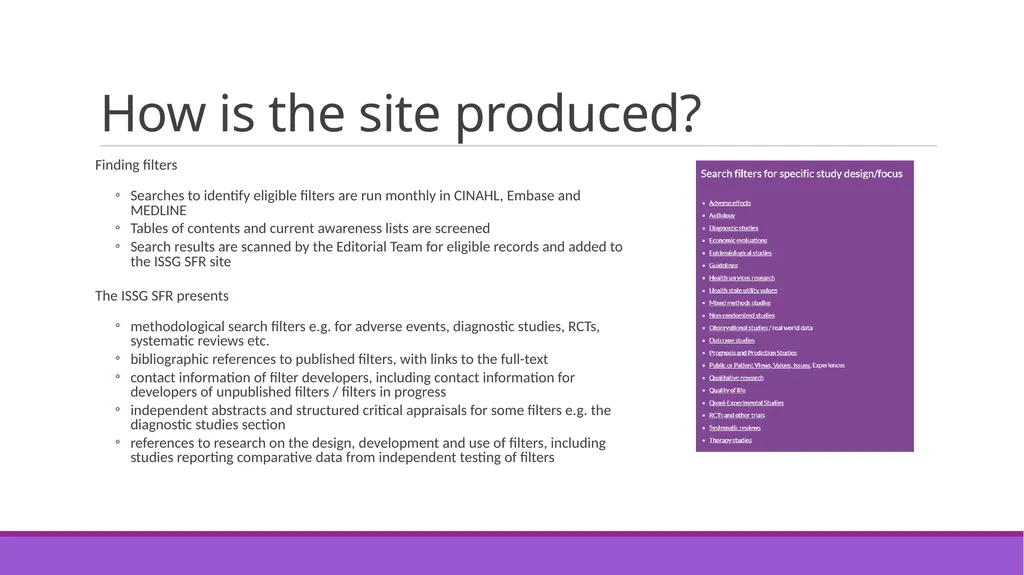
methodological search filters e.g. for adverse events, diagnostic studies, RCTs, systematic reviews etc.
bibliographic references to published filters, with links to the full-text
contact information of filter developers, including contact information for developers of unpublished filters / filters in progress
independent abstracts and structured critical appraisals for some filters e.g. the diagnostic studies section
references to research on the design, development and use of filters, including studies reporting comparative data from independent testing of filters<br>
04
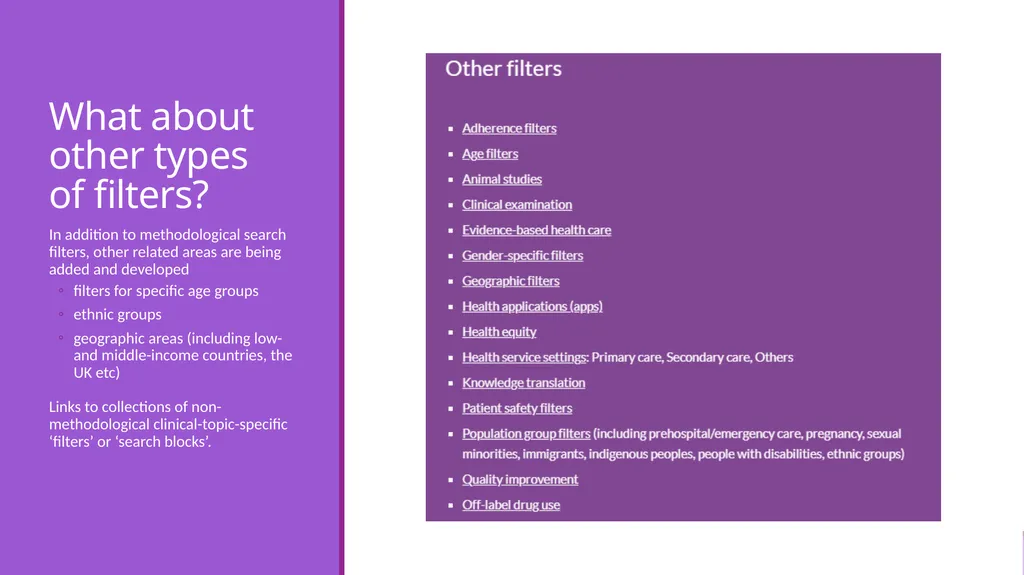
What about other types of filters? In addition to methodological search filters, other related areas are being added and developed
filters for specific age groups
ethnic groups
geographic areas (including low- and middle-income countries, the UK etc)
Links to collections of non-methodological clinical-topic-specific ‘filters’ or ‘search blocks’.<br>
05
New developments Expanded editorial team
The site had been managed by an Editorial Team comprising Julie Glanville, Carol Lefebvre and until December 2020, Kath Wright (CRD, University of York).
The Editorial Team has been expanded in 2021 to include Paul Manson, Sophie Robinson and Naomi Shaw.
Adding links to launch search filters in PubMed, Ovid and EBSCOHost
Adding links to comments and errata
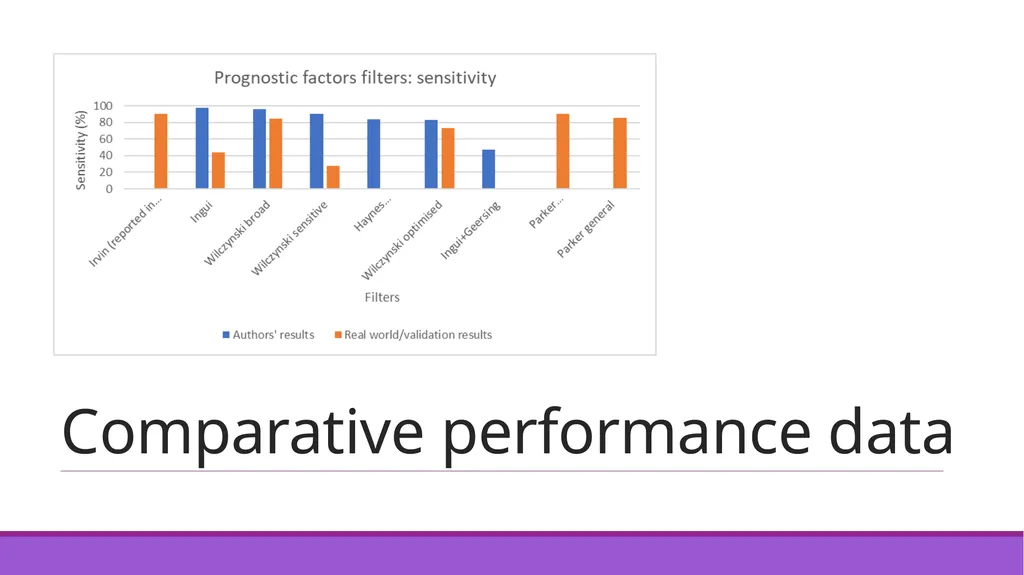
Highlighting comparative performance data visually
The resource is also being more-actively disseminated via:
e-mail lists
conference presentations
social media by using Twitter (@ISSG_Filters https://twitter.com/ISSG_Filters).<br>
06
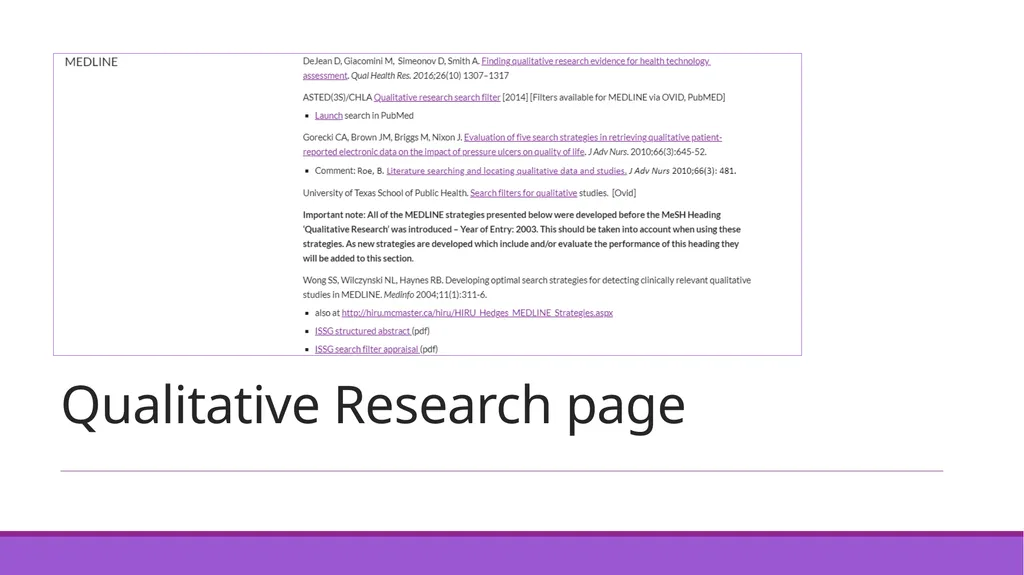
Qualitative Research page<br>
07
Comparative performance data<br>
08
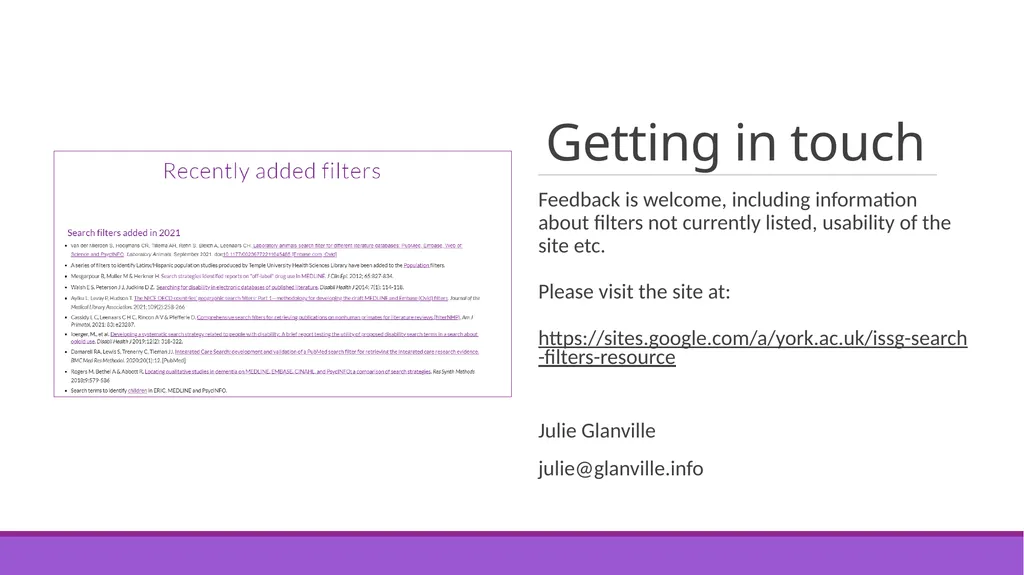
Getting in touch Feedback is welcome, including information about filters not currently listed, usability of the site etc.