The OPTN presents: The New Kidney Allocation System: What Referring Physicians Need to Know Explain the new kidney allocation policy and its goals Summarize basic changes in allocation components for deceased donor kidneys Describe patient
"The OPTN presents: The New Kidney Allocation" is the property of its rightful owner. Permission is granted to
download and print the materials on this website for personal, non-commercial use only, and to display it
on your personal computer provided you do not modify the materials and that you retain all copyright
notices contained in the materials. By downloading content from our website, you accept the terms of this
agreement.
Presentation Transcript
01
The OPTN presents: The New Kidney Allocation System: What Referring Physicians Need to Know<br>
02
Explain the new kidney allocation policy and its goals
Summarize basic changes in allocation components for deceased donor kidneys
Describe patient indicators appropriate for transplant evaluation referral
List resources for additional information including education of patients Objectives<br>
03
Richard Formica, Jr., MD
Associate Professor of Medicine & Surgery
Yale University School of Medicine<br>
04
Current Limitations
High kidney discard rates
Variability in access to transplant
Unrealized graft years
Unnecessarily high re-transplant rates Why change kidney allocation?<br>
05
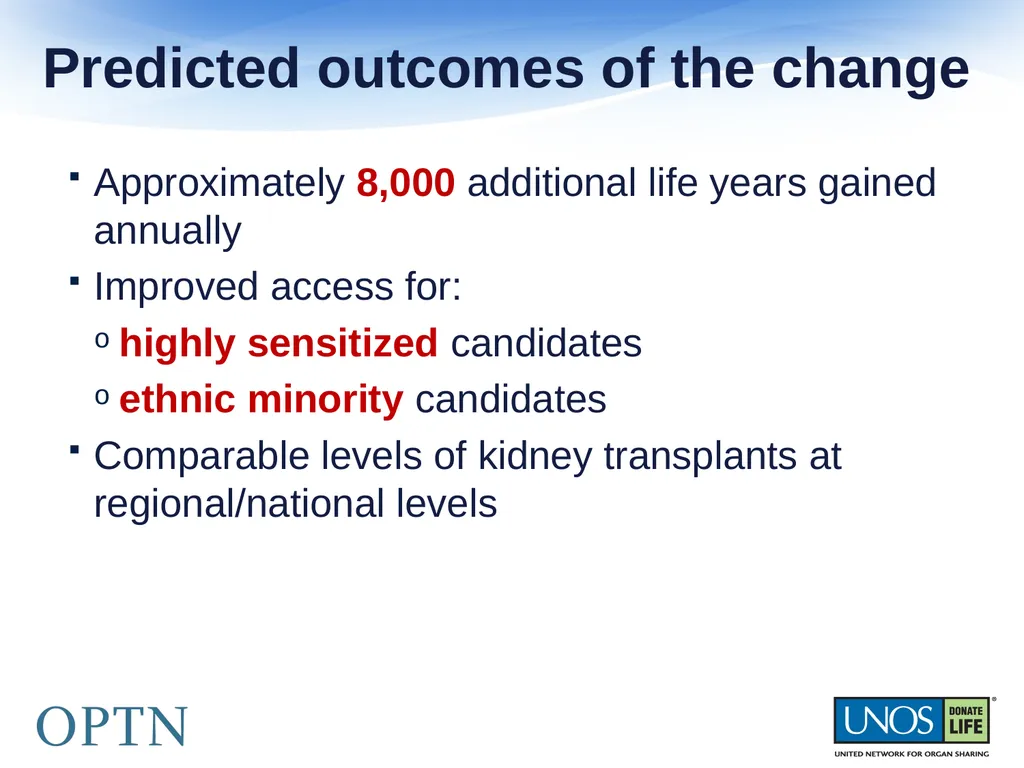
Approximately 8,000 additional life years gained annually
Improved access for:
highly sensitized candidates
ethnic minority candidates
Comparable levels of kidney transplants at regional/national levels Predicted outcomes of the change<br>
06
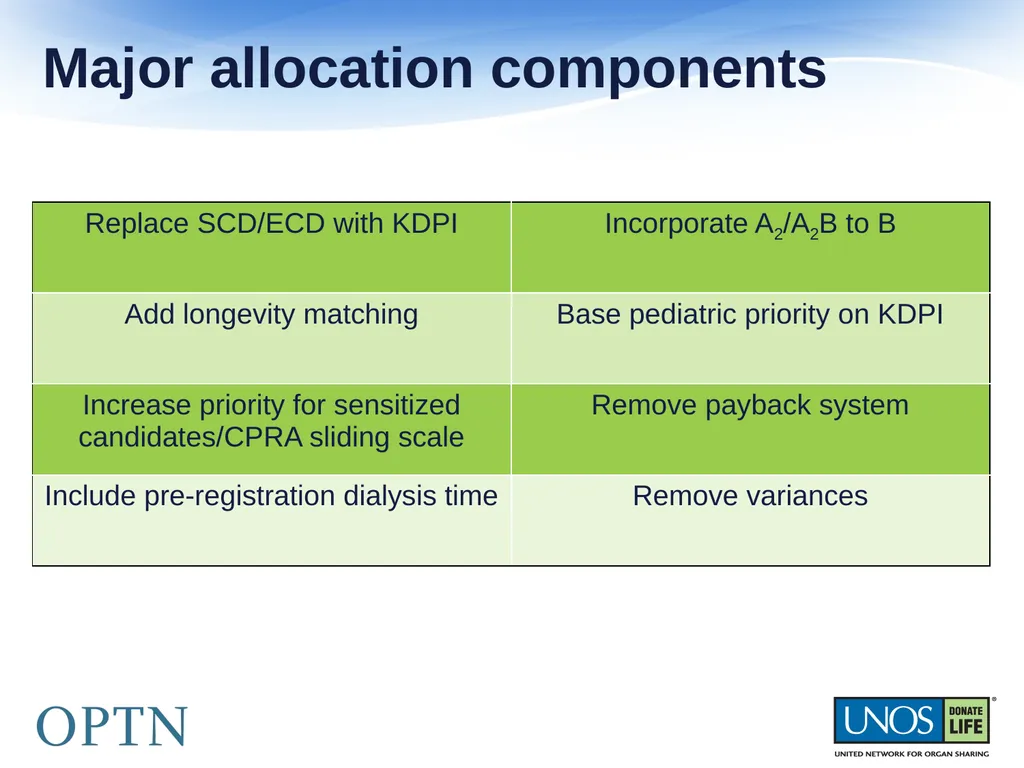
Major allocation components<br>
07
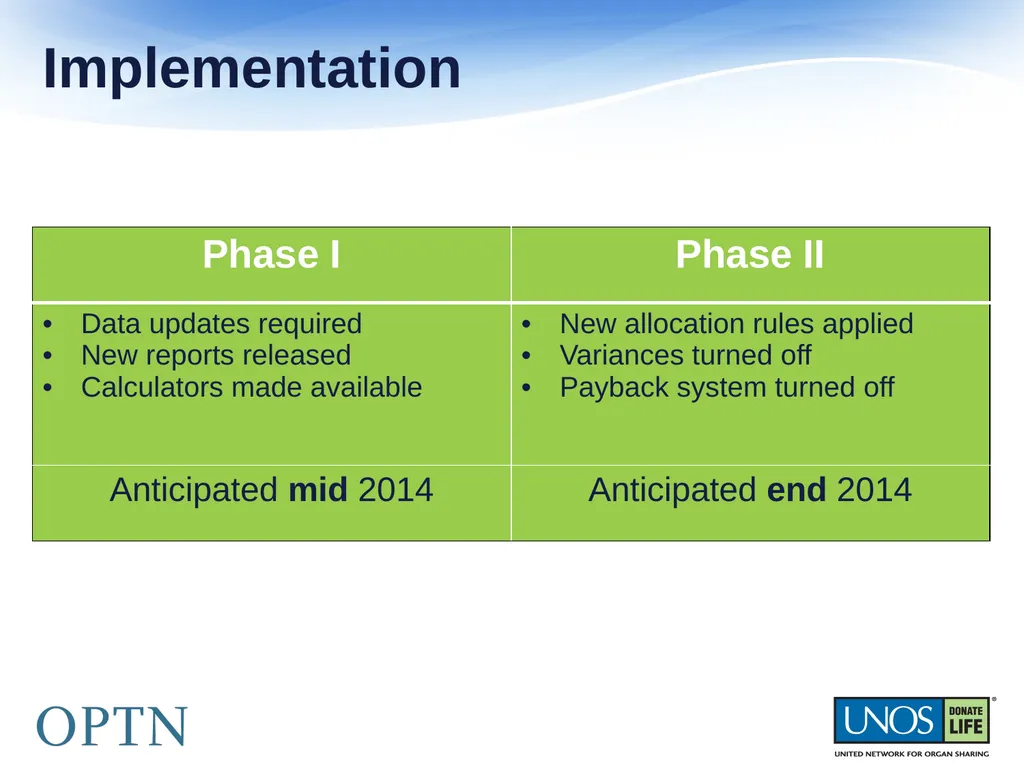
Implementation<br>
08
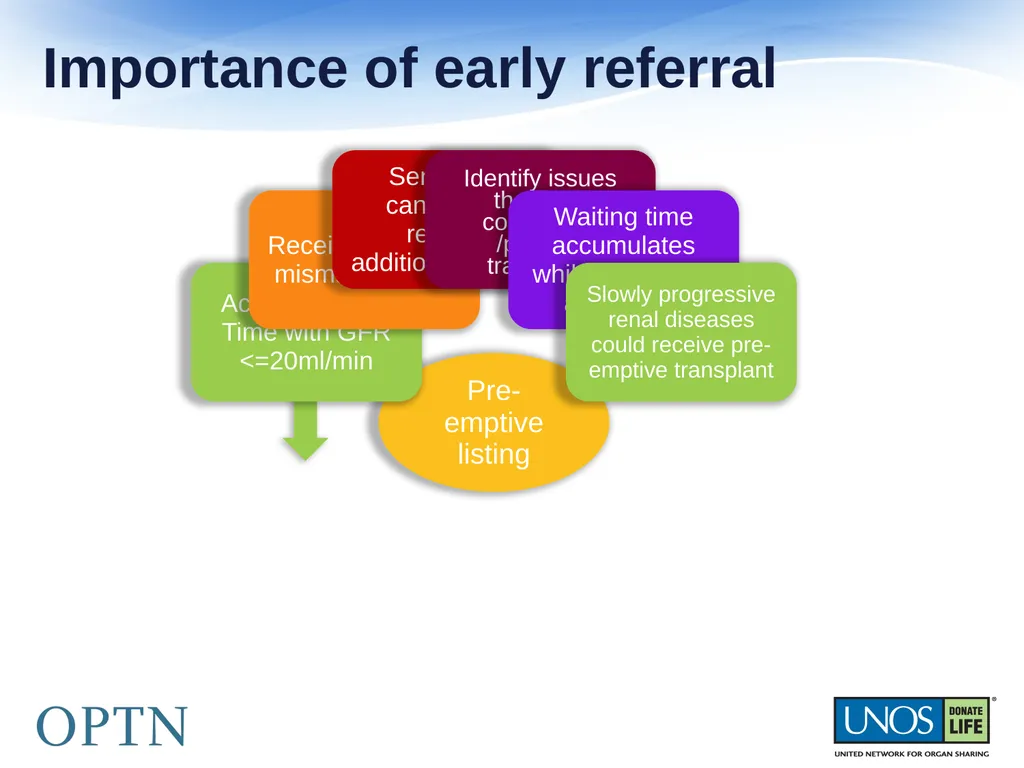
Importance of early referral<br>
09
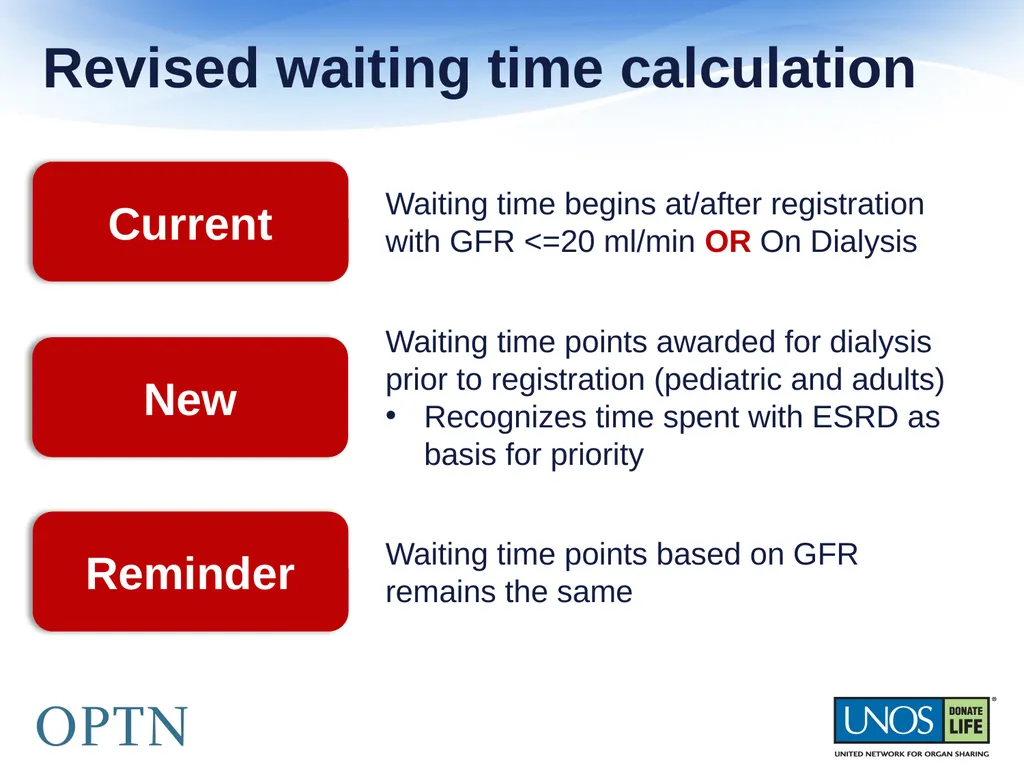
Revised waiting time calculation Current New Reminder Waiting time begins at/after registration with GFR <=20 ml/min OR On Dialysis Waiting time points awarded for dialysis prior to registration (pediatric and adults)
Recognizes time spent with ESRD as basis for priority Waiting time points based on GFR remains the same<br>
10
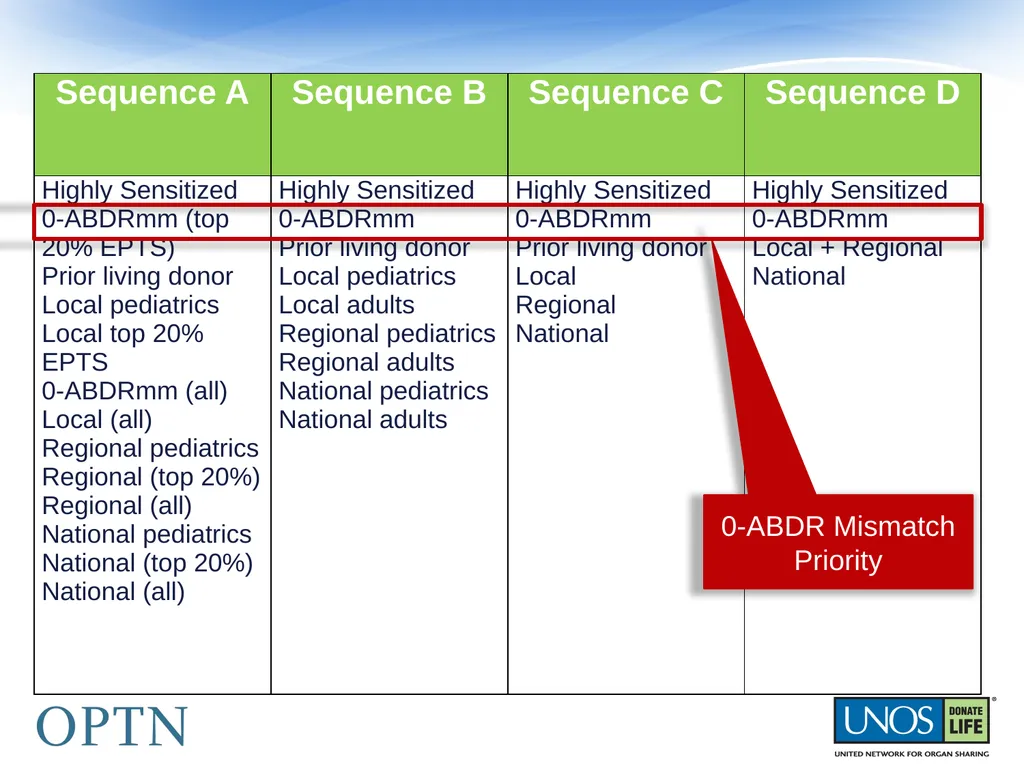
0-ABDR Mismatch Priority<br>
11
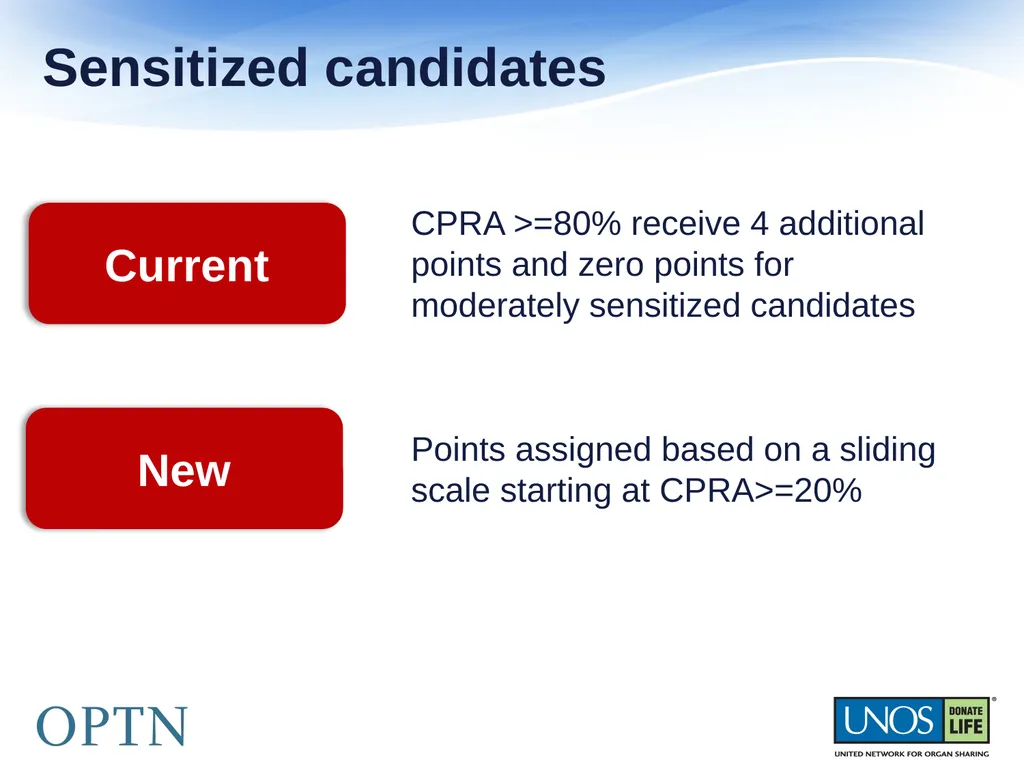
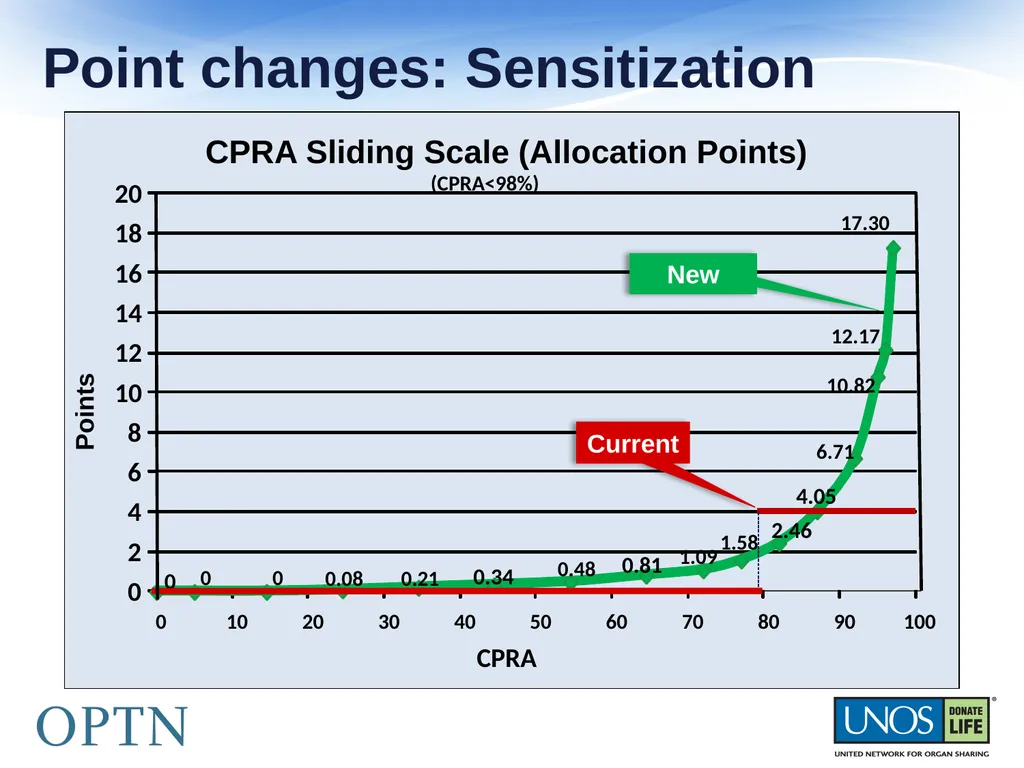
Sensitized candidates Current New CPRA >=80% receive 4 additional points and zero points for moderately sensitized candidates Points assigned based on a sliding scale starting at CPRA>=20%<br>
12
Point changes: Sensitization<br>
13
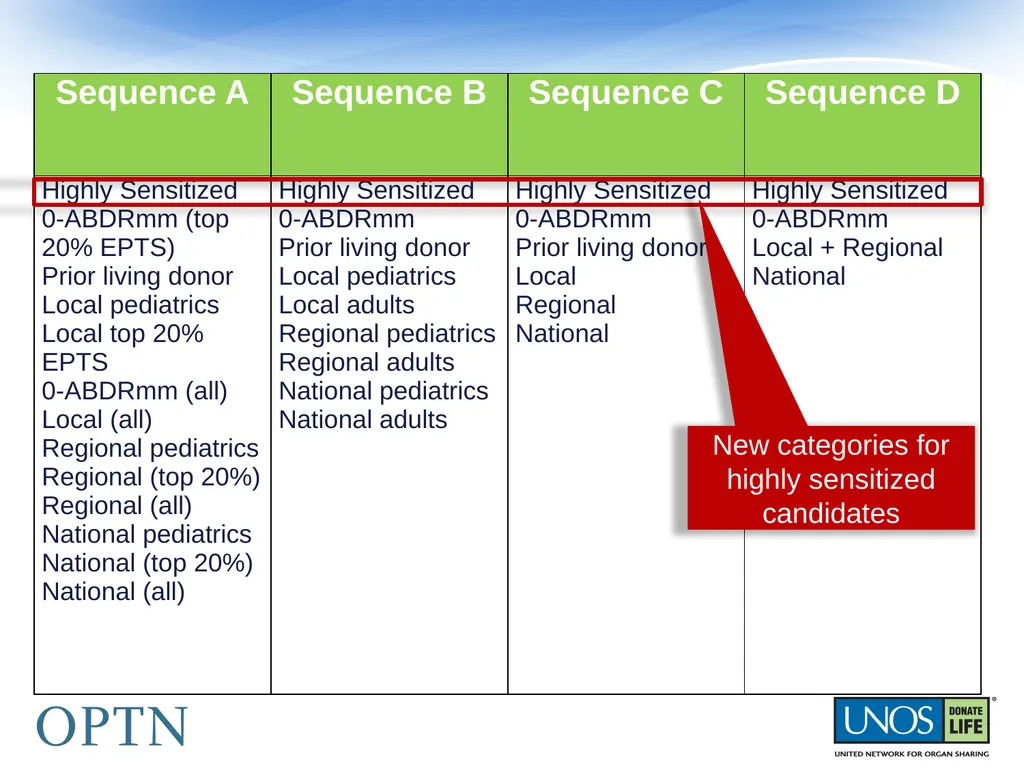
New categories for highly sensitized candidates<br>
14
Meelie DebRoy, MD
Associate Professor of Surgery
Rutgers Robert Wood Johnson Medical School<br>
15
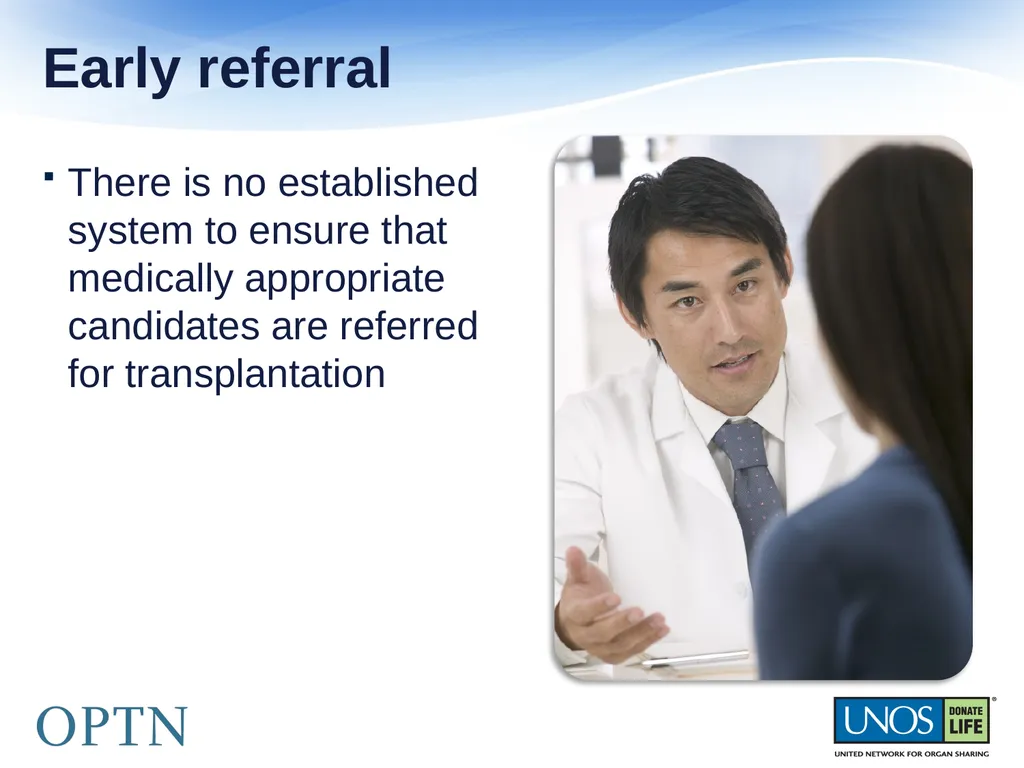
There is no established system to ensure that medically appropriate candidates are referred for transplantation Early referral<br>
16
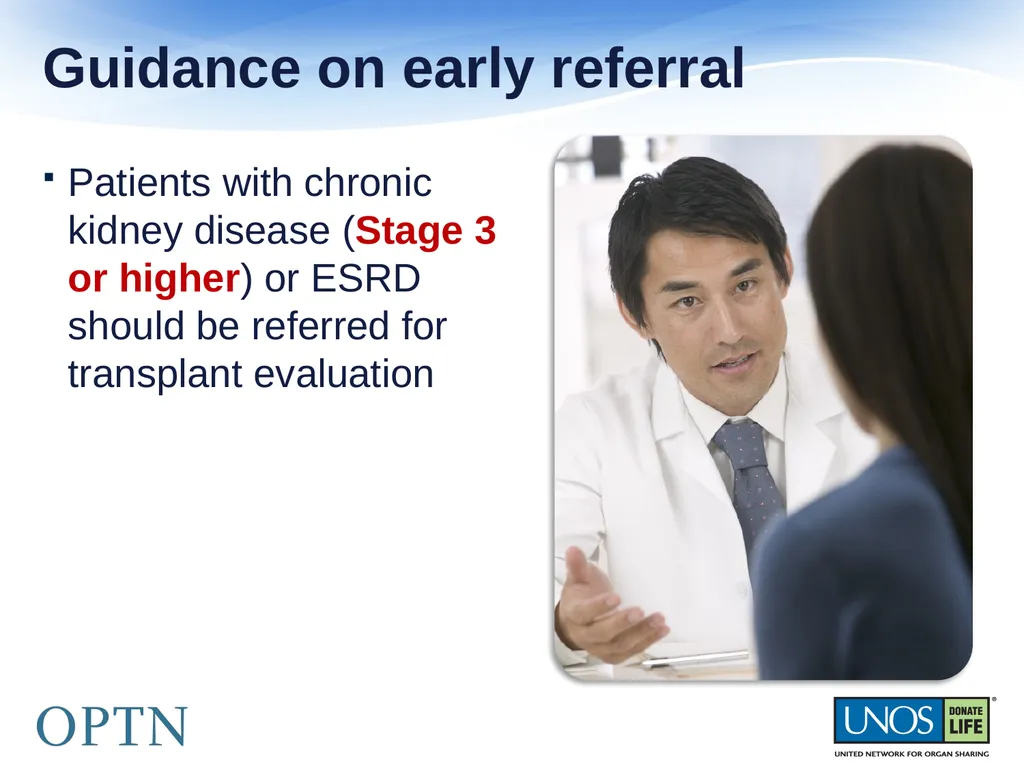
Patients with chronic kidney disease (Stage 3 or higher) or ESRD should be referred for transplant evaluation Guidance on early referral<br>
17
Pre-emptive transplant and timely, early referral is the goal
GFR range = 25-30
Education about transplant must begin before ESRD to be most effective
Stage 3-4 CKD
Begin discussing the importance of living donors
Initiate weight loss and smoking cessation counseling as necessary Guidance on early referral<br>
18
Kidney Allocation System Communication, Education, and Resources<br>
19
Kidney Allocation Toolkit
FAQs
Sample messaging for discussing changes with patients
Patient brochure
Guidance for early referral considerations
Subscribe to RSS feeds and a monthly newsletter http://transplantpro.org/kidney-allocation-system/ Resources for professionals<br>
20
OPTN web site - http://optn.transplant.hrsa.gov
UNOS web site* - http://www.unos.org
Transplant Living* - http://www.transplantliving.org
Transplant Pro* - http://transplantpro.org
*These are a service of United Network for Organ Sharing and are not produced under the OPTN contract. More information<br>