
The Structure of the Atom Learning Objectives:
Description: The Structure of the Atom Learning Objectives: Describe the structure of the atom and name the sub atomic particles making it up. Use the periodic table to find the combinations of particles making up different atoms. Explain the term
Related Topics
Download Presentation
"The Structure of the Atom Learning Objectives:" is the property of its rightful owner. Permission is granted to download and print the materials on this website for personal, non-commercial use only, and to display it on your personal computer provided you do not modify the materials and that you retain all copyright notices contained in the materials. By downloading content from our website, you accept the terms of this agreement.
Presentation Transcript
slide1. The Structure of the Atom Learning Objectives:
Describe the structure of the atom and name the sub atomic particles making it up.
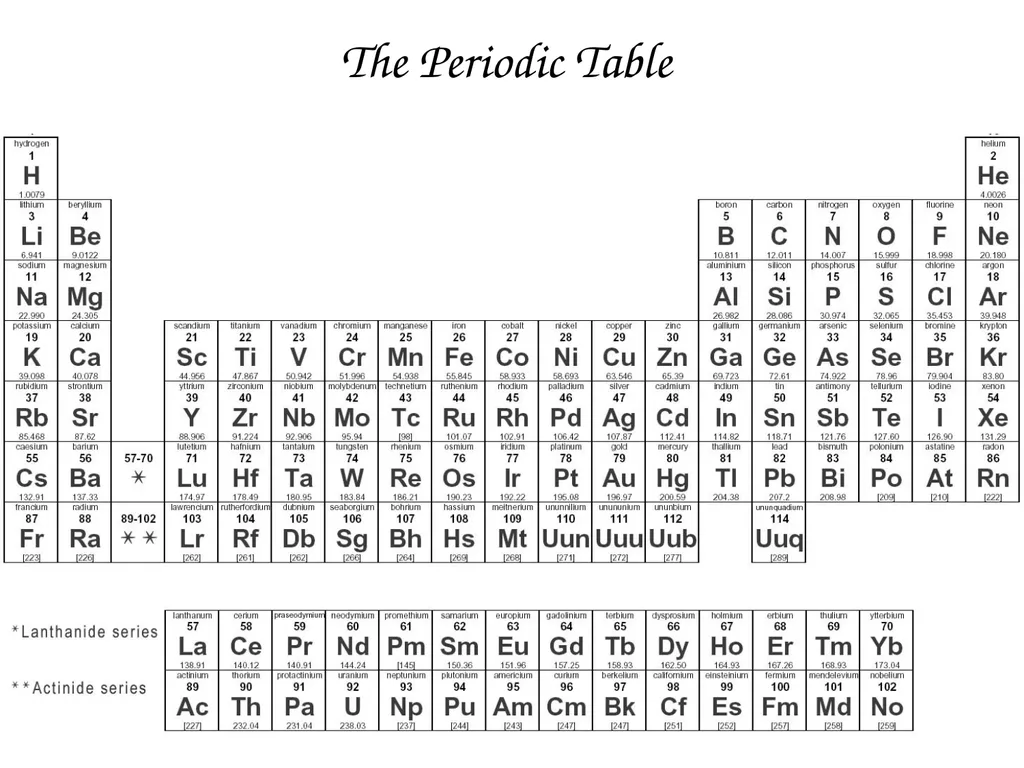
Use the periodic table to find the combinations of particles making up different atoms.
Explain the term isotope.
Key Words:
Atom, Electron, Proton, Neutron, Nucleus, Sub-atomic particle, Isotopes<br>
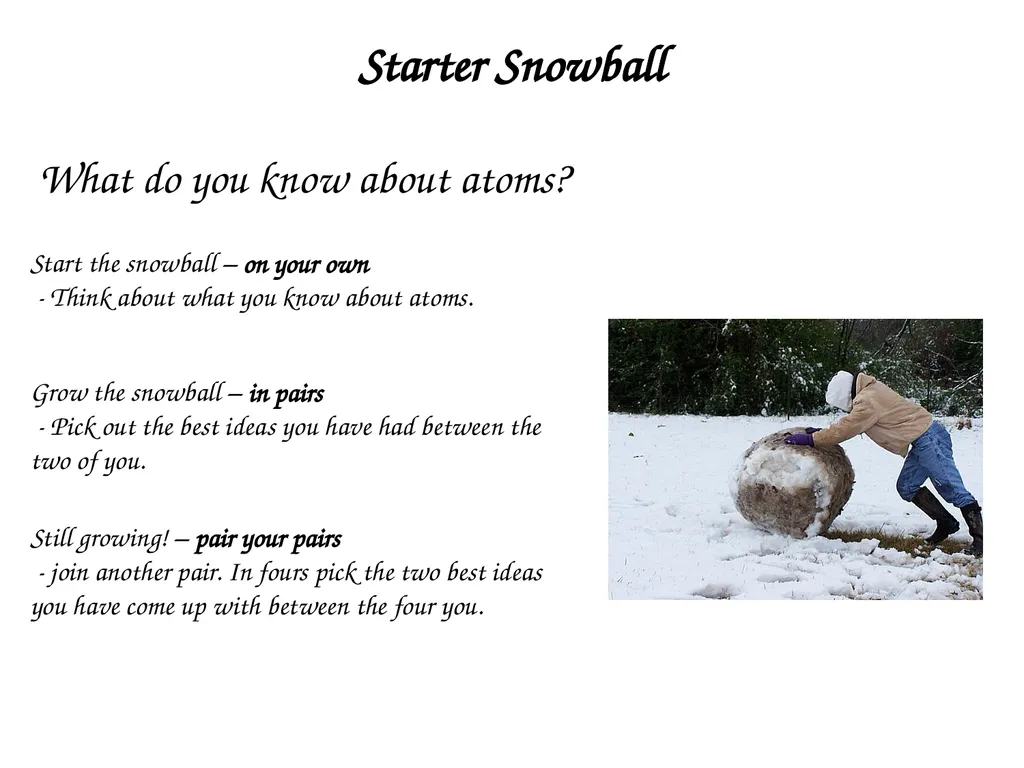
slide2. Starter Snowball What do you know about atoms? Start the snowball – on your own
- Think about what you know about atoms. Grow the snowball – in pairs
- Pick out the best ideas you have had between the two of you. Still growing! – pair your pairs
- join another pair. In fours pick the two best ideas you have come up with between the four you.<br>
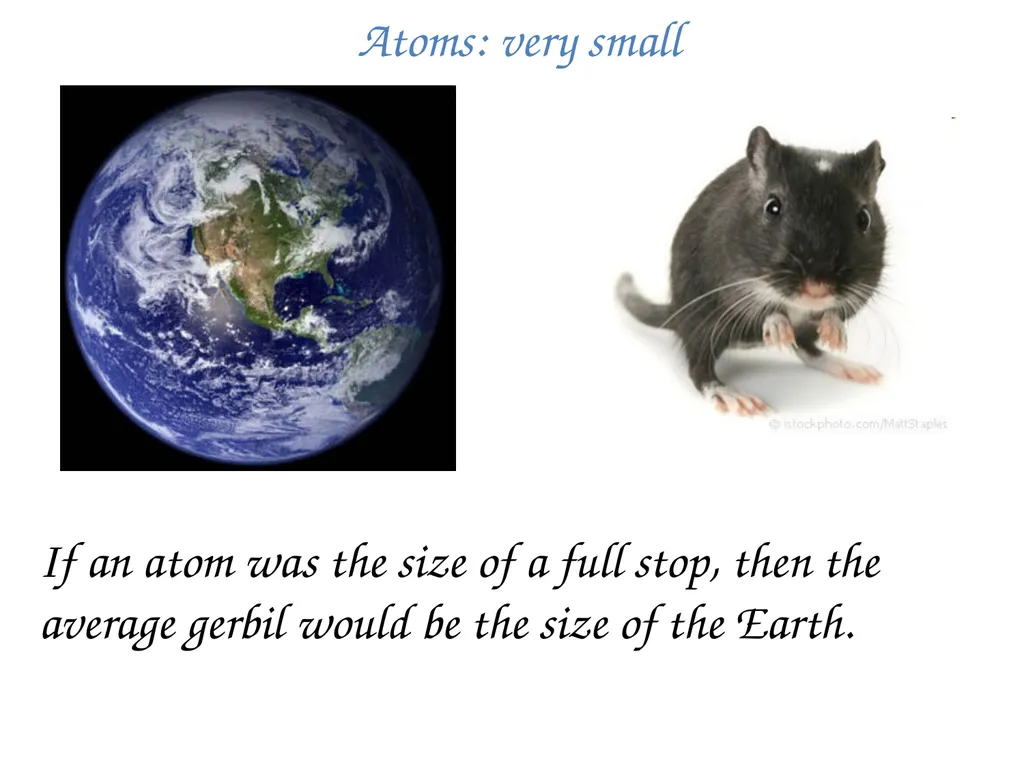
slide3. If an atom was the size of a full stop, then the average gerbil would be the size of the Earth. Atoms: very small<br>
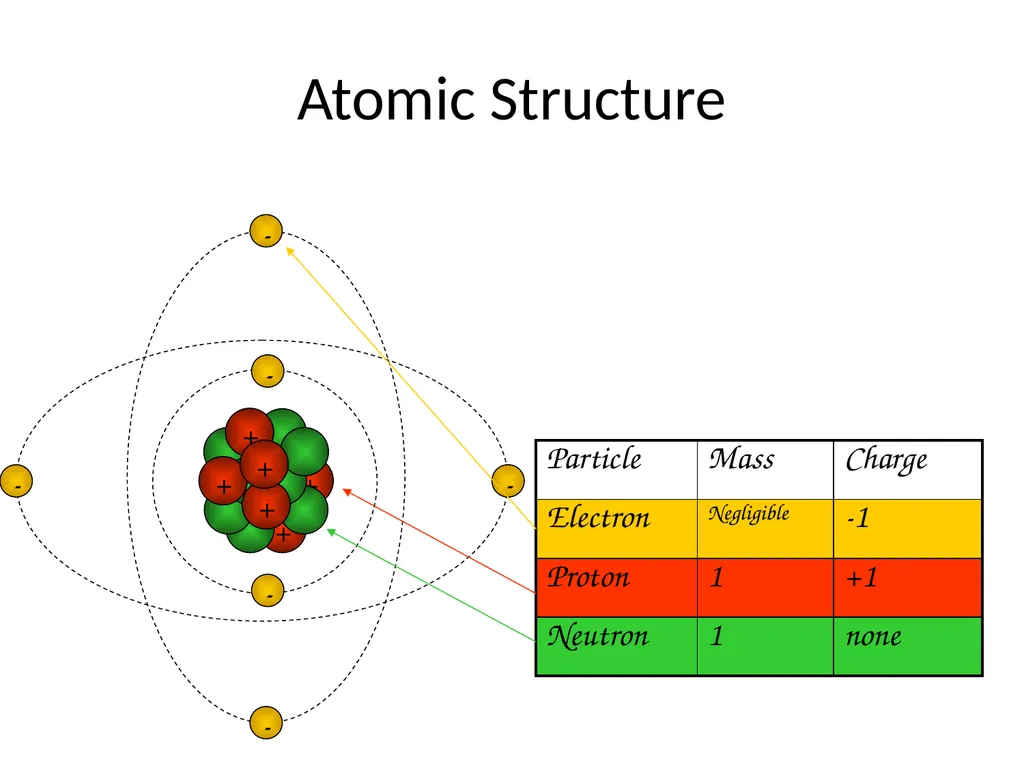
slide4. Atomic Structure + + + + + + - - - - - -<br>
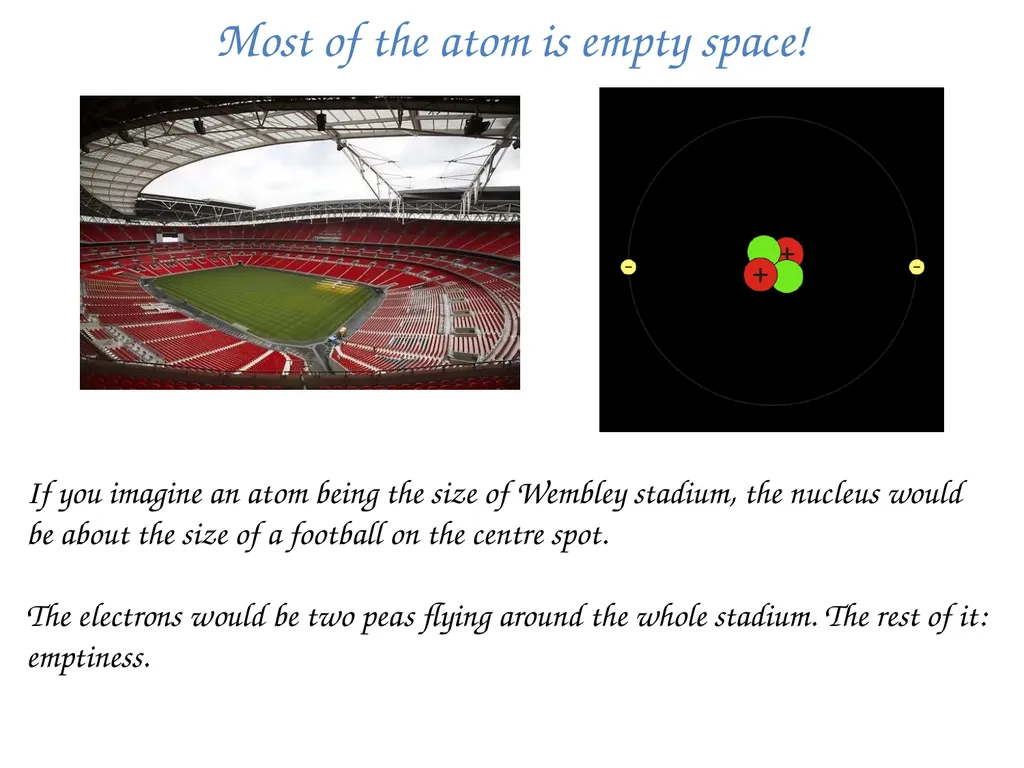
slide5. Most of the atom is empty space! If you imagine an atom being the size of Wembley stadium, the nucleus would be about the size of a football on the centre spot.
The electrons would be two peas flying around the whole stadium. The rest of it: emptiness.<br>
slide6. The Periodic Table<br>
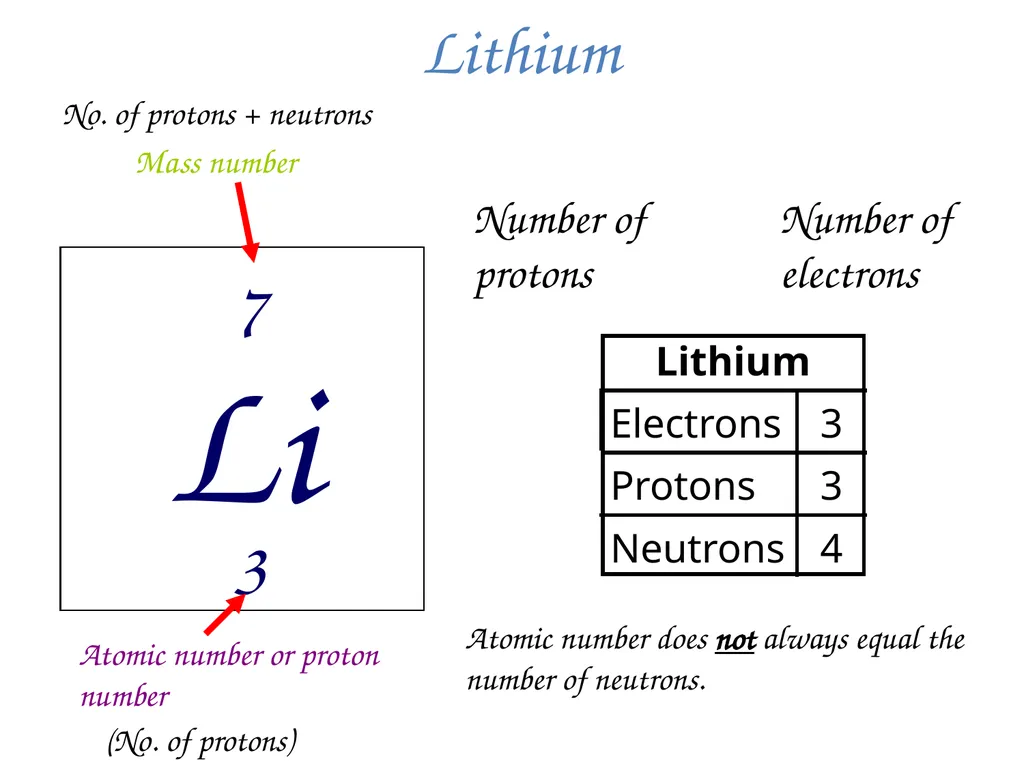
slide7. Li 7 3 (No. of protons) No. of protons + neutrons Lithium Number of protons Number of electrons = Atomic number does not always equal the number of neutrons. Mass number Atomic number or proton number<br>
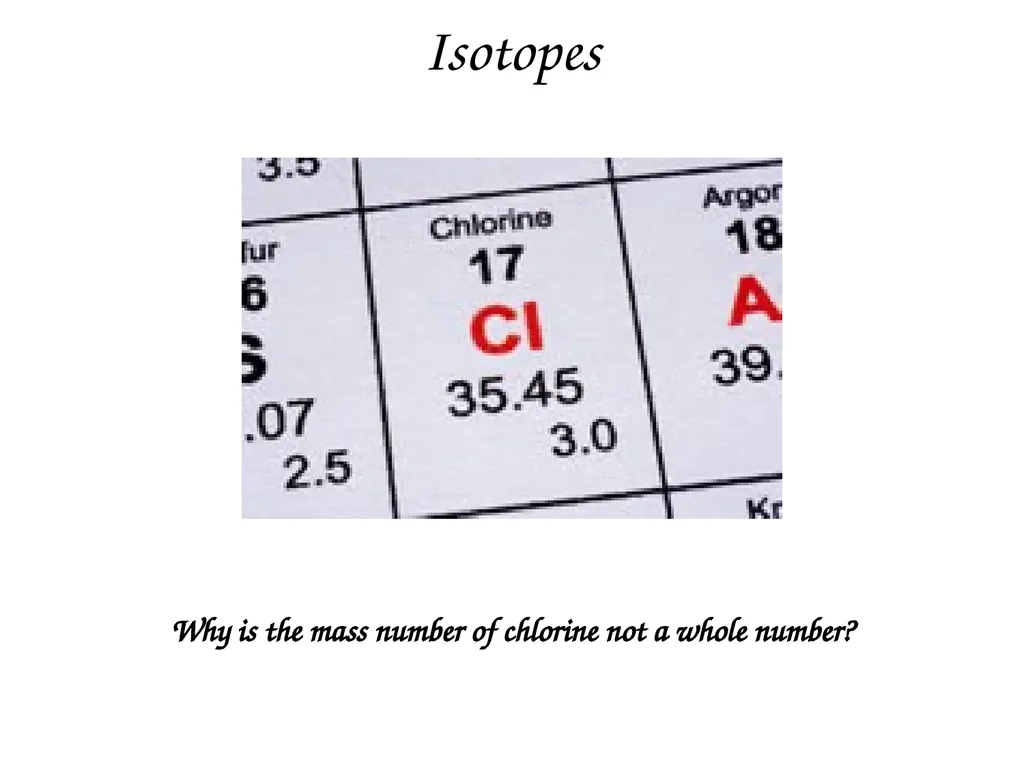
slide8. Isotopes Why is the mass number of chlorine not a whole number?<br>
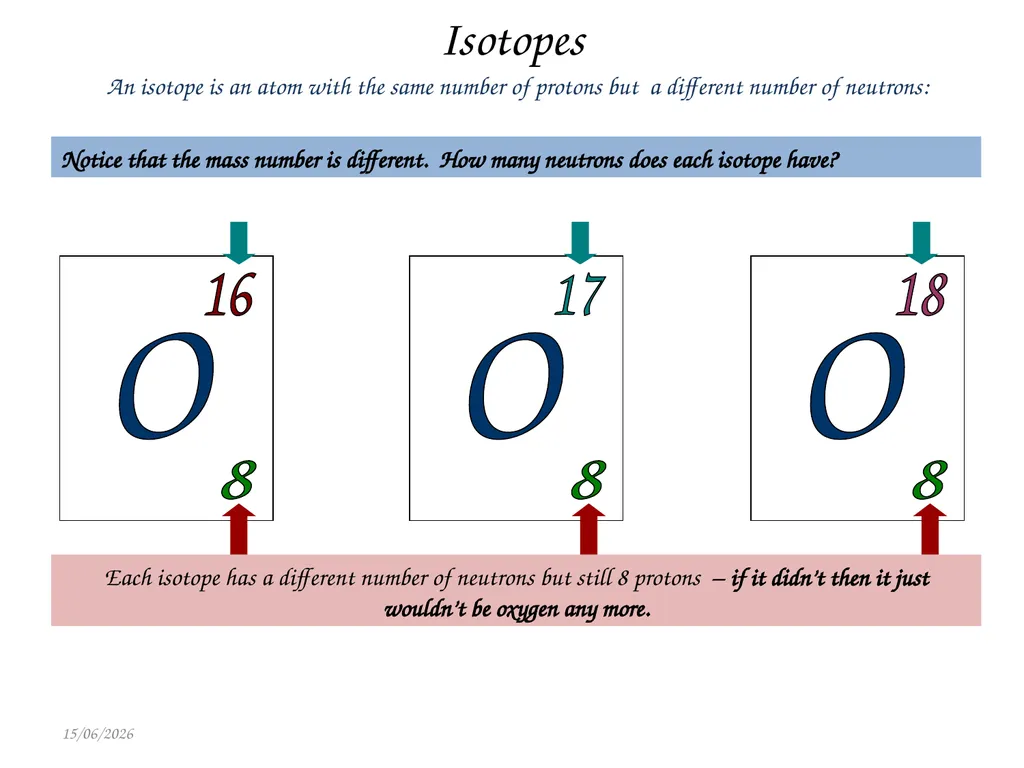
slide9. 07/09/2011 Isotopes An isotope is an atom with the same number of protons but a different number of neutrons:<br>
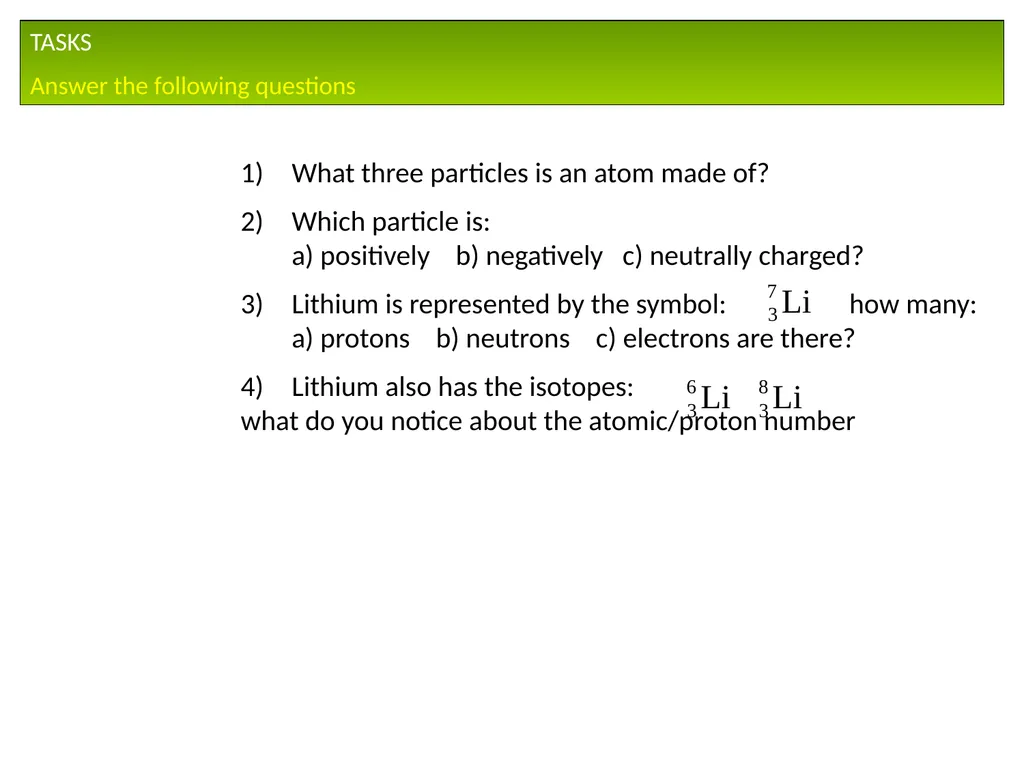
slide10. 1) What three particles is an atom made of?
2) Which particle is: a) positively b) negatively c) neutrally charged?
3) Lithium is represented by the symbol: how many: a) protons b) neutrons c) electrons are there?
4) Lithium also has the isotopes: what do you notice about the atomic/proton number TASKS
Answer the following questions<br>
Describe the structure of the atom and name the sub atomic particles making it up.
Use the periodic table to find the combinations of particles making up different atoms.
Explain the term isotope.
Key Words:
Atom, Electron, Proton, Neutron, Nucleus, Sub-atomic particle, Isotopes<br>
slide2. Starter Snowball What do you know about atoms? Start the snowball – on your own
- Think about what you know about atoms. Grow the snowball – in pairs
- Pick out the best ideas you have had between the two of you. Still growing! – pair your pairs
- join another pair. In fours pick the two best ideas you have come up with between the four you.<br>
slide3. If an atom was the size of a full stop, then the average gerbil would be the size of the Earth. Atoms: very small<br>
slide4. Atomic Structure + + + + + + - - - - - -<br>
slide5. Most of the atom is empty space! If you imagine an atom being the size of Wembley stadium, the nucleus would be about the size of a football on the centre spot.
The electrons would be two peas flying around the whole stadium. The rest of it: emptiness.<br>
slide6. The Periodic Table<br>
slide7. Li 7 3 (No. of protons) No. of protons + neutrons Lithium Number of protons Number of electrons = Atomic number does not always equal the number of neutrons. Mass number Atomic number or proton number<br>
slide8. Isotopes Why is the mass number of chlorine not a whole number?<br>
slide9. 07/09/2011 Isotopes An isotope is an atom with the same number of protons but a different number of neutrons:<br>
slide10. 1) What three particles is an atom made of?
2) Which particle is: a) positively b) negatively c) neutrally charged?
3) Lithium is represented by the symbol: how many: a) protons b) neutrons c) electrons are there?
4) Lithium also has the isotopes: what do you notice about the atomic/proton number TASKS
Answer the following questions<br>