THE SUPERNATURAL: Revenants, Witches and Demons Evil or Divine origin? Julian of Norwich (c.1343-c.1416): anchoress St Hildegard of Bingen (c.1098-1179): Sibyl of the Rhine, 12th century abbess, mystic, visionary, saint; produced works on
"THE SUPERNATURAL: Revenants, Witches and Demons" is the property of its rightful owner. Permission is granted to
download and print the materials on this website for personal, non-commercial use only, and to display it
on your personal computer provided you do not modify the materials and that you retain all copyright
notices contained in the materials. By downloading content from our website, you accept the terms of this
agreement.
Presentation Transcript
01
THE SUPERNATURAL: Revenants, Witches and Demons<br>
02
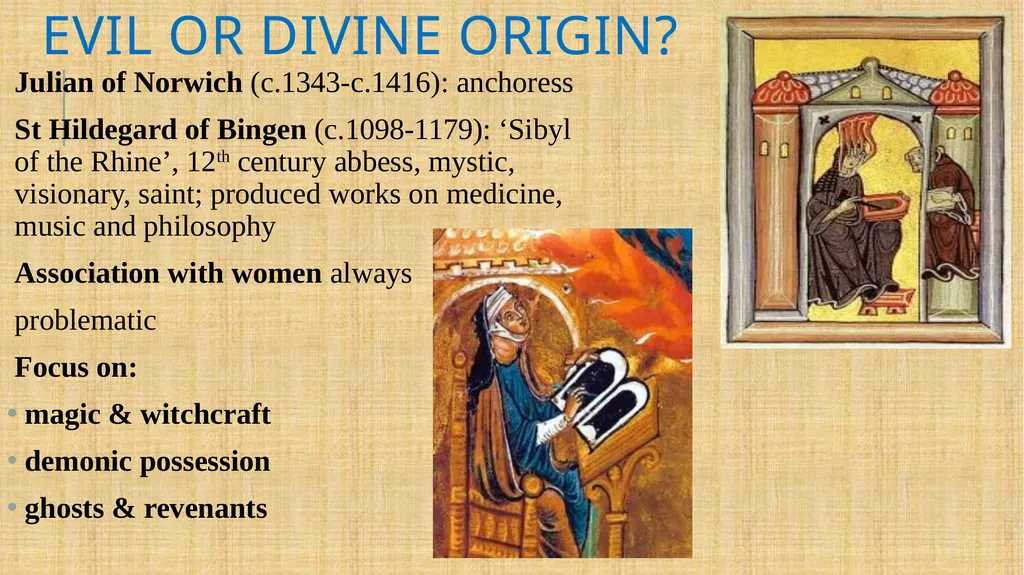
Evil or Divine origin? Julian of Norwich (c.1343-c.1416): anchoress
St Hildegard of Bingen (c.1098-1179): ‘Sibyl of the Rhine’, 12th century abbess, mystic, visionary, saint; produced works on medicine, music and philosophy
Association with women always
problematic
Focus on:
magic & witchcraft
demonic possession
ghosts & revenants<br>
03
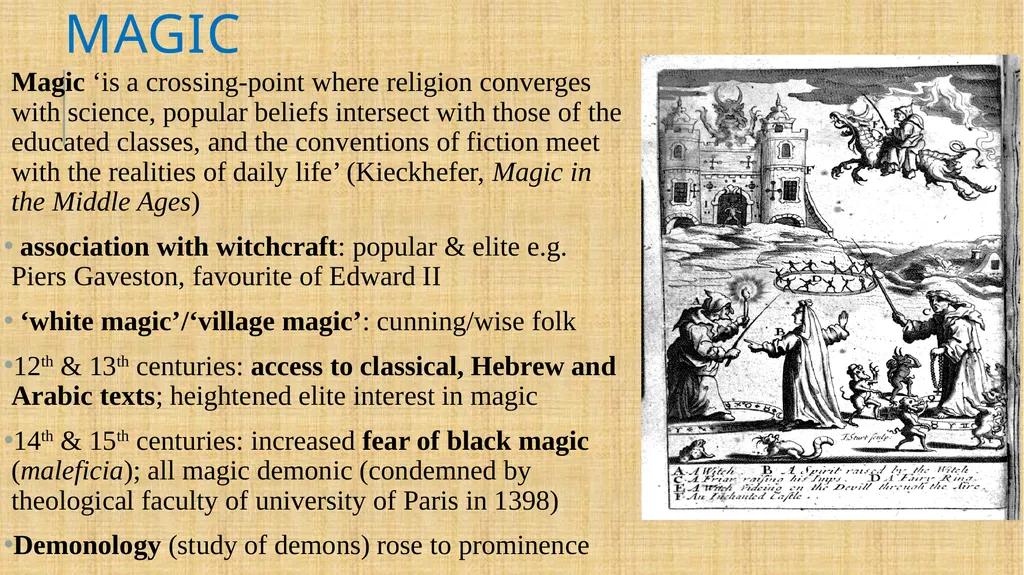
Magic Magic ‘is a crossing-point where religion converges with science, popular beliefs intersect with those of the educated classes, and the conventions of fiction meet with the realities of daily life’ (Kieckhefer, Magic in the Middle Ages)
association with witchcraft: popular & elite e.g. Piers Gaveston, favourite of Edward II
‘white magic’/‘village magic’: cunning/wise folk
12th & 13th centuries: access to classical, Hebrew and Arabic texts; heightened elite interest in magic
14th & 15th centuries: increased fear of black magic (maleficia); all magic demonic (condemned by theological faculty of university of Paris in 1398)
Demonology (study of demons) rose to prominence<br>
04
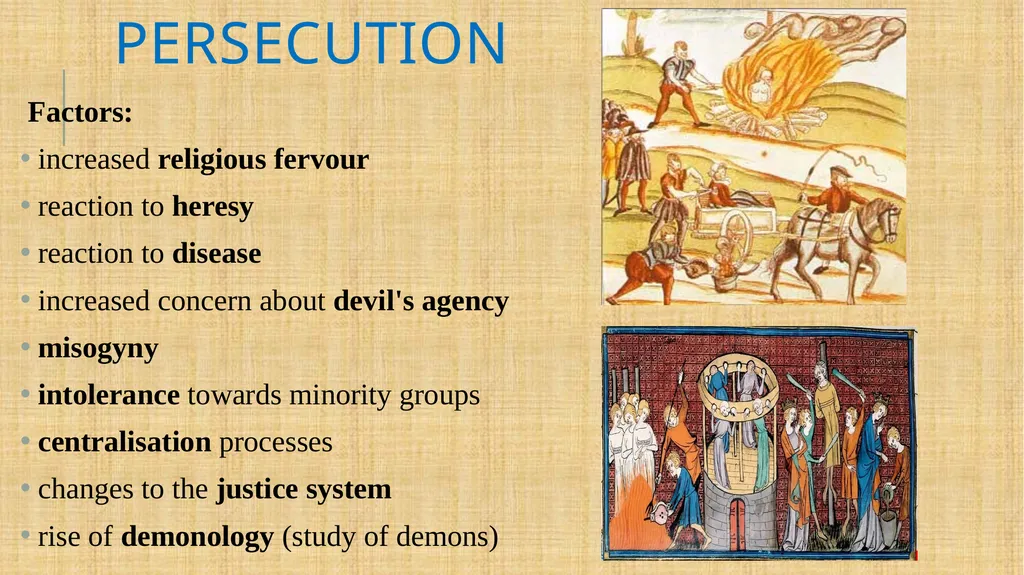
Persecution Factors:
increased religious fervour
reaction to heresy
reaction to disease
increased concern about devil's agency
misogyny
intolerance towards minority groups
centralisation processes
changes to the justice system
rise of demonology (study of demons)<br>
05
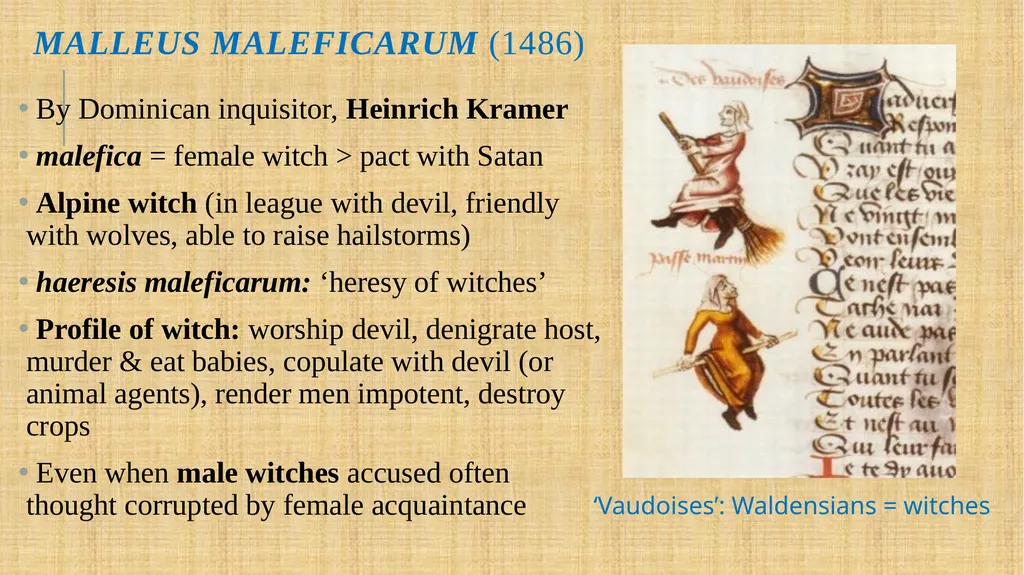
Malleus maleficarum (1486) By Dominican inquisitor, Heinrich Kramer
malefica = female witch > pact with Satan
Alpine witch (in league with devil, friendly with wolves, able to raise hailstorms)
haeresis maleficarum: ‘heresy of witches’
Profile of witch: worship devil, denigrate host, murder & eat babies, copulate with devil (or animal agents), render men impotent, destroy crops
Even when male witches accused often thought corrupted by female acquaintance ‘Vaudoises’: Waldensians = witches<br>
06
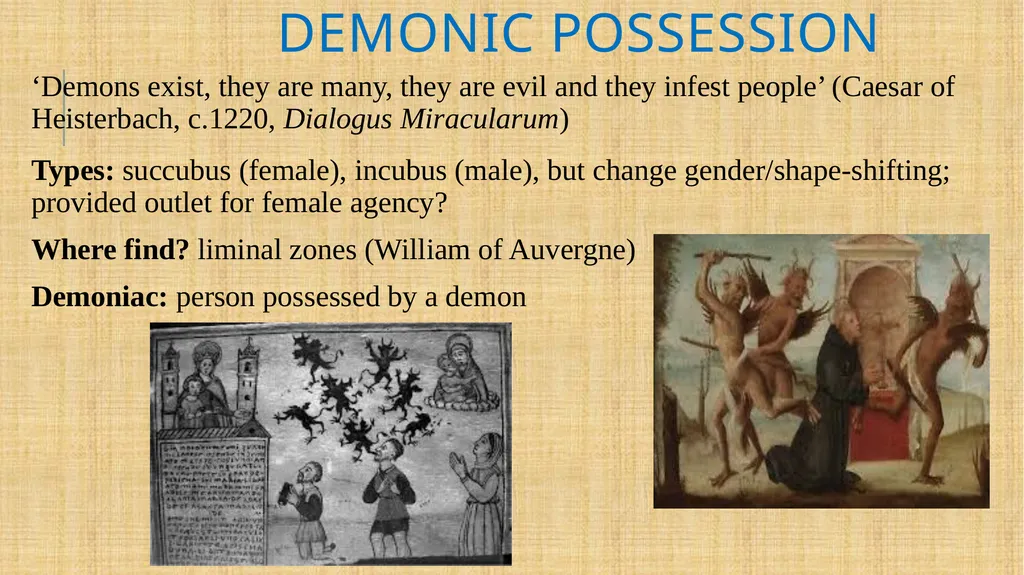
Demonic possession ‘Demons exist, they are many, they are evil and they infest people’ (Caesar of Heisterbach, c.1220, Dialogus Miracularum)
Types: succubus (female), incubus (male), but change gender/shape-shifting; provided outlet for female agency?
Where find? liminal zones (William of Auvergne)
Demoniac: person possessed by a demon<br>
07
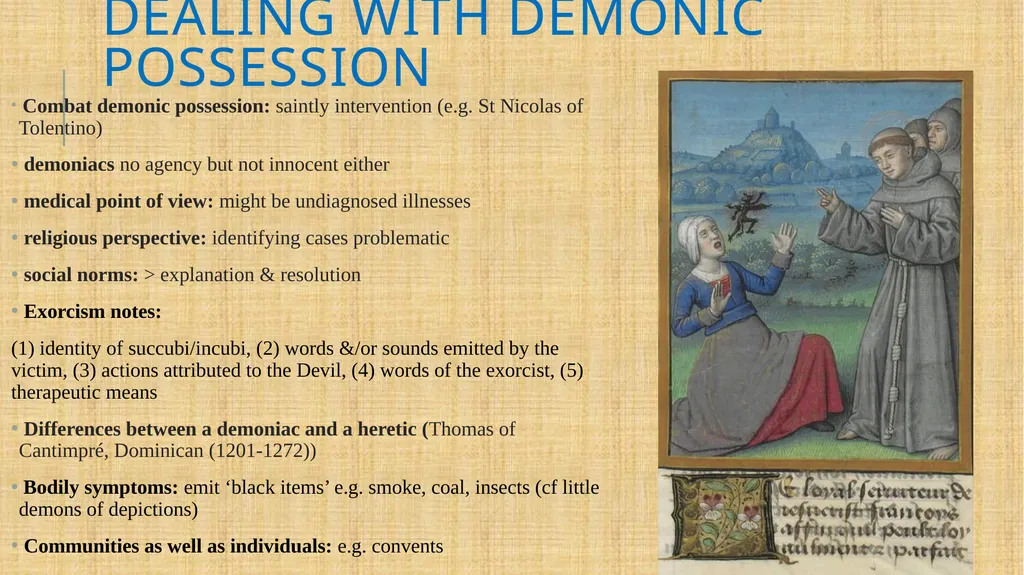
Dealing with demonic possession Combat demonic possession: saintly intervention (e.g. St Nicolas of Tolentino)
demoniacs no agency but not innocent either
medical point of view: might be undiagnosed illnesses
religious perspective: identifying cases problematic
social norms: > explanation & resolution
Exorcism notes:
(1) identity of succubi/incubi, (2) words &/or sounds emitted by the victim, (3) actions attributed to the Devil, (4) words of the exorcist, (5) therapeutic means
Differences between a demoniac and a heretic (Thomas of Cantimpré, Dominican (1201-1272))
Bodily symptoms: emit ‘black items’ e.g. smoke, coal, insects (cf little demons of depictions)
Communities as well as individuals: e.g. convents<br>
08
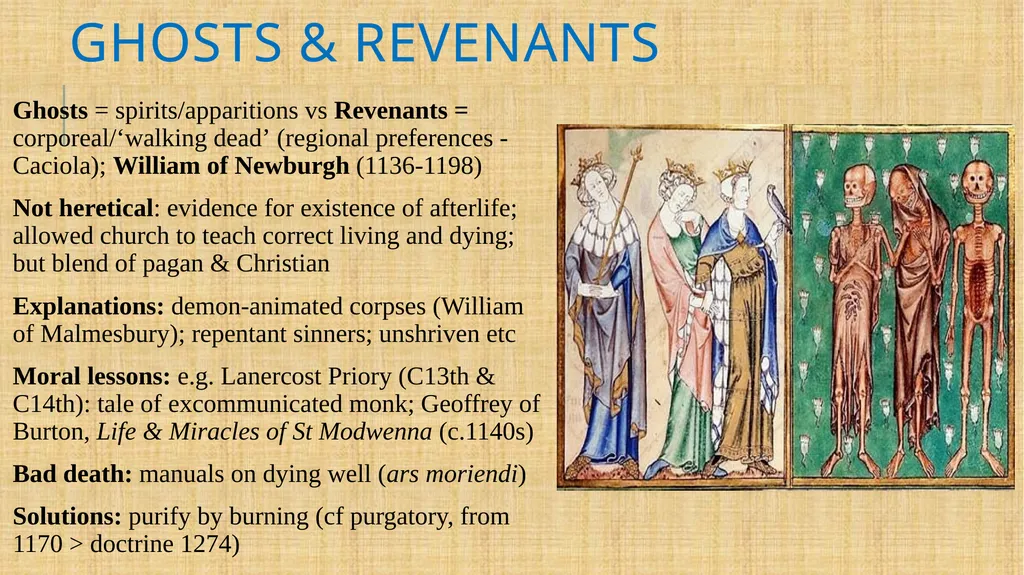
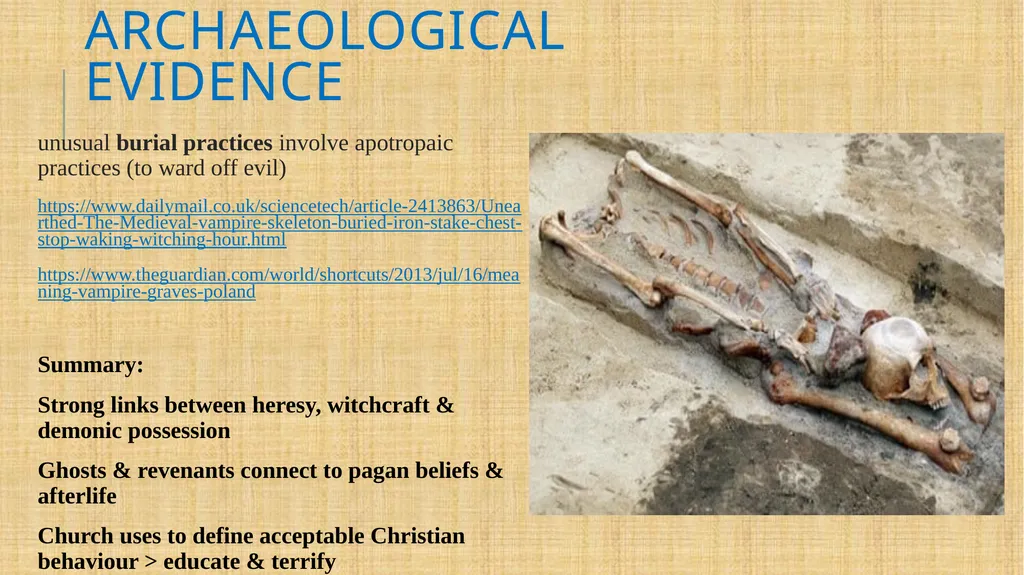
Ghosts & revenants Ghosts = spirits/apparitions vs Revenants = corporeal/‘walking dead’ (regional preferences - Caciola); William of Newburgh (1136-1198)
Not heretical: evidence for existence of afterlife; allowed church to teach correct living and dying; but blend of pagan & Christian
Explanations: demon-animated corpses (William of Malmesbury); repentant sinners; unshriven etc
Moral lessons: e.g. Lanercost Priory (C13th & C14th): tale of excommunicated monk; Geoffrey of Burton, Life & Miracles of St Modwenna (c.1140s)
Bad death: manuals on dying well (ars moriendi)
Solutions: purify by burning (cf purgatory, from 1170 > doctrine 1274)<br>