The Urinary System I. Functions A. Maintain and purify internal medium B. Filter body fluids eliminating excess electrolytes and wastes C. Return needed materials to circulatory system D. Regulate blood volume and chemical make-up E.
"The Urinary System I. Functions A. Maintain and" is the property of its rightful owner. Permission is granted to
download and print the materials on this website for personal, non-commercial use only, and to display it
on your personal computer provided you do not modify the materials and that you retain all copyright
notices contained in the materials. By downloading content from our website, you accept the terms of this
agreement.
Presentation Transcript
01
The Urinary System<br>
02
I. Functions A. Maintain and purify internal medium
B. Filter body fluids eliminating excess electrolytes and wastes C. Return needed materials to circulatory system
D. Regulate blood volume and chemical make-up
E. Renin-helps to regulate blood pressure
F. Erythropoietin-red blood cell production<br>
03
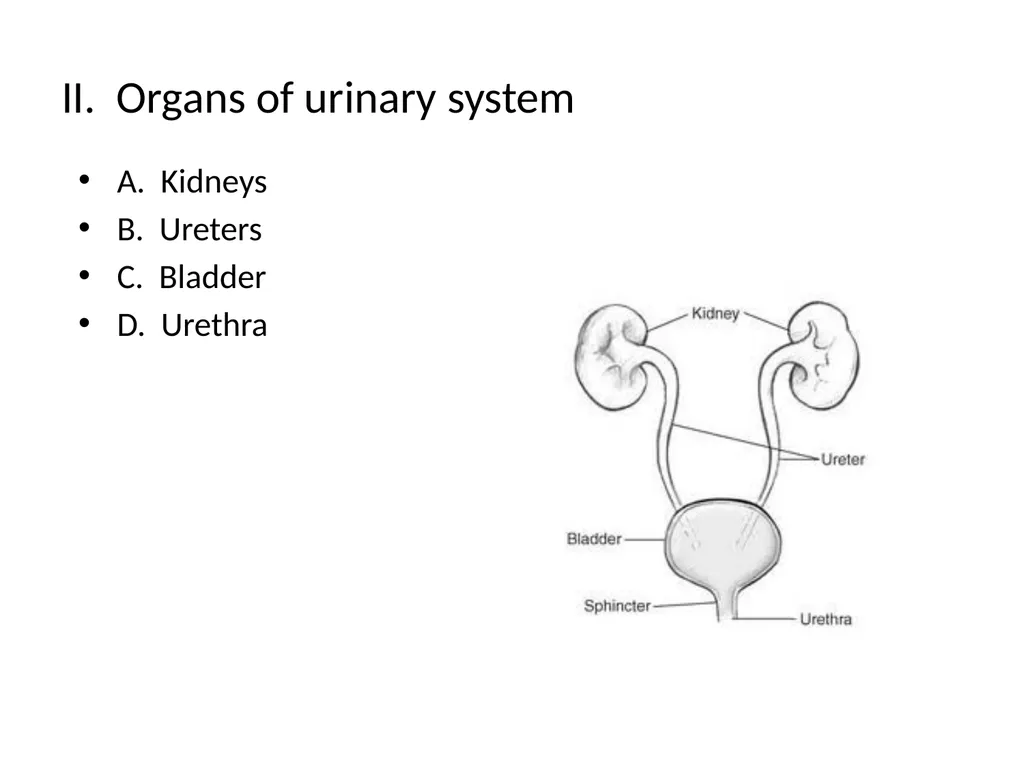
II. Organs of urinary system A. Kidneys
B. Ureters
C. Bladder
D. Urethra<br>
04
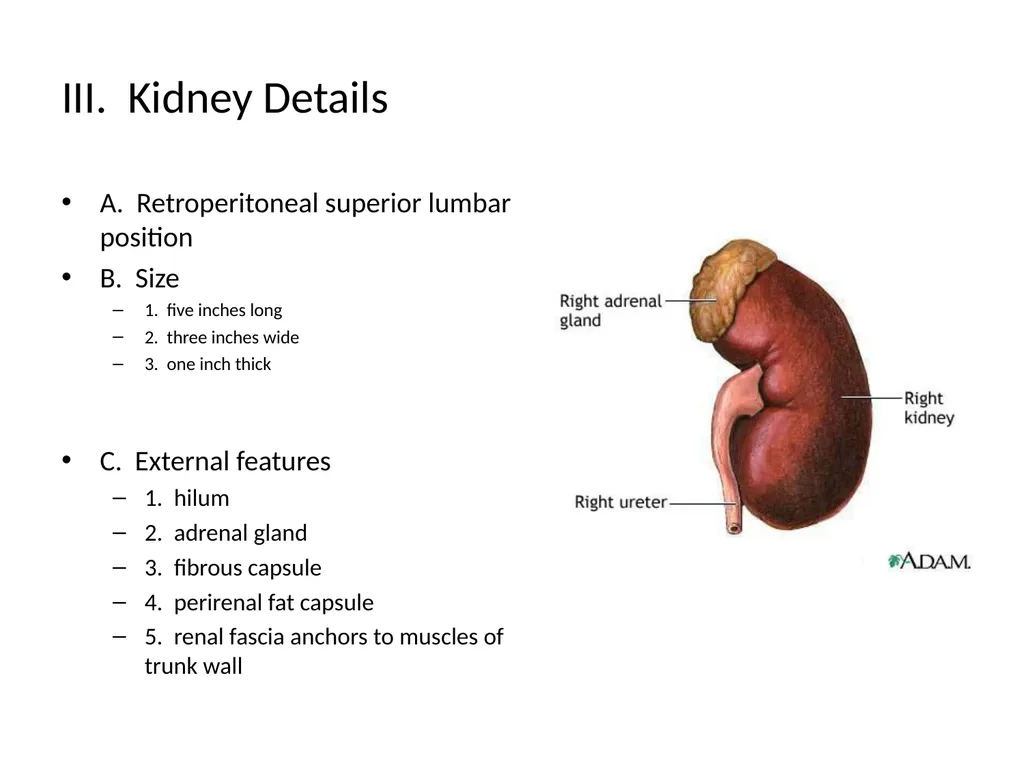
III. Kidney Details A. Retroperitoneal superior lumbar position
B. Size
1. five inches long
2. three inches wide
3. one inch thick
C. External features
1. hilum
2. adrenal gland
3. fibrous capsule
4. perirenal fat capsule
5. renal fascia anchors to muscles of trunk wall<br>
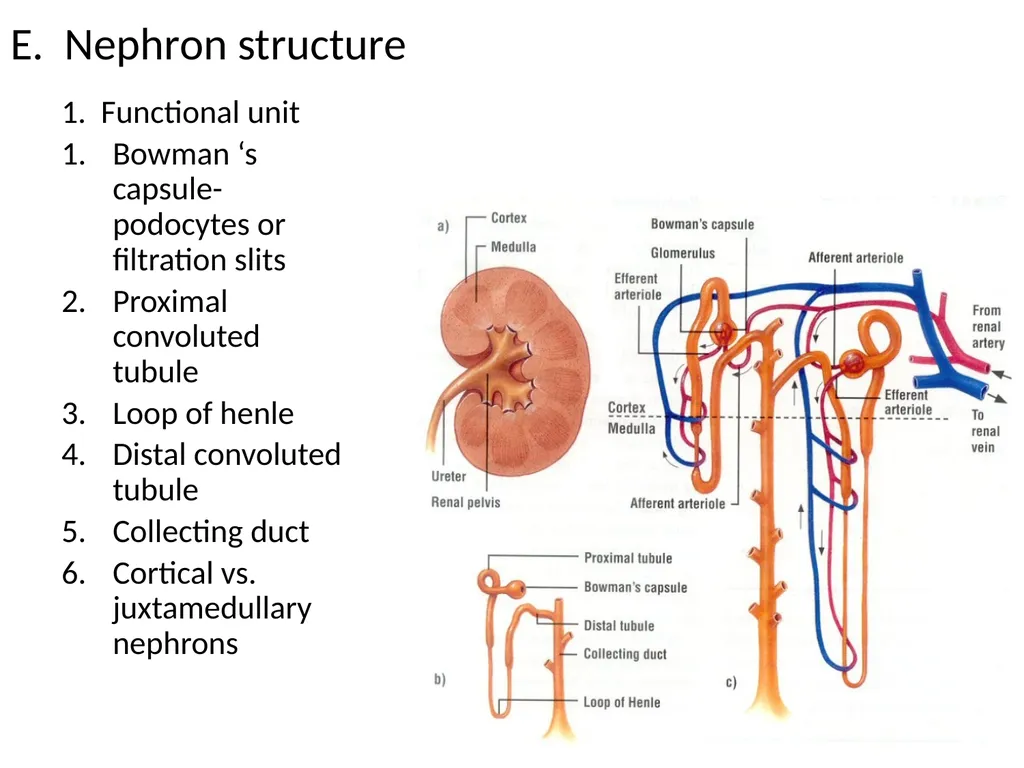
E. Nephron structure 1. Functional unit
Bowman ‘s capsule-podocytes or filtration slits
Proximal convoluted tubule
Loop of henle
Distal convoluted tubule
Collecting duct
Cortical vs. juxtamedullary nephrons<br>
07
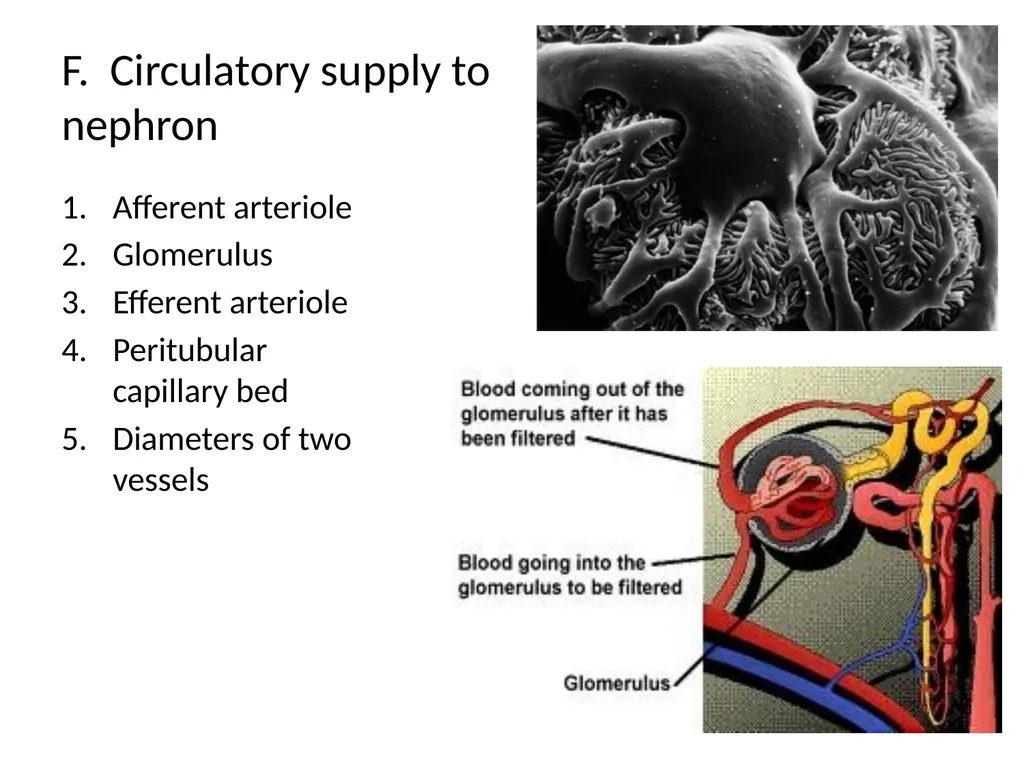
F. Circulatory supply to nephron Afferent arteriole
Glomerulus
Efferent arteriole
Peritubular capillary bed
Diameters of two vessels<br>
08
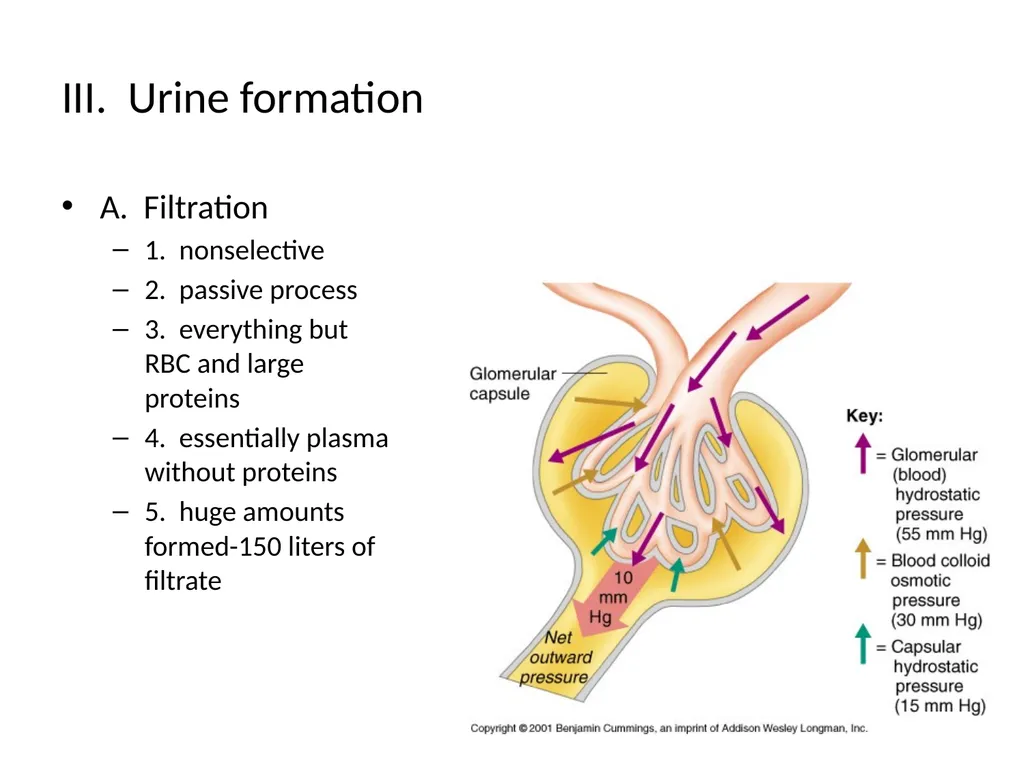
III. Urine formation A. Filtration
1. nonselective
2. passive process
3. everything but RBC and large proteins
4. essentially plasma without proteins
5. huge amounts formed-150 liters of filtrate<br>
09
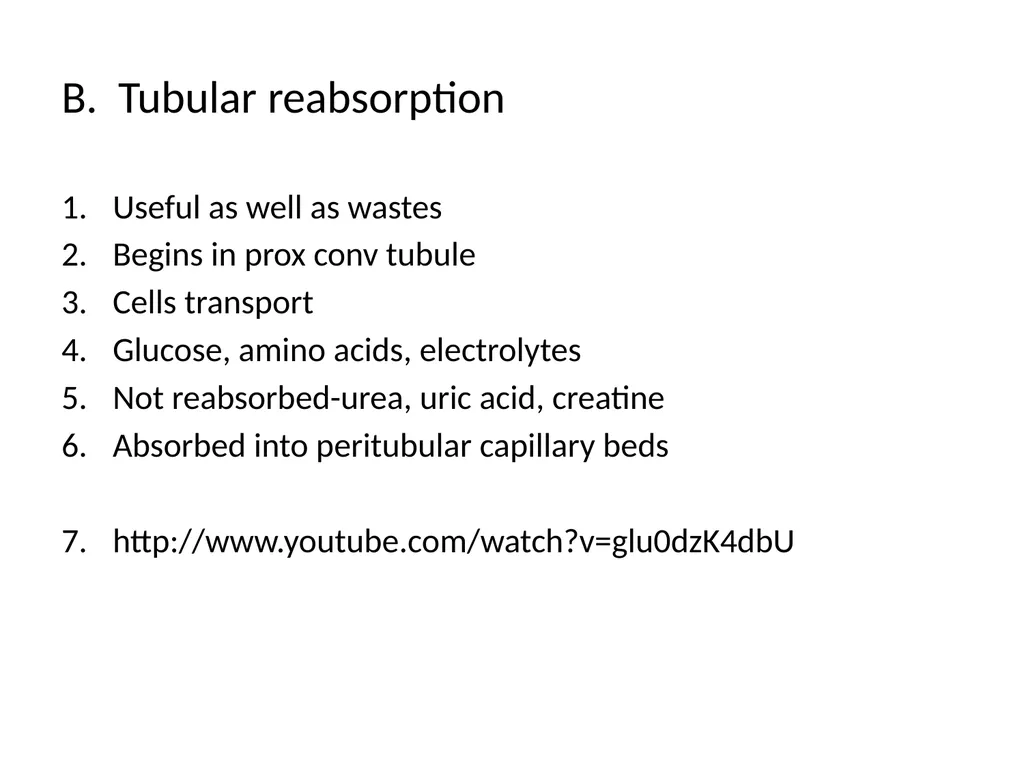
B. Tubular reabsorption Useful as well as wastes
Begins in prox conv tubule
Cells transport
Glucose, amino acids, electrolytes
Not reabsorbed-urea, uric acid, creatine
Absorbed into peritubular capillary beds
http://www.youtube.com/watch?v=glu0dzK4dbU<br>
10
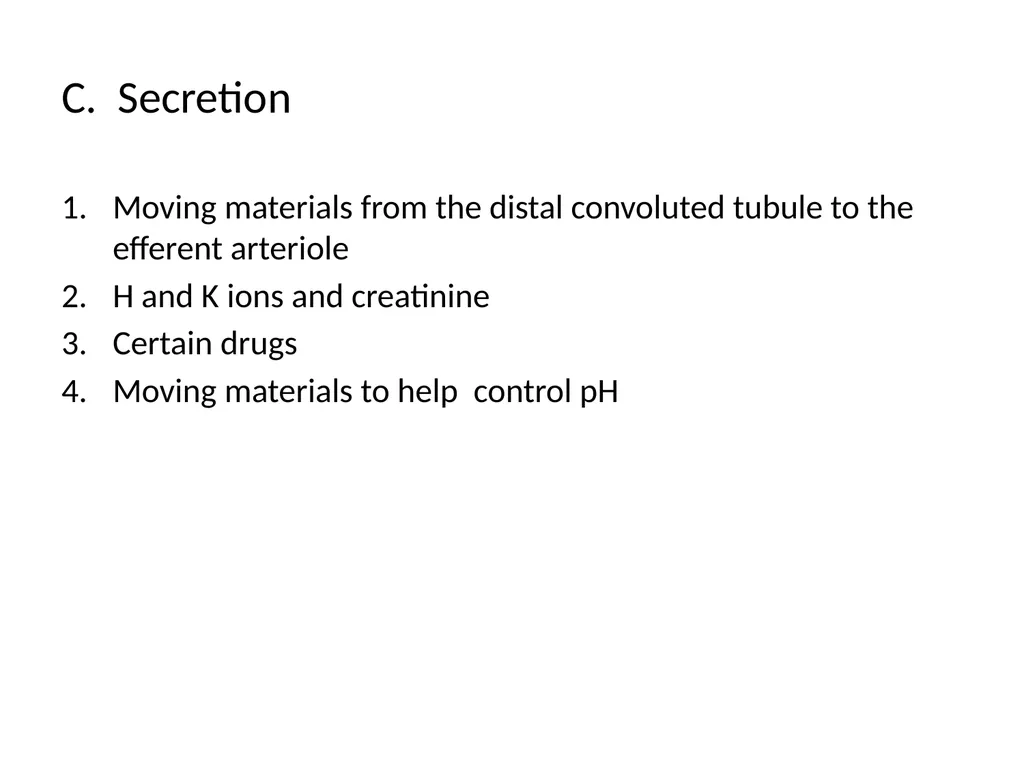
C. Secretion Moving materials from the distal convoluted tubule to the efferent arteriole
H and K ions and creatinine
Certain drugs
Moving materials to help control pH<br>
11
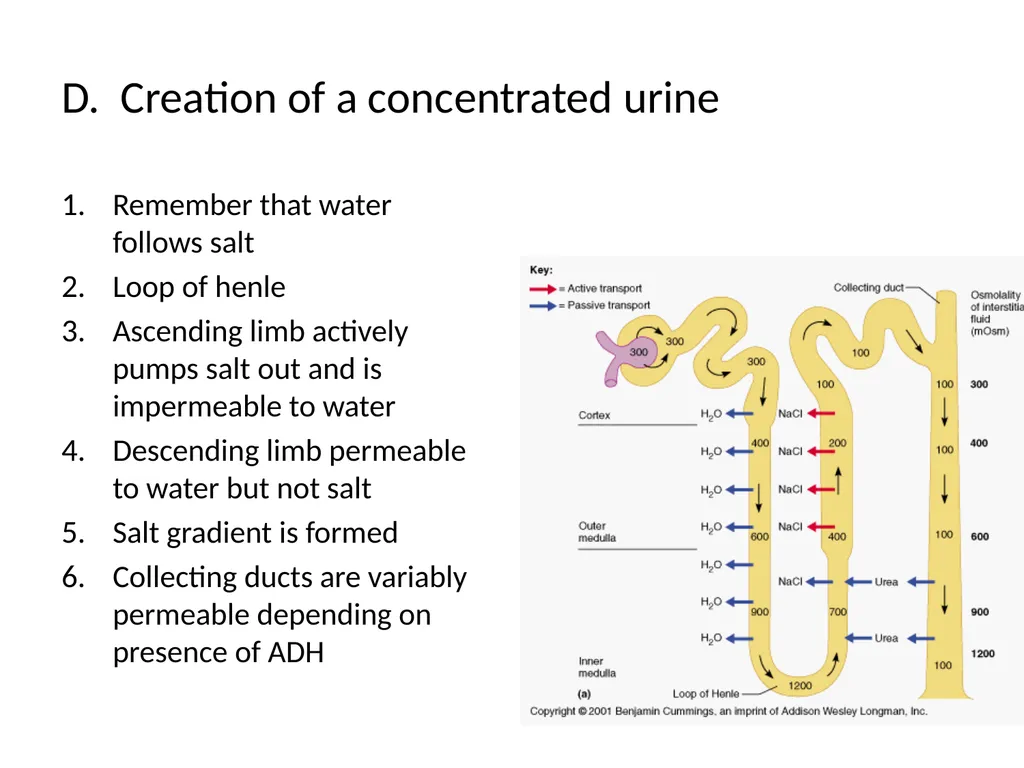
D. Creation of a concentrated urine Remember that water follows salt
Loop of henle
Ascending limb actively pumps salt out and is impermeable to water
Descending limb permeable to water but not salt
Salt gradient is formed
Collecting ducts are variably permeable depending on presence of ADH<br>
12
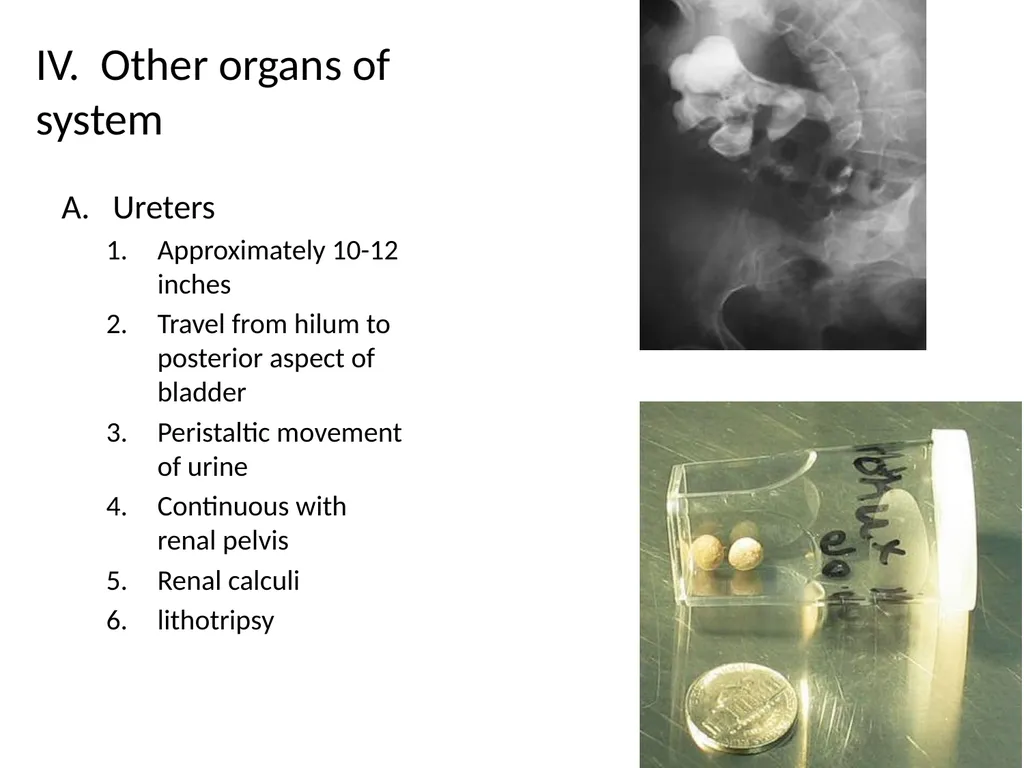
IV. Other organs of system Ureters
Approximately 10-12 inches
Travel from hilum to posterior aspect of bladder
Peristaltic movement of urine
Continuous with renal pelvis
Renal calculi
lithotripsy<br>
13
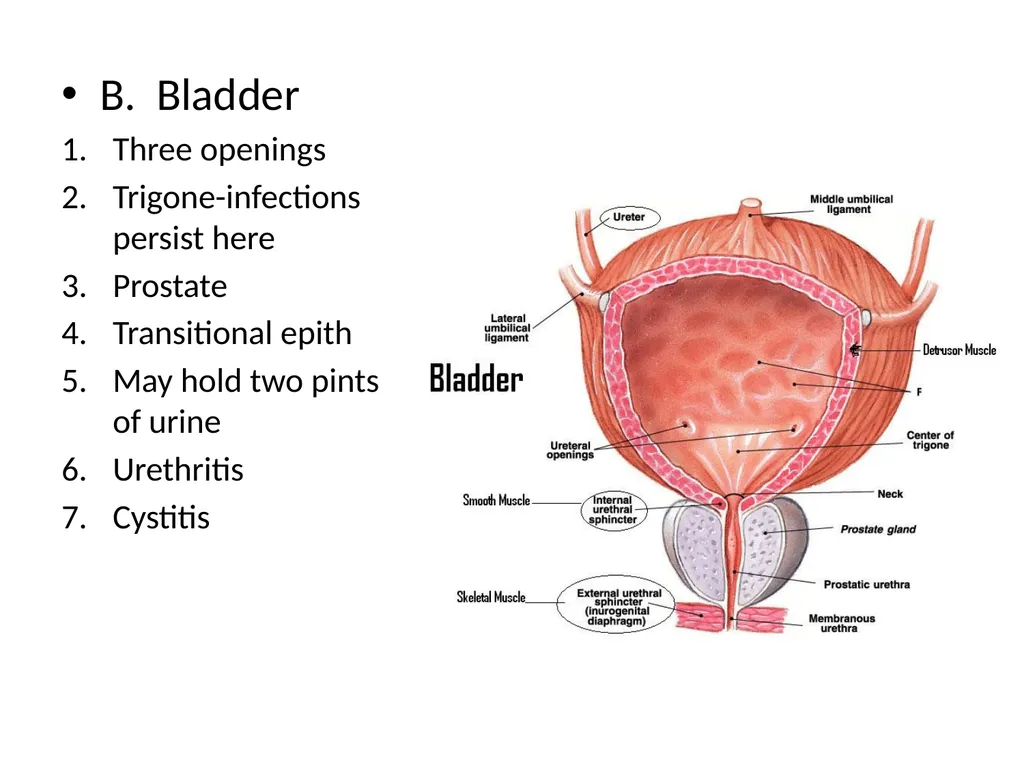
B. Bladder
Three openings
Trigone-infections persist here
Prostate
Transitional epith
May hold two pints of urine
Urethritis
Cystitis<br>