
Thermocouples: Capabilities & Challenges Ajay V.

Thermocouples: Capabilities & Challenges Ajay V.
1 / 1
Thermocouples: Capabilities & Challenges Ajay V. - slide 1 of 14 Thermocouples: Capabilities & Challenges Ajay V. - slide 2 of 14 Thermocouples: Capabilities & Challenges Ajay V. - slide 3 of 14 Thermocouples: Capabilities & Challenges Ajay V. - slide 4 of 14 Thermocouples: Capabilities & Challenges Ajay V. - slide 5 of 14 Thermocouples: Capabilities & Challenges Ajay V. - slide 6 of 14 Thermocouples: Capabilities & Challenges Ajay V. - slide 7 of 14 Thermocouples: Capabilities & Challenges Ajay V. - slide 8 of 14 Thermocouples: Capabilities & Challenges Ajay V. - slide 9 of 14 Thermocouples: Capabilities & Challenges Ajay V. - slide 10 of 14 Thermocouples: Capabilities & Challenges Ajay V. - slide 11 of 14 Thermocouples: Capabilities & Challenges Ajay V. - slide 12 of 14 Thermocouples: Capabilities & Challenges Ajay V. - slide 13 of 14 Thermocouples: Capabilities & Challenges Ajay V. - slide 14 of 14
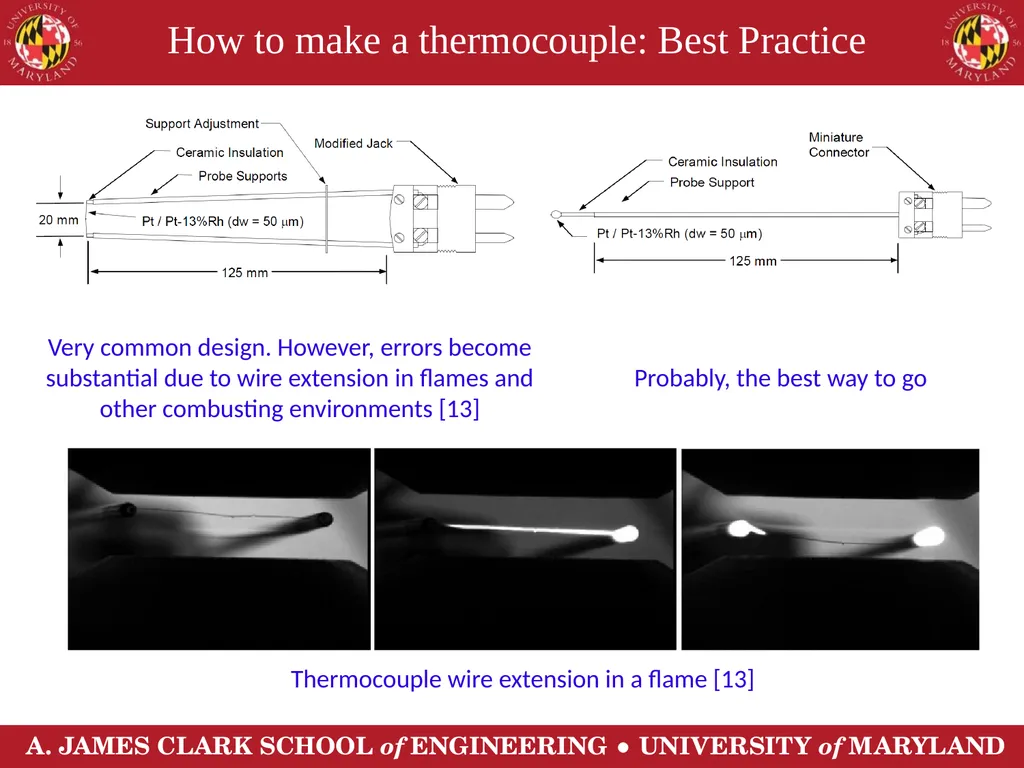
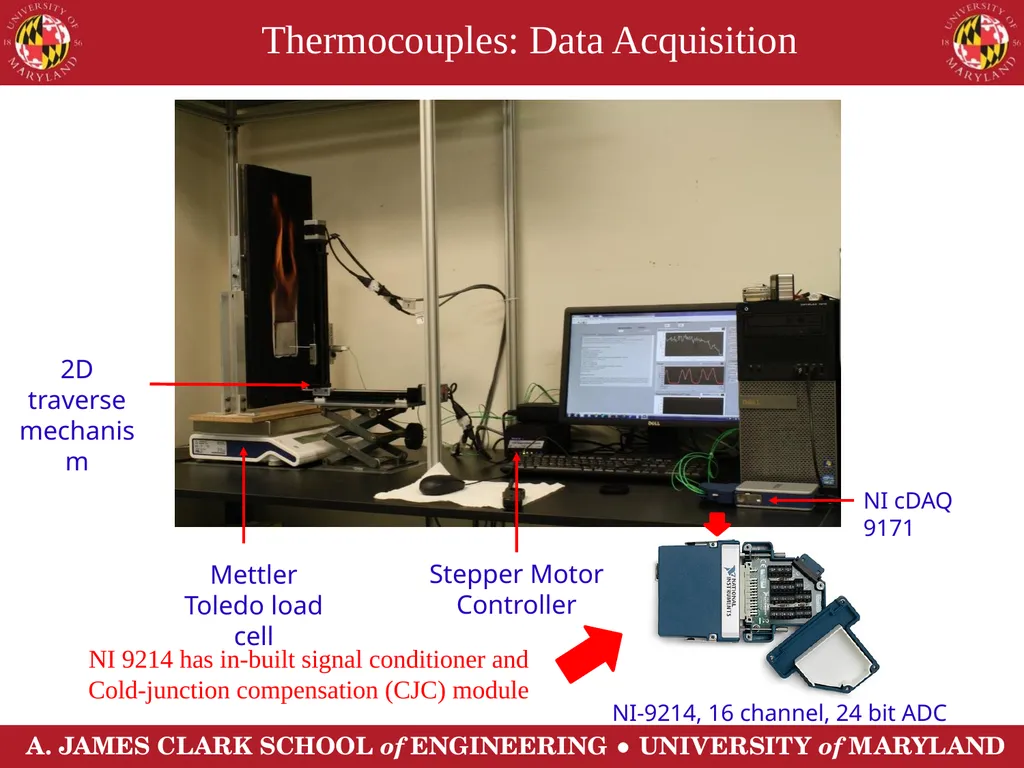
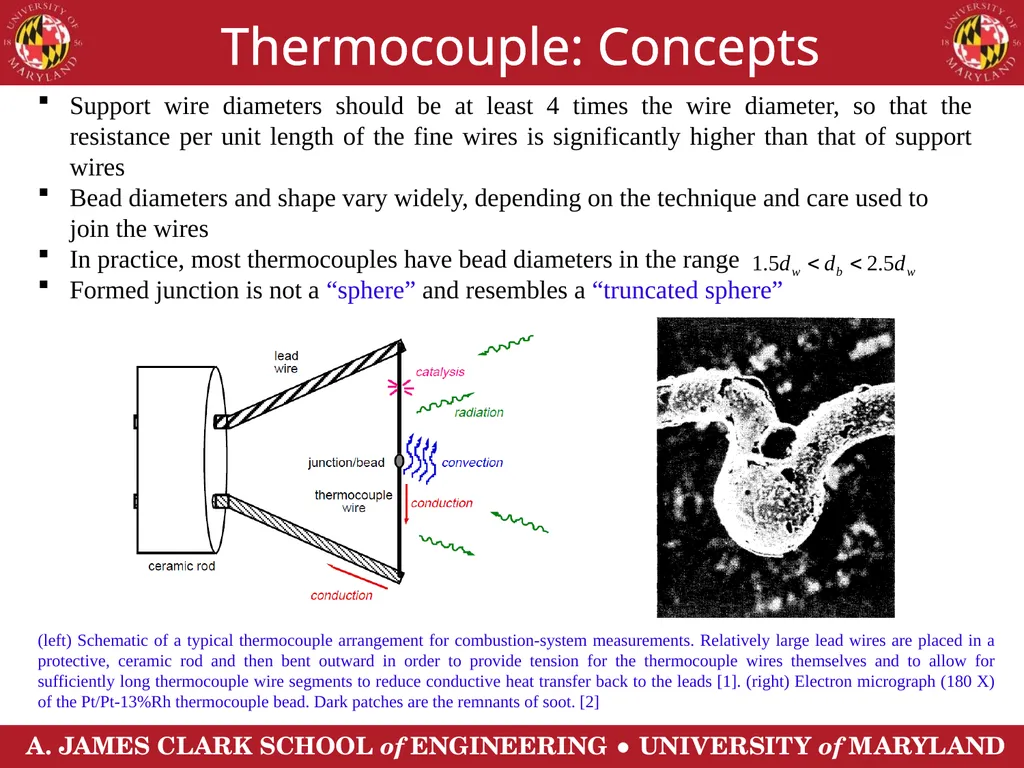
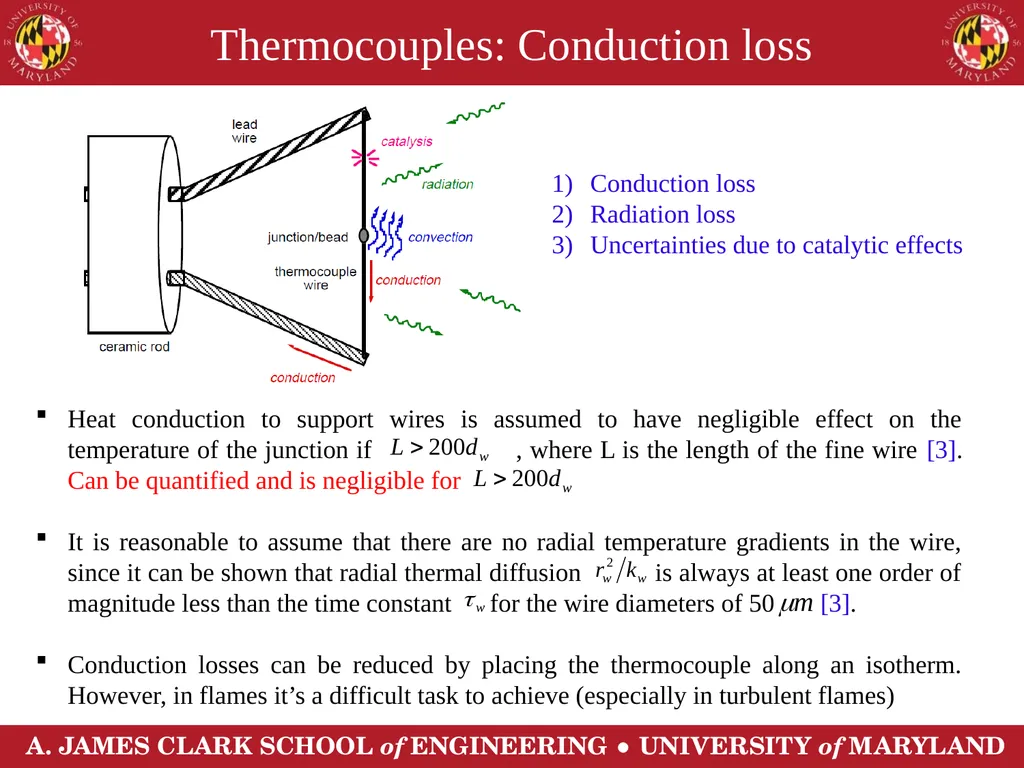

Thermocouples: Capabilities Challenges Ajay V. Singh Graduate Student Department of Fire Protection Engineering University of Maryland College Park, MD Introduction 2 Dynamics of Boundary Layer Flames June 25, 2014 The basis of

Related Topics

Download this presentation From Below

"Thermocouples: Capabilities & Challenges Ajay V." is the property of its rightful owner. Permission is granted to download and print the materials on this website for personal, non-commercial use only, and to display it on your personal computer provided you do not modify the materials and that you retain all copyright notices contained in the materials. By downloading content from our website, you accept the terms of this agreement.

Presentation Transcript

01
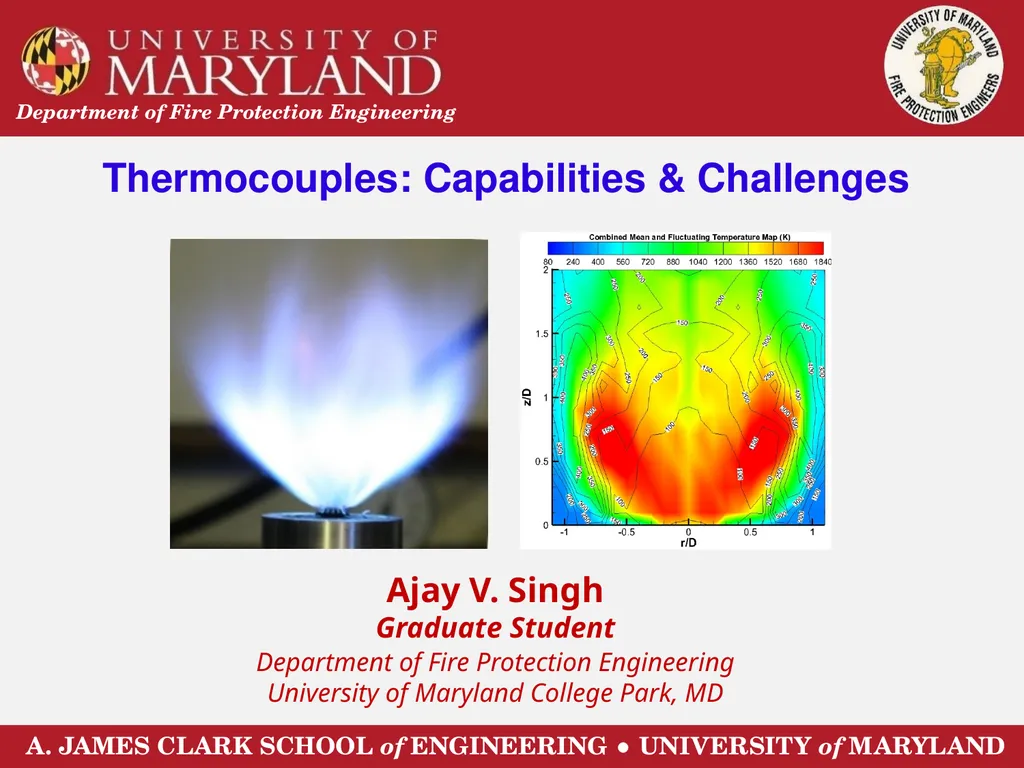
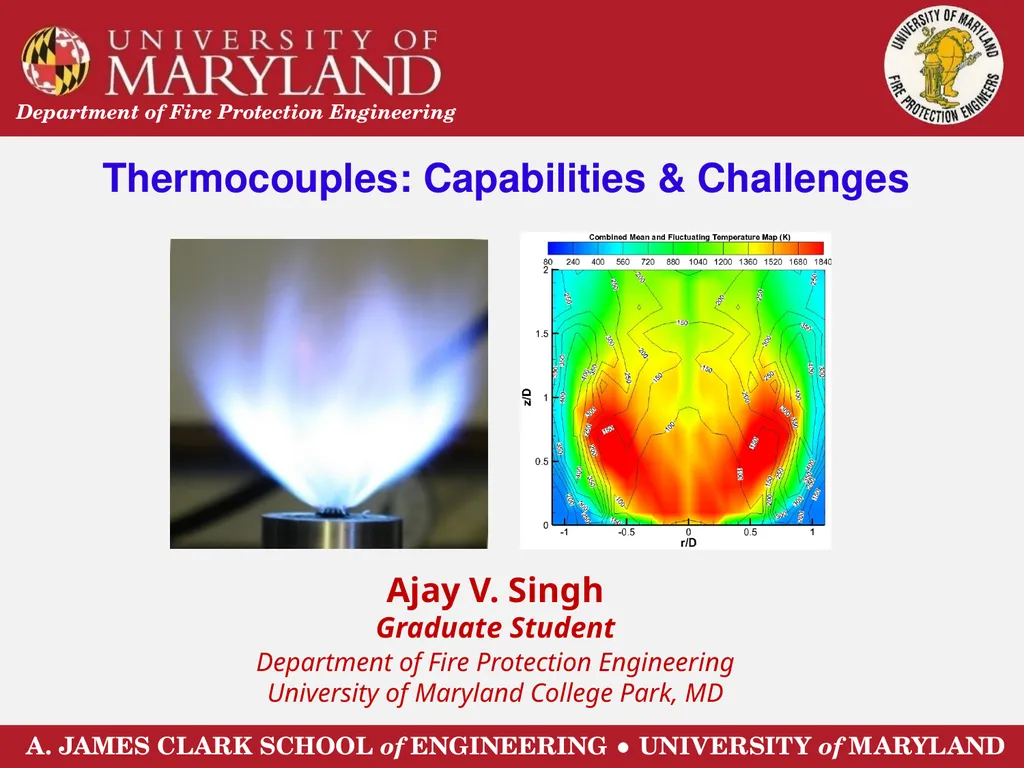
Thermocouples: Capabilities & Challenges Ajay V. Singh
Graduate Student Department of Fire Protection Engineering
University of Maryland College Park, MD<br>
02
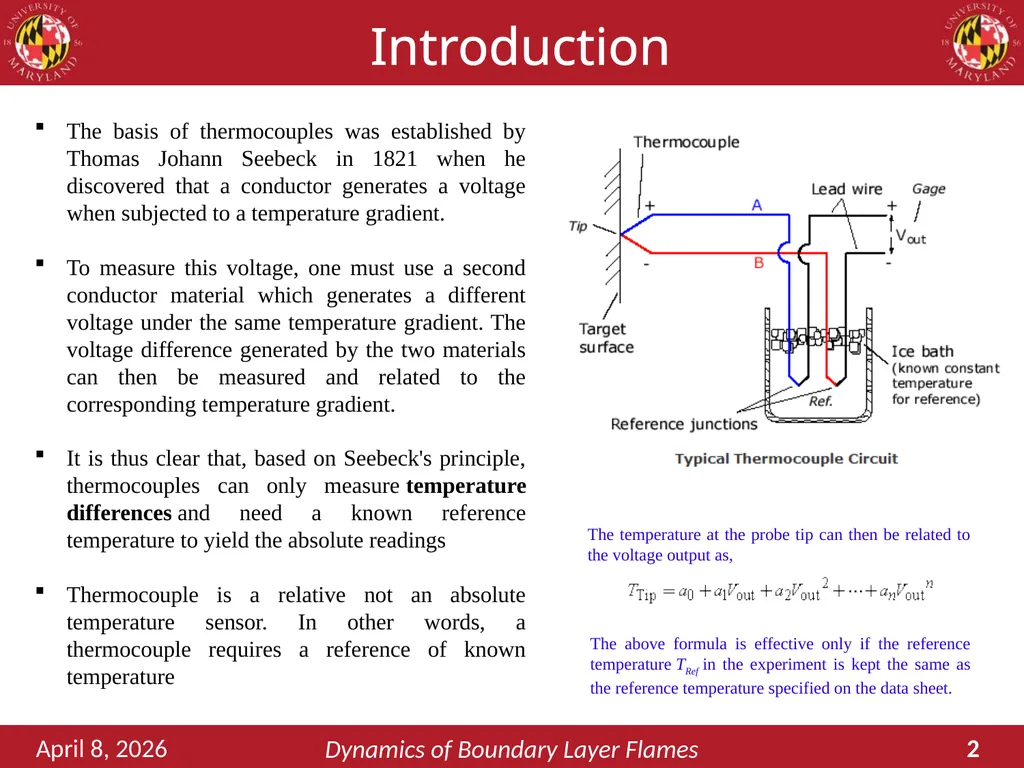
Introduction 2 Dynamics of Boundary Layer Flames June 25, 2014 The basis of thermocouples was established by Thomas Johann Seebeck in 1821 when he discovered that a conductor generates a voltage when subjected to a temperature gradient.

To measure this voltage, one must use a second conductor material which generates a different voltage under the same temperature gradient. The voltage difference generated by the two materials can then be measured and related to the corresponding temperature gradient.

It is thus clear that, based on Seebeck's principle, thermocouples can only measure temperature differences and need a known reference temperature to yield the absolute readings

Thermocouple is a relative not an absolute temperature sensor. In other words, a thermocouple requires a reference of known temperature The above formula is effective only if the reference temperature TRef in the experiment is kept the same as the reference temperature specified on the data sheet. The temperature at the probe tip can then be related to the voltage output as,<br>
03
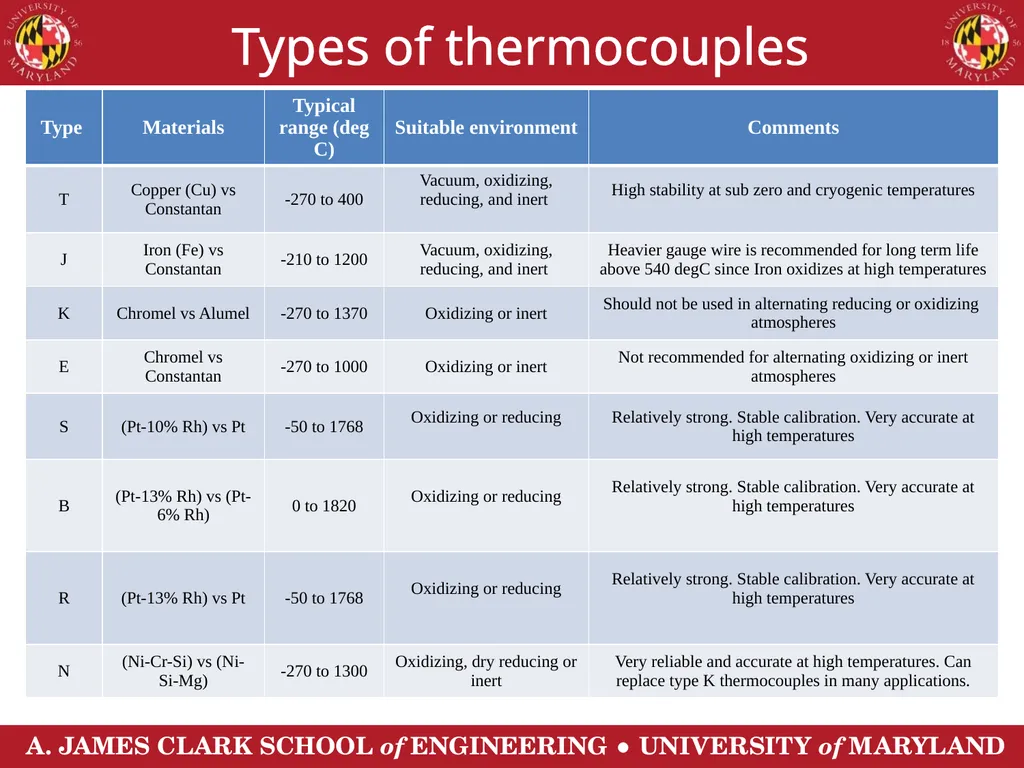
Types of thermocouples<br>