
Three objections to Aristotelian virtue ethics

Description: Three objections to Aristotelian virtue ethics Michael Lacewing Objection 1: Guidance on how to act Objection: The doctrine of the mean is no practical help Too much and too little arent quantities on a single scale: the mean is
Related Topics
Download Presentation
"Three objections to Aristotelian virtue ethics" is the property of its rightful owner. Permission is granted to download and print the materials on this website for personal, non-commercial use only, and to display it on your personal computer provided you do not modify the materials and that you retain all copyright notices contained in the materials. By downloading content from our website, you accept the terms of this agreement.
Presentation Transcript
slide1. Three objections to Aristotelian virtue ethics Michael Lacewing<br>
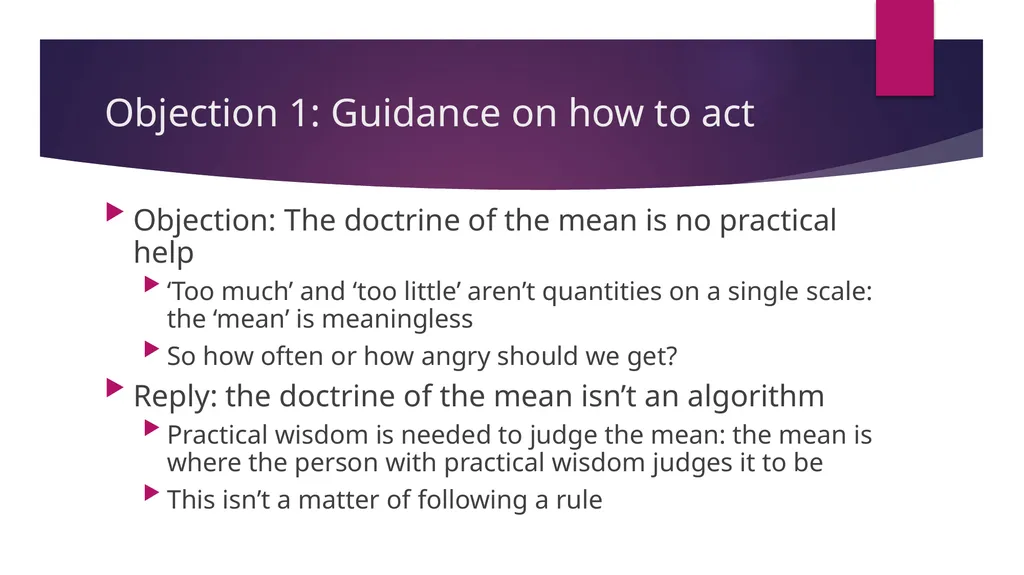
slide2. Objection 1: Guidance on how to act Objection: The doctrine of the mean is no practical help
‘Too much’ and ‘too little’ aren’t quantities on a single scale: the ‘mean’ is meaningless
So how often or how angry should we get?
Reply: the doctrine of the mean isn’t an algorithm
Practical wisdom is needed to judge the mean: the mean is where the person with practical wisdom judges it to be
This isn’t a matter of following a rule<br>
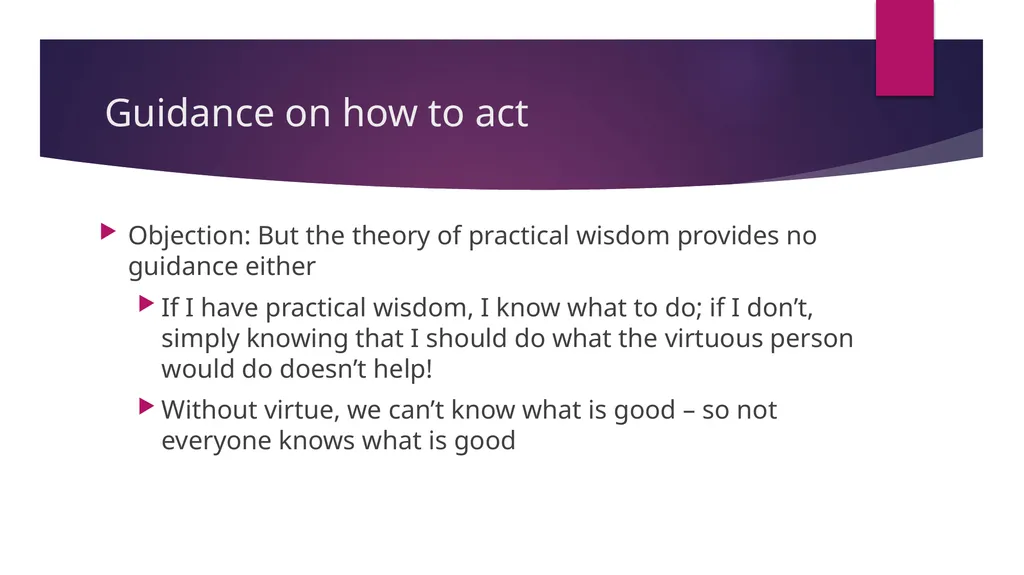
slide3. Guidance on how to act Objection: But the theory of practical wisdom provides no guidance either
If I have practical wisdom, I know what to do; if I don’t, simply knowing that I should do what the virtuous person would do doesn’t help!
Without virtue, we can’t know what is good – so not everyone knows what is good<br>
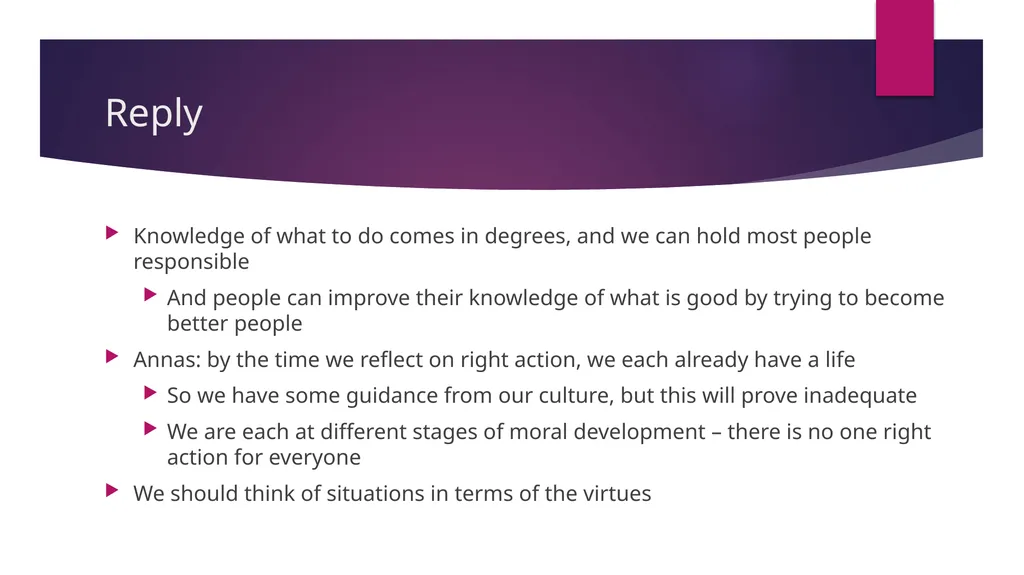
slide4. Reply Knowledge of what to do comes in degrees, and we can hold most people responsible
And people can improve their knowledge of what is good by trying to become better people
Annas: by the time we reflect on right action, we each already have a life
So we have some guidance from our culture, but this will prove inadequate
We are each at different stages of moral development – there is no one right action for everyone
We should think of situations in terms of the virtues<br>
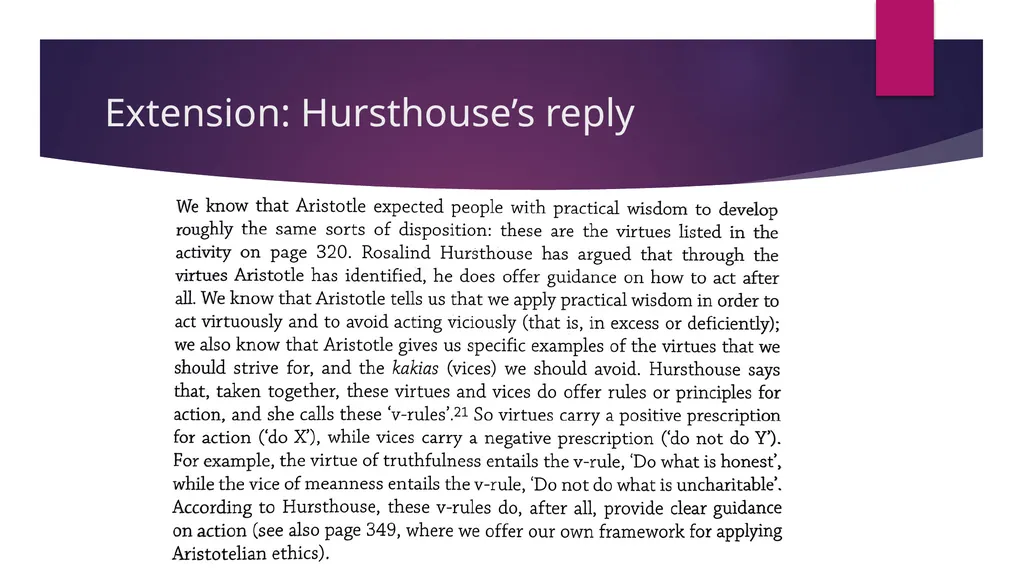
slide5. Extension: Hursthouse’s reply<br>
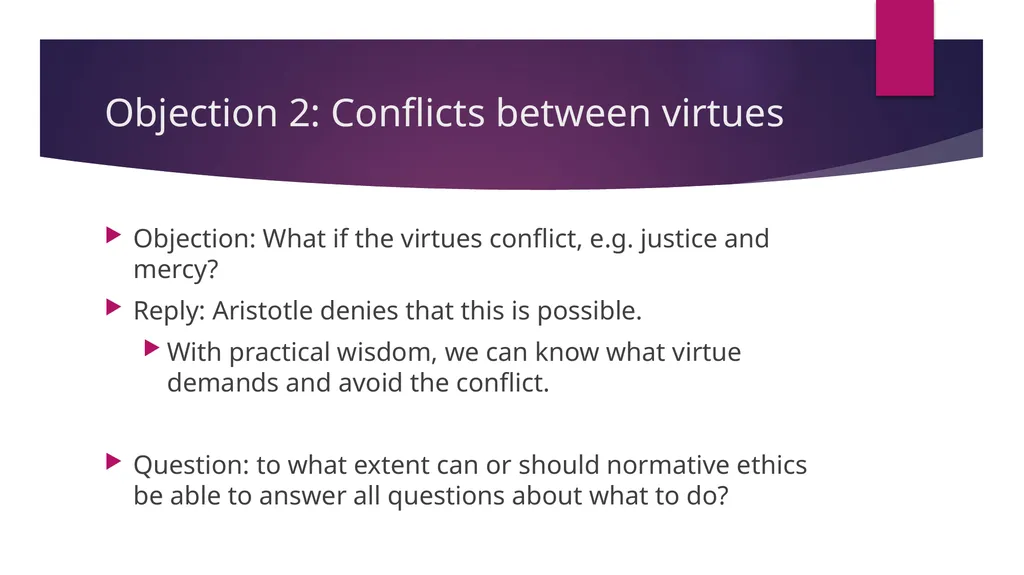
slide6. Objection 2: Conflicts between virtues Objection: What if the virtues conflict, e.g. justice and mercy?
Reply: Aristotle denies that this is possible.
With practical wisdom, we can know what virtue demands and avoid the conflict.
Question: to what extent can or should normative ethics be able to answer all questions about what to do?<br>
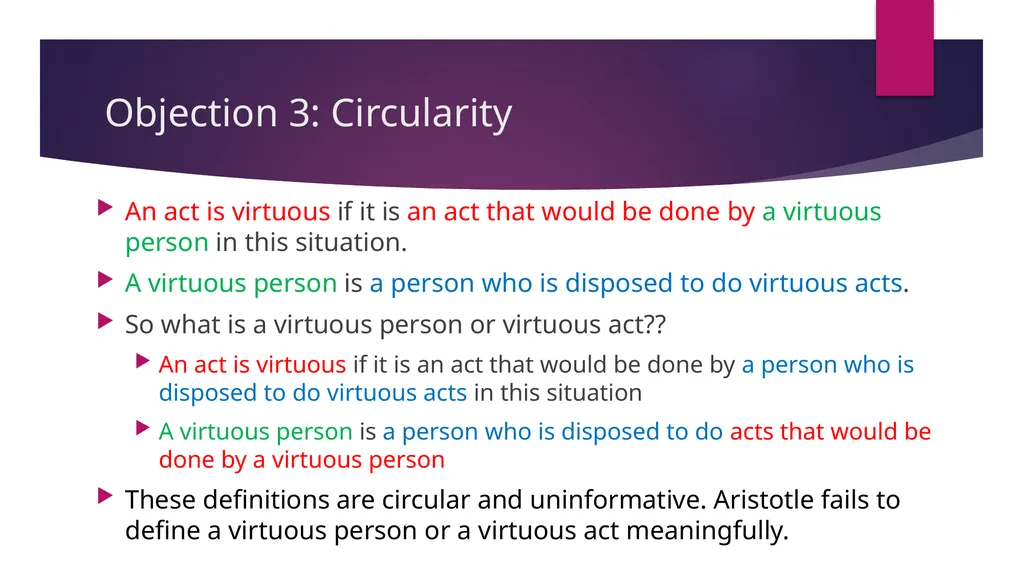
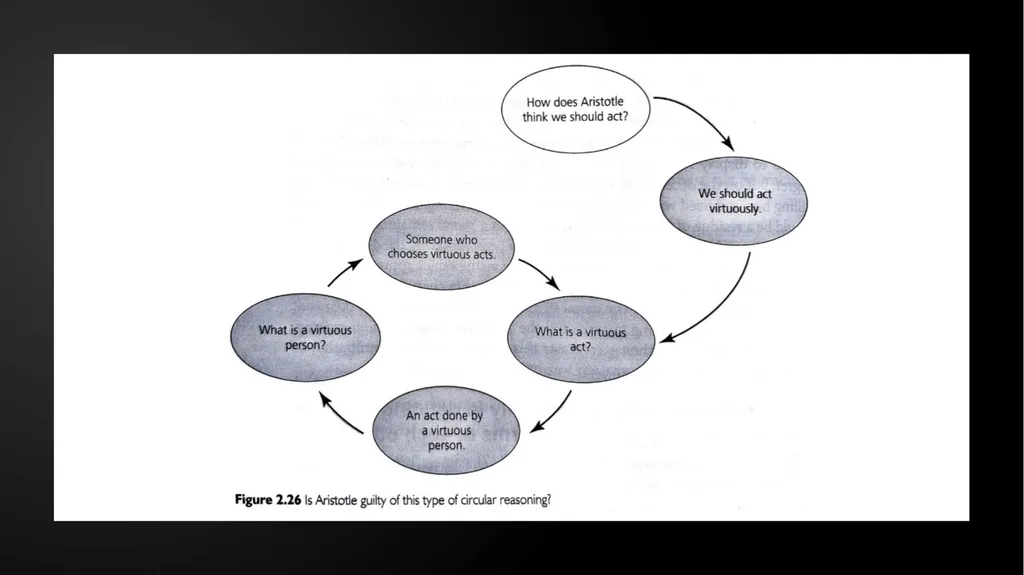
slide7. Objection 3: Circularity An act is virtuous if it is an act that would be done by a virtuous person in this situation.
A virtuous person is a person who is disposed to do virtuous acts.
So what is a virtuous person or virtuous act??
An act is virtuous if it is an act that would be done by a person who is disposed to do virtuous acts in this situation
A virtuous person is a person who is disposed to do acts that would be done by a virtuous person
These definitions are circular and uninformative. Aristotle fails to define a virtuous person or a virtuous act meaningfully.<br>
slide9. Reply Too simple: A virtuous person is not defined merely as someone who is disposed to do virtuous actions
A virtuous person has the virtues – concerned with eudaimonia, passions and pleasure<br>
slide10. Objection The problem is epistemological:
We can’t tell whether an act is virtuous without knowing whether a virtuous person would do it.
And we can’t tell whether someone is virtuous without seeing whether they do virtuous acts.<br>
slide11. Two replies Reply 1: We can know what a virtuous person is without being able name individuals
‘What the virtuous person would do’ is a standard for judging acts
There are other criteria for virtue apart from acts
Reply 2: Annas: the appeal to ‘what the virtuous person do’ is an encouragement for me to think what I should do if I were more virtuous.
Don’t think of the question from the ‘third person’ – ‘what is definition of virtuous action?’ but from the ‘first person’ – what should I do?<br>
slide2. Objection 1: Guidance on how to act Objection: The doctrine of the mean is no practical help
‘Too much’ and ‘too little’ aren’t quantities on a single scale: the ‘mean’ is meaningless
So how often or how angry should we get?
Reply: the doctrine of the mean isn’t an algorithm
Practical wisdom is needed to judge the mean: the mean is where the person with practical wisdom judges it to be
This isn’t a matter of following a rule<br>
slide3. Guidance on how to act Objection: But the theory of practical wisdom provides no guidance either
If I have practical wisdom, I know what to do; if I don’t, simply knowing that I should do what the virtuous person would do doesn’t help!
Without virtue, we can’t know what is good – so not everyone knows what is good<br>
slide4. Reply Knowledge of what to do comes in degrees, and we can hold most people responsible
And people can improve their knowledge of what is good by trying to become better people
Annas: by the time we reflect on right action, we each already have a life
So we have some guidance from our culture, but this will prove inadequate
We are each at different stages of moral development – there is no one right action for everyone
We should think of situations in terms of the virtues<br>
slide5. Extension: Hursthouse’s reply<br>
slide6. Objection 2: Conflicts between virtues Objection: What if the virtues conflict, e.g. justice and mercy?
Reply: Aristotle denies that this is possible.
With practical wisdom, we can know what virtue demands and avoid the conflict.
Question: to what extent can or should normative ethics be able to answer all questions about what to do?<br>
slide7. Objection 3: Circularity An act is virtuous if it is an act that would be done by a virtuous person in this situation.
A virtuous person is a person who is disposed to do virtuous acts.
So what is a virtuous person or virtuous act??
An act is virtuous if it is an act that would be done by a person who is disposed to do virtuous acts in this situation
A virtuous person is a person who is disposed to do acts that would be done by a virtuous person
These definitions are circular and uninformative. Aristotle fails to define a virtuous person or a virtuous act meaningfully.<br>
slide9. Reply Too simple: A virtuous person is not defined merely as someone who is disposed to do virtuous actions
A virtuous person has the virtues – concerned with eudaimonia, passions and pleasure<br>
slide10. Objection The problem is epistemological:
We can’t tell whether an act is virtuous without knowing whether a virtuous person would do it.
And we can’t tell whether someone is virtuous without seeing whether they do virtuous acts.<br>
slide11. Two replies Reply 1: We can know what a virtuous person is without being able name individuals
‘What the virtuous person would do’ is a standard for judging acts
There are other criteria for virtue apart from acts
Reply 2: Annas: the appeal to ‘what the virtuous person do’ is an encouragement for me to think what I should do if I were more virtuous.
Don’t think of the question from the ‘third person’ – ‘what is definition of virtuous action?’ but from the ‘first person’ – what should I do?<br>