Time Management A survival guide for School Psychologists Self-regulation Time management is, at its core, a form of self-regulation Like reading or using a computer, time management involves learning a set of skills and practicing them on
"Time Management A survival guide for School" is the property of its rightful owner. Permission is granted to
download and print the materials on this website for personal, non-commercial use only, and to display it
on your personal computer provided you do not modify the materials and that you retain all copyright
notices contained in the materials. By downloading content from our website, you accept the terms of this
agreement.
Presentation Transcript
01
Time Management A survival guide for
School Psychologists<br>
02
Self-regulation Time management is, at its core, a form of self-regulation
Like reading or using a computer, time management involves learning a set of skills and practicing them on a regular basis
Time management helps you accomplish your goals and reduce work-related stress<br>
03
Planning and Setting Priorities Break down your time by the year, month, week and day
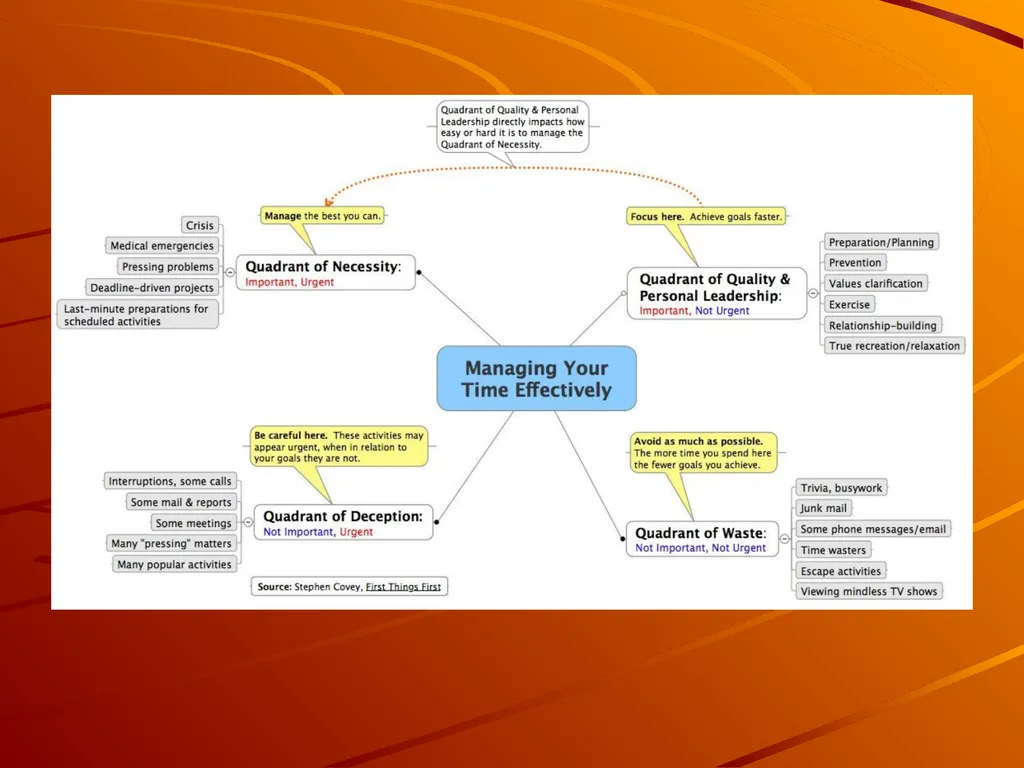
When creating plans within these time frames, you must set priorities according to two variables: importance and urgency
Covey’s time matrix is one system used by many professionals to help set priorities<br>
04
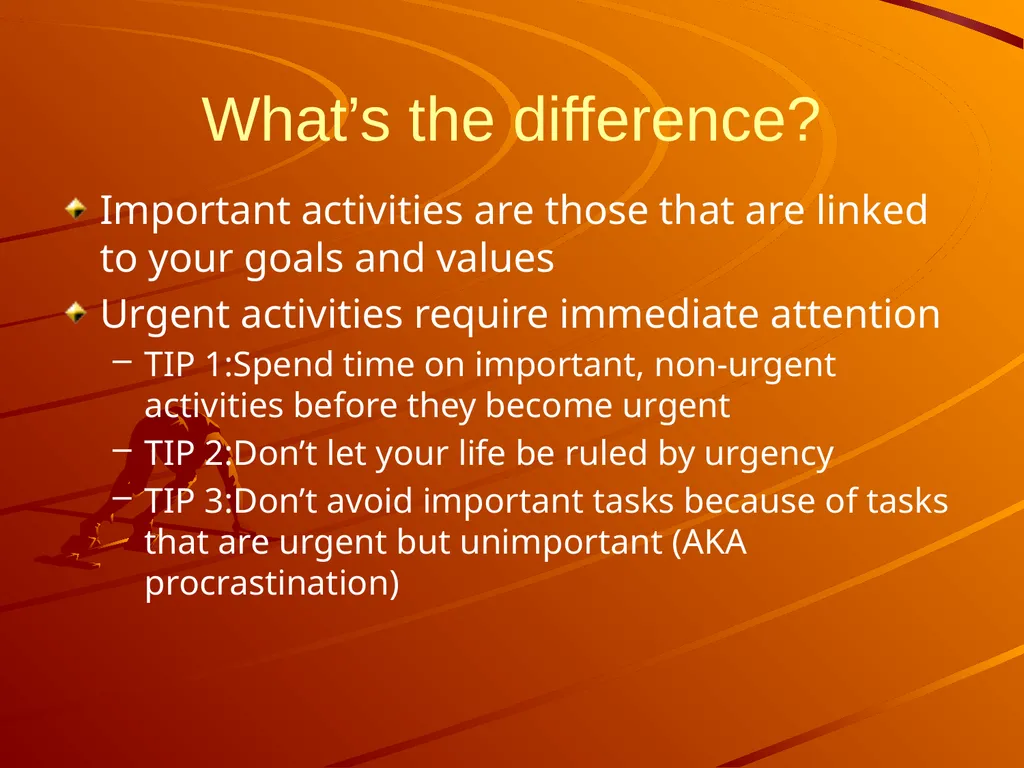
What’s the difference? Important activities are those that are linked to your goals and values
Urgent activities require immediate attention
TIP 1:Spend time on important, non-urgent activities before they become urgent
TIP 2:Don’t let your life be ruled by urgency
TIP 3:Don’t avoid important tasks because of tasks that are urgent but unimportant (AKA procrastination)<br>
05
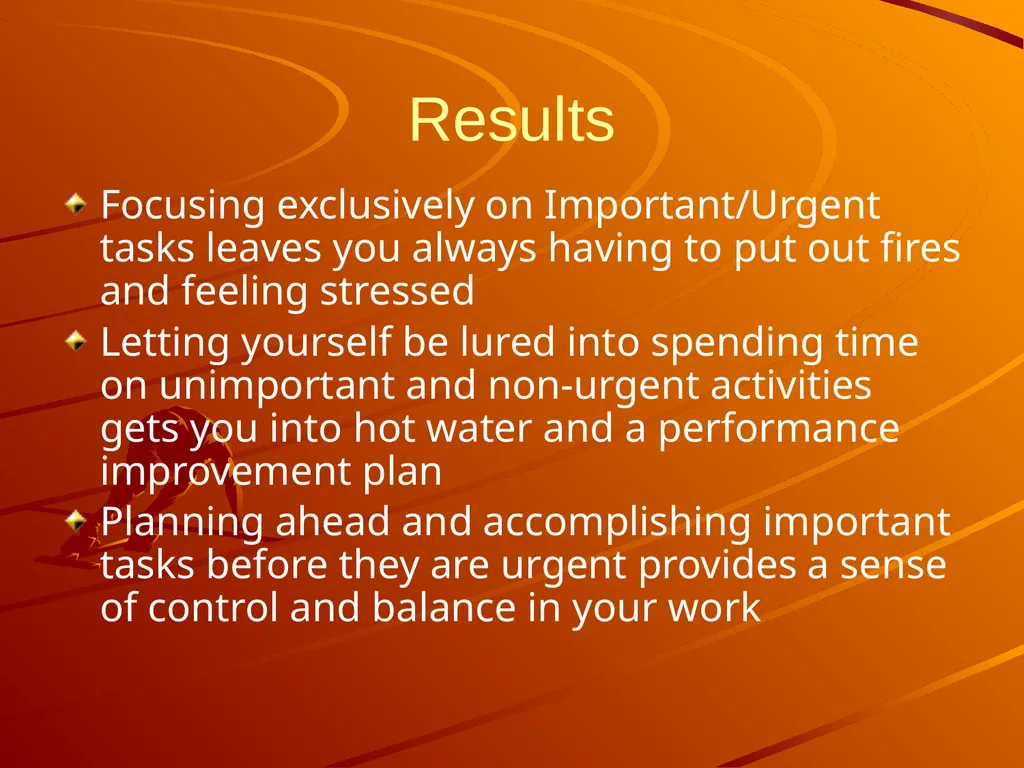
Results Focusing exclusively on Important/Urgent tasks leaves you always having to put out fires and feeling stressed
Letting yourself be lured into spending time on unimportant and non-urgent activities gets you into hot water and a performance improvement plan
Planning ahead and accomplishing important tasks before they are urgent provides a sense of control and balance in your work<br>
06
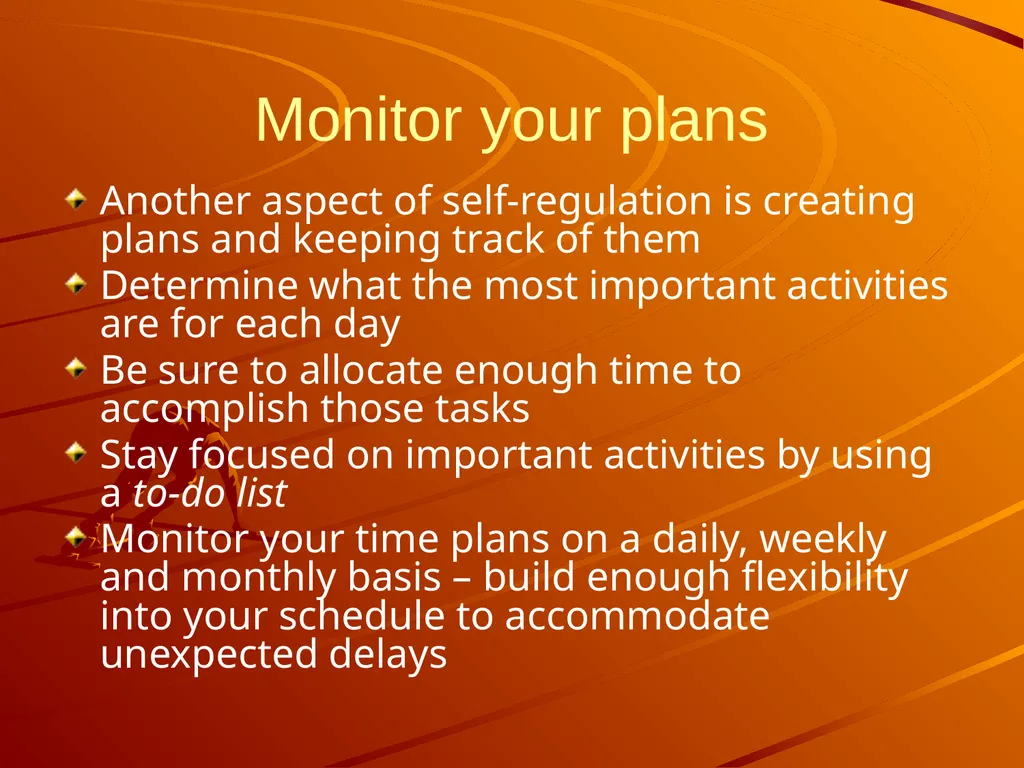
Monitor your plans Another aspect of self-regulation is creating plans and keeping track of them
Determine what the most important activities are for each day
Be sure to allocate enough time to accomplish those tasks
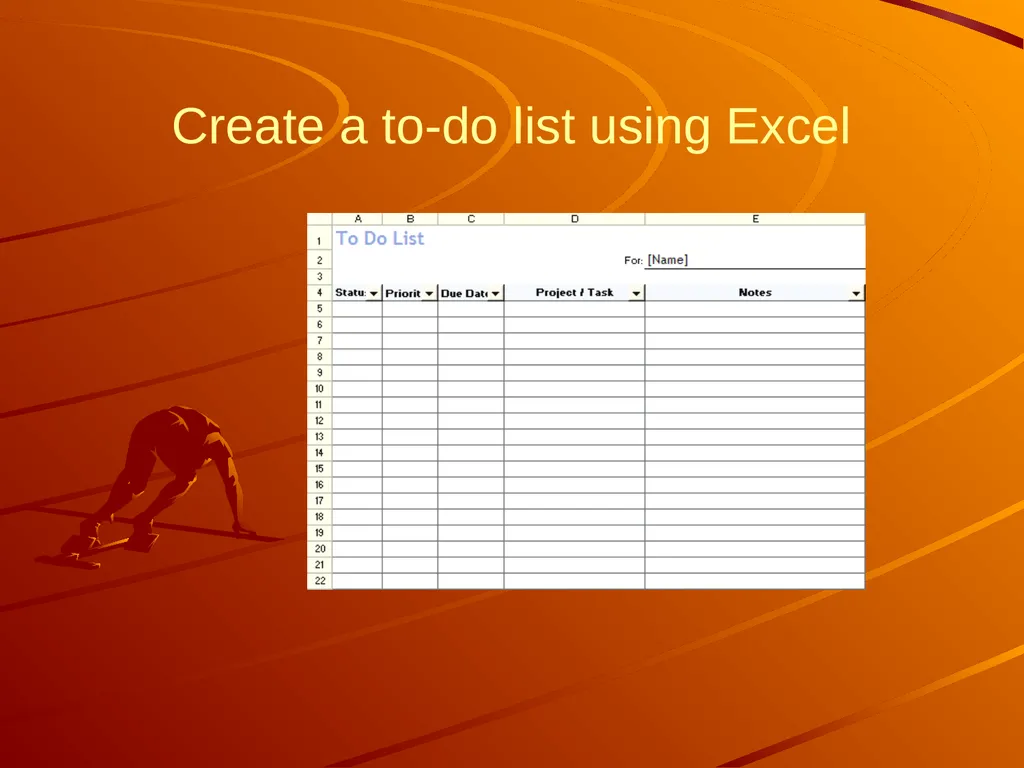
Stay focused on important activities by using a to-do list
Monitor your time plans on a daily, weekly and monthly basis – build enough flexibility into your schedule to accommodate unexpected delays<br>
07
Create a to-do list using Excel<br>
08
Reflect Keep track of your accomplishments
Nothing feels quite so good as checking off your list a thorny task you’ve finally accomplished
Evaluate the extent to which you have used your time as planned
Consider what you’ve spent too much or too little time with, and adjust your plans as needed<br>
09
School Psychologists Important/Urgent – parent phone call, scoring protocol for tomorrow’s meeting, report due today, CBM data for team meeting in 2 hours
Important/Not Urgent – consultation notes, testing students with conferences in two weeks, scheduling RED meeting with IEP team, fidelity check on Tier 2 student intervention
Not Important/Urgent – interruptions, question about where to go for lunch
Not Important/Not urgent – surfing the internet, teacher emails “Who did you vote for on Idol?”<br>
10
Obstacles Motivational obstacles are more likely to surface when you don’t set goals, don’t plan how you will reach them, and don’t monitor your progress
Procrastination is the #1 motivational obstacle to accomplishing your goals
Reasons for procrastination are legion: poor time management, negative beliefs, unrealistic expectations and perfectionism<br>
11
Procrastination Ignoring the task in hopes it will go away
Underestimating the work involved in the task or overestimating your resources
Deceiving yourself that mediocre performance is acceptable
Substituting worthy but lower-priority tasks
Believing that minor delays won’t hurt you
Dramatizing a commitment to the task rather than doing it
Perseverating on part of the task<br>
12
Strategies for Procrastinators Acknowledge that procrastination is a problem, then think about steps you can take to solve the problem
Identify your values and goals. How does procrastination undermine those?
Work on improving your time management skills. Begin by making plans that are connected to your values and goals.<br>
13
Strategies… Use task analysis and divide important, complex tasks into smaller, more manageable parts. Set sub-goals for completing the parts of the task in a certain order. Give yourself time frames for each sub-goal that will fit into the deadline for the big, overwhelming task.
Use behavioral and cognitive strategies – you’re a school psychologist. You know this stuff!<br>
14
Behavioral Strategies Identify diversions and distractions
Note when and where they occur
Can you avoid or diminish those?
If not, how can you control their use?
Make a contract with yourself
Build in rewards for yourself
Use the Premack Principle and alternate enjoyable tasks with those that aren’t so enjoyable but must be done<br>
15
Cognitive Strategies Beware of self-seductions that you’re incapable of doing something when in reality you just don’t want to do it now.
Dispute mental diversions like, “there’s only enough time to do part of it so I’ll do something else that doesn’t take as much time.”
Tell yourself, “Other things will come up later so I may as well get started now.”
Don’t take on so many responsibilities that you have an excuse for not doing any of them well.<br>
16
Covey’s strategies Set challenging but realistic goals
Strengthen the link between your effort and your self-worth
Take pride in your effort and minimize social comparisons
Have positive beliefs about your abilities
You CAN improve your time management skills if you START NOW!<br>
17
Questions or comments? Thanks, and have a
well-managed year!<br>