04
Introduction Objectives:
Identify various types of tools.
Describe types of hazards.
Describe guarding requirements.
Describe safe operation methods.
Recognize employer requirements.<br>
05
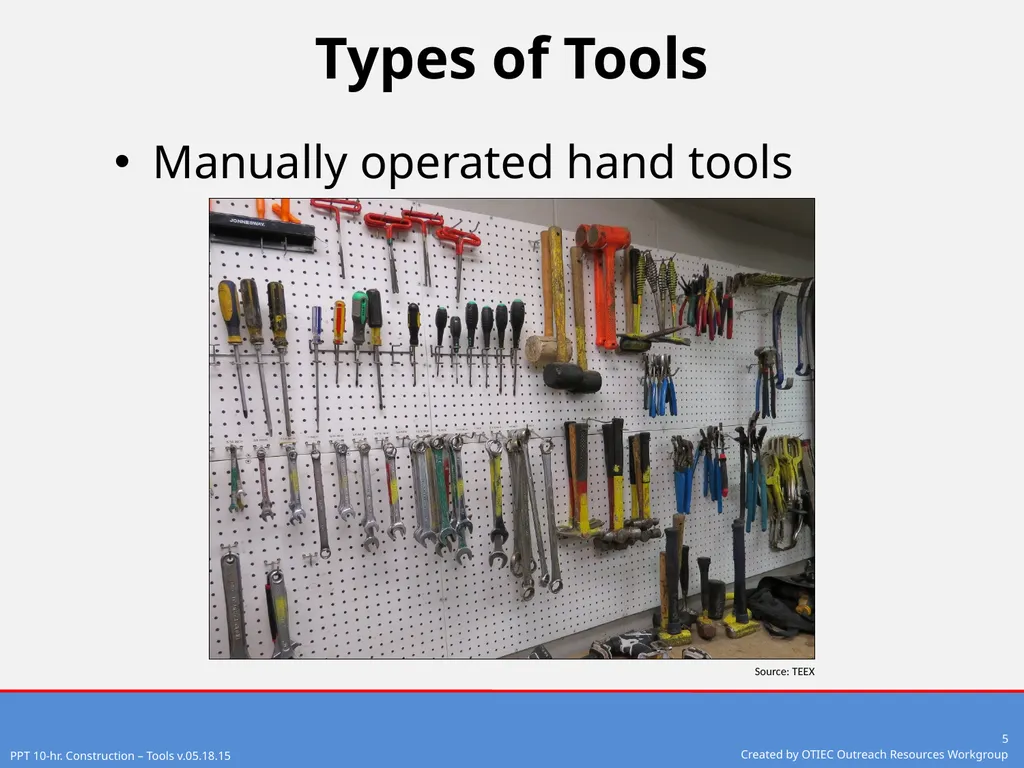
Types of Tools Manually operated hand tools Source: TEEX<br>
06
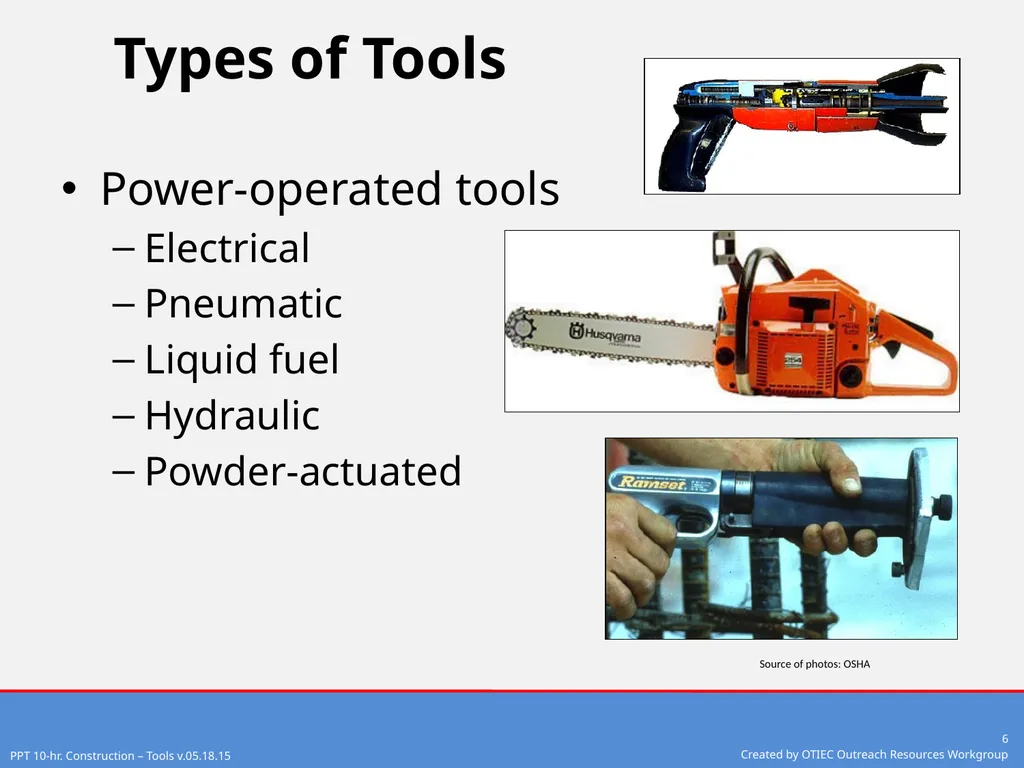
Types of Tools Power-operated tools
Electrical
Pneumatic
Liquid fuel
Hydraulic
Powder-actuated Source of photos: OSHA<br>
07
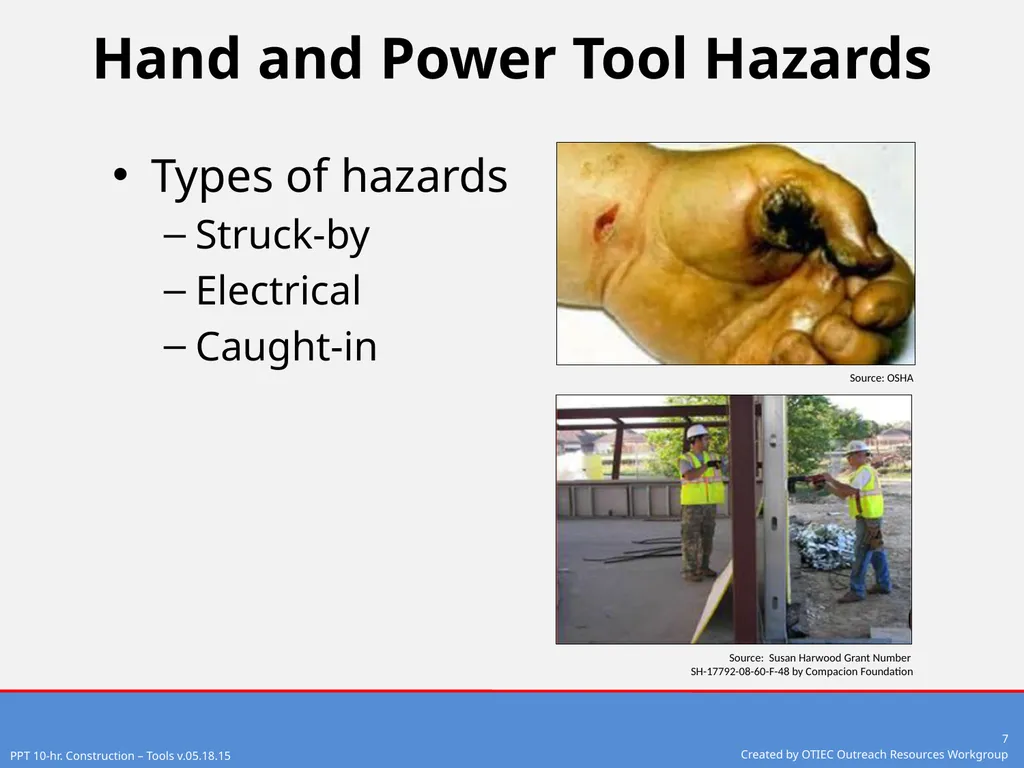
Hand and Power Tool Hazards Types of hazards
Struck-by
Electrical
Caught-in Source: Susan Harwood Grant Number �SH-17792-08-60-F-48 by Compacion Foundation Source: OSHA<br>
08
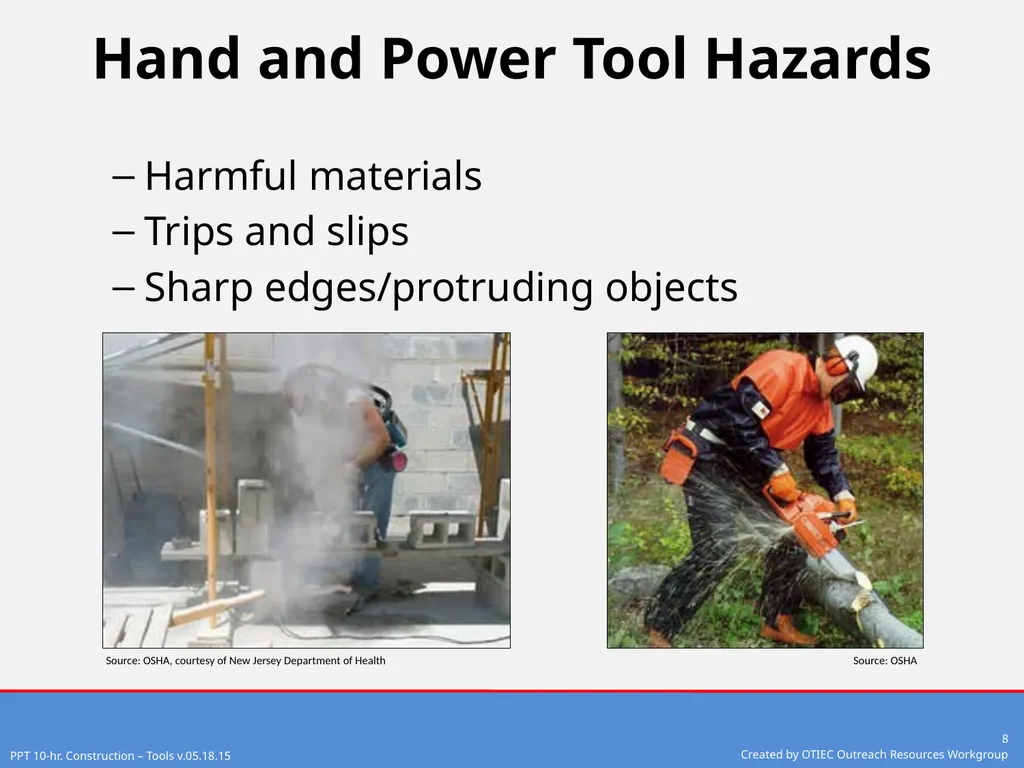
Hand and Power Tool Hazards Harmful materials
Trips and slips
Sharp edges/protruding objects Source: OSHA, courtesy of New Jersey Department of Health Source: OSHA<br>
09
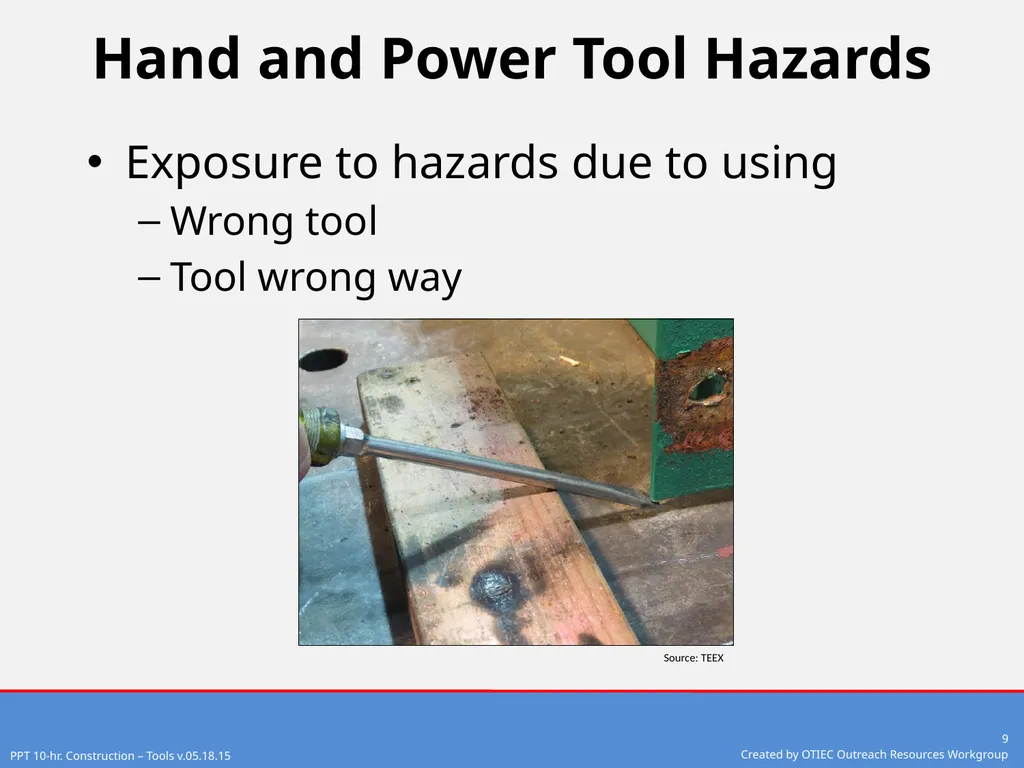
Hand and Power Tool Hazards Exposure to hazards due to using
Wrong tool
Tool wrong way Source: TEEX<br>
10
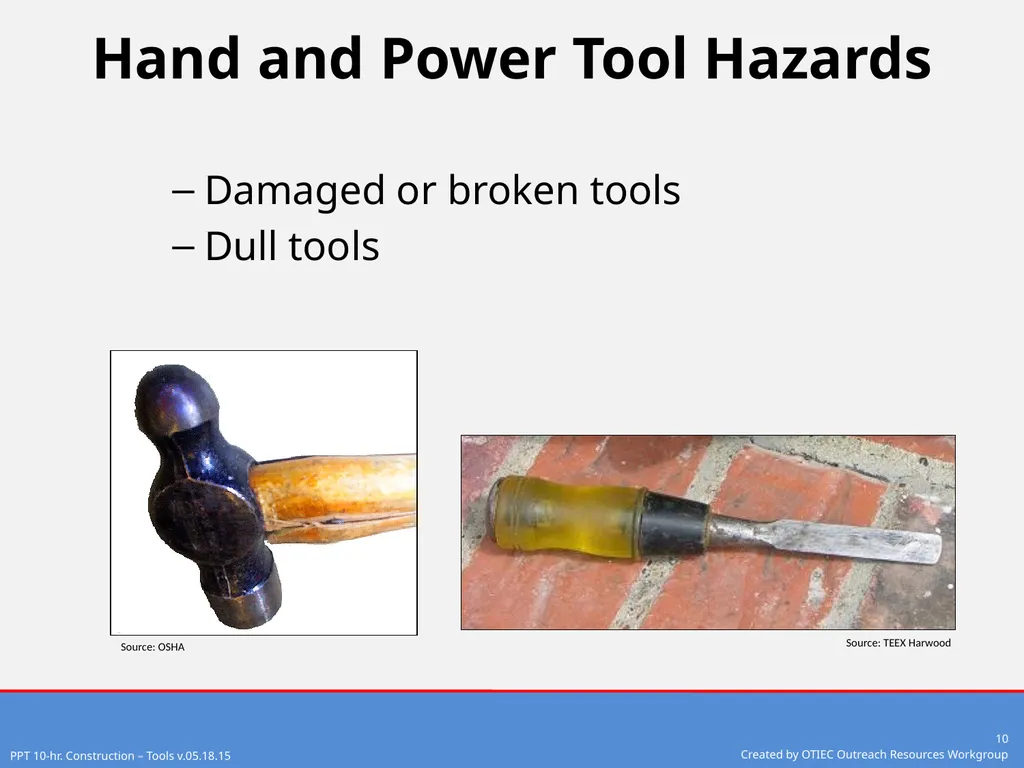
Hand and Power Tool Hazards Damaged or broken tools
Dull tools Source: OSHA Source: TEEX Harwood<br>
11
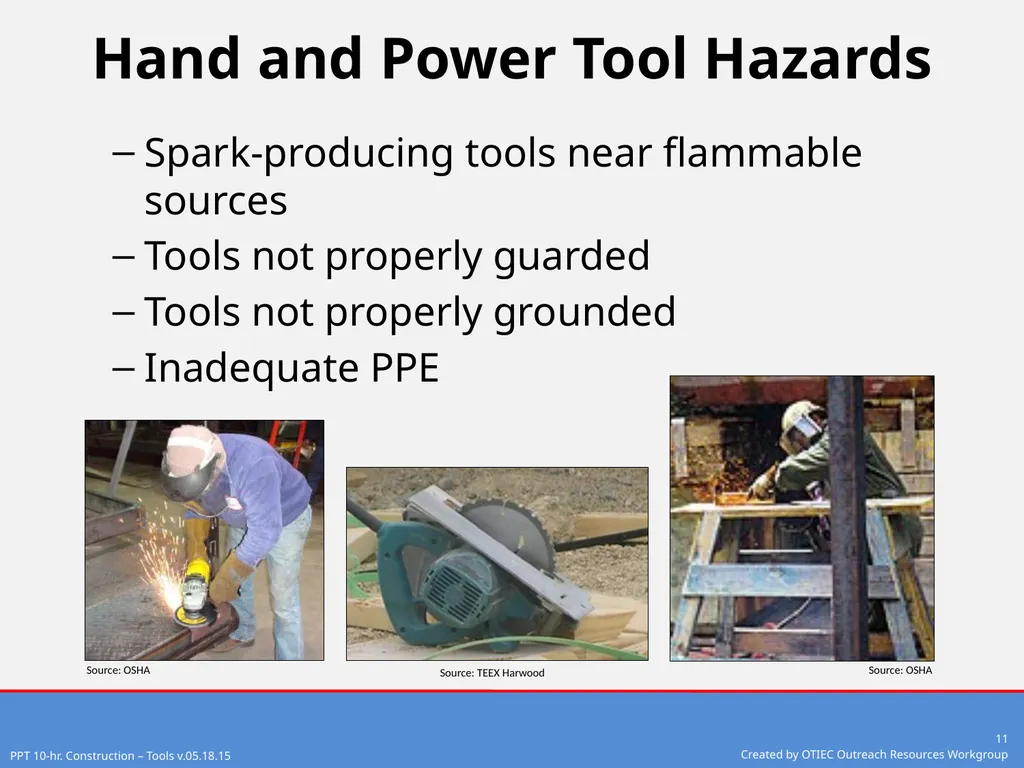
Hand and Power Tool Hazards Spark-producing tools near flammable sources
Tools not properly guarded
Tools not properly grounded
Inadequate PPE Source: OSHA Source: OSHA Source: TEEX Harwood<br>
12
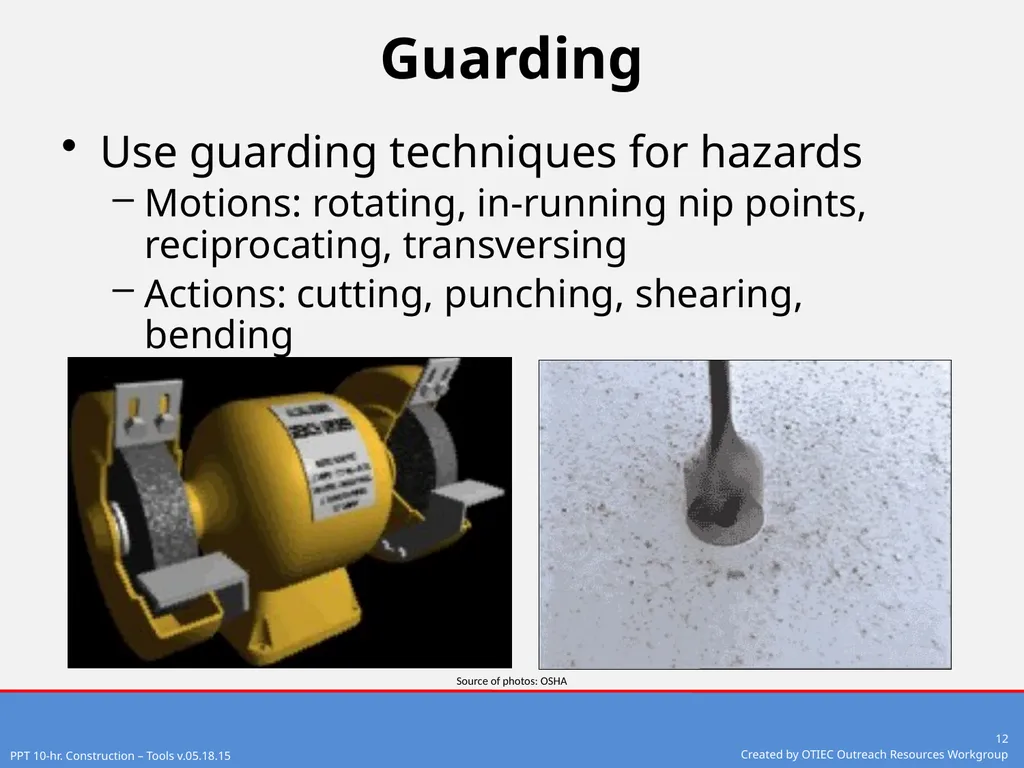
Guarding Source of photos: OSHA Use guarding techniques for hazards
Motions: rotating, in-running nip points, reciprocating, transversing
Actions: cutting, punching, shearing, bending<br>
13
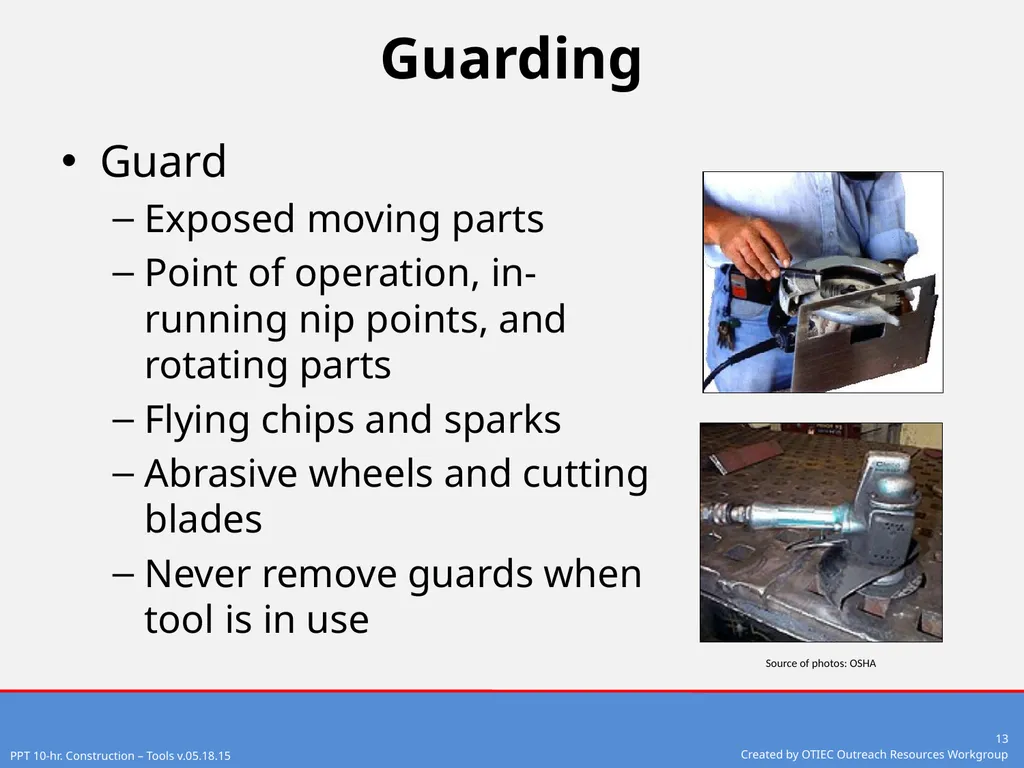
Guarding Source of photos: OSHA Guard
Exposed moving parts
Point of operation, in-running nip points, and rotating parts
Flying chips and sparks
Abrasive wheels and cutting blades
Never remove guards when tool is in use<br>
14
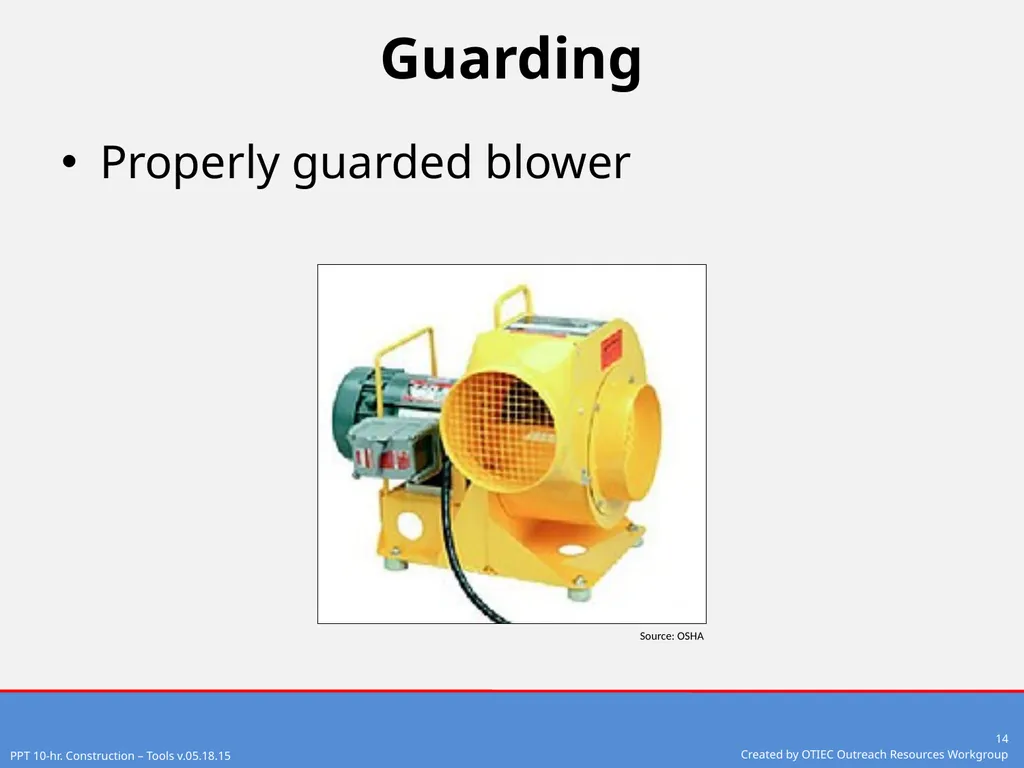
Guarding Properly guarded blower Source: OSHA<br>
15
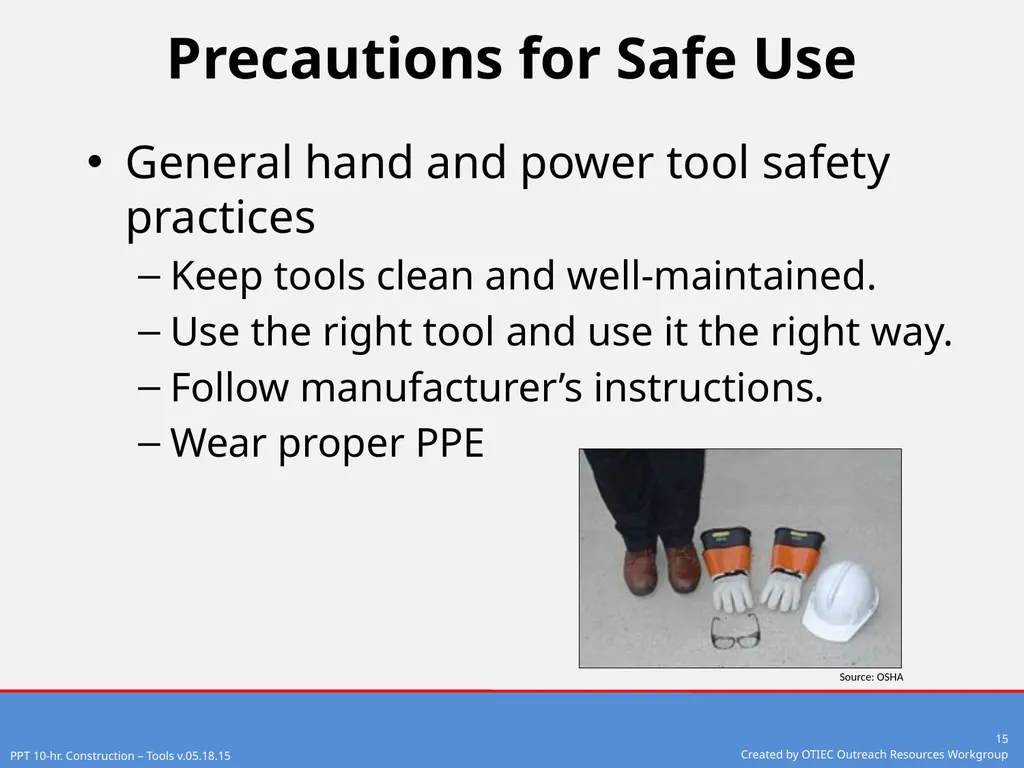
Precautions for Safe Use General hand and power tool safety practices
Keep tools clean and well-maintained.
Use the right tool and use it the right way.
Follow manufacturer’s instructions.
Wear proper PPE Source: OSHA<br>
16
Precautions for Safe Use Practice good housekeeping.
Keep work areas well lit.
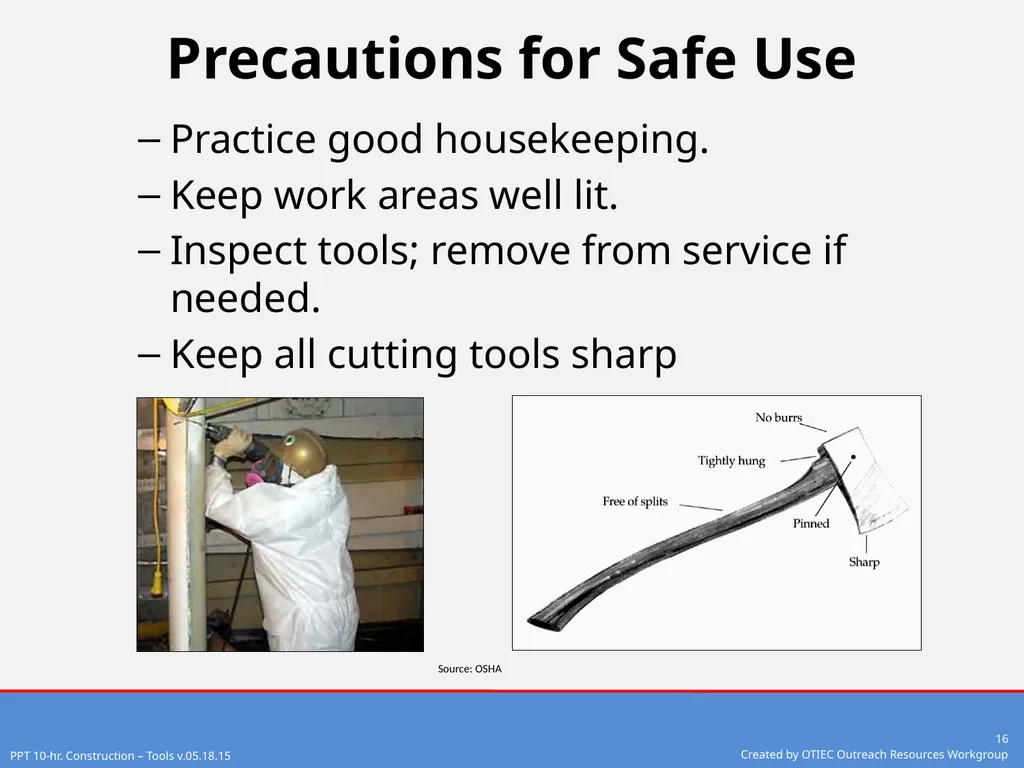
Inspect tools; remove from service if needed.
Keep all cutting tools sharp Source: OSHA<br>
17
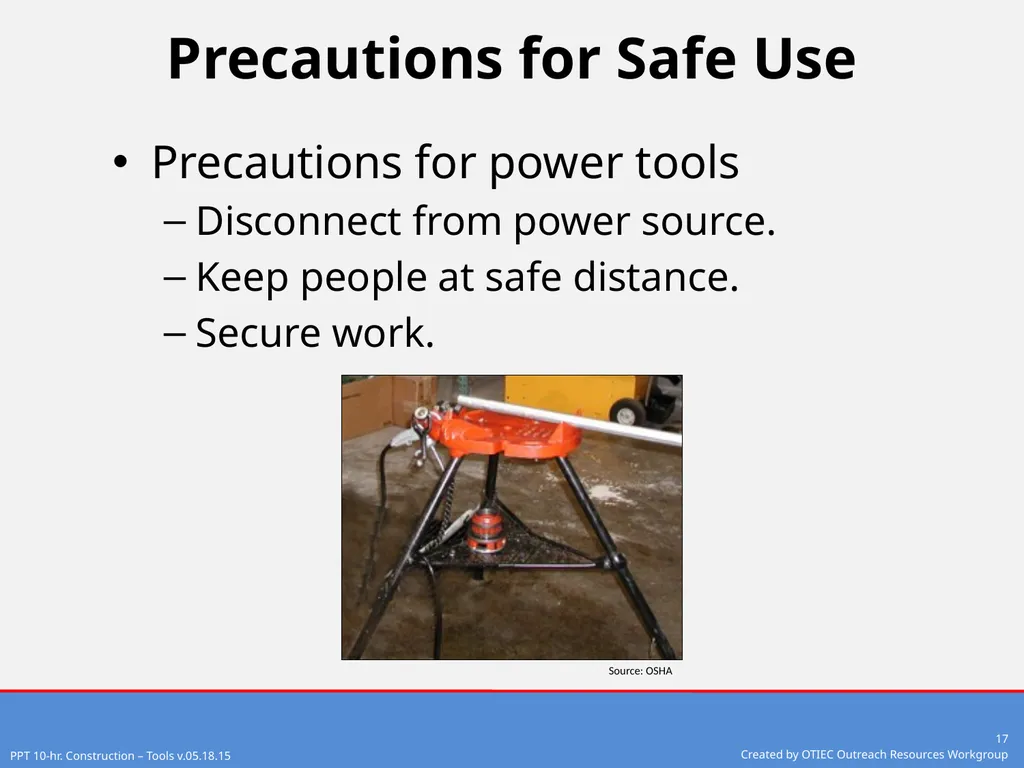
Precautions for Safe Use Precautions for power tools
Disconnect from power source.
Keep people at safe distance.
Secure work. Source: OSHA<br>
18
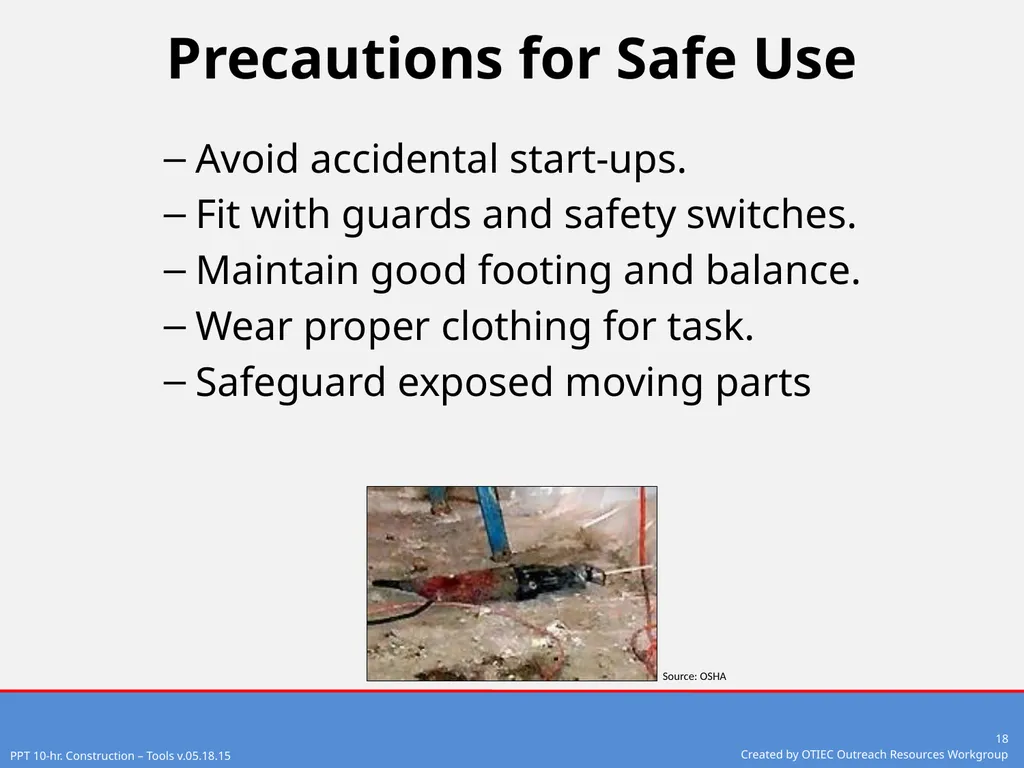
Precautions for Safe Use Avoid accidental start-ups.
Fit with guards and safety switches.
Maintain good footing and balance.
Wear proper clothing for task.
Safeguard exposed moving parts Source: OSHA<br>
19
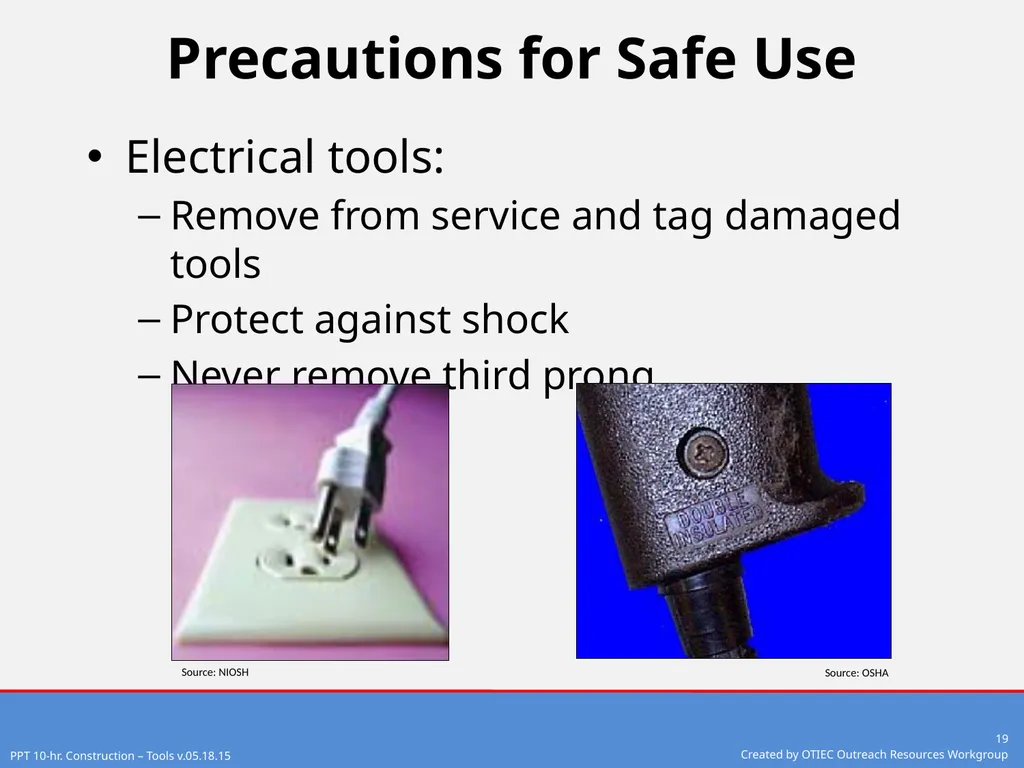
Precautions for Safe Use Electrical tools:
Remove from service and tag damaged tools
Protect against shock
Never remove third prong Source: OSHA Source: NIOSH<br>
20
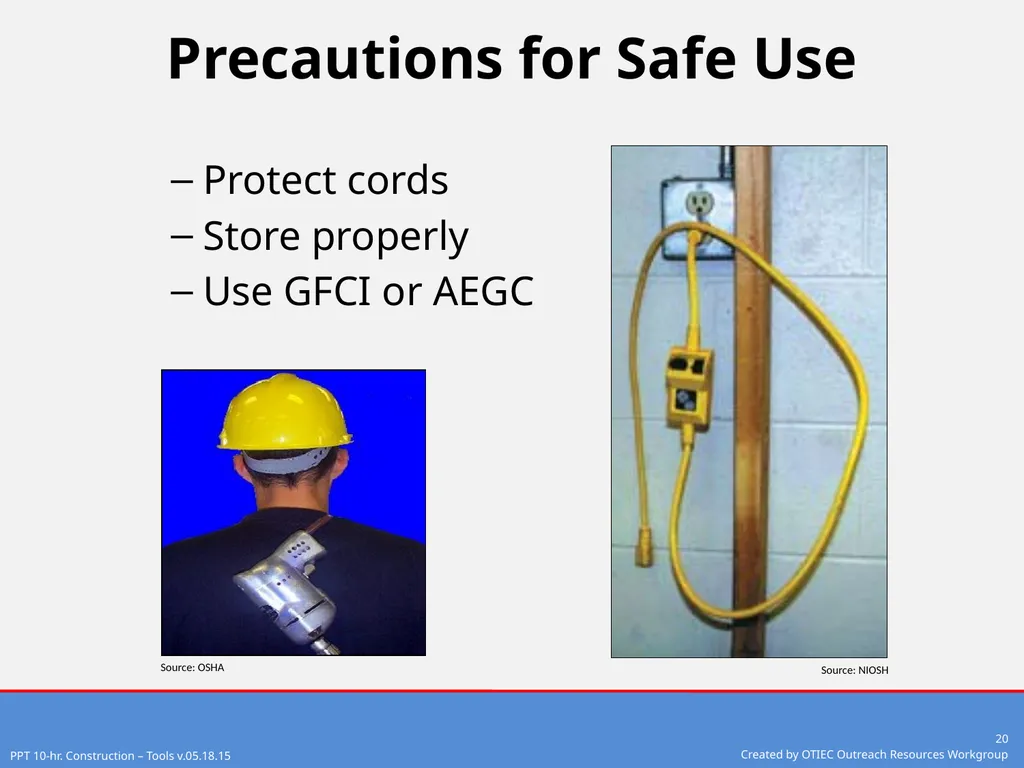
Precautions for Safe Use Protect cords
Store properly
Use GFCI or AEGC Source: OSHA Source: NIOSH<br>
21
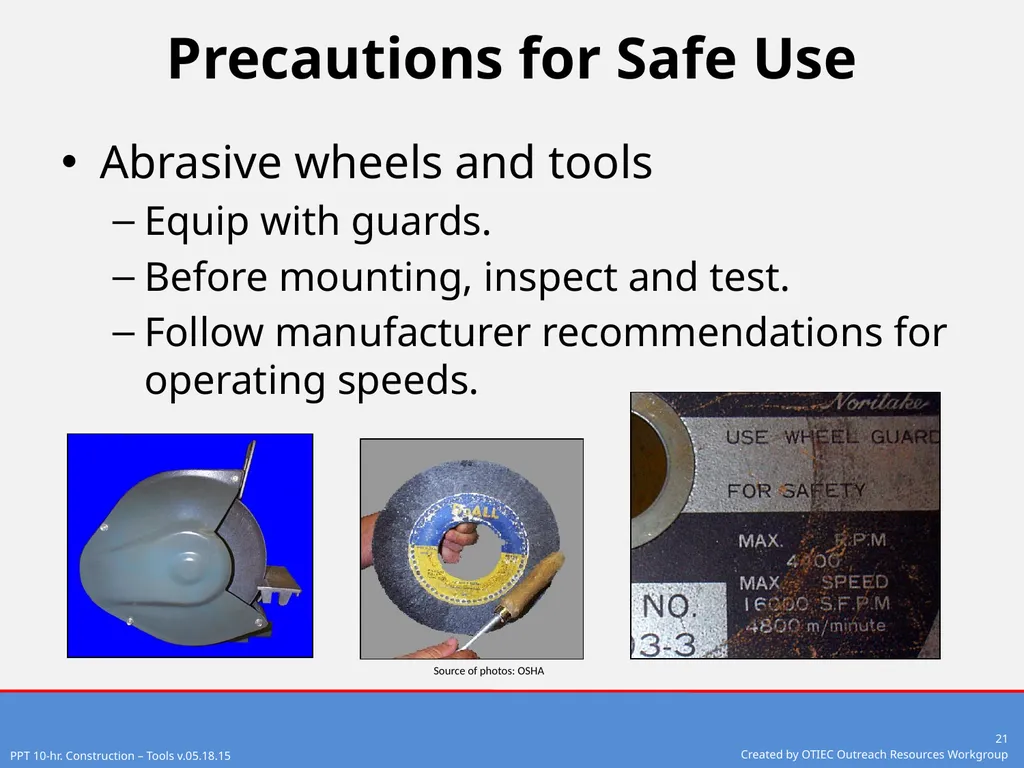
Precautions for Safe Use Abrasive wheels and tools
Equip with guards.
Before mounting, inspect and test.
Follow manufacturer recommendations for operating speeds. Source of photos: OSHA<br>
22
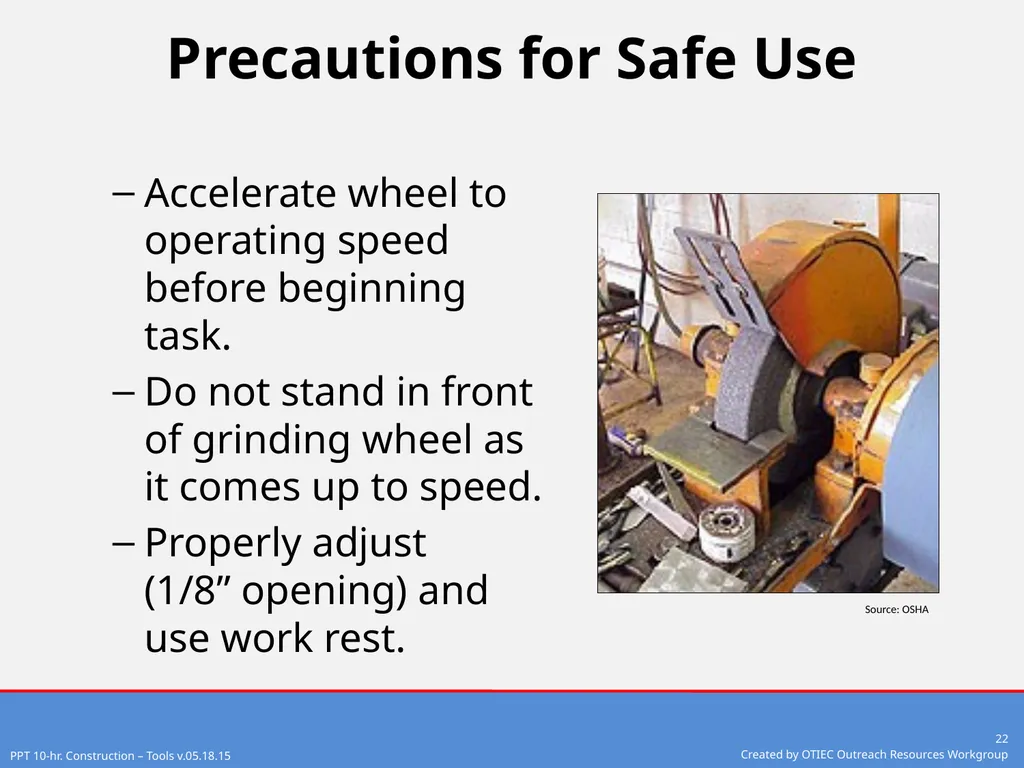
Precautions for Safe Use Accelerate wheel to operating speed before beginning task.
Do not stand in front of grinding wheel as it comes up to speed.
Properly adjust �(1/8” opening) and use work rest. Source: OSHA<br>
23
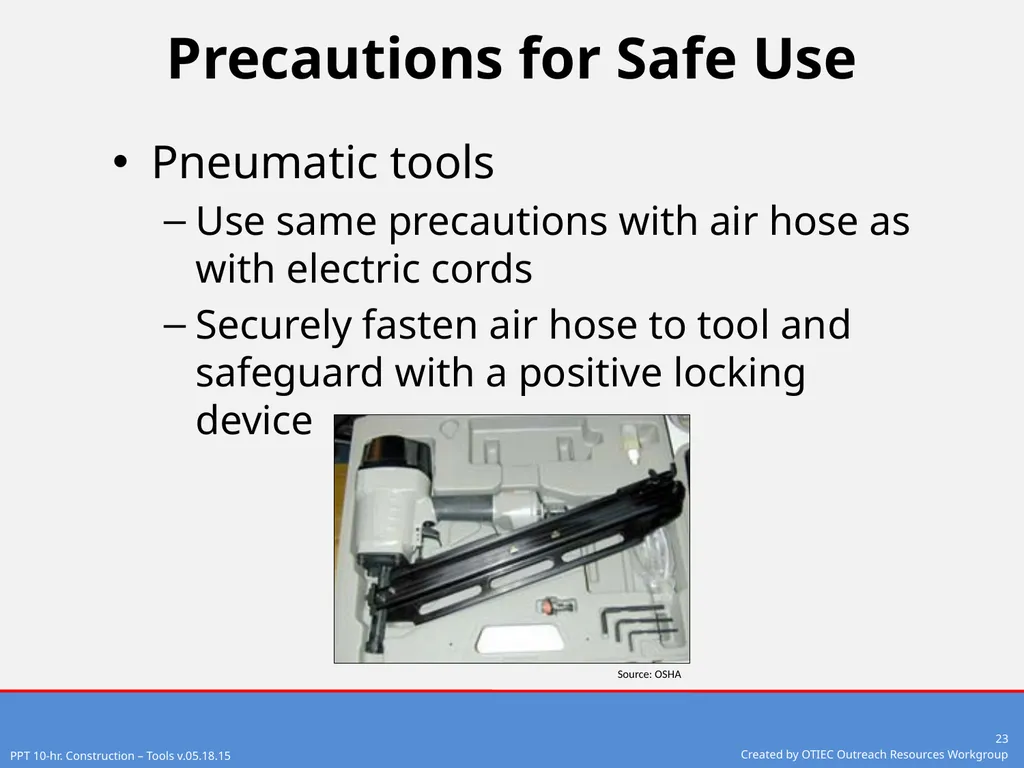
Precautions for Safe Use Pneumatic tools
Use same precautions with air hose as with electric cords
Securely fasten air hose to tool and safeguard with a positive locking device Source: OSHA<br>
24
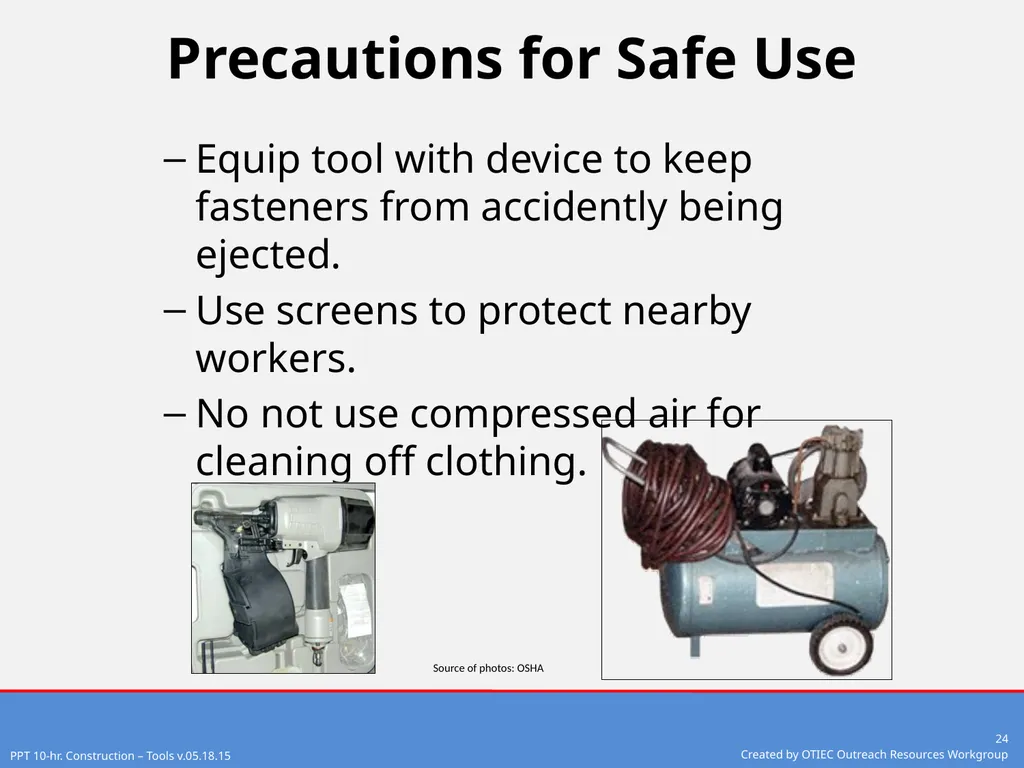
Precautions for Safe Use Equip tool with device to keep fasteners from accidently being ejected.
Use screens to protect nearby workers.
No not use compressed air for cleaning off clothing. Source of photos: OSHA<br>
25
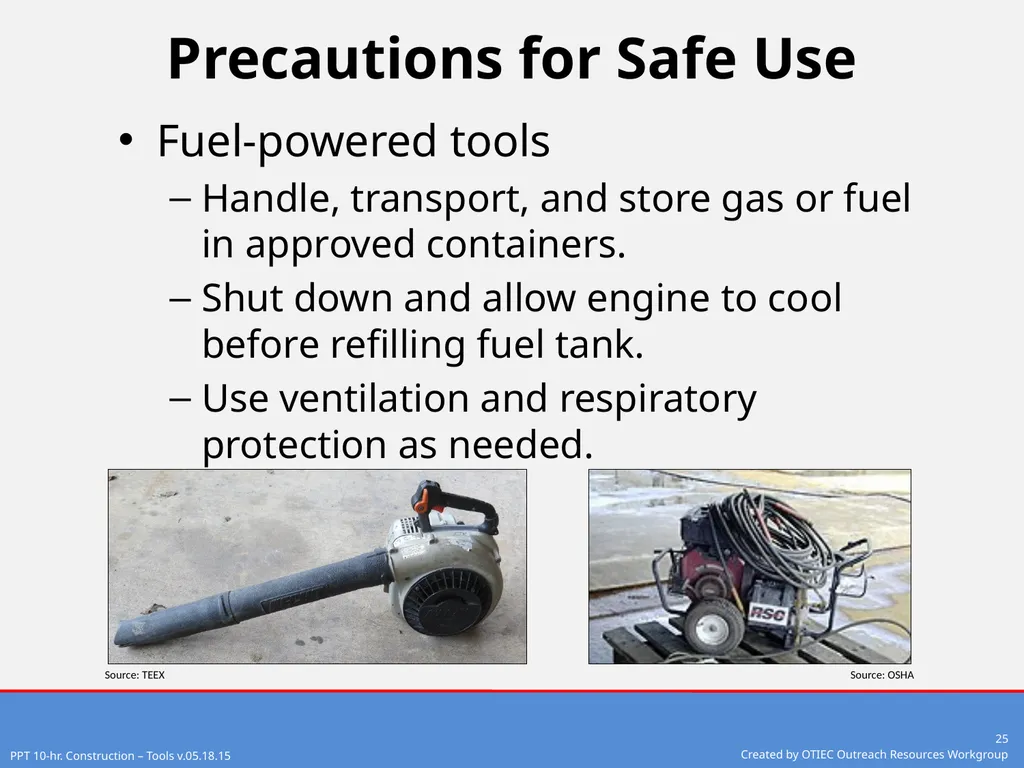
Precautions for Safe Use Fuel-powered tools
Handle, transport, and store gas or fuel �in approved containers.
Shut down and allow engine to cool before refilling fuel tank.
Use ventilation and respiratory protection as needed. Source: OSHA Source: TEEX<br>
26
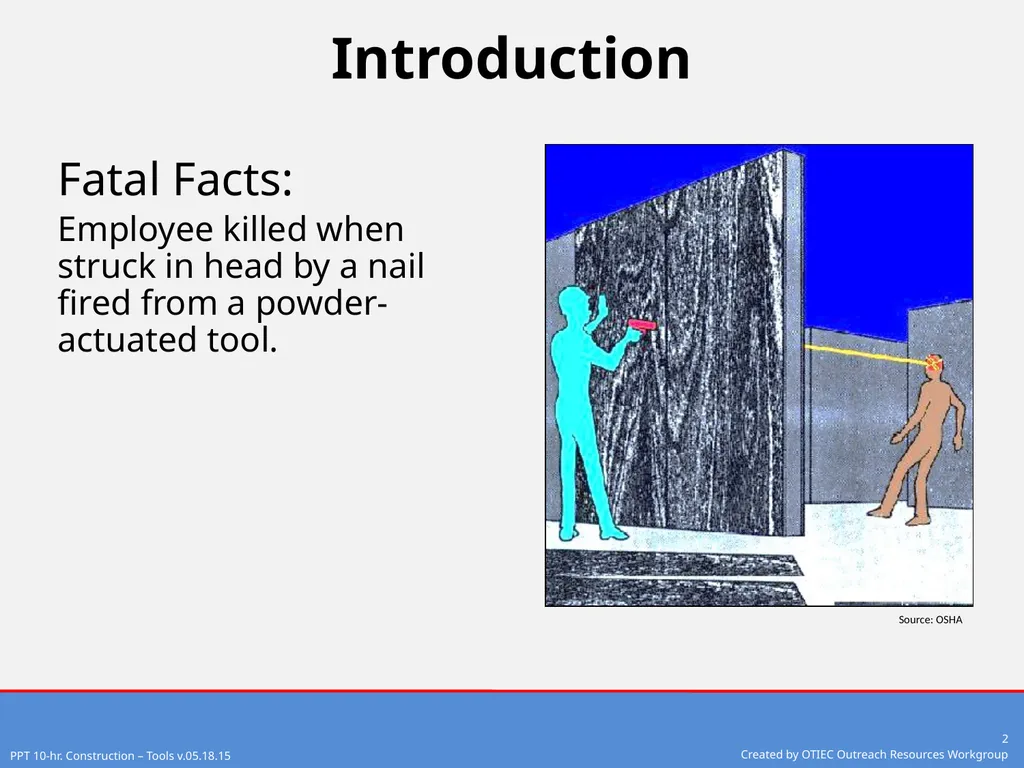
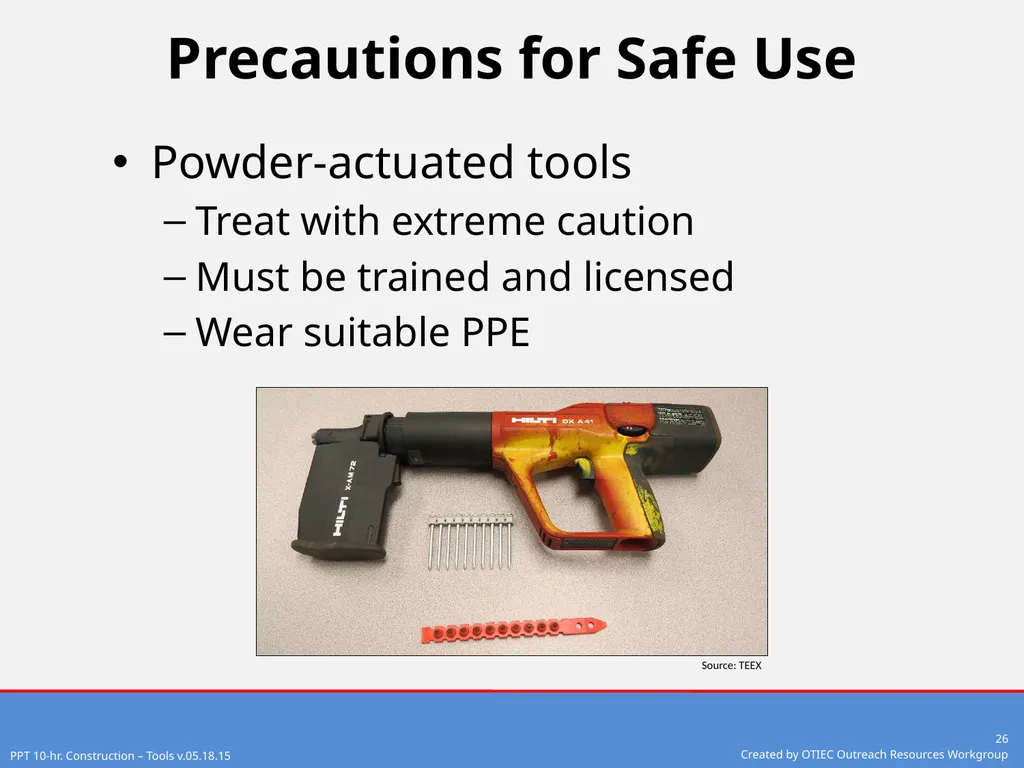
Precautions for Safe Use Powder-actuated tools
Treat with extreme caution
Must be trained and licensed
Wear suitable PPE Source: TEEX<br>
27
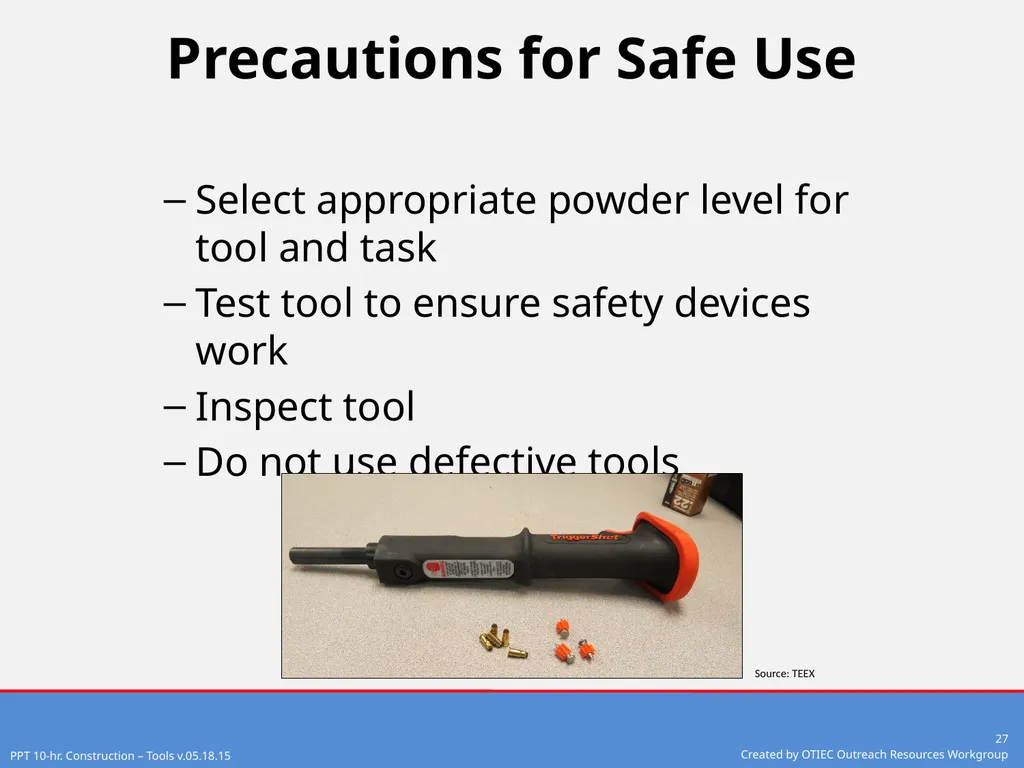
Precautions for Safe Use Select appropriate powder level for tool and task
Test tool to ensure safety devices work
Inspect tool
Do not use defective tools Source: TEEX<br>
28
Precautions for Safe Use Do not load tools until just prior to use
Never point tool at anyone
Keep hands clear of open barrel end
Never leave loaded tool unattended
Do not drive fasteners into materials that are very hard, brittle, or easily penetrated
Do not drive fastener into a spalled area
Use manufacturer-recommended shields, guards, or attachments.
Store unloaded in a locked box.<br>
29
Employer Requirements Comply with OSHA standards
Training
Inspection
Comply with manufacturer’s requirements and recommendations<br>
30
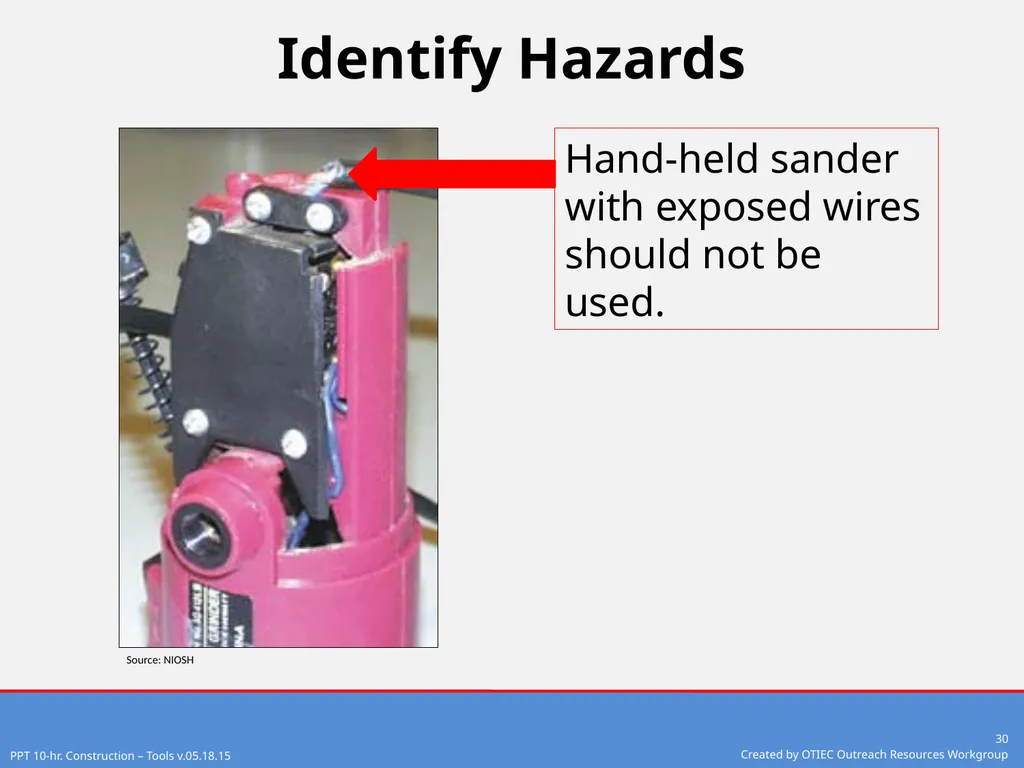
Identify Hazards Hand-held sander with exposed wires should not be used. Source: NIOSH<br>
31
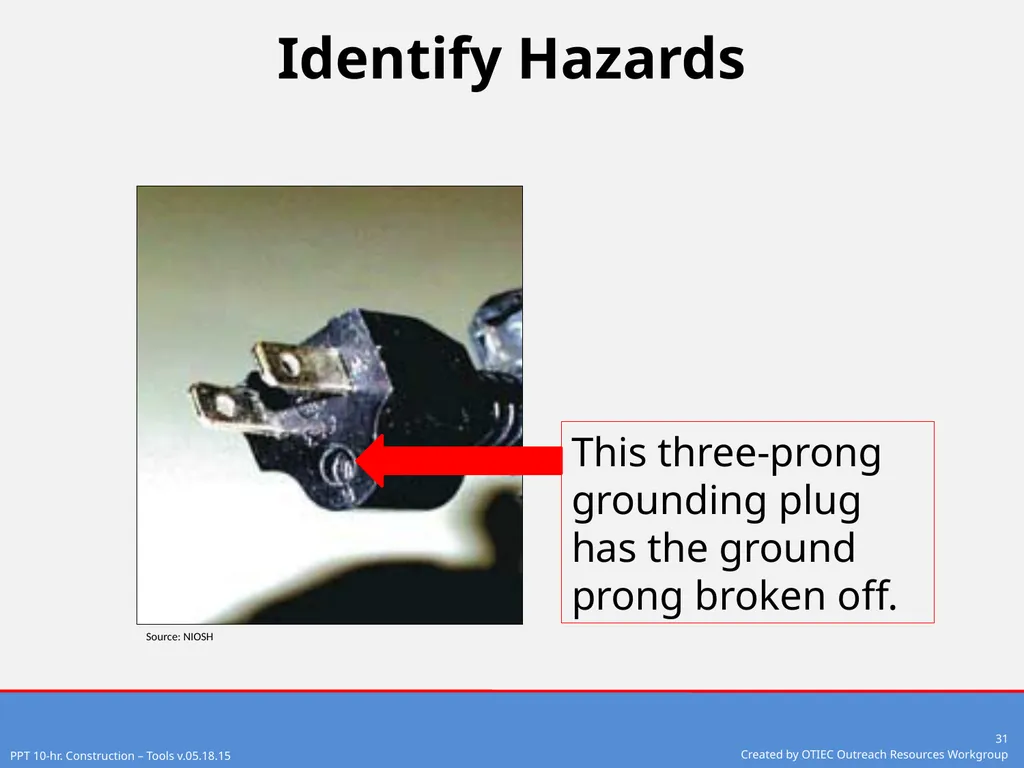
Identify Hazards This three-prong grounding plug has the ground prong broken off. Source: NIOSH<br>
32
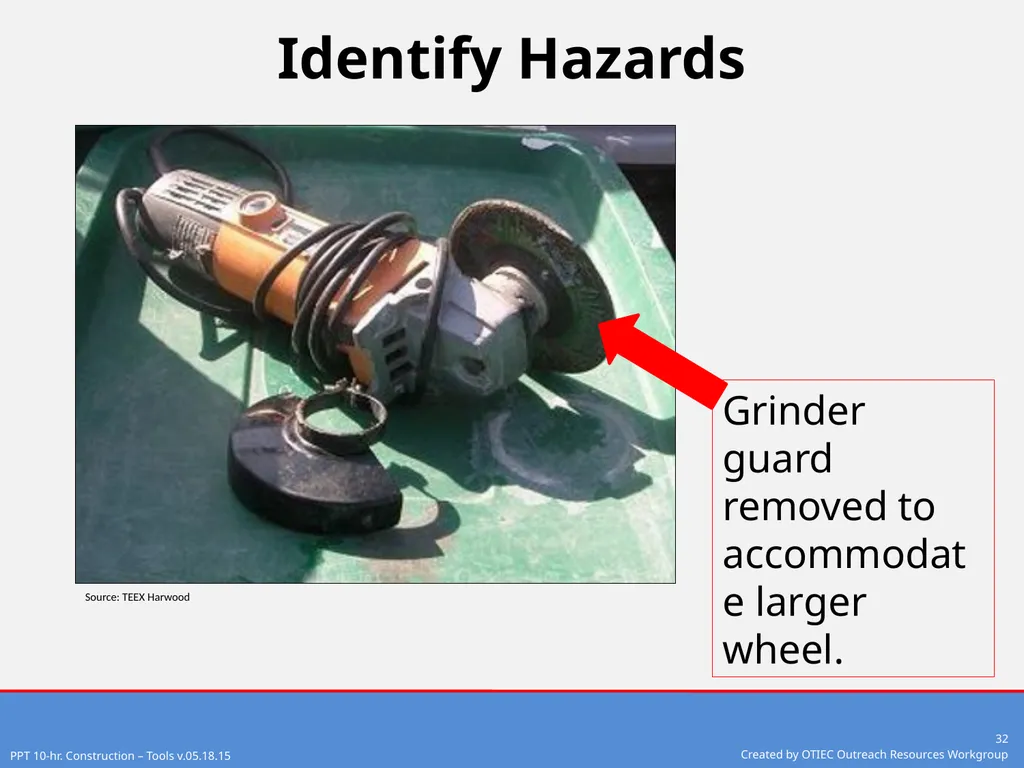
Identify Hazards Source: TEEX Harwood Grinder guard removed to accommodate larger wheel.<br>
33
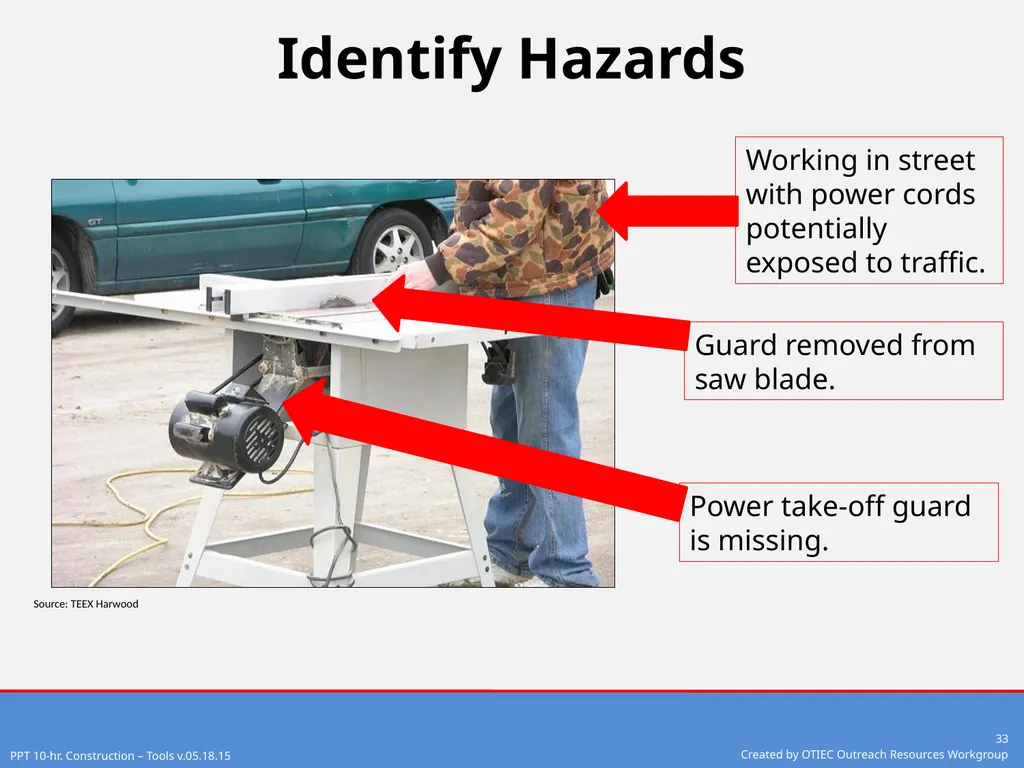
Identify Hazards Source: TEEX Harwood Working in street with power cords potentially exposed to traffic. Guard removed from saw blade. Power take-off guard is missing.<br>
34
Knowledge Check Which of the following is an example of an unsafe practice regarding the use of tools?
Keeping cutting tools sharp
Wearing eye and face protection while operating a grinder
Using a screwdriver to carve or cut wood
Following manufacturer’s instructions when using a tool c. Using a screwdriver to carve or cut wood<br>
35
Knowledge Check Which term describes a tool that is powered by compressed air?
Hydraulic
Powder-actuated
Electrical
Pneumatic d. Pneumatic<br>
36
Knowledge Check Which of the following actions may expose workers to electrical shock hazards and should be avoided?
Removing the grounding pin on a three-prong plug
Using double-insulated tools
Using a grounded adaptor to accommodate a two-prong receptacle
Removing damaged tools from service and tagging them “Do Not Use” a. Removing the grounding pin on a three-prong plug<br>
37
Knowledge Check Which of the following statements about guarding techniques is true?
Guard the point of operation, in-running nip points, and rotating parts of tools.
Remove guard from tool while it is in use, then replace when the job is completed.
Adjust guard on abrasive wheel to allow maximum exposure of the wheel surface.
Wear PPE because guards will not protect operator from flying chips and sparks or moving parts of tool. a. Guard the point of operation, in-running nip points, and rotating parts of tools.<br>
38
Knowledge Check Employers must satisfy all of the following requirements, except:
Provide PPE necessary to protect employees who are operating hand and power tools and are exposed to hazards.
Comply with OSHA training and inspection standards related to hand and power tools.
Determine which manufacturer’s requirements and recommendations for a tool shall be followed or ignored.
Do not issue or permit the use of unsafe hand tools. c. Determine which manufacturer’s requirements and recommendations for a tool shall be followed or ignored.<br>