
Topic M07: Marketing Research Technology Education

Description: Topic M07: Marketing Research Technology Education Section Education Bureau, HKSARG 2024 BAFS Elective Part Business Management Module Marketing Management 2 Activity 1: Research or not? Common sense of an experienced businessman is as
Related Topics
Download Presentation
"Topic M07: Marketing Research Technology Education" is the property of its rightful owner. Permission is granted to download and print the materials on this website for personal, non-commercial use only, and to display it on your personal computer provided you do not modify the materials and that you retain all copyright notices contained in the materials. By downloading content from our website, you accept the terms of this agreement.
Presentation Transcript
slide1. Topic M07:
Marketing Research Technology Education Section Education Bureau, HKSARG
2024 BAFS Elective Part Business Management Module – Marketing Management<br>
slide2. 2 Activity 1: Research or not? “Common sense of an experienced businessman is as good as, if not better than, findings from marketing research.” What’s your point of view?<br>
slide3. 3 Marketing Research is common & important for business decision-making. Real life examples: (1) 7-11 opening new stores (2) McDonald’s launching a new product Activity 1: Conclusion<br>
slide4. 4<br>
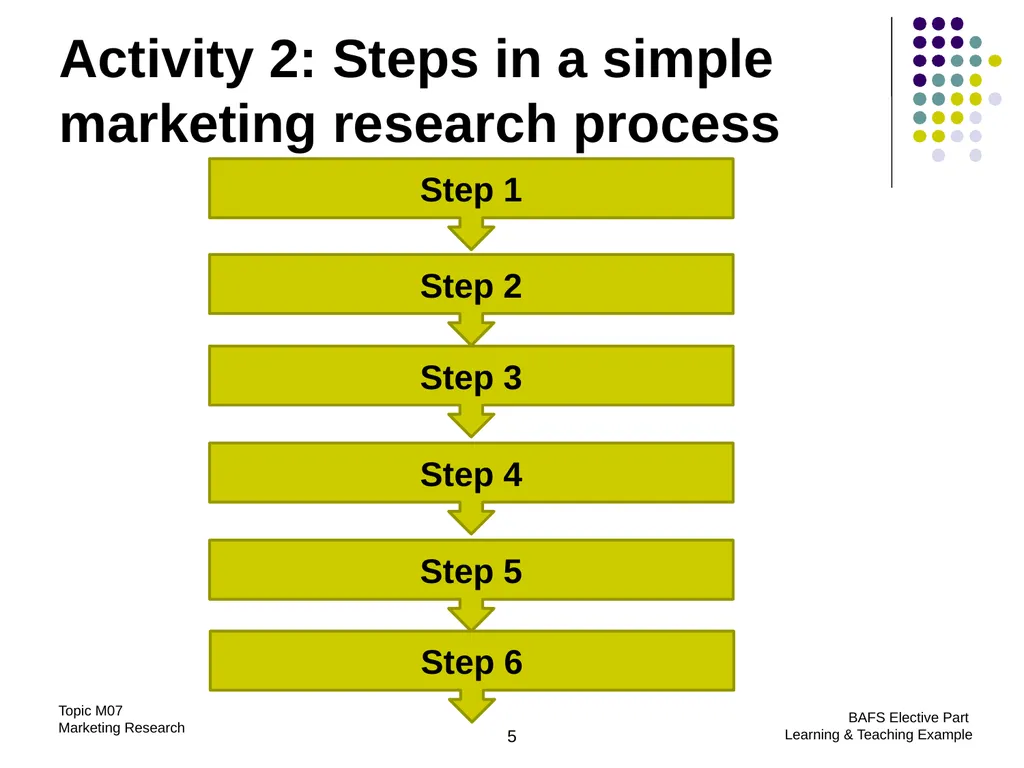
slide5. 5 Activity 2: Steps in a simple marketing research process<br>
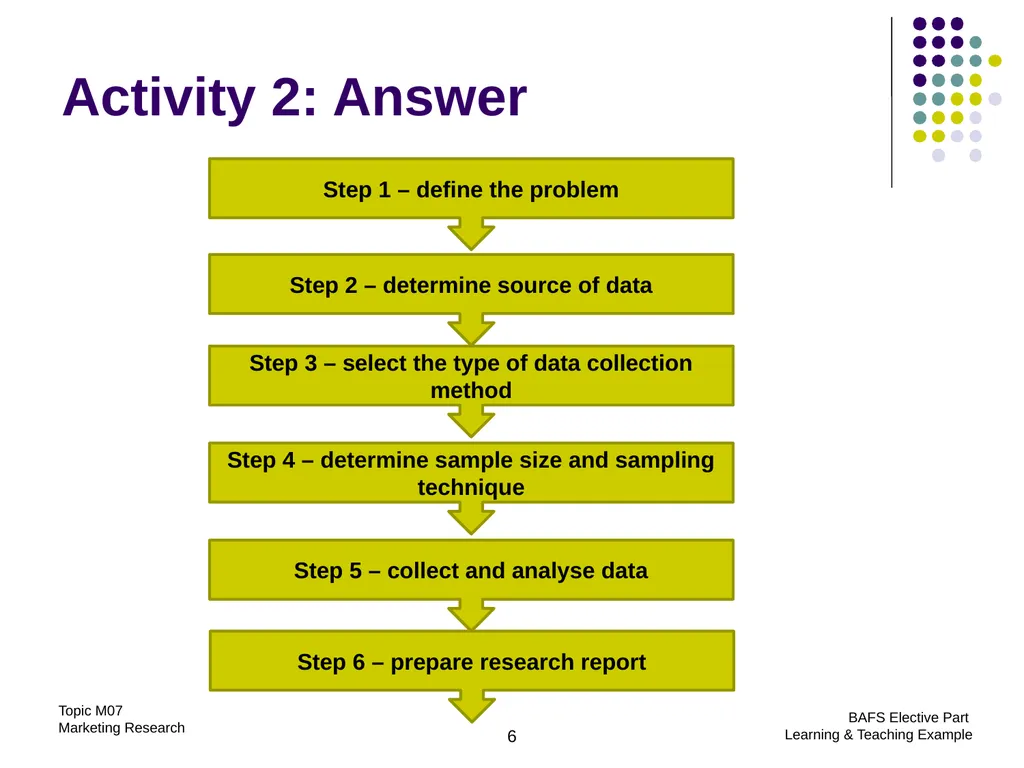
slide6. 6 Activity 2: Answer<br>
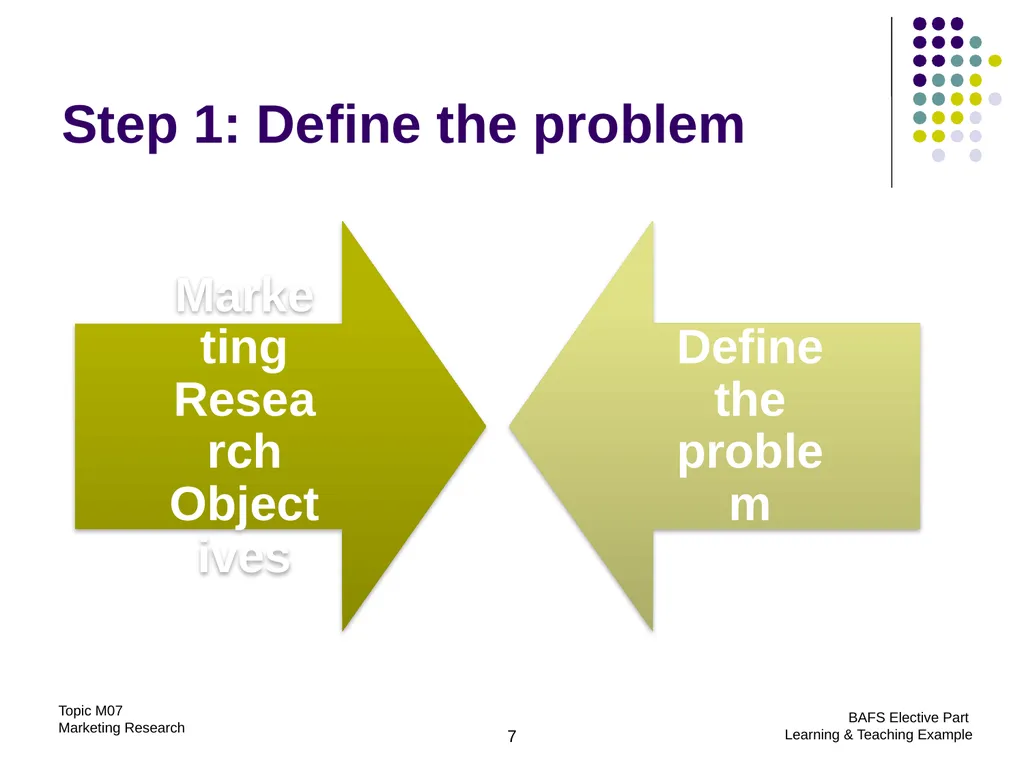
slide7. 7 Step 1: Define the problem<br>
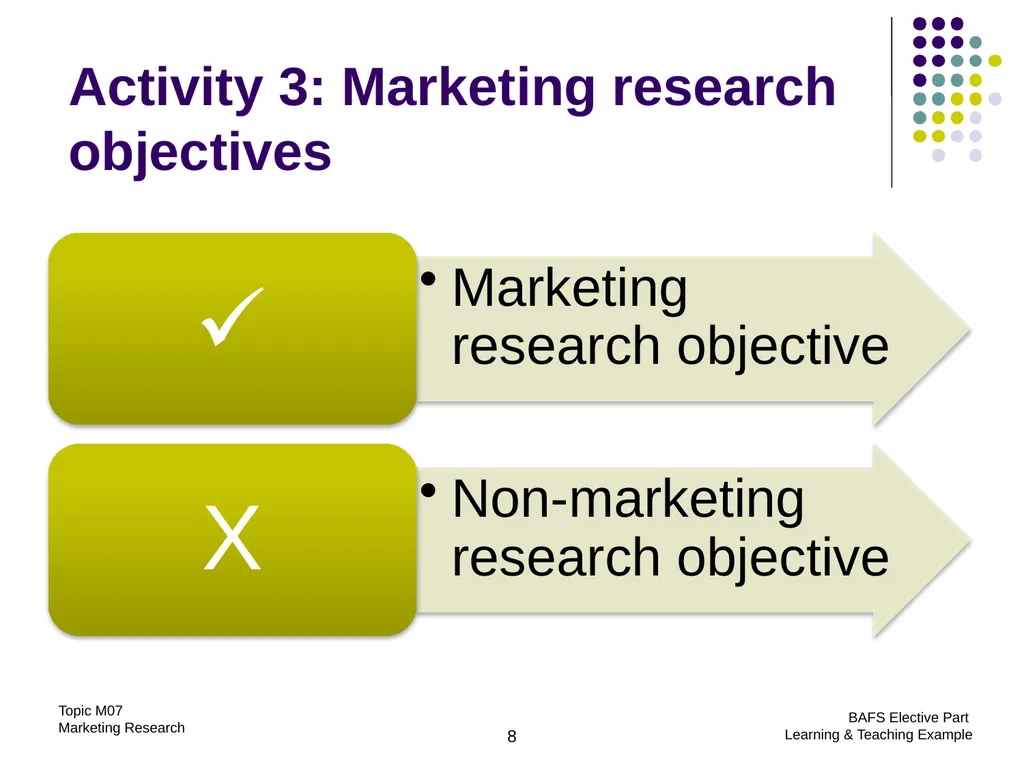
slide8. 8 Activity 3: Marketing research objectives<br>
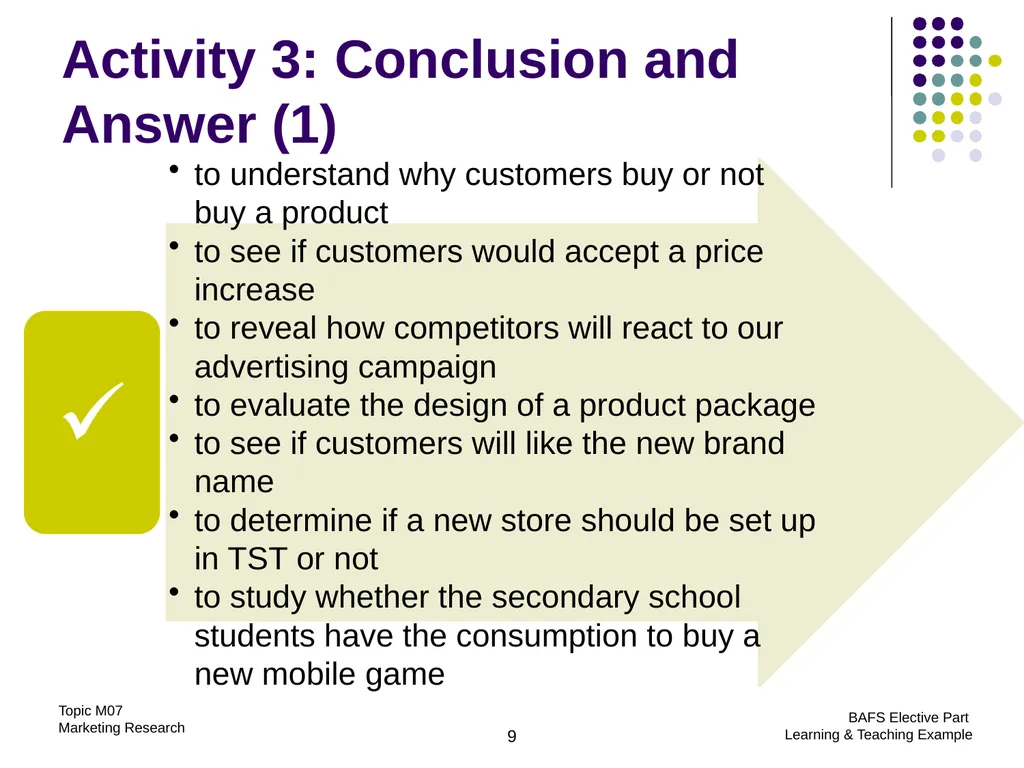
slide9. 9 Activity 3: Conclusion and Answer (1)<br>
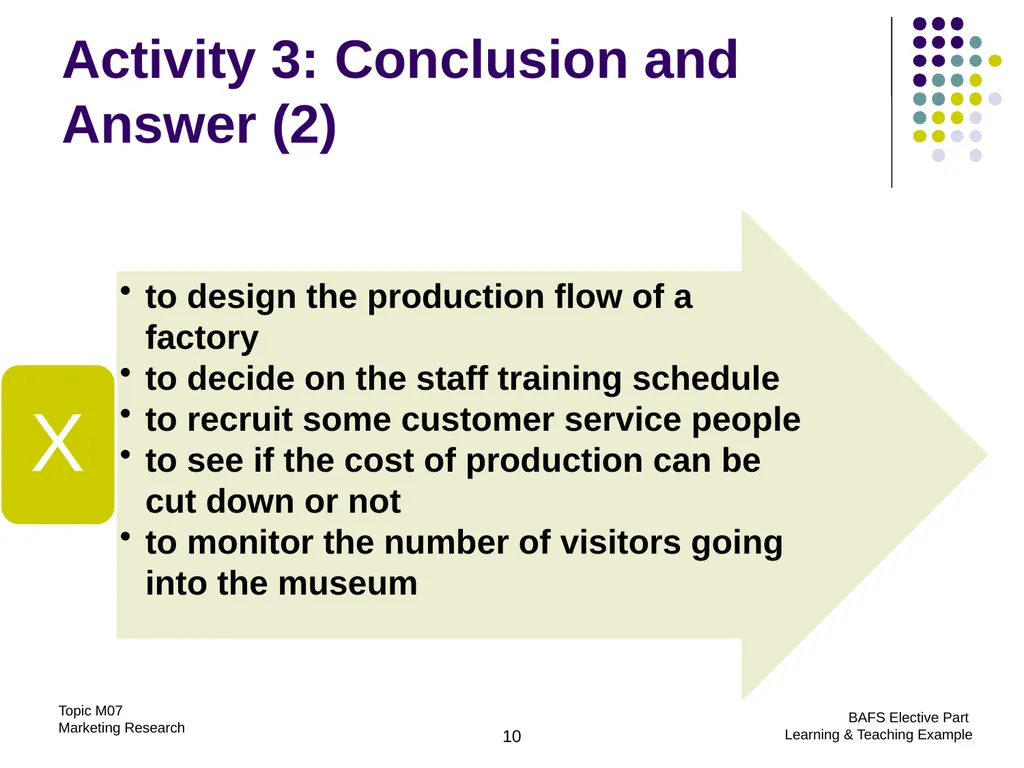
slide10. 10 Activity 3: Conclusion and Answer (2)<br>
slide11. 11 Read the case Activity 4: Case Study<br>
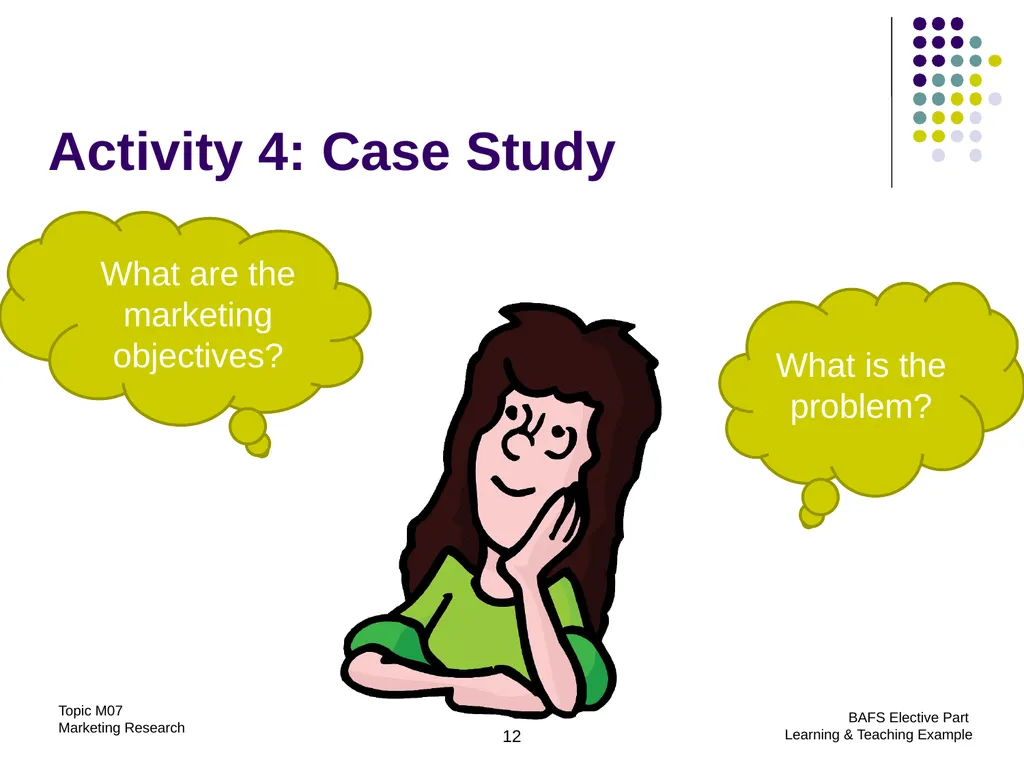
slide12. 12 What is the problem? What are the marketing objectives? Activity 4: Case Study<br>
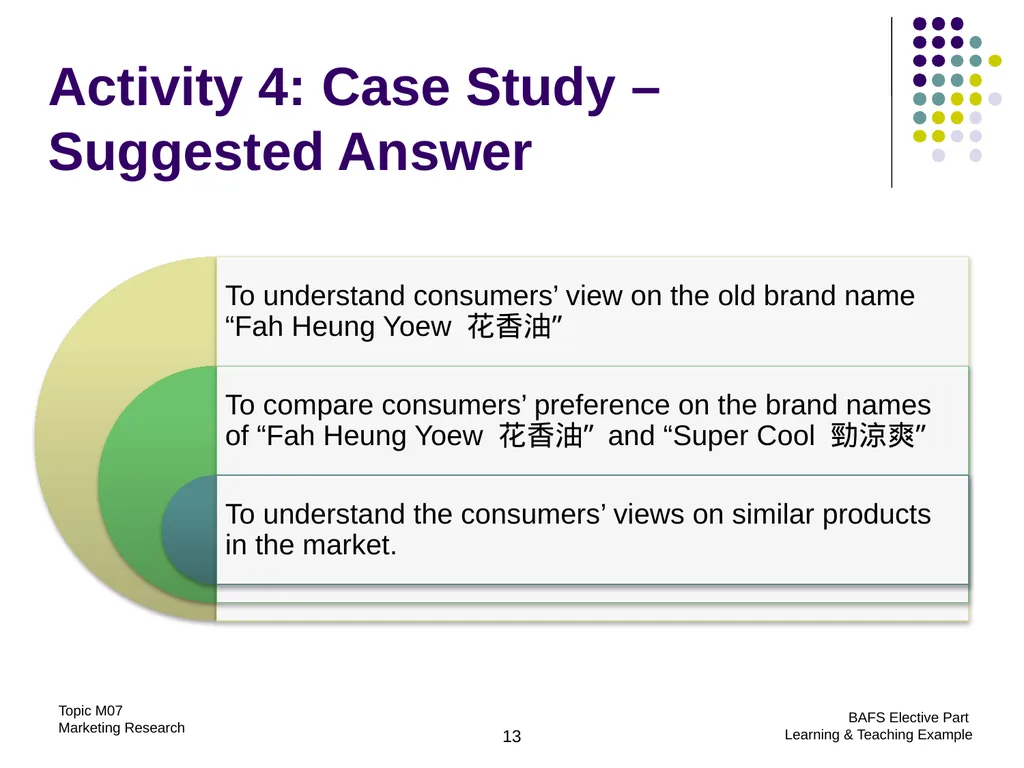
slide13. 13 Activity 4: Case Study – Suggested Answer<br>
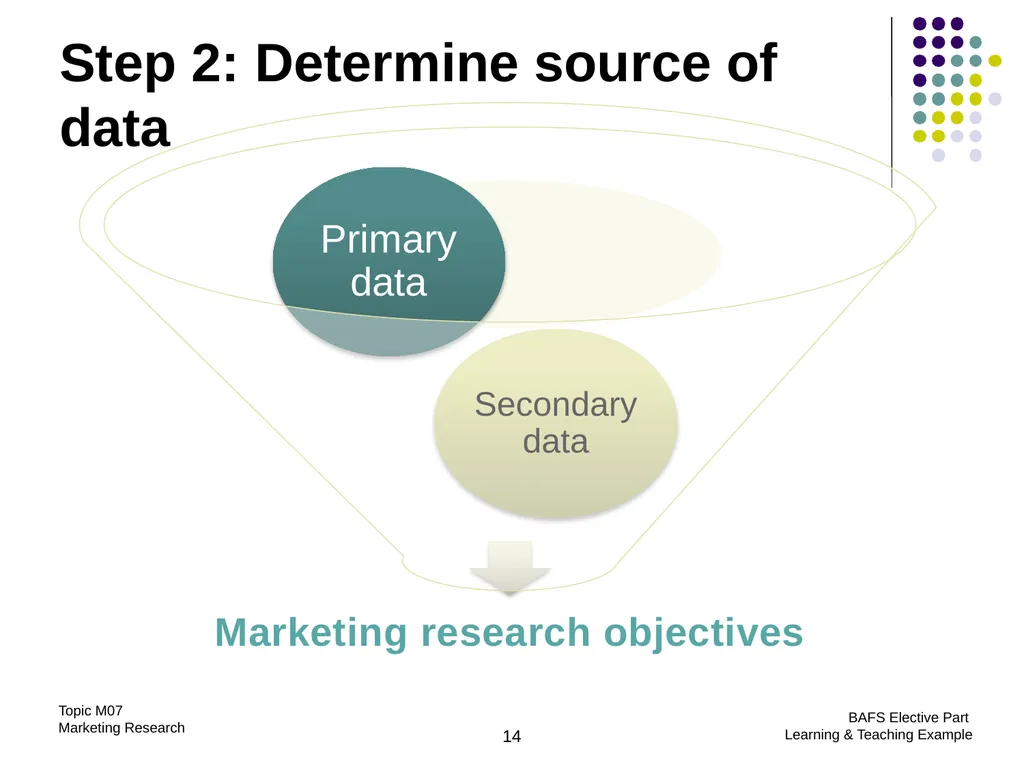
slide14. 14 Step 2: Determine source of data<br>
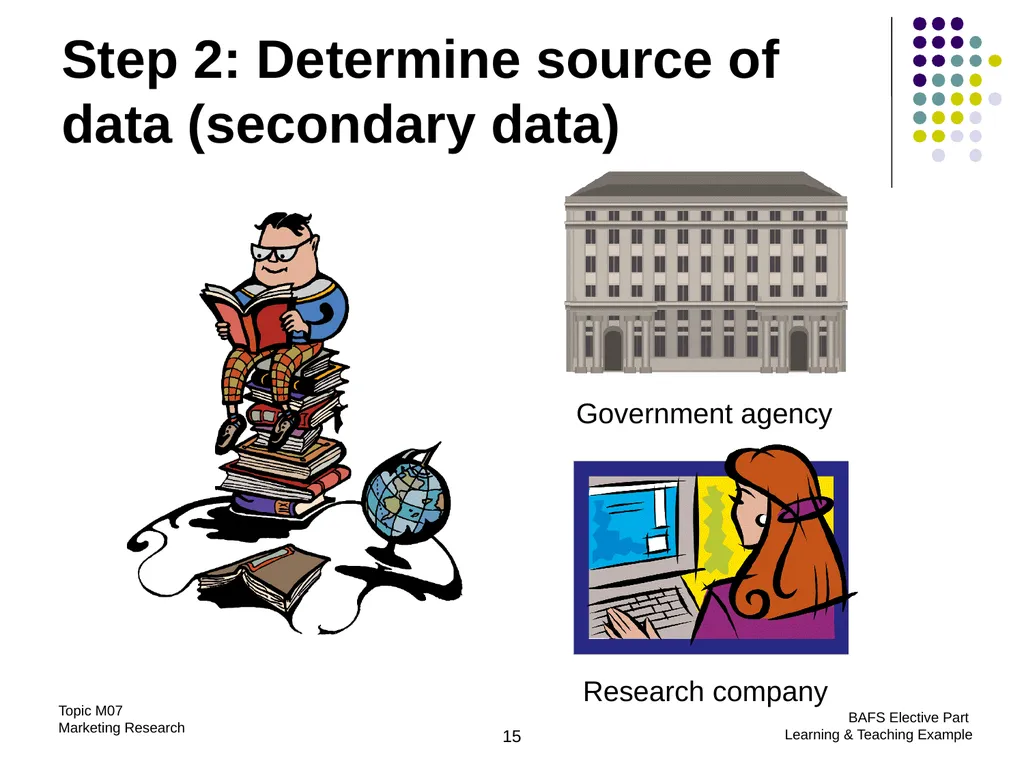
slide15. 15 Research company Government agency Step 2: Determine source of data (secondary data)<br>
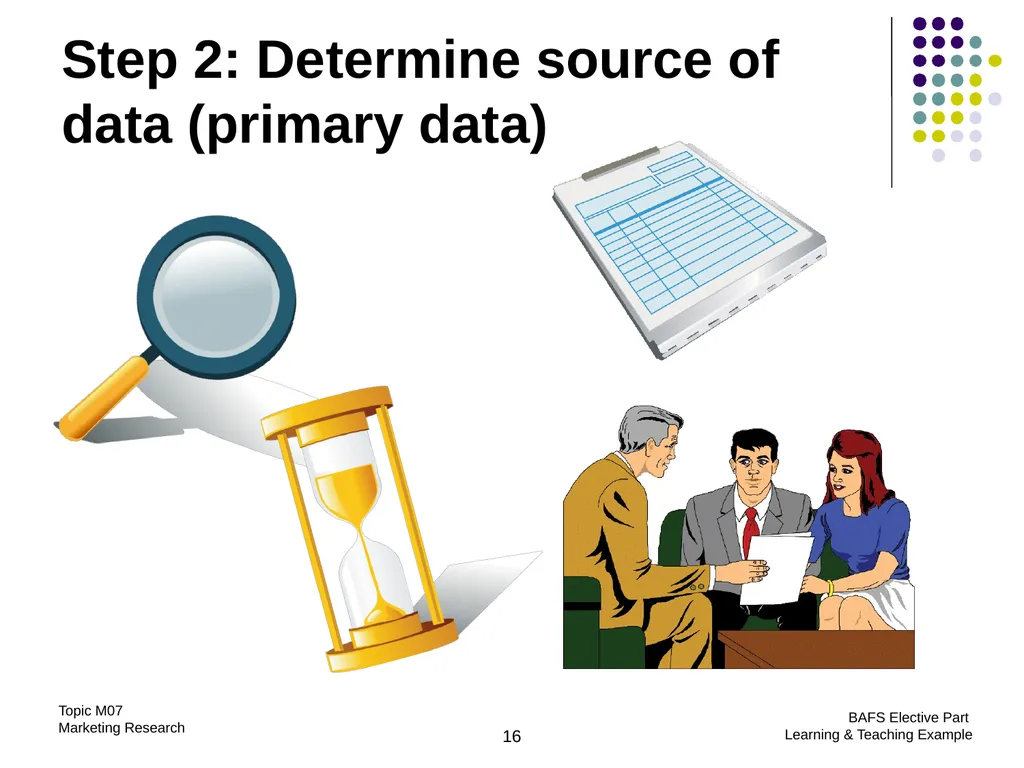
slide16. 16 Step 2: Determine source of data (primary data)<br>
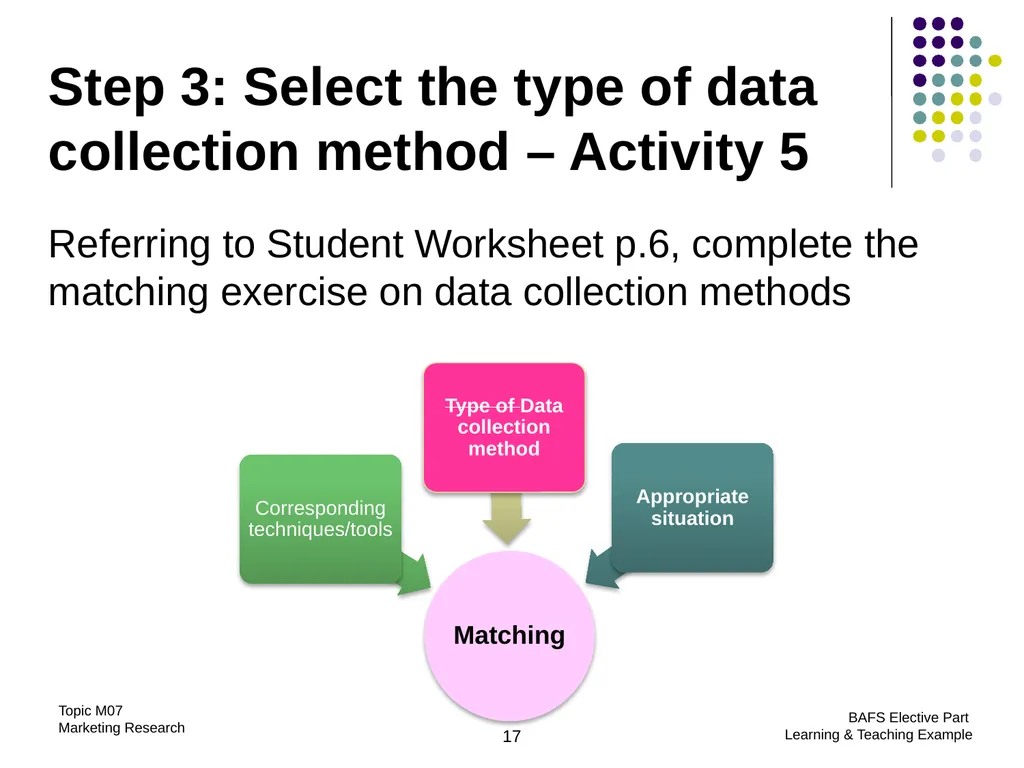
slide17. 17 Step 3: Select the type of data collection method – Activity 5 Referring to Student Worksheet p.6, complete the matching exercise on data collection methods<br>
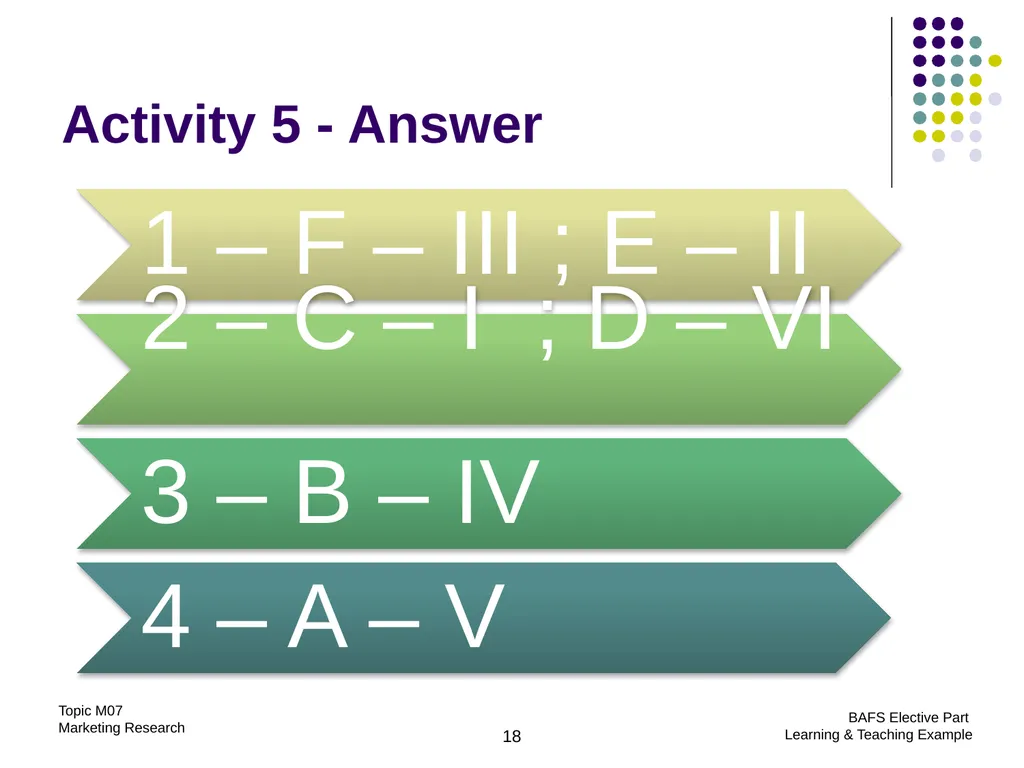
slide18. 18 Activity 5 - Answer<br>
slide19. 19 Extended Learning Activity (1) (optional): Questionnaire Survey<br>
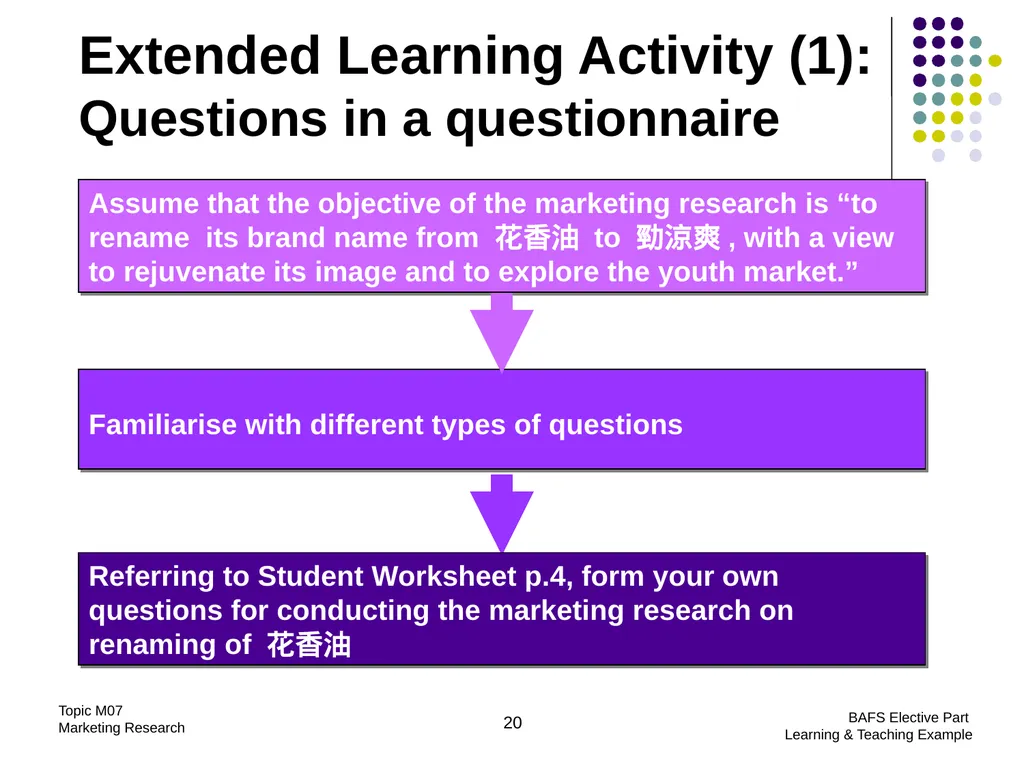
slide20. 20 Extended Learning Activity (1): Questions in a questionnaire Assume that the objective of the marketing research is “to rename its brand name from 花香油 to 勁涼爽, with a view to rejuvenate its image and to explore the youth market.” Familiarise with different types of questions Referring to Student Worksheet p.4, form your own questions for conducting the marketing research on renaming of 花香油<br>
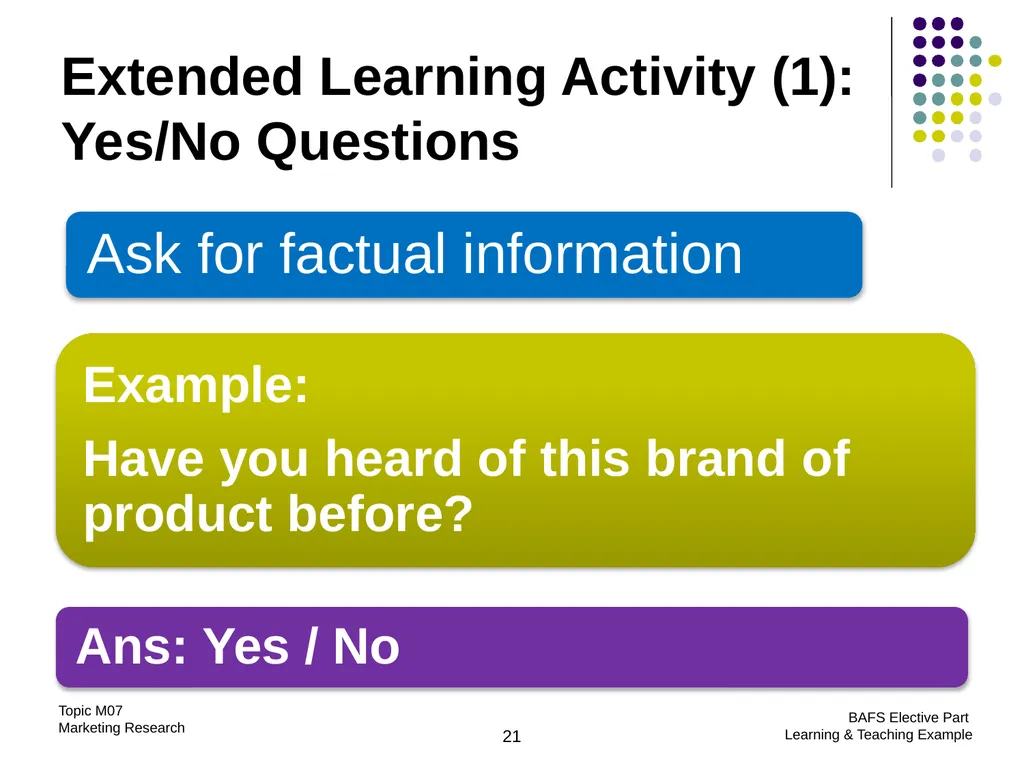
slide21. Extended Learning Activity (1): Yes/No Questions 21<br>
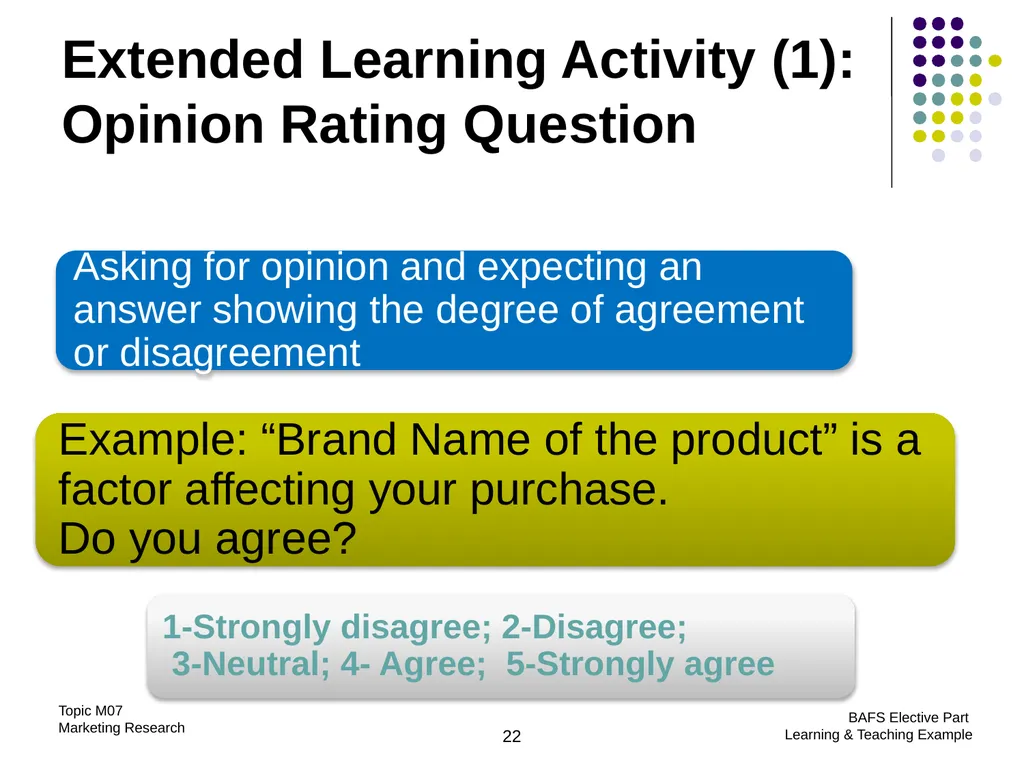
slide22. 22 Extended Learning Activity (1): Opinion Rating Question<br>
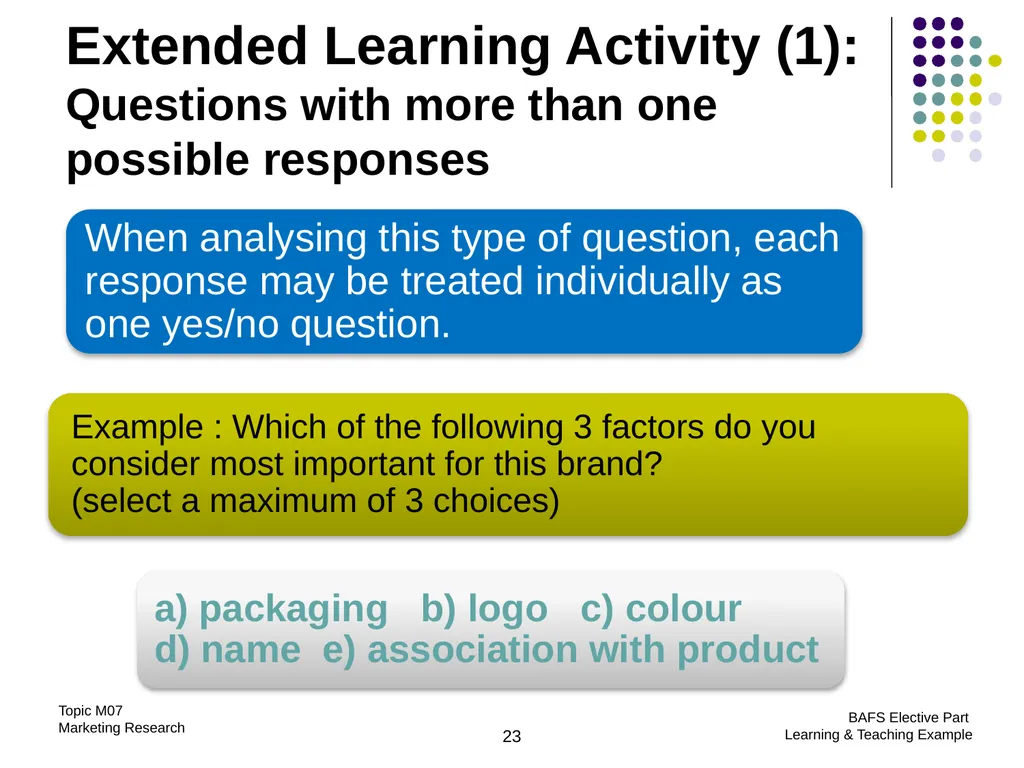
slide23. 23 Extended Learning Activity (1): Questions with more than one possible responses<br>
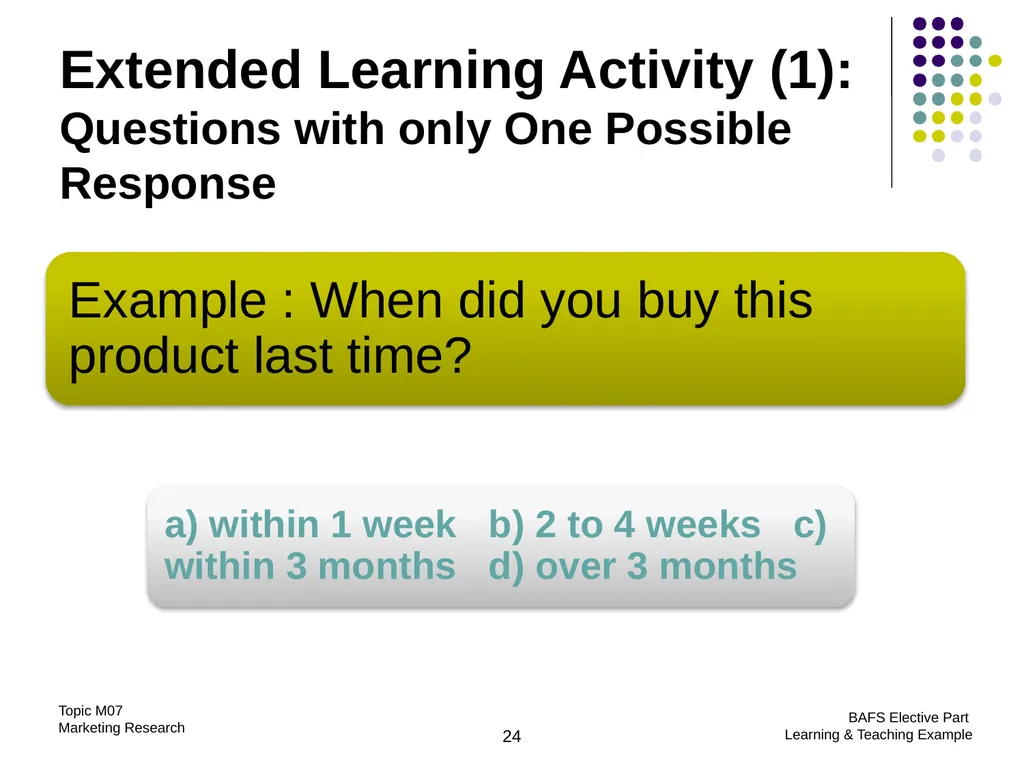
slide24. 24 Extended Learning Activity (1): Questions with only One Possible Response<br>
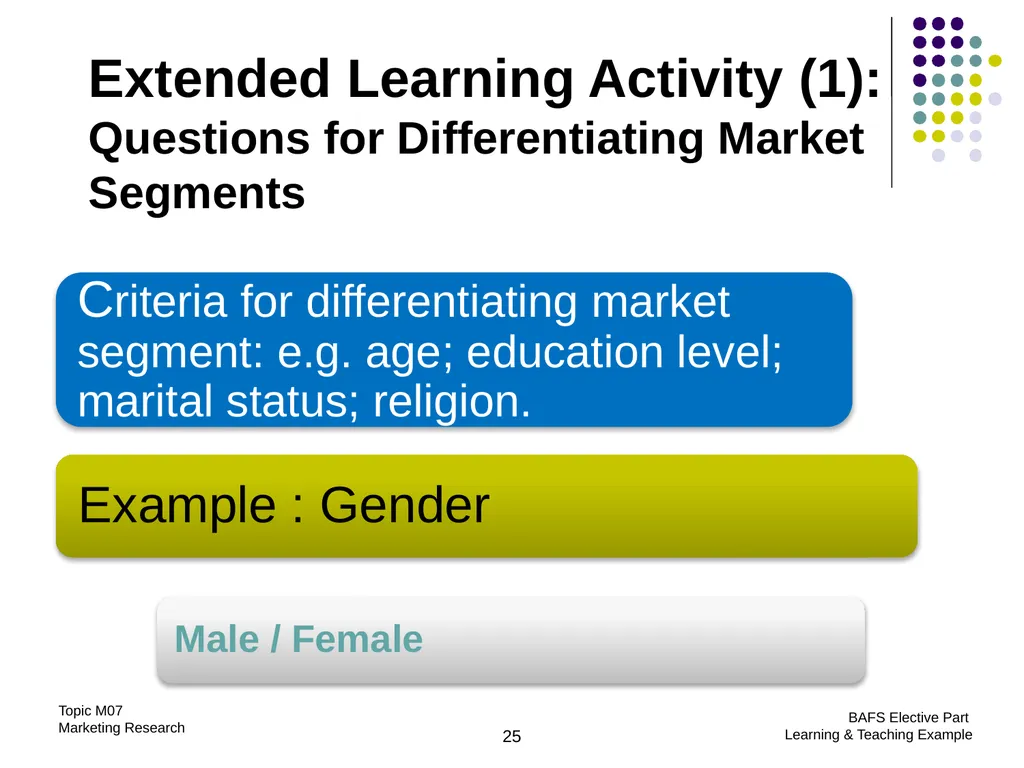
slide25. 25 Extended Learning Activity (1): Questions for Differentiating Market Segments<br>
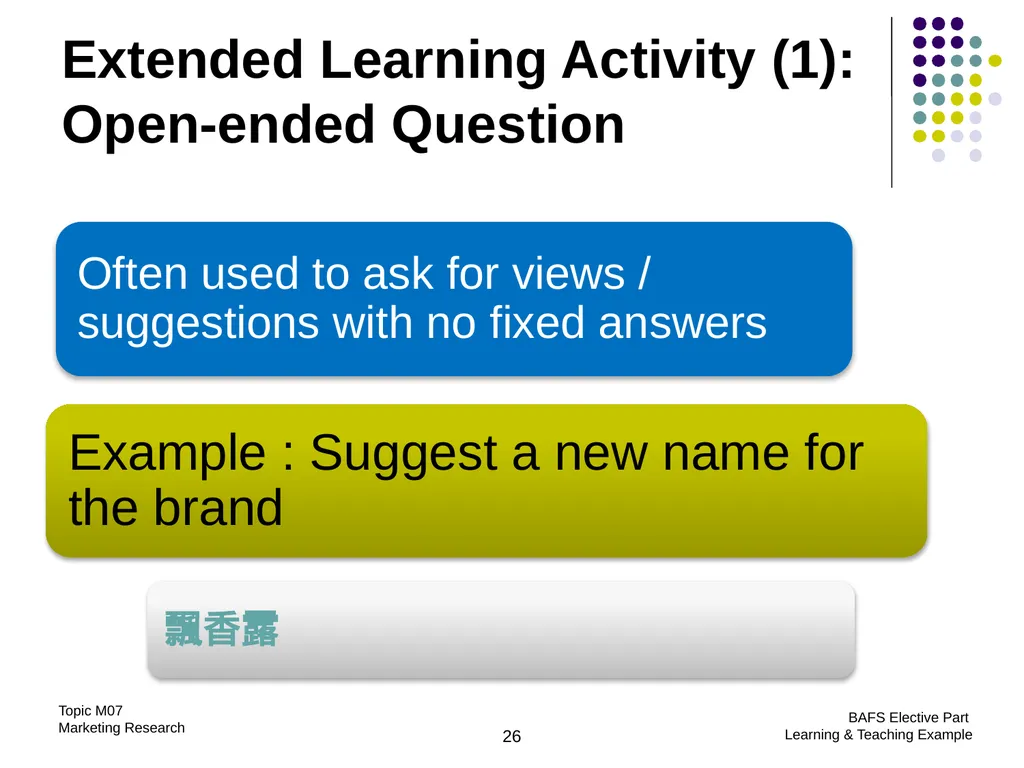
slide26. 26 Extended Learning Activity (1): Open-ended Question<br>
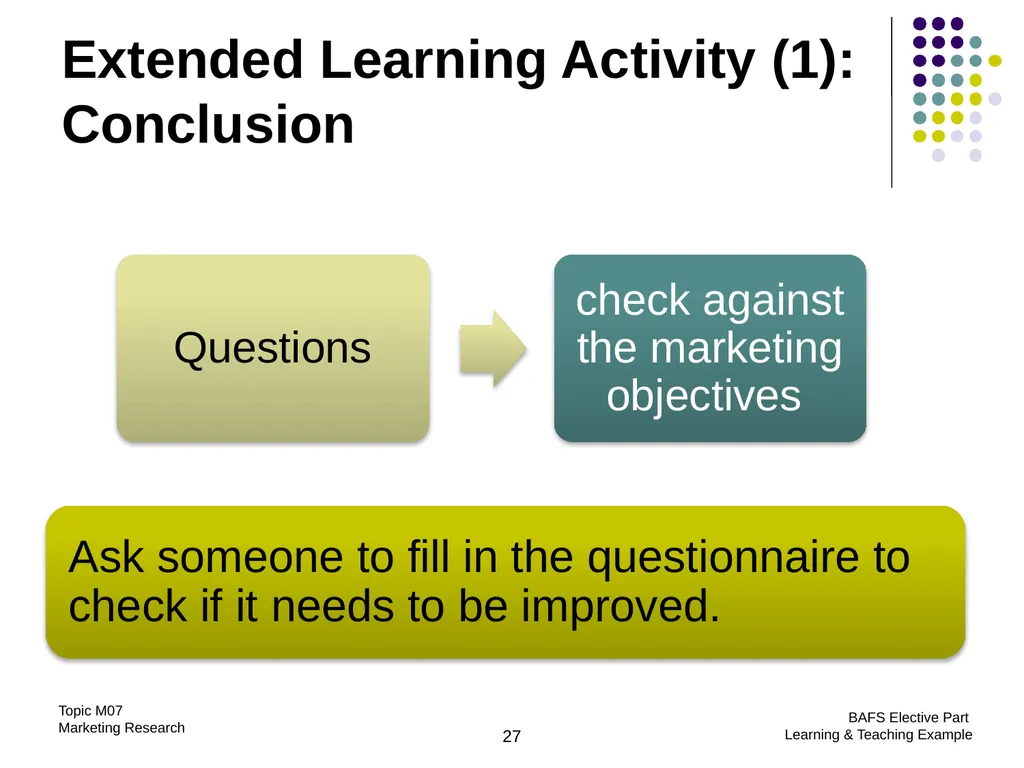
slide27. 27 Extended Learning Activity (1): Conclusion<br>
slide28. 28 End of Lesson 1<br>
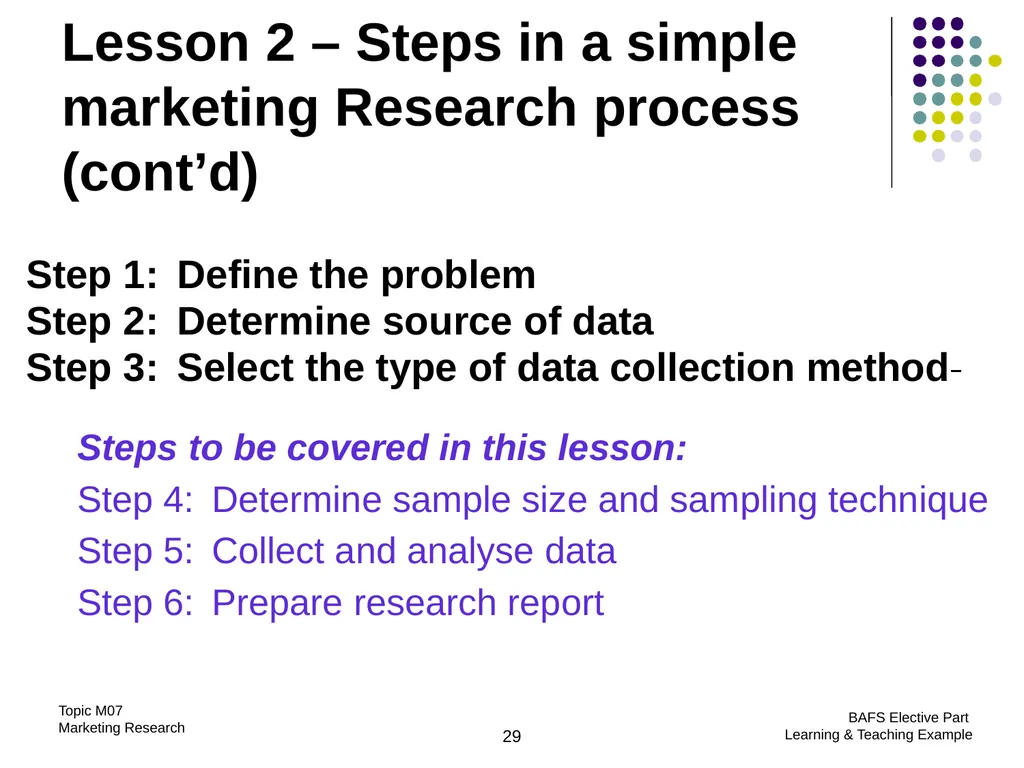
slide29. 29 Lesson 2 – Steps in a simple marketing Research process (cont’d) Step 1: Define the problem
Step 2: Determine source of data
Step 3: Select the type of data collection method
Steps to be covered in this lesson:
Step 4: Determine sample size and sampling technique
Step 5: Collect and analyse data
Step 6: Prepare research report<br>
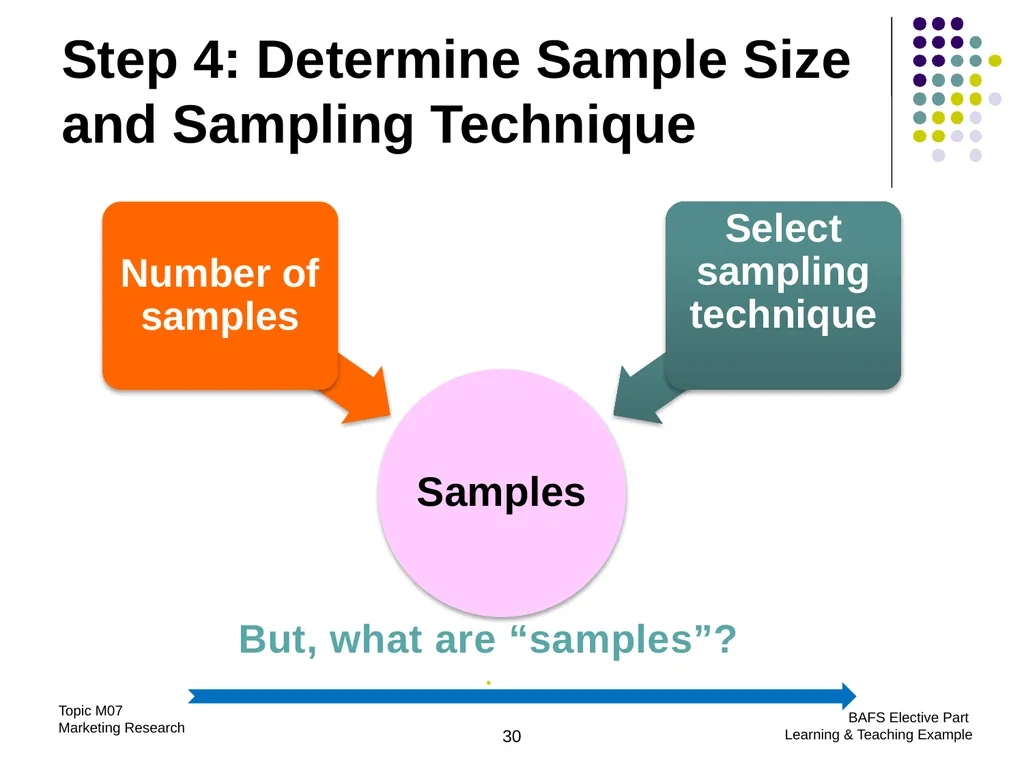
slide30. 30 Step 4: Determine Sample Size and Sampling Technique<br>
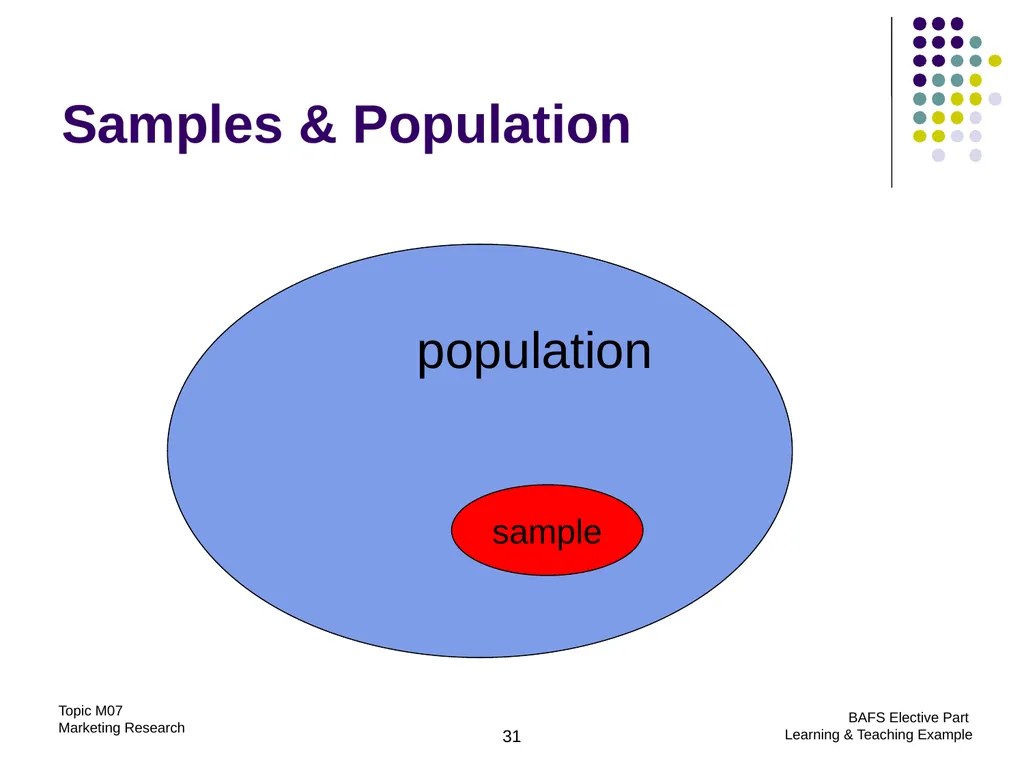
slide31. 31 population sample Samples & Population<br>
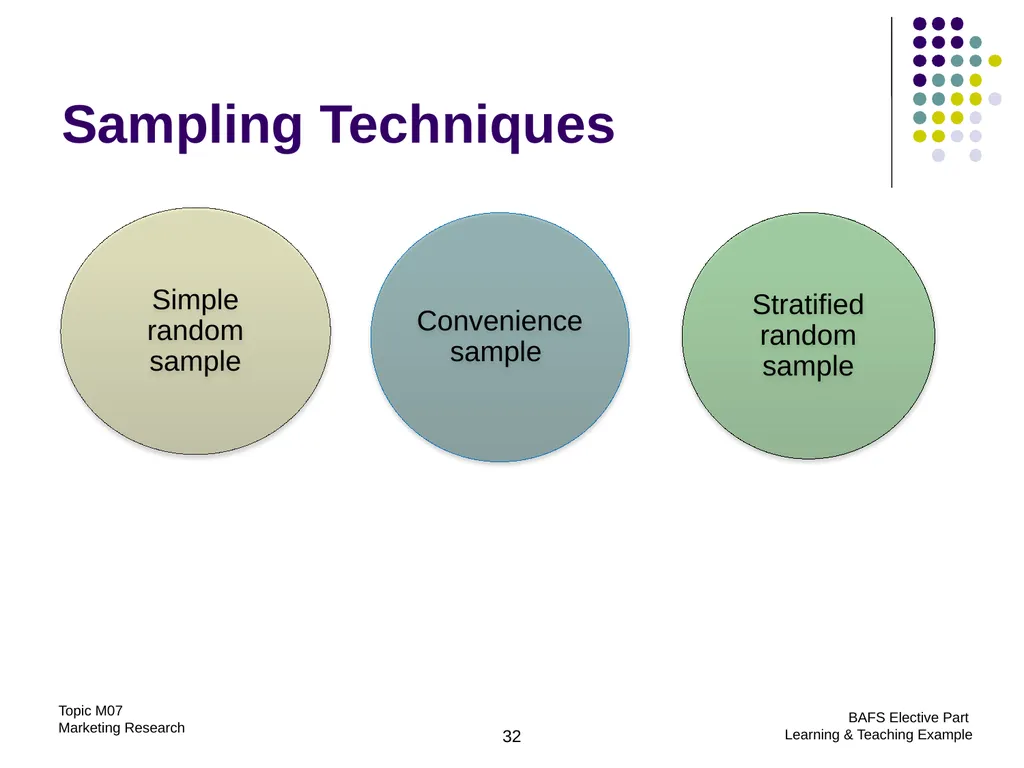
slide32. 32 Sampling Techniques<br>
slide33. 33 Activity 6: Sampling Techniques Referring to Student Worksheet p.9, complete the matching exercise on Sampling techniques.<br>
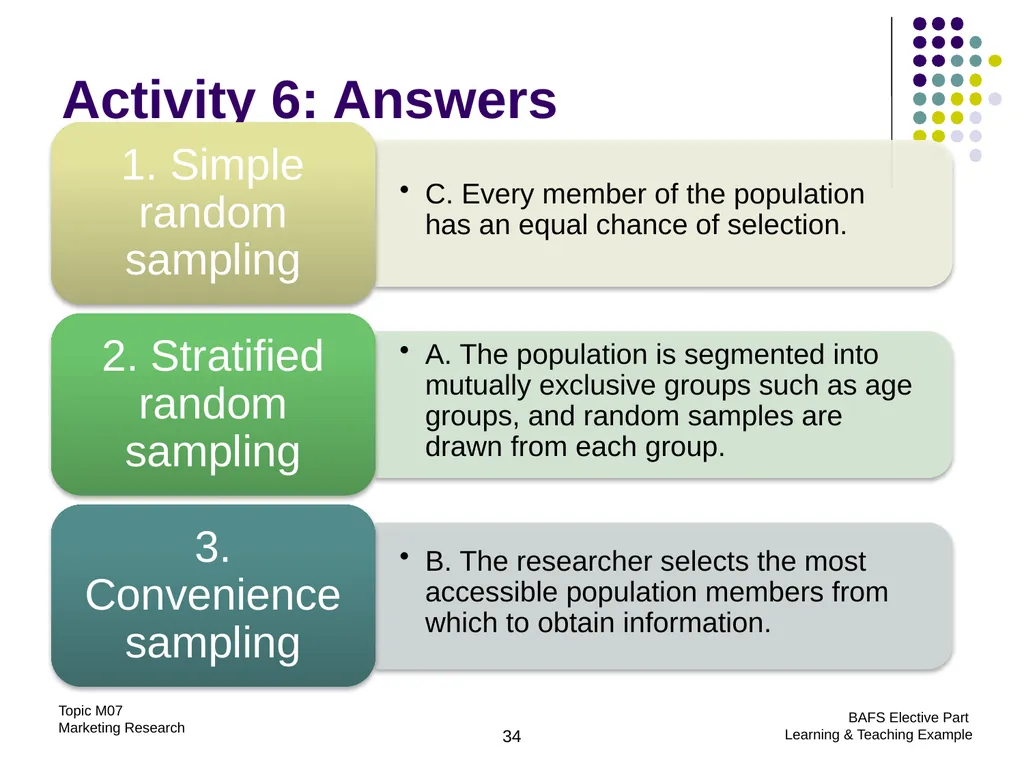
slide34. 34 Activity 6: Answers<br>
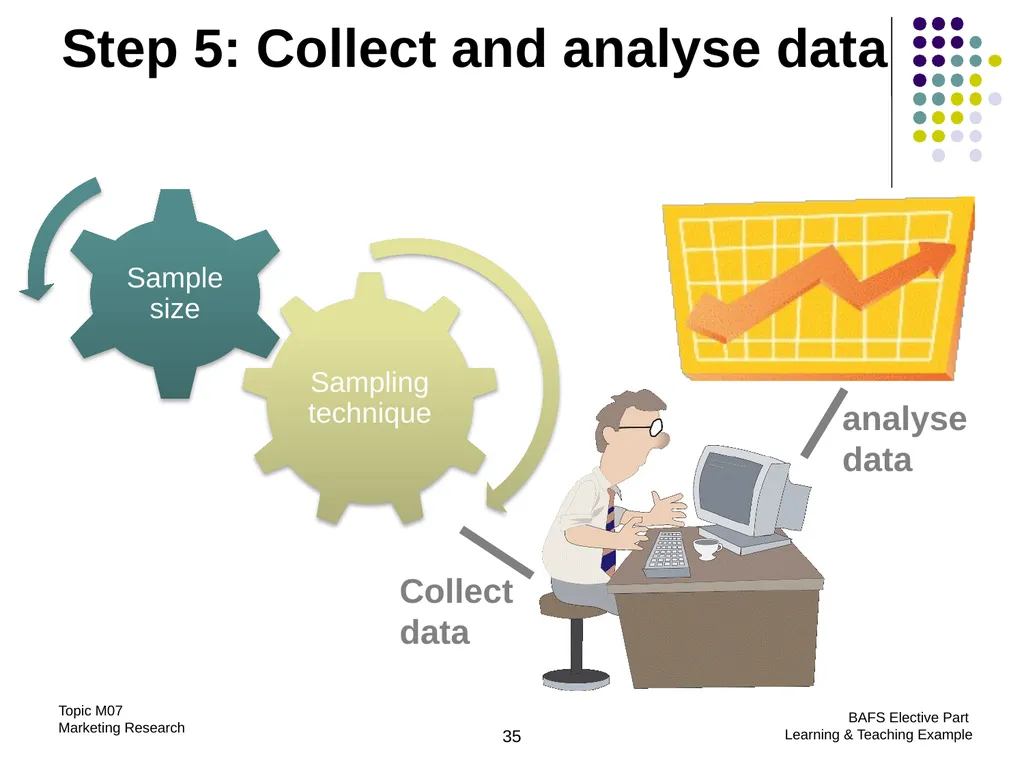
slide35. 35 Collect data analyse data Step 5: Collect and analyse data<br>
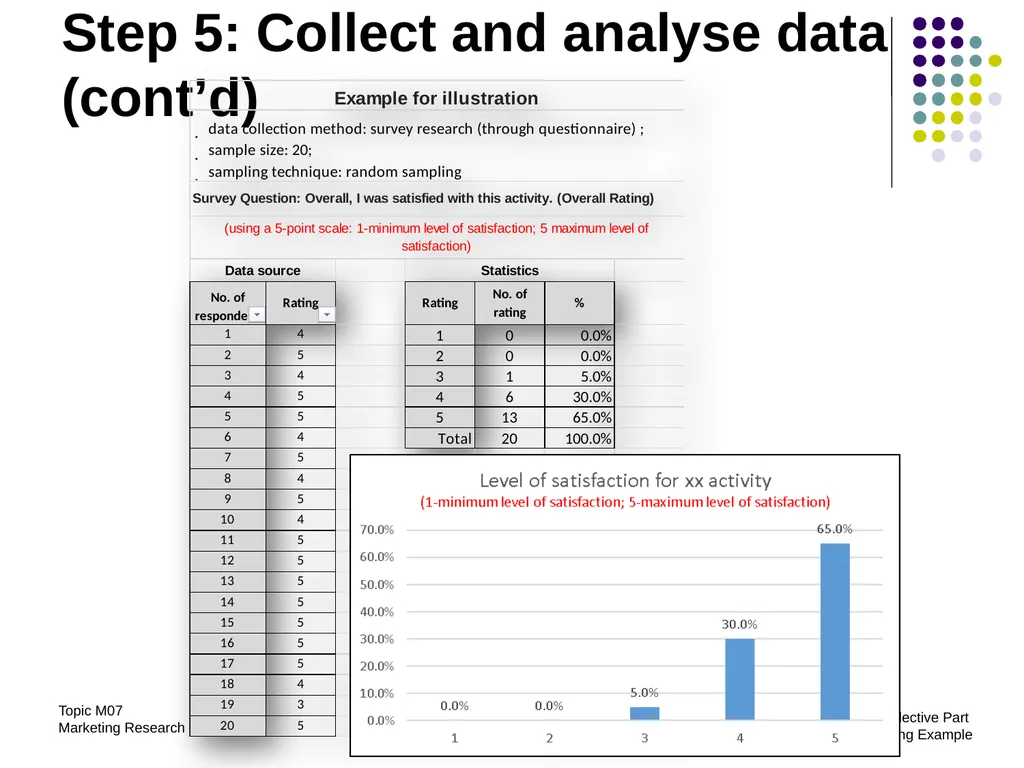
slide36. Step 5: Collect and analyse data (cont’d) 36<br>
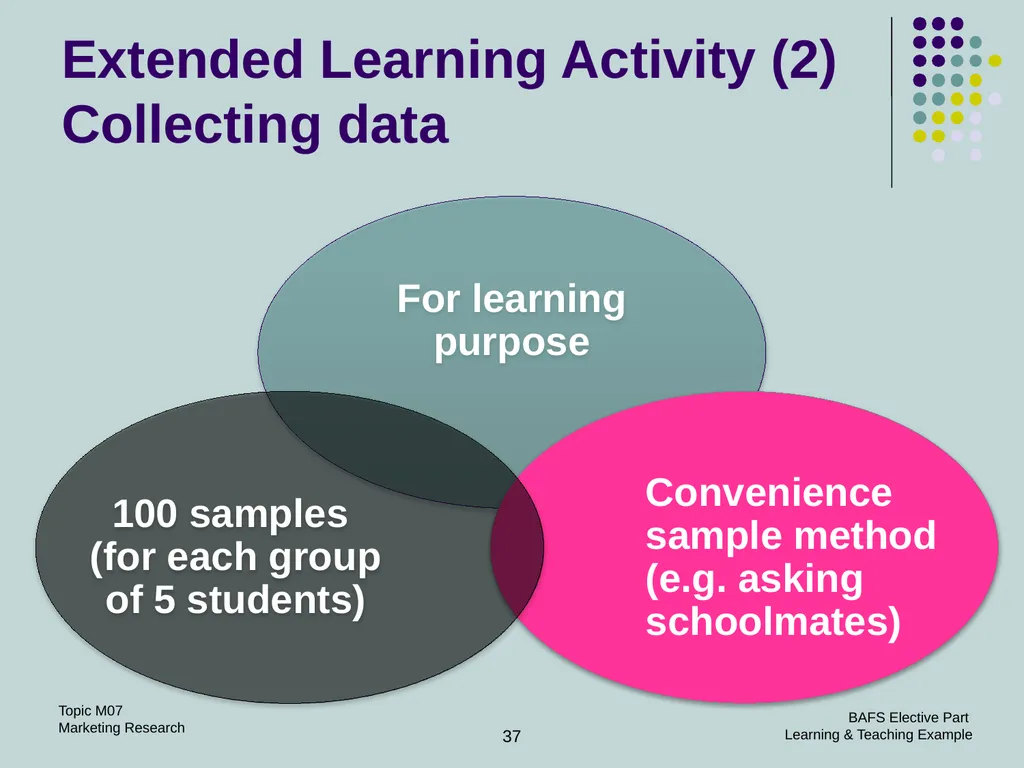
slide37. Extended Learning Activity (2) Collecting data 37<br>
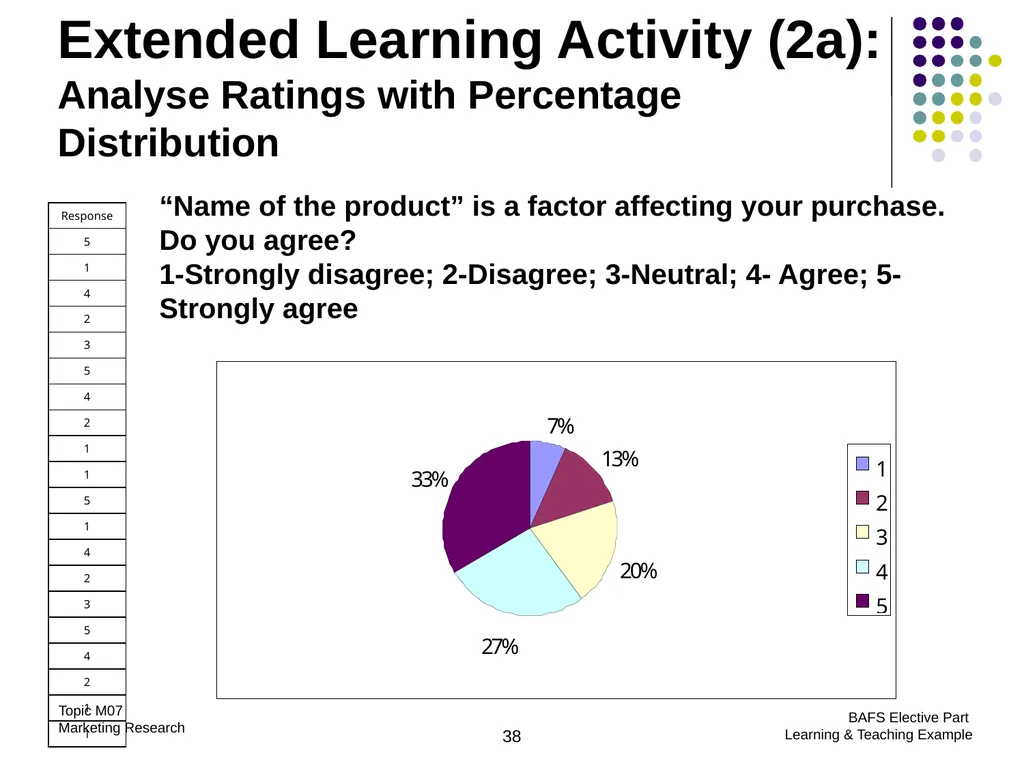
slide38. 38 Extended Learning Activity (2a): Analyse Ratings with Percentage Distribution “Name of the product” is a factor affecting your purchase.
Do you agree?
1-Strongly disagree; 2-Disagree; 3-Neutral; 4- Agree; 5-Strongly agree<br>
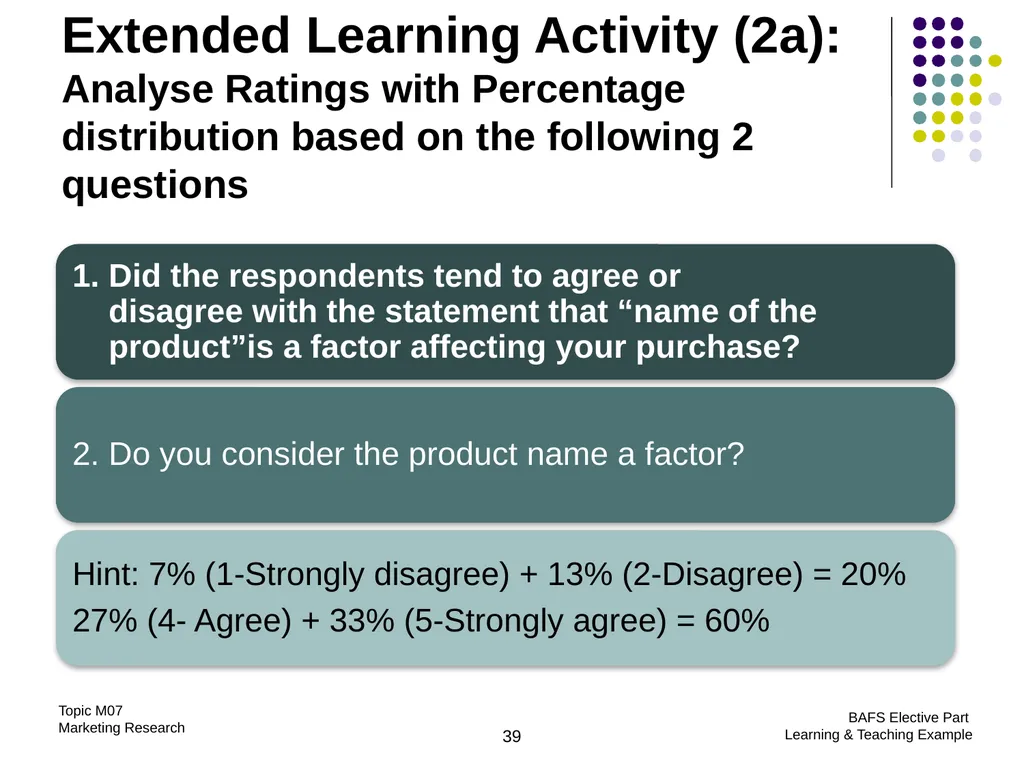
slide39. 39 Extended Learning Activity (2a): Analyse Ratings with Percentage distribution based on the following 2 questions<br>
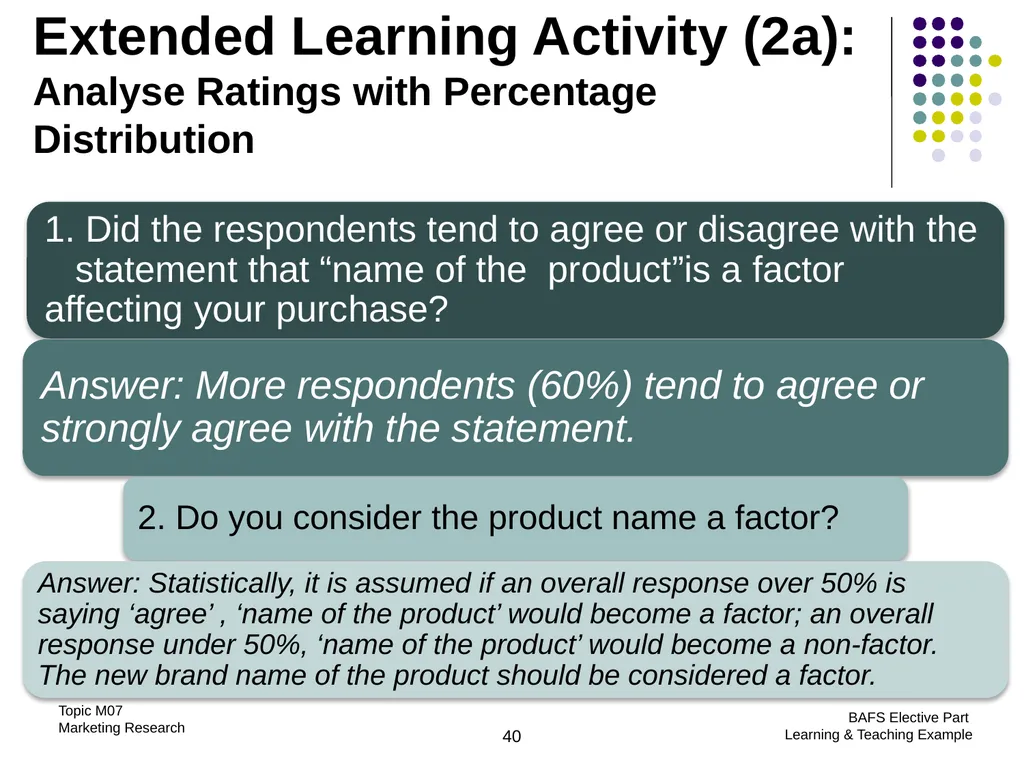
slide40. 40 Extended Learning Activity (2a): Analyse Ratings with Percentage Distribution<br>
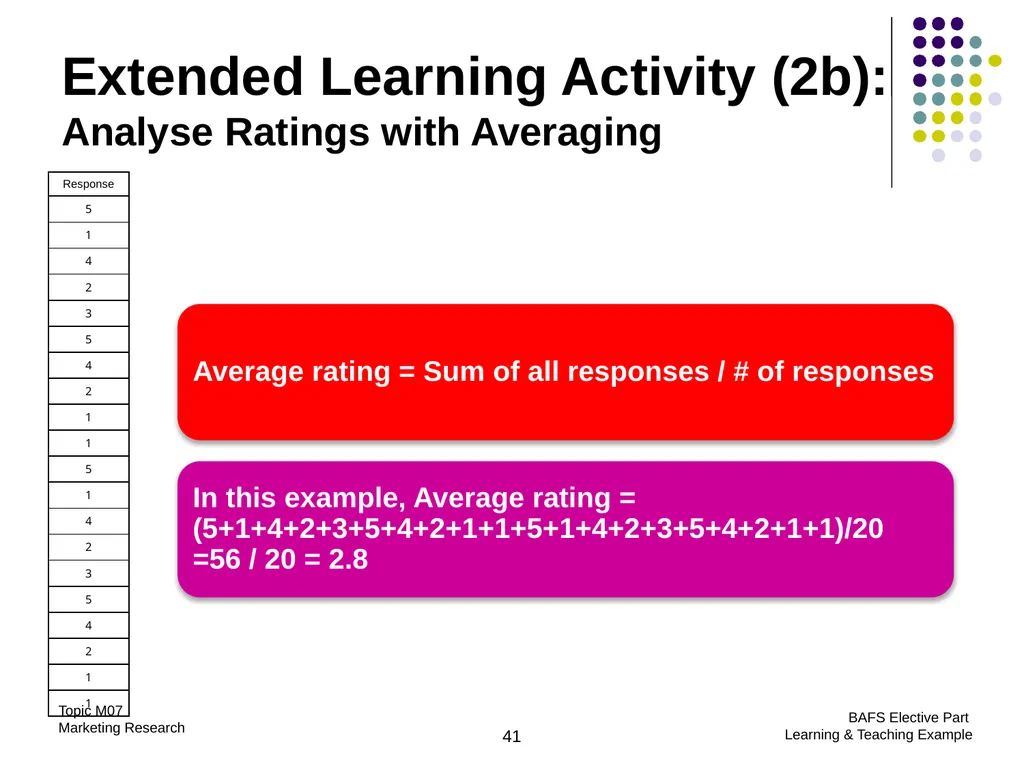
slide41. 41 Extended Learning Activity (2b): Analyse Ratings with Averaging<br>
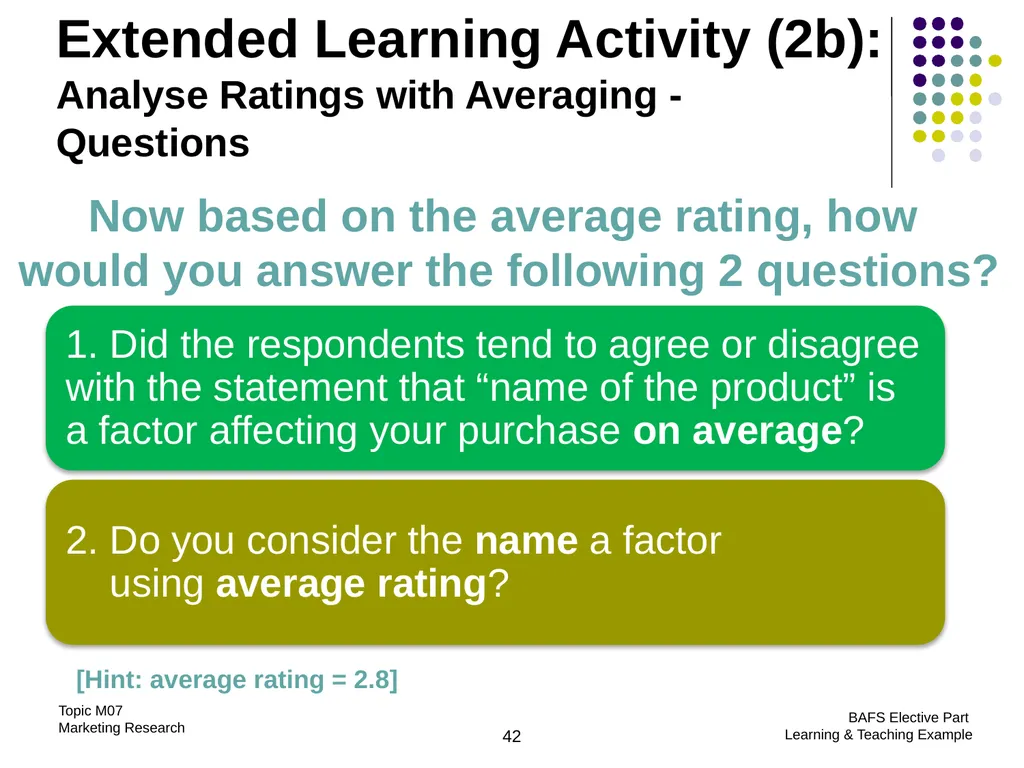
slide42. 42 Now based on the average rating, how
would you answer the following 2 questions? [Hint: average rating = 2.8] Extended Learning Activity (2b): Analyse Ratings with Averaging - Questions<br>
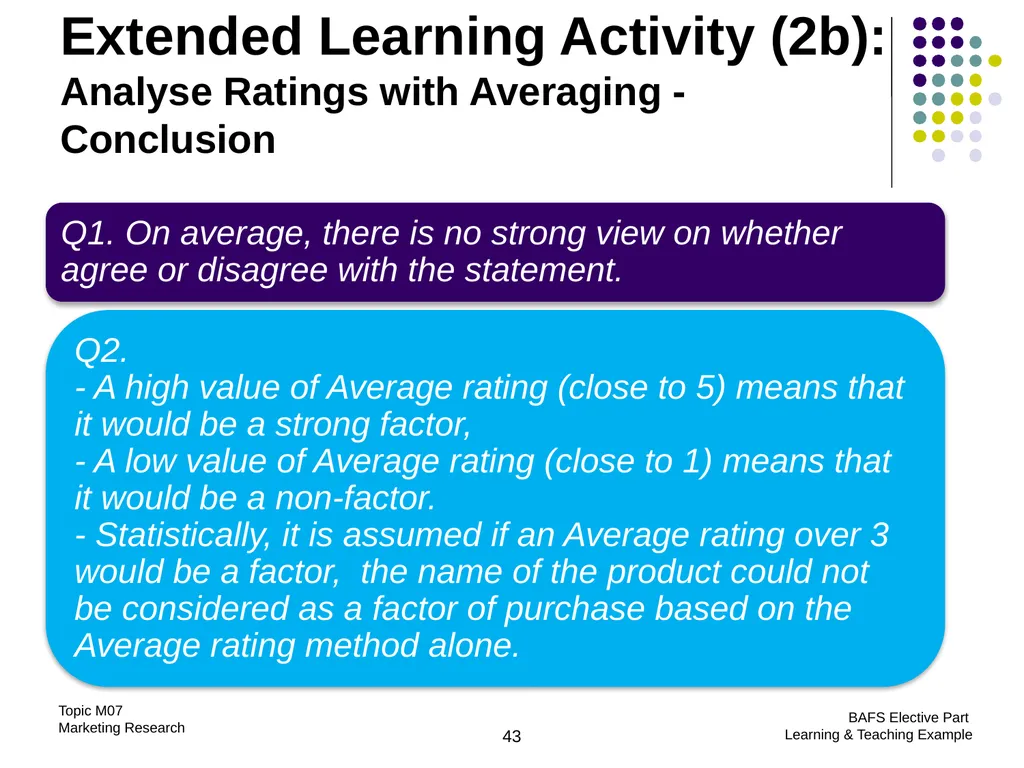
slide43. 43 Extended Learning Activity (2b): Analyse Ratings with Averaging - Conclusion<br>
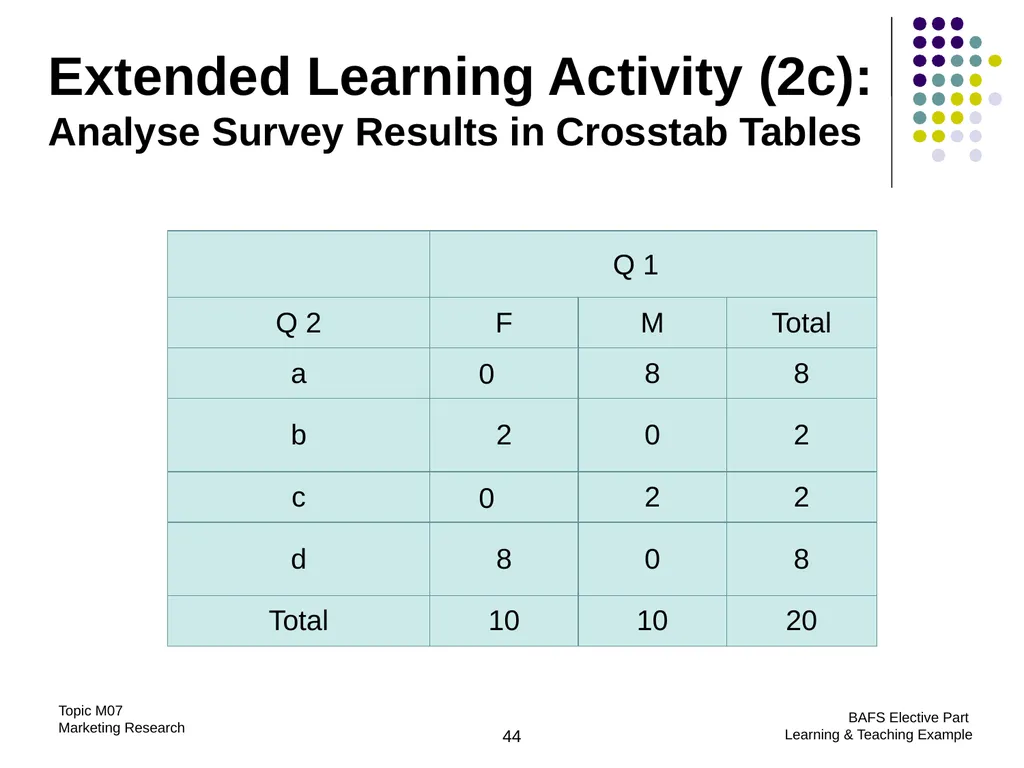
slide44. 44 Extended Learning Activity (2c): Analyse Survey Results in Crosstab Tables<br>
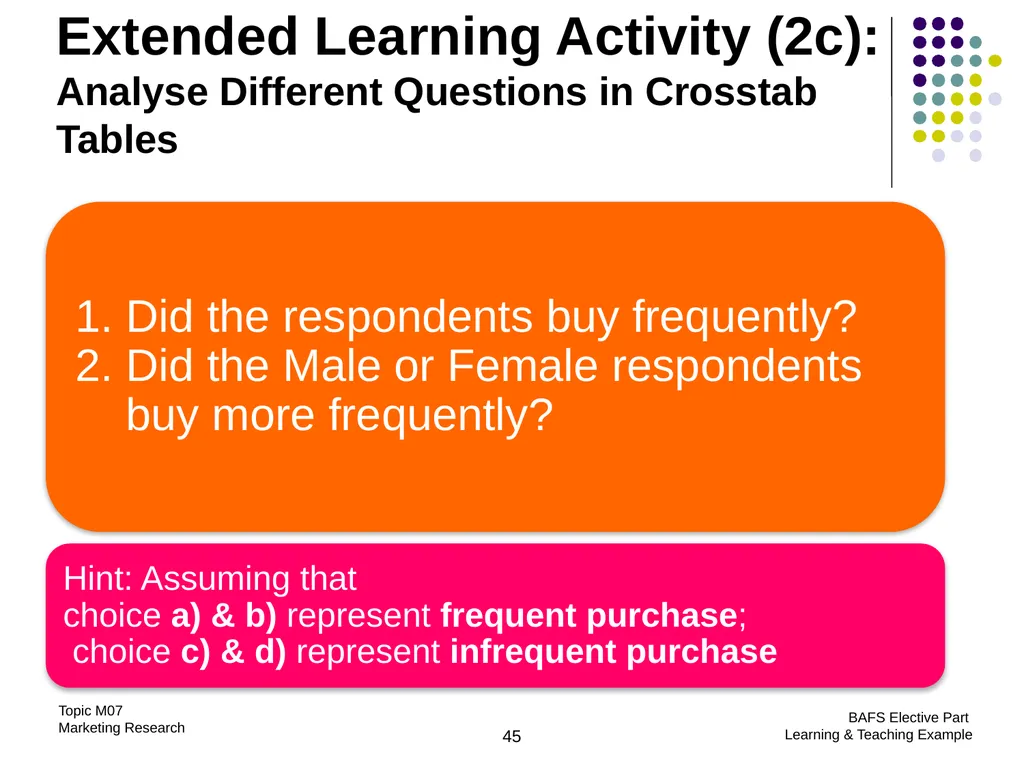
slide45. 45 Extended Learning Activity (2c): Analyse Different Questions in Crosstab Tables<br>
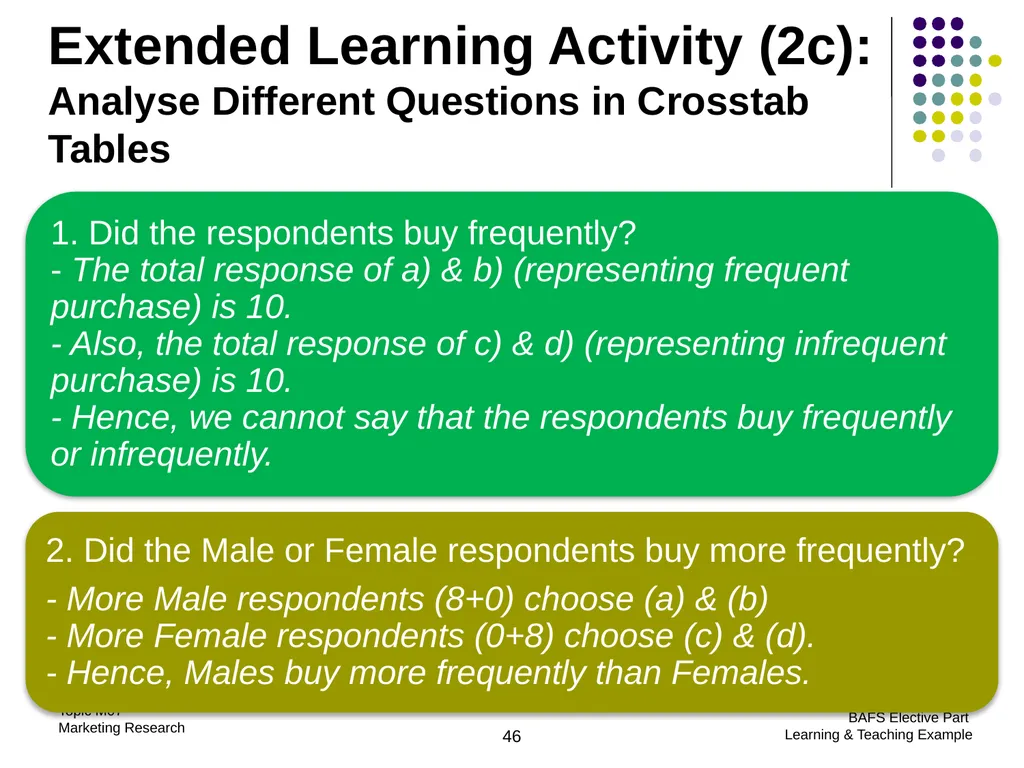
slide46. 46 Extended Learning Activity (2c): Analyse Different Questions in Crosstab Tables<br>
slide47. Step 6: Prepare Research Report 47 Summarising the research findings
Making recommendations<br>
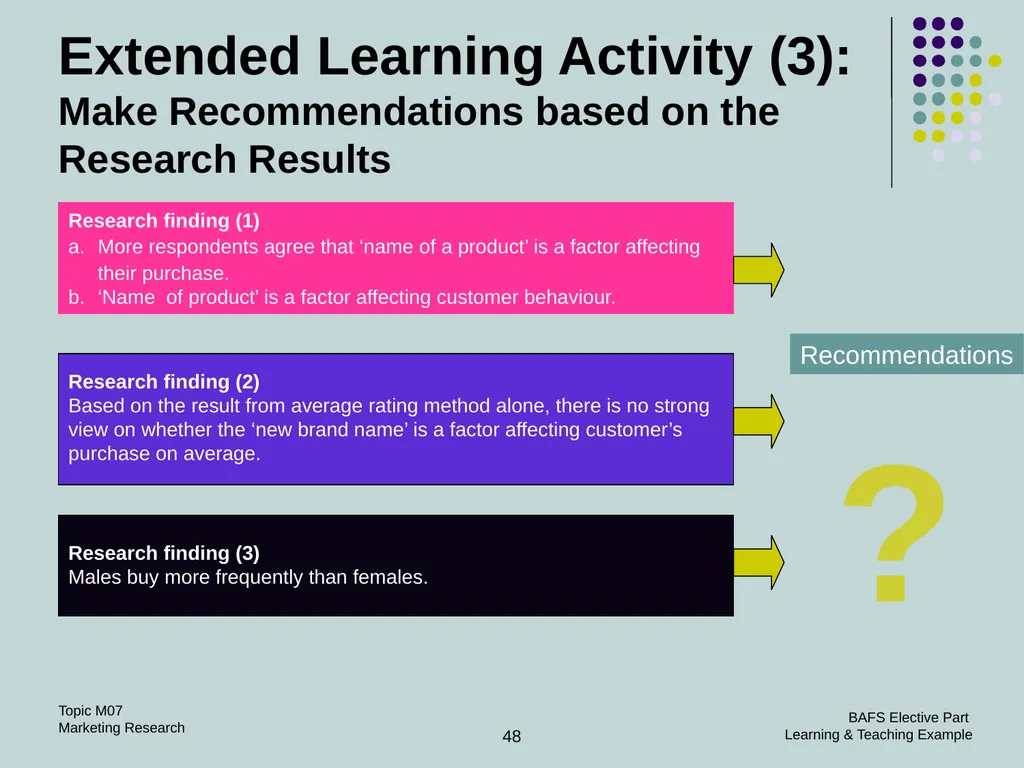
slide48. 48 Recommendations ? Extended Learning Activity (3): Make Recommendations based on the Research Results Research finding (1)
More respondents agree that ‘name of a product’ is a factor affecting their purchase.
‘Name of product’ is a factor affecting customer behaviour. Research finding (2)
Based on the result from average rating method alone, there is no strong view on whether the ‘new brand name’ is a factor affecting customer’s purchase on average. Research finding (3)
Males buy more frequently than females.<br>
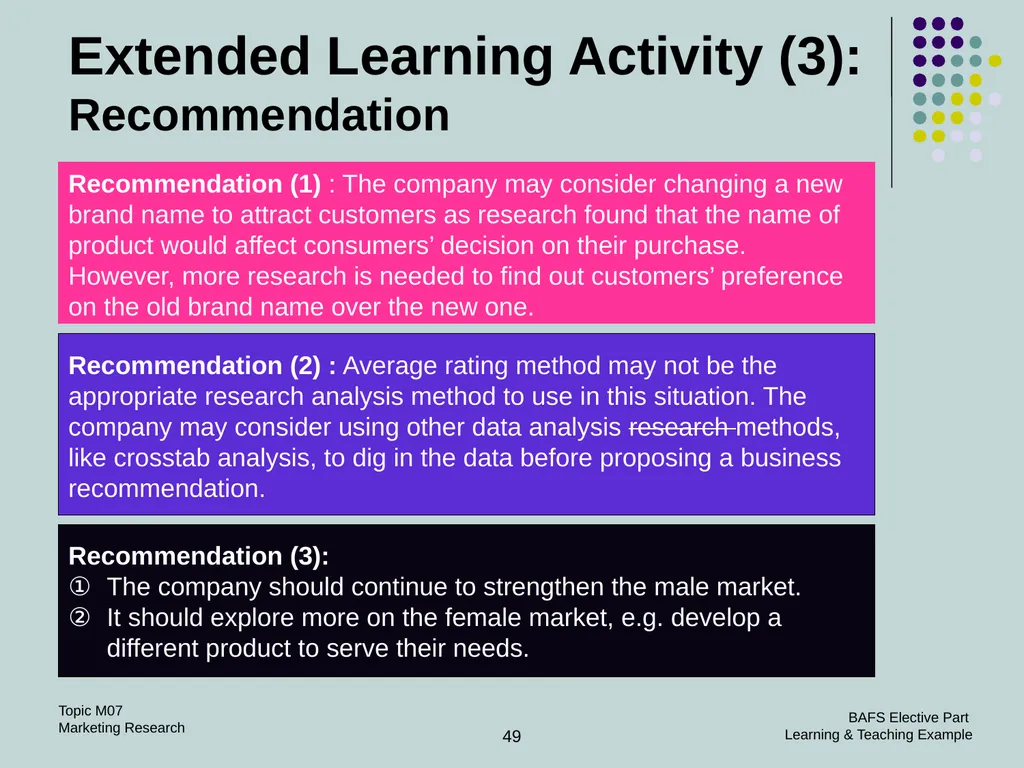
slide49. 49 Extended Learning Activity (3): Recommendation Recommendation (1) : The company may consider changing a new brand name to attract customers as research found that the name of product would affect consumers’ decision on their purchase. However, more research is needed to find out customers’ preference on the old brand name over the new one. Recommendation (2) : Average rating method may not be the appropriate research analysis method to use in this situation. The company may consider using other data analysis research methods, like crosstab analysis, to dig in the data before proposing a business recommendation. Recommendation (3):
The company should continue to strengthen the male market.
It should explore more on the female market, e.g. develop a different product to serve their needs.<br>
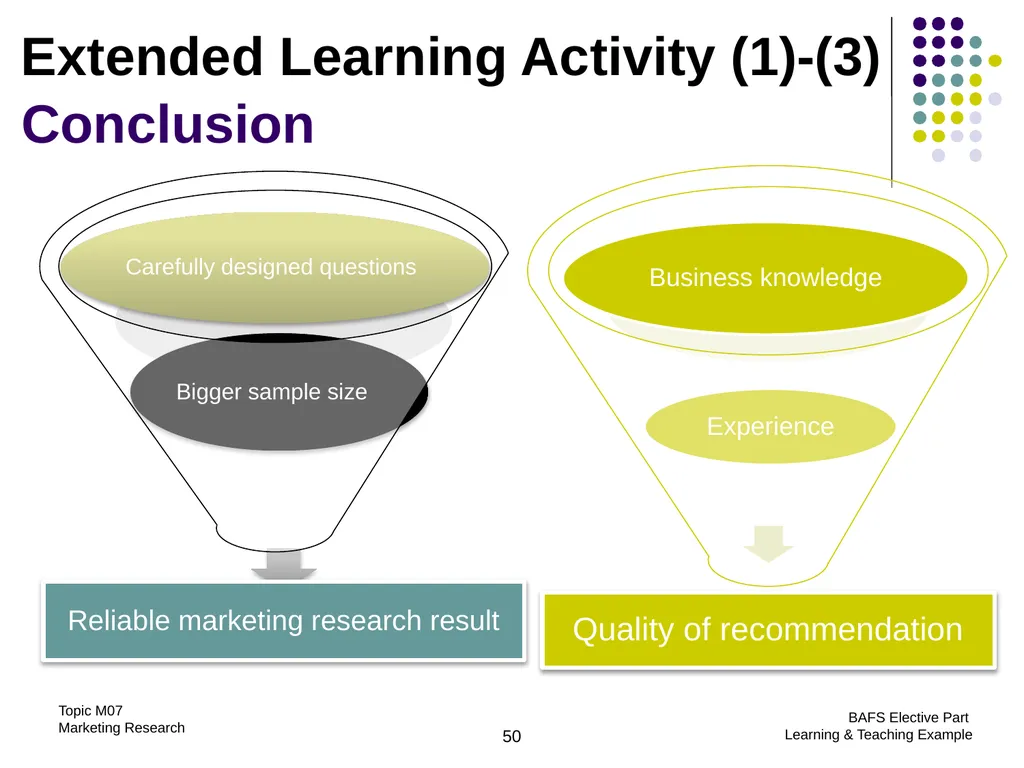
slide50. 50 Conclusion Extended Learning Activity (1)-(3)<br>
slide51. 51 The End<br>
Marketing Research Technology Education Section Education Bureau, HKSARG
2024 BAFS Elective Part Business Management Module – Marketing Management<br>
slide2. 2 Activity 1: Research or not? “Common sense of an experienced businessman is as good as, if not better than, findings from marketing research.” What’s your point of view?<br>
slide3. 3 Marketing Research is common & important for business decision-making. Real life examples: (1) 7-11 opening new stores (2) McDonald’s launching a new product Activity 1: Conclusion<br>
slide4. 4<br>
slide5. 5 Activity 2: Steps in a simple marketing research process<br>
slide6. 6 Activity 2: Answer<br>
slide7. 7 Step 1: Define the problem<br>
slide8. 8 Activity 3: Marketing research objectives<br>
slide9. 9 Activity 3: Conclusion and Answer (1)<br>
slide10. 10 Activity 3: Conclusion and Answer (2)<br>
slide11. 11 Read the case Activity 4: Case Study<br>
slide12. 12 What is the problem? What are the marketing objectives? Activity 4: Case Study<br>
slide13. 13 Activity 4: Case Study – Suggested Answer<br>
slide14. 14 Step 2: Determine source of data<br>
slide15. 15 Research company Government agency Step 2: Determine source of data (secondary data)<br>
slide16. 16 Step 2: Determine source of data (primary data)<br>
slide17. 17 Step 3: Select the type of data collection method – Activity 5 Referring to Student Worksheet p.6, complete the matching exercise on data collection methods<br>
slide18. 18 Activity 5 - Answer<br>
slide19. 19 Extended Learning Activity (1) (optional): Questionnaire Survey<br>
slide20. 20 Extended Learning Activity (1): Questions in a questionnaire Assume that the objective of the marketing research is “to rename its brand name from 花香油 to 勁涼爽, with a view to rejuvenate its image and to explore the youth market.” Familiarise with different types of questions Referring to Student Worksheet p.4, form your own questions for conducting the marketing research on renaming of 花香油<br>
slide21. Extended Learning Activity (1): Yes/No Questions 21<br>
slide22. 22 Extended Learning Activity (1): Opinion Rating Question<br>
slide23. 23 Extended Learning Activity (1): Questions with more than one possible responses<br>
slide24. 24 Extended Learning Activity (1): Questions with only One Possible Response<br>
slide25. 25 Extended Learning Activity (1): Questions for Differentiating Market Segments<br>
slide26. 26 Extended Learning Activity (1): Open-ended Question<br>
slide27. 27 Extended Learning Activity (1): Conclusion<br>
slide28. 28 End of Lesson 1<br>
slide29. 29 Lesson 2 – Steps in a simple marketing Research process (cont’d) Step 1: Define the problem
Step 2: Determine source of data
Step 3: Select the type of data collection method
Steps to be covered in this lesson:
Step 4: Determine sample size and sampling technique
Step 5: Collect and analyse data
Step 6: Prepare research report<br>
slide30. 30 Step 4: Determine Sample Size and Sampling Technique<br>
slide31. 31 population sample Samples & Population<br>
slide32. 32 Sampling Techniques<br>
slide33. 33 Activity 6: Sampling Techniques Referring to Student Worksheet p.9, complete the matching exercise on Sampling techniques.<br>
slide34. 34 Activity 6: Answers<br>
slide35. 35 Collect data analyse data Step 5: Collect and analyse data<br>
slide36. Step 5: Collect and analyse data (cont’d) 36<br>
slide37. Extended Learning Activity (2) Collecting data 37<br>
slide38. 38 Extended Learning Activity (2a): Analyse Ratings with Percentage Distribution “Name of the product” is a factor affecting your purchase.
Do you agree?
1-Strongly disagree; 2-Disagree; 3-Neutral; 4- Agree; 5-Strongly agree<br>
slide39. 39 Extended Learning Activity (2a): Analyse Ratings with Percentage distribution based on the following 2 questions<br>
slide40. 40 Extended Learning Activity (2a): Analyse Ratings with Percentage Distribution<br>
slide41. 41 Extended Learning Activity (2b): Analyse Ratings with Averaging<br>
slide42. 42 Now based on the average rating, how
would you answer the following 2 questions? [Hint: average rating = 2.8] Extended Learning Activity (2b): Analyse Ratings with Averaging - Questions<br>
slide43. 43 Extended Learning Activity (2b): Analyse Ratings with Averaging - Conclusion<br>
slide44. 44 Extended Learning Activity (2c): Analyse Survey Results in Crosstab Tables<br>
slide45. 45 Extended Learning Activity (2c): Analyse Different Questions in Crosstab Tables<br>
slide46. 46 Extended Learning Activity (2c): Analyse Different Questions in Crosstab Tables<br>
slide47. Step 6: Prepare Research Report 47 Summarising the research findings
Making recommendations<br>
slide48. 48 Recommendations ? Extended Learning Activity (3): Make Recommendations based on the Research Results Research finding (1)
More respondents agree that ‘name of a product’ is a factor affecting their purchase.
‘Name of product’ is a factor affecting customer behaviour. Research finding (2)
Based on the result from average rating method alone, there is no strong view on whether the ‘new brand name’ is a factor affecting customer’s purchase on average. Research finding (3)
Males buy more frequently than females.<br>
slide49. 49 Extended Learning Activity (3): Recommendation Recommendation (1) : The company may consider changing a new brand name to attract customers as research found that the name of product would affect consumers’ decision on their purchase. However, more research is needed to find out customers’ preference on the old brand name over the new one. Recommendation (2) : Average rating method may not be the appropriate research analysis method to use in this situation. The company may consider using other data analysis research methods, like crosstab analysis, to dig in the data before proposing a business recommendation. Recommendation (3):
The company should continue to strengthen the male market.
It should explore more on the female market, e.g. develop a different product to serve their needs.<br>
slide50. 50 Conclusion Extended Learning Activity (1)-(3)<br>
slide51. 51 The End<br>