
TOPIC.NINE: SMALL BUSINES INNOVATION. Definition

Description: TOPIC.NINE: SMALL BUSINES INNOVATION. Definition of small businesses These are independently owned and operated enterprises that have a relatively small number of employees and annual revenue. Characteristics of small businesses.
Related Topics
Download Presentation
"TOPIC.NINE: SMALL BUSINES INNOVATION. Definition" is the property of its rightful owner. Permission is granted to download and print the materials on this website for personal, non-commercial use only, and to display it on your personal computer provided you do not modify the materials and that you retain all copyright notices contained in the materials. By downloading content from our website, you accept the terms of this agreement.
Presentation Transcript
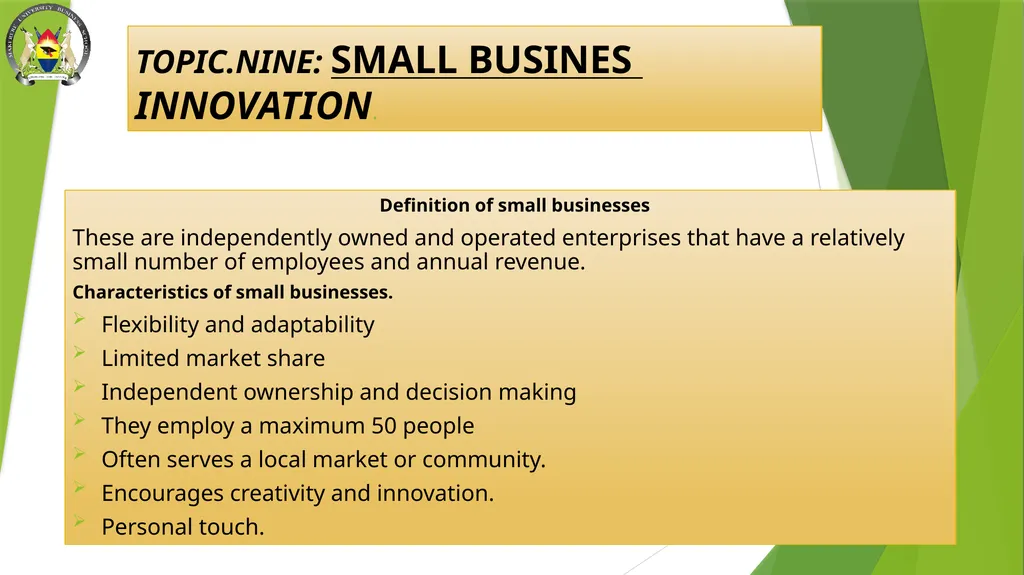
slide1. TOPIC.NINE: SMALL BUSINES INNOVATION. Definition of small businesses
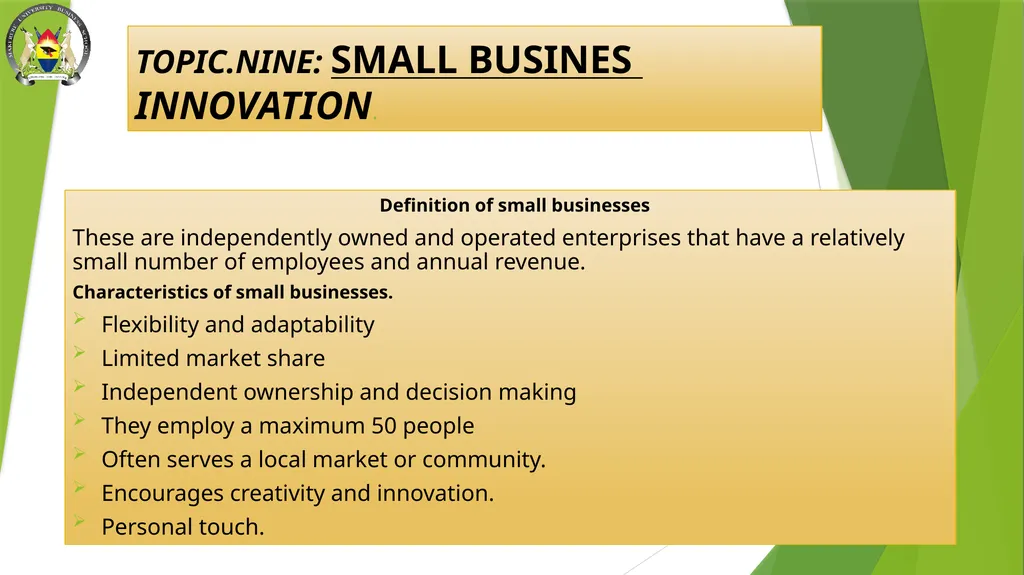
These are independently owned and operated enterprises that have a relatively small number of employees and annual revenue.
Characteristics of small businesses.
Flexibility and adaptability
Limited market share
Independent ownership and decision making
They employ a maximum 50 people
Often serves a local market or community.
Encourages creativity and innovation.
Personal touch.<br>
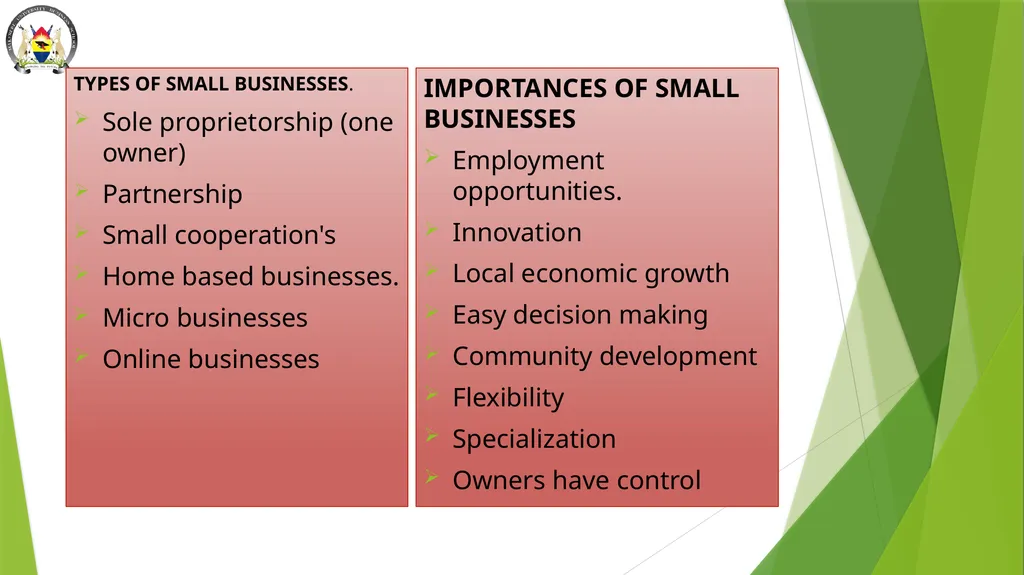
slide2. TYPES OF SMALL BUSINESSES.
Sole proprietorship (one owner)
Partnership
Small cooperation's
Home based businesses.
Micro businesses
Online businesses IMPORTANCES OF SMALL BUSINESSES
Employment opportunities.
Innovation
Local economic growth
Easy decision making
Community development
Flexibility
Specialization
Owners have control<br>
slide3. CHALLENGES OF SMALL BUSINESSES.
Limited resources
Limited market research
Limited access to credit
Limited benefits
Insecurity
Higher labour costs
Higher risks
Limited technology
Limited internationally<br>
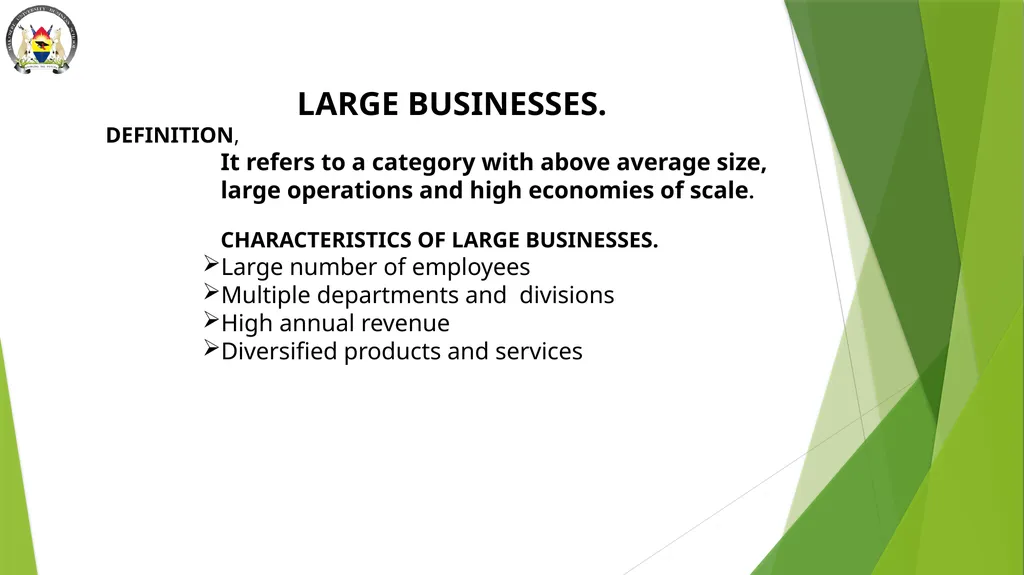
slide4. LARGE BUSINESSES.
DEFINITION,
It refers to a category with above average size, large operations and high economies of scale.
CHARACTERISTICS OF LARGE BUSINESSES.
Large number of employees
Multiple departments and divisions
High annual revenue
Diversified products and services<br>
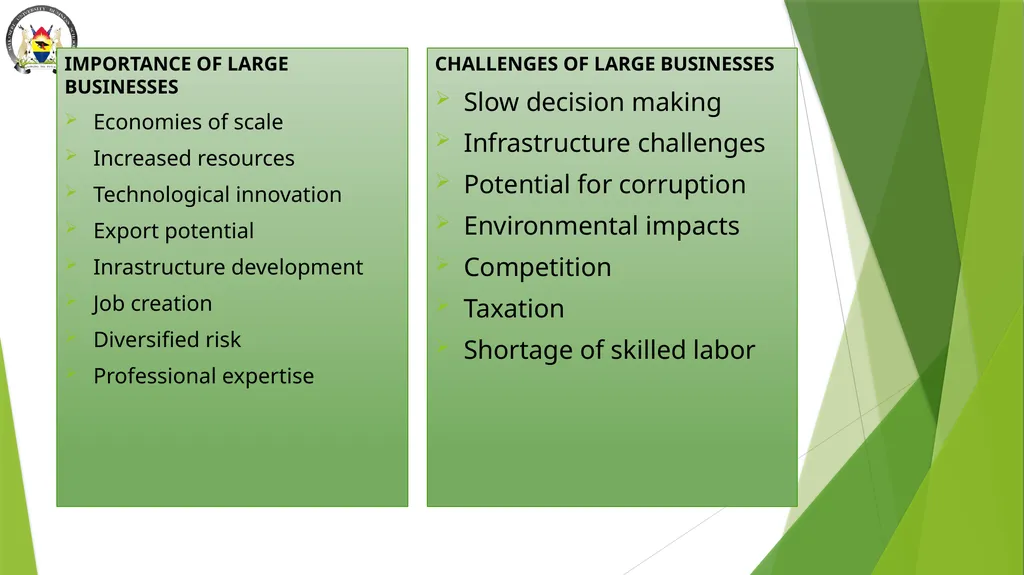
slide5. IMPORTANCE OF LARGE BUSINESSES
Economies of scale
Increased resources
Technological innovation
Export potential
Inrastructure development
Job creation
Diversified risk
Professional expertise CHALLENGES OF LARGE BUSINESSES
Slow decision making
Infrastructure challenges
Potential for corruption
Environmental impacts
Competition
Taxation
Shortage of skilled labor<br>
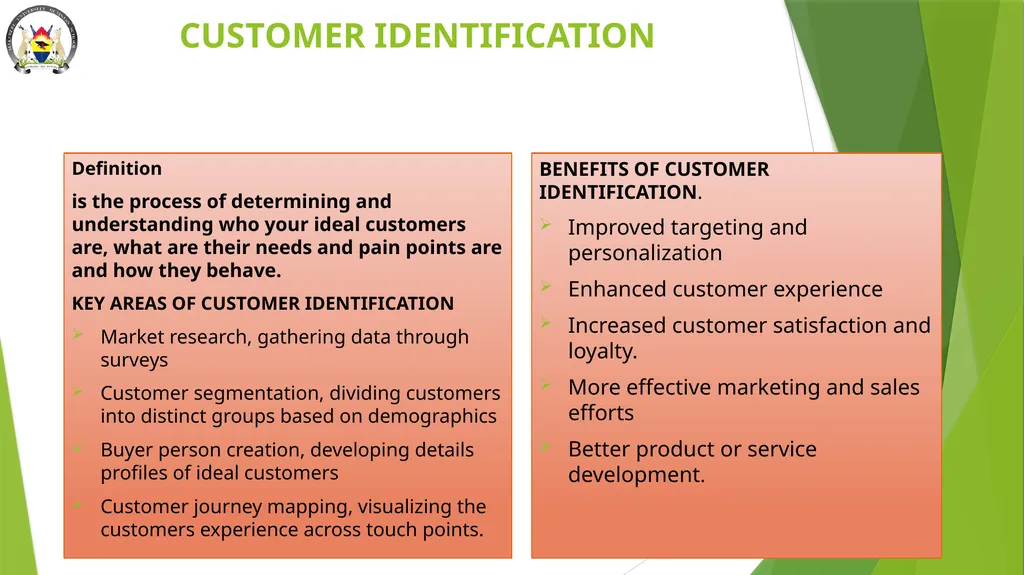
slide6. CUSTOMER IDENTIFICATION Definition
is the process of determining and understanding who your ideal customers are, what are their needs and pain points are and how they behave.
KEY AREAS OF CUSTOMER IDENTIFICATION
Market research, gathering data through surveys
Customer segmentation, dividing customers into distinct groups based on demographics
Buyer person creation, developing details profiles of ideal customers
Customer journey mapping, visualizing the customers experience across touch points. BENEFITS OF CUSTOMER IDENTIFICATION.
Improved targeting and personalization
Enhanced customer experience
Increased customer satisfaction and loyalty.
More effective marketing and sales efforts
Better product or service development.<br>
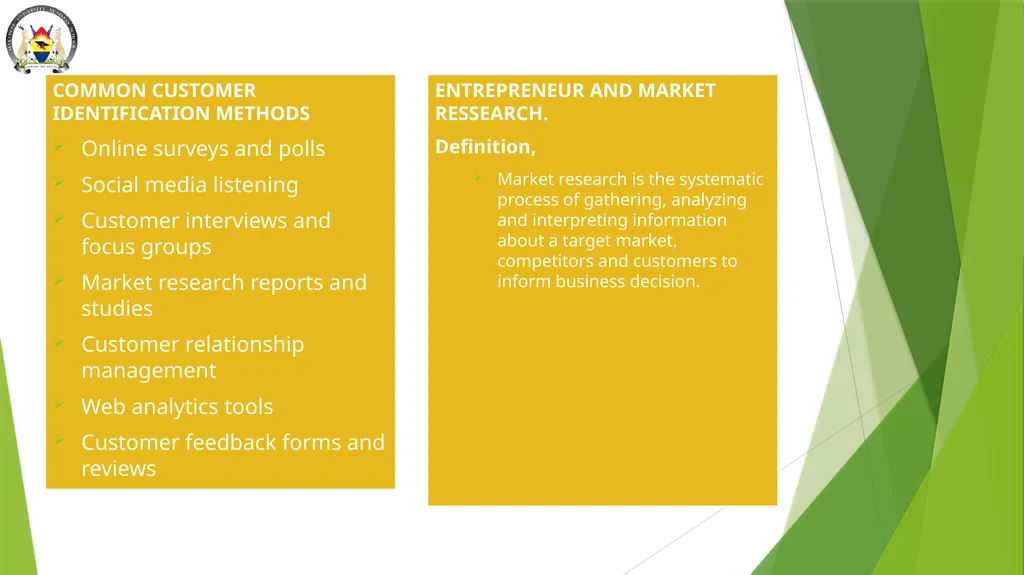
slide7. COMMON CUSTOMER IDENTIFICATION METHODS
Online surveys and polls
Social media listening
Customer interviews and focus groups
Market research reports and studies
Customer relationship management
Web analytics tools
Customer feedback forms and reviews ENTREPRENEUR AND MARKET RESSEARCH.
Definition,
Market research is the systematic process of gathering, analyzing and interpreting information about a target market, competitors and customers to inform business decision.<br>
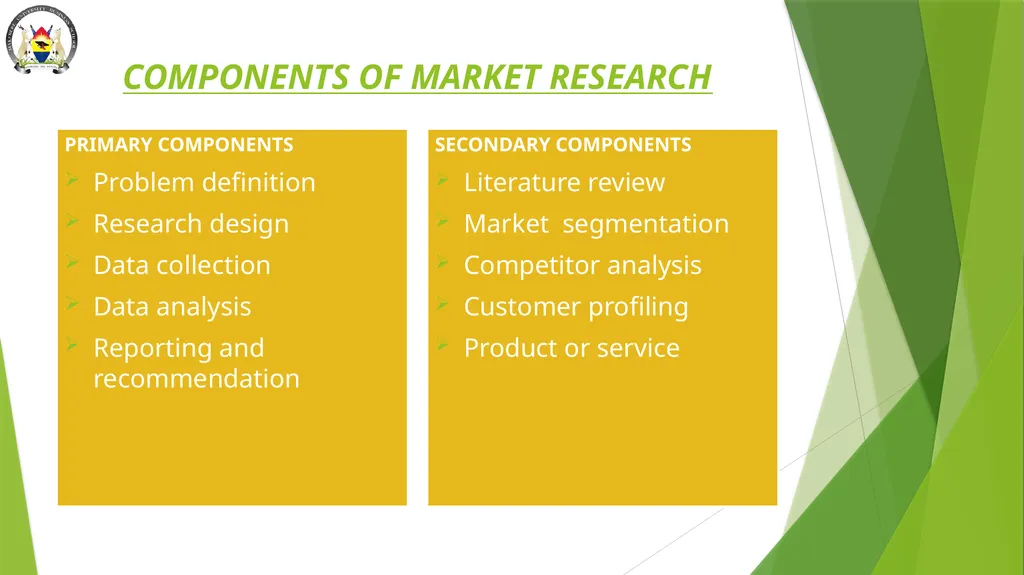
slide8. COMPONENTS OF MARKET RESEARCH PRIMARY COMPONENTS
Problem definition
Research design
Data collection
Data analysis
Reporting and recommendation SECONDARY COMPONENTS
Literature review
Market segmentation
Competitor analysis
Customer profiling
Product or service<br>
slide9. METHODS OF ENTREPRENEUR MARKET RESEARCH
Online survey
Social media listening
Customer interviews
Competitor analysis
Customer feed back BENEFITS OF MARKET RESEARCH FOR ENTREPRENEURS.
Improved product market fit
Increased customer satisfaction and loyalty
Enhanced competitive advantage
Informed decision making
Reduced risks and uncertainty
Better marketing and sales
Identification of new business opportunities.<br>
slide10. INNOVATIVE ENTREPRENEURS DEFINITION
Theses are individuals who create and implement new ideas, products, services or processes to drive growth.
ACTIVITIES DONE BY INNOVATIVE ENTREPRENEURS
Identify opportunities for innovation
Develop and refine their ideas
Take calculated risks
Embrace experimentation and learning
Foster a culture of innovation within their organization
Continuously improve and refine their innovation CHARACTERISTICS OF INNOVATIVE ENTRPREPRENEURS
Creativity
Vision thinking
Passion
Strong work ethic
Open mindedness
Collaboration and networking<br>
slide11. EXAMPLES OF INNOVATIVE ENTREPRENEURS
Mary Barra
Arianna Huffington
Steve jobs
TYPES OF INNOVATIVE ENTREPRENEURS
Social
Technological
Sustainable
Creative
serial Skills of innovative entrepreneurs
Problem solving
Communication
Leadership
Team building
Time management
Marketing and branding
Financial management
Networking
Negotiation
Continues learning<br>
These are independently owned and operated enterprises that have a relatively small number of employees and annual revenue.
Characteristics of small businesses.
Flexibility and adaptability
Limited market share
Independent ownership and decision making
They employ a maximum 50 people
Often serves a local market or community.
Encourages creativity and innovation.
Personal touch.<br>
slide2. TYPES OF SMALL BUSINESSES.
Sole proprietorship (one owner)
Partnership
Small cooperation's
Home based businesses.
Micro businesses
Online businesses IMPORTANCES OF SMALL BUSINESSES
Employment opportunities.
Innovation
Local economic growth
Easy decision making
Community development
Flexibility
Specialization
Owners have control<br>
slide3. CHALLENGES OF SMALL BUSINESSES.
Limited resources
Limited market research
Limited access to credit
Limited benefits
Insecurity
Higher labour costs
Higher risks
Limited technology
Limited internationally<br>
slide4. LARGE BUSINESSES.
DEFINITION,
It refers to a category with above average size, large operations and high economies of scale.
CHARACTERISTICS OF LARGE BUSINESSES.
Large number of employees
Multiple departments and divisions
High annual revenue
Diversified products and services<br>
slide5. IMPORTANCE OF LARGE BUSINESSES
Economies of scale
Increased resources
Technological innovation
Export potential
Inrastructure development
Job creation
Diversified risk
Professional expertise CHALLENGES OF LARGE BUSINESSES
Slow decision making
Infrastructure challenges
Potential for corruption
Environmental impacts
Competition
Taxation
Shortage of skilled labor<br>
slide6. CUSTOMER IDENTIFICATION Definition
is the process of determining and understanding who your ideal customers are, what are their needs and pain points are and how they behave.
KEY AREAS OF CUSTOMER IDENTIFICATION
Market research, gathering data through surveys
Customer segmentation, dividing customers into distinct groups based on demographics
Buyer person creation, developing details profiles of ideal customers
Customer journey mapping, visualizing the customers experience across touch points. BENEFITS OF CUSTOMER IDENTIFICATION.
Improved targeting and personalization
Enhanced customer experience
Increased customer satisfaction and loyalty.
More effective marketing and sales efforts
Better product or service development.<br>
slide7. COMMON CUSTOMER IDENTIFICATION METHODS
Online surveys and polls
Social media listening
Customer interviews and focus groups
Market research reports and studies
Customer relationship management
Web analytics tools
Customer feedback forms and reviews ENTREPRENEUR AND MARKET RESSEARCH.
Definition,
Market research is the systematic process of gathering, analyzing and interpreting information about a target market, competitors and customers to inform business decision.<br>
slide8. COMPONENTS OF MARKET RESEARCH PRIMARY COMPONENTS
Problem definition
Research design
Data collection
Data analysis
Reporting and recommendation SECONDARY COMPONENTS
Literature review
Market segmentation
Competitor analysis
Customer profiling
Product or service<br>
slide9. METHODS OF ENTREPRENEUR MARKET RESEARCH
Online survey
Social media listening
Customer interviews
Competitor analysis
Customer feed back BENEFITS OF MARKET RESEARCH FOR ENTREPRENEURS.
Improved product market fit
Increased customer satisfaction and loyalty
Enhanced competitive advantage
Informed decision making
Reduced risks and uncertainty
Better marketing and sales
Identification of new business opportunities.<br>
slide10. INNOVATIVE ENTREPRENEURS DEFINITION
Theses are individuals who create and implement new ideas, products, services or processes to drive growth.
ACTIVITIES DONE BY INNOVATIVE ENTREPRENEURS
Identify opportunities for innovation
Develop and refine their ideas
Take calculated risks
Embrace experimentation and learning
Foster a culture of innovation within their organization
Continuously improve and refine their innovation CHARACTERISTICS OF INNOVATIVE ENTRPREPRENEURS
Creativity
Vision thinking
Passion
Strong work ethic
Open mindedness
Collaboration and networking<br>
slide11. EXAMPLES OF INNOVATIVE ENTREPRENEURS
Mary Barra
Arianna Huffington
Steve jobs
TYPES OF INNOVATIVE ENTREPRENEURS
Social
Technological
Sustainable
Creative
serial Skills of innovative entrepreneurs
Problem solving
Communication
Leadership
Team building
Time management
Marketing and branding
Financial management
Networking
Negotiation
Continues learning<br>