
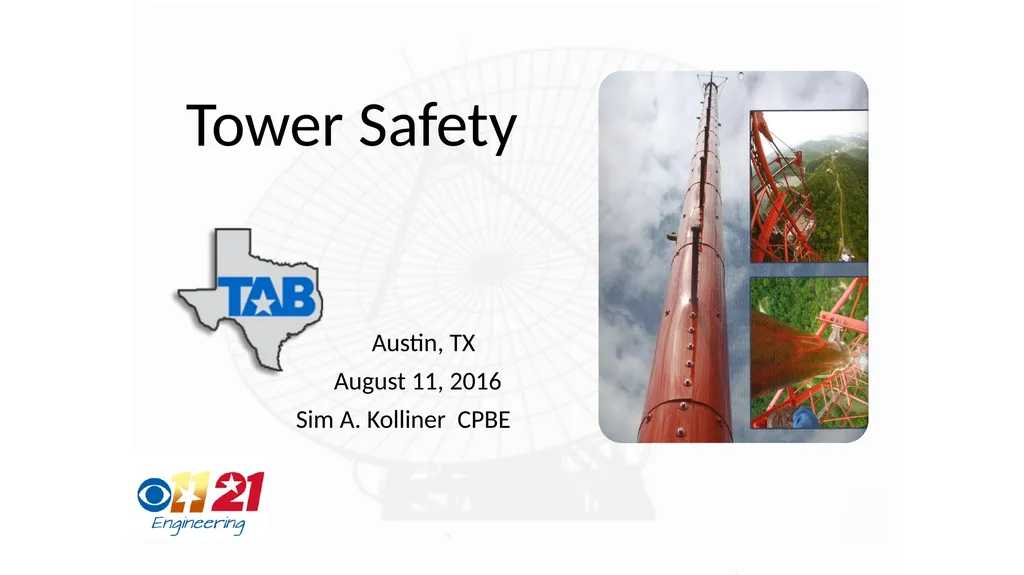
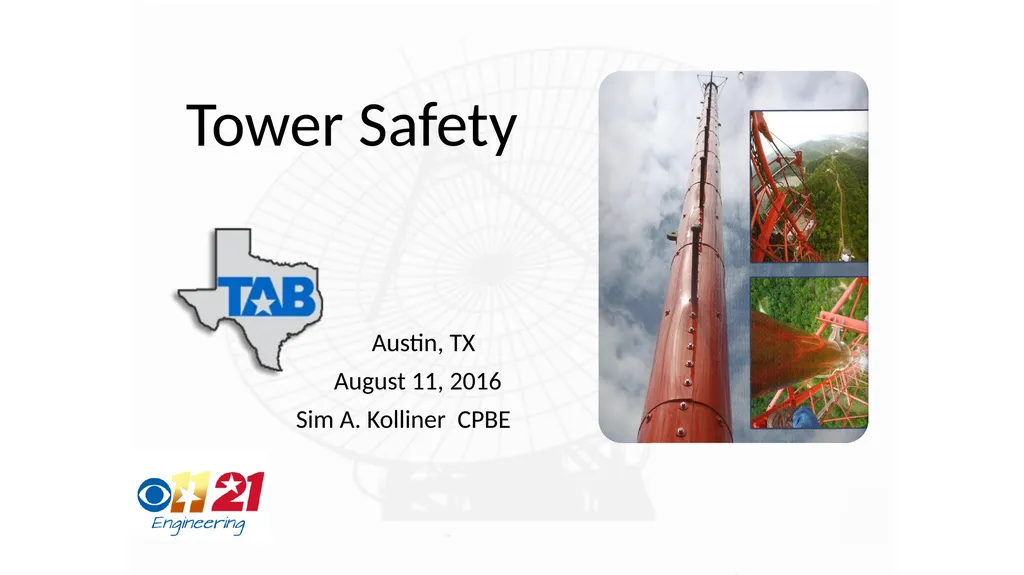
Tower Safety Austin, TX August 11, 2016 Sim A.
YM
Published · 26 slides · 0 views
1 / 1

Description
Tower Safety Austin, TX August 11, 2016 Sim A. Kolliner CPBE There is always risk in building and maintaining the Big Iron towers we use in broadcasting. However, there are things we can do to protect lives and property. Some Statistics
Related Topics
Share
Embed code
Download this presentation From Below
"Tower Safety Austin, TX August 11, 2016 Sim A." is the property of its rightful owner. Permission is granted to download and print the materials on this website for personal, non-commercial use only, and to display it on your personal computer provided you do not modify the materials and that you retain all copyright notices contained in the materials. By downloading content from our website, you accept the terms of this agreement.
Presentation Transcript
01
Tower Safety Austin, TX
August 11, 2016
Sim A. Kolliner CPBE<br>
August 11, 2016
Sim A. Kolliner CPBE<br>
02
There is always risk in building and maintaining the "Big Iron" towers we use in broadcasting. However, there are things we can do to protect lives and property.<br>
03
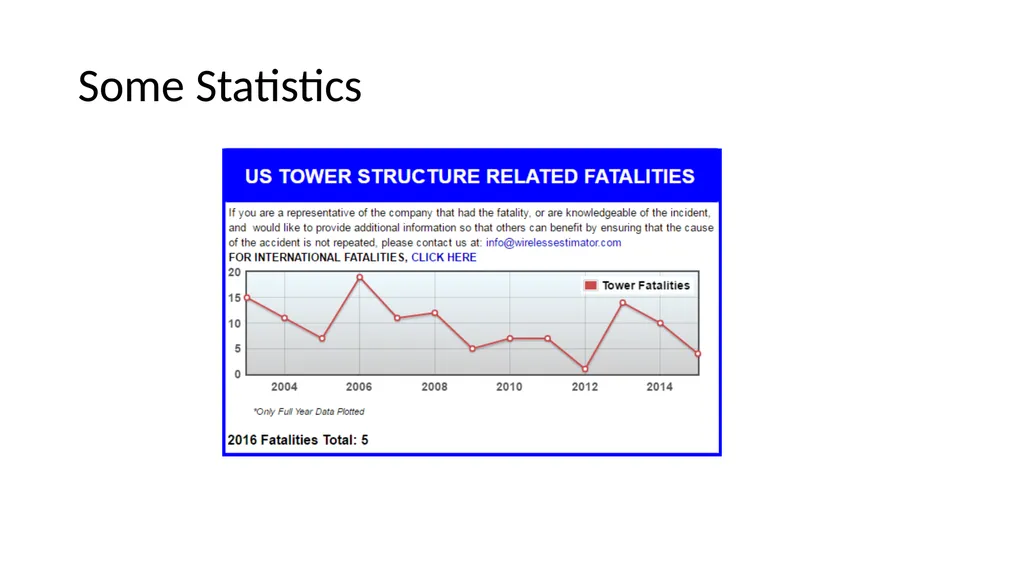
Some Statistics<br>
04
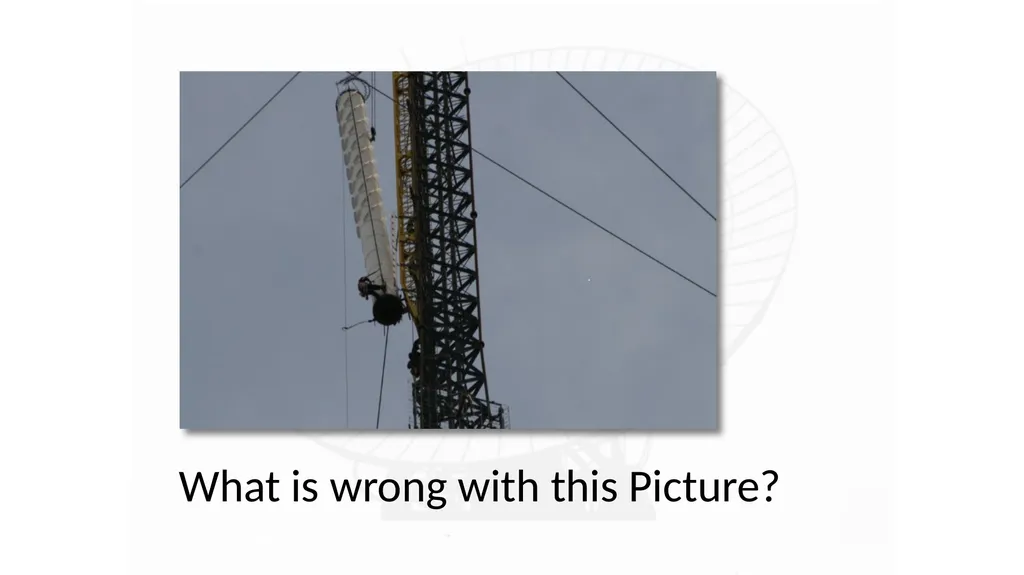
What is wrong with this Picture?<br>
05
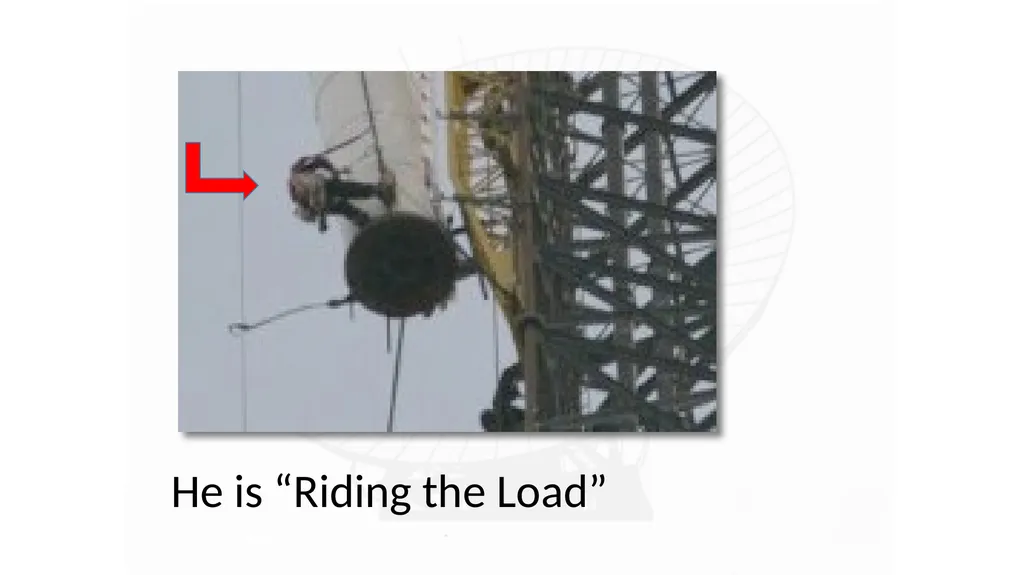
He is “Riding the Load”<br>
06
What is “Riding The Load”? Tying off to the load rather than the load line
“The Load Goes, So Go You”
“Don’t Ride The Load”
Tie-off With A Separate Clamp To The Load Line
Climb Alongside the Load On The Ladder
Ride In A Separate Personnel Lift (If Used)<br>
“The Load Goes, So Go You”
“Don’t Ride The Load”
Tie-off With A Separate Clamp To The Load Line
Climb Alongside the Load On The Ladder
Ride In A Separate Personnel Lift (If Used)<br>
07
Philadelphia
11-10-1998<br>
08
What Could Have Been Done in Philadelphia to Produce a Different Outcome? Tie off to a cable clamp above the load clamp?
Climb ladder instead?
Training?
Safety meeting?
100% tie off commitment?<br>
Climb ladder instead?
Training?
Safety meeting?
100% tie off commitment?<br>
09
OSHA & FCC Sharing Best Practices Recognizing the risks that tower workers face, OSHA and the FCC organized a workshop on communication tower worker safety on October 14, 2014. During this workshop, industry stakeholders, along with worker safety advocates and the families of communication tower workers who had been killed on the job, gathered to discuss the issues surrounding tower safety. This presentation contains portions of the OSHA/FCC Best Practices document.<br>
10
OSHA & FCC Sharing Best Practices Safety and health management systems
All entities should establish a comprehensive safety and health management system.
Core Elements
Management leadership
Worker participation
Hazard identification and assessment
Hazard prevention and control
Education and Training
System evaluation and improvement
Communication on multiemployer workplaces<br>
All entities should establish a comprehensive safety and health management system.
Core Elements
Management leadership
Worker participation
Hazard identification and assessment
Hazard prevention and control
Education and Training
System evaluation and improvement
Communication on multiemployer workplaces<br>
11
OSHA & FCC Sharing Best Practices Tower Climbers and Ground Crew Workers
All work crews must be provided with and must use proper safety equipment at all times.
All workers should annually certify their commitment to “100 percent tie off.”
All climbing work should include comprehensive safety planning.
All work crews should not work at heights when weather conditions raise safety risks.
All work crews should continually seek to enhance their safety skills and awareness through regular trainings and stand-downs.
Particular attention should be paid to inspections, including equipment inspections.
Contractors must ensure that there is a competent person on site at all times. This person should monitor the mental and physical wellbeing of climbers on their team.<br>
All work crews must be provided with and must use proper safety equipment at all times.
All workers should annually certify their commitment to “100 percent tie off.”
All climbing work should include comprehensive safety planning.
All work crews should not work at heights when weather conditions raise safety risks.
All work crews should continually seek to enhance their safety skills and awareness through regular trainings and stand-downs.
Particular attention should be paid to inspections, including equipment inspections.
Contractors must ensure that there is a competent person on site at all times. This person should monitor the mental and physical wellbeing of climbers on their team.<br>
12
OSHA & FCC Sharing Best Practices Tower Owners
Tower inspection and maintenance:
Tower owners should ensure that their towers are maintained properly, structural inspections, including TIA-222-G, are conducted on a regular basis and have a properly installed, maintained and functioning safety climb system.
Ensure that there is a clear procedure for reporting unsafe conditions on towers and that all reported conditions are tracked until the hazardous conditions have been fixed.
Inspections: Hire a company using drones for tower inspection to reduce unnecessary climbing and avoid putting workers at risk.
Tower owners are strongly encouraged to require contractors to send photos of completed work to their central command centers. The command centers can then immediately approve the work before the worker even descends the tower. This can reduce unnecessary climbing for re-work.<br>
Tower inspection and maintenance:
Tower owners should ensure that their towers are maintained properly, structural inspections, including TIA-222-G, are conducted on a regular basis and have a properly installed, maintained and functioning safety climb system.
Ensure that there is a clear procedure for reporting unsafe conditions on towers and that all reported conditions are tracked until the hazardous conditions have been fixed.
Inspections: Hire a company using drones for tower inspection to reduce unnecessary climbing and avoid putting workers at risk.
Tower owners are strongly encouraged to require contractors to send photos of completed work to their central command centers. The command centers can then immediately approve the work before the worker even descends the tower. This can reduce unnecessary climbing for re-work.<br>
13
OSHA & FCC Sharing Best Practices Tower Construction and Maintenance Contractors
Safety and health management systems:
Contractors should have a written, comprehensive health and safety management system that is implemented on all worksites.
Elements of this system should include, at least, training, inspections, audits, personal protective equipment, and individual work practices.
Contractors should ensure that all employees are aware of existing consensus standards governing communication tower work and are familiar with the requirements that apply to their work activities.
Encourage all employees to report unsafe conditions at work sites to company management, as well as to relevant parties up the contracting chain.
When starting work for the day, foremen should conduct a toolbox meeting where the Job Hazard Analysis (JHA) is discussed.<br>
Safety and health management systems:
Contractors should have a written, comprehensive health and safety management system that is implemented on all worksites.
Elements of this system should include, at least, training, inspections, audits, personal protective equipment, and individual work practices.
Contractors should ensure that all employees are aware of existing consensus standards governing communication tower work and are familiar with the requirements that apply to their work activities.
Encourage all employees to report unsafe conditions at work sites to company management, as well as to relevant parties up the contracting chain.
When starting work for the day, foremen should conduct a toolbox meeting where the Job Hazard Analysis (JHA) is discussed.<br>
14
OSHA & FCC Sharing Best Practices Tower Construction and Maintenance Contractors
Auditing and incident investigations:
Whenever an injury or fatality occurs on a work site, contractors must first notify all appropriate authorities, including local emergency services and OSHA.
Contractors should have internal policies for investigating incidents that take place on work sites in order to determine the root cause of the incident.
If the incident is due to an individual bad actor, then the contractor should re-examine internal policies for employee training, re-training the individual and all employees if needed.<br>
Auditing and incident investigations:
Whenever an injury or fatality occurs on a work site, contractors must first notify all appropriate authorities, including local emergency services and OSHA.
Contractors should have internal policies for investigating incidents that take place on work sites in order to determine the root cause of the incident.
If the incident is due to an individual bad actor, then the contractor should re-examine internal policies for employee training, re-training the individual and all employees if needed.<br>
15
OSHA & FCC Sharing Best Practices Tower Construction and Maintenance Contractors
Work site safety practices:
All contractors should require supervisors to conduct a tailgate meeting at the beginning of each work day.
Contractors should institute work policies and procedures that guarantee that safe work practices will always be followed on site.
Zero-tolerance policy to unsafe work practices: It is quickly becoming a recognized best practice in the industry to institute a zero-tolerance policy regarding unsafe practices, in particular towards free climbing.
Sub-contractor vetting:
Where further subcontracting is permitted, contractors should take precautions to ensure that any potential sub-contractors have effective safety and health programs in place, and have a history of safe work practices on site.<br>
Work site safety practices:
All contractors should require supervisors to conduct a tailgate meeting at the beginning of each work day.
Contractors should institute work policies and procedures that guarantee that safe work practices will always be followed on site.
Zero-tolerance policy to unsafe work practices: It is quickly becoming a recognized best practice in the industry to institute a zero-tolerance policy regarding unsafe practices, in particular towards free climbing.
Sub-contractor vetting:
Where further subcontracting is permitted, contractors should take precautions to ensure that any potential sub-contractors have effective safety and health programs in place, and have a history of safe work practices on site.<br>
16
OSHA & FCC Sharing Best Practices Tower Construction and Maintenance Contractors
Recordkeeping and communication:
Contractors should keep comprehensive records of all employee training and certifications.
Contractors should obtain necessary technical and engineering specifications from tower owners.
Training:
Contractors should ensure that all employees who climb communication towers are trained for the tasks that they will be expected to perform.
Contractors should ensure that employees new to tower climbing undergo comprehensive training as authorized climbers.
Employees who will be expected to perform rigging or hoisting activities should have specialized training to ensure that they can safely perform these tasks.
Contractors should ensure that employees are re-trained at appropriate intervals, as well as on an as-needed basis.<br>
Recordkeeping and communication:
Contractors should keep comprehensive records of all employee training and certifications.
Contractors should obtain necessary technical and engineering specifications from tower owners.
Training:
Contractors should ensure that all employees who climb communication towers are trained for the tasks that they will be expected to perform.
Contractors should ensure that employees new to tower climbing undergo comprehensive training as authorized climbers.
Employees who will be expected to perform rigging or hoisting activities should have specialized training to ensure that they can safely perform these tasks.
Contractors should ensure that employees are re-trained at appropriate intervals, as well as on an as-needed basis.<br>
17
OSHA & FCC Sharing Best Practices Tower Construction and Maintenance Contractors
Training:
Contractors should ensure that employees are re-trained at appropriate intervals, as well as on an as-needed basis.
When making use of “train the trainer” programs, ensure that the employee who will be performing training is adequately prepared to train all employees.<br>
Training:
Contractors should ensure that employees are re-trained at appropriate intervals, as well as on an as-needed basis.
When making use of “train the trainer” programs, ensure that the employee who will be performing training is adequately prepared to train all employees.<br>
18
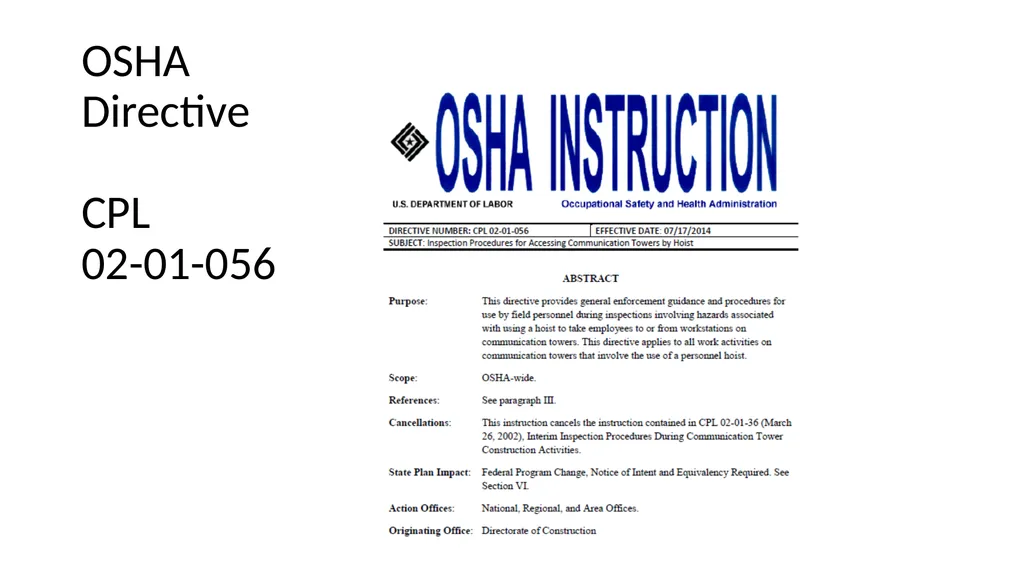
OSHA Directive
CPL
02-01-056<br>
19
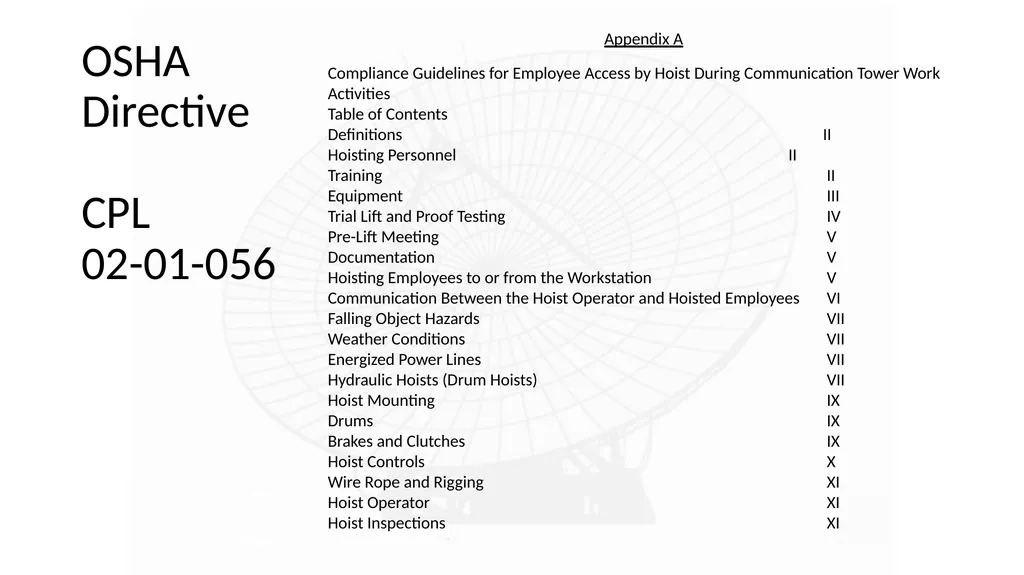
Appendix A
Compliance Guidelines for Employee Access by Hoist During Communication Tower Work Activities
Table of Contents
Definitions II
Hoisting Personnel II
Training II
Equipment III
Trial Lift and Proof Testing IV
Pre-Lift Meeting V
Documentation V
Hoisting Employees to or from the Workstation V
Communication Between the Hoist Operator and Hoisted Employees VI
Falling Object Hazards VII
Weather Conditions VII
Energized Power Lines VII
Hydraulic Hoists (Drum Hoists) VII
Hoist Mounting IX
Drums IX
Brakes and Clutches IX
Hoist Controls X
Wire Rope and Rigging XI
Hoist Operator XI
Hoist Inspections XI OSHA Directive CPL 02-01-056<br>
Compliance Guidelines for Employee Access by Hoist During Communication Tower Work Activities
Table of Contents
Definitions II
Hoisting Personnel II
Training II
Equipment III
Trial Lift and Proof Testing IV
Pre-Lift Meeting V
Documentation V
Hoisting Employees to or from the Workstation V
Communication Between the Hoist Operator and Hoisted Employees VI
Falling Object Hazards VII
Weather Conditions VII
Energized Power Lines VII
Hydraulic Hoists (Drum Hoists) VII
Hoist Mounting IX
Drums IX
Brakes and Clutches IX
Hoist Controls X
Wire Rope and Rigging XI
Hoist Operator XI
Hoist Inspections XI OSHA Directive CPL 02-01-056<br>
20
Elevator Safety Contractor Safety Plan
Training
“Check and Look” Make sure you are disconnected before you go
DO NOT bypass any interlock or safety devices.
Your Part
Make sure the elevator is working properly
Checklist
Training
Certification
Authority to Stop Work
Pre-Climb Meeting
Assure no interlocks are bypassed<br>
Training
“Check and Look” Make sure you are disconnected before you go
DO NOT bypass any interlock or safety devices.
Your Part
Make sure the elevator is working properly
Checklist
Training
Certification
Authority to Stop Work
Pre-Climb Meeting
Assure no interlocks are bypassed<br>
21
FAA Tower Lighting
Logging Requirements
Light Malfunction Notification
Strobes
Planes Will Hit What They Can’t See<br>
Logging Requirements
Light Malfunction Notification
Strobes
Planes Will Hit What They Can’t See<br>
22
RF Safety Contractor Safety Plan
Training
Safety Gear
Measurement Devices
Your Part
Observation
Checklist
Training
Certification
Safety Gear
Authority to Stop Work
Pre-Climb Meeting<br>
Training
Safety Gear
Measurement Devices
Your Part
Observation
Checklist
Training
Certification
Safety Gear
Authority to Stop Work
Pre-Climb Meeting<br>
23
Things To Remember DO NOT Ride The Load
Safety Equipment, check it and use it every time
Training, Training, Training (Did I Mention Training)
100% Tie Off Commitment
Pre-climb meeting and Job Hazard Analysis (JHA)
Anyone should be able to stop work if hazardous
Assess and document tower work
Have someone observe if possible
Ensure RF Exposure Safety<br>
Safety Equipment, check it and use it every time
Training, Training, Training (Did I Mention Training)
100% Tie Off Commitment
Pre-climb meeting and Job Hazard Analysis (JHA)
Anyone should be able to stop work if hazardous
Assess and document tower work
Have someone observe if possible
Ensure RF Exposure Safety<br>
24
In Summary Common Sense and Awareness MUST Come First!
Have a Plan That Documents, Informs and Protects
Meet Before Work Starts to Review The Plan
Make Sure Climbers are Trained and Current
Make Sure Anyone Can Stop an Unsafe Operation
Check the Contractor’s Safety Record and Reputation
Don’t Let The Schedule Determine Safety
Ask for Verification of Training and Vet the Subcontractors too
AND FINALLY…….<br>
Have a Plan That Documents, Informs and Protects
Meet Before Work Starts to Review The Plan
Make Sure Climbers are Trained and Current
Make Sure Anyone Can Stop an Unsafe Operation
Check the Contractor’s Safety Record and Reputation
Don’t Let The Schedule Determine Safety
Ask for Verification of Training and Vet the Subcontractors too
AND FINALLY…….<br>
25
Remember - OSHA is NOT a City in Wisconsin !<br>
26
Questions?<br>