Trade Seen From A Distant Mirror the Fourteenth Century Revisited Despite the revival of European trade stimulated by the Crusades, it was far from obvious that emerging nation-states were on a path of sustainable growth. Tensions within
"Trade Seen From A Distant Mirror – the Fourteenth" is the property of its rightful owner. Permission is granted to
download and print the materials on this website for personal, non-commercial use only, and to display it
on your personal computer provided you do not modify the materials and that you retain all copyright
notices contained in the materials. By downloading content from our website, you accept the terms of this
agreement.
Presentation Transcript
01
Trade Seen From A Distant Mirror – the Fourteenth Century Revisited Despite the revival of European trade stimulated by the Crusades, it was far from obvious that emerging nation-states were on a path of sustainable growth. Tensions within and between secular monarchies still unfolded against the continuing strength of the Holy Roman Empire. But more critically, institutions to manage the economy were vulnerable to periodic crises. Nothing was more indicative of this fragility than the Bubonic Plague that erupted in 1347 and continued through 1350.
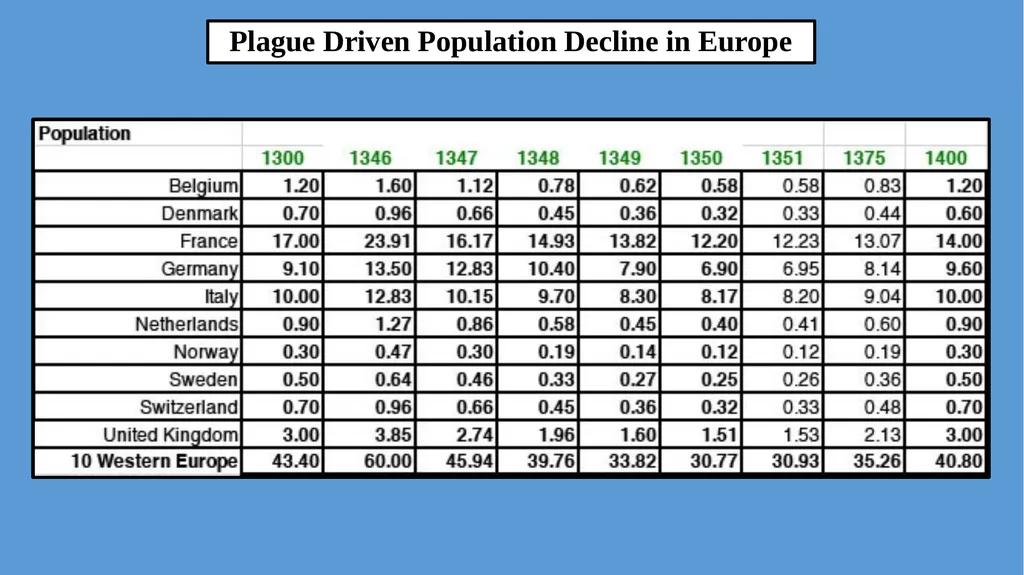
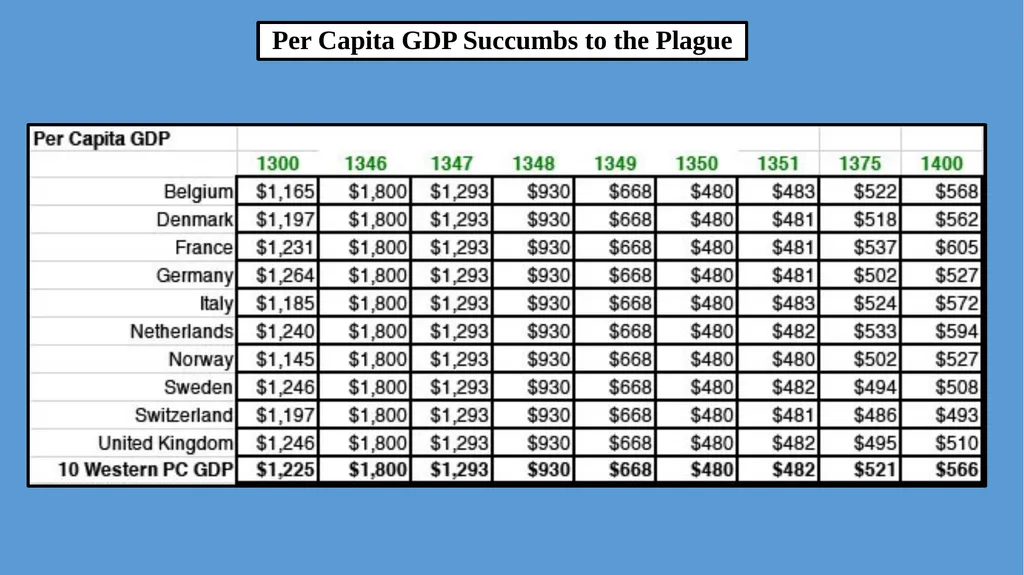
Plagues and famine were hardly exceptional to the evolution of European economies. What made the Bubonic Plague of 1347 different was the scale and intensity in which over 30 million people were felled in rapid succession, bringing trade to a near standstill. Ignorance as to its causes, cities were the most vulnerable through the lack of basic hygiene and the close proximity of populations. By the time it waned, income had fallen significantly, and labor, once the backbone of a medieval economy, became scarce, thus leading to an eventual increase in real wages that would propel the European Renaissance of the Fifteenth Century and beyond.<br>
02
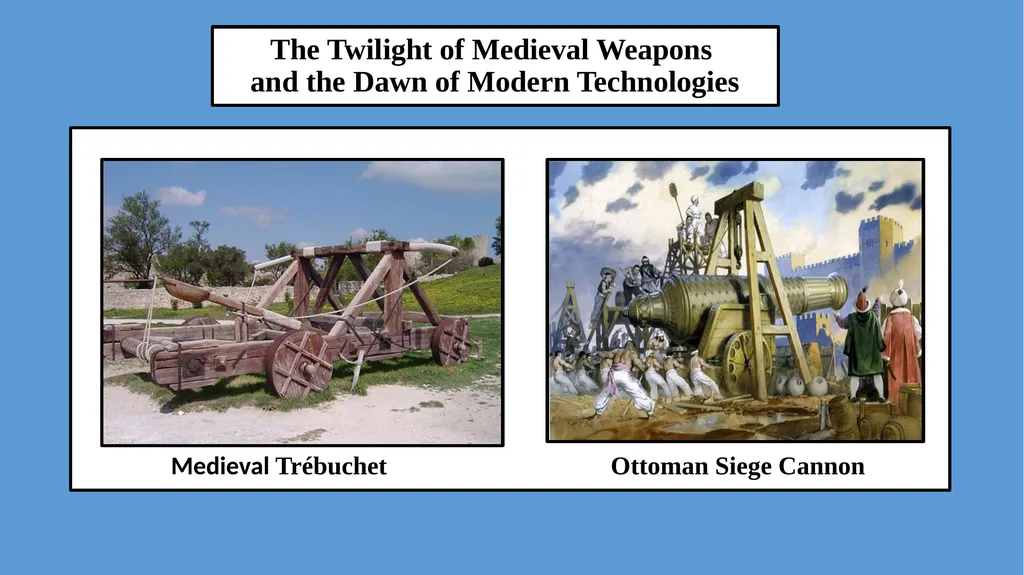
Other Factors Affecting European Trade It was not just the plague that decimated trade in the fourteenth century. The retreat of central authority under the Holy Roman Empire gave rise to increasing warfare among emerging nation-states. Many conflicts turned on defining, defending, or extending national frontiers, given perceived benefits of expanded trading circuits. Just as the Bubonic Plague was about to decimate Europe’s population, France and England erupted in what came to be known as the 100 Years’ War (1337-1457). Its origins derived by the original invasion of Europe under Norman Duke William the Conqueror in 1066. Competing territorial claims were eventually resolved when Joan of Arc led a force of dispirited French forces to rout the English from their key strongholds in France in 1431. Yet the pursuit of war spawned whole new industries in armaments and in weapons technology. The 100 Years’ War would be the last fought without the use of gunpowder, an invention of the Chinese that would later arrive in Europe with the fall of Constantinople to the Ottomans in 1453.<br>
03
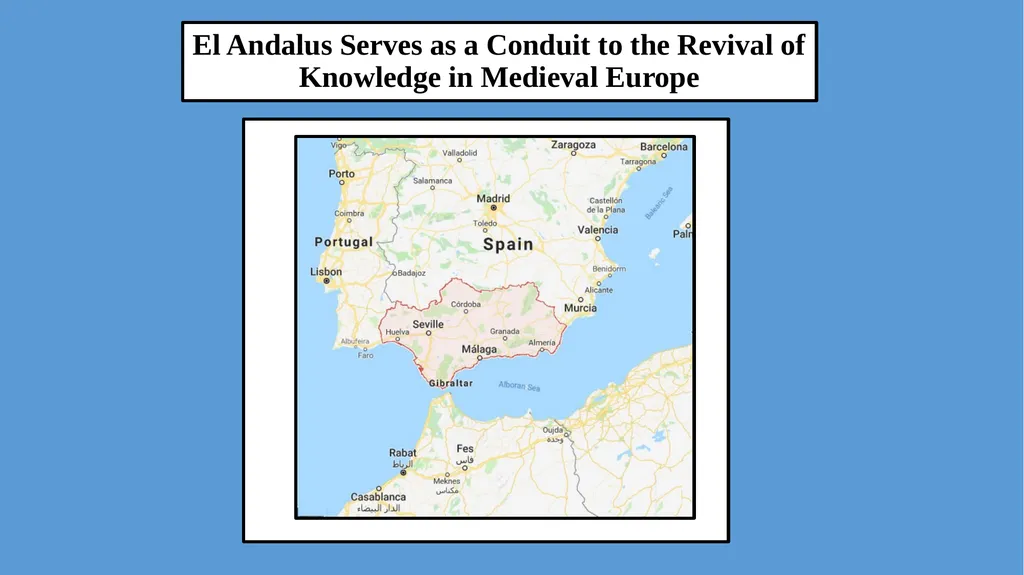
El Andalus Serves as a Conduit to the Revival of Knowledge in Medieval Europe<br>
04
The Expansion of Knowledge via el Andalus<br>
05
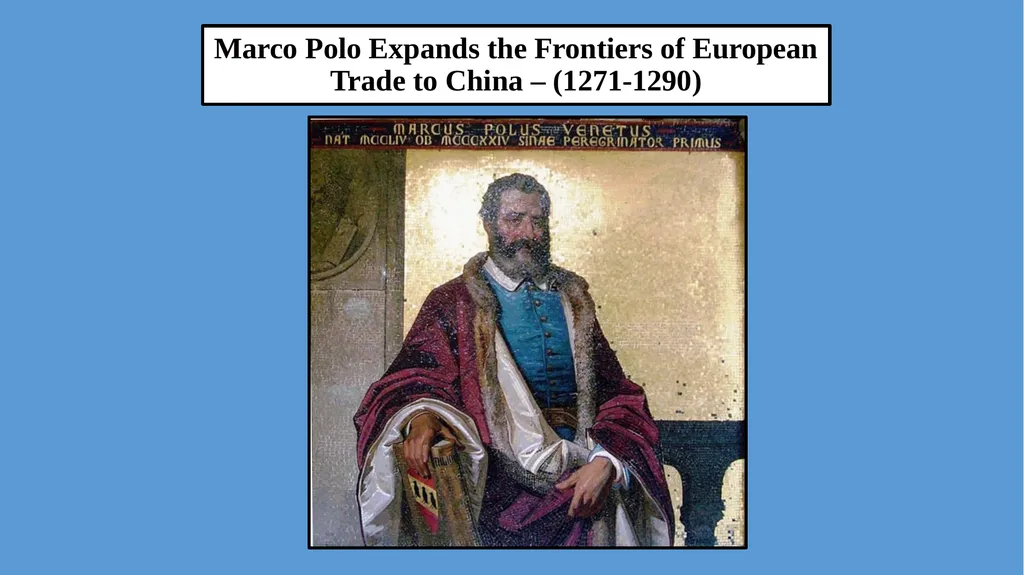
Marco Polo Expands the Frontiers of European Trade to China – (1271-1290)<br>
06
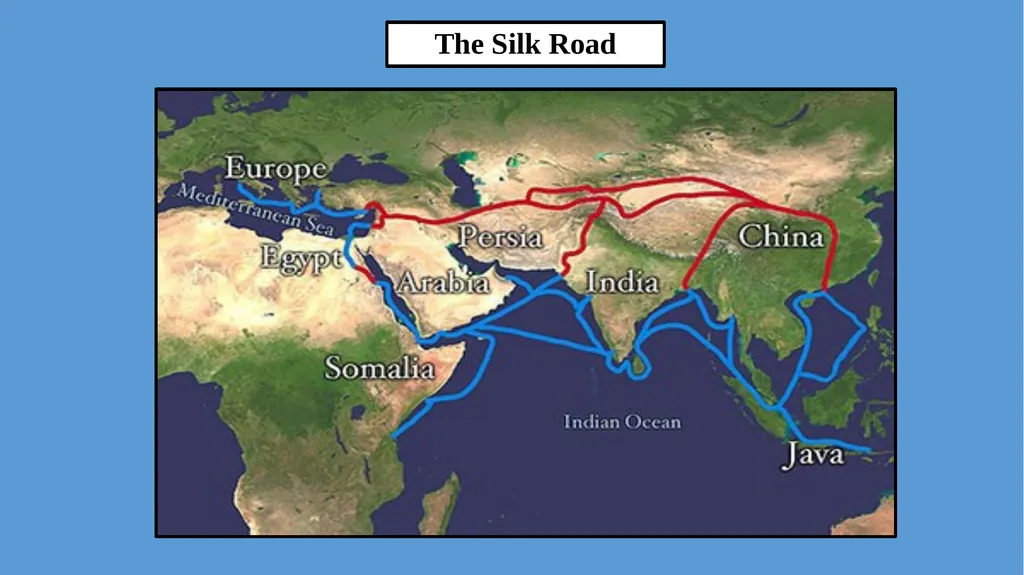
The Silk Road<br>
07
Gains and Losses in International Trade The voyage of Marco Polo was but one of several emerging explorers who were shaping the emerging economies of Europe starting in the thirteenth century. The gains from trade were clear: a greater variety of goods, the revival of towns and cities, the expansion of literacy and culture, among others. What was not foreseen was that the expanding arteries of trade would bring different cultures into contact, into potential conflict over territorial claims, among others.
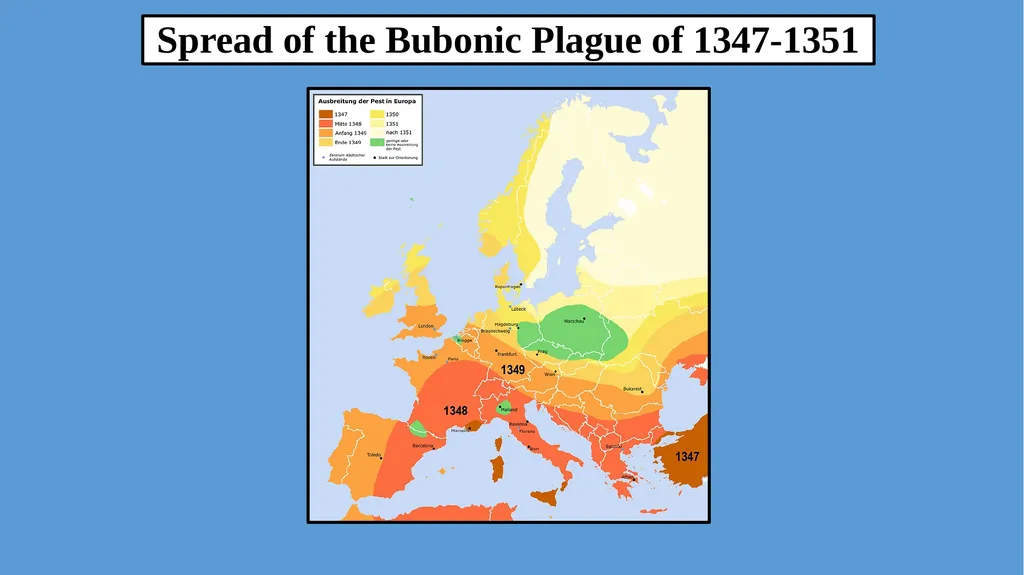
Apart from potential conflict, one downside consequence of the expansion of trade was the Bubonic Plague that erupted in 1347. Transported by rats aboard caravans and ships, it arrive in October of that year when 12 ships from the Black Sea docked at the Sicilian port of Messina. It spread soon thereafter northward, leaving in its wake several million people dragging down not only the European population, but also the level of economic activity.<br>
08
Spread of the Bubonic Plague of 1347-1351<br>
09
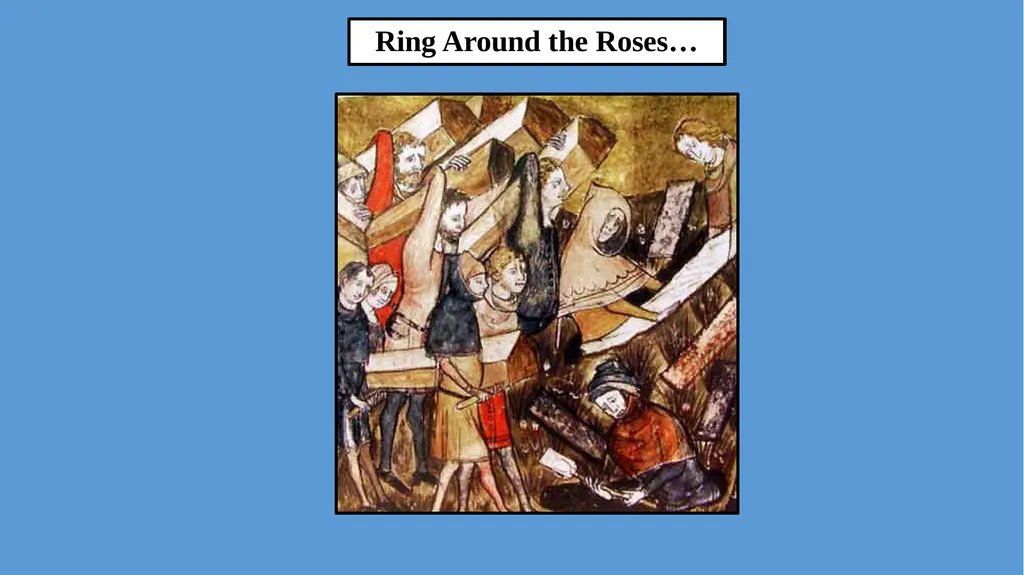
Ring Around the Roses…<br>
10
The Plague of 1347-1351 Brings Economic Collapse to Europe<br>
11
Plague Driven Population Decline in Europe<br>
12
Per Capita GDP Succumbs to the Plague<br>
13
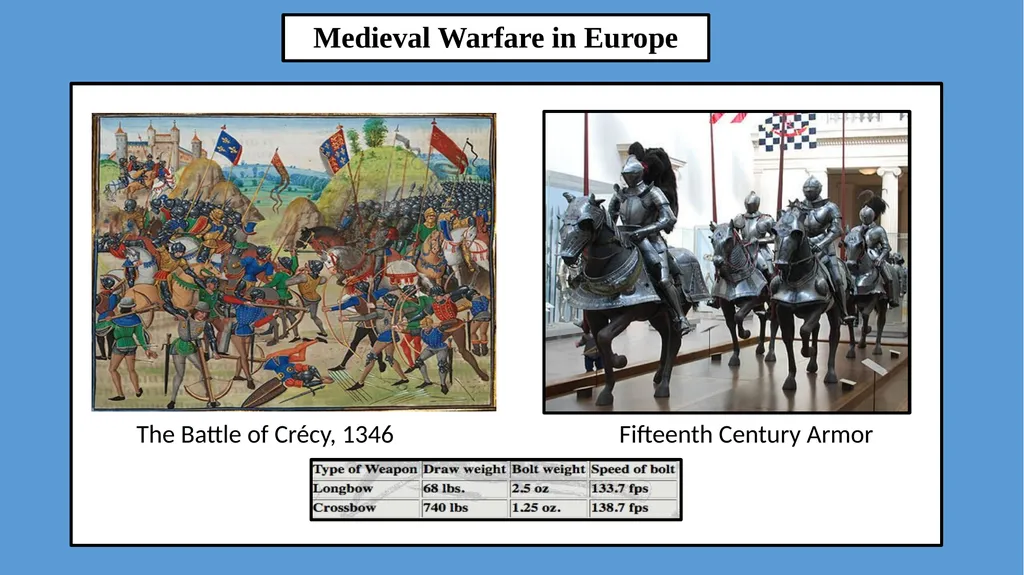
Economic Rivalries, Labor Scarcity, and the Evolution of Medieval Warfare Just prior to the Bubonic Plague outbreak of 1347, France and England began a one hundred years’ war over control of lands in France, and the respective political legitimacy of governance. In the first significant contest, the English won the Battle of Crécy in 1346. What gave them tactical advantage was the use of the longbow, while French forces relied largely on the crossbow. This victory was followed by Poitiers in 1356, and by Agincourt in 1415, the latter being the subject of Shakespeare’s play, Henry V. In each of these battles, numerically inferior English forces prevailed through superior tactics and flexible infantry. By this time, despite the rigidity of French forces, both sides faced increasing shortages of labor due to the Plague of 1347. One result is that European forces turned increasingly to the use of metal armor. First used by the ancient Greeks and Romans, medieval armor took on a more grandiose scale, including that for horses, given the scarcity of resources at the time.<br>
14
Medieval Warfare in Europe The Battle of Crécy, 1346 Fifteenth Century Armor<br>
15
The Twilight of Medieval Weapons and the Dawn of Modern Technologies Medieval Trébuchet Ottoman Siege Cannon<br>
16
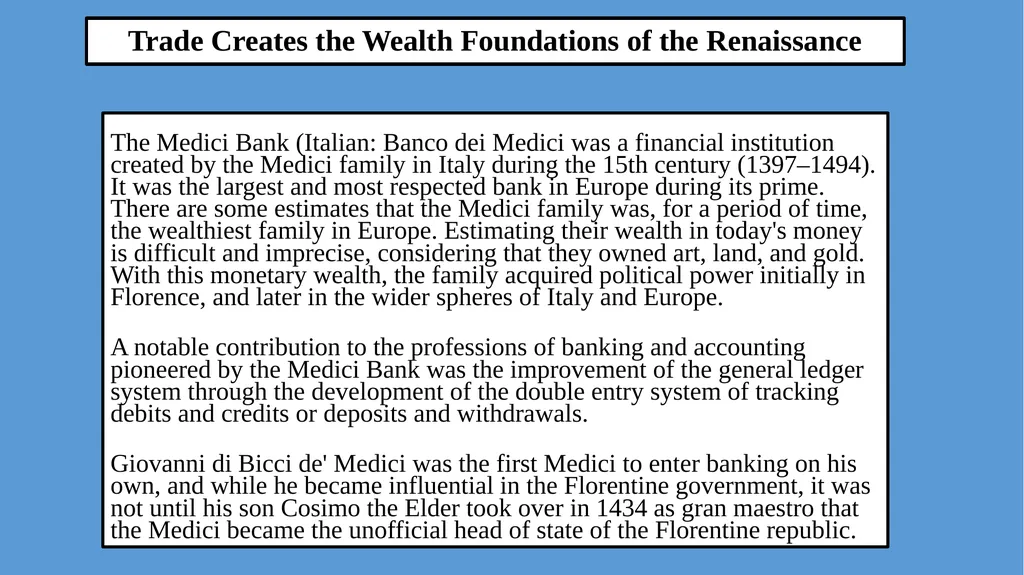
Trade Creates the Wealth Foundations of the Renaissance The Medici Bank (Italian: Banco dei Medici was a financial institution created by the Medici family in Italy during the 15th century (1397–1494). It was the largest and most respected bank in Europe during its prime. There are some estimates that the Medici family was, for a period of time, the wealthiest family in Europe. Estimating their wealth in today's money is difficult and imprecise, considering that they owned art, land, and gold. With this monetary wealth, the family acquired political power initially in Florence, and later in the wider spheres of Italy and Europe.
A notable contribution to the professions of banking and accounting pioneered by the Medici Bank was the improvement of the general ledger system through the development of the double entry system of tracking debits and credits or deposits and withdrawals.
Giovanni di Bicci de' Medici was the first Medici to enter banking on his own, and while he became influential in the Florentine government, it was not until his son Cosimo the Elder took over in 1434 as gran maestro that the Medici became the unofficial head of state of the Florentine republic.<br>