Trading Standards What we do a focus on Door Step Crime Scams Richard Copley Group Manager - Trading Standards Licensing What we do in Trading Standards We enforce Over 50 Acts of Parliament Over 2000 Regulations and Orders We aim to
"Trading Standards What we do – a focus on Door" is the property of its rightful owner. Permission is granted to
download and print the materials on this website for personal, non-commercial use only, and to display it
on your personal computer provided you do not modify the materials and that you retain all copyright
notices contained in the materials. By downloading content from our website, you accept the terms of this
agreement.
Presentation Transcript
01
Trading Standards What we do – a focus on Door Step Crime & Scams<br>
02
Richard Copley Group Manager - Trading Standards & Licensing<br>
03
What we do in Trading Standards We enforce
Over 50 Acts of Parliament
Over 2000 Regulations and Orders
We aim to
Create a fair, honest and safe trading environment
We achieve this by
Inspecting, Advising, Sampling, Investigating, Enforcement Action<br>
04
What we cover Weights and Measures
Product Safety
Fair Trading
Food and Agriculture
Civil Advice<br>
05
Weights and Measures Weighbridges
Shop Scales
Petrol pumps
Packing machines
Pubs
Length measures<br>
06
Product Safety CE marking
Manufacturers, importers i.e. Lebus and Falcon
Petroleum licensing
Explosive licensing
Underage sales<br>
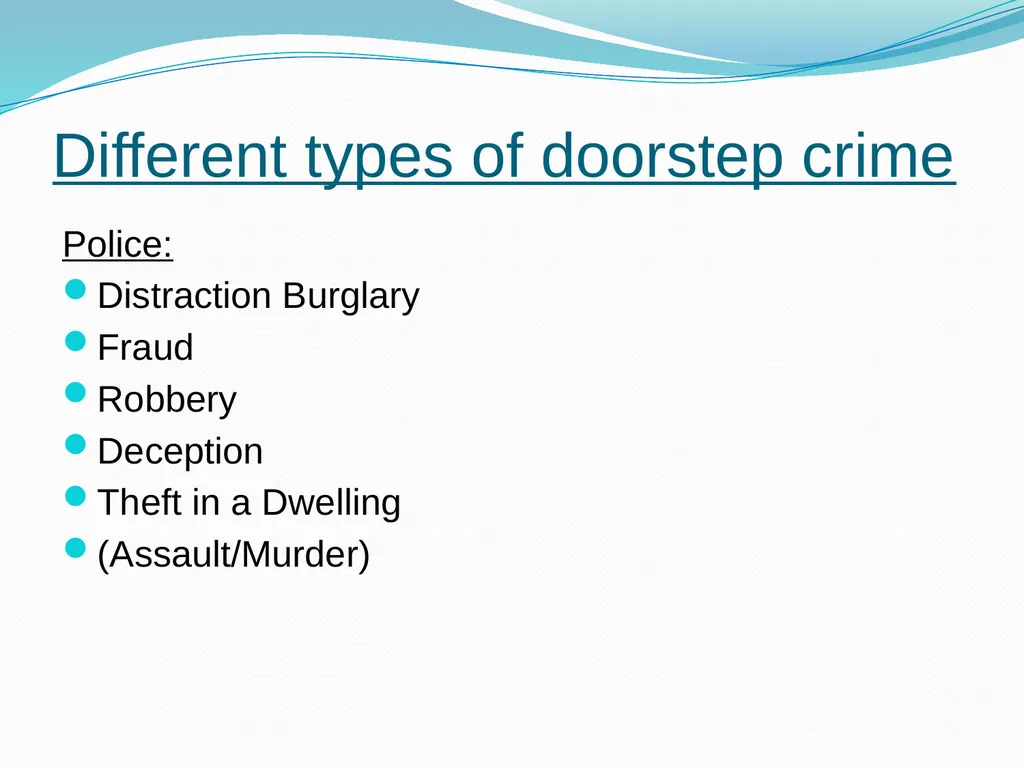
Different types of doorstep crime Police:
Distraction Burglary
Fraud
Robbery
Deception
Theft in a Dwelling
(Assault/Murder)<br>
12
Different types of doorstep crime Trading Standards:
Misleading actions i.e. false descriptions
Misleading omissions i.e. not disclosing important information
Aggressive/high pressure selling techniques
Misleading prices
Failure to give cancellation rights<br>
13
Door Step Crime Legislation Consumer Protection from Unfair Trading Regulations 2008 (CPR's)
Traders who fail to be professionally diligent, provide false information, omit important information, use aggressive practises
Specifically ban 30 trading practises
Ignoring a customer’s request to leave or not to return<br>
14
Professional diligence Purporting to be a professional and not meeting the required standard i.e. a professional drive company will lay the new drive on the correct foundation with correct thickness of tarmac.<br>
15
False information Claiming work needs doing when it doesn’t, pointing when it is perfectly OK.
Claiming a product will do something when it won’t
Claiming a job will be one price then inflating it at the end<br>
16
Omitting information Failing to make customers aware in advance the price of the job<br>
17
Aggressive practises Using coercion and undue influence (High pressure selling), staying in consumers home for hours until they sign<br>
18
Banned practise Ignoring a customer’s request to leave or not to return
Only applies to personal visits to a consumers home
Must have visited previously and told not to return or refused to leave<br>
19
Doorstep crime legislation Cancellation rights must be given for contracts made in a consumer’s home
Criminal offence not to give 14 day cooling off period
If not given, civilly contract not enforceable i.e. don’t have to pay trader for work done
Fraud – making a false representation, abusing a position of trust<br>
20
No Cold Calling Zones Not enforceable – no offence
Do they work?
Show where vulnerable people live
Similar call rate in North Lincolnshire compared to NCCZ in other areas of Yorkshire and Humber<br>
21
Likely perpetrators & victims Perpetrators:
Itinerant traders – move from town to town no fixed address
Professional looking traders – limited companies
Organised groups – swap victim details
Professional criminals – distraction burglars, conmen
Anyone calling at the door<br>
22
Likely perpetrators & victims Victims:
Elderly residents - Average victim age is 78 years
People living alone - 74% of victims live alone
Sheltered housing
Vulnerable groups
Females - 77% of victims are female
People who are at home in the day
Repeat victims
Anyone<br>
23
Choosing a victim Offenders often travel to find their victims, where they’re unknown
Look for signs the resident is vulnerable.
Over grown garden
Property in need of repair
Mobility aids, i.e. wheel chair ramp, hand rails
Sheltered housing
OAP bungalows<br>
24
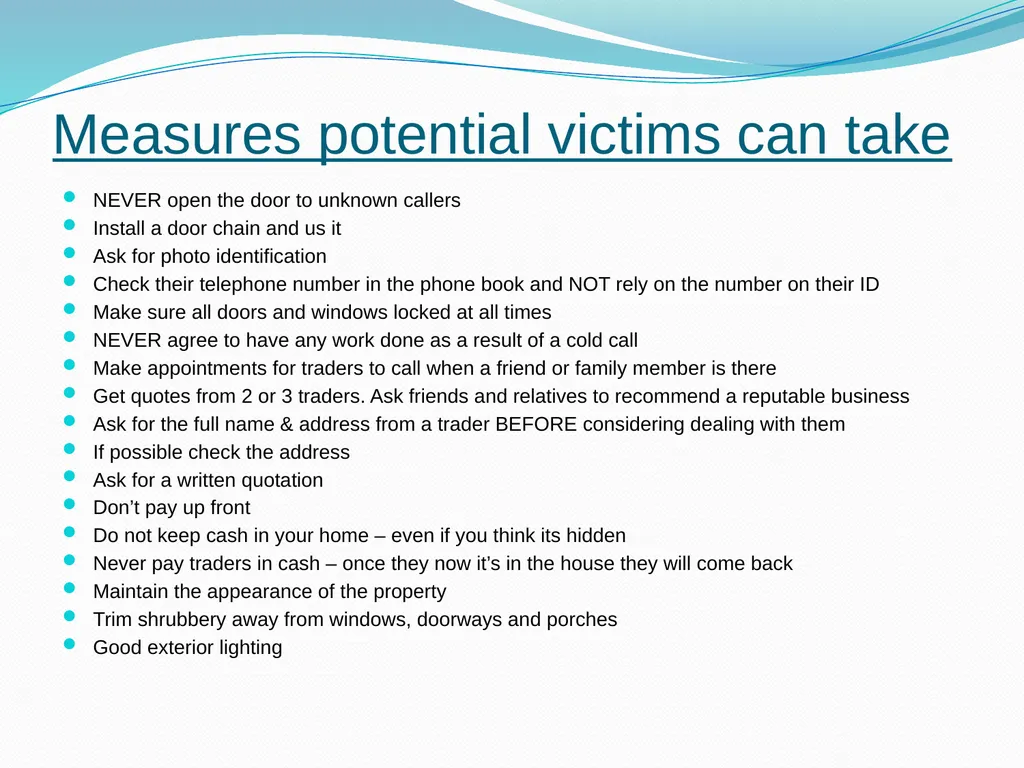
Measures potential victims can take NEVER open the door to unknown callers
Install a door chain and us it
Ask for photo identification
Check their telephone number in the phone book and NOT rely on the number on their ID
Make sure all doors and windows locked at all times
NEVER agree to have any work done as a result of a cold call
Make appointments for traders to call when a friend or family member is there
Get quotes from 2 or 3 traders. Ask friends and relatives to recommend a reputable business
Ask for the full name & address from a trader BEFORE considering dealing with them
If possible check the address
Ask for a written quotation
Don’t pay up front
Do not keep cash in your home – even if you think its hidden
Never pay traders in cash – once they now it’s in the house they will come back
Maintain the appearance of the property
Trim shrubbery away from windows, doorways and porches
Good exterior lighting<br>
25
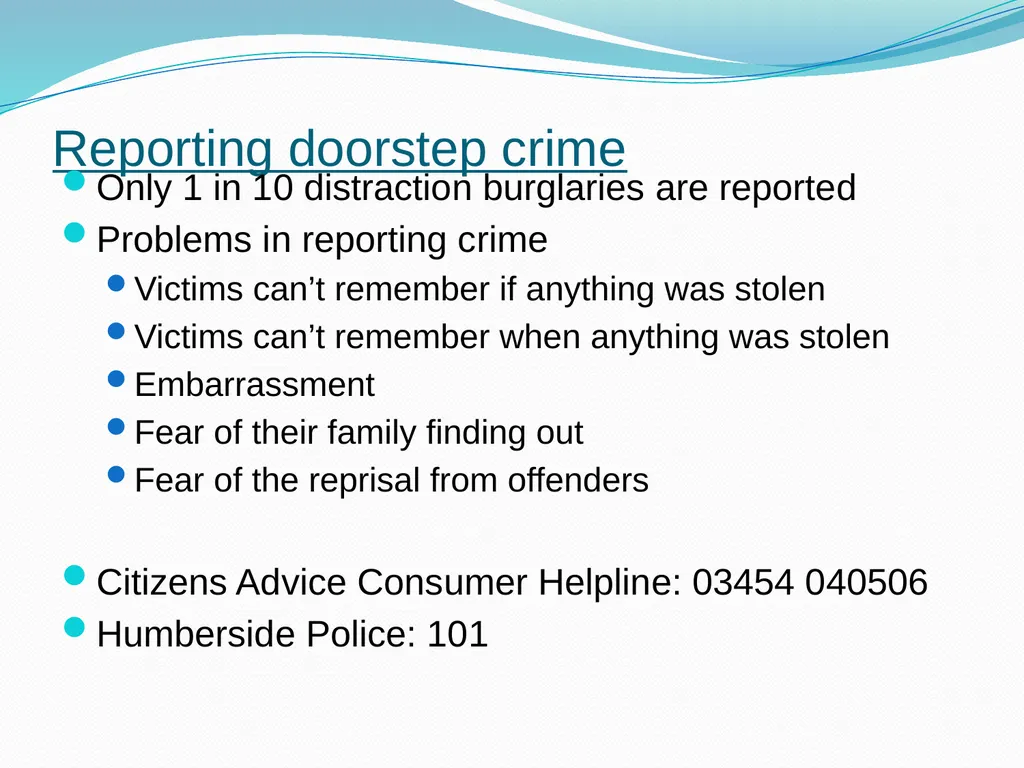
Reporting doorstep crime Only 1 in 10 distraction burglaries are reported
Problems in reporting crime
Victims can’t remember if anything was stolen
Victims can’t remember when anything was stolen
Embarrassment
Fear of their family finding out
Fear of the reprisal from offenders
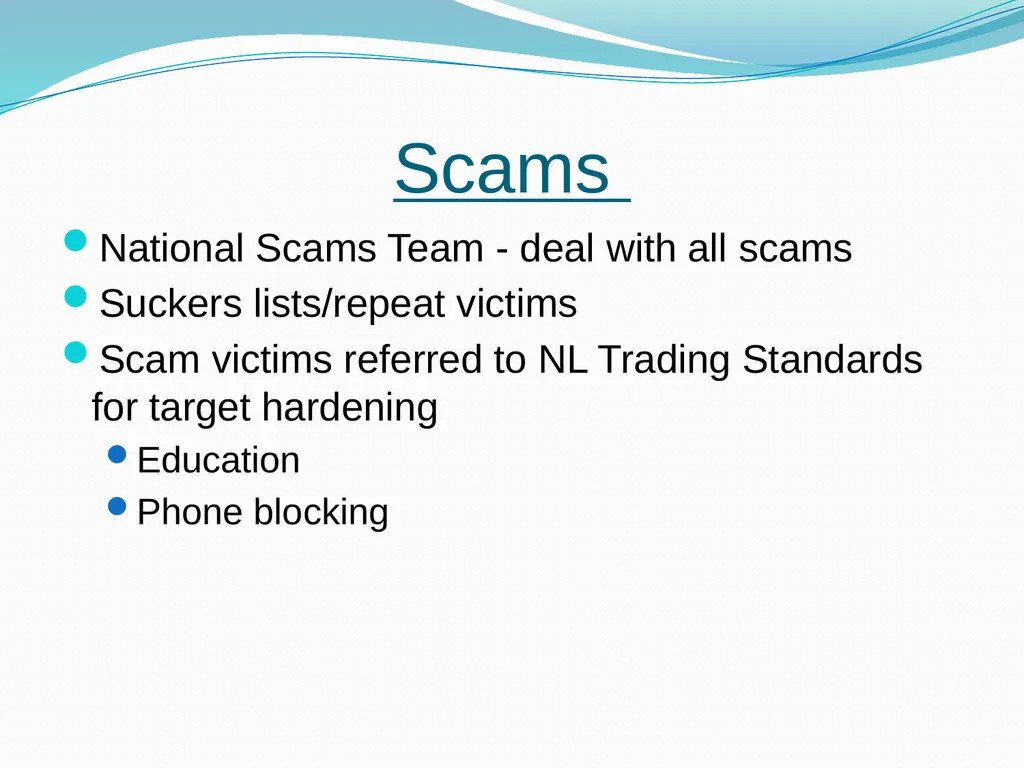
Scams National Scams Team - deal with all scams
Suckers lists/repeat victims
Scam victims referred to NL Trading Standards for target hardening
Education
Phone blocking<br>