04
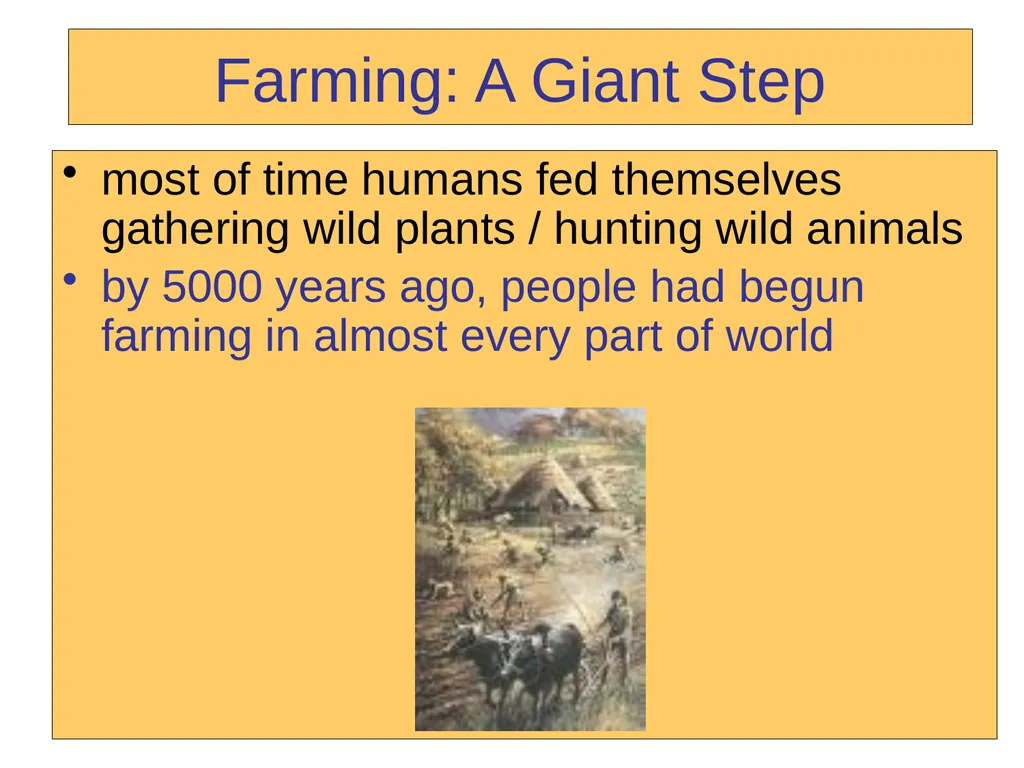
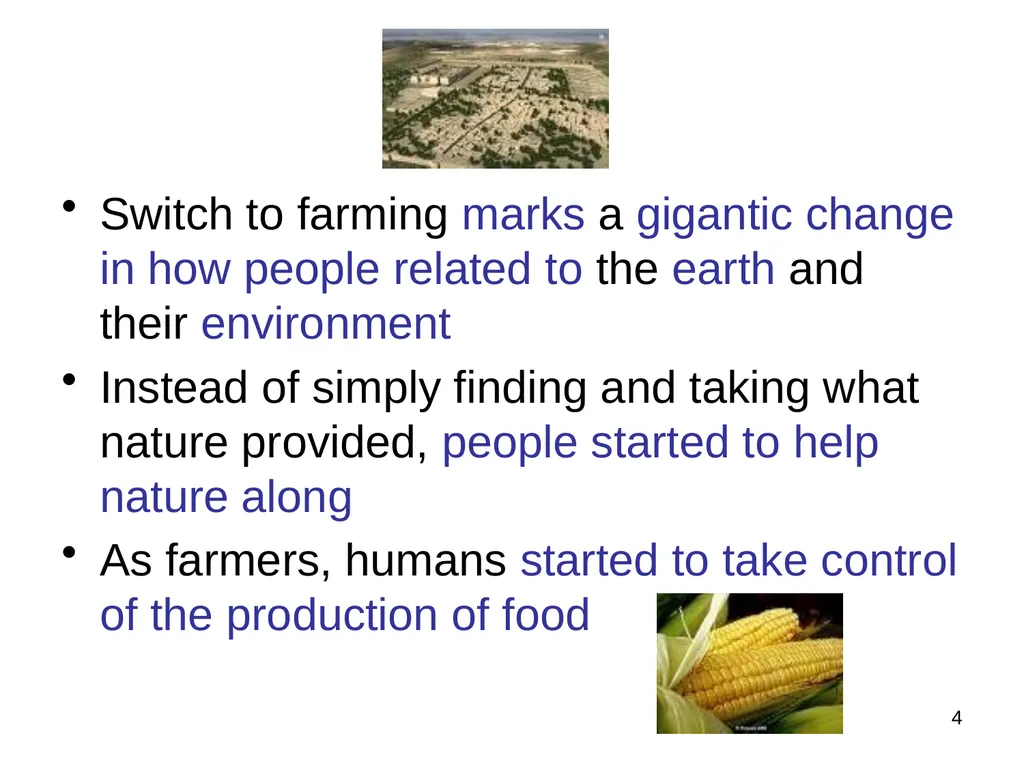
4 Switch to farming marks a gigantic change in how people related to the earth and their environment
Instead of simply finding and taking what nature provided, people started to help nature along
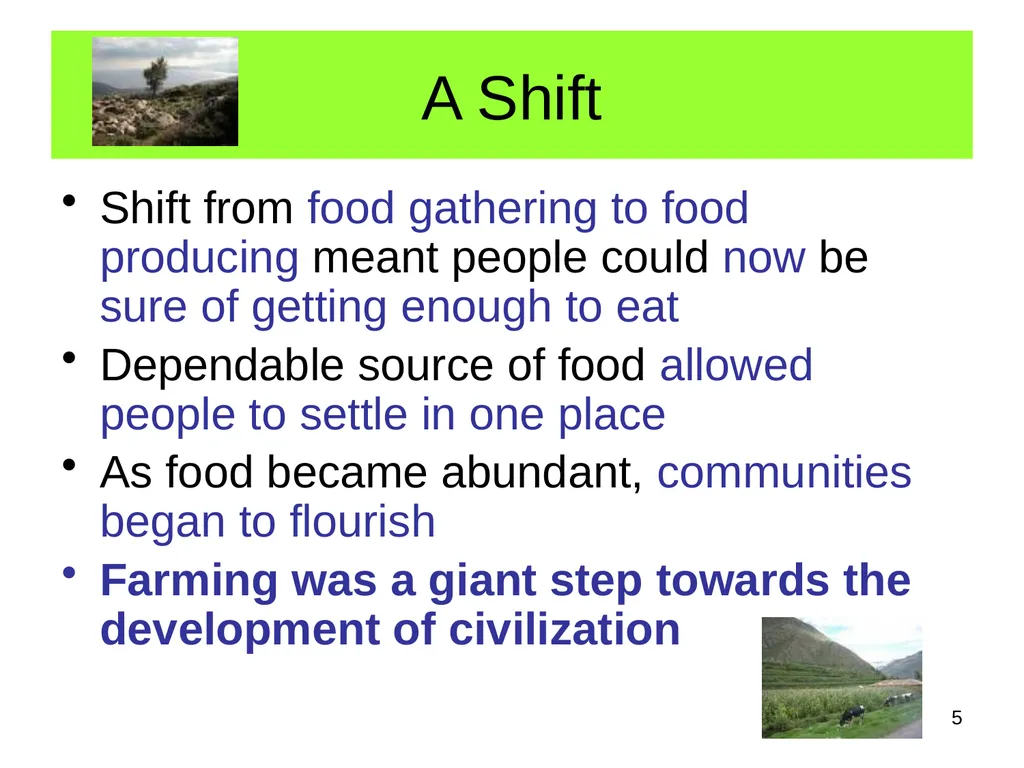
As farmers, humans started to take control of the production of food<br>
05
5 A Shift Shift from food gathering to food producing meant people could now be sure of getting enough to eat
Dependable source of food allowed people to settle in one place
As food became abundant, communities began to flourish
Farming was a giant step towards the development of civilization<br>
06
6 How Farming Got Started We can only speculate. We weren’t there.
Some Theories:
Spilled-Grain Hypothesis
Watching-the-Animals Hypothesis
Moov’en-and-Groov’en Hypothesis<br>
07
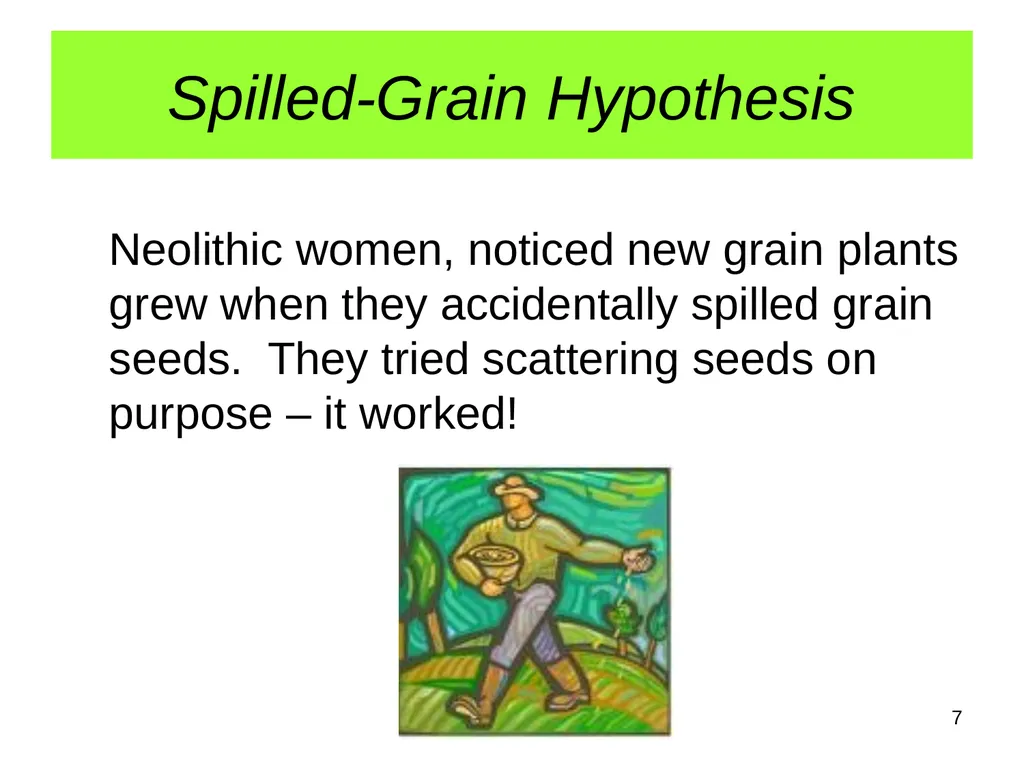
7 Spilled-Grain Hypothesis Neolithic women, noticed new grain plants grew when they accidentally spilled grain seeds. They tried scattering seeds on purpose – it worked!<br>
08
8 Watching-the-Animals Hypothesis Animals often find plants in places with water / good soil - Hunters saw pattern
People stayed at sites, animals became tamer
People started weeding / irrigating so plants would grow better
Started saving seeds of better plants to plant<br>
09
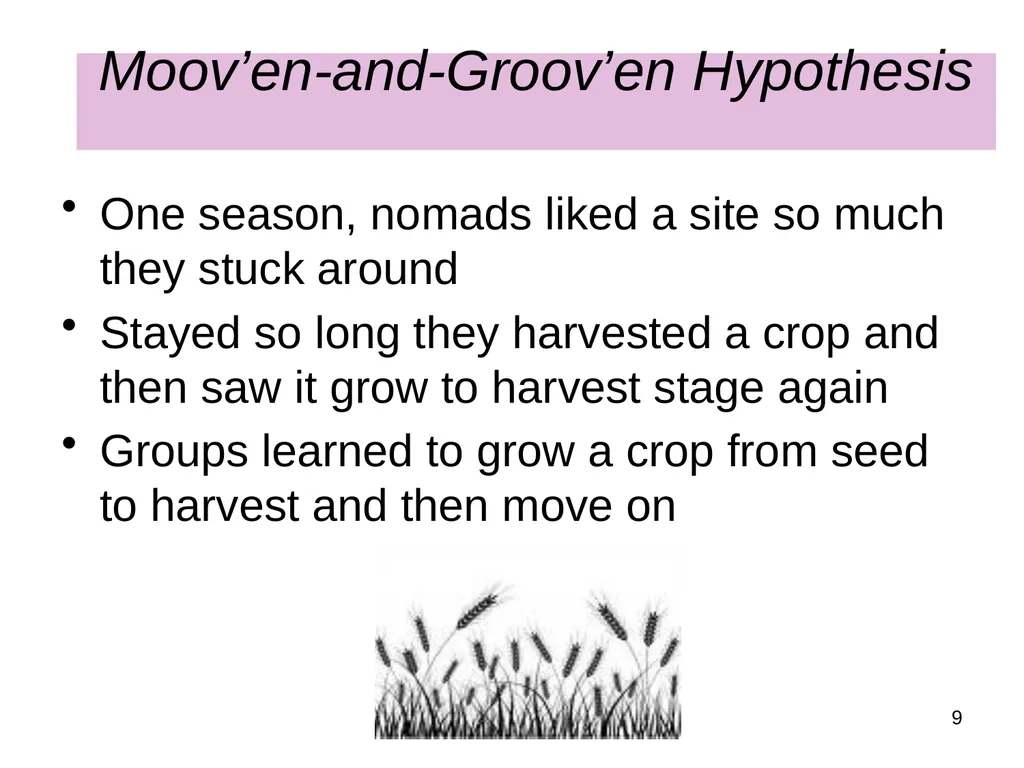
9 Moov’en-and-Groov’en Hypothesis One season, nomads liked a site so much they stuck around
Stayed so long they harvested a crop and then saw it grow to harvest stage again
Groups learned to grow a crop from seed to harvest and then move on<br>
10
10 Remember A hypothesis is a theory or opinion that has not been proven – a kind of educated guess about what the evidence means<br>
11
11 On your own, explain why you agree with one of the hypotheses described or propose one of your own. ��Write down two facts or reasons to justify your hypothesis Spilled-Grain Hypothesis
Watching-the-Animals Hypothesis
Moov’en-and-Groov’en Hypothesis Activity:<br>
12
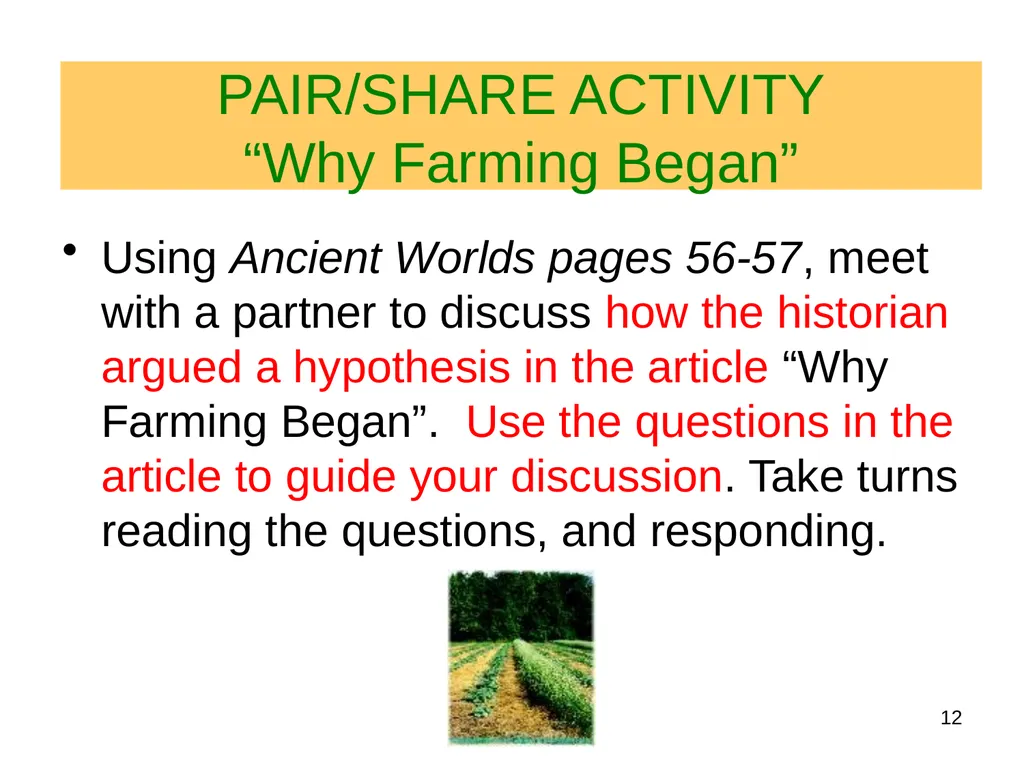
12 PAIR/SHARE ACTIVITY� “Why Farming Began” Using Ancient Worlds pages 56-57, meet with a partner to discuss how the historian argued a hypothesis in the article “Why Farming Began”. Use the questions in the article to guide your discussion. Take turns reading the questions, and responding.<br>
13
13 Think for Yourself State your own hypothesis about how farming started.
How is your hypothesis similar to and different from the one given in the article?
Do you think the historian did a good job of supporting a hypothesis? Explain.<br>
14
14 Cities: Another Giant Step Looking at how cities developed is like seeing civilization develop
development of farming brought people together in communities
people stopped farming when farmlands produced more food than was needed some
some people developed others skill; moved closer together forming villages
sometimes these villages grew into towns, and then cities<br>
15
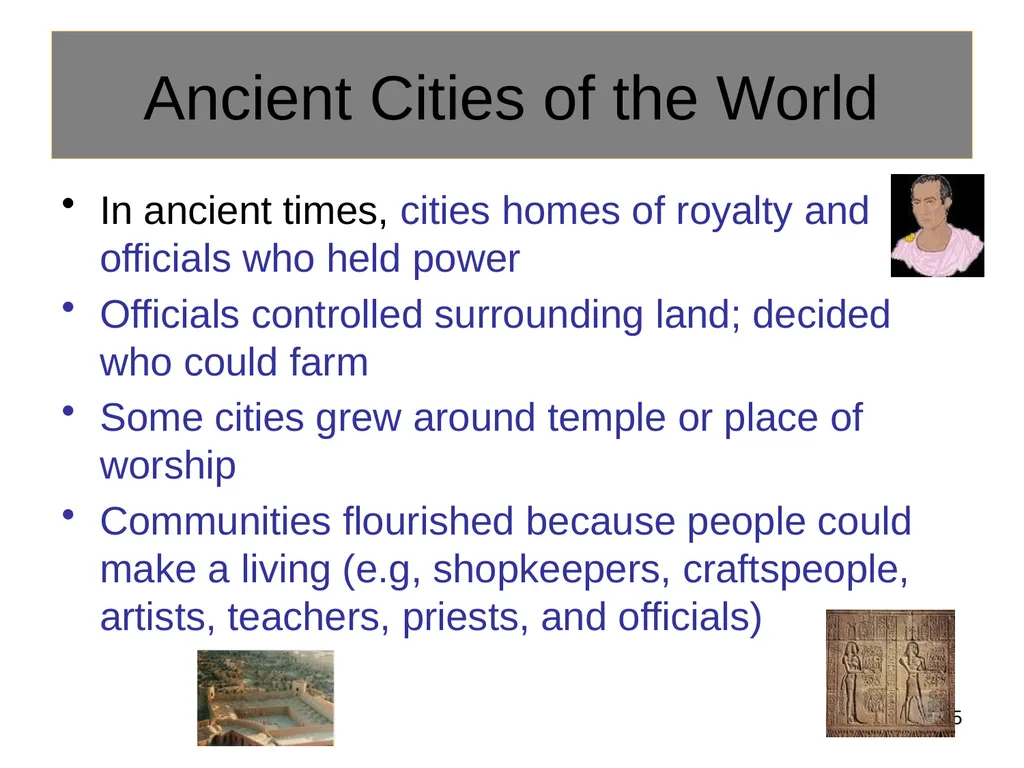
15 Ancient Cities of the World In ancient times, cities homes of royalty and officials who held power
Officials controlled surrounding land; decided who could farm
Some cities grew around temple or place of worship
Communities flourished because people could make a living (e.g, shopkeepers, craftspeople, artists, teachers, priests, and officials)<br>
16
16 Scientists Love to Discover Ruins of Ancient Cities<br>
17
17 Scientists want to know more about how ancient people lived and met individual/common needs<br>
18
18 Seeing Patterns Note the development (changes) of different early civilizations
Nomadic groups travelling
People formed settled, organized communities
Communities grew into cities
Met other groups through trade or warfare
Cities developed unique characteristics; solve problems in different ways<br>
19
19 Charting Change Using picture series on pages 62-63, Ancient Worlds:
Make a 2-column chart. List stages (or changes) you see in column one.
In column two, speculate on how each change must have affected people’s lives<br>
20
20 Pair/Share Your Chart With a partner, discuss how the events described in the chart did or did not contribute to a more civilized life for people<br>
21
21 In Conclusion You have examined the big steps that led towards civilization.
You have seen that tools played a crucial role at every step.<br>
22
22 Archaeologists found evidence showing at least 6 different species of humans have walked the earth<br>
23
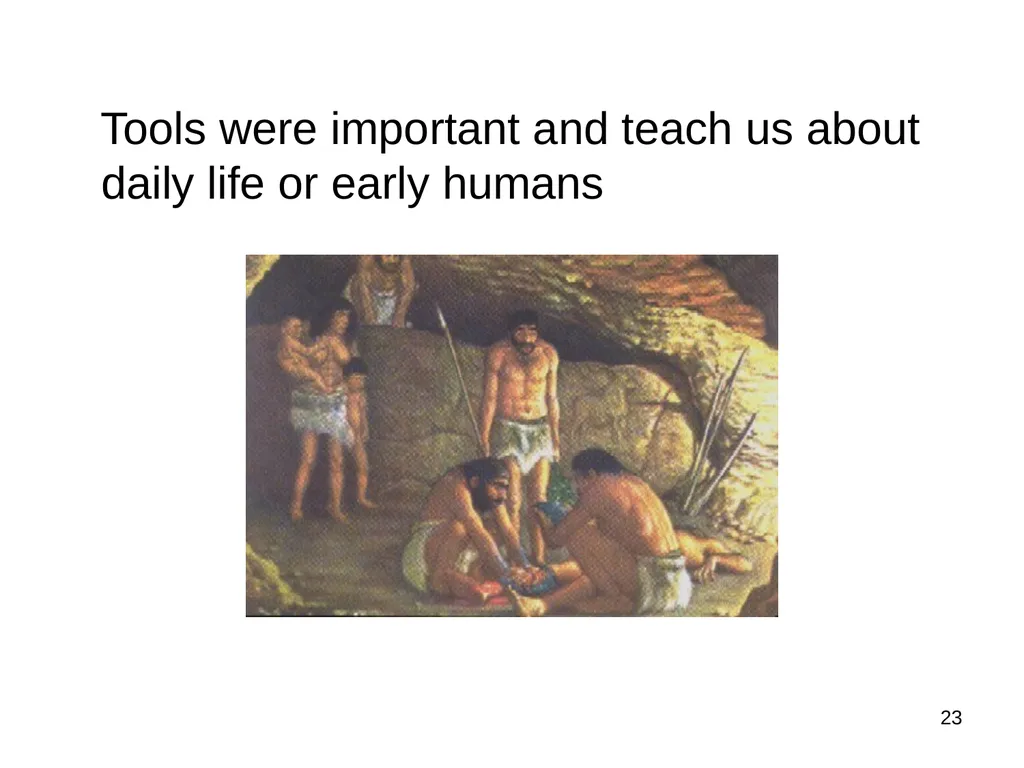
23 Tools were important and teach us about daily life or early humans<br>
24
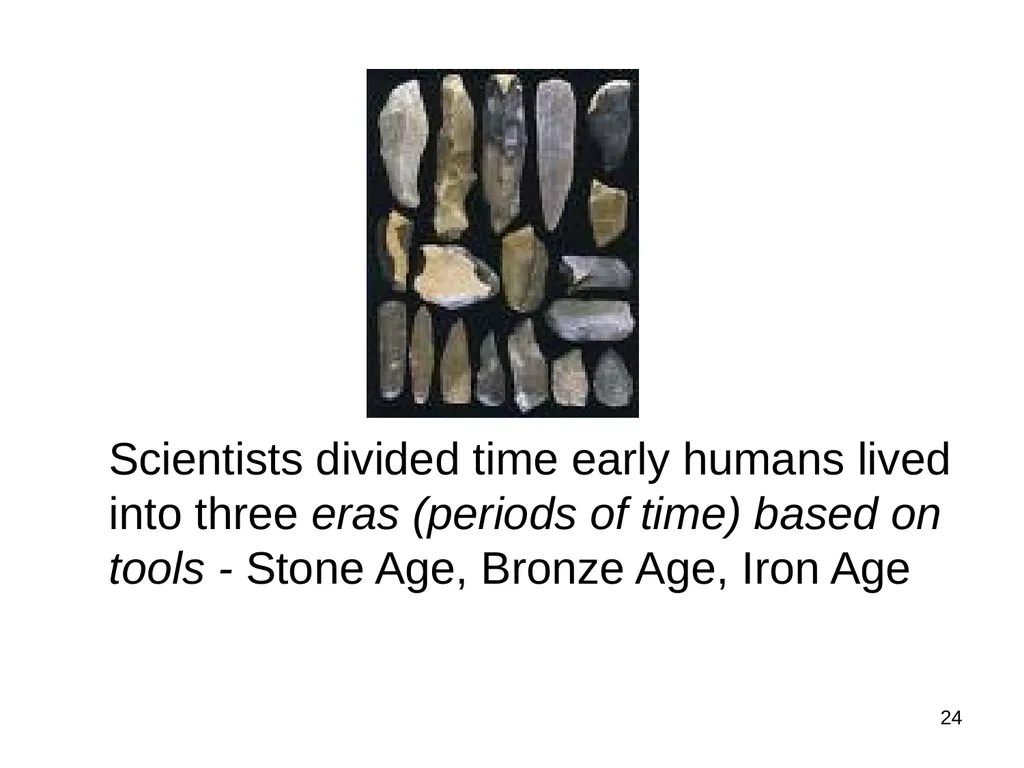
24 Scientists divided time early humans lived into three eras (periods of time) based on tools - Stone Age, Bronze Age, Iron Age<br>
25
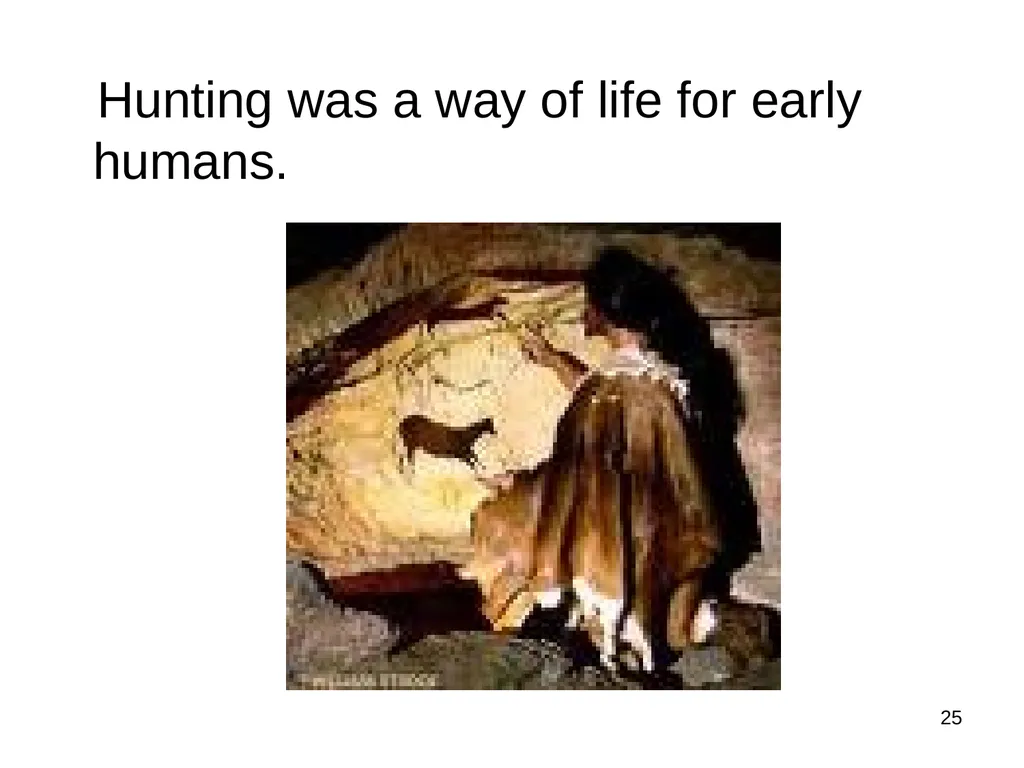
25 Hunting was a way of life for early humans.<br>
26
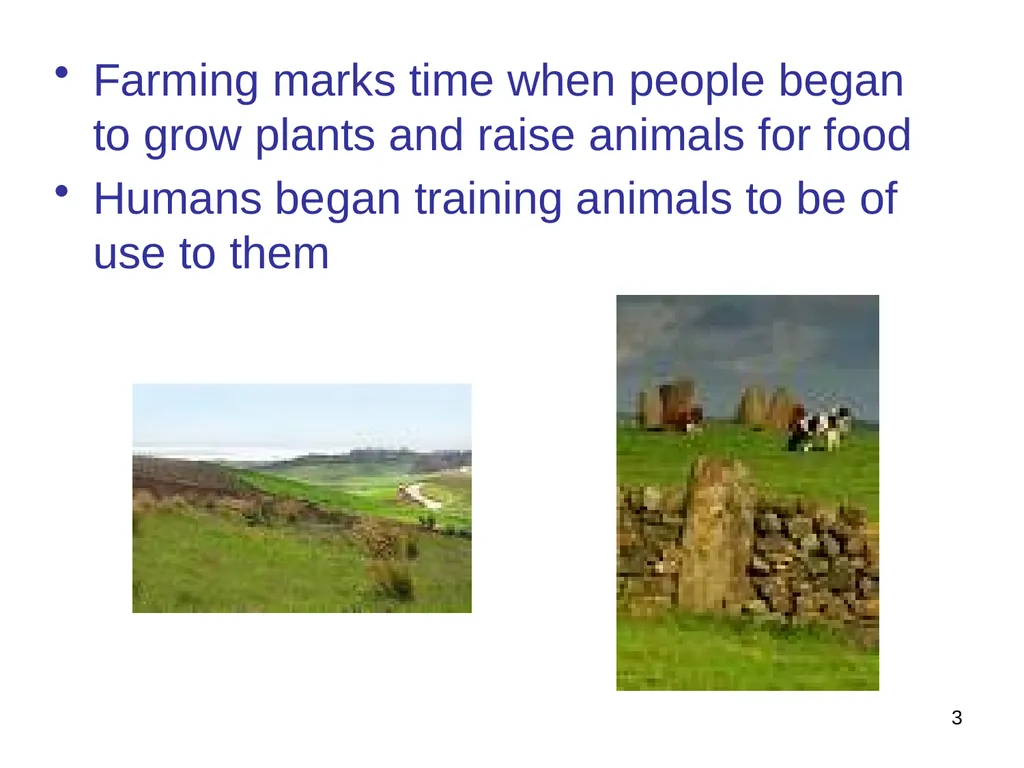
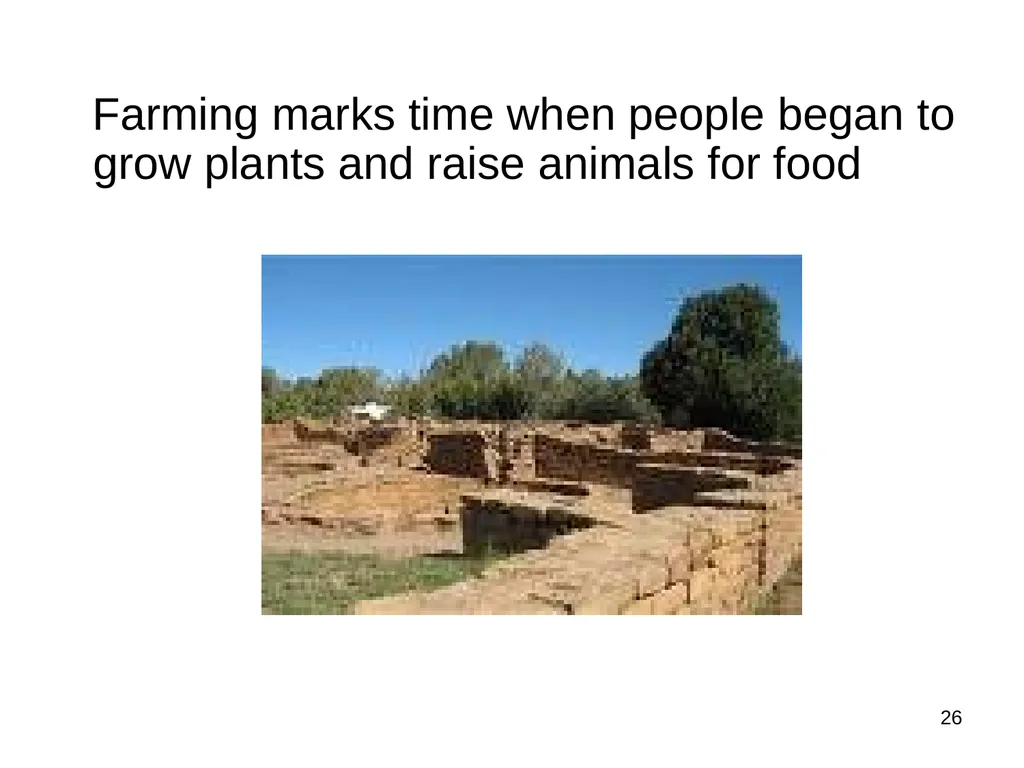
26 Farming marks time when people began to grow plants and raise animals for food<br>
27
27 Looking at how cities developed is like seeing civilization develop ; see a pattern to the changes<br>
28
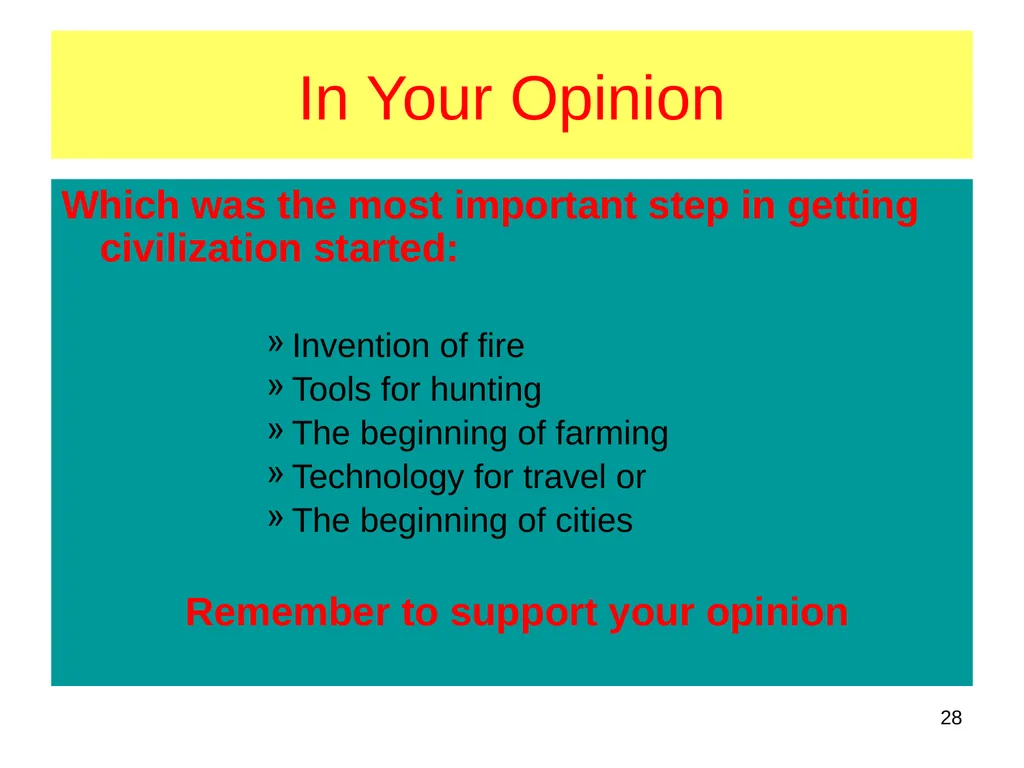
28 In Your Opinion Which was the most important step in getting civilization started:
Invention of fire
Tools for hunting
The beginning of farming
Technology for travel or
The beginning of cities
Remember to support your opinion<br>