01
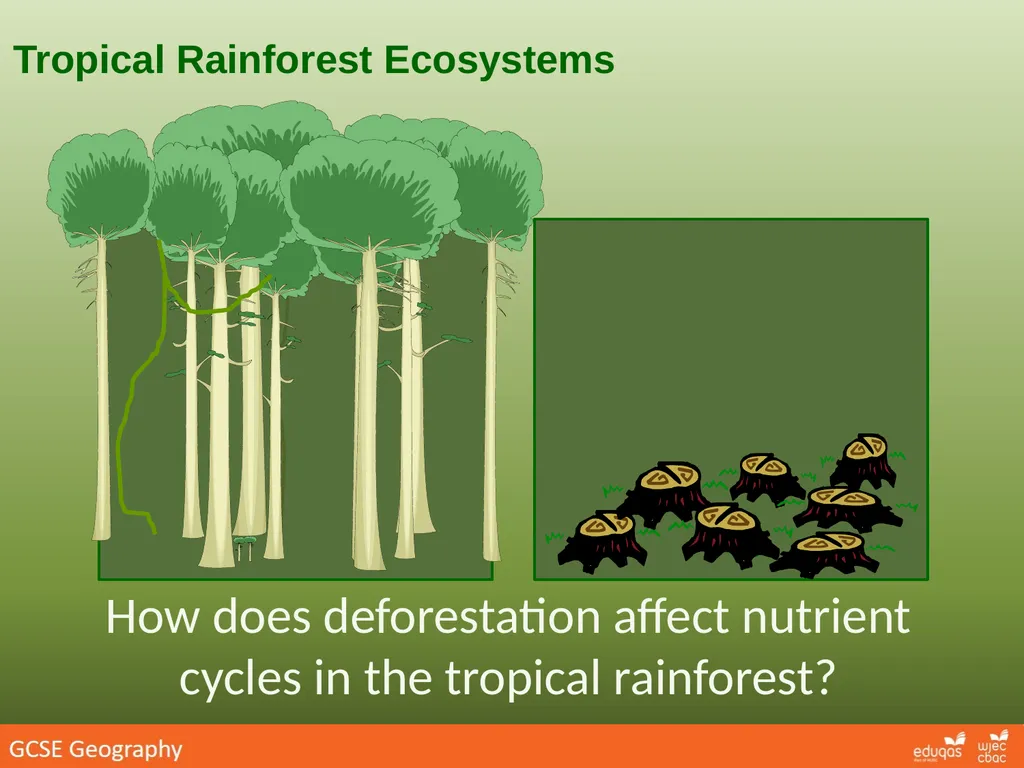
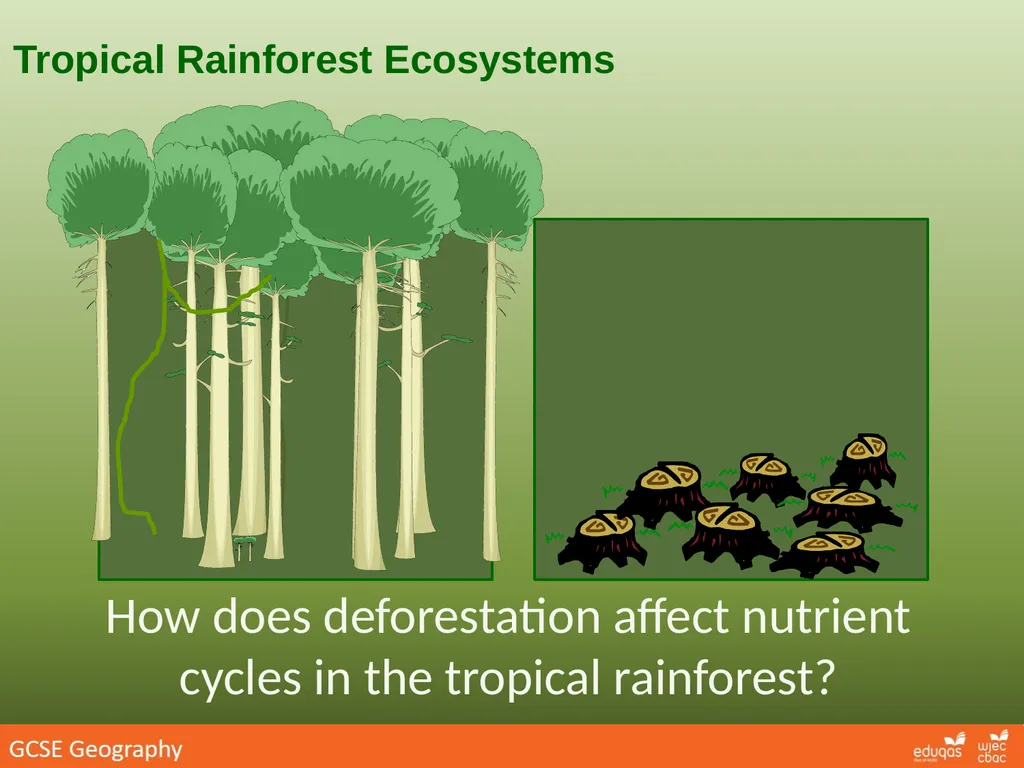
Tropical Rainforest Ecosystems How does deforestation affect nutrient cycles in the tropical rainforest?<br>
02
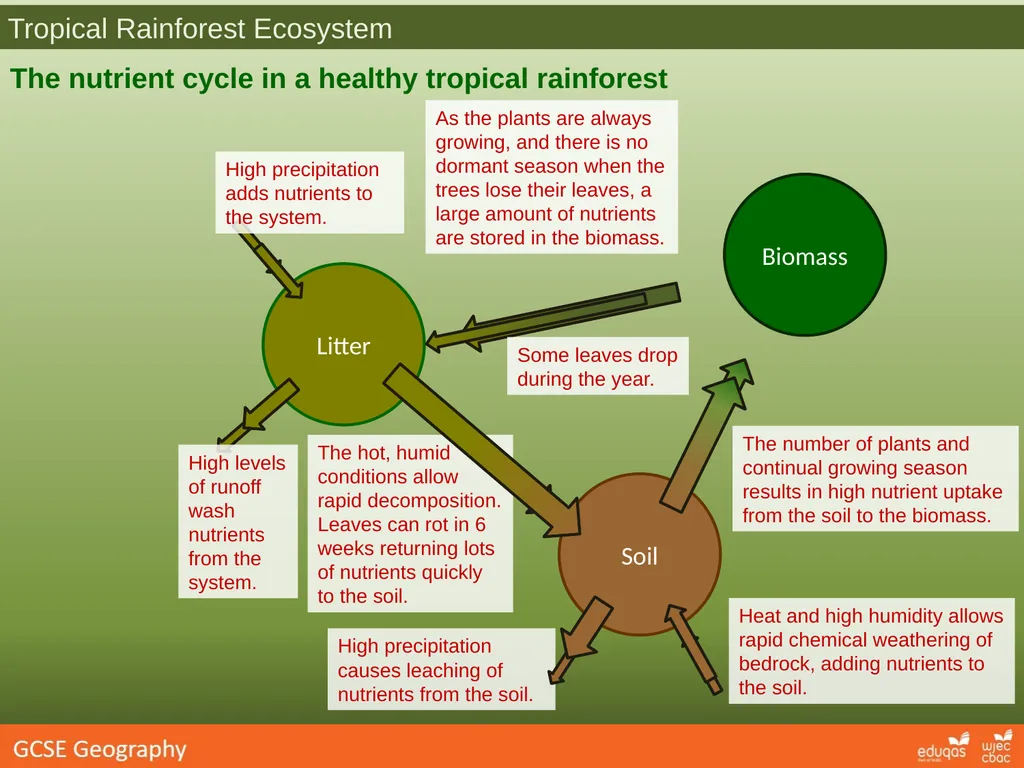
Tropical Rainforest Ecosystem The nutrient cycle in a healthy tropical rainforest Biomass Soil Litter The number of plants and continual growing season results in high nutrient uptake from the soil to the biomass. As the plants are always growing, and there is no dormant season when the trees lose their leaves, a large amount of nutrients are stored in the biomass. The hot, humid conditions allow rapid decomposition. Leaves can rot in 6 weeks returning lots of nutrients quickly to the soil. High precipitation causes leaching of nutrients from the soil. Some leaves drop during the year. Heat and high humidity allows rapid chemical weathering of bedrock, adding nutrients to the soil. High precipitation adds nutrients to the system. High levels of runoff wash nutrients from the system.<br>
03
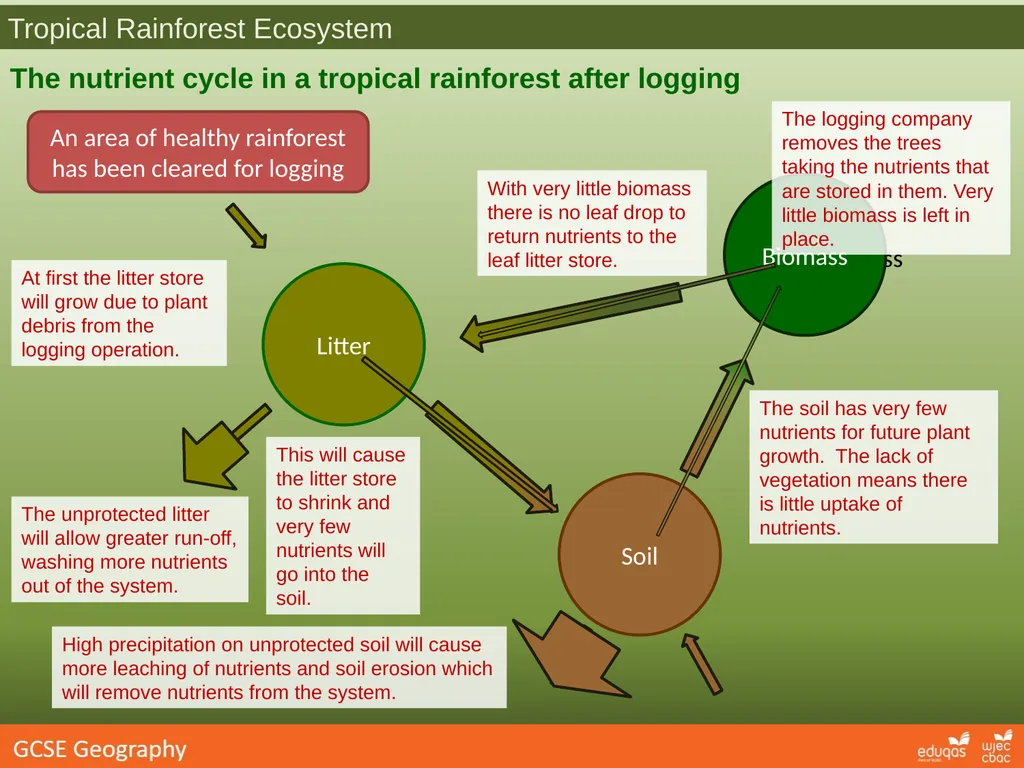
Litter Soil Biomass Biomass Tropical Rainforest Ecosystem The nutrient cycle in a tropical rainforest after logging Soil Litter The logging company removes the trees taking the nutrients that are stored in them. Very little biomass is left in place. With very little biomass there is no leaf drop to return nutrients to the leaf litter store. This will cause the litter store to shrink and very few nutrients will go into the soil. High precipitation on unprotected soil will cause more leaching of nutrients and soil erosion which will remove nutrients from the system. At first the litter store will grow due to plant debris from the logging operation. The soil has very few nutrients for future plant growth. The lack of vegetation means there is little uptake of nutrients. The unprotected litter will allow greater run-off, washing more nutrients out of the system. An area of healthy rainforest has been cleared for logging<br>