
Understanding conceptual transfer for students
Description: Understanding conceptual transfer for students learning new programming languages Presented by Ethel Tshukudu University of Glasgow Ethel.Tshukuduglasgow.ac.uk Outline Motivation Background Natural Languages Transfer Theories Research
Related Topics
Download Presentation
"Understanding conceptual transfer for students" is the property of its rightful owner. Permission is granted to download and print the materials on this website for personal, non-commercial use only, and to display it on your personal computer provided you do not modify the materials and that you retain all copyright notices contained in the materials. By downloading content from our website, you accept the terms of this agreement.
Presentation Transcript
slide1. Understanding conceptual transfer for students learning new programming languages
Presented by Ethel Tshukudu
University of Glasgow
Ethel.Tshukudu@glasgow.ac.uk<br>
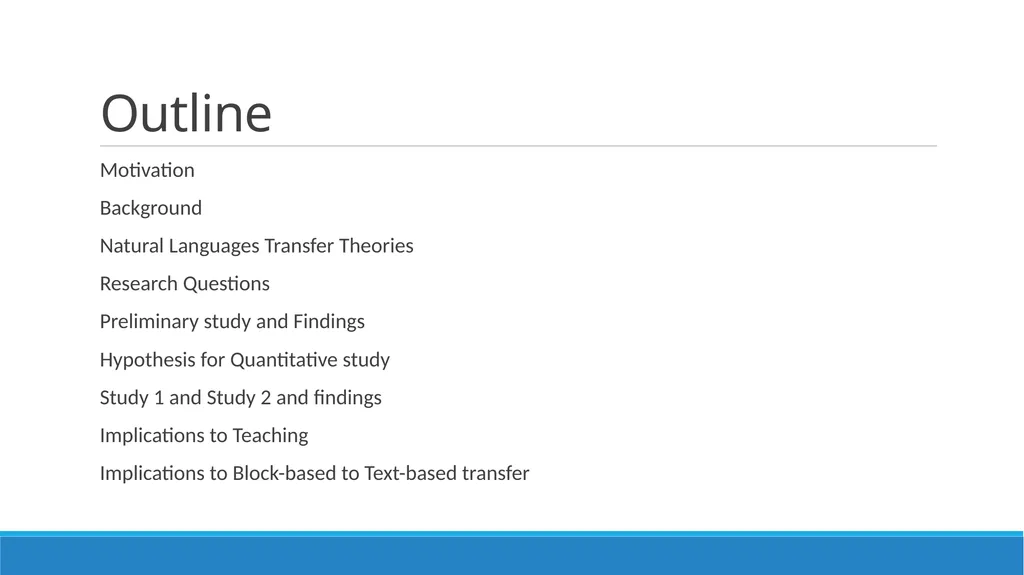
slide2. Outline Motivation
Background
Natural Languages Transfer Theories
Research Questions
Preliminary study and Findings
Hypothesis for Quantitative study
Study 1 and Study 2 and findings
Implications to Teaching
Implications to Block-based to Text-based transfer<br>
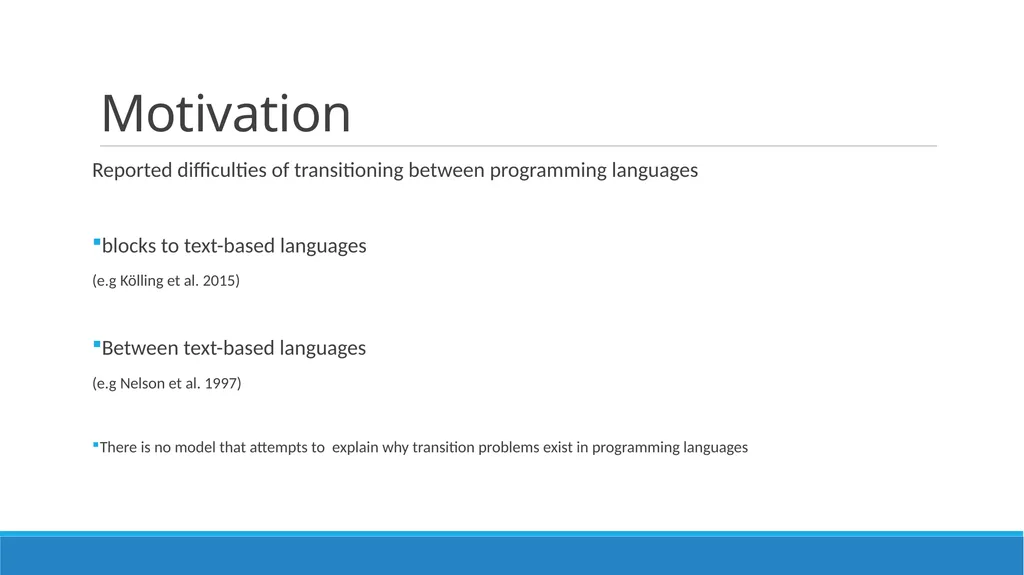
slide3. Motivation Reported difficulties of transitioning between programming languages
blocks to text-based languages
(e.g Kölling et al. 2015)
Between text-based languages
(e.g Nelson et al. 1997)
There is no model that attempts to explain why transition problems exist in programming languages<br>
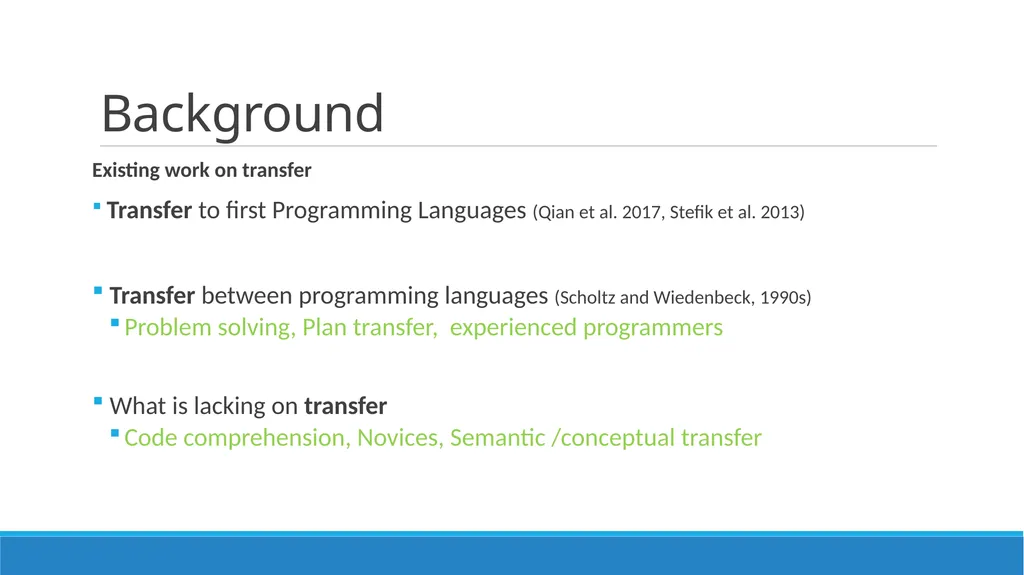
slide4. Background Existing work on transfer
Transfer to first Programming Languages (Qian et al. 2017, Stefik et al. 2013)
Transfer between programming languages (Scholtz and Wiedenbeck, 1990s)
Problem solving, Plan transfer, experienced programmers
What is lacking on transfer
Code comprehension, Novices, Semantic /conceptual transfer<br>
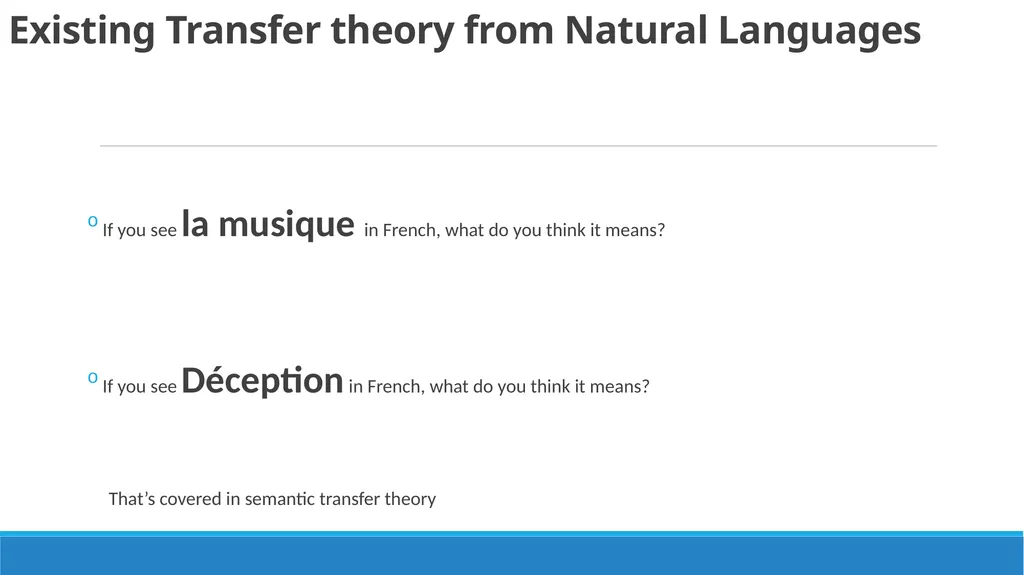
slide5. Existing Transfer theory from Natural Languages If you see la musique in French, what do you think it means?
If you see Déception in French, what do you think it means?
That’s covered in semantic transfer theory<br>
slide6. Purpose of Research RQ1) How is semantic transfer in natural languages applicable to learning new Programming Languages?
RQ2) Does paying attention to semantic transfer during instruction improve transfer?<br>
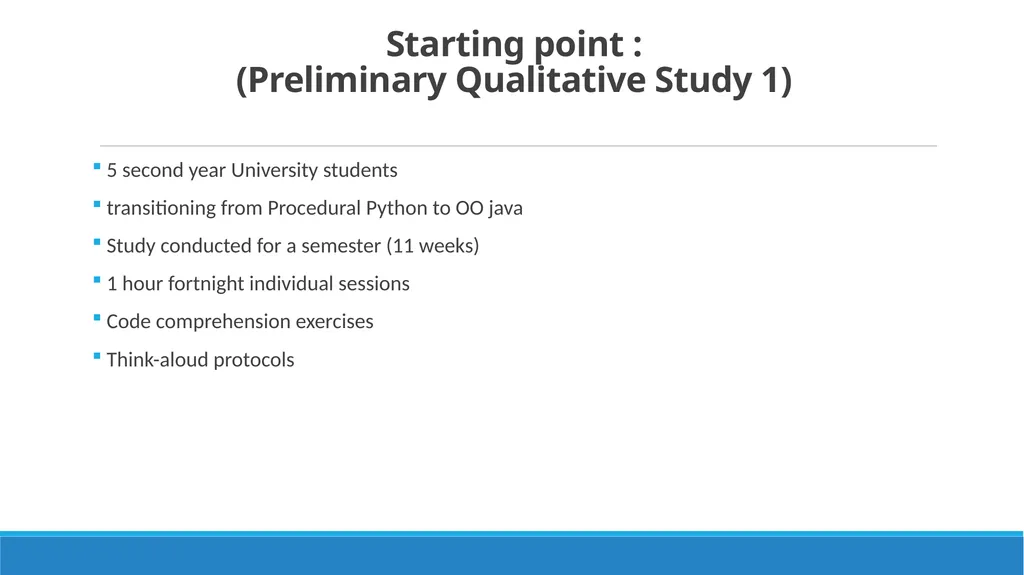
slide7. Starting point : (Preliminary Qualitative Study 1) 5 second year University students
transitioning from Procedural Python to OO java
Study conducted for a semester (11 weeks)
1 hour fortnight individual sessions
Code comprehension exercises
Think-aloud protocols<br>
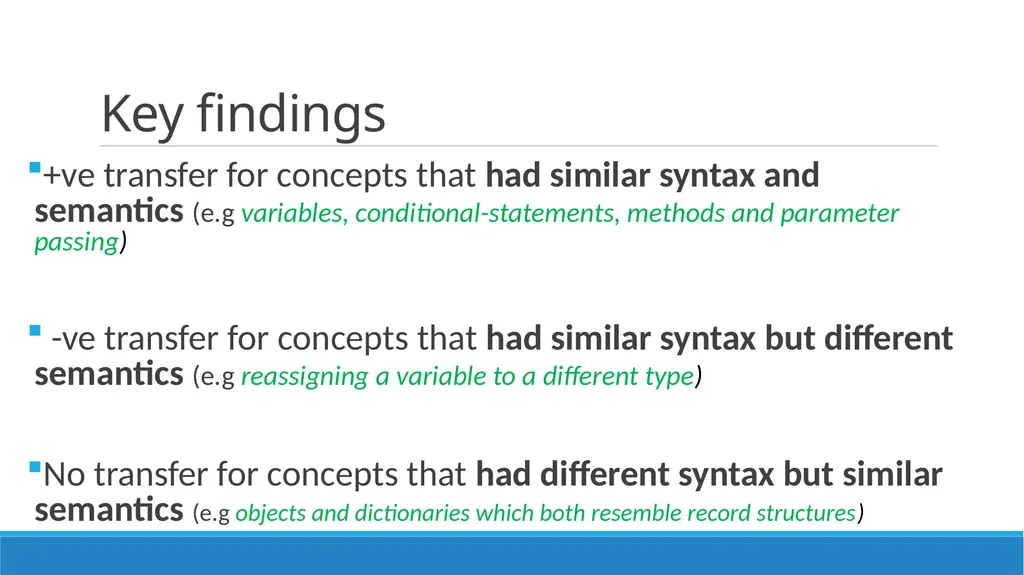
slide8. Key findings +ve transfer for concepts that had similar syntax and semantics (e.g variables, conditional-statements, methods and parameter passing)
-ve transfer for concepts that had similar syntax but different semantics (e.g reassigning a variable to a different type)
No transfer for concepts that had different syntax but similar semantics (e.g objects and dictionaries which both resemble record structures)<br>
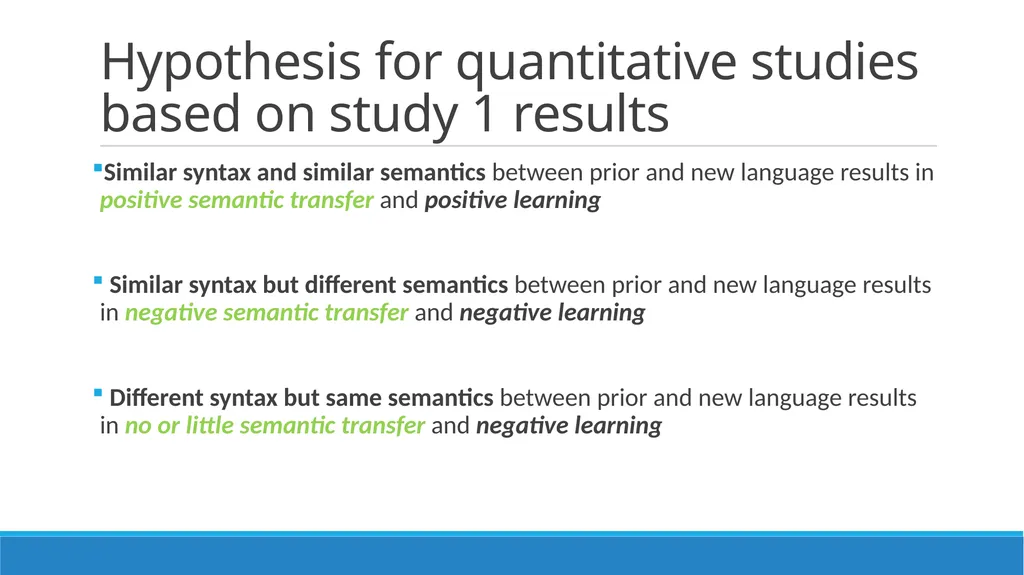
slide9. Hypothesis for quantitative studies based on study 1 results Similar syntax and similar semantics between prior and new language results in positive semantic transfer and positive learning
Similar syntax but different semantics between prior and new language results in negative semantic transfer and negative learning
Different syntax but same semantics between prior and new language results in no or little semantic transfer and negative learning<br>
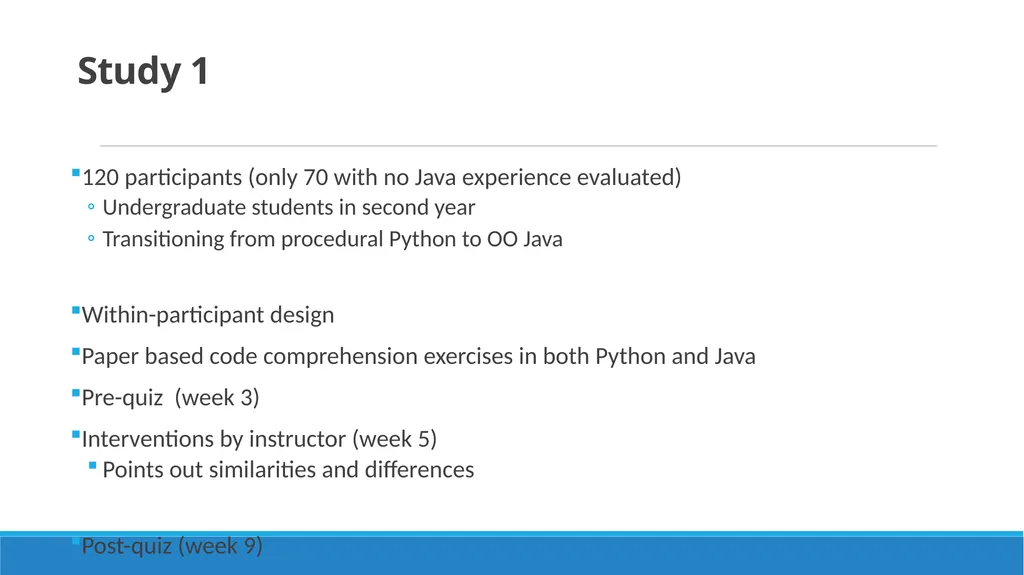
slide10. Study 1 120 participants (only 70 with no Java experience evaluated)
Undergraduate students in second year
Transitioning from procedural Python to OO Java
Within-participant design
Paper based code comprehension exercises in both Python and Java
Pre-quiz (week 3)
Interventions by instructor (week 5)
Points out similarities and differences
Post-quiz (week 9)<br>
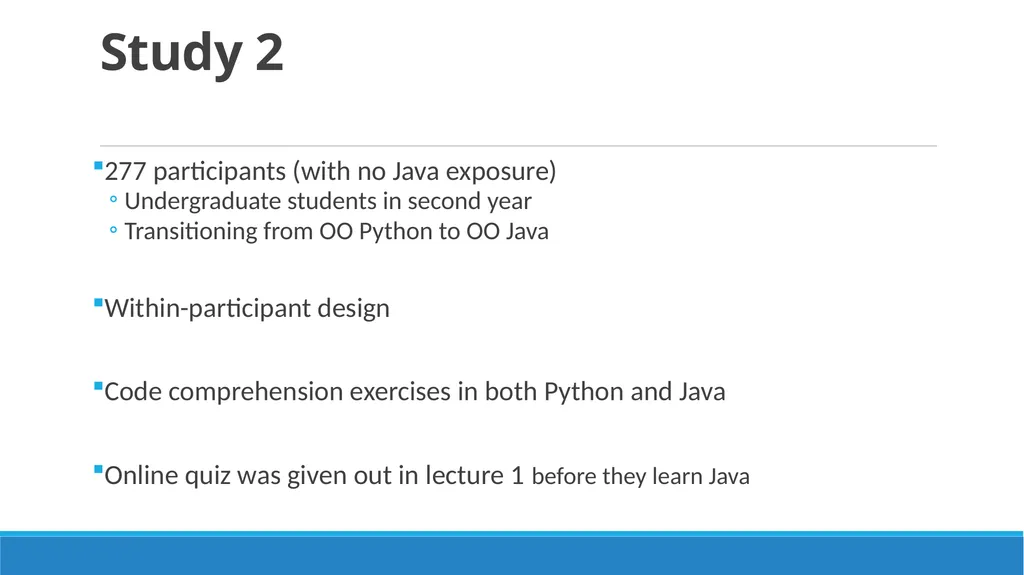
slide11. Study 2 277 participants (with no Java exposure)
Undergraduate students in second year
Transitioning from OO Python to OO Java
Within-participant design
Code comprehension exercises in both Python and Java
Online quiz was given out in lecture 1 before they learn Java<br>
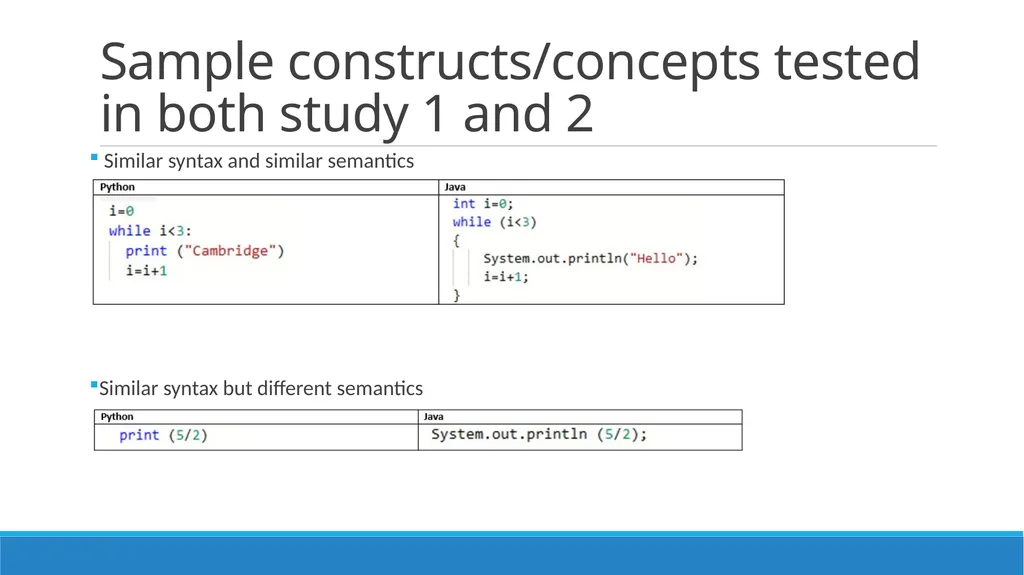
slide12. Sample constructs/concepts tested in both study 1 and 2 Similar syntax and similar semantics
Similar syntax but different semantics<br>
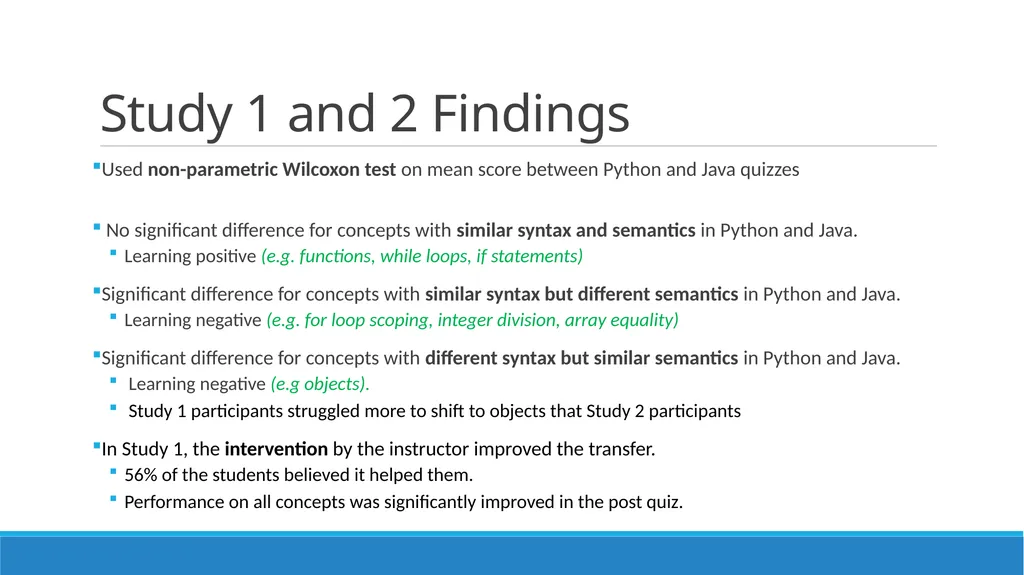
slide13. Study 1 and 2 Findings Used non-parametric Wilcoxon test on mean score between Python and Java quizzes
No significant difference for concepts with similar syntax and semantics in Python and Java.
Learning positive (e.g. functions, while loops, if statements)
Significant difference for concepts with similar syntax but different semantics in Python and Java.
Learning negative (e.g. for loop scoping, integer division, array equality)
Significant difference for concepts with different syntax but similar semantics in Python and Java.
Learning negative (e.g objects).
Study 1 participants struggled more to shift to objects that Study 2 participants
In Study 1, the intervention by the instructor improved the transfer.
56% of the students believed it helped them.
Performance on all concepts was significantly improved in the post quiz.<br>
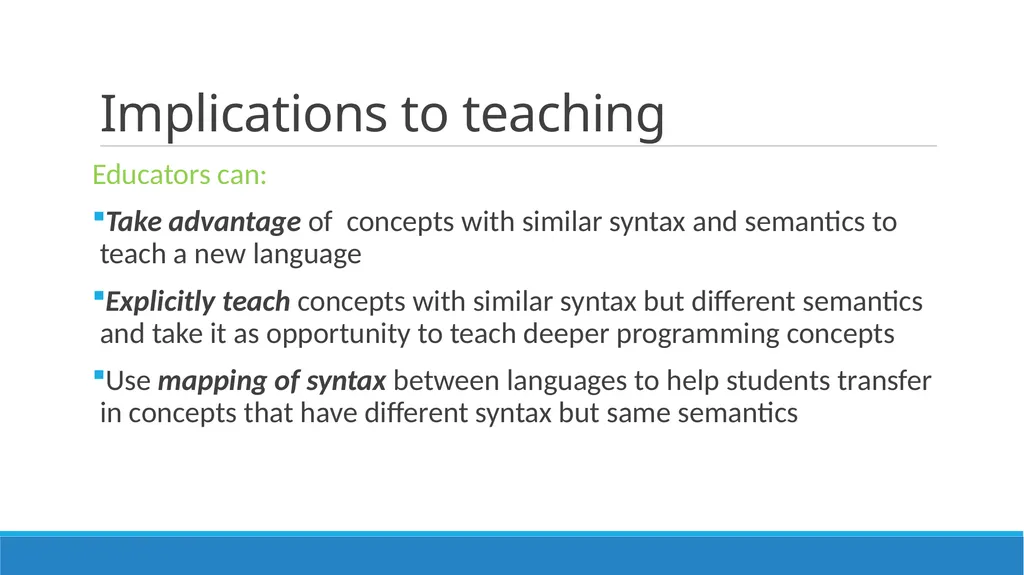
slide14. Implications to teaching Educators can:
Take advantage of concepts with similar syntax and semantics to teach a new language
Explicitly teach concepts with similar syntax but different semantics and take it as opportunity to teach deeper programming concepts
Use mapping of syntax between languages to help students transfer in concepts that have different syntax but same semantics<br>
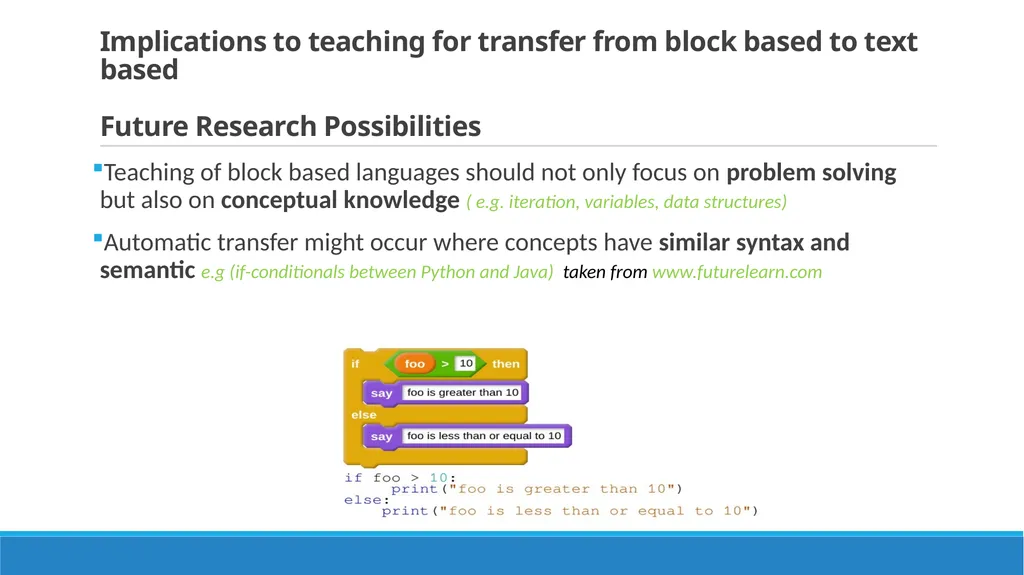
slide15. Implications to teaching for transfer from block based to text based Future Research Possibilities Teaching of block based languages should not only focus on problem solving but also on conceptual knowledge ( e.g. iteration, variables, data structures)
Automatic transfer might occur where concepts have similar syntax and semantic e.g (if-conditionals between Python and Java) taken from www.futurelearn.com<br>
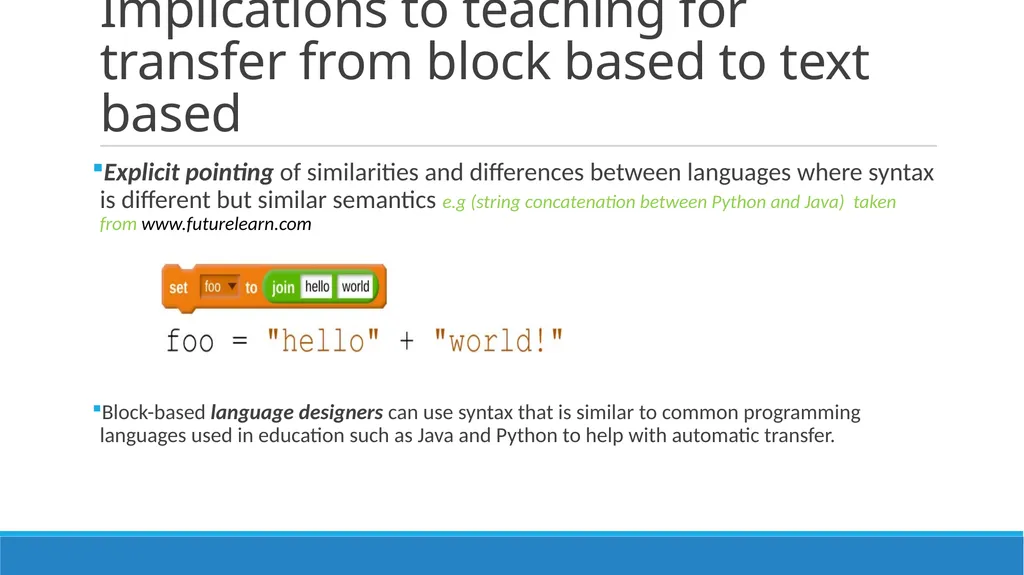
slide16. Implications to teaching for transfer from block based to text based Explicit pointing of similarities and differences between languages where syntax is different but similar semantics e.g (string concatenation between Python and Java) taken from www.futurelearn.com
Block-based language designers can use syntax that is similar to common programming languages used in education such as Java and Python to help with automatic transfer.<br>
slide17. References Michael Kölling, Neil CC Brown, and Amjad Altadmri. 2015. Frame-based editing: Easing the transition from blocks to text-based programming. In Proceedings of the Workshop in Primary and Secondary Computing Education. ACM, 29–38
H James Nelson, Gretchen Irwin, and David E Monarchi. 1997. Journeys up the mountain: Different paths to learning object-oriented programming. Accounting, Management and Information Technologies 7, 2 (1997), 53–85.
Quanfeng Wu and John R Anderson. 1990. Problem-solving transfer among programming languages. Technical Report. CARNEGIE-MELLON UNIV PITTSBURGH PA ARTIFICIAL INTELLIGENCE AND PSYCHOLOGY
Andreas Stefk and Susanna Siebert. 2013. An empirical investigation into programming language syntax. ACM Transactions on Computing Education (TOCE) 13, 4 (2013), 1–40.
Jean Scholtz and Susan Wiedenbeck. 1990. Learning second and subsequent programming languages: A problem of transfer. International Journal of HumanComputer Interaction 2, 1 (1990), 51–72
Yizhou Qian and James Lehman. 2017. Students’ misconceptions and other difculties in introductory programming: A literature review. ACM Transactions on Computing Education (TOCE) 18, 1 (2017), 1–24<br>
slide18. Questions and Answers Ethel Tshukudu
University of Glasgow
Other Contacts:
2371984t@student.gla.ac.uk
Twitter: @etheltshukudu<br>
slide2. Outline Motivation
Background
Natural Languages Transfer Theories
Research Questions
Preliminary study and Findings
Hypothesis for Quantitative study
Study 1 and Study 2 and findings
Implications to Teaching
Implications to Block-based to Text-based transfer<br>
slide3. Motivation Reported difficulties of transitioning between programming languages
blocks to text-based languages
(e.g Kölling et al. 2015)
Between text-based languages
(e.g Nelson et al. 1997)
There is no model that attempts to explain why transition problems exist in programming languages<br>
slide4. Background Existing work on transfer
Transfer to first Programming Languages (Qian et al. 2017, Stefik et al. 2013)
Transfer between programming languages (Scholtz and Wiedenbeck, 1990s)
Problem solving, Plan transfer, experienced programmers
What is lacking on transfer
Code comprehension, Novices, Semantic /conceptual transfer<br>
slide5. Existing Transfer theory from Natural Languages If you see la musique in French, what do you think it means?
If you see Déception in French, what do you think it means?
That’s covered in semantic transfer theory<br>
slide6. Purpose of Research RQ1) How is semantic transfer in natural languages applicable to learning new Programming Languages?
RQ2) Does paying attention to semantic transfer during instruction improve transfer?<br>
slide7. Starting point : (Preliminary Qualitative Study 1) 5 second year University students
transitioning from Procedural Python to OO java
Study conducted for a semester (11 weeks)
1 hour fortnight individual sessions
Code comprehension exercises
Think-aloud protocols<br>
slide8. Key findings +ve transfer for concepts that had similar syntax and semantics (e.g variables, conditional-statements, methods and parameter passing)
-ve transfer for concepts that had similar syntax but different semantics (e.g reassigning a variable to a different type)
No transfer for concepts that had different syntax but similar semantics (e.g objects and dictionaries which both resemble record structures)<br>
slide9. Hypothesis for quantitative studies based on study 1 results Similar syntax and similar semantics between prior and new language results in positive semantic transfer and positive learning
Similar syntax but different semantics between prior and new language results in negative semantic transfer and negative learning
Different syntax but same semantics between prior and new language results in no or little semantic transfer and negative learning<br>
slide10. Study 1 120 participants (only 70 with no Java experience evaluated)
Undergraduate students in second year
Transitioning from procedural Python to OO Java
Within-participant design
Paper based code comprehension exercises in both Python and Java
Pre-quiz (week 3)
Interventions by instructor (week 5)
Points out similarities and differences
Post-quiz (week 9)<br>
slide11. Study 2 277 participants (with no Java exposure)
Undergraduate students in second year
Transitioning from OO Python to OO Java
Within-participant design
Code comprehension exercises in both Python and Java
Online quiz was given out in lecture 1 before they learn Java<br>
slide12. Sample constructs/concepts tested in both study 1 and 2 Similar syntax and similar semantics
Similar syntax but different semantics<br>
slide13. Study 1 and 2 Findings Used non-parametric Wilcoxon test on mean score between Python and Java quizzes
No significant difference for concepts with similar syntax and semantics in Python and Java.
Learning positive (e.g. functions, while loops, if statements)
Significant difference for concepts with similar syntax but different semantics in Python and Java.
Learning negative (e.g. for loop scoping, integer division, array equality)
Significant difference for concepts with different syntax but similar semantics in Python and Java.
Learning negative (e.g objects).
Study 1 participants struggled more to shift to objects that Study 2 participants
In Study 1, the intervention by the instructor improved the transfer.
56% of the students believed it helped them.
Performance on all concepts was significantly improved in the post quiz.<br>
slide14. Implications to teaching Educators can:
Take advantage of concepts with similar syntax and semantics to teach a new language
Explicitly teach concepts with similar syntax but different semantics and take it as opportunity to teach deeper programming concepts
Use mapping of syntax between languages to help students transfer in concepts that have different syntax but same semantics<br>
slide15. Implications to teaching for transfer from block based to text based Future Research Possibilities Teaching of block based languages should not only focus on problem solving but also on conceptual knowledge ( e.g. iteration, variables, data structures)
Automatic transfer might occur where concepts have similar syntax and semantic e.g (if-conditionals between Python and Java) taken from www.futurelearn.com<br>
slide16. Implications to teaching for transfer from block based to text based Explicit pointing of similarities and differences between languages where syntax is different but similar semantics e.g (string concatenation between Python and Java) taken from www.futurelearn.com
Block-based language designers can use syntax that is similar to common programming languages used in education such as Java and Python to help with automatic transfer.<br>
slide17. References Michael Kölling, Neil CC Brown, and Amjad Altadmri. 2015. Frame-based editing: Easing the transition from blocks to text-based programming. In Proceedings of the Workshop in Primary and Secondary Computing Education. ACM, 29–38
H James Nelson, Gretchen Irwin, and David E Monarchi. 1997. Journeys up the mountain: Different paths to learning object-oriented programming. Accounting, Management and Information Technologies 7, 2 (1997), 53–85.
Quanfeng Wu and John R Anderson. 1990. Problem-solving transfer among programming languages. Technical Report. CARNEGIE-MELLON UNIV PITTSBURGH PA ARTIFICIAL INTELLIGENCE AND PSYCHOLOGY
Andreas Stefk and Susanna Siebert. 2013. An empirical investigation into programming language syntax. ACM Transactions on Computing Education (TOCE) 13, 4 (2013), 1–40.
Jean Scholtz and Susan Wiedenbeck. 1990. Learning second and subsequent programming languages: A problem of transfer. International Journal of HumanComputer Interaction 2, 1 (1990), 51–72
Yizhou Qian and James Lehman. 2017. Students’ misconceptions and other difculties in introductory programming: A literature review. ACM Transactions on Computing Education (TOCE) 18, 1 (2017), 1–24<br>
slide18. Questions and Answers Ethel Tshukudu
University of Glasgow
Other Contacts:
2371984t@student.gla.ac.uk
Twitter: @etheltshukudu<br>