UNIT-01 (LIVESTOCK BASED LIVELIHOODS AND THEIR EVOLUTION) Dr. Pankaj Kumar Department of Veterinary Animal Husbandry Extension Education, BVC MAN ANIMAL RELATIONSHIP Domestication of plants and animals altered the occupation of the early
"UNIT-01 (LIVESTOCK BASED LIVELIHOODS AND THEIR" is the property of its rightful owner. Permission is granted to
download and print the materials on this website for personal, non-commercial use only, and to display it
on your personal computer provided you do not modify the materials and that you retain all copyright
notices contained in the materials. By downloading content from our website, you accept the terms of this
agreement.
Presentation Transcript
01
UNIT-01 (LIVESTOCK BASED LIVELIHOODS AND THEIR EVOLUTION)
Dr. Pankaj Kumar
Department of Veterinary & Animal Husbandry Extension Education, BVC<br>
02
MAN ANIMAL RELATIONSHIP Domestication of plants and animals altered the occupation of the early humans from hunting and gathering to alert hunting, herding and advanced agriculture.
The domestication of livestock, mainly pigs, cows, sheep, horses, and goats is considered to have occurred between 9,000 and 5,000 BC as agriculture became more of an issue in human societies.
The dog is thought to have been the first animal to be domesticated by humans, sometime around 13,000–10,000 BC, from its wolf-like ancestor Canis lupus.<br>
03
Animals affect everyone's life ranging from companionship to food source.
Companionship: Pets impact human lives on a face-to-face basis by being our companions, whether it's a cat or a dog or a guinea pig.
Rehabilitation: Pet animals are often used for rehabilitation. Certain dogs, with special certification, are allowed to visit the residents in nursing homes and similar living arrangements.
Caretaking Skills: Having a pet is a great way to teach a child caretaking skills. A pet must be fed and watered daily, on some days given a bath, and trained. Having a child take charge of some or all of these tasks instills a sense of compassion along with responsibility.<br>
04
Working Animals: Animals have helped throughout history by working for humans. Horses and oxen have pulled plows for farming, and carriages and covered wagons for traveling. Dogs are also used by the police for many activities.
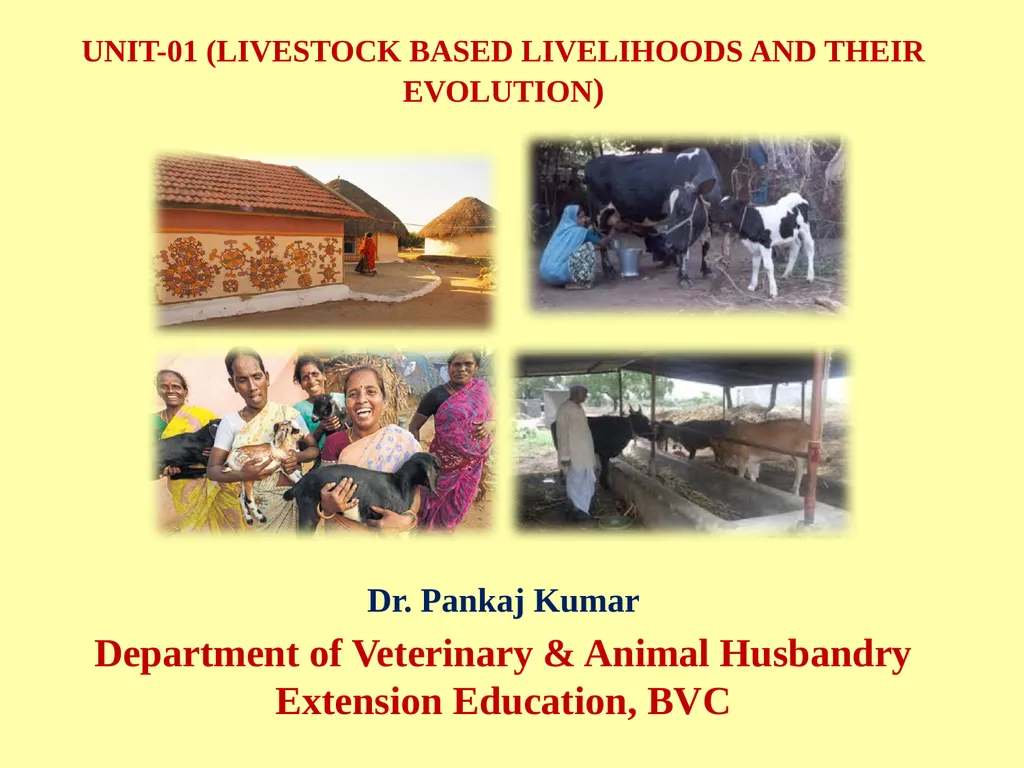
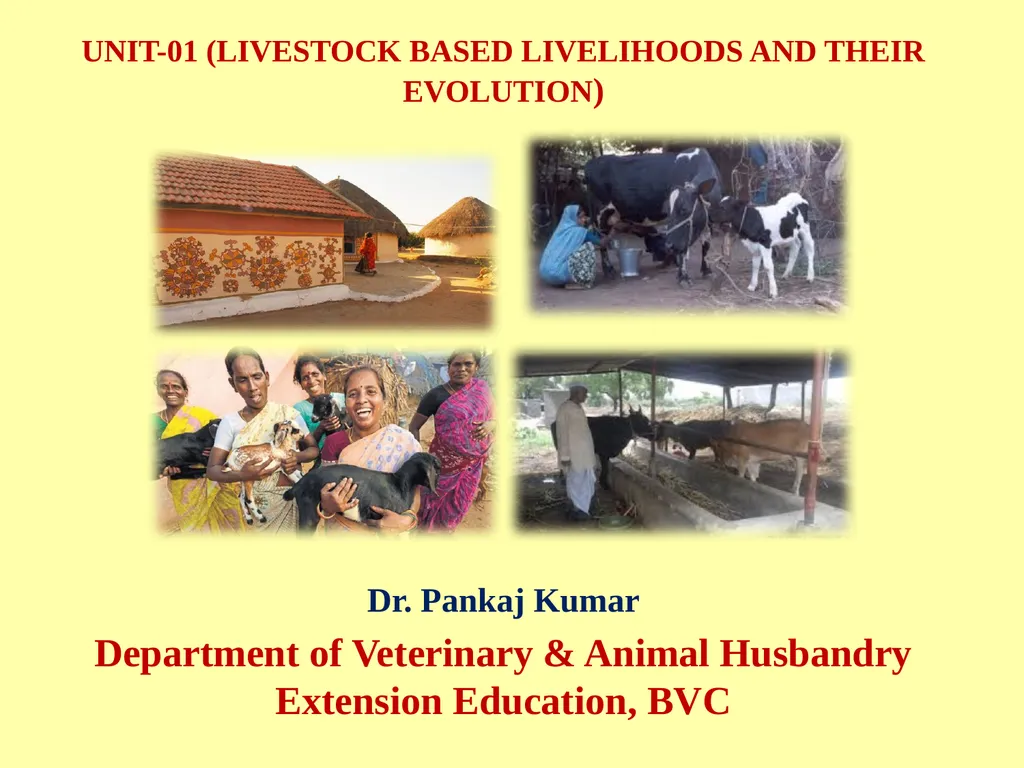
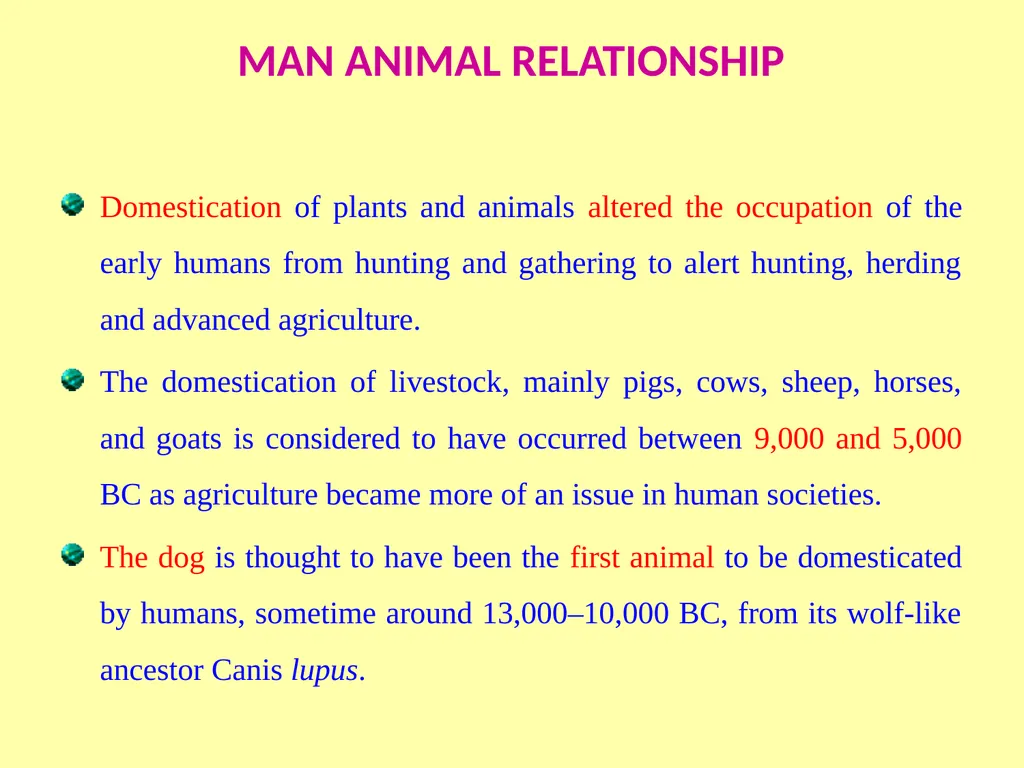
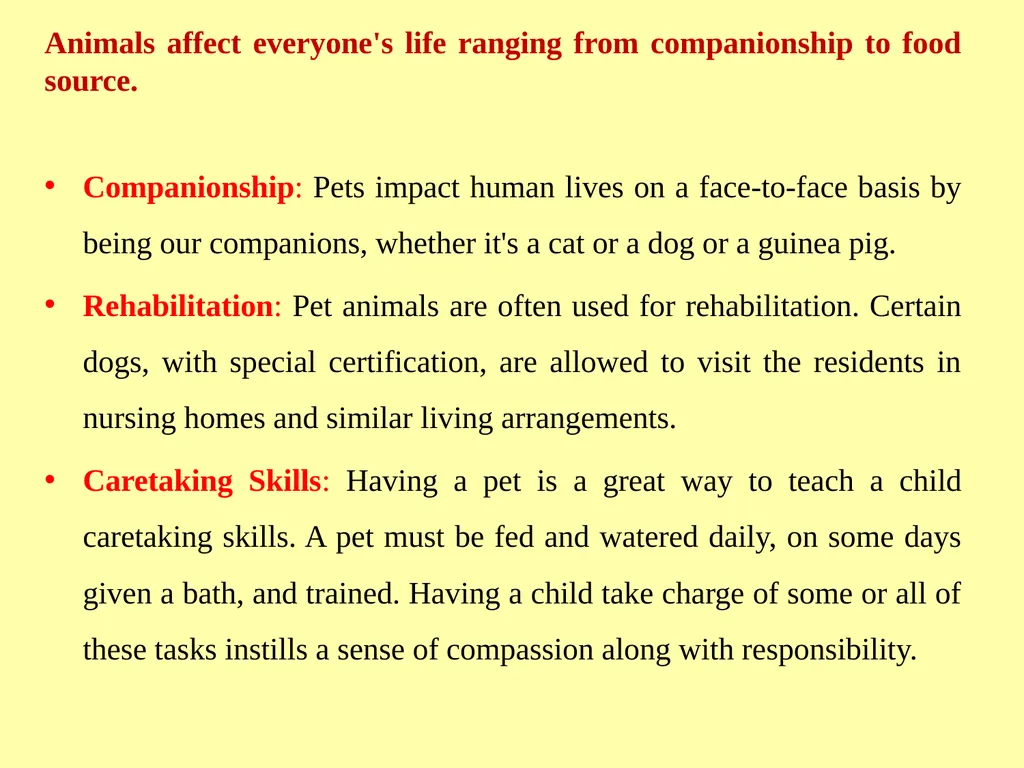
Livelihood: Many farmers use animals for their livelihood. Farmers raise cattle, lamb, sheep, goats and other animals simply to make a living.
Food: Animals raised on farms are often our food sources.
Sport & Leisure: Animals are often used in sport and leisure activities.<br>