04
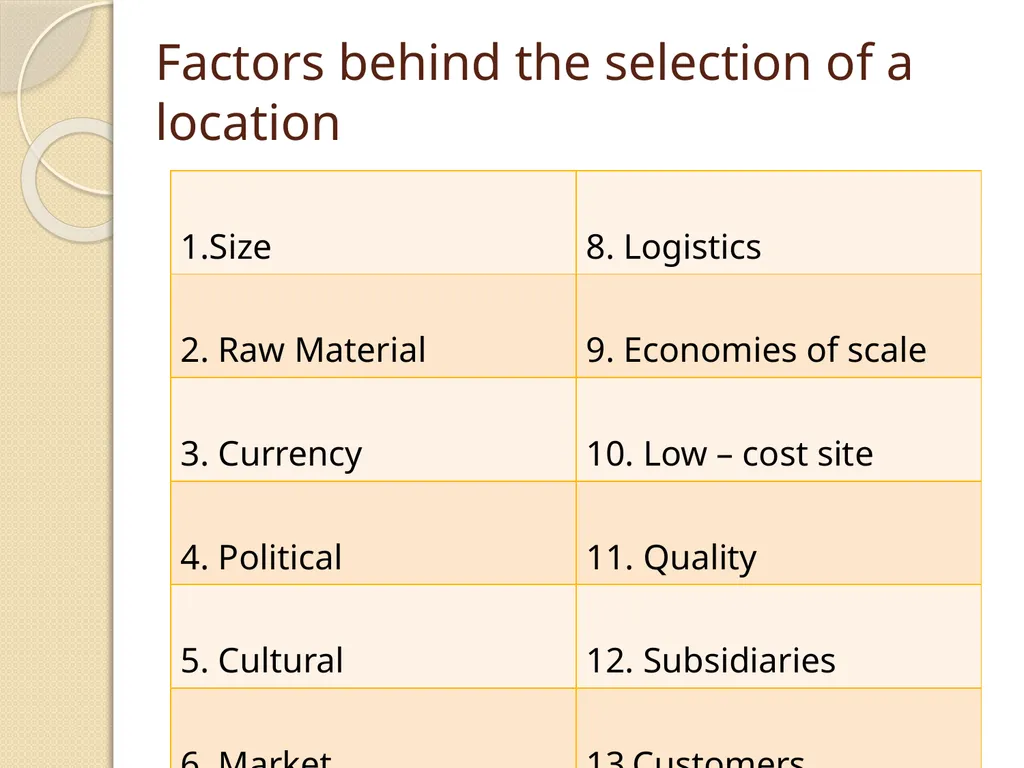
Factors behind the selection of a location<br>
05
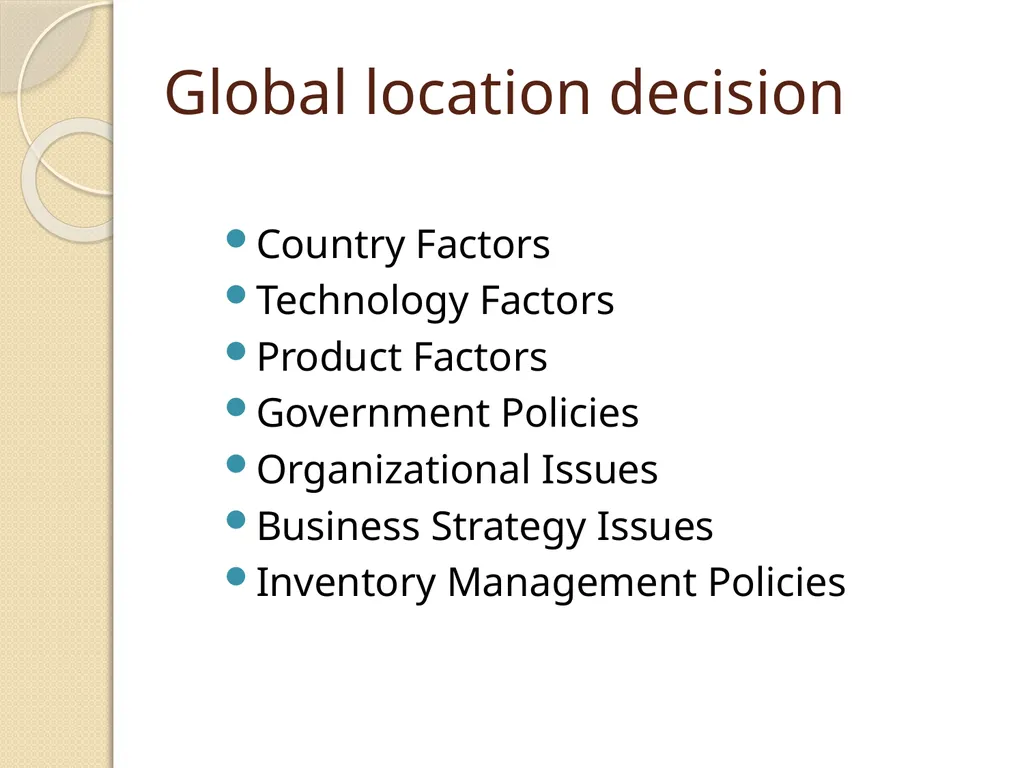
Global location decision Country Factors
Technology Factors
Product Factors
Government Policies
Organizational Issues
Business Strategy Issues
Inventory Management Policies<br>
06
Scale of operations The term scale of production refers to the quantity or numbers of a product made.
Its decisions will be influenced by the:
Volume or quantities of products required
Types of materials used to make the products
Type of product being manufactured
Input factors:
Land , labour, capital, resources, and technology…<br>
07
Scales of production Continuous production
EX: FMCG products
Batch Production
EX: Furniture, Auto Ancillary
Single Item Production
EX: Designers, Bicycle mfg<br>
08
Cost of Production Labour Costs
Capital costs and depreciation
Cost of materials<br>
10
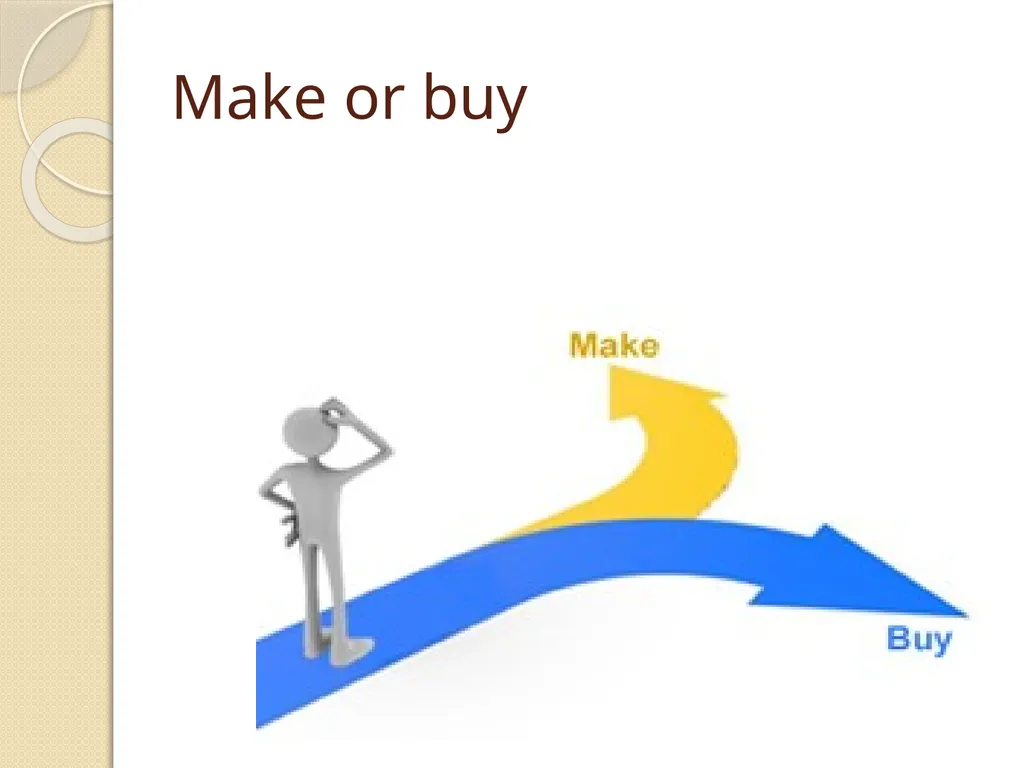
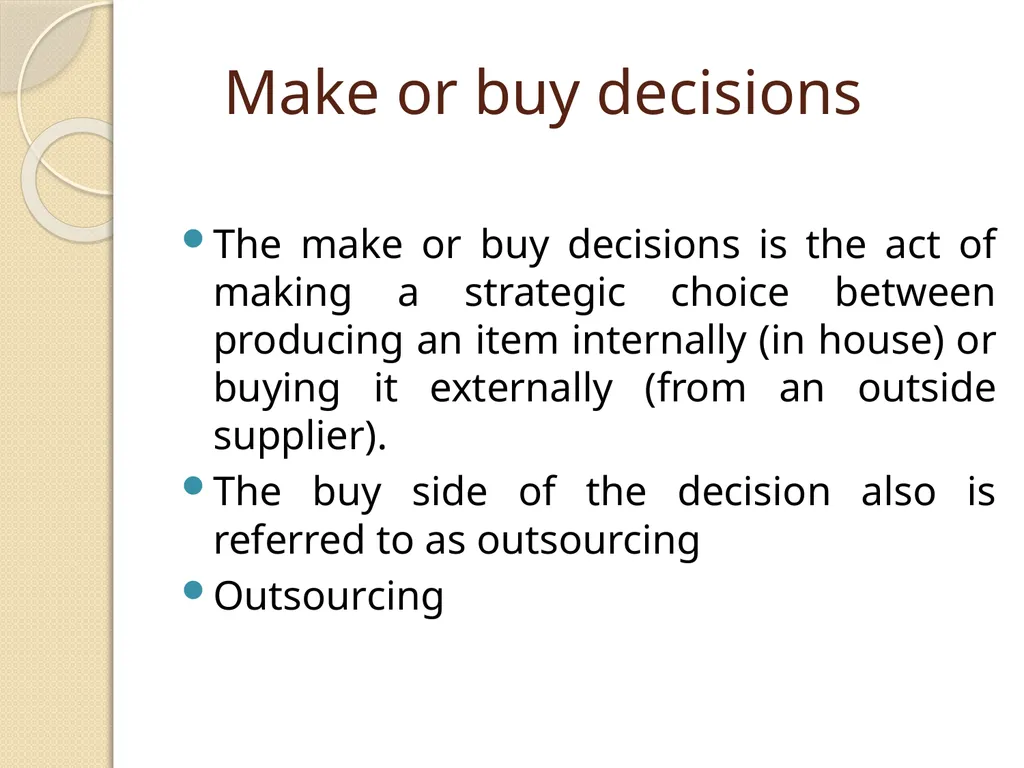
Make or buy decisions The make or buy decisions is the act of making a strategic choice between producing an item internally (in house) or buying it externally (from an outside supplier).
The buy side of the decision also is referred to as outsourcing
Outsourcing<br>
11
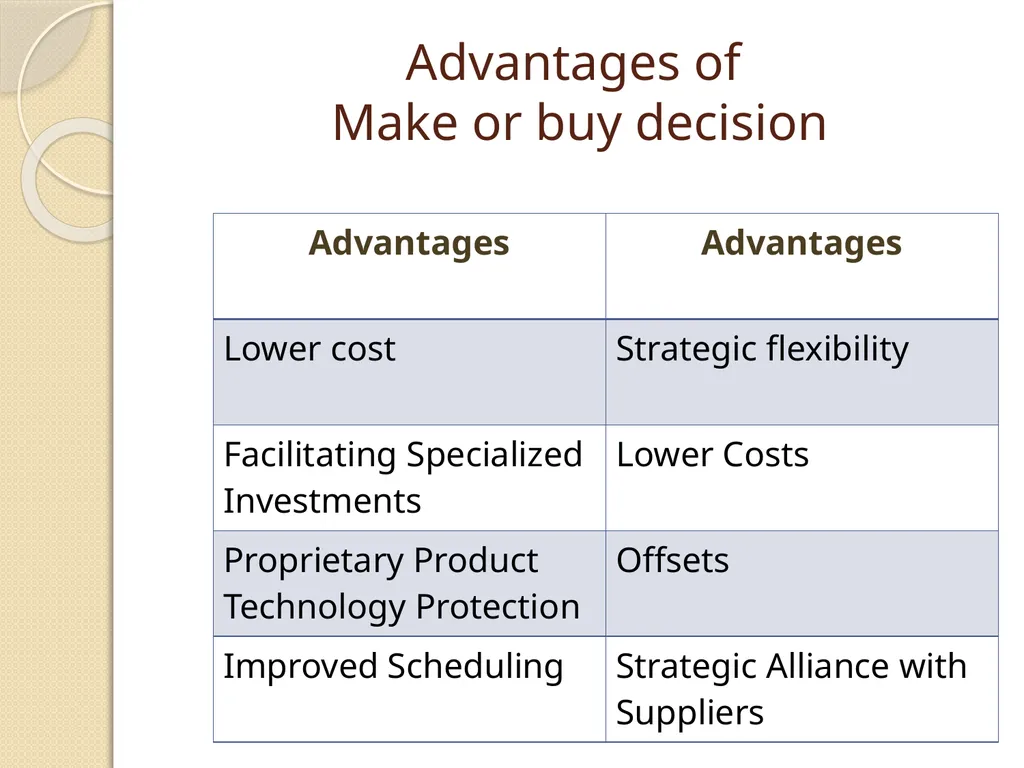
Advantages of �Make or buy decision<br>
12
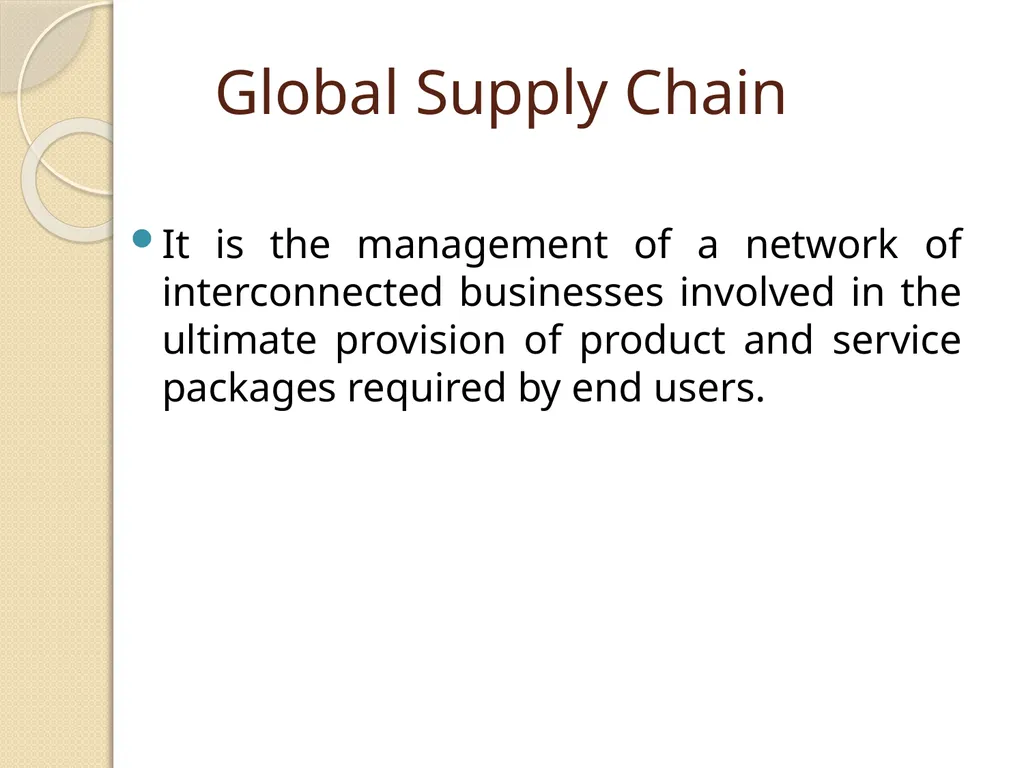
Global Supply Chain It is the management of a network of interconnected businesses involved in the ultimate provision of product and service packages required by end users.<br>
13
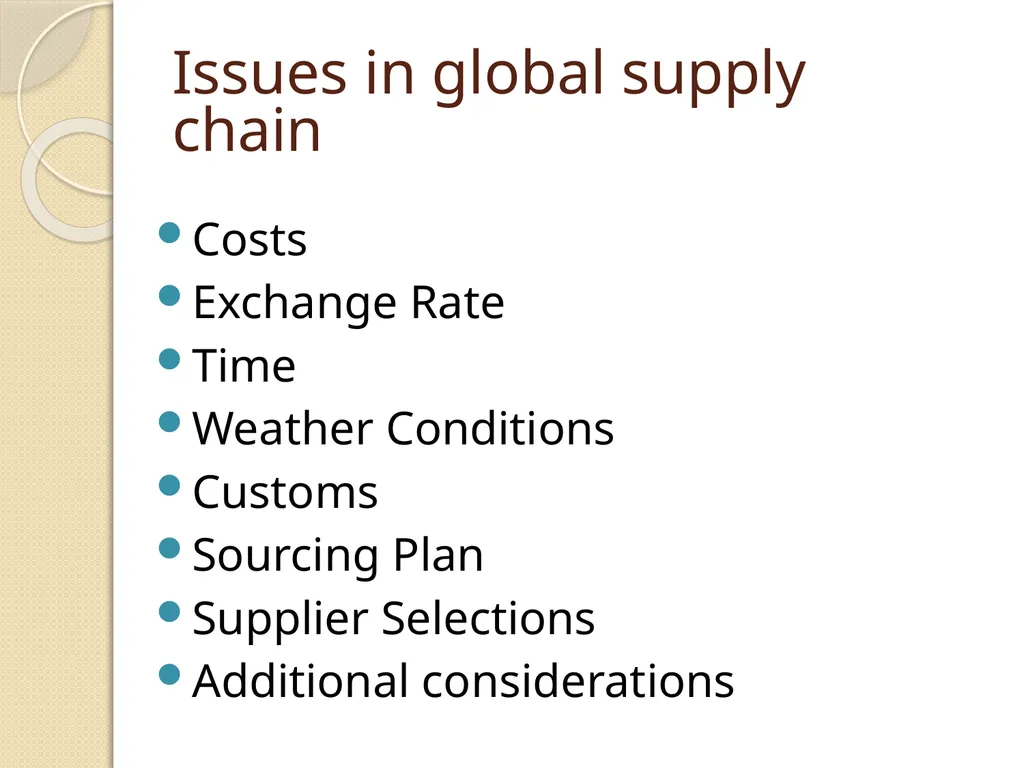
Issues in global supply chain Costs
Exchange Rate
Time
Weather Conditions
Customs
Sourcing Plan
Supplier Selections
Additional considerations<br>
14
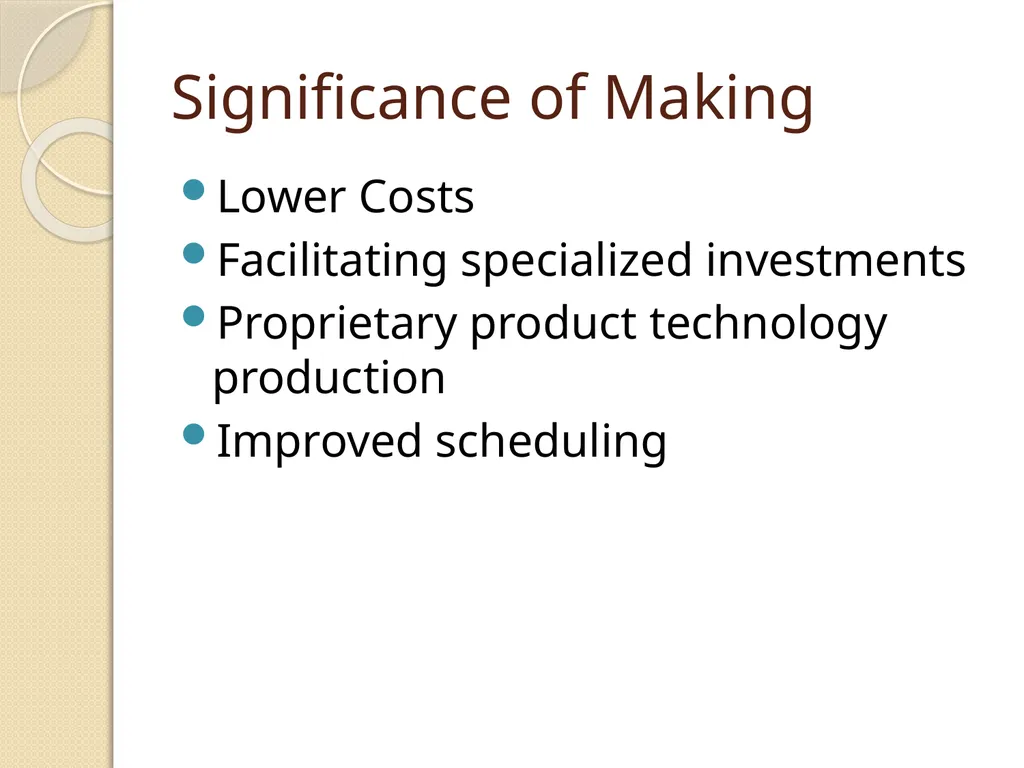
Significance of Making Lower Costs
Facilitating specialized investments
Proprietary product technology production
Improved scheduling<br>
15
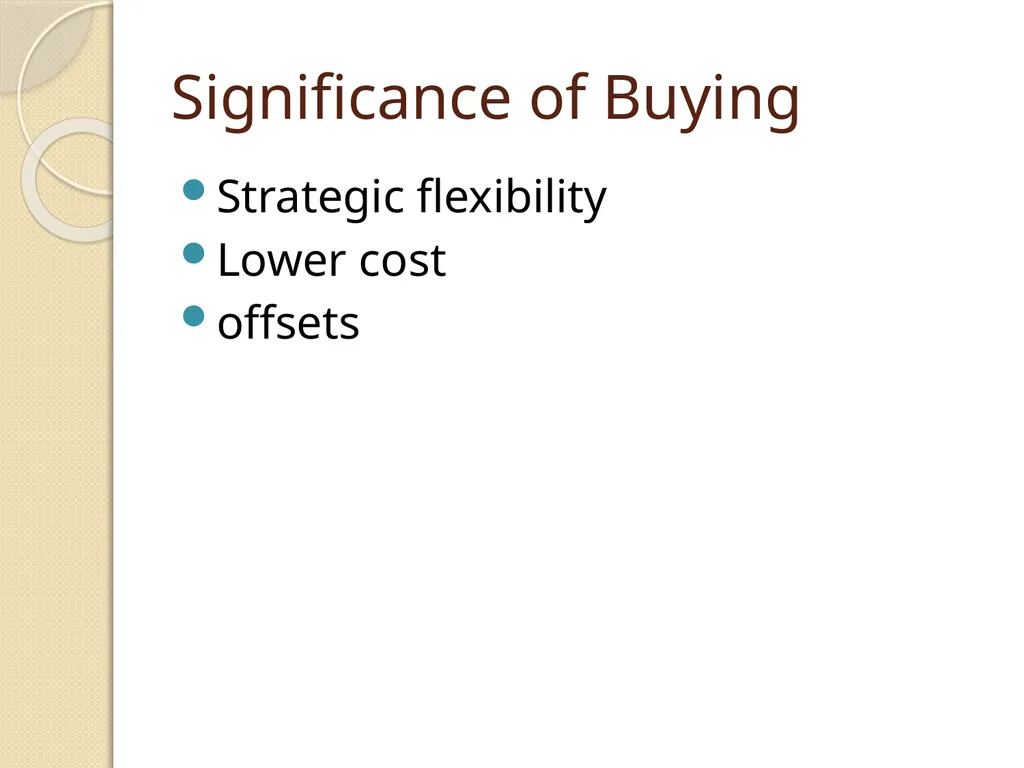
Significance of Buying Strategic flexibility
Lower cost
offsets<br>
16
Global supply chain management Supply chain management deals with the total flow of material from supplier through the end user.<br>
17
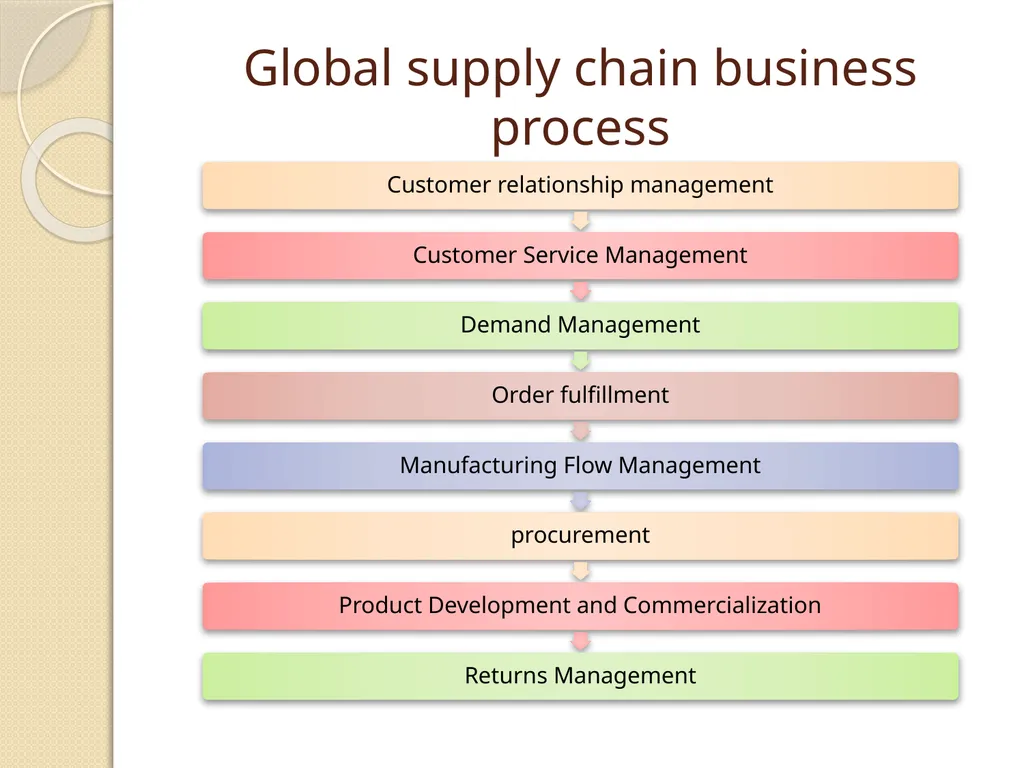
Global supply chain business process<br>
18
Quality considerations Quality defined as meeting or exceeding the expectations of the customer.
It is the conformance to specifications, value, fitness for use, support and psychological impressions<br>
19
Globalization of markets - Reasons Mass Production
Risk reduction
Increase Profits
Adverse Conditions of home country
To cater the demand of the foreign market
Unfulfilled needs of the customers by the domestic companies<br>
20
Marketing strategy The International Marketing Strategies should depends on the company’s
Marketing Orientation
Production orientation
Sales orientation
Customer orientation
Strategic marketing orientation
Societal marketing orientation
Targeting and segmenting markets<br>
21
Marketing orientations There are 5 common orientation
Production orientation
Sales orientation
Customer Orientation
Strategic Marketing orientation
Societal Marketing orientation<br>
22
Target Markets 3 Segmentations
By Country
By Global Segment
By Multiple Criteria<br>
23
Product Development Product development is the process of finding out the possibility of producing a product.
It involves the adding, dropping, and modification of item specifications in the product line for a given period of time.<br>
24
Factors contributing to product development Changing customer preferences
Technological changes
International laws and Govt. Policies
Product Life Cycle<br>
25
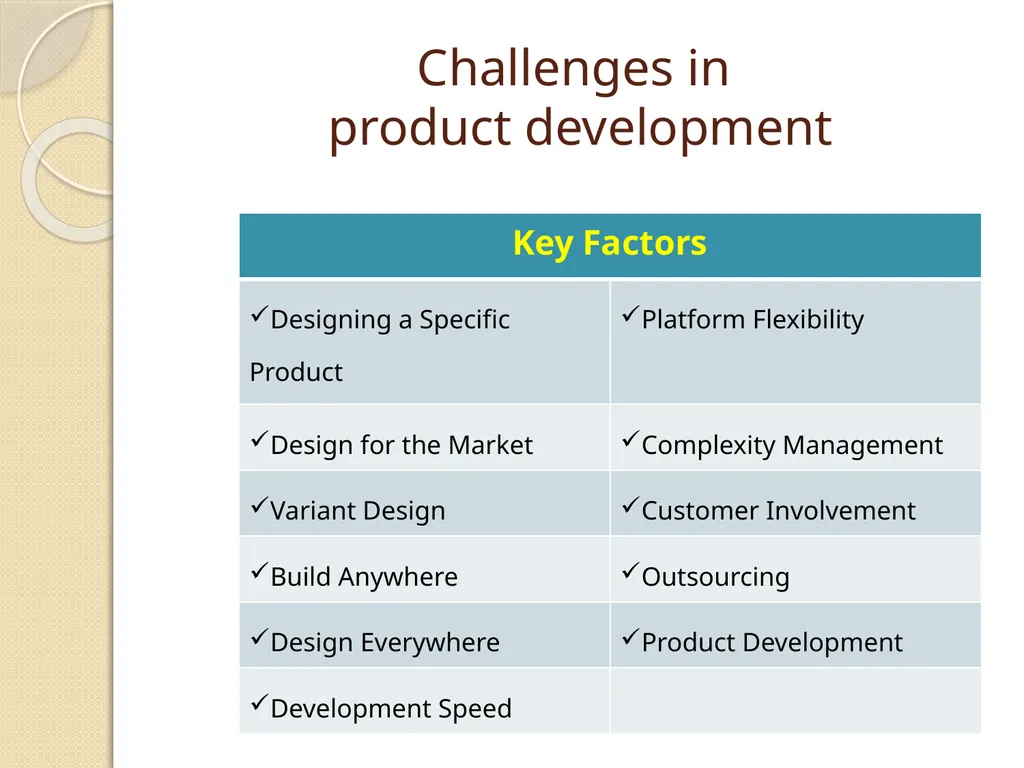
Challenges in �product development<br>
26
Pricing Strategies Skimming Strategy
Penetration Pricing Strategy
Differential pricing Strategy
Geographic pricing Strategy
Product line pricing Strategy<br>
27
Pricing Strategies Factors affecting International pricing Strategies
Govt Interventions
Market Diversity
Export price Escalation
Fixed vs Variable Pricing
Relations with Suppliers<br>
28
Channel Management It is one of 4P’s ‘Place’
The term channel management has two meanings
1. The Physical movement of goods from the place of manufacture to a location in or close to points of purchase
2. A marketing channel can be seen as a concatenation of individuals and organizations involved in the process of making goods or services available for use or consumption<br>
29
Investment decisions Capital Budgeting
Country Risk Analysis
Sources of funds
Foreign Exchange Risk<br>
30
Sources of Funds Internal Sources
Funds from the parent (Equity / Loans)
Funds provided by operations
Loans from sister subsidiaries
Global cash management
Multilateral netting<br>
31
External Sources Debt financing
Venture capital
Equity financing
Factoring
Forfeiting
Equipment leasing<br>
32
Exchange rate risk The risk that a business operations or an investment’s value will be affected by changes in exchange rates.
Foreign exchange risk is the level of uncertainty that a company must manage for changes in foreign exchange rates that will adversely affect the money the company receives for goods and services over a period of time.<br>
33
Selection of �expatriate managers There are four dimensions that seem to success in a foreign posting:
1. Self Orientation
2. Others Orientation
3. perceptual Ability
4. Cultural Toughness<br>
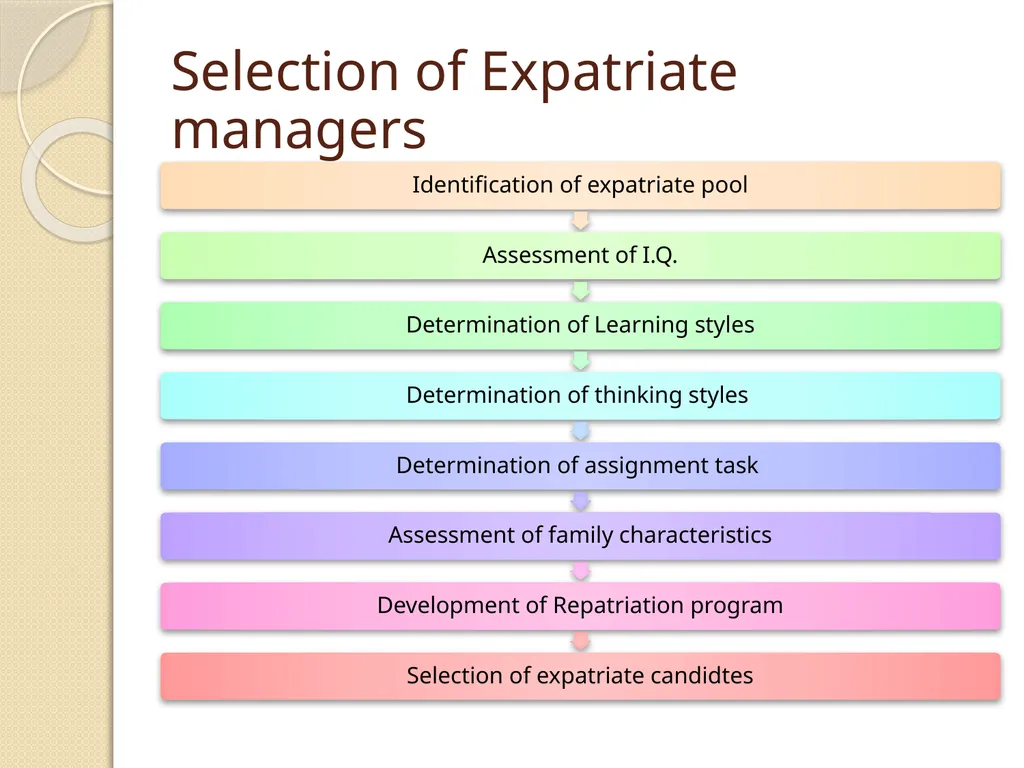
34
Selection of Expatriate managers<br>