US Regulation of Biocontrol Products November,

Published  . 0 views
↓ Download
US Regulation of Biocontrol Products November,
1 / 1
US Regulation of Biocontrol Products November, - slide 1 of 17 US Regulation of Biocontrol Products November, - slide 2 of 17 US Regulation of Biocontrol Products November, - slide 3 of 17 US Regulation of Biocontrol Products November, - slide 4 of 17 US Regulation of Biocontrol Products November, - slide 5 of 17 US Regulation of Biocontrol Products November, - slide 6 of 17 US Regulation of Biocontrol Products November, - slide 7 of 17 US Regulation of Biocontrol Products November, - slide 8 of 17 US Regulation of Biocontrol Products November, - slide 9 of 17 US Regulation of Biocontrol Products November, - slide 10 of 17 US Regulation of Biocontrol Products November, - slide 11 of 17 US Regulation of Biocontrol Products November, - slide 12 of 17 US Regulation of Biocontrol Products November, - slide 13 of 17 US Regulation of Biocontrol Products November, - slide 14 of 17 US Regulation of Biocontrol Products November, - slide 15 of 17 US Regulation of Biocontrol Products November, - slide 16 of 17 US Regulation of Biocontrol Products November, - slide 17 of 17
Description: US Regulation of Biocontrol Products November, 2024 1 Elizabeth Milewski, Senior Science Advisor Cody Kendrick, Senior Regulatory Advisor Biopesticides and Pollution Prevention Division Office of Pesticide Programs U.S. Environmental

Related Topics

Download Presentation

"US Regulation of Biocontrol Products November," is the property of its rightful owner. Permission is granted to download and print the materials on this website for personal, non-commercial use only, and to display it on your personal computer provided you do not modify the materials and that you retain all copyright notices contained in the materials. By downloading content from our website, you accept the terms of this agreement.

Presentation Transcript

slide1. US Regulation of Biocontrol Products November, 2024 1 Elizabeth Milewski, Senior Science Advisor
Cody Kendrick, Senior Regulatory Advisor

Biopesticides and Pollution Prevention Division
Office of Pesticide Programs
U.S. Environmental Protection Agency<br>
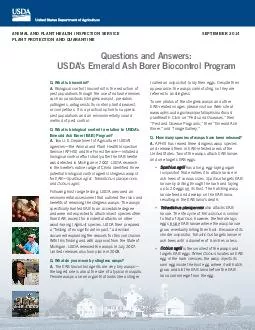
slide2. US Regulation of Biocontrol Products Environmental Protection Agency – Pesticides and Pesticide Intermediates

US Department of Agriculture - Plant and Animal Pests

Food and Drug Administration – Animal Drugs November, 2024 2<br>
slide3. US EPA Regulation of Living Biocontrol Products (Biopesticides) EPA regulates biopesticides
Microorganisms used to control pests
Biochemicals used to control pests
Residues of unmodified pest control arthropods in food
Emerging tech biocontrol organisms
Genetically modified microorganisms used to control pests
Genetic modifications in animals intended for use as a pesticide (E.g., GE mosquito for pest population control)
Plant-incorporated protectants (PIPs) engineered into plants to control pests November, 2024 3<br>
slide4. EPA: Pesticide Laws and Regulations Pesticide-related statutes - laws written by Congress
Federal Insecticide, Fungicide, and Rodenticide Act (FIFRA)
Federal Food, Drug, and Cosmetic Act (FFDCA)
Food Quality Protection Act (FQPA)
Pesticide Registration Improvement Act (PRIA)

Regulations – how EPA implements the pesticide statutes

Code of Federal Regulations – Title 40 (Protection of the Environment)
Pesticides addressed in Parts 150 – 189 4<br>
slide5. EPA: Pesticide Oversight FIFRA
Distribution, use and sale of pesticides:
Registration (§3)
Emergency exemption (§18)
State registration for special local need (§24(c))
Re-evaluation of older pesticides (§4)
Field testing and distribution of experimental pesticides (§5)
Experimental Use Permits
Biotech notifications – testing at 10 acres or less of GE microbes FFDCA
Establishes tolerances (maximum residue levels) for pesticide chemical residues in/on food and feed (§408)
Tolerances apply to both domestic and imported foods
Some biopesticides have tolerance exemptions – i.e., no maximum residue limit established
E.g., all PIPs register to date are exempted from tolerance requirements - exemptions are published in 40 CFR 174 5<br>
slide6. Microbial Pesticides Subject microorganisms Microorganisms used as pesticides are subject to FIFRA regulations
Eucaryotic microorganisms
(Protozoa, Algae, Fungi)
Procaryotic microorganisms
(Bacteria)
Viruses
Genetically modified microorganisms Data requirements Types of data required (at the time of application):
Product Analysis
Toxicity/Pathogenicity
Non-target Organism/Environmental Expression
Efficacy (Agency reviews only for public health pests – mosquitoes, ticks, etc.)

Pre-registration analysis of data needs based on the taxonomic identity of the microorganism and the literature are invaluable sources to support waiving certain data needs

Test guidelines: Series 885 (Microbial Pesticide Test Guidelines), November, 2024 6<br>
slide7. Benefits environment Less toxic than conventional pesticides
Generally only affects the target pest and closely related organisms
Often effective in small quantities
Degrade quickly=lower exposure to nontarget organisms
Useful in Integrated Pest Management Programs farmers Short restricted entry interval
Tolerance exemptions are typical
Low/No preharvest intervals
More pest control tools November, 2024 7<br>
slide8. USDA-APHIS-PPQ Permitting of Microbial Agents 7 CFR 330.200- Federal Plant Pest Regulations
Regulation of Plant Pests, Biological Control Organisms, and Associated Articles
PPQ526 permit
Importation, Interstate Movement, Continued Curation
Exemptions
EPA registered Bio-pesticides
Organisms under an EPA Experimental Use Permit (EUP)
Organisms granted an exemption under FIFRA

Point of Contact: deric.d.picton@usda.gov<br>
slide9. Agricultural Commodity Import Requirements (ACIR) APHIS database for use with importation and interstate movement of microbes and arthropods
https://acir.aphis.usda.gov/s/
Resource for determining regulatory status of a species
No Jurisdiction
PPQ 526 Permit required
Does not provide a regulatory decision for a species
Must apply for a PPQ 526 permit
Contains around 47,000 listings
If species not listed- must apply for a PPQ 526 determination<br>
slide10. USDA Oversight of Modified Organisms USDA’s Biotechnology Regulatory Services (BRS) regulates importation, interstate movement, environmental release of:

Modified microorganisms that may pose a plant pest risk

Modified arthropods that might pose a plant pest risk

Modified plants that might pose a plant pest risk November, 2024 10<br>
slide11. Case Study USDA/EPA Coordination: GE Microorganisms Under Biden Executive Order 14801 Agencies are to
Build on the Unified Website for Biotechnology Regulation by further providing plain language information on the regulatory roles, responsibilities and processes of each agency
Clarify, and as possible harmonize, regulatory roles, processes and information, data and authorization requirements for modified microbes
Enable developers to submit inquiries about a particular product and promptly receive a single, coordinated response that provides, to the extent practicable, information, and when appropriate informal guidance regarding the process that the developers must follow for Federal regulatory review
In part, to meet these goals for GE microorganisms used in biocontrol the Agencies created at the Unified Website a Microbial Decision Tree November, 2024 11<br>
slide12. GE Microbial Pesticides Can be bacteria, fungi, viruses, protozoa, or algae, whose DNA has been modified to express pesticidal properties
Currently, EPA has 4 active ingredients registered in 6 products
The modified microorganism is generally viewed as a pesticide’s registered active ingredient
These products are typically applied in a spray solution November, 2024 12<br>
slide13. November, 2024 13<br>
slide14. Web-Based Tool Logic Flow 14 November, 2024<br>
slide15. Future Coordination Efforts on Modified Microbes Plans to expand the tool’s utility, scope, and user base. A built-in feedback function allows all stakeholders to submit feedback directly to the agencies.

Additional work:
Aligning USDA and EPA data requirements to improve data transferability and reduce duplicative reviews
USDA recently issued a request for information to explore less burdensome pathways to commercializing genetically modified microbes. Visit the Unified Website for Biotechnology Regulation to use the tool 15 November, 2024<br>
slide16. Looking Forward… Expect to see heightened interest in biopesticides as a whole
Top priority is focused on providing timely evaluation of new biopesticide new AIs, uses, and products
Increase communication and guidance to regulated entities on new biopesticides products with novel science/technologies
Explore opportunities to implement continuous improvements to streamline processes, ensure consistency/predictability decision-making, and gain efficiencies, where possible
Implement commitments under E.O. Biotech 8c report in collaboration with USDA and FDA
Increase regulatory harmonization across the U.S. and internationally 16 November, 2024<br>
slide17. Useful Websites Laws, regulations and procedures
https://www.epa.gov/regulation-biotechnology-under-tsca-and-fifra
https://www.epa.gov/biotechnology-regulations-under-tsca-and-fifra/plant-incorporated-protectants-data-symposium
List PIP registrations – links to BRADs
https://www.epa.gov/ingredients-used-pesticide-products/current-and-previously-registered-section-3-plant-incorporated 
PIP information
https://www.epa.gov/regulation-biotechnology-under-tsca-and-fifra/overview-plant-incorporated-protectants 
Interactive Tool
https://zingtree.com/live/126497995/embed?tree_id=126497995000&z=embed#1
EUPs and Small-Scale Field Testing
https://www.epa.gov/pesticide-registration/pesticide-registration-manual-chapter-12-applying-experimental-use-permit 
BPPD Contacts
https://www.epa.gov/pesticide-contacts/contacts-office-pesticide-programs-biopesticides-and-pollution-prevention November, 2024 17<br>