Using Credit Wisely Definition of Credit
Description: Using Credit Wisely Definition of Credit Confidence in a purchasers ability and intention to pay, displayed by entrusting the buyer with goods or services without immediate payment Credit is basically a loan that has to be repaid according
Related Topics
Download Presentation
"Using Credit Wisely Definition of Credit" is the property of its rightful owner. Permission is granted to download and print the materials on this website for personal, non-commercial use only, and to display it on your personal computer provided you do not modify the materials and that you retain all copyright notices contained in the materials. By downloading content from our website, you accept the terms of this agreement.
Presentation Transcript
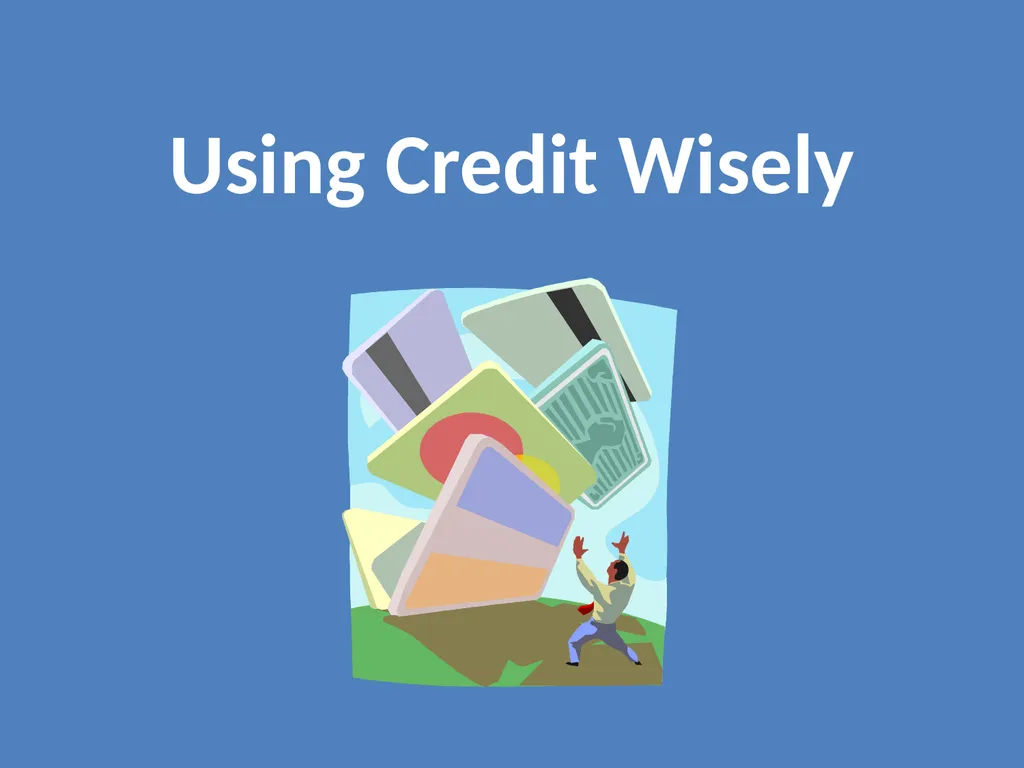
slide1. Using Credit Wisely<br>
slide2. Definition of Credit Confidence in a purchaser’s ability and intention to pay, displayed by entrusting the buyer with goods or services without immediate payment
Credit is basically a loan that has to be repaid according to specific terms<br>
slide3. Credit Cards v. Debit Cards Credit Cards Not directly linked to a bank account
Costs added to your balance immediately; payments only expected once per month
Charge interest for “carrying a balance” – the privilege of paying over time Debit Cards Linked to a checking or savings account
Deduct funds immediately
No interest charges<br>
slide4. Usefulness of Credit Allows people to purchase items they wouldn’t otherwise be able to afford if they had to pay in full immediately
“Big-ticket” items house, car
Long-term expenses college education
Unexpected expenses hospital stay, car repairs<br>
slide5. Dangers of Misusing Credit Can be used to purchase things that are beyond a person’s means to pay back
Making only minimum payments, especially with high interest rates, leads to paying much more than the original purchase price
Missing payments negatively affects your credit score
A low credit score can impact your ability to get credit in the future, to rent an apartment, and even to get a job<br>
slide6. Credit Cards & College Students College students are often inundated with credit card offers
Many college students still need a co-signer
Someone who agrees to take responsibility for the debt if the cardholder cannot pay
Required for applicants who don’t have extensive credit history yet or who have a “risky” credit history
College can be an excellent time to start establishing a credit history by using a credit card responsibly<br>
slide7. Facts and Figures 70-86% of undergraduate college students have at least one credit card
The majority of students carry a balance from month to month that is subject to interest charges
The average balance is approximately $3100<br>
slide8. “Best Practice” Tips for Responsible Credit Card Use Shop around for a credit card
Do your homework and research each card
Take a long-range view of the card’s terms and benefits
Read the “fine print” very carefully
Set limits and stick to them
Limit yourself to 1 credit card
Use it only for emergencies or for certain expenses<br>
slide9. “Best Practice” Tips for Responsible Credit Card Use Making Payments
Make all payments on time
Avoid interest charges by paying off your balance in full each month
If you must carry a balance, pay more than the minimum payment each month<br>
slide10. “Best Practice” Tips for Responsible Credit Card Use Think twice before using a credit card in these situations:
You want it but don’t need it
You can’t pay it off shortly
You already have a similar item or a good alternative e.g., eating out when you could use your meal plan; upgrading your cell phone when your old phone still works fine
You’re trying to maintain a standard of living beyond your budget<br>
slide11. Expert Advice about Credit Cards “Putting off payments on your credit card bills can be much worse than procrastinating about studying for midterms.”
- Suzanne Boas, CredAbility President “Don’t have any credit cards, except one for an emergency, and even then, it’s debatable what an emergency is. Learn about your spending and pay it back.”
- Paul Davis, a student who accumulated over $10k in credit card debt “The greatest advice that I could give you today is: if you get a credit card, you should never, ever use it unless you know you can pay it off in full every since month after you have charged.”
- Suze Orman, personal finance expert<br>
slide12. This work is licensed under a Creative Commons Attribution-NonCommercial 3.0 Unported License.<br>
slide2. Definition of Credit Confidence in a purchaser’s ability and intention to pay, displayed by entrusting the buyer with goods or services without immediate payment
Credit is basically a loan that has to be repaid according to specific terms<br>
slide3. Credit Cards v. Debit Cards Credit Cards Not directly linked to a bank account
Costs added to your balance immediately; payments only expected once per month
Charge interest for “carrying a balance” – the privilege of paying over time Debit Cards Linked to a checking or savings account
Deduct funds immediately
No interest charges<br>
slide4. Usefulness of Credit Allows people to purchase items they wouldn’t otherwise be able to afford if they had to pay in full immediately
“Big-ticket” items house, car
Long-term expenses college education
Unexpected expenses hospital stay, car repairs<br>
slide5. Dangers of Misusing Credit Can be used to purchase things that are beyond a person’s means to pay back
Making only minimum payments, especially with high interest rates, leads to paying much more than the original purchase price
Missing payments negatively affects your credit score
A low credit score can impact your ability to get credit in the future, to rent an apartment, and even to get a job<br>
slide6. Credit Cards & College Students College students are often inundated with credit card offers
Many college students still need a co-signer
Someone who agrees to take responsibility for the debt if the cardholder cannot pay
Required for applicants who don’t have extensive credit history yet or who have a “risky” credit history
College can be an excellent time to start establishing a credit history by using a credit card responsibly<br>
slide7. Facts and Figures 70-86% of undergraduate college students have at least one credit card
The majority of students carry a balance from month to month that is subject to interest charges
The average balance is approximately $3100<br>
slide8. “Best Practice” Tips for Responsible Credit Card Use Shop around for a credit card
Do your homework and research each card
Take a long-range view of the card’s terms and benefits
Read the “fine print” very carefully
Set limits and stick to them
Limit yourself to 1 credit card
Use it only for emergencies or for certain expenses<br>
slide9. “Best Practice” Tips for Responsible Credit Card Use Making Payments
Make all payments on time
Avoid interest charges by paying off your balance in full each month
If you must carry a balance, pay more than the minimum payment each month<br>
slide10. “Best Practice” Tips for Responsible Credit Card Use Think twice before using a credit card in these situations:
You want it but don’t need it
You can’t pay it off shortly
You already have a similar item or a good alternative e.g., eating out when you could use your meal plan; upgrading your cell phone when your old phone still works fine
You’re trying to maintain a standard of living beyond your budget<br>
slide11. Expert Advice about Credit Cards “Putting off payments on your credit card bills can be much worse than procrastinating about studying for midterms.”
- Suzanne Boas, CredAbility President “Don’t have any credit cards, except one for an emergency, and even then, it’s debatable what an emergency is. Learn about your spending and pay it back.”
- Paul Davis, a student who accumulated over $10k in credit card debt “The greatest advice that I could give you today is: if you get a credit card, you should never, ever use it unless you know you can pay it off in full every since month after you have charged.”
- Suze Orman, personal finance expert<br>
slide12. This work is licensed under a Creative Commons Attribution-NonCommercial 3.0 Unported License.<br>