Utilizing your notes and past knowledge answer the
Description: Utilizing your notes and past knowledge answer the following questions: Under what conditions does low-level wind shear normally occur? Describe the effects weather event when a layer of warm, moist air moves over a cold surface. Describe
Related Topics
Download Presentation
"Utilizing your notes and past knowledge answer the" is the property of its rightful owner. Permission is granted to download and print the materials on this website for personal, non-commercial use only, and to display it on your personal computer provided you do not modify the materials and that you retain all copyright notices contained in the materials. By downloading content from our website, you accept the terms of this agreement.
Presentation Transcript
slide1. Utilizing your notes and past knowledge answer the following questions:
Under what conditions does low-level wind shear normally occur?
Describe the effects weather event when a layer of warm, moist air moves over a cold surface.
Describe the type of clouds that can produce hazardous weather, such as lightning, hail, tornadoes, gusty winds, and wind shear.
Describe the good rule of thumb is for pilots with respect to flying when thunderstorms are present. Warm-Up – 11/19 – 10 minutes<br>
slide2. Questions / Comments<br>
slide3. Utilizing your notes and past knowledge answer the following questions:
Under what conditions does low-level wind shear normally occur?
Describe the effects weather event when a layer of warm, moist air moves over a cold surface.
Describe the type of clouds that can produce hazardous weather, such as lightning, hail, tornadoes, gusty winds, and wind shear.
Describe the good rule of thumb is for pilots with respect to flying when thunderstorms are present. Warm-Up – 11/19 – 10 minutes<br>
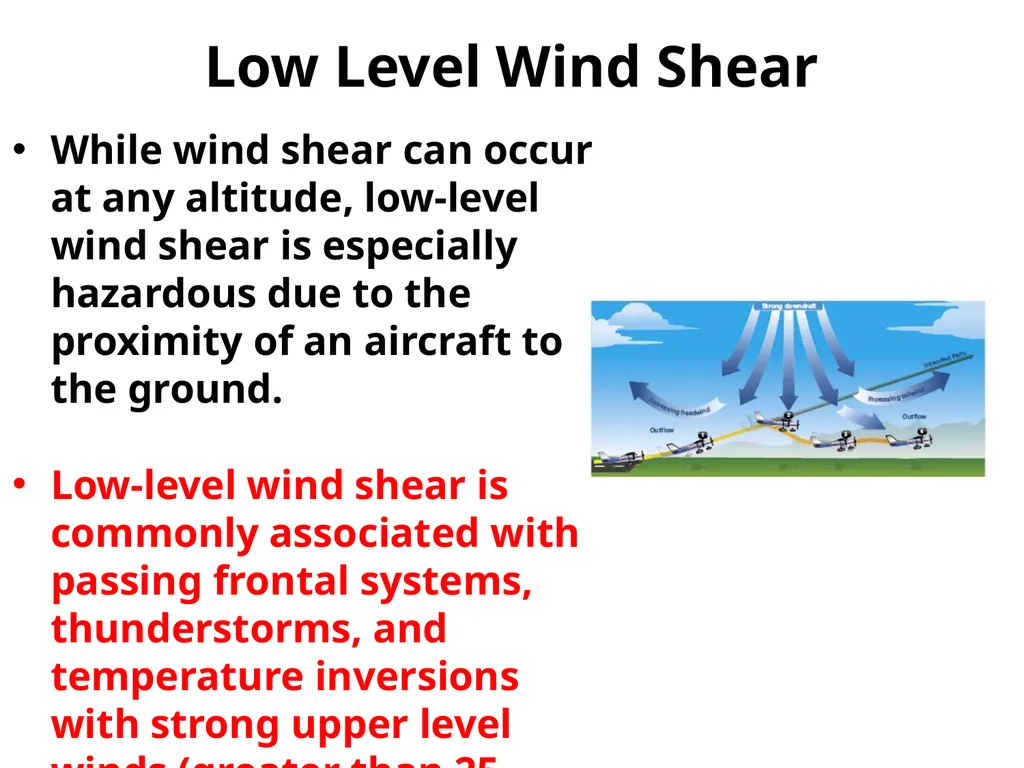
slide4. Low Level Wind Shear While wind shear can occur at any altitude, low-level wind shear is especially hazardous due to the proximity of an aircraft to the ground.
Low-level wind shear is commonly associated with passing frontal systems, thunderstorms, and temperature inversions with strong upper level winds (greater than 25 knots).<br>
slide5. Utilizing your notes and past knowledge answer the following questions:
Under what conditions does low-level wind shear normally occur?
Describe the effects weather event when a layer of warm, moist air moves over a cold surface.
Describe the type of clouds that can produce hazardous weather, such as lightning, hail, tornadoes, gusty winds, and wind shear.
Describe the good rule of thumb is for pilots with respect to flying when thunderstorms are present. Warm-Up – 11/19 – 10 minutes<br>
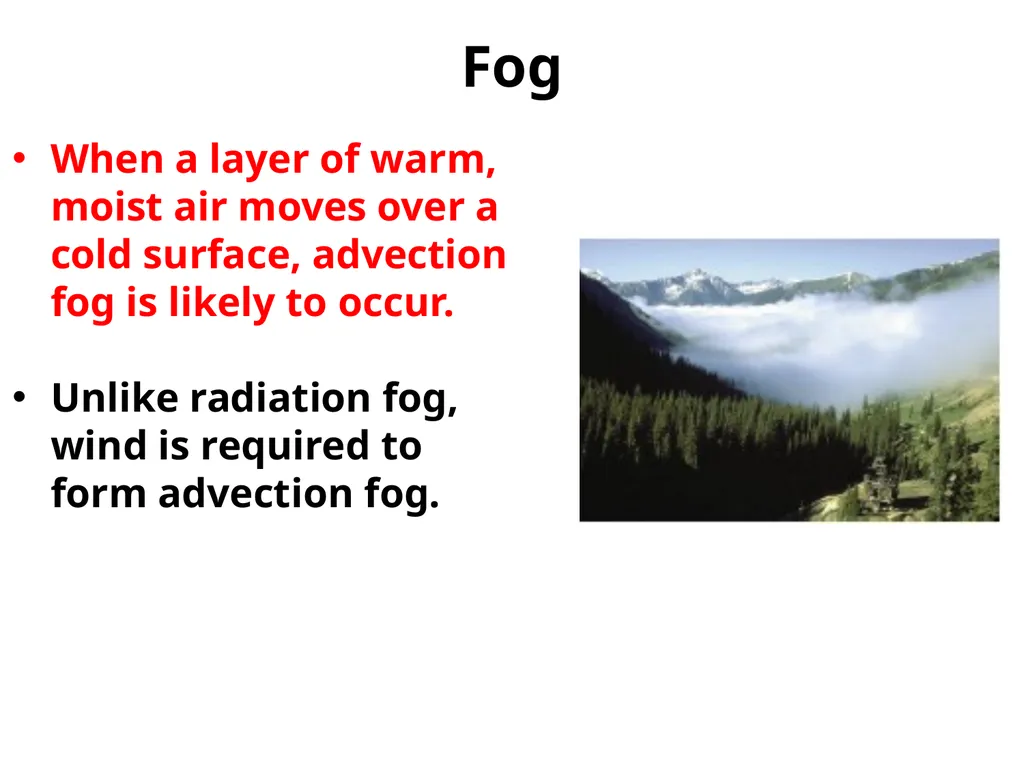
slide6. Fog When a layer of warm, moist air moves over a cold surface, advection fog is likely to occur.
Unlike radiation fog, wind is required to form advection fog.<br>
slide7. Utilizing your notes and past knowledge answer the following questions:
Under what conditions does low-level wind shear normally occur?
Describe the effects weather event when a layer of warm, moist air moves over a cold surface.
Describe the type of clouds that can produce hazardous weather, such as lightning, hail, tornadoes, gusty winds, and wind shear.
Describe the good rule of thumb is for pilots with respect to flying when thunderstorms are present. Warm-Up – 11/19 – 10 minutes<br>
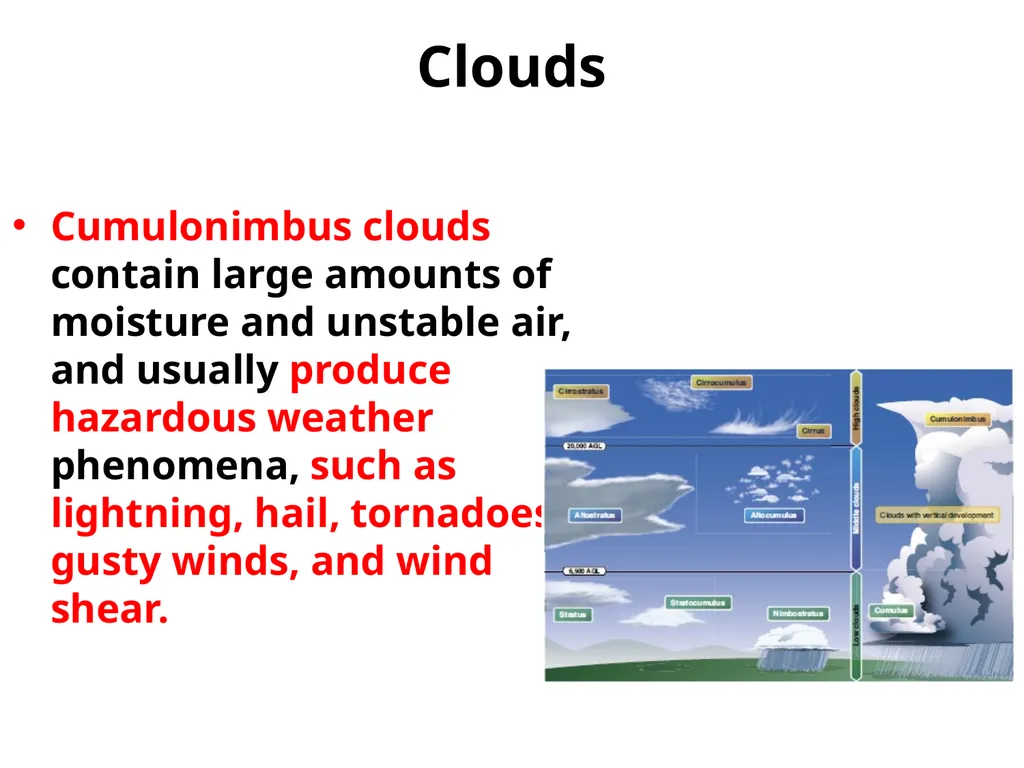
slide8. Clouds Cumulonimbus clouds contain large amounts of moisture and unstable air, and usually produce hazardous weather phenomena, such as lightning, hail, tornadoes, gusty winds, and wind shear.<br>
slide9. Utilizing your notes and past knowledge answer the following questions:
Under what conditions does low-level wind shear normally occur?
Describe the effects weather event when a layer of warm, moist air moves over a cold surface.
Describe the type of clouds that can produce hazardous weather, such as lightning, hail, tornadoes, gusty winds, and wind shear.
Describe the good rule of thumb is for pilots with respect to flying when thunderstorms are present. Warm-Up – 11/19 – 10 minutes<br>
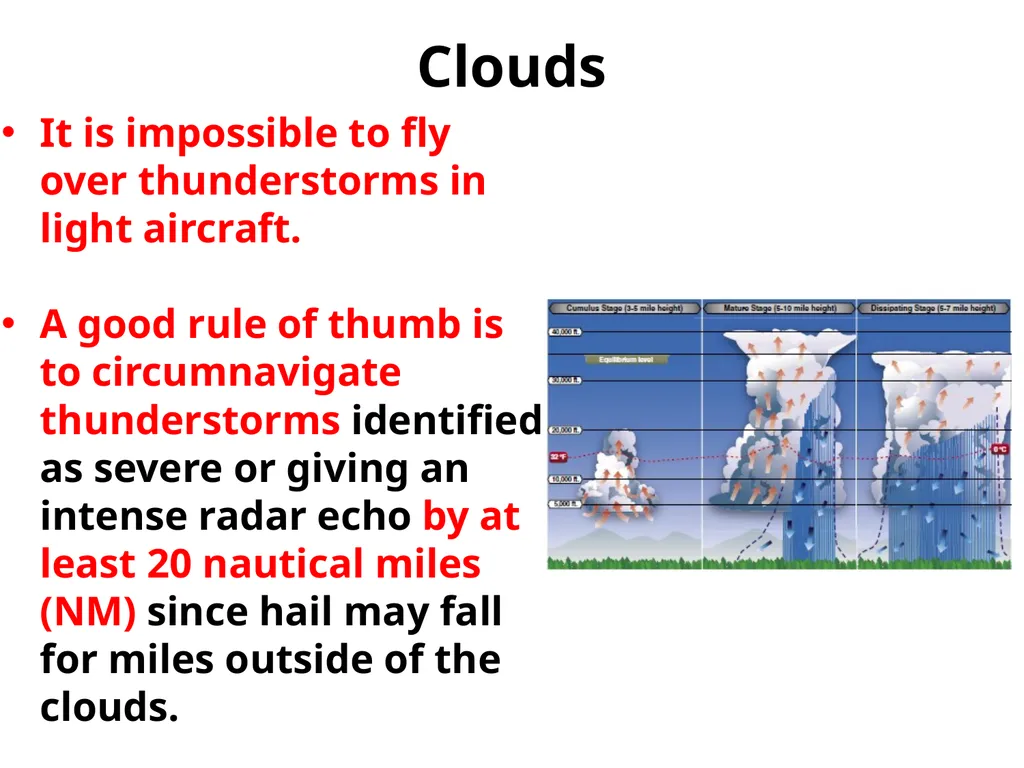
slide10. Clouds It is impossible to fly over thunderstorms in light aircraft.
A good rule of thumb is to circumnavigate thunderstorms identified as severe or giving an intense radar echo by at least 20 nautical miles (NM) since hail may fall for miles outside of the clouds.<br>
slide11. Questions / Comments<br>

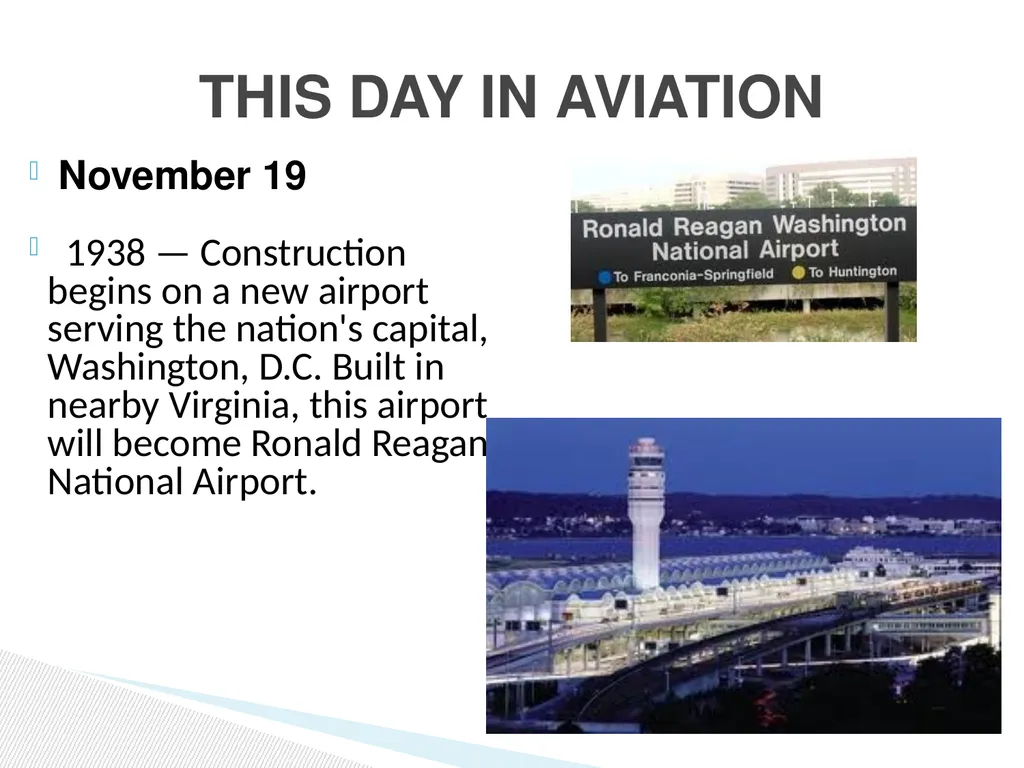
slide12. November 19
1938 — Construction begins on a new airport serving the nation's capital, Washington, D.C. Built in nearby Virginia, this airport will become Ronald Reagan National Airport. THIS DAY IN AVIATION<br>
slide13. November 19
1952 — A North American F-86D “Sabre Dog” establishes a world speed record of 698.505 mph. THIS DAY IN AVIATION<br>
slide14. Questions / Comments<br>
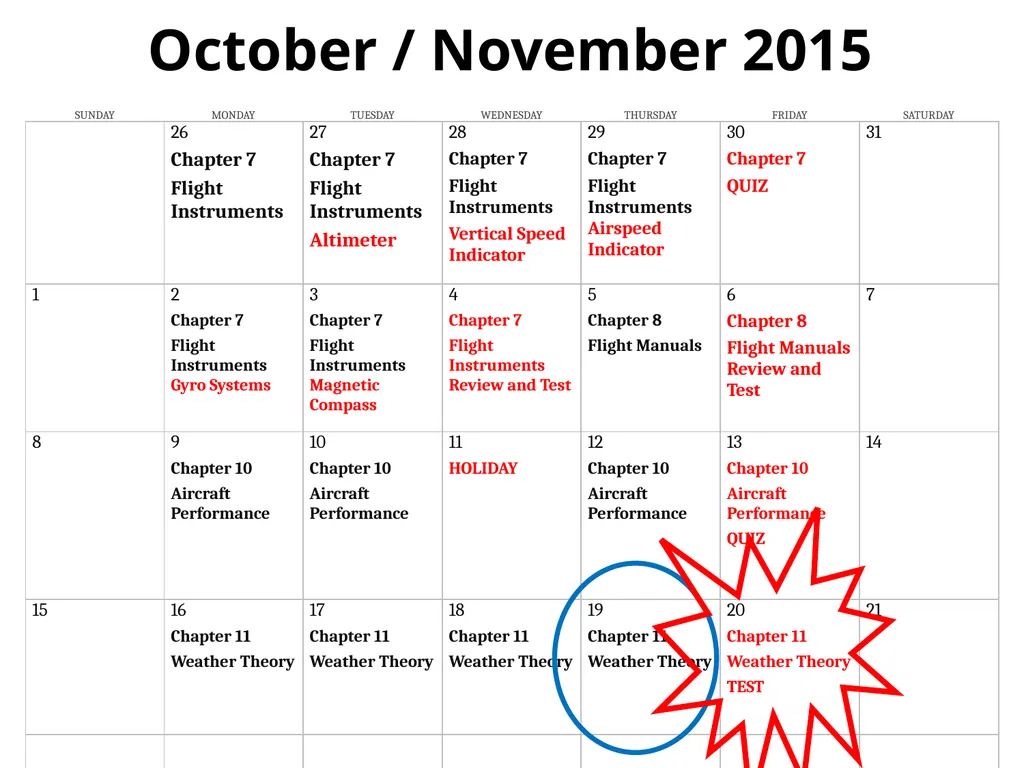
slide15. October / November 2015<br>
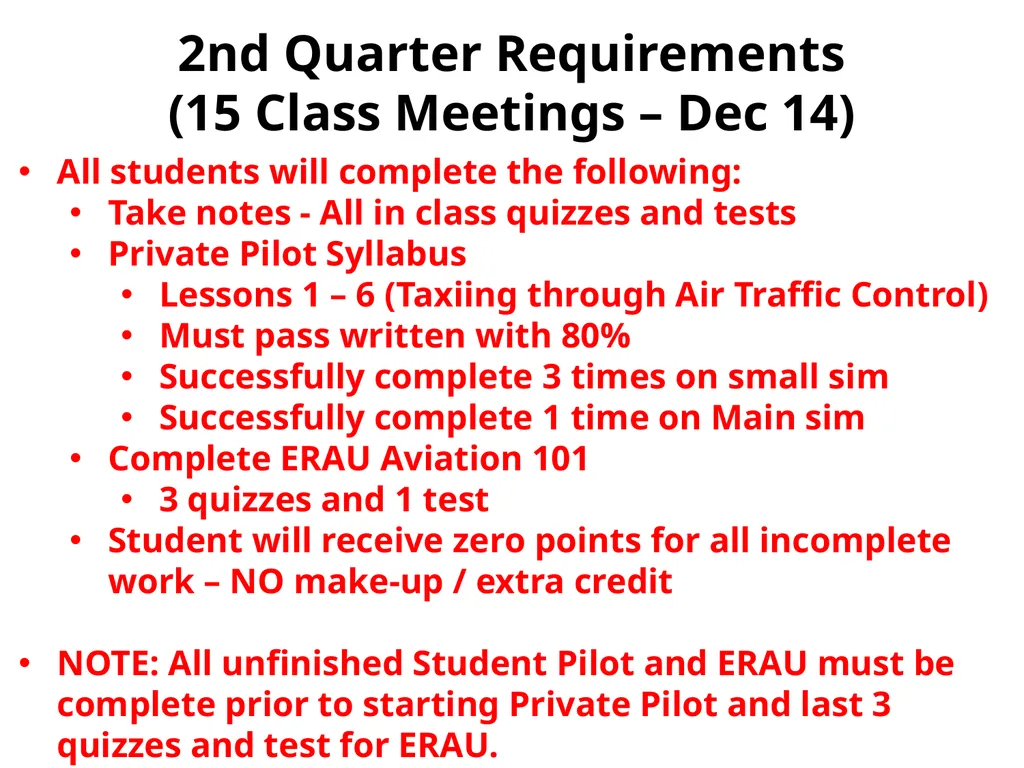
slide16. 2nd Quarter Requirements(15 Class Meetings – Dec 14) All students will complete the following:
Take notes - All in class quizzes and tests
Private Pilot Syllabus
Lessons 1 – 6 (Taxiing through Air Traffic Control)
Must pass written with 80%
Successfully complete 3 times on small sim
Successfully complete 1 time on Main sim
Complete ERAU Aviation 101
3 quizzes and 1 test
Student will receive zero points for all incomplete work – NO make-up / extra credit
NOTE: All unfinished Student Pilot and ERAU must be complete prior to starting Private Pilot and last 3 quizzes and test for ERAU.<br>
slide17. Questions / Comments<br>
slide18. Chapter 11– Weather Theory
FAA – Pilot’s Handbook of Aeronautical Knowledge<br>
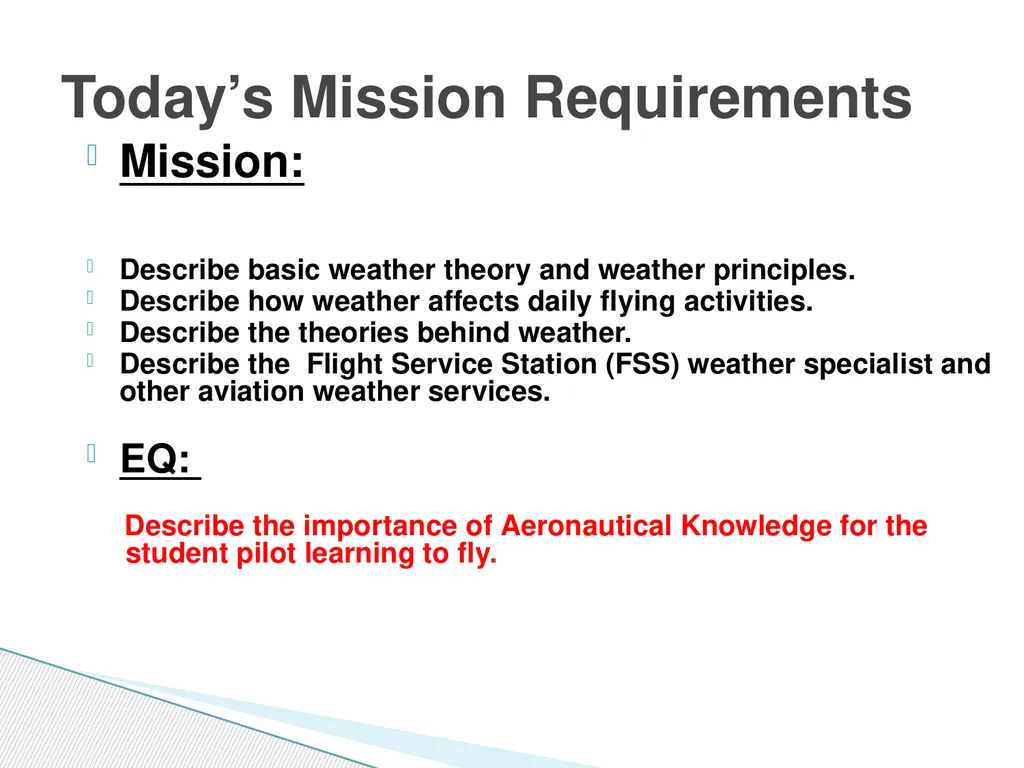
slide19. Mission:
Describe basic weather theory and weather principles.
Describe how weather affects daily flying activities.
Describe the theories behind weather.
Describe the Flight Service Station (FSS) weather specialist and other aviation weather services.
EQ:
Describe the importance of Aeronautical Knowledge for the student pilot learning to fly. Today’s Mission Requirements<br>
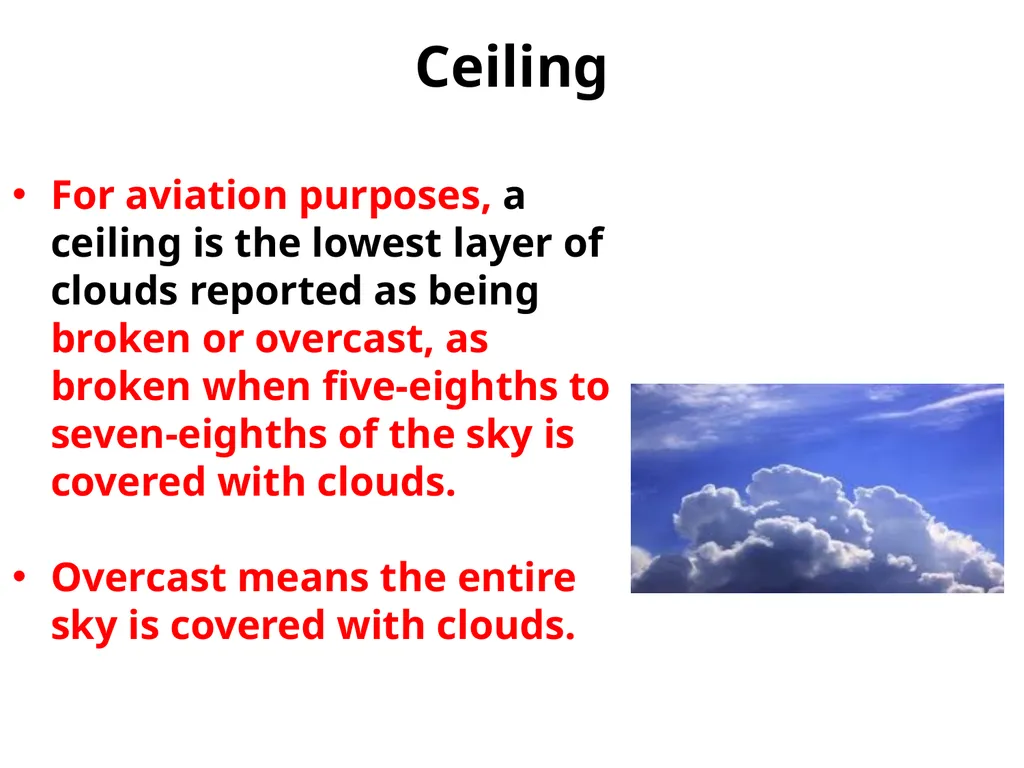
slide20. Ceiling For aviation purposes, a ceiling is the lowest layer of clouds reported as being broken or overcast, as broken when five-eighths to seven-eighths of the sky is covered with clouds.
Overcast means the entire sky is covered with clouds.<br>
slide21. Visibility Visibility refers to the greatest horizontal distance at which prominent objects can be viewed with the naked eye.
Current visibility is also reported in METAR and other aviation weather reports, as well as by automated weather systems.<br>
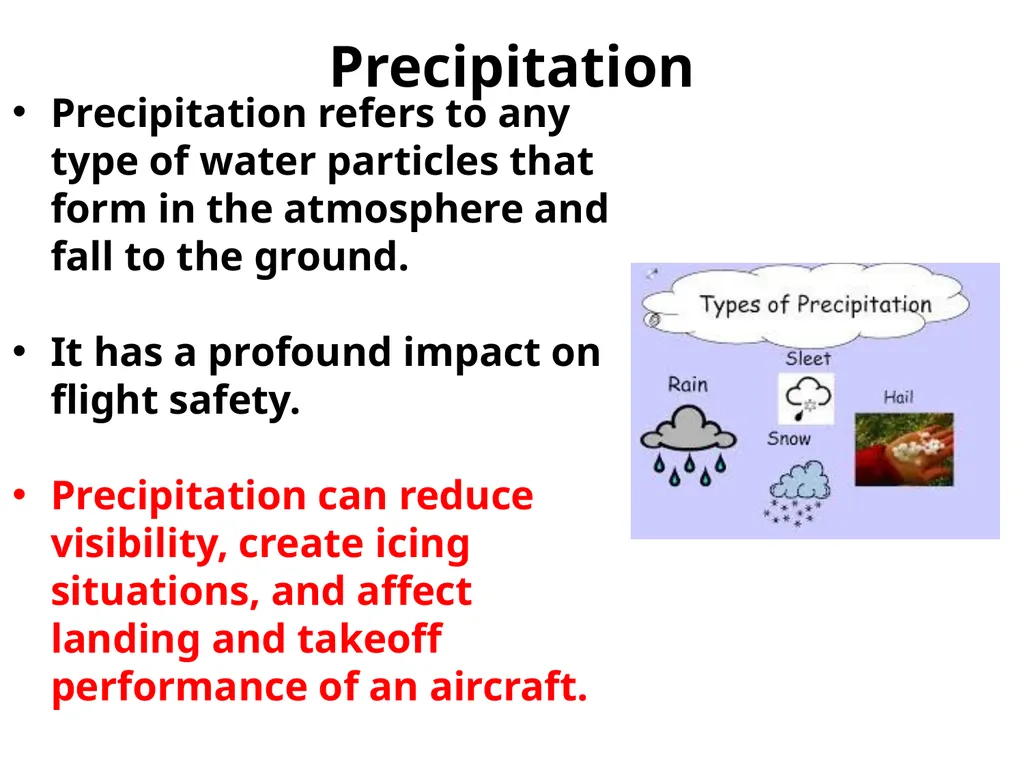
slide22. Precipitation Precipitation refers to any type of water particles that form in the atmosphere and fall to the ground.
It has a profound impact on flight safety.
Precipitation can reduce visibility, create icing situations, and affect landing and takeoff performance of an aircraft.<br>
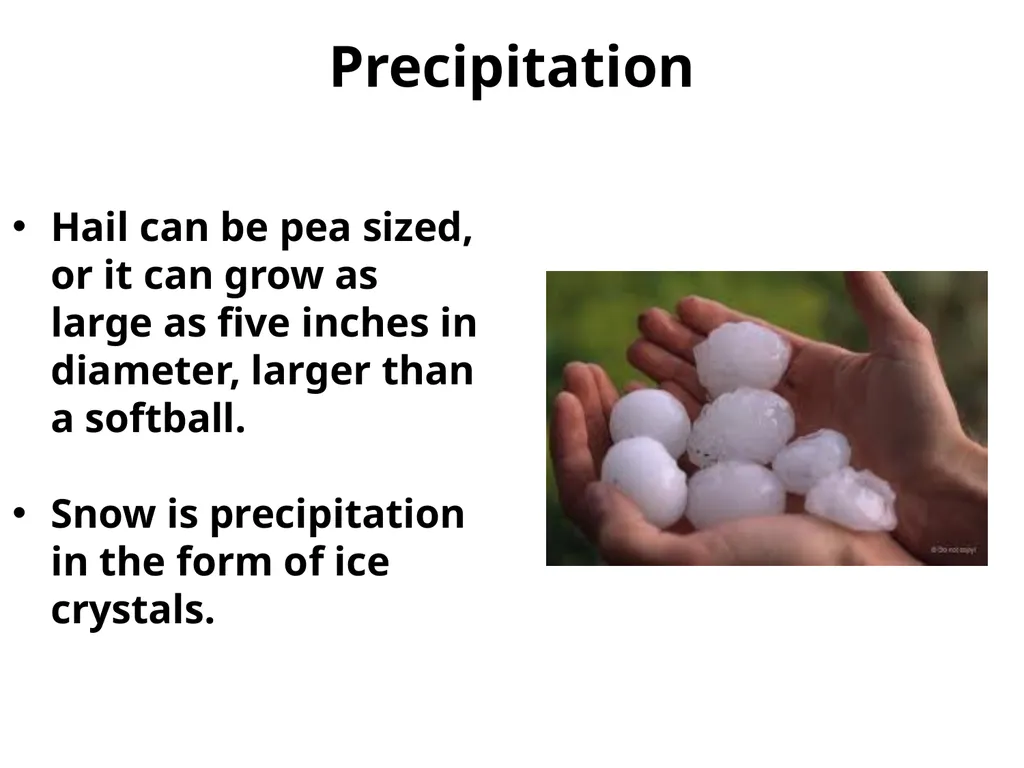
slide23. Precipitation Hail can be pea sized, or it can grow as large as five inches in diameter, larger than a softball.
Snow is precipitation in the form of ice crystals.<br>
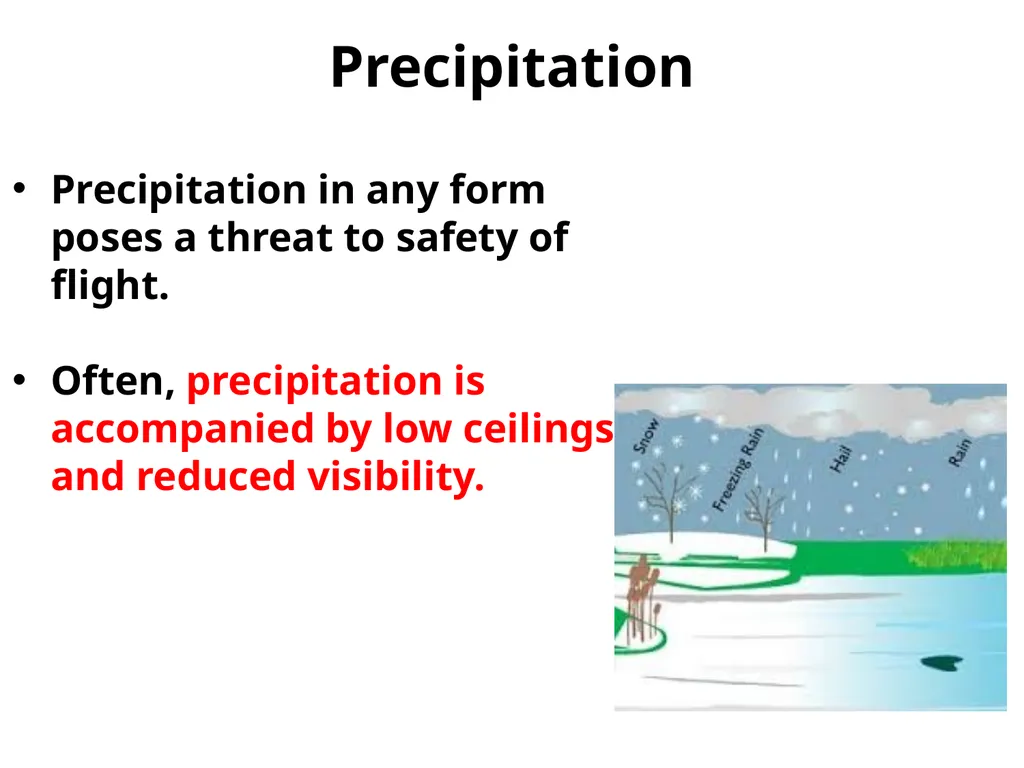
slide24. Precipitation Precipitation in any form poses a threat to safety of flight.
Often, precipitation is accompanied by low ceilings and reduced visibility.<br>
slide25. Precipitation Aircraft that have ice, snow, or frost on their surfaces must be cleaned prior to beginning a flight because of the possible airflow disruption and loss of lift.
Rain can contribute to water in the fuel tanks.<br>
slide26. Chapter Summary Knowledge of the atmosphere and the forces acting within it to create weather is essential to understand how weather affects a flight.
By understanding basic weather theories, a pilot can make sound decisions during flight planning after receiving weather briefings.<br>
slide27. Questions / Comments<br>

slide28. Chapter 11– Aviation Weather
FAA – Pilot’s Handbook of Aeronautical Knowledge TEST<br>
slide29. 4th Quarter Requirements(14 Class Meetings) All students will complete the following:
Take notes - All In class quizzes and tests
Complete Flight Sim. Private Pilot Syllabus
Lessons 1 – 5 (Stalls through Air Traffic Control)
Must pass written with 80%
Successfully complete 3 times on small sim
Successfully complete 1 time on Main sim
Student will receive zero points for all incomplete work<br>
slide30. Questions / Comments<br>
Under what conditions does low-level wind shear normally occur?
Describe the effects weather event when a layer of warm, moist air moves over a cold surface.
Describe the type of clouds that can produce hazardous weather, such as lightning, hail, tornadoes, gusty winds, and wind shear.
Describe the good rule of thumb is for pilots with respect to flying when thunderstorms are present. Warm-Up – 11/19 – 10 minutes<br>
slide2. Questions / Comments<br>
slide3. Utilizing your notes and past knowledge answer the following questions:
Under what conditions does low-level wind shear normally occur?
Describe the effects weather event when a layer of warm, moist air moves over a cold surface.
Describe the type of clouds that can produce hazardous weather, such as lightning, hail, tornadoes, gusty winds, and wind shear.
Describe the good rule of thumb is for pilots with respect to flying when thunderstorms are present. Warm-Up – 11/19 – 10 minutes<br>
slide4. Low Level Wind Shear While wind shear can occur at any altitude, low-level wind shear is especially hazardous due to the proximity of an aircraft to the ground.
Low-level wind shear is commonly associated with passing frontal systems, thunderstorms, and temperature inversions with strong upper level winds (greater than 25 knots).<br>
slide5. Utilizing your notes and past knowledge answer the following questions:
Under what conditions does low-level wind shear normally occur?
Describe the effects weather event when a layer of warm, moist air moves over a cold surface.
Describe the type of clouds that can produce hazardous weather, such as lightning, hail, tornadoes, gusty winds, and wind shear.
Describe the good rule of thumb is for pilots with respect to flying when thunderstorms are present. Warm-Up – 11/19 – 10 minutes<br>
slide6. Fog When a layer of warm, moist air moves over a cold surface, advection fog is likely to occur.
Unlike radiation fog, wind is required to form advection fog.<br>
slide7. Utilizing your notes and past knowledge answer the following questions:
Under what conditions does low-level wind shear normally occur?
Describe the effects weather event when a layer of warm, moist air moves over a cold surface.
Describe the type of clouds that can produce hazardous weather, such as lightning, hail, tornadoes, gusty winds, and wind shear.
Describe the good rule of thumb is for pilots with respect to flying when thunderstorms are present. Warm-Up – 11/19 – 10 minutes<br>
slide8. Clouds Cumulonimbus clouds contain large amounts of moisture and unstable air, and usually produce hazardous weather phenomena, such as lightning, hail, tornadoes, gusty winds, and wind shear.<br>
slide9. Utilizing your notes and past knowledge answer the following questions:
Under what conditions does low-level wind shear normally occur?
Describe the effects weather event when a layer of warm, moist air moves over a cold surface.
Describe the type of clouds that can produce hazardous weather, such as lightning, hail, tornadoes, gusty winds, and wind shear.
Describe the good rule of thumb is for pilots with respect to flying when thunderstorms are present. Warm-Up – 11/19 – 10 minutes<br>
slide10. Clouds It is impossible to fly over thunderstorms in light aircraft.
A good rule of thumb is to circumnavigate thunderstorms identified as severe or giving an intense radar echo by at least 20 nautical miles (NM) since hail may fall for miles outside of the clouds.<br>
slide11. Questions / Comments<br>
slide12. November 19
1938 — Construction begins on a new airport serving the nation's capital, Washington, D.C. Built in nearby Virginia, this airport will become Ronald Reagan National Airport. THIS DAY IN AVIATION<br>
slide13. November 19
1952 — A North American F-86D “Sabre Dog” establishes a world speed record of 698.505 mph. THIS DAY IN AVIATION<br>
slide14. Questions / Comments<br>
slide15. October / November 2015<br>
slide16. 2nd Quarter Requirements(15 Class Meetings – Dec 14) All students will complete the following:
Take notes - All in class quizzes and tests
Private Pilot Syllabus
Lessons 1 – 6 (Taxiing through Air Traffic Control)
Must pass written with 80%
Successfully complete 3 times on small sim
Successfully complete 1 time on Main sim
Complete ERAU Aviation 101
3 quizzes and 1 test
Student will receive zero points for all incomplete work – NO make-up / extra credit
NOTE: All unfinished Student Pilot and ERAU must be complete prior to starting Private Pilot and last 3 quizzes and test for ERAU.<br>
slide17. Questions / Comments<br>
slide18. Chapter 11– Weather Theory
FAA – Pilot’s Handbook of Aeronautical Knowledge<br>
slide19. Mission:
Describe basic weather theory and weather principles.
Describe how weather affects daily flying activities.
Describe the theories behind weather.
Describe the Flight Service Station (FSS) weather specialist and other aviation weather services.
EQ:
Describe the importance of Aeronautical Knowledge for the student pilot learning to fly. Today’s Mission Requirements<br>
slide20. Ceiling For aviation purposes, a ceiling is the lowest layer of clouds reported as being broken or overcast, as broken when five-eighths to seven-eighths of the sky is covered with clouds.
Overcast means the entire sky is covered with clouds.<br>
slide21. Visibility Visibility refers to the greatest horizontal distance at which prominent objects can be viewed with the naked eye.
Current visibility is also reported in METAR and other aviation weather reports, as well as by automated weather systems.<br>
slide22. Precipitation Precipitation refers to any type of water particles that form in the atmosphere and fall to the ground.
It has a profound impact on flight safety.
Precipitation can reduce visibility, create icing situations, and affect landing and takeoff performance of an aircraft.<br>
slide23. Precipitation Hail can be pea sized, or it can grow as large as five inches in diameter, larger than a softball.
Snow is precipitation in the form of ice crystals.<br>
slide24. Precipitation Precipitation in any form poses a threat to safety of flight.
Often, precipitation is accompanied by low ceilings and reduced visibility.<br>
slide25. Precipitation Aircraft that have ice, snow, or frost on their surfaces must be cleaned prior to beginning a flight because of the possible airflow disruption and loss of lift.
Rain can contribute to water in the fuel tanks.<br>
slide26. Chapter Summary Knowledge of the atmosphere and the forces acting within it to create weather is essential to understand how weather affects a flight.
By understanding basic weather theories, a pilot can make sound decisions during flight planning after receiving weather briefings.<br>
slide27. Questions / Comments<br>
slide28. Chapter 11– Aviation Weather
FAA – Pilot’s Handbook of Aeronautical Knowledge TEST<br>
slide29. 4th Quarter Requirements(14 Class Meetings) All students will complete the following:
Take notes - All In class quizzes and tests
Complete Flight Sim. Private Pilot Syllabus
Lessons 1 – 5 (Stalls through Air Traffic Control)
Must pass written with 80%
Successfully complete 3 times on small sim
Successfully complete 1 time on Main sim
Student will receive zero points for all incomplete work<br>
slide30. Questions / Comments<br>