
V.S.E.D. Variable Symptoms with Etiology in the



Description: V.S.E.D. Variable Symptoms with Etiology in the DSM? Alissa Hutto UNC CL Psychiatry Fellow V.S.E.D. Voluntary stopping of eating and drinking Alissa Hutto UNC CL Psychiatry Fellow Why am I talking about VSED 85yo patient isnt eating, can
Related Topics
Download Presentation
"V.S.E.D. Variable Symptoms with Etiology in the" is the property of its rightful owner. Permission is granted to download and print the materials on this website for personal, non-commercial use only, and to display it on your personal computer provided you do not modify the materials and that you retain all copyright notices contained in the materials. By downloading content from our website, you accept the terms of this agreement.
Presentation Transcript
slide1. V.S.E.D. Variable Symptoms with Etiology in the DSM?
Alissa Hutto
UNC CL Psychiatry Fellow<br>
slide2. V.S.E.D. Voluntary stopping of eating and drinking
Alissa Hutto
UNC CL Psychiatry Fellow<br>
slide3. Why am I talking about VSED “85yo patient isn’t eating, can you see them for depression?”
End of life and suicidal actions
Personal interest in systems and overlapping specialty knowledge<br>
slide4. Overview What is VSED
History
Case from this past year
How suicidality fits in
Pulling it all together<br>
slide5. What is VSED? -Voluntary stopping of eating and drinking, can also be called voluntary refusal of food and fluids (VRFF) or patients’ refusal of hydration and nutrition (PRHN)
-On searching any of these three terms in PubMed, the earliest articles appear in the mid 1980’s.
-Fast forward to a 2014 systematic review (1) for a consensus definition: “VSED is described as an action of a competent, capacitated person, who voluntarily and deliberately chooses to stop eating and drinking with the primary intention to hasten death because unacceptable suffering persists.”
-There were several court cases in the early and mid-80’s concerning the legality of withdrawing nourishment, and case outcomes depended on patient condition, age of the patient, and the family’s wishes.
1. Ivanović N, Büche D, Fringer A. Voluntary stopping of eating and drinking at the end of life - a 'systematic search and review' giving insight into an option of hastening death in capacitated adults at the end of life. BMC Palliat Care. 2014;13(1):1. Published 2014 Jan 8. doi:10.1186/1472-684X-13-1<br>
slide6. VSED History -An American Journal of Geriatrics paper from 1985 (2) summarizes three contemporary court cases and concludes that
-nourishment is a medical treatment
-parameters of who is legally allowed to refuse nourishment remained undefined
-a waiting period for in-depth discussions and informed consent along with ethics committee review is perhaps the best compromise for anyone who may fit the parameters of choosing VSED
2. Dresser R. When patients resist feeding. Medical, ethical, and legal considerations. J Am Geriatr Soc. 1985;33(11):790-794. doi:10.1111/j.1532-5415.1985.tb04193.x<br>
slide7. VSED History -In 1993 an impactful paper by James Bernat in the Annals of Internal Medicine (3) contextualized VSED (then PRHN) in the hot moral debate over euthanasia and physician-assisted suicide (PAS) at the time.
VSED is “an alternative that avoids moral controversy altogether and has fewer associated practical problems in its implementation.”
VSED is “voluntary passive euthanasia”- “when a physician abides by the rational refusal of treatment by a competent patient with the knowledge that doing so will result in the patient dying sooner than if the physician had overruled the patient's refusal and had started or continued treatment”
Reframe VSED as a refusal because of the moral distinction between honoring patient refusals vs patient requests. “Patient refusals must be honored when they represent the rational decisions of competent patients even when physicians know death will result. There is no moral requirement to honor patient requests when physicians know death will result and there may be legal prohibitions against doing so”
Literature up to that point shows that cessation of hydration/nutrition did not cause suffering but rather usually resulted in a comfortable death (ketonemia/euphoria/endogenous opioids?)
3. Bernat JL, Gert B, Mogielnicki RP. Patient refusal of hydration and nutrition. An alternative to physician-assisted suicide or voluntary active euthanasia. Arch Intern Med. 1993;153(24):2723-2728. doi:10.1001/archinte.153.24.2723<br>
slide8. Social Context - In Nazi Germany, genocide was disguised as euthanasia, and there was societal reflection post-WW2 of the slippery slope of physicians judging suffering and value in patients’ lives
-1976 Quinlan case allowing withdrawal of mechanical ventilation, fuels “right-to-die” movement
-Late 70’s, states start passing right-to-die laws (right to refuse life-prolonging treatment when terminally ill and death is imminent) (4)
-HIV/AIDS epidemic early 80’s leads to much patient suffering
-1987 first palliative care training program established
-1990 Jack Kevorkian performs assisted suicide (later convicted of murder)
4. https://euthanasia.procon.org/historical-timeline/<br>
slide9. VSED: Moral? -Publications in the 90’s mostly focus on PRHN and VSED as a moral alternative to PAS, but with time papers start to delve deeper into the ethics
-A 2004 paper in the Journal of Medicine and Philosophy (5) notes how scant the discussion of moral issues with VSED has been, and they point out the fear of clinicians that VSED could be used as a means of suicide.
Here comes psychiatry!
5. Jansen LA. No safe harbor: the principle of complicity and the practice of voluntary stopping of eating and drinking. J Med Philos. 2004;29(1):61-74. doi:10.1076/jmep.29.1.61.30413 10min<br>
slide10. VSED: physician complicity in suicide Jansen argues there are two groups of terminally ill people, those who have an irreversible lethal illness:
1. “and suffer from an underlying physiological condition that is not responsive to standard palliative care”
2. “but their physiological suffering can be appropriately managed by standard palliative care. Despite this, these patients still experience psychosocial suffering, which results from their awareness that they will die soon or that they have lost control over their lives.”
-If the first group engages in VSED, it is not suicidal because they are just “refusing to take disproportionately burdensome steps to keep themselves alive.” But for the second group, there’s a stronger case for labeling it suicidal because the decision to end their lives is a means for alleviating their psychological suffering.
5. Jansen LA. No safe harbor: the principle of complicity and the practice of voluntary stopping of eating and drinking. J Med Philos. 2004;29(1):61-74. doi:10.1076/jmep.29.1.61.30413<br>
slide11. Another look “an action of a competent, capacitated person, who voluntarily and deliberately chooses to stop eating and drinking with the primary intention to hasten death because unacceptable suffering persists”
-competent
-capacitated
-voluntary
-deliberate
-hasten death because of unacceptable suffering<br>
slide12. Another look -how do we truly know if something is irreversible and lethal?
-is there a timeline on lethality?
-who creates the standard for unacceptability?
-why must people deal with psychological or psychosocial suffering and not physiological?
-what if they change their mind?
-how are patients giving informed consent if we can’t guarantee the same VSED experience for everyone?
-what if capacity or competency changes?
-what if suffering is caused by VSED?
-PCP or other treating physicians may have qualms about supporting the process
-”avoids moral controversy”<br>
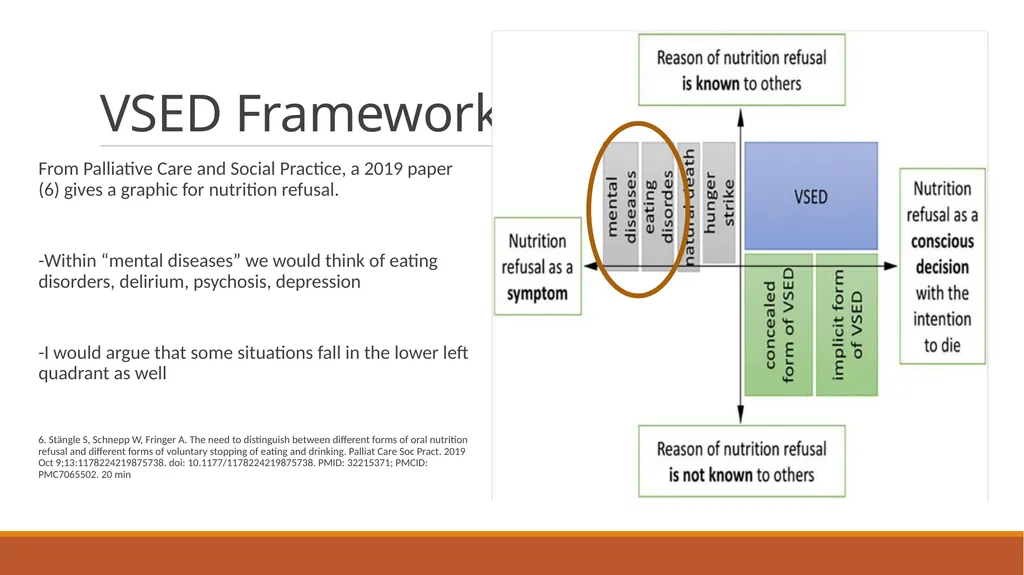
slide13. VSED Framework? From Palliative Care and Social Practice, a 2019 paper (6) gives a graphic for nutrition refusal.
-Within “mental diseases” we would think of eating disorders, delirium, psychosis, depression
-I would argue that some situations fall in the lower left quadrant as well
6. Stängle S, Schnepp W, Fringer A. The need to distinguish between different forms of oral nutrition refusal and different forms of voluntary stopping of eating and drinking. Palliat Care Soc Pract. 2019 Oct 9;13:1178224219875738. doi: 10.1177/1178224219875738. PMID: 32215371; PMCID: PMC7065502. 20 min<br>
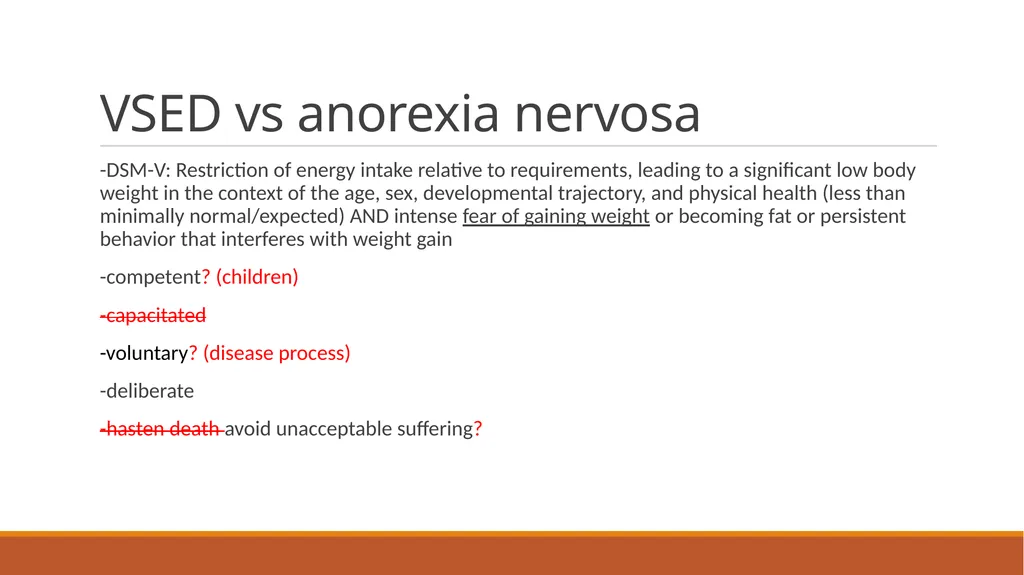
slide14. VSED vs anorexia nervosa -DSM-V: Restriction of energy intake relative to requirements, leading to a significant low body weight in the context of the age, sex, developmental trajectory, and physical health (less than minimally normal/expected) AND intense fear of gaining weight or becoming fat or persistent behavior that interferes with weight gain
-competent? (children)
-capacitated
-voluntary? (disease process)
-deliberate
-hasten death avoid unacceptable suffering?<br>
slide15. VSED: A note about anorexia nervosa -It can be very hard to determine intent of food restriction (weight, nausea, dysphagia, paranoia)
-In general this is less likely to be on our differential because of age, but what if a young person has a terminal illness and there is suspicion for anorexia?
-What if they were to argue that their anorexia is terminal and the steps to keep themselves alive are disproportionately burdensome like Jansen says?<br>
slide16. VSED: A Murky Case Ms. A, a 95-year-old woman with diabetes, hypertension, neuropathic pain, and no known psychiatric history presented to ED. She was found down by staff in her ALF, and she reported an intentional overdose on prescribed oxycodone to EMS. She had a DNR/DNI order on file. On ED evaluation she refused to talk about the event. Remarkable findings from the ED included hypertension, slight tachycardia, worsening hypoxia over the course of hours, mild respiratory acidosis, neutrophilic leukocytosis, elevated creatinine, and undetectable acetaminophen and salicylate levels, with UDS not performed on arrival. CT head showed no acute findings, CXR was concerning for aspiration pneumonia in the setting of witnessed vomiting.<br>
slide17. VSED: A Murky Case Mr. A was placed on supplemental oxygen and IV antibiotics were ordered. The patient initially refused antibiotics, and nursing allowed her to refuse (did not give them over objection), citing the patient’s advanced directives to not receive IV fluids. The admitting hospitalist did not feel the patient should be allowed to refuse antibiotics given that her aspiration pneumonia came as a result of her suicide attempt, and pointed out that her actual MOST form was not on file. Her HCPOA, her daughter, was not reachable by phone. Antibiotics were started, and a psychiatry consult was called given the suicide attempt. She was delirious on psychiatry evaluation and found not to have capacity regarding medication refusal*, and the recommendation was that all medication administration decisions be made by her surrogate decision-maker, her daughter. Because the patient would not talk about her suicide attempt and continued to ask the team to let her die*, she was kept on suicide precautions and a 1:1 sitter. She was also refusing food and asked the team to stop IV fluids.<br>
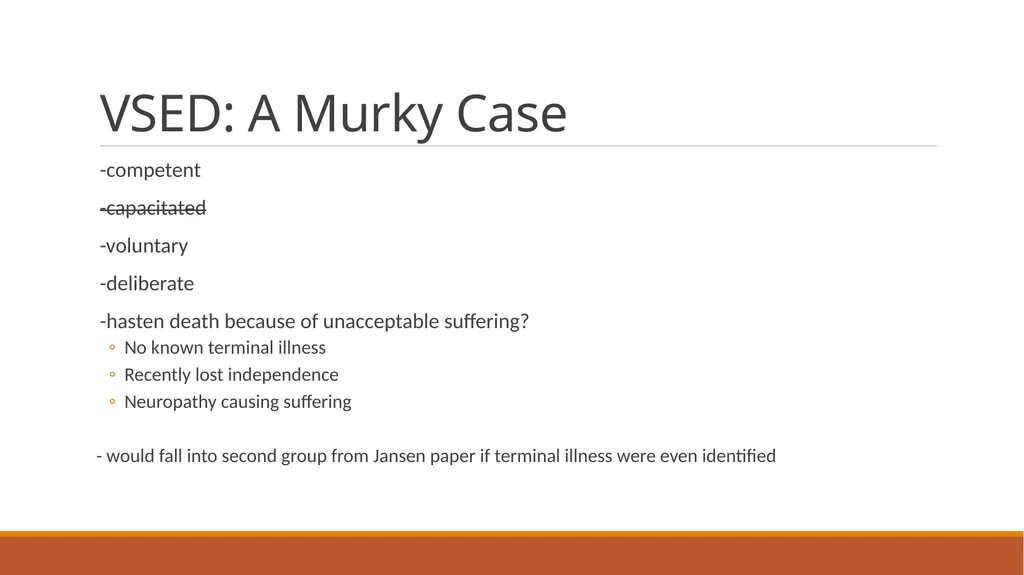
slide18. VSED: A Murky Case -competent
-capacitated
-voluntary
-deliberate
-hasten death because of unacceptable suffering?
No known terminal illness
Recently lost independence
Neuropathy causing suffering
- would fall into second group from Jansen paper if terminal illness were even identified<br>
slide19. A Rabbit Hole: Refusal of care and suicidality - There can be legal ramifications of overriding a DNR/DNI, but it is also illegal in all U.S. jurisdictions to aid a patient in attempting suicide (7)
-In our case, the aspiration pneumonia can be tied directly to her known intentional overdose, and thus her refusal of antibiotics could be seen as continuation of suicidal act
-Our current framework in psychiatry is that refusals of care are not allowed regarding the treatment of disease/injury directly resulting from the suicide attempt (including DNR/DNI)
-When does the suicide attempt stop being connected with future refusal of care?
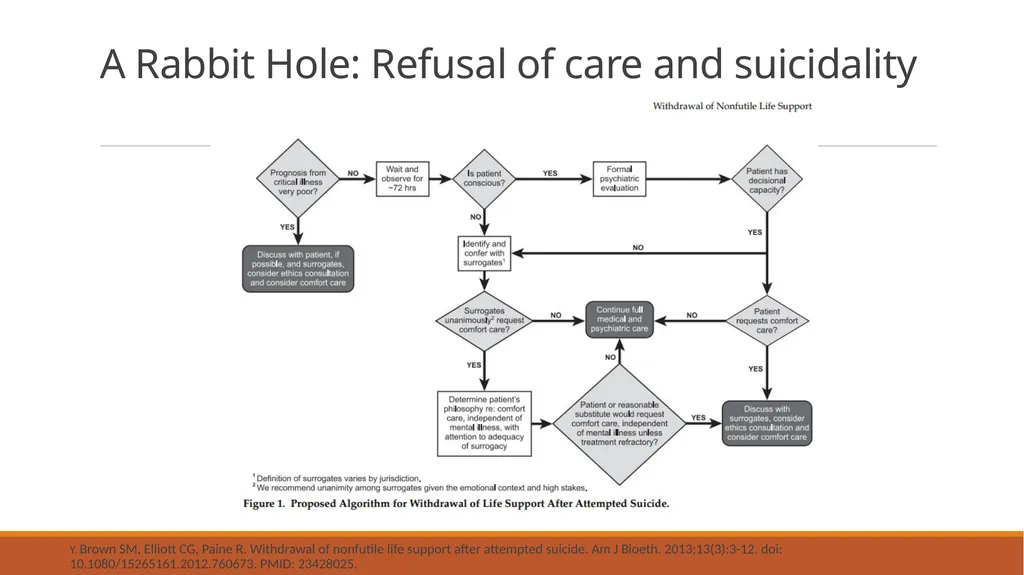
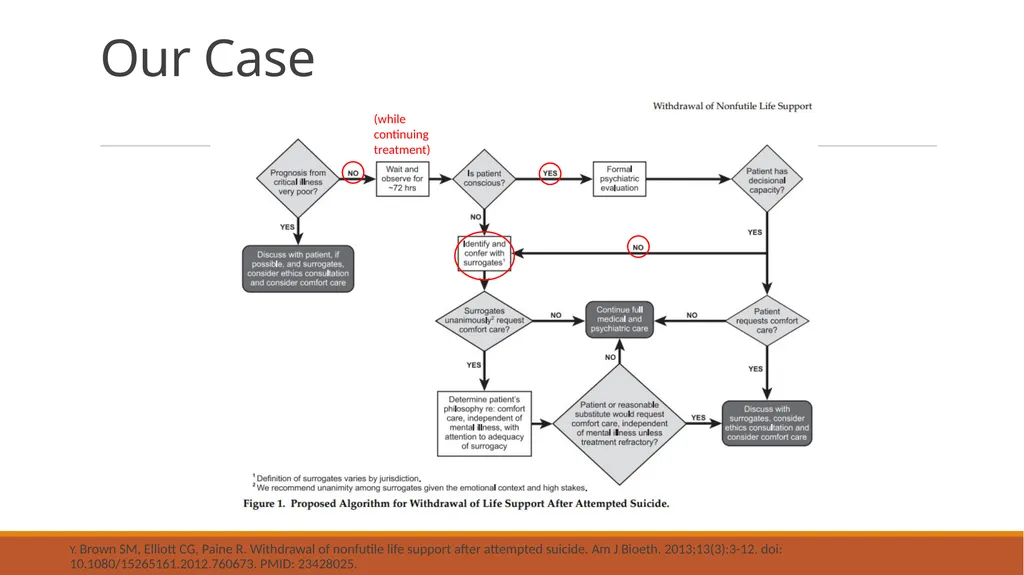
- A workflow has been proposed in these situations which emphasizes taking time to fully investigate the patient’s history and include input from surrogates before making a decision to withdraw life-sustaining care (8)
7. Quill TE, Ganzini L, Truog RD, Pope TM. Voluntarily Stopping Eating and Drinking Among Patients With Serious Advanced Illness-Clinical, Ethical, and Legal Aspects. JAMA Intern Med. 2018 Jan 1;178(1):123-127. doi: 10.1001/jamainternmed.2017.6307. PMID: 29114745.
8. Brown SM, Elliott CG, Paine R. Withdrawal of nonfutile life support after attempted suicide. Am J Bioeth. 2013;13(3):3-12. doi: 10.1080/15265161.2012.760673. PMID: 23428025.<br>
slide20. A Rabbit Hole: Refusal of care and suicidality Y. Brown SM, Elliott CG, Paine R. Withdrawal of nonfutile life support after attempted suicide. Am J Bioeth. 2013;13(3):3-12. doi: 10.1080/15265161.2012.760673. PMID: 23428025.<br>
slide21. Our Case Y. Brown SM, Elliott CG, Paine R. Withdrawal of nonfutile life support after attempted suicide. Am J Bioeth. 2013;13(3):3-12. doi: 10.1080/15265161.2012.760673. PMID: 23428025. (while continuing treatment)<br>
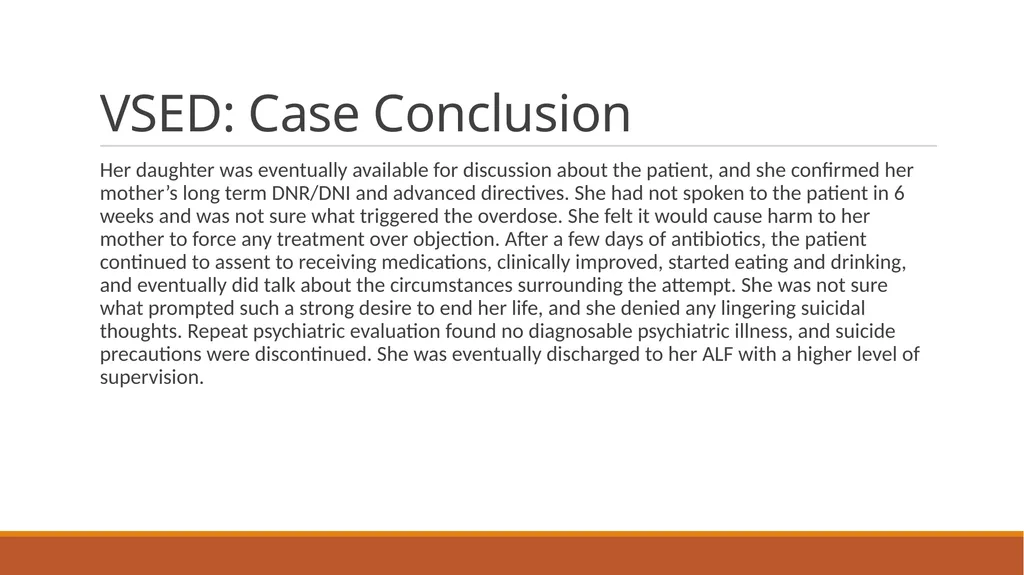
slide22. VSED: Case Conclusion Her daughter was eventually available for discussion about the patient, and she confirmed her mother’s long term DNR/DNI and advanced directives. She had not spoken to the patient in 6 weeks and was not sure what triggered the overdose. She felt it would cause harm to her mother to force any treatment over objection. After a few days of antibiotics, the patient continued to assent to receiving medications, clinically improved, started eating and drinking, and eventually did talk about the circumstances surrounding the attempt. She was not sure what prompted such a strong desire to end her life, and she denied any lingering suicidal thoughts. Repeat psychiatric evaluation found no diagnosable psychiatric illness, and suicide precautions were discontinued. She was eventually discharged to her ALF with a higher level of supervision.<br>
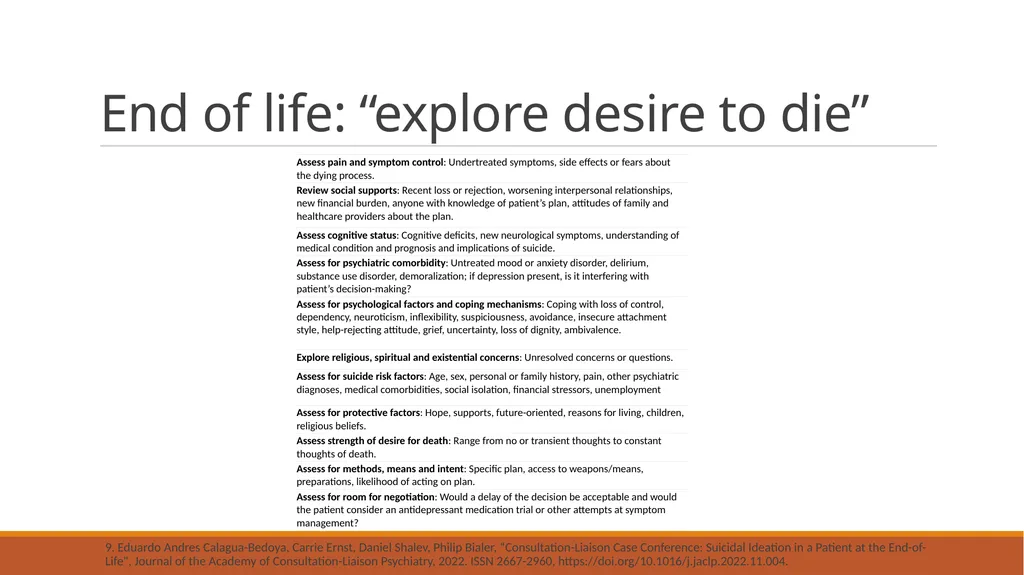
slide23. End of life: bigger picture of suffering -Helpful paper from this month in the Journal of the Academy of Consultation-Liaison Psychiatry (9) discussing suicidality at the end of life:
-differentiate somatic/illness distress from distress related to psychiatric disorders (MDD, adjustment, delirium, grief, demoralization)
-At EOL depression is not the norm, delirium very common
- Hospital Anxiety and Depression Scale (HADS) is a validated tool to screen for psychiatric symptoms in palliative care/cancer care setting
- desire for death in terminally ill cancer patients has been found to be closely associated with clinical depression, pain, and low family support (2 of these are modifiable)
-most patients referred to psych for requests to terminate life-support were neither depressed nor suicidal- but wanted a “dignified end to life”
9. Eduardo Andres Calagua-Bedoya, Carrie Ernst, Daniel Shalev, Philip Bialer, “Consultation-Liaison Case Conference: Suicidal Ideation in a Patient at the End-of-Life", Journal of the Academy of Consultation-Liaison Psychiatry, 2022. ISSN 2667-2960, https://doi.org/10.1016/j.jaclp.2022.11.004.<br>
slide24. End of life: “explore desire to die” 9. Eduardo Andres Calagua-Bedoya, Carrie Ernst, Daniel Shalev, Philip Bialer, “Consultation-Liaison Case Conference: Suicidal Ideation in a Patient at the End-of-Life", Journal of the Academy of Consultation-Liaison Psychiatry, 2022. ISSN 2667-2960, https://doi.org/10.1016/j.jaclp.2022.11.004.<br>
slide25. End of life: no great psych options -”Standard treatment options such as long-term pharmacotherapy or inpatient psychiatric admission are not feasible in these cases given the time constraints. Instead, management of these cases should focus on symptom relief. Implementation of specific psychotherapeutic techniques like MCP or DT can also be helpful for existential purposes. ”
-essentially say that our psychiatric care model is just not well-equipped to treat patients at the end of life<br>
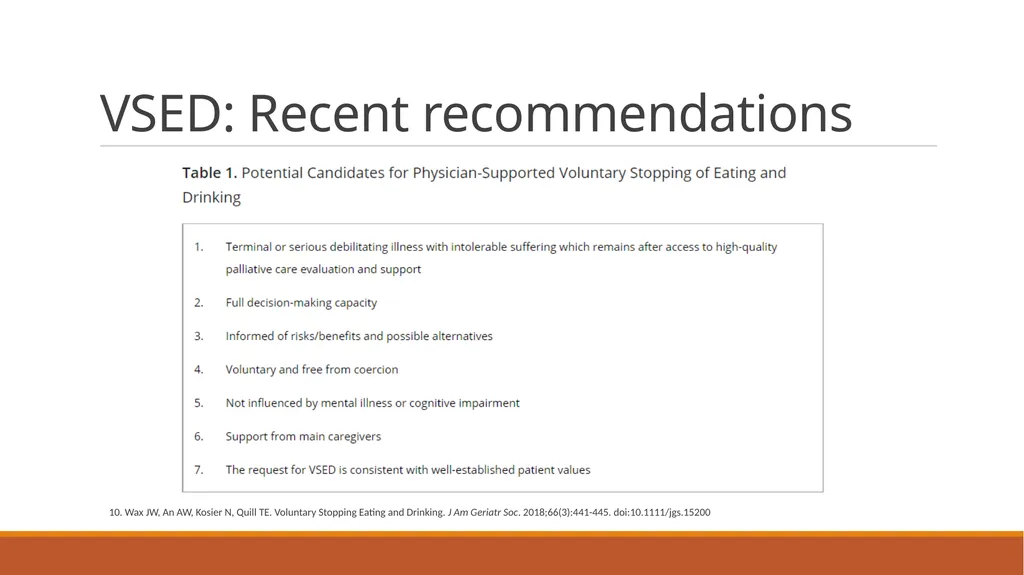
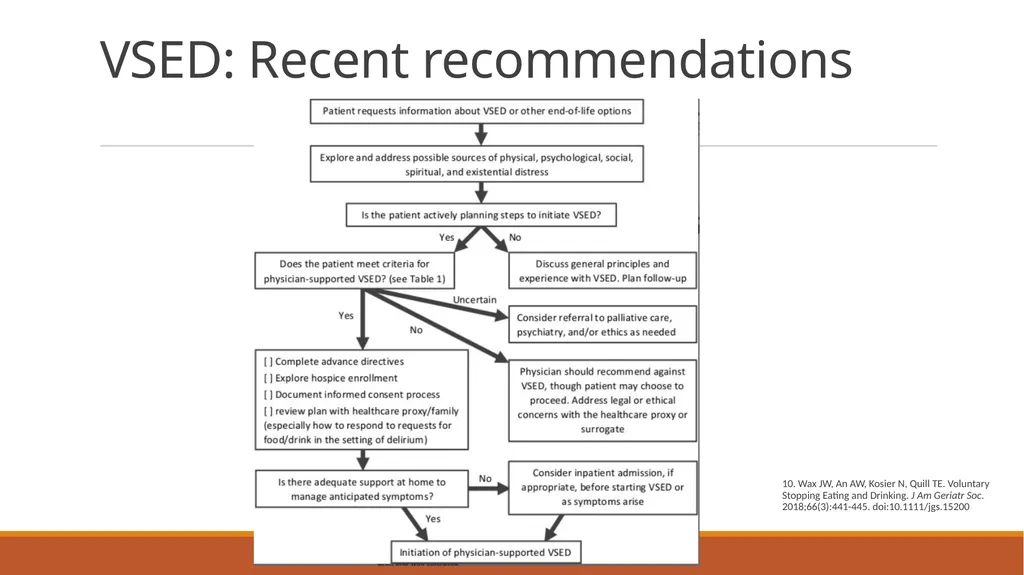
slide26. VSED: Recent recommendations 10. Wax JW, An AW, Kosier N, Quill TE. Voluntary Stopping Eating and Drinking. J Am Geriatr Soc. 2018;66(3):441-445. doi:10.1111/jgs.15200<br>
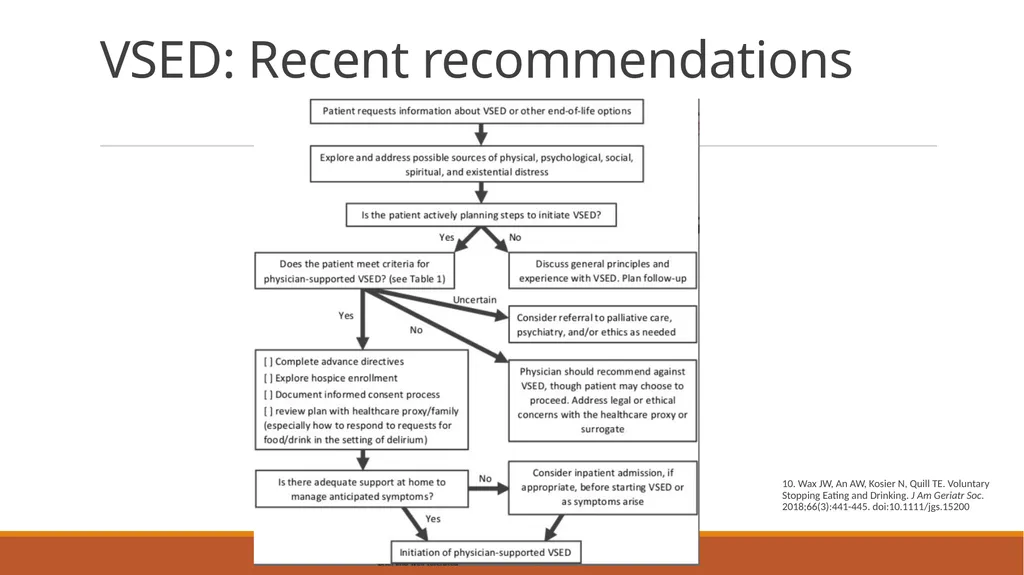
slide27. VSED: Recent recommendations 10. Wax JW, An AW, Kosier N, Quill TE. Voluntary Stopping Eating and Drinking. J Am Geriatr Soc. 2018;66(3):441-445. doi:10.1111/jgs.15200<br>
slide28. VSED: Recent recommendations 10. Wax JW, An AW, Kosier N, Quill TE. Voluntary Stopping Eating and Drinking. J Am Geriatr Soc. 2018;66(3):441-445. doi:10.1111/jgs.15200<br>
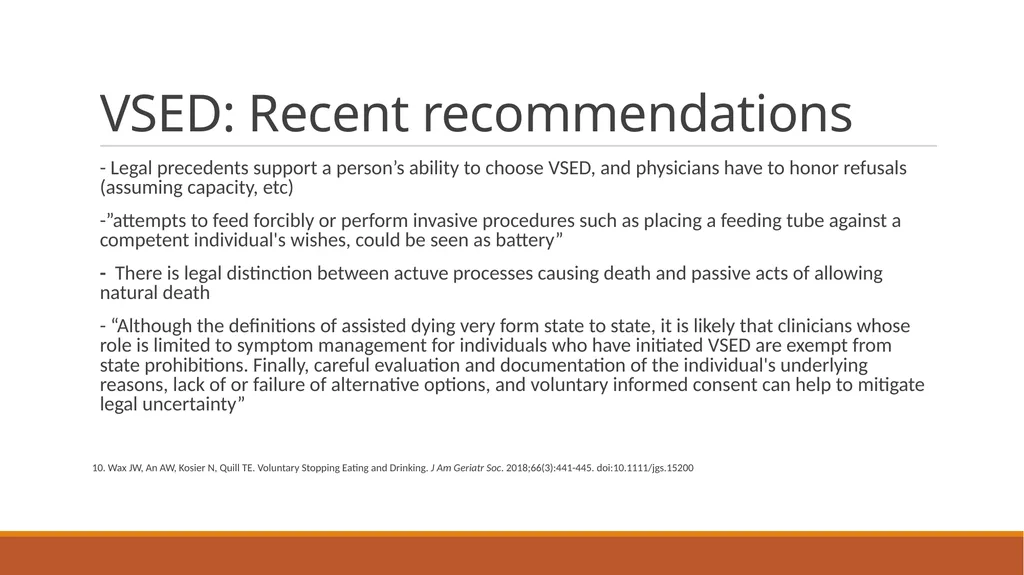
slide29. VSED: Recent recommendations - Legal precedents support a person’s ability to choose VSED, and physicians have to honor refusals (assuming capacity, etc)
-”attempts to feed forcibly or perform invasive procedures such as placing a feeding tube against a competent individual's wishes, could be seen as battery”
- There is legal distinction between actuve processes causing death and passive acts of allowing natural death
- “Although the definitions of assisted dying very form state to state, it is likely that clinicians whose role is limited to symptom management for individuals who have initiated VSED are exempt from state prohibitions. Finally, careful evaluation and documentation of the individual's underlying reasons, lack of or failure of alternative options, and voluntary informed consent can help to mitigate legal uncertainty”
10. Wax JW, An AW, Kosier N, Quill TE. Voluntary Stopping Eating and Drinking. J Am Geriatr Soc. 2018;66(3):441-445. doi:10.1111/jgs.15200<br>
slide30. VSED: Very Significant EOL Decision - Would love to hear any experiences y’all have had!<br>
Alissa Hutto
UNC CL Psychiatry Fellow<br>
slide2. V.S.E.D. Voluntary stopping of eating and drinking
Alissa Hutto
UNC CL Psychiatry Fellow<br>
slide3. Why am I talking about VSED “85yo patient isn’t eating, can you see them for depression?”
End of life and suicidal actions
Personal interest in systems and overlapping specialty knowledge<br>
slide4. Overview What is VSED
History
Case from this past year
How suicidality fits in
Pulling it all together<br>
slide5. What is VSED? -Voluntary stopping of eating and drinking, can also be called voluntary refusal of food and fluids (VRFF) or patients’ refusal of hydration and nutrition (PRHN)
-On searching any of these three terms in PubMed, the earliest articles appear in the mid 1980’s.
-Fast forward to a 2014 systematic review (1) for a consensus definition: “VSED is described as an action of a competent, capacitated person, who voluntarily and deliberately chooses to stop eating and drinking with the primary intention to hasten death because unacceptable suffering persists.”
-There were several court cases in the early and mid-80’s concerning the legality of withdrawing nourishment, and case outcomes depended on patient condition, age of the patient, and the family’s wishes.
1. Ivanović N, Büche D, Fringer A. Voluntary stopping of eating and drinking at the end of life - a 'systematic search and review' giving insight into an option of hastening death in capacitated adults at the end of life. BMC Palliat Care. 2014;13(1):1. Published 2014 Jan 8. doi:10.1186/1472-684X-13-1<br>
slide6. VSED History -An American Journal of Geriatrics paper from 1985 (2) summarizes three contemporary court cases and concludes that
-nourishment is a medical treatment
-parameters of who is legally allowed to refuse nourishment remained undefined
-a waiting period for in-depth discussions and informed consent along with ethics committee review is perhaps the best compromise for anyone who may fit the parameters of choosing VSED
2. Dresser R. When patients resist feeding. Medical, ethical, and legal considerations. J Am Geriatr Soc. 1985;33(11):790-794. doi:10.1111/j.1532-5415.1985.tb04193.x<br>
slide7. VSED History -In 1993 an impactful paper by James Bernat in the Annals of Internal Medicine (3) contextualized VSED (then PRHN) in the hot moral debate over euthanasia and physician-assisted suicide (PAS) at the time.
VSED is “an alternative that avoids moral controversy altogether and has fewer associated practical problems in its implementation.”
VSED is “voluntary passive euthanasia”- “when a physician abides by the rational refusal of treatment by a competent patient with the knowledge that doing so will result in the patient dying sooner than if the physician had overruled the patient's refusal and had started or continued treatment”
Reframe VSED as a refusal because of the moral distinction between honoring patient refusals vs patient requests. “Patient refusals must be honored when they represent the rational decisions of competent patients even when physicians know death will result. There is no moral requirement to honor patient requests when physicians know death will result and there may be legal prohibitions against doing so”
Literature up to that point shows that cessation of hydration/nutrition did not cause suffering but rather usually resulted in a comfortable death (ketonemia/euphoria/endogenous opioids?)
3. Bernat JL, Gert B, Mogielnicki RP. Patient refusal of hydration and nutrition. An alternative to physician-assisted suicide or voluntary active euthanasia. Arch Intern Med. 1993;153(24):2723-2728. doi:10.1001/archinte.153.24.2723<br>
slide8. Social Context - In Nazi Germany, genocide was disguised as euthanasia, and there was societal reflection post-WW2 of the slippery slope of physicians judging suffering and value in patients’ lives
-1976 Quinlan case allowing withdrawal of mechanical ventilation, fuels “right-to-die” movement
-Late 70’s, states start passing right-to-die laws (right to refuse life-prolonging treatment when terminally ill and death is imminent) (4)
-HIV/AIDS epidemic early 80’s leads to much patient suffering
-1987 first palliative care training program established
-1990 Jack Kevorkian performs assisted suicide (later convicted of murder)
4. https://euthanasia.procon.org/historical-timeline/<br>
slide9. VSED: Moral? -Publications in the 90’s mostly focus on PRHN and VSED as a moral alternative to PAS, but with time papers start to delve deeper into the ethics
-A 2004 paper in the Journal of Medicine and Philosophy (5) notes how scant the discussion of moral issues with VSED has been, and they point out the fear of clinicians that VSED could be used as a means of suicide.
Here comes psychiatry!
5. Jansen LA. No safe harbor: the principle of complicity and the practice of voluntary stopping of eating and drinking. J Med Philos. 2004;29(1):61-74. doi:10.1076/jmep.29.1.61.30413 10min<br>
slide10. VSED: physician complicity in suicide Jansen argues there are two groups of terminally ill people, those who have an irreversible lethal illness:
1. “and suffer from an underlying physiological condition that is not responsive to standard palliative care”
2. “but their physiological suffering can be appropriately managed by standard palliative care. Despite this, these patients still experience psychosocial suffering, which results from their awareness that they will die soon or that they have lost control over their lives.”
-If the first group engages in VSED, it is not suicidal because they are just “refusing to take disproportionately burdensome steps to keep themselves alive.” But for the second group, there’s a stronger case for labeling it suicidal because the decision to end their lives is a means for alleviating their psychological suffering.
5. Jansen LA. No safe harbor: the principle of complicity and the practice of voluntary stopping of eating and drinking. J Med Philos. 2004;29(1):61-74. doi:10.1076/jmep.29.1.61.30413<br>
slide11. Another look “an action of a competent, capacitated person, who voluntarily and deliberately chooses to stop eating and drinking with the primary intention to hasten death because unacceptable suffering persists”
-competent
-capacitated
-voluntary
-deliberate
-hasten death because of unacceptable suffering<br>
slide12. Another look -how do we truly know if something is irreversible and lethal?
-is there a timeline on lethality?
-who creates the standard for unacceptability?
-why must people deal with psychological or psychosocial suffering and not physiological?
-what if they change their mind?
-how are patients giving informed consent if we can’t guarantee the same VSED experience for everyone?
-what if capacity or competency changes?
-what if suffering is caused by VSED?
-PCP or other treating physicians may have qualms about supporting the process
-”avoids moral controversy”<br>
slide13. VSED Framework? From Palliative Care and Social Practice, a 2019 paper (6) gives a graphic for nutrition refusal.
-Within “mental diseases” we would think of eating disorders, delirium, psychosis, depression
-I would argue that some situations fall in the lower left quadrant as well
6. Stängle S, Schnepp W, Fringer A. The need to distinguish between different forms of oral nutrition refusal and different forms of voluntary stopping of eating and drinking. Palliat Care Soc Pract. 2019 Oct 9;13:1178224219875738. doi: 10.1177/1178224219875738. PMID: 32215371; PMCID: PMC7065502. 20 min<br>
slide14. VSED vs anorexia nervosa -DSM-V: Restriction of energy intake relative to requirements, leading to a significant low body weight in the context of the age, sex, developmental trajectory, and physical health (less than minimally normal/expected) AND intense fear of gaining weight or becoming fat or persistent behavior that interferes with weight gain
-competent? (children)
-capacitated
-voluntary? (disease process)
-deliberate
-hasten death avoid unacceptable suffering?<br>
slide15. VSED: A note about anorexia nervosa -It can be very hard to determine intent of food restriction (weight, nausea, dysphagia, paranoia)
-In general this is less likely to be on our differential because of age, but what if a young person has a terminal illness and there is suspicion for anorexia?
-What if they were to argue that their anorexia is terminal and the steps to keep themselves alive are disproportionately burdensome like Jansen says?<br>
slide16. VSED: A Murky Case Ms. A, a 95-year-old woman with diabetes, hypertension, neuropathic pain, and no known psychiatric history presented to ED. She was found down by staff in her ALF, and she reported an intentional overdose on prescribed oxycodone to EMS. She had a DNR/DNI order on file. On ED evaluation she refused to talk about the event. Remarkable findings from the ED included hypertension, slight tachycardia, worsening hypoxia over the course of hours, mild respiratory acidosis, neutrophilic leukocytosis, elevated creatinine, and undetectable acetaminophen and salicylate levels, with UDS not performed on arrival. CT head showed no acute findings, CXR was concerning for aspiration pneumonia in the setting of witnessed vomiting.<br>
slide17. VSED: A Murky Case Mr. A was placed on supplemental oxygen and IV antibiotics were ordered. The patient initially refused antibiotics, and nursing allowed her to refuse (did not give them over objection), citing the patient’s advanced directives to not receive IV fluids. The admitting hospitalist did not feel the patient should be allowed to refuse antibiotics given that her aspiration pneumonia came as a result of her suicide attempt, and pointed out that her actual MOST form was not on file. Her HCPOA, her daughter, was not reachable by phone. Antibiotics were started, and a psychiatry consult was called given the suicide attempt. She was delirious on psychiatry evaluation and found not to have capacity regarding medication refusal*, and the recommendation was that all medication administration decisions be made by her surrogate decision-maker, her daughter. Because the patient would not talk about her suicide attempt and continued to ask the team to let her die*, she was kept on suicide precautions and a 1:1 sitter. She was also refusing food and asked the team to stop IV fluids.<br>
slide18. VSED: A Murky Case -competent
-capacitated
-voluntary
-deliberate
-hasten death because of unacceptable suffering?
No known terminal illness
Recently lost independence
Neuropathy causing suffering
- would fall into second group from Jansen paper if terminal illness were even identified<br>
slide19. A Rabbit Hole: Refusal of care and suicidality - There can be legal ramifications of overriding a DNR/DNI, but it is also illegal in all U.S. jurisdictions to aid a patient in attempting suicide (7)
-In our case, the aspiration pneumonia can be tied directly to her known intentional overdose, and thus her refusal of antibiotics could be seen as continuation of suicidal act
-Our current framework in psychiatry is that refusals of care are not allowed regarding the treatment of disease/injury directly resulting from the suicide attempt (including DNR/DNI)
-When does the suicide attempt stop being connected with future refusal of care?
- A workflow has been proposed in these situations which emphasizes taking time to fully investigate the patient’s history and include input from surrogates before making a decision to withdraw life-sustaining care (8)
7. Quill TE, Ganzini L, Truog RD, Pope TM. Voluntarily Stopping Eating and Drinking Among Patients With Serious Advanced Illness-Clinical, Ethical, and Legal Aspects. JAMA Intern Med. 2018 Jan 1;178(1):123-127. doi: 10.1001/jamainternmed.2017.6307. PMID: 29114745.
8. Brown SM, Elliott CG, Paine R. Withdrawal of nonfutile life support after attempted suicide. Am J Bioeth. 2013;13(3):3-12. doi: 10.1080/15265161.2012.760673. PMID: 23428025.<br>
slide20. A Rabbit Hole: Refusal of care and suicidality Y. Brown SM, Elliott CG, Paine R. Withdrawal of nonfutile life support after attempted suicide. Am J Bioeth. 2013;13(3):3-12. doi: 10.1080/15265161.2012.760673. PMID: 23428025.<br>
slide21. Our Case Y. Brown SM, Elliott CG, Paine R. Withdrawal of nonfutile life support after attempted suicide. Am J Bioeth. 2013;13(3):3-12. doi: 10.1080/15265161.2012.760673. PMID: 23428025. (while continuing treatment)<br>
slide22. VSED: Case Conclusion Her daughter was eventually available for discussion about the patient, and she confirmed her mother’s long term DNR/DNI and advanced directives. She had not spoken to the patient in 6 weeks and was not sure what triggered the overdose. She felt it would cause harm to her mother to force any treatment over objection. After a few days of antibiotics, the patient continued to assent to receiving medications, clinically improved, started eating and drinking, and eventually did talk about the circumstances surrounding the attempt. She was not sure what prompted such a strong desire to end her life, and she denied any lingering suicidal thoughts. Repeat psychiatric evaluation found no diagnosable psychiatric illness, and suicide precautions were discontinued. She was eventually discharged to her ALF with a higher level of supervision.<br>
slide23. End of life: bigger picture of suffering -Helpful paper from this month in the Journal of the Academy of Consultation-Liaison Psychiatry (9) discussing suicidality at the end of life:
-differentiate somatic/illness distress from distress related to psychiatric disorders (MDD, adjustment, delirium, grief, demoralization)
-At EOL depression is not the norm, delirium very common
- Hospital Anxiety and Depression Scale (HADS) is a validated tool to screen for psychiatric symptoms in palliative care/cancer care setting
- desire for death in terminally ill cancer patients has been found to be closely associated with clinical depression, pain, and low family support (2 of these are modifiable)
-most patients referred to psych for requests to terminate life-support were neither depressed nor suicidal- but wanted a “dignified end to life”
9. Eduardo Andres Calagua-Bedoya, Carrie Ernst, Daniel Shalev, Philip Bialer, “Consultation-Liaison Case Conference: Suicidal Ideation in a Patient at the End-of-Life", Journal of the Academy of Consultation-Liaison Psychiatry, 2022. ISSN 2667-2960, https://doi.org/10.1016/j.jaclp.2022.11.004.<br>
slide24. End of life: “explore desire to die” 9. Eduardo Andres Calagua-Bedoya, Carrie Ernst, Daniel Shalev, Philip Bialer, “Consultation-Liaison Case Conference: Suicidal Ideation in a Patient at the End-of-Life", Journal of the Academy of Consultation-Liaison Psychiatry, 2022. ISSN 2667-2960, https://doi.org/10.1016/j.jaclp.2022.11.004.<br>
slide25. End of life: no great psych options -”Standard treatment options such as long-term pharmacotherapy or inpatient psychiatric admission are not feasible in these cases given the time constraints. Instead, management of these cases should focus on symptom relief. Implementation of specific psychotherapeutic techniques like MCP or DT can also be helpful for existential purposes. ”
-essentially say that our psychiatric care model is just not well-equipped to treat patients at the end of life<br>
slide26. VSED: Recent recommendations 10. Wax JW, An AW, Kosier N, Quill TE. Voluntary Stopping Eating and Drinking. J Am Geriatr Soc. 2018;66(3):441-445. doi:10.1111/jgs.15200<br>
slide27. VSED: Recent recommendations 10. Wax JW, An AW, Kosier N, Quill TE. Voluntary Stopping Eating and Drinking. J Am Geriatr Soc. 2018;66(3):441-445. doi:10.1111/jgs.15200<br>
slide28. VSED: Recent recommendations 10. Wax JW, An AW, Kosier N, Quill TE. Voluntary Stopping Eating and Drinking. J Am Geriatr Soc. 2018;66(3):441-445. doi:10.1111/jgs.15200<br>
slide29. VSED: Recent recommendations - Legal precedents support a person’s ability to choose VSED, and physicians have to honor refusals (assuming capacity, etc)
-”attempts to feed forcibly or perform invasive procedures such as placing a feeding tube against a competent individual's wishes, could be seen as battery”
- There is legal distinction between actuve processes causing death and passive acts of allowing natural death
- “Although the definitions of assisted dying very form state to state, it is likely that clinicians whose role is limited to symptom management for individuals who have initiated VSED are exempt from state prohibitions. Finally, careful evaluation and documentation of the individual's underlying reasons, lack of or failure of alternative options, and voluntary informed consent can help to mitigate legal uncertainty”
10. Wax JW, An AW, Kosier N, Quill TE. Voluntary Stopping Eating and Drinking. J Am Geriatr Soc. 2018;66(3):441-445. doi:10.1111/jgs.15200<br>
slide30. VSED: Very Significant EOL Decision - Would love to hear any experiences y’all have had!<br>