
We work closely with the Purchasing Department to
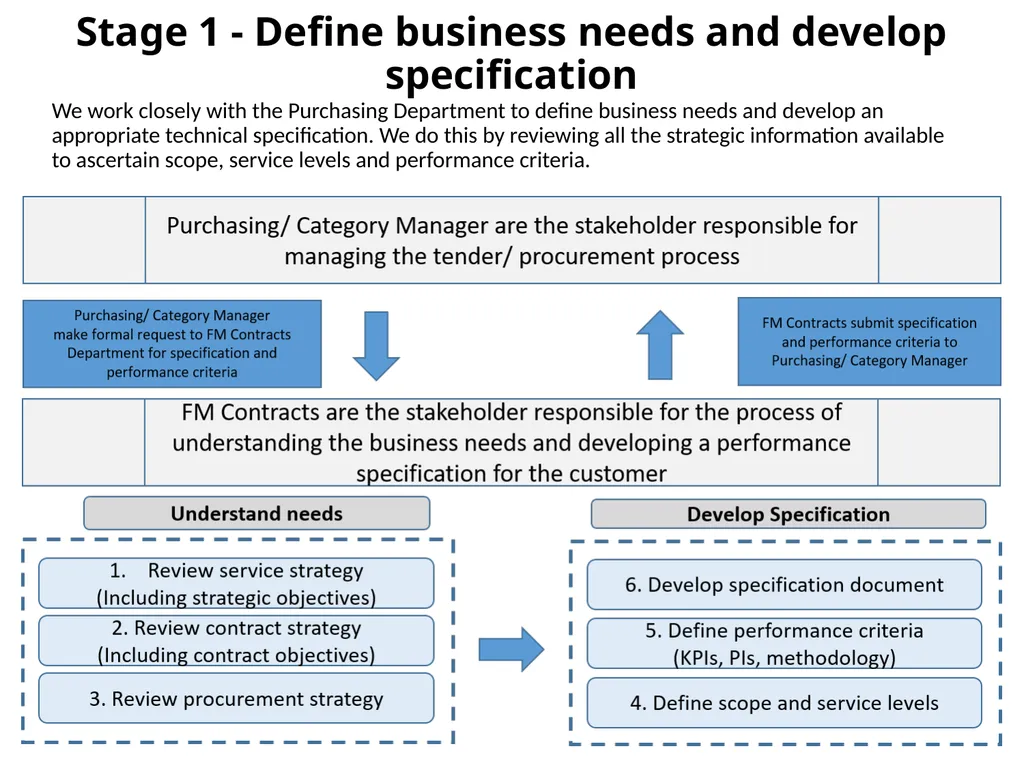
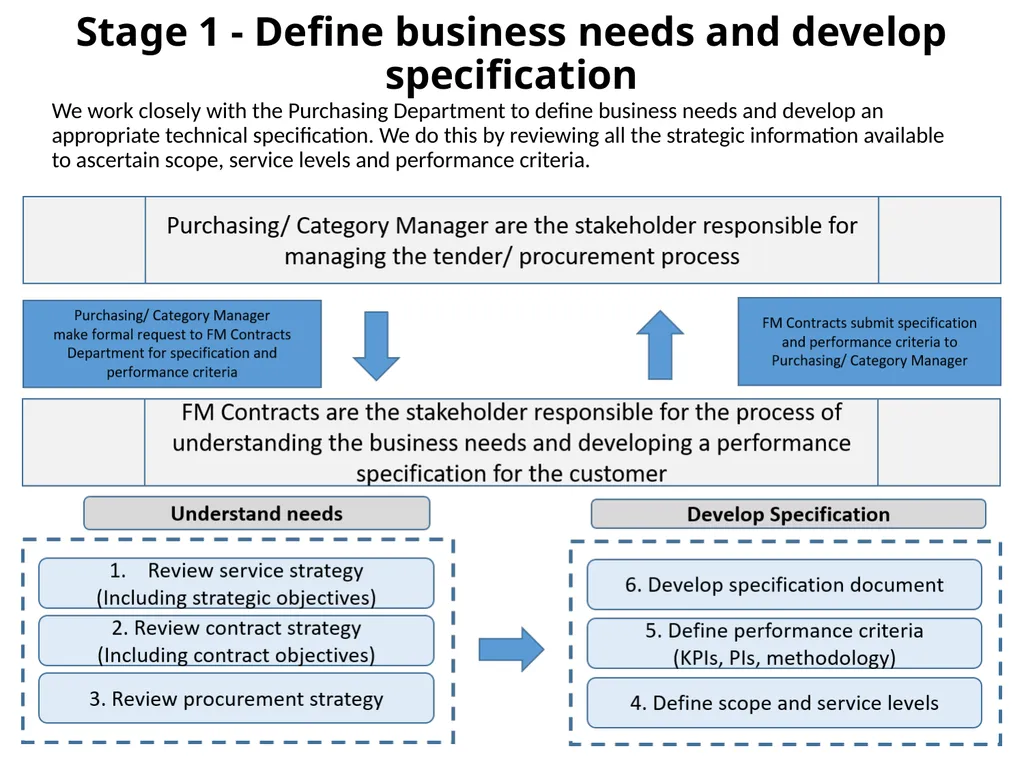
Description: We work closely with the Purchasing Department to define business needs and develop an appropriate technical specification. We do this by reviewing all the strategic information available to ascertain scope, service levels and performance
Related Topics
Download Presentation
"We work closely with the Purchasing Department to" is the property of its rightful owner. Permission is granted to download and print the materials on this website for personal, non-commercial use only, and to display it on your personal computer provided you do not modify the materials and that you retain all copyright notices contained in the materials. By downloading content from our website, you accept the terms of this agreement.
Presentation Transcript
slide1. We work closely with the Purchasing Department to define business needs and develop an appropriate technical specification. We do this by reviewing all the strategic information available to ascertain scope, service levels and performance criteria. Stage 1 - Define business needs and develop specification<br>
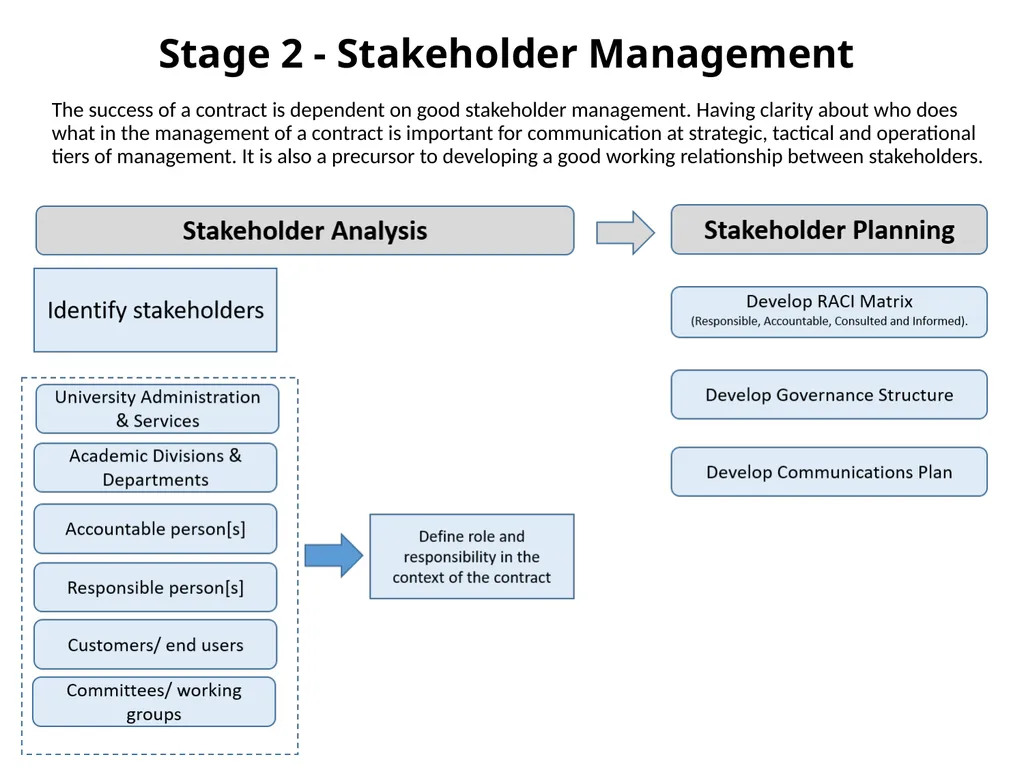
slide2. The success of a contract is dependent on good stakeholder management. Having clarity about who does what in the management of a contract is important for communication at strategic, tactical and operational tiers of management. It is also a precursor to developing a good working relationship between stakeholders. Stage 2 - Stakeholder Management<br>
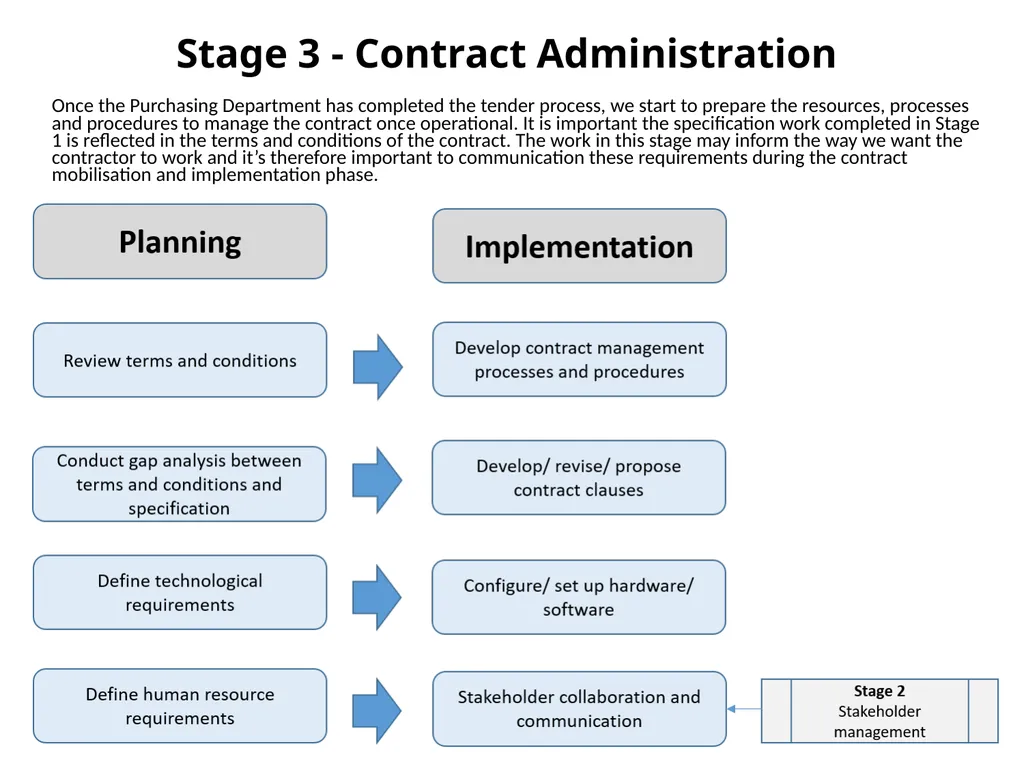
slide3. Once the Purchasing Department has completed the tender process, we start to prepare the resources, processes and procedures to manage the contract once operational. It is important the specification work completed in Stage 1 is reflected in the terms and conditions of the contract. The work in this stage may inform the way we want the contractor to work and it’s therefore important to communication these requirements during the contract mobilisation and implementation phase. Stage 3 - Contract Administration<br>
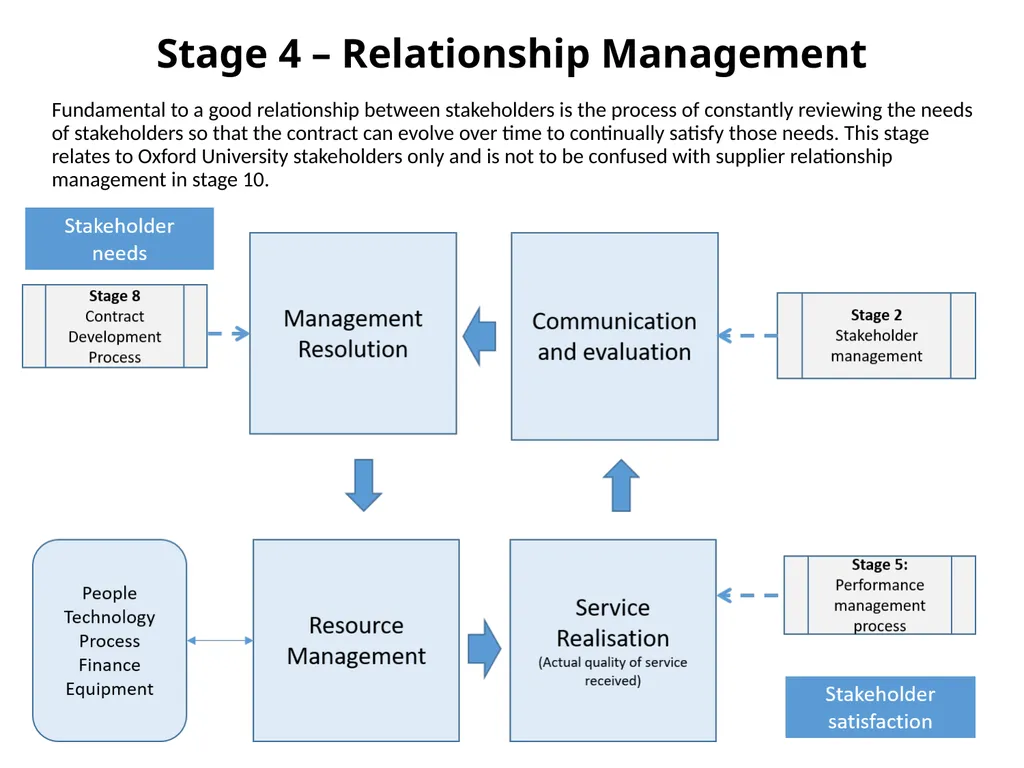
slide4. Fundamental to a good relationship between stakeholders is the process of constantly reviewing the needs of stakeholders so that the contract can evolve over time to continually satisfy those needs. This stage relates to Oxford University stakeholders only and is not to be confused with supplier relationship management in stage 10. Stage 4 – Relationship Management<br>
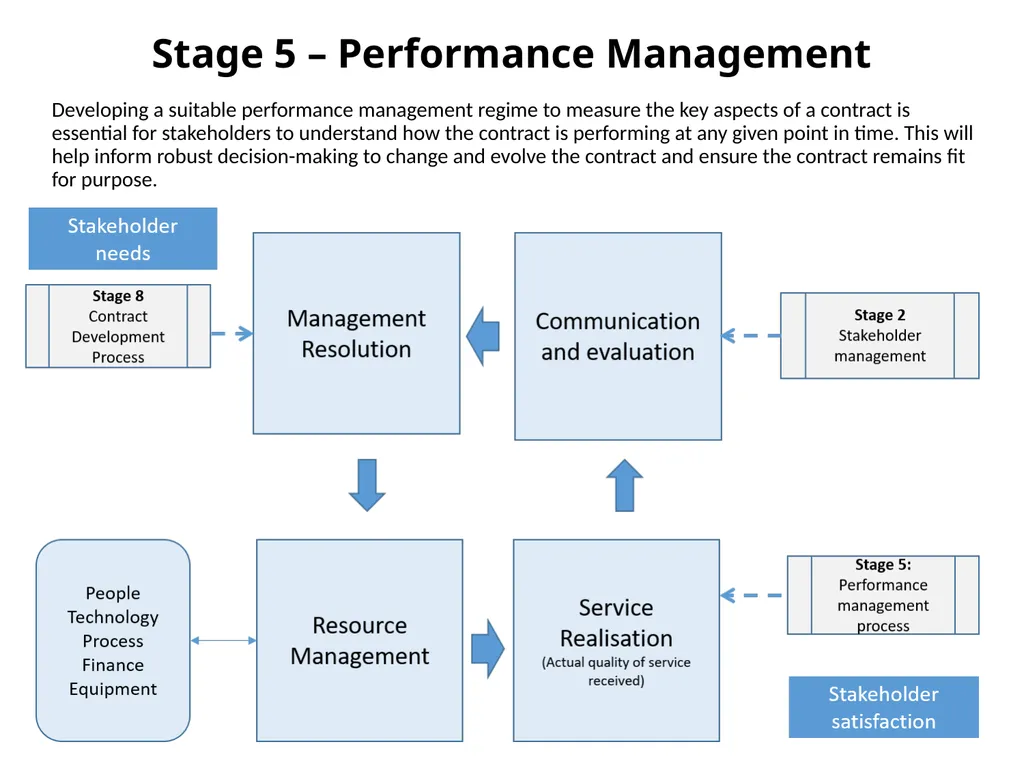
slide5. Developing a suitable performance management regime to measure the key aspects of a contract is essential for stakeholders to understand how the contract is performing at any given point in time. This will help inform robust decision-making to change and evolve the contract and ensure the contract remains fit for purpose. Stage 5 – Performance Management<br>
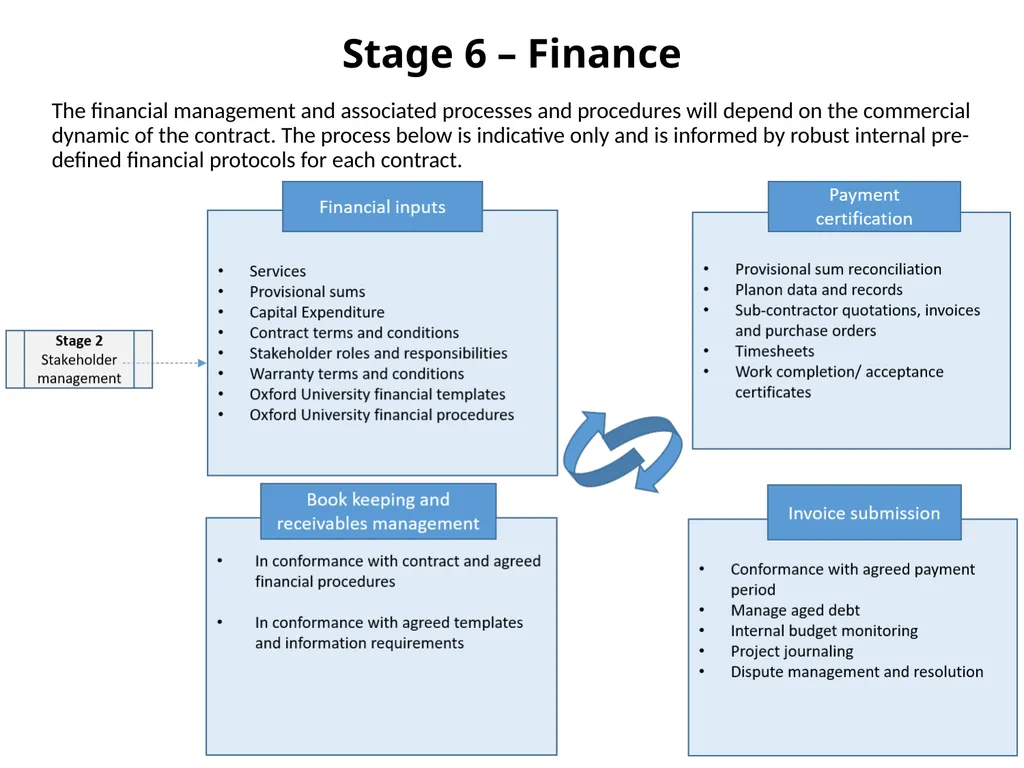
slide6. The financial management and associated processes and procedures will depend on the commercial dynamic of the contract. The process below is indicative only and is informed by robust internal pre-defined financial protocols for each contract. Stage 6 – Finance<br>
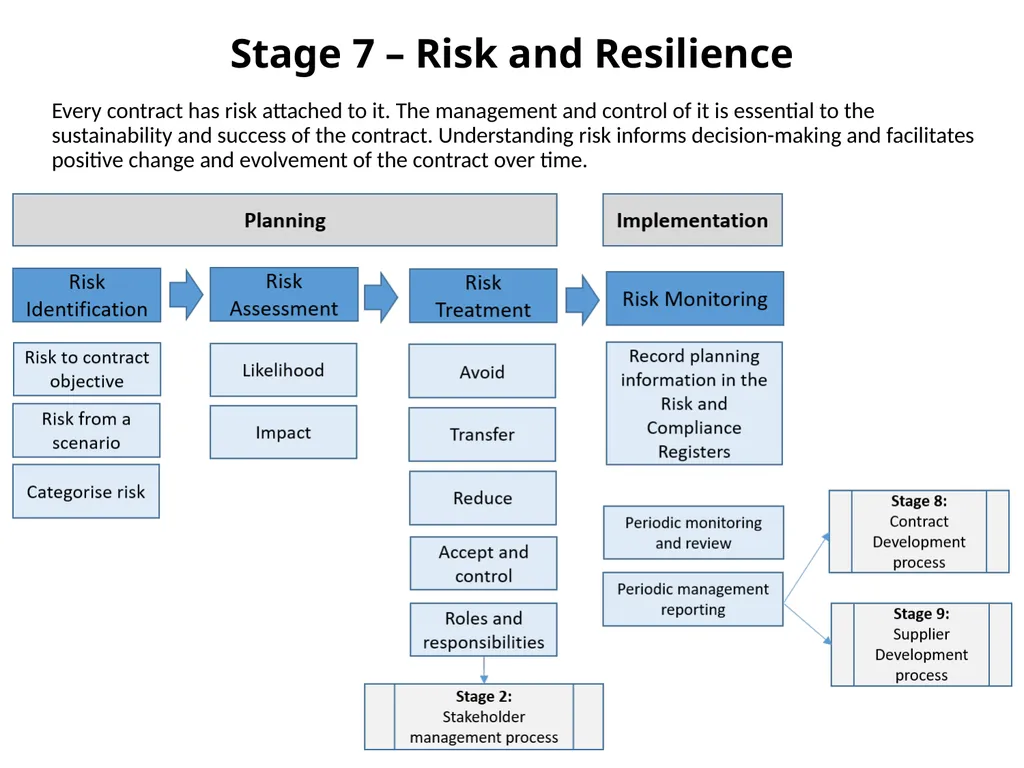
slide7. Every contract has risk attached to it. The management and control of it is essential to the sustainability and success of the contract. Understanding risk informs decision-making and facilitates positive change and evolvement of the contract over time. Stage 7 – Risk and Resilience<br>
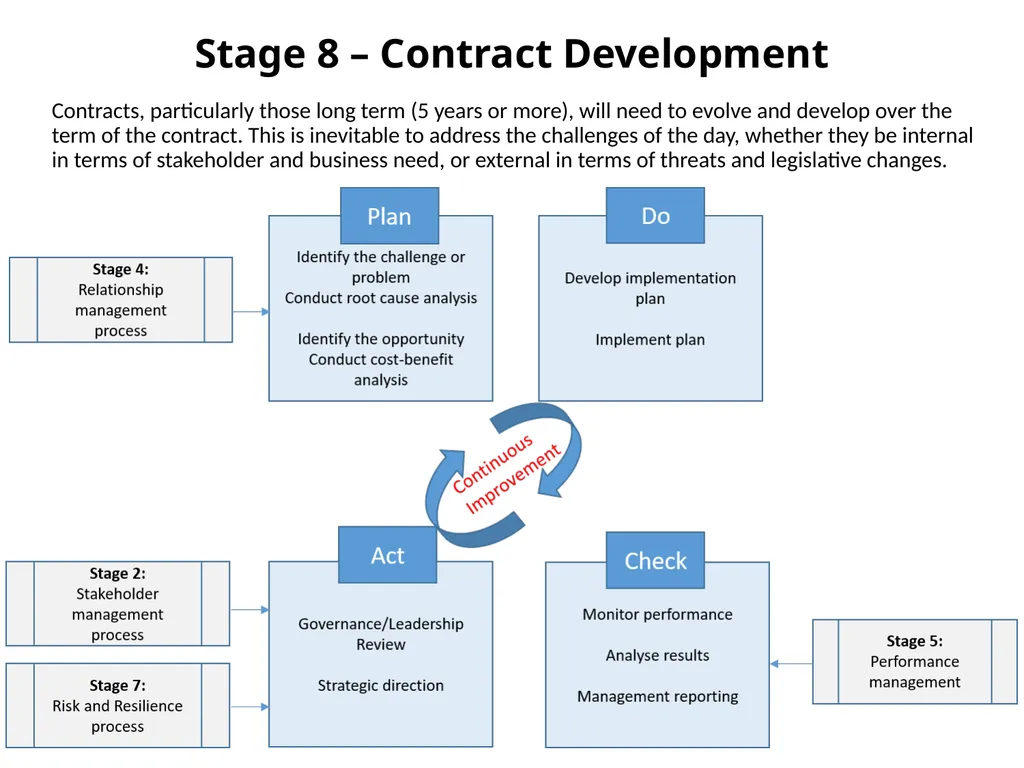
slide8. Contracts, particularly those long term (5 years or more), will need to evolve and develop over the term of the contract. This is inevitable to address the challenges of the day, whether they be internal in terms of stakeholder and business need, or external in terms of threats and legislative changes. Stage 8 – Contract Development<br>
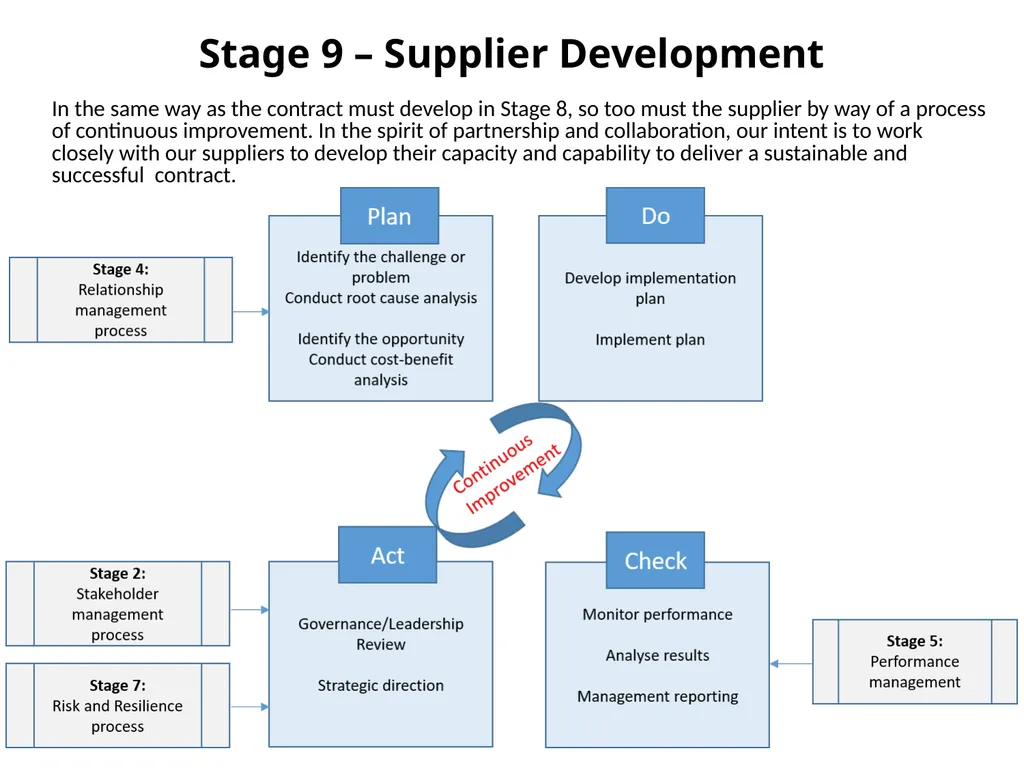
slide9. In the same way as the contract must develop in Stage 8, so too must the supplier by way of a process of continuous improvement. In the spirit of partnership and collaboration, our intent is to work closely with our suppliers to develop their capacity and capability to deliver a sustainable and successful contract. Stage 9 – Supplier Development<br>
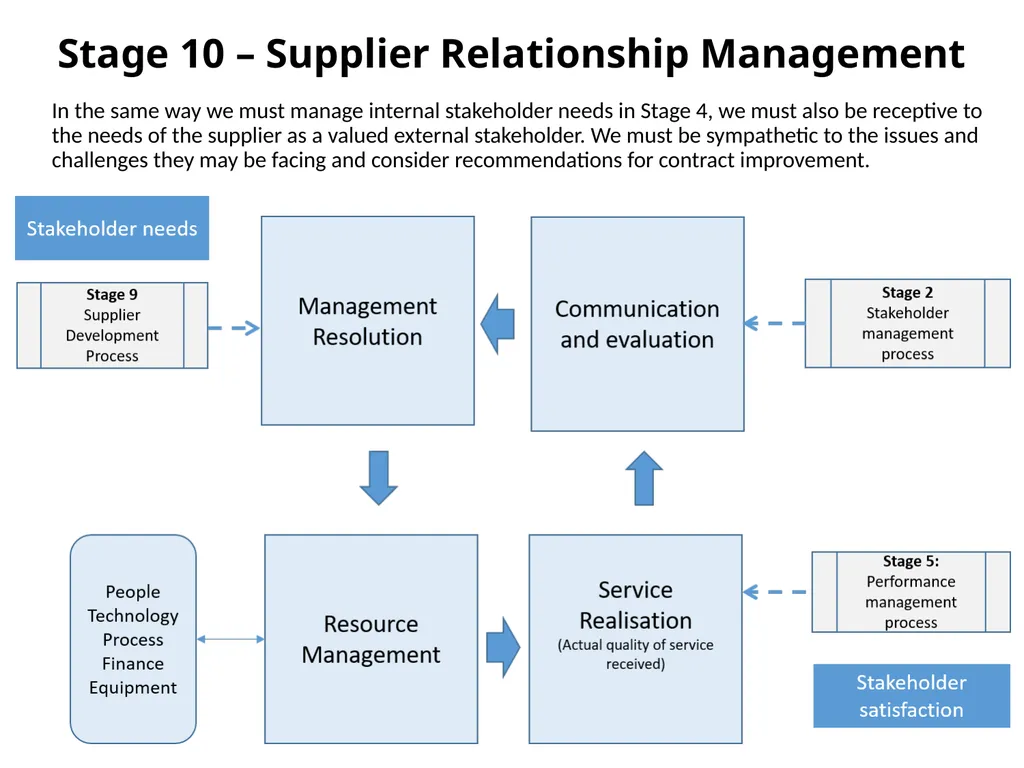
slide10. In the same way we must manage internal stakeholder needs in Stage 4, we must also be receptive to the needs of the supplier as a valued external stakeholder. We must be sympathetic to the issues and challenges they may be facing and consider recommendations for contract improvement. Stage 10 – Supplier Relationship Management<br>
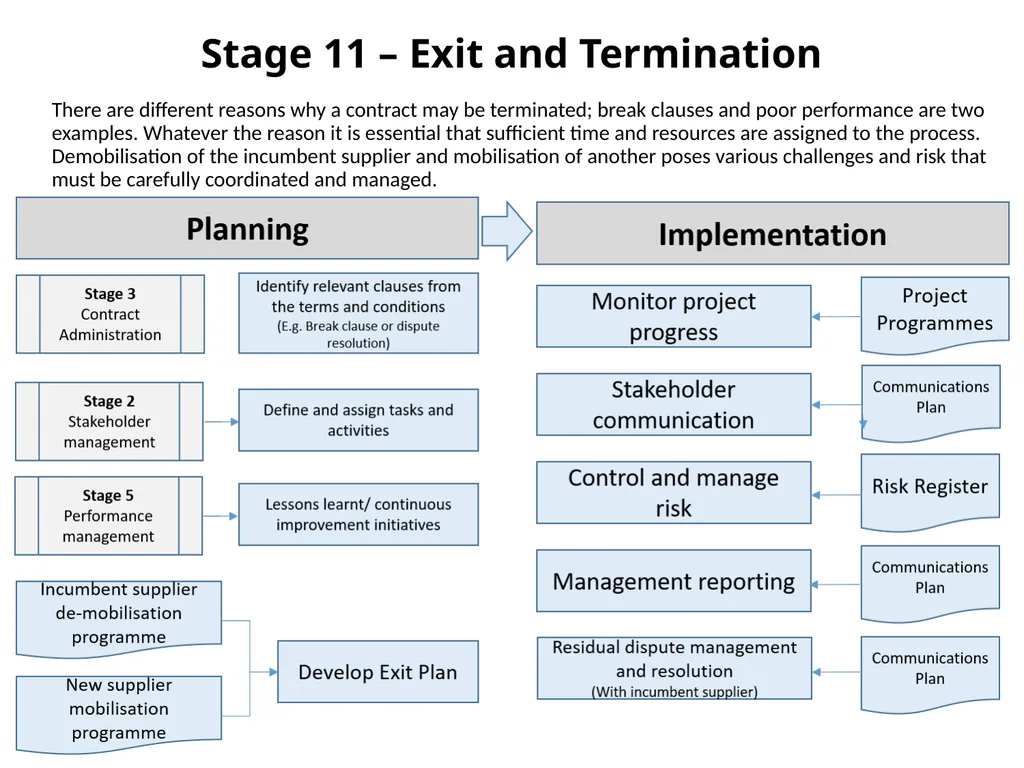
slide11. There are different reasons why a contract may be terminated; break clauses and poor performance are two examples. Whatever the reason it is essential that sufficient time and resources are assigned to the process. Demobilisation of the incumbent supplier and mobilisation of another poses various challenges and risk that must be carefully coordinated and managed. Stage 11 – Exit and Termination<br>
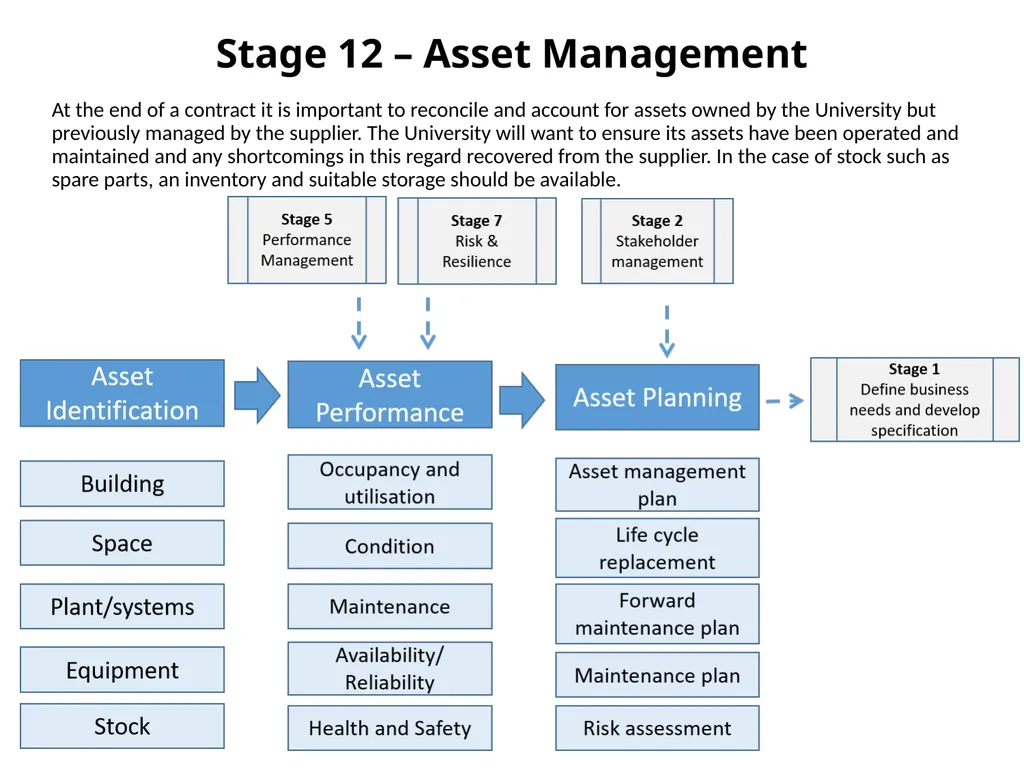
slide12. At the end of a contract it is important to reconcile and account for assets owned by the University but previously managed by the supplier. The University will want to ensure its assets have been operated and maintained and any shortcomings in this regard recovered from the supplier. In the case of stock such as spare parts, an inventory and suitable storage should be available. Stage 12 – Asset Management<br>
slide2. The success of a contract is dependent on good stakeholder management. Having clarity about who does what in the management of a contract is important for communication at strategic, tactical and operational tiers of management. It is also a precursor to developing a good working relationship between stakeholders. Stage 2 - Stakeholder Management<br>
slide3. Once the Purchasing Department has completed the tender process, we start to prepare the resources, processes and procedures to manage the contract once operational. It is important the specification work completed in Stage 1 is reflected in the terms and conditions of the contract. The work in this stage may inform the way we want the contractor to work and it’s therefore important to communication these requirements during the contract mobilisation and implementation phase. Stage 3 - Contract Administration<br>
slide4. Fundamental to a good relationship between stakeholders is the process of constantly reviewing the needs of stakeholders so that the contract can evolve over time to continually satisfy those needs. This stage relates to Oxford University stakeholders only and is not to be confused with supplier relationship management in stage 10. Stage 4 – Relationship Management<br>
slide5. Developing a suitable performance management regime to measure the key aspects of a contract is essential for stakeholders to understand how the contract is performing at any given point in time. This will help inform robust decision-making to change and evolve the contract and ensure the contract remains fit for purpose. Stage 5 – Performance Management<br>
slide6. The financial management and associated processes and procedures will depend on the commercial dynamic of the contract. The process below is indicative only and is informed by robust internal pre-defined financial protocols for each contract. Stage 6 – Finance<br>
slide7. Every contract has risk attached to it. The management and control of it is essential to the sustainability and success of the contract. Understanding risk informs decision-making and facilitates positive change and evolvement of the contract over time. Stage 7 – Risk and Resilience<br>
slide8. Contracts, particularly those long term (5 years or more), will need to evolve and develop over the term of the contract. This is inevitable to address the challenges of the day, whether they be internal in terms of stakeholder and business need, or external in terms of threats and legislative changes. Stage 8 – Contract Development<br>
slide9. In the same way as the contract must develop in Stage 8, so too must the supplier by way of a process of continuous improvement. In the spirit of partnership and collaboration, our intent is to work closely with our suppliers to develop their capacity and capability to deliver a sustainable and successful contract. Stage 9 – Supplier Development<br>
slide10. In the same way we must manage internal stakeholder needs in Stage 4, we must also be receptive to the needs of the supplier as a valued external stakeholder. We must be sympathetic to the issues and challenges they may be facing and consider recommendations for contract improvement. Stage 10 – Supplier Relationship Management<br>
slide11. There are different reasons why a contract may be terminated; break clauses and poor performance are two examples. Whatever the reason it is essential that sufficient time and resources are assigned to the process. Demobilisation of the incumbent supplier and mobilisation of another poses various challenges and risk that must be carefully coordinated and managed. Stage 11 – Exit and Termination<br>
slide12. At the end of a contract it is important to reconcile and account for assets owned by the University but previously managed by the supplier. The University will want to ensure its assets have been operated and maintained and any shortcomings in this regard recovered from the supplier. In the case of stock such as spare parts, an inventory and suitable storage should be available. Stage 12 – Asset Management<br>