Weight Volume Lesson 3 Ready-to-go Lesson Slides Year 1 Spring4 Please note: Balance scales and cubes or other non-standard units will be needed for parts of this lesson. What is different and what is the same about these pictures?
"Weight & Volume Lesson 3 Ready-to-go Lesson Slides" is the property of its rightful owner. Permission is granted to
download and print the materials on this website for personal, non-commercial use only, and to display it
on your personal computer provided you do not modify the materials and that you retain all copyright
notices contained in the materials. By downloading content from our website, you accept the terms of this
agreement.
Presentation Transcript
01
Weight & Volume Lesson 3 Ready-to-go Lesson Slides
Year 1 Spring4 Please note: Balance scales and cubes or other non-standard units will be needed for parts of this lesson.<br>
02
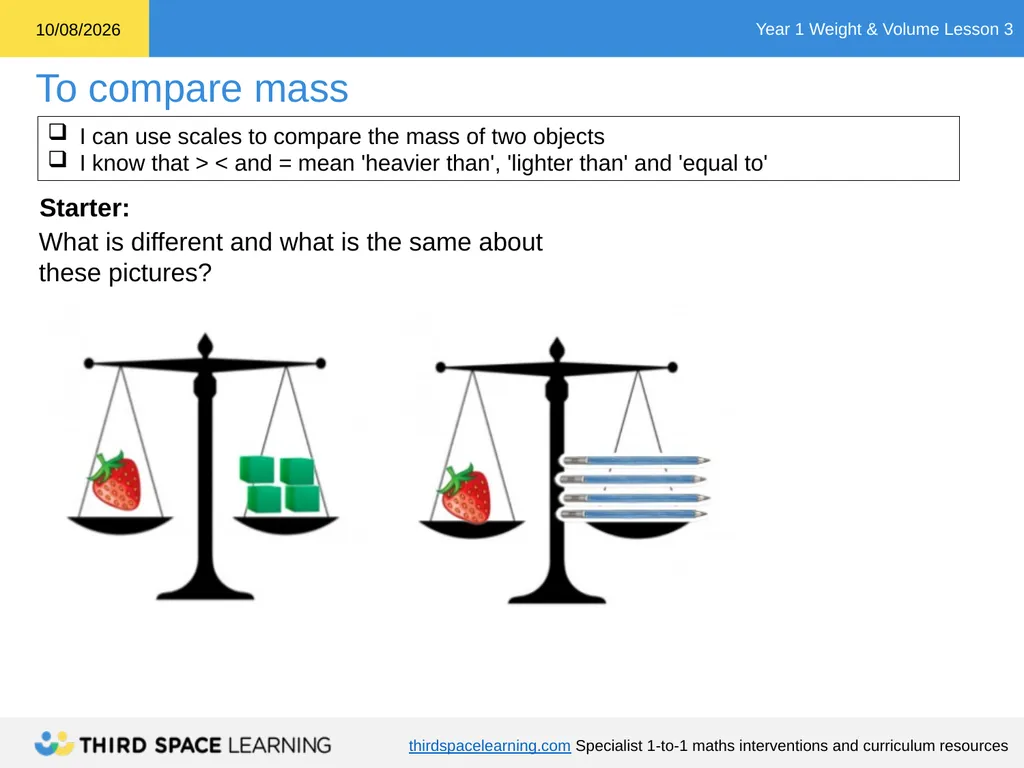
What is different and what is the same about these pictures? Starter: I can use scales to compare the mass of two objects
I know that > < and = mean 'heavier than', 'lighter than' and 'equal to'<br>
03
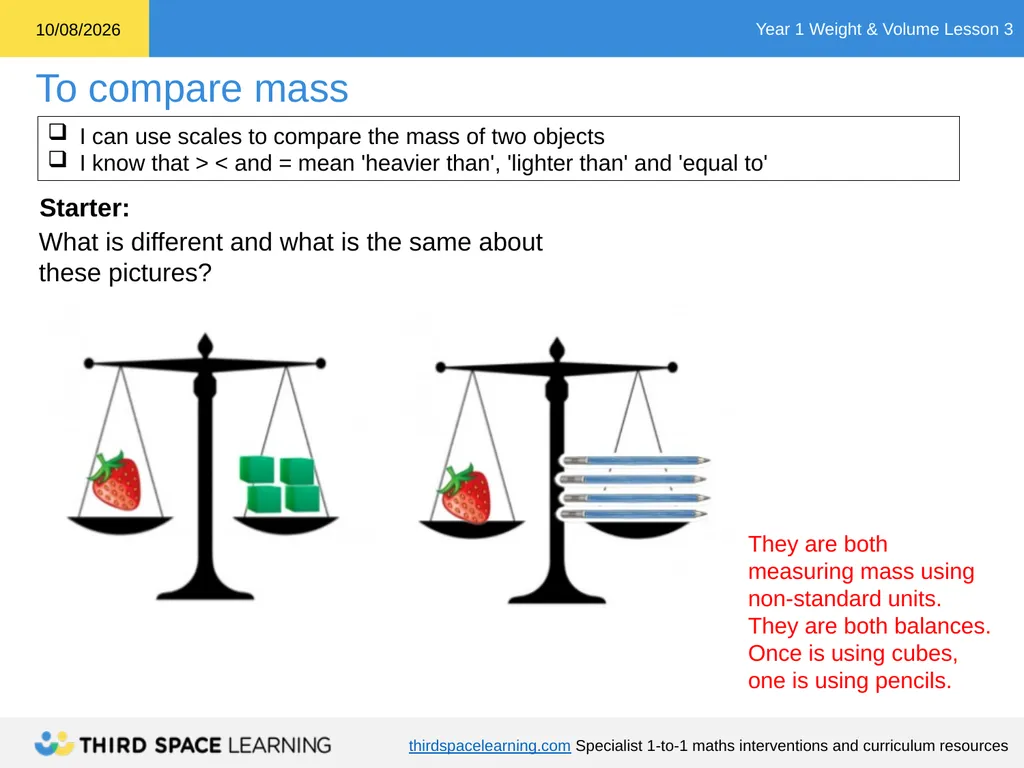
They are both measuring mass using non-standard units. They are both balances. Once is using cubes, one is using pencils. What is different and what is the same about these pictures? Starter: I can use scales to compare the mass of two objects
I know that > < and = mean 'heavier than', 'lighter than' and 'equal to'<br>
04
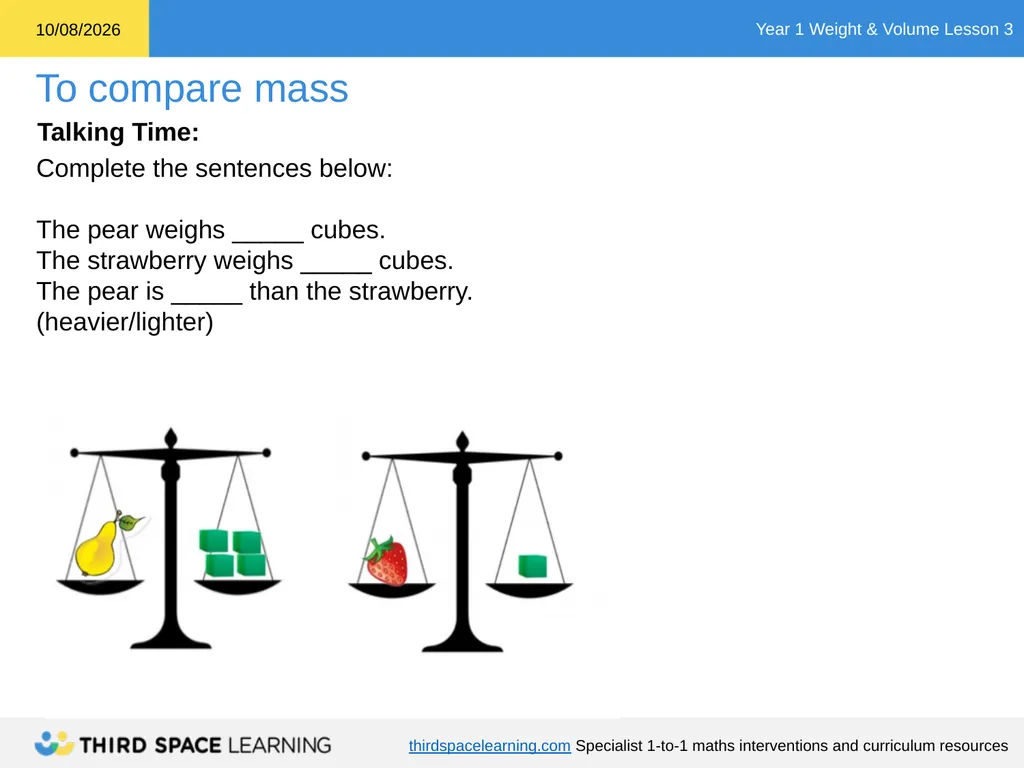
Complete the sentences below:
The pear weighs _____ cubes.
The strawberry weighs _____ cubes.
The pear is _____ than the strawberry. (heavier/lighter) Talking Time:<br>
05
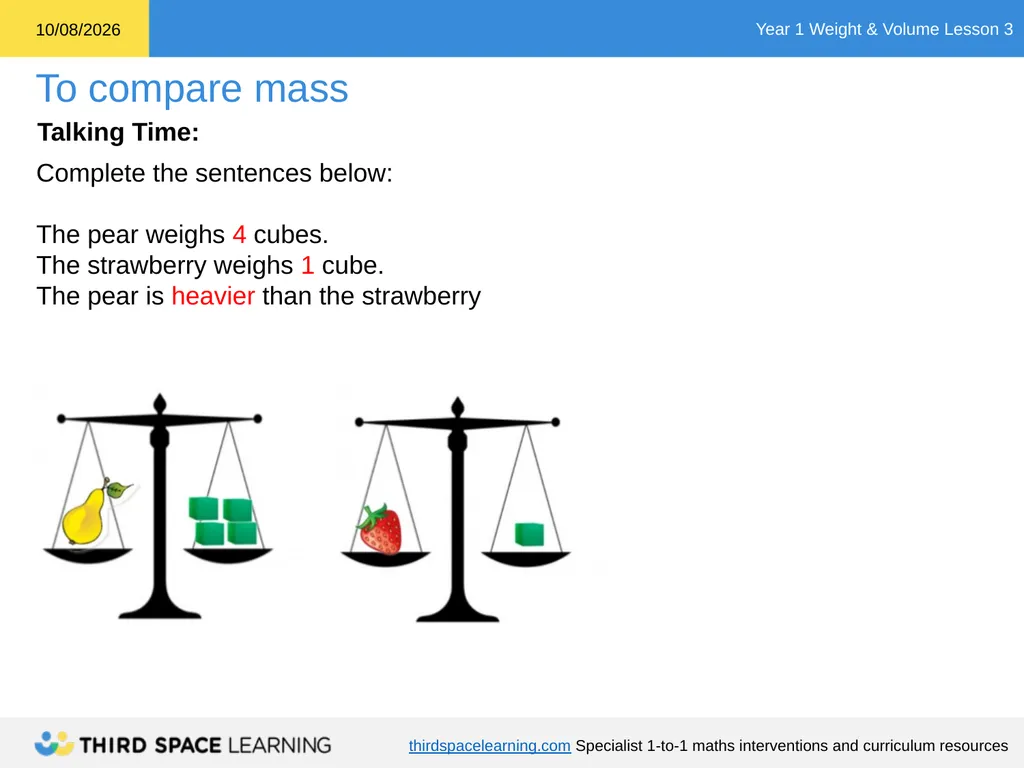
Complete the sentences below:
The pear weighs 4 cubes.
The strawberry weighs 1 cube.
The pear is heavier than the strawberry Talking Time:<br>
06
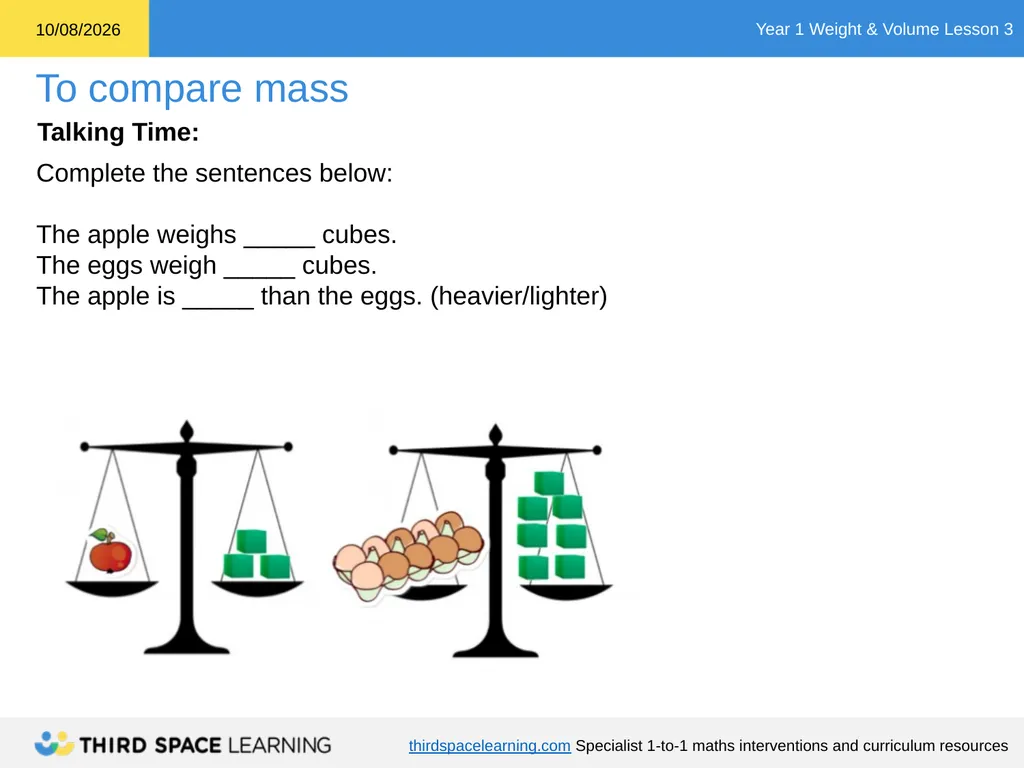
Complete the sentences below:
The apple weighs _____ cubes.
The eggs weigh _____ cubes.
The apple is _____ than the eggs. (heavier/lighter) Talking Time:<br>
07
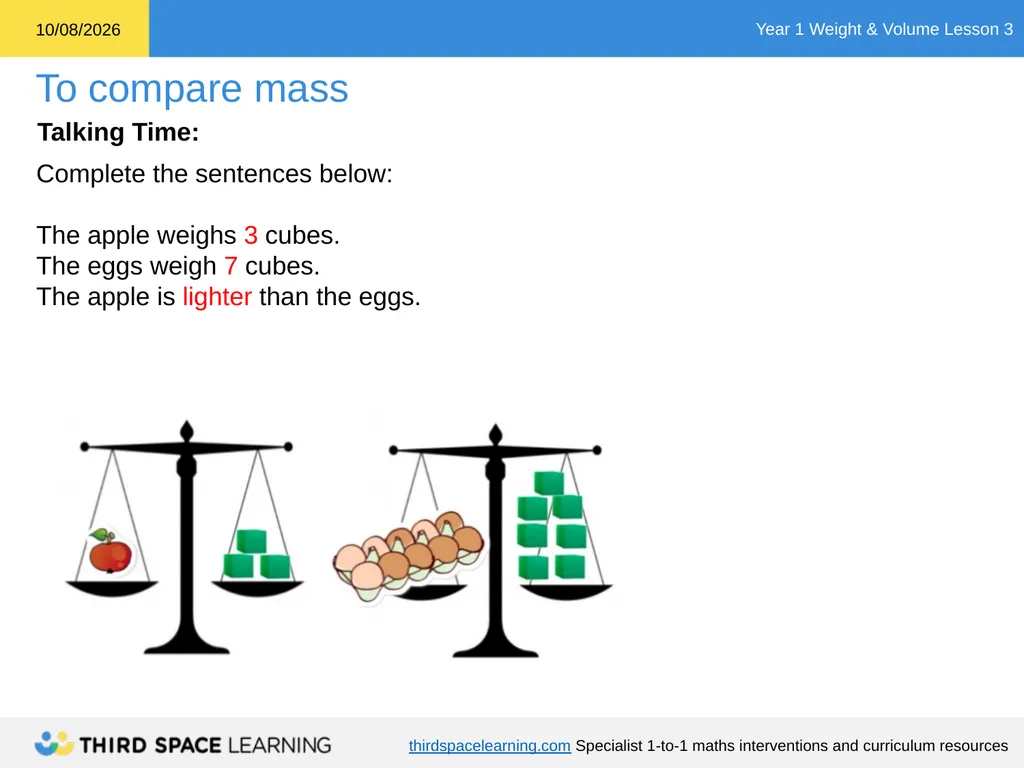
Complete the sentences below:
The apple weighs 3 cubes.
The eggs weigh 7 cubes.
The apple is lighter than the eggs. Talking Time:<br>
08
Extension:
What is the difference in their mass? Complete the sentences below:
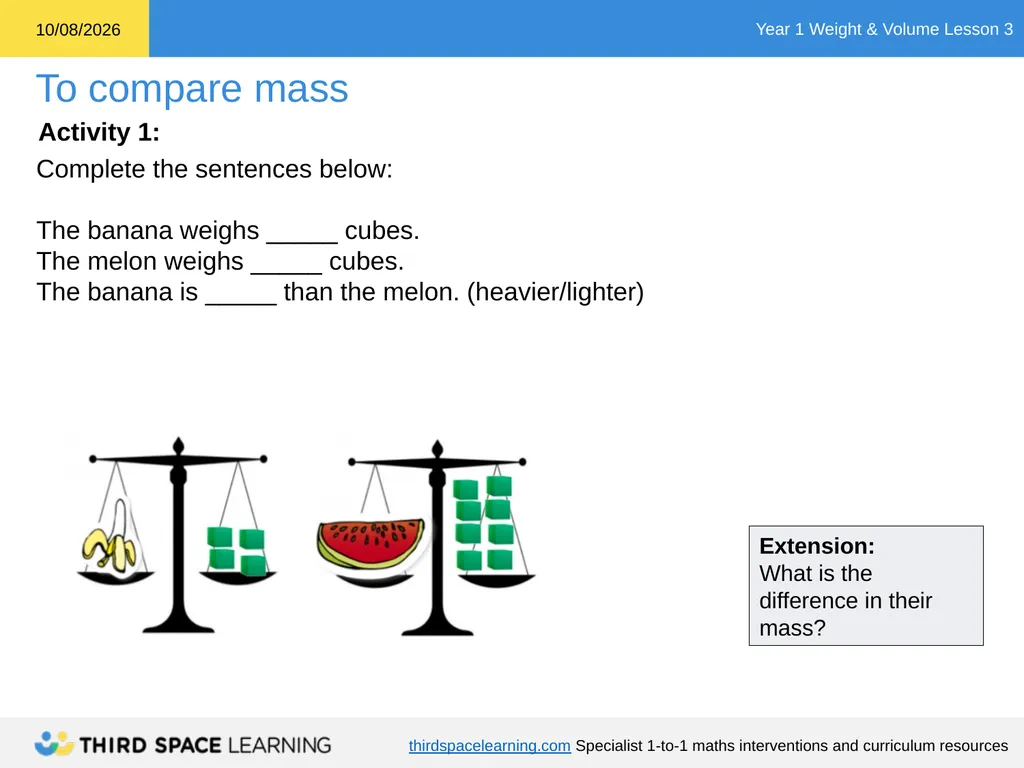
The banana weighs _____ cubes.
The melon weighs _____ cubes.
The banana is _____ than the melon. (heavier/lighter) Activity 1:<br>
09
Extension:
What is the difference in their mass? Complete the sentences below:
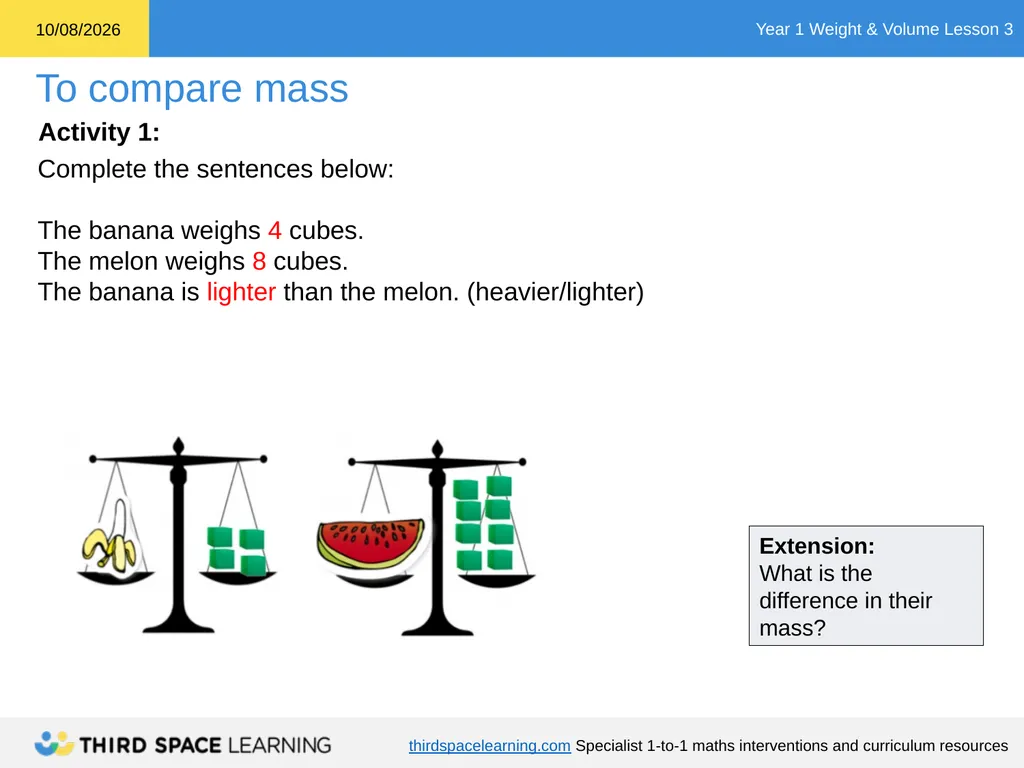
The banana weighs 4 cubes.
The melon weighs 8 cubes.
The banana is lighter than the melon. (heavier/lighter) Activity 1:<br>
10
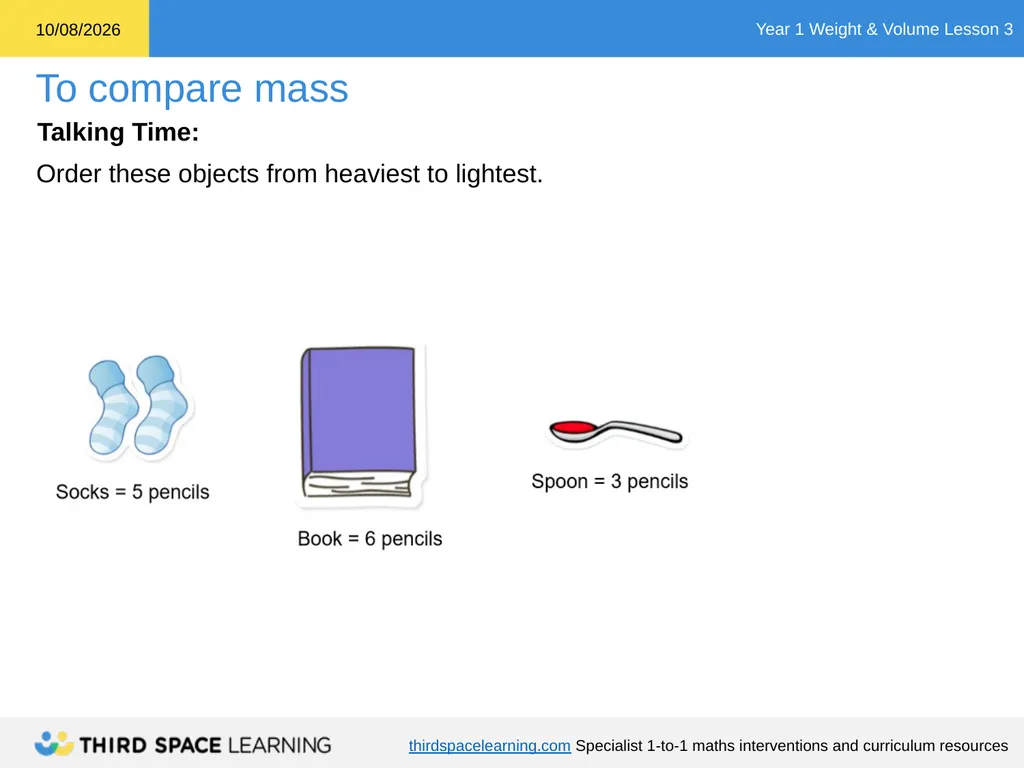
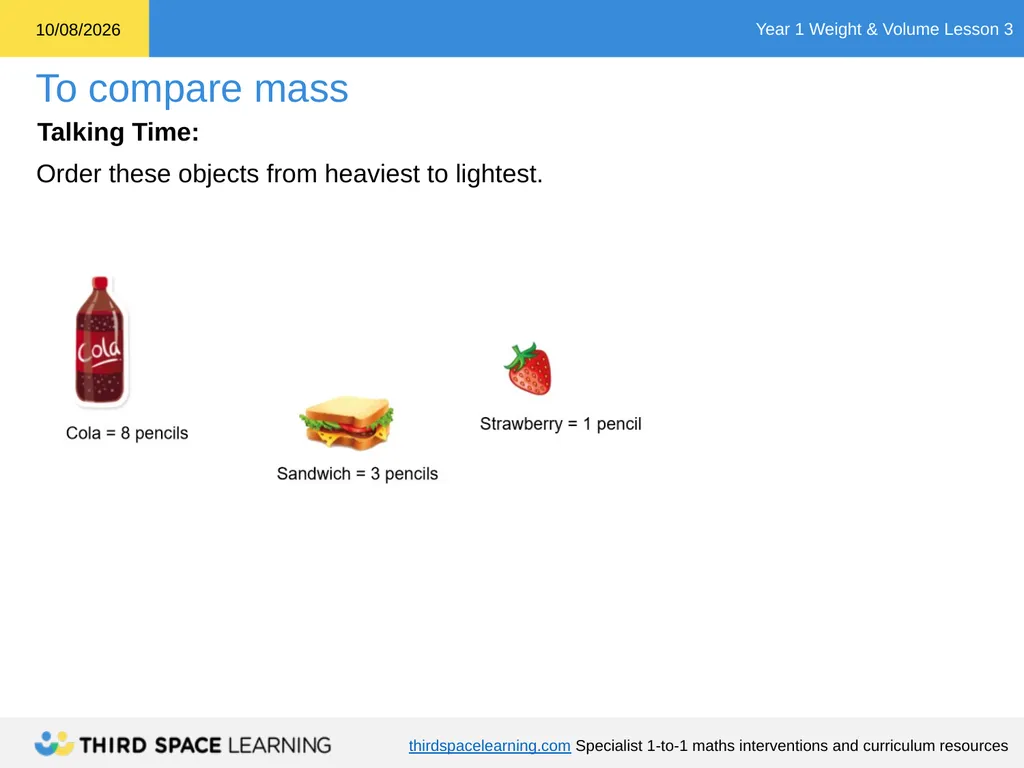
Order these objects from heaviest to lightest. Talking Time:<br>
11
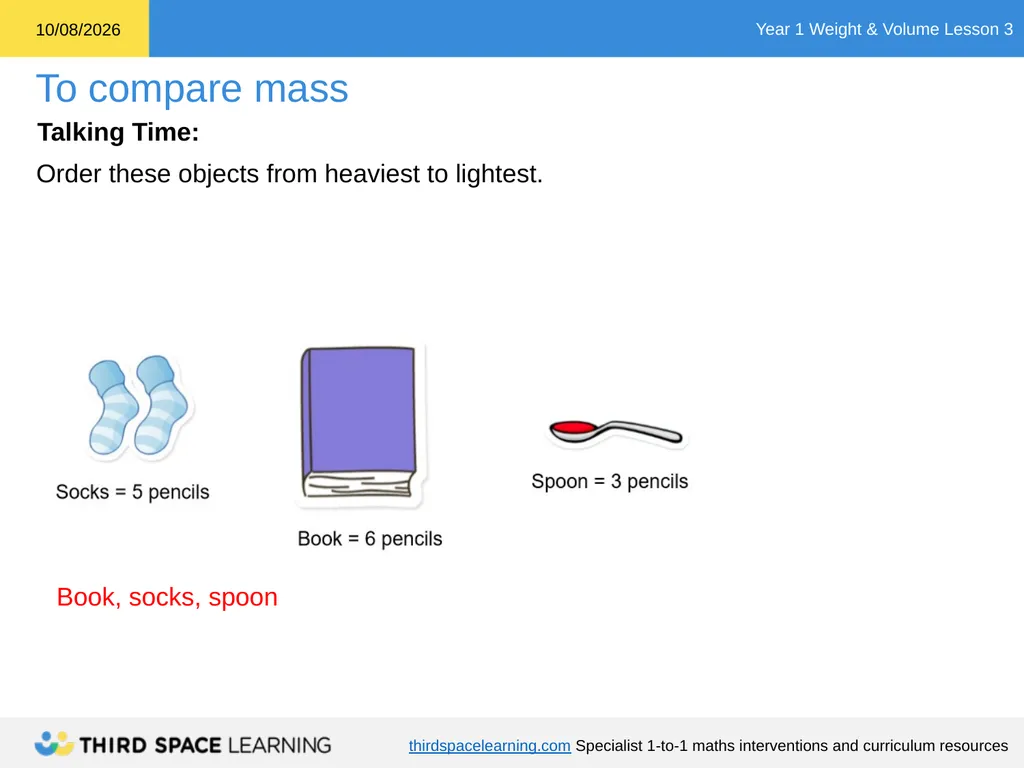
Book, socks, spoon Order these objects from heaviest to lightest. Talking Time:<br>
12
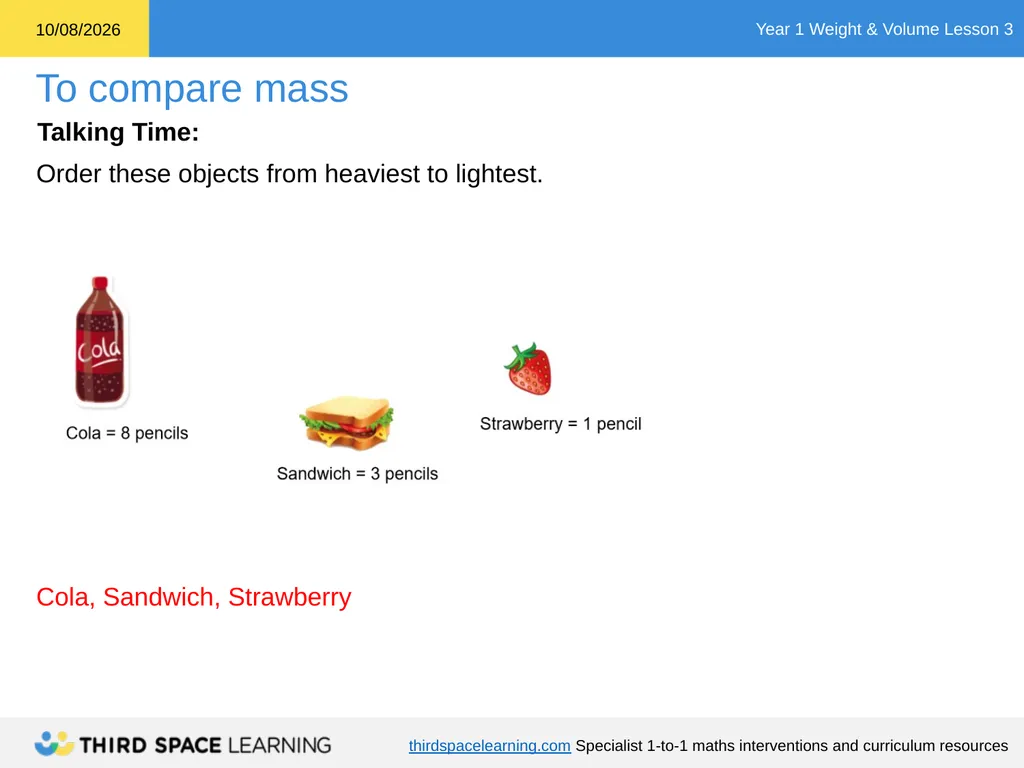
Order these objects from heaviest to lightest. Talking Time:<br>
13
Cola, Sandwich, Strawberry Order these objects from heaviest to lightest. Talking Time:<br>
14
Extension:
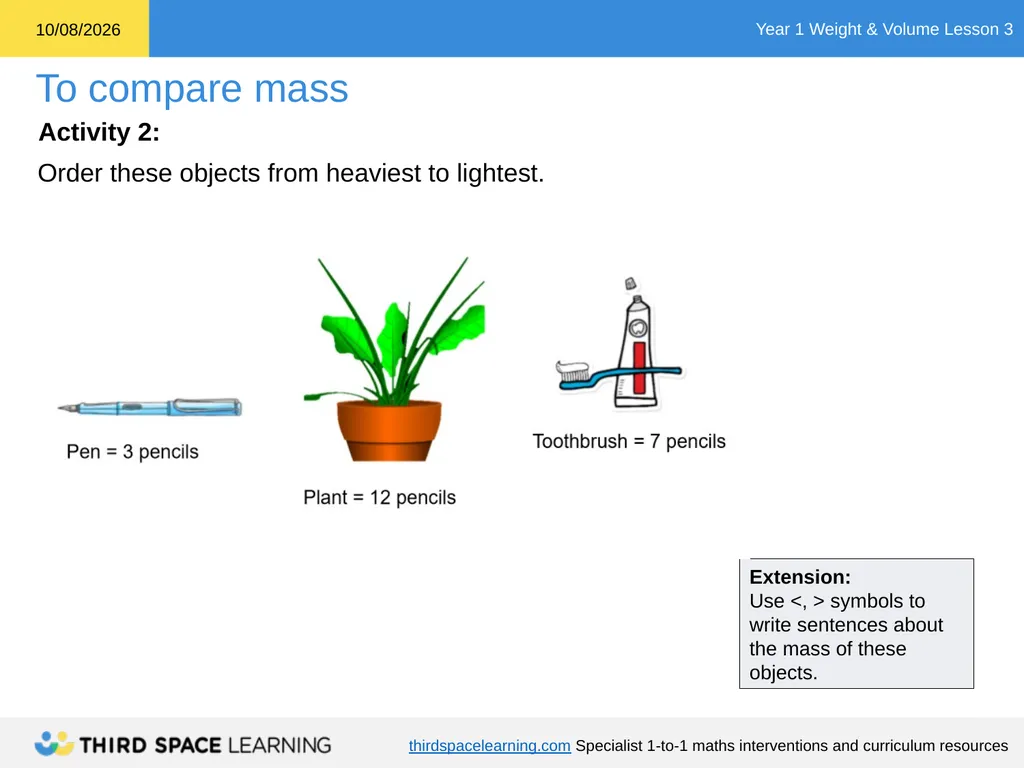
Use <, > symbols to write sentences about the mass of these objects. Order these objects from heaviest to lightest. Activity 2:<br>
15
Extension:
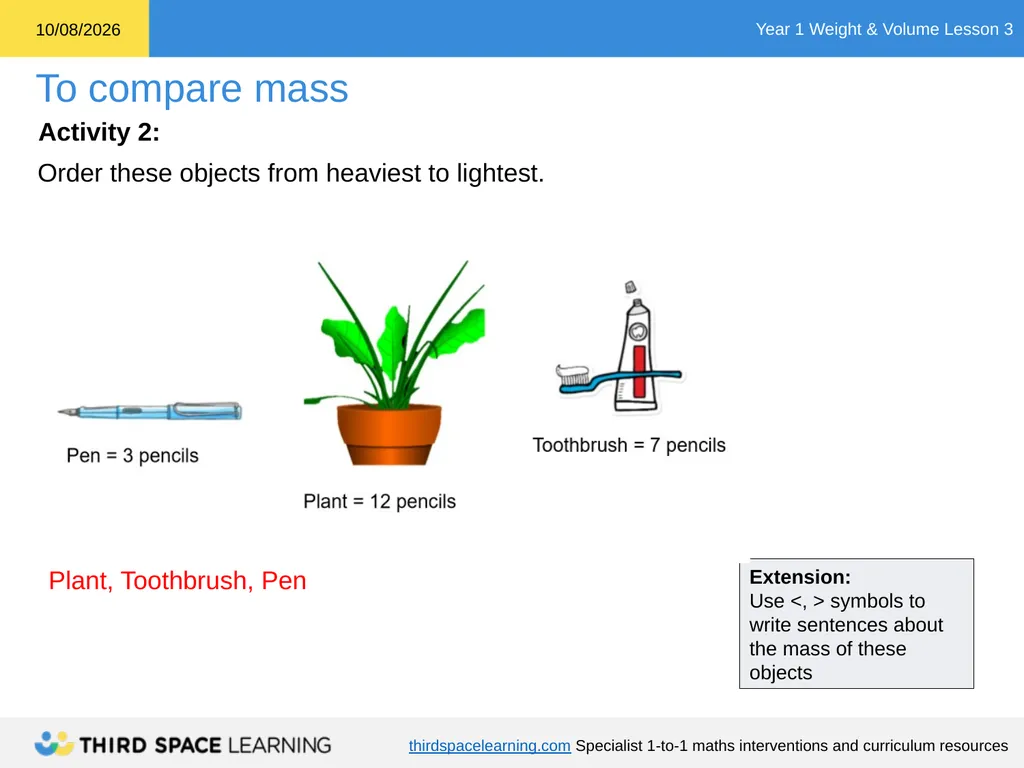
Use <, > symbols to write sentences about the mass of these objects Plant, Toothbrush, Pen Order these objects from heaviest to lightest. Activity 2:<br>
16
Let’s measure the mass of these objects using cubes.
Let’s order the objects from heaviest to lightest. Talking Time:<br>
17
Extension:
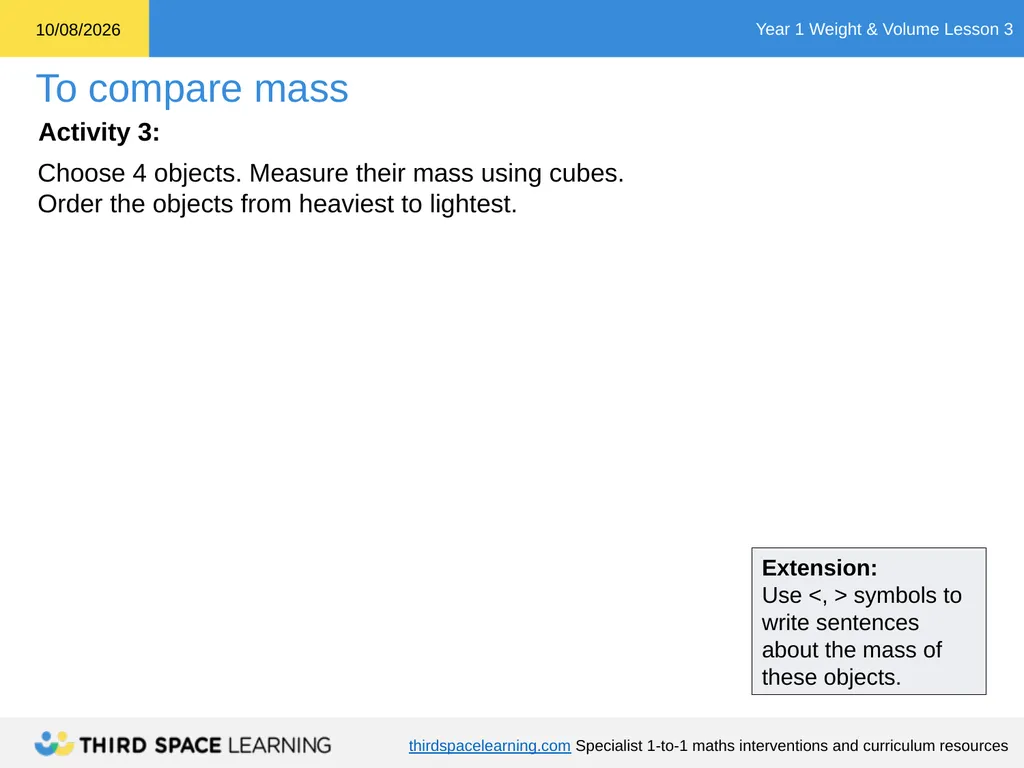
Use <, > symbols to write sentences about the mass of these objects. Choose 4 objects. Measure their mass using cubes. Order the objects from heaviest to lightest. Activity 3:<br>
18
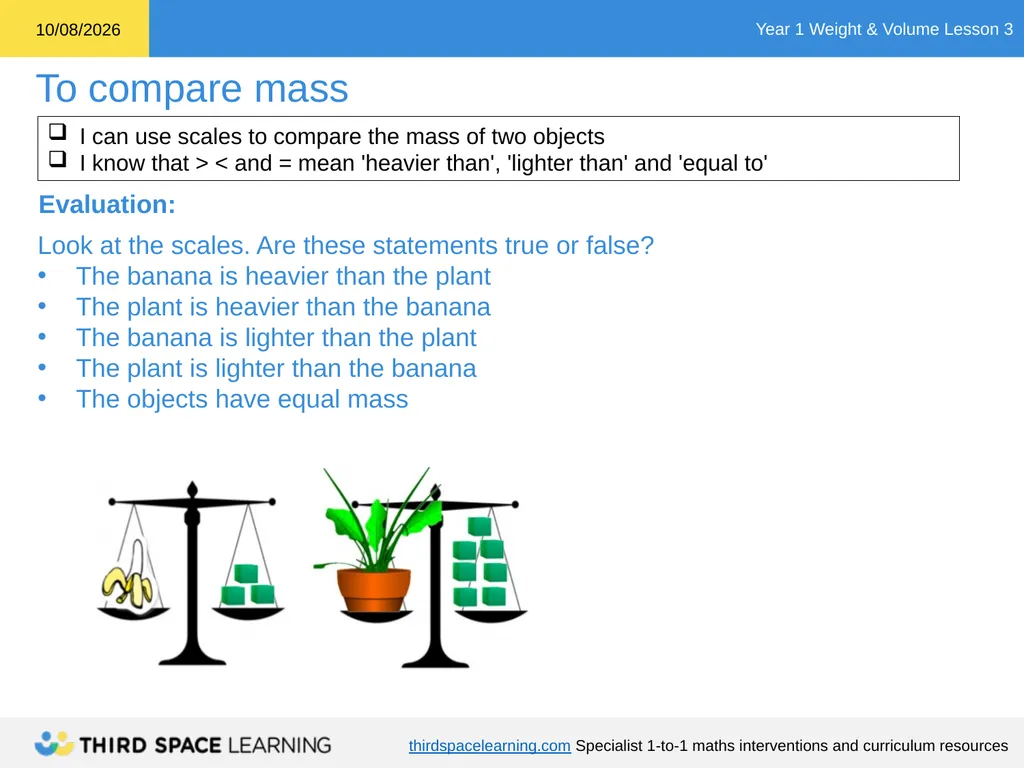
Evaluation: Look at the scales. Are these statements true or false?
The banana is heavier than the plant
The plant is heavier than the banana
The banana is lighter than the plant
The plant is lighter than the banana
The objects have equal mass I can use scales to compare the mass of two objects
I know that > < and = mean 'heavier than', 'lighter than' and 'equal to'<br>
19
Look at the scales. Are these statements true or false?
The banana is heavier than the plant - false
The plant is heavier than the banana - true
The banana is lighter than the plant – true
The plant is lighter than the banana – false
The objects have equal mass - false Evaluation: I can use scales to compare the mass of two objects
I know that > < and = mean 'heavier than', 'lighter than' and 'equal to'<br>