04
True Colors Each color is reflective of your personality.
• You will identify a primary and a secondary color. These are your preferred styles.
• The colors you do not choose will have some characteristics that are representative of you; however, it is not your preferred style.
• True colors is valuable for improving your effectiveness in working with others.<br>
05
What Color Are You? Rank each set of word clusters in each row from 1 to 4
Once you have them ranked, total your answers at the bottom.
The color with the highest score is your primary color
The color with the second highest score is your secondary color
If you have a tie for either, choose the one with which you most identify<br>
06
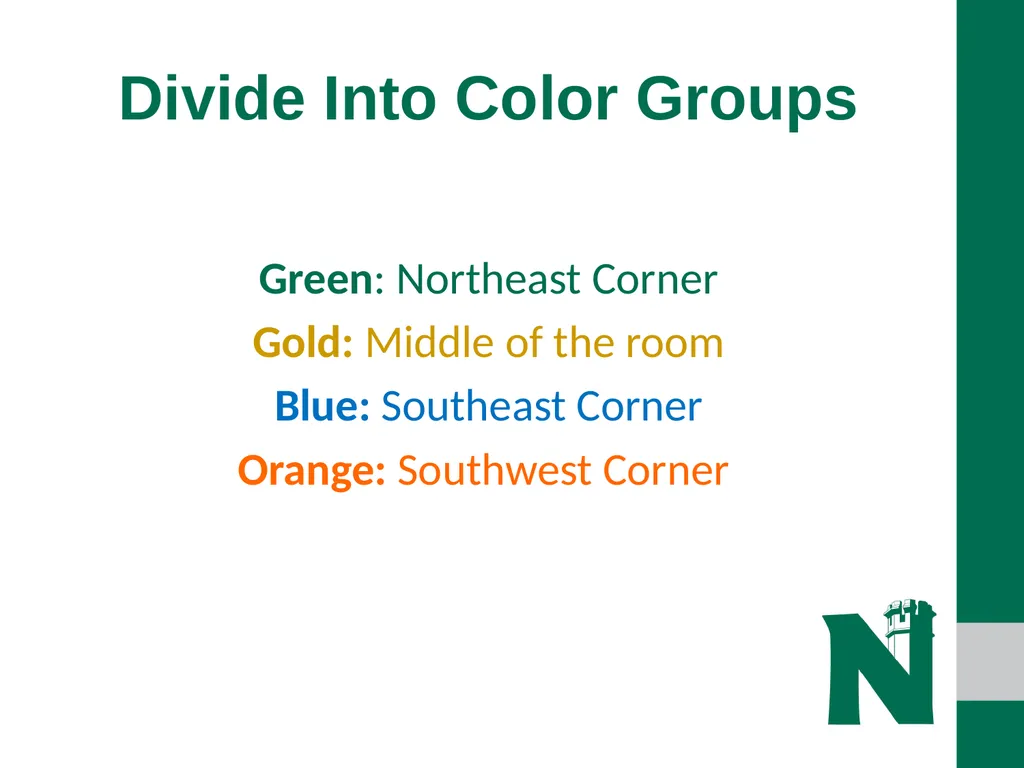
Divide Into Color Groups Green: Northeast Corner
Gold: Middle of the room
Blue: Southeast Corner
Orange: Southwest Corner<br>
07
In Your Color Groups Discuss your color group’s best traits
Discuss your color group’s challenge areas.
Choose a spokesperson to share the top 3 of each.<br>
08
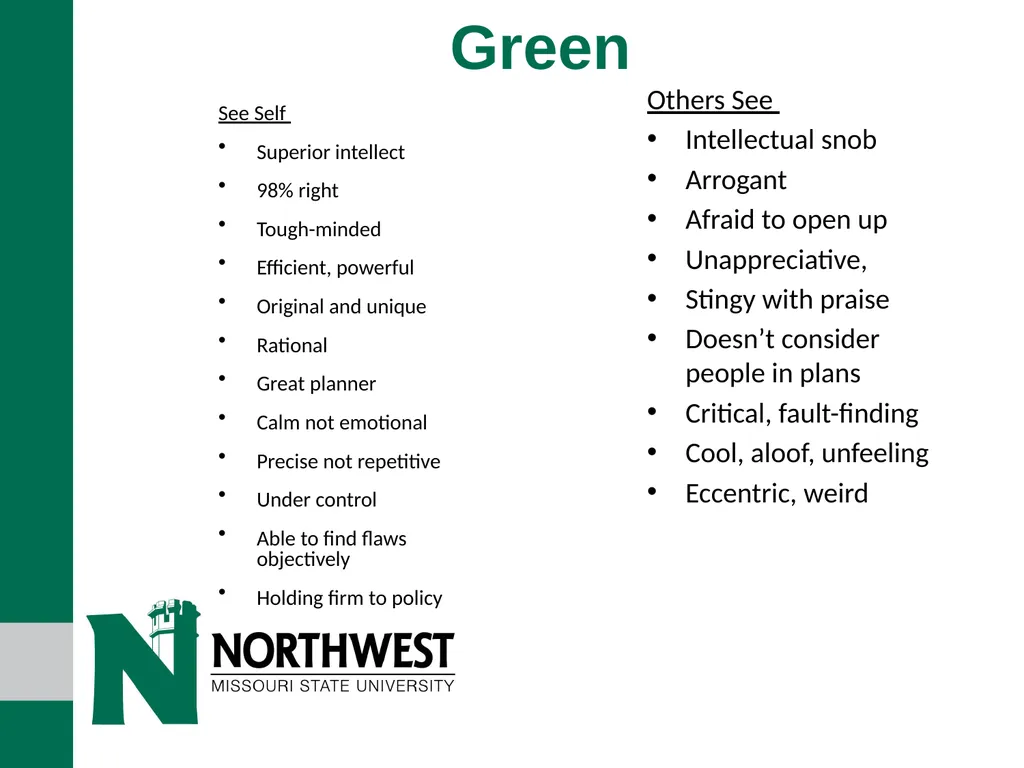
Green See Self
Superior intellect
98% right
Tough-minded
Efficient, powerful
Original and unique
Rational
Great planner
Calm not emotional
Precise not repetitive
Under control
Able to find flaws objectively
Holding firm to policy Others See
Intellectual snob
Arrogant
Afraid to open up
Unappreciative,
Stingy with praise
Doesn’t consider people in plans
Critical, fault-finding
Cool, aloof, unfeeling
Eccentric, weird<br>
09
How to Work with Greens Be aware of their curiosity about life
Give things that challenge their problem-solving abilities
Respect their need for independence
Know they are caring even though they may not show it
Respect their inventions and ideas
Give them time to process information<br>
10
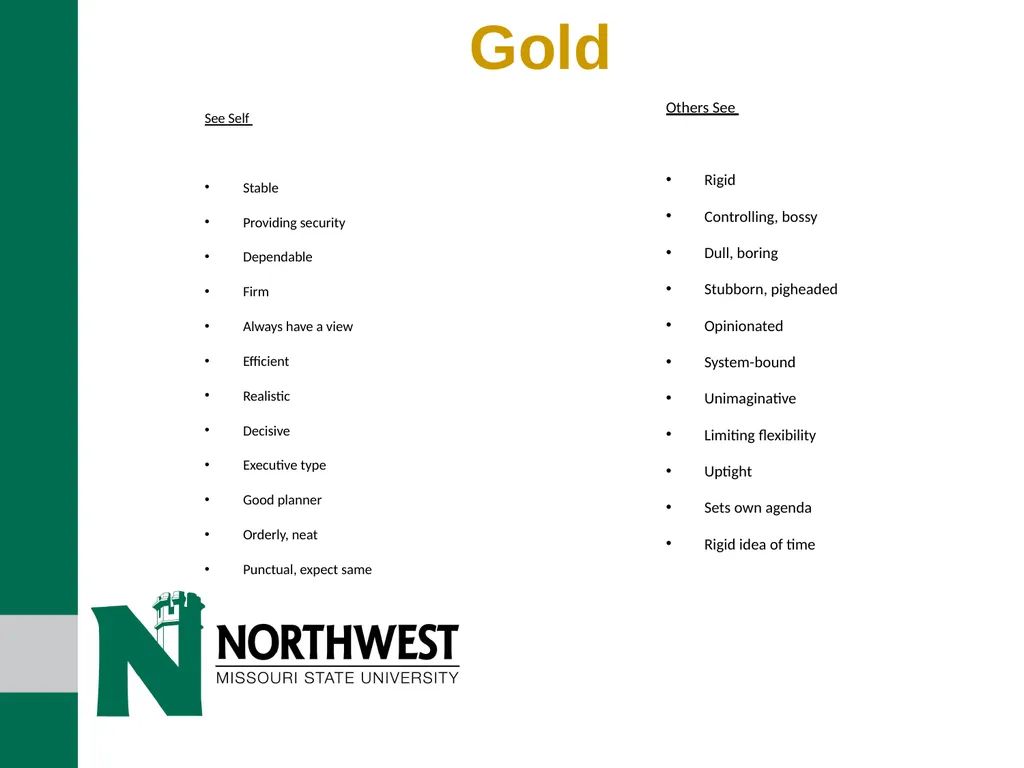
Gold See Self
Stable
Providing security
Dependable
Firm
Always have a view
Efficient
Realistic
Decisive
Executive type
Good planner
Orderly, neat
Punctual, expect same Others See
Rigid
Controlling, bossy
Dull, boring
Stubborn, pigheaded
Opinionated
System-bound
Unimaginative
Limiting flexibility
Uptight
Sets own agenda
Rigid idea of time<br>
11
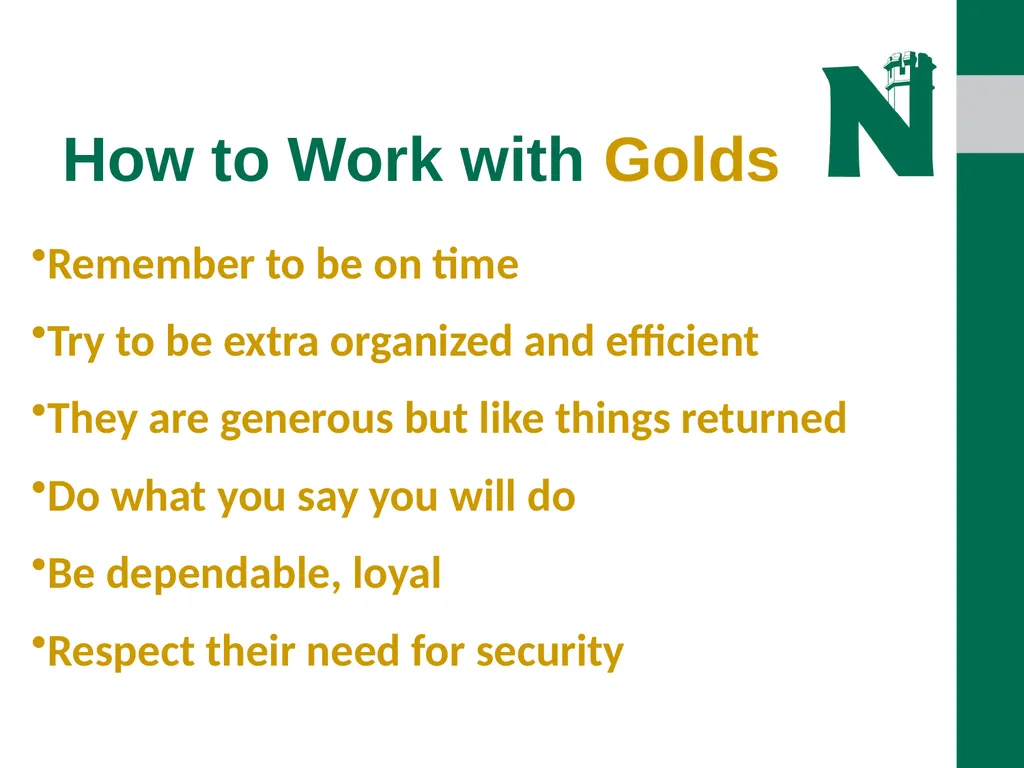
How to Work with Golds Remember to be on time
Try to be extra organized and efficient
They are generous but like things returned
Do what you say you will do
Be dependable, loyal
Respect their need for security<br>
12
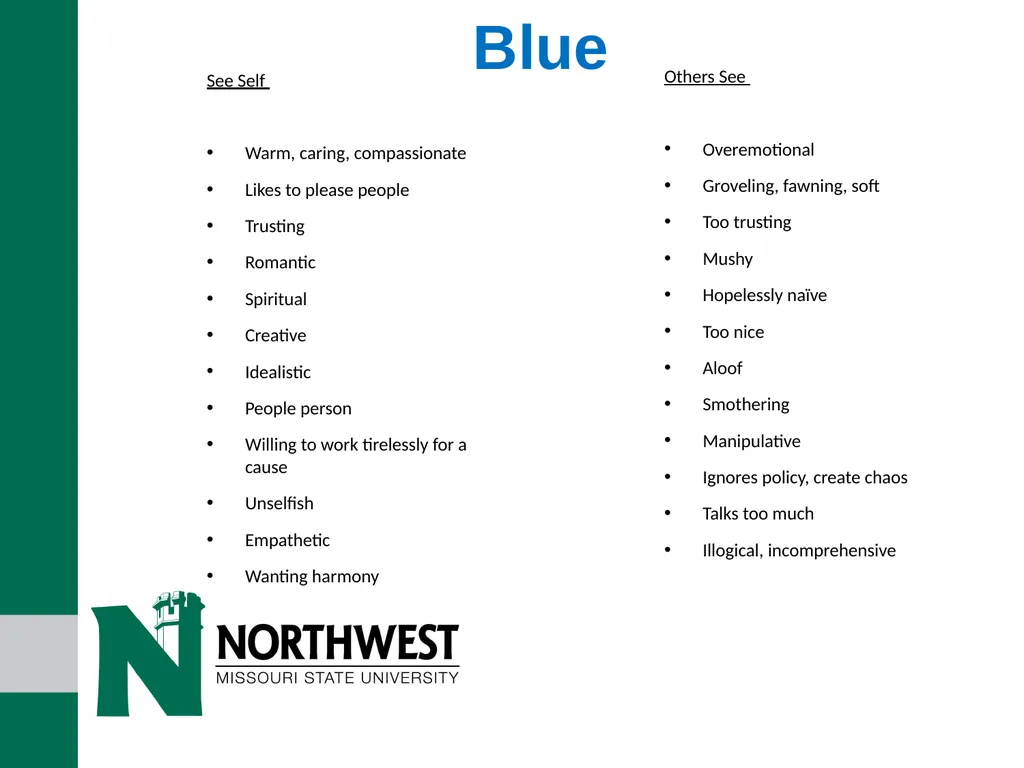
Blue See Self
Warm, caring, compassionate
Likes to please people
Trusting
Romantic
Spiritual
Creative
Idealistic
People person
Willing to work tirelessly for a cause
Unselfish
Empathetic
Wanting harmony Others See
Overemotional
Groveling, fawning, soft
Too trusting
Mushy
Hopelessly naïve
Too nice
Aloof
Smothering
Manipulative
Ignores policy, create chaos
Talks too much
Illogical, incomprehensive<br>
13
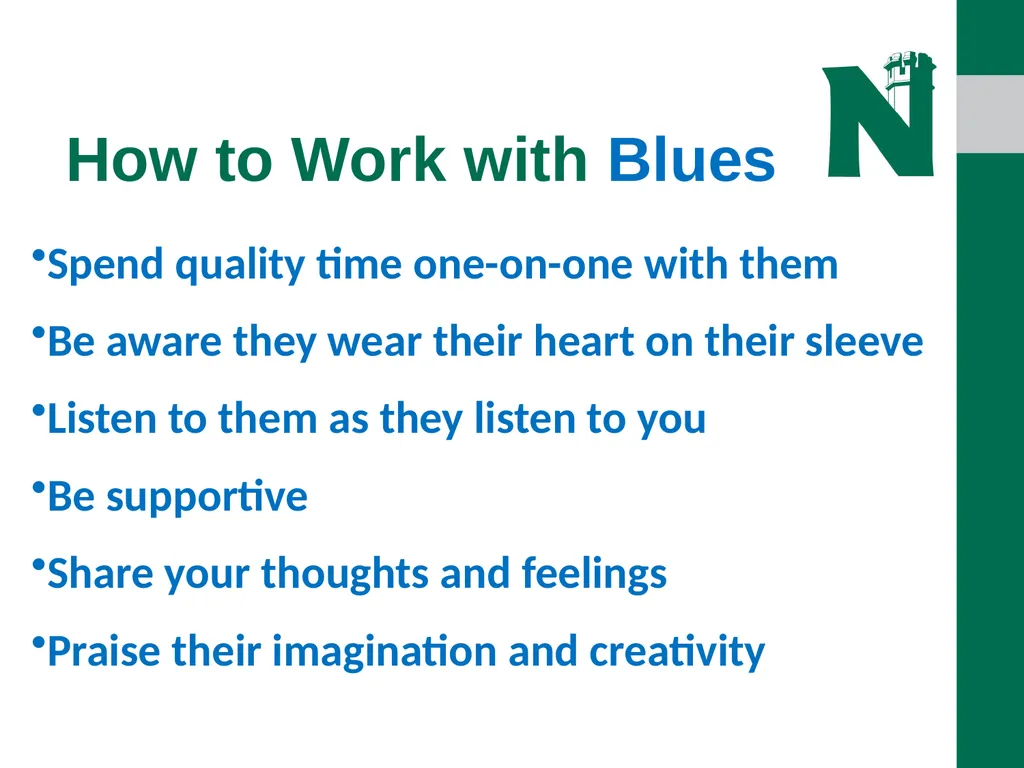
How to Work with Blues Spend quality time one-on-one with them
Be aware they wear their heart on their sleeve
Listen to them as they listen to you
Be supportive
Share your thoughts and feelings
Praise their imagination and creativity<br>
14
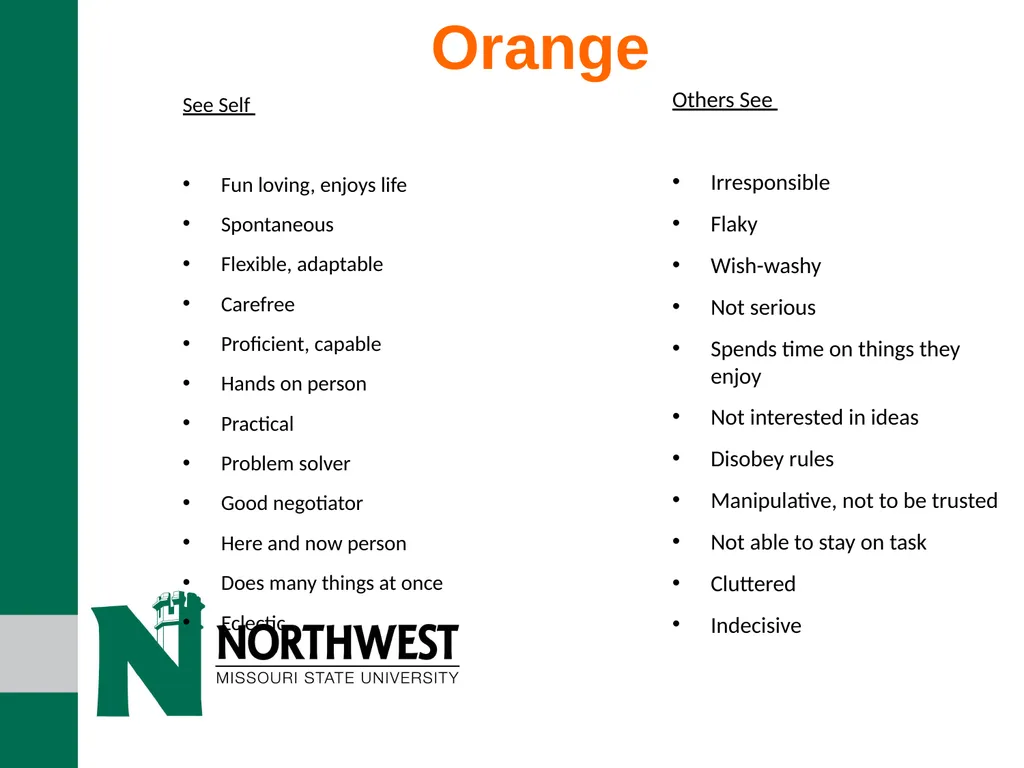
Orange See Self
Fun loving, enjoys life
Spontaneous
Flexible, adaptable
Carefree
Proficient, capable
Hands on person
Practical
Problem solver
Good negotiator
Here and now person
Does many things at once
Eclectic Others See
Irresponsible
Flaky
Wish-washy
Not serious
Spends time on things they enjoy
Not interested in ideas
Disobey rules
Manipulative, not to be trusted
Not able to stay on task
Cluttered
Indecisive<br>
15
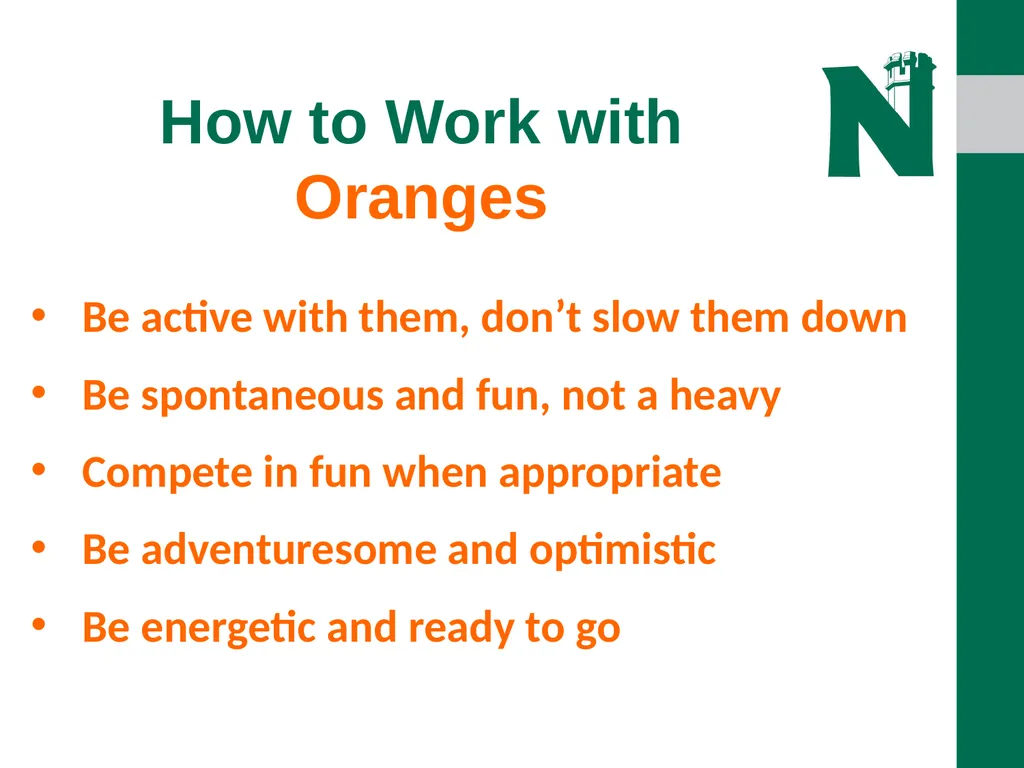
How to Work with Oranges Be active with them, don’t slow them down
Be spontaneous and fun, not a heavy
Compete in fun when appropriate
Be adventuresome and optimistic
Be energetic and ready to go<br>
16
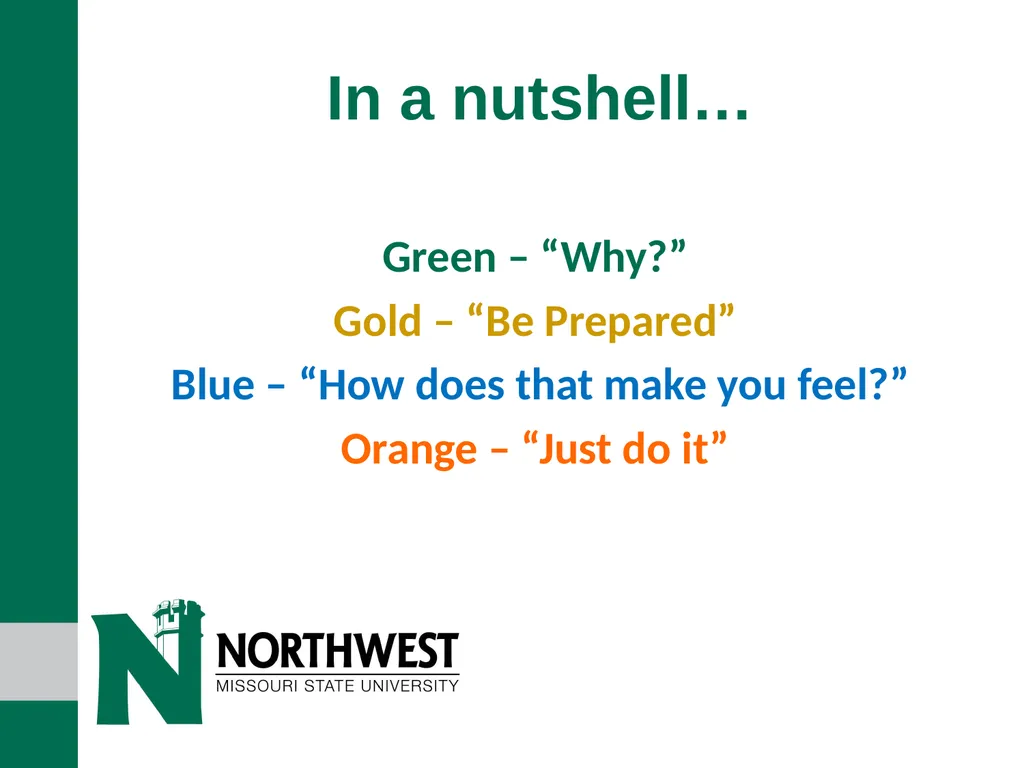
In a nutshell… Green – “Why?”
Gold – “Be Prepared”
Blue – “How does that make you feel?”
Orange – “Just do it”<br>
17
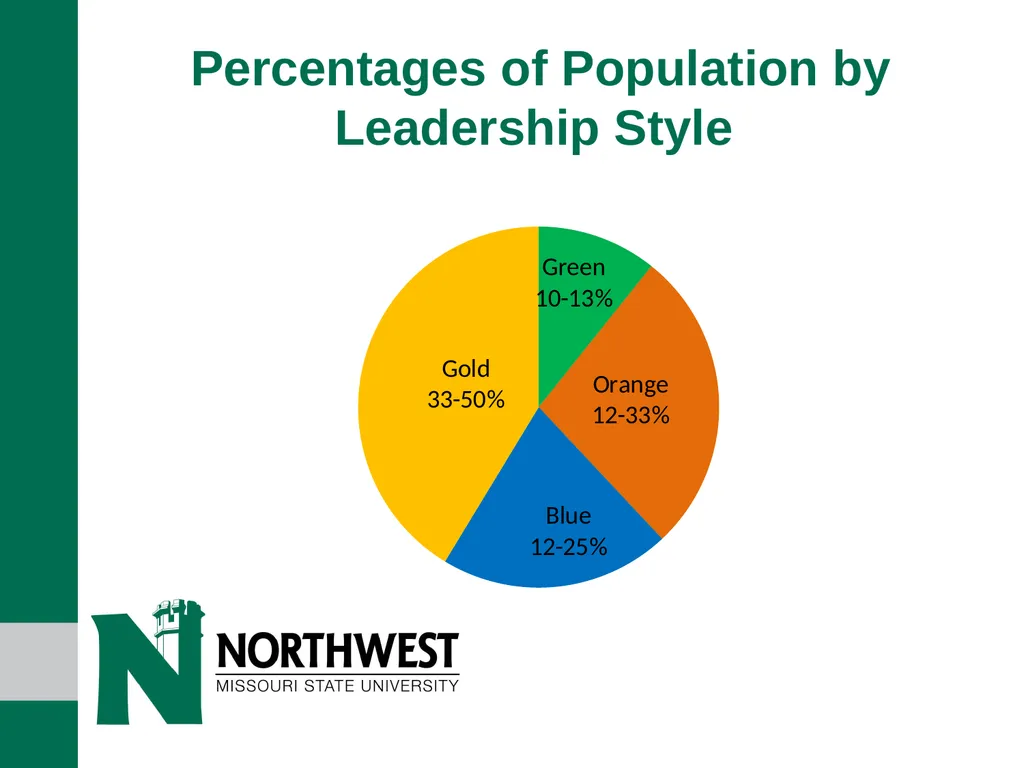
Percentages of Population by Leadership Style<br>
18
How is this Applicable to you? How we work with each other
How we communicate with each other
Office time
Events
Others?<br>
19
Have you ever… Encountered that one person with whom you just couldn’t communicate? Had days when you felt like you were speaking a foreign language and no one else could understand what you were saying? Tried to communicate with a person, with whom you normally communicate well, but couldn’t get them to see your side?<br>
20
Consider this… Each person approaches projects and conversations differently. Most people approach professional life differently than personal life. Sometimes, understanding how you may be perceived can help you understand how to better communicate.<br>
21
Don Lowry, �creator of True Colors “Successful people know who they are and what their True Colors are… when you know what your core values and needs are and feel good about them, you can perform at your highest potential in every area of life. And when you share a working, mutual understanding of other’ core values and needs, you have the basis to communicate, motivate, and achieve common goals with utmost dignity, efficacy, and mutual respect.”<br>
22
Conclusion Everyone has some of each color.
We each have our strengths and our weaknesses.
Try to play to each others strengths and consider how others approach ideas, projects, and communication.
Use this information to become a better communicator and team player. Assume Good Intent<br>