04
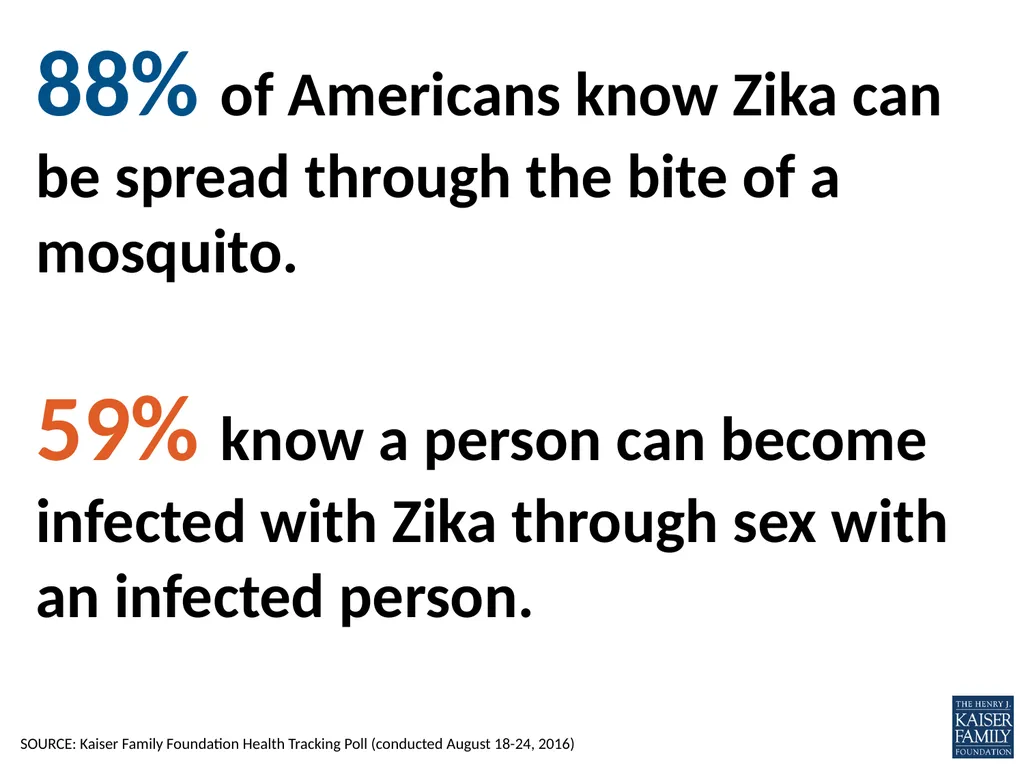
88% of Americans know Zika can be spread through the bite of a mosquito. ��59% know a person can become infected with Zika through sex with an infected person. SOURCE: Kaiser Family Foundation Health Tracking Poll (conducted August 18-24, 2016)<br>
05
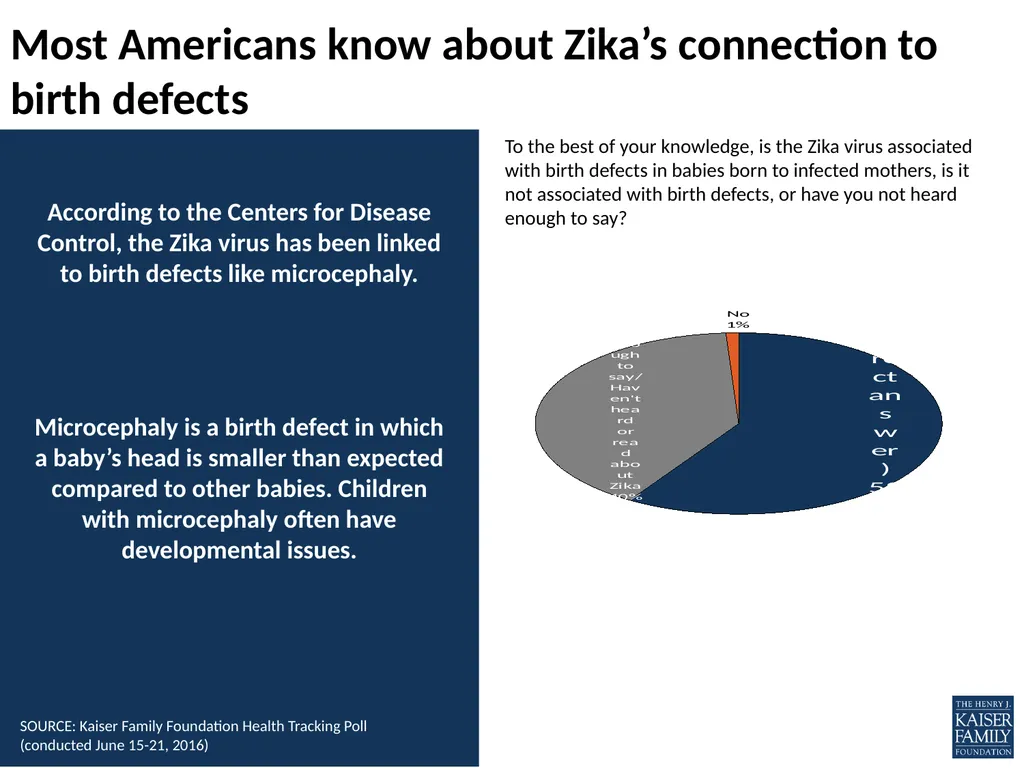
SOURCE: Kaiser Family Foundation Health Tracking Poll (conducted June 15-21, 2016) Most Americans know about Zika’s connection to birth defects To the best of your knowledge, is the Zika virus associated with birth defects in babies born to infected mothers, is it not associated with birth defects, or have you not heard enough to say? According to the Centers for Disease Control, the Zika virus has been linked to birth defects like microcephaly.
Microcephaly is a birth defect in which a baby’s head is smaller than expected compared to other babies. Children with microcephaly often have developmental issues.<br>
06
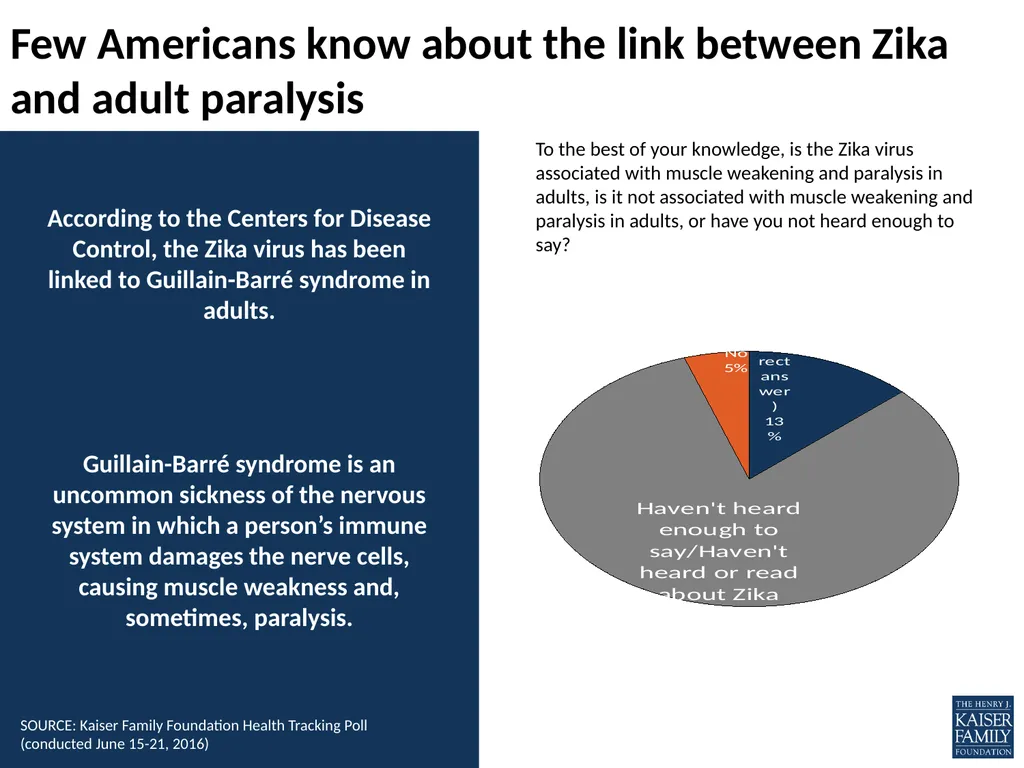
SOURCE: Kaiser Family Foundation Health Tracking Poll (conducted June 15-21, 2016) Few Americans know about the link between Zika and adult paralysis To the best of your knowledge, is the Zika virus associated with muscle weakening and paralysis in adults, is it not associated with muscle weakening and paralysis in adults, or have you not heard enough to say? According to the Centers for Disease Control, the Zika virus has been linked to Guillain-Barré syndrome in adults.
Guillain-Barré syndrome is an uncommon sickness of the nervous system in which a person’s immune system damages the nerve cells, causing muscle weakness and, sometimes, paralysis.<br>
07
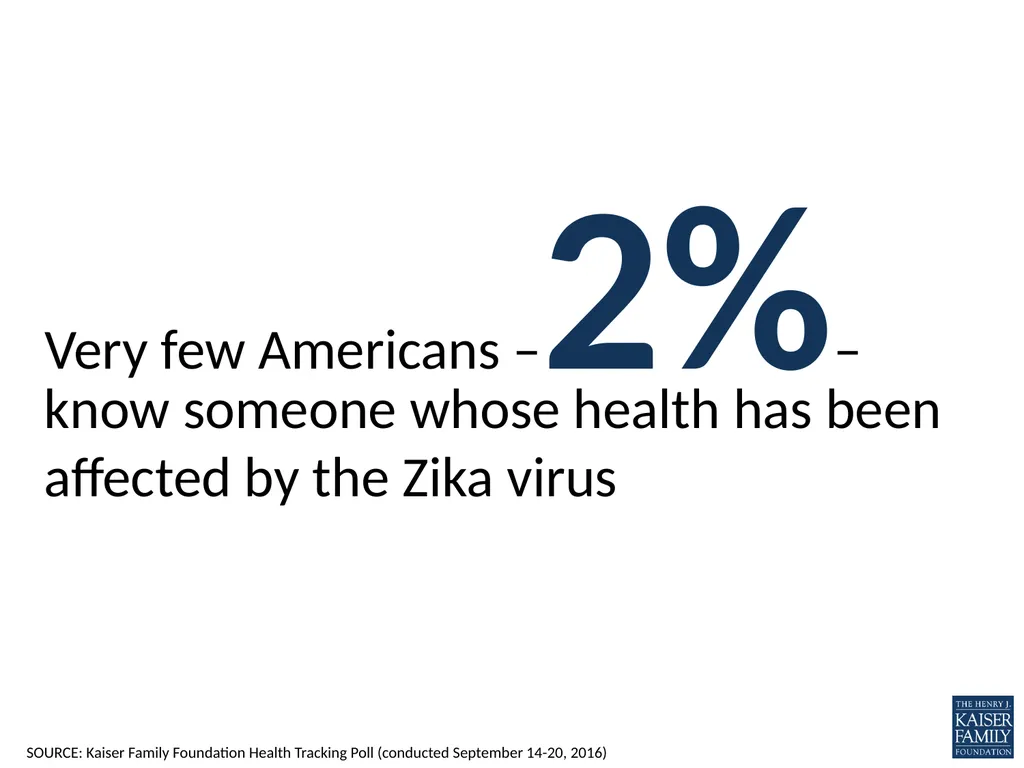
Very few Americans –2%– SOURCE: Kaiser Family Foundation Health Tracking Poll (conducted September 14-20, 2016) know someone whose health has been affected by the Zika virus<br>
08
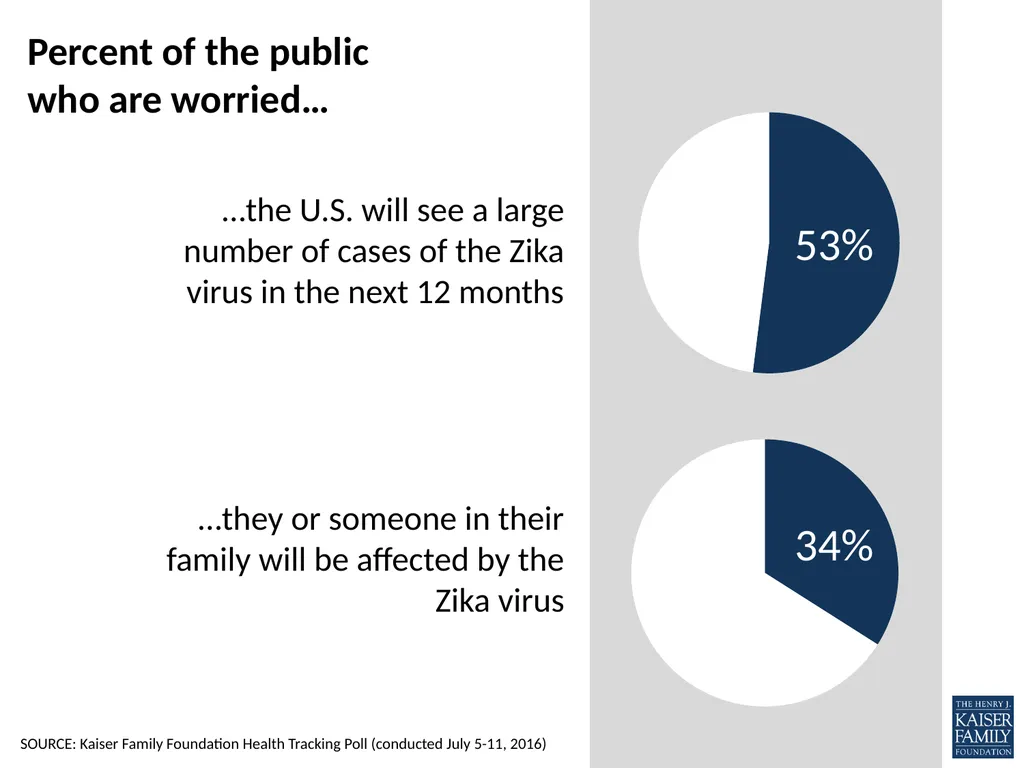
SOURCE: Kaiser Family Foundation Health Tracking Poll (conducted July 5-11, 2016) Percent of the public who are worried… 53% 34% …the U.S. will see a large number of cases of the Zika virus in the next 12 months …they or someone in their family will be affected by the Zika virus<br>
09
NOTE: Question wording abbreviated.
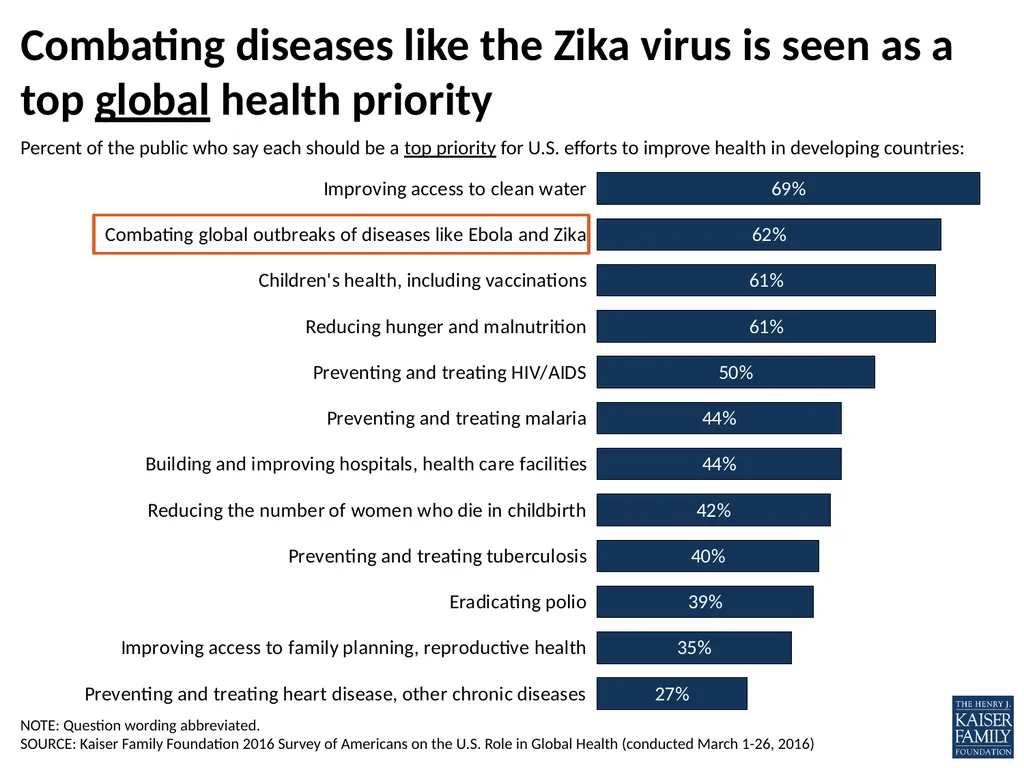
SOURCE: Kaiser Family Foundation 2016 Survey of Americans on the U.S. Role in Global Health (conducted March 1-26, 2016) Combating diseases like the Zika virus is seen as a top global health priority Percent of the public who say each should be a top priority for U.S. efforts to improve health in developing countries:<br>
10
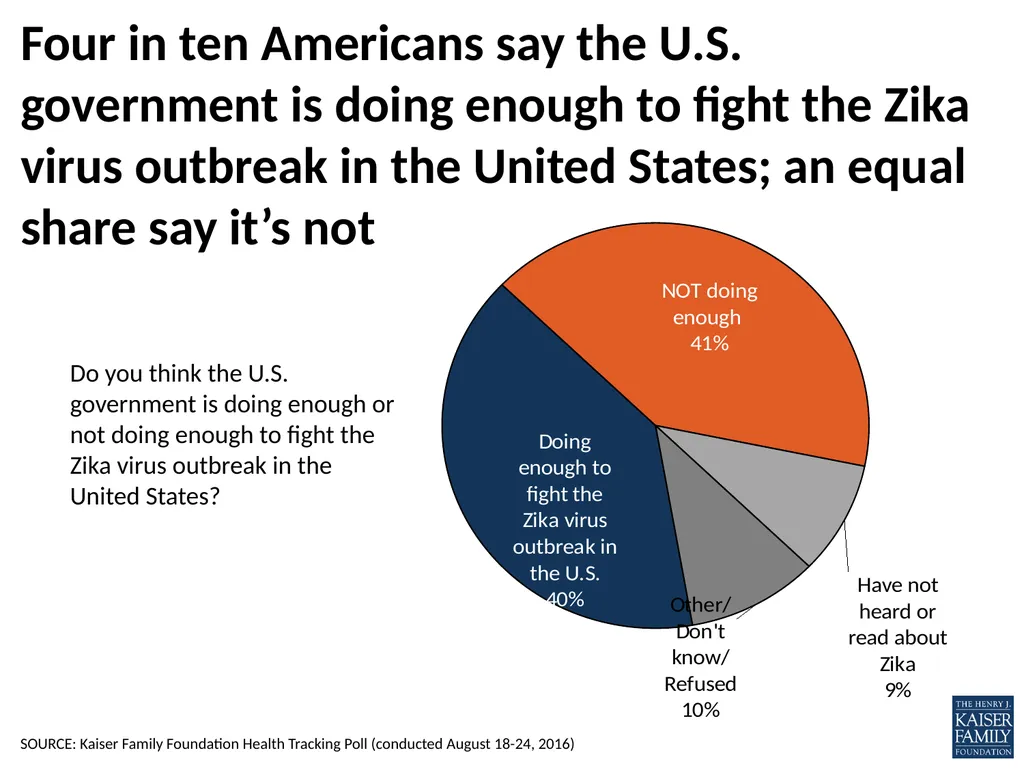
SOURCE: Kaiser Family Foundation Health Tracking Poll (conducted August 18-24, 2016) Do you think the U.S. government is doing enough or not doing enough to fight the Zika virus outbreak in the United States? Four in ten Americans say the U.S. government is doing enough to fight the Zika virus outbreak in the United States; an equal share say it’s not<br>
11
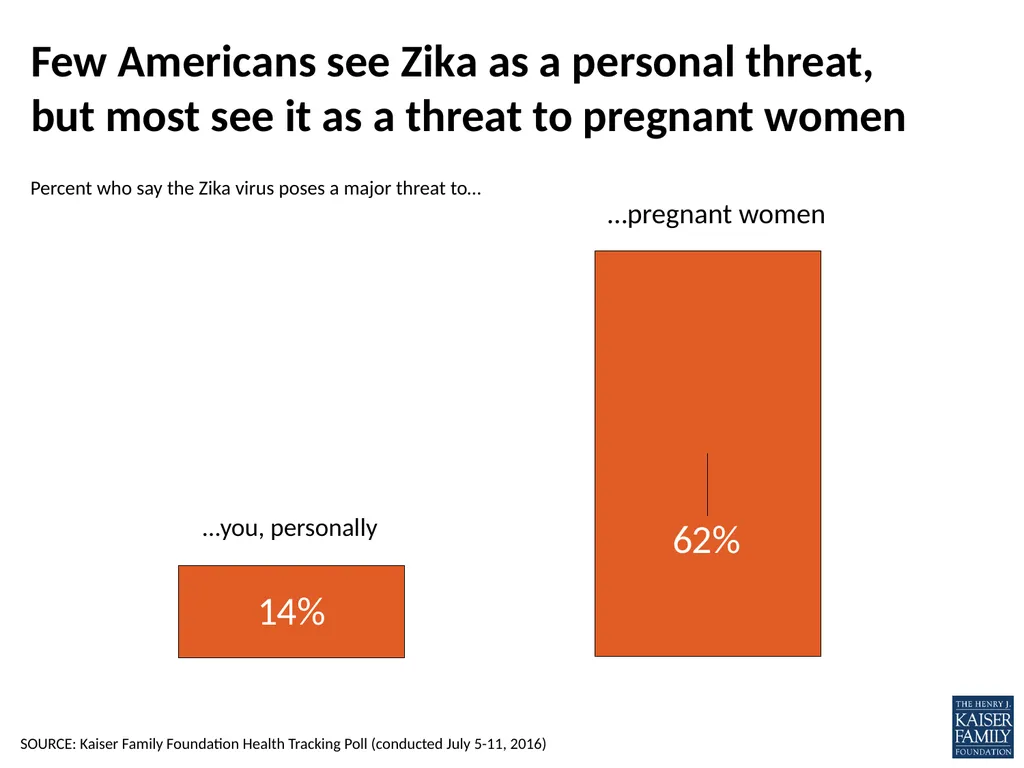
SOURCE: Kaiser Family Foundation Health Tracking Poll (conducted July 5-11, 2016) Few Americans see Zika as a personal threat, but most see it as a threat to pregnant women Percent who say the Zika virus poses a major threat to… …pregnant women …you, personally<br>
12
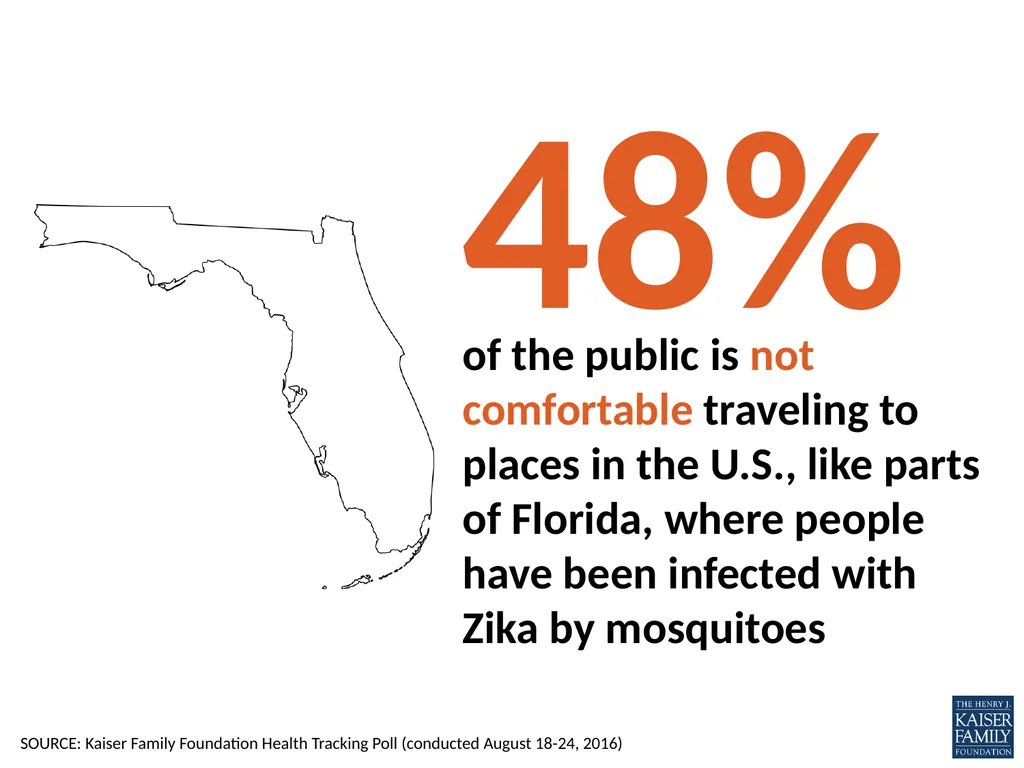
SOURCE: Kaiser Family Foundation Health Tracking Poll (conducted August 18-24, 2016) of the public is not comfortable traveling to places in the U.S., like parts of Florida, where people have been infected with Zika by mosquitoes 48%<br>
13
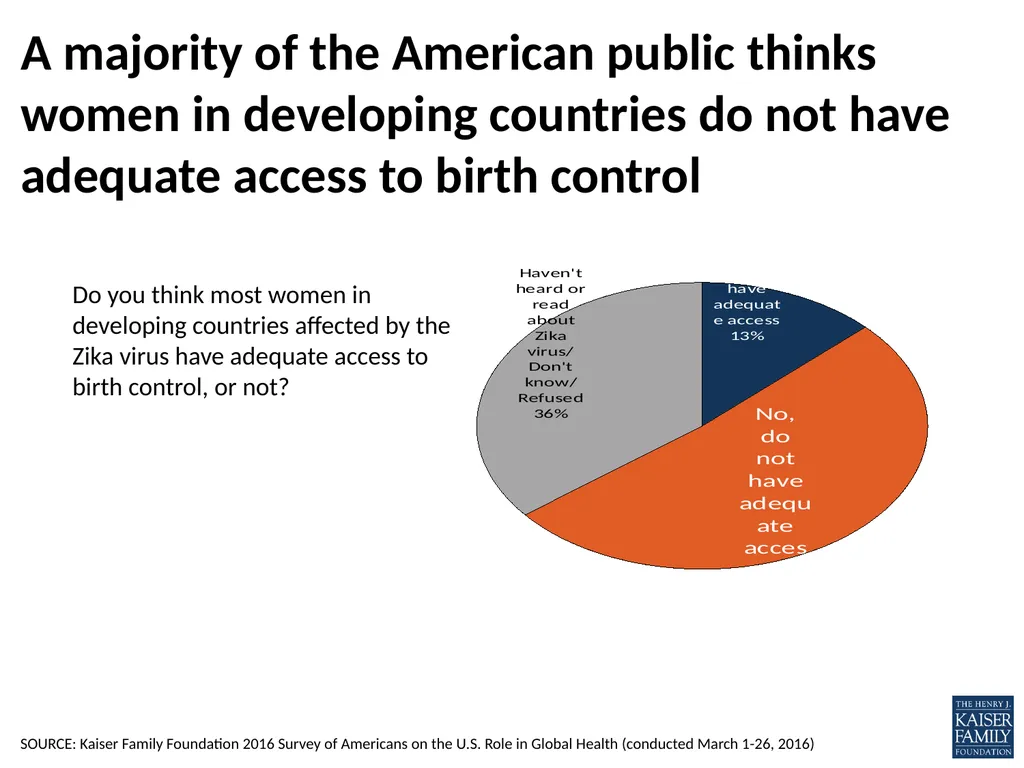
SOURCE: Kaiser Family Foundation 2016 Survey of Americans on the U.S. Role in Global Health (conducted March 1-26, 2016) A majority of the American public thinks women in developing countries do not have adequate access to birth control Do you think most women in developing countries affected by the Zika virus have adequate access to birth control, or not?<br>
14
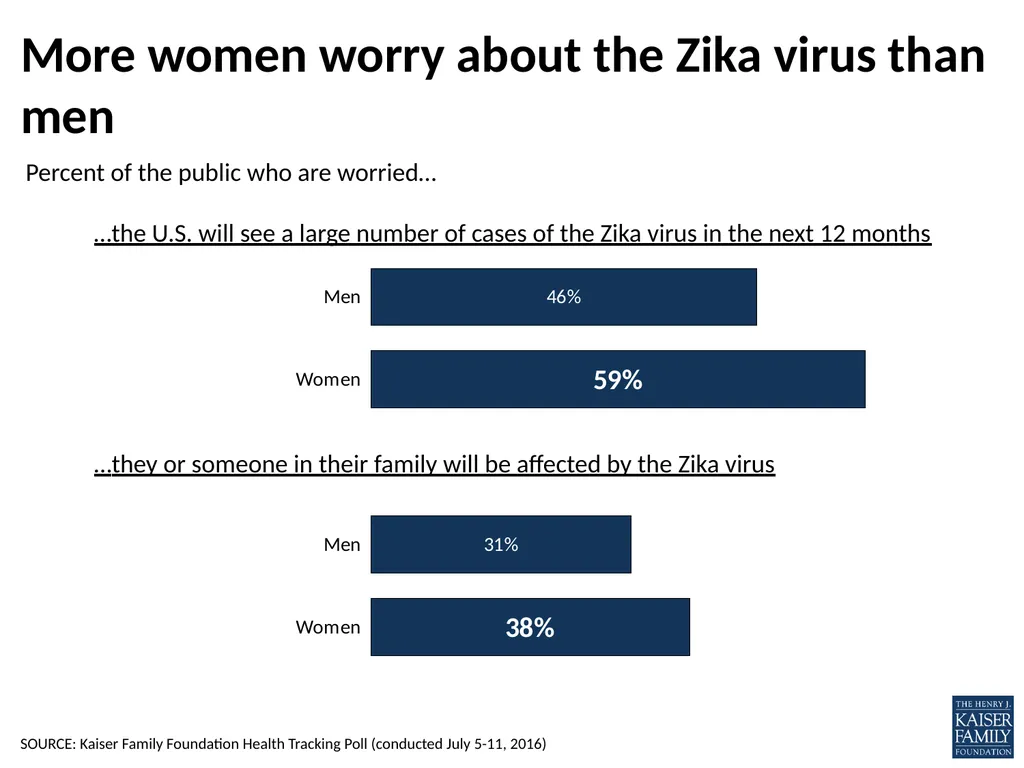
SOURCE: Kaiser Family Foundation Health Tracking Poll (conducted July 5-11, 2016) More women worry about the Zika virus than men …the U.S. will see a large number of cases of the Zika virus in the next 12 months …they or someone in their family will be affected by the Zika virus Percent of the public who are worried…<br>
15
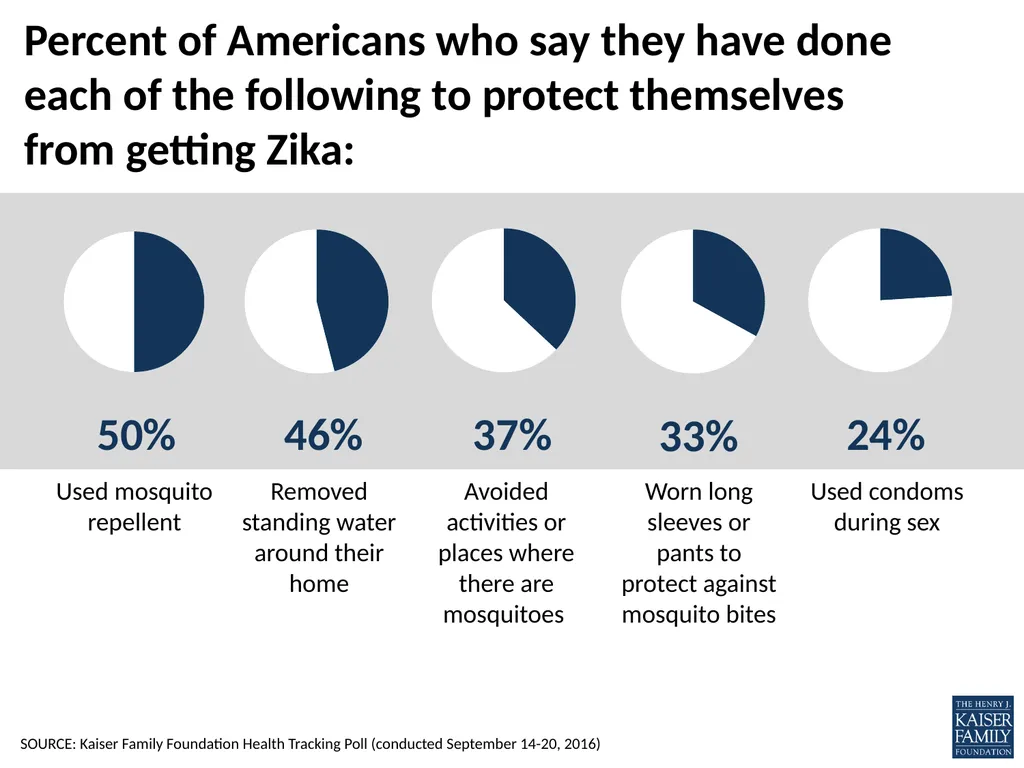
SOURCE: Kaiser Family Foundation Health Tracking Poll (conducted September 14-20, 2016) Percent of Americans who say they have done each of the following to protect themselves from getting Zika: Used mosquito repellent Removed standing water around their home Avoided activities or places where there are mosquitoes Worn long sleeves or pants to protect against mosquito bites Used condoms during sex 50% 46% 37% 33% 24%<br>
16
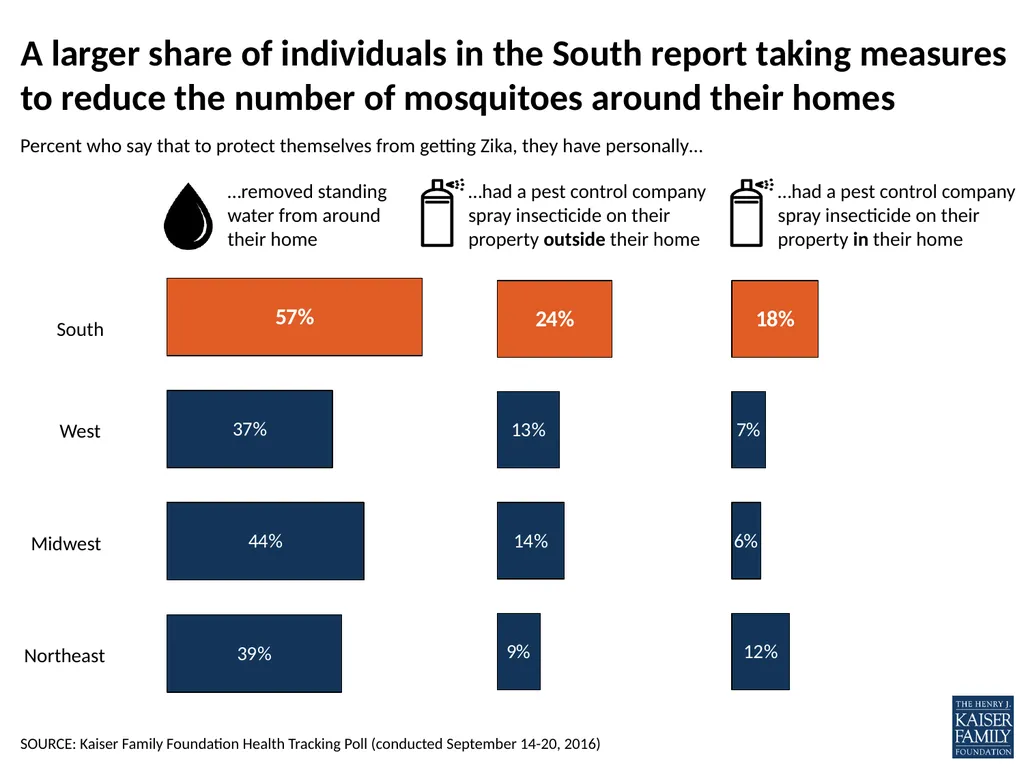
A larger share of individuals in the South report taking measures to reduce the number of mosquitoes around their homes SOURCE: Kaiser Family Foundation Health Tracking Poll (conducted September 14-20, 2016) Percent who say that to protect themselves from getting Zika, they have personally… …had a pest control company spray insecticide on their property outside their home South Midwest Northeast West …removed standing water from around their home …had a pest control company spray insecticide on their property in their home<br>
17
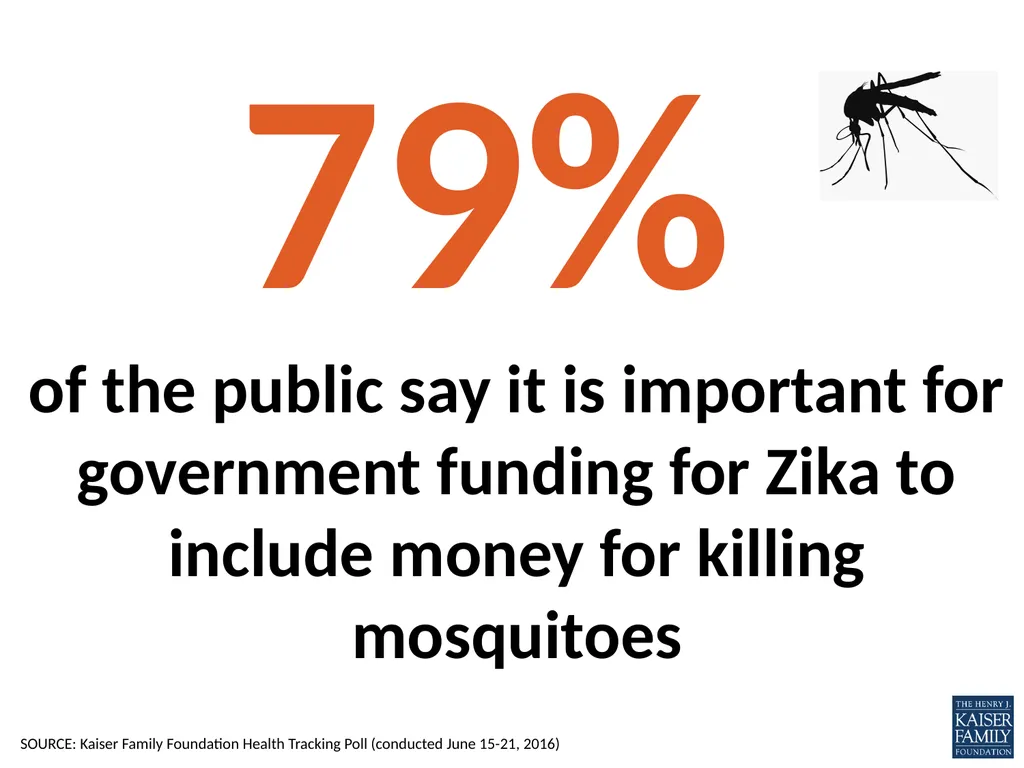
SOURCE: Kaiser Family Foundation Health Tracking Poll (conducted June 15-21, 2016) 79% �of the public say it is important for government funding for Zika to include money for killing mosquitoes<br>
18
NOTE: Question wording abbreviated.
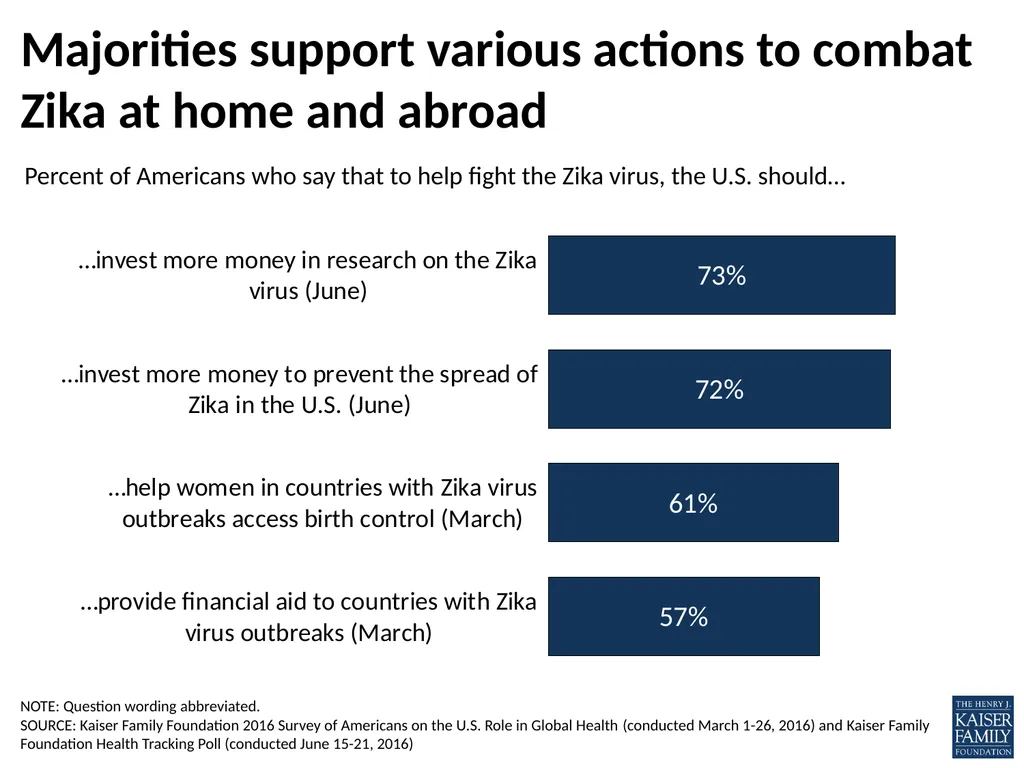
SOURCE: Kaiser Family Foundation 2016 Survey of Americans on the U.S. Role in Global Health (conducted March 1-26, 2016) and Kaiser Family Foundation Health Tracking Poll (conducted June 15-21, 2016) Majorities support various actions to combat Zika at home and abroad Percent of Americans who say that to help fight the Zika virus, the U.S. should…<br>
19
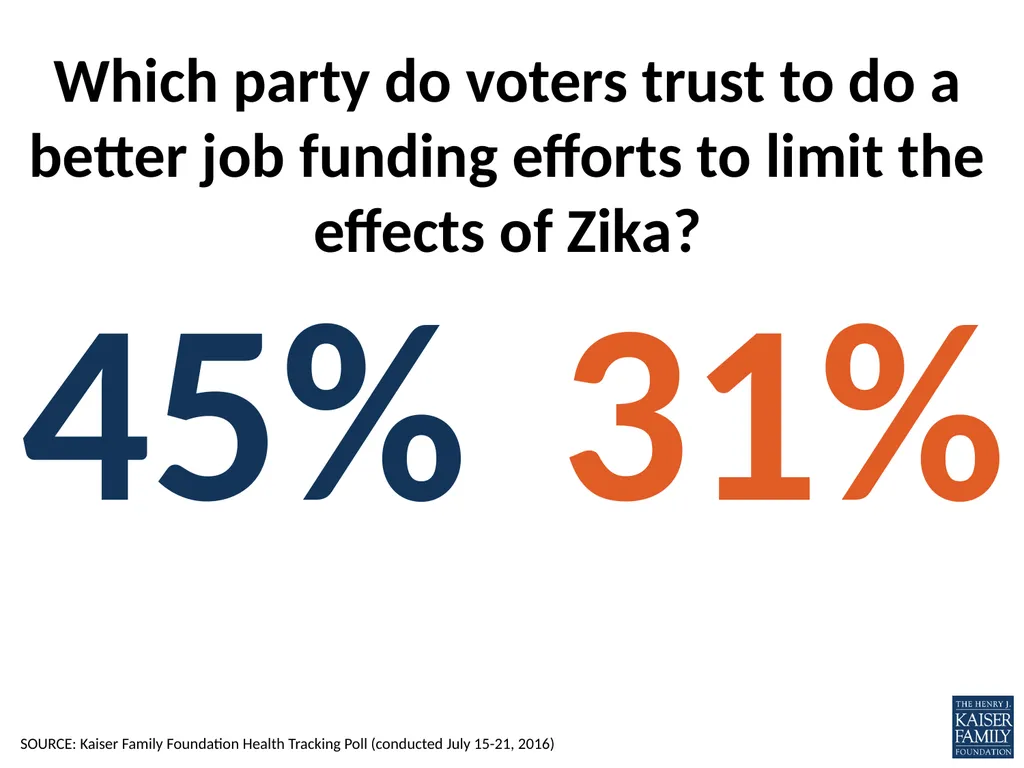
SOURCE: Kaiser Family Foundation Health Tracking Poll (conducted July 15-21, 2016) 45% �trust the Democratic Party Which party do voters trust to do a better job funding efforts to limit the effects of Zika? 31% �trust the Republican Party<br>
20
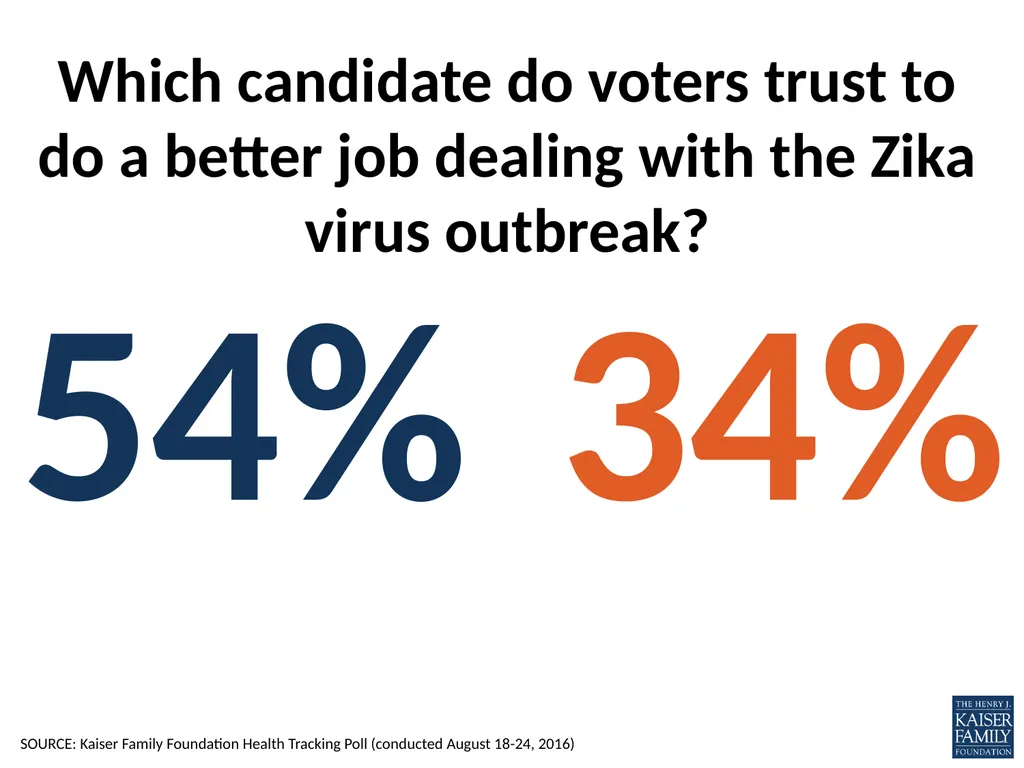
SOURCE: Kaiser Family Foundation Health Tracking Poll (conducted August 18-24, 2016) 54% �trust Hillary Clinton Which candidate do voters trust to do a better job dealing with the Zika virus outbreak? 34% �trust Donald Trump<br>
21
Filling the need for trusted information on national health issues, the Kaiser Family Foundation is a nonprofit organization based in Menlo Park, California. For more information, please visit www.kff.org
Contacts:
Rakesh Singh | (650) 854-9400 | rsingh@kff.org
Craig Palosky | (202) 347-5270 | cpalosky@kff.org<br>