03
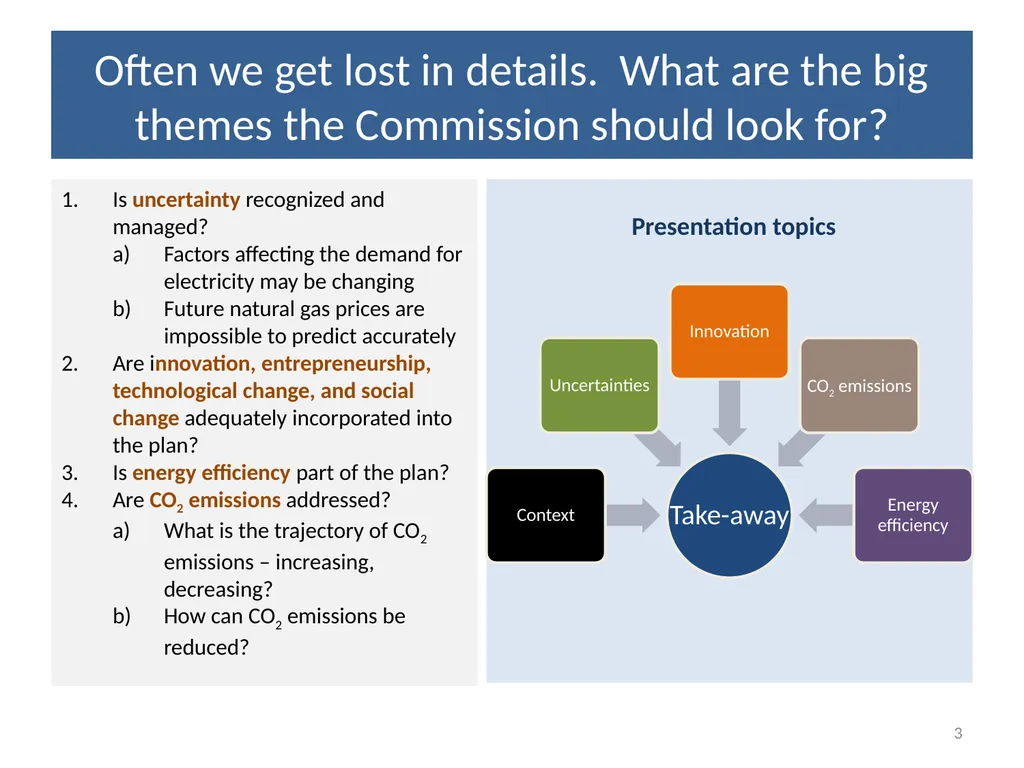
Often we get lost in details. What are the big themes the Commission should look for? Is uncertainty recognized and managed?
Factors affecting the demand for electricity may be changing
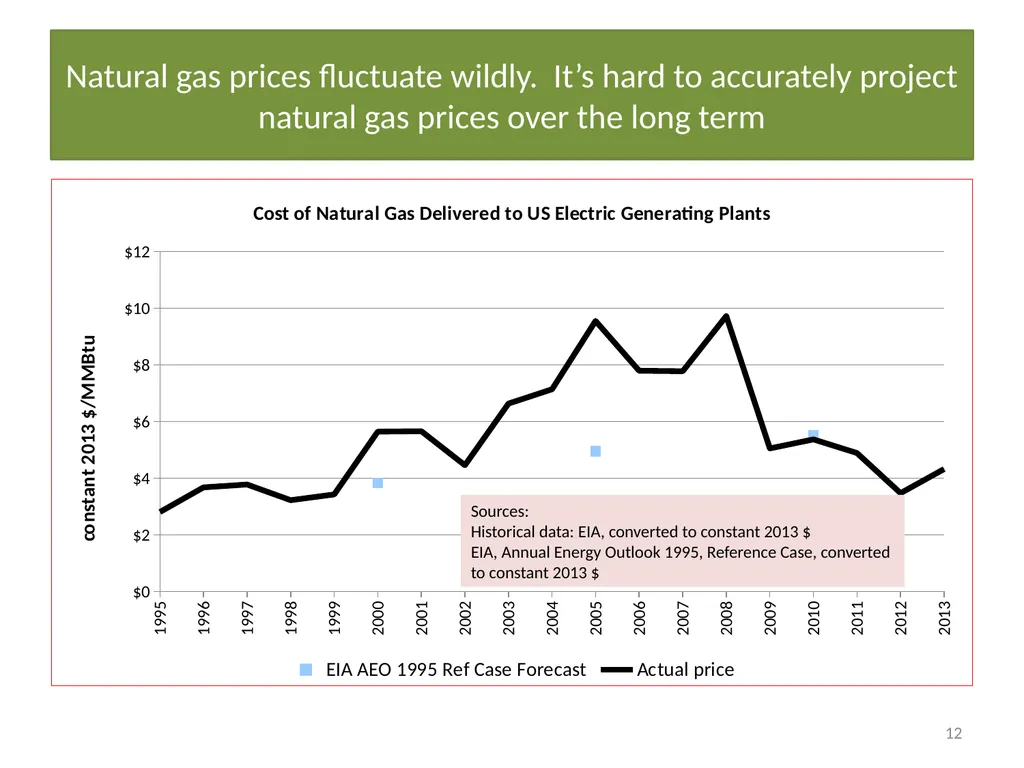
Future natural gas prices are impossible to predict accurately
Are innovation, entrepreneurship, technological change, and social change adequately incorporated into the plan?
Is energy efficiency part of the plan?
Are CO2 emissions addressed?
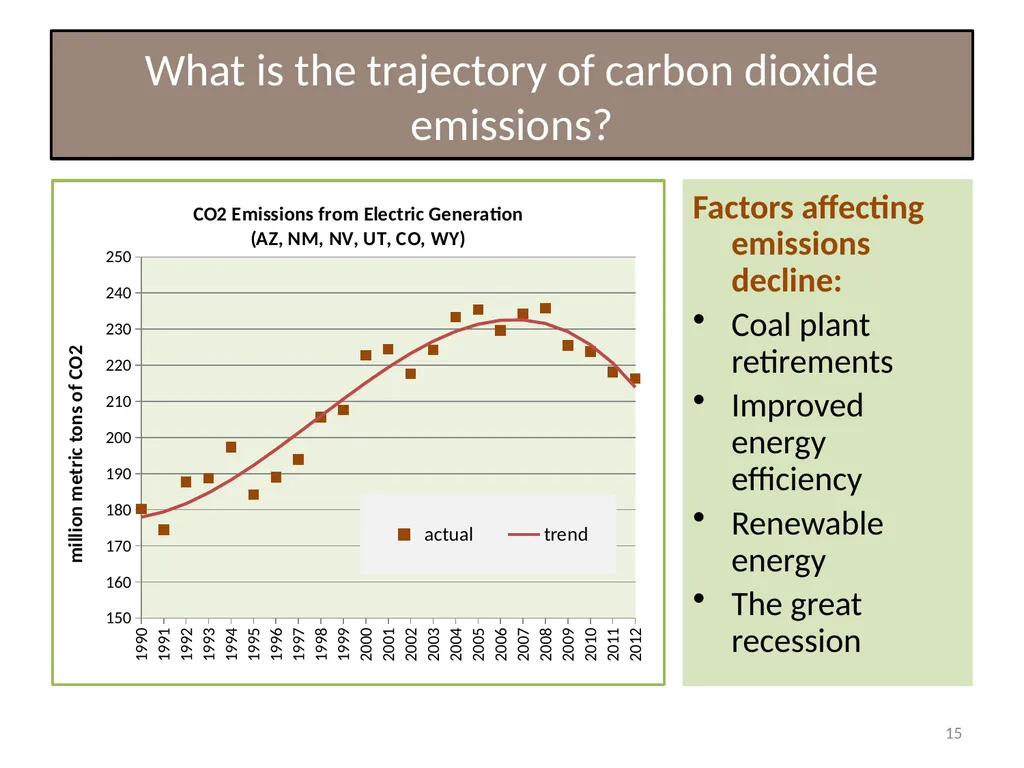
What is the trajectory of CO2 emissions – increasing, decreasing?
How can CO2 emissions be reduced? 3 Presentation topics<br>
04
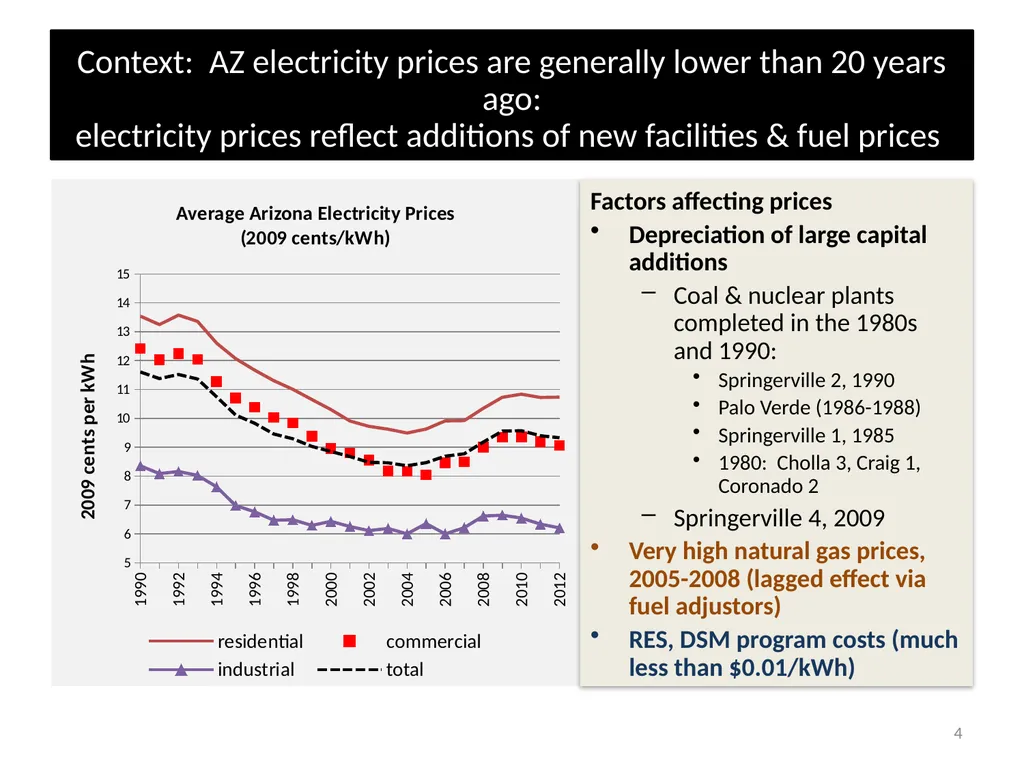
Context: AZ electricity prices are generally lower than 20 years ago:�electricity prices reflect additions of new facilities & fuel prices Factors affecting prices
Depreciation of large capital additions
Coal & nuclear plants completed in the 1980s and 1990:
Springerville 2, 1990
Palo Verde (1986-1988)
Springerville 1, 1985
1980: Cholla 3, Craig 1, Coronado 2
Springerville 4, 2009
Very high natural gas prices, 2005-2008 (lagged effect via fuel adjustors)
RES, DSM program costs (much less than $0.01/kWh) 4<br>
05
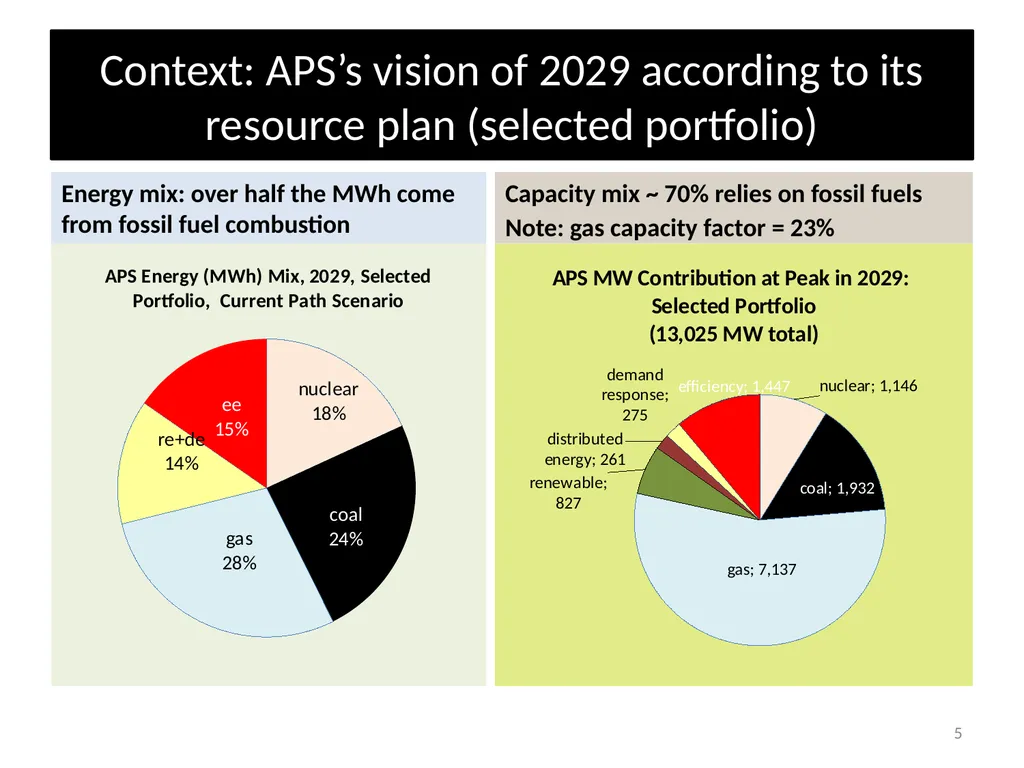
Context: APS’s vision of 2029 according to its resource plan (selected portfolio) Energy mix: over half the MWh come from fossil fuel combustion Capacity mix ~ 70% relies on fossil fuels
Note: gas capacity factor = 23% 5<br>
06
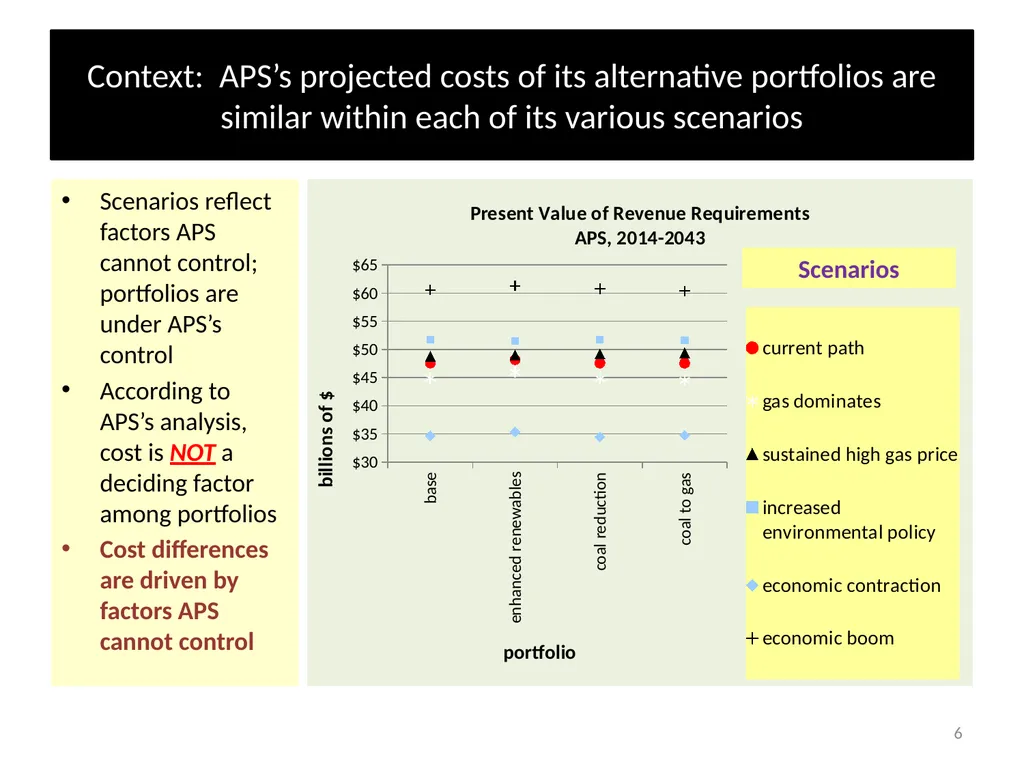
Context: APS’s projected costs of its alternative portfolios are similar within each of its various scenarios Scenarios reflect factors APS cannot control; portfolios are under APS’s control
According to APS’s analysis, cost is NOT a deciding factor among portfolios
Cost differences are driven by factors APS cannot control 6 Scenarios<br>
07
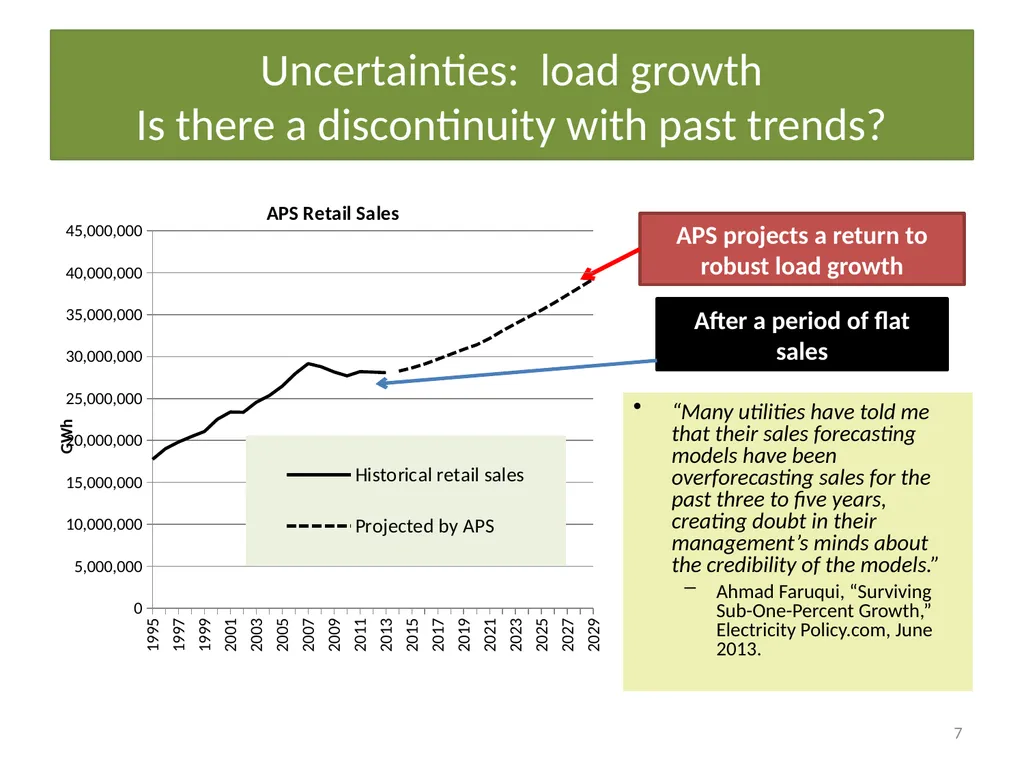
Uncertainties: load growth�Is there a discontinuity with past trends? 7 After a period of flat sales “Many utilities have told me that their sales forecasting models have been overforecasting sales for the past three to five years, creating doubt in their management’s minds about the credibility of the models.”
Ahmad Faruqui, “Surviving Sub-One-Percent Growth,” Electricity Policy.com, June 2013. APS projects a return to robust load growth<br>
08
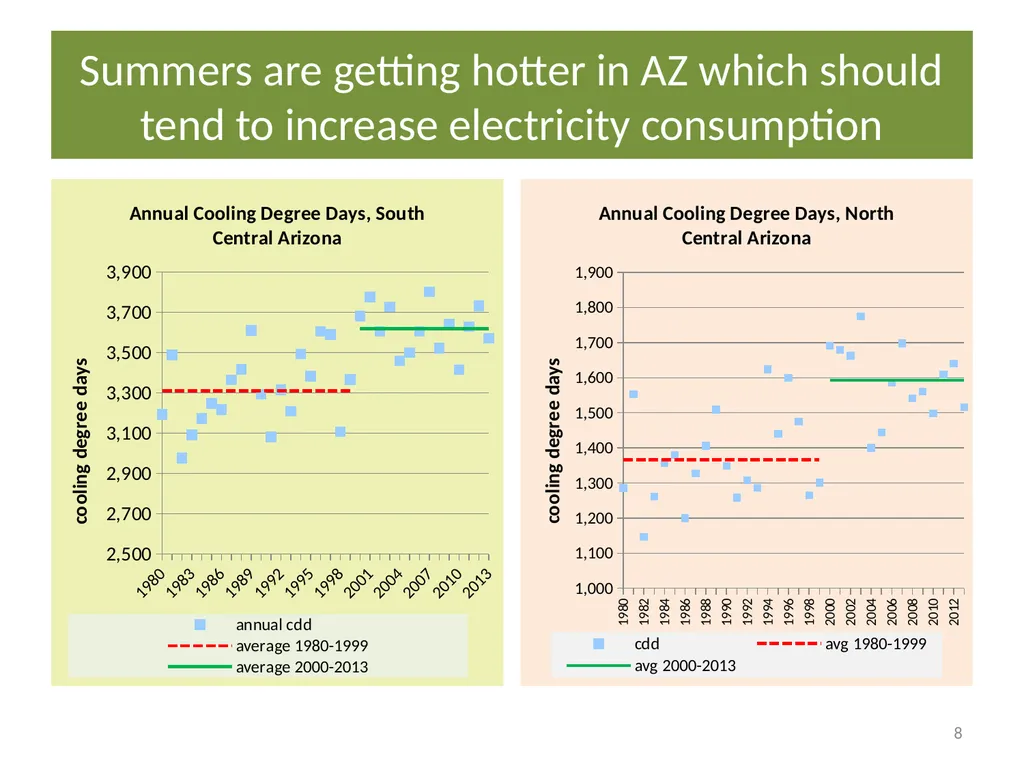
Summers are getting hotter in AZ which should tend to increase electricity consumption 8<br>
09
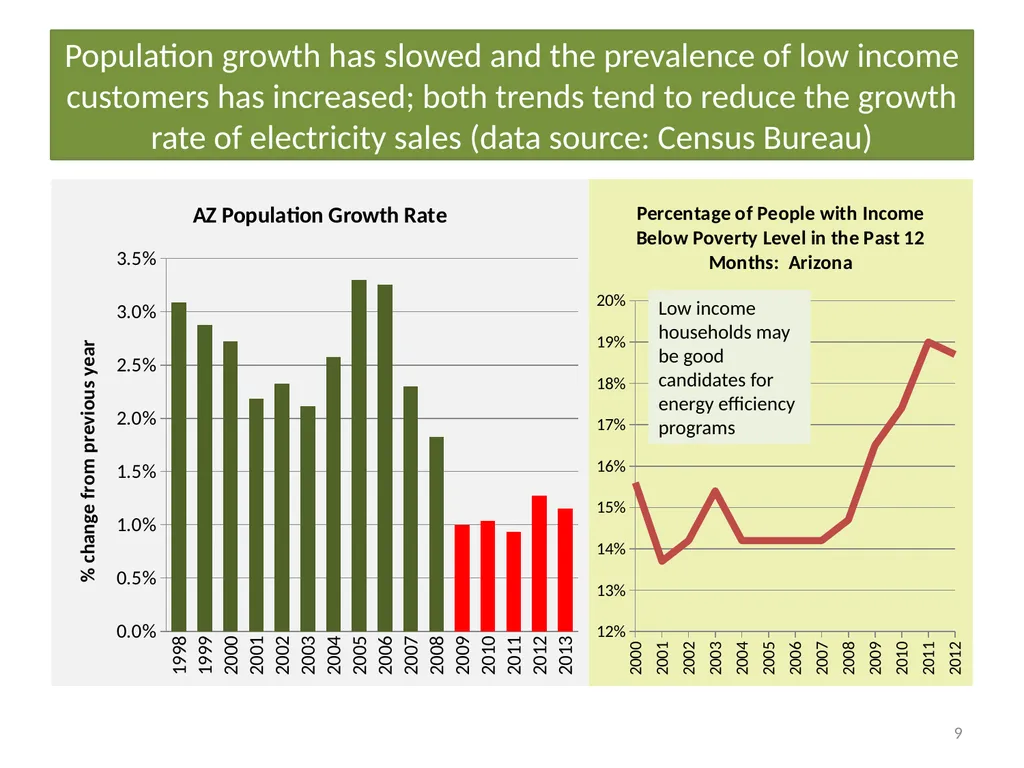
Population growth has slowed and the prevalence of low income customers has increased; both trends tend to reduce the growth rate of electricity sales (data source: Census Bureau) 9 Low income households may be good candidates for energy efficiency programs<br>
10
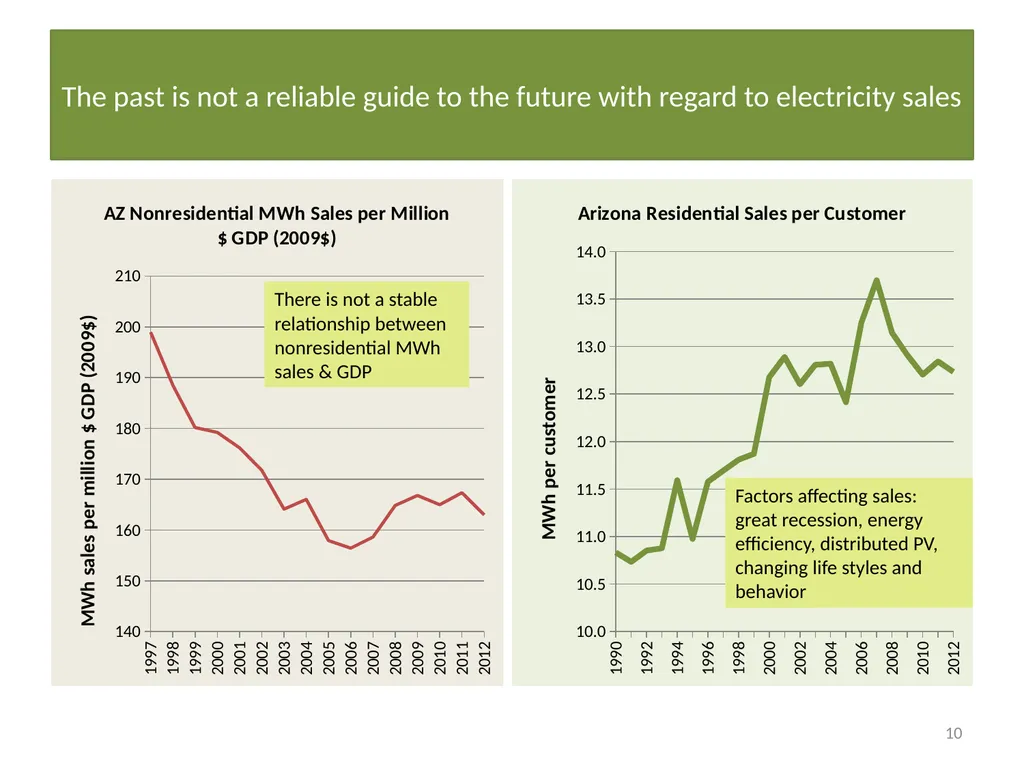
The past is not a reliable guide to the future with regard to electricity sales 10 Factors affecting sales: great recession, energy efficiency, distributed PV, changing life styles and behavior There is not a stable relationship between nonresidential MWh sales & GDP<br>
11
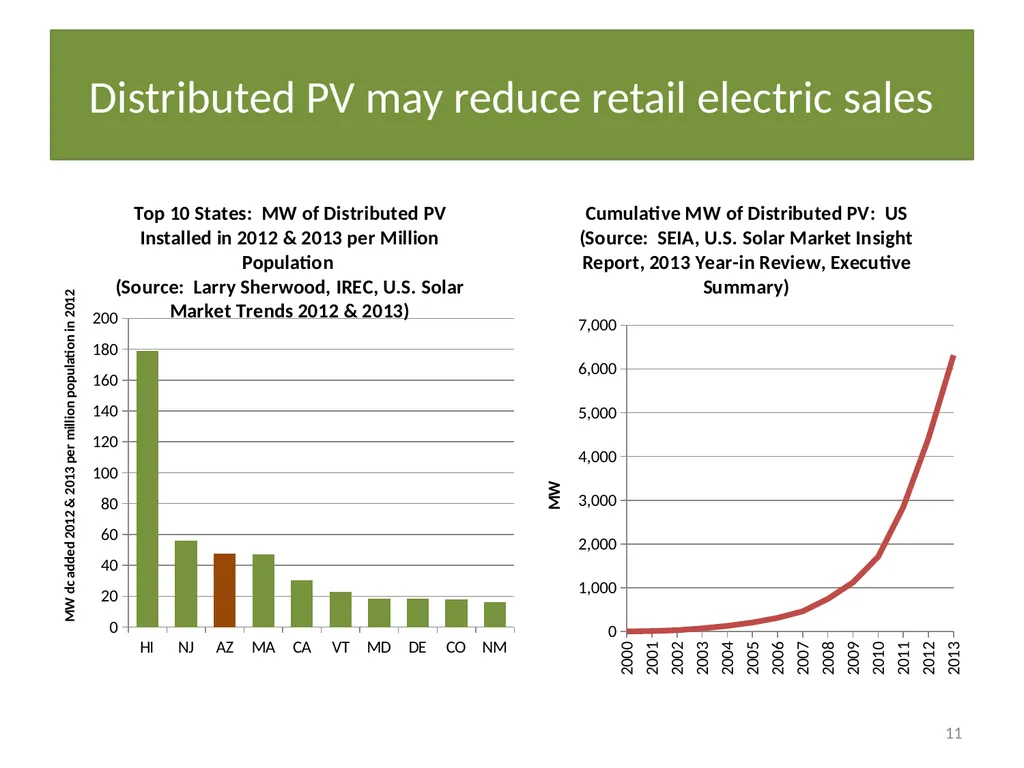
Distributed PV may reduce retail electric sales 11<br>
12
Natural gas prices fluctuate wildly. It’s hard to accurately project natural gas prices over the long term 12 Sources:
Historical data: EIA, converted to constant 2013 $
EIA, Annual Energy Outlook 1995, Reference Case, converted to constant 2013 $<br>
13
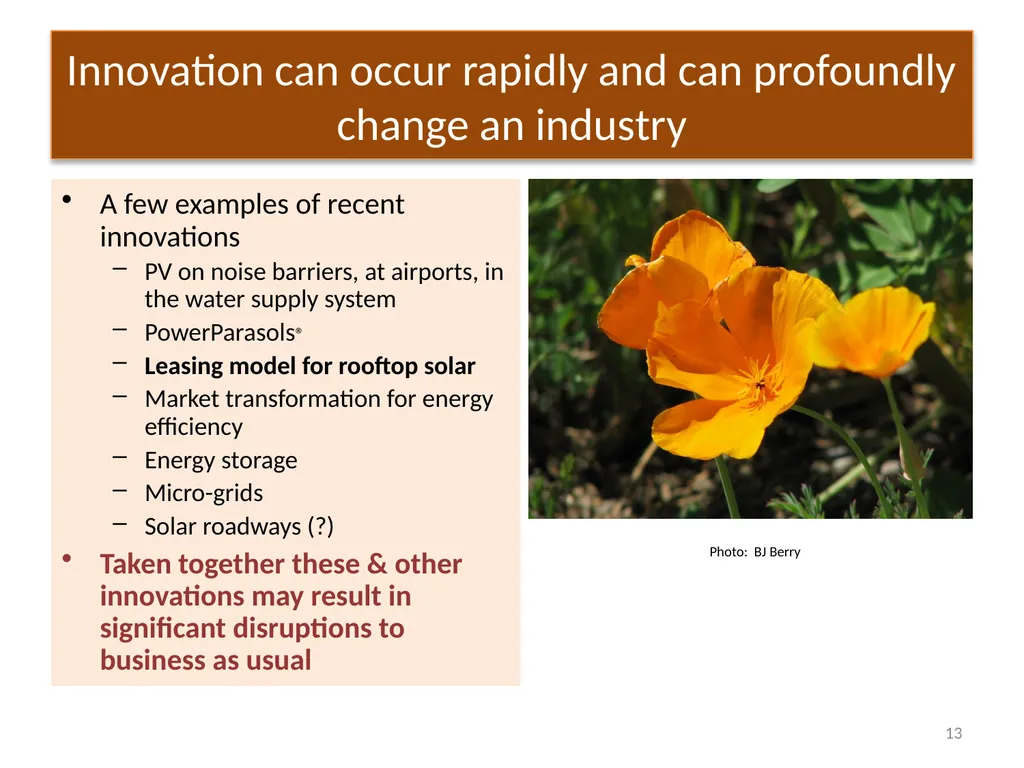
Innovation can occur rapidly and can profoundly change an industry A few examples of recent innovations
PV on noise barriers, at airports, in the water supply system
PowerParasols®
Leasing model for rooftop solar
Market transformation for energy efficiency
Energy storage
Micro-grids
Solar roadways (?)
Taken together these & other innovations may result in significant disruptions to business as usual 13 Photo: BJ Berry<br>
14
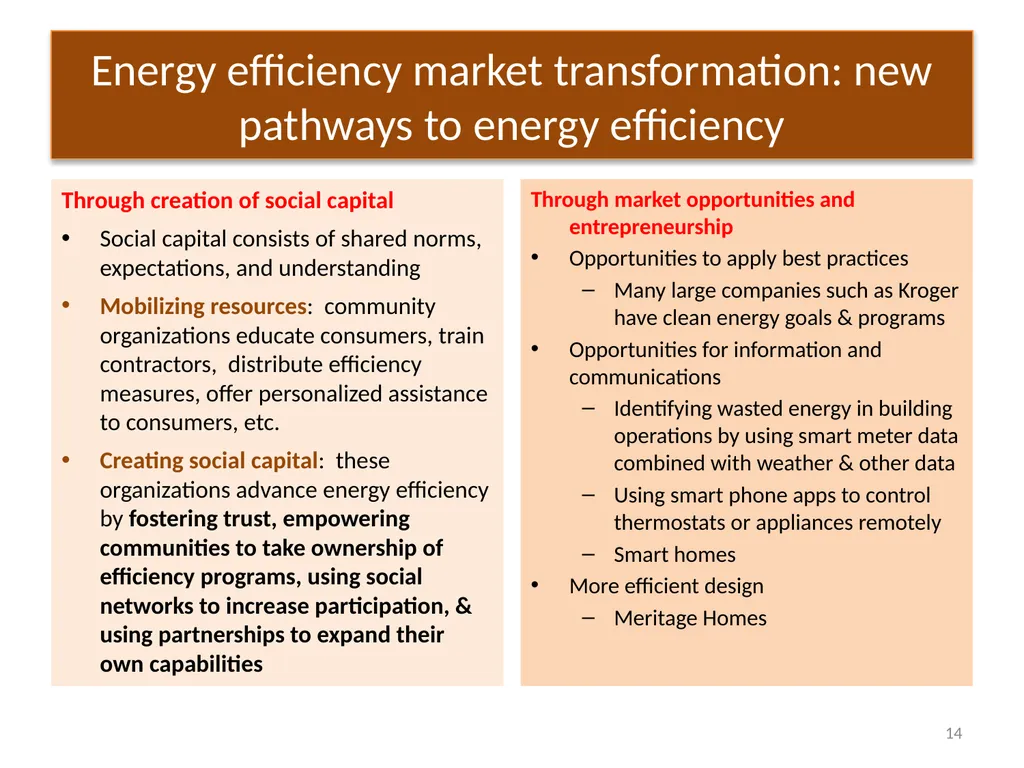
Energy efficiency market transformation: new pathways to energy efficiency Through creation of social capital
Social capital consists of shared norms, expectations, and understanding
Mobilizing resources: community organizations educate consumers, train contractors, distribute efficiency measures, offer personalized assistance to consumers, etc.
Creating social capital: these organizations advance energy efficiency by fostering trust, empowering communities to take ownership of efficiency programs, using social networks to increase participation, & using partnerships to expand their own capabilities Through market opportunities and entrepreneurship
Opportunities to apply best practices
Many large companies such as Kroger have clean energy goals & programs
Opportunities for information and communications
Identifying wasted energy in building operations by using smart meter data combined with weather & other data
Using smart phone apps to control thermostats or appliances remotely
Smart homes
More efficient design
Meritage Homes 14<br>
15
What is the trajectory of carbon dioxide emissions? Factors affecting emissions decline:
Coal plant retirements
Improved energy efficiency
Renewable energy
The great recession 15<br>
16
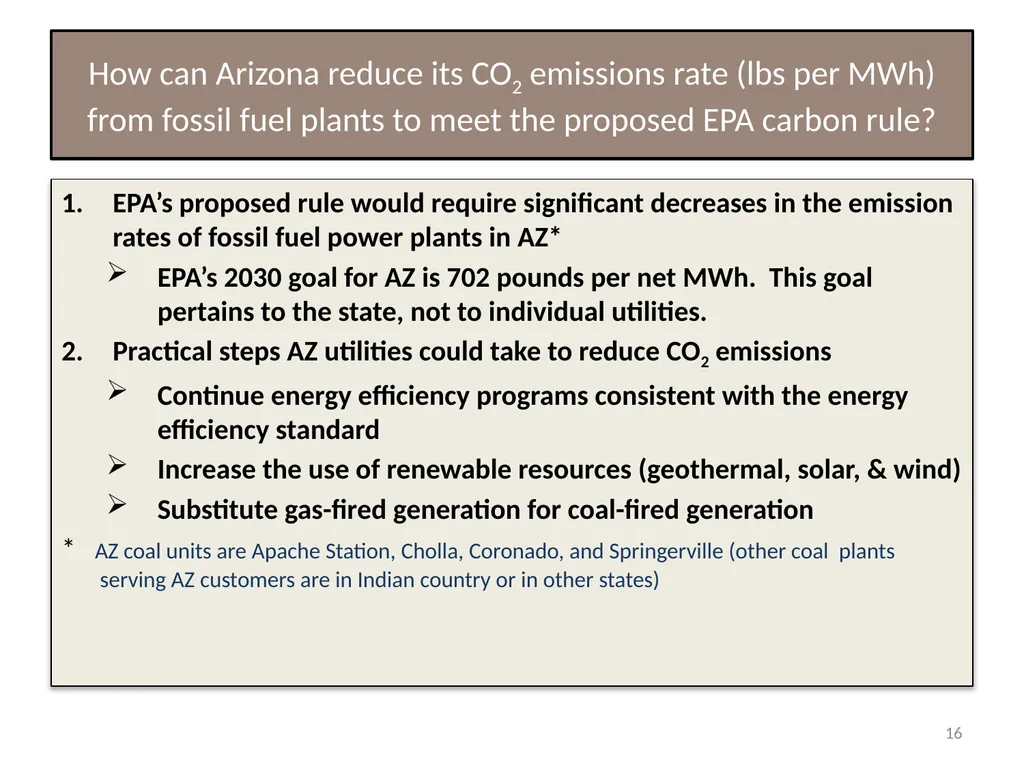
How can Arizona reduce its CO2 emissions rate (lbs per MWh) from fossil fuel plants to meet the proposed EPA carbon rule? EPA’s proposed rule would require significant decreases in the emission rates of fossil fuel power plants in AZ*
EPA’s 2030 goal for AZ is 702 pounds per net MWh. This goal pertains to the state, not to individual utilities.
Practical steps AZ utilities could take to reduce CO2 emissions
Continue energy efficiency programs consistent with the energy efficiency standard
Increase the use of renewable resources (geothermal, solar, & wind)
Substitute gas-fired generation for coal-fired generation
* AZ coal units are Apache Station, Cholla, Coronado, and Springerville (other coal plants serving AZ customers are in Indian country or in other states) 16<br>
17
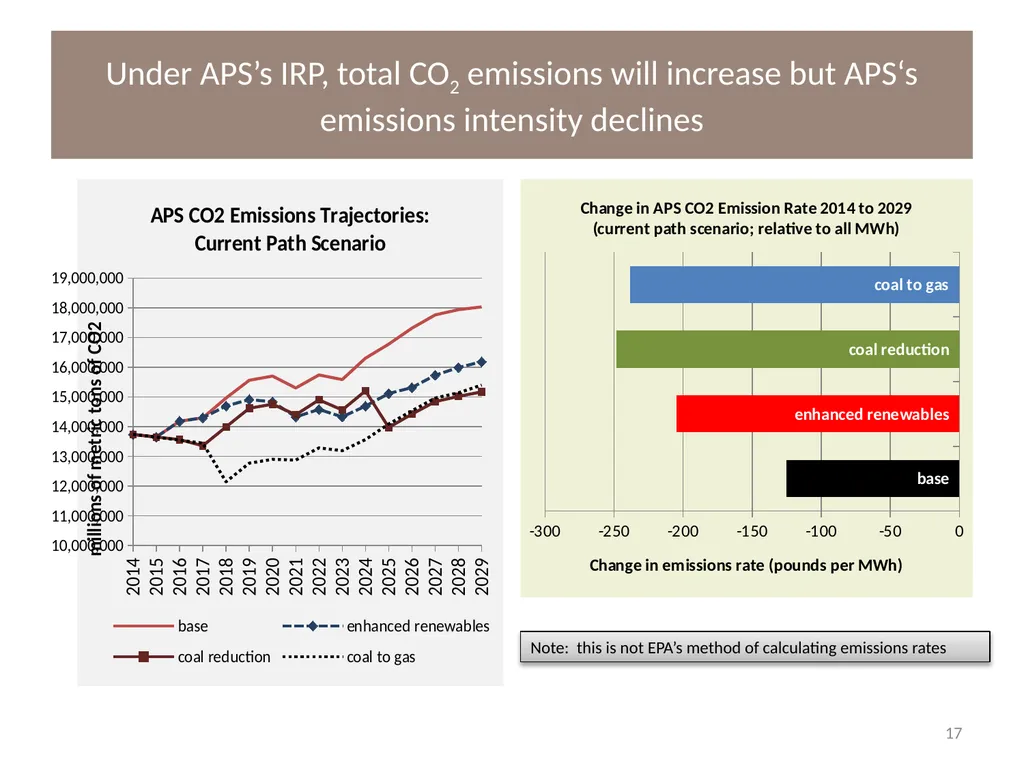
Under APS’s IRP, total CO2 emissions will increase but APS‘s emissions intensity declines 17 Note: this is not EPA’s method of calculating emissions rates<br>
18
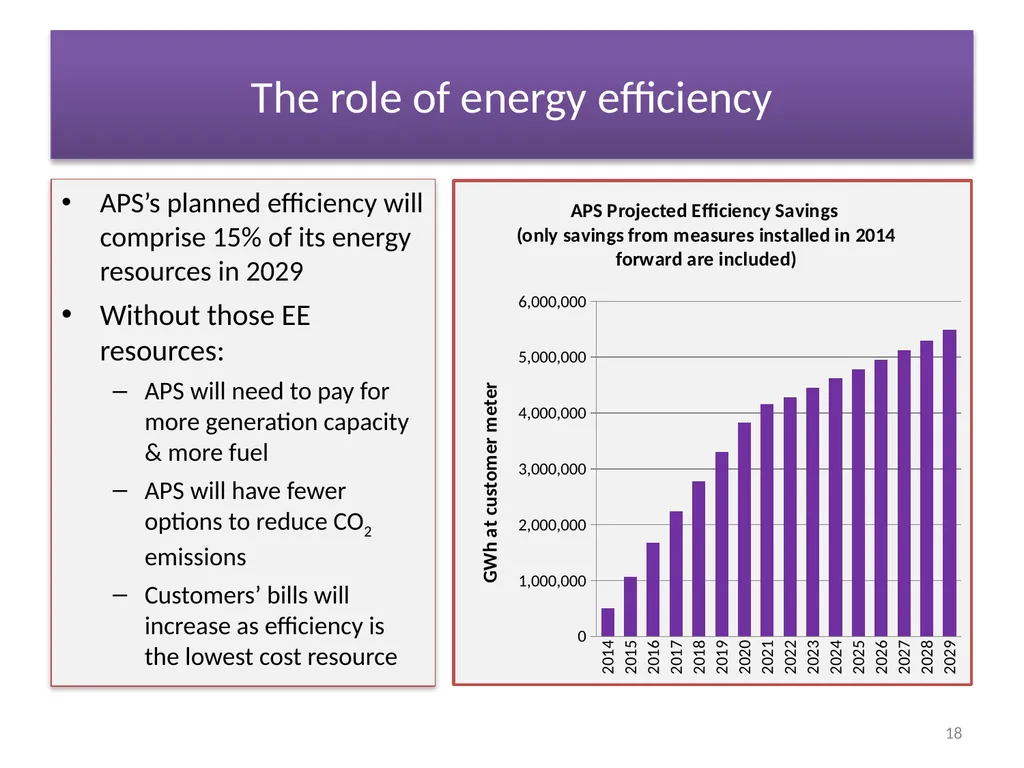
The role of energy efficiency APS’s planned efficiency will comprise 15% of its energy resources in 2029
Without those EE resources:
APS will need to pay for more generation capacity & more fuel
APS will have fewer options to reduce CO2 emissions
Customers’ bills will increase as efficiency is the lowest cost resource 18<br>
19
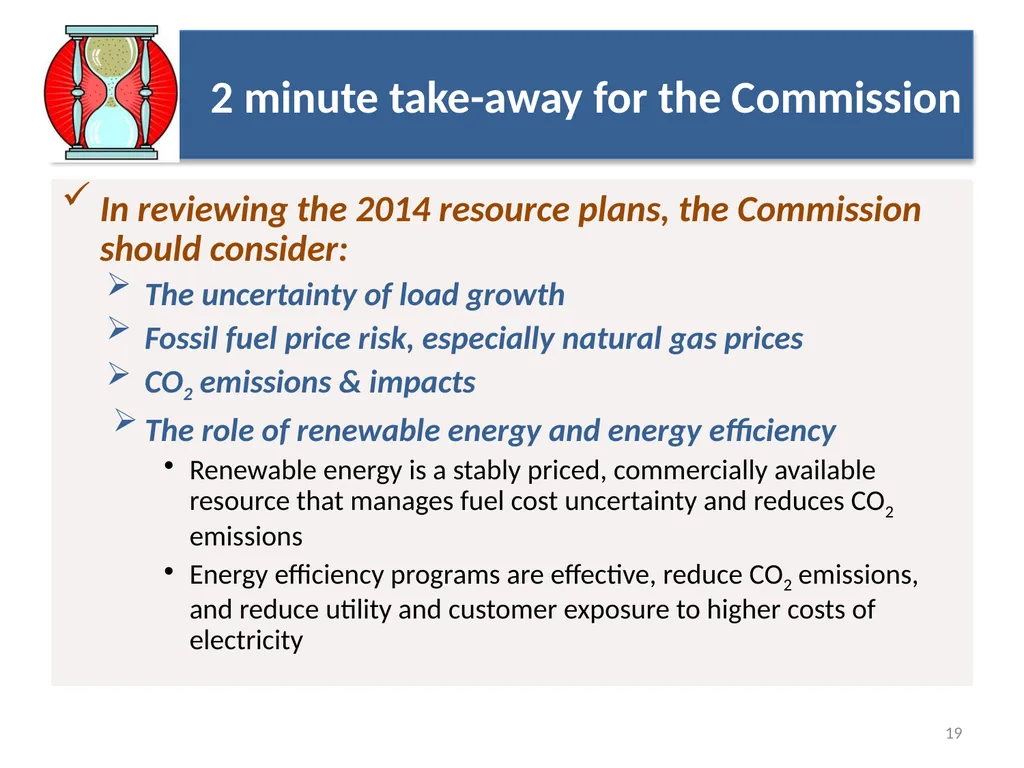
2 minute take-away for the Commission In reviewing the 2014 resource plans, the Commission should consider:
The uncertainty of load growth
Fossil fuel price risk, especially natural gas prices
CO2 emissions & impacts
The role of renewable energy and energy efficiency
Renewable energy is a stably priced, commercially available resource that manages fuel cost uncertainty and reduces CO2 emissions
Energy efficiency programs are effective, reduce CO2 emissions, and reduce utility and customer exposure to higher costs of electricity 19<br>
20
2 minute take-away for the Commission The Commission should ask whether policies encourage innovation and its benefits or whether policies lock out new technologies or create barriers to new market entrants
Beneficial change is being driven by:
Innovation and entrepreneurship, especially from outside the electric utility industry
Increasing societal & market receptivity to energy efficiency and distributed renewable energy
Learning by consumers, entrepreneurs, utilities 20<br>