
Where do all the oceanographers go? Career paths
TG
Published · 28 slides · 0 views
1 / 1





Description
Where do all the oceanographers go? Career paths in physical oceanography And is there a difference between men and women With Lisa Gerber, Susan Lozier , Renellys Perez, Amelia Shevenell, Laurie Sindlinger, Mark Warner What kind of data is
Related Topics
Share
Embed code
Download this presentation From Below
"Where do all the oceanographers go? Career paths" is the property of its rightful owner. Permission is granted to download and print the materials on this website for personal, non-commercial use only, and to display it on your personal computer provided you do not modify the materials and that you retain all copyright notices contained in the materials. By downloading content from our website, you accept the terms of this agreement.
Presentation Transcript
01
Where do all the oceanographers go? Career paths in physical oceanography And is there a difference between men and women
With Lisa Gerber, Susan Lozier , Renellys Perez, Amelia Shevenell, Laurie Sindlinger, Mark Warner<br>
With Lisa Gerber, Susan Lozier , Renellys Perez, Amelia Shevenell, Laurie Sindlinger, Mark Warner<br>
02
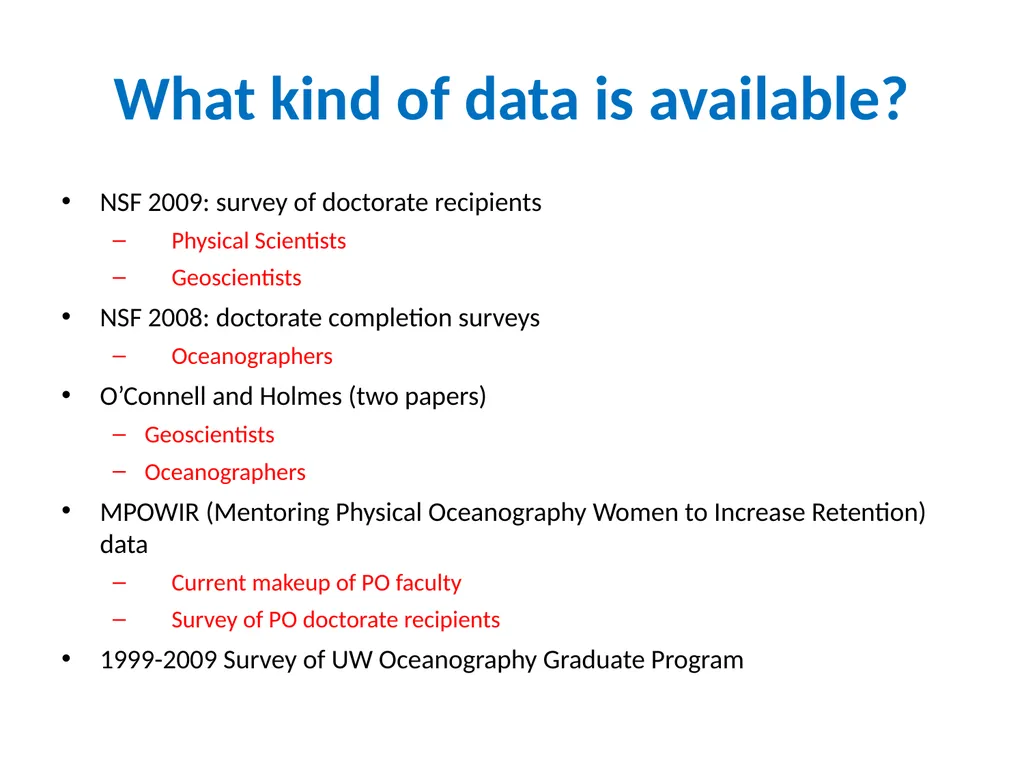
What kind of data is available? NSF 2009: survey of doctorate recipients
Physical Scientists
Geoscientists
NSF 2008: doctorate completion surveys
Oceanographers
O’Connell and Holmes (two papers)
Geoscientists
Oceanographers
MPOWIR (Mentoring Physical Oceanography Women to Increase Retention) data
Current makeup of PO faculty
Survey of PO doctorate recipients
1999-2009 Survey of UW Oceanography Graduate Program<br>
Physical Scientists
Geoscientists
NSF 2008: doctorate completion surveys
Oceanographers
O’Connell and Holmes (two papers)
Geoscientists
Oceanographers
MPOWIR (Mentoring Physical Oceanography Women to Increase Retention) data
Current makeup of PO faculty
Survey of PO doctorate recipients
1999-2009 Survey of UW Oceanography Graduate Program<br>
03
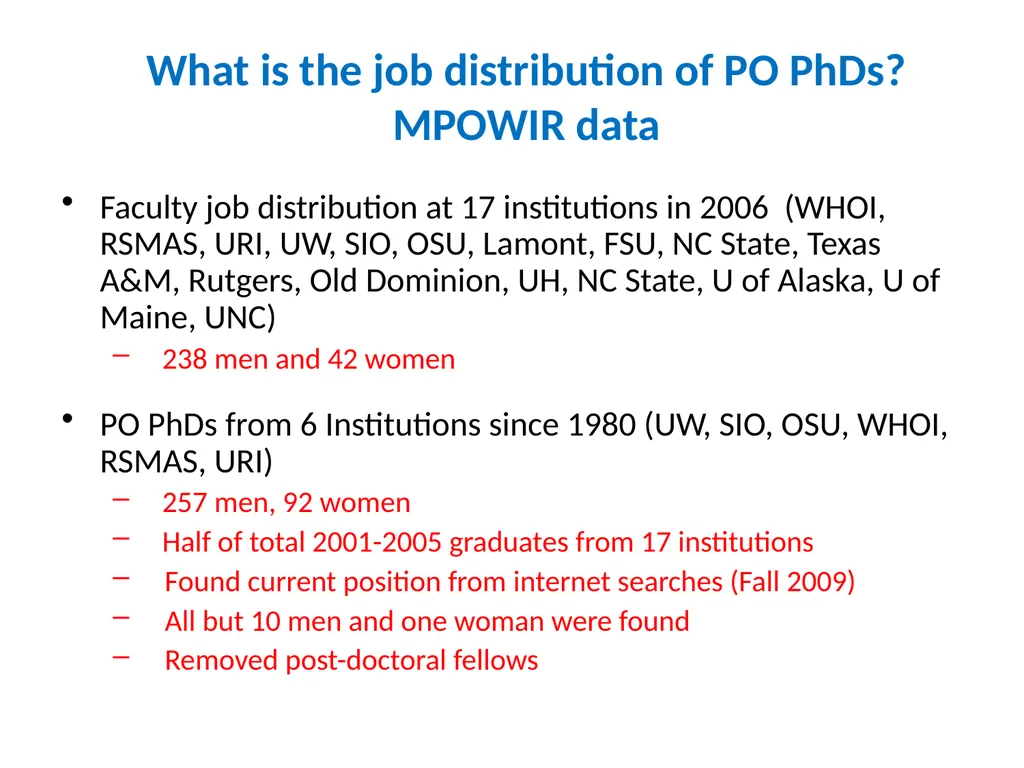
What is the job distribution of PO PhDs?
MPOWIR data Faculty job distribution at 17 institutions in 2006 (WHOI, RSMAS, URI, UW, SIO, OSU, Lamont, FSU, NC State, Texas A&M, Rutgers, Old Dominion, UH, NC State, U of Alaska, U of Maine, UNC)
238 men and 42 women
PO PhDs from 6 Institutions since 1980 (UW, SIO, OSU, WHOI, RSMAS, URI)
257 men, 92 women
Half of total 2001-2005 graduates from 17 institutions
Found current position from internet searches (Fall 2009)
All but 10 men and one woman were found
Removed post-doctoral fellows<br>
238 men and 42 women
PO PhDs from 6 Institutions since 1980 (UW, SIO, OSU, WHOI, RSMAS, URI)
257 men, 92 women
Half of total 2001-2005 graduates from 17 institutions
Found current position from internet searches (Fall 2009)
All but 10 men and one woman were found
Removed post-doctoral fellows<br>
04
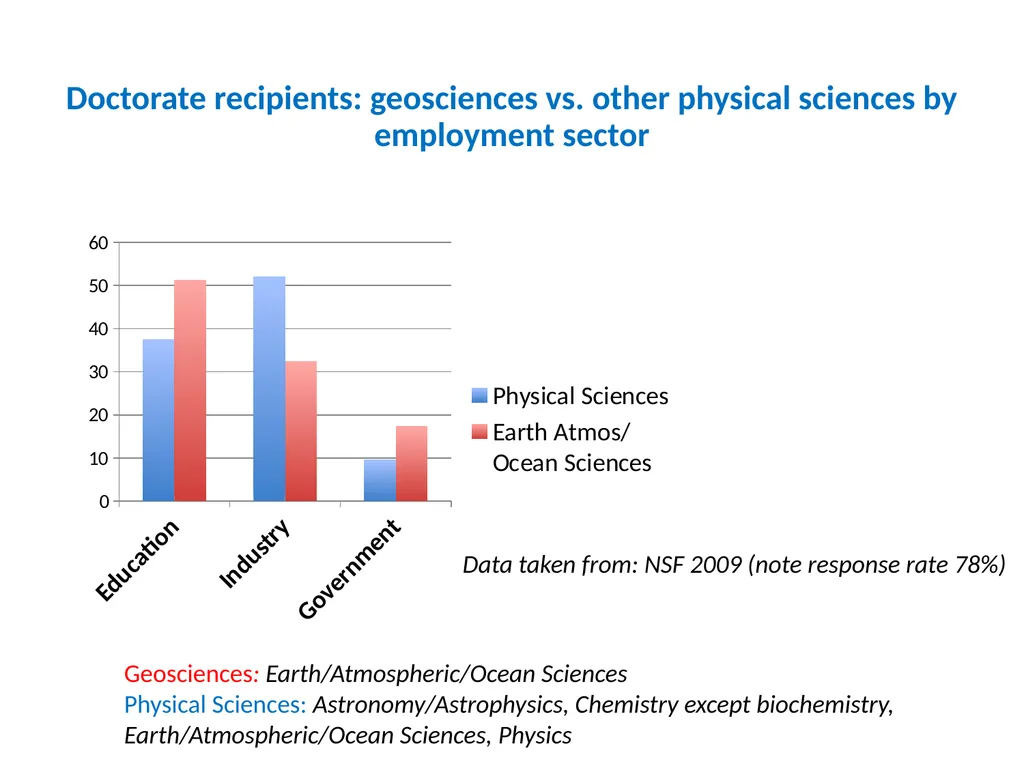
Doctorate recipients: geosciences vs. other physical sciences by employment sector Geosciences: Earth/Atmospheric/Ocean Sciences
Physical Sciences: Astronomy/Astrophysics, Chemistry except biochemistry, Earth/Atmospheric/Ocean Sciences, Physics Data taken from: NSF 2009 (note response rate 78%)<br>
Physical Sciences: Astronomy/Astrophysics, Chemistry except biochemistry, Earth/Atmospheric/Ocean Sciences, Physics Data taken from: NSF 2009 (note response rate 78%)<br>
05
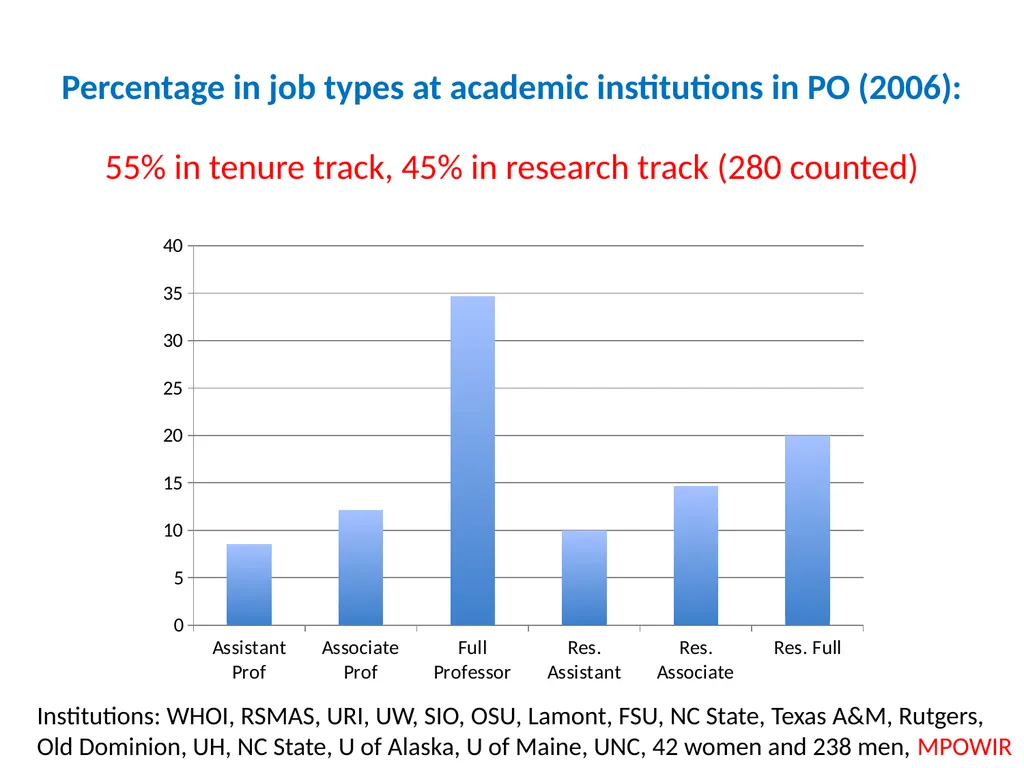
Percentage in job types at academic institutions in PO (2006):
55% in tenure track, 45% in research track (280 counted) Institutions: WHOI, RSMAS, URI, UW, SIO, OSU, Lamont, FSU, NC State, Texas A&M, Rutgers,
Old Dominion, UH, NC State, U of Alaska, U of Maine, UNC, 42 women and 238 men, MPOWIR<br>
Old Dominion, UH, NC State, U of Alaska, U of Maine, UNC, 42 women and 238 men, MPOWIR<br>
06
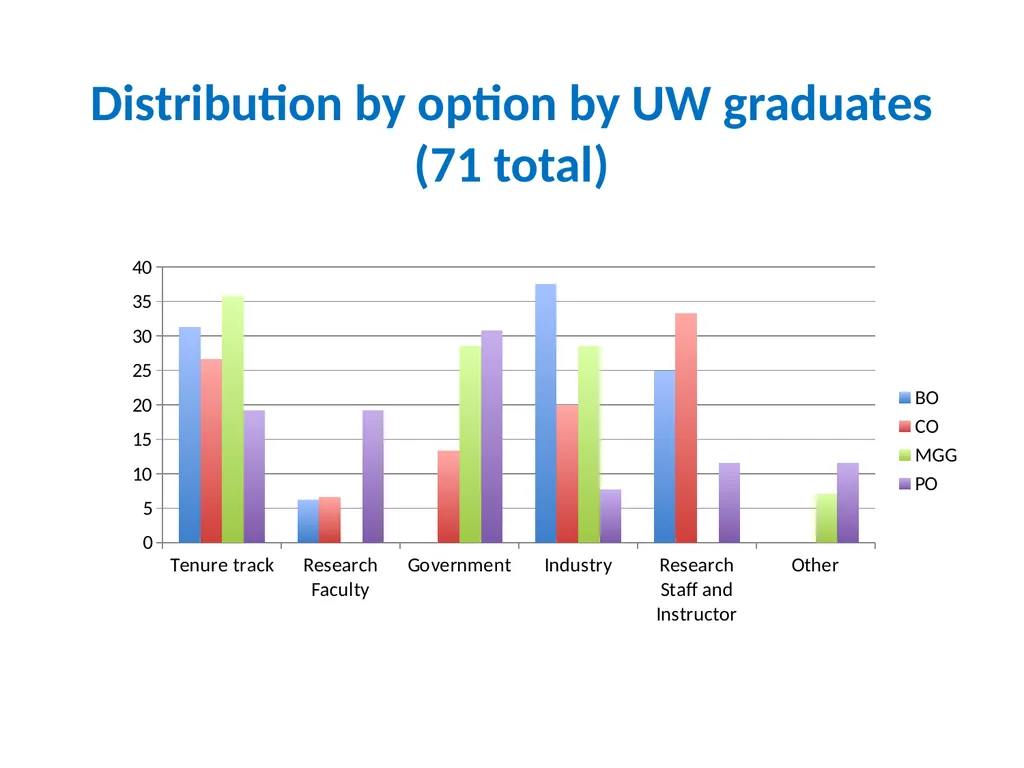
Distribution by option by UW graduates
(71 total)<br>
07
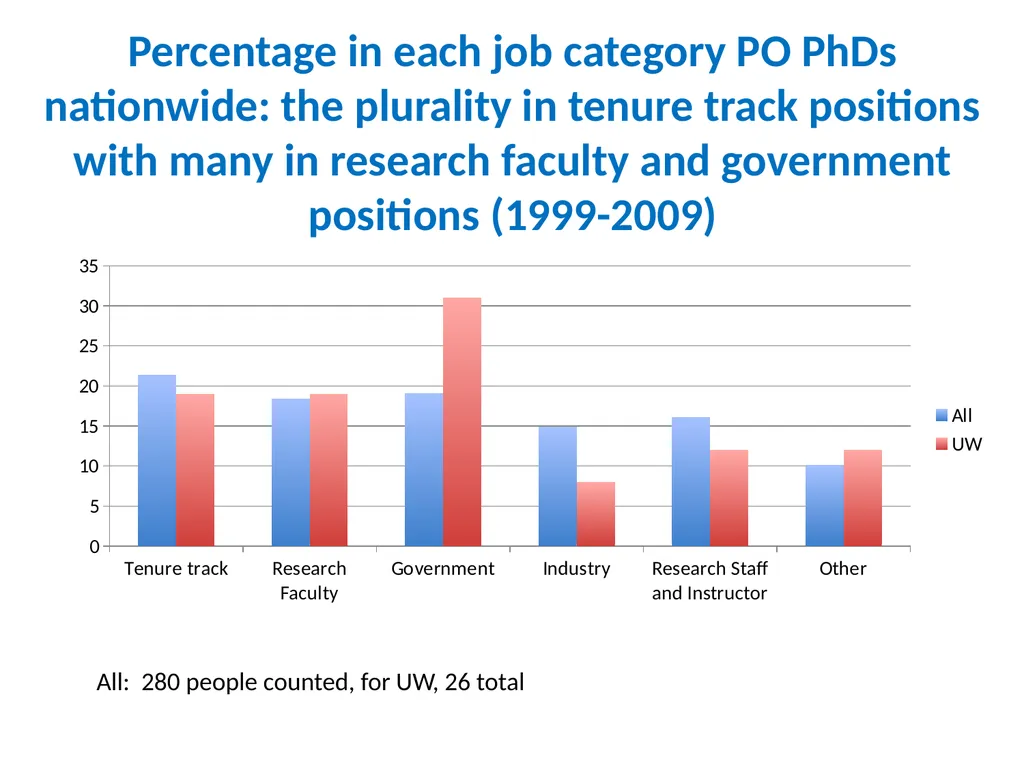
Percentage in each job category PO PhDs nationwide: the plurality in tenure track positions with many in research faculty and government positions (1999-2009) All: 280 people counted, for UW, 26 total<br>
08
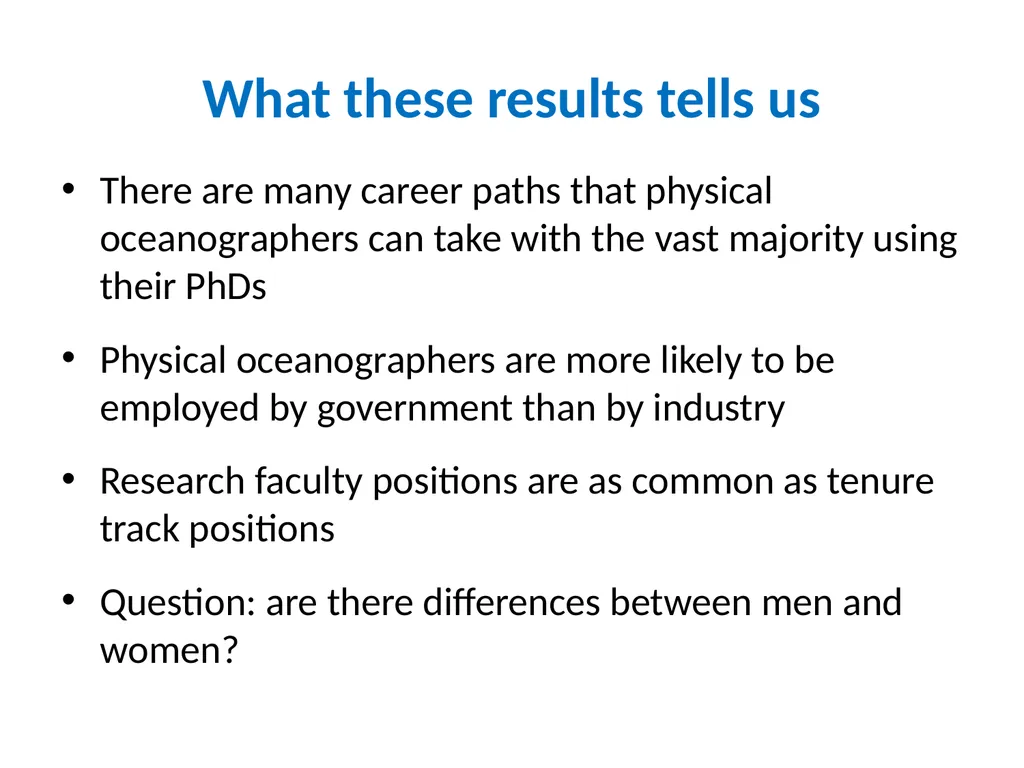
What these results tells us There are many career paths that physical oceanographers can take with the vast majority using their PhDs
Physical oceanographers are more likely to be employed by government than by industry
Research faculty positions are as common as tenure track positions
Question: are there differences between men and women?<br>
Physical oceanographers are more likely to be employed by government than by industry
Research faculty positions are as common as tenure track positions
Question: are there differences between men and women?<br>
09
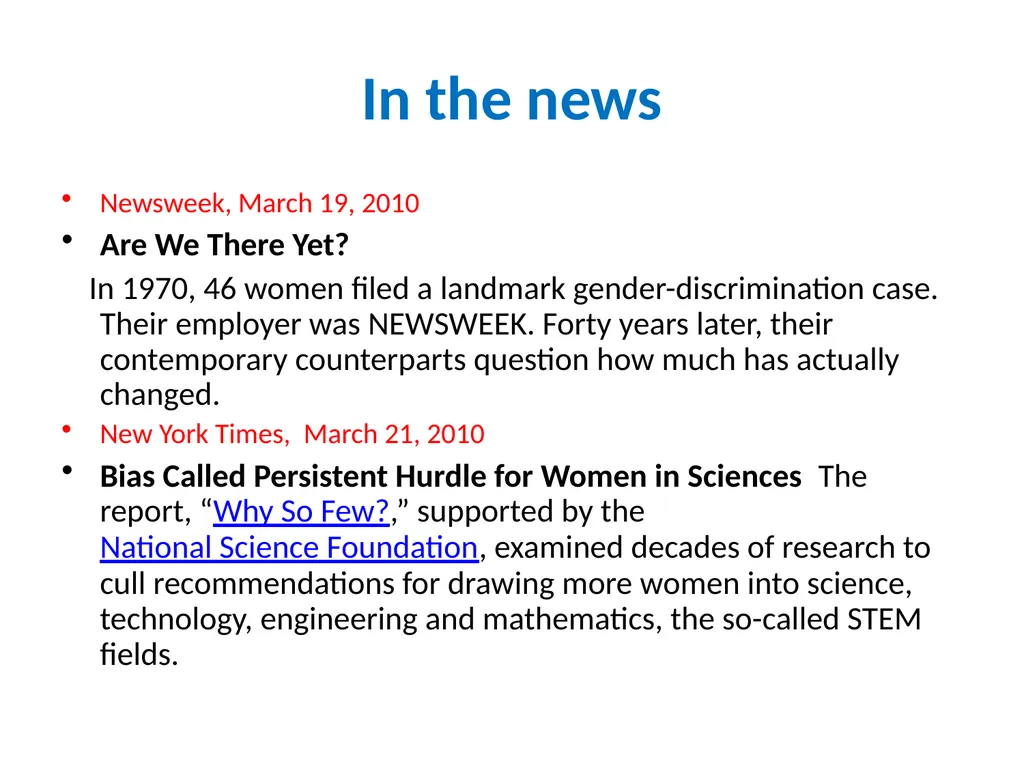
In the news Newsweek, March 19, 2010
Are We There Yet?
In 1970, 46 women filed a landmark gender-discrimination case. Their employer was NEWSWEEK. Forty years later, their contemporary counterparts question how much has actually changed.
New York Times, March 21, 2010
Bias Called Persistent Hurdle for Women in Sciences The report, “Why So Few?,” supported by the National Science Foundation, examined decades of research to cull recommendations for drawing more women into science, technology, engineering and mathematics, the so-called STEM fields.<br>
Are We There Yet?
In 1970, 46 women filed a landmark gender-discrimination case. Their employer was NEWSWEEK. Forty years later, their contemporary counterparts question how much has actually changed.
New York Times, March 21, 2010
Bias Called Persistent Hurdle for Women in Sciences The report, “Why So Few?,” supported by the National Science Foundation, examined decades of research to cull recommendations for drawing more women into science, technology, engineering and mathematics, the so-called STEM fields.<br>
10
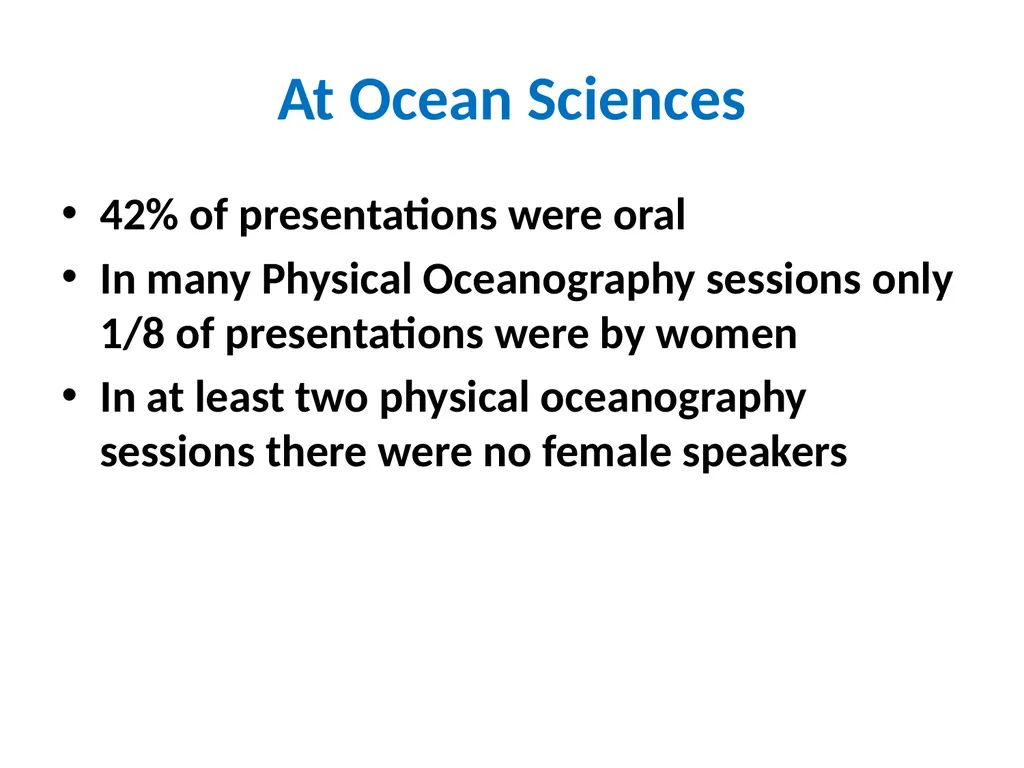
At Ocean Sciences 42% of presentations were oral
In many Physical Oceanography sessions only 1/8 of presentations were by women
In at least two physical oceanography sessions there were no female speakers<br>
In many Physical Oceanography sessions only 1/8 of presentations were by women
In at least two physical oceanography sessions there were no female speakers<br>
11
Where is the drop off of women occurring? Examine graduate student attrition in our program
Examine current positions on PO faculties
Examine job distribution by time<br>
Examine current positions on PO faculties
Examine job distribution by time<br>
12
The number of women and men getting PhDs in Oceanography is reaching parity From 2001-2005, 34 women and 86 men got their PhD in PO from 17 institutions
surveyed (30% women) O’Connell and Holmes, 2005 PO Male PhDs PO Female PhDs<br>
surveyed (30% women) O’Connell and Holmes, 2005 PO Male PhDs PO Female PhDs<br>
13
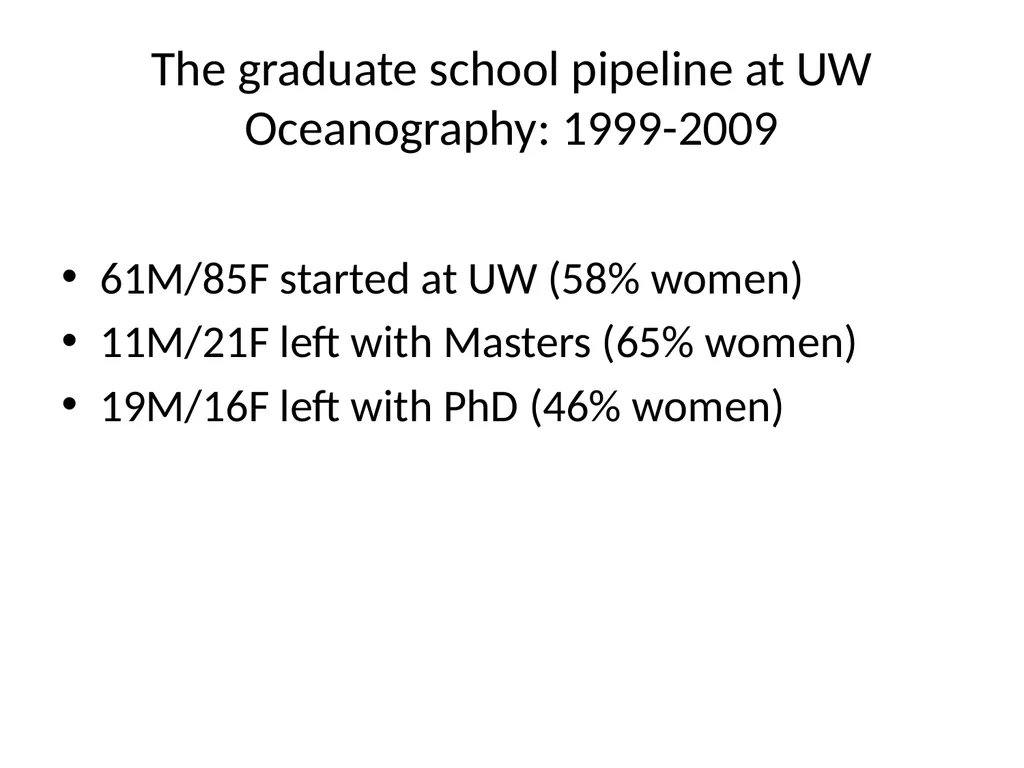
The graduate school pipeline at UW Oceanography: 1999-2009 61M/85F started at UW (58% women)
11M/21F left with Masters (65% women)
19M/16F left with PhD (46% women)<br>
11M/21F left with Masters (65% women)
19M/16F left with PhD (46% women)<br>
14
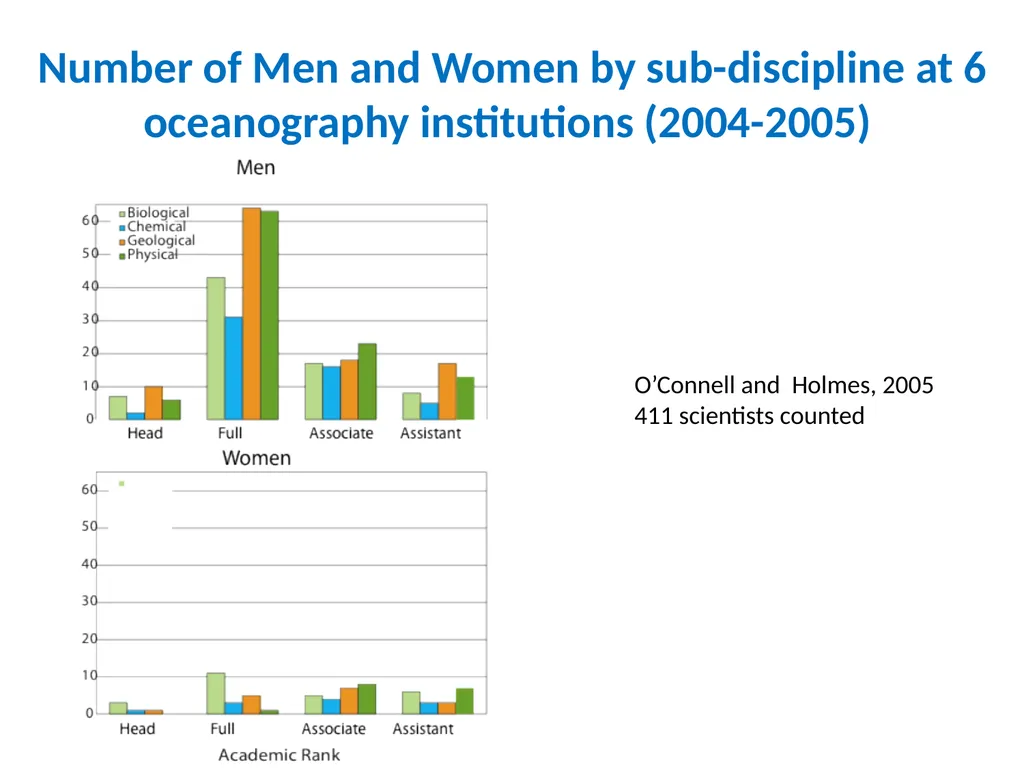
Number of Men and Women by sub-discipline at 6 oceanography institutions (2004-2005) O’Connell and Holmes, 2005
411 scientists counted<br>
411 scientists counted<br>
15
Percentage of men and women in job types at academic institutions in Physical Oceanography (2006)(17 Institutions) Institutions: WHOI, RSMAS, URI, UW, SIO, OSU, Lamont, FSU, NC State, Texas A&M, Rutgers,
Old Dominion, UH, NC State, U of Alaska, U of Maine, UNC, 42 women and 238 men<br>
Old Dominion, UH, NC State, U of Alaska, U of Maine, UNC, 42 women and 238 men<br>
16
Percentage of women and men by job category in PO after post-doc (6 Institutions)<br>
17
More jobs in industry, fewer in government, fewer women are gaining tenure track positions in the last decade (6 Institutions) PhD before 1996 PhD 1996 and after 138 men, 43 women 119 men, 49 women<br>
18
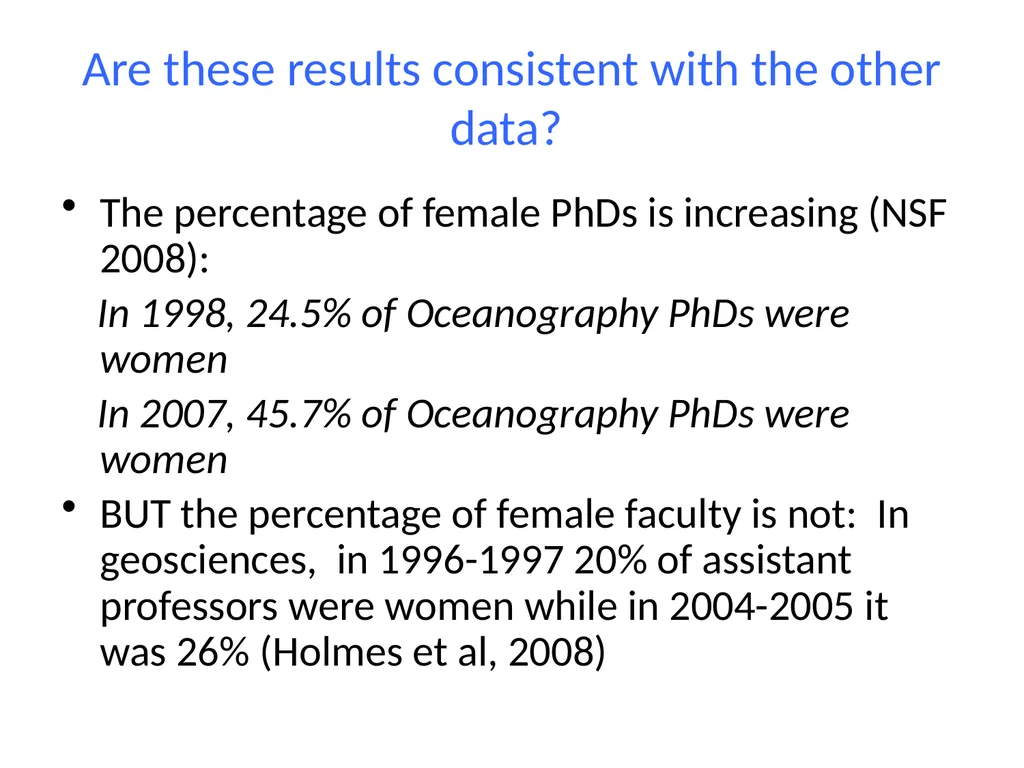
Are these results consistent with the other data? The percentage of female PhDs is increasing (NSF 2008):
In 1998, 24.5% of Oceanography PhDs were women
In 2007, 45.7% of Oceanography PhDs were women
BUT the percentage of female faculty is not: In geosciences, in 1996-1997 20% of assistant professors were women while in 2004-2005 it was 26% (Holmes et al, 2008)<br>
In 1998, 24.5% of Oceanography PhDs were women
In 2007, 45.7% of Oceanography PhDs were women
BUT the percentage of female faculty is not: In geosciences, in 1996-1997 20% of assistant professors were women while in 2004-2005 it was 26% (Holmes et al, 2008)<br>
19
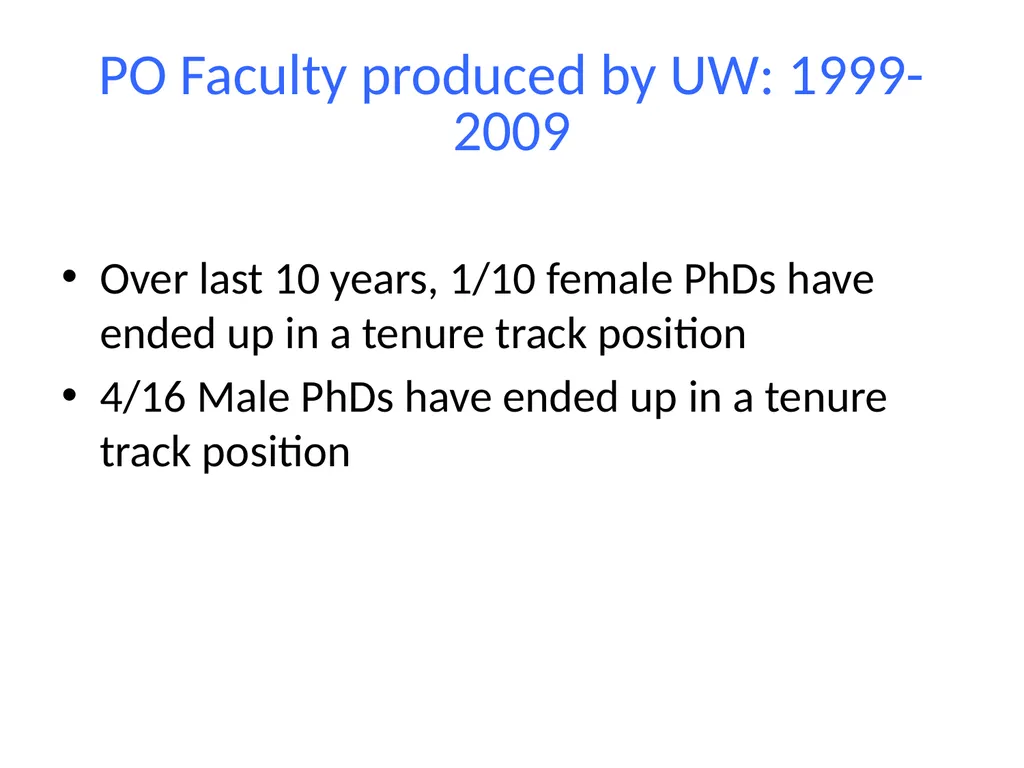
PO Faculty produced by UW: 1999-2009 Over last 10 years, 1/10 female PhDs have ended up in a tenure track position
4/16 Male PhDs have ended up in a tenure track position<br>
4/16 Male PhDs have ended up in a tenure track position<br>
20
How do the careers of women and men differ? Our research suggests that although more women are gaining their PhD in recent years, they are less likely to obtain a tenure track position than they used to be, and they are less likely to obtain a tenure track position then men<br>
21
Reasons for the missing female faculty: why we should care While we are training students for a wide variety of careers, giving them skills for a changing job market, we may not be giving half of our students role models that they can identify with in academia<br>
22
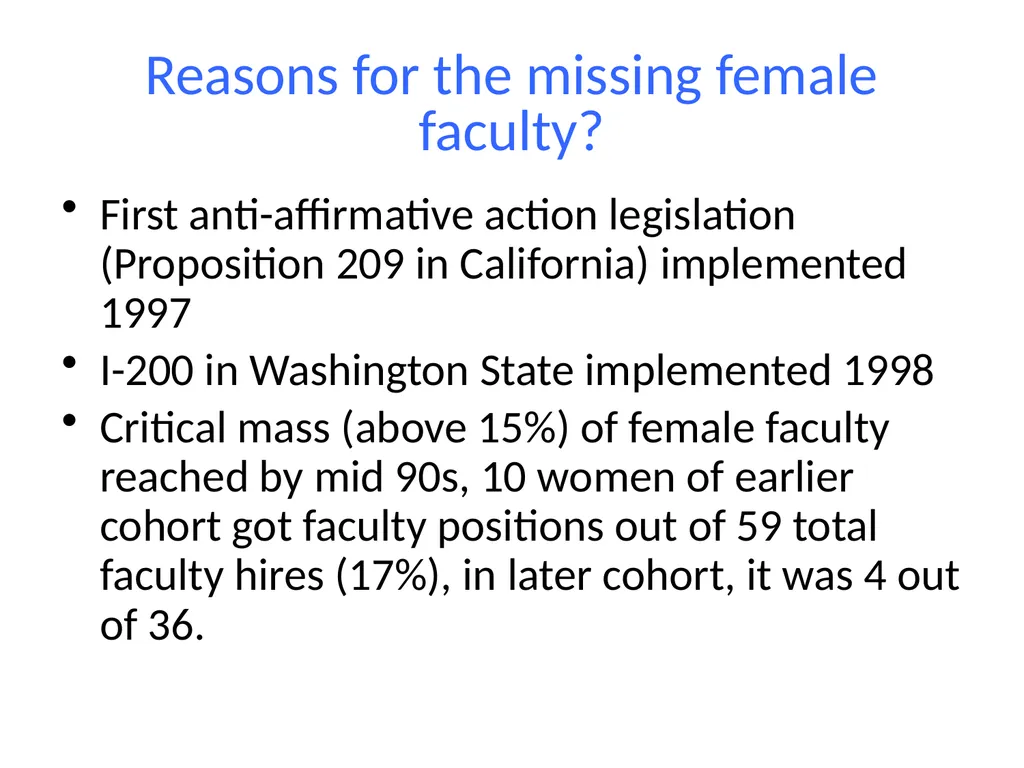
Reasons for the missing female faculty? First anti-affirmative action legislation (Proposition 209 in California) implemented 1997
I-200 in Washington State implemented 1998
Critical mass (above 15%) of female faculty reached by mid 90s, 10 women of earlier cohort got faculty positions out of 59 total faculty hires (17%), in later cohort, it was 4 out of 36.<br>
I-200 in Washington State implemented 1998
Critical mass (above 15%) of female faculty reached by mid 90s, 10 women of earlier cohort got faculty positions out of 59 total faculty hires (17%), in later cohort, it was 4 out of 36.<br>
23
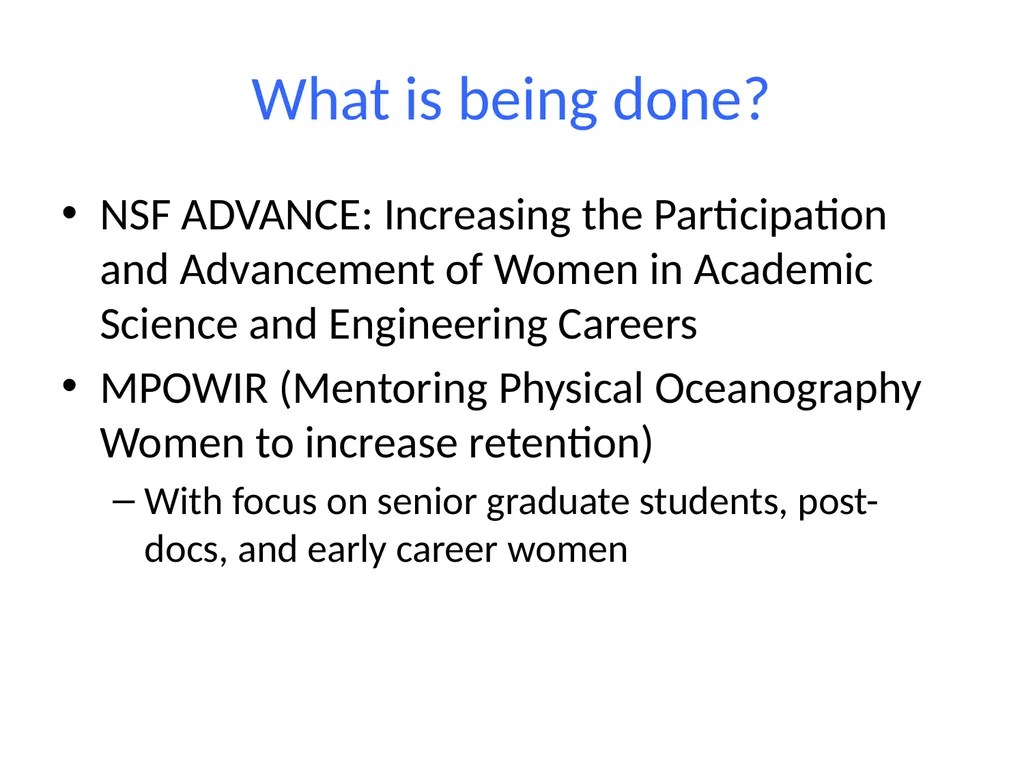
What is being done? NSF ADVANCE: Increasing the Participation and Advancement of Women in Academic Science and Engineering Careers
MPOWIR (Mentoring Physical Oceanography Women to increase retention)
With focus on senior graduate students, post-docs, and early career women<br>
MPOWIR (Mentoring Physical Oceanography Women to increase retention)
With focus on senior graduate students, post-docs, and early career women<br>
24
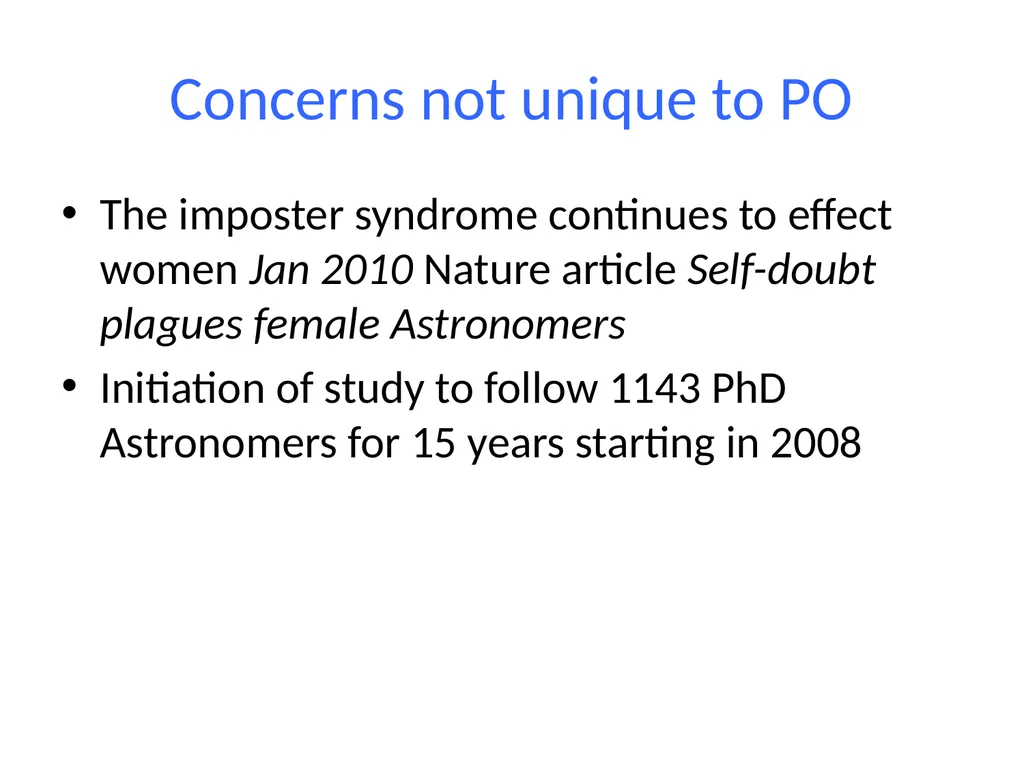
Concerns not unique to PO The imposter syndrome continues to effect women Jan 2010 Nature article Self-doubt plagues female Astronomers
Initiation of study to follow 1143 PhD Astronomers for 15 years starting in 2008<br>
Initiation of study to follow 1143 PhD Astronomers for 15 years starting in 2008<br>
25
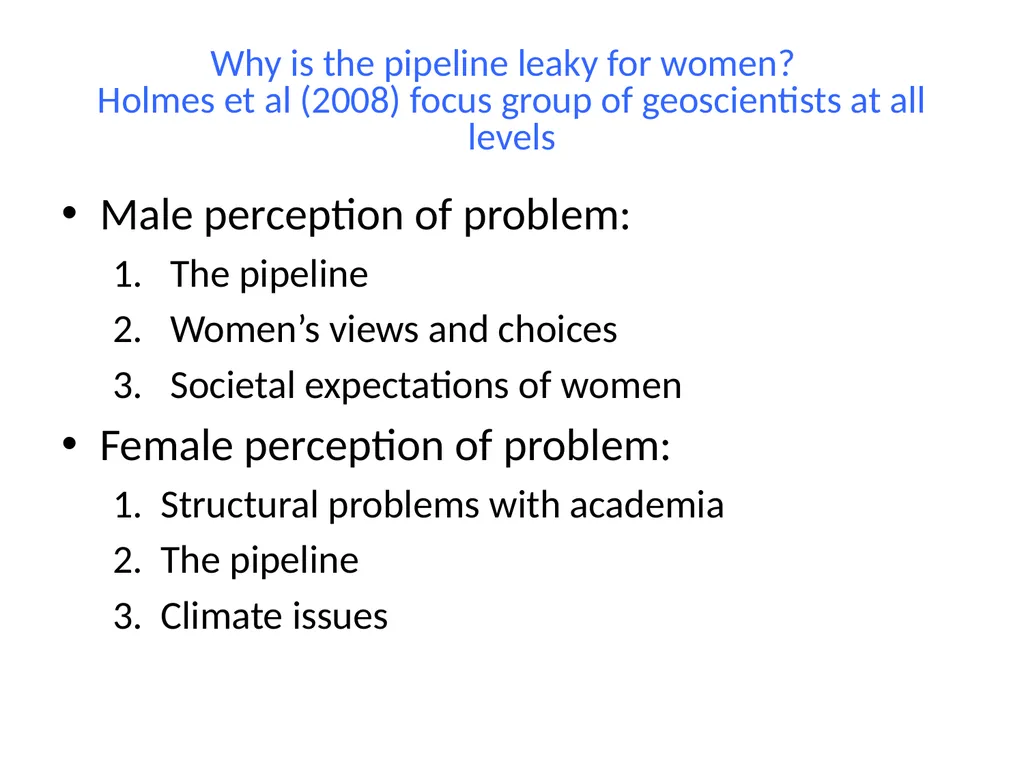
Why is the pipeline leaky for women?
Holmes et al (2008) focus group of geoscientists at all levels Male perception of problem:
The pipeline
Women’s views and choices
Societal expectations of women
Female perception of problem:
1. Structural problems with academia
2. The pipeline
3. Climate issues<br>
The pipeline
Women’s views and choices
Societal expectations of women
Female perception of problem:
1. Structural problems with academia
2. The pipeline
3. Climate issues<br>
26
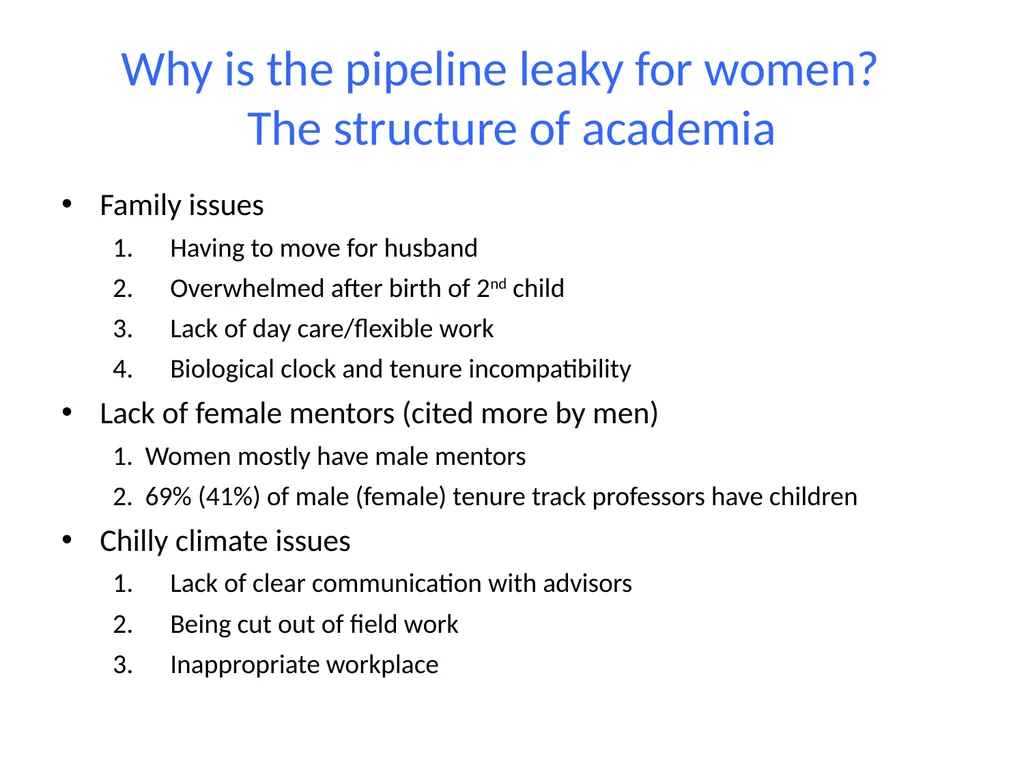
Why is the pipeline leaky for women?
The structure of academia Family issues
Having to move for husband
Overwhelmed after birth of 2nd child
Lack of day care/flexible work
Biological clock and tenure incompatibility
Lack of female mentors (cited more by men)
1. Women mostly have male mentors
2. 69% (41%) of male (female) tenure track professors have children
Chilly climate issues
Lack of clear communication with advisors
Being cut out of field work
Inappropriate workplace<br>
Having to move for husband
Overwhelmed after birth of 2nd child
Lack of day care/flexible work
Biological clock and tenure incompatibility
Lack of female mentors (cited more by men)
1. Women mostly have male mentors
2. 69% (41%) of male (female) tenure track professors have children
Chilly climate issues
Lack of clear communication with advisors
Being cut out of field work
Inappropriate workplace<br>
27
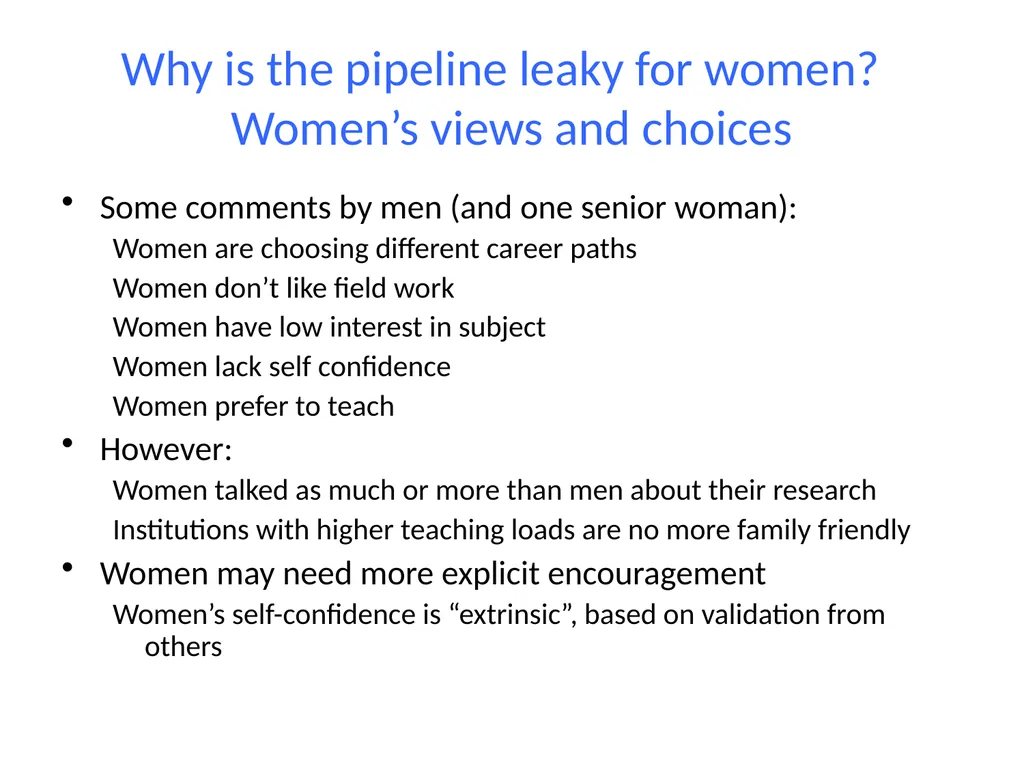
Why is the pipeline leaky for women?
Women’s views and choices Some comments by men (and one senior woman):
Women are choosing different career paths
Women don’t like field work
Women have low interest in subject
Women lack self confidence
Women prefer to teach
However:
Women talked as much or more than men about their research
Institutions with higher teaching loads are no more family friendly
Women may need more explicit encouragement
Women’s self-confidence is “extrinsic”, based on validation from others<br>
Women are choosing different career paths
Women don’t like field work
Women have low interest in subject
Women lack self confidence
Women prefer to teach
However:
Women talked as much or more than men about their research
Institutions with higher teaching loads are no more family friendly
Women may need more explicit encouragement
Women’s self-confidence is “extrinsic”, based on validation from others<br>
28
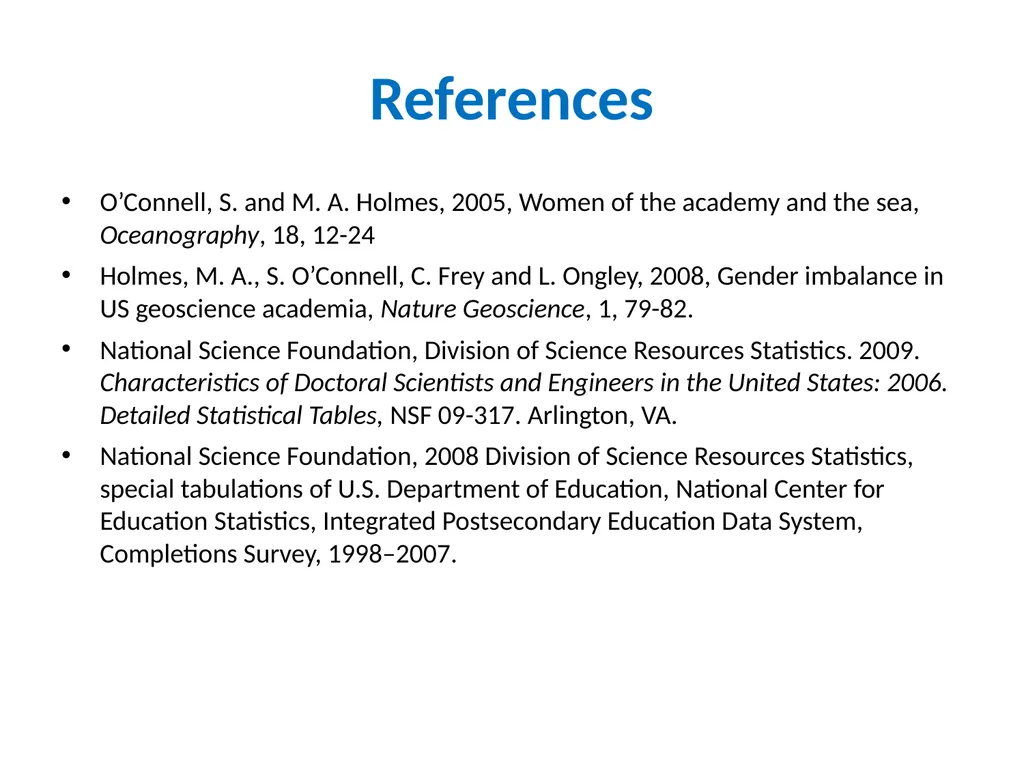
References O’Connell, S. and M. A. Holmes, 2005, Women of the academy and the sea, Oceanography, 18, 12-24
Holmes, M. A., S. O’Connell, C. Frey and L. Ongley, 2008, Gender imbalance in US geoscience academia, Nature Geoscience, 1, 79-82.
National Science Foundation, Division of Science Resources Statistics. 2009. Characteristics of Doctoral Scientists and Engineers in the United States: 2006. Detailed Statistical Tables, NSF 09-317. Arlington, VA.
National Science Foundation, 2008 Division of Science Resources Statistics, special tabulations of U.S. Department of Education, National Center for Education Statistics, Integrated Postsecondary Education Data System, Completions Survey, 1998–2007.<br>
Holmes, M. A., S. O’Connell, C. Frey and L. Ongley, 2008, Gender imbalance in US geoscience academia, Nature Geoscience, 1, 79-82.
National Science Foundation, Division of Science Resources Statistics. 2009. Characteristics of Doctoral Scientists and Engineers in the United States: 2006. Detailed Statistical Tables, NSF 09-317. Arlington, VA.
National Science Foundation, 2008 Division of Science Resources Statistics, special tabulations of U.S. Department of Education, National Center for Education Statistics, Integrated Postsecondary Education Data System, Completions Survey, 1998–2007.<br>