
Why Quality Improvement? Quality Improvement (QI)
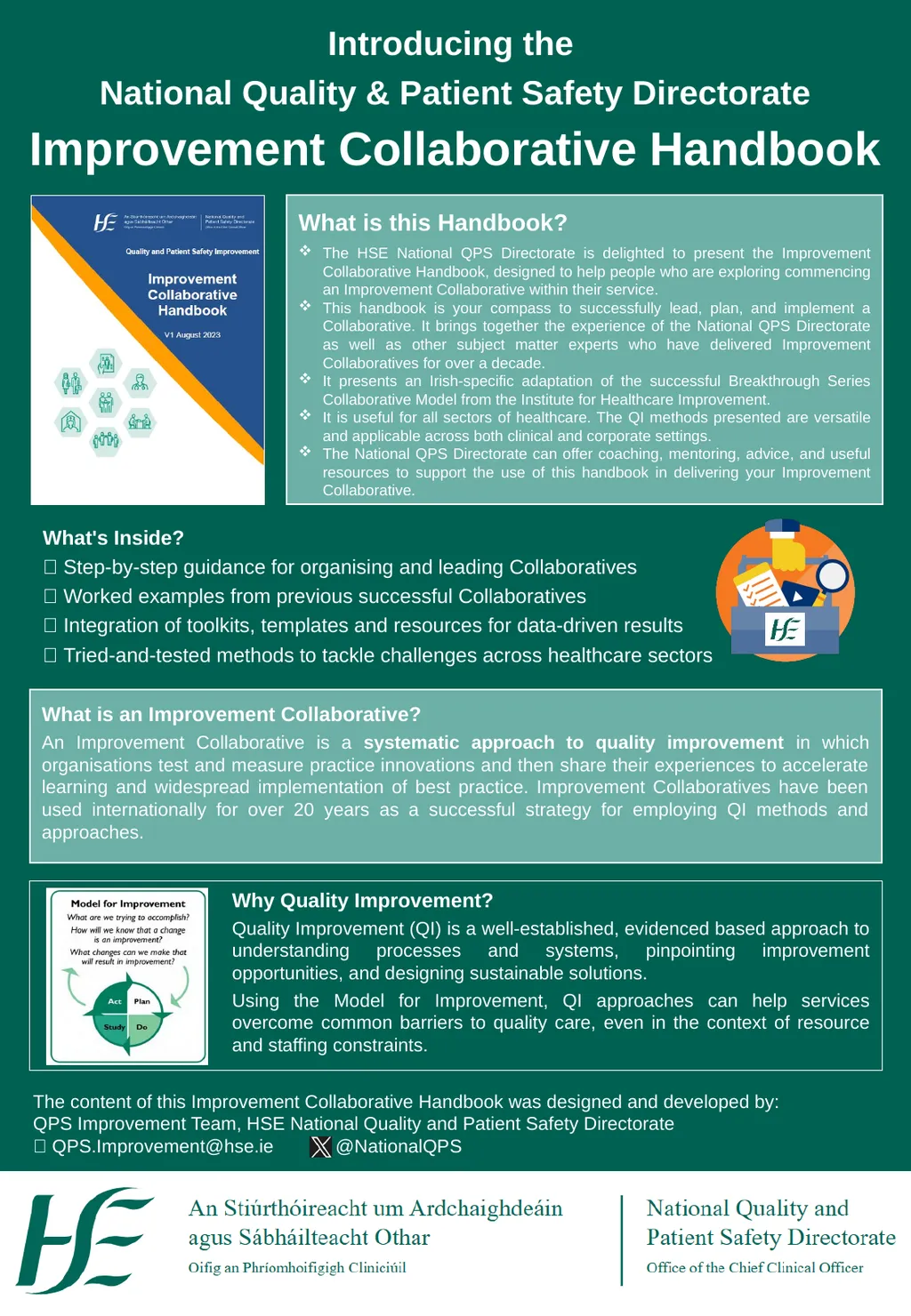
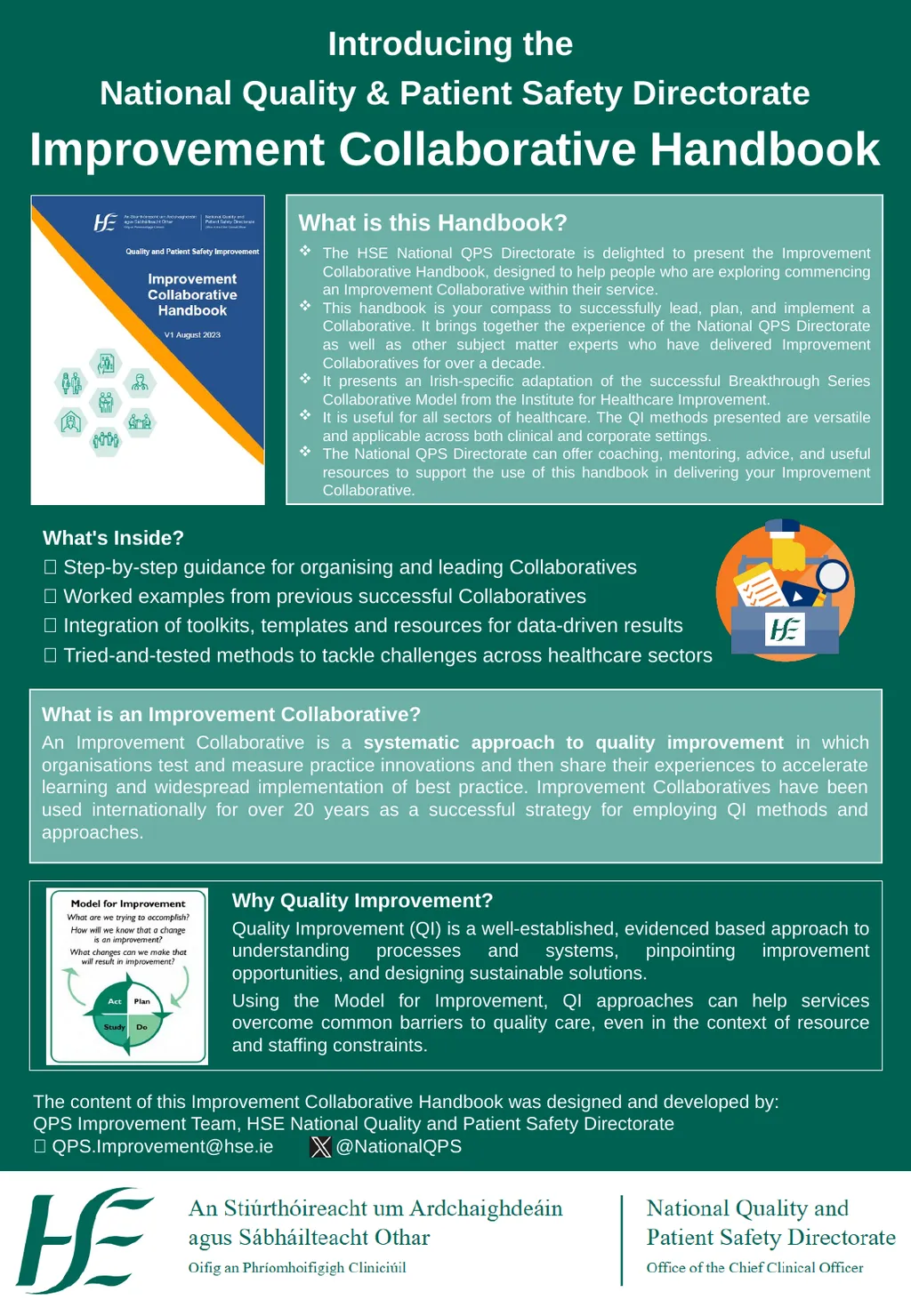
Description: Why Quality Improvement? Quality Improvement (QI) is a well-established, evidenced based approach to understanding processes and systems, pinpointing improvement opportunities, and designing sustainable solutions. Using the Model for
Related Topics
Download Presentation
"Why Quality Improvement? Quality Improvement (QI)" is the property of its rightful owner. Permission is granted to download and print the materials on this website for personal, non-commercial use only, and to display it on your personal computer provided you do not modify the materials and that you retain all copyright notices contained in the materials. By downloading content from our website, you accept the terms of this agreement.
Presentation Transcript
slide1. Why Quality Improvement?
Quality Improvement (QI) is a well-established, evidenced based approach to understanding processes and systems, pinpointing improvement opportunities, and designing sustainable solutions.
Using the Model for Improvement, QI approaches can help services overcome common barriers to quality care, even in the context of resource and staffing constraints. Introducing the
National Quality & Patient Safety Directorate
Improvement Collaborative Handbook What is this Handbook?
The HSE National QPS Directorate is delighted to present the Improvement Collaborative Handbook, designed to help people who are exploring commencing an Improvement Collaborative within their service.
This handbook is your compass to successfully lead, plan, and implement a Collaborative. It brings together the experience of the National QPS Directorate as well as other subject matter experts who have delivered Improvement Collaboratives for over a decade.
It presents an Irish-specific adaptation of the successful Breakthrough Series Collaborative Model from the Institute for Healthcare Improvement.
It is useful for all sectors of healthcare. The QI methods presented are versatile and applicable across both clinical and corporate settings.
The National QPS Directorate can offer coaching, mentoring, advice, and useful resources to support the use of this handbook in delivering your Improvement Collaborative. What is an Improvement Collaborative?
An Improvement Collaborative is a systematic approach to quality improvement in which organisations test and measure practice innovations and then share their experiences to accelerate learning and widespread implementation of best practice. Improvement Collaboratives have been used internationally for over 20 years as a successful strategy for employing QI methods and approaches. The content of this Improvement Collaborative Handbook was designed and developed by:
QPS Improvement Team, HSE National Quality and Patient Safety Directorate
📧 QPS.Improvement@hse.ie @NationalQPS What's Inside?
📝 Step-by-step guidance for organising and leading Collaboratives
📝 Worked examples from previous successful Collaboratives
📝 Integration of toolkits, templates and resources for data-driven results
📝 Tried-and-tested methods to tackle challenges across healthcare sectors<br>
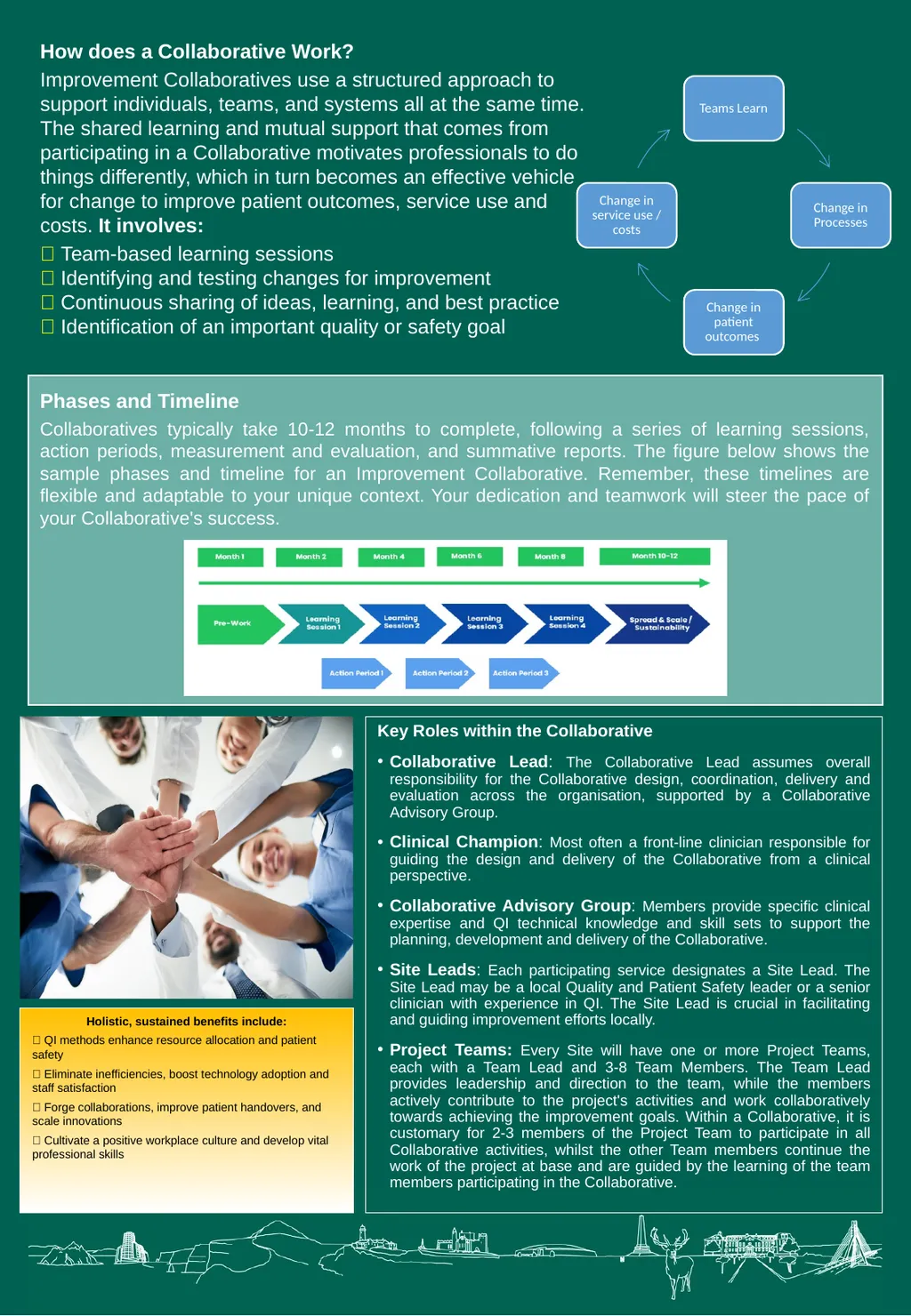
slide2. How does a Collaborative Work? Improvement Collaboratives use a structured approach to support individuals, teams, and systems all at the same time. The shared learning and mutual support that comes from participating in a Collaborative motivates professionals to do things differently, which in turn becomes an effective vehicle for change to improve patient outcomes, service use and costs. It involves: 🌟 Team-based learning sessions 🌟 Identifying and testing changes for improvement 🌟 Continuous sharing of ideas, learning, and best practice 🌟 Identification of an important quality or safety goal Key Roles within the Collaborative
Collaborative Lead: The Collaborative Lead assumes overall responsibility for the Collaborative design, coordination, delivery and evaluation across the organisation, supported by a Collaborative Advisory Group.
Clinical Champion: Most often a front-line clinician responsible for guiding the design and delivery of the Collaborative from a clinical perspective.
Collaborative Advisory Group: Members provide specific clinical expertise and QI technical knowledge and skill sets to support the planning, development and delivery of the Collaborative.
Site Leads: Each participating service designates a Site Lead. The Site Lead may be a local Quality and Patient Safety leader or a senior clinician with experience in QI. The Site Lead is crucial in facilitating and guiding improvement efforts locally.
Project Teams: Every Site will have one or more Project Teams, each with a Team Lead and 3-8 Team Members. The Team Lead provides leadership and direction to the team, while the members actively contribute to the project's activities and work collaboratively towards achieving the improvement goals. Within a Collaborative, it is customary for 2-3 members of the Project Team to participate in all Collaborative activities, whilst the other Team members continue the work of the project at base and are guided by the learning of the team members participating in the Collaborative. Holistic, sustained benefits include:
🌟 QI methods enhance resource allocation and patient safety
🌟 Eliminate inefficiencies, boost technology adoption and staff satisfaction
🌟 Forge collaborations, improve patient handovers, and scale innovations
🌟 Cultivate a positive workplace culture and develop vital professional skills Phases and Timeline
Collaboratives typically take 10-12 months to complete, following a series of learning sessions, action periods, measurement and evaluation, and summative reports. The figure below shows the sample phases and timeline for an Improvement Collaborative. Remember, these timelines are flexible and adaptable to your unique context. Your dedication and teamwork will steer the pace of your Collaborative's success.<br>
Quality Improvement (QI) is a well-established, evidenced based approach to understanding processes and systems, pinpointing improvement opportunities, and designing sustainable solutions.
Using the Model for Improvement, QI approaches can help services overcome common barriers to quality care, even in the context of resource and staffing constraints. Introducing the
National Quality & Patient Safety Directorate
Improvement Collaborative Handbook What is this Handbook?
The HSE National QPS Directorate is delighted to present the Improvement Collaborative Handbook, designed to help people who are exploring commencing an Improvement Collaborative within their service.
This handbook is your compass to successfully lead, plan, and implement a Collaborative. It brings together the experience of the National QPS Directorate as well as other subject matter experts who have delivered Improvement Collaboratives for over a decade.
It presents an Irish-specific adaptation of the successful Breakthrough Series Collaborative Model from the Institute for Healthcare Improvement.
It is useful for all sectors of healthcare. The QI methods presented are versatile and applicable across both clinical and corporate settings.
The National QPS Directorate can offer coaching, mentoring, advice, and useful resources to support the use of this handbook in delivering your Improvement Collaborative. What is an Improvement Collaborative?
An Improvement Collaborative is a systematic approach to quality improvement in which organisations test and measure practice innovations and then share their experiences to accelerate learning and widespread implementation of best practice. Improvement Collaboratives have been used internationally for over 20 years as a successful strategy for employing QI methods and approaches. The content of this Improvement Collaborative Handbook was designed and developed by:
QPS Improvement Team, HSE National Quality and Patient Safety Directorate
📧 QPS.Improvement@hse.ie @NationalQPS What's Inside?
📝 Step-by-step guidance for organising and leading Collaboratives
📝 Worked examples from previous successful Collaboratives
📝 Integration of toolkits, templates and resources for data-driven results
📝 Tried-and-tested methods to tackle challenges across healthcare sectors<br>
slide2. How does a Collaborative Work? Improvement Collaboratives use a structured approach to support individuals, teams, and systems all at the same time. The shared learning and mutual support that comes from participating in a Collaborative motivates professionals to do things differently, which in turn becomes an effective vehicle for change to improve patient outcomes, service use and costs. It involves: 🌟 Team-based learning sessions 🌟 Identifying and testing changes for improvement 🌟 Continuous sharing of ideas, learning, and best practice 🌟 Identification of an important quality or safety goal Key Roles within the Collaborative
Collaborative Lead: The Collaborative Lead assumes overall responsibility for the Collaborative design, coordination, delivery and evaluation across the organisation, supported by a Collaborative Advisory Group.
Clinical Champion: Most often a front-line clinician responsible for guiding the design and delivery of the Collaborative from a clinical perspective.
Collaborative Advisory Group: Members provide specific clinical expertise and QI technical knowledge and skill sets to support the planning, development and delivery of the Collaborative.
Site Leads: Each participating service designates a Site Lead. The Site Lead may be a local Quality and Patient Safety leader or a senior clinician with experience in QI. The Site Lead is crucial in facilitating and guiding improvement efforts locally.
Project Teams: Every Site will have one or more Project Teams, each with a Team Lead and 3-8 Team Members. The Team Lead provides leadership and direction to the team, while the members actively contribute to the project's activities and work collaboratively towards achieving the improvement goals. Within a Collaborative, it is customary for 2-3 members of the Project Team to participate in all Collaborative activities, whilst the other Team members continue the work of the project at base and are guided by the learning of the team members participating in the Collaborative. Holistic, sustained benefits include:
🌟 QI methods enhance resource allocation and patient safety
🌟 Eliminate inefficiencies, boost technology adoption and staff satisfaction
🌟 Forge collaborations, improve patient handovers, and scale innovations
🌟 Cultivate a positive workplace culture and develop vital professional skills Phases and Timeline
Collaboratives typically take 10-12 months to complete, following a series of learning sessions, action periods, measurement and evaluation, and summative reports. The figure below shows the sample phases and timeline for an Improvement Collaborative. Remember, these timelines are flexible and adaptable to your unique context. Your dedication and teamwork will steer the pace of your Collaborative's success.<br>