
WM2:- Algebra uses symbol systems to express the

Description: WM2:- Algebra uses symbol systems to express the structure of mathematical relationships. Algebra is the study of structures abstracted from computations and relations, and provides a way to make generalisations. Algebraic thinking moves
Related Topics
Download Presentation
"WM2:- Algebra uses symbol systems to express the" is the property of its rightful owner. Permission is granted to download and print the materials on this website for personal, non-commercial use only, and to display it on your personal computer provided you do not modify the materials and that you retain all copyright notices contained in the materials. By downloading content from our website, you accept the terms of this agreement.
Presentation Transcript
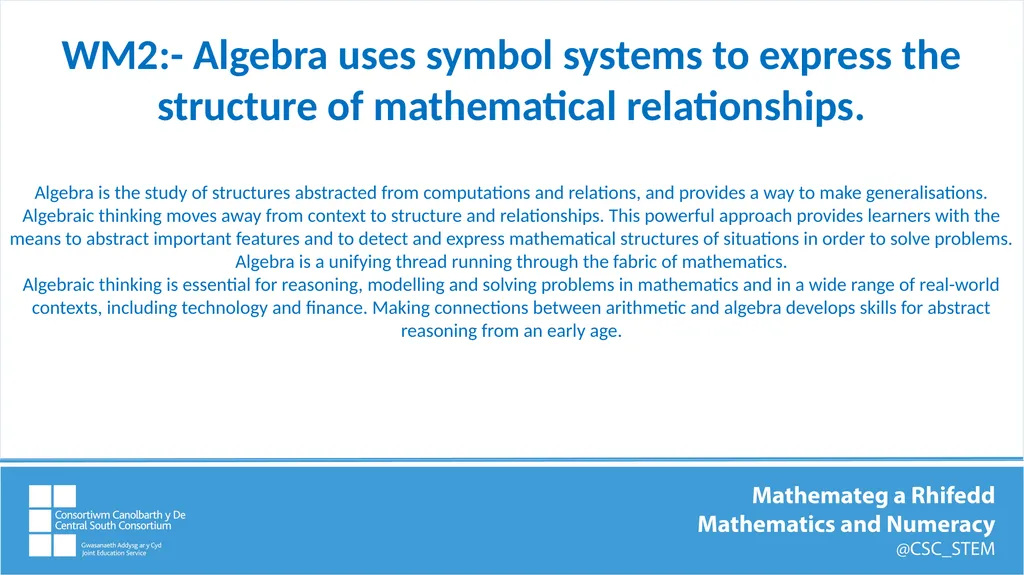
slide1. WM2:- Algebra uses symbol systems to express the structure of mathematical relationships.
Algebra is the study of structures abstracted from computations and relations, and provides a way to make generalisations. Algebraic thinking moves away from context to structure and relationships. This powerful approach provides learners with the means to abstract important features and to detect and express mathematical structures of situations in order to solve problems. Algebra is a unifying thread running through the fabric of mathematics.
Algebraic thinking is essential for reasoning, modelling and solving problems in mathematics and in a wide range of real-world contexts, including technology and finance. Making connections between arithmetic and algebra develops skills for abstract reasoning from an early age.<br>
slide2. Patterns<br>
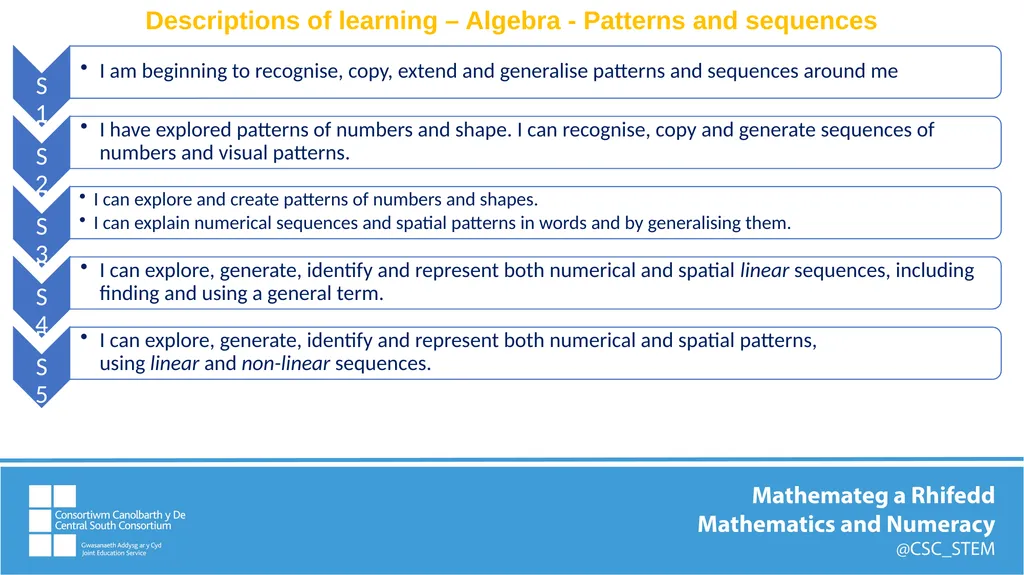
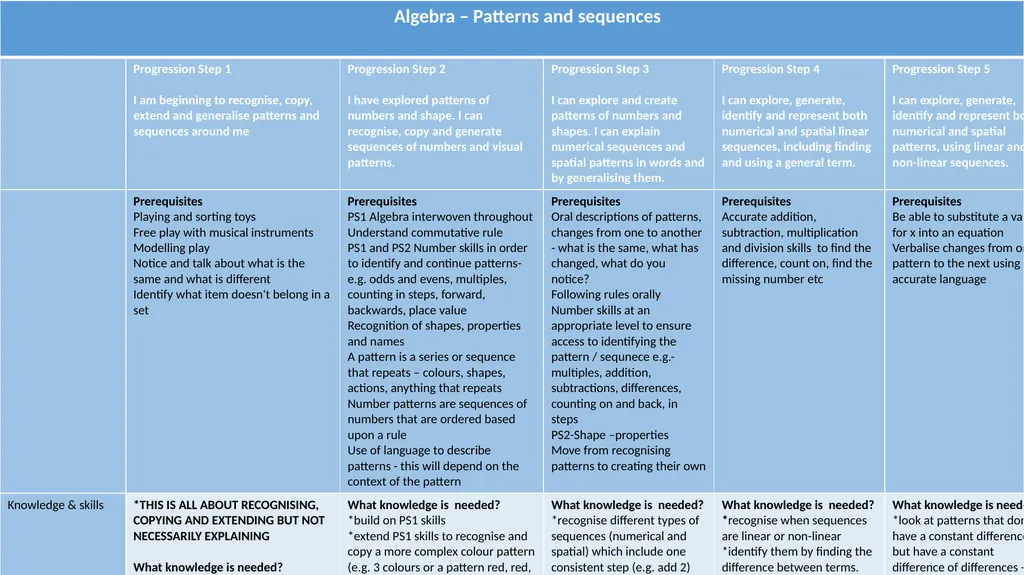
slide3. Descriptions of learning – Algebra - Patterns and sequences<br>
slide5. Forming<br>
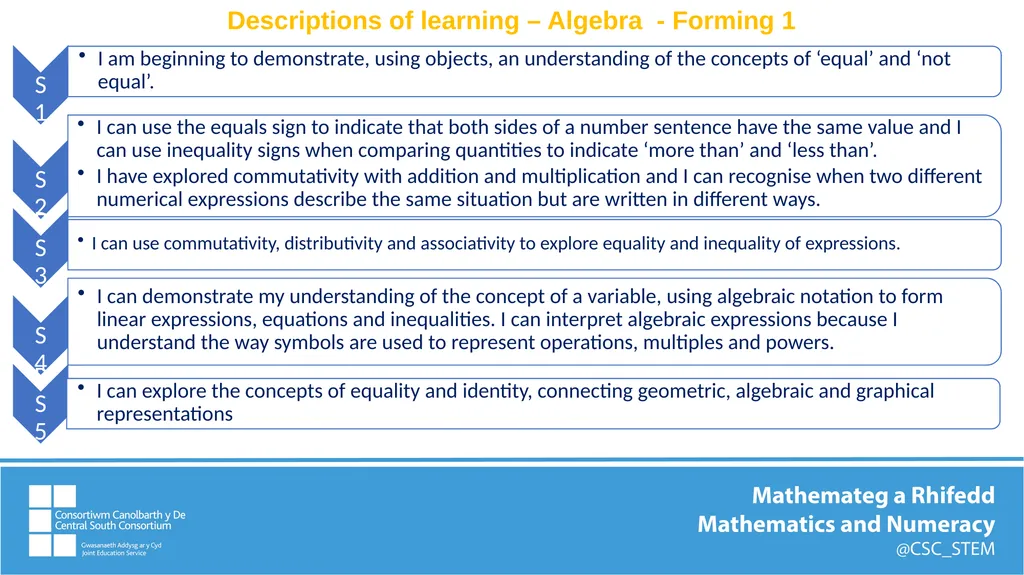
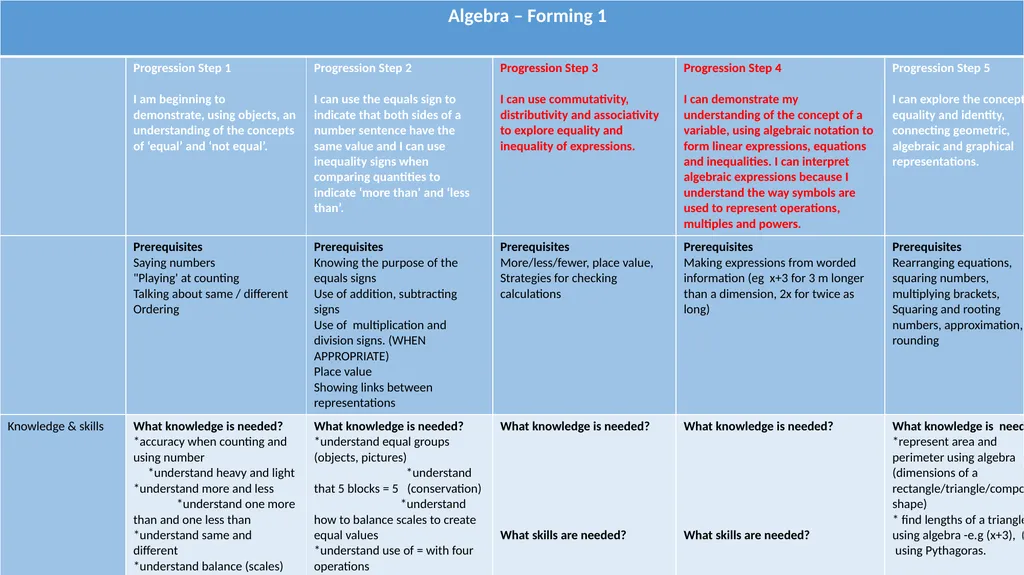
slide6. Descriptions of learning – Algebra - Forming 1<br>
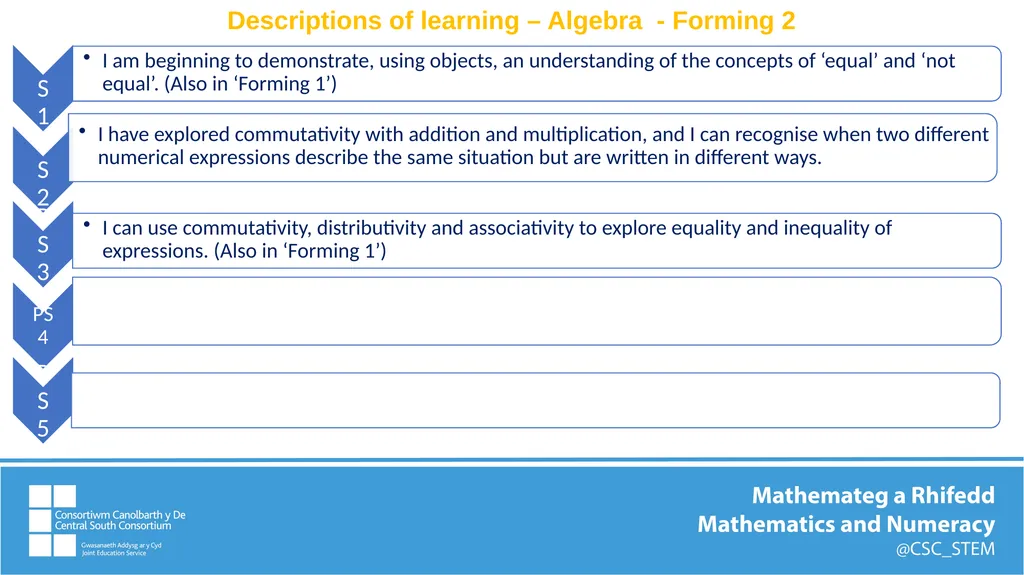
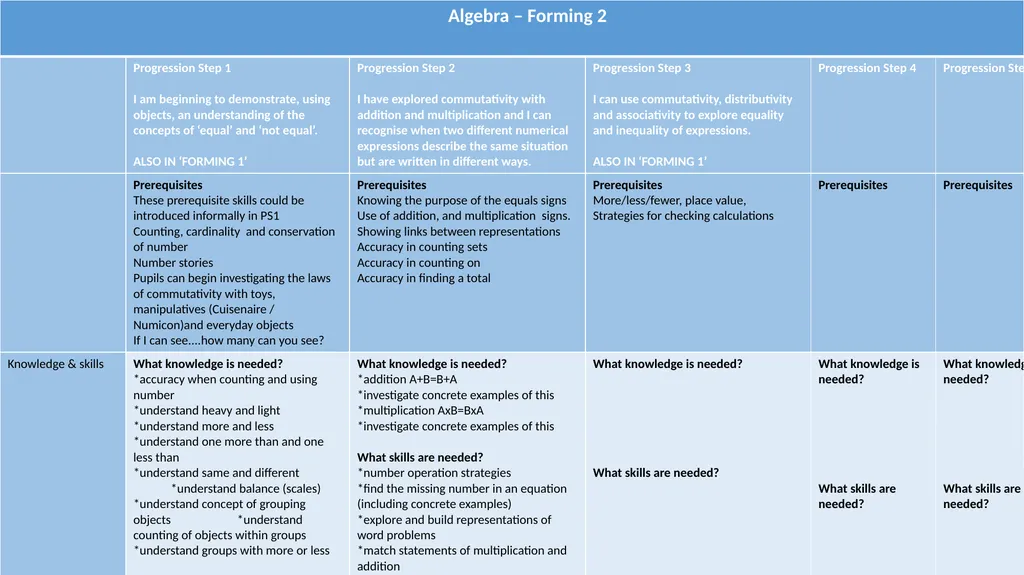
slide8. Descriptions of learning – Algebra - Forming 2<br>
slide10. Manipulating<br>
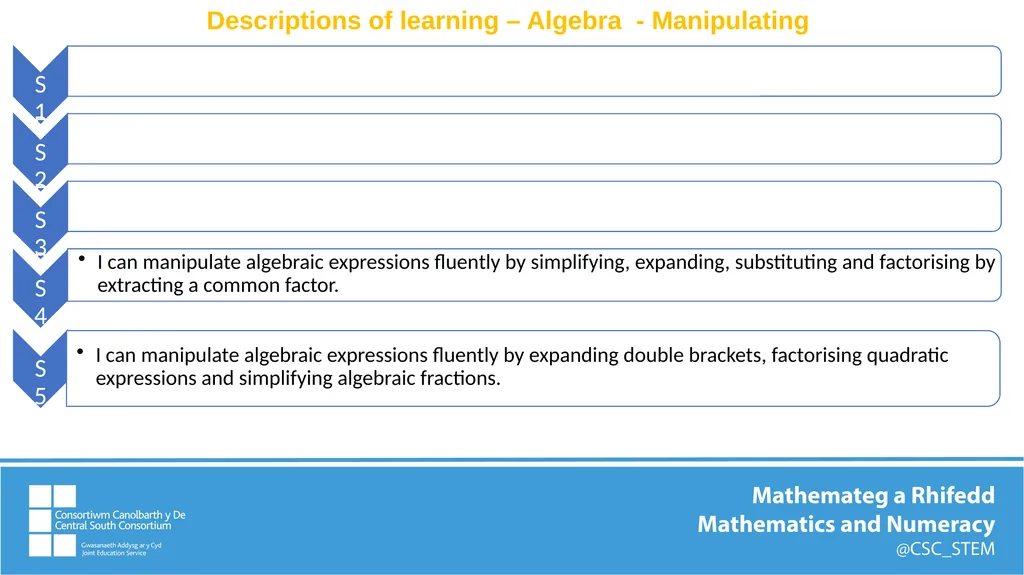
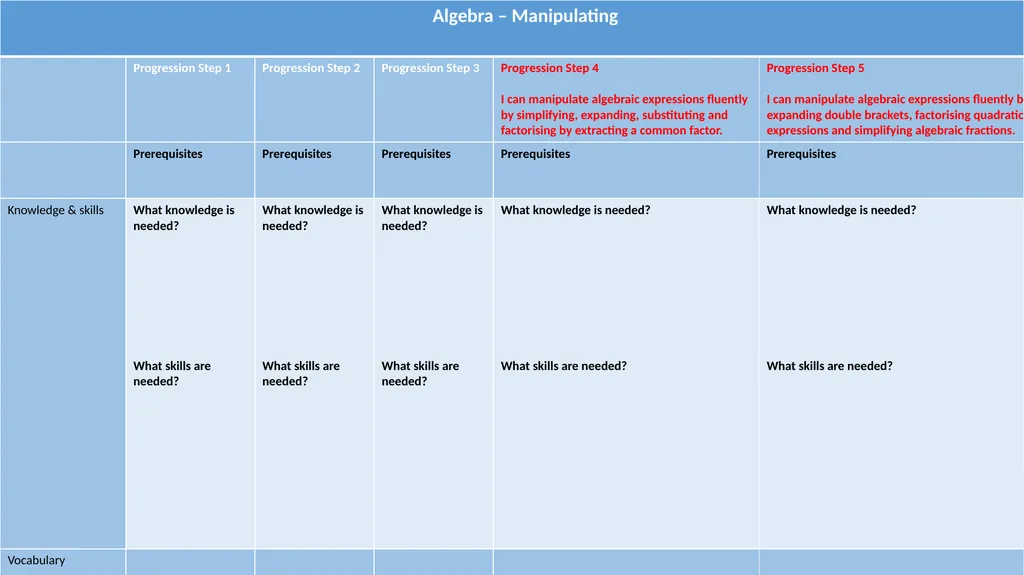
slide11. Descriptions of learning – Algebra - Manipulating<br>
slide13. Solving<br>
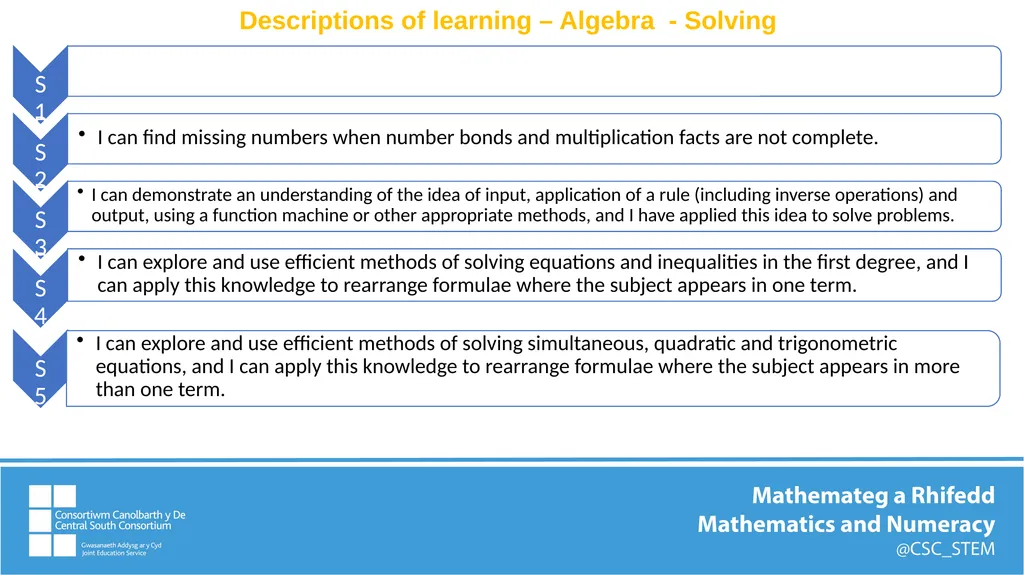
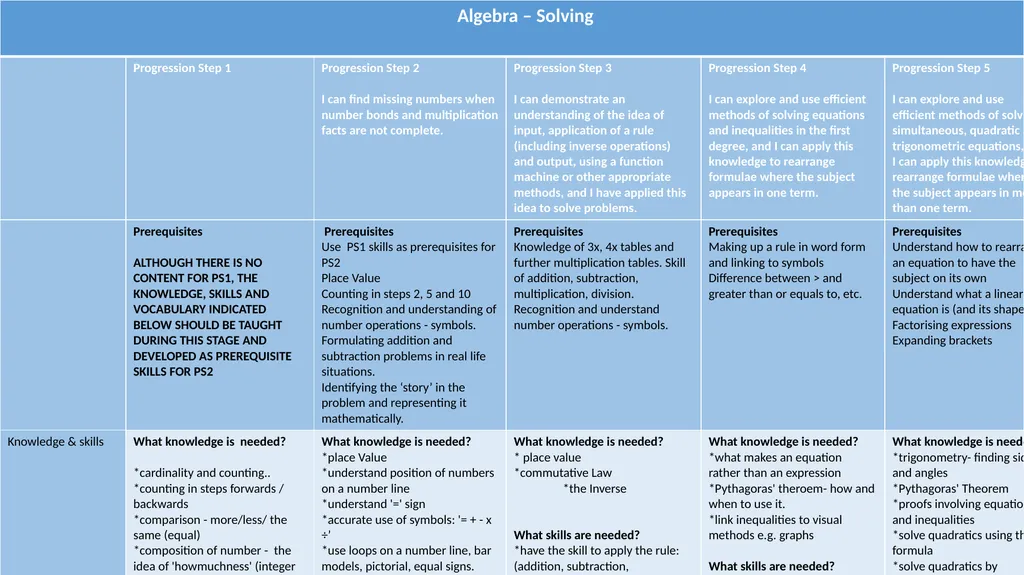
slide14. Descriptions of learning – Algebra - Solving<br>
slide16. Modelling<br>
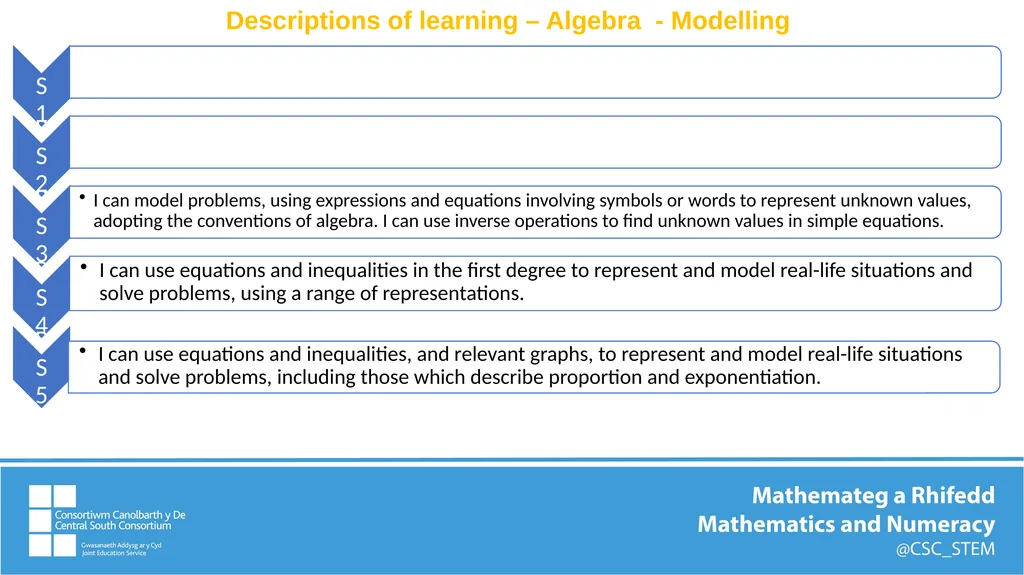
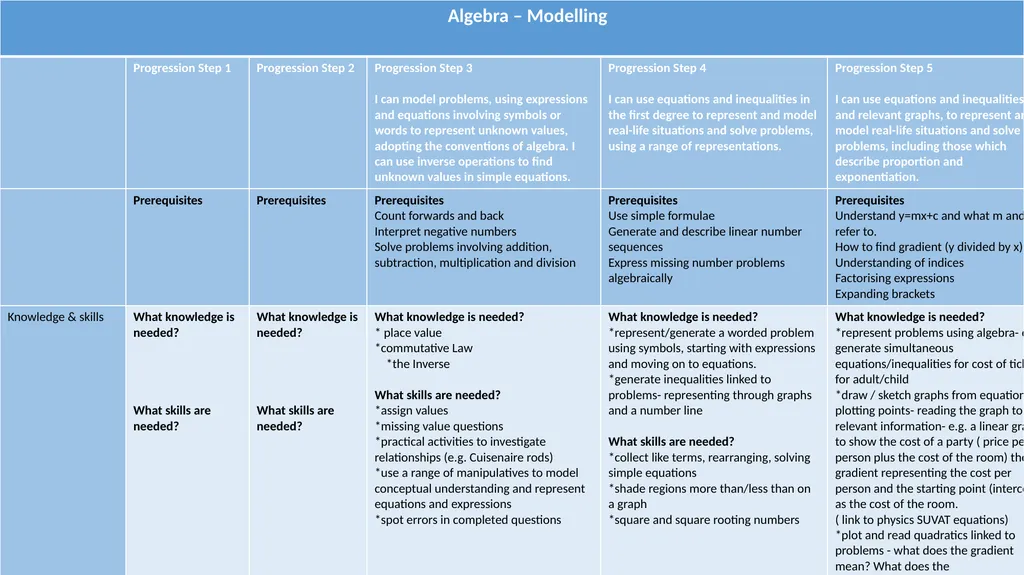
slide17. Descriptions of learning – Algebra - Modelling<br>
slide19. Graphical methods<br>
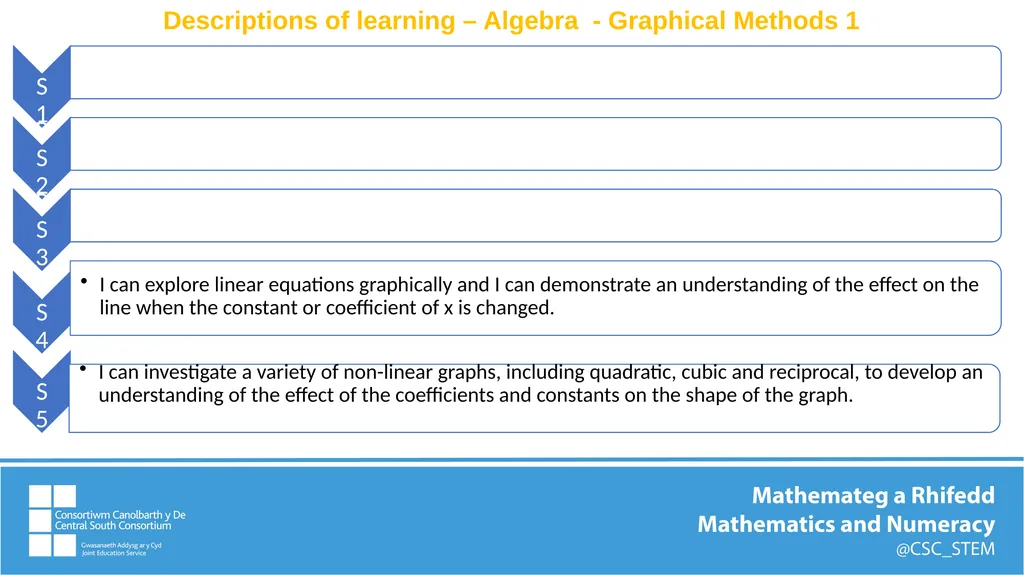
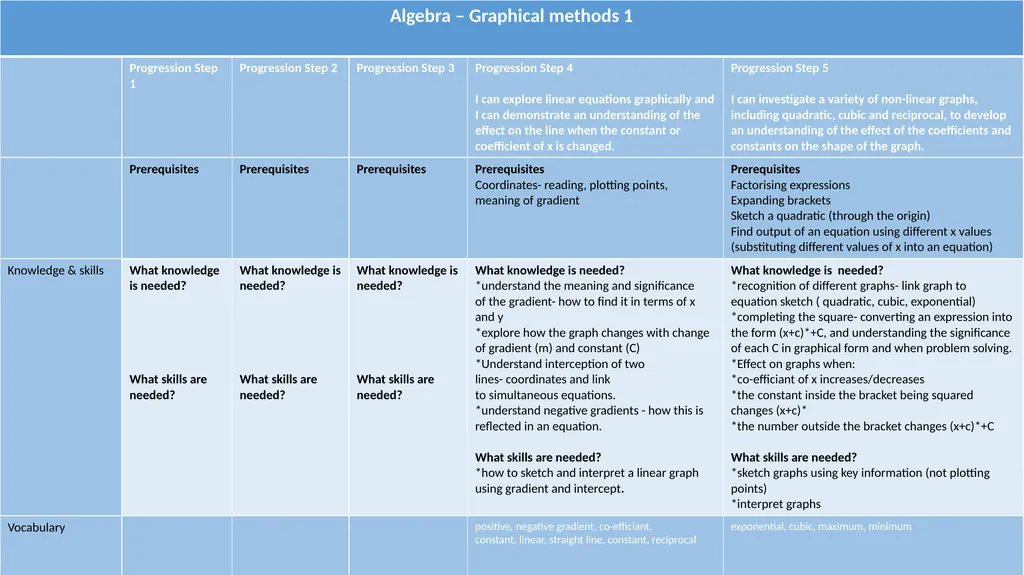
slide20. Descriptions of learning – Algebra - Graphical Methods 1<br>
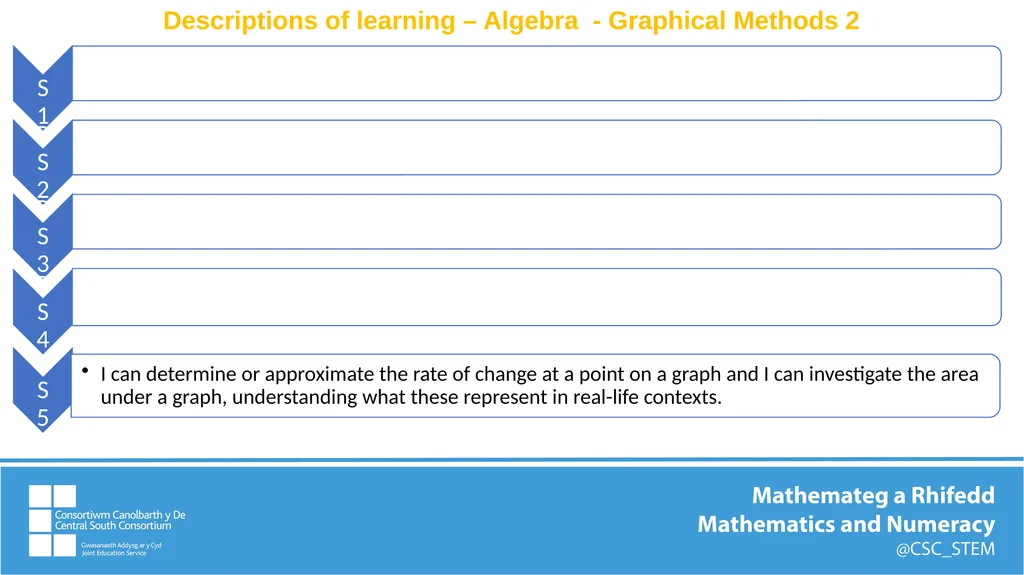
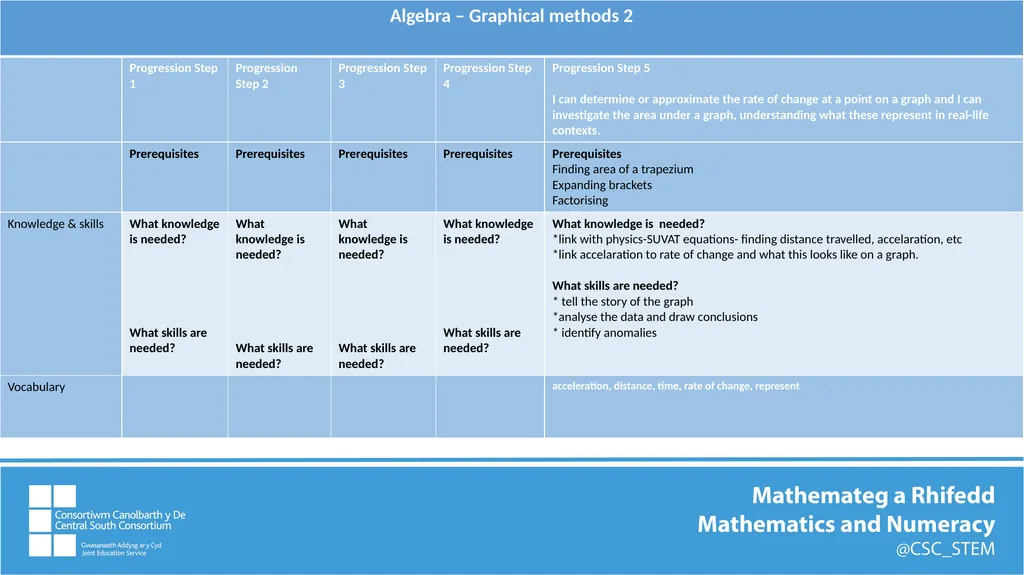
slide22. Descriptions of learning – Algebra - Graphical Methods 2<br>
Algebra is the study of structures abstracted from computations and relations, and provides a way to make generalisations. Algebraic thinking moves away from context to structure and relationships. This powerful approach provides learners with the means to abstract important features and to detect and express mathematical structures of situations in order to solve problems. Algebra is a unifying thread running through the fabric of mathematics.
Algebraic thinking is essential for reasoning, modelling and solving problems in mathematics and in a wide range of real-world contexts, including technology and finance. Making connections between arithmetic and algebra develops skills for abstract reasoning from an early age.<br>
slide2. Patterns<br>
slide3. Descriptions of learning – Algebra - Patterns and sequences<br>
slide5. Forming<br>
slide6. Descriptions of learning – Algebra - Forming 1<br>
slide8. Descriptions of learning – Algebra - Forming 2<br>
slide10. Manipulating<br>
slide11. Descriptions of learning – Algebra - Manipulating<br>
slide13. Solving<br>
slide14. Descriptions of learning – Algebra - Solving<br>
slide16. Modelling<br>
slide17. Descriptions of learning – Algebra - Modelling<br>
slide19. Graphical methods<br>
slide20. Descriptions of learning – Algebra - Graphical Methods 1<br>
slide22. Descriptions of learning – Algebra - Graphical Methods 2<br>