Working with Key Populations- Zimbabwe Global Fund Programme Presented by: Sifiso Ndlovu Behaviour Change Programme Coordinator HIV in Zimbabwe Key affected Populations The Zimbabwean HIV epidemic is largely driven by unprotected
"Working with Key Populations- Zimbabwe Global Fund" is the property of its rightful owner. Permission is granted to
download and print the materials on this website for personal, non-commercial use only, and to display it
on your personal computer provided you do not modify the materials and that you retain all copyright
notices contained in the materials. By downloading content from our website, you accept the terms of this
agreement.
Presentation Transcript
01
Working with Key Populations- Zimbabwe Global Fund Programme Presented by: Sifiso Ndlovu
Behaviour Change Programme Coordinator<br>
02
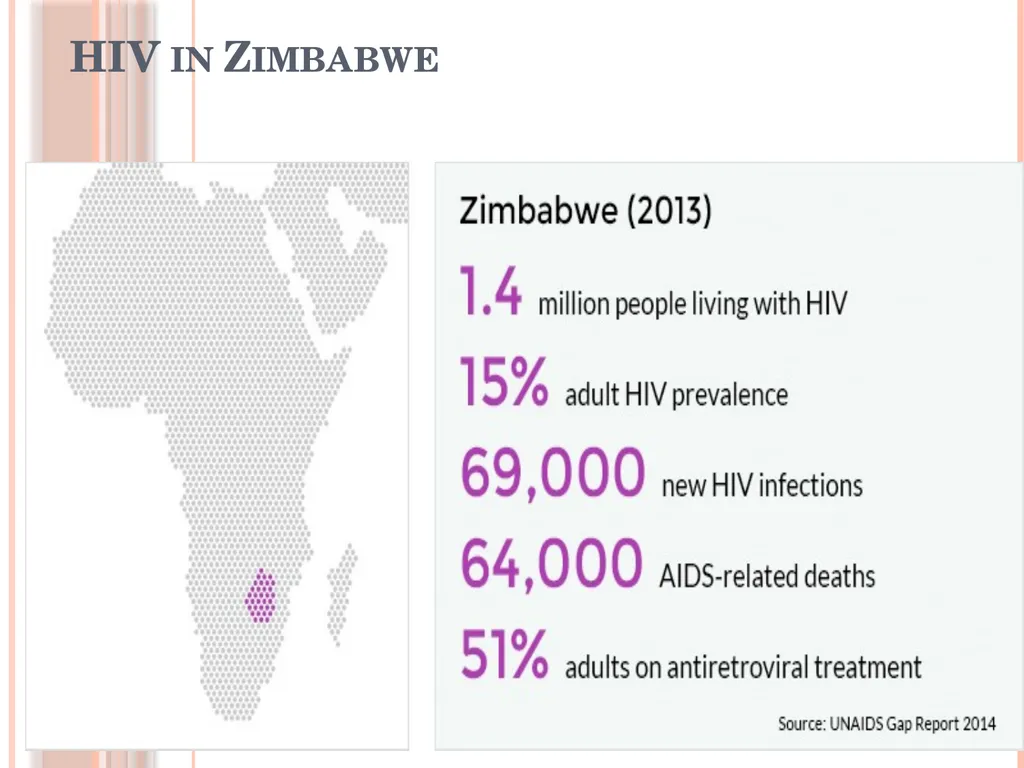
HIV in Zimbabwe<br>
03
Key affected Populations The Zimbabwean HIV epidemic is largely driven by unprotected heterosexual sex.
There are now growing epidemics among key populations who are at higher risk of HIV.
National data on these populations is sparse, with data collection and reporting not featuring in national documents.<br>
04
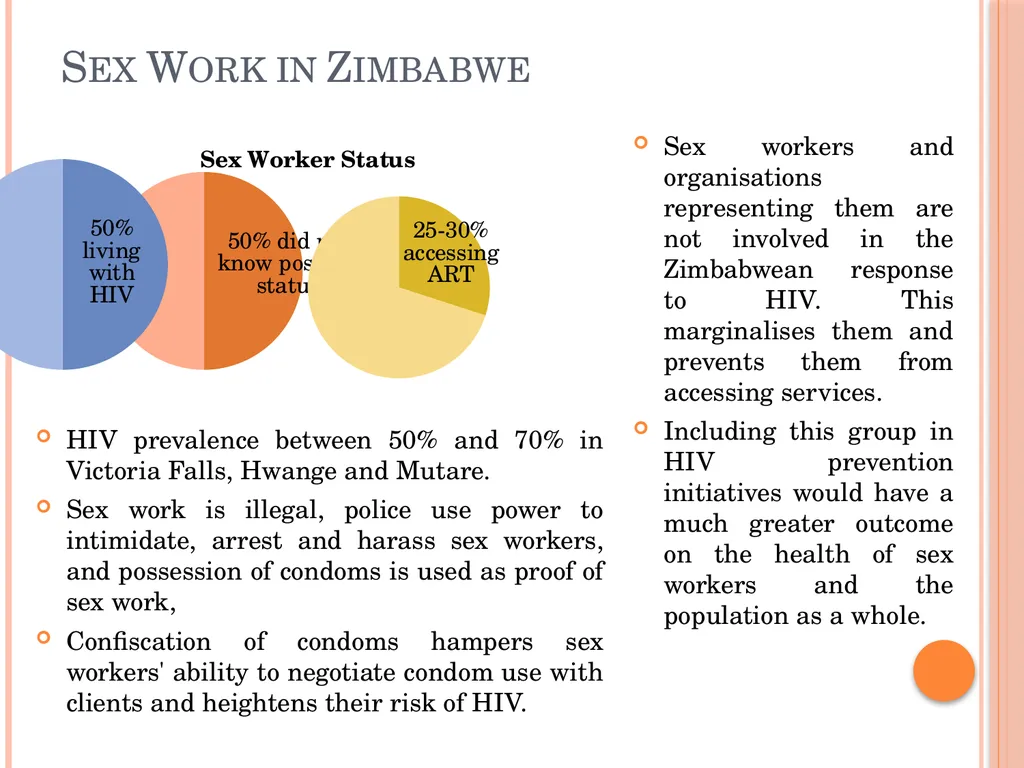
Sex Work in Zimbabwe HIV prevalence between 50% and 70% in Victoria Falls, Hwange and Mutare.
Sex work is illegal, police use power to intimidate, arrest and harass sex workers, and possession of condoms is used as proof of sex work,
Confiscation of condoms hampers sex workers' ability to negotiate condom use with clients and heightens their risk of HIV. Sex workers and organisations representing them are not involved in the Zimbabwean response to HIV. This marginalises them and prevents them from accessing services.
Including this group in HIV prevention initiatives would have a much greater outcome on the health of sex workers and the population as a whole.<br>
05
Women and HIV in Zimbabwe Only 68% of men believe a woman has the right to refuse sexual intercourse if she knows he has sex with other women.
Only 8 out of 10 women believe women have the right to ask their partner to use a condom if he has a sexually transmitted infection (STI).<br>
06
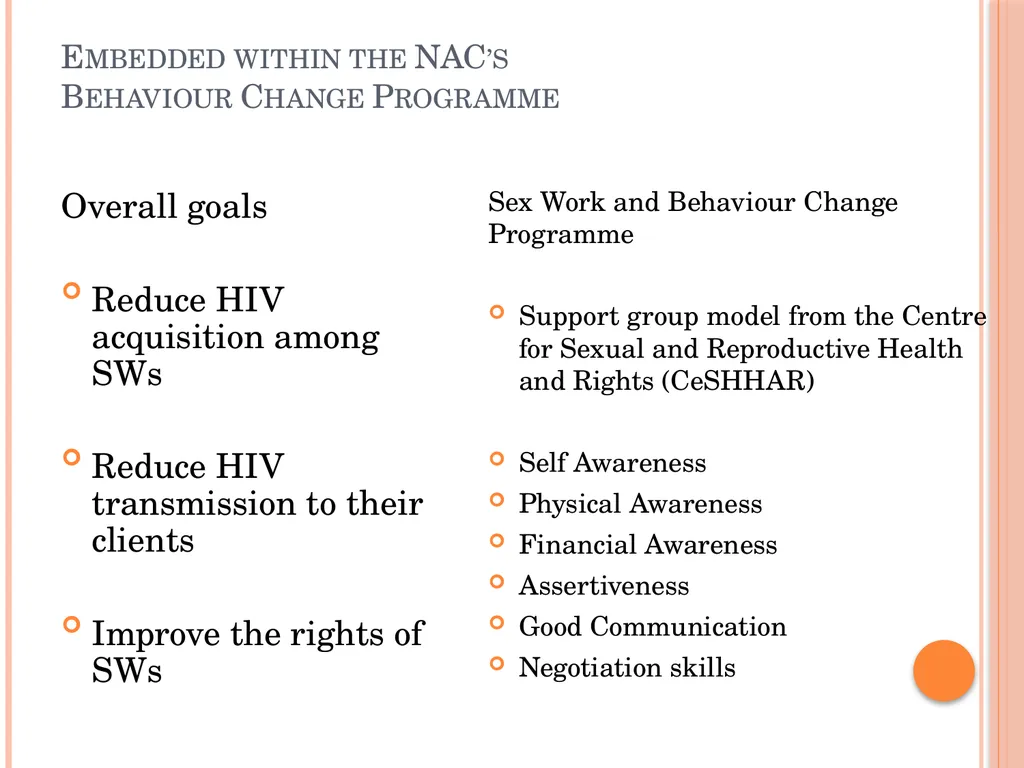
Embedded within the NAC’s Behaviour Change Programme Overall goals
Reduce HIV acquisition among SWs
Reduce HIV transmission to their clients
Improve the rights of SWs Sex Work and Behaviour Change Programme
Support group model from the Centre for Sexual and Reproductive Health and Rights (CeSHHAR)
Self Awareness
Physical Awareness
Financial Awareness
Assertiveness
Good Communication
Negotiation skills<br>
07
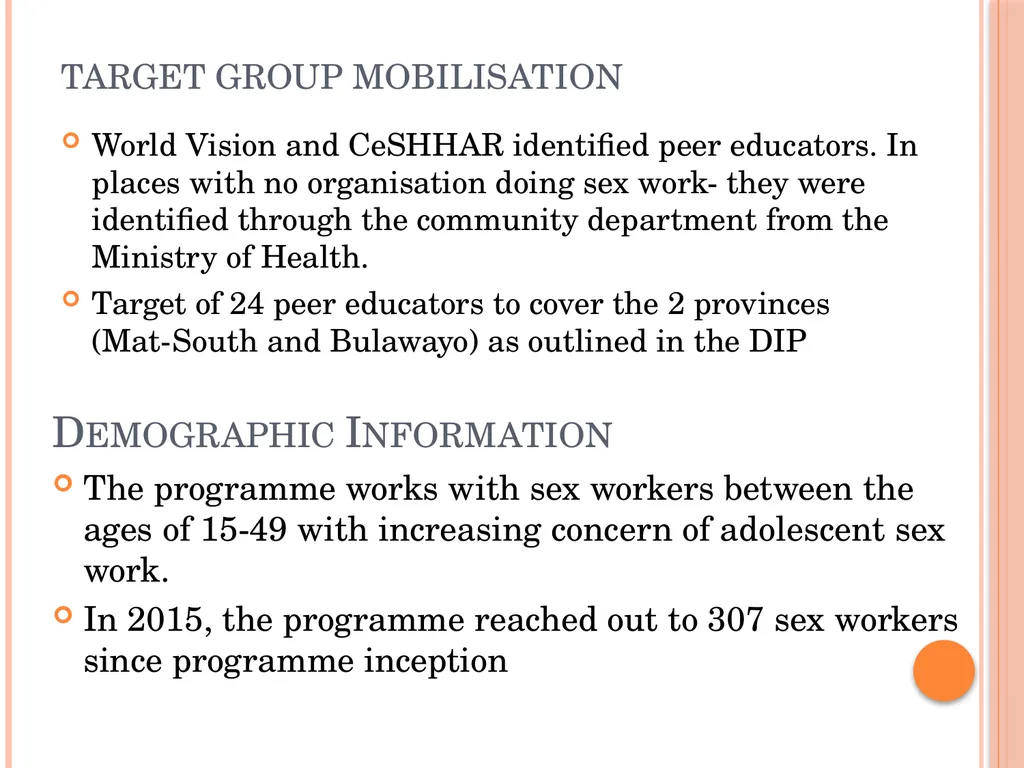
target group mobilisation World Vision and CeSHHAR identified peer educators. In places with no organisation doing sex work- they were identified through the community department from the Ministry of Health.
Target of 24 peer educators to cover the 2 provinces (Mat-South and Bulawayo) as outlined in the DIP The programme works with sex workers between the ages of 15-49 with increasing concern of adolescent sex work.
In 2015, the programme reached out to 307 sex workers since programme inception Demographic Information<br>
08
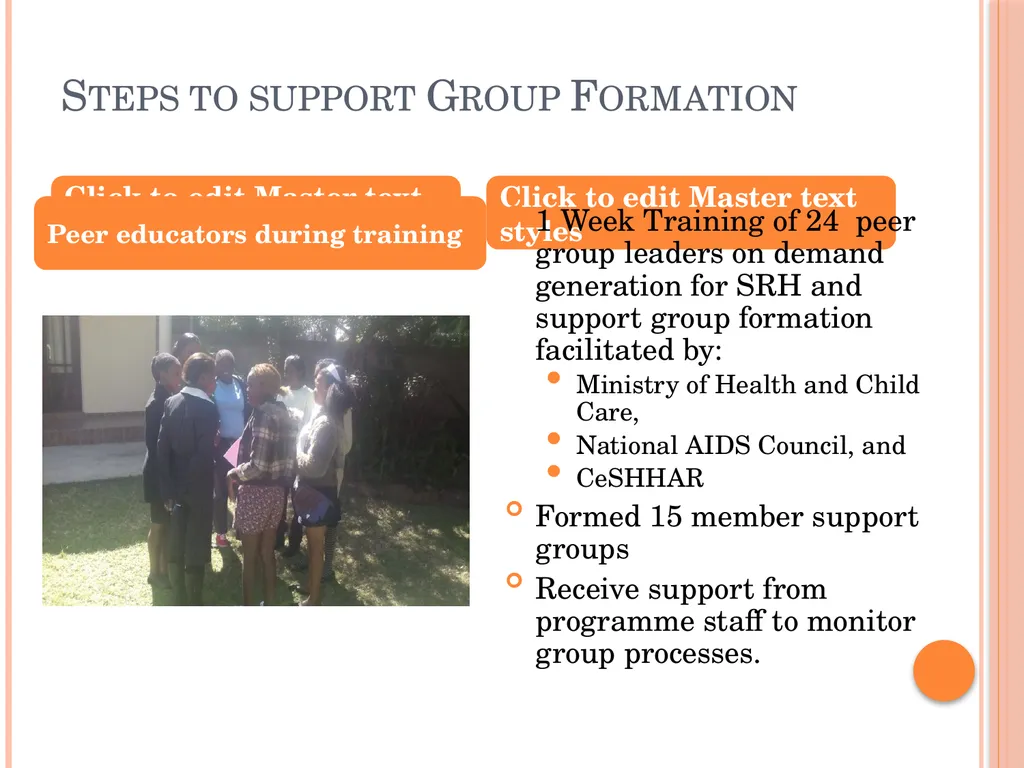
Steps to support Group Formation 1 Week Training of 24 peer group leaders on demand generation for SRH and support group formation facilitated by:
Ministry of Health and Child Care,
National AIDS Council, and
CeSHHAR
Formed 15 member support groups
Receive support from programme staff to monitor group processes. Peer educators during training<br>
09
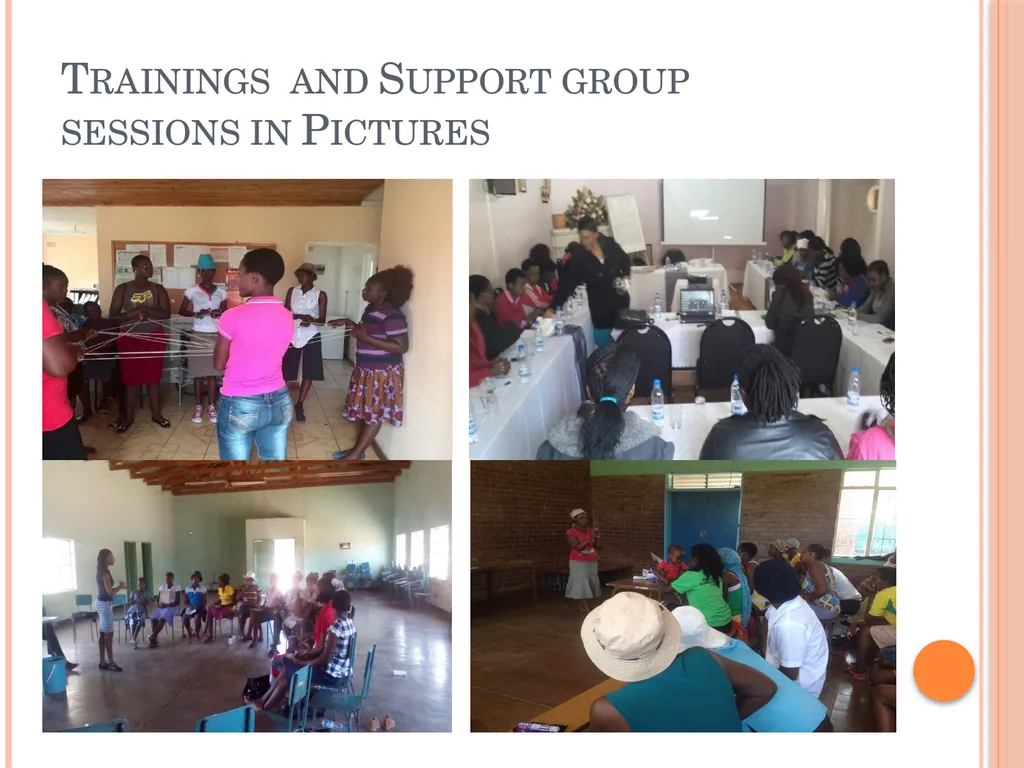
Trainings and Support group sessions in Pictures<br>
10
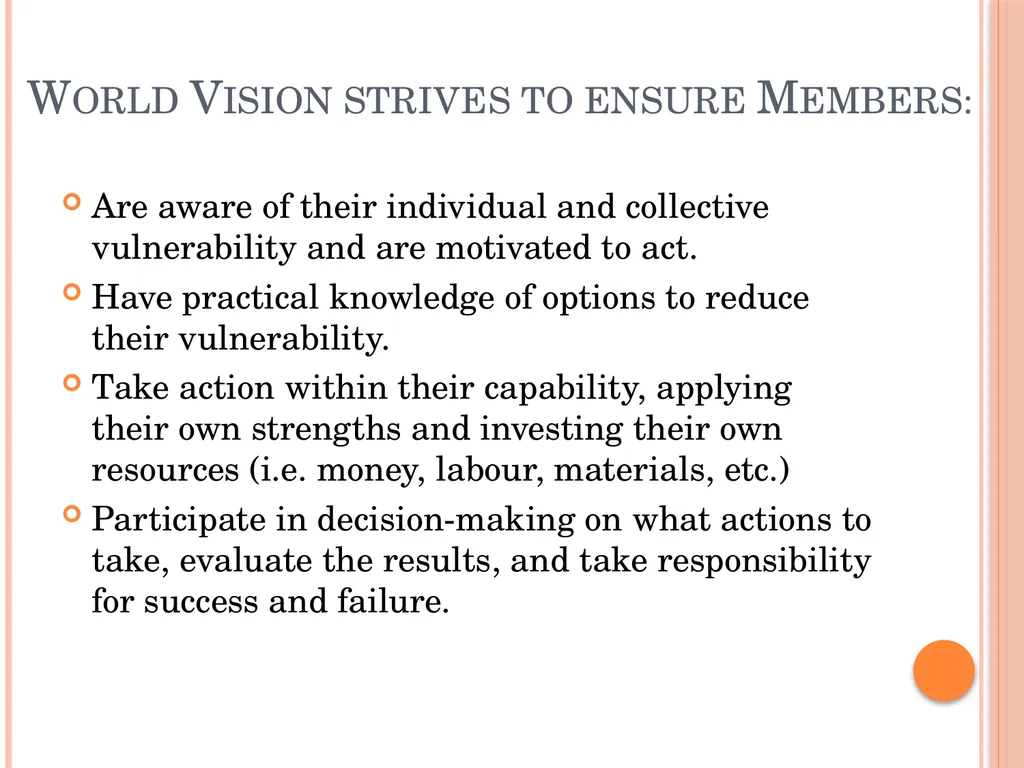
World Vision strives to ensure Members: Are aware of their individual and collective vulnerability and are motivated to act.
Have practical knowledge of options to reduce their vulnerability.
Take action within their capability, applying their own strengths and investing their own resources (i.e. money, labour, materials, etc.)
Participate in decision-making on what actions to take, evaluate the results, and take responsibility for success and failure.<br>
11
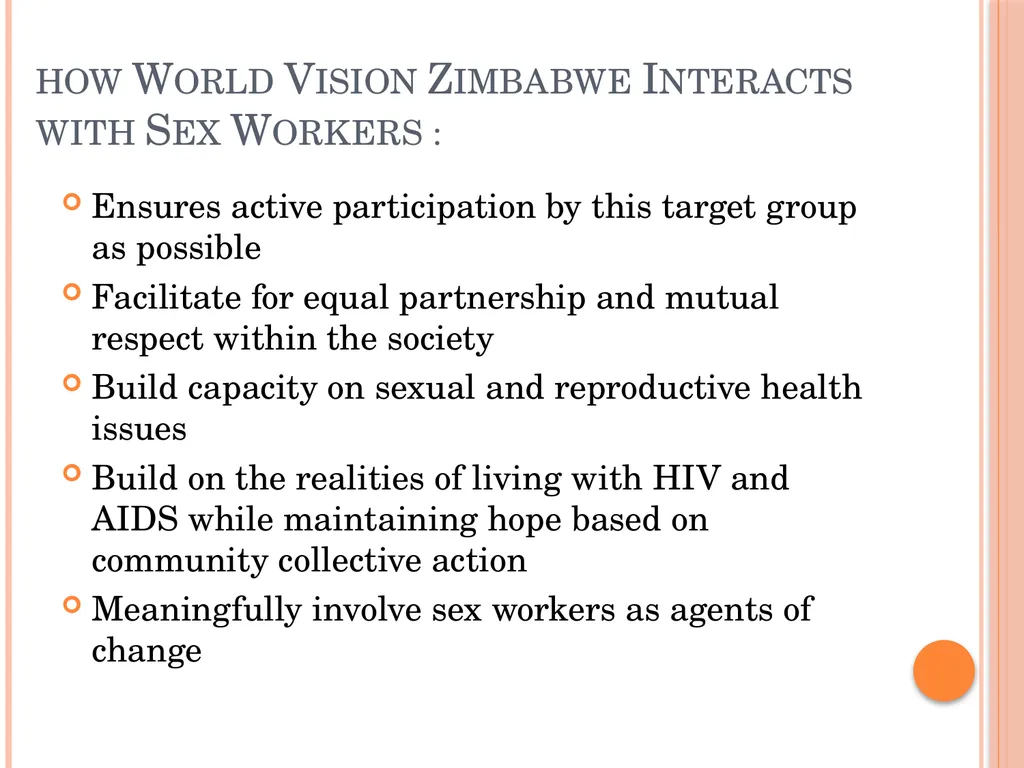
how World Vision Zimbabwe Interacts with Sex Workers : Ensures active participation by this target group as possible
Facilitate for equal partnership and mutual respect within the society
Build capacity on sexual and reproductive health issues
Build on the realities of living with HIV and AIDS while maintaining hope based on community collective action
Meaningfully involve sex workers as agents of change<br>
12
support group women are referred for: Free condoms and contraception
HIV testing and counselling
Anti retroviral Therapy
Syndromic management of STIS
Safer sex counselling
Contraception
Legal advice
Support from peer educators<br>
13
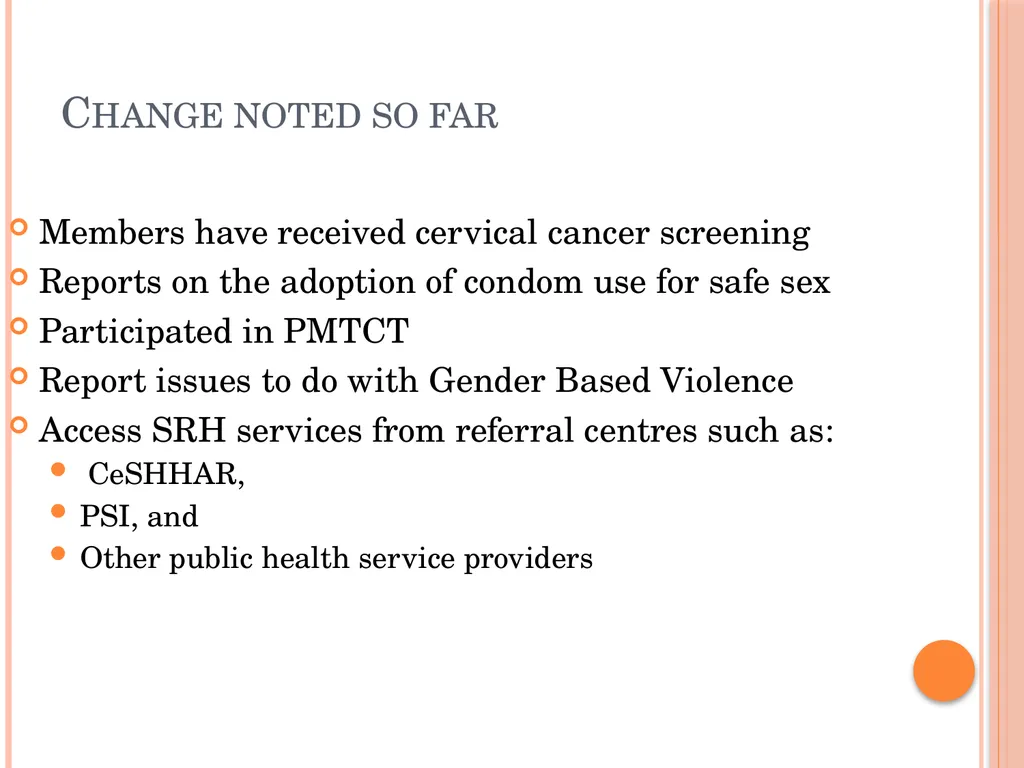
Change noted so far Members have received cervical cancer screening
Reports on the adoption of condom use for safe sex
Participated in PMTCT
Report issues to do with Gender Based Violence
Access SRH services from referral centres such as:
CeSHHAR,
PSI, and
Other public health service providers<br>
14
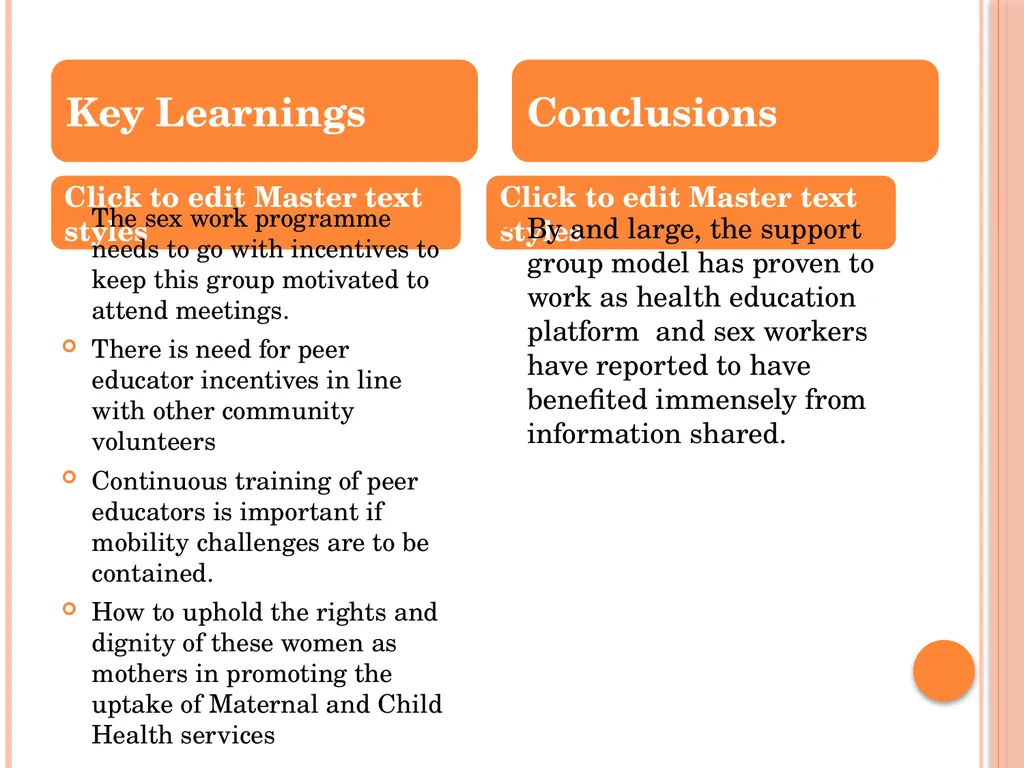
The sex work programme needs to go with incentives to keep this group motivated to attend meetings.
There is need for peer educator incentives in line with other community volunteers
Continuous training of peer educators is important if mobility challenges are to be contained.
How to uphold the rights and dignity of these women as mothers in promoting the uptake of Maternal and Child Health services By and large, the support group model has proven to work as health education platform and sex workers have reported to have benefited immensely from information shared. Key Learnings Conclusions<br>