World Trade Organization Presented By :- Ancy Nadar 1 Michael George 10 Jatin Jain 15 Ashish Mulani - 25 Radhika Pote - 31 Priyal Karkera - 57 INTRODUCTION The World Trade Organization (WTO) is the only international organization
Related Topics
Share
Embed code
Download this presentation From Below
"World Trade Organization Presented By :- Ancy" is the property of its rightful owner. Permission is granted to
download and print the materials on this website for personal, non-commercial use only, and to display it
on your personal computer provided you do not modify the materials and that you retain all copyright
notices contained in the materials. By downloading content from our website, you accept the terms of this
agreement.
Presentation Transcript
01
World Trade Organization Presented By :-
Ancy Nadar – 1
Michael George – 10
Jatin Jain – 15
Ashish Mulani - 25
Radhika Pote - 31
Priyal Karkera - 57<br>
02
INTRODUCTION The World Trade Organization (WTO) is the only international organization dealing with the global rules of trade between nations.
The WTO ensures that trade flows as smoothly, predictably and freely as possible.
So almost all the country in the world are a member of WTO. There are different types of countries like rich or poor countries, very industrialized, developing countries, etc.<br>
03
FORMATION OF WTO The conversion of GATT in WTO in 1995 is a important event in the field of global trade.
The World Trade Organization started functioning from 1st January,1995.
The formation of WTO is the result of the Uruguay round of negotiations.
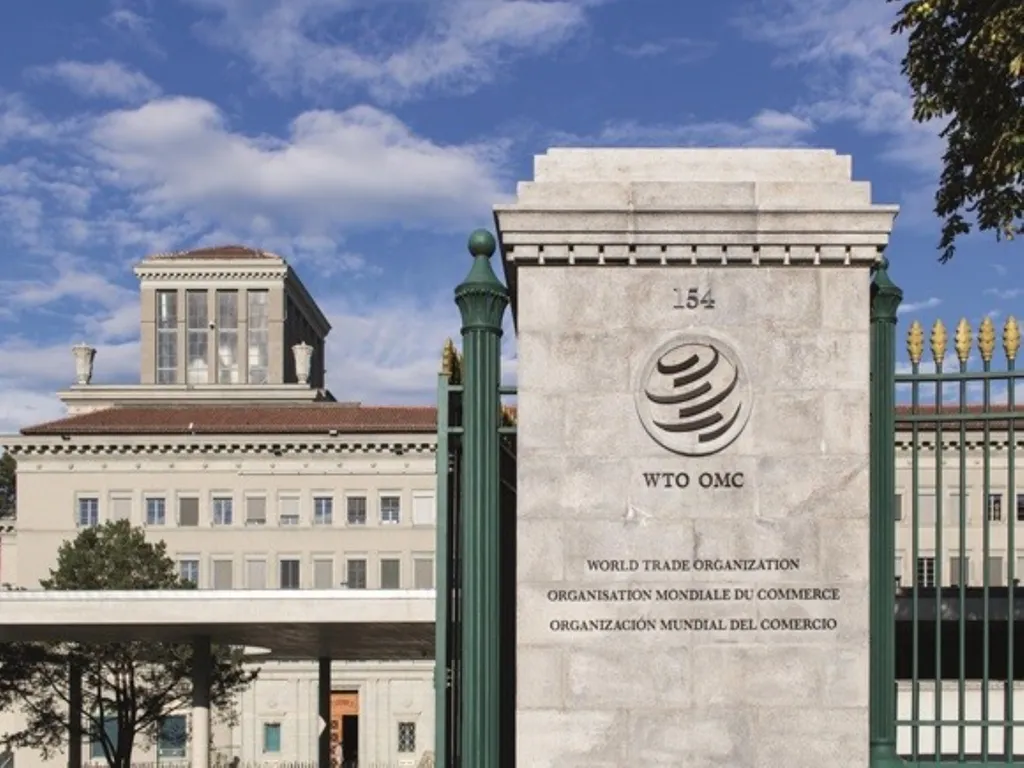
WTO is based in Geneva, Switzerland.<br>
04
WTO has larger membership than GATT.
GATT ceased to exist as a separate institution and has become a part of the WTO.
WTO has the membership of 147 countries.
In present, WTO acts as the governing body of world trade.<br>
05
OBJECTIVES OF WTO Free trade i.e. trade without discrimination.
Growth of less developed countries (LDC).
Protection and preservation of environment.<br>
06
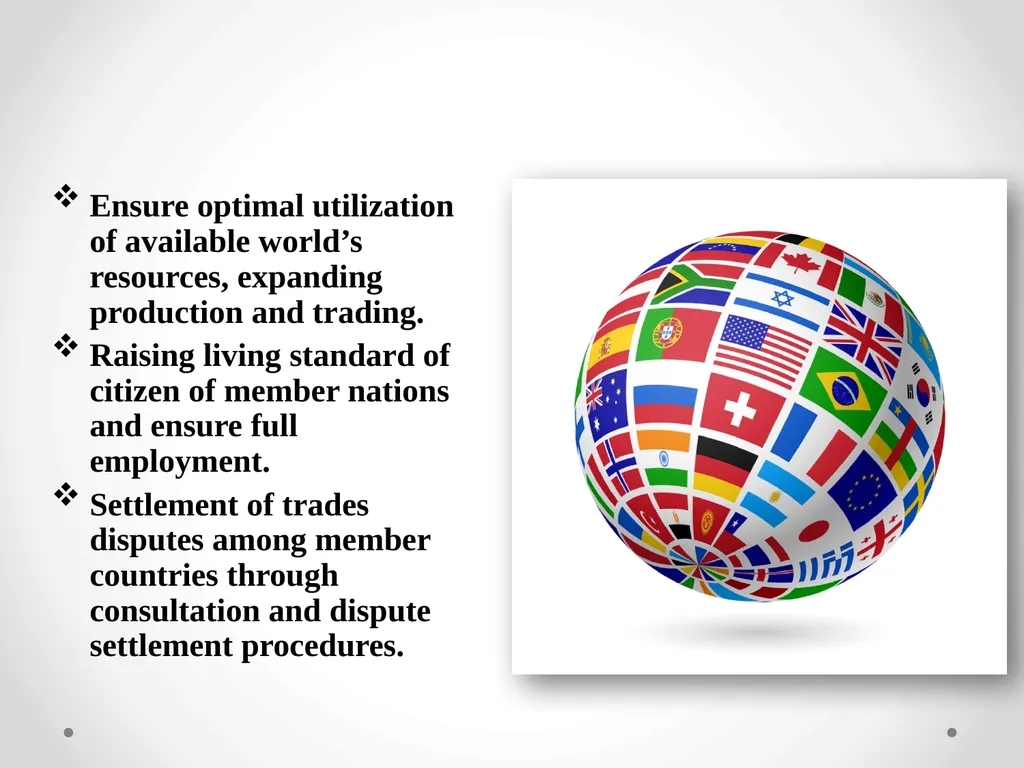
Ensure optimal utilization of available world’s resources, expanding production and trading.
Raising living standard of citizen of member nations and ensure full employment.
Settlement of trades disputes among member countries through consultation and dispute settlement procedures.<br>
07
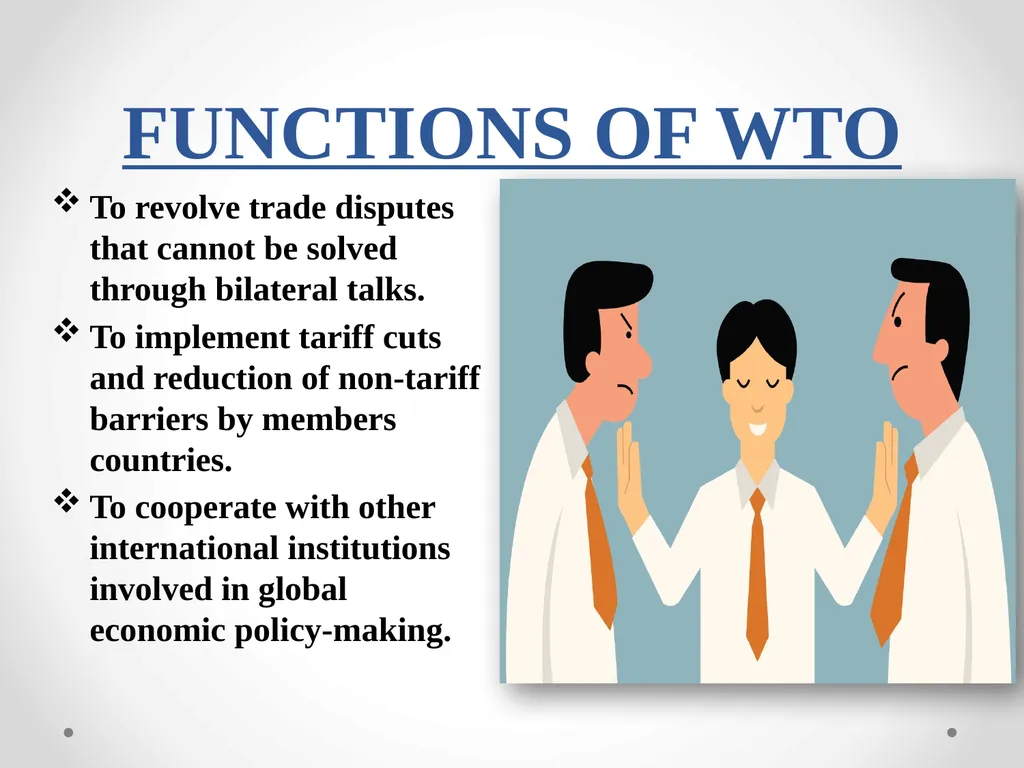
FUNCTIONS OF WTO To revolve trade disputes that cannot be solved through bilateral talks.
To implement tariff cuts and reduction of non-tariff barriers by members countries.
To cooperate with other international institutions involved in global economic policy-making.<br>
08
To promote international trade without discrimination of any type.
To administer and implement the trade agreements signed under Uruguay Round Negotiations.
To act as a forum for multilateral trade negotiations<br>
09
ACHIEVEMENTS OF WTO Greater market orientation has become the general rule.
Use of restrictive measures for BOP problems has declined markedly.
Tariff-based protection has become the norm rather than the expectation.<br>
10
Services trade has been brought into the multilateral system and many countries.
Many UDCs have undertaken radical trade, exchange and domestic reforms.
It has been agreed to reduce import tariffs on industrial goods, based on Swiss Formula.<br>
11
WTO NEGOTIATIONS WTO provides a framework of negotiation between participating countries.
Most issues dealt are from previous negotiations, especially from the Uruguay Round (1986–1994).
The Doha Development Round or is the latest trade-negotiation round of the World Trade Organization.<br>
12
Its objective was to lower trade barriers around the world, and thus increase global trade.
Before the Doha ministerial, negotiations had already been under way on trade in agriculture and trade in services.
Most countries participating in the negotiations believe that there is some economic advantage however not all agree to this.<br>
13
CONCLUSION IT IS THE PLACE WHERE THE MEMBER COUNTRIES COME TOGETHER TO SOLVE THEIR PROBLEMS RELATED TO INTERNATIONAL TRADE.
THIS SYSTEM HELPS PROMOTE PEACE BY HANDLEING DESPUTES OF MEMBER COUNTRIES.
IT PROVIDES FREE TRADE WHICH CUTS THE COST OF LIVING AND PROVIDES MORE CHOICE OF PRODUCTS AND QULAITIES AND STIMULATES ECONOMIC GROWTH.<br>