
YOGIC SCIENCES UNIT - 1 By- Nimisha Singh kushwaha




Description: YOGIC SCIENCES UNIT - 1 By- Nimisha Singh kushwaha ASHTANGA YOGA Ashtanga Yoga The word Ashtanga is comprised of two Sanskrit words, Ashta and Anga. Ashta refers to the number eight, while Anga means limb or body part. Ashtanga is
Related Topics
Download Presentation
"YOGIC SCIENCES UNIT - 1 By- Nimisha Singh kushwaha" is the property of its rightful owner. Permission is granted to download and print the materials on this website for personal, non-commercial use only, and to display it on your personal computer provided you do not modify the materials and that you retain all copyright notices contained in the materials. By downloading content from our website, you accept the terms of this agreement.
Presentation Transcript
slide1. YOGIC SCIENCES UNIT - 1
By- Nimisha Singh kushwaha<br>
slide2. ASHTANGA YOGA<br>
slide3. Ashtanga Yoga
The word Ashtanga is comprised of two Sanskrit words, “Ashta” and “Anga.”
“Ashta” refers to the number eight, while “Anga” means limb or body part.
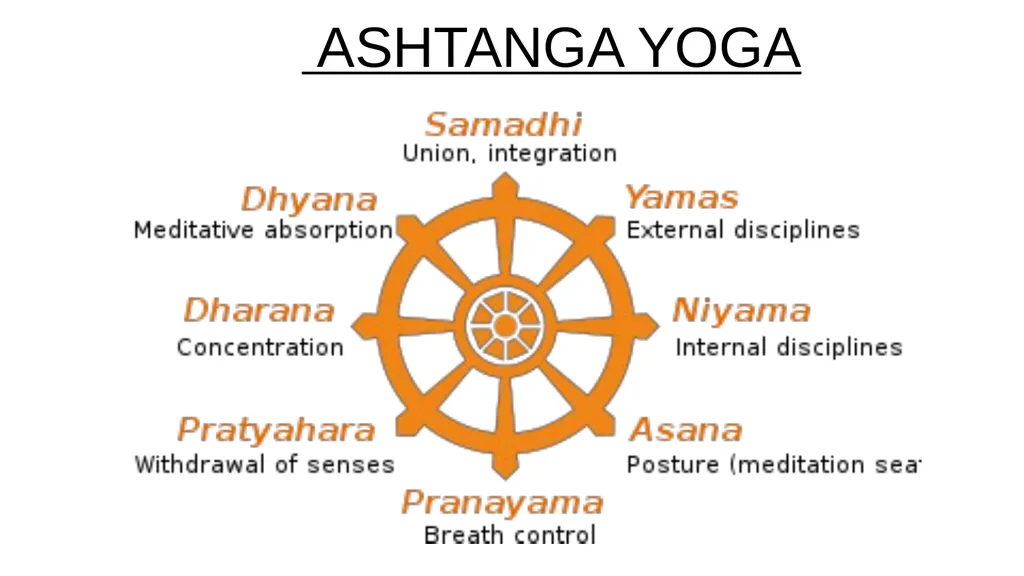
Ashtanga is the union of the eight limbs of yoga, into one complete, holistic system. These eight-limbs of yoga represent the various branches of the philosophy of the yoga sutras that form the foundation in the Ashtanga Yoga School.
The Ashtanga philosophy is to integrate all of the eight limbs of yoga, which include:
1. Yama (moral codes) 2.Niyama (self-discipline) 3.Asana (posture) 4.Pranayama (breath control) 5.Pratyahara (sense withdrawal) 6.Dharana (concentration) 7.Dhyana (meditation) 8.Samadhi (oneness with the self).<br>
slide4. Benefits Of Ashtanga Yoga
. The benefits of Ashtanga yoga are numerous.
. It is great for athletes and people that are looking for a good workout.
. Ashtanga focuses on breath, poses, and meditation.
. A regular yoga practice can improve your flexibility, breathing, and balance.
. It can increase your stamina, bone density and muscle strength, control your bodyweight lowers your blood pressure and relieve stress.
. The benefits of the Ashtanga yoga are not only limited to physical factors. It also helps mentally and spiritually by boosting mental clarity, creating mental calmness and developing better concentration in daily life.<br>
slide5. 1. Yama
Yamas are ethical rules in Hinduism and can be thought of as moral imperatives.
The five yama listed by Patanjali in Yoga Sutra
Ahimsa (अहिंसा): Nonviolence, non-harming other living beings.
Satya (सत्य): truthfulness, non-falsehood
Asteya (अस्तेय): non-stealing
Brahmacharya (ब्रह्मचर्य): chastity, marital fidelity or sexual restraint
Aparigraha (अपरिग्रह): non-avarice, non-possessiveness.<br>
slide6. 2. Niyama
The second component of Yoga path is niyama, which includes virtuous habits and observances .
Shaucha (शौच): purity, clearness of mind, speech and body
Santosha (संतोष): contentment, acceptance of others, acceptance of one's circumstances as they are in order to get past or change them, optimism for self
Tapas (तपस्): persistence, perseverance, austerity, asceticism, self-discipline
Svadhyaya (स्वाध्याय): study of Vedas, study of self, self-reflection, introspection of self's thoughts, speech and actions
Ishvarapranidhana (ईश्वरप्रणिधान): contemplation of the Ishvara .<br>
slide7. 3. ASANA – Posture
The physical aspect of yoga is the third step on the path to freedom,
.The word asana here doesn’t refer to the ability to perform a handstand or an aesthetically impressive backbend
. It means ‘seat’ – specifically the seat you would take for the practice of meditation.
. The only alignment instruction Patanjali gives for this asana is “sthira sukham asanam”, the posture should be steady and comfortable.
. The idea is to be able to sit in comfort so we’re not ‘pulled’ by aches and pains of the body, or restlessness due to an uncomfortable position.<br>
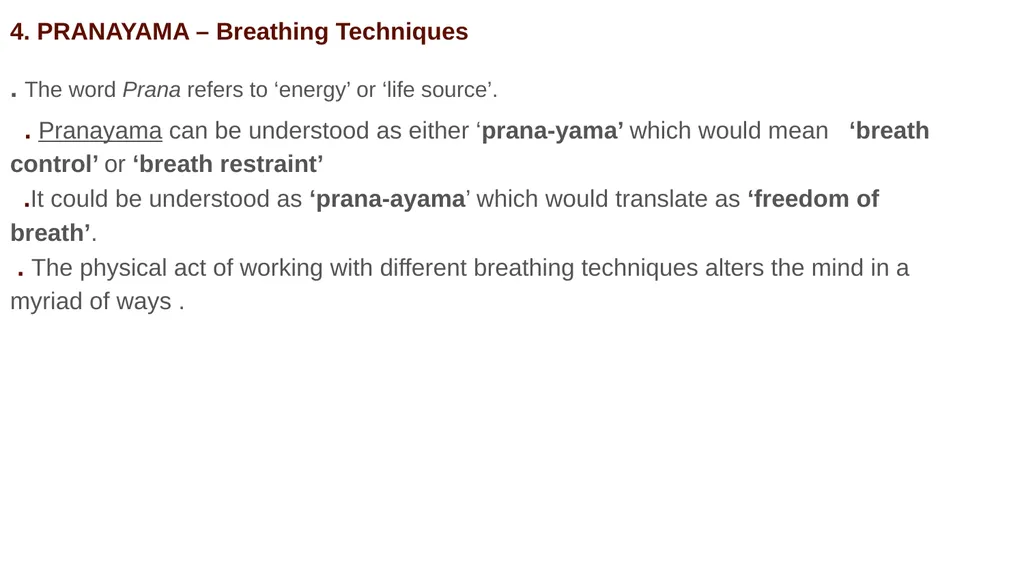
slide8. 4. PRANAYAMA – Breathing Techniques
. The word Prana refers to ‘energy’ or ‘life source’.
. Pranayama can be understood as either ‘prana-yama’ which would mean ‘breath control’ or ‘breath restraint’
.It could be understood as ‘prana-ayama’ which would translate as ‘freedom of breath’.
. The physical act of working with different breathing techniques alters the mind in a myriad of ways .<br>
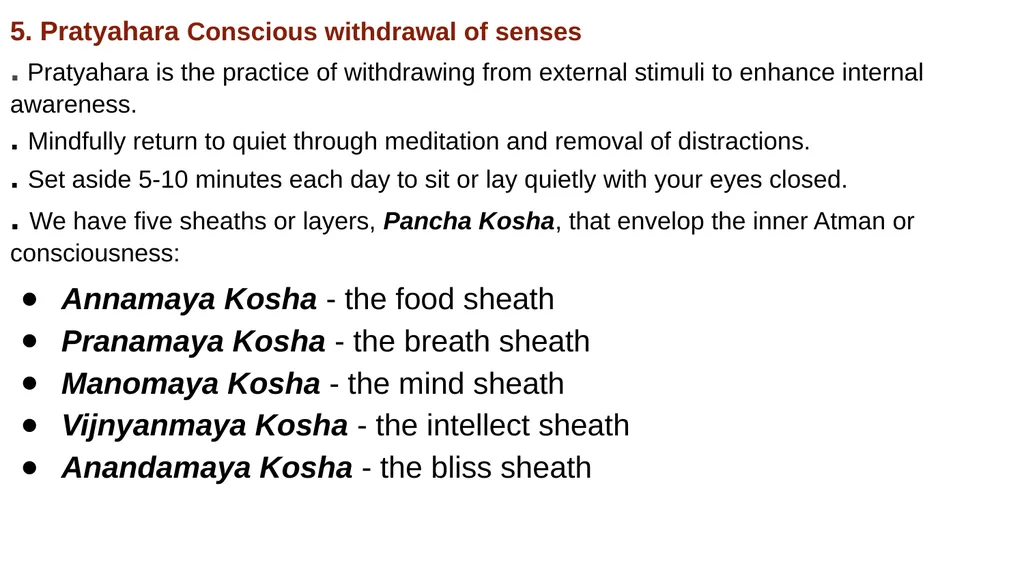
slide9. 5. Pratyahara Conscious withdrawal of senses
. Pratyahara is the practice of withdrawing from external stimuli to enhance internal awareness.
. Mindfully return to quiet through meditation and removal of distractions.
. Set aside 5-10 minutes each day to sit or lay quietly with your eyes closed.
. We have five sheaths or layers, Pancha Kosha, that envelop the inner Atman or consciousness:
Annamaya Kosha - the food sheath
Pranamaya Kosha - the breath sheath
Manomaya Kosha - the mind sheath
Vijnyanmaya Kosha - the intellect sheath
Anandamaya Kosha - the bliss sheath<br>
slide10. 6. Dharana - Attention
This refers to paying attention to one particular thing, idea, or place and fixing it there. Sometimes, people use a mantra or the breath to do this. When you fix your mind on a specific point, over time, your mind stops wavering; you become free from conflict; it is a unique time when your thoughts and actions are in congruence. So, you slowly and steadily still yourself and calm down as you merge with the moment. As you become one with the moment, you can effortlessly enter meditation or dhyana.<br>
slide11. 7. Dhyana - Meditation
. Dhyana is the state of being keenly aware, yet without focus.
. it is peaceful, meditative and precedes complete bliss.
. It is otherwise known to artists and athletes as the flow state. Consider moments in your life where you were so engrossed in the present that you lost track of time or desire (even for food).<br>
slide12. 8. Samadhi - Absorption with the Self
This is the ultimate state of consciousness. It is a transcending thought. You are only aware of your Self and are connected to your true nature - love, joy, and strength. This is the ultimate goal that we seek to achieve in life.<br>
By- Nimisha Singh kushwaha<br>
slide2. ASHTANGA YOGA<br>
slide3. Ashtanga Yoga
The word Ashtanga is comprised of two Sanskrit words, “Ashta” and “Anga.”
“Ashta” refers to the number eight, while “Anga” means limb or body part.
Ashtanga is the union of the eight limbs of yoga, into one complete, holistic system. These eight-limbs of yoga represent the various branches of the philosophy of the yoga sutras that form the foundation in the Ashtanga Yoga School.
The Ashtanga philosophy is to integrate all of the eight limbs of yoga, which include:
1. Yama (moral codes) 2.Niyama (self-discipline) 3.Asana (posture) 4.Pranayama (breath control) 5.Pratyahara (sense withdrawal) 6.Dharana (concentration) 7.Dhyana (meditation) 8.Samadhi (oneness with the self).<br>
slide4. Benefits Of Ashtanga Yoga
. The benefits of Ashtanga yoga are numerous.
. It is great for athletes and people that are looking for a good workout.
. Ashtanga focuses on breath, poses, and meditation.
. A regular yoga practice can improve your flexibility, breathing, and balance.
. It can increase your stamina, bone density and muscle strength, control your bodyweight lowers your blood pressure and relieve stress.
. The benefits of the Ashtanga yoga are not only limited to physical factors. It also helps mentally and spiritually by boosting mental clarity, creating mental calmness and developing better concentration in daily life.<br>
slide5. 1. Yama
Yamas are ethical rules in Hinduism and can be thought of as moral imperatives.
The five yama listed by Patanjali in Yoga Sutra
Ahimsa (अहिंसा): Nonviolence, non-harming other living beings.
Satya (सत्य): truthfulness, non-falsehood
Asteya (अस्तेय): non-stealing
Brahmacharya (ब्रह्मचर्य): chastity, marital fidelity or sexual restraint
Aparigraha (अपरिग्रह): non-avarice, non-possessiveness.<br>
slide6. 2. Niyama
The second component of Yoga path is niyama, which includes virtuous habits and observances .
Shaucha (शौच): purity, clearness of mind, speech and body
Santosha (संतोष): contentment, acceptance of others, acceptance of one's circumstances as they are in order to get past or change them, optimism for self
Tapas (तपस्): persistence, perseverance, austerity, asceticism, self-discipline
Svadhyaya (स्वाध्याय): study of Vedas, study of self, self-reflection, introspection of self's thoughts, speech and actions
Ishvarapranidhana (ईश्वरप्रणिधान): contemplation of the Ishvara .<br>
slide7. 3. ASANA – Posture
The physical aspect of yoga is the third step on the path to freedom,
.The word asana here doesn’t refer to the ability to perform a handstand or an aesthetically impressive backbend
. It means ‘seat’ – specifically the seat you would take for the practice of meditation.
. The only alignment instruction Patanjali gives for this asana is “sthira sukham asanam”, the posture should be steady and comfortable.
. The idea is to be able to sit in comfort so we’re not ‘pulled’ by aches and pains of the body, or restlessness due to an uncomfortable position.<br>
slide8. 4. PRANAYAMA – Breathing Techniques
. The word Prana refers to ‘energy’ or ‘life source’.
. Pranayama can be understood as either ‘prana-yama’ which would mean ‘breath control’ or ‘breath restraint’
.It could be understood as ‘prana-ayama’ which would translate as ‘freedom of breath’.
. The physical act of working with different breathing techniques alters the mind in a myriad of ways .<br>
slide9. 5. Pratyahara Conscious withdrawal of senses
. Pratyahara is the practice of withdrawing from external stimuli to enhance internal awareness.
. Mindfully return to quiet through meditation and removal of distractions.
. Set aside 5-10 minutes each day to sit or lay quietly with your eyes closed.
. We have five sheaths or layers, Pancha Kosha, that envelop the inner Atman or consciousness:
Annamaya Kosha - the food sheath
Pranamaya Kosha - the breath sheath
Manomaya Kosha - the mind sheath
Vijnyanmaya Kosha - the intellect sheath
Anandamaya Kosha - the bliss sheath<br>
slide10. 6. Dharana - Attention
This refers to paying attention to one particular thing, idea, or place and fixing it there. Sometimes, people use a mantra or the breath to do this. When you fix your mind on a specific point, over time, your mind stops wavering; you become free from conflict; it is a unique time when your thoughts and actions are in congruence. So, you slowly and steadily still yourself and calm down as you merge with the moment. As you become one with the moment, you can effortlessly enter meditation or dhyana.<br>
slide11. 7. Dhyana - Meditation
. Dhyana is the state of being keenly aware, yet without focus.
. it is peaceful, meditative and precedes complete bliss.
. It is otherwise known to artists and athletes as the flow state. Consider moments in your life where you were so engrossed in the present that you lost track of time or desire (even for food).<br>
slide12. 8. Samadhi - Absorption with the Self
This is the ultimate state of consciousness. It is a transcending thought. You are only aware of your Self and are connected to your true nature - love, joy, and strength. This is the ultimate goal that we seek to achieve in life.<br>