
0 Important Information for Healthcare Providers
CB
Published · 20 slides · 0 views

1 / 1

Description
0 Important Information for Healthcare Providers receiving this slide deck This slide deck is being provided in response to your request for a slide presentation regarding the DUO-E trial. This slide deck was prepared and is intended to be
Related Topics
Share
Embed code
Download this presentation From Below
"0 Important Information for Healthcare Providers" is the property of its rightful owner. Permission is granted to download and print the materials on this website for personal, non-commercial use only, and to display it on your personal computer provided you do not modify the materials and that you retain all copyright notices contained in the materials. By downloading content from our website, you accept the terms of this agreement.
Presentation Transcript
01
0 Important Information for Healthcare Providers receiving this slide deck
This slide deck is being provided in response to your request for a slide presentation regarding the DUO-E trial.
This slide deck was prepared and is intended to be presented in its entirety and should not be edited.
You are not speaking on behalf of AstraZeneca and receipt of this deck does not imply that you are.
This deck is for use by the recipient institution or organization, its employees or agents, for medical education purposes only, and should not be forwarded to other third parties.
This deck should not be used for patient education.
The attached slide deck may contain copyright protected work(s):
AstraZeneca has obtained permission from the copyright owner to use such work in this presentation.
You may not reproduce, prepare derivative works from, display or distribute this work unless you obtain the permission of the copyright owner, or as otherwise might be permitted by law.<br>
This slide deck is being provided in response to your request for a slide presentation regarding the DUO-E trial.
This slide deck was prepared and is intended to be presented in its entirety and should not be edited.
You are not speaking on behalf of AstraZeneca and receipt of this deck does not imply that you are.
This deck is for use by the recipient institution or organization, its employees or agents, for medical education purposes only, and should not be forwarded to other third parties.
This deck should not be used for patient education.
The attached slide deck may contain copyright protected work(s):
AstraZeneca has obtained permission from the copyright owner to use such work in this presentation.
You may not reproduce, prepare derivative works from, display or distribute this work unless you obtain the permission of the copyright owner, or as otherwise might be permitted by law.<br>
02
1 This content was created by AstraZeneca healthcare professionals for use by healthcare professionals.
AstraZeneca is committed to conducting business with the highest standards of integrity and professionalism.
This information is being provided, as a professional courtesy, in response to your request.
This material may include information that is not found in the currently approved prescribing information for IMFINZI. Providing this scientific information does not constitute any recommendation for use. Prescription drugs used in a manner other than their approved indication may not be eligible for reimbursement by any third-party payors, including Medicaid, Medicare, or similar federal or state programs.
For further medical information requests and access to other AstraZeneca resources, please visit AZmedical.com.
Please refer to this link for the Prescribing Information, including Medication Guide, for IMFINZI.
You are encouraged to report side effects related to AstraZeneca products by calling 1-800-236-9933. If you prefer to report these to the FDA, please call 1-800-FDA-1088.<br>
AstraZeneca is committed to conducting business with the highest standards of integrity and professionalism.
This information is being provided, as a professional courtesy, in response to your request.
This material may include information that is not found in the currently approved prescribing information for IMFINZI. Providing this scientific information does not constitute any recommendation for use. Prescription drugs used in a manner other than their approved indication may not be eligible for reimbursement by any third-party payors, including Medicaid, Medicare, or similar federal or state programs.
For further medical information requests and access to other AstraZeneca resources, please visit AZmedical.com.
Please refer to this link for the Prescribing Information, including Medication Guide, for IMFINZI.
You are encouraged to report side effects related to AstraZeneca products by calling 1-800-236-9933. If you prefer to report these to the FDA, please call 1-800-FDA-1088.<br>
03
Exploring the DUO-E Indication and Clinical Data IMFINZI is a registered trademark of the AstraZeneca group of companies.
©2025 AstraZeneca. All rights reserved. US-98192 Last Updated 4/25 With Principal Investigator Dr Shannon Westin<br>
©2025 AstraZeneca. All rights reserved. US-98192 Last Updated 4/25 With Principal Investigator Dr Shannon Westin<br>
04
Faculty 3 Shannon N. Westin, MD, MPH, FACOG
Professor and Clinical Medical Director, Department of Gynecologic Oncology and Reproductive Medicine, Division of Surgery, The University of Texas MD Anderson Cancer Center
Houston, Texas Dr Westin has been compensated by AstraZeneca for her participation.<br>
Professor and Clinical Medical Director, Department of Gynecologic Oncology and Reproductive Medicine, Division of Surgery, The University of Texas MD Anderson Cancer Center
Houston, Texas Dr Westin has been compensated by AstraZeneca for her participation.<br>
05
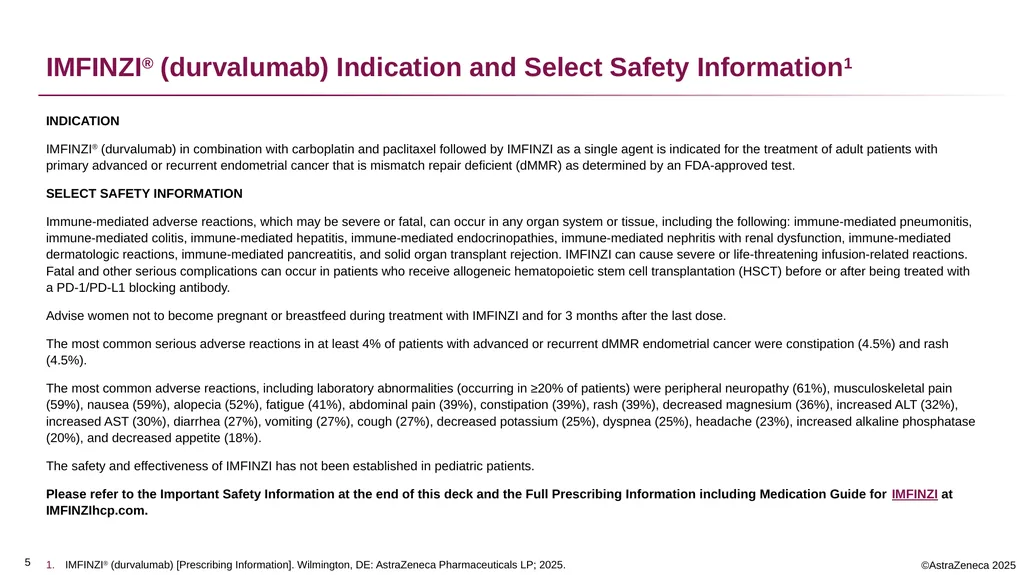
IMFINZI® (durvalumab) Indication and Select Safety Information1 INDICATION
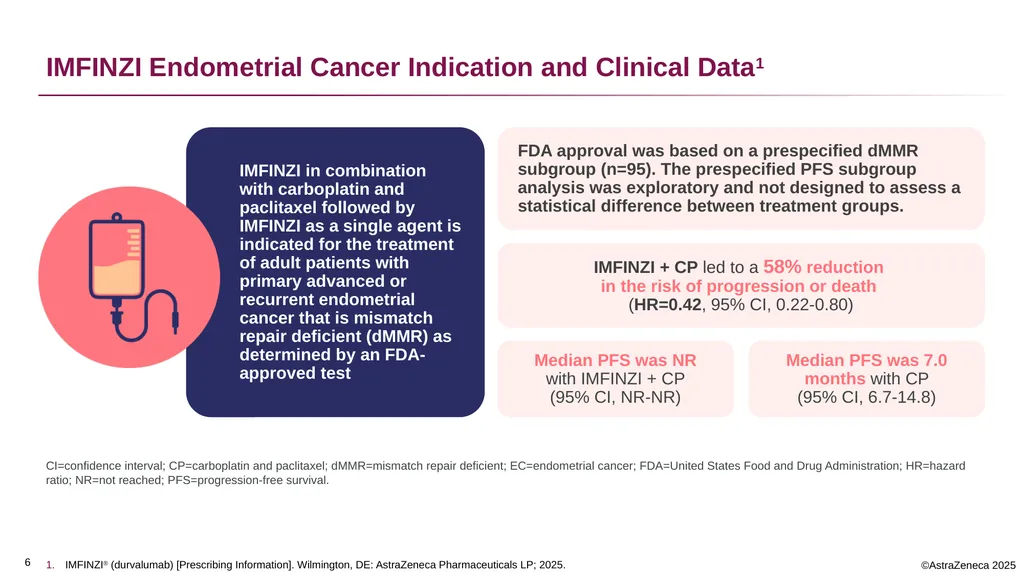
IMFINZI® (durvalumab) in combination with carboplatin and paclitaxel followed by IMFINZI as a single agent is indicated for the treatment of adult patients with primary advanced or recurrent endometrial cancer that is mismatch repair deficient (dMMR) as determined by an FDA-approved test.
SELECT SAFETY INFORMATION
Immune-mediated adverse reactions, which may be severe or fatal, can occur in any organ system or tissue, including the following: immune-mediated pneumonitis,
immune-mediated colitis, immune-mediated hepatitis, immune-mediated endocrinopathies, immune-mediated nephritis with renal dysfunction, immune-mediated dermatologic reactions, immune-mediated pancreatitis, and solid organ transplant rejection. IMFINZI can cause severe or life-threatening infusion-related reactions. Fatal and other serious complications can occur in patients who receive allogeneic hematopoietic stem cell transplantation (HSCT) before or after being treated with a PD-1/PD-L1 blocking antibody.
Advise women not to become pregnant or breastfeed during treatment with IMFINZI and for 3 months after the last dose.
The most common serious adverse reactions in at least 4% of patients with advanced or recurrent dMMR endometrial cancer were constipation (4.5%) and rash (4.5%).
The most common adverse reactions, including laboratory abnormalities (occurring in ≥20% of patients) were peripheral neuropathy (61%), musculoskeletal pain (59%), nausea (59%), alopecia (52%), fatigue (41%), abdominal pain (39%), constipation (39%), rash (39%), decreased magnesium (36%), increased ALT (32%), increased AST (30%), diarrhea (27%), vomiting (27%), cough (27%), decreased potassium (25%), dyspnea (25%), headache (23%), increased alkaline phosphatase (20%), and decreased appetite (18%).
The safety and effectiveness of IMFINZI has not been established in pediatric patients.
Please refer to the Important Safety Information at the end of this deck and the Full Prescribing Information including Medication Guide for IMFINZI at IMFINZIhcp.com. 4 IMFINZI® (durvalumab) [Prescribing Information]. Wilmington, DE: AstraZeneca Pharmaceuticals LP; 2025.<br>
IMFINZI® (durvalumab) in combination with carboplatin and paclitaxel followed by IMFINZI as a single agent is indicated for the treatment of adult patients with primary advanced or recurrent endometrial cancer that is mismatch repair deficient (dMMR) as determined by an FDA-approved test.
SELECT SAFETY INFORMATION
Immune-mediated adverse reactions, which may be severe or fatal, can occur in any organ system or tissue, including the following: immune-mediated pneumonitis,
immune-mediated colitis, immune-mediated hepatitis, immune-mediated endocrinopathies, immune-mediated nephritis with renal dysfunction, immune-mediated dermatologic reactions, immune-mediated pancreatitis, and solid organ transplant rejection. IMFINZI can cause severe or life-threatening infusion-related reactions. Fatal and other serious complications can occur in patients who receive allogeneic hematopoietic stem cell transplantation (HSCT) before or after being treated with a PD-1/PD-L1 blocking antibody.
Advise women not to become pregnant or breastfeed during treatment with IMFINZI and for 3 months after the last dose.
The most common serious adverse reactions in at least 4% of patients with advanced or recurrent dMMR endometrial cancer were constipation (4.5%) and rash (4.5%).
The most common adverse reactions, including laboratory abnormalities (occurring in ≥20% of patients) were peripheral neuropathy (61%), musculoskeletal pain (59%), nausea (59%), alopecia (52%), fatigue (41%), abdominal pain (39%), constipation (39%), rash (39%), decreased magnesium (36%), increased ALT (32%), increased AST (30%), diarrhea (27%), vomiting (27%), cough (27%), decreased potassium (25%), dyspnea (25%), headache (23%), increased alkaline phosphatase (20%), and decreased appetite (18%).
The safety and effectiveness of IMFINZI has not been established in pediatric patients.
Please refer to the Important Safety Information at the end of this deck and the Full Prescribing Information including Medication Guide for IMFINZI at IMFINZIhcp.com. 4 IMFINZI® (durvalumab) [Prescribing Information]. Wilmington, DE: AstraZeneca Pharmaceuticals LP; 2025.<br>
06
IMFINZI Endometrial Cancer Indication and Clinical Data1 5 IMFINZI® (durvalumab) [Prescribing Information]. Wilmington, DE: AstraZeneca Pharmaceuticals LP; 2025.<br>
07
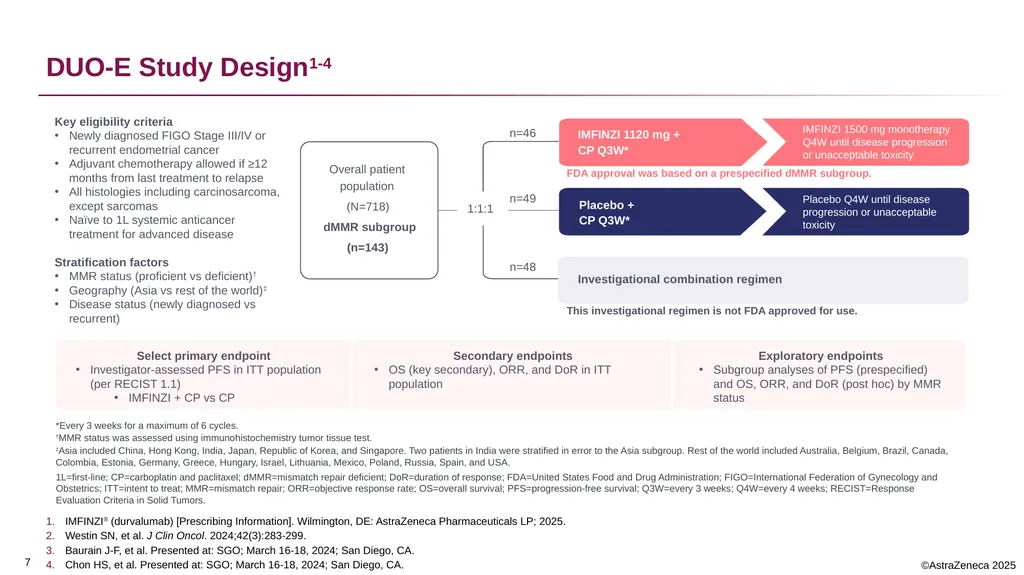
DUO-E Study Design1-4 6 IMFINZI® (durvalumab) [Prescribing Information]. Wilmington, DE: AstraZeneca Pharmaceuticals LP; 2025.
Westin SN, et al. J Clin Oncol. 2024;42(3):283-299.
Baurain J-F, et al. Presented at: SGO; March 16-18, 2024; San Diego, CA.
Chon HS, et al. Presented at: SGO; March 16-18, 2024; San Diego, CA. 1:1:1 IMFINZI 1120 mg + CP Q3W* IMFINZI 1500 mg monotherapy Q4W until disease progression or unacceptable toxicity Investigational combination regimen Placebo + CP Q3W* Placebo Q4W until disease progression or unacceptable toxicity FDA approval was based on a prespecified dMMR subgroup. This investigational regimen is not FDA approved for use. n=48 n=49 n=46 Overall patient population (N=718) dMMR subgroup (n=143) *Every 3 weeks for a maximum of 6 cycles. †MMR status was assessed using immunohistochemistry tumor tissue test. ‡Asia included China, Hong Kong, India, Japan, Republic of Korea, and Singapore. Two patients in India were stratified in error to the Asia subgroup. Rest of the world included Australia, Belgium, Brazil, Canada, Colombia, Estonia, Germany, Greece, Hungary, Israel, Lithuania, Mexico, Poland, Russia, Spain, and USA. Key eligibility criteria
Newly diagnosed FIGO Stage III/IV or recurrent endometrial cancer
Adjuvant chemotherapy allowed if ≥12 months from last treatment to relapse
All histologies including carcinosarcoma, except sarcomas
Naïve to 1L systemic anticancer treatment for advanced disease
Stratification factors
MMR status (proficient vs deficient)†
Geography (Asia vs rest of the world)‡
Disease status (newly diagnosed vs recurrent) 1L=first-line; CP=carboplatin and paclitaxel; dMMR=mismatch repair deficient; DoR=duration of response; FDA=United States Food and Drug Administration; FIGO=International Federation of Gynecology and Obstetrics; ITT=intent to treat; MMR=mismatch repair; ORR=objective response rate; OS=overall survival; PFS=progression-free survival; Q3W=every 3 weeks; Q4W=every 4 weeks; RECIST=Response Evaluation Criteria in Solid Tumors. Select primary endpoint
Investigator-assessed PFS in ITT population (per RECIST 1.1)
IMFINZI + CP vs CP Secondary endpoints
OS (key secondary), ORR, and DoR in ITT population Exploratory endpoints
Subgroup analyses of PFS (prespecified) and OS, ORR, and DoR (post hoc) by MMR status<br>
Westin SN, et al. J Clin Oncol. 2024;42(3):283-299.
Baurain J-F, et al. Presented at: SGO; March 16-18, 2024; San Diego, CA.
Chon HS, et al. Presented at: SGO; March 16-18, 2024; San Diego, CA. 1:1:1 IMFINZI 1120 mg + CP Q3W* IMFINZI 1500 mg monotherapy Q4W until disease progression or unacceptable toxicity Investigational combination regimen Placebo + CP Q3W* Placebo Q4W until disease progression or unacceptable toxicity FDA approval was based on a prespecified dMMR subgroup. This investigational regimen is not FDA approved for use. n=48 n=49 n=46 Overall patient population (N=718) dMMR subgroup (n=143) *Every 3 weeks for a maximum of 6 cycles. †MMR status was assessed using immunohistochemistry tumor tissue test. ‡Asia included China, Hong Kong, India, Japan, Republic of Korea, and Singapore. Two patients in India were stratified in error to the Asia subgroup. Rest of the world included Australia, Belgium, Brazil, Canada, Colombia, Estonia, Germany, Greece, Hungary, Israel, Lithuania, Mexico, Poland, Russia, Spain, and USA. Key eligibility criteria
Newly diagnosed FIGO Stage III/IV or recurrent endometrial cancer
Adjuvant chemotherapy allowed if ≥12 months from last treatment to relapse
All histologies including carcinosarcoma, except sarcomas
Naïve to 1L systemic anticancer treatment for advanced disease
Stratification factors
MMR status (proficient vs deficient)†
Geography (Asia vs rest of the world)‡
Disease status (newly diagnosed vs recurrent) 1L=first-line; CP=carboplatin and paclitaxel; dMMR=mismatch repair deficient; DoR=duration of response; FDA=United States Food and Drug Administration; FIGO=International Federation of Gynecology and Obstetrics; ITT=intent to treat; MMR=mismatch repair; ORR=objective response rate; OS=overall survival; PFS=progression-free survival; Q3W=every 3 weeks; Q4W=every 4 weeks; RECIST=Response Evaluation Criteria in Solid Tumors. Select primary endpoint
Investigator-assessed PFS in ITT population (per RECIST 1.1)
IMFINZI + CP vs CP Secondary endpoints
OS (key secondary), ORR, and DoR in ITT population Exploratory endpoints
Subgroup analyses of PFS (prespecified) and OS, ORR, and DoR (post hoc) by MMR status<br>
08
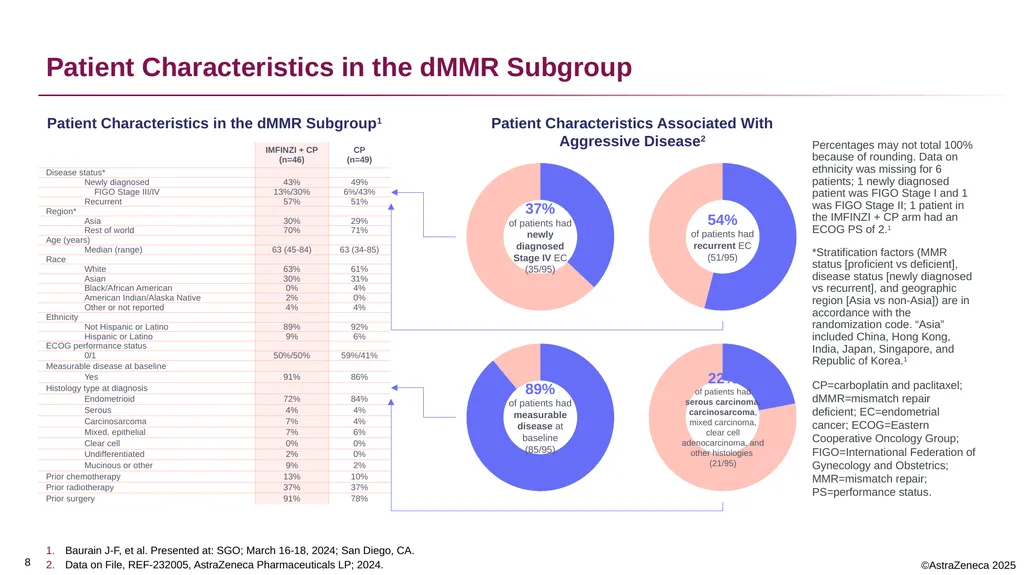
Patient Characteristics in the dMMR Subgroup 7 Baurain J-F, et al. Presented at: SGO; March 16-18, 2024; San Diego, CA.
Data on File, REF-232005, AstraZeneca Pharmaceuticals LP; 2024. Percentages may not total 100% because of rounding. Data on ethnicity was missing for 6 patients; 1 newly diagnosed patient was FIGO Stage I and 1 was FIGO Stage II; 1 patient in the IMFINZI + CP arm had an ECOG PS of 2.1
*Stratification factors (MMR status [proficient vs deficient], disease status [newly diagnosed vs recurrent], and geographic region [Asia vs non-Asia]) are in accordance with the randomization code. “Asia” included China, Hong Kong, India, Japan, Singapore, and Republic of Korea.1
CP=carboplatin and paclitaxel; dMMR=mismatch repair deficient; EC=endometrial cancer; ECOG=Eastern Cooperative Oncology Group; FIGO=International Federation of Gynecology and Obstetrics; MMR=mismatch repair; PS=performance status. 37%
of patients had newly diagnosed Stage IV EC (35/95) 54%
of patients had recurrent EC (51/95) 89%
of patients had measurable disease at baseline (85/95) 22%
of patients had serous carcinoma, carcinosarcoma, mixed carcinoma, clear cell adenocarcinoma, and other histologies (21/95) Patient Characteristics in the dMMR Subgroup1 Patient Characteristics Associated With Aggressive Disease2<br>
Data on File, REF-232005, AstraZeneca Pharmaceuticals LP; 2024. Percentages may not total 100% because of rounding. Data on ethnicity was missing for 6 patients; 1 newly diagnosed patient was FIGO Stage I and 1 was FIGO Stage II; 1 patient in the IMFINZI + CP arm had an ECOG PS of 2.1
*Stratification factors (MMR status [proficient vs deficient], disease status [newly diagnosed vs recurrent], and geographic region [Asia vs non-Asia]) are in accordance with the randomization code. “Asia” included China, Hong Kong, India, Japan, Singapore, and Republic of Korea.1
CP=carboplatin and paclitaxel; dMMR=mismatch repair deficient; EC=endometrial cancer; ECOG=Eastern Cooperative Oncology Group; FIGO=International Federation of Gynecology and Obstetrics; MMR=mismatch repair; PS=performance status. 37%
of patients had newly diagnosed Stage IV EC (35/95) 54%
of patients had recurrent EC (51/95) 89%
of patients had measurable disease at baseline (85/95) 22%
of patients had serous carcinoma, carcinosarcoma, mixed carcinoma, clear cell adenocarcinoma, and other histologies (21/95) Patient Characteristics in the dMMR Subgroup1 Patient Characteristics Associated With Aggressive Disease2<br>
09
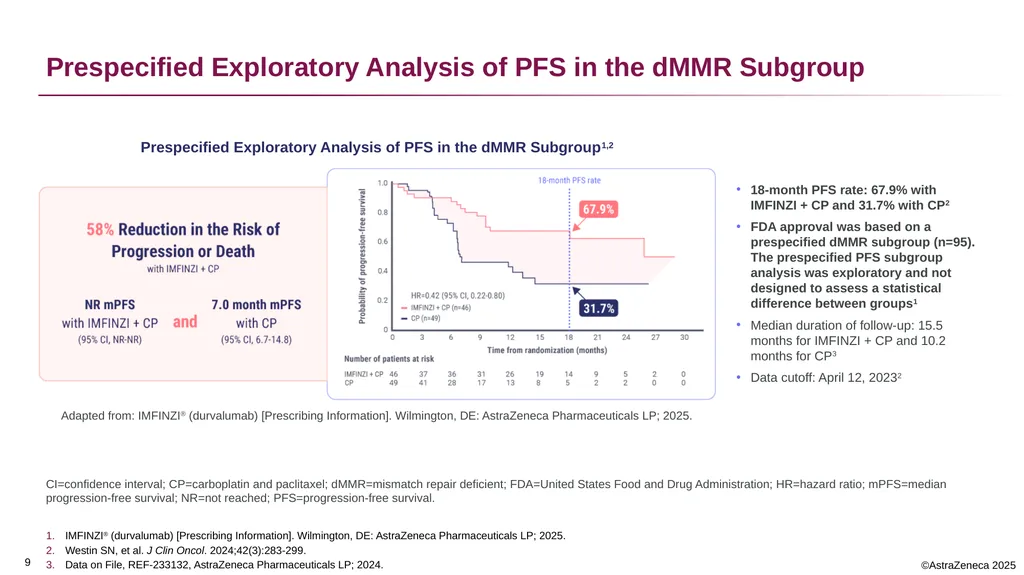
Prespecified Exploratory Analysis of PFS in the dMMR Subgroup 8 IMFINZI® (durvalumab) [Prescribing Information]. Wilmington, DE: AstraZeneca Pharmaceuticals LP; 2025.
Westin SN, et al. J Clin Oncol. 2024;42(3):283-299.
Data on File, REF-233132, AstraZeneca Pharmaceuticals LP; 2024. 18-month PFS rate: 67.9% with IMFINZI + CP and 31.7% with CP2
FDA approval was based on a prespecified dMMR subgroup (n=95). The prespecified PFS subgroup analysis was exploratory and not designed to assess a statistical difference between groups1
Median duration of follow-up: 15.5 months for IMFINZI + CP and 10.2 months for CP3
Data cutoff: April 12, 20232 CI=confidence interval; CP=carboplatin and paclitaxel; dMMR=mismatch repair deficient; FDA=United States Food and Drug Administration; HR=hazard ratio; mPFS=median progression-free survival; NR=not reached; PFS=progression-free survival. Prespecified Exploratory Analysis of PFS in the dMMR Subgroup1,2 Adapted from: IMFINZI® (durvalumab) [Prescribing Information]. Wilmington, DE: AstraZeneca Pharmaceuticals LP; 2025.<br>
Westin SN, et al. J Clin Oncol. 2024;42(3):283-299.
Data on File, REF-233132, AstraZeneca Pharmaceuticals LP; 2024. 18-month PFS rate: 67.9% with IMFINZI + CP and 31.7% with CP2
FDA approval was based on a prespecified dMMR subgroup (n=95). The prespecified PFS subgroup analysis was exploratory and not designed to assess a statistical difference between groups1
Median duration of follow-up: 15.5 months for IMFINZI + CP and 10.2 months for CP3
Data cutoff: April 12, 20232 CI=confidence interval; CP=carboplatin and paclitaxel; dMMR=mismatch repair deficient; FDA=United States Food and Drug Administration; HR=hazard ratio; mPFS=median progression-free survival; NR=not reached; PFS=progression-free survival. Prespecified Exploratory Analysis of PFS in the dMMR Subgroup1,2 Adapted from: IMFINZI® (durvalumab) [Prescribing Information]. Wilmington, DE: AstraZeneca Pharmaceuticals LP; 2025.<br>
10
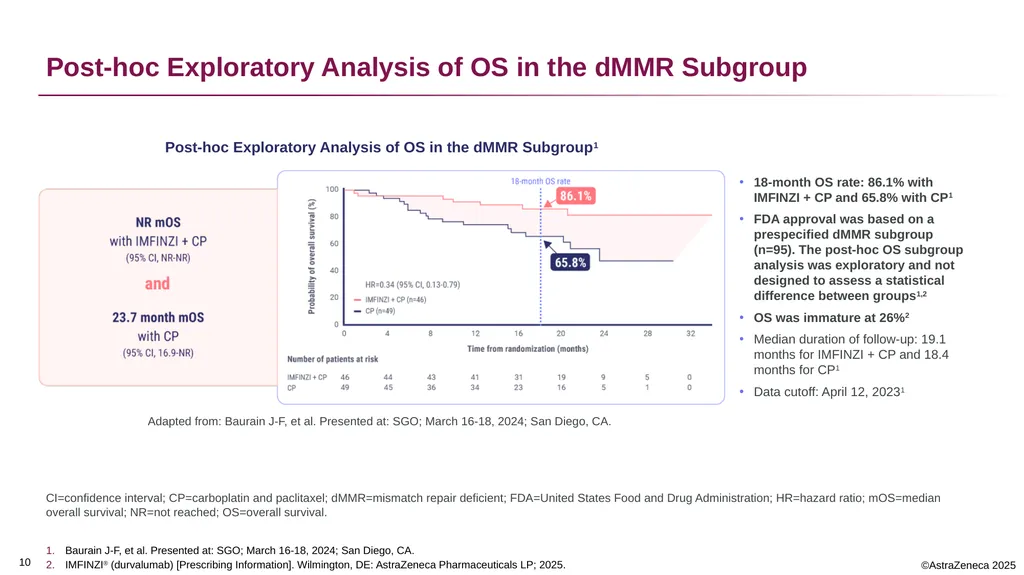
Post-hoc Exploratory Analysis of OS in the dMMR Subgroup 9 Baurain J-F, et al. Presented at: SGO; March 16-18, 2024; San Diego, CA.
IMFINZI® (durvalumab) [Prescribing Information]. Wilmington, DE: AstraZeneca Pharmaceuticals LP; 2025. 18-month OS rate: 86.1% with IMFINZI + CP and 65.8% with CP1
FDA approval was based on a prespecified dMMR subgroup (n=95). The post-hoc OS subgroup analysis was exploratory and not designed to assess a statistical difference between groups1,2
OS was immature at 26%2
Median duration of follow-up: 19.1 months for IMFINZI + CP and 18.4 months for CP1
Data cutoff: April 12, 20231 CI=confidence interval; CP=carboplatin and paclitaxel; dMMR=mismatch repair deficient; FDA=United States Food and Drug Administration; HR=hazard ratio; mOS=median overall survival; NR=not reached; OS=overall survival. Post-hoc Exploratory Analysis of OS in the dMMR Subgroup1 Adapted from: Baurain J-F, et al. Presented at: SGO; March 16-18, 2024; San Diego, CA.<br>
IMFINZI® (durvalumab) [Prescribing Information]. Wilmington, DE: AstraZeneca Pharmaceuticals LP; 2025. 18-month OS rate: 86.1% with IMFINZI + CP and 65.8% with CP1
FDA approval was based on a prespecified dMMR subgroup (n=95). The post-hoc OS subgroup analysis was exploratory and not designed to assess a statistical difference between groups1,2
OS was immature at 26%2
Median duration of follow-up: 19.1 months for IMFINZI + CP and 18.4 months for CP1
Data cutoff: April 12, 20231 CI=confidence interval; CP=carboplatin and paclitaxel; dMMR=mismatch repair deficient; FDA=United States Food and Drug Administration; HR=hazard ratio; mOS=median overall survival; NR=not reached; OS=overall survival. Post-hoc Exploratory Analysis of OS in the dMMR Subgroup1 Adapted from: Baurain J-F, et al. Presented at: SGO; March 16-18, 2024; San Diego, CA.<br>
11
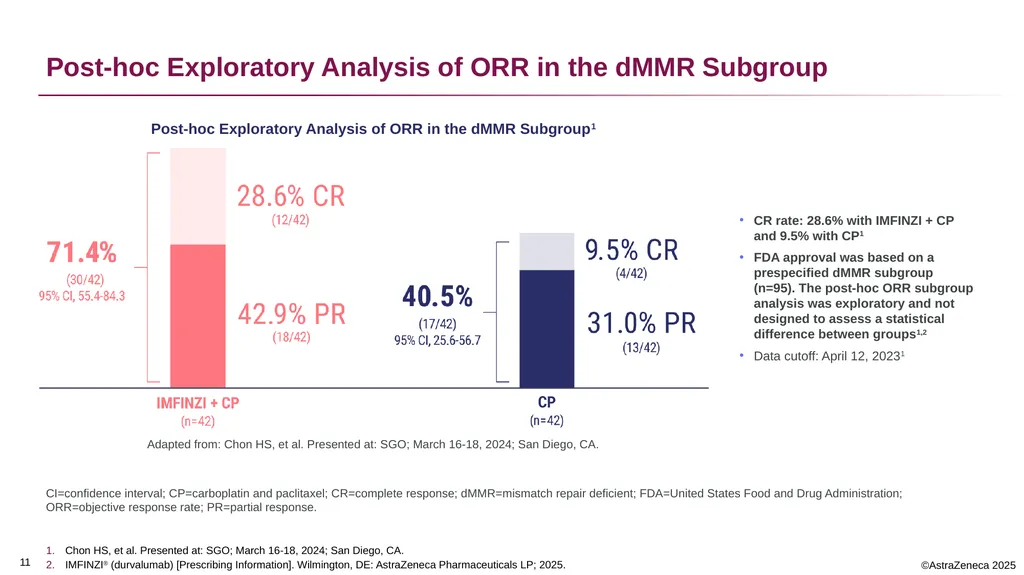
Post-hoc Exploratory Analysis of ORR in the dMMR Subgroup 10 Chon HS, et al. Presented at: SGO; March 16-18, 2024; San Diego, CA.
IMFINZI® (durvalumab) [Prescribing Information]. Wilmington, DE: AstraZeneca Pharmaceuticals LP; 2025. CR rate: 28.6% with IMFINZI + CP and 9.5% with CP1
FDA approval was based on a prespecified dMMR subgroup (n=95). The post-hoc ORR subgroup analysis was exploratory and not designed to assess a statistical difference between groups1,2
Data cutoff: April 12, 20231 CI=confidence interval; CP=carboplatin and paclitaxel; CR=complete response; dMMR=mismatch repair deficient; FDA=United States Food and Drug Administration; ORR=objective response rate; PR=partial response. Post-hoc Exploratory Analysis of ORR in the dMMR Subgroup1 Adapted from: Chon HS, et al. Presented at: SGO; March 16-18, 2024; San Diego, CA.<br>
IMFINZI® (durvalumab) [Prescribing Information]. Wilmington, DE: AstraZeneca Pharmaceuticals LP; 2025. CR rate: 28.6% with IMFINZI + CP and 9.5% with CP1
FDA approval was based on a prespecified dMMR subgroup (n=95). The post-hoc ORR subgroup analysis was exploratory and not designed to assess a statistical difference between groups1,2
Data cutoff: April 12, 20231 CI=confidence interval; CP=carboplatin and paclitaxel; CR=complete response; dMMR=mismatch repair deficient; FDA=United States Food and Drug Administration; ORR=objective response rate; PR=partial response. Post-hoc Exploratory Analysis of ORR in the dMMR Subgroup1 Adapted from: Chon HS, et al. Presented at: SGO; March 16-18, 2024; San Diego, CA.<br>
12
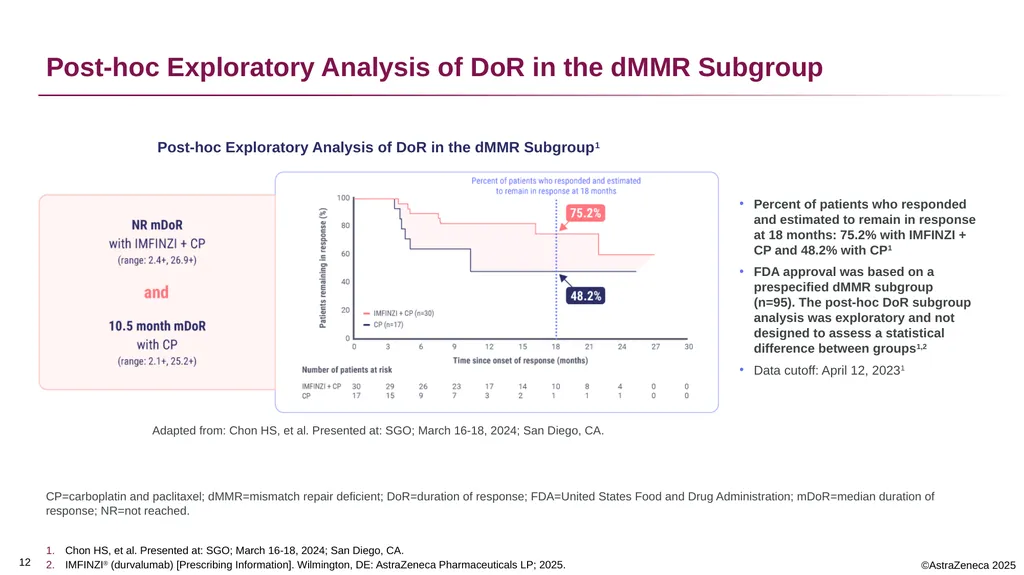
Post-hoc Exploratory Analysis of DoR in the dMMR Subgroup 11 Chon HS, et al. Presented at: SGO; March 16-18, 2024; San Diego, CA.
IMFINZI® (durvalumab) [Prescribing Information]. Wilmington, DE: AstraZeneca Pharmaceuticals LP; 2025. Percent of patients who responded and estimated to remain in response at 18 months: 75.2% with IMFINZI + CP and 48.2% with CP1
FDA approval was based on a prespecified dMMR subgroup (n=95). The post-hoc DoR subgroup analysis was exploratory and not designed to assess a statistical difference between groups1,2
Data cutoff: April 12, 20231 CP=carboplatin and paclitaxel; dMMR=mismatch repair deficient; DoR=duration of response; FDA=United States Food and Drug Administration; mDoR=median duration of response; NR=not reached. Adapted from: Chon HS, et al. Presented at: SGO; March 16-18, 2024; San Diego, CA. Post-hoc Exploratory Analysis of DoR in the dMMR Subgroup1<br>
IMFINZI® (durvalumab) [Prescribing Information]. Wilmington, DE: AstraZeneca Pharmaceuticals LP; 2025. Percent of patients who responded and estimated to remain in response at 18 months: 75.2% with IMFINZI + CP and 48.2% with CP1
FDA approval was based on a prespecified dMMR subgroup (n=95). The post-hoc DoR subgroup analysis was exploratory and not designed to assess a statistical difference between groups1,2
Data cutoff: April 12, 20231 CP=carboplatin and paclitaxel; dMMR=mismatch repair deficient; DoR=duration of response; FDA=United States Food and Drug Administration; mDoR=median duration of response; NR=not reached. Adapted from: Chon HS, et al. Presented at: SGO; March 16-18, 2024; San Diego, CA. Post-hoc Exploratory Analysis of DoR in the dMMR Subgroup1<br>
13
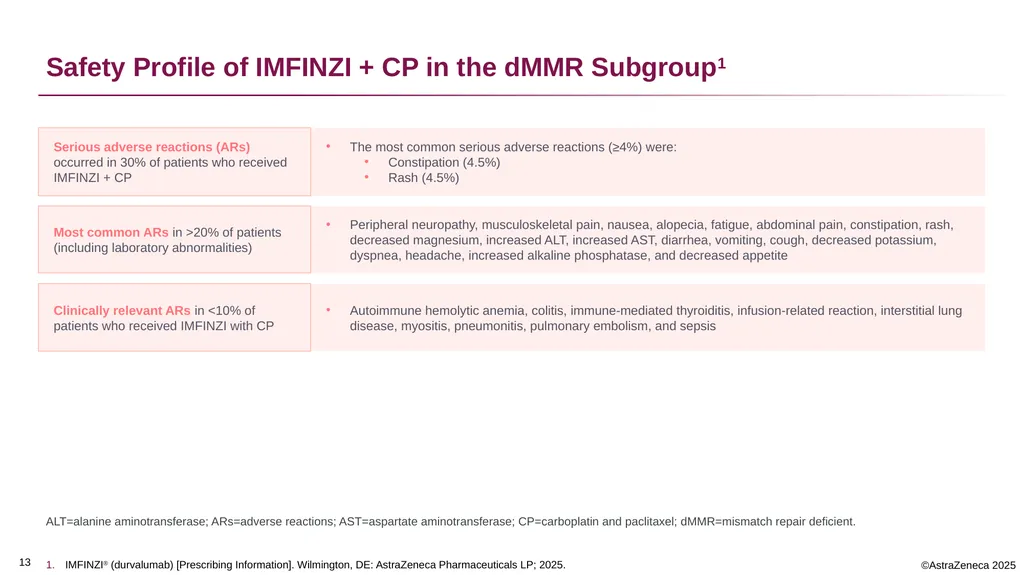
Safety Profile of IMFINZI + CP in the dMMR Subgroup1 12 IMFINZI® (durvalumab) [Prescribing Information]. Wilmington, DE: AstraZeneca Pharmaceuticals LP; 2025. ALT=alanine aminotransferase; ARs=adverse reactions; AST=aspartate aminotransferase; CP=carboplatin and paclitaxel; dMMR=mismatch repair deficient. The most common serious adverse reactions (≥4%) were:
Constipation (4.5%)
Rash (4.5%) Serious adverse reactions (ARs) occurred in 30% of patients who received IMFINZI + CP Autoimmune hemolytic anemia, colitis, immune-mediated thyroiditis, infusion-related reaction, interstitial lung disease, myositis, pneumonitis, pulmonary embolism, and sepsis Clinically relevant ARs in <10% of patients who received IMFINZI with CP Peripheral neuropathy, musculoskeletal pain, nausea, alopecia, fatigue, abdominal pain, constipation, rash, decreased magnesium, increased ALT, increased AST, diarrhea, vomiting, cough, decreased potassium, dyspnea, headache, increased alkaline phosphatase, and decreased appetite Most common ARs in >20% of patients (including laboratory abnormalities)<br>
Constipation (4.5%)
Rash (4.5%) Serious adverse reactions (ARs) occurred in 30% of patients who received IMFINZI + CP Autoimmune hemolytic anemia, colitis, immune-mediated thyroiditis, infusion-related reaction, interstitial lung disease, myositis, pneumonitis, pulmonary embolism, and sepsis Clinically relevant ARs in <10% of patients who received IMFINZI with CP Peripheral neuropathy, musculoskeletal pain, nausea, alopecia, fatigue, abdominal pain, constipation, rash, decreased magnesium, increased ALT, increased AST, diarrhea, vomiting, cough, decreased potassium, dyspnea, headache, increased alkaline phosphatase, and decreased appetite Most common ARs in >20% of patients (including laboratory abnormalities)<br>
14
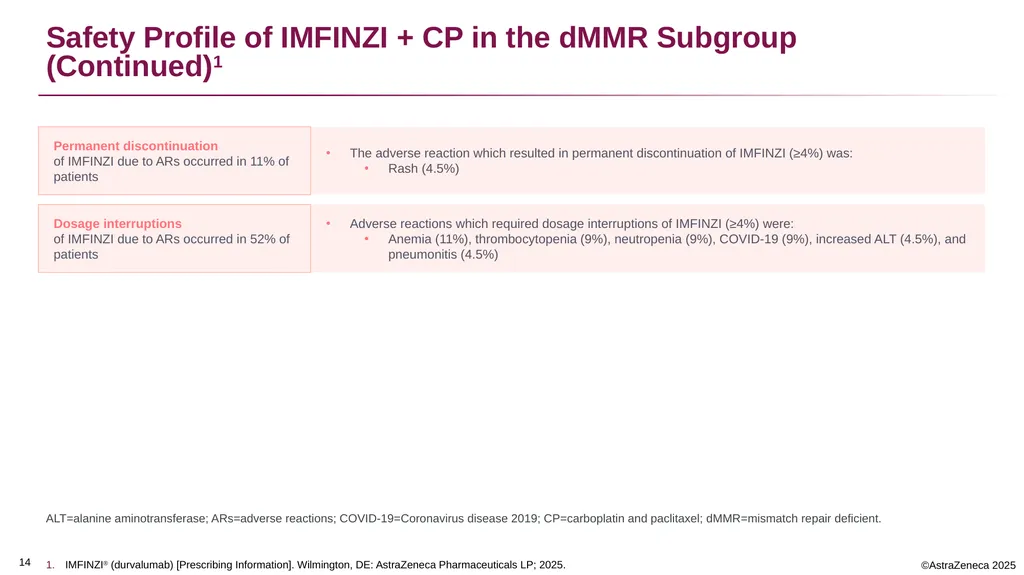
Safety Profile of IMFINZI + CP in the dMMR Subgroup (Continued)1 13 IMFINZI® (durvalumab) [Prescribing Information]. Wilmington, DE: AstraZeneca Pharmaceuticals LP; 2025. The adverse reaction which resulted in permanent discontinuation of IMFINZI (≥4%) was:
Rash (4.5%) Adverse reactions which required dosage interruptions of IMFINZI (≥4%) were:
Anemia (11%), thrombocytopenia (9%), neutropenia (9%), COVID-19 (9%), increased ALT (4.5%), and pneumonitis (4.5%) Permanent discontinuation of IMFINZI due to ARs occurred in 11% of patients Dosage interruptions of IMFINZI due to ARs occurred in 52% of patients ALT=alanine aminotransferase; ARs=adverse reactions; COVID-19=Coronavirus disease 2019; CP=carboplatin and paclitaxel; dMMR=mismatch repair deficient.<br>
Rash (4.5%) Adverse reactions which required dosage interruptions of IMFINZI (≥4%) were:
Anemia (11%), thrombocytopenia (9%), neutropenia (9%), COVID-19 (9%), increased ALT (4.5%), and pneumonitis (4.5%) Permanent discontinuation of IMFINZI due to ARs occurred in 11% of patients Dosage interruptions of IMFINZI due to ARs occurred in 52% of patients ALT=alanine aminotransferase; ARs=adverse reactions; COVID-19=Coronavirus disease 2019; CP=carboplatin and paclitaxel; dMMR=mismatch repair deficient.<br>
15
IMFINZI Important Safety Information1 There are no contraindications for IMFINZI® (durvalumab).
Immune-Mediated Adverse Reactions
Important immune-mediated adverse reactions listed under Warnings and Precautions may not include all possible severe and fatal immune-mediated reactions. Immune-mediated adverse reactions, which may be severe or fatal, can occur in any organ system or tissue. Immune-mediated adverse reactions can occur at any time after starting treatment or after discontinuation. Monitor patients closely for symptoms and signs that may be clinical manifestations of underlying immune-mediated adverse reactions. Evaluate liver enzymes, creatinine, and thyroid function at baseline and periodically during treatment. In cases of suspected immune-mediated adverse reactions, initiate appropriate workup to exclude alternative etiologies, including infection. Institute medical management promptly, including specialty consultation as appropriate. Withhold or permanently discontinue IMFINZI depending on severity. See USPI Dosing and Administration for specific details. In general, if IMFINZI requires interruption or discontinuation, administer systemic corticosteroid therapy (1 mg to 2 mg/kg/day prednisone or equivalent) until improvement to Grade 1 or less. Upon improvement to Grade 1 or less, initiate corticosteroid taper and continue to taper over at least 1 month. Consider administration of other systemic immunosuppressants in patients whose immune-mediated adverse reactions are not controlled with corticosteroid therapy.
Immune-Mediated Pneumonitis
IMFINZI can cause immune-mediated pneumonitis. The incidence of pneumonitis is higher in patients who have received prior thoracic radiation.
Immune-Mediated Colitis
IMFINZI can cause immune-mediated colitis that is frequently associated with diarrhea. Cytomegalovirus (CMV) infection/reactivation has been reported in patients with corticosteroid-refractory immune-mediated colitis. In cases of corticosteroid-refractory colitis, consider repeating infectious workup to exclude alternative etiologies.
Immune-Mediated Hepatitis
IMFINZI can cause immune-mediated hepatitis. 14 IMFINZI® (durvalumab) [Prescribing Information]. Wilmington, DE: AstraZeneca Pharmaceuticals LP; 2025.<br>
Immune-Mediated Adverse Reactions
Important immune-mediated adverse reactions listed under Warnings and Precautions may not include all possible severe and fatal immune-mediated reactions. Immune-mediated adverse reactions, which may be severe or fatal, can occur in any organ system or tissue. Immune-mediated adverse reactions can occur at any time after starting treatment or after discontinuation. Monitor patients closely for symptoms and signs that may be clinical manifestations of underlying immune-mediated adverse reactions. Evaluate liver enzymes, creatinine, and thyroid function at baseline and periodically during treatment. In cases of suspected immune-mediated adverse reactions, initiate appropriate workup to exclude alternative etiologies, including infection. Institute medical management promptly, including specialty consultation as appropriate. Withhold or permanently discontinue IMFINZI depending on severity. See USPI Dosing and Administration for specific details. In general, if IMFINZI requires interruption or discontinuation, administer systemic corticosteroid therapy (1 mg to 2 mg/kg/day prednisone or equivalent) until improvement to Grade 1 or less. Upon improvement to Grade 1 or less, initiate corticosteroid taper and continue to taper over at least 1 month. Consider administration of other systemic immunosuppressants in patients whose immune-mediated adverse reactions are not controlled with corticosteroid therapy.
Immune-Mediated Pneumonitis
IMFINZI can cause immune-mediated pneumonitis. The incidence of pneumonitis is higher in patients who have received prior thoracic radiation.
Immune-Mediated Colitis
IMFINZI can cause immune-mediated colitis that is frequently associated with diarrhea. Cytomegalovirus (CMV) infection/reactivation has been reported in patients with corticosteroid-refractory immune-mediated colitis. In cases of corticosteroid-refractory colitis, consider repeating infectious workup to exclude alternative etiologies.
Immune-Mediated Hepatitis
IMFINZI can cause immune-mediated hepatitis. 14 IMFINZI® (durvalumab) [Prescribing Information]. Wilmington, DE: AstraZeneca Pharmaceuticals LP; 2025.<br>
16
IMFINZI Important Safety Information (Continued)1 Immune-Mediated Endocrinopathies
Adrenal Insufficiency: IMFINZI can cause primary or secondary adrenal insufficiency. For Grade 2 or higher adrenal insufficiency, initiate symptomatic treatment, including hormone replacement as clinically indicated.
Hypophysitis: IMFINZI can cause immune-mediated hypophysitis. Hypophysitis can present with acute symptoms associated with mass effect such as headache, photophobia, or visual field cuts. Hypophysitis can cause hypopituitarism. Initiate symptomatic treatment including hormone replacement as clinically indicated.
Thyroid Disorders (Thyroiditis, Hyperthyroidism, and Hypothyroidism): IMFINZI can cause immune-mediated thyroid disorders. Thyroiditis can present with or without endocrinopathy. Hypothyroidism can follow hyperthyroidism. Initiate hormone replacement therapy for hypothyroidism or institute medical management of hyperthyroidism as clinically indicated.
IMFINZI with Carboplatin and Paclitaxel
Immune-mediated hypothyroidism occurred in 14% (34/235) of patients receiving IMFINZI in combination with carboplatin and paclitaxel.
Type 1 Diabetes Mellitus, which can present with diabetic ketoacidosis: Monitor patients for hyperglycemia or other signs and symptoms of diabetes. Initiate treatment with insulin as clinically indicated.
Immune-Mediated Nephritis with Renal Dysfunction
IMFINZI can cause immune-mediated nephritis.
Immune-Mediated Dermatology Reactions
IMFINZI can cause immune-mediated rash or dermatitis. Exfoliative dermatitis, including Stevens-Johnson Syndrome (SJS), drug rash with eosinophilia and systemic symptoms (DRESS), and toxic epidermal necrolysis (TEN), has occurred with PD-1/L-1 antibodies. Topical emollients and/or topical corticosteroids may be adequate to treat mild to moderate non-exfoliative rashes. 15 IMFINZI® (durvalumab) [Prescribing Information]. Wilmington, DE: AstraZeneca Pharmaceuticals LP; 2025.<br>
Adrenal Insufficiency: IMFINZI can cause primary or secondary adrenal insufficiency. For Grade 2 or higher adrenal insufficiency, initiate symptomatic treatment, including hormone replacement as clinically indicated.
Hypophysitis: IMFINZI can cause immune-mediated hypophysitis. Hypophysitis can present with acute symptoms associated with mass effect such as headache, photophobia, or visual field cuts. Hypophysitis can cause hypopituitarism. Initiate symptomatic treatment including hormone replacement as clinically indicated.
Thyroid Disorders (Thyroiditis, Hyperthyroidism, and Hypothyroidism): IMFINZI can cause immune-mediated thyroid disorders. Thyroiditis can present with or without endocrinopathy. Hypothyroidism can follow hyperthyroidism. Initiate hormone replacement therapy for hypothyroidism or institute medical management of hyperthyroidism as clinically indicated.
IMFINZI with Carboplatin and Paclitaxel
Immune-mediated hypothyroidism occurred in 14% (34/235) of patients receiving IMFINZI in combination with carboplatin and paclitaxel.
Type 1 Diabetes Mellitus, which can present with diabetic ketoacidosis: Monitor patients for hyperglycemia or other signs and symptoms of diabetes. Initiate treatment with insulin as clinically indicated.
Immune-Mediated Nephritis with Renal Dysfunction
IMFINZI can cause immune-mediated nephritis.
Immune-Mediated Dermatology Reactions
IMFINZI can cause immune-mediated rash or dermatitis. Exfoliative dermatitis, including Stevens-Johnson Syndrome (SJS), drug rash with eosinophilia and systemic symptoms (DRESS), and toxic epidermal necrolysis (TEN), has occurred with PD-1/L-1 antibodies. Topical emollients and/or topical corticosteroids may be adequate to treat mild to moderate non-exfoliative rashes. 15 IMFINZI® (durvalumab) [Prescribing Information]. Wilmington, DE: AstraZeneca Pharmaceuticals LP; 2025.<br>
17
IMFINZI Important Safety Information (Continued)1 Other Immune-Mediated Adverse Reactions
The following clinically significant, immune-mediated adverse reactions occurred at an incidence of less than 1% each in patients who received IMFINZI or were reported with the use of other PD-1/PD-L1 blocking antibodies.
Cardiac/vascular: Myocarditis, pericarditis, vasculitis.
Nervous system: Meningitis, encephalitis, myelitis and demyelination, myasthenic syndrome/myasthenia gravis (including exacerbation), Guillain-Barré syndrome, nerve paresis, autoimmune neuropathy.
Ocular: Uveitis, iritis, and other ocular inflammatory toxicities can occur. Some cases can be associated with retinal detachment. Various grades of visual impairment to include blindness can occur. If uveitis occurs in combination with other immune-mediated adverse reactions, consider a Vogt-Koyanagi-Harada-like syndrome, as this may require treatment with systemic steroids to reduce the risk of permanent vision loss.
Gastrointestinal: Pancreatitis including increases in serum amylase and lipase levels, gastritis, duodenitis.
Musculoskeletal and connective tissue disorders: Myositis/polymyositis, rhabdomyolysis and associated sequelae including renal failure, arthritis, polymyalgia rheumatic.
Endocrine: Hypoparathyroidism.
Other (hematologic/immune): Hemolytic anemia, aplastic anemia, hemophagocytic lymphohistiocytosis, systemic inflammatory response syndrome, histiocytic necrotizing lymphadenitis (Kikuchi lymphadenitis), sarcoidosis, immune thrombocytopenia, solid organ transplant rejection, other transplant (including corneal graft) rejection.
Infusion-Related Reactions
IMFINZI can cause severe or life-threatening infusion-related reactions. Monitor for signs and symptoms of infusion-related reactions. Interrupt, slow the rate of, or permanently discontinue IMFINZI based on the severity. See USPI Dosing and Administration for specific details. For Grade 1 or 2 infusion-related reactions, consider using pre-medications with subsequent doses.
Complications of Allogeneic HSCT after IMFINZI
Fatal and other serious complications can occur in patients who receive allogeneic hematopoietic stem cell transplantation (HSCT) before or after being treated with a PD-1/L-1 blocking antibody. Transplant-related complications include hyperacute graft-versus-host disease (GVHD), acute GVHD, chronic GVHD, hepatic veno-occlusive disease (VOD) after reduced intensity conditioning, and steroid-requiring febrile syndrome (without an identified infectious cause). These complications may occur despite intervening therapy between PD-1/L-1 blockade and allogeneic HSCT. Follow patients closely for evidence of transplant-related complications and intervene promptly. Consider the benefit versus risks of treatment with a PD-1/L-1 blocking antibody prior to or after an allogeneic HSCT. 16 IMFINZI® (durvalumab) [Prescribing Information]. Wilmington, DE: AstraZeneca Pharmaceuticals LP; 2025.<br>
The following clinically significant, immune-mediated adverse reactions occurred at an incidence of less than 1% each in patients who received IMFINZI or were reported with the use of other PD-1/PD-L1 blocking antibodies.
Cardiac/vascular: Myocarditis, pericarditis, vasculitis.
Nervous system: Meningitis, encephalitis, myelitis and demyelination, myasthenic syndrome/myasthenia gravis (including exacerbation), Guillain-Barré syndrome, nerve paresis, autoimmune neuropathy.
Ocular: Uveitis, iritis, and other ocular inflammatory toxicities can occur. Some cases can be associated with retinal detachment. Various grades of visual impairment to include blindness can occur. If uveitis occurs in combination with other immune-mediated adverse reactions, consider a Vogt-Koyanagi-Harada-like syndrome, as this may require treatment with systemic steroids to reduce the risk of permanent vision loss.
Gastrointestinal: Pancreatitis including increases in serum amylase and lipase levels, gastritis, duodenitis.
Musculoskeletal and connective tissue disorders: Myositis/polymyositis, rhabdomyolysis and associated sequelae including renal failure, arthritis, polymyalgia rheumatic.
Endocrine: Hypoparathyroidism.
Other (hematologic/immune): Hemolytic anemia, aplastic anemia, hemophagocytic lymphohistiocytosis, systemic inflammatory response syndrome, histiocytic necrotizing lymphadenitis (Kikuchi lymphadenitis), sarcoidosis, immune thrombocytopenia, solid organ transplant rejection, other transplant (including corneal graft) rejection.
Infusion-Related Reactions
IMFINZI can cause severe or life-threatening infusion-related reactions. Monitor for signs and symptoms of infusion-related reactions. Interrupt, slow the rate of, or permanently discontinue IMFINZI based on the severity. See USPI Dosing and Administration for specific details. For Grade 1 or 2 infusion-related reactions, consider using pre-medications with subsequent doses.
Complications of Allogeneic HSCT after IMFINZI
Fatal and other serious complications can occur in patients who receive allogeneic hematopoietic stem cell transplantation (HSCT) before or after being treated with a PD-1/L-1 blocking antibody. Transplant-related complications include hyperacute graft-versus-host disease (GVHD), acute GVHD, chronic GVHD, hepatic veno-occlusive disease (VOD) after reduced intensity conditioning, and steroid-requiring febrile syndrome (without an identified infectious cause). These complications may occur despite intervening therapy between PD-1/L-1 blockade and allogeneic HSCT. Follow patients closely for evidence of transplant-related complications and intervene promptly. Consider the benefit versus risks of treatment with a PD-1/L-1 blocking antibody prior to or after an allogeneic HSCT. 16 IMFINZI® (durvalumab) [Prescribing Information]. Wilmington, DE: AstraZeneca Pharmaceuticals LP; 2025.<br>
18
IMFINZI Important Safety Information (Continued)1 Embryo-Fetal Toxicity
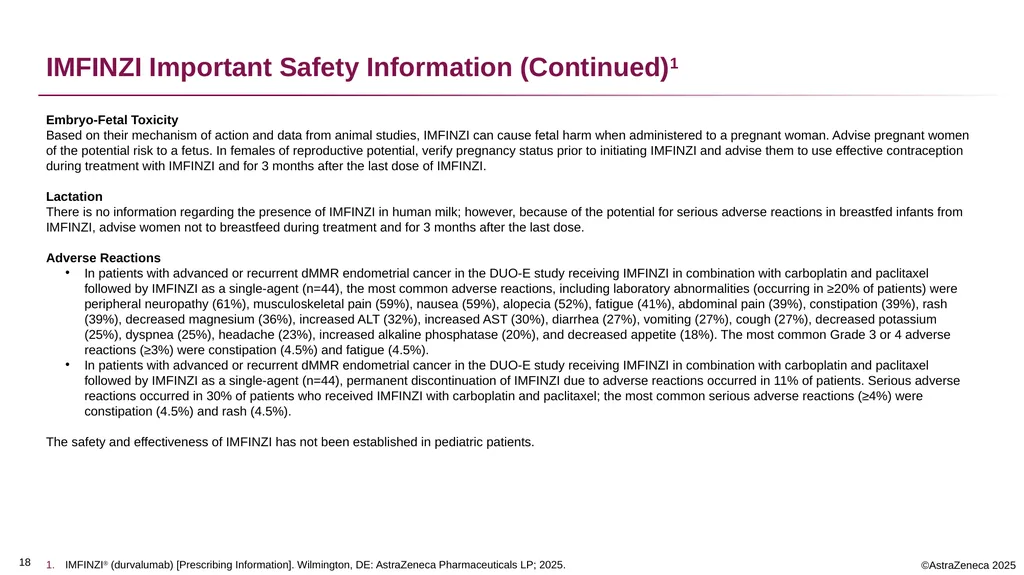
Based on their mechanism of action and data from animal studies, IMFINZI can cause fetal harm when administered to a pregnant woman. Advise pregnant women of the potential risk to a fetus. In females of reproductive potential, verify pregnancy status prior to initiating IMFINZI and advise them to use effective contraception during treatment with IMFINZI and for 3 months after the last dose of IMFINZI.
Lactation
There is no information regarding the presence of IMFINZI in human milk; however, because of the potential for serious adverse reactions in breastfed infants from IMFINZI, advise women not to breastfeed during treatment and for 3 months after the last dose.
Adverse Reactions
In patients with advanced or recurrent dMMR endometrial cancer in the DUO-E study receiving IMFINZI in combination with carboplatin and paclitaxel followed by IMFINZI as a single-agent (n=44), the most common adverse reactions, including laboratory abnormalities (occurring in ≥20% of patients) were peripheral neuropathy (61%), musculoskeletal pain (59%), nausea (59%), alopecia (52%), fatigue (41%), abdominal pain (39%), constipation (39%), rash (39%), decreased magnesium (36%), increased ALT (32%), increased AST (30%), diarrhea (27%), vomiting (27%), cough (27%), decreased potassium (25%), dyspnea (25%), headache (23%), increased alkaline phosphatase (20%), and decreased appetite (18%). The most common Grade 3 or 4 adverse reactions (≥3%) were constipation (4.5%) and fatigue (4.5%).
In patients with advanced or recurrent dMMR endometrial cancer in the DUO-E study receiving IMFINZI in combination with carboplatin and paclitaxel followed by IMFINZI as a single-agent (n=44), permanent discontinuation of IMFINZI due to adverse reactions occurred in 11% of patients. Serious adverse reactions occurred in 30% of patients who received IMFINZI with carboplatin and paclitaxel; the most common serious adverse reactions (≥4%) were constipation (4.5%) and rash (4.5%).
The safety and effectiveness of IMFINZI has not been established in pediatric patients. 17 IMFINZI® (durvalumab) [Prescribing Information]. Wilmington, DE: AstraZeneca Pharmaceuticals LP; 2025.<br>
Based on their mechanism of action and data from animal studies, IMFINZI can cause fetal harm when administered to a pregnant woman. Advise pregnant women of the potential risk to a fetus. In females of reproductive potential, verify pregnancy status prior to initiating IMFINZI and advise them to use effective contraception during treatment with IMFINZI and for 3 months after the last dose of IMFINZI.
Lactation
There is no information regarding the presence of IMFINZI in human milk; however, because of the potential for serious adverse reactions in breastfed infants from IMFINZI, advise women not to breastfeed during treatment and for 3 months after the last dose.
Adverse Reactions
In patients with advanced or recurrent dMMR endometrial cancer in the DUO-E study receiving IMFINZI in combination with carboplatin and paclitaxel followed by IMFINZI as a single-agent (n=44), the most common adverse reactions, including laboratory abnormalities (occurring in ≥20% of patients) were peripheral neuropathy (61%), musculoskeletal pain (59%), nausea (59%), alopecia (52%), fatigue (41%), abdominal pain (39%), constipation (39%), rash (39%), decreased magnesium (36%), increased ALT (32%), increased AST (30%), diarrhea (27%), vomiting (27%), cough (27%), decreased potassium (25%), dyspnea (25%), headache (23%), increased alkaline phosphatase (20%), and decreased appetite (18%). The most common Grade 3 or 4 adverse reactions (≥3%) were constipation (4.5%) and fatigue (4.5%).
In patients with advanced or recurrent dMMR endometrial cancer in the DUO-E study receiving IMFINZI in combination with carboplatin and paclitaxel followed by IMFINZI as a single-agent (n=44), permanent discontinuation of IMFINZI due to adverse reactions occurred in 11% of patients. Serious adverse reactions occurred in 30% of patients who received IMFINZI with carboplatin and paclitaxel; the most common serious adverse reactions (≥4%) were constipation (4.5%) and rash (4.5%).
The safety and effectiveness of IMFINZI has not been established in pediatric patients. 17 IMFINZI® (durvalumab) [Prescribing Information]. Wilmington, DE: AstraZeneca Pharmaceuticals LP; 2025.<br>
19
IMFINZI Important Safety Information (Continued)1 Indication:
IMFINZI in combination with carboplatin and paclitaxel followed by IMFINZI as a single agent is indicated for the treatment of adult patients with primary advanced or recurrent endometrial cancer that is mismatch repair deficient (dMMR) as determined by an FDA-approved test.
Please see Full Prescribing Information including Medication Guide for IMFINZI at IMFINZIhcp.com.
You are encouraged to report side effects related to AstraZeneca products by calling 1-800-236-9933. If you prefer to report these to the FDA, please call 1-800-FDA-1088. 18 IMFINZI® (durvalumab) [Prescribing Information]. Wilmington, DE: AstraZeneca Pharmaceuticals LP; 2025.<br>
IMFINZI in combination with carboplatin and paclitaxel followed by IMFINZI as a single agent is indicated for the treatment of adult patients with primary advanced or recurrent endometrial cancer that is mismatch repair deficient (dMMR) as determined by an FDA-approved test.
Please see Full Prescribing Information including Medication Guide for IMFINZI at IMFINZIhcp.com.
You are encouraged to report side effects related to AstraZeneca products by calling 1-800-236-9933. If you prefer to report these to the FDA, please call 1-800-FDA-1088. 18 IMFINZI® (durvalumab) [Prescribing Information]. Wilmington, DE: AstraZeneca Pharmaceuticals LP; 2025.<br>
20
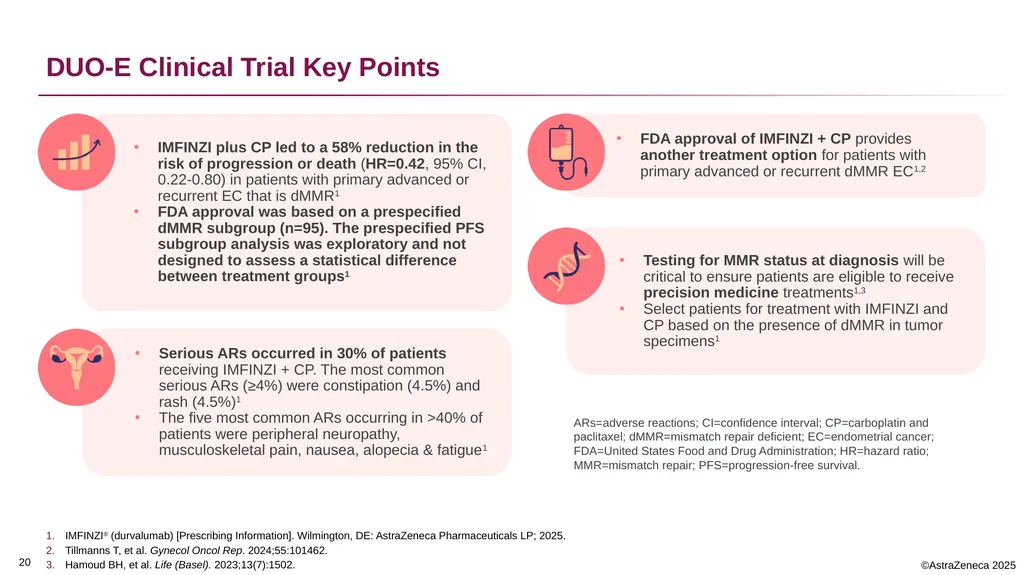
IMFINZI plus CP led to a 58% reduction in the risk of progression or death (HR=0.42, 95% CI, 0.22-0.80) in patients with primary advanced or recurrent EC that is dMMR1
FDA approval was based on a prespecified dMMR subgroup (n=95). The prespecified PFS subgroup analysis was exploratory and not designed to assess a statistical difference between treatment groups1 DUO-E Clinical Trial Key Points 19 IMFINZI® (durvalumab) [Prescribing Information]. Wilmington, DE: AstraZeneca Pharmaceuticals LP; 2025.
Tillmanns T, et al. Gynecol Oncol Rep. 2024;55:101462.
Hamoud BH, et al. Life (Basel). 2023;13(7):1502. Serious ARs occurred in 30% of patients receiving IMFINZI + CP. The most common serious ARs (≥4%) were constipation (4.5%) and rash (4.5%)1
The five most common ARs occurring in >40% of patients were peripheral neuropathy, musculoskeletal pain, nausea, alopecia & fatigue1 FDA approval of IMFINZI + CP provides another treatment option for patients with primary advanced or recurrent dMMR EC1,2 Testing for MMR status at diagnosis will be critical to ensure patients are eligible to receive precision medicine treatments1,3
Select patients for treatment with IMFINZI and CP based on the presence of dMMR in tumor specimens1 ARs=adverse reactions; CI=confidence interval; CP=carboplatin and paclitaxel; dMMR=mismatch repair deficient; EC=endometrial cancer; FDA=United States Food and Drug Administration; HR=hazard ratio; MMR=mismatch repair; PFS=progression-free survival.<br>
FDA approval was based on a prespecified dMMR subgroup (n=95). The prespecified PFS subgroup analysis was exploratory and not designed to assess a statistical difference between treatment groups1 DUO-E Clinical Trial Key Points 19 IMFINZI® (durvalumab) [Prescribing Information]. Wilmington, DE: AstraZeneca Pharmaceuticals LP; 2025.
Tillmanns T, et al. Gynecol Oncol Rep. 2024;55:101462.
Hamoud BH, et al. Life (Basel). 2023;13(7):1502. Serious ARs occurred in 30% of patients receiving IMFINZI + CP. The most common serious ARs (≥4%) were constipation (4.5%) and rash (4.5%)1
The five most common ARs occurring in >40% of patients were peripheral neuropathy, musculoskeletal pain, nausea, alopecia & fatigue1 FDA approval of IMFINZI + CP provides another treatment option for patients with primary advanced or recurrent dMMR EC1,2 Testing for MMR status at diagnosis will be critical to ensure patients are eligible to receive precision medicine treatments1,3
Select patients for treatment with IMFINZI and CP based on the presence of dMMR in tumor specimens1 ARs=adverse reactions; CI=confidence interval; CP=carboplatin and paclitaxel; dMMR=mismatch repair deficient; EC=endometrial cancer; FDA=United States Food and Drug Administration; HR=hazard ratio; MMR=mismatch repair; PFS=progression-free survival.<br>