1 Improved Flow Estimates in NHDPlus Version 02
Description: 1 Improved Flow Estimates in NHDPlus Version 02 Tim Bondelid- NHDPlus Team Consulting Engineer 2012 ESRI International User Conference July 23-27, 2012 San Diego, CA 2 NHDPlus V02 Enhanced Runoff Method (EROM) Contributors: The NHDPlus Team
Related Topics
Download Presentation
"1 Improved Flow Estimates in NHDPlus Version 02" is the property of its rightful owner. Permission is granted to download and print the materials on this website for personal, non-commercial use only, and to display it on your personal computer provided you do not modify the materials and that you retain all copyright notices contained in the materials. By downloading content from our website, you accept the terms of this agreement.
Presentation Transcript
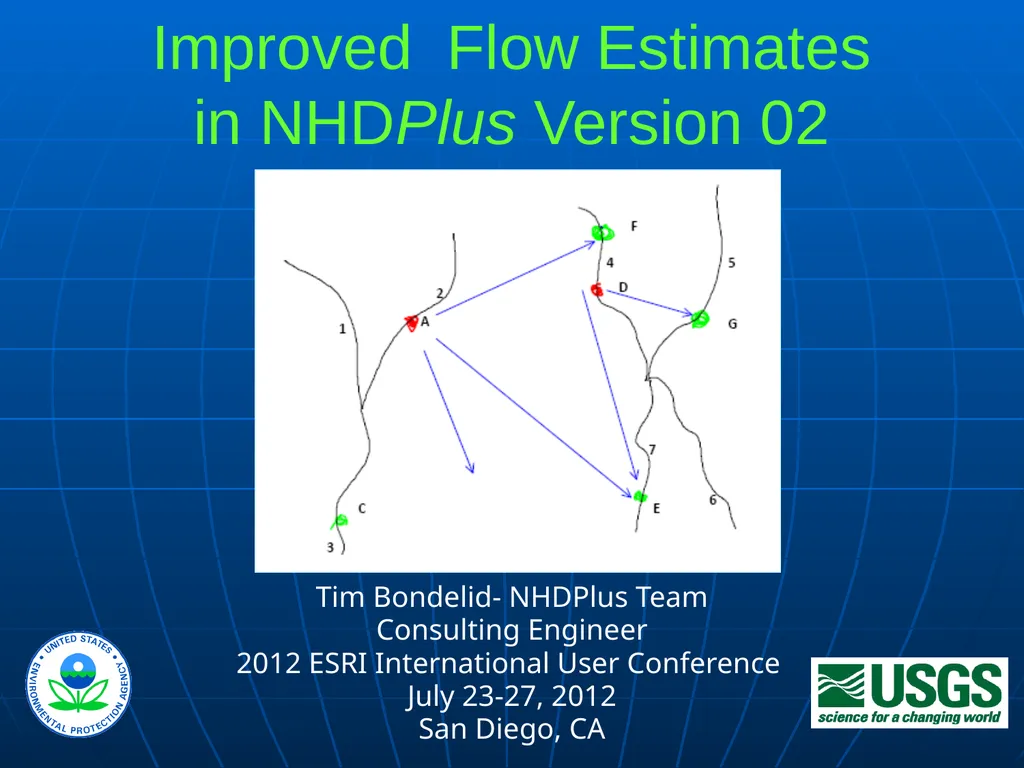
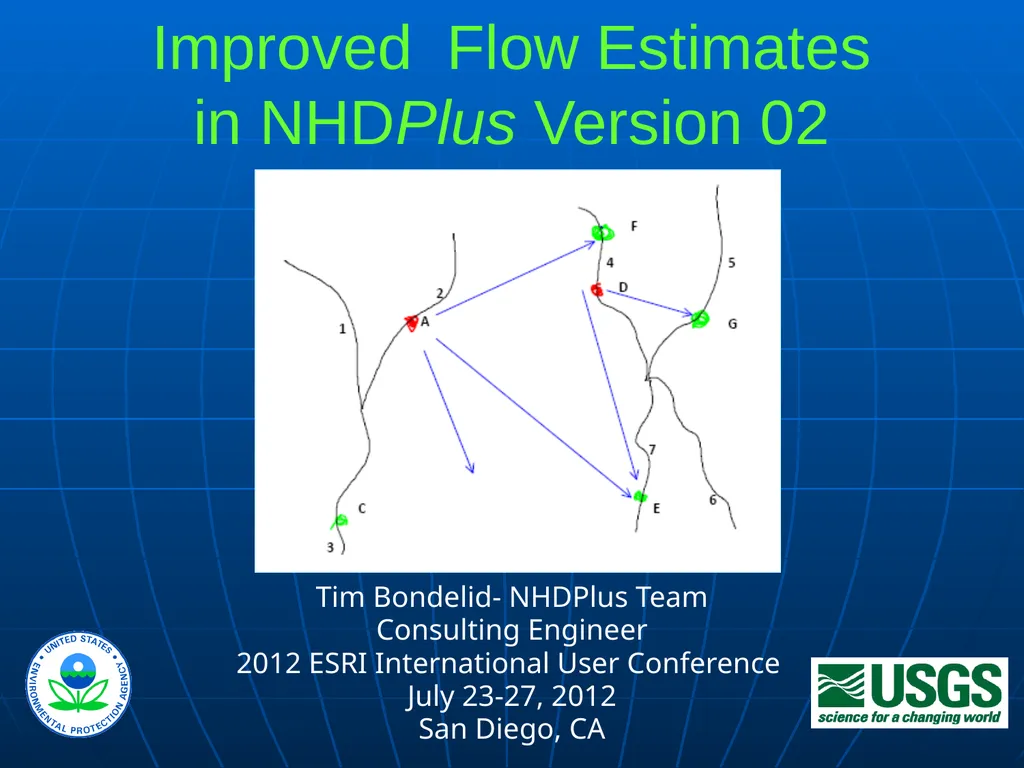
slide1. 1 Improved Flow Estimatesin NHDPlus Version 02 Tim Bondelid- NHDPlus Team
Consulting Engineer
2012 ESRI International User Conference
July 23-27, 2012
San Diego, CA<br>
slide2. 2 NHDPlus V02 Enhanced Runoff Method (EROM) Contributors:
The NHDPlus Team
EROM:
Dave Wolock, USGS
Kernell Ries, USGS
Greg Schwarz, USGS<br>
slide3. 3 Importance of Stream Flow Estimates Support the water element goals expressed in the EPA Strategic Plan
Support the water mission of the USGS
Water-quality modeling (SPARROW)
Regional and national stream flow assessments goal of National Stream Flow Information Program
National Water Census
Watershed planning and management<br>
slide4. 4 NHDPlus Version 02 Flow Estimation Enhanced Runoff Method (EROM)
Mean annual and mean monthly flow estimates
Current V02 release is mean annual flow
Significantly improved ingredient data
Five-step process
Each step incrementally improves the flow estimates
Flow QA module; statistics on performance<br>
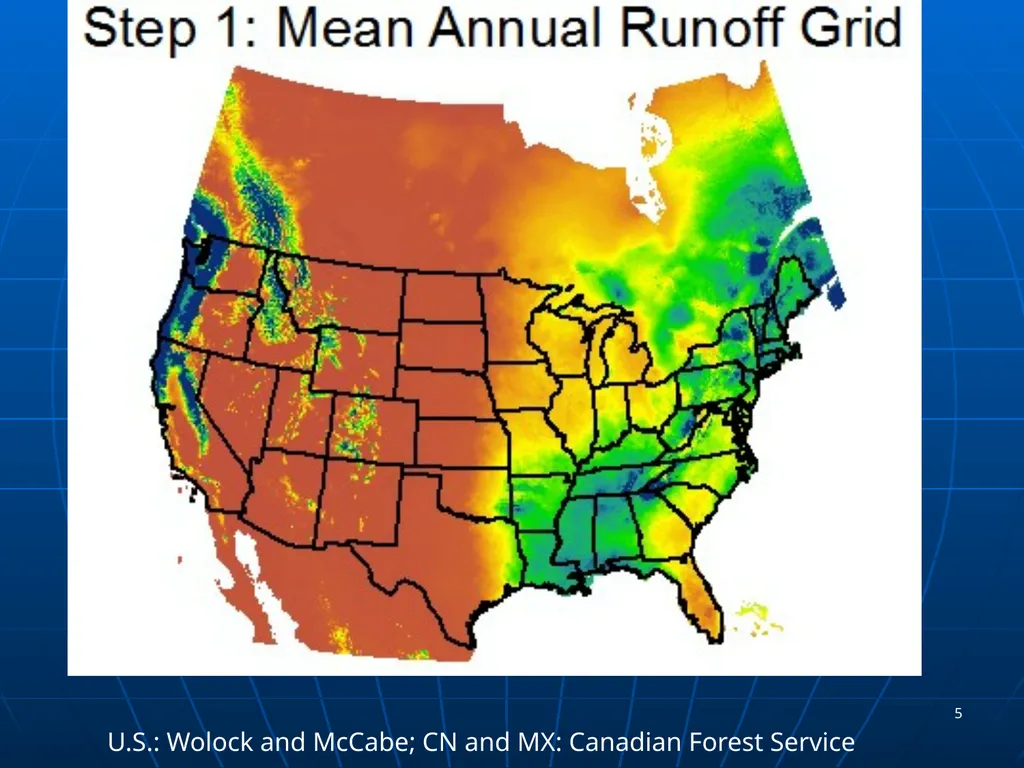
slide5. 5 U.S.: Wolock and McCabe; CN and MX: Canadian Forest Service<br>
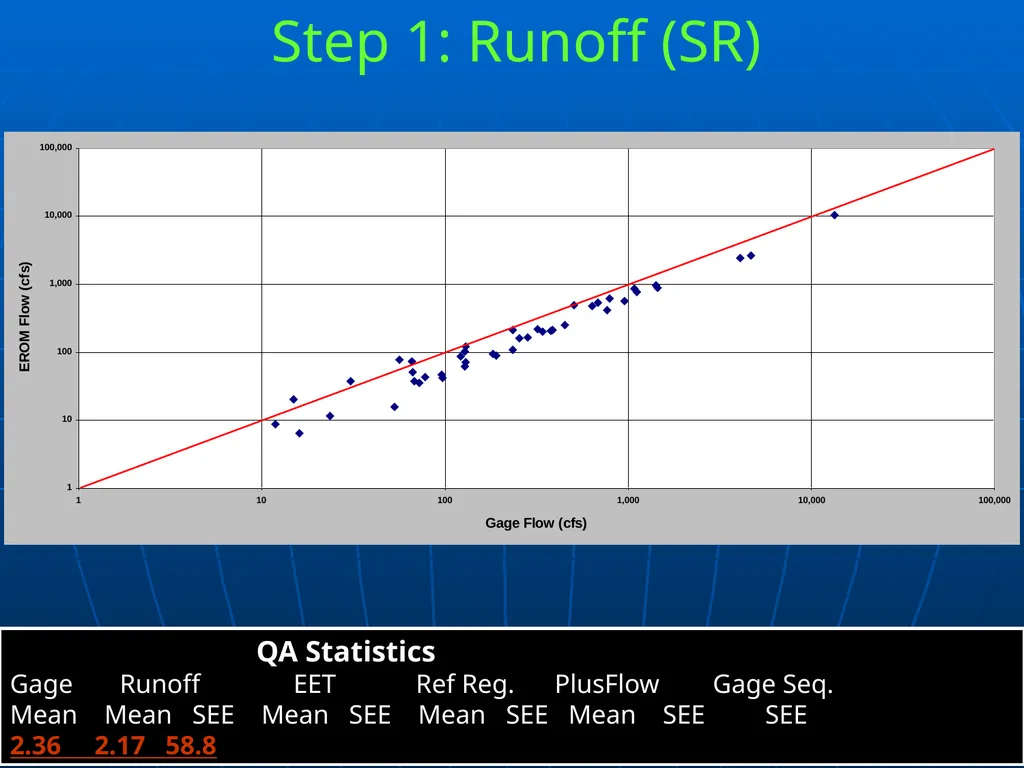
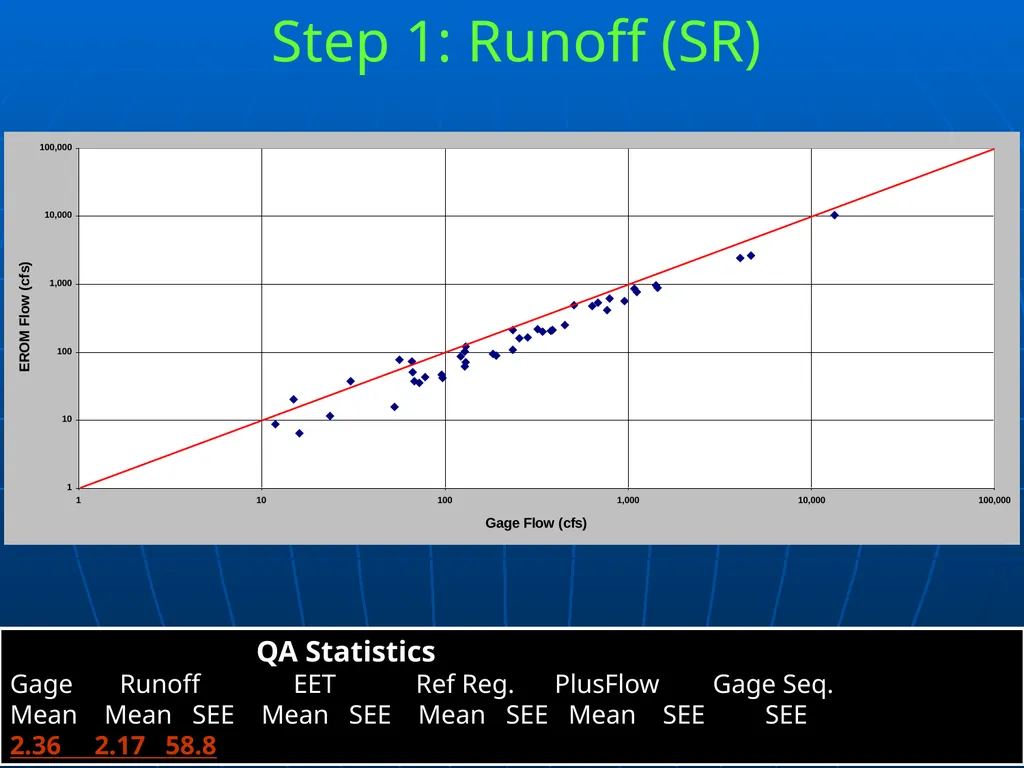
slide6. 6 QA Statistics
Gage Runoff EET Ref Reg. PlusFlow Gage Seq.
Mean Mean SEE Mean SEE Mean SEE Mean SEE SEE
2.36 2.17 58.8 2.17 58.8 2.37 32.6 2.37 32.6 23.0 Step 1: Runoff (SR)<br>
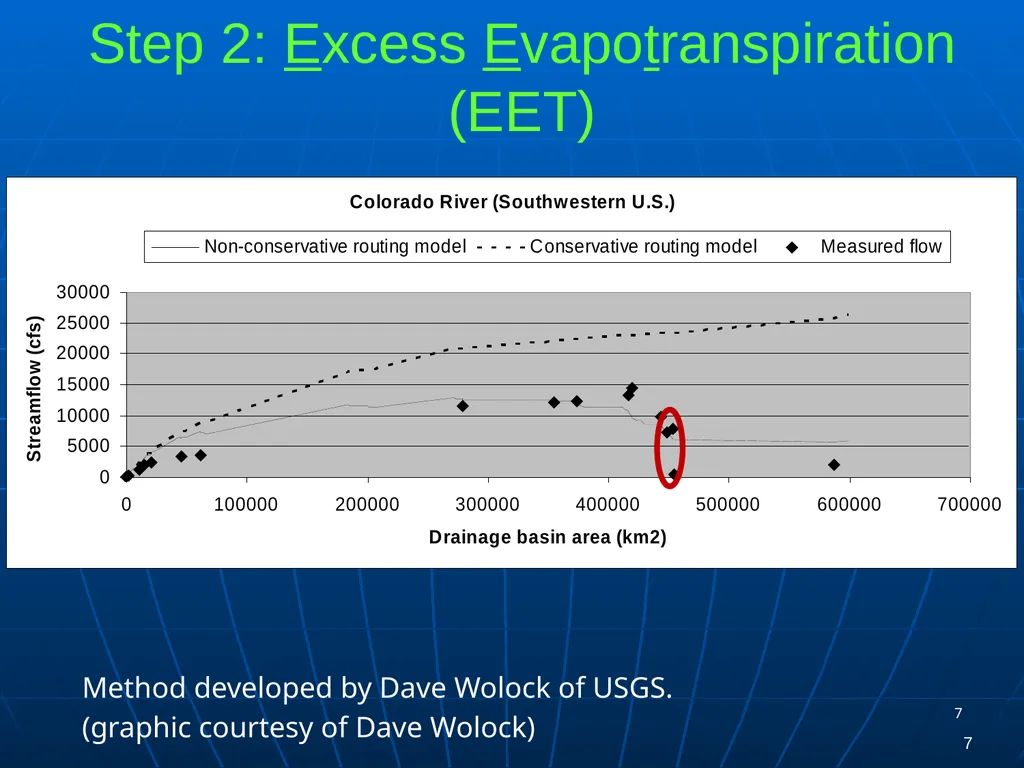
slide7. 7 Method developed by Dave Wolock of USGS.
(graphic courtesy of Dave Wolock) 7 Step 2: Excess Evapotranspiration
(EET)<br>
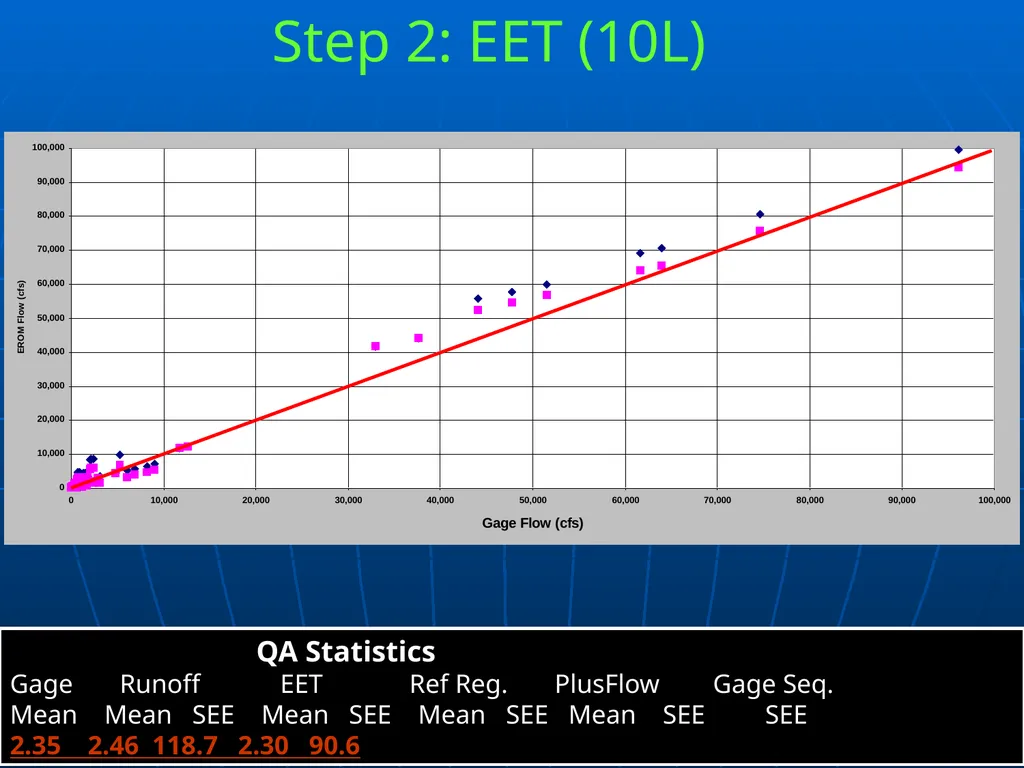
slide8. 8 QA Statistics
Gage Runoff EET Ref Reg. PlusFlow Gage Seq.
Mean Mean SEE Mean SEE Mean SEE Mean SEE SEE
2.35 2.46 118.7 2.30 90.6 2.37 32.6 2.37 32.6 23.0 Step 2: EET (10L)<br>
slide9. 9 QA Statistics
Gage Runoff EET Ref Reg. PlusFlow Gage Seq.
Mean Mean SEE Mean SEE Mean SEE Mean SEE SEE
2.36 2.17 58.8 2.17 58.8 2.37 32.6 2.37 32.6 23.0 Step 1: Runoff (SR)<br>
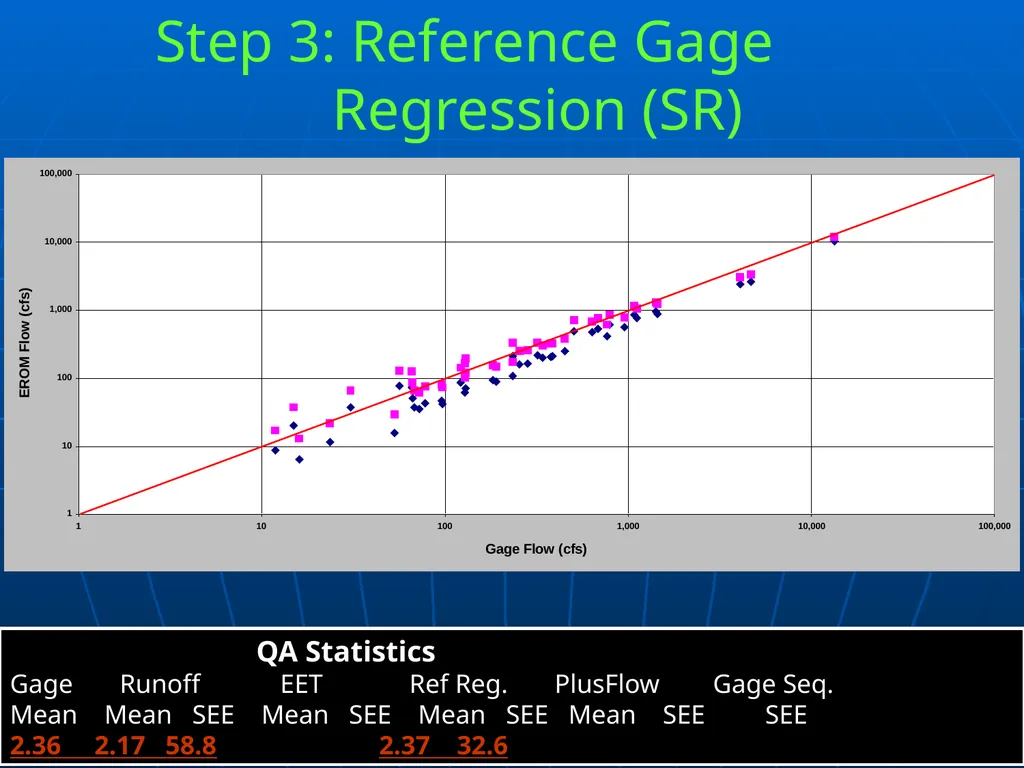
slide10. 10 QA Statistics
Gage Runoff EET Ref Reg. PlusFlow Gage Seq.
Mean Mean SEE Mean SEE Mean SEE Mean SEE SEE
2.36 2.17 58.8 2.17 58.8 2.37 32.6 2.37 32.6 23.0 Step 3: Reference Gage
Regression (SR)<br>
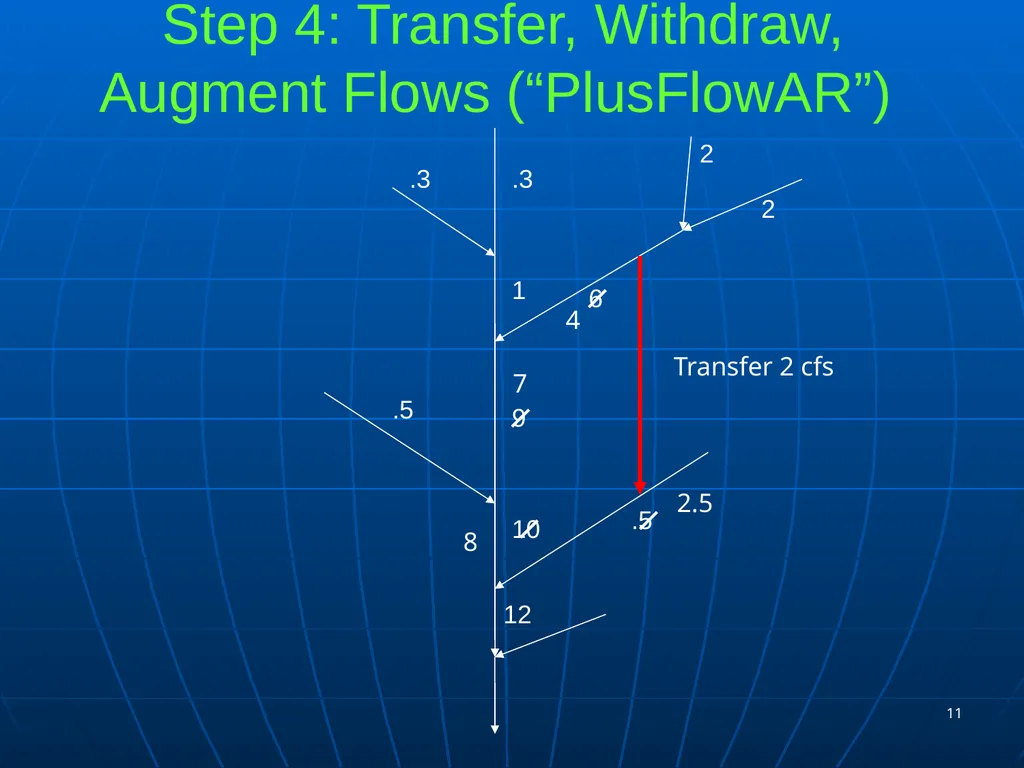
slide11. 11 Step 4: Transfer, Withdraw, Augment Flows (“PlusFlowAR”) .3 .3 2 2 6 1 9 .5 .5 10 12 Transfer 2 cfs 4 7 2.5 8<br>
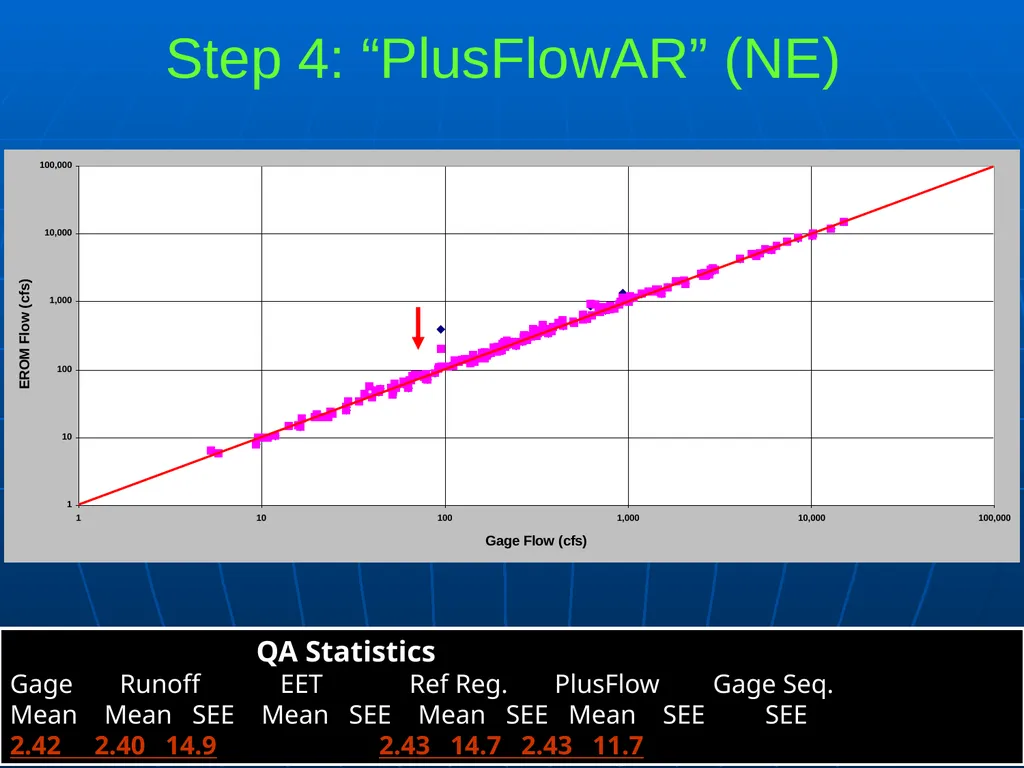
slide12. 12 QA Statistics
Gage Runoff EET Ref Reg. PlusFlow Gage Seq.
Mean Mean SEE Mean SEE Mean SEE Mean SEE SEE
2.42 2.40 14.9 2.40 14.9 2.43 14.7 2.43 11.7 10.9 Step 4: “PlusFlowAR” (NE)<br>
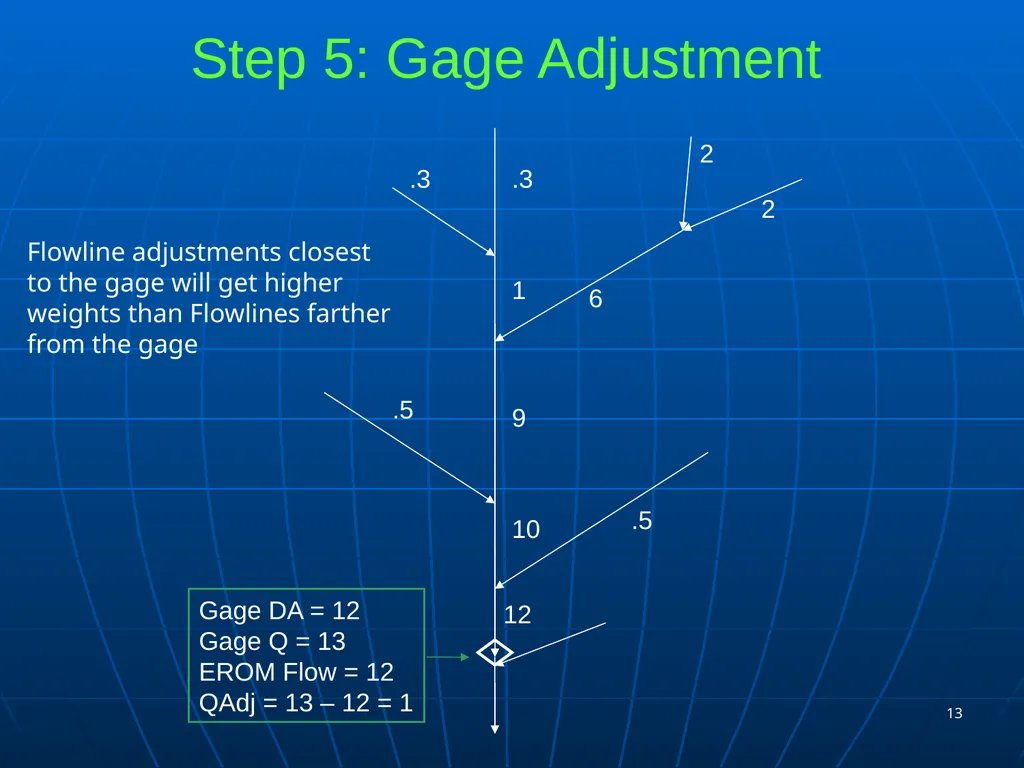
slide13. 13 Step 5: Gage Adjustment .3 .3 2 2 6 1 9 .5 .5 10 12 Gage DA = 12
Gage Q = 13
EROM Flow = 12
QAdj = 13 – 12 = 1 Flowline adjustments closest
to the gage will get higher weights than Flowlines farther from the gage<br>
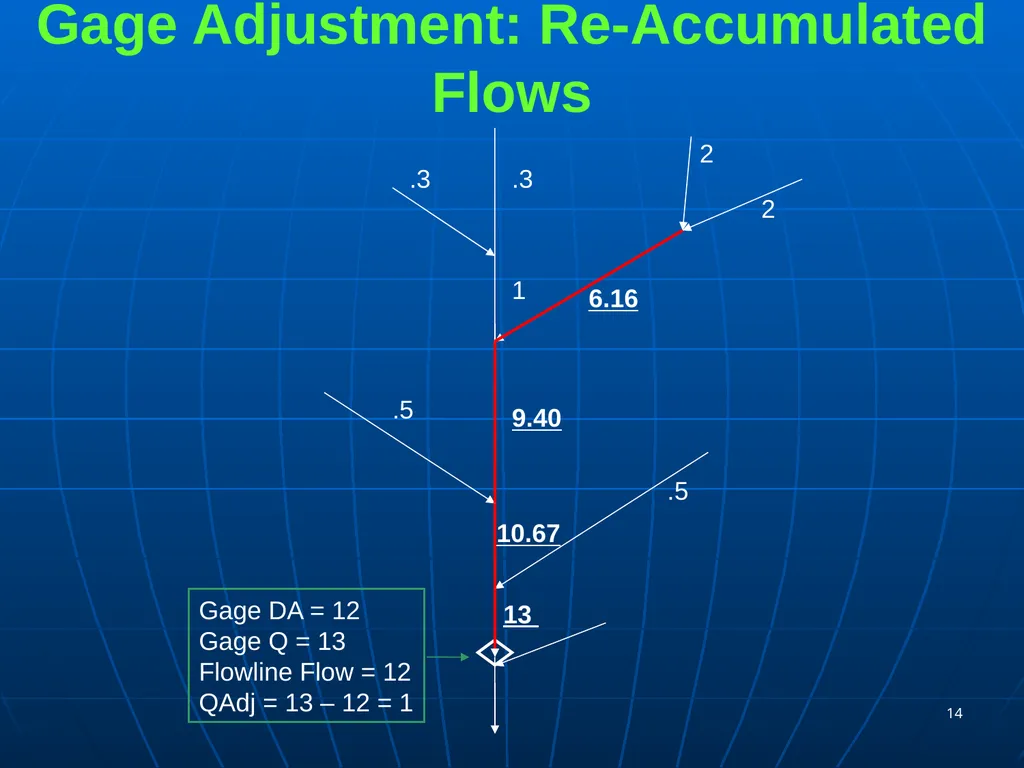
slide14. 14 Gage Adjustment: Re-Accumulated Flows .3 .3 2 2 6.16 1 9.40 .5 .5 10.67 13 Gage DA = 12
Gage Q = 13
Flowline Flow = 12
QAdj = 13 – 12 = 1<br>
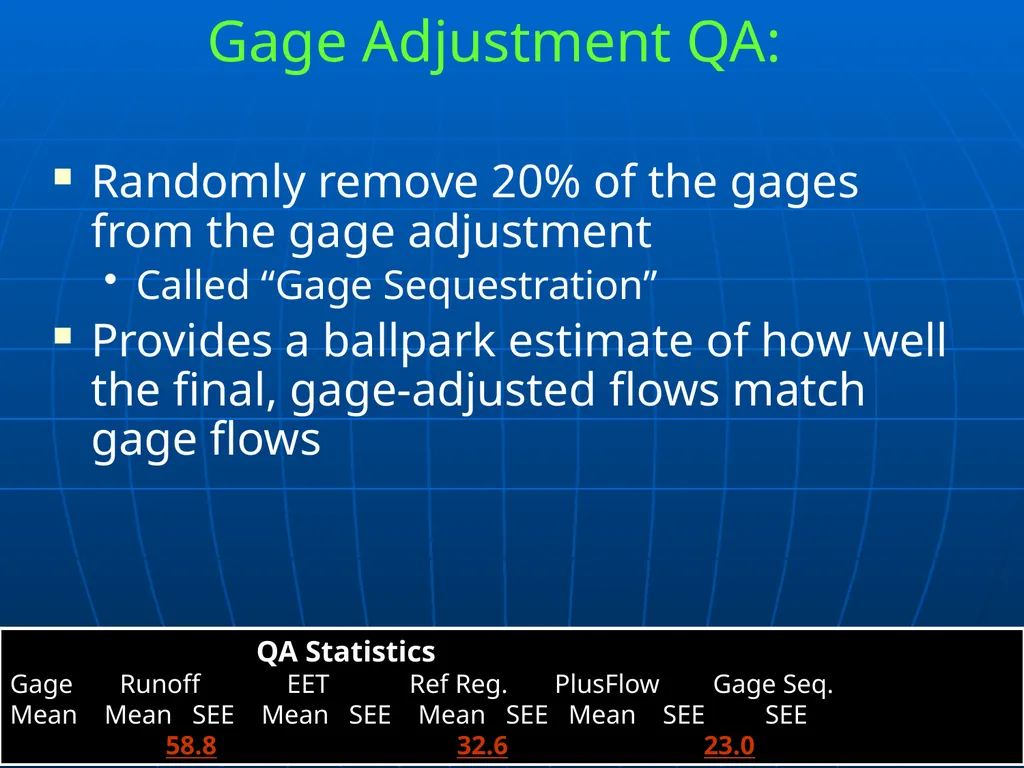
slide15. 15 QA Statistics
Gage Runoff EET Ref Reg. PlusFlow Gage Seq.
Mean Mean SEE Mean SEE Mean SEE Mean SEE SEE
2.36 2.17 58.8 2.17 58.8 2.37 32.6 2.37 32.6 23.0 Gage Adjustment QA: Randomly remove 20% of the gages from the gage adjustment
Called “Gage Sequestration”
Provides a ballpark estimate of how well the final, gage-adjusted flows match gage flows<br>
slide16. 16 EROM – Next Steps We are always looking for ways to improve EROM
Reference Gage Regression; issue with cases where it “over-adjusts” at higher flows
Increase the number of gages; the more valid gages the better!
Update to a more recent version of Reference Gages; “GAGESII”?
Adjust flows further upstream?
Monthly flows<br>
slide17. 17 Down the Road PlusFlowAR:
Incorporate more detailed information from NHD Stewards, WBD, others!
Seasonal values?
EET Step: Model Coefficients, issues in some areas
Other flows: 7Q10
Use a 1981-2010 time frame
PRISM has released “normals” for this period
The major issue: international drainage<br>
slide18. 18 Questions? Tim Bondelid - Independent Consultant to EPA
timothy@trbondelid.com

NHDPlus V02:
http://www.horizon-systems.com/NHDPlus<br>
Consulting Engineer
2012 ESRI International User Conference
July 23-27, 2012
San Diego, CA<br>
slide2. 2 NHDPlus V02 Enhanced Runoff Method (EROM) Contributors:
The NHDPlus Team
EROM:
Dave Wolock, USGS
Kernell Ries, USGS
Greg Schwarz, USGS<br>
slide3. 3 Importance of Stream Flow Estimates Support the water element goals expressed in the EPA Strategic Plan
Support the water mission of the USGS
Water-quality modeling (SPARROW)
Regional and national stream flow assessments goal of National Stream Flow Information Program
National Water Census
Watershed planning and management<br>
slide4. 4 NHDPlus Version 02 Flow Estimation Enhanced Runoff Method (EROM)
Mean annual and mean monthly flow estimates
Current V02 release is mean annual flow
Significantly improved ingredient data
Five-step process
Each step incrementally improves the flow estimates
Flow QA module; statistics on performance<br>
slide5. 5 U.S.: Wolock and McCabe; CN and MX: Canadian Forest Service<br>
slide6. 6 QA Statistics
Gage Runoff EET Ref Reg. PlusFlow Gage Seq.
Mean Mean SEE Mean SEE Mean SEE Mean SEE SEE
2.36 2.17 58.8 2.17 58.8 2.37 32.6 2.37 32.6 23.0 Step 1: Runoff (SR)<br>
slide7. 7 Method developed by Dave Wolock of USGS.
(graphic courtesy of Dave Wolock) 7 Step 2: Excess Evapotranspiration
(EET)<br>
slide8. 8 QA Statistics
Gage Runoff EET Ref Reg. PlusFlow Gage Seq.
Mean Mean SEE Mean SEE Mean SEE Mean SEE SEE
2.35 2.46 118.7 2.30 90.6 2.37 32.6 2.37 32.6 23.0 Step 2: EET (10L)<br>
slide9. 9 QA Statistics
Gage Runoff EET Ref Reg. PlusFlow Gage Seq.
Mean Mean SEE Mean SEE Mean SEE Mean SEE SEE
2.36 2.17 58.8 2.17 58.8 2.37 32.6 2.37 32.6 23.0 Step 1: Runoff (SR)<br>
slide10. 10 QA Statistics
Gage Runoff EET Ref Reg. PlusFlow Gage Seq.
Mean Mean SEE Mean SEE Mean SEE Mean SEE SEE
2.36 2.17 58.8 2.17 58.8 2.37 32.6 2.37 32.6 23.0 Step 3: Reference Gage
Regression (SR)<br>
slide11. 11 Step 4: Transfer, Withdraw, Augment Flows (“PlusFlowAR”) .3 .3 2 2 6 1 9 .5 .5 10 12 Transfer 2 cfs 4 7 2.5 8<br>
slide12. 12 QA Statistics
Gage Runoff EET Ref Reg. PlusFlow Gage Seq.
Mean Mean SEE Mean SEE Mean SEE Mean SEE SEE
2.42 2.40 14.9 2.40 14.9 2.43 14.7 2.43 11.7 10.9 Step 4: “PlusFlowAR” (NE)<br>
slide13. 13 Step 5: Gage Adjustment .3 .3 2 2 6 1 9 .5 .5 10 12 Gage DA = 12
Gage Q = 13
EROM Flow = 12
QAdj = 13 – 12 = 1 Flowline adjustments closest
to the gage will get higher weights than Flowlines farther from the gage<br>
slide14. 14 Gage Adjustment: Re-Accumulated Flows .3 .3 2 2 6.16 1 9.40 .5 .5 10.67 13 Gage DA = 12
Gage Q = 13
Flowline Flow = 12
QAdj = 13 – 12 = 1<br>
slide15. 15 QA Statistics
Gage Runoff EET Ref Reg. PlusFlow Gage Seq.
Mean Mean SEE Mean SEE Mean SEE Mean SEE SEE
2.36 2.17 58.8 2.17 58.8 2.37 32.6 2.37 32.6 23.0 Gage Adjustment QA: Randomly remove 20% of the gages from the gage adjustment
Called “Gage Sequestration”
Provides a ballpark estimate of how well the final, gage-adjusted flows match gage flows<br>
slide16. 16 EROM – Next Steps We are always looking for ways to improve EROM
Reference Gage Regression; issue with cases where it “over-adjusts” at higher flows
Increase the number of gages; the more valid gages the better!
Update to a more recent version of Reference Gages; “GAGESII”?
Adjust flows further upstream?
Monthly flows<br>
slide17. 17 Down the Road PlusFlowAR:
Incorporate more detailed information from NHD Stewards, WBD, others!
Seasonal values?
EET Step: Model Coefficients, issues in some areas
Other flows: 7Q10
Use a 1981-2010 time frame
PRISM has released “normals” for this period
The major issue: international drainage<br>
slide18. 18 Questions? Tim Bondelid - Independent Consultant to EPA
timothy@trbondelid.com
NHDPlus V02:
http://www.horizon-systems.com/NHDPlus<br>