
1 LD-Sketch: A Distributed Sketching Design for


Description: 1 LD-Sketch: A Distributed Sketching Design for Accurate and Scalable Anomaly Detection in Network Data Streams Qun Huang and Patrick P. C. Lee The Chinese University of Hong Kong, Hong Kong INFOCOM14 Network traffic: a stream of (key,
Related Topics
Download Presentation
"1 LD-Sketch: A Distributed Sketching Design for" is the property of its rightful owner. Permission is granted to download and print the materials on this website for personal, non-commercial use only, and to display it on your personal computer provided you do not modify the materials and that you retain all copyright notices contained in the materials. By downloading content from our website, you accept the terms of this agreement.
Presentation Transcript
slide1. 1 LD-Sketch: A Distributed Sketching Design for Accurate and Scalable Anomaly Detection in Network Data Streams Qun Huang and Patrick P. C. Lee
The Chinese University of Hong Kong, Hong Kong
INFOCOM’14<br>
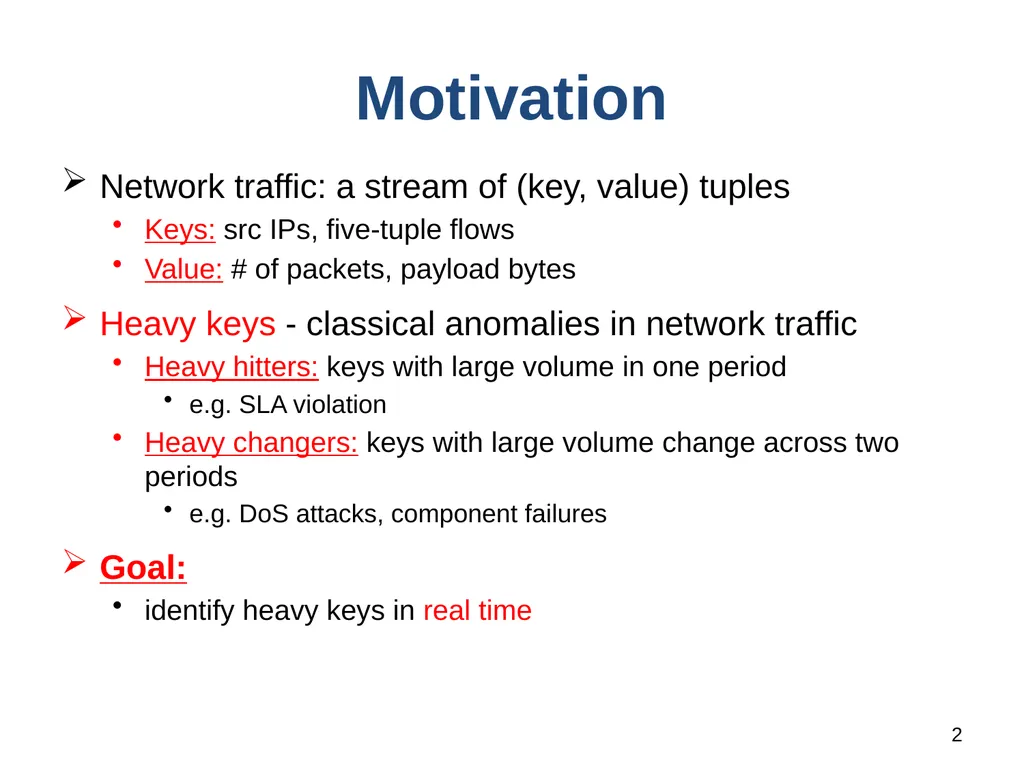
slide2. Network traffic: a stream of (key, value) tuples
Keys: src IPs, five-tuple flows
Value: # of packets, payload bytes
Heavy keys - classical anomalies in network traffic
Heavy hitters: keys with large volume in one period
e.g. SLA violation
Heavy changers: keys with large volume change across two periods
e.g. DoS attacks, component failures
Goal:
identify heavy keys in real time Motivation 2<br>
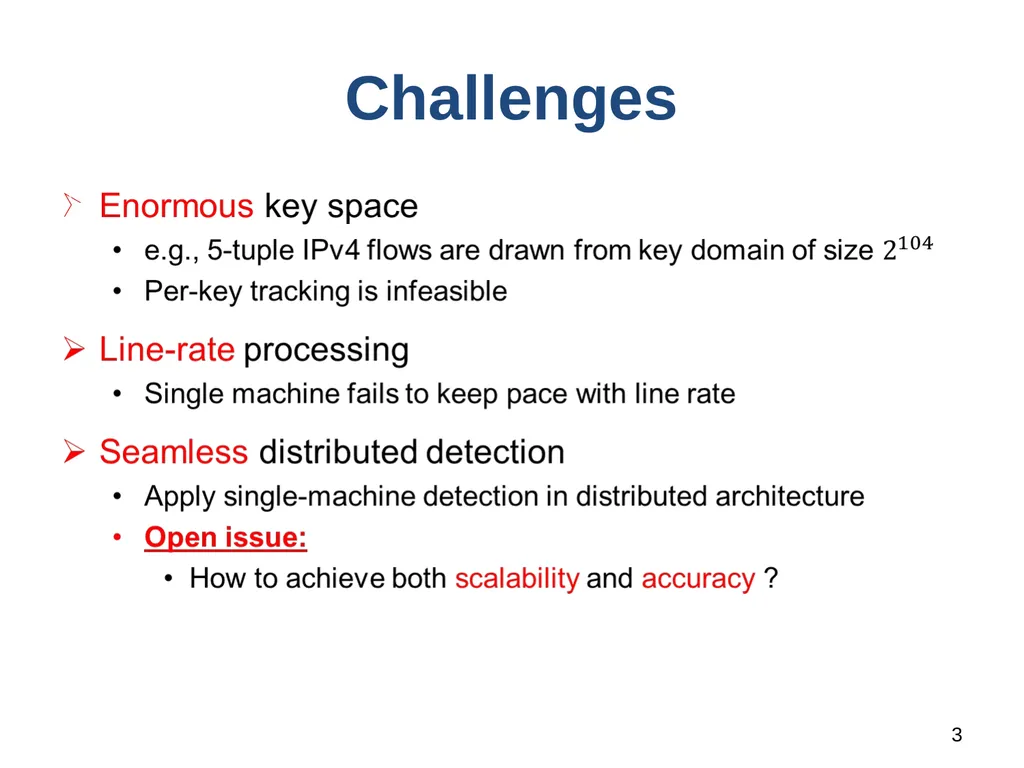
slide3. Challenges 3<br>
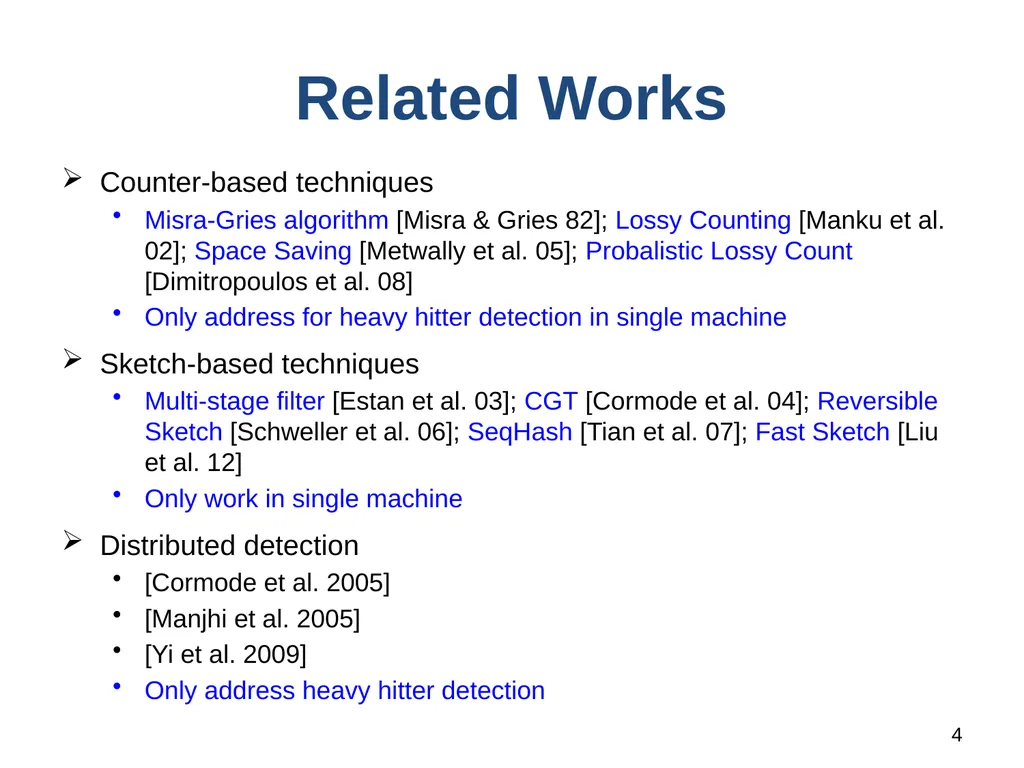
slide4. Related Works Counter-based techniques
Misra-Gries algorithm [Misra & Gries 82]; Lossy Counting [Manku et al. 02]; Space Saving [Metwally et al. 05]; Probalistic Lossy Count [Dimitropoulos et al. 08]
Only address for heavy hitter detection in single machine
Sketch-based techniques
Multi-stage filter [Estan et al. 03]; CGT [Cormode et al. 04]; Reversible Sketch [Schweller et al. 06]; SeqHash [Tian et al. 07]; Fast Sketch [Liu et al. 12]
Only work in single machine
Distributed detection
[Cormode et al. 2005]
[Manjhi et al. 2005]
[Yi et al. 2009]
Only address heavy hitter detection 4<br>
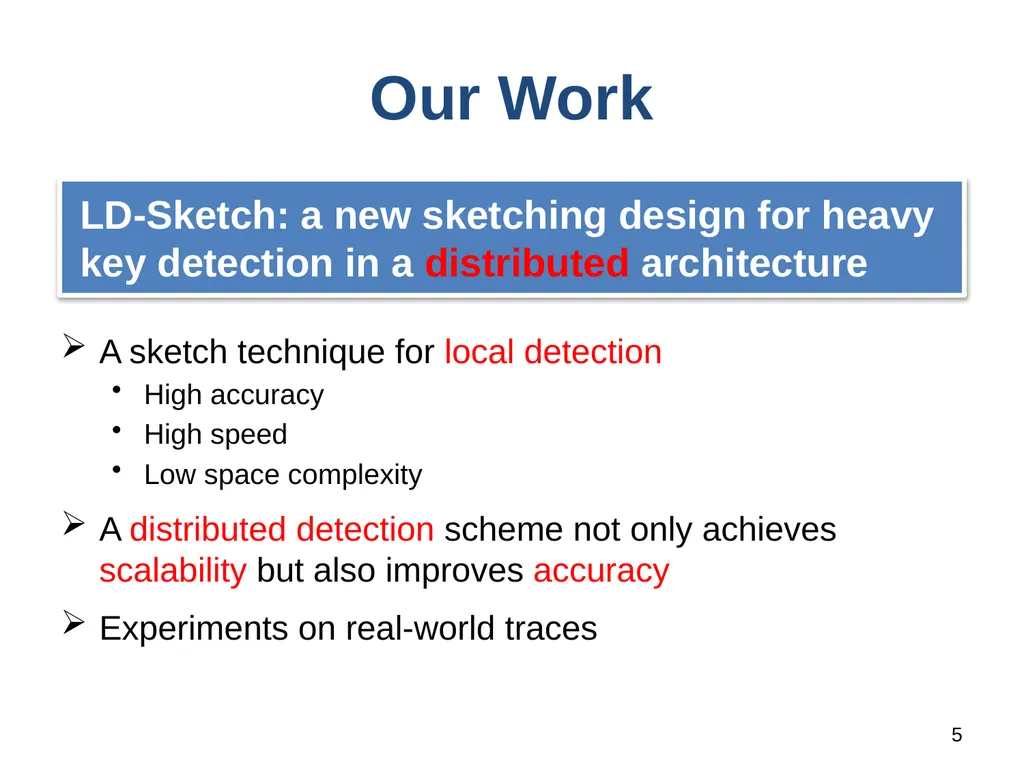
slide5. Our Work 5 LD-Sketch: a new sketching design for heavy key detection in a distributed architecture A sketch technique for local detection
High accuracy
High speed
Low space complexity
A distributed detection scheme not only achieves scalability but also improves accuracy
Experiments on real-world traces<br>
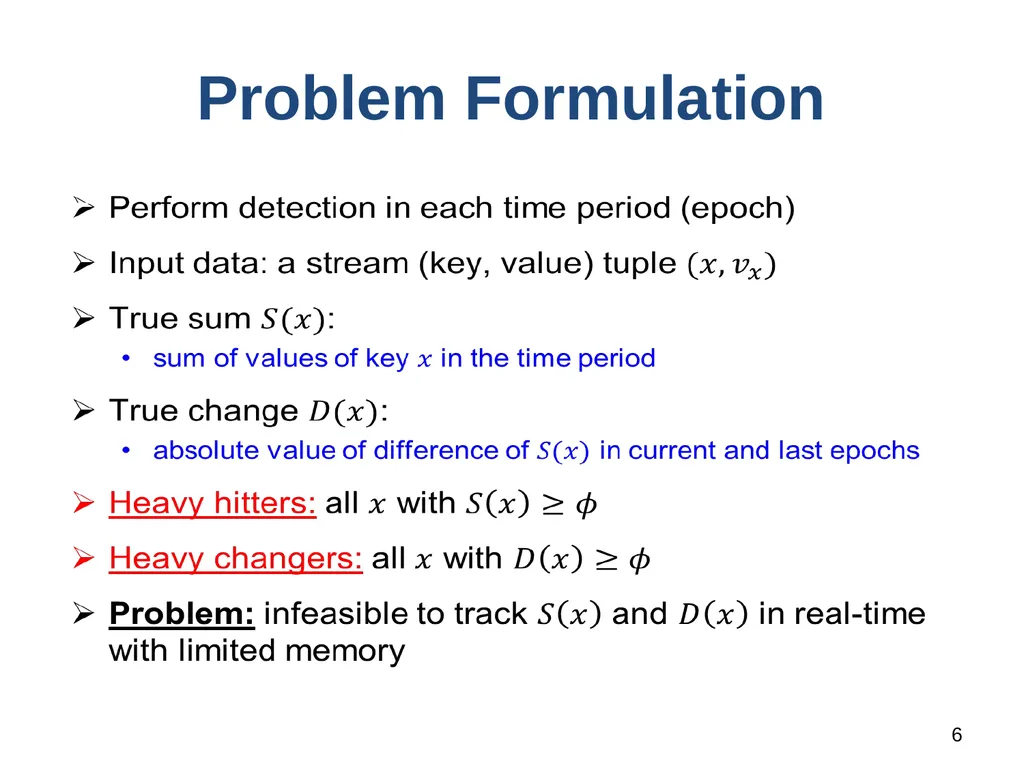
slide6. Problem Formulation 6<br>
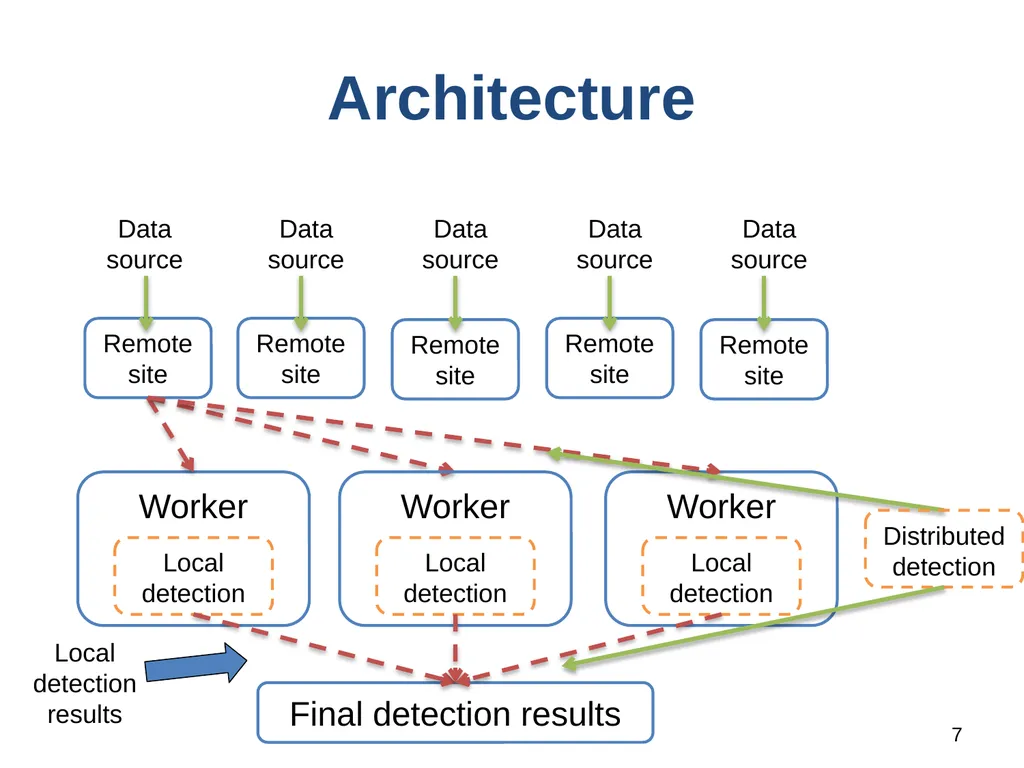
slide7. Architecture 7 Data
source Data
source Data
source Data
source Data
source Local detection results Final detection results Distributed detection<br>
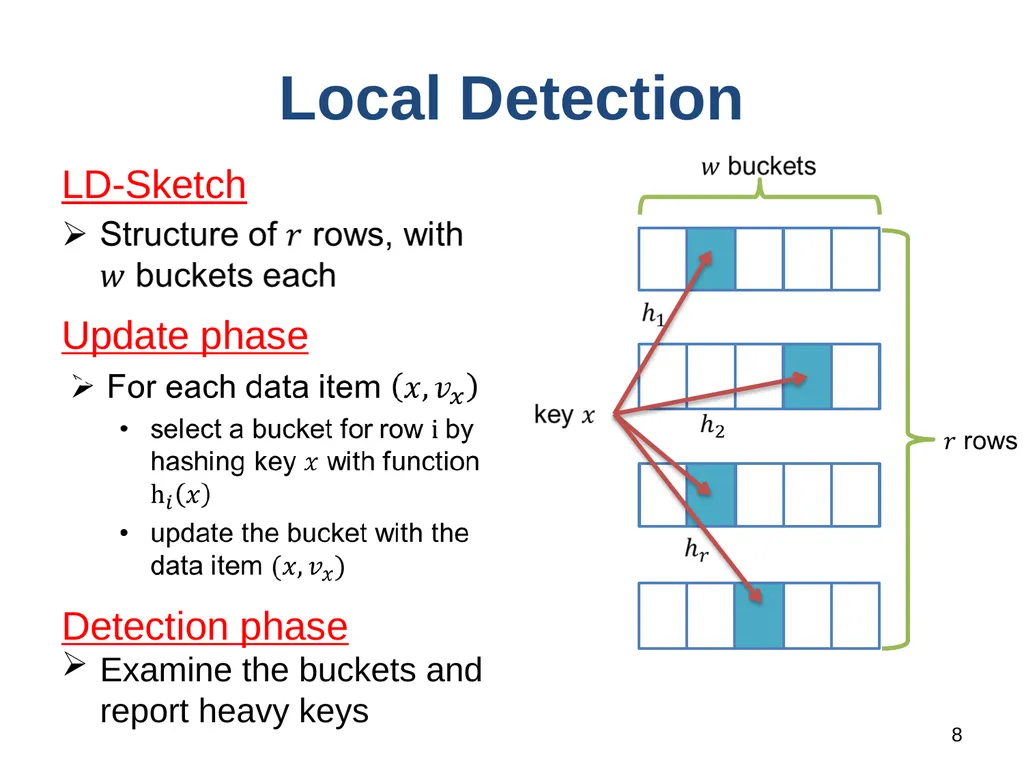
slide8. Local Detection 8 Update phase Examine the buckets and report heavy keys Detection phase LD-Sketch<br>
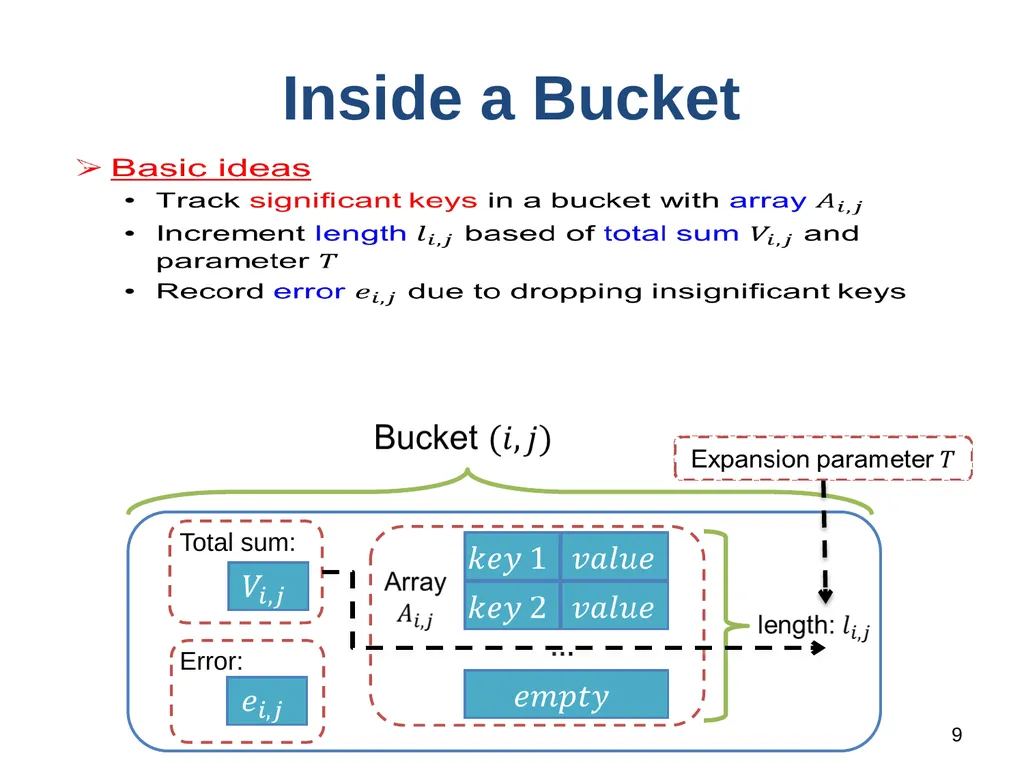
slide9. Inside a Bucket 9<br>
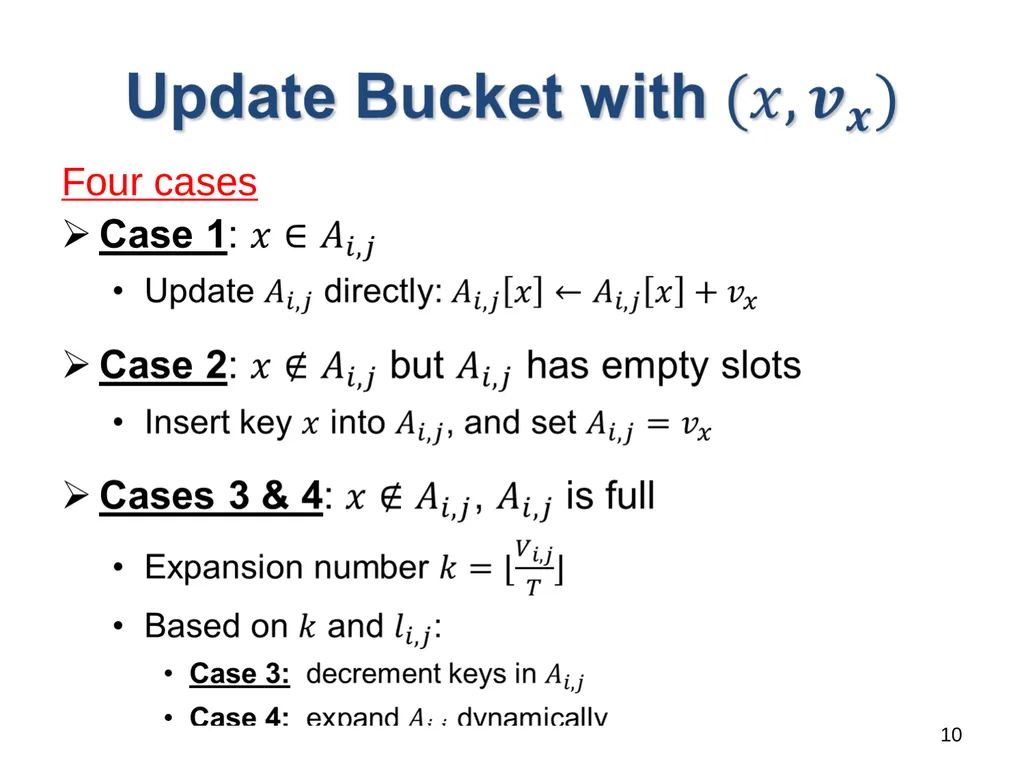
slide10. 10 Four cases<br>
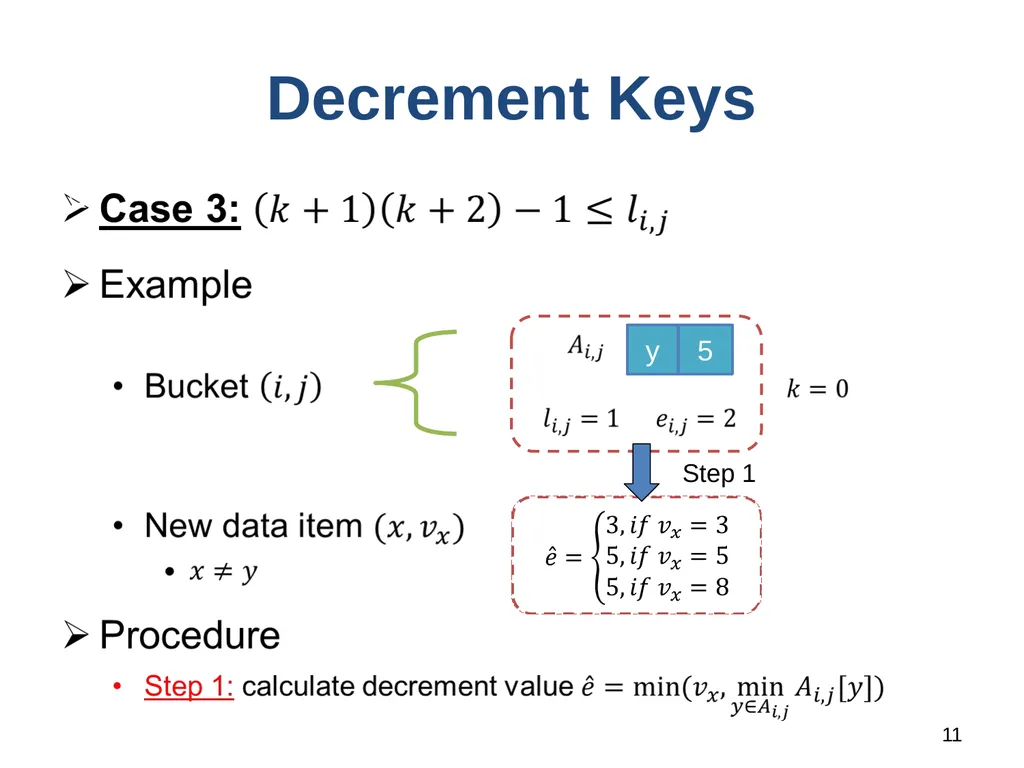
slide11. Decrement Keys 11 Step 1<br>
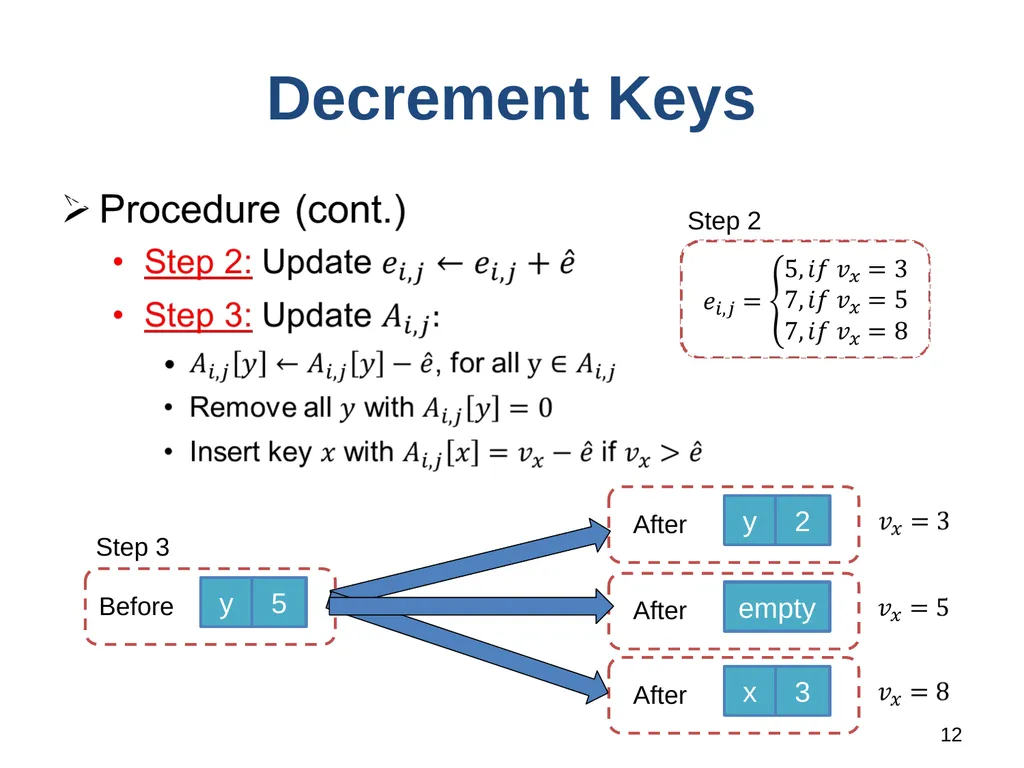
slide12. Decrement Keys 12 Step 3 Step 2<br>
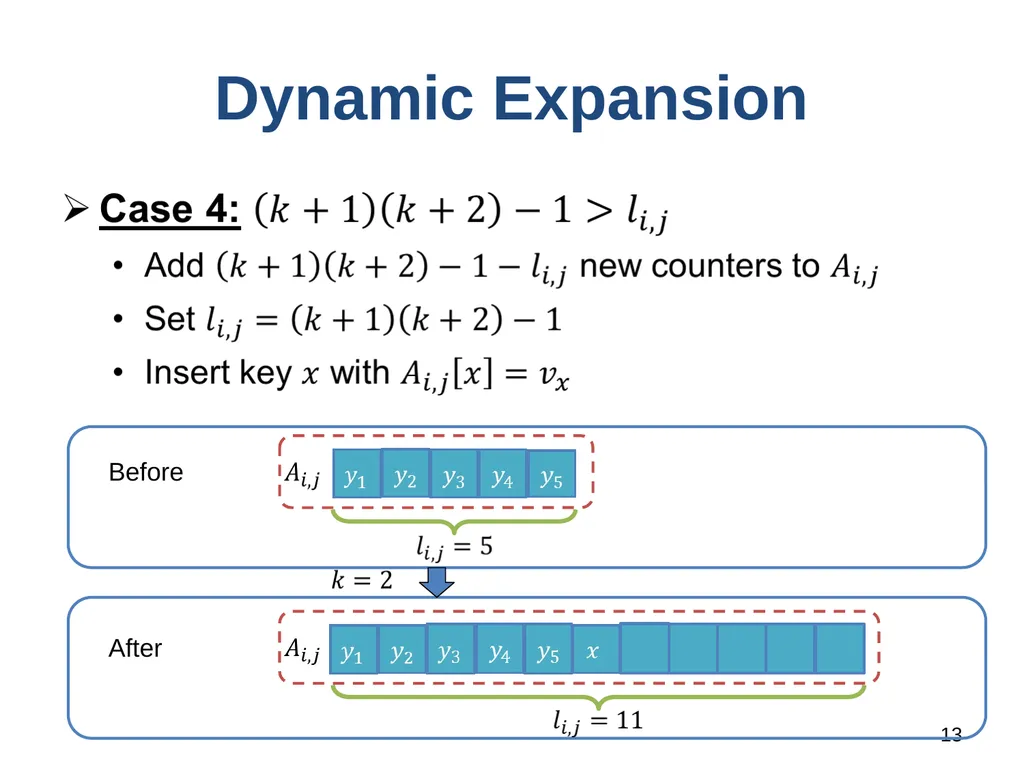
slide13. Dynamic Expansion 13<br>
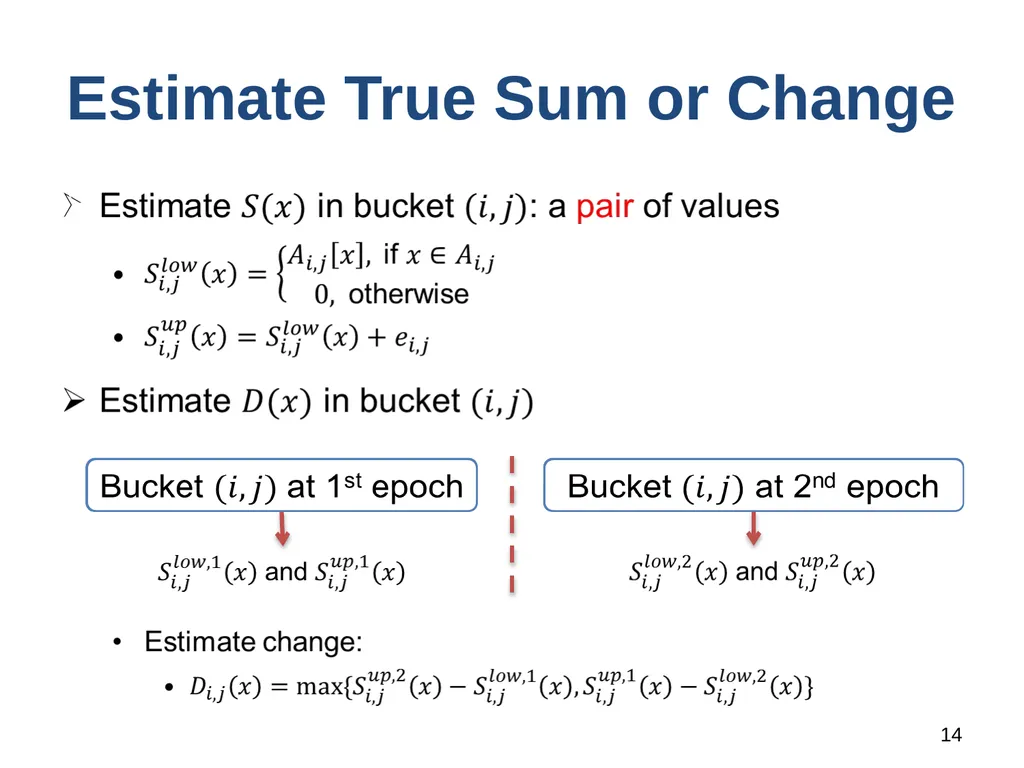
slide14. Estimate True Sum or Change 14<br>
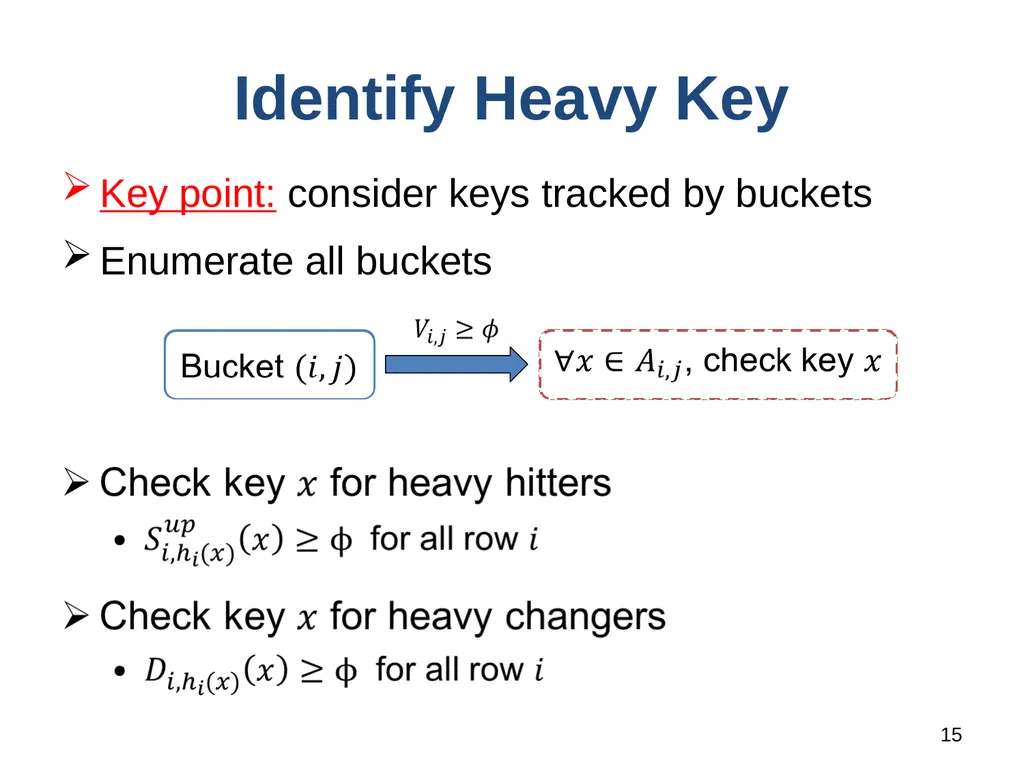
slide15. Identify Heavy Key 15 Key point: consider keys tracked by buckets
Enumerate all buckets<br>
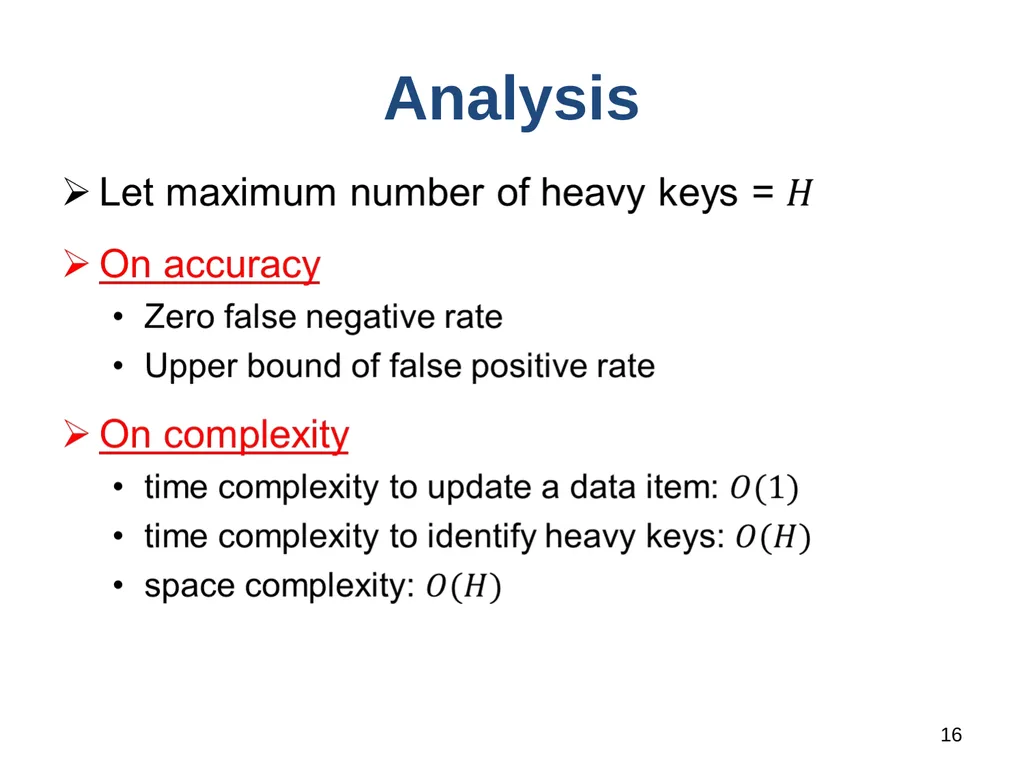
slide16. Analysis 16<br>
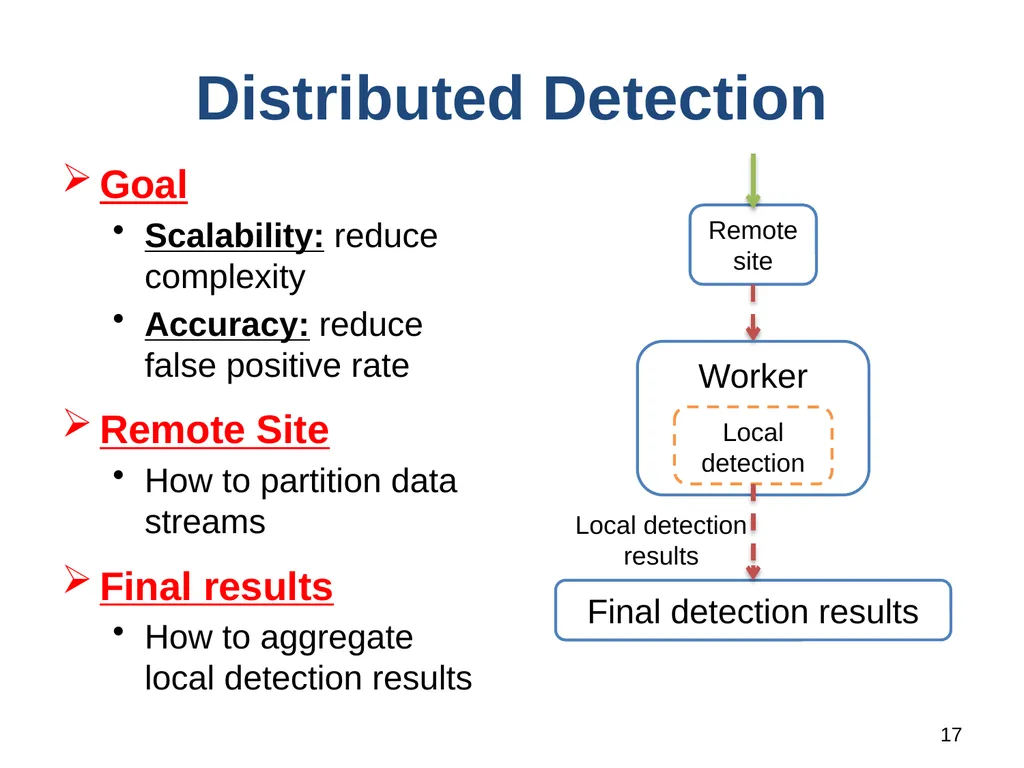
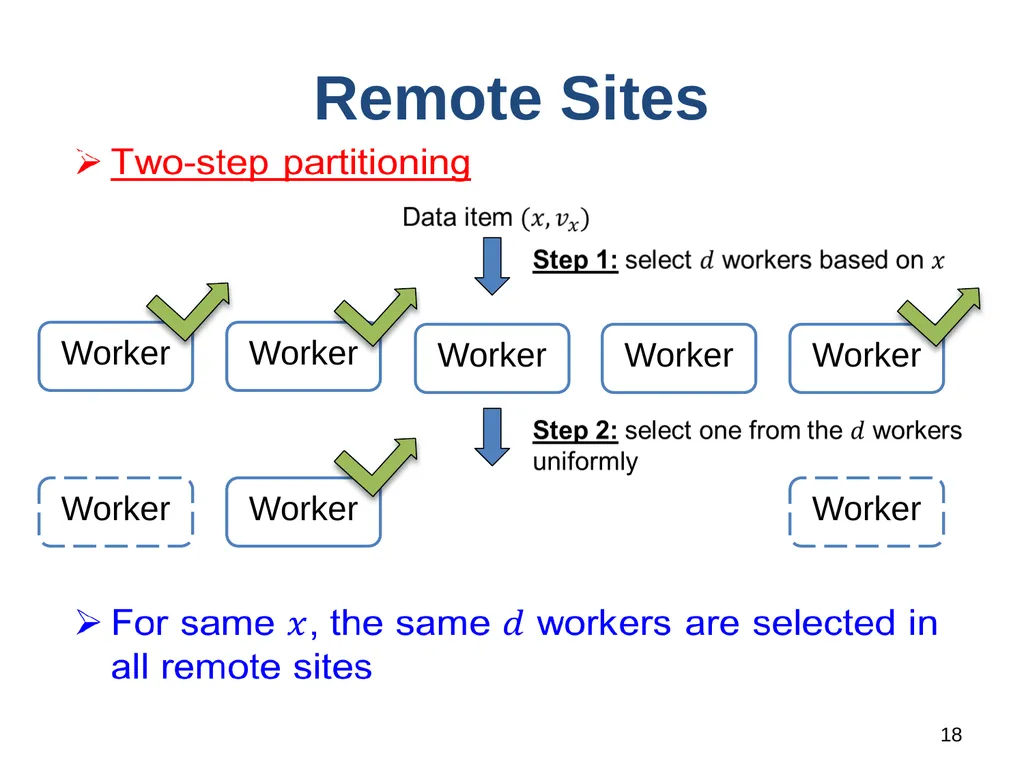
slide17. Distributed Detection 17 Remote
site Local detection results Final detection results Goal
Scalability: reduce complexity
Accuracy: reduce false positive rate
Remote Site
How to partition data streams
Final results
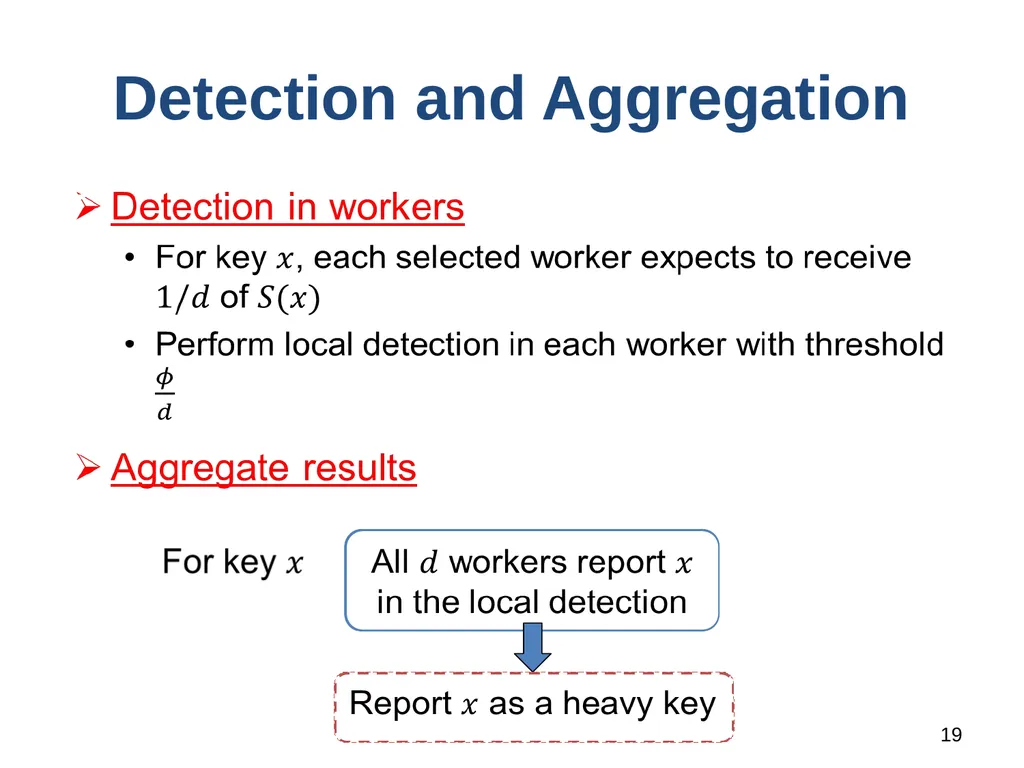
How to aggregate local detection results<br>
slide18. Remote Sites 18 Worker Worker Worker Worker Worker Worker Worker Worker<br>
slide19. Detection and Aggregation 19<br>
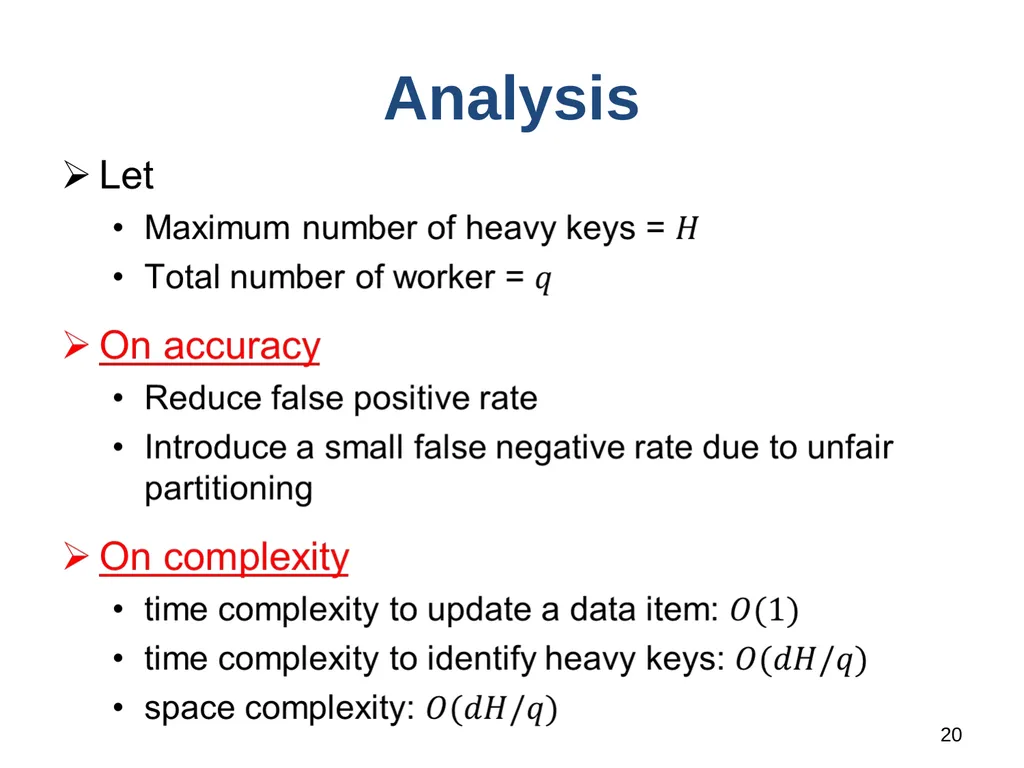
slide20. Analysis 20<br>
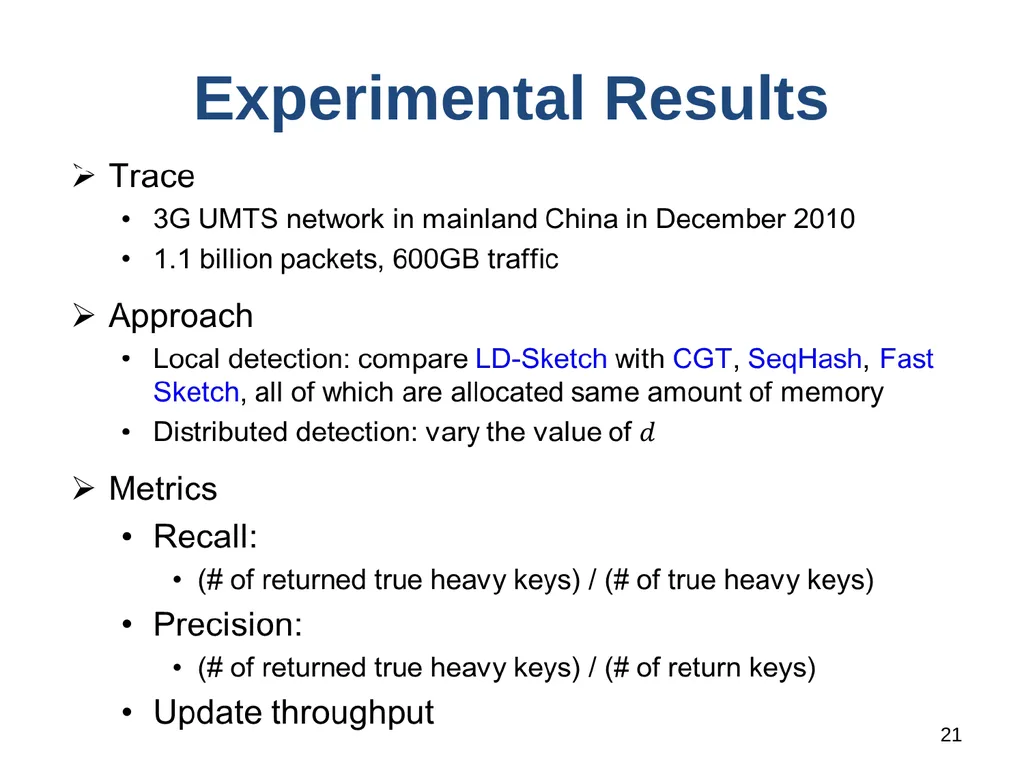
slide21. Experimental Results 21<br>
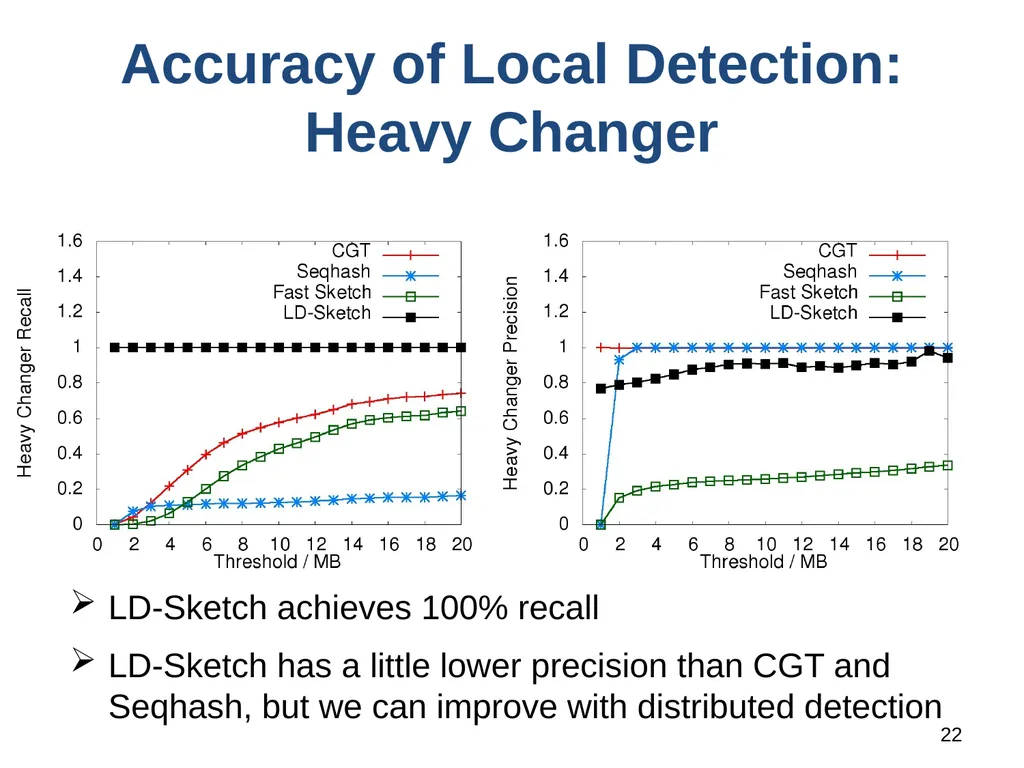
slide22. Accuracy of Local Detection: Heavy Changer 22 LD-Sketch achieves 100% recall
LD-Sketch has a little lower precision than CGT and Seqhash, but we can improve with distributed detection<br>
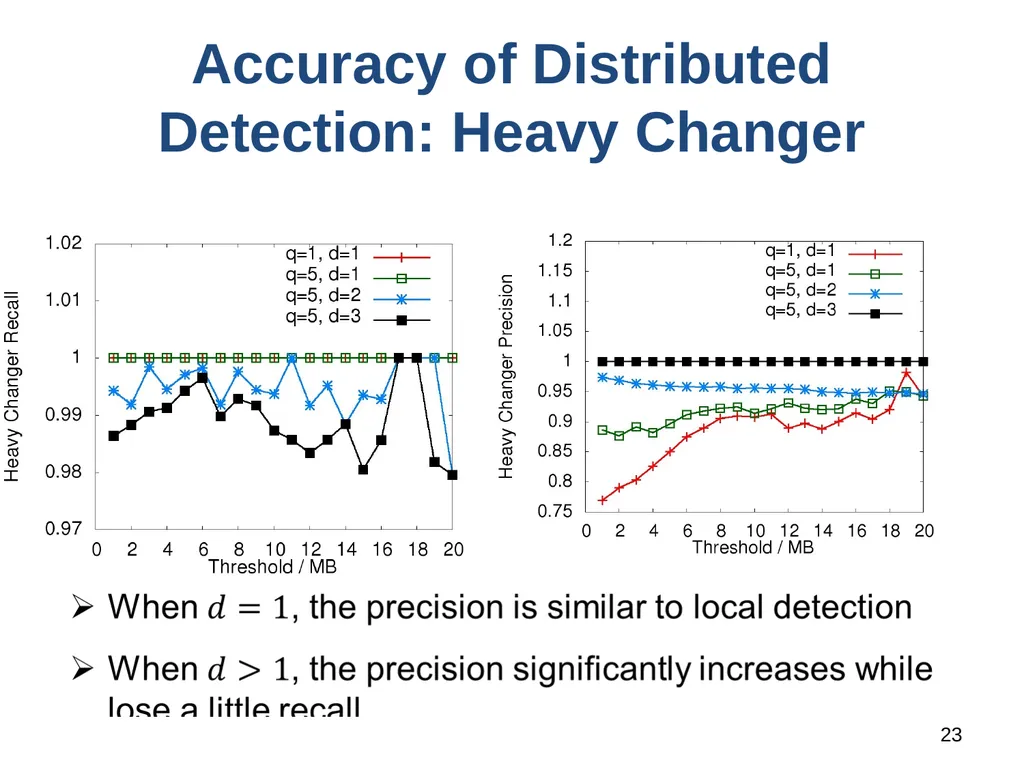
slide23. Accuracy of Distributed Detection: Heavy Changer 23<br>
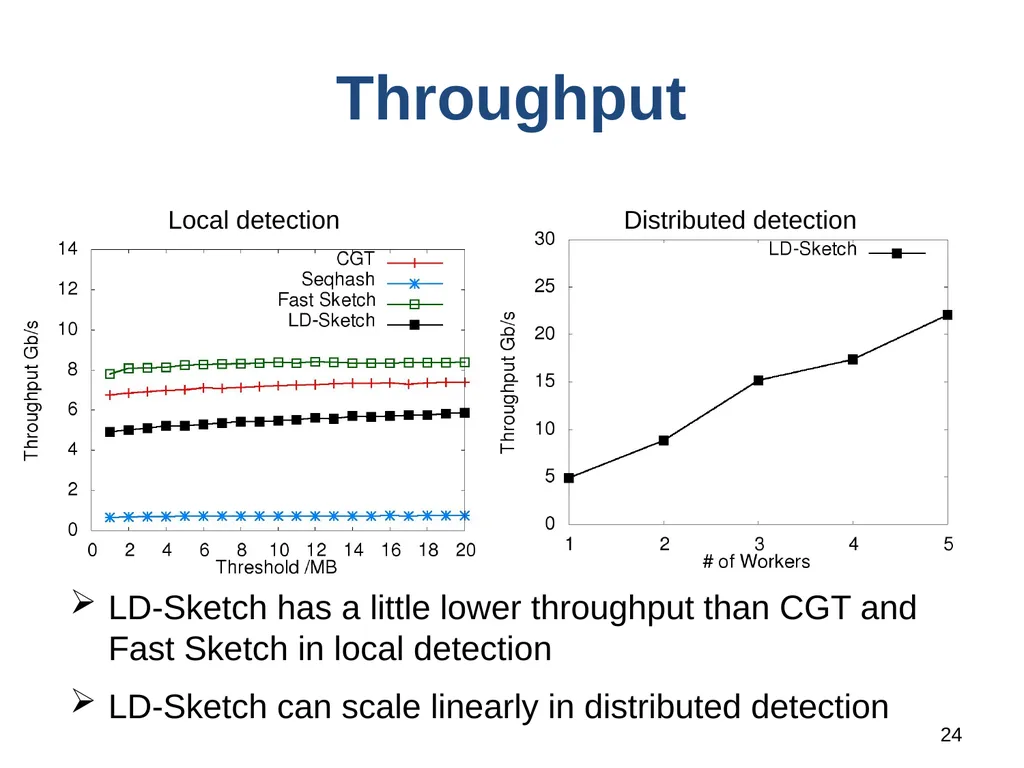
slide24. Throughput 24 LD-Sketch has a little lower throughput than CGT and Fast Sketch in local detection
LD-Sketch can scale linearly in distributed detection Local detection Distributed detection<br>
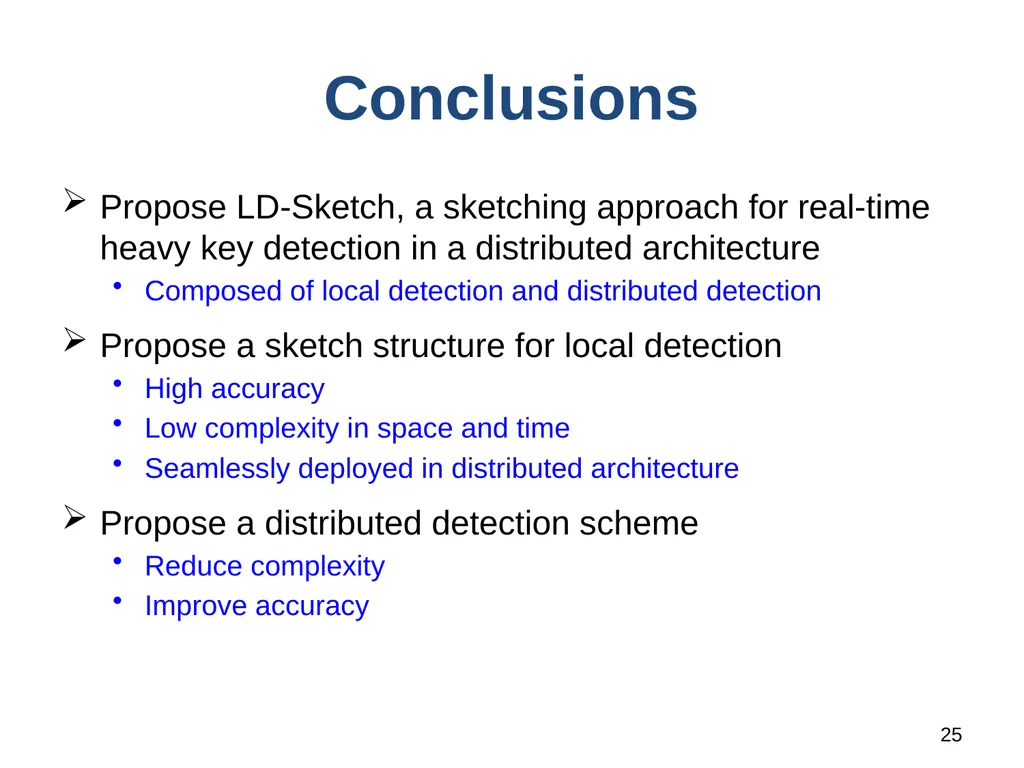
slide25. Conclusions 25 Propose LD-Sketch, a sketching approach for real-time heavy key detection in a distributed architecture
Composed of local detection and distributed detection
Propose a sketch structure for local detection
High accuracy
Low complexity in space and time
Seamlessly deployed in distributed architecture
Propose a distributed detection scheme
Reduce complexity
Improve accuracy<br>
The Chinese University of Hong Kong, Hong Kong
INFOCOM’14<br>
slide2. Network traffic: a stream of (key, value) tuples
Keys: src IPs, five-tuple flows
Value: # of packets, payload bytes
Heavy keys - classical anomalies in network traffic
Heavy hitters: keys with large volume in one period
e.g. SLA violation
Heavy changers: keys with large volume change across two periods
e.g. DoS attacks, component failures
Goal:
identify heavy keys in real time Motivation 2<br>
slide3. Challenges 3<br>
slide4. Related Works Counter-based techniques
Misra-Gries algorithm [Misra & Gries 82]; Lossy Counting [Manku et al. 02]; Space Saving [Metwally et al. 05]; Probalistic Lossy Count [Dimitropoulos et al. 08]
Only address for heavy hitter detection in single machine
Sketch-based techniques
Multi-stage filter [Estan et al. 03]; CGT [Cormode et al. 04]; Reversible Sketch [Schweller et al. 06]; SeqHash [Tian et al. 07]; Fast Sketch [Liu et al. 12]
Only work in single machine
Distributed detection
[Cormode et al. 2005]
[Manjhi et al. 2005]
[Yi et al. 2009]
Only address heavy hitter detection 4<br>
slide5. Our Work 5 LD-Sketch: a new sketching design for heavy key detection in a distributed architecture A sketch technique for local detection
High accuracy
High speed
Low space complexity
A distributed detection scheme not only achieves scalability but also improves accuracy
Experiments on real-world traces<br>
slide6. Problem Formulation 6<br>
slide7. Architecture 7 Data
source Data
source Data
source Data
source Data
source Local detection results Final detection results Distributed detection<br>
slide8. Local Detection 8 Update phase Examine the buckets and report heavy keys Detection phase LD-Sketch<br>
slide9. Inside a Bucket 9<br>
slide10. 10 Four cases<br>
slide11. Decrement Keys 11 Step 1<br>
slide12. Decrement Keys 12 Step 3 Step 2<br>
slide13. Dynamic Expansion 13<br>
slide14. Estimate True Sum or Change 14<br>
slide15. Identify Heavy Key 15 Key point: consider keys tracked by buckets
Enumerate all buckets<br>
slide16. Analysis 16<br>
slide17. Distributed Detection 17 Remote
site Local detection results Final detection results Goal
Scalability: reduce complexity
Accuracy: reduce false positive rate
Remote Site
How to partition data streams
Final results
How to aggregate local detection results<br>
slide18. Remote Sites 18 Worker Worker Worker Worker Worker Worker Worker Worker<br>
slide19. Detection and Aggregation 19<br>
slide20. Analysis 20<br>
slide21. Experimental Results 21<br>
slide22. Accuracy of Local Detection: Heavy Changer 22 LD-Sketch achieves 100% recall
LD-Sketch has a little lower precision than CGT and Seqhash, but we can improve with distributed detection<br>
slide23. Accuracy of Distributed Detection: Heavy Changer 23<br>
slide24. Throughput 24 LD-Sketch has a little lower throughput than CGT and Fast Sketch in local detection
LD-Sketch can scale linearly in distributed detection Local detection Distributed detection<br>
slide25. Conclusions 25 Propose LD-Sketch, a sketching approach for real-time heavy key detection in a distributed architecture
Composed of local detection and distributed detection
Propose a sketch structure for local detection
High accuracy
Low complexity in space and time
Seamlessly deployed in distributed architecture
Propose a distributed detection scheme
Reduce complexity
Improve accuracy<br>