
1 Lecture: Security Topics: Spectre and Meltdown

1 Lecture: Security Topics: Spectre and Meltdown
1 / 1
1 Lecture: Security Topics: Spectre and Meltdown - slide 1 of 11 1 Lecture: Security Topics: Spectre and Meltdown - slide 2 of 11 1 Lecture: Security Topics: Spectre and Meltdown - slide 3 of 11 1 Lecture: Security Topics: Spectre and Meltdown - slide 4 of 11 1 Lecture: Security Topics: Spectre and Meltdown - slide 5 of 11 1 Lecture: Security Topics: Spectre and Meltdown - slide 6 of 11 1 Lecture: Security Topics: Spectre and Meltdown - slide 7 of 11 1 Lecture: Security Topics: Spectre and Meltdown - slide 8 of 11 1 Lecture: Security Topics: Spectre and Meltdown - slide 9 of 11 1 Lecture: Security Topics: Spectre and Meltdown - slide 10 of 11 1 Lecture: Security Topics: Spectre and Meltdown - slide 11 of 11


1 Lecture: Security Topics: Spectre and Meltdown attacks, information leakage, integrity verification 2 UMA High Bandwidth Memory uses wiring on a silicon substrate (interposer) to achieve high bandwidth; uses 3D-stacked memory chips to

Related Topics

Download this presentation From Below

"1 Lecture: Security Topics: Spectre and Meltdown" is the property of its rightful owner. Permission is granted to download and print the materials on this website for personal, non-commercial use only, and to display it on your personal computer provided you do not modify the materials and that you retain all copyright notices contained in the materials. By downloading content from our website, you accept the terms of this agreement.

Presentation Transcript

01
1 Lecture: Security Topics: Spectre and Meltdown attacks, information leakage,
integrity verification<br>
02
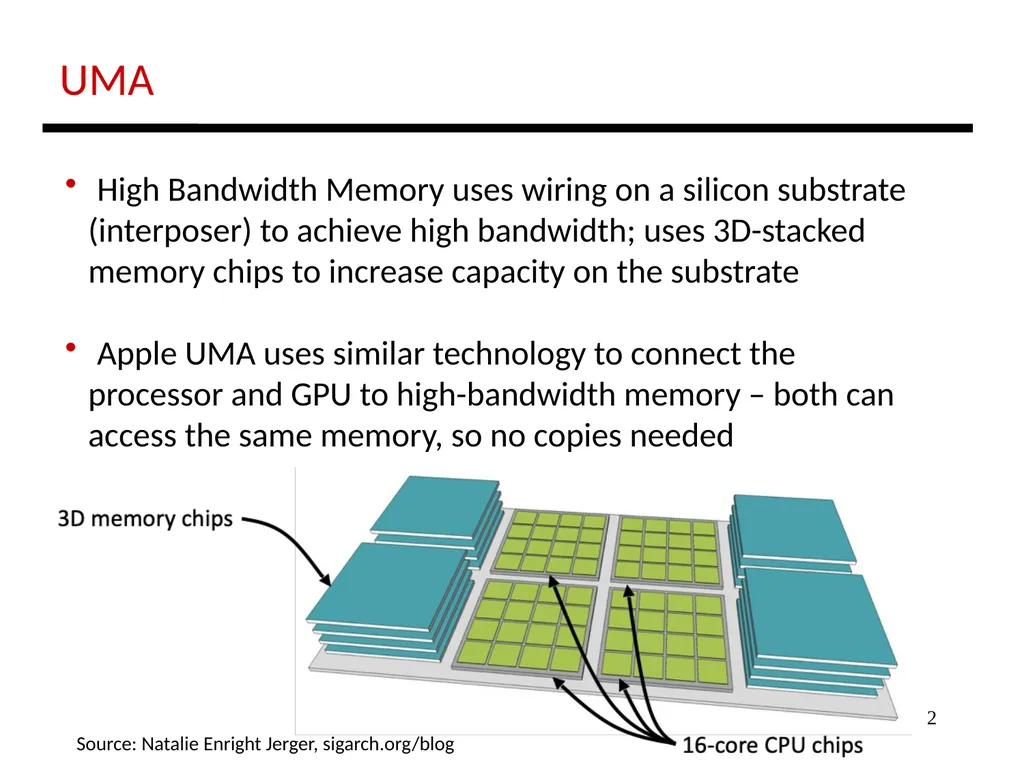
2 UMA High Bandwidth Memory uses wiring on a silicon substrate
(interposer) to achieve high bandwidth; uses 3D-stacked
memory chips to increase capacity on the substrate

Apple UMA uses similar technology to connect the
processor and GPU to high-bandwidth memory – both can
access the same memory, so no copies needed Source: Natalie Enright Jerger, sigarch.org/blog<br>
03
3 Hardware Security Several types of attacks: physical access to hardware,
compromised OS, untrusted co-scheduled applications

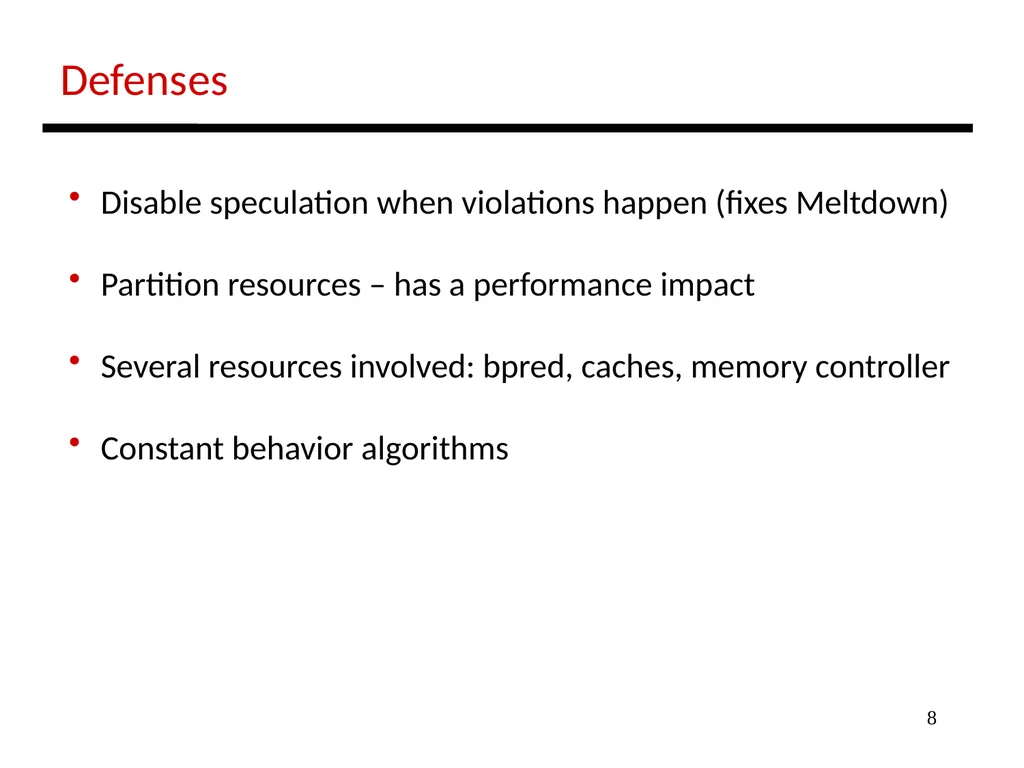
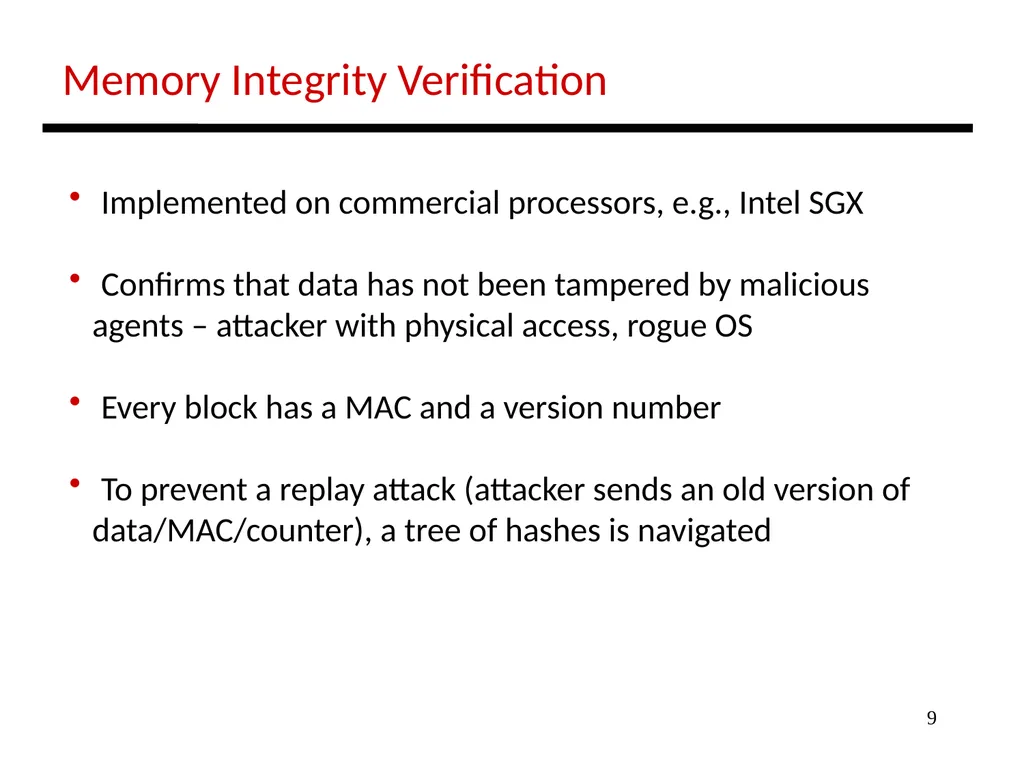
Defenses include: hardware permission checks, encryption,
microarchitecture partitions, signature checks, trusted
execution environments like Intel SGX

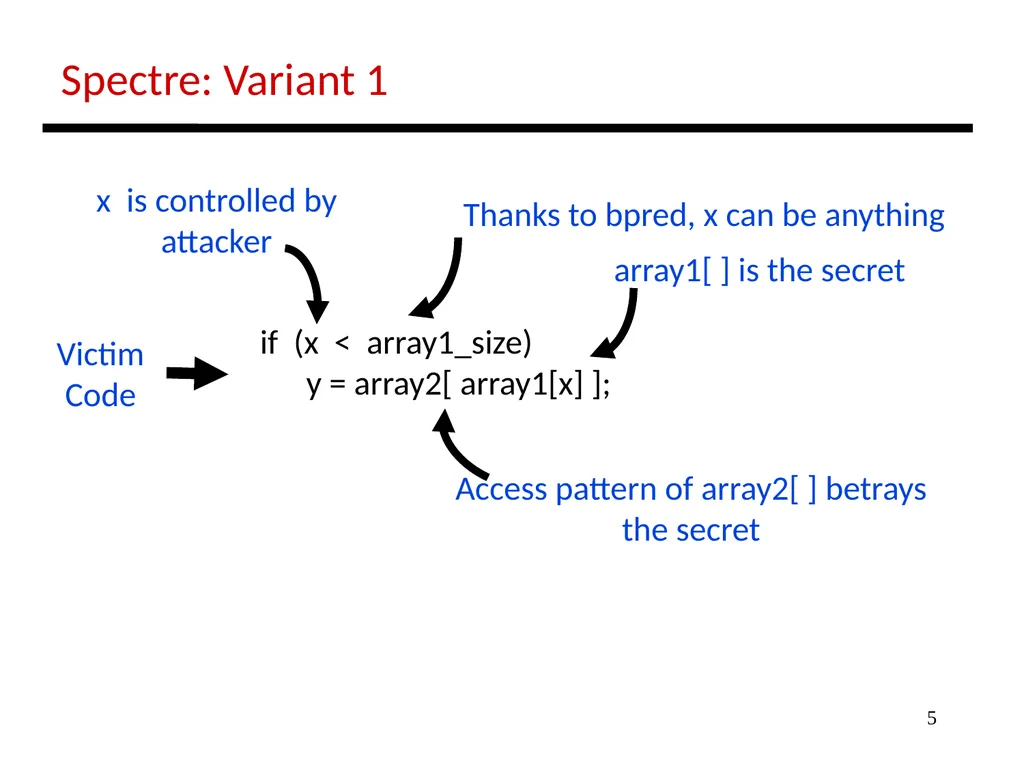
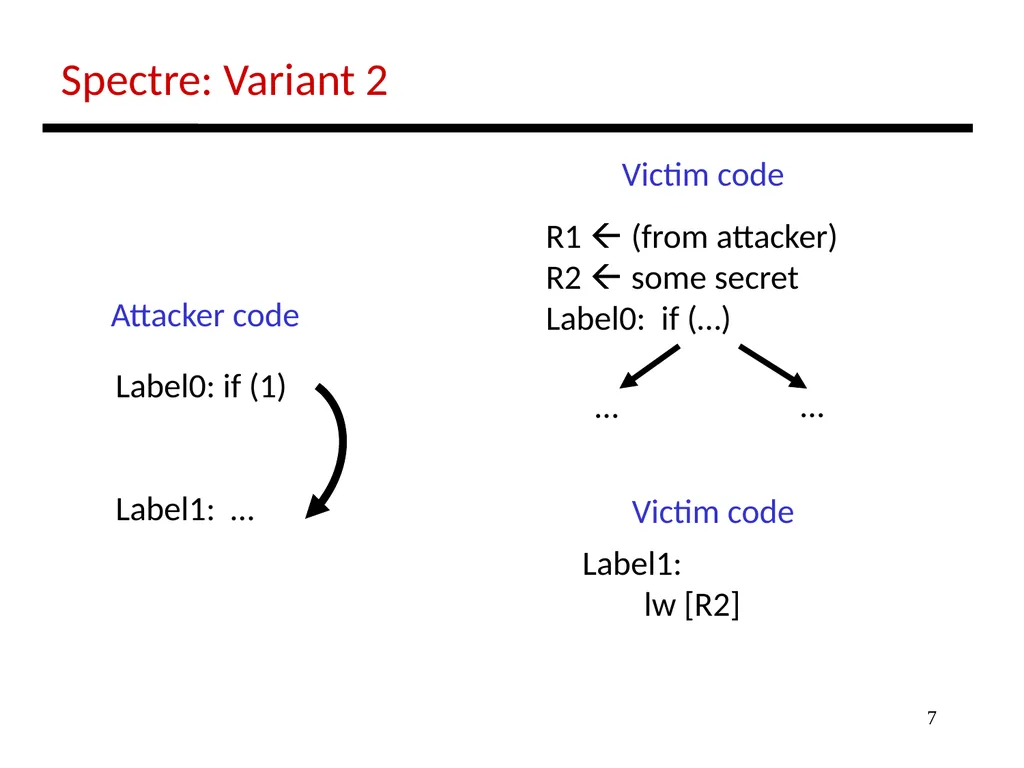
Information leakage still unresolved – exploited by Meltdown,
Spectre, and many subsequent attacks<br>