04
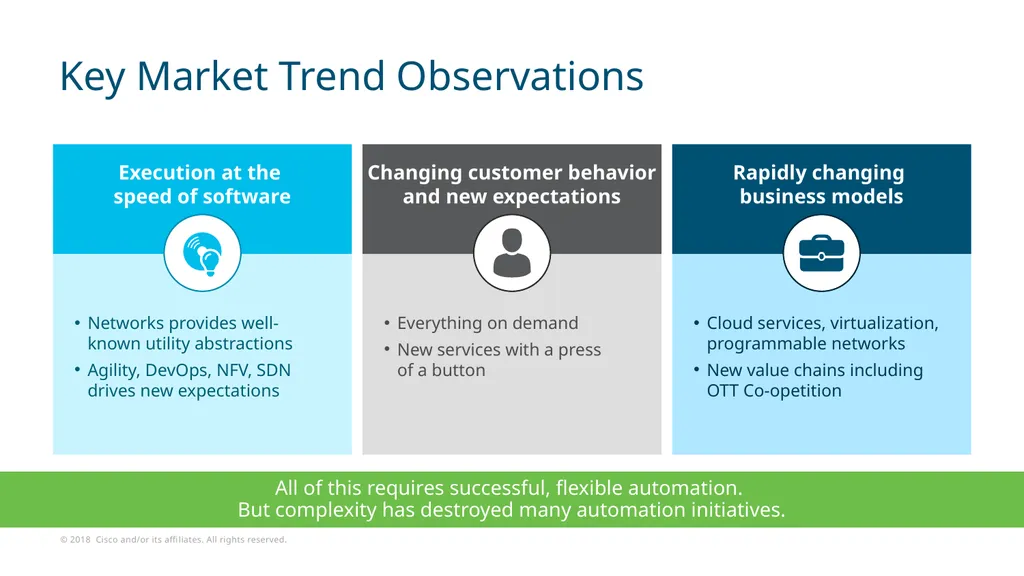
Key Market Trend Observations Execution at the �speed of software Changing customer behavior
and new expectations Rapidly changing �business models All of this requires successful, flexible automation.
But complexity has destroyed many automation initiatives. Networks provides well-known utility abstractions
Agility, DevOps, NFV, SDN drives new expectations Cloud services, virtualization, programmable networks
New value chains including OTT Co-opetition Everything on demand
New services with a press�of a button<br>
05
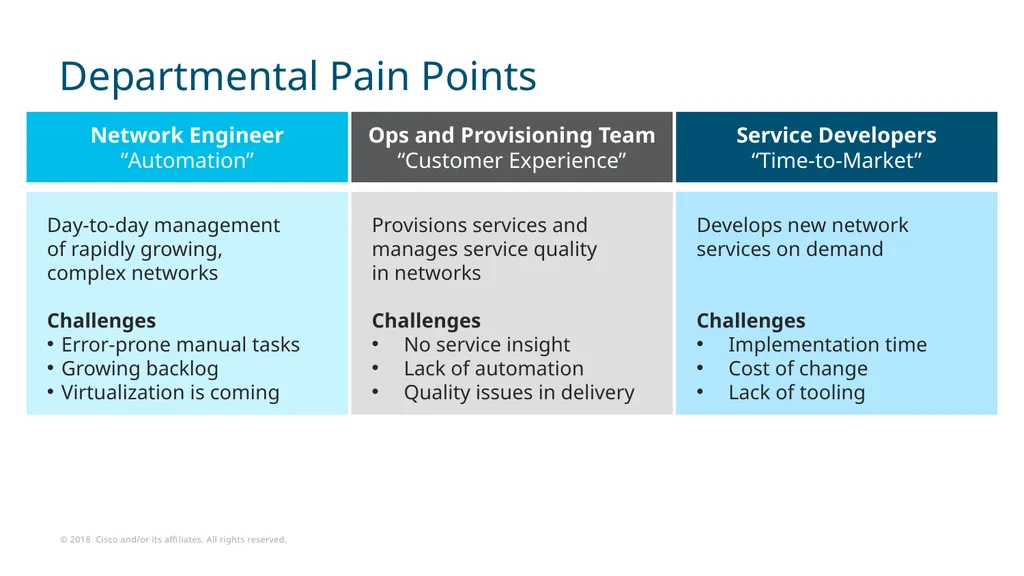
Departmental Pain Points Network Engineer
“Automation” Day-to-day management �of rapidly growing, �complex networks
�Challenges
Error-prone manual tasks
Growing backlog
Virtualization is coming Service Developers
“Time-to-Market” Develops new network services on demand
�Challenges
Implementation time
Cost of change
Lack of tooling Ops and Provisioning Team
“Customer Experience” Provisions services and manages service quality �in networks
Challenges
No service insight
Lack of automation
Quality issues in delivery<br>
06
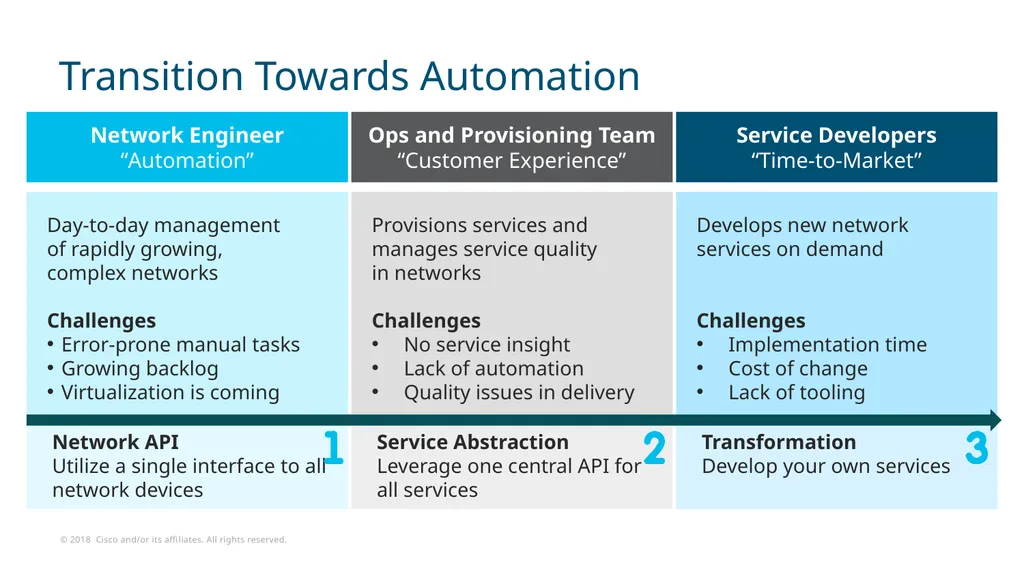
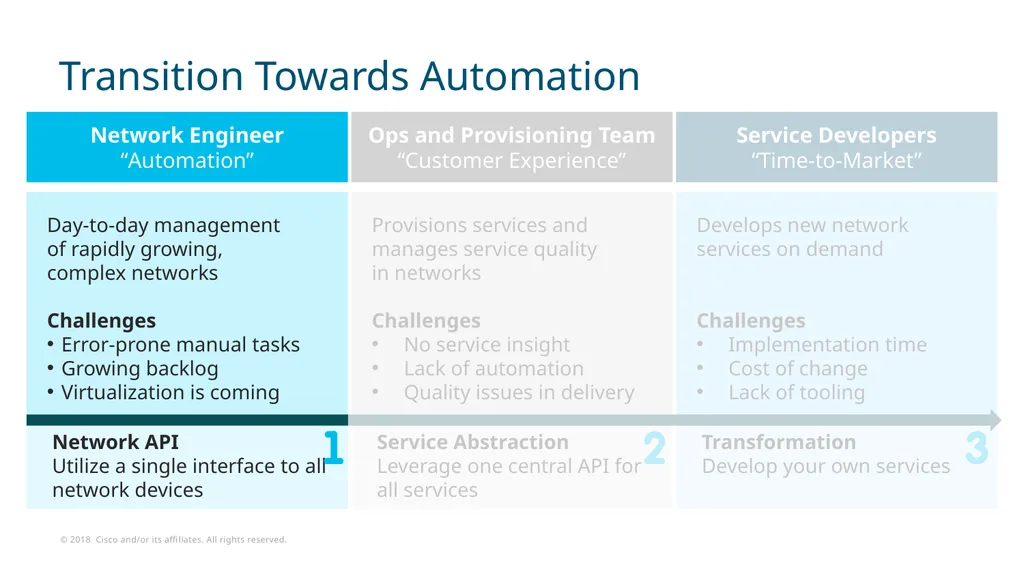
Transition Towards Automation Network Engineer
“Automation” Day-to-day management �of rapidly growing, �complex networks
�Challenges
Error-prone manual tasks
Growing backlog
Virtualization is coming Service Developers
“Time-to-Market” Develops new network services on demand
�Challenges
Implementation time
Cost of change
Lack of tooling Ops and Provisioning Team
“Customer Experience” Provisions services and manages service quality �in networks
Challenges
No service insight
Lack of automation
Quality issues in delivery Network API
Utilize a single interface to all network devices Transformation
Develop your own services Service Abstraction
Leverage one central API for
all services<br>
07
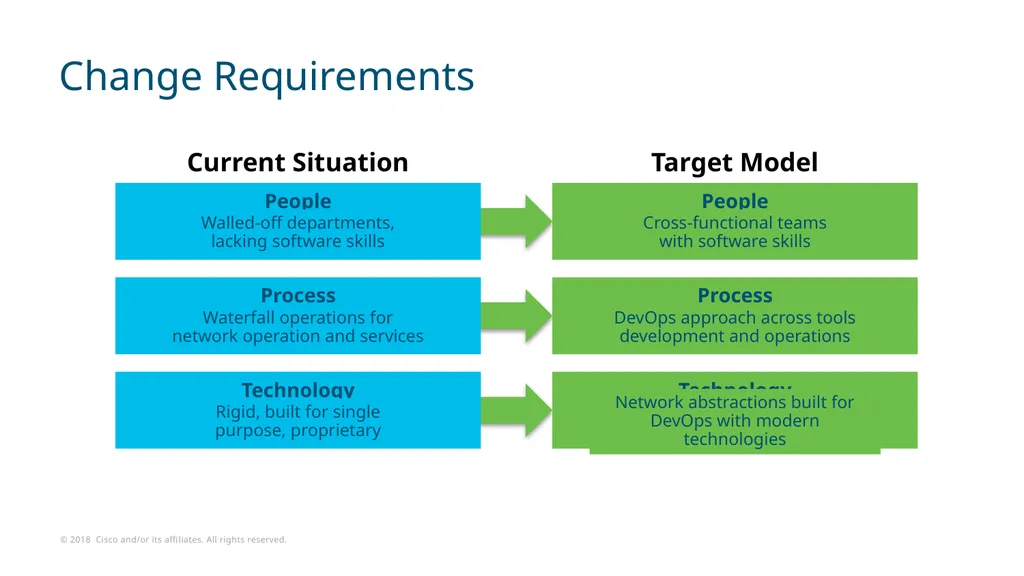
Target Model Change Requirements Current Situation<br>
08
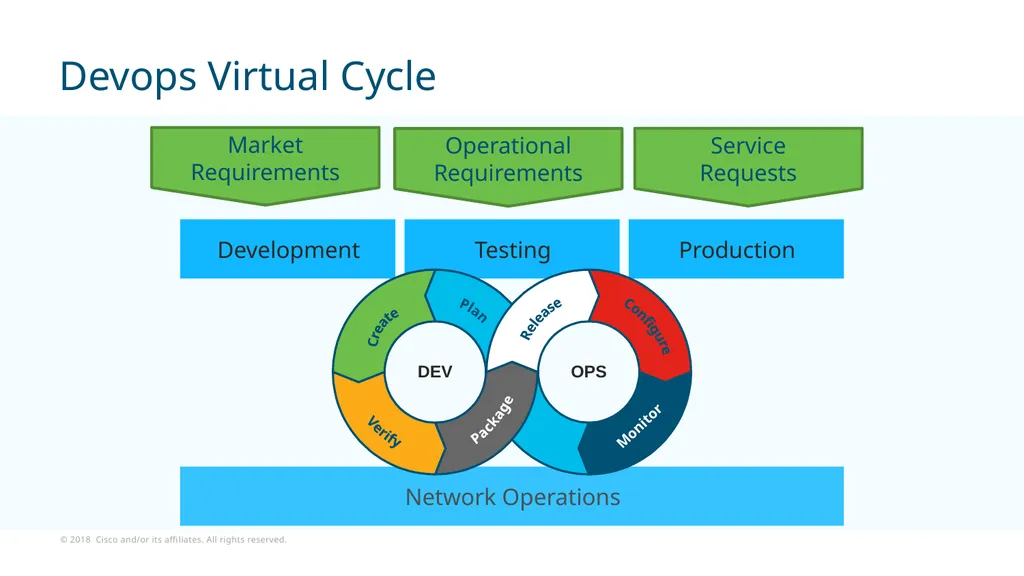
Network Operations Devops Virtual Cycle Market�Requirements Development Testing Production Operational�Requirements Service
Requests<br>
09
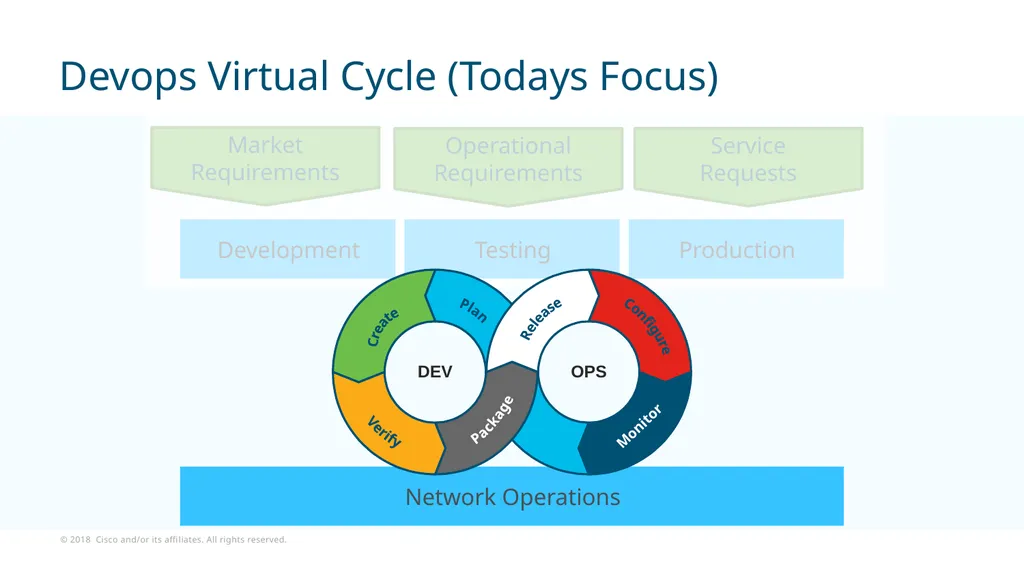
Network Operations Devops Virtual Cycle (Todays Focus) Market�Requirements Development Testing Production Operational�Requirements Service
Requests<br>
10
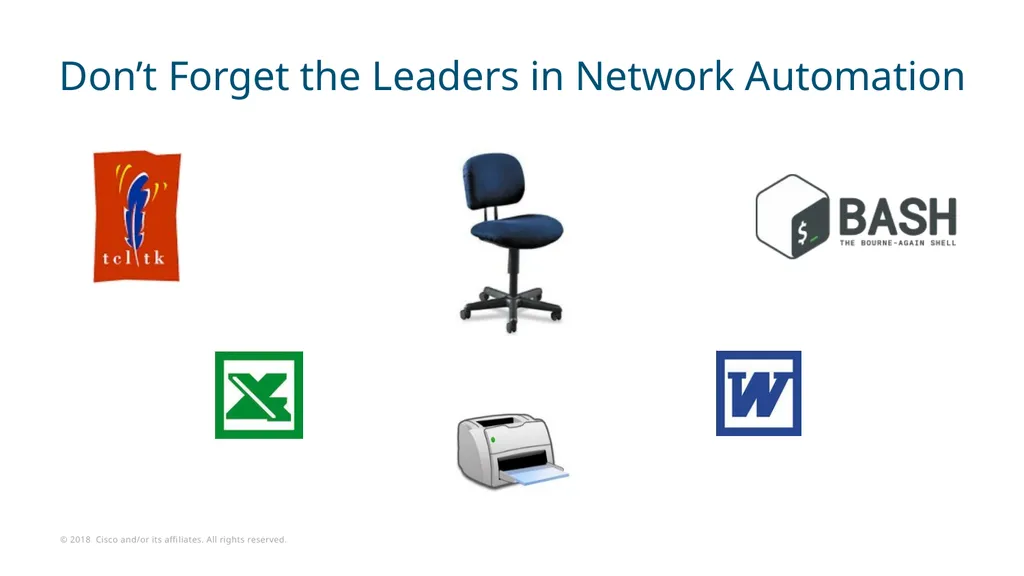
Don’t Forget the Leaders in Network Automation<br>
11
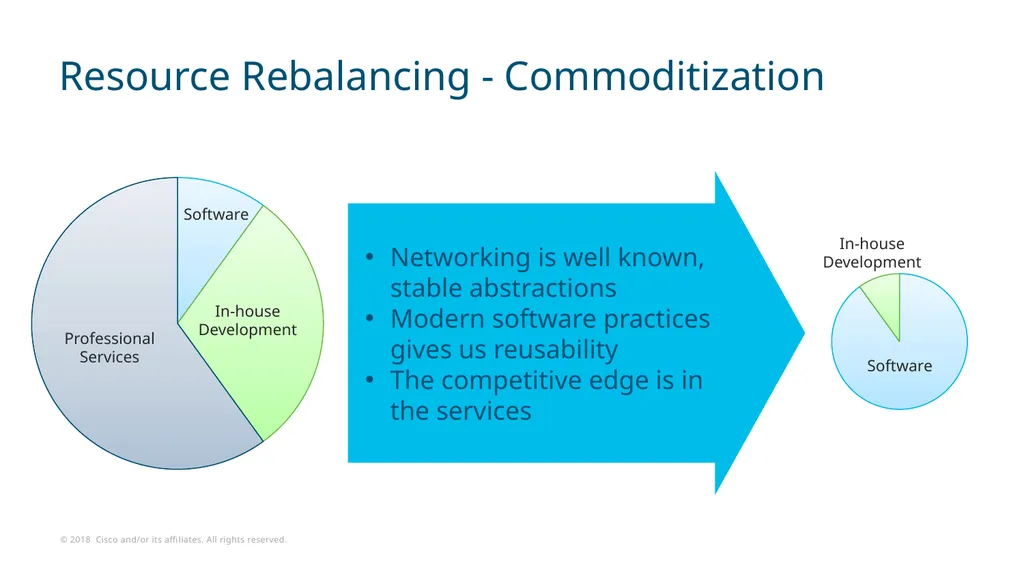
Resource Rebalancing - Commoditization Professional
Services In-house Development Software In-house Development Networking is well known, stable abstractions
Modern software practices gives us reusability
The competitive edge is in the services Software<br>
12
Transition Towards Automation Network Engineer
“Automation” Day-to-day management �of rapidly growing, �complex networks
�Challenges
Error-prone manual tasks
Growing backlog
Virtualization is coming Service Developers
“Time-to-Market” Develops new network services on demand
�Challenges
Implementation time
Cost of change
Lack of tooling Ops and Provisioning Team
“Customer Experience” Provisions services and manages service quality �in networks
Challenges
No service insight
Lack of automation
Quality issues in delivery Network API
Utilize a single interface to all network devices Transformation
Develop your own services Service Abstraction
Leverage one central API for
all services<br>
13
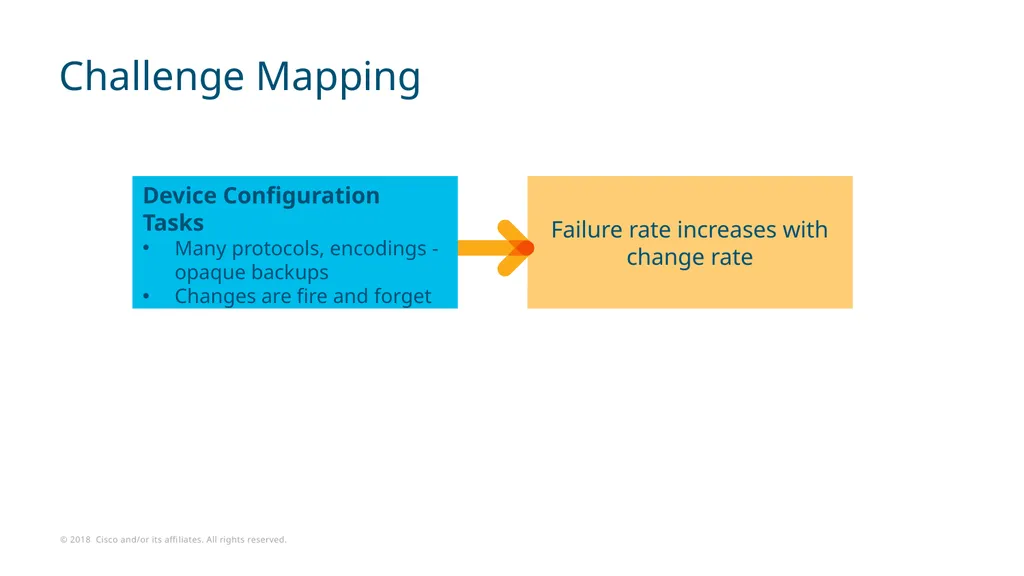
Failure rate increases with change rate Challenge Mapping Device Configuration Tasks
Many protocols, encodings - opaque backups
Changes are fire and forget<br>
14
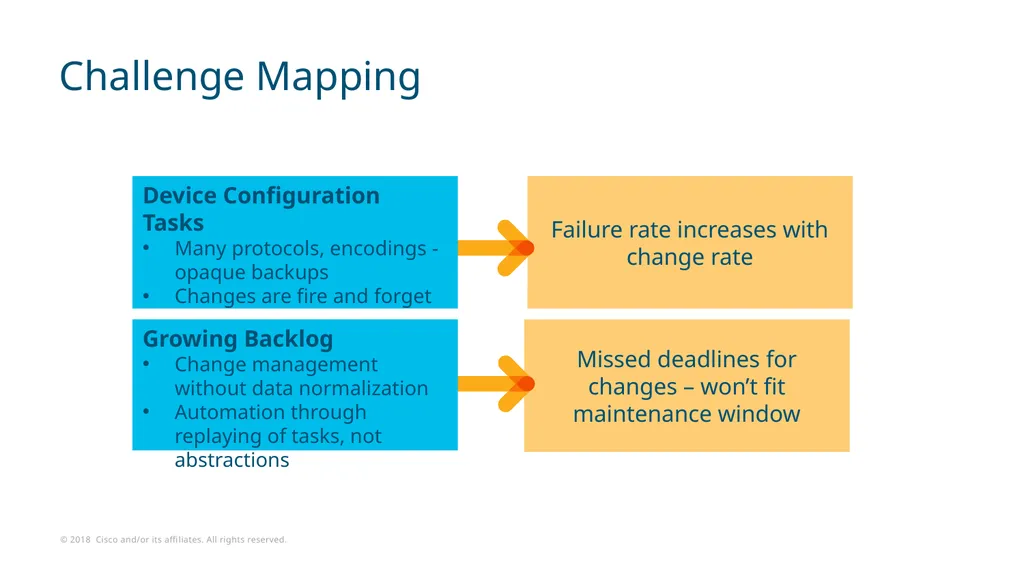
Failure rate increases with change rate Challenge Mapping Device Configuration Tasks
Many protocols, encodings - opaque backups
Changes are fire and forget Missed deadlines for changes – won’t fit maintenance window Growing Backlog
Change management without data normalization
Automation through replaying of tasks, not abstractions<br>
15
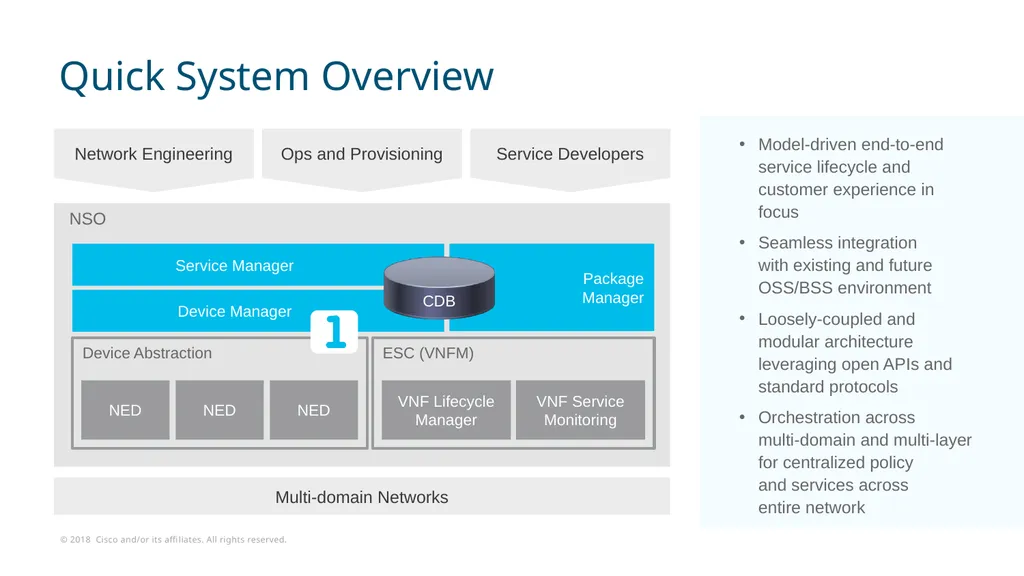
Quick System Overview Multi-domain Networks NSO Package
Manager ESC (VNFM) Device Abstraction NED NED NED Model-driven end-to-end service lifecycle and customer experience in focus
Seamless integration �with existing and future OSS/BSS environment
Loosely-coupled and modular architecture leveraging open APIs and standard protocols
Orchestration across �multi-domain and multi-layer for centralized policy �and services across �entire network<br>
16
Feature Mapping #1�Device Configuration<br>
17
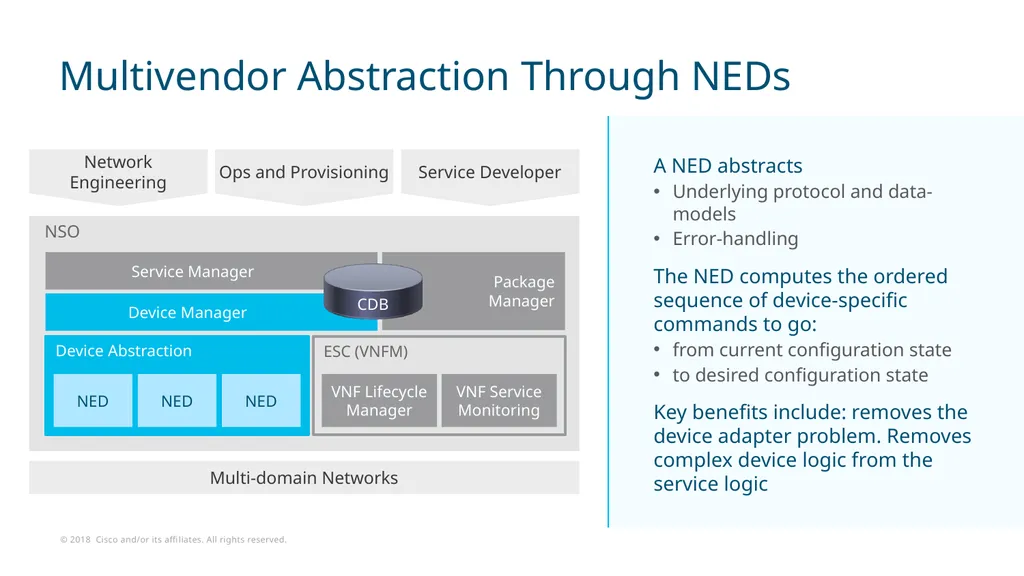
Multivendor Abstraction Through NEDs A NED abstracts
Underlying protocol and data-models
Error-handling
The NED computes the ordered sequence of device-specific commands to go:
from current configuration state
to desired configuration state
Key benefits include: removes the device adapter problem. Removes complex device logic from the service logic<br>
18
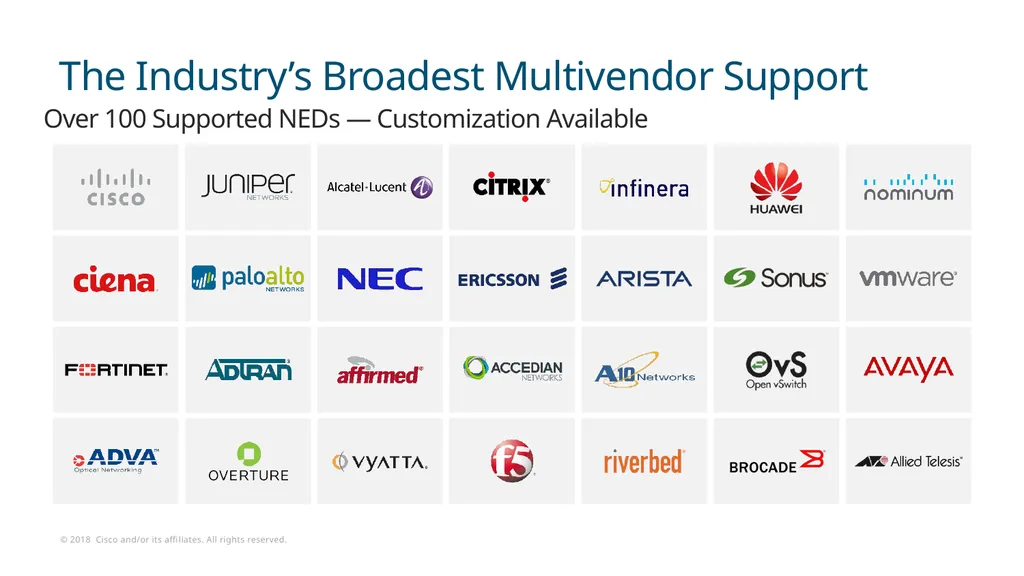
The Industry’s Broadest Multivendor Support Over 100 Supported NEDs — Customization Available<br>
19
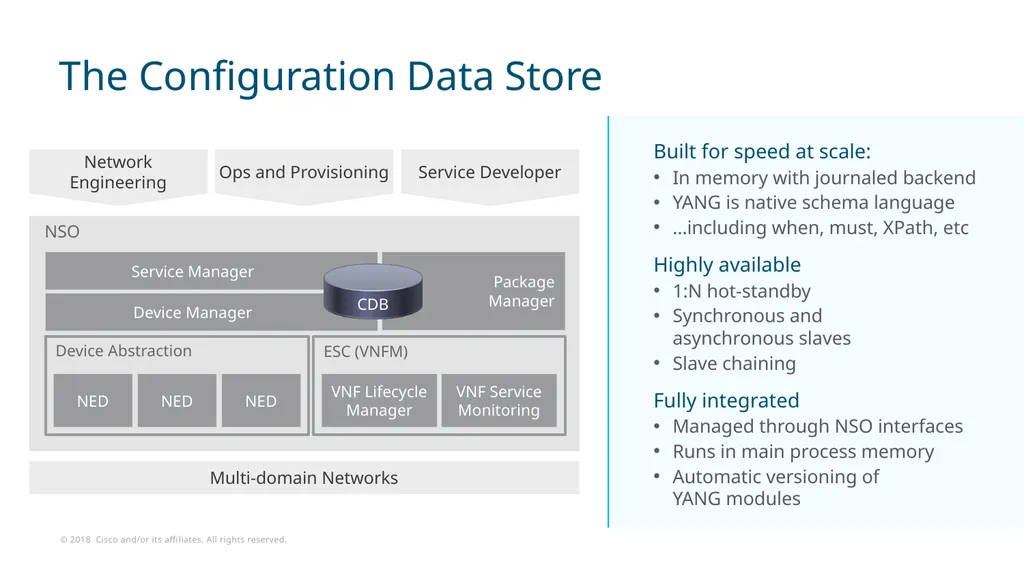
The Configuration Data Store Built for speed at scale:
In memory with journaled backend
YANG is native schema language
…including when, must, XPath, etc
Highly available
1:N hot-standby
Synchronous and �asynchronous slaves
Slave chaining
Fully integrated
Managed through NSO interfaces
Runs in main process memory
Automatic versioning of �YANG modules Multi-domain Networks NSO Package
Manager Service Manager Device Manager ESC (VNFM) Device Abstraction NED NED NED<br>
20
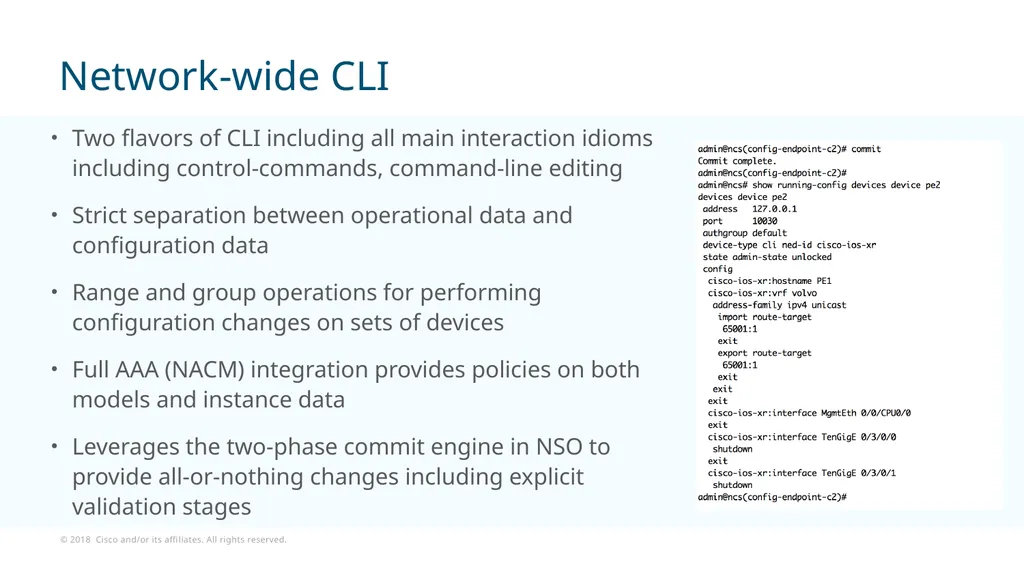
Network-wide CLI Two flavors of CLI including all main interaction idioms including control-commands, command-line editing
Strict separation between operational data and configuration data
Range and group operations for performing configuration changes on sets of devices
Full AAA (NACM) integration provides policies on both models and instance data
Leverages the two-phase commit engine in NSO to provide all-or-nothing changes including explicit validation stages<br>
21
Feature Mapping #2�Growing Backlog<br>
22
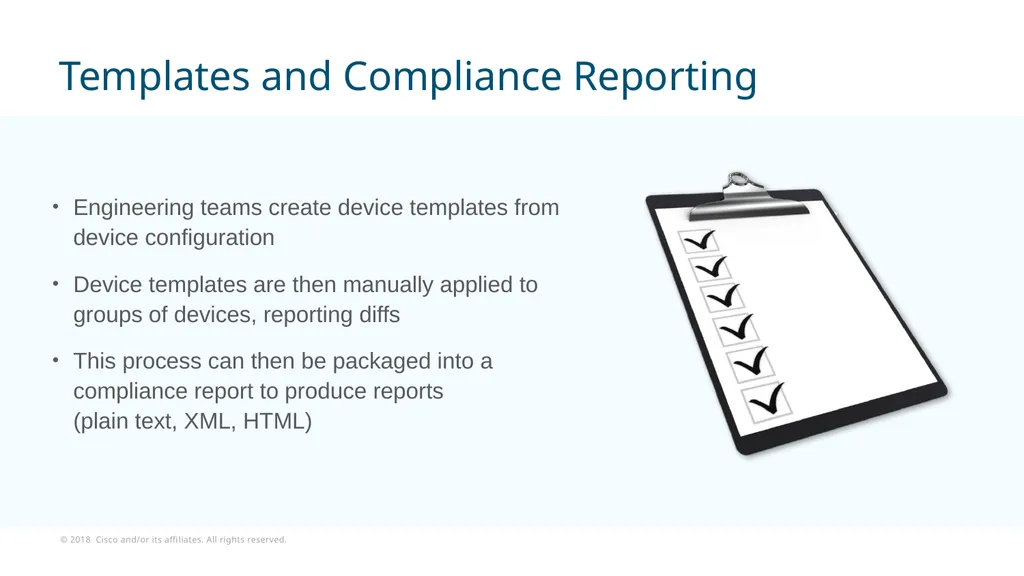
Templates and Compliance Reporting Engineering teams create device templates from device configuration
Device templates are then manually applied to groups of devices, reporting diffs
This process can then be packaged into a compliance report to produce reports �(plain text, XML, HTML)<br>
23
APIs and Language Bindings<br>
25
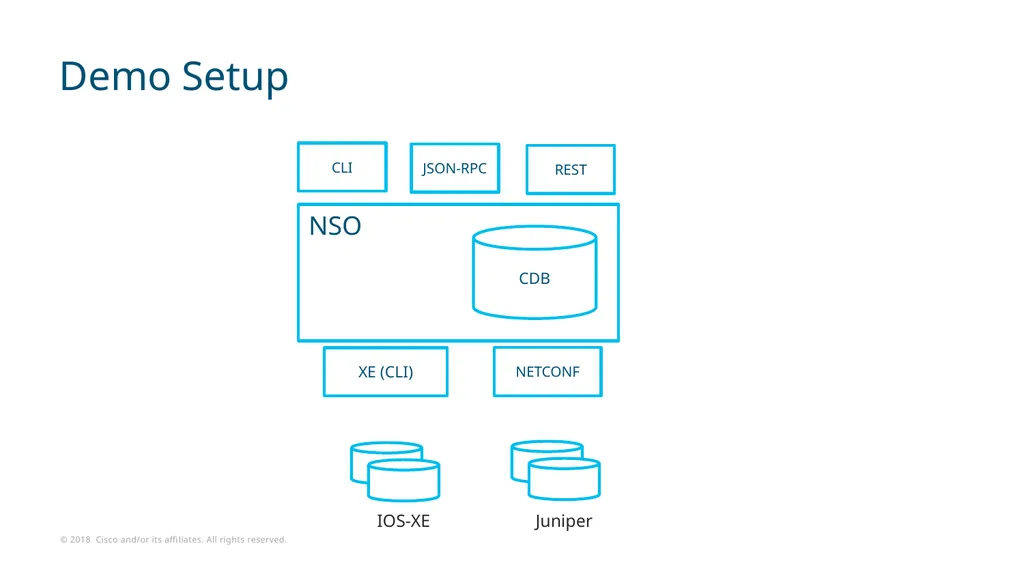
Demo Setup NSO CDB Juniper IOS-XE XE (CLI) NETCONF CLI JSON-RPC REST<br>
27
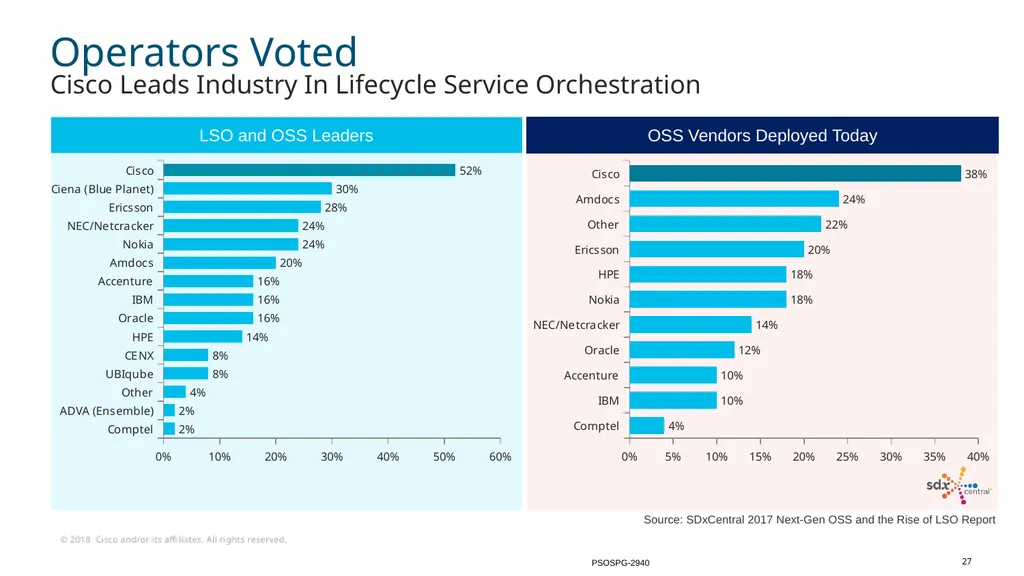
Operators Voted�Cisco Leads Industry In Lifecycle Service Orchestration LSO and OSS Leaders OSS Vendors Deployed Today Source: SDxCentral 2017 Next-Gen OSS and the Rise of LSO Report PSOSPG-2940 27<br>
28
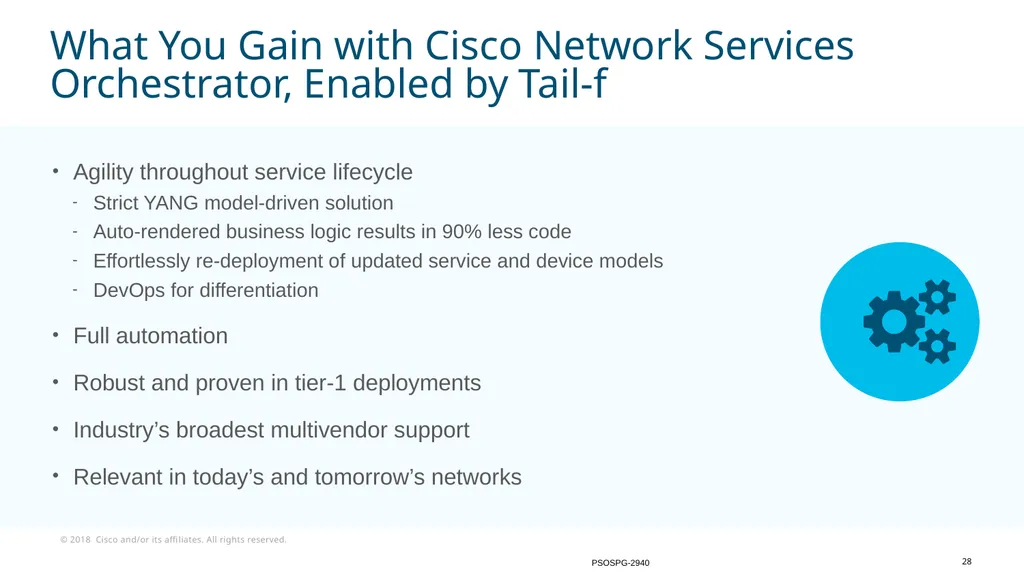
What You Gain with Cisco Network Services Orchestrator, Enabled by Tail-f Agility throughout service lifecycle
Strict YANG model-driven solution
Auto-rendered business logic results in 90% less code
Effortlessly re-deployment of updated service and device models
DevOps for differentiation
Full automation
Robust and proven in tier-1 deployments
Industry’s broadest multivendor support
Relevant in today’s and tomorrow’s networks PSOSPG-2940 28<br>
29
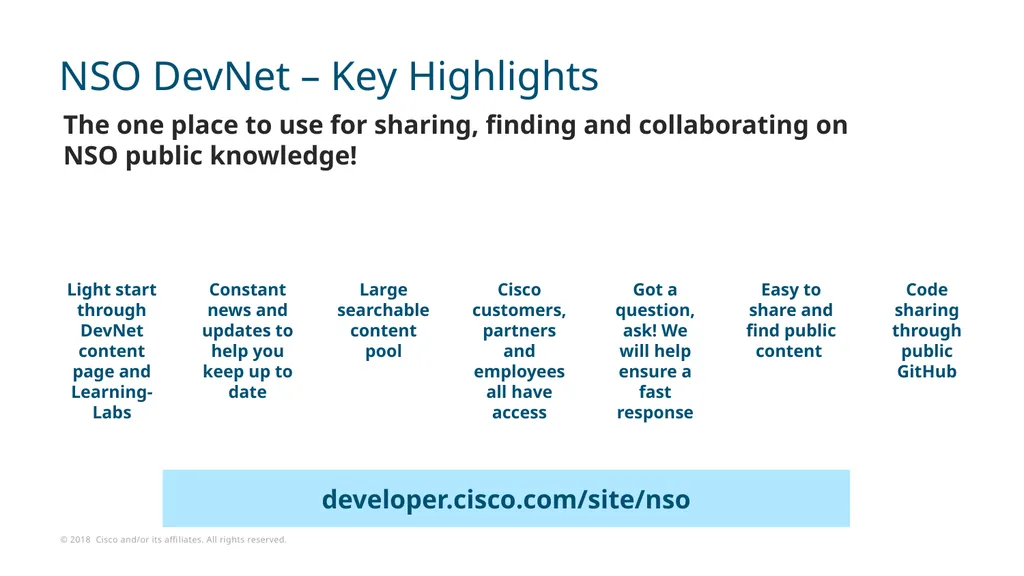
NSO DevNet – Key Highlights The one place to use for sharing, finding and collaborating on NSO public knowledge! Light start through DevNet content page and Learning-Labs Constant news and updates to help you keep up to date Large searchable content pool Cisco customers, partners and employees all have access Got a question, ask! We will help ensure a fast response Easy to share and find public content Code sharing through public GitHub developer.cisco.com/site/nso<br>
30
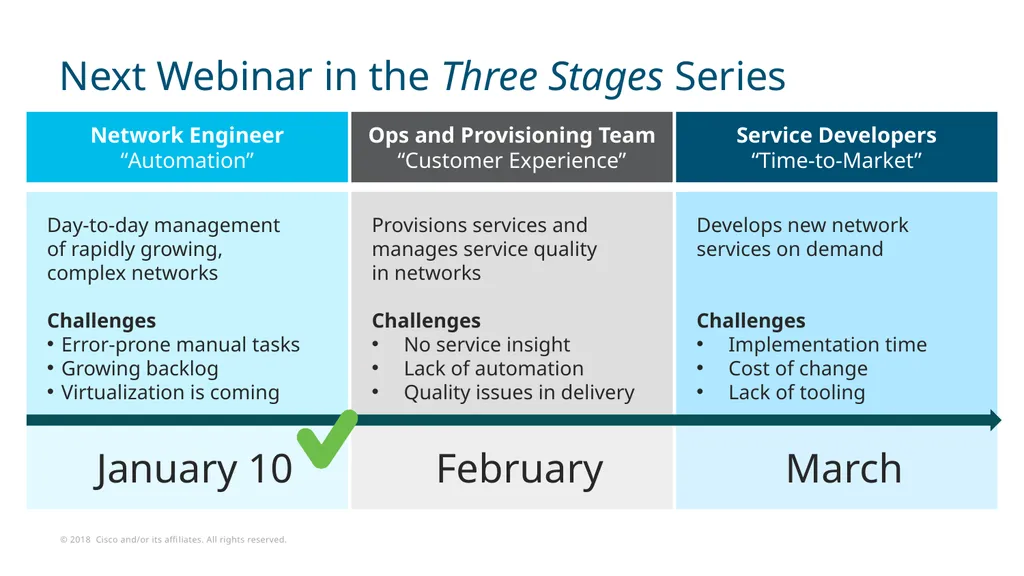
Next Webinar in the Three Stages Series Network Engineer
“Automation” Day-to-day management �of rapidly growing, �complex networks
�Challenges
Error-prone manual tasks
Growing backlog
Virtualization is coming Service Developers
“Time-to-Market” Develops new network services on demand
�Challenges
Implementation time
Cost of change
Lack of tooling Ops and Provisioning Team
“Customer Experience” Provisions services and manages service quality �in networks
Challenges
No service insight
Lack of automation
Quality issues in delivery January 10 March February<br>
32
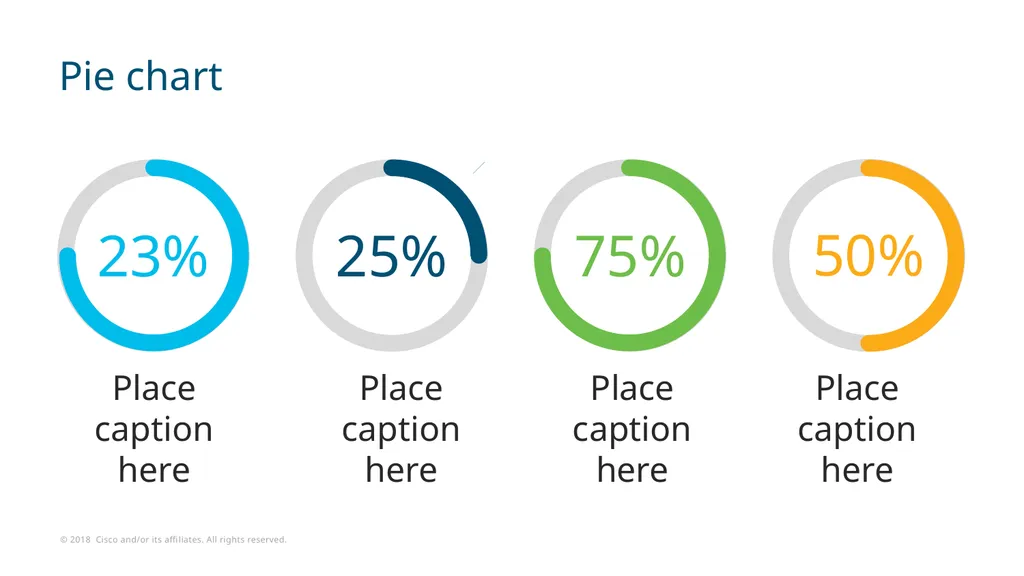
Place caption here Place caption here Place caption here Place caption here 50% 25% 23% 75% Pie chart<br>